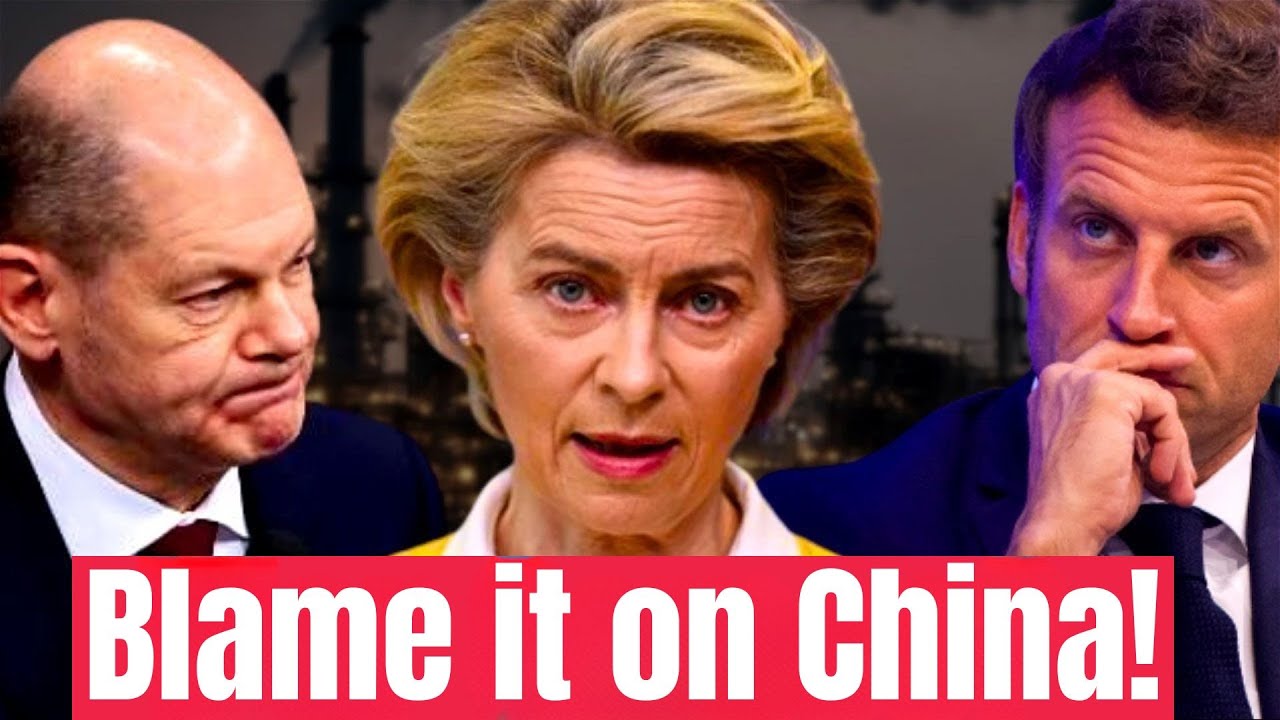
The video provides a comprehensive analysis of Europe’s current economic challenges, focusing on the energy crisis triggered by the Russia‑Ukraine war and its cascading effects on industrial competitiveness, especially in Germany. It outlines how soaring energy costs have led to factory closures, job losses, and social unrest, while also highlighting broader macro‑economic trends such as slower growth compared to the United States and potential trade threats from a possible Trump administration. The speaker then shifts to the strategic importance of tin, explaining its role in semiconductors and the looming supply deficit caused by production cuts in Peru, Indonesia, and Myanmar. This sets the stage for an investment pitch for IberAmerican (ticker IBRLF), a lithium‑focused mining company acquiring the Pinuta mine in Galicia, Spain, which hosts one of Europe’s few tin‑tantalum‑niobium deposits. Detailed information about the mine’s resources, the company’s management team, and the European Union’s Critical Raw Materials Act is presented, concluding with a call to invest before tin demand accelerates.
Chapters
Europe's economic survival depends on having access to energy. Think about it this way: the global economy is a complex and interconnected web that has been significantly influenced by recent events, from fluctuating gas prices and supply chain disruptions to regional conflicts and geopolitical tensions. One thing many analysts agree upon is that Europe seems to be impacted the most, economically speaking. The economic landscape has faced numerous challenges. In this analysis, I delve into the state of the European economy, examining how recent events have shaped it, especially with the ongoing conflicts in Ukraine and the major economic impact this conflict has had and still has on many countries, including Germany. Europe, once the bedrock of global economic stability, is currently navigating turbulent waters. The convergence of several significant challenges has analysts predicting a bleak economic future for the Old Continent. With its economy growing by mere 4% this decade compared to 8% in the United States, and stagnation setting in since late 2022, Europe's economic outlooks appear increasingly precarious. Compounding this situation is the loss of access to cheap energy from Russia, a surge in low-cost imports from China, which, by the way, European citizens enjoy tremendously, and the potential return of Donald Trump to the White House, who has, by the way, signaled intentions to impose hefty tariffs on European exports. Let's start with the energy crisis in Europe and its ramifications. Europe's energy crisis, precipitated by the geopolitical fallout from the Russia-Ukraine conflict, is at the heart of its economic troubles. Historically reliant on Russia for affordable natural gas and oil, Europe's energy infrastructure was severely disrupted as sanctions and counter-sanctions took effect. The result is a spike in energy prices, which has strained households and industries alike. Leading to increased production costs and diminished disposable income for consumers. I address two main aspects of these ramifications. As a result, the immediate economic impact has been significant. Energy-intensive industries such as manufacturing and chemicals have seen their costs skyrocket, leading to reduced competitiveness on the global stage. As energy prices remain volatile, the uncertainty hampers long-term investment decisions, further stifling growth. French and US multinational Michelin and Goodyear are closing 4 factories in Germany, citing high energy prices and intense competition from abroad. The rapid deterioration of the market outlook in Germany, for example, has led to Goodyear shutting down two plants, one in Brandenburg and the other one in Hesse. A total of 1,800 jobs were lost. In his September 2023 article, David McHugh argued that for most of this century, Germany racked up one economic success after another, dominating global markets for high-end products like luxury cars and industrial machinery, selling so much to the rest of the world that half of the economy ran on exports. Jobs were plentiful. The government's financial coffers grew as other European countries drowned in debt, and books were written about what other countries could learn from Germany. No longer the case. Now Germany is the world's worst-performing major developed economy, with both the International Monetary Fund and the European Union expecting it to shrink this year. It falls Russia's military operations in Ukraine and the loss of Moscow's cheap natural gas, an unprecedented shock to Germany's energy-intensive industry, a long-time manufacturing powerhouse of Europe. 2. Social strain. The energy crisis has also exacerbated social tensions Higher utility bills and fuel prices have increased the cost of living, leading to widespread discontent. Protests and strikes have become more frequent as citizens demand government intervention to mitigate the financial burden. Germany, France, the UK are a case in point. Navigating the crisis will require potential solutions. While the challenges are formidable, there are potential strategies that Europe can adopt to mitigate this impact and revive its economy. Number 1: Energy Diversification. To address the energy crisis, Europe must accelerate its transition to renewable energy sources. Investments in solar, wind, and hydroelectric power, along with advancements in energy storage technologies. All this can reduce dependence on external energy supplies and stabilize prices. 2. Industrial policy reform: Supporting local industries through subsidies, innovation incentives, and infrastructure improvements can help European manufacturers compete globally. Policies aimed at enhancing automation can increase productivity and reduce costs. 3. Trade diversification. Expanding trade relations beyond traditional partners can buffer against geopolitical shocks. Strengthening ties, for example, with emerging markets in Africa, Asia, and Latin America can open new avenues for growth and reduce dependency on a single market. What many do not know is that, for example, the Arctic, which is a home to more than 97% of Russia's reserves of platinioid and 40% of Russia's reserves of tin. But first, what is tin? According to Brian Colwell, Tin metal is found in every life and is essential to an industrial society. In many applications, there is no completely satisfactory substitute for tin, making this metal an important strategic and geopolitical mineral. But tin's strategic importance is nothing new. In fact, tin has been essential for a nation's sovereignty for thousands of years. This metal is used to prevent corrosion and to produce glass. It's most often found mixed, or alloyed, with other metals. Pewter, for example, is mostly tin. You may wonder what tin has to do with China, Russia, the Arctic, or Europe for that matter. Well, consider this: currently, 97% of the world tin supply comes from developing economies, and approximately 40% of it comes from artisanal and small-scale miners, making the industry highly unsustainable. Moreover, most of the world's tin is obtained through alluvial mining,, which is detrimental to the environment. Then what about the use of tin? Tin is most used in semiconductors. Over 50% of the world's tin is used as an electronic solder for joining circuit boards. The demand for semiconductors is surging, and the global semiconductor market is projected to double in the next 5 years. From approximately $400 billion in 2021 to about $803 billion in 2028. The strong growth is driven by demand for emerging technologies such as electric and autonomous vehicles, which, by the way, revenue from this segment alone is growing at a 5-year 21% CAGR, which is a measure of the average annual growth rate of an investment over a period of 5 years. It is also for artificial intelligence, ChatGPT, for example, 5G, 6G, Internet of Things, as well as consumer electronics. Do you know that China is the world's largest tin producer?— and consumer, accounting for approximately 30% of the global tin supply and 47% of global tin consumption as of 2022. However, China's tin production has consistently declined over the past few years, along with global tin reserves. According to US Geological Survey projections, This trend is expected to continue, and the supply deficit is expected to worsen beyond 2023. Electric vehicle sales, for example, are set to reach 50% of new car sales by 2030. Recent events have further worsened the global tin supply situation. In the first quarter of 2023, Minsoor, which is the second-largest refined tin producer in the world, suspended operations due to protests in Peru. Indonesia, for example, the second-largest tin-producing nation, has announced plans to limit or ban tin exports with the intention to create economic benefit within its borders by processing the metal inside the country. Myanmar, or Burma, the third-largest tin-producing nation, has declared a complete ban on mining from August 2023 to protect its remaining mining resources. The country accounted for 77% of China's tin ore imports in 2022. What about Europe, you may ask? Well, given its economic state, Many wonder how is Europe going to ensure access to energy to fuel its economy. One way of doing that is having oil and gas delivered through pipeline, which will need major access to tin. This leads me to talk about this video's sponsor, IberAmerican. IberAmerican is a hard rock lithium exploration company focused on advancing its 100% owned Alberta II and Carliota properties located in Galicia region of northwestern Spain. The Pinuta mine is in the municipality of Viena de Bolo, on the central-eastern edge of the province of Ournés, and once the acquisition by IberAmerican is complete, it will be one of the only tantalum, and niobium mines in production in Europe. The Pinuta Mine Project: Once the acquisition of the Pinuta Mine is complete, IberAmerican intends to restart production at the mine and to continue to exploit the mineral resources that were certified by SRK in their technical report dated back on March 5th, 2021, allowing the company to fully develop the open-pit mine to exploit cassiterite, which is tin, tantalum, and niobium, and also allowing the exploitation of the industrial minerals that exist in the mine, such as quartz, feldspars, and micas. And by the way, the Pinuta mine will be one of the only tantalum and niobium mines in production in Europe. The company's flagship assets will soon be the Pinuta Tin-Tantalium Mine, one of the largest tin mines in Europe. They plan to put it back into production imminently upon completion of the acquisition of the Pinuta project and become profitable. The crown jewel, the gem, is the Pinuta project for the company, which the current owner, by the way, has spent over 5 years and tens of millions of dollars to develop into one of Europe's largest tin mines, but is now selling it to IberAmerican. US stock ticker is IBRLF. It was sold for only $6 million Canadian. After the transaction is complete, IberAmerican's market cap will roughly be about $22 million US, whereas the current owner, while the mine was still running smoothly, traded for about $78 million US. That is the beauty here. I am looking into this company because of the investment opportunities and the potential ROIs, return on investments. I see it moving forward. And why am I interested also? Is this because the company will have the access to one of the only tin mining operations in Europe. What I can also share with you about Iber American, stock ticker US-IBRLF, is that it is one of my top commodity stocks for 2024. IberAmerican team also including many talented and qualified personnel. Let's start with Jean McBurney, who is the Chairman of the Board of Directors. Jean's 25 years international banking experience, leading multiple landmark transactions in the mining and natural resources sectors. He is well suited to make the company profitable. Another key player is David T. Oualaalou. David has over 20 years of experience as an investor, advisor, and operator across a range of industries. He previously served as a principal at the Carlyle Group, one of the world's largest private equity firms, with over $300 billion in assets. While at the Carlyle Group, part of the leadership team managing over $4 billion in natural resources investments with a primary focus on upstream developments and midstream-related assets. Let me also share with you some of the highlights of IberAmerican. Discovering the untapped potentials of Europe lithium in Galicia, Spain, one of the top mining jurisdictions in the world. 3,685-hectare contiguous lithium exploitation contract. Pegmatites occur along north and northwestern to south and southeast striking 27-kilometer corridor. At least 10 pegmatitic Dikes have been identified via surface mapping with predictable nature and shapes of veins. High-grade lithium confirmed in rock chips samples. Iberian pegmatite crystals have demonstrated ideal quality, size, and scale for optimal processing. The European Commission has passed a Critical Raw Material Act to secure the EU's future supply of lithium and other strategic raw materials. Proven management team with a track record of delivering shareholders' values. So, what are you waiting for? You can either invest in IberAmerican today or let this opportunity slip away as demand for tin is only going to grow moving forward. Iberamericans' stock ticker is USIBRLF. Once again, stock ticker is I-B-R-L-F. Check it out. Remember one thing: the global economy is changing whether we like it or not. Investment opportunities are not going to wait for all of us. Protect your wealth and be smart about your investments. Remember, there are always risks in investments and there's no guarantee of any kind. Thank you.