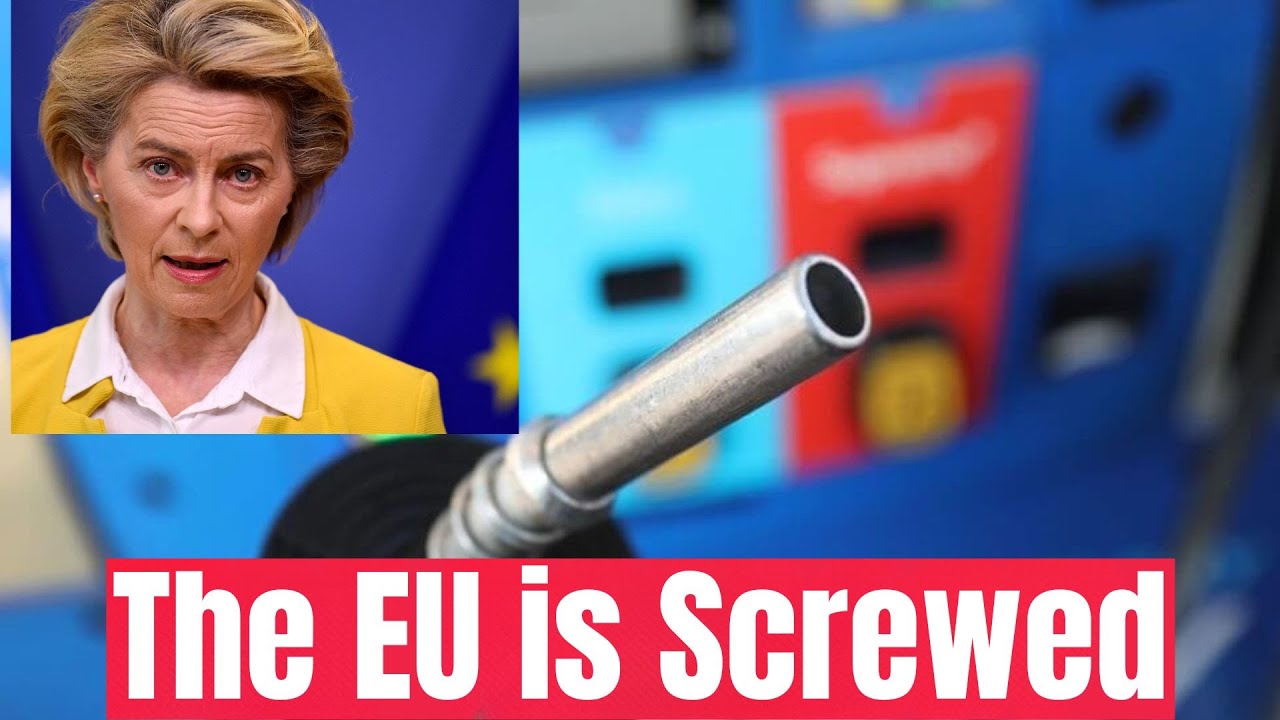
In this Geopolitical Trends video, host David Oualaalou argues that Western sanctions and the EU’s loss of Russian gas and oil have unintentionally boosted China’s (and India’s) energy imports from Russia, enriching Moscow while weakening Europe. He outlines the EU’s short‑term sanction strategy, explains how Russia quickly redirected oil, LNG, and coal to Asian markets at discounted prices, and provides recent trade figures (e.g., $60 billion in Russian energy sales since the war began, $7.7 billion in Chinese purchases in October 2022). Oualaalou highlights the growing Russia‑China partnership—driven by personal ties between Putin and Xi—and frames it within a broader shift from a unipolar to a multipolar world. He critiques Western policy as reactive and lacking long‑term vision, noting that price‑cap sanctions on Russian oil are unlikely to curb Russian revenues. The video concludes that Europe’s miscalculation has handed a financial windfall to Russia and strategic advantage to China, reshaping global energy markets and geopolitics.
Chapters
Hello everyone and welcome to Geopolitical Trends. My name is David Oualaalou. So good to be with you as always. Russia earns about $60 billion from one country alone despite the sanctions. So in this video, I am gonna be letting you know, of course, which country is that. And second thing, I'm gonna provide you an analysis. And yes, I am going to do an analysis about this particular issue topic, rather, because it ties on the global energy market. So, but before I'll delve into this, I want to touch on some admin stuff. I want to let you know that I am in the process of working on a course that I am going to be offering online. I'll give you the details as I get closer to wrapping that up. And I also wanted to let you know, uh, or to remind you, that to join me on December 3rd. That's when I'm gonna be doing live stream, and, and I will let you know the topic and so forth. I'll post all this for you. So, and of course, make sure to subscribe if you have not done so, and smash that notification button so you will be notified when a video comes out. So, and thank you as always for your support. So let's dive in into this because it's an interesting topic, as— and I will detail a few things for you here. So what apparently the war fatigue Uh, it's settling, not only here in the US or whatever part of the world you are watching. I am sure you've heard enough about it per se, but what it looks like, Ukraine's allies, uh, wants now the president, or comedian Zelensky, that is, to negotiate with Russia. So, uh, and this of course came from after two main events. One event is, is that the top officials in the US now put the burden on Ukraine when it comes down to these peace negotiations with Russians. And second one has to do with France. Believe it or not, France has entered now sort of the fray, if you will. But France is not doing it because they care for peace. No, no, no, they're doing it because they don't want to be left out, because France is losing its It's losing Africa, basically. So France wants to stay relevant on the global stage by taking this step further and saying that it looks for all possible solutions to end the Ukraine war. It's, it's, it's, it's— what's the word I'm looking for? It just hypes, no more, no less. Western capitals now will have to come up with some issues regarding— because they're saying things are getting nowhere. So, and apparently Ukraine is realizing that they are losing the enthusiasm or the support among its Western allies. But that's just in— this is the big frame or big picture, that is, by which I'm gonna address this topic. Well, the topic is not about this one, but rather about energy, but you have to put it within this context. Well, here is the thing. Europe's loss is another country's gain. And which country are we talking about here? We're talking about China. Why? Because it's a large economy. It's a big country and requires a lot of energy. But what I'm going to be providing you, it's the details that have not been reported. And of course, I'll provide you the links of all the information that I'm coming up with here and the stats and so forth that I found in my own research. So, so that is what it looks like right now, that the energy markets, okay, that the— in Europe, that they are suffering from, uh, it's, it's— there is no way, no going back, you know. Russia has moved on. No, why? Because Russia shut down the delivery of gas. European now are dealing with the consequences of it. Well, this is of course after Russia got sort of cut off all, all the gas supplies following the sanctions by the West, which you all know about all this. So, so of course Europe was depending a lot on energy from Russia, about 40%. Of European energy requirements. So they lost that. So now they are struggling to find other sources. So, and here's the thing, the thinking was in, in, in Europe— when I say Europe, I'm referring to the EU, and when I say EU, I'm referring to Brussels, because all the decisions are emanating from Brussels, being the headquarters of the European Union. So Brussels basically was thinking Well, if we are to impose these sanctions on the energy sector for Russia, we will dry up Russia's revenue because the aim was, well, we don't want to have Russia has access to money so they can sort of keep funding their military operations in Ukraine. That was the thinking in Brussels. So, so they didn't think long term, they thought short term. So But apparently Russia was quick to figure out that the EU action per se, it's not gonna lead— it's gonna reverse the outcome. What do I mean by this? Russia started to explore other alternative markets because the assumption in Europe was, oh, Russia cannot sell its oil to any other places but Europe. 40%, you will think, yeah, Russia was okay with that at that time. No, they were wrong. They were wrong in Brussels. Not only did Russia supply its oil to now Asian market like China, like India, it did also due to a lucrative, lucrative price for it. So Russia is hitting two birds with one stone, supplying oil, okay, and also getting good money for it. Interesting enough. So, and I— this is nothing new to me personally. I've spoken on this before, that just between India and China, Russia doesn't need Europe anymore. So Russia— uh, China rather, and India now accounts for over half get this, guys, half of Russia's seaborne oil exports. That's a major, that's a major sort of a number, per se. No, Russia is now China's biggest oil supplier. It took over from Saudi Arabia as of 2022 because Saudis were the top oil exporters to China. Now, like I always say, guys, the trends— this explains now why Saudis are leaning more towards joining the BRICS: Brazil, Russia, India, China, and South Africa. You can see why. So, so just few months ago in this year here, in about, I think, April, somewhere around that time, uh, uh, the, uh, the The combined oil imports by China and India from Russia overtook the entire 27-member state of the EU. So Russia saying sanctions or not, they are laughing their way to the bank because they are making serious money. You look at also other countries like Myanmar, like Sri Lanka, like recently Indonesia, that they are considering importing oil from Russia. Japan said they were still importing oil from Russia, but they said they're gonna ban that down the road. We'll see about that. Uh, Malaysia, not for sure yet. Malaysia depends again who's gonna be deciding in the government given the outcome of the election. It didn't yield a winner So the king has now to appoint a prime minister. So many— Africa also, don't forget about this one. Many countries in Africa import Russian oil despite the sanctions, and I will provide you a link to all this so you'll have an idea. So here's the thing, the trajectory, energy one that is that is making— of Russian oil, or Russian energy rather, making its way to China is only going to keep increasing. As I said earlier at the beginning of this video, there is no returning back. Russia now will care less whether Europe wants oil from it or not. It's irrelevant to Russia at this point, and I just don't see how Russia is gonna do that after how it was treated by the West with the sanctions. So the latest data Uh, the latest data suggests that the purchase of natural— all the oil products, natural gas, coal, crude oil, and oil products, all of those increased to nearly— get this, guys— $60 billion, you know, since the military operations started in Ukraine. And this was an increase from $35 billion last year. Just within a year, it doubled. And that shows you right there, that trajectory is gonna keep going no matter what you hear, no matter what you read. Of course, in the West, they're not gonna want to disclose that. That it's like what just happened yesterday, and I found out about it. That Western media are circulating a notion that OPEC, the oil-producing exporting countries, is going to increase production. It's not true. It is not true. OPEC is not increasing any production anytime soon. So why the Western media is doing this? You all know. I don't need to tell you this. So, but here's the interesting aspects to all this. What is very striking is that imports from Russia— pardon me— imports from Russia are only bright spot in Beijing's straight data oil imports from Russia. So basically, in a simple language, it rose to about 16%, to about 7.72 million tons just last month in October. So, and this is why I said Russia overtake— overtake— or overtook, rather, Saudi Arabia when it comes down to providing oil to China. Because Saudi Arabia was the main— I mean, still Saudis provide major oil, uh, quantity to China because China's economy requires a lot of energy. So, and in fact, the oil will become the commodity to watch out for the West. New sets of sanctions kicks in on December 5th. You all know what I mean by this. It's about the Western decision to put a price cap on Russian oil. Does it matter at this time to Russians? No, because China and India and other countries are buying Russian oil at a discounted price and a massive quantity. So it won't matter. And as I said, this, this, uh, decision for capping the oil price for Russia aims at putting sort of limiting the access to Russian oil. It's not gonna work. I doubt it they will even do it. There's disagreement inside Europe about this particular aspect. So There is another aspect that I want to bring your attention to, you know, in this brief analysis here. You have to think also in terms of the liquefied natural gas, LNG. So, and Russia has a lot of gas, of course. Well, LNG sales of the sales from Russia have expanded by more than half from last year. Uh, the figure that I found was about 756,000 tons as of October 2022, you know. And, and, and get this, guys, this is despite a decrease in China by about 34% in China's overall purchase when it comes down to LNG. Russia still made up. So as to coal, for example, uh, imports from Russia increased 26%, an equivalency to 6.4 million tons, suggesting what? More trade. So this is why the total amount of the Russian purchases by China is a whopping $7.7 billion in just one month. Which is October, just last month, a slight increase from September 2022, which was about $7.6 billion. It's fascinating to me. It's fascinating in a way that here is the West that decided to embark on these sanctions without thinking long term. And this is what I always say. At least for us in the US, our foreign policy, because sanctions are part or a tool in the toolbox of foreign policies. For us in America, we didn't have a strategy, we didn't have a foreign policy for the last 30 or 40 years. We just react. And apparently this a great example of how both the US and the European Union, for that matter, just reacted. Reacting, it leads to this kind of kind of consequences. So they didn't think through, they didn't think long term. When I say they, I'm referring to the West collectively, that is. So, but here is the interesting aspect about the massive amount of the liquefied natural gas that China is getting from Russia, because it's getting it at a discounted price. You know what happens? China is selling the excess to Europe. You can only guess at what price, and rightly so. It's a business decision, so China is making money on it buying it so cheap. Saudis were doing the same, buying oil from Russia at a discounted price. That's just common sense. So, so that's why China is selling. It's— I'm not laughing out of laughing, I'm laughing In a sense of, it doesn't take genius to figure this out. So why the European couldn't see the possibility of something like this happening? This is what boggled the minds. So China is selling that liquefied, the excess that is liquefied natural gas to Europe at a higher price, which is, by the way, European are accepting very, very happily. Because they don't have enough gas. So you can just see they will be willing to pay 10 times that amount. Of course, 10 times that amount comes at the expense of the average citizen because that money has to come from cutting off some programs which the citizens can benefit from. So, and this is where Europeans didn't realize they were shooting themselves in the foot by embarking on sanctions that it's not going to benefit them in the long term. So makes you just wonder, and the question that I ask you for that is, were European very, uh, convinced about the sanctions, or were they pressured to embark on sanctions? I'll let you reach that conclusion. So, so with all this, you put it again within the global context of energy, uh, markets. So It's convenient for both, both countries. Which countries I'm referring to? I'm referring to China and I'm referring to Russia. So China is getting these resources at a highly discounted price, up to 30% when it comes down to oil. 30% discounted price. And of course he's not gonna turn that down. It's no different than what Indonesia just did. It's no different than what India did before, they buying it at a discounted price despite what the West is saying. Russia, on the other hand, is proving by doing this with China, India, Myanmar, Sri Lanka, Indonesia, and some countries in Africa. By doing this is proving— it's proving its point, basically. And what is its point? Is that the EU cannot stop Russia's coffers from filling up. Like I said earlier, Russia is laughing all the way to the bank, you know, despite what you hear, despite what you hear. So to me personally, Europe miscalculated its strategy. They just— I don't know who was advising the people who makes decisions in Europe. Of course, Van der Leyen and Borrell, and you know, those are old school. They really need to retire and let some fresh ideas. The problem, like I always say, the problem in the Western world is that there is a leadership deficiency. That is the bottom line to it. So, so, and the thinking in Europe— what do I mean by miscalculated? Because they were thinking, well, it's only our market that Russia can sell oil. No, no, no, no. If not for Europe, there will be other markets that will pick up these commodities from Russia. So especially when it comes down with two things: a cheap rate and a right price. Who's gonna argue against that? I'm sure when you go buy something, you look out for a special deal. You know, we all do it. It's human nature, it's consumer behavior. That's, that's the norm. So, but one thing you need to add in this context, especially when it comes down to Russia and China, there is another element that is outside the energy market outside the financial sector, outside the diplomacy, international relations, geopolitics, whatever you want to call it. There is one other element, and that element is personal relationships. What do I mean by this? Is that the friendship between Vladimir Putin, President Vladimir Putin, and President Xi Jinping. This seems to have a good friendship and a genuine one. That's what I'm noticing, and I've been following both countries for quite a while. Sometimes, you know, I wrote a book about Russia. I'm in the process of writing a book about China, and I do pay close attention to this kind of dimensions or elementaries. So their friendship is playing a major role in helping growing this kind of rapprochement between— I'm strengthening this rapprochement between Russia and China. And it's only gonna grow stronger given now how the world is shifting from a unipolar to multipolar. So I'm sure you know this by now, uh, it takes a blind person not to realize or see this. The West, of course, is in denial about it, but the world is shifting to multipolarity. So, and this is why China and Russia, in this case, their friendship is also helping moving things forward. This explains why the Chinese president, President Xi, refrained from— refrained from criticizing, uh, President Putin, because he did strategic calculations long term. I am certain, I am certain that President Xi was thinking about the next 20 years and next 25 years and the next 30 years. Something in the West we don't do. We look at the end of our nose. Well, next quarter. Yeah, what do you get? This is what the results is from the West perspective. So this friendship, uh, it means a lot in facilitating how things are moving very, very forward. So, and this explains, of course, uh, with Russia looks at it through such lucrative deals. I argued the moment sanctions were imposed on Russia, and I remember this, and there is a record for it. I argued that it will be just a matter of time, within a few weeks, before China reach out to— before Russia reach out to China and access the market there at a discounted price. And I was right. You know, I'm not bragging here. I'm just seeing the trends, where are they headed. This is why, again, why Saudi Arabia wants to join BRICS before it's too late. I bet you, I bet you, I bet you that's what it is about. So, so, uh, and this is again why Russia looked at it that way and said, let Europeans say whatever, do whatever, because Russia doesn't have to worry now anymore. You got the two largest markets, China and India, they purchasing at a discounted price. But also Russia is benefiting from this. And basically, this proves that the West has failed to prevent— failed miserably, if I may use the term miserably— to prevent Russia from filling up its coffers, as I said at the beginning. So I hope you find this very informative. And as always, remember, geopolitics impacts your daily life in more ways than one. Till next time, guys. Bye-bye.
More from David


Beyond the Single Actor: Why the Gulf Isn't Choosing Between the US and China


Iran, Iraq's Militias, and the Houthis Are Coordinating! This Changes Everything




Who Controls the Next Decade's Resources? Latin America and Africa's Geopolitical Crossroads

The Chokepoint Trap: How Washington's Stupidity Triggered a Cascade That Now Controls the World

Trump Spooked as IRGC Unveiled dual-use SLV, Deployed Ghadir Mini-Subs & Hinted at Tactical Nukes!
