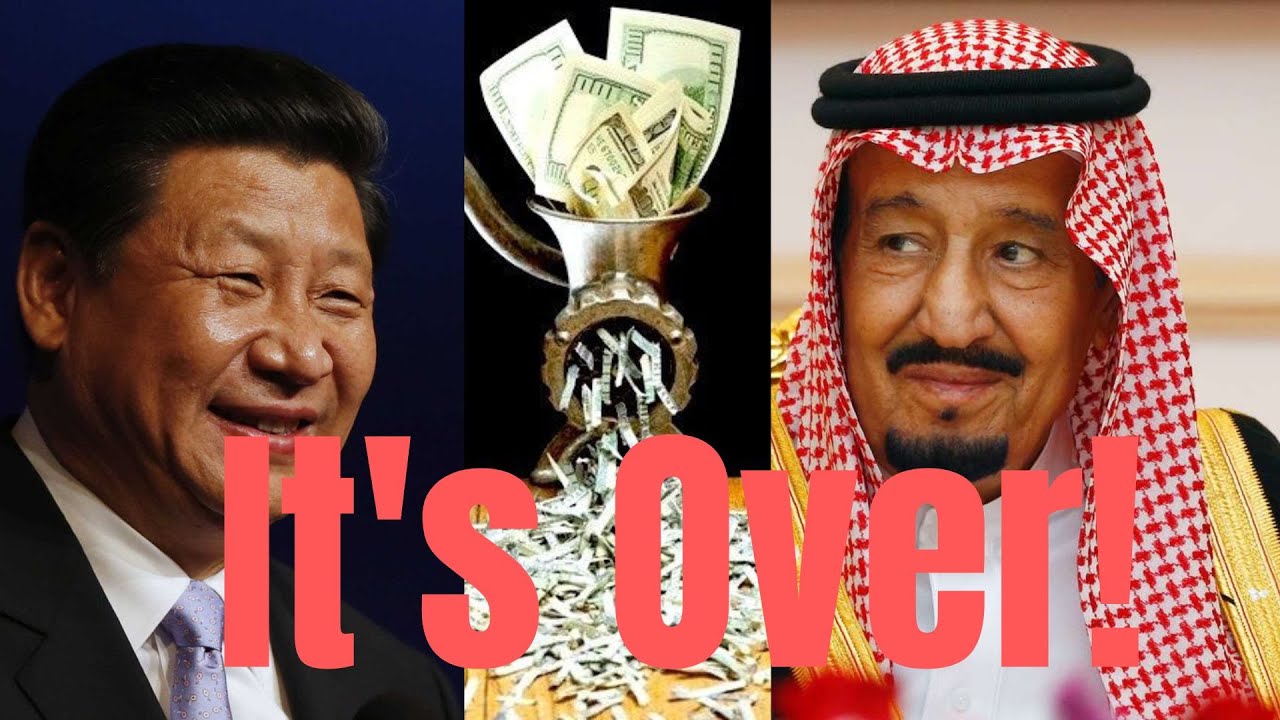
This content was created by David Oualaalou. This content was uploaded by David Oualaalou. This is a YouTube video titled "Fait Accompli: Saudi Arabia Adopts Chinese Yuan RMB! Here’s why!!" (published March 22, 2023) presented by David Oualaalou. It is a geopolitical/economic analysis in which Oualaalou explains and assesses Saudi Arabia's move to conduct trade and financing with China in renminbi (including a China Exim Bank loan cooperation with the Saudi National Bank), the integration with the Belt and Road Initiative, and the broader implications for de-dollarization and the global financial order. He cites trade figures (e.g., ~ $116B China–Saudi bilateral trade, RMB cross-border settlements of ~7.92 trillion yuan in 2022), discusses similar moves by other countries (Iraq, Iran, Turkey, Russia, India), and concludes this signals a gradual shift away from US-dollar dominance toward a more complex, riskier emerging order. Metadata: YouTube video, thumbnail provided, created 2023-03-22.
Chapters
Hello everybody and welcome to Geopolitical Trends. My name is David Oualaalou. So good to be with you as always. Well, well, well, it's official. Saudi Arabia now is trading with the Chinese using the yuan, renminbi. Yeah, whoever thought? It's official. In this video, I'm going to provide you a brief assessment as to the long-term implications geopolitically and economically, uh, about this deal and how it will change the global financial system, whether the West likes it or not. So, but before I'll do all this, as always, I like to extend my sincere thanks to the channel's members and also to you subscribers. And if this is your first time landing on this channel, please make sure to subscribe and smash that notification button so you will be notified every time I upload a new, new video or I'll schedule a live stream or something like that. So, and thank you all for your support. Let's dive in into this because it's a very, very fascinating topic, very interesting, and yet you're gonna be hearing soon about it a lot. So I wanted to come on the air quickly, uh, and provide you insights. It's something— it's, it's a topic I'm very familiar with as far as the countries, mainly Saudi Arabia. So So here's the deal. I'm gonna provide you just brief background. The Export-Import Bank of China, known as China Exim Bank, made the first loan. Yeah, that's the keyword, a loan. Made the first loan cooperation with the Saudi National Bank, which is the largest bank in Saudi Arabia, not in the US dollar, in renminbi. And you want renminbi. You know, and this will facilitate now the financial cooperation under the framework of the China-proposed BRI, Belt and Road Initiative. Yes, because Saudi is going to be part, are part of the BRI, and now the financial aspects will be merged. That's what is very fascinating about this one here. But there are two elements we have to look at this, you know, put in my geopolitical analyst hat. I'm going to have to address two main factors that you need to put in perspective. Like I said last time, always, always think of the big picture. So I'm going to address the economic aspect and I'll address the geopolitical. So from an economic perspective, the funds or the trade that is will be preferentially used to meet the demand of China-Saudi Arabia trade projects. In other words, Saudi Arabia officially decided, okay, it's time for us now. Any bilateral trade with China does not have to go through the US dollar, through the SWIFT system. So, and this is what exactly the, uh, the China Exim Bank stated. So, and I will provide you a link to all this, by the way, because Yesterday when I posted the— when I had a post, some of you were asking why we can't see this on the Western media. You're not going to see it yet, you know, it will come later, but I will provide you a link is where that information is, is all about where it came from rather. So the move, in my opinion, it shows the rising role of the yuan or renminbi, you know, not only in bilateral trade but on the international stage, which is now— because here is the key again, here's what I want you to pay close attention— it's moving from trade settlements to loans. That is the key. That is what's seismic about this from a financial perspective. So, so the cooperation follows the implementation of the comprehensive strategic partnership agreements that both countries have signed, Saudi Arabia and China. When did they sign it? Just December last year, which is only what, 3 months from now or 3 months prior. That's how interesting that is. So this is the first, this is the first instance of cooperation between Saudi Arabia and the China Exim Bank. You know, and this, as I said earlier, will help facilitate now the financing and trade among countries and the region along the routes of the Belt and Road Initiative and will achieve, believe it or not, a win-win for all. This is what's, what says Mick and what's important about it. So, uh, in saying it differently is now by having Saudis trading in the yuan or renminbi, what you're going to be noticing is that more countries in the Gulf region will be moving towards that. Iraq already did. Iran is already doing it. Turkey is on the move towards that. You can just see the trade, the, the, that, that sort of trend moving forward. If I am to guess, it will see Qatar soon. Soon you're going to see United Arab Emirates soon, Bahrain, so-so, Kuwait, so-so. But those are the main countries, and this is what you're going to be noticing moving forward. So China and Saudi Arabia have made much progress now in creating synergy between their strategies. And this is why conducting those bilateral trades or cooperation in various fields you know, in recent years, from the military cooperation to technology to, to petrochemical industry and so forth. You know, now with having the currency, the yuan or renminbi, it's going to make it now easier for the two countries. They don't even have to worry about the US dollar anymore. But here is the interesting fact that you need to keep this in mind within that big picture. China, uh, rather Saudi Arabia moved quickly into this because Saudi Arabia remained the single— yeah, get this, guys— the single biggest oil supplier to China as of 2022. Yeah, and bilateral trade between Saudi Arabia and China reached about $116 billion last year. It was up about 33.1%. That is major. Equally important, you have to think about also what's in it for China. Well, China imports— China imports from Saudi Arabia sort of stood at about $78 billion, up about 37% over the previous year. And this is according to China's custom data, and I checked that information, by the way, and this is accurate to my knowledge based on what I found and what I saw and what I read. So, so China's Ministry of Commerce stated in January this year, 2023, that during 2022, the total RMB yuan settlements in cross-border trade stood at about— get this, guys— 7.92 trillion renminbi yuan, which is the equivalency of about $1.1 trillion US dollars. That's an increase of 37% over the, over the year of 2021. This was in 2022. So while cross-border, cross-border Uh, the yuan renminbi settlement for direct investments stood at about 6.7 trillion yuan, or the equivalency of $979 billion US, which was up 16.6%. Uh, those numbers would not— do not lie, guys. The numbers speak for themselves. This is why, and again, putting my geopolitical analyst hat, this is why you are seeing more countries are moving into that direction of, okay, we're gonna need to stay away or divest or sort of rethink our financial strategy by embarking on maybe acquiring the Chinese yuan. That's what I see, because also has to do with the trust in the US dollar, the credibility of the United States. But also, we have— we Americans have weaponized the US dollar, and countries are saying to themselves, no, enough is enough, we're gonna move on. So, and by the way, guys, if you like this video so far, please, uh, hit that like button and subscribe if you have not done so. And I thank you for your support. Let's move on to the geopolitical realm. So geopolitically This is considered, in my opinion, a seismic change, and it will have a seismic impact in the global financial system moving forward. So the question you're going to be asking yourself is why, which is logical question to ask. Well, it is because the financial sector is part of the geopolitical calculations of any country moving forward. Saudis didn't do this because they care for China. You know, or China did agree to this because they care for Saudi Arabia. No, it's a strategic move. It's a business decision. It's strategic move, and it's a reflection of the changes in the geopolitical landscape. That is the reason why they did it. So, and it's going to benefit them anyway. So using history as my guide, what you're going to be seeing now is basically a a different setting in the Bretton Woods system. You all remember when Bretton Woods— during the meeting in Bretton Woods in Massachusetts, that's when the dollar became the global currency and the hegemon, that is. And because the financial system was set that way, now we're gonna be seeing a change to that, because the era of the US dominance, the US dollar, that is It's coming down. You know, the West does not want to accept this. Some do not even like to hear this. You know, that's like when you talk to people and they don't want to hear the truth because the truth hurts. Yeah, you know, there are some people like that. I'm sure you met some people like that. They are wishy-washy. They don't like to face the facts and hear the truth. Well, I'm here to tell you the truth because that's what I stand for. And some people do not like that. Well, that's too bad, you know, because those are facts. That's what I'm coming from here. So, so the renminbi yuan's growing momentum in overseas markets, you know, can be expected to continue, especially when you consider what Russia is doing and Iran is doing and Turkey is doing, Saudi Arabia, Iraq. And the Global South. Yeah, in the case of Russia, because Russia was the top, uh, it's considered one of the top 10 largest global economies in 2021, of course, because the natural resources and so forth. And of course, Russia, as we all know, is faced with unilateral sanctions by the United States, or the West for that matter. So, and this is why it makes more sense to see other countries moving forward. Even India now is trading with Russia using the rupees and rubles. They bypass the US dollar. So Saudis are looking at that and saying to themselves, no, we need to move forward into that direction before it's too late. As I said earlier, Iraq Central Bank already decided to allow trades from China to be settled directly in RMB. Yeah, Iran's Financial Tribune has stated that an Iranian official stated that Iran and China have recently talked— yeah, get this, guys— talked about increasing the share of their national currencies in two-way trades, given that the RMB yuan accounts for considerable a part of bilateral trade, and de-dollarization is on the government's agenda. Yeah, and of course Western media is not going to disclose this. It's because this is like a major dent for the credibility of the US dollar on the market. Make no mistake, make no mistake, the dollar still strong on the global market. You know, because what I'm talking about here, it's not going to change overnight, but this is the sign for it. Those are the subtle signs. And especially, I'm, I'm, I'm a student of history, and if I learned something in geopolitics is I always look at two main things: the financial aspects and the economic aspect. Because the signals that you can, uh, retract from there or get from those two sectors, the economy and the financial sector, uh, the financial, uh, system will tell you right there, will give you an idea where things are headed. And to me, this is what I'm seeing. So, so, and you all see what is happening, you know, as country after country now is shifting away from using the US dollar, given, as I said earlier, the trust in the US dollar is eroding with major economies looking at alternatives. That is what's at the heart of it all. So, and, and it's a reality, and, and this is why I wanted to come on the air. That's why I have this channel here. It's because I don't have formalities, you know, I just get on in a camera, record them, and share it with you here. So anyway, let me give you guys my brief conclusion here because as I always like to keep these videos short, concise, and to the point. So here's my conclusion for you. As I always say, try to see the big picture, okay? Because this is what— by having Saudi Arabia now embarks on establishing trade in yuan, basically adopting the yuan or renminbi instead of the US dollar, reflects the changing global order. And needless to say, the emerging global order will be more complex and potentially riskier, but is the reality we are living in. So like the saying goes, may you live in an interesting time. So I'm going to tell you, welcome to the new global order. As always, guys, I hope you find this very informative. And as always, remember, geopolitics impact your daily life in more ways than one. Till next time, guys, bye-bye.