Fait Accompli: Saudi Arabia adopts Yuan instead of US dollar in its trade w/China!!
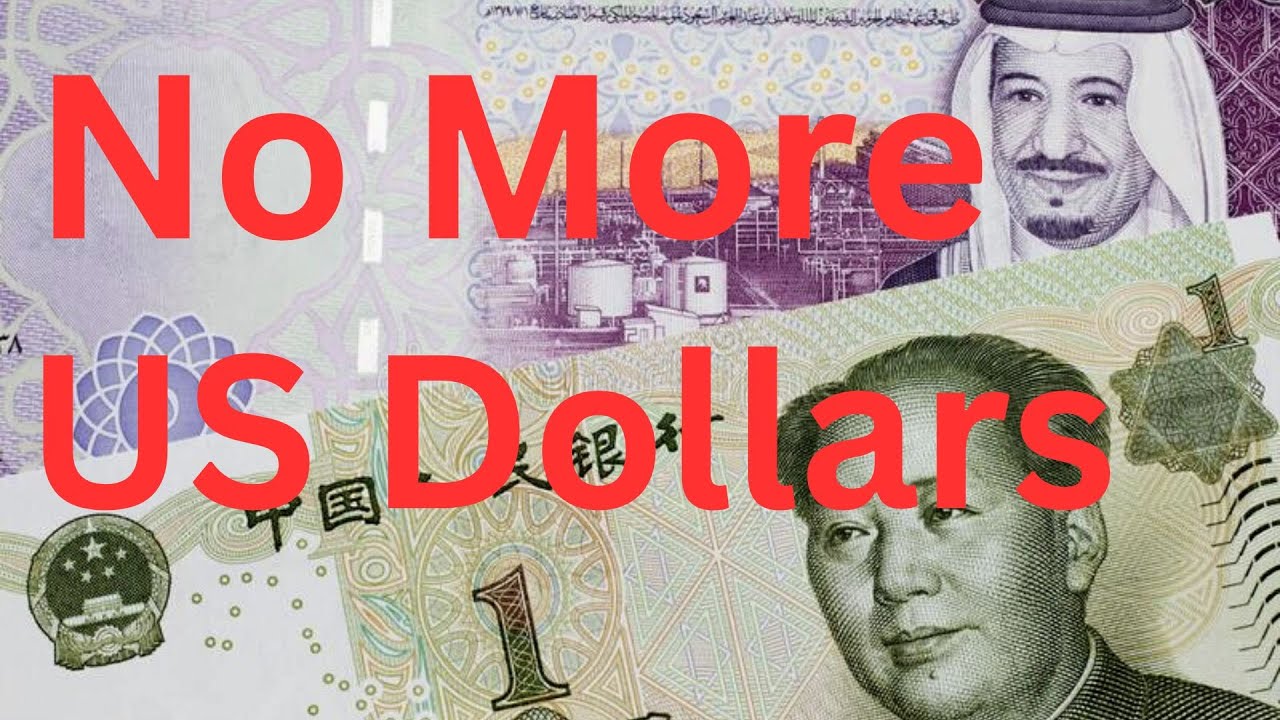
In a live‑stream titled “Fait Accompli: Saudi Arabia adopts Yuan instead of US dollar in its trade w/China!!”, host David Oualaalou explains that Saudi Arabia has entered into a landmark agreement with China’s Export‑Import Bank to receive a multi‑billion‑yuan loan, facilitated through the Saudi National Bank and framed within China’s Belt‑and‑Road Initiative. Oualaalou stresses that this is not a simple trade‑payment swap but a sovereign loan, marking the first large‑scale use of the renminbi (RMB) for financing a major oil‑producing nation. He connects the deal to the broader possibility of a shift from the petrodollar to a “petroyuan,” noting Saudi Arabia’s dominant role in OPEC and the strategic incentive for other Gulf and oil‑exporting countries to follow suit. The stream also revisits the historical creation of the petrodollar system after World War II, describing it as a secret US‑Saudi pact that gave Washington leverage through dollar‑based sanctions. Oualaalou outlines the geopolitical fallout: potential US retaliation, the strategic importance of US‑held Saudi gold reserves, and the growing trend of countries like Iraq, Turkey, and Iran moving bilateral trade into yuan. He briefly shares a personal health tip about garlic, engages with a global chat audience, and promises deeper follow‑up videos on President Xi’s visit to Moscow and a fintech interview with Richard Turin. The overall narrative frames the Saudi‑China yuan loan as a signal of a shifting multipolar financial order, with long‑term implications for global trade, energy markets, and US geopolitical influence.
Chapters
All right, all right. Hello everybody and welcome to Geopolitical Trap. Excuse me. My name is David Oualaalou. So good to be with you here. I know it's surprising. Usually I'll show up here on the weekends. Uh, this is a different circumstance. That is, it's because the nature of the topic. So So that is the reason why I'm here. So anyway, like I always do, and I'm gonna try to keep this brief, guys. I didn't realize, believe it or not, I didn't realize last time we had live, I was for 2 hours. It's too long. It's, it's too long. Now I can do 2 hours in a conversation with a guest, which I, I am planning on, on doing that soon. So any event, uh, first of all, like always, I like to thank you. Uh, I'd like to thank the channel's members, like to thank you subscribers. And if this is your first time, uh, uh, landing on my channel here, so please make sure to subscribe and always smash that notification button so you will be notified every time I upload a new video and so forth. So anyway, what I'm gonna be covering today, so I'm gonna be talking about the announcements. Yes, you are not gonna hear much about it You know, I checked the info, and to me, to my knowledge, looks legit. And I checked from two different sources, and I will put the link and all that because I recorded the video for you guys, and it will be released by the time it gets to my editor. Uh, he'll, he'll work on it and all that stuff, and I'll launch it for you. I'll release it for you with the, uh, link to where the information came from. But this is what I'm going to be talking about today. About the Saudi shifting to the yuan or renminbi. But this is not about that, it's about the big picture. Like I always say, the big picture. I'll be talking also about how significant that is. Well, how significant? Because it's moving from trade into loans, and I'm going to explain that. Then of course, the status of the, uh, the renminbi on the global level, on the global stage, that is, and the geopolitical implications. So that is what I'm gonna be talking about. First of all, like I always do, I like to know where are you joining me from. Let me just take a look here. I know it's a— it came up surprising quick here, but, but it is what it is. Oh, uh, Mike. Okay. Oh, my camera. Uh, thank you, thank you. Oh, here we are. SK Wong from London, good to have you here. So let me just see what part of the world you are joining me from. Uh, London is here. Oh, my camera is not focused. I don't know, maybe see, let's see here. Yeah, the tech is, is out of my, uh, my realm. So anyway, so, uh, let me see who else here. David K from Chicago, good to have you, man. Uh, uh, Scotty Dog from Mumbai, good to have you. Uh, BJ from Iran, good to have you. Uh, Nkulu Leko Shoba, I hope I pronounced it correctly, from South Africa, good to have you. Uh, Nadia Eva Chambers from New York City, you know, I remember you last time you were here. So Morgan from Australia, good to have you. Uh, Ervin, or, or yeah, Ervin Garrett from Kentucky, good to have you. Uh, uh, Jesus Aguilar from Pacoima, California. Yeah, what, where is that? Is it near big city? I'm, I'm familiar with the, you know, of course Monterey, LA area, uh That's about it. So let me know if you want to type where you're reaching me from. So, uh, Lena Taba from Canada, good to have you here. Uh, who is this? Uh, oh, Elizabeth Rob, uh, you said, I love Garland, he always makes me giggle. You know, are you talking about Garland Nixon? You know, You know, I, I know Garland personally. So, uh, Orwellian, good to have you again from Netherlands. Uh, oh, Wagner Group, interesting. Abkhazia, uh, you know, I don't know if anybody will be from South Ossetia, so interesting. Abkhazia, uh, all right, let me see who is— Jerome Sun from Philippines, uh, and Hormon from US. Good to have you. Big Nono from Czech Republic. Uh, Czech Republic, by the way, I always— my— I've never been there. Surprising. I've been around Eastern Europe, but I never get a chance. Uh, and I always wanted to go to Prague, you know. My dream is just to have an afternoon coffee in Prague. So, uh, Lover of the Russian Team, good to have you from London. A Lover of the Russian Team has always been supporting this channel. I truly appreciate you. I want you to know how much it means to me. So, uh, all right, let me see. Uh, from Oregon, good to have you. Uh, T from Philippines. Uh, Laos, Leo, good to have you. Mike from Chicago. Uh, Fabio from Brazil. What part in Brazil? São Paulo? Uh, David K from Chicago again, and Switzerland, Sam Info from Switzerland. I've been in Switzerland, I've been in Vallorbe. I'm sure you know, with the border with France, that's what I've been in. I visited one time there and I made one stop in, uh, one time in Zurich on my way to Far East. So, uh, Pikachus 55M, Manchester, UK. Are you a fan of Manchester City? So, uh, Elizabeth Rob, East Coast England. Uh, uh, Afala from Somalia. Who is this one here? Oh, David K. Uh, Garland complimented you on his stream this weekend. Yeah, yeah, I know Garland. You know, we talk frequently. As a matter of fact, I'll be talking to him tomorrow, and I'm gonna have him come over on this show, so I'm gonna have him here I will coordinate with him and all that. But yeah, I— Garland and I will talk, and I'm, I'm a frequent guest on their show at the, uh, uh, Critical Hour. Very interesting show, I tell you, because— and I'm not saying it to be Mr. Nice, you guys know me by now, I don't do that kind of nonsense— but it touches on the issues that matter. People need to know, and they don't sugarcoat it either, you know, they're stating the fact. And to me, I'd rather be a guest on a place like that that will help people understand, not just tell people what they want to hear. So, so I enjoy, I enjoy their show. Uh, uh, Jesus Aguilar. Oh, I see, uh, the city Poca Poca Mania, LA, in Los Angeles. LA is big, man. So, uh, all right, let me, uh, Brandon from West Sea Seattle, Washington. I spent time in, in, in Washington, but I used to go a lot to Spokane. You know, I had a short trip to, to, uh, Seattle, so Spokane where I used to go. All right, let me see one more here. Jimmy Star from Vegas, uh, HK from Connecticut, uh, Mr. Arne 59 from India. Uh, let me see one more here. Uh, I, I am so sorry I couldn't pronounce this name. I'm showing it on the screen here. Uh, Intim Beko from South Africa, good to have you here. Okay, uh, Arlington, the Pentagon. MM Arlington, so from Virginia, that is near, in, in near DC. So I used to live in Virginia, so I used to live, uh, on, uh across the river on Potomac. So you always used to drive near the Pentagon. So, uh, one love. Oh, thank you, you are most welcome, you are most welcome. So anyway, let me move on here, guys, because again, I have, uh, I have some other recordings I need to do for the other big channel. As a matter of fact, I will highly recommend you guys watch, uh, when it's released. I'm gonna be doing an analysis a long one about this, but I'm going to share with you here what I need to share with you. So, but first, let's talk about, uh, what's going on around the world just for you to see and know. Okay, where is my screen here? So, all right, let's move on to talk about what's going on around, around the world. Uh, so the first one I'm going to start with is the idea of, uh, highlighting the, uh, recent trip by none other than President Xi to Russia. That's where he's at. So yes, President Xi is in Russia right now as we speak. And, uh, there are a lot of— I just had a, an interview with an entity in Washington, DC, and they were asking me about this one here as to the purpose of the President Xi trip to Moscow. Well, as you know, they are close friendship, it's partnership, uh, there is just a matter of time before they move into some strategic of sort. And given where the world is headed, you can just see. Now there are those who say, well, President Xi is going to try to work out a deal, as far as ending the conflict in Ukraine. Ain't gonna happen. You know, I did talk about this one. The reason being because the West is already— the US, when I say the West, is the US. Uh, the, the, the rest of the West, the, the European Union, it's just, uh, uh, uh, a puppet, no more, no less. They gonna do what they are being told. Is no different than Canada, is no different than Australia. They are, or they will be doing what they are told. So Basically, the US has already expressed its opposition to any initiative that the Chinese might initiate to resolve the conflict. You also— and I did a video for you guys, uh, actually I, I recorded one for— yeah, I did that one, release it for you— for, uh, when China brokered the deal between Saudi Arabia and Iran. The US will not want to see that regarding the Ukraine. That's, uh, that's another issue that they are not willing to see because they don't want to. So what they want— what they, the United States, wants to prolong the war. So, so, uh, and that's all I have for you for the world. Now for the health segment, there is something important you need to know. Last time I shared the things with you about olive oil. This time I'm gonna share a secret with you about the garlic. And I do, by the way, any, any health issue that I share with you and all that stuff, I do it myself. I can't tell you something I don't do because I've been doing— like garlic. Why is garlic important? I do garlic every morning. I take a clove of garlic, you chop it up, let it sit for about 3 or 4 minutes, then just take it with water, a little bit of water. And what the reason garlic— garlic contains, uh, some sort of at least 33 type of sulfur compound which is very important for your body. One of the key is the allicin. That's very, very important for you. Garlic, you know, helps with blood pressure, of course, lower cholesterol, uh, it's reduce the risk of a heart attack. You know, garlic of course deals with the flu. I also have, uh, which I make this one, I prepare them for like 4 or 6 months and make jars of pure honey, and I dip garlic in. I put about 8 or 10 cloves of garlic and, and seal it and let it sit for 3 or 4 months. Usually you do that in the summer and you prepare it for the fall. This way you don't have any issue with flu. I don't get flu much. I don't, and I don't do medication. Medication is not good for you. If you only know the secrets in garlic, for example, olive oil or turmeric or cinnamon. Those are your best buy, as long as you stay away from junky food and fast food and all that stuff. So anyway, that is my health for you for today. So let's get in into talking about, uh, uh, the idea of, uh, why is this deal matters, you know. Now that we saw— now that we saw, for example, uh, it's been announced that the, uh, Saudis And the Chinese agreed now to deal with the, uh, uh, uh, the trade, the trade using the Chinese yuan. Well, usually how it works is that there is a bank in China called the Export-Import Bank, known as XIM Bank. It's called Chinese XIM Bank. I checked it out, it's legit, it exists. And again, I don't want to spoil too much because I am going to be releasing a video for you about this. The video is that my editors now is going to be working on it and we'll ship it for you. So here is the key that I want you to know. Why is this important? It's because this bank made the first— and this is the key— made the first loan. This is not about just a payment that the Saudis bought something from China and they paying for it with yuan. No, no, no, no, it's making a loan. When you make a loan, it's a different story, different category, and so forth. And the key to all this is making a loan in the Chinese currency. And this is in cooperation with none other than the Saudi National Bank. I've been in Saudi Arabia, I spent, uh, time there back and forth when I was still in Washington. The Saudi National Bank is one of the largest banks in the kingdom. So, and that is why now this is going to all be facilitated in the, uh, renminbi yuan, uh, facility, uh, currency rather. That is what's important about it. So, and the thing about all this is that the, uh, yeah, this is what it's going to be. It's going to be now that the idea of the financial, the financial cooperation between China and the Saudis is going to be under the framework— and get this, guys— framework of the proposed Belt and Road Initiative. You all see what's coming. You know, my reference is that Saudi is going to be part of the BRI, or they are part of the BRI, because they want infrastructure there. But BRI is not limited just to that part of the world. BRI is extending from all the way to Central Asia, cross all the way to the Middle East, cross all the way to Europe. That is what's important about it. So this kind of, uh, loan and so forth is done under that framework. So that is why it's very important for you to understand. And the bank, the China Exim Bank stated that, and I found a quote from their report, their statements. It says the funds, the funds, which means the transactions, that is, will be preferentially used to meet the demand of China-Saudi— so China-Saudi Arabia trade project. That is what's important about it. So, and again If there is one thing I want to get out of this is that this announcement, it's moving just from paying for stuff you buy. I mean, in Saudi Arabia, buy stuff from, uh, or import from China and pay for it. This is about making loans, a country making a loan to another country. And you all know these loans are not like $5 million, $10 million. Those will be in the billions. Just now, instead of being in billions of dollars, it's going to be in billions of the Chinese yuan, uh, renminbi. That's where the difference is. It's very important, is very seismic, seismic. That's going to be so, so, and this is where, uh, I see the idea of, uh, changing between, uh, uh, the dollar, meaning adopting the Chinese currency and getting rid of the US dollar, it's, it's a major— it's major. And why it's major is because now the next question you need to ask is, is OPEC next? The Oil Exporting Producing Countries, OPEC. Why is this important? Because who is the leading, uh, uh, uh, country in OPEC, and who holds sway over OPEC productions or cut off productions? Can anybody answer this one? Let's see if you can type the answer, uh, on the chat room. I'm gonna take a look at it. Yeah, who is the country that holds sway into, uh, uh, OPEC? Let's see quick if anybody can type this one, and I'll tell you. You're absolutely correct, Nadia. Yvette, Yes, it's Saudi Arabia. You're absolutely correct. So why is this important for you to know? It's important because if Saudi Arabia holds sway over the production of, of how much oil can be— can OPEC produces, and now Saudi Arabia sort of can get loans from China in that currency, wouldn't it be the logical question to ask as an analyst, could OPEC ditch the dollar and move to the, the, the Chinese yuan? In other words, switching from petrodollar into petroyuan? Because that's the logical question to ask. And if you think about the top producing countries, you got about the top 4: Saudi Arabia, okay, Iran, you got Iraq, Algeria to a degree, Libya to a degree, and that's about it. Nigeria to a degree. You know, but who we talk about the top, it's Iran, uh, Saudi Arabia. Well, Saudi Arabia first, then Iran and, and Iraq. That is why it's important. And the big picture of all this, like I said last time, if anything you get out of my talks with you and the knowledge that I share with you is the big picture. If you take into consideration when Iran and, and Saudi Arabia join BRICS, you already have Russia there. You got the top 3 oil producers in the world that they are trading in a different currency beside the dollar. You all see where the problem is for the US now. Okay, now here is the next thing that's going to be again another logical thing that you need to think about and consider. And that is, how will the United States respond? I'm gonna share something with you. It's not a secret, it's just you don't hear much about. And this is why there are certain things I share with you on my channel here, or the big channel, you're not gonna hear anywhere else. And we proud ourselves into that. We do have troops on the ground in Saudi Arabia. Now put the two together and figure what might happen next. So you all see what I'm getting at. So Saudi Arabia already mentioned or denied that it accepted that. Well, of course it's going to have to do that. There's also a reason for why Saudi Arabia would have to do that, because Saudi Arabia has so much gold right here in the US. The US can freeze that gold or freeze the export of that gold. That means the Saudis cannot get to it. It's like exactly what England is doing to Venezuela and India. There's gold in England that doesn't belong to England, and shame on the UK that is holding something that doesn't belong to it. You know, I'm a believer of, you know, if, if, uh, If something doesn't belong to you, you don't take it. And if you find it, you give it to the rightful owner. So England should do the right thing. But does England ever does the right thing? You know, and again, I'm not pointing fingers at England. I'm just talking facts. Saudis are concerned about their goals over here. As my friend Saudis— and I saw it with my own eyes. Now, if I didn't see it I won't talk about it. I had an opportunity a few years ago to go to the vault in Wall Street, down underground, and saw how much gold was there. It was about the— when I asked, and I asked the person there, and he— the person couldn't disclose to me the name— it was about $120 billion worth of gold that I was looking at, looking at gold bars right there. So So the next question will become, is this why Saudi Arabia denied this? Yes, of course it's gonna approach it that way, you know. But this deal now, it's gonna open up the door for other countries. We're already seeing the trend. You all remember the video I did for you guys about Iraq embracing the yuan in its bilateral trade. Mind you that, keep in mind Keep in mind, guys, that this trade is on a bilateral level. Don't confuse this with the— that idea of, oh, Saudis ditch the dollar. That is not the case. That is not the case. Where it's the concern for the United States with this is the volume of the trade between Saudi Arabia and China, which only gonna grow. Okay, and the much bigger picture, or much bigger concern the US has, is that, is that now China will be able to make loans to Saudi Arabia in the Chinese, uh, renminbi. That is where the concern of the United States. But for Saudi Arabia itself, it's not dumping the US dollar from the oil trade. Why? You go back in history, 1971 when we got out of the gold, in 1973 the oil embargo, and the decision that was made that the oil transactions around the world would be conducted in the US dollar. As a matter of fact, guys, here is the thing that I found out, that there are certain— you know, even with books, with books sometimes, uh, there is some inaccurate information. And I came across some sometimes, and I had to reach out to the author and, and just inquire about it. It wasn't like in a nasty way, whatever, just asking, you know. One of the things that is not known, and this is why I like teaching at the university, because I want to help the young minds see the big picture, you know. What has never been disclosed is that the decision about using the dollar for the oil transactions has been done after World War II, from way back, a deal behind closed doors between the US and the monarchy. Because remember, we the one who helped Saudis tap into their oil underground from the 1990s on forward. When the Saudis were established as a sovereign state in 1932, the first order of business was Conoco Oil at that time went and started establishing, uh, uh, drilling stuff with the Saudis and all that. That's how far back it goes. Of course, after World War II, with the Bretton Woods system by which we set with the Allies after winning World War II and told them, by the way guys, we like what— we like the New Order and we want to use our dollar as the global currency. And from now on, moving forward, you're only gonna be transact in the US dollar. That's what gives us leverage over the last 7 decades or so, to the point of we starting— we started to abuse this for last 3 decades or so, we start to abuse because we start to weaponize the dollar. This is where the concern for the United States about this deal with the Saudis. And that's why I said it's going to be paving the way for other countries. Like, we already see in Iraq, you already see in Turkey. Now Turkey is moving into that direction. Iran already did, but Iran, Iran already did with Russia. But Iran right now is talking to China about establishing a stablecoin of sort. Yeah, that's what's going on. So, and of course, you can ignore India and you can ignore the Global South. That is where this deal is very, very important for you to understand the big picture of it. And that's what I want you guys to know. So, well, oh, let me silence this because it's my time with you. Uh, uh, if you can type on a chat, please let me know, uh, the country you're in. If you— if, uh, do you see any signs of your government considering or thinking or addressing the possibility of switching to another currency? And the reason I'm asking this question, because first of all, I want to engage you into the conversation, uh, with me here. And second, is also to highlight to you the percentage of how much the yuan or renminbi has moved forward in the last 20 years on the global market. Here's the thing, uh, I looked at some financial stats, you know, and in 2021, as of 2021, still the US dollar was circulating at about 44% That's it. If you go back to about, uh, let's say 2 decades or so, the yuan-RMB was about only 2%. But if you go back to 2021, RMB-yuan, that is the yuan circulation, moved to 20%. So that tells you right there. Let me see what you guys wrote here. Uh, gold has an intrinsic value. That is true, that is true. So that is where the difference is. So whatever part you are watching this from, I am sure your government has been thinking about seeing where the trend— where the problem in whatever country you're watching the, uh, my live from. If your country happens to have a lot of debt that was acquired by the US or through the US loans. Why? Because that debt is held in US dollar. That's very problematic. We just raised interest rates, and you can just see the problem with that. So that is what I see with the Global South moving into that direction. So, so I want you to understand again the big picture of this. It's not just the Saudis dropped the dollar completely. They did not. But what the Saudis decided to do is to formally, officially— like, I use the term, it's a French terminology, fait accompli, and I speak French— so fait accompli, which means it's a done deal. That's all it is, done deal. It's a done deal when it comes down to taking loans from China in Chinese currency, not the US dollar. That is what system— that's what it's important about it. And again, because of the volume of the trade between China and Saudi Arabia, which only going to grow given how the wealth has shifted from the, from the, the West to the East. And I already talked about this, I don't like to repeat. Yeah, thank you, thank you, Muhammad, Muhammad from Egypt, and thank you for, uh, being here. But it's just funny, you wrote Egypt Uh, and it brought to mind another country, that is Egypt. I already made a video for you guys about it. So, and again, the trends, you have to see, you have to see that big picture where things are headed, uh, uh, uh, moving forward. And that is why you put this conversation within the global context. Now, those are economically. Geopolitically, you're gonna have to think in terms how this is going to shape the global order. Yes, it will shape the global order one way or another. Yeah, uh, let me see here. Uh, Ingenious KTH from Spain. What part in Spain? You know, I'm a very— again, I used to travel a lot to Spain, Barcelona and Madrid, of course, but there's also Sevilla and Andalusia, Algeciras, way on the south near Gibraltar. Across the strait to Morocco or something. Uh, what was I saying? To think of the big picture geopolitically. And why is this important for you to know? Because the financial aspect is part of the geopolitical calculations. Ask any country, especially when it comes down to either developing world or the developed world or the emerging economies. You know, they'll tell you the financial aspect is part of that geopolitical strategy. And this is exactly what the Saudis just did. It's the same thing what the Chinese just did. Uh, let me say thank you to— oh, oh, let me show this one here. Oh, thank you so much, The World Is Watching News. Thank you very much for your super sticker. I truly appreciate it. Uh, that's the big picture of all this, guys. Uh, geopol— the financial tool is part of the geopolitical, and the geopolitical calculations for both Saudi Arabia and, and China is simple, especially now, especially now that China was able to broker the deal with Saudi Arabia's arch enemy Iran. That's even makes it now even far better for all three. Like I said last time, a win-win situation. So geopolitically, it's because now Saudi Arabia and Iran can both truly influence the direction of the Middle East, economically speaking, because you don't ignore Turkey. That's a role it plays there. And you don't ignore Iraq's oil production. Iraq's produce— Iraq's budget is about 90% just from oil. It tells you how much oil into that. Let alone the Gulf countries— United Arab Emirates, Qatar, Kuwait to a degree, Bahrain to a degree, uh, Oman to a degree, Jordan to a degree. I don't count those countries, they're too small. So geopolitically and economically, this is what's going to be now the concern for the United States dollar. Why? Because you're going to be seeing countries in the Gulf like United Arab Emirates, like Qatar. Now you got Saudi Arabia, Iran, of course, maybe Oman soon, maybe Kuwait soon. All of them is going to be switching in their bilateral trade. Once again, that's another key word. When I talk, all I'm talking about here is bilateral trade. We're not talking global trade because the Chinese currency is not a global reserve currency as much as the US. It is part of the global baskets of currencies, and I don't think so China wants that at this point because it comes with a responsibility and all that stuff. And this is the problem we made for ourselves, we Americans. When I say we, I'm referring to the government, is we've weaponized the dollar to the point we start to use it in sanctions on any country that doesn't toe the line. This is why Australia couldn't say no to the US. This is what Japan could say no. This is why South Korea— this is why the weak, the EU, not all of them, you take mainly Germany and France and England. England is not part of the EU, but it is in the— in Europe. So, and this is why you have to take this into consideration. With the case of the Saudis is, is much bigger and much different. That is what I want you to understand, the big picture of all this. So, so I'm gonna, I'm gonna stop right here because, as I said, I have some other engagements to do and I have some recordings to do. But I want to go back here and answer a few of your questions. As I mentioned to you, be on the lookout for a video on this. I structured something for you. And I'm also, I also going to be recording a video for President Xi's visit to Moscow. It's a big deal. And, uh, again, I, I sort of, uh, make the videos that you guys can learn from, and you all know this. I'm not here to just fill out, kill the time, whatever. I, I'm, I have a busy schedule, very busy. But again, I respect you enough to allocate time for you and sit down here and address this with you. So, so I'm gonna go back and take a look at some of your questions if you have any. So, uh, David K, you are most welcome. So, all right, let me go back to the top here. So, and we see, uh, like I always, uh, mentioned, guys, if you have questions, just put, uh, uh, Q. That means this question. Uh, Multipolar World, good to have you here. You know, oh yes, I remember the, the fake, uh, uh, uh, weapon mass destruction, which was not none. You know, basically that one, I was against the invasion. I argued for it at that time. And, and the kind of, uh, you know, there's something we learn in the military, that the, the chain of command. There's, you know, you can only— the reason why I spoke out is because I couldn't go to bed, you know, go to sleep, uh, if I am to ask myself Did I give it 110% effort? It's almost like in this stuff here. Did I give 110% effort in sharing the knowledge that I have with you? If I do, then yes, I can go to bed peaceful, in peace, whatever. If I don't, then I said I shortchanged my viewers, or I shortchanged my country, or I shortchanged another fellow human being. And that it's— it doesn't work with me that way. If, like I always say, if I, if I don't— if you don't do things with passion, don't do it. Don't do it, because you become just acting. You become just fake, you know. And who wants to deal with that? You can spot somebody who fake things. You can spot them. You know the reason I always loved my students? Because they knew from day one I am not here to sugarcoat things for them, and I'm here because I care about them. They appreciate that, and I thank them for that, and I appreciate it too, because they could see. So same thing with you guys, and same with this back then invasion. I, I, I spoke up to the best of my abilities, and, and, and that's where it was, and we also— the outcome of it, Iraq is destroyed. So sad enough. So, all right, let me, uh, oh, Elizabeth, uh, what you're saying is the RAN are great, maybe you could go on their show. Yeah, if they extend an invitation, I'll be happy to show up. Usually I don't do this much, uh, and again, because I am very wary about anybody who claim to be geopolitical analyst, you know, I kind of You know, it's my credibility in line, it's my reputation, and I worked hard to get to where I am. I can't just waste that one. So I'm very careful as to whom I will go and do an interview with, you know, even the guests that I invite. I'm very careful about that. So, so yeah, uh, I don't know if, if they— if you are subscriber there, whatever put a note there, whatever. I'll be happy to show up if they ever extend the invitation, and I will do it. So, all right, let me see. Uh, Omar Turab from South Africa, good to have you here. All right, let me see if there's a question here. A lover of the Russian— yes, garlic is very good for you, take my word for it. Here in the US, of course, we don't believe in the Eastern medicine, you know. I know it, you know. I hardly ever see a doctor if I don't need to. I don't— if I get a, a cold, which I hardly ever get, I, I don't see it because medication— because here in the US, the system— and if you are an American watching this, the, the healthcare system is made to make you sick because it's about profit, it's about transactions. That's why If you are an American, I'm gonna ask you a question, you know, maybe outsiders might not know, but if you are an American, what are most cases of cancer in America are related to? Yeah, you think about it. What are most cases of cancer in the United States are related to? Yeah, they are related to food because of the GMO and the amount of whatever. So garlic is your best bet. So, and I've been doing it for, for, for a while now. So, uh, all right, let me see if there's question here. And, uh, and by the way, guys, while I'm thinking about it, uh, did I mention that the former president of Taiwan is in China right now? And if you notice, I didn't say he is in Beijing, he's in China. You know, I'm gonna do a show for you about that one. So, uh, I saw somebody from Finland here. Oh yeah, right there. Uh, I'm sorry, I don't know how to pronounce this name. GQ from Finland. Uh, I don't know what part in Finland. I was in Helsinki. I, I enjoyed— I always enjoyed Scandinavians, but that was back then. I won't, I won't, I won't go back right now because the governments in both Finland and Sweden are digging a hole for the Scandinavian countries altogether. Joining NATO is a big strategic mistake because both countries, Sweden and Finland, have lived with the Soviet Union and Russia for almost 50 years in peace because they were neutral. That is the difference. So, all right, let's go, let's go, let's go. Let's see if there's question here. Uh-oh, no questions. It's always interesting, just because understanding you know, where to fit the pieces to form your opinion. And by the way, I usually don't say much. I don't— sometimes I— it's not I leave things out, I want to trigger your thinking because I want you to start to think on your— because I, I'm— I would never ever reach a conclusion for you because that's not my place. You are independent intellectually. You can reach your conclusion. You're smart enough. I can just get a glimpse about you just from your wording, how you word things. And, and I've been around, you know, you, you don't get to be an analyst just overnight. So, uh, that is why sometimes I don't, I don't finish certain things, because I want to let you, uh, or give you that opportunity to reach that conclusion yourself. So, all right, let's see. Uh, and I'm scrolling down, guys, just to see if there are any questions here. Uh, David K, you are most welcome. He's saying thank you. You are most welcome. Omar, thank you as well. Uh, you are most welcome. So, uh Okay, so prospects on new global currency. Oh, that is an interesting one, uh, uh, uh, Sanket. Uh, to answer this question, you might want to go and watch a video of an interview I did with none other than Richard Turin. Richard Turin is a friend, he lives in Shanghai, and He is a— he is one of the top experts in the world when it comes down to fintech, finance technology. And, and, and as someone I trust, that's why I invited him on the big channel. So you might want to go and watch that interview. I just released it this morning. It's worth listening to. It's worth listening to because he provides insights you won't get anywhere else. And answer this specific question. So, all right, here's question from, uh, Eugene's question: What do you think of Biden's response when asked about the Iran-Saudi peace deal? It seems that he was the leader of the Israeli regime. Well, you forgive Biden. I'm not laughing out of laughing. There's medical conditions. We all By the way, we all could fall into that at one day, dementia. And again, this is not me making the diagnosis. I am not qualified, but I talk to people who knows this field inside out and understand the brain chemistry, uh, and, and I was informed that he has the symptoms and suffers from dementia. That's what it is. So, so I won't take Biden for what he says, you know. There's some reality that most Americans do not know. It was a reason to why Biden was pushed into running for office, because it's easy to manage him by moving him any direction the establishment wants, because he, he doesn't, you know, cognitively he's not all together. So, so whatever he says, it's not a— I won't take it out of face value. For that. Okay, let me see another question. Oh, The World Is Watching, thank you again for your super sticker. I truly appreciate it. Uh, watching from Haiti. Oh my gosh, that's very interesting. Uh, the reason it's interesting, because we don't hear much about Haiti, and yet we are the one causing the problem in Haiti. Yeah. If you only know the history of the French, what they did in Haiti— Haiti, it's for a reason why it is the way it is. We intended for it to be that way, and we want to maintain it that way. That's the bottom line to it. The dark secrets about what we have been doing for Haiti to keep it where it is. Yeah, so I appreciate you taking the time to watch my live here, and I appreciate you for your Super Sticker. You know, uh, it means a lot to me because knowing the economic conditions in that country, I truly appreciate you for that. It means a lot. And this is, again, it's you guys, people like you all, what keeps me coming to this. So, and I'm not saying it to be Mr. Nice. Uh, all right, let me see. Here is another super sticker from Mr. Tommy 02101. Thank you so much. And you wrote, good job, my friend, we hear you in Belgium as well. Uh, yeah, it, it really saddens me to see. As I always say, I have my family in Europe, so I'm very familiar with those countries in Europe. Belgium. I used to go to Brussels. I've been in Benelux, you know. I used to travel through to get to Holland when I used to drive from France. Libéralisme used to get through that. Belgium has always been about— all of a sudden you're seeing where the policies are going, and it's only the Belgian people and the European, for that matter, that are suffering. It's not the elites. That, that is where my problem is. So, so I thank you very much for your super sticker, and I thank you for your kind words. Okay, Ariel, here is Ariel from Argentina. Good to have you as always. This question: do you think there is an alternative to gold standard like the so-called work standard or Silvio Gesell idea in world finance? Pretty tricky question. It is tricky question and I can't answer it, uh, Arian. I am so sorry. Uh, what you might want to do, if you can take this question and go ahead and post it on the video that I released today on the big channel with Richard Turin. Turin, this is his area. He will answer it in no time. You know, for me, I'm not qualified and I can't speculate. I can, uh, I saw yesterday One of you put a comment about, uh, well, where will I invest my, uh, my, my money and all that stuff. I, I can't— I am not qualified to give an advice for that, you know. To me, it's common sense, but again, I'll do it for me because if I lose money, it's me. But if you lose money after I give you an advice, that becomes on me, and I don't like that responsibility because I am not qualified. Now you talk to me about geopolitics, I will be able to give you my advice if there's investments. And that's what I do usually for consulting, you know, when an entity reach out to me to consult those projects because they are investing serious money, so they need to know. And even when I do that, I don't tell them what they want to hear because they're gonna pay me for that. I care less for that because I make it clear from the get-go before I'll get involved. And I make it clear to their— whomever signing the check— what am I about to tell you, you might not like it, but that's not my issue. You asked me to provide you advice. It's something I'm very familiar with and know about. So, so for this one, I, I can't answer, Ariel. And I usually don't shy away from saying when I don't know, I say I don't know. So anyway, let me see, let me see one or some other question here. Uh, oh, super sticker from, uh, SC Lee! Thank you so much for your super sticker, I truly appreciate it. Uh, it means a lot, guys, to all of you, you know. Yeah, it means a lot, you know. Super sticker, usually it's an indication for how— that means my content makes sense to you, that means you appreciate it, and the fact you do, it keeps me going. And I, and I say it, that's, uh, that's what I do. Okay, uh, let me see another, another super sticker from Johans W. Thank you so much, Johans, for your Super Sticker. I truly appreciate it. It means a lot to all of you. No questions. So, uh, oh, let me see this one here. The Anna Kiblis, thank you again so much for your Super Sticker. And Anna, Anna Kiblis is from the Southeast Asia area without disclosing the location because it's his decision, not mine. I can't disclose people's decision unless they type it, whatever. It's my security brain, that's how it operates. You know, I always think in terms of security. When you are trained for years and years, security awareness becomes part of your, your, your daily life. That's usually how, how I do it. So, uh, let me see another. Yeah, that's about it. That's all I can see here from now. So, well, guys, I'm gonna have to close this because I have to, go prepare for other stuff. Uh, just to recap all this for you to see— oh, where is the other? So I can remove this one here. There we go. Uh, just to recap, uh, the Saudi-China decision, uh, for Saudi Arabia to acquire loans in Chinese yuan, renminbi. It's a big deal. It's a big deal because it will now alter the financial, global financial market, but not tomorrow. That is what I'm saying. These things takes time. But what you are looking at is the sign. Those are clear, loud signals as to where the financial system is going. And this is why I won't be surprised that probably we're gonna be seeing now, uh, the US launching a report about Saudi human rights. Abuses. We might, we might see tensions through in Yemen again. We might see, you know, it's just that's how the US operates, which is a, which is pathetic because that shows how ill-conceived. We don't have foreign policy. And when you embark on this kind of initiatives, that just shows the world that you lack substance. You don't have grasp, or you don't want to accept the truth and reality that the world is shifting from, uh, a unipolar to a multipolar. And that's the reality of it. So, uh, like, uh, the saying goes, may you live in interesting times. And you are in it, because historically you are in it. So you are witnessing the shift of global order. So, well, guys, I hope you find this informative, as always. And remember, geopolitics impacts your daily life in more ways than one. Till next time, guys. Bye-bye.
More from David


Beyond the Single Actor: Why the Gulf Isn't Choosing Between the US and China


Iran, Iraq's Militias, and the Houthis Are Coordinating! This Changes Everything




Who Controls the Next Decade's Resources? Latin America and Africa's Geopolitical Crossroads

The Chokepoint Trap: How Washington's Stupidity Triggered a Cascade That Now Controls the World

Trump Spooked as IRGC Unveiled dual-use SLV, Deployed Ghadir Mini-Subs & Hinted at Tactical Nukes!
