Foreign Meddling in Georgia? Will it Become Another Ukraine?
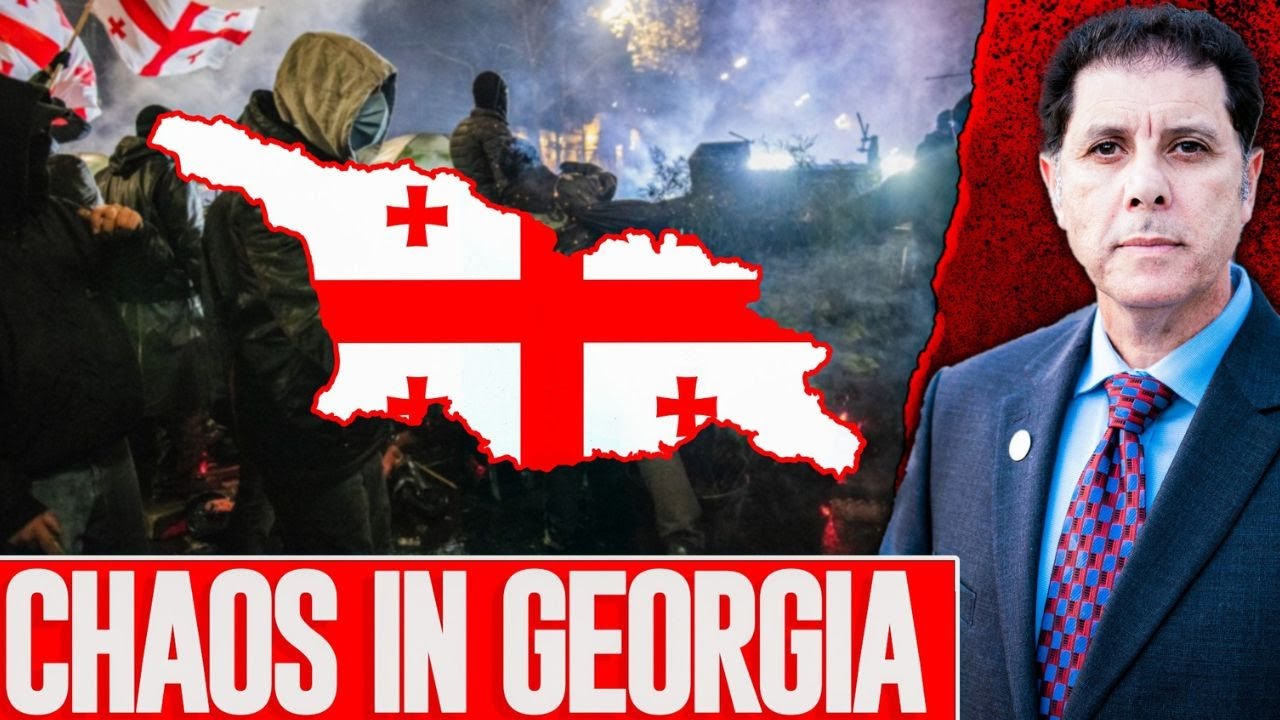
Georgia paused EU accession talks until 2028, a move the speaker frames as strategic independence rather than backsliding. The analysis connects Georgia's position to a broader geopolitical contest between Western and Russian/Chinese influence, examining how countries navigate competing pressures from the EU, US, Russia, and China.
Chapters
All right, hello everybody and welcome to Geopolitical Trends, where truth matters. Sorry for this late. Here is what happened. As soon as I was about to hit go live, it was like this blank of, uh, electricity went off, connection went off, everything went off. And I'm like, I just checked the, the modem just like 5 minutes before to make sure the light is on, the connection is fine, and everything looked fine. All of a sudden, as soon as I'm about to hit go live, everything went off. Let me turn the lights here because it shuts off. Here we go. And what was interesting, and I'm gonna share with this with you guys, only about 15 minutes ago I got 3 spam calls when I trade and they go back to Virginia. So read between the lines. I'm not saying that's what it is, but it just was odd and weird, and all of a sudden, uh, the timing of it. But anyway, it works out. It just reset everything, turn everything off, plugged everything back. And, and anyway, we are here. We are very excited to be with you. We keep it positive as always. I got an interesting topic for you This one has to do with the, uh, country of Georgia. Now let me tell you from the get-go what's going on in Georgia. They want you to believe that there are these demonstrations and there are this against that the government ruling and all that stuff. Don't buy into that. Don't buy into that. And I'm going to provide you the whole analysis, the details. The only thing that you need to think about is just take step back and think about other parts of the world, what's going on. For example, in Romania, for example, in Damascus, for example, even in Philippines, there is something just came out and I am waiting for a confirmation of certain things that will blow your mind away because of what's going on with this. So anyway, first let me say hi to our community. And thank you for not giving up on me, guys. Thank you for holding off here. So, uh, uh, let me see who is here. I want to say hi to our community. Willie Homan, as always. Truth Seeker, as always. Multi Tom, good to see you. Timeline Dunkley, as always. Ping Yu, as always. Rample 01, uh, who else? Taiwan Steel, uh, you are here. Who else? Let me see some names here., that I haven't seen for a while. So, Marcian Dorsier, as always, appreciate you being here. Phil, as always, good to see you. A.F. Gordon, Carlion, good to see you. Irene Z, Jesus Aguilar, good to see you. Muhammad Mazharuddin, good to see you. Okay, once again, guys, very excited to be with you because it's very interesting topic. So before I move forward, uh, I hope you guys got a chance to watch the video I released for you. Here is the link for those who did not see it. And thank you for— here again, the screen is flickering, the, the screen disappeared, it's back again, it's just weird. Anyway, and yes, I am gonna go get a new laptop by the end of the year, so in, in 2 weeks or so. Anyway, uh, to those who did not see the video that I released about my trip to China, and thank you for being patient because I told you it was something in works. I am starting to think about hitting it back to China, to Tibet and Xinjiang. So few months from now. So once I figure out the timing, I'm gonna let the community know for those— because remember, I know someone put a comment saying, oh yeah, because they paid for your trip, meaning in reference to the Chinese government. Let me just put this on a record, it was you, the guys It was the community that supported my trip to China, and I'm willing to do it again if the community is willing to support that trip again. So anyway, here's the link for those who have not seen the video yet. I'm also working on another video for you that I'm going to be releasing soon. Then there is one possibility of interviewing some, uh, someone in the higher-ups of the government in the Philippines. I'm not at liberty to disclose yet, uh, and I'm talking way up. Oh, I'm waiting, uh, till the right circumstances, and I will be happy to conduct this interview with the right questions for the individual. I look forward to that. So the other thing that I mentioned, a major issue in Philippines, it's not even covered yet, you know. And again, uh, if, if I'm waiting for some confirmation, and if it is, I'm gonna bring in someone who knows what— great deal about this one, because that person just informed me about it. So it'll make more sense to have the person, uh, breaking that story here for you, for our community. So, all right guys, let me start with the questions as to what's going on in Georgia now, what this chaos is all about. Once again, You're gonna, you're gonna be hearing, and it already has been disclosed, that all this has to do with the, uh, uh, the government, uh, cracking down or not allowing Georgia to join the EU. It's nonsense, I'm here to tell you. Second question is itself, why am I referring to here? I am referring to the country of Ukraine. You think Georgia? This is why I put in the title, will they learn anything from history? Third question, what is the endgame? What is the objective of this all of a sudden flared up tensions? You know, the same arguments I can make about Romania, what's going on right now. And I've been in Bucharest before, it's a laid-back country, Eastern Europe and all that. But again, it's what's going on in other parts of the world that the Western collective West is not willing to do. To accept. And the fourth question is the geopolitical complications. And all this is tied also to other dynamics that's taking place. Take for example, and I'm gonna share one particular, uh, uh, let me just share it with you here. I'll share the picture with you guys here because I need you to, to see. You might not recognize who this person is. Uh, because let me show her picture right here. Okay, let me, let me remove this one. Let me remove this banner also. There we go. And we'll show the picture. So now this person here is Alice Weidel. Alice Weidel is now the populist party frontrunner for the Chancellor of Germany. That's the candidate, Germany, because there will be elections coming up. Olaf Scholz, it's, it's, it's wet noodles. That guy needs to go. Now here is one thing about her, and you will think, maybe German people will think, Alice wants three main things. One is to stop arming Ukraine and end the war. And second, she is not a big fan of the EU. I'm not a big fan of NATO. So you guys read between the lines. And why am I sharing this with you? To put in perspective of what's going on in Georgia and Romania, and of course what just been discovered in the Philippines. So this is why it's important for you to understand. So, so let's get into our analysis. And by the way, I had a chance to read an article in Arabic language, believe it or not. That was, uh, written by an author by the name Fahim Sorani, and I read it in its entirety in Arabic. Of course, I read the English version of it, and it's, it's, it's, it's good, except that again, those authors are not geopolitical analysts. They are writers. So that might be just missing a little bit here and there, and that's when I came in to fill this gap for you. So, but nonetheless, uh, Mr. Fahim Sorani wrote a good article, uh, and I, uh, will share it with you, of course. So now if we look at the unrest that's taking place in Georgia now, you know, because now it's taking a sharper turn, very, very, very major one, and, and in light of one decision by the government. And the government decision was, you know what it was? They just wanted to freeze the negotiations with the EU till 2028. All of a sudden, the EU is making a fuss about all this. Well, it's because the government in Georgia wanted to slow down the talks with the EU because of the EU policies. Remember, remember the tensions between Orbán of Hungary and the EU about the latter, meaning the EU, forcing immigration policies on Hungary. And Mr. Orbán said, "No, we're not gonna just open our doors to whomever." Is the same arguments can be made about this one here, because the EU now is accusing the government of canceling the elections. Parliament ones that took. And this is what I need you to understand. Here is the, the key that I need you to understand is that the European, the EU, who controls the EU? It's the central banks. The central bank, the, the, uh, the central banks of Europe, the CBE. And I think, uh, still the head of that is, uh, none other than Christine Lagarde. The world, but used to be the world bank. But anyway, and the US is pushing to that, what the US is pushing on it for other geopolitical reasons. Why? Because if you create tensions on the borders of Russia, in addition to what just happened in Damascus, that's why I said now he is in Moscow, he fled. All of a sudden, the guy, Zulani, who used to be on the top of the terrorist list, now is a freedom fighter. You see what I'm getting at? Because you have to put all this into the, the context, the big picture. And the thing is that the European Parliament, when the Georgian government said, we would like to freeze the negotiations till 2028, we don't want to get into the EU today. It's their country, they can decide whatever. The EU Parliament end up responding by, by not refusing to recognize the parliament election, which basically puts the Georgian Dream Party— that's the leading one— the government, and its allies won the majority of seats in a parliament. You see the link, guys. This is what I need you to understand. So basically, the recent developments in Georgia, they are closing the window of leading to Europe once for all. In other words, the current government in Georgia does not want to go with the EU. It wanted to stay where it is. Whether it's gonna go with Russia or not, that remains to be seen. But as of now, they don't want the EU to impose its policies on Georgia. I say they are smart. They, meaning the people in the government in Georgia. You saw what's going— you see, you still see what's going on in Ukraine. And this is why you are starting to hear statements like, for example, a war on cancellation, meaning the government, it's getting into being autocratic. You know, so, and what is important about this from a geopolitical aspect? I need you to understand this, given Georgia's location, and I'm going to share geography and history to put it in perspective for you within a minute here. So is that Georgia now is going to be establishing itself as a new intersection between, in the chessboard, the geopolitical chessboard that is between Russia and Western struggle for sphere of influence, mainly in one particular region, and that region is the South Caucasus. That's what I need you to understand, because that is very, very, very, very crucial. So now, with Georgia now sort of, sort of pushing on what the EU wants to do, but on the other hand caught between Russia and the West, sort of it becomes now the ability of the EU to enlarge even further is in question because Georgia is saying, "We're not interested right now. We will be willing to talk to you in 2028." Well, to me, it's if we are to recognize Georgia as a sovereign state, then they are sovereign to decide on what they want to do. Who are we to dictate to them? That's like when we argued before you about the president-elect Donald Trump threatening the BRICS countries if they use another currency besides the dollar. Well, hold on a second, man. Who are you to dictate to other countries what to do with their own currencies? Same argument I will make. Now, where the challenge for the EU in, in, in general, but the US in particular, It has to do with the fear that if Georgia embarks on this path, meaning not joining the EU, it's gonna become another Belarus. And you all know what it means because both Belarus and Georgia on the doorsteps of Europe, something neither Europe nor the United States can afford. This is the geopolitical aspects of this. And this is why sort of the idea of why this all happens. So, so before I delve even deeper, let's go into some geography because I need to share with you. I came across this map in Arabic language. I'm going to share with you even though in Arabic language, but I'm going to read it for you here. Basically at the top it says Russia, Russia, that is. Middle is Georgia, Tbilisi with the capital. Then you have on the right Azerbaijan, Armenia, and Turkey. So, but I have an English one for you because I read the article in Arabic language. Very interesting when you read an article, its original form, because the original form of the article was not in English, by the way, just to let you know, guys. So, all right, let me get to the World Atlas map, to whom I give credit. And by the way, that map I shared with you, I I give credit to, uh, uh, World, uh, to— I'm sorry, uh, uh, Al Jazeera. So, all right, let me share screen, and I need you to see that one more or less. There we go. And I'm going to do a little bit geography and a little bit of history just to put it in perspective for you, because you need to understand this dynamics here. So, so Georgia is a country in the Caucasus region. On the coast of the Black Sea, situated at the dividing line of the continents of Asia and Europe. You know, it is located in the far southeastern region of the European continent. Georgia is positioned both in the northern and eastern hemispheres of the Earth. It is bordered by 4 countries. Uh, let me see if you guys can see that. Yeah, you can see this in the— ah, this map might not show it, but the other one is in Arabic language, not English. But anyway, it will— 4 countries: Russia to the north and northeast, Azerbaijan in the east and southeast, Armenia and Turkey to the south. Georgia is also bound by the Black Sea in the west. Now you understand why geography matters. So, and this is where the importance of understanding, uh, uh, why all of a sudden tensions flaring up in Georgia. And by the way, Georgia are known for some natural resources like iron, hydropower, gold, oil, and coal. So, so there are, there are some very interesting population now is about the last estimates that I looked at was about 4.9 million. That's about it. So, and the one thing also you need to understand, two things: ethnic distribution and religion. For the ethnic distribution, Georgia is about 83% Georgians, 6.5% Azerbaijanis, 5.7% Armenians, 1.5% Russians, 7% others. Regarding religion, 83.9% are Orthodox Christians, 9.9% are Muslims, 0.9% are Catholic Christians, 4% others, and 0.7% have no religion whatsoever. For the GDP, uh, let me remove this one here. For the GDP of, uh, of Azerbaijan is about $15.9 $1.2 trillion, and annual per capita is about $6,000, uh, with the sort of great, uh, growth rate of about 2 to 2.5%. So its external debt, however, is about $11.7 billion. So an unemployment rate, by the way, is about 15%. So I need you to understand this because it's very, very important. Now let's move into some history, and history is very, very important to understand, to put it in perspective. I'll put the link for you later on because, uh, the ones I read is very, very long. I'm not gonna read all that, of course it's too long, but suffice it that I'm gonna take you throughout the periods of Georgia, so, uh, of its history, that is. So Let me start with first, and it goes be way before the 19th century, which was during the Russian Empire. So, so let's go back to, uh, 6000 BCE, to between 6000 to 5000 BCE, and this is what you used to known as Shulaveri in Georgia. So, so what happened? Shulaveri, Shomo, culture. This is a culture, part of the makeup of the Georgian society, which flourished from the late 7th millennium BCE to the early 5th millennium BCE. It was an early Neolithic and Etnolithic civilization, that is. So, and this is where that civilization centered in the region, that region, the whole— let me Again, when you look at the map, it will make more sense to you. Sorry, I'm just gonna show this one because it's convenient and easier. So when you look at the location, when you look at Azerbaijan, Armenia, and part of northern Iran, this is where now where that civilization centered. I'm talking about back in between 7th and the 5th millennium. So, so this culture is is noted for its significant advancements in agriculture and animal domestication, so making it one of the earliest examples of settled farming societies in the Caucasus. So, and of course, archaeological, uh, uh, evidence, uh, findings from the Shulvaleri-Shomo sites revealed a society primarily dependent on agriculture. So, so I'm gonna move forward, guys, because as I said, it's way, way too long. If we are to go to Van Zoor culture— now, Van Zoor culture goes between 4000 BCE to 2200 BCE. This one here flourished in the late 3rd and the early 2nd millennium BCE, and is centered in the region of Georgia and around Vandasor, which is today Armenia. Academic scholars have argued and suggested that this culture might have been— get this, guys— might have been an Indo-European in its linguistic and cultural affiliation. So And of course it was known for a lot, a lot of developments, significant developments. For example, cremation regarding death or common burial, burial, burial practice at that time. So also the introduction of the painted pottery, that was also another one. So then we move into— I'm gonna just move forward here because it's a long— I'm gonna provide you the link, guys. Then the Colchian culture, which is a prominent Bronze Age civilization. This one, this one was situated in eastern Black Sea region and emerged by the Middle Bronze, uh, sort of, uh, era, if I may use the term. And this one was known also because by the end of the second millennium BCE some areas within this region have undergone some urban, urban development. So this is where you start to see, and because this is why during the Late Bronze Era spanning the 15th to 8th centuries, the Cloakists excelled in metal smelting. That's why they were known for sword and spears. Because the, the, uh, they just went down. If you look at, if you read more about the history of that part of the world. So then you go into the Persian rule, which was very influential in that. What happened in this one here is that the northern tribes in this region submitted to Persia in the 19th, uh, uh, uh, uh, uh, Satrapy at that time. So the northern tribes submitted to Persia, sending 100 girls and 100 boys to Persia court every year. So, and in 400 BCE, after the 10,000 reached Trapezos, which is a location there, they defeated the Colossians in a battle between the Persians and the Colossians. That's how it evolved, the influence of the Persian culture, that is. And I'm just gonna skip through to the Roman approach to when the Roman occupation of that, because the Roman Empire also occupied that part of the world. And that happened during the Roman occupation of the coastal region, not the whole place at first. And control was not tightly enforced, by the way. So, and why? Because it was evidenced by the failed uprising led by Anictus, Anictus in Pontus, and that was in 69 CE. That's usually where the local mountain tribes such as the Saventi and the Henochi, while acknowledging the Roman supremacy, effectively maintained autonomous kingdoms and continued sort of their raids on the lowland because they wanted independence. And of course, you all know, I'm assuming you know, the Roman approach to governance at that time evolved under none other than Emperor Hadrian. That was the one who sought to better sort of understand and manage the diverse tribes dynamics. Then talk about the arrival of Christianity because it's very, very crucial in understanding the dynamics. Christianity some sort of started making its mark inroad in the region around the 1st century. That's how far back it goes. And this was introduced by like figures like the Andrew the Apostle and others. Noticeable shifts in the cultural practices, like for example the burial customs, because remember they used to do cremation back then. They changed it later on. Other practices were embedded in the 3rd century. So, and despite of this, uh, the religious practices and so forth, uh, nothing has dominated, uh, the, the area. So tell you, you have to go all the way to the Kingdom of Iberia. Very, very important. Now, the ancient Kingdom of Iberia was located in what is now in today's modern-day eastern— I got a mosquito here, I don't like it, they're annoying— so, uh, through the early Middle Ages. So, and this plays a major role, uh, why is because Iberia played a significant role in the Caucasus region. This is why, guys, I always say remember history. And I remember back then, and I said this about, if my memory serves me well, about 8 months ago when I talked to you about something has to do with the Caucasus. And I remember saying, remember, always remember this: who controls the Caucasus areas controls the world, for that matter. Natural resources, geography, and of course it played a role throughout history. That's why it's very, very important. So, and this is why when the periods of the independence and subordination between large empires, like for example the Roman Empire, but also the Sassanid Empire. So, so it was geographically— the location here— geographically positioned between Cloaques in the west, Caucasian Albania to the east, and Armenia to the south. So, and, and again, early history, it moved on, and I'm not gonna go through the whole Kingdom of Iberia because it's very, very, very long. I'll take you to, I'm gonna take you to the 19th century, just so I can move on into the analysis. So because Georgia was taken by the Russian Empire in in the 19th century at that time. So after a long period of the Turkish and Persian dominations, this is why you see in the region, for example, of Nagorno-Karabakh still have tensions between Azerbaijan and Armenia, but also because the influence of two direct entities reflected in Iran, Turkey, and there is a third element is Israel, believe it or not. I'm gonna do an analysis for you as to why Azerbaijan, for example, is the quiet player that is fueling the tensions in Gaza. You will be surprised. So, and this, uh, the— so an independent Georgia state existed from 1918 to 1921 when it was incorporated into the Soviet Union. And in 1936, Georgia became a constituent union, that is a republic and continued as such until the collapse of the Soviet Union. So Georgia's early economy was based on, believe it or not, slave plantation system. Georgia was one of the first— the country of Georgia, not state of Georgia, for my fellow Americans, just to be aware in case they did not know that. The state— the country of Georgia was one of the first states to seed from the Union back in 1861. Wait a minute. So, and that is one of the, the, the differences that exist with this. All right, let me move into, uh, addressing the, the analysis as to really, really, really, really what happened or what's going on right now, uh, into, uh, uh Georgia. And of course, the importance of this is to understand that period of 1990, you know, a period of intense political turmoil and ethnic conflict, because it shaped the nation Georgia, that is most post-Soviet trajectory, uh, uh, uh, significantly politically and economically speaking. So, and of course, if you know anything about that time, used to be None other than Eduard Shevardnadze was a former Soviet foreign minister, returned to Georgia because he was born in Georgia in March 1992 to head the State Council, effectively serving as the president. And right after him came Mikheil Saakashvili, and I'm gonna get into all that one. So now let's get into how did we get here. So When you think about what the Western media is saying versus what it is, here is— I'm gonna provide you both arguments, guys, and let you reach your conclusion. Here is what the Western media is saying, is that 80% of Georgians support European integration according to a poll, okay? However, you need to understand one thing, is that many Georgians also feel a deep hostility towards Russia because Russia took over Abkhazia and South Ossetia in 2008. Why? It's because we told Saakashvili, this guy who used to be, uh, oh, by the way, he was educated in the US, and I'm gonna talk about him. We told him, hey, don't worry, you go and challenge the Russians, we are behind you. And poor guy, lack of understanding, lack of possessing depth in geopolitical and geopolitics, took the West and the US for its word. I mean, can you trust the West? So he went ahead and challenged the Russians. The Russians sent their troops, took over Abkhazia and South Ossetia. Why is this? Because Abkhazia and South Ossetia are majority Russian-speaking population. And it was over. They took over in few days, didn't take them that long. So, and this is why, uh, sort of, uh, uh, because you also have to understand, uh, since the beginning of the Russian military operations in Ukraine, you have about thousands, thousands of Ukrainians fled to Georgia to avoid conscription. Yeah, I've seen some horrible videos from inside Ukraine how they snatching young people to take them to the front lines. So, and the whole this saga was about parliament elections from the party that is called Georgian Dream. Georgian Dream party, and again, I'm going to be very, very brief into my conversations here. Because I want to focus on some aspects of this conversation here. So the analysis, rather, this one here, what you're looking at, you are looking at Bidziena Ivanishvili. Bidziena Ivanishvili, he is the one who founded— he's a billionaire, by the way— is the one who founded the Georgian Dream Party. And of course, he made his fortune in Russia. And now how he's being portrayed by the West is that he took a sharp authoritarian turn in recent years. So why? Because he was the one who pushed for— and I'm gonna quote this as it was written in the Western mainstream media. It says, and I quote, earlier this year, he pushed through a new Russian-style foreign agent law that allows the government to clamp down on watchdogs, alarming the EU, the US, and its political opponents within Georgia. And he continues, experts have now warned the suspension of the EU talk is another sign the country is on an undemocratic path under Georgia Georgian Dream Party, end of quote. Do you guys see the language? Do you read? Do you— can you read between the lines? Is the wording of it. This is why what you are seeing images versus what really is all about are two opposite narratives, because you have two entities inside Georgia: USA and, uh, of course, the three-letter agency. So inside. So read between the lines. That's just how it is, uh, being perceived. Now you have also the, uh, some scholars per se which are funded by Western think tanks are arguing that what the government did, it shows now that sort of there is no more democracy in Georgia. So, and that is why some argue that it is becoming state that is non-democratic and free where liberty are not respected, end of quote. Well, if I am to challenge those voices who are saying this, how come they don't talk about even for us here in the United States? What happened to when I say something and all of a sudden is being censored or shut down? What happened to that freedom of speech? So what makes it right for us to say about other countries but not us on ours here? So even the State Department, our State Department, went ahead and stated, and I quote, the excessive use of force by police against Georgian, and said it was suspending the US-Georgia strategic partnership due to anti-democratic actions by the ruling party, end of quote. Well, the Georgian government doesn't care. They are moving forward whether the West like it or not. So, and those demonstrators are being sort of funded. You all remember Hong Kong. You all remember Ukraine, Kiev, back in 2014. You all remember now, you all now think about what's going on right now in Romania, in Bucharest. It's no different. And that is why I wanted to highlight to you this and do this live stream for you, because you need to understand the dynamics of what's taking place. Now, this is the clash between the law enforcement and the demonstrators. So now this leads me to talk about the current president of Georgia. Her name is Salomé Zourabishvili. Now, Salomé was born in— she's a French-born Georgian politician, so she's a French citizen and Georgian politician, Georgian citizen as well. So currently serving as 5th president, and she's the first female president. So And of course, as a result of the constitutional changes coming into effect this year in 2024, Zurabishvili is expected to be Georgia's last— he will be the last popularly elected president, which means what? They're going to move into parliamentary college of electorals. And I'm not going to get into That has to do with the Electoral College and so forth. We don't know how this one ends. So, but she is now, she's gonna, uh, her, she's gonna end her term in about 8 months. This is why she's pushing for the arguments about, uh, uh, why Georgia is descending into chaos. No, because she is pro-Europe. And as a matter of fact, she had the push by the European and the US to put her in that position. So before that was none other than Mikhail Saakashvili. Now, Mikhail Saakashvili, which is a— this guy is actually, believe it or not, he has both citizenships, Ukrainian and Georgian. So, so he was appointed as a governor of Odessa between 2015 and 2016 before quitting and, and being stripped of his Ukrainian citizenship. So one thing I need you to understand about Shevchenko is that he was graduated from a university in Kiev, but also he pursued his other graduate degrees in the United States, in the US, France, Italy, and the Netherlands. And in the US, he was at Columbia University in New York. That's where— and he became— he was a lawyer by trade. So, so my point in all this, he was also involved in some— he was imprisoned for violating the law and so forth. So, and this is what I need you to understand, the dynamics of what's taking place in Georgia. It's not in a vacuum. There is a reason for why these tensions are happening. This is the Prime Minister of Georgia who is pushing forward with the cancellation of the conversation with the negotiations with the EU. He's saying, we are not ready to talk yet. So, and in my opinion, the EU should respect the wishes of the Georgian government because it's their country, they can decide whatever they want. So this is why I wanted to do this, because I wanted to highlight to you the other dynamics that's taking place regarding, uh, remember that even Georgia is going to be playing a role into the BRI, the Belt and Road Initiative. Put the two and two together and see the link. That's what I need you to understand. Of course, what's taking place in Georgia— and I'm sorry, in Romania, uh, and all those dynamics, uh, makes very, very interesting, uh, developments to witness by highlighting, oh, this is all about lack of democracy, lack of this, lack of that, when in reality you and I know has nothing to do with the truth per se. So, so this is what I needed to share with you. I am very keeping an eye open on this lady here, Alice Weidel, and if she wins the chancellor in Germany, you're gonna see a pivot. Of course we're gonna undermine that by any means, but if German people are smart enough. But again, it's their country, they can decide whatever they want. So, all right guys, that's all I have to share with you. I'm not going to waste too much time here. Uh, appreciate you being here. Sorry for the hiccup earlier. I don't— I think I got an idea what happened, but, uh, uh, it is what it is. So, uh, I am, I am watching what's going on in Damascus now. Because I've seen that movie before, uh, exactly what's going on behind the scenes. This has nothing to do with the, the, the freedom fighters and all that. We all know who's funding that, who's providing all that. All that stuff is, uh, is— it was, uh, because here's the thing, Europe is very concerned, the US is very concerned about now having that wave of the far right coming to power and with that kind of change to policy. And of course, with the election of Donald Trump, who is, by the way, pushing into that direction of why are we paying for Europe defense? And rightly so. Do I agree with Mr. Trump? No, I don't. But in certain aspects, you give credit where credit is due. And this is why you are seeing the kind of those developments in certain key countries, because in the case of Syria, you will ask yourself that the Russians have limited the kind of airstrikes on those groups. Uh, this was a sign also that Russians may be coming to the conclusion this is going to have to take a different directions. Could it be, could it be that the Russians calculated that they're gonna put a trap for Donald Trump, because Syria now is going to be a hole moving forward. Because those guys that they took over in Syria now, Israel is very concerned. That's why it moved its military to the Golan Heights, because those are not friendly to Israel. So Israel now is going to be very, very concerned. It's just that's how it works in geopolitics, you know. Now, will they agree? For example, these groups in, uh, HTS, uh, uh, uh, Hayat Tahrir, uh, uh, will coordinate with Hezbollah? I don't think so. So, but you can just see how things is going to move. In the case of Europe, the case of Europe, it's very important to understand where things are headed. And again, you have elections coming up in Georgia in about 9 months or 10 months. You got the elections in Romania, which by the way, the EU wanted to cancel. But hold on a second, who are you to cancel the outcome of an election? If the Romanian people do not want to align with Europe, let them be. They don't want to align with Russia either. They just want to be neutral. Let them be. But I think this has to do with the economic— that China is expanding to Eastern Europe bloc with Hungary and Serbia. Remember the visit of President Xi to, to the region there in, in last few months? This is why EU is like gasping for air, you know. And if this lady in Germany wins the chancellery, you know, uh, you're going to see the same reflection in France, for example. In Italy, even though Giorgia Meloni in Italy is reversing course quietly, but it's too late for that because to me it's always about if you couldn't take stand when it matters, then what's the point? That's just the way I see it. So, and that's how, uh, it, it's gonna be moving forward. And, uh, and I just wanted to do this for you guys because you need to understand, uh, I can't just focus on Asia the entire time because there are other parts of the world that you need to learn about and know about to expand and broaden your intellectual knowledge about what's going on, to be able to put that picture, the geopolitical arguments for why events are happening. The one, for example, now in Philippines, I just got the word this morning, is troubling, is very troubling. And I don't want to get ahead of it because But once it's confirmed and the person who talks to me about it, I'd be happy to, uh, have the interview here on this channel. The same thing with this higher, high-ranking individual in the Filipino government. I'll be happy to interview him or her once they agreed to come to this. So, hi guys, I, uh, I'm glad you're able to join me here. You didn't give up on me. When the connection went out. And I look forward to seeing you maybe tomorrow. So as always, remember, geopolitics impacts your daily life in more ways than one. Till next time, guys. Bye-bye.
More from David


Beyond the Single Actor: Why the Gulf Isn't Choosing Between the US and China


Iran, Iraq's Militias, and the Houthis Are Coordinating! This Changes Everything




Who Controls the Next Decade's Resources? Latin America and Africa's Geopolitical Crossroads

The Chokepoint Trap: How Washington's Stupidity Triggered a Cascade That Now Controls the World

Trump Spooked as IRGC Unveiled dual-use SLV, Deployed Ghadir Mini-Subs & Hinted at Tactical Nukes!
