From Geopolitical Concerns to Cross-Border Payments: The Key Outcomes of the BRICS 16th Summit!
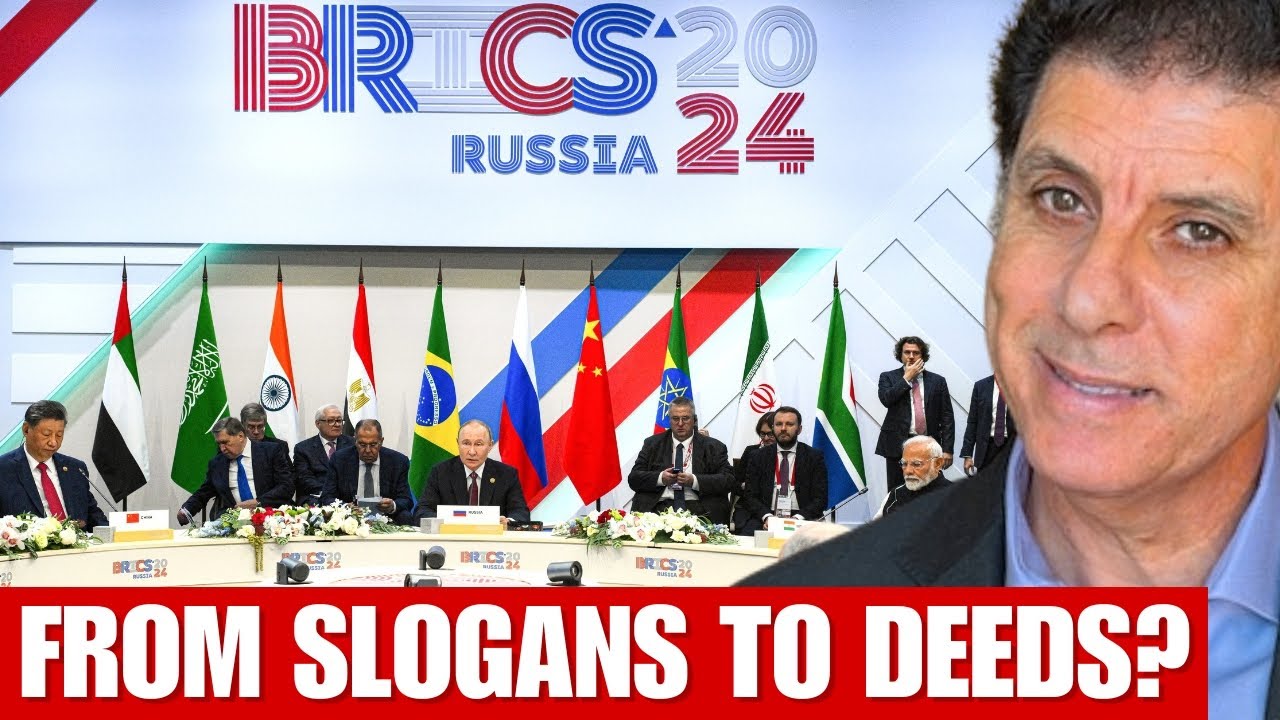
David Oualaalou breaks down the BRICS 16th Summit's major outcomes, from geopolitical tensions to new cross-border payment systems. The bloc is pushing alternatives to Western financial infrastructure as member nations navigate competing interests and regional conflicts.
Chapters
All right, hello everybody and welcome to Geopolitical Trends, where truth matters. Excited to be with you as always. So back here, back home, I feel well rested. So after the long 13.5-hour flight from China, so I'm good to go. I'm, I'm very, very excited to be, uh, back here of course and be with you. First of all, before I do anything, my apologies for the delay. Something came up that I had to make some changes because I didn't expect it. So I'm glad you guys didn't give up on me and left. So second thing, I want you guys give me a thumbs up if you can hear me, because I'm using a different sound system here to make sure, uh, before I move an inch, I want to see a thumbs up if you can hear me loud and clear. So I'll wait till I see a sign from you guys here. I know there's always a delay in, uh, in communication here through, uh, YouTube, but, uh, hopefully I will see a sign that you guys can hear me. YT, uh, thumbs up, thank you so much. So, uh, Timeline Dunkley, good to see you. I saw you changed your screen image. So, uh, Ahmed, thank you very much. Thank you guys, truly, truly appreciate you here. So All right, uh, uh, today's topic, I will be talking about the BRICS, and I know I talked about some of it yesterday from an economic— today I'm going to tackle the geopolitical aspect. There is a much bigger picture into all this, and there are of course some, uh, developments that took place also while the, the summit was concluding, uh, and, and I'll, I'll tackle on that one, uh, in addition to some comments from some of you like Hangin' G Uh, uh, good evening to you as well. Send some comments. I hope you guys get a chance to read the comments Hang Enji puts out for the community. Very, very informative, factual, and, and, and it will be of benefit to everybody. So, but for— before I'll do all this, and I'm gonna go back to the— where the comment section where I see everybody there. So I just want to say hi, Willie Holman, as always. Hang Enji, as always, good to see you guys here. Uh, who else? Matt Backey, here you are. You too, Z Super. Elisa Lewis, good to see you. Brianna Olivia, good to see you as always. Uh, YT, good to see you. Hong Nguyen, good to see you. Uh, uh, as always, Timeline Dunkley. Uh, Macian Dorcier, Truth Seeker. Uh, um, uh, Ahmadovich Nas, good to see you. Uh, Johann Slan, good to see you here. DMG Ninja, good to see you as well. So, all right guys, let's get into a topic because there's a lot I need to cover into all this. And of course, before I'll do this, uh, I am gonna be looking into what took place between Canada and India. I got an idea of why that is, but I don't assume. I'm gonna delve deeper into this this weekend and probably will do a video for you next week. If it is about what I'm thinking about, I, I have a name of someone who is the head of the movement of Kalinistan in Canada, and I was asked if I'm interested in interviewing, uh, the gentleman there. So I haven't made a decision yet. I'll see and I'll go from there. Second thing is I'm gonna be looking into Israel-Iran, uh, the tensions that are growing and the preparations for whatever might happen next. I wrote a book about Iran. I tackled this aspect of the possibility of a war. So I'm going to be looking into that. I couldn't do it from when I was in China because the trip for China was for different reason, so I wasn't, uh, going to do it from there. So, so now let's, let's consider the summit, the 16th summit of BRICS that just concluded in Kazan, Russia. And like I mentioned in the title, from geopolitical concerns to border payments, all this is taking— and anything in between And this is where BRICS moving forward into that direction, and that also moves, uh, for, uh, or paves the way for us to ask the key question: is now BRICS walking the talk, per se? Is it moving from slogan to deeds? Is it going to be more relevant and making a dent in the international order? You know, those are relevant questions that we ought to ask. And I have some key questions, I'm going to share them with you on the screen here. That I, uh, prepared yesterday when I was reading the final communiqué. I took a look at it. I have a link. I have some pages that I'm gonna reference to because they are very, very important, uh, to understand. So here are some key questions just to ponder about. So is BRICS at a point of no return? In other words, is BRICS now moving forward into the direction for which it was created? And that's something you guys need to really, really think hard about, and I will be glad if you could share your input in the chat box. So, and not only from an economic but also from a political aspect. Second question, because what came out of this on the sideline, it was the meeting between India and China, which by the way, I will do a detailed video about this agreement because there is more than meet the eye regarding this. So, but the question we need to ask is Can India and China really work out their border differences? Because it's a key. So third question is, who got the most out of this summit? Because if anytime you have some sort of an international gathering, gathering, there are always some winners for whatever reason, because that's part of the game when it comes down to geopolitics. You know, it's the strategic interest. And we ought to ask that question, uh, over, over here as well. So, so, and this is what I'm gonna be addressing in this analysis, is the key, uh, uh, uh, uh, the takeaway key points. I'm not gonna stress all of them, uh, uh, they— I think they are about, uh, uh, depends again where you get the, the, the, the, the PDF documents. So if you put it in Microsoft Word, it will be about 42 pages. If you put it in a regular, it will be about 32 pages. So, so I had a chance to look at it, and I'm gonna be sharing with you some of that. So, well, as we know, there were about 36 countries attended. Some reports here in the US mentioning there were 20 countries. The reports that I looked at mentioned 36 countries. And this, to me, you have to think the big picture. This one highlighting the US, you know, okay, the US, or the failure that is of the US uh, led efforts to isolate Russia because it became clear now when you get 36 countries going— as a matter of fact, to Russia, this is the largest foreign, uh, relations gathering ever. So, and because this to them is one of the highlights of the largest foreign policy, uh, events that ever been held in Russia, and that means a lot to them, but also Like I always say, guys, in international relations, context matters. The fact that you see, for example, uh, and I have some pictures here that I am going to be sharing with you, if I, I, I think I have one. Yeah, the fact that you see, for example, the, uh, President Xi attended a summit with the Russian president, one-on-one bilateral one, that is, it's significant in my opinion. It says a lot. So the West, of course, going to minimize the impact of something like this, but we should not refrain from asking the key question: is BRICS now finally moving from slogan into deeds? So, and of course, one of the key aspects of this summit was to challenge or find the— or develop an alternative, uh, uh, uh, sort of a channel or, or, or medium, or ways, whatever you want to call it, to Western-dominated payment system. Because the financial aspect is the key. The US is already concerned about the role of the dollar, or the decline, that is. Asimov, of course, what I'm saying is doesn't mean the dollar is going to cease to exist tomorrow. That ain't gonna happen, I'll tell you this right now. Second thing I can tell you is the US, my country, is not gonna go down quietly about this particular— there are already preparation in the works in South China Sea, and that tells me right there where the next conflict is going to be. So now, one of the key aspects of this summit here, before I'll delve into the, the, the, the takeaway points, is that the 3 countries that attended— those are not attended, but rather the ones that, uh, applied formally Turkey, Azerbaijan, and Malaysia. Very, very, very interesting. Now, when you think about especially Azerbaijan, so, and I've done some, uh, speaking engagements about, uh, that part of the world, uh, just to highlight the importance of it, especially now when you consider the BRI. This is one of the reasons, one of the reasons why we are ensuring the tensions persist regarding Nagorno-Karabakh between Armenia and Azerbaijan. It was for a reason. So, uh, I had a chance to read, uh, uh, an analysis, uh, by, uh, uh, he's a PhD holder, uh, by the name of Farhad Mamadov, and I will put the link for you guys. Uh, very, very interesting arguments, and I couldn't agree more, and I'm going to share it with you here. Uh, and that's his, uh, his analysis here. And I say, quote, at a time when international law is losing its value— spot on, well measured— its value, and is often interpreted very loosely, nation-states endeavor to follow pragmatic policy based on a national interest. This casts a bright light on the discrepancy between the theory of international relations and reality. As you may know, in, in IR theories, there are liberalism and realism, and, and I'm not going to get into that at this point here, but just to highlight to you, now there is this, this contradiction between what IR theories are all about and the reality of the ground. And this is exactly what this scholar is mentioning here. The— I continue, his argument continues: the global power centers are abandoning the ideological view on foreign policy in favor of pragmatism and result. Like I always say, it's the result that matters. When you see, for example, China expanding its relations with other countries through economic incentives, what the economic incentive translates to the countries so they can benefit from, not through wars or conflicts. So, uh, the economic and financial crisis The use of sanctions in international relations and the weakening of integration increased the number of conflicts and wars and open interventions in the international affairs of state— in the internal, I'm sorry, in the internal affairs of states. This has shifted the focus on the objective perception of national interests by states that have become the objects of pressure and the relations of this national interest to history, geography, economics, economic expediency, and reality. End of quote. Spot on. I just couldn't agree more. So, and this is why I wanted to do this one here for you guys, and I'll provide you the link to highlight to you this importance, uh, of, of these aspects of it, because it's, it's worth, uh, highlighting. I'm going to share a clip with you from the summit that I want you to take a listen here. It's about 2 minutes, but I might not play it all, all the way. So, so take a listen with me here, please, and let me share the screen. So funny, I haven't done this here for a while. I kind of forget what everything is. All right, let's, let's, uh, start this one here, and I'm going to share it to you. Vladimir Putin has met with multiple world leaders at a summit of the BRICS block of developing economies, attended by the leaders of China, India, Turkey, and Iran, among others, who praised the summit's role as a counterbalance to what he called the West's, quote, perverse methods. With 36 countries represented, the summit highlighted the failure of U.S.-led China's President Xi Jinping emphasized the need to ensure global security, noting that China and Brazil have put forward a peace plan for Ukraine, one that Kyiv has already rejected. United Nations Secretary-General Antonio Guterres also attended, which drew an angry reaction from Kyiv. He reiterated calls for peace in the Middle East and Ukraine. Collectively, your countries represent nearly half of the world's population, and I salute your valuable commitment and support for multilateralism and international problem-solving, as clearly reflected in your team this year. The Kremlin touted the summit as, quote, the largest foreign policy event ever held by Russia. All right, very, very interesting. And the reason I wanted to share this clip with you guys, just for you to hear different perspectives. Now, the fact that the UN Secretary General, uh, uh, uh, Antonio Guterres, attended that, it gives it more legitimacy, right? Because now you start having now pundits and experts in Washington saying maybe we miscalc— maybe we miscategorized that now Russia is not as isolated as we thought of it. So the other thing, when you hear what President Xi stated about the importance of security, President Xi, what he was hitting two birds with one stone, one regarding the Middle East and the other one regarding South China Sea. So, and I tell you, from my last visits to China, I kind of saw so where things are, especially when I went to the province of Taiwan Uh, there, it's— there is a lot, a lot of things in behind closed doors that Washington is preparing regarding the ties. So when you hear President Xi mentioning about security, let alone it was President Xi and President of Brazil, uh, uh, uh, what's his name, uh, I drew a blank on his name. Anyway, he couldn't attend it because he fell on his, his head, so that's why he couldn't attend it. Um, anyway, they are proposing a peace plan for the Ukraine, right, the conflict. But we are already pushing back against it, and it tells you right there where the priorities is. And, and I'll get into all that later on as I move forward. So now let's tackle the key outcomes of the Kazakhstan Declaration. Not each one of them, as I said, I will provide you the link of if you want to read the, uh, 32 pages of the final communiqué. Like I always say, you read communiqué, it gives you a better understanding. So, and in my opinion, not only based on the reading of it, but also some other sources, is that the summit was productive, productive in the path of strengthening, really strengthening this multilateralism approach because the world has already shifted from a unipolar to a multipolar. Yeah, the US still there and so forth, but no, no, no, no, no. We all know where it's headed. Washington usually does not— there's a saying we used to say back in my days when I was working in Washington. It still maybe holds, maybe not, because I don't know and I don't care because I don't live there and I don't work there anymore. When Washington doesn't like the message, it tends to shoot the messenger. So Washington and Brussels and London and Paris and Berlin might all be playing that game of 'Oh, the world is not changing. We still, still unipolar,' when in reality it is not. And because here is the thing of why this strengthening of the discussions regarding the summit in Kazan that just concluded yesterday emphasizes the aspects of the multilateralism, the promotion of economic growth, okay? And of course, the concerns of the Global South, which we have ignored completely. Look no further than Africa. Africa is a case in point. So, and like I mentioned, the 42 or 43 pages, uh, included a lot, a lot of topics from geopolitics to artificial intelligence to the preservation of, uh, healthcare and so forth. So I'm going to focus on two key aspects here. Uh, when you get a chance to read it, you look at page 15 In page 15, it says, and I quote, recalling the 2023 Johannesburg II Declaration, we reiterated our strong belief that multilateral cooperation is essential to limit the risks stemming from geopolitical and geoeconomic fragmentation and commit to intensify efforts in areas of mutual interests, including but not limited to trade, poverty, hunger reduction, and so forth. Fast forward to page 21, where it talks about the technology, the rapid technological advancements. And this one, it says, and I quote, recognizing that the rapid technological change, including the rapid advancements of AI, artificial intelligence, has the potential to bring new opportunities for socioeconomic developments around the world. We encourage more international discussions about this. And, and the paragraph continues, but I'm going to stop right here. End of quote. So what's interesting about this, guys, first of all, the geopolitical one has to do with also what the BRICS was pushing regarding what's going on in the Middle East. They wanted to see a ceasefire because They are seeing the potential dangers that that's gonna— a conflict between Israel and Iran is gonna go outside the borders of the Middle East. Make no mistake about it. The same arguments I've always made regarding the Taiwan Strait. It will not be confined to that geographical area. I am sure it ain't gonna happen because Washington understand the ramifications. Out of all the 18 scenarios the Pentagon ran And that was way back when I was still in DC. 17 out of 18, we lost the conflict against China. This is the Pentagon itself doing this one here. So I see the same argument, uh, for, for that one. For the technological aspect, the two things that I see is that the AI moving forward— well, here is the key question that I would like to have your input into this. Who, in your opinion, end up controlling AI in the future? Can you just put in a word there, out there, in your opinion? Just think hypothetically, who do you think will control AI in the future moving forward if we go forward with that? Let me just see what you guys type in. Uh, uh, what do you have, uh, there? Because it's worth considering. To me, uh, oh, Aben McVed, you look energized. Yeah, I rested enough, now I'm good to go. So thank you for that comment, man. Uh, good to see you as always. Uh, what do you guys think? Okay, Karakulak, you say China. Sang Tang, you say China. Mary Bhutan, you say China. Ivana, you say we should. When you say we, are we referring to we the people So, uh, uh, uh, Hank, you say AI future China, uh, okay, the people, you know, I see your point. It's just what I wanted to highlight to you, it's the consideration of what we are seeing now with the big tech controlling, you know, you know, we look at it right here on this platform, you know, because they're controlling the, the, the, the platform, they can dictate. Will we have the same arguments regarding the AI? So, and here is where I'm coming from. I'm coming from the arguments of the Nobel laureate of this year, 2024, uh, who warns about the exclusivity of the tech giants. That is where my concern, uh, The Economist. His name is Simon Johnson. I have a picture. I, I, uh, read up a little bit on him, and he's a British American, so he holds dual citizenship. So, so his argument is that stresses the need for less qualified people to benefit from artificial intelligence, which is— makes sense. This is why, to those who say maybe China, China will end up having to work for allowing average people to benefit from the AI, because if the— just the tech giants controls it, we all know what the outcome is going to be. This is exactly what I witnessed in my recent trip to China. What did I witness is that the infrastructure that the government puts in for the benefit of the people, it didn't benefit just certain categories of companies or certain lobbyists or certain, uh, segment in a society— the wealthy, the rich, the well-to-do. No, it benefited the average Chinese citizen. You know, and I saw, I was in the speed train, I was in the maglev. Everybody can afford it, is affordable. So, so you think of it in that term from the AI. If China takes over that, which I don't foresee, by the way. What I do foresee is that the advancements for the, uh, uh, uh, what you call it, uh, computing. Now remember, we do have some very, very advanced type of the AI advancements regarding quantum computing. You know, something we don't— you don't hear much about. It's very sensitive. It's classified. Is what I can tell you is very advanced. But this thinks about the big picture of if we allow the tech companies to control the AI, uh, uh, uh, artificial intelligence, that is. And this is what this 2024 Nobel laureate in economics, uh, Simon Johnson, uh, argued. He's, by the way, a professor at MIT, so that's, that's where he is. I will provide you also the link to that if you want to read this one. So now let's get back to our, uh, the— no, not this picture here, sorry, I wanted to show you this one right here, the— for the BRICS, uh, summit um, and under the, the theme, because that's what it was. And, and just when you see what the, the wording— because these words are measured but also sending a message— and that, just listen carefully, under the theme, in quote, strengthening, yeah, strengthening multilateralism for just global developments and security, end of straightforward. You're looking at the economic aspects, you're looking at global security aspects as well. And this is where now, for me personally— and again, I speak for myself here— I am seeing the concrete steps BRICS is taking moving forward. It becomes the question of how it's going to manage its internal dynamics. That is where I see one of the challenges. Second one, it will be challenges from outside. When you have elements or members or countries, whatever you want to call them, that's going to have to end up playing both, be on both sides of the fence, it's not going to bode well in the long term. On the other hand, you look at Turkey, a NATO member, like I always say, in international relations, context matters. The fact that a NATO member wanted to join BRICS speaks volumes. How effective is going to be that membership is another conversation for another day. So now, uh, the thing is that this, uh, uh, declaration of the summit, the BRICS summit in Kazan, emphasized also the importance of BRICS solidarity and strategic partnership. All those are meaningful Meaningful. Why is this? Is because he's sending a message. That is why, the reason why. He's sending a message that whether you, the West, collective West, like it or not, we moving on. The world is moving on. And it's, it's a fact of life. Change is happening whether we like it or not. It becomes just a question of how we deal with that change. Do we cooperate, which in my opinion will make perfect sense a win-win for everybody, or we get into more tensions to the point that one might end up creating a crisis that we won't be able to control. That is where one of the challenges that I foresee, uh, moving forward as BRICS move forward. So this is a picture, uh, and by the way, I give credit to Maxim Shipankov, uh, that's the picture where you give credit to Uh, this is during the, uh, photo op for everybody. Uh, the same person who's credited with this picture, uh, Maxim, uh, uh, Shipinkov. What's interesting about this picture, guys? Can you tell me in chat box? I mean, I'm sure you're observer. What can you tell me about that picture? That's the one you're looking at. What's interesting about it? Let me see. Muslim Revert, indeed. Isn't that interesting? There is no way they coordinated that. It just happened naturally. The eyes also, yeah, but the hands— it's interesting how even a picture can tell you, uh, uh, as we say, a picture is worth a thousand words. So now the idea that, uh, as I said, there were, uh, some countries want to join Turkey, Kazan, and Malaysia. Very, very, very, very interesting into this aspects of it, especially in the case of Malaysia being part of ASEAN. It gives you an idea as to where ASEAN is also moving forward. I am hoping down the road I'm going to be visiting some ASEAN countries, because it is worth seeing also where they are headed, where they are moving— excuse me— where they are moving forward, especially when you consider the economic developments taking place in Thailand now, Cambodia, Vietnam, Malaysia, Indonesia, and so forth. So, and when you read, uh, the statement like this one here, the leaders stating, and I quote, we reaffirm our commitment to the BRICS spirit of mutual respect and understanding, sovereign quality— I'm sorry, sovereign equality, solidarity, democracy, openness, inclusiveness, collaboration, and consensus. End of quote. Yeah, those are the key aspects of it. So, and I'm gonna move into the key outcome, and I think I have about 3 or 4 then I'll address the aspects of the meeting between President Xi and Prime Minister Modi, and I'll answer some of your questions. So, so some of the keys that I, uh, found very interesting looking at the declaration, the communiqué, uh, I picked up the geopolitical concerns. Why is this important? It's important because the summit didn't just focus on the economic aspect, it also addressed the pressing the, the, the pressing international issues or conflicts. Of course, the Ukraine-Russia conflict, but also what's taking place in Gaza. And with the declaration, the, uh, BRICS declaration emphasizing the need for peaceful resolution through diplomacy— it wasn't about sending peacekeepers, it wasn't about sending military units, no, no, no, no, no, no, it was about Diplomacy and resolution. And this is the argument I've been making for a long time regarding India-China. That's why I always say, if India wants to prosper, it behooves it to sit down and have a heart-to-heart talk, or direct talk, or honest talk, whatever you want to term you use, with the Chinese, figure out that issue once for all, and jump on economic ventures. I mean, tell me, guys, and correct me if I'm wrong, won't India benefit if it has a high-speed rail in its territory, economically speaking? So common sense, right? So now, within this geopolitical concern, as part of the key, uh, outcome of the, uh, BRICS summit in Kazan, Ukraine conflict came to the forefront, of course. Because why is this important? Because all the leaders in the summit— when I say the leaders, not just the, the non-members as well, the 36 representatives of their countries— all of them reaffirmed the importance of adhering to the principles of United Nations Charter. It didn't say international law because we use that term a lot. United Nations Charter and welcomed mediation efforts. Well, as you know, China already proposed one last year. It was shut down because, uh, the US didn't want it. They wanted to drag the conflict. Now you have Brazil and, and China, both of them are proposing, uh, uh, peace resolutions. Some analysts in Washington were saying, and I read some of them from from some major think tanks, and those think tanks are the back door of the US government. They're saying, oh, because China and Brazil saying this, that means Russia is the one convinced them to say that. So because they want peace— no, Russia said we'll continue the war if it, if it, if it needs to be. At this time, more than 700,000 Ukrainian soldiers were done for. What for? They were died. They died. What for? For a conflict that they don't even understand what it was for. That's almost the same arguments I could make when we went to Vietnam. And some soldiers even back then, including, you know, you know who, the one who challenged the draft for, you know, uh, uh, for the Vietnam, and his title was stripped from him. Can you I'm giving you a hint here. Can you type in, in the chat box who was this individual? You know, you give him a respect, man. You give him a respect. Let me see, guys, if you can get who I'm referring to here, who refused to go to Vietnam. Let me see. Uh, GM, you got it. It was Muhammad Ali. Muhammad Ali. And the argument was, what for? Those people didn't invade my country. Those people, meaning Vietnamese in this case, didn't attack my country. No. So why would I go and fight them for? And the same arguments can be made about this 700,000 souls that were lost not knowing even what they're fighting for. So, and that's my point. And this is why you need to understand how this, uh, now the BRICS is moving into the, the direction where it will have an impact on the, on the global stage one way or another. So, and like I mentioned, uh, uh, the, the, the declaration quoted, and it says, we note with appreciation relevant proposals of mediation and good offices aimed at peaceful resolution of the conflict through dialogue and diplomacy, end of quote. But we, we, we are, we are undermining any effort from behind the scenes. This is why, for example, and I'll tie it to Asia, especially with Philippines, this is why behind closed doors we are pushing Philippines over the cliff. When I meet some Filipino people in China, they were visiting China And I asked them, where are you from? They said Philippines. And, and I start chatting with them. I chat with people, that's just my personality. And they were just floored when I disclosed to them, you know, what's going on behind the scenes, because they didn't even know. They don't even know that their government is taking orders from outside. Not even Marcos himself, Marcos Jr., that is, can make a decision without the approval of the military establishment and Washington for that matter. The same arguments I make about the three other countries: Japan, South Korea, and Australia. You know, it's just the idea of when you think about those proposals, uh, similar to this, you said to yourself, okay, why not? Why not allow a peace resolution to move forward? Negotiations initiated in this case by China, because it was last year, and now by China and Brazil. Why not? Why not give a chance, an opportunity? You know, Ukrainian people are also human beings like you and I. They don't deserve whatever they are experiencing. But again, it's the idea that I had a chance to read an article by the former CIA director and Defense Department chief Robert Gates, and he was like, Wait a minute, man. Wait a minute. Wait a minute. You know, what are you talking about here? That was the Russia that caused the problem? That was now the Chinese that are causing the problem in South China Sea? You know, come on, man. You better speak the truth. You know, I have respect for Robert. I mean, I'm aware of him and I met him personally and so forth. But come on, man. You know, you— I gotta push against what is not right. You can't just keep the narrative alive through lies. That doesn't work that way. So what's interesting about this geopolitical outcome that the BRICS highlighted as part of the key outcome of the declaration of BRICS was also has to do with the concern BRICS had over the situation in Palestine. Why is this important? Because Mahmoud Abbas, the head of the PLA, Palestinian Liberation, uh, uh, organization— PLO, I'm sorry, not PLA. PLA is the China's military? Uh, he attended this summit— was invited. As matter of fact, I did read some analysis in the Middle East suggesting that Palestine needs to join BRICS. No! You can't let emotions dictate to you why we should just accept whomever, you know. Look at the issues BRICS has with India even now taking certain different posture regarding its rapprochement or partnership with Russia against the will of the West. But I do know better. I know better, you know, that's just a facade. Because personally, I can't trust Mr. Modi because I've seen him over the last decade or so, the policies he embarked on and how he flipped in no time. This is one of the concerns I have regarding the agreement that they just reached with the Chinese regarding the border. I am putting question mark. I won't jump into that. So, but regarding the situation in Palestine, the declaration of the BRICS stated, and I quote, we reiterated our grave concern at the deterioration of the situation and humanitarian crisis in the occupied Palestinian territory, in particular the unprecedented escalation of violence in the Gaza Strip and West Bank. End of quote. You also— the post that I did on the community regarding the flow of armaments from different Western countries, 4,000 trips that took place to deliver the weapons, all coming from Europeans, the US, Canada. Yeah, yeah, to me is the hypocrisy at the high— of the highest order, that is. So, uh, and, and, and this aspects of the mid— of the Palestinian crisis also falls within the bigger picture of the West Asia crisis or Middle East, that is. So because the summit or the declaration, that is, the leaders voiced also grave concern, uh, over the escalating humanitarian crisis in the Middle East because there is one going on. You can't starve, you know, a population to justify certain actions. And this is what the leaders of the BRICS summit, they, they declared. That, that's very, very important to understand. Now you think about the role of governance and the multilateralism which the BRICS pushes for, and this is where I feel BRICS now is at a phase where Now it has really to, uh, what's the word I'm looking for, to really decipher, decipher what these policies are all about and has to show that in action, because that's how you make a dent on the international stage. And one of the important aspects of the declaration that I found interesting— you might not find it interesting if you read the declaration— has to do with the global governance, and this one has to do with the role of G20. Okay, the summit underscored the importance of G20 in global decision-making. Well, why is this important? Because there are some members from the Global South are part of the G20. We recognize, it says, and I quote, we recognized the importance of the continued and productive functioning of the G20 based on a consensus with a focus on result-oriented outcomes. End of And the key of it all has to do with the financial architecture reform. That, that's what the declaration mentioned. And this one, of course, because the push is for replacing the dollar. Like I said earlier, ain't gonna happen tomorrow. Let's just be straightforward about it. You and I know this reality ain't gonna happen that way. Okay, it's gonna take time, but the mechanisms and the infrastructure that is now is being put in place, it's gonna take time for it because you're gonna have to test all that to make sure the system operates, uh, properly. But so far, there is the bilateral agreements of trading in a local currencies, step in the right directions. So And this one has to do with the BRICS nations reiterating their pledge. That's the key word right there, guys. All those leaders, they pledge now to, uh, improve the global governance. And this one has to do with being more agile, being responsive, being a representative of all, meaning what? When you say representative of all, that means a multilateralism, meaning all countries are represented. And that's what multilateralism is all about. This is something the West is resisting, mainly the US is resisting that. And this includes reform to international financial architecture and the promotion of inclusive growth. I found this last part, inclusive growth, very, very crucial. Why is this important? Because if you think about one geographical location that represents this one is Africa, right? You know, tell me what's been happening in Africa for the last 40 years. Nothing. So if it weren't for the investments coming, for example, from China into Africa, Mombasa would not be having this massive infrastructure that is built by by the Chinese in coordination with the, with the, uh, uh, Kenyans. Because we have always ignored Africa. The British, the French, the Dutch, the Germans just took over the resources. We did as well. So, and this is why you are seeing now, uh, sort of, uh, Africa embarking in a different path. And that is part of why Of course, I am sure, uh, uh, Cyril Ramaphosa of South Africa pushing for that direction, and rightly so. It's from South Africa, it makes more sense. This is why that inclusive growth terminology came about. And he said, and I quote, we reiterated the importance of further enhancing BRICS solidarity and cooperation based on mutual interests and key priorities, and further strengthening our strategic partnership. So I, I just found it very, very interesting. The other aspect has to do with the financial, uh, and I'll just address this one, uh, quickly and move on to another aspect. The other one has to do with the financial innovation, no, because now the leaders of BRICS are encouraging new financial practices, and rightly so. Did you guys know, and I just find that out this morning while I was putting this stuff together, as far as organizing my thoughts, and I did the research yesterday, but I, uh, put everything together this morning. I just find out that now Pakistan is asking IMF for a billion dollars. You know what for? Climate change. Just, just take step back and think about it. Please take step back and think about it. Pakistan asking for a loan from IMF for a billion dollar to address climate change. I can see the writing on the wall regarding corruption right there, because the government in Pakistan in Islamabad is as corrupted as it gets, from Zardari to— you go way back, you go way back. I mean, even their military top brass, which We used to deal with them. We used to deal with the ISI. We used to deal with, uh, the, the head of the, the Army, General Kayani, and so forth. You know, even, even the recent, the last one, I don't know if he's still there, General Bajwa. If anybody knows about the, you know, if you only know the assets he has in England, come on, man. So, and this is what I'm saying, when you have to think in terms of why BRICS is pushing for a new, a new financial practices and, and a mechanism by which, for example, what they are advocating for, the BRICS that is, is that they welcome now BRICS Interbank Cooperation Mechanism. It's called ICM, uh, Interbank Cooperation Mechanism. And this one, its sole purpose is to facilitate and expand the innovation of financial practices. Another word, in a simple language, to find ways by which to ensure transactions between Country A and Country B within BRICS are as smooth, no issues there whatsoever, bypassing the SWIFT system. So, and this is why it's very, very important to understand those key outcomes that have a specific objective. They have specific, uh, orientation to them because they are aiming at changing the structure of the international financial market. That is where the difference is. And I believe— if I believe— if BRICS, literally all the members— of course we always have to put India in question mark, and I always do, and I don't shy away from saying this, nothing against India I want, I want you guys to know, and if there are any individuals from India listening, I want you just to understand, nothing has to do with, with pointing fingers at India, whatever. I'm just pointing out the facts because it's very important. So, and this is within this economic cooperation and the financial transactions with the local currencies. That's why it's important when we— because anytime we think about this, we We think about cross-border payment systems, and that is where I believe, uh, uh, uh, the declaration welcomed the use of local currencies in BRICS financial transactions and supported the exploration of an independent cross-border settlement infrastructure. Mind you, Saudi Arabia already decided to do the transactions with the Chinese in the yuan. So, and by the way, MBS didn't attend the summit. I know one of you guys, one of the, uh, channel subscriber, uh, commented on that. Thank you for pointing that out, or ask the question and I will answer it later on. So, so, and here is what BRICS said about this particular aspect. Quote, we recognize the widespread benefit of faster, low-cost more efficient, transparent, safe, and inclusive cross-border payment instruments built upon the principle of minimizing trade barriers and non-discriminatory access. End of quote. It's all clear, guys. It's all clear. There is no, uh, uh, to me it's, it's, it's, uh, even when I had my the paper that I brought it with me, by, by the way, guys, this is from China Daily, and I was reading it on my way to the airport, uh, just to read a few things. It became clear to me that, uh, they're gonna have— they meaning BRICS collectively— they're gonna have to now, uh, uh, uh, what's the word, put the dots on the letter, per se, when it comes down to the international system. They have to have an an influence of sort that is visible to everybody, because you have now the entire Global South in support of this. So, and think about even what you guys heard, that clip I did, what the UN Secretary-General said about the consumer base in the BRICS bloc. Half of the world population is in that bloc. It doesn't take genius to figure out the rest. So now let me address briefly the, uh, meeting between India and China, uh, uh, that took place. And as I said, I will do another live stream specifically for this one here. Well, we all know that Prime Minister Modi and President Xi met on the sideline of BRICS Summit, and I think it was on Wednesday if I'm not mistaken. So So, and this one, uh, it followed the, uh, uh, well, the meeting followed an agreement earlier in the week between China and India regarding the patrol of the borders. So, because here is the thing, there was a military standoff, we all know that is, but you need to understand the origin. And I'm not gonna get into the history yet, uh, at this stage here for that, because I need more time to do that. But I wanted to answer some of your questions. What I wanted to say is that the border tensions works to our benefit. Yeah, Washington will want to have the tensions persist. It's the same arguments that we always make about, oh, we're gonna have to support Pakistan and India regarding Kashmir. And now you see in the, uh, US Naval, deployments into the South China Sea regarding the province of Taiwan. So I, I have a recording, by the way, which I will share with you later on. I don't have it right now uploaded here, with an individual inside Taiwan. He had a sign, big sign, that says, uh, President Cheater. And I said, what are you referring to here? He said, I'm referring to the former, uh, I call her Governor sigh about her PhD. He had a flyer saying that her PhD is a fake. I said, funny you said that because I have a document in my possession from LSE— I think London School of Economics— where she said she got her PhD. And I have the document with the first page but has no names of the committee members. Now, to those who know the process of PhD when you acquire the PhD, the name of the committee members will have to be listed there. Otherwise, uh, you know, how did you acquire the— and when I looked into that and didn't find a record for her, it was some sort of a thesis there, but it was no confirmation of the doctoral, uh, uh, being awarded. There was no committee, there was nothing. And I, I realized, oh, this is a fraud. This is what we call academic fraud. It is an academic fraud if you call yourself a doctor when you have not earned the degree. So, and I know even some here in the US are doing this, so shame on them. You can't claim something you are not. So, but anyway, this is the idea of, uh, and I'm gonna do a detailed, uh, uh, video for you about, uh, this agreement and spell out the details of it But also I have my own reservations regarding India. I can't trust Prime Minister Modi of doing the right thing and honoring that one because the pressure from internal, from inside and outside India. And I know this for a fact because that's how we operated back then when I was in DC, was just pressure, pressure points, pressure points. That's the way I see it. So Uh, now there are even some think tanks in Washington now saying— and I'm going to just summarize the, the, the conversation here about summit and then move into your, uh, your questions here. Uh, there are some in Washington recognizing that, uh, uh, what, what is the Russian president trying to signal? And this will answer my earlier question as to who benefits the most from this summit. It was the Russian president Vladimir Putin. Because Putin's message, it was one of a defiance to the West. Yeah, we couldn't break him down economically. As a matter of fact, Russia is doing better economically today than it did prior to the start of the conflict. And this is what gets me the most, is what some analysts in the West, all of them converge on one particular assertion, is that it was Russia that started the conflict, when in reality it's not true. That is not true. So, so, and even with the— and here is what I found very, very disturbing, sort of didn't make sense to me. After Russia launched its military into Ukraine, of course, you know, the sanctions were imposed by Canada, the European Union, Japan, New Zealand, the province of Taiwan, the United Kingdom, and the US. Yeah, what I found very interesting is why the province of Taiwan will embark on something of this magnitude. What for? Unless it was pressured to do so. That I found very, very disturbing, to say the least. So, but the idea that we trying to isolate Russia— no, we failed. Once again. And this is even now Washington think tanks are recognizing this. And the next question will be after this is what's next for BRICS now that it shows, for example, the, the desire of countries to join in. So, uh, uh, because Southeast Asian nations have expressed now interest into joining the, the BRICS. So it's going to be very, very interesting. This is one of the reasons also why My next Asia trip, I want to have a chance to visit both Indonesia and Malaysia because I do see something coming up with those two countries into this direction. It's just till you are on the ground, see with your own self, and assess by talking to some people and so forth, uh, before I make a conclusive, uh, conclusion. That is, anyway guys, uh, I'm gonna stop right here and I will answer some of your questions if if you have any, and we'll just move on, uh, go from there. Uh, I'm gonna see if I'm gonna do the, the, the monthly community conversation, uh, but I'm also working on that surprise that I promised you. So I don't want— I didn't forget. I have not reached out to Carl Zajac yet because I just got here, and so I'm— it's kind of too soon. Usually I give him a heads up a week ahead of time, but we'll see. If it doesn't work this time I'll do it next, the end of next month. So I'm gonna be here anyway, I'm not going anywhere. So, all right, let me take some of your questions, guys, and we just go from there. I'll start with this first one here since it is in front of me. Cheesecake 99, uh, question: what do you think about the ASEAN countries joining BRICS? It makes more sense to me, but again, I will question Philippines. Yeah, to me it's, uh, the same idea, the same arguments I made regarding Egypt. And this, by the way, brings me to, to mention 3 things before I forget. Why the Saudi prince didn't go? Because he was the foreign minister. Why Prime Minister Modi didn't stay till the end? He left earlier. Hanging G shared this with me, uh, which— thank you very much for doing that, I truly appreciate it. And it was the argument as to Uh, uh, uh, during the final plenary session which was happening, that was yesterday, Modi, Prime Minister— you give him proper respect because to me that's the right thing to do even though I disagree with his policies 100%— Prime Minister Modi departed from Kazan the day before. So why did he skip the plenary session? Makes you just wonder. It's a good question, Hank. Thank you for sharing this one here. So if you have any idea as to why, guys, please share it with the, with the community here. And the third one is, uh, it was the Saudi, uh, uh, the India, and, uh, uh, uh, Recep Tayyip Erdoğan of Turkey. He didn't leave despite the, uh, the, the attack on one of the aerospace company inside Ankara, and I posted that for you guys. So Uh, it shows me also, uh, not that he doesn't care, of course it's his country, he ought to care, but it shows me also the importance he has now in joining BRICS because the EU has been giving him lip service for so long now. So, so that's the way I see, uh, why, uh, uh, Southeast Asian nations will be very, very important to join BRICS. A question from OG Mrs. 2: What are your thoughts about the presence of Antonio Guterres in BRICS? He looks so happy and eating like crazy. I didn't see him eating that. Uh, uh, now on a serious note, because it gives now legitimacy on the international stage, you know, it doesn't have to be this big, whatever. Suffices just the head of the UN He's been invited and reciprocated by attending the events. That's enough. This is why the West is so pissed at him now. Yeah, that's to me is the legitimacy of that particular, uh, attendance. It says a lot about this. Uh, question from Ahmadovich Naz. Question: you take, uh, your take about Egypt and Ethiopia as well, conflict between between them and they agreed about economy BRICS. Yes, to those who do not know, there are some tensions regarding some water issues, border, and so forth. And, uh, but Egypt, in my opinion, I would not extend the invitation to BRICS. Egypt also playing both sides, and the system is corrupted because we've been given billions of dollars from way back, actually from 1973 if I'm not mistaken. Since the peace accord has been signed with Anwar Sadat. We've been giving them sort of a bribe, if you will, but that money doesn't end up, uh, being used to build infrastructure to benefit Egyptian people. It's the military, the high-ranking, that's the one took, uh, advantage of it by putting the money in private bank accounts in Switzerland and Paris. I am aware of one particular case of of the former president Hosni Mubarak and how much money he had and transferred, uh, uh, by the time the regime was, uh, uh, overthrown and so forth. So, uh, that's in my opinion why Egypt. But of course, I hope they can work out their differences there and, and so forth, and, and we'll see how it goes. John Lee, are you going to teach in China sometime next year? No, not next year. Nothing's been said. Remember guys, what I found out is you can't just walk in into a university in China. It's different than here. Here campuses are open. I have to submit, uh, and rightly so, it's their country, that's their protocol. I have to respect it because to me that's what I've always been when I travel to foreign countries. I observe the laws. That's one of the things that I do. I, I don't care what others say. I can't just— because I don't like that attitude of, oh, I'm an American, I just go and do whatever. No, you can't. And I won't. I won't. So what I found out is I have to file a form, I have to do a lot of stuff to get into the university. Second thing is I have to have a contact. Even if I do that first step, if I am to go, who I'm gonna meet with? You can't just show up. You, you all know how protocol is. This is why the last day When I was in Shanghai, it didn't work out for me to— I was expecting an email from someone regarding some contact. It didn't materialize. That's not the end of it. I do plan on going back to China at some point, and one of the key that I'm going to make is this issue of attending, uh, or having a visit at the university. I might even do both in Peking University and, uh, uh, uh, uh Fujian University in Shanghai. So that's so far the plan. So, so, but teaching, yes, I am still planning on it. It just— it's a process, doesn't happen overnight, uh, and I have to have contacts on those. So if any of you guys know someone who is in academia over there and might be interested in a professor, I do have my credentials, I have my resume, I'll be happy to send the CV and so forth. And yes, if assuming we work out the details of the contract and so forth, then I'll be— I would love to have that experience to teach in China. I mean it. So it will be, it will be an honor and privilege to do so. All right, let me see another question, uh, from Timeline Dunkley. Uh, do you think America government is going to think twice uh, now not to sanction other countries now because other, uh, because other countries are moving away from the American dollar. Uh, no, no, the sanctions will still persist, uh, because it will be just, uh, what we call the slow death of the dollar. It's not going to be this abruptly the end of the dollar. It's going to be a slow death, uh, and, and the problem is already here. And I am going to be going out and doing— now that I bought that stabilizer, so I will be doing some livestream for you from— not just for you guys, because I want you to know those videos are not just for you. Those are also for Americans here, for them to wake up and see where our country is headed, where it is. It's because the media is not disclosing the truth, and you know this. I'm not saying something new, uh, you all know how it is. So, so I don't see that happening, Timeline Dunkley. Uh, we will still maintain the sanctions, but we're going to start to realize that the sanctions are not as effective as it used to be because other countries are moving away from the dollar. That's where it is going to be, uh, uh, the challenge for Washington. So, okay, let me see another question. Uh, G Guest, ICC prosecutor. Yes, I read this one this morning that he's now being accused of, uh, of sexual harassment misconduct. Yeah, that's, that's usually one of the tricks in the books, uh, we do. Uh, so we're doing that one. Uh, we did it for what's his name, Julian Assange. And, uh, yeah, that's the norm. So, uh, which is not right, of course. Um, so, uh, are you going to have to, uh, Cho Feu, Doc, are you going to have a two meeting with Jerry? I wasn't thinking about it, but yeah, I would love to do that, and I will. It was so nice to see them, uh, and meet with them and have shared dinner with them, and we went on a boat thanks to Fernando, and also have to thank Jerry for extending the dinner invitation for me, uh, with, with their, uh, their wives. And so it was, it was very, very lovely to spend that time and meet with them face to face, and I truly enjoyed it. The same was with Ray, the same with Charles in Hong Kong. What a, what a surprise it was. I was just walking through the mall and all of a sudden this person walking towards me. So, uh, it just meant a lot to me. To the point now I am thinking, and I'm just thinking, and I will share this with you in detail later on as I move forward. I am thinking of organizing literally a physical meet and greet, and I have to figure out the logistics of it. So when that time comes, I will, uh, share that with you. So, all right, let me do one last question here, and I'm gonna move on to work on some other stories for you for next week. Uh, uh, Okay, let me see another. If there's— there are a lot of you. Hi, a lot of you, uh, commenting here, and, and which I appreciate. And thank you for keeping this civil. By the way, guys, hit the like button and also subscribe. I need to raise— I need to cross over the 100,000 within, within next month if I could. So I would greatly appreciate if you could please share this video. Just ask your loved ones, your friends, whatever, to subscribe to the channel. Uh, I noticed YouTube is slowing this down. Why? I don't know, but I might have an idea. So I would greatly appreciate if you guys can do that. Uh, all right, let me see, uh, Uh, Dave H, uh, oh, I'm sorry, where is it? Right there. Dave H, uh, will the Philippines get thrown out of the ASEAN? No, it won't. Philippines was also founding members, uh, because I do not know the detail of their protocol. The same arguments I can make about BRICS, uh, will India be kicked out? No. So, and I think it should be It should be a clause into their, uh, uh, documents that will allow for something like that. If a country is not, uh, uh, adding, uh, uh, uh, to, uh, is not providing any assets to the organization, it's like a dead weight. If somebody is dead weight, you know, you got to get rid of that. It's like, uh, in a military unit, you can have a member of the unit that is dragging the unit down. If you can't perform, you're out. Simple as that. So that's the way I see it. So, uh, the other thing you have to consider is that, uh, for ASEAN is an internal, you know, no other countries can intervene in its own internal dynamics. So that, that's just the way I see it. All right guys, I hope you find this very interesting. I always Love to be here with you guys. I enjoyed it, and I'm going to decide this afternoon, uh, how to do, uh, uh, uh, whether I'll do the, the monthly community conversation and also work on some stories for you and, and just go from there. So as always, uh, remember, geopolitics impacts your daily life in more ways than one. Till next time, guys. Bye-bye.
More from David


Beyond the Single Actor: Why the Gulf Isn't Choosing Between the US and China


Iran, Iraq's Militias, and the Houthis Are Coordinating! This Changes Everything




Who Controls the Next Decade's Resources? Latin America and Africa's Geopolitical Crossroads

The Chokepoint Trap: How Washington's Stupidity Triggered a Cascade That Now Controls the World

Trump Spooked as IRGC Unveiled dual-use SLV, Deployed Ghadir Mini-Subs & Hinted at Tactical Nukes!
