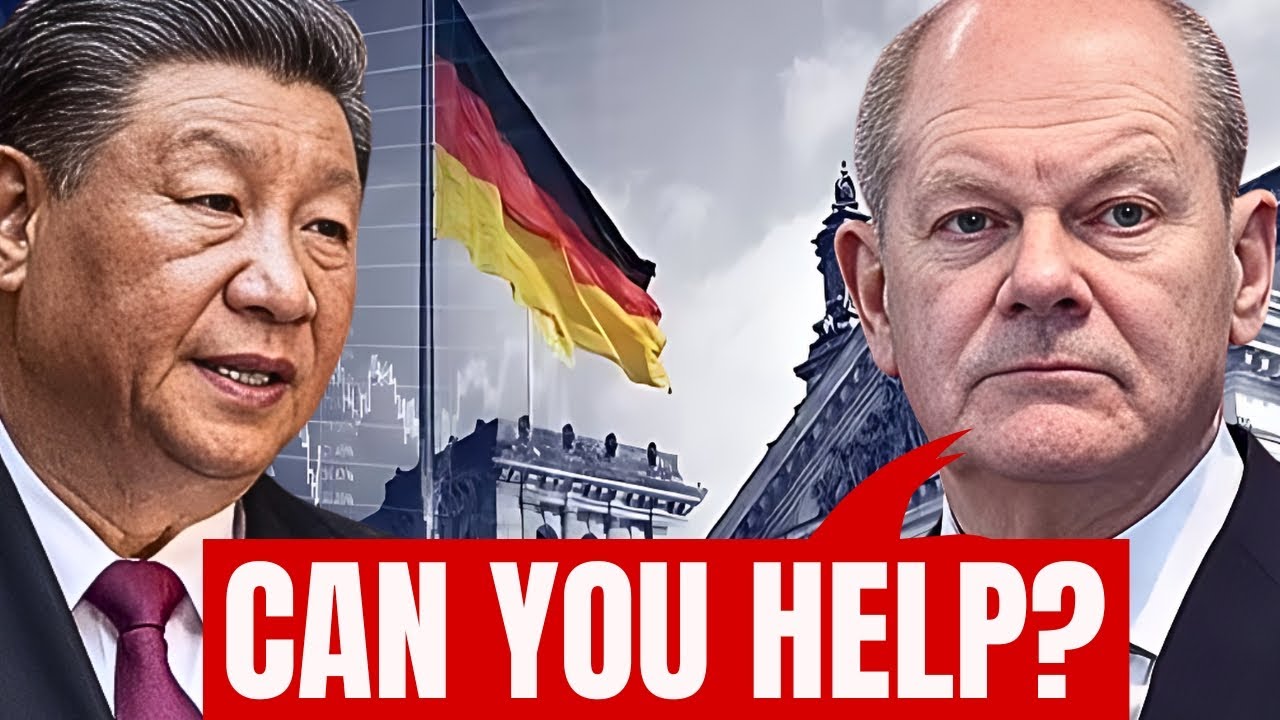
David Oualaalou analyzes German Economy Minister Robert Habeck's trip to China as a sign of Berlin's desperation after imposing US-pressured tariffs on Chinese goods. He traces Germany's vulnerability to external pressure through its fragmented history, from the Holy Roman Empire to post-World War division, and argues that Europe's reliance on US foreign policy is eroding its sovereignty.
Chapters
All right, hello everybody and welcome to Geopolitical Trends, where truth matters. Excited to be with you on this June 24th. Hope you had a, a relaxing weekend and you just chill out a little bit. And sometimes it's nice not to do anything, just chill out. So anyway, very, very excited. Uh, I am excited to be here because I got up this morning at about 6:15. Uh, I was doing some work, like at the gym of course, but I was thinking about, okay, how I'm gonna approach this topic today. What I'm gonna be talking about— I'm talking— I'm gonna be talking about providing you analysis, that is, about the recent trip of the German economic minister. Why everybody's going to China? You know the saying, all the roads lead to Rome? Ah, that might have to change now. All the roads lead to Beijing. So anyway, this is what I'm gonna be talking about, but providing you the big picture. There are other moving parts, by the way, which including what just happened this morning, that is part of that. And I'm gonna share with you all this. But first, let me say hi to my favorite people. So, and I mean it when I say that. Abel, good to see you, man. I haven't seen you for a while. I was wondering. So hope all is well. So good to see you. And, and you're right, you wrote Germany does not— let me share it with you guys here. Here it is. Germany does not act on its own. Germany is an American vassal state. America will be begging China for help soon. Won't be surprised there. Good to see you, Abel. You too, you. Super good to see you. And hello to you, Funny 401. Good to see you, Milton Tan. Good to see you, Willie Horman, as always. Hamad City. Good to see you and appreciate your support behind the scenes. Thank you very much, Hamed CD. Won KC, Macian Dorcier, Laval, good to see you. Nihal from Mauritius, good to see you. Uh, Alice Tarokin, good to see you. Farhad Razavi, as always. Phil, here you are, good to see you. YT, good to see you. And, uh, Abdul, Abdul, Salam to you as well, meaning hello to you all. Uh, Michael Long from Malaysia, good to see you. I heard about Malaysia and BRICS, there is something going on there. When I'll talk to Carl Zah, of course we're going to be talking about Indonesia, but I also going to ask him about Malaysia, uh, uh, to share his knowledge about that. Chanel, as always, good to see you. Ramplson 01, good to see you. And MM Nasser, Good to see you, Tennis. Thank you so much. I'll keep your screen name. I know now who Tennis is, and thank you for your PayPal support, Tennis. I truly appreciate it. It means a lot to me, so I want you to know that. Uh, and Ping Yu, good to see you. Francis Tango, as always. And I'll be back, good to see you as always. All right guys, let me get into the topic here because we're going to be talking about the German economic minister. But before that, we ought to ask the questions. And let me share the— because I always prepare those questions for you guys, and I'll just put them on the screen here for you. Oh, those are always— I always do it that way, you know, by now. It's because it's worth thinking about certain aspects to put it in perspective. This trip didn't happen in a vacuum, and nothing ever happened in a vacuum when it comes down to geopolitics. This is a principle. I want you guys to keep that in mind. Okay, now, is Germany realizing the colossal mistake he made? What am I referring to here? I'm referring to following blindly the US policies. I am referring to pushing for the tariffs, which by the way enter into effect 2 days ago that Brussels agreed on. This is what I'm saying, is Germany— and of course the, the decision that Germany made following the US sanctions on Russia. End up with no access to energy from Russia, which was cheaper for them. Second question is, is Germany acting unilateral? In other words, is this trip really— was German initiative or something else? It is worth asking. I mean, come on, guys, it doesn't take genius to figure it out. Does Germany act unilaterally? Where any— any European country acts unilaterally? Even today, and I'm going to share with you today, there is the president of Poland in China. He was welcomed by President Xi. Okay, but that's Duda, uh, Andrej. His name is Andrej Duda, the president of Poland. He is like another weak leader following what the US wants him to do. And that's back the question: is his trip really for Poland? About Poland, or is it now a way that the US pushed Poland, hey, you need to go to China and talk to them about finding a solution to the Ukrainian conflict? I mean, come on, the guy is so weak, dude, that is, couldn't take stand, now will allow nukes on his territory. So, and the third question is, which we ought to ask, is what should China do regarding this. In your opinion— and I'm going to ask you straightforward, guys— in your opinion, should China assist and help, uh, Germany or not? This is not about— and I'm going to share with you what the media saying versus what it is. This is what YouTube did to my video about North Korea, which, by the way, they decided, oh, Mr. O, we're gonna have to limit monetization on your video because it's not suitable for It's nonsense. Come on, you didn't like the fact that I was disclosing the truth, so monetizing or not, you know, it's, it's ridiculous. It's ridiculous. But anyway, let's focus on this one here. So, so the question to you guys is, what should China do? Should China come to an understanding or assist, uh, Germany or not? Because that is what the German economic minister is there for. Ain't about the tariffs, it is about, about Germany, unilaterally about Germany alone. So let me see in the chat box what you guys put in, uh, yes or no, straightforward, guys, yes or no. Uh, John Smith, good to see you, by the way. You say no. Ali Starokan, you said yes. Okay. Okay, well, first of all, uh, whoever this person is, uh, it's, it's— you don't understand the difference between CCP and CPC. You know, you need to understand the difference before you comment on this, you know? Okay, so here's what we're gonna do. I am gonna put you on a timeout, okay? Because if you got something of value to add to this conversation, you're most welcome. If you got nonsense, I'm gonna take you out figuratively, you know. All right, let's see here. Uh, Francis Tango, you, you said I think so, helps Germany. Ah, okay. Masian, you say no. Farhad, you say no. Ramzi Abdurrahman, good to see you by the way, uh, you say no. Robert, Robert Yun, you say no. Uh, Sam Kildy, you say yes. Okay, so you guys got the idea. There will be those who will say China doesn't think in those terms of tit for tat. I understand that part of the culture is that Chinese are very patient about all this, but the idea is to what degree, to what degree one will have— will run out of patience. This is what I'm saying here. Even in geopolitics, you're gonna have to think in terms of, you know, I can, I can understand, you know, mistake here, mistake there, but when it becomes the norm and the, and, and the trend, then you're gonna have to take stand. This is where the Europeans comes in, because they are so weak they couldn't take stand. And that's exactly where I see what China is going to be doing now will be very interesting. I am certain Chinese will think strategically because they already have some other aspects in the works, and they're not going to want to jeopardize that. And it's right, right course of action, uh, per se. So, uh, his name is— what's his name? The German economic minister, uh, Robert Habeck. I got a picture of him here. You guys can take— this is the guy. And we give credit to the picture to Reuters, by the way. I, I give credit to them for this picture here. So, uh, so I had a chance to read an article by, uh, Bernard Ohr. Spot on, he got some serious good points, and, and I agree with this ones here. So, so except that certain depth in the analysis to highlight the bigger geopolitical aspect, you know, the guy is not a geopolitical analyst. He is, who is, a writer And, and, and I liked the article. No, no, no offense. No, I like the article. I like the content. It would have been more stronger, meaning the content of the article would have been more stronger had the author add the other aspects of what led to all this to begin with. Because this is when you talk about global affairs, you have to cover the key aspects that lead to whatever outcome that, that is. So So before I'll do this, I am gonna do a little bit of geography and some history because it's worth your time, guys. It is worth knowing. Uh, let me share the map with you. Okay, where is the map? Here, open hot link. Here we go. All right, here it is. And we give the, uh A credit to World Atlas, that's where I get the map from to share it with you. All right, let's see here. There we go. This is— let me make it bigger for you guys. Full screen. Germany. Now Germany, uh, and I know I like— Hairy Lookout is from, uh, uh, in Holland. Francis Tango in Holland, you guys know it's so close to you. I used to remember when I would go visit family in, in Holland, I'll just drive over to Germany because I got another family members, and I'll get on Autobahn. It was very, very nice. I didn't have a fast car anyway. So Germany is located in Central Europe. It is positioned both in the northern and eastern hemispheres of the Earth. Germany— here is the uniqueness about Germany— is bordered by about 9 countries. You know, it is bordered by Denmark in the north, uh, by Poland and the Czech Republic in the east, by Austria in the southeast, by Switzerland in the southwest, by France, Luxembourg, and Belgium in the west, and by Netherlands to the northwest. Germany is founded by— is bounded, I'm sorry, by North Sea in the northwest and by the Baltic Sea in the northeast. It's very, very interesting, uh, location that is. So what I found even more interesting is the history of, uh, Germany. So, so I'm gonna tackle just brief— I'll, I'll provide you the link. Once again, I don't do, uh, uh, what you call it, uh, Wikipedia and all that stuff. So I, I have a a link for you from some special academic sources that you guys can, can, can, uh, take a look at later on should you decide to. Here is one thing I want you to get about Germany. Doesn't matter today or back then. Today is somehow is better. Let, let's, let's not, uh, forget this one. One thing about Germany in its long history, you know what? Germany has never been united. This is what's unique about it back then. Never. So for most of about 2 millennia that Central Europe has been inhabited by German-speaking people such as the Eastern Franks, the area now called Germany was divided into hundreds of states, small ones that is. So, so, uh, uh, many quite small, very, very small, including for example duchies, principalities, free cities and ecclesiastical states. Not even the Romans— here is what's important— not even the Romans were able to unite what is known today as Germany under one government. That shows you, you know. So they managed to occupy— meaning the, the, the Romans— they managed to occupy the, the only the southern and western portions of Germany. So in AD 800, Charlemagne, uh, who, who has been crowned as the Holy Roman Emperor by Pope Leo III, he ruled over the territory that encompasses much of present-day Belgium, France, Germany, the Netherlands, and Switzerland. But within a generation, its existence was more symbolic than real. So then you move to the medieval, uh, time of where Germany was. So in medieval Germany was marked by division once again as France and England. Why is this important? Because during medieval era, France and Germany began their century-long evolution into United Nations states, meaning they wanted to conquer Germany was wracked by, by ceaseless series of wars among local rulers. That's what part of what the division was about. The Habsburg— I'm sure you've, you've, you read history, there is no way you would not. I'm sure you've been exposed to the Habsburg dynasty, long monopoly of the crown of the Holy Roman Empire, which provided only the semblance of German unity. In other words, it was no real unity, it was just a facade that, oh, that we are the Germans, we are united, and it was not. And remember, this time was the medieval time. But within the empire, here is what happened: German princes, uh, uh, were against one another as before, meaning they wanted full control. And they end up in, in internal fighting. So, and, and what happened with this? The Protestant Reformation deprived Germany of even its religious unity, leaving its population Roman Catholic, Lutheran, and Calvinists. This is where the Lutherans came from, and some of the Calvinists came from as well. These religious divisions gave military strife an added ferocity in the Thirty Years' War. Excuse me. And this one took between, uh, 1648 through 16— I'm sorry, between 1618 to 1648. And during this time, Germany was ravaged to a degree not seen again until World War II. This is what you need to understand about the medieval period in Germany. Then comes after, uh, that the, uh, uh, Peace of Westphalia. You all know about the Peace of Westphalia. Does anybody know what year Westphalia was signed? If you will be kind and type in, in the chat box, the— just the year. I'd like to just see if you guys have an idea about the year. And remember, it came after the, uh, the, uh, medieval time, so keep in mind the time frame. Let me see, uh, I know it takes a while for this to show up here. Uh, okay, let's move on. 1648, it's very crucial for you guys to understand because the Peace of Westphalia paved the way for some other division that will exist as we move forward in history. And there is some. So what happened after that? The, uh, the, uh, the Peace of Westphalia of 1648 left German-speaking Europe divided into hundreds of states. So during the next two centuries, meaning till about 1800 plus, the two largest of the states were Prussia and Austria. So what happened between these two? They jockeyed for dominance, and the smaller states sought to retain their independence by aligning themselves with one than the other, depending on the local conditions. You know, this is where I see— just to bring it back to today— this is where I see Japan and South Korea. And you know what, guys, Carl Zha, when I talked to him last time, he had this right. It's because Japan and Philip— and Japan and South Korea are just going whatever the wind is blowing. So tomorrow, uh, wind takes change, they will go with whomever is the strongest. This is the same here that happened back then. So, uh, so what happened from the mid-1790s until Prussia, Austria, and Russia defeated Napoleon at the Battle of Leipzig— Leipzig, that is. It was in 1813 and drove him out of German territory. So much of that area was occupied by French troops later on. Why? Because Napoleon abolished numerous small states as a result. And in 1815, after the Congress of Vienna, German territory consisted of only about 40 states. Then you move into the revolutions and for unifications. So this one was marked for the next half century. Pressure was put on Germany unification, uh, uh, uh, states. So, and this is where you start to see scholars, academia, that is bureaucrats, students, journalists, and businessmen. All of them were agitated, for a united Germany that will bring with it uniform laws and a single currency. Here is where the importance of the economy, guys. This is, this is the reason why I always wanted to do history for you guys. Why is this? Because that would replace the, uh, benighted absolutism of pretty German states with democracies, so-called democracy at that time. So because Germany was so divided And that creates a problem. So that begins with the first revolution of 1848, which seems at first likely to realize this dream of unity and freedom. But what happened? The monarch who was offered the crown of a united Germany— who is that? Does anybody know who the monarch was at that time? When? No. When? No. Let me see again. Let's move on. Okay, uh, King Frederick Wilhelm VI of Prussia, so rejected it. And again, why is this important? I'm highlighting it to bring you to today's time. Look at it, for example, in West Asia. Look at some, uh, some states, some monarchies, or whatever. We kind of corrupt them and we kind of put them in a position to serve our interests. We're seeing the same in Philippines, we're seeing the same in, in, in, in certain parts in Asia as well. So it's no different from what happened back then. So the king at that time rejected that. So the king, like other rulers of German kingdoms, opposed German unity because he saw it as a threat to his power. Once again, power corrupts. So After this, we had the major player in the German history. His name is Otto von Bismarck. Uh, you— I'm sure you've heard of his name before. Uh, despite the opposition of conservative forces, Germany unification came more than two decades later in 1871. And why? Because it followed the Franco- German War, when Germany was unified and transformed into an empire under Emperor Wilhelm I, King of Prussia. So unification was brought about not by revolutionary or liberal forces, rather by a conservative Prussian aristocrat, Otto von Bismarck. Sensing the power of nationalism Bismarck sought to use it for his own aim: the preservation of a feudal, uh, social order and the triumph of his country Prussia in the long context with Austria for preeminence. They just fascinated. You see, this is the same what's going on today, is the same what was back then. So, uh, fast forward to the Prussian hegemony, which they took over for a while. And I'm gonna just move forward to world wars. Uh, we'll start with the one first for— worst— World War I, 1914-1918, when Germany aims were annexationist in nature and foresaw an enlarged Germany with Belgium and Poland as a vassal state and with colonies in Africa. Yes. However, German military strategy involving a two-front war France and Belgium in the west and Russia in the east ultimately failed. The same thing can apply today about my country. We cannot get involved in two-front wars. We can't even get involved in one. Yeah, I'll say it straightforward, uh, my country is not capable of fighting a war today, let alone two-front wars. So, and that's exactly what happened back then. So after this, Germany defeated, uh, uh, uh, was defeated rather in 1918, which meant the end of the German Empire. And that's where the Treaty of Versailles came about. So the peace settlement negotiated by the victors, Britain, France, and the US in 1919, imposed punitive conditions on Germany, including the loss of territory, financial reparations, and a diminished military. These conditions set the stage for World War II. When you pressure a country too much, this is what's going to happen. And of course, you know, the rest is history for that, uh, uh, and I'm just gonna move to, uh, past the era of Adolf as the chancellor, 1924 to 1929, which gave the Weimar Republic a brief respite. The civil social stress engendered by the Great Depression— economics, it's all about economics. So, and of course, the post-war era and unification after World War II, 1939 to 1945, and following occupation by the victorious powers, the United States Soviet Union, Britain, and France. Germany came to consist of two states. One East Germany, uh, one, uh, uh, East Germany never attained real legitimacy in the eyes of its citizens, fell further and further behind economically, and you all know the rest till the end of the German, uh, the Berlin Wall, 1991, the end of the Soviet Union at that time. So, and again, guys, what's my purpose for all this? It's to highlight to you history provides us lessons. Some politicians tend not to learn from those lessons. This is exactly why it's important to understand and to tie it to what we're going to be talking about. It's the same thing for Germany to be thinking about. So now, to me, the, the arrogance or the stupidity, whatever term you guys want to use, makes him think he's going to go to Germany and just dictate the terms or sort of tell China, hey, you need to do this or you need to do that. You are in no position to dictate. And as a matter of fact, no Western country is in possession to dictate. This is the fact. So what is this German, uh, econ— uh, uh, minist— Minister of Economy is doing? He's looking for the welfare of Germany, not the EU, not the West, and rightly so. However, China has to think, how can you come over here and ask for assistance at the same time you are the one driving the tariffs, you one, you are driving this hawkish policy? And I'm not saying they shouldn't do whatever they should do to sort of, uh, uh, uh, uh, sort of push their economy forward, whatever. Germany has to do what it has to do, but when it embarks on failed policies following blindly, you see the outcome. So why should China come and bail you out or help you even for that? Why shouldn't? And this is why I'm saying, uh, there is no, no justification, uh, for why Uh, now, because here is what the media is saying, and again, I respect Bernard Oualaalou for writing this, but again, the wording of certain things— I'mma let you guys decide for yourself, you know. Here is what it says: the German economy, uh, quote, the German economy minister visit to China this week will be an opportunity for Europe's biggest economy to seek consensus rather than confrontation. End of quote. What? Okay, if you wanted to seek consensus, why are you embarking on policies that will lead to confrontation to begin with? What do you think, the Chinese not going to react? Now the Chinese— because China also has to listen to its business community. The business community in China is saying to the government in Beijing, you need to push back and you push hard with tariffs also. That's exactly what China ended up doing. So, so when Robert Habeck arrived, which by the way, he's— one of you guys put a, a, a description that does— he's a goof, and he is, you know. I'm not gonna disclose one thing here because YouTube— if you only know his background, who his great-grandfather was, his grandfather, his great-great grandfather. So, and he is in the picture, third from the right. You know, you don't stand in casual way in an official setting like that. So, but again, we're not, we're not criticizing. It's just that's his personality. He is who he is. So that, that, that's that part of how it is. So anyway, uh, now they talking about, well, Germany is going there to talk to the Chinese about, uh, sort of, uh, we're gonna have to think about how we can cooperate. Well, you want to cooperate, but at the same time you are placing hefty tariffs on imports from China, especially the Chinese-made EVs. So that— and, and that's the same. This is why China is responding with countermeasures, and rightly so. So, and that's why the Chinese automakers inside China urged the government of President Xi to go ahead and hike the tariffs on imported European gasoline-powered cars. Yeah, tit for tat, it's normal. What do you expect? So, and this is why— and, and by the way, this in retaliation to Brussels' decision. As I said, in two days, uh, two days ago, the, uh, the tariffs enter into effect. Well, if you know anything about the EU, Germany plays a role in it. The major role, because Germany is the largest economy in Europe, you know, they have a say into that. They could have gone a different direction, but they choose not to. So why China should help you? And that's why they're saying, they are the Western media, not just this article, but Western media in general saying, oh, the German, uh, the, the German Minister of Economy is going to China to seek consensus. Seeking consensus about what? You are putting about 40% tariffs. You followed the order of the US. So what, what are consensus about? What? I, I just don't see it. So, and here is what an expert said about this one here, and I quote: if Germany can resolve potential trade conflicts between China and the EU without confrontation, it could provide the new model for global economic order and governance, especially at a time when Europe is facing multiple conflicts. End of quote. Spot on, spot on. This is not about retaliation, and this is not about— it is about ensuring that the new global order that is guided by the geopolitical outcome of the decisions governments make. That's what's at the heart of it. So, and, uh, yes, the, the German economy, uh, minister, he himself spoke briefly about the punitive, uh, uh, he put— he spoke against the punitive tariffs. But, but wait a minute, wait a minute, wait a minute. If you are the strongest economy in Europe, you're speaking out about it. Was that just a lip service? Because your word didn't turn into action. You could have gone to Brussels and say, hey, we can't do that because our companies will suffer, the whole continent, the EU. But this is not about the EU, this is about unilateral countries, Germany in this case. Remember who was in, in, in China before? Scholz was there, uh, Macron was there, uh, Giorgia Meloni was there. You got— now you have the, uh, Polish president. Today he is in China. So why will Poland even go there? It's because with all those dynamics— this is why, guys, I want you to think in terms of other aspects. Geopolitics doesn't happen in a vacuum. Nothing happens in a vacuum. So why is this important? Is because Duda is realizing that Hungary and Serbia, after cutting a deal with China Because Poland had an opportunity to join the BRI. Poland is geographically well suited for the BRI, but I guess they were pressured by the US not to do so. So this is why he's going to— of course, what they are saying is that, oh, the Polish president is going to China to ask China to intervene in coming up with the peace, uh, to resolve the conflict in Ukraine. Hold on a second, where was Europe? Where was Duda himself few months ago when China provided the 12-point peace plan and it was rejected? Did Poland say anything at that time? It couldn't because its master will punish it if it did. Same thing with Germany right now. Like I mentioned in that video, the brief analysis I did for you guys about the US threatening Germany and some European banks. And by the way, some schmuck saying that I was misinformation. That's, that's, that's, that's nonsense. We are not in the business of misinformation. You didn't like the fact that it was the truth because, or maybe your intellectual level is very limited, you couldn't understand when you read the article. This is what I say to this guy. I don't like to put anybody down, and it's not my personality. But I will not hold back because that's the stupidity. If this person was smart enough to read the articles and understand where I was coming from, that was the whole idea of the analysis to begin with. He didn't spell out in the articles, oh, the US is gonna sanction it. No, that was the whole reason why I did the video to begin with. But anyway, I, I— it's negative energy anyway, guys. We smile. To me, it was just an insult to you. We have a community here. We don't deal with misinformation, nonsense stuff. If it's not factual, I don't talk about it. And same for you guys when you share your comments, when you share your information. I read your stuff, you know. I've never seen anything that is outrageous. It was one time one of you, without naming names, sent me something. I said, well, Dr. O, this didn't happen. I said, hold on a second, I'm gonna provide you the links. It just happened, whatever information he got it from wasn't aware of that location. That's all it was. And to me, that's why I get a little agitated with this, you know, misinformation. What are you talking about? It's the truth. Didn't like the fact that I said Here is what allies do to allies when we even spied on Angela Merkel phone and all that stuff. So anyway, let's, let's put negative energy away. We think positive, we always think positive because it's very important. Do not, do not, do not, do not let negative energy control you. It's very, very important. Always release that tension, whatever and get back to your normal state right here, state of mind. So, so that is the idea of— now you think about where all this happening is because Europe is seeing there are changes coming to the landscape geopolitically and economically. The last visit of President Xi to Europe, especially forget about France, yes, he stopped at France, that was nothing but just a window dressing. Chinese also understand how to play the game. They're not dumb, you know. You don't, you don't ignore a 5,000-year history of a country that have seen the ups and downs over time. So they learn over the, over centuries, millennia, how to deal with the ups and downs. This is no different. I'm talking about the trip of President Xi to Hungary and Serbia, and this is where the European Union seeing Okay, what is going to be happening here? The factory that, uh, China is going to be building in Hungary that deals with the EVs— Germany is going to be losing. Germany already lost, you know, the cost that is costing them now in energy, you know. I mean, even with the NS2, the Nord Stream 2, Germany didn't say a word because they knew who did it. Norway gets involved too, and Norway claimed to be neutral. No, no, Scandinavians are gone, they done for. Gone the era, at least when I was in, in, in Helsinki and, and, and Sweden back in the '80s. It was a different world out there. Not anymore. Swedish people now And Finnish people, the Finns are wondering, what have we done? So, so the big picture of all this, this is where this idea of the, uh, the German, uh, economic minister is heading out, or was in China, that is, is for this reason. It's because the relationship between both the EU— I'm going to say just Germany, but the EU and China is kind of getting more complex. You know why the Europeans are concerned? Because China has the upper hand. And I believe it has the upper hand for a simple reason: you cannot ignore the Chinese market, no matter how you look at it. No matter how you look at it. And do you know— and, and for you to know, and I'm gonna share a picture with you— you all know who this gentleman is. Yeah, you all know who that is, right? This is the Premier Lee Chung. Okay, I have a picture of him also here with Anwar Ibrahim. By the way, this meeting took place on June 19th, just about a few days ago. Uh, why is this important? Is because the Premier canceled— yeah, he canceled his trip with Robert Burback. And that is telling, that's the message loud and clear. So because here is the thing, the EU is a key trading partner for China, that's true, but not to the point of we're gonna just bow to you, whatever. No, it doesn't work that way, and that's exactly what the Chinese are doing. So And, uh, and this is why I'm think— I'm thinking in terms of you have to put this in perspective as far as, okay, all this is happening, you know, for a reason, for, for a specific reason, uh, uh, uh, that is. And like I said earlier, the, uh, the, the Polish president saying, oh, Andrzej Duda, who is now today is in China. Saying, well, he's hoping that China will help find a solution for peace. No, it's a lie. It is a lie. You are not hoping for a solution because you never accepted it to begin with. And plus, you, Polish president in this case, is in no position. It's useless. Because this is why I am not buying this argument. No, I've been around in Washington for a long time. I can understand that. This is not about that. This is about the US telling Duda behind the scenes, you need to make a trip. This is the same— I'll compare it to what took place back in Ukraine. You all remember about a year and a half ago or so when Ukraine had the peace plan in front of it, was about to enter into a peace deal with the Russians, and who flew to Ukraine at that time? It was none other than the idiot Boris Johnson. Warning them. And who dispatched Boris Johnson? It was the US. The same thing I'm seeing here. The Polish president ain't going about the welfare of Poland. As a matter of fact, there is now a guy who just won the elections, a PM. He's, he's on the other side, you know. Even people inside Poland, and I talk to people So they ain't happy about this government. So, so Duda is just doing the bidding of the US for that. This is why I, as I said earlier, that the— it, it just, uh, let alone that China didn't even attend the last fiasco. It was a farce for this Ukraine summit in Switzerland, which was, by the way, a failure. Do you hear anything about it? Do you know why you don't hear much about it? Because it was a failure. Mainstream media decided not to disclose it. So that is the reason why. So I just want you guys to put things in perspective for you to understand where this is headed, because all this doesn't happen in a vacuum. That's just simple as that. So I have, uh, let me share one, uh, screen with you here because I got, uh, something very, very important to understand how the media works And I got it. I follow SL Katan. I'm gonna bring him on the show, guys. I've been— he invited me once on, on Twitter. I did live with him over that, so I'm gonna bring him over. So, but what I wanted to share with you within this context, guys, just for you to understand, check out this, uh, tweet from him, and it's spot on. Spot on, because, uh, you know, all the mainstream media in Germany and pretty much all of Europe are controlled by the agency, the three-letter word, right? You know, this is a picture of Udo, uh, Orfogt. He's a German journalist who died at a young age. Makes you wonder, right? And, and I'll let you read this for yourself. You guys can see it, right? Yeah, you can see it. I'll let you read it. I don't want to read it. You all know why. So that gives you an idea, the wording of certain things. So this whole idea of the trip ain't about, you know, we want to find the consensus with German— with the, with the Chinese. No, no, I ain't about that. This is also about something is about to happen. I am going to do a video for you, an analysis, very short. I know you guys like the short version that I do for this video. I'm gonna do one for you. I'm not gonna disclose what it is, what it— but it has to do with Asia from Europe. You, you'll, you'll see. It's, it's worth watching. It's— and thank you, by the way, guys, for, uh, watching the last two videos, recorded one that, that, uh, I did there. I appreciate you because without your help, there is nothing. You all know, I, I, I don't need to beat the dead horse here. So I'm very, very grateful to you also. So this is what I wanted to, uh, share with you guys about this one here, is to understand, uh, when you hear about, oh, Germany is going to China to figure out to sort of cool bilateral tensions, whatever. No, no, no, no, no, no, no, no, no. It's nothing but just for domestic consumptions, no more, no less. This is to show the, the arrogance of the Europeans. We still are the one calling the shots. No, you done. That era is over. We are— we already entered new global order, whether we like it or not. It's like I always say. So, and mark my word on this, for the next upcoming summit of BRICS, which is going to be in October, you will be hearing major financial announcements. We'll leave it at that. I'm gonna keep, uh, I, I'll do a video for you in due time. It's too early to do this one right now, but, uh, when we get to that, you'll, uh You'll see. So, all right guys, uh, by the way, I need to share two comments with you. Uh, one of them pertains to the book that I, I just uploaded. The book, I know you guys saw that I did this one here. This is the link for any of you who wants to buy my books. But because there is a reason why I— here is what I want you to see. I'm going to share the screen with you to show you how much Amazon— it's not Amazon, it's the publisher— how much they are charging for this book that I wrote. That was my first book. I just want to show you, look at this price here on the right, and this is for the, the, the, uh, the Kindle, meaning the electronic version of it. $48. That's how much they charging for that. So I'm having it for about $15, and I have it $10 for the members. So should you ever decide, I will be very grateful if you can buy my books. But speaking of books, uh, especially this one here, uh, I have a— I had a comment from someone that was very respectful, and I'm going to share it here with you guys because transparency is very important to me here. And, and we're part of a community. Is no, uh, this person, uh, by the name Terror Beam, whatever that is, he wrote, and I quote, I don't like seeing words of our Holy Quran used lightly by someone to cover his book. This is simply disrespectful, sir. Okay, nothing. I responded and he sent back saying, knowing you, Mr. O, I am sure You meant no harm. Nevertheless, those are holy words put in a book that is not meant to be put at the same level of respect as a holy book without any wish to offend you. I am sure you understand what I mean, Mr. O. So I responded to him and I said, and I quote here because I wrote it, no way will I ever think like that. In other words, being disrespectful. I meant to send the message that my government has no respect towards the Muslim world, and it is shameful that we turn a blind eye on atrocities committed in other Muslim countries. I respect you for bringing this up because your comment deserves to be addressed for all to understand. So it was respectful, and I am very grateful. You got— this is the type of members in the community we have, guys. You know, nothing wrong. You don't like something I do, by no means express it, and I welcome it, you know, as long as it is done respectfully. And I have no issue with that because I'm a human, I make mistakes, you know, I make mistakes too, you know. I'm still learning. Doesn't matter what age, doesn't matter what your academic level, doesn't matter what. We still— to those who ever think of themselves highly mighty because they have a PhD, you you know, you don't talk to these people. That's nothing but arrogance. Why? No need for that. So I'm very grateful, and, and it was— we came to understanding. It's because a lot of people did not know. It was a message that I was sending back then when I decided to do it, meaning that we shake the hands of the Arab world, but it's just handshaking, no more, has no meaning. That was the purpose for it, because we will shake hands and stab them in the back. Same thing we're doing to Europe. There's no difference. So, uh, another one is, uh, one, one comment, and it will be pertaining to what I'm going to be talking about soon in that analysis. This is from Hang NG, uh, he, he wrote, and I quote, Dr. O, I agree, changes will be forced on the US and NATO members By one, BRICS plus two, uh, by one, BRICS, two, BRI, uh, which is major infrastructure project, three, de-dollarization and greater uptake of local currencies, four, US and NATO 40 countries, uh, uh, versus China, Russia, BRICS plus BRI plus 160 countries, five, US hegemony is driving the whole world towards BRICS+6, uh, towards BRICS. Number 6: once the BRICS+ financial platform are finalized, trade settlements in the greenback will decline. The US will not become obsolete, but global shares of US dollar in trade, oil, and treasury will decline. The days of the whole world paying for America is over. And Well, spot on, spot on. It's, it's kind of, uh, yeah, what can I say? It was spot on. It's because where things are headed, and this is why you're seeing now most Europeans are going, but they couldn't start with the first step. You know what the first thing to do when you have, uh, uh, uh, someone sick? What is the first thing to do? To identify what's causing the sickness, right? The same thing for Europe. Europe is so sick, but it's not willing to identify the cause of its sickness. And its cause is simple. You got Europe that is following blindly our foreign policy stuff. I won't even call it foreign policy. And by the way, today I just read this morning from overseas that there are demonstrations in Ramstein, uh, uh, base They want the Americans out. Once again, you see the writing on the wall. Till Europe come to grip with the reality that it has to have an independent foreign policy and an independent security, nothing will change. So no matter what they do, what they say, it's nothing but hype. So, all right guys, I am going to answer a few questions from you. But this is the link to PayPal. As I said, I gave, uh, uh, Tinnis, uh, thank you very much for your, uh, PayPal, uh, support for the channel. So, and this is for Buy Me a Coffee, you know, uh, fingers crossed. I just submitted some papers for a visa. We leave it at that. So it'll take time and we just go from there. So, and the last one I show you is this one here for the books, for whomever wants to buy. I'm gonna be uploading, by the way, I will be soon, in next few days, I will be uploading this book. If you are— it's worth interesting to read. And, and I don't write for fiction here just to stimulate your imagination. I write an in-depth analysis about really where things are headed, and that's something you need to be aware of. So, so unfortunately, this one here, guys, I can upload because of the legal contract And I am gonna reach out to them to find out when this contract expires. And the same thing for this book is, uh, I, I think they are, they are asking for the hardcover of it is about $97. So, so paper bag of it is about $120. So, and they're asking for about almost $40 for the electronic version. So, so I'm gonna upload once, once the contract— once I own the rights, that's usually when you publish the book, and I'll do it for you guys for fraction of the price. So, and remember, some of those money just go for to pay the percentage for the, for the platform because I, I do them through Buy Me a Coffee. So, all right, let's answer some questions here. Oh, Denmark Martin, good to see you. You're just sharing this. I'm from Denmark. I'm absolutely furious with my government leaders following the US into a war blindly. It is not in our interest or for our future in multipolar world. Indeed, Martin. And I enjoyed being in Copenhagen. That was back in the '80s. It was incredible. It was my first time back in Denmark. It was incredible. Scandinavians are very unique. Back then. Things have changed now. I, I don't, I don't see— yeah, yeah, you're right, Martin. You're absolutely correct. Athene Wu, good to see you, uh, and, and you confirmed it. Thank you, Athene Wu, for confirming. Yes, David, there was demonstrations in Ramstein over the weekend. They were also same last year, but they are just a small fraction of the German population. Most of the German are very brainwasted Well said, well said. Karakulak, I don't read fiction anyway. Smart. So, so yeah, it's just the way it is. So, uh, by the way guys, I am going after this, I'm meeting with a friend of mine and I'm gonna see if he will want to come on the show. Very, very interesting fella. So I don't want to disclose much. So, uh, Uh, Army with Harmony, where are your son's chickens? And oh, oh, the chickens are outside and my son is busy, you know. That's it, you know. You know that teenage years, 18, 17, 18, whatever, you know, hanging out with dad is the last thing. But, but it's, it's fine, you know. I don't— I have a different relationship with them, so I kind of let him be. All right, let me see a question from you guys. Uh, I'll take it from Athin Wu. Uh, do you think Germany has a chance to regain its sovereignty from EU? No, no, no. As long as across Europe— not all, of course. You look at now, I don't know if you guys heard the speech of Orban, Viktor Orban, which was like 4 days ago or so. It was kind of— no, there are some European countries that they taking matters into their own hand. However, In the case of Hungary, the European Union want to choke them economically. Germany, you think it's strong economically, but they don't have the political power. They don't have the political will to say no to the US. Angela Merkel, when she was, she used at least to say no to the US administration. But yeah, no, I don't see that. It might change if you got a new leadership, different types or whatever. But even with, for example, you all remember Giorgia Meloni, the prime minister of Italy. You know how she was prior to elections. It is same thing with Marine Le Pen. Oh, she's saying the right things. Once she gets in power, we all know you can't trust. There's no more credibility left. And like I always like, not just me But what Marcus Aurelius said, watch what a man does, not what he says. And men, women in this case. So, all right, let me see another question. Oh, Hong Wong, good to see you as always. Dr. O, would Japanese banks stop selling American bonds after being accused of currency manipulation by America? Well, you can just see where things headed, right? It was the same we did Japan back in the '80s. We were trying to do it to the Chinese, except that Chinese are a little bit ahead for what— for where it was Japan back then. In other words, to China, they taking precautions and have been taking precautions, uh, precautions just in case. This is why the Chinese went ahead and start liquidating some of the bonds. Well, China will be in position to do it. Japan might not. For one reason. You know what? Security. Because we choked Japan into depending on the US. We, we can't do that to China. China doesn't need the US. So, and this is where, uh, uh, most likely will pressure Japan behind the scenes. Fumio Kishida is another— his, his is too weak. Shinzo Abe, who was assassinated, was, was neutralized, is different. And because it was something that he wanted to go against, but still, uh, Japan, it's, it's a— the way you see it, one sign, the sign that I can tell you is when Okinawa becomes independent. That's where you see the change in Japan. But for now, I don't see that happening. All right, one more question and I'm gonna check out because I have to get ready to go meet this individual. Uh, Francis Tango question: is China tired of US game? Oh yeah, they've been tired for it, but they won't show it. The Chinese also know how to play. Yeah, it's just their— China is— does things in a subtle way. It's like even their exploration, when they discover something, when they, they do something major, they don't brag about it. It's just part of the culture, humility. It's always been that way. So same with this, they understand how now to play the Americans. They playing the Americans. It's like, for example, when you any leader— take, pick, pick any leader in the world, and I won't tell you Pick any leader and tell me if there is a leader out there that if we strike his ego, he or she will do anything we want. And there are plenty of examples out there. So we, we can't do that with China because China doesn't need that. So this is where, uh, so yeah, they, they're tired of the game because you look at just, for example, in Taiwan issue We signed the communiqué, three communiqués. There's only one China, two separate systems, but one China. And yet we're sending weapons, we foment tensions. Look at the, the incompetent Pelosi right now. What is she doing in, in India and meeting with Tibet people? I, I— and she's not even for working for the government anymore. It just shows you So, all right guys, I hope you find this very informative, and I look forward to seeing you next time. By the way, I will be reaching out to Carl Zah because that's almost— we're getting closer to the end of the month here, and I meet with him usually at the end of the month. I'll reach out to him and see what his schedule is, and I am going to be working on two guests for you, uh, once I finalize everything, and we just go from there. As always, remember, geopolitics impact your daily life in more ways than one. Till next time, guys. Bye-bye.
More from David


Beyond the Single Actor: Why the Gulf Isn't Choosing Between the US and China


Iran, Iraq's Militias, and the Houthis Are Coordinating! This Changes Everything




Who Controls the Next Decade's Resources? Latin America and Africa's Geopolitical Crossroads

The Chokepoint Trap: How Washington's Stupidity Triggered a Cascade That Now Controls the World

Trump Spooked as IRGC Unveiled dual-use SLV, Deployed Ghadir Mini-Subs & Hinted at Tactical Nukes!
