Germany: Facing Total Collapse | Geopolitical Trends
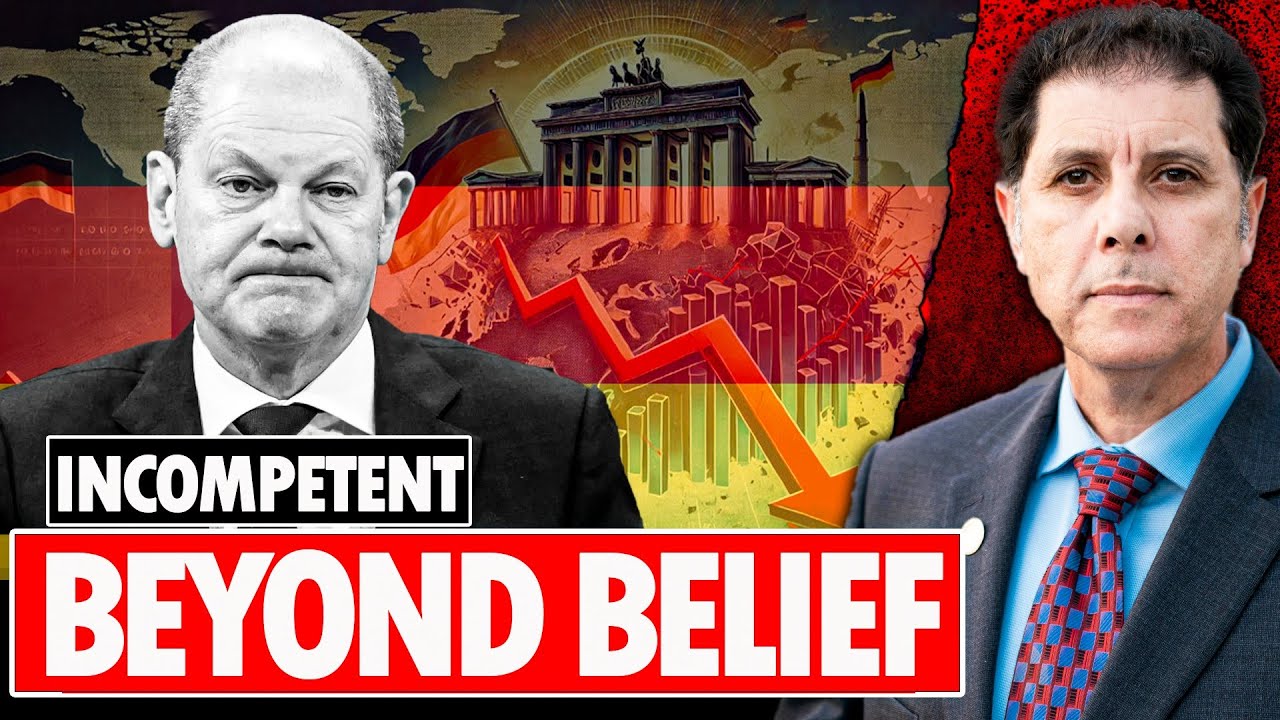
German Chancellor Olaf Scholz lost a confidence vote, collapsing his three-party coalition. The country faces early elections in February 2025 amid economic stagnation, energy costs, and the rise of the far-right AfD. Germany's decades of centrist stability are giving way to a fragmented political landscape that threatens its role as Europe's anchor.
Chapters
Hello everyone and welcome to Geopolitical Trends, where truth matters. Let me ask you this question: Was or is Olaf Scholz qualified to be Chancellor of Germany? The answer depends on whom you ask. Europe's economic powerhouse, Germany that is, finds itself at a crossroads as German Chancellor Olaf Scholz loses a critical vote of confidence, paving the way for early elections next February. For a nation that has long prided itself on stability, robust institutions, and a level-headed approach to governance, these tumultuous developments represent a dramatic departure from the norm. Some commentators and analysts have argued so far as to declare that the collapse of Germany is inevitable, a sensational phrase that signals profound anxiety over the country's future trajectory. But what does this collapse truly mean? Germany is not a failed state in the traditional sense. Its bureaucracies remain intact, Its economy, though strained, is still holding up, and its foreign policy apparatus is largely operational, though ineffective. Yet, the collapse in question may refer to something less tangible: the erosion of Germany's once rock-solid political consensus and the unraveling of the moderate coalition-based governance model that has anchored Europe's center since the turn of the millennium. There are 5 points I'm going to share with you. Number 1: Once Unshakeable Stability, Now in Flux. For decades, post-war Germany's political landscape was defined by steady centrism. Coalitions, while not always easy to form, were usually forged among well-established parties committed to a shared sense of responsibility, social cohesion, and prudent economic management. The Social Democrats , the Christian Democrats , and the Free Democrats formed predictable alliances, and later, The Greens joined the mainstream fold. Together, these parties navigated the country through European integration, reunification, and global economic turbulence. But the coalition Scholz cobbled together an unprecedented three-party arrangement composed of the SPD, the Greens, and the FDP collapsed just two months ago, leaving the government rudderless. This breakdown signaled that the old templates for coalition building no longer apply and that trust even among parties that broadly agree on Europe's so-called democratic values has frayed. In losing the confidence vote, Scholz effectively acknowledged that the political center he aimed to hold together is dissolved under the pressure of new political currents, economic stress, and social divides. Number 2: The Factors Behind the Breakdown. What precipitated this crisis, you may ask? Several factors have converged to destabilize Germany's political landscape. Economically speaking, Germany finds itself at a vulnerable juncture. High energy costs—of its own making, by the way—economic stagnation in key sectors like manufacturing, and the long-term consequences of shifting supply chains and labor shortages have rattled German confidence. While the country—Germany, that is— Once boosted as a model economy bolstered by exports and precision engineering, it now struggles to adapt to rising competition, new technologies, and the costly demands of addressing social unrest within the country. On the political front, Germany is contending with the rise of populist and fringe parties that question established orthodoxy. Although not as dramatic as elsewhere in Europe, the gradual erosion of support for mainstream forces reflects citizens' frustrations over blindly supporting US policies, Ukraine crisis, immigration policy, and rising poverty. And unemployment. Voters—German, that is—who once passively entrusted their futures to centrist coalitions are now skeptical, more likely to gravitate towards new voices that promise swifter, if riskier, solutions. Meanwhile, external pressures, such as lingering tensions with the European Union, The specter of more assertive American policy and, yes, global geopolitical shifts have further tested Germany's political class. But it failed. Navigating the complexities of Brexit, for example, redefining relations with the US aimed at shifting American priorities, and handling a turbulent partnership with a rising China demand unified strategic thinking. Instead, internal discord has prevented any strong, coherent foreign policy stance, weakening Germany's ability to project leadership on the continent. Number 3: The Impending Elections and Uncertain Outcomes. With early elections now slated for February 2025, Germany enters a phase of heightened suspense. Scholz, who lost the confidence vote, hopes the forced return to the ballot box will give his party a fresh start or at least mitigate the expected losses. Germans, however, have had enough of his failure. Polls suggest that none of the major parties are poised for outright dominance. Instead, a fracturing electorate means that forming a stable government may prove even more challenging. If no party or coalition can command a strong majority, Germany may stumble into a protracted period of political limbo, making it even more difficult to address urgent policy issues. This uncertainty could have a domino effect. As Germany flounders, the European Union's leadership vacuum will widen. Berlin has traditionally played a stabilizing role in Brussels, navigating between northern fiscal hawks, southern economies in need of reform, and eastern members with their own brand of Euroskepticism. Without a clear and stable government in Berlin, Europe's capacity to respond to crises, be they economic downturns, sudden refugee movements, or even new security threats, are diminished. It's time for German citizens to send a strong message To their political establishment, I say. Number 4: What does the collapse look like? Well, the phrase "inevitable collapse" might conjure images of failing institutions, social unrest, or economic meltdown. Germany's political turmoil, while serious, has not yet reached that point. The country's civil service, for example, remains functional, its judiciary independent, and its standards of living still among the highest in Europe. What might collapse, however, is the long-held illusion that Germany's postwar political formula could indefinitely withstand populist discontent, economic shifts, and global uncertainty. As the old guard of centrist politicians struggle to find new footing, fresh political actors are emerging, offering alternative visions for the future. Take, for example, Alternative for Germany, or AfD party, which recently presented its candidate Alice Weidel for chancellor in the country's upcoming elections. There are those who say Alice stands no chance of taking the chancellery, as other parties refuse to work with the populist party. But AfD, which was, by the way, founded in 2013, has been getting strong approval rates and is currently the second-strongest party in Germany, after the center-right Christian Democrats. Yet, there are those in the West who argue that this could mean a more polarized Germany, where policy debates become more contentious and consensus-building becomes a lost art. In the worst-case scenario, a cycle of elections and collapsed coalitions might erode public confidence in democracy itself, giving rise to more radical political solutions and further destabilizing one of Europe's core members. I counter-argue that by asking, what did democracy bring to average German citizens who are struggling to make ends meet? What did democracy bring to average German citizen who is seeing his government sending his or her money to Ukraine at his or her own expense? It is fair to state that like Canada, the US, France, UK, Australia, Japan, Olaf Scholz government has failed its people. Number 5: Europe watches with Bated breath. Germany's predicament does not unfold in a vacuum. As Berlin political drama intensifies, the world watches with growing concern, but also saying, well, the German government created this mess on its own. The country's role as Europe's economic engine and diplomatic linchpin means its instability could ripple outward. The US already is reevaluating its European engagements, might find a less confident Germany less appealing as a reliable partner. But let's be honest, it was the US that got Germany into this mess to begin with. After all, the United States government never wanted to see closer relations between Germany and Russia. Thus, the creation of Ukraine conflict to entangle Germany in it became the solution. European neighbors are anxiously watching to see if February elections produce a workable government in Berlin. The old continent yearns for a stable Germany that can continue to lead in addressing economic development. And an independent foreign policy. One thing is sure: the already absence of leadership, the one likes of Angela Merkel, has already imperiled the very foundation of a strong Europe. It is my conclusion for you: the collapse of Germany, if collapse is the right word, is more metaphorical than literal. It represents the end of a political era in which centrist coalitions reliably governed with a steady hand. Now, Germany stands at a threshold, grappling with new political realities that threaten to upend the country's steady equilibrium. The confidence vote lost by Olaf Scholz and the looming These early elections are more than just electoral milestones; they are a test of Germany's resilience, creativity, and adaptability. Can the nation forge a new model of governance that addresses economic uncertainty, social fragmentation, and global turbulence? Or will it sink into a cycle of instability, eroding its own stature as Europe's anchor. February's election and their aftermath will provide some answers, but for now, one thing is clear: Germany's once unshakable foundation is trembling, and the world waits to see what form the future will take. If you like this video, please hit the like button and don't forget to subscribe for more insightful content on global politics. As always, remember, geopolitics impacts your daily life in more ways than one. Till next time, thank you.
More from David


Beyond the Single Actor: Why the Gulf Isn't Choosing Between the US and China


Iran, Iraq's Militias, and the Houthis Are Coordinating! This Changes Everything




Who Controls the Next Decade's Resources? Latin America and Africa's Geopolitical Crossroads

The Chokepoint Trap: How Washington's Stupidity Triggered a Cascade That Now Controls the World

Trump Spooked as IRGC Unveiled dual-use SLV, Deployed Ghadir Mini-Subs & Hinted at Tactical Nukes!
