Gloves Off: MBS Confronts Mohamed Bin Zayed in a Spectacular Fashion! Geopolitical Trends
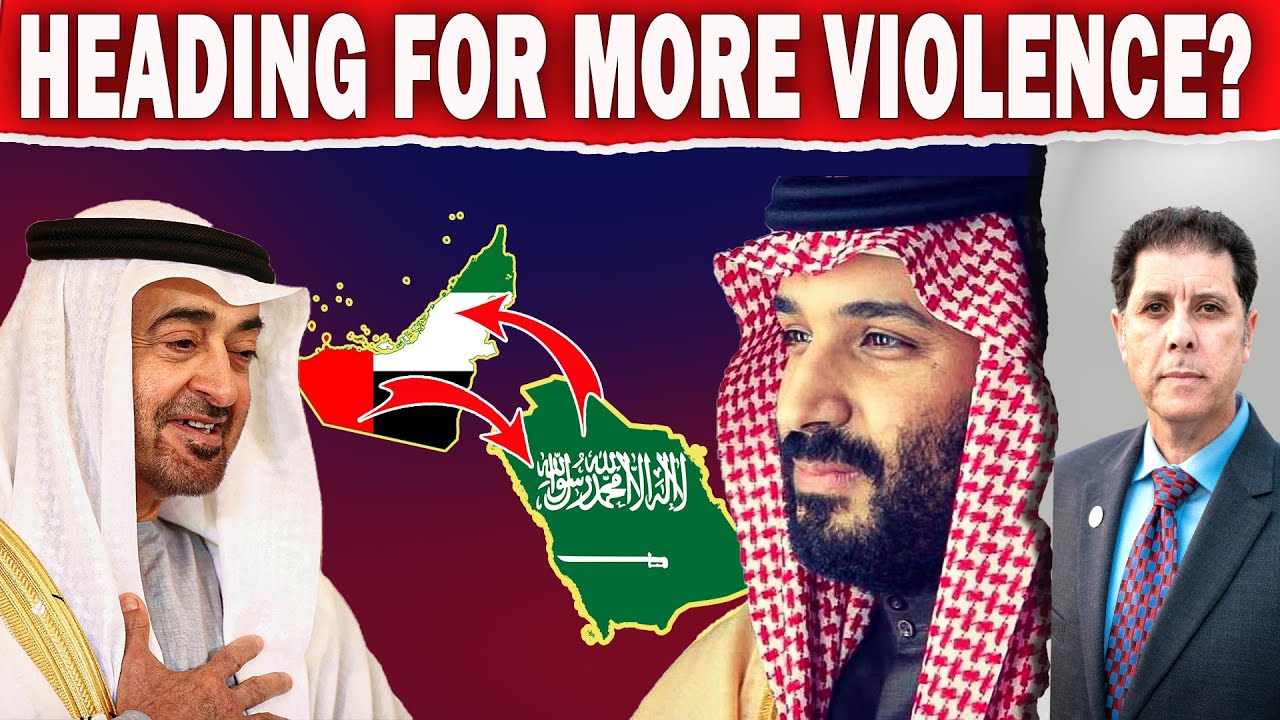
David Oualaalou analyzes tensions between Saudi Crown Prince Mohammed bin Salman and UAE leader Mohamed bin Zayed. The video examines a high-profile confrontation between the two regional powers and its geopolitical implications.
Chapters
Hello everybody and welcome to Geopolitical Trends, where truth matters. As the two Muslim neighbor countries, United Arab Emirates and, uh, Kingdom of Saudi Arabia, are heading for a war, many are asking. So welcome to, uh, Geopolitical Trends, and, and I'm here to take some sort of, uh, an informed look at really the current geopolitical dynamics the security issues and the conflicts in the region. So very, very, very interesting topic we're gonna start with today. But before I'll do this, let me say hi quickly, our wonderful community. Hangin' G, good to see you here, and good afternoon or good evening to you as well. Leanne, good to see you. Max, good to see you. Um, Leanne, Catherine, good to see you. Say It Like It Is, good to see you here, truth seeker as always. Athin Wu, uh, Speaking Truth, good to see you here. Uh, uh, Pharaon de la Paix, good to see you as always. Al Stalokin, good to see you. Khadijah, salaam to you as well. Max Morrow, good to see you here. And Tom Sire Wire, good to see you here. So Farhad Razavi, as always. Lock 1970, good to see you here. So, uh, let's get into our really, really interesting topic here that I'm gonna be addressing for you today, uh, since I, uh, sort of wrote extensively about the Middle East. I spend a lot of time on the ground and this kind of understand those, those dynamics. So I wanted to provide you my own analysis, my own perspective, to put it in perspective for you and to tie it to exactly what is going on right now with the recent statements of Donald Trump vis-à-vis Iran, which I will do a live stream for you, I think, in the next 48 hours. So, and, uh, this very, very interesting dynamics to understand it here. So, uh, before we do this, let's do a headline or two, then I'll dive in into the analysis, uh, of this particular topic. So the first topic we're going to be talk— uh, the headline, that is, is that what are Eron's option in case the US attacks it again? Because here's the harsh reality, and I'll— again, I will do a live stream for you, uh, with my own analysis about this. Iran is going really through one of its most critical periods since 1979, a revolution. I know there have been some demonstrations before. This one is different. This one is different because you have the direct, open public statements of a president of the United States to support the protesters. Mind you that some weapon, some weapons have been smuggled inside Iran for the protesters. So you put the two on together, and this is what I'm gonna, uh, uh, do the live stream for you. It's just, uh, for this headline, I want you to know, to ask the question, does Iran have options, uh, to deal with this? So, uh, second headline is that the Americans, uh, as of this morning they withdraw troops from bases in the Middle East. And that tells me right there something is, is big coming. So, so what happened is that the US sort of decided that the administration is withdrawing troops from the main bases in the Middle East. Which main bases are we talking about? Some small bases in Saudi Arabia? No. We're talking about the main one in Qatar, Al Ubeid. And this is where the departure of the personnel from Al Ubeid is part of the measures taken in light of the tensions in the region. Mind you that just yesterday, the foreign minister of Iran— uh, uh, uh, not Iran, it was Lajjani. He's the head of the Iranian Council, if I'm not mistaken— made a call to the Qatari emir And I believe the phone call was about make sure that no attack is coming from, from, from Qatar. In other words, any, any attack by the US is launched from whatever territory, it's going to become a target. And I believe Iran wants to do the courtesy for Qatar to give them a heads up. And that is why the US decided to pull the personnel out, because I think Iran will go full-blown on this. It's going to be messy, but let's hope it doesn't get to that. So I will do a live stream for you about this. And the last one, uh, again pertains to Iran, but from a different angle. You have here the Prince of Reza Shah, the Shah Reza Pahlavi, and you have Verkhov. They met. These two are met. And especially now when you think about Trump flirted with and secretly met with Verkhov you know, and to learn about the Shah's son and his ambitions in ruling Iran. So this meeting took place last night on Tuesday, and it was reported by Axios as well. So that was, uh, citing unnamed senior official from the US administration, from the White House, and also with the Steve Envoy, Steve Werikoff. He's the White House Envoy. Steve Warekoff met with Reza Pahlavi, the son of the Iran last Shah. And the reason for it is to discuss the protests sweeping the country. So yeah, once again, you put the two together and figure, okay, what's this meeting is all about? So is this that the— because remember, the protesters in Iran are chanting the Shah, Crown Prince Nayef. So, so just to give you a heads up, and I'll do the analysis for you some other— in the next 48 hours. So let's get into our topic today, the main one, about the really cold war that's been brewing and is now moving into the surface between Saudi Arabia and United Arab Emirates, the two Muslim neighbors in the Gulf. So once unified, Gulf partnership, because it was a partnership between Saudi Arabia and United Arab Emirates, you know, has now fractured into some sort of, not a face-to-face fight, another word, hot war. No, no, no, no. It fractured into some strategic rivalry that is shaping the entire region, West Asia or Middle East, that is, with some areas in Africa, which I will get into. Soon. So what began as a shared interest, especially between the two regarding Iran, because the shared interest was about containing Iran. And I wrote, I wrote about this particular aspect in both my books, the one about, about, uh, Iran and the other one about Saudi Arabia, in which I discussed similar arguments. Both of them had the desire to contain Iran, right, and political Islam for that matter. Because this one now has evolved into a competing vision for the regional power. So what happened? Saudi Arabia pursued some trade preservation and consolidated borders because remember, there were some— Saudi Arabia just took part, some land, Sokratas, Sokrata, I'm sorry, Sokrata, which is a small island piece of land. They just took it back from the United Arab Emirates. While the United Arab Emirates supports paramilitary groups and secessionist movements in Yemen, Sudan, Somalia, Ethiopia— you got the idea. So the fundamental incompatibility now manifesting itself across multiple theaters. We're talking about Yemen, we're talking about Sudan, we're talking about Syria, we're talking about the Horn of Africa. So let me show you a map here so you know what I'm referring to. This is the Horn of Africa, Somalia. It's always known as the Horn of Africa. So it's very, very important to understand this dynamics here. So, so the conflict now has been further complicated by another element which I will disclose for you towards the end, is the role of Israel. Israel role, especially military escalation, regional military escalation with Iran. And this for Israel part has to do with Abraham Accords. Because what happened with the Abraham Accords? United Arab Emirates sort of established diplomatic ties with Israel. So in addition to the other 3, Jordan, Morocco, Egypt. And this is where you think about this. There's two elements: Israel's regional military and the Abraham Accords. So because this divided the two countries, United Arab Emirates and Saudi Arabia, because remember, it used to be some talks about the Saudis normalizing with Israel, and the Saudis thought about like, won't be a good idea. This is the reason why. So, and because it divided now the two countries, whether to pursue normalization with Israel or not. Well, United Arab Emirates did. Saudis hit back. And this makes you wonder about why Saudis kicked out all Indian, uh, uh, uh, uh, nationals. The fear of spying on behalf of Israel. And this is where you have now the thinking inside the region with some certain key players. That Iran is weak at this position. So, and the traditional threat landscape has sort of transformed now. Transformed from where? Transformed from Iran into now the Saudi Arabia and United Arab Emirates competition. And this competition is to sort of define the future of the Middle East geopolitically, because that's going to become now the feature of the region. And the region from the aspects of geopolitics, reshaping the alliances from the Red Sea to East Africa. So, and when you look at this, you look beyond Yemen, because that's— we're going to start our conversation regarding where it all started. You look beyond Yemen. So, and this is where I wanted to place this analysis for you. As far as Saudi Arabia and United Arab Emirates rivalry in much broader context within the region. Of course, we'll talk about Sudan, we'll talk about Syria, we'll talk about the Horn of Africa. I have links here for you. I'm going to share them with you in the chat box. Well, back in when Yemen war started in 2015, launched by the Saudis and so forth, I used to write at that time, and I wrote extensively on this. So I'm gonna just share the link with you if you want to read it later on. And I did them in both in South China Morning Post and in the Huffington Post at that time, so you can read up some of that stuff. So now the key question we're gonna ask before us is now, because it's a cold war that has been brewing between Saudi Arabia and United Arab Emirates, so what's going on? What led to all this? So what happened? A lot of people have no idea as to really what led to all this, because this wasn't the result of just the Saudis bombing the presence at the Al Mukalla port in, in, in Yemen. No, no, no, no. It goes beyond that because this is the result of years, years of simmering tensions between Saudi Arabia and United Arab Emirates, which now have exploded into the open conflict over the past few weeks. So what I'm going to do in this analysis, provide you at least a brief breakdown, then move into the analysis. Here is the immediate trigger for all this. The immediate trigger was when Saudi Arabia bombed the southern Yemeni port of Al Mukalla, and this took place in December, on December 30th. So, and the Saudis saying, the Saudis claimed that they were attacking United Arab Emirates linked weapons shipments destined for the separatist Southern Transitional Council, known as STC. Of course, you ask yourself the other logical question: is this justification for bombing just because there was a weapon shipment? No, it goes beyond that, because this one was an, an unprecedented review on part of the Saudis, because the Saudis accusing the United Arab Emirates of a highly dangerous behavior that threatens the security of the Saudis. You remember last time I told you when this happened has nothing to do— it has to do with the fear of the Saudi monarchy that if the separate, the, the Shia majority in the south revolt, it'll become a big problem. How they gonna revolt? With the support of United Arab Emirates because United Arab Emirates supporting some other entities. Because remember, now, so United Arab Emirates and Israel have diplomatic relations. Read between the line, the lines that is. And this is where the deep conflict comes in because this isn't really about just the weapons shipments. No, no, no, no, no. The tension also stems from Saudi Arabia concern about United Arab Emirates' role in Yemen, which shares a long border with Saudi Arabia. Also in Sudan, which lies across the Red Sea from the Kingdom's west coast. I'm gonna share a map with you here, and I want you to just take a look briefly here. Here's Saudi Arabia. Here is the idea of the, the, the Red Sea on this part here. The southern part, Abha and Jizran, those are known, very, very interesting locations. So some of the oil goes through there. Of course, you have the Yanbu area, but you have also the part of where the United Arab Emirates supporting the separatist groups in Sudan. So the Saudis are concerned on two fronts, one on the Red Sea part and the other on the northern part of Yemen, which will be the southern part of Saudi Arabia. This is where the concerns about the security, because any, any, any uprising by the Shia in the south in Saudi Arabia will shake the monarchy. So, and this is once again, just think logically about it. Geography plays a role into this. Part of the deep concern about this conflict. So because once again, the role of United Arab Emirates in Yemen, because Yemen shares a long border with Saudi Arabia, and in Sudan, which is across, because lies across the Red Sea from the kingdom's west coast. And of course, to those who say, well, this might be just about something else, religion. No, it won't be. Both of them are Sunni states. So the core disagreement, some will say also, is might be philosophical. What does philosophical aspect has to do with all this? Well, you think about both Riyadh and Abu Dhabi. Abu Dhabi is the capital of United Arab Emirates. Riyadh, the capital of Saudi Arabia, disagree over the preservation of this state sovereignty concept versus, for example, the, uh, if you think about the cultivation of state fragmentation, in other words, you'll have fragmented states. Saudis will want that at all because the fear from the majority Shia. United Arab Emirates will push this in Sudan, Somalia, uh, in Sudan and Yemen, but also wanted to support that in Syria as well. So This is where the Saudis worry that the United Arab Emirates is systematically supporting breakaway movements and autonomous zones across the region. So this is not just about the STC, which is the Southern Transitional Council. No, no, no, no, in Yemen. No, no, it goes beyond that. We're talking about militias in Sudan. We're talking about entities in Somalia. We're talking about other entities in Syria. Most of them are funded by United Arab Emirates. And as a matter of fact, the council, this Southern Transitional Council, has been dissolved. The guy who used to head this council— I've been following what's going on. I didn't talk open much about it, but I just wanted to, just for my own— he fled the country already. Makes you just wonder where he went. I won't be surprised that he shed He was sheltered in United Arab Emirates, but that's just my thinking. So where is this conflict between Saudi Arabia and United Arab Emirates playing out? So there are multiple theaters. So let's start with Yemen. Both powers, meaning powers who? We're talking about the central government and of course the Saudis oppose the Houthis. So, but at the same time, when you think about this, both powers opposed to the Houthis, meaning United Arab Emirates also opposing the Houthis. So, but at the same time, they wanted to back the internationally recognized government. However, the United Arab Emirates has for years— that's why I'm saying this is not new— has for years supported the STC. Those are the separatists in the Southern Transitional Council. Because remember, Yemen used to be the southern part of Yemen and the northern part of Yemen. They were two divided within one country till they were reunited under Ali Abdullah Saleh, who was able to work out the deals, I guess, between the factions and so forth. Now you move from Yemen into Sudan. Saudi Arabia in Sudan. Saudi Arabia is backing the Sudanese army while United Arab Emirates is backing the paramilitary, which is known as the Rapid Support Force, the RSF. So then you go into Somalia and beyond, same setting, similar proxy competition over control and influence exists between the two. And this is where this recent escalation comes in. Because when you think about it, the fighting got so tense at the beginning of this year, beginning of January. This is why the Saudi pressure resulted— because their pressure, they exist— resulted in the expulsion of the STC leader. That's what I'm saying. He fled. And he fled on January 7th. Fled Yemen. So, and that's where the STC was dissolved or disbanded. So how did United Arab Emirates responded to this? They responded by announcing the return of all Emirati Armed Forces personnel from Yemen back to United Arab Emirates. And the reason why, because they wanted to back down from a direct confrontation with Saudi Arabia. Because I mean, both of them won't— there will be no war. Let me just say this, uh, uh, uh, uh, right now for you. There will be no hot war. So why this matters? Some will say, well, what this has to do with what's going on? A lot. So once again, just let me put this on a record. I do not foresee a hot war a full-scale war between United Arab Emirates and Saudi Arabia. It will be devastating not only for the two of them, for the region and the global economy. Both Saudi Arabia and United Arab Emirates are among the world's largest oil exporters. So the other aspects of all this, both countries where they are positioned geographically, they are positioned near the two most critical maritime choke points in the global trade. Let me share a map with you for you to see where exactly both countries are. You know, both of them, you look at, at, uh, the Strait of Hormuz, okay? Then when you look down here, which you won't see here, you look at Bab-el-Mandeb. Let me see if I can show it better in the other map. Right there, here is Bab-el-Mandeb, right here. And here is the, the— I know you can see my cursor, uh, for the Strait of Hormuz. Two key choke points for the, in the global trade. So, and this is why, so even, even limited tensions between these two could really affect the global energy market. And mind you what the United States just did in Venezuela. So I had to do that analysis for, for someone regarding this particular aspect, you know, because China has invested almost $120 billion in Venezuela. Now the US saying we want to take over that and the management of the revenues. In other words, what the US wants to do is the same scenario we did about Iraq when we, the Bank of New York was the one holding the revenues of the Iraqi oil sales as of today. We're going to do the same for Venezuela. So, but, but just to highlight to you the importance of Iran, uh, of Iran, of— I'm sorry, of Saudi Arabia and United Arab Emirates oil. So, so the fundamental issue, the fundamental issue here, when you have to think in terms of the Saudi-United Arab Emirates relations They are most likely to remain fraught. And that in itself will have an impact on the Gulf unity. You know, what is the common thing those, the Gulf share? You know, the survival of their monarchies. That is the key thing. And this will not only be limited to the region there in the Gulf states, We're talking about the Red Sea security. We're talking about the broader Middle East stability. And you add now the threat of the US targeting Iran is going to throw the region into more chaos. I am very concerned because this time around, if we go with attacking Iran, we're looking at a much worse outcome. And I'll talk about this in due time when when we talk about Iran. So the next question I'm gonna ask as a geopolitical analyst, it's because you're gonna think about how, how on earth this relationship between United Arab Emirates, Saudi Arabia, that was built on a shared security interest, on a conservative monarchy rule, on a cooperation with Gulf Cooperation Council, How all this deteriorated into and changed and sort of pivoted towards mistrust, towards competition, and towards a proxy confrontation? Because to me, it's a logical question to ask. So, because it gets to really how these strategic partnerships, doesn't matter which one, they can fracture Even among ideologically similar actors, Saudi Arabia, United Arab Emirates, both Sunni, both monarchies, both conservatives and so forth. They have a lot to share about it and yet it fractured. And this is again where the importance of understanding of what answering this will reveal to us. And what it reveals to us is that shared interests can sometimes mask fundamental divergent visions. And these divergent visions of how those powers should be organized regionally. I know somebody will jump quickly and say, will this apply to Russia-China alliance? My answer is no. The setting for the China-Russia alliance completely differ from this one I'm talking about here. But it's a good, good way of thinking outside the box. And here is how I'm gonna break it down for you as to where is this shared interest and how all of a sudden turned into mistrust. Let's go to the initial bonds between these two countries. What was the shared enemy between these two? Can anybody type in a chat box If you happen to know the, the shared enemy between these two countries— in other words, both countries had a common enemy— which one was it? Let me see in the chat box. If you happen to know, please type it in the chat box. I would greatly appreciate it. Oh, Athin Wu, you got it! It was Iran. Al, not Yemen. Yemen, Yemen was fine. Yemen till later. You were right in this till later, but Iran Iran has been the one because historically, you know, both monarchies, Saudi Arabia and United Arab Emirates, were afraid after 1979 because historically, as I said, Saudi Arabia and United Arab Emirates interference in the region affairs focused mainly on limiting any threats from Iran, even though I am here to tell you it was no threat. You know why? Because Iran wasn't interested. To those who argue Iran wants to dominate the Muslim world, Iran has no interest in that, and they can't. The numbers don't support that. You have 1.5 billion Muslims. You have out of that about 170 to 200 million Shia. The numbers don't add up. But hypothetically, we say that was the case, if it was even the case. So, uh, uh, uh, uh, Iran had no interest in that, but the initial bond that made this cooperation between United Arab Emirates and Saudi Arabia was about Iran. It was about the Muslim Brotherhood. They were afraid of those. So, and this, in my opinion, provided both countries, United Arab Emirates and Saudi Arabia, a common, really genuine, a common ground. That's why they reinforced each other against this kind of shared, uh, adversaries, you know, and especially, especially particularly during— between 2017 and 2021. You all remember Qatar blockade? Which, by the way, both countries, Saudi Arabia and United Arab Emirates, led. They targeted Qatar. And this is where you see now this, the personal breakup that happened, you know, because there is a, there is a personal dimension into all this. You can always think about geopolitics, about politics in general, about this, about that. But you never ignore the human factor into all this. And in this relation, in this particular conflict, the personal aspect or dimension plays a role into this. So from 2015 all the way to 2018, Mohammed bin Zayed, MBZ— I'm gonna be referring to him from now on— I just want to share a picture with you. Here is MBZ, Mohammed bin Zayed. So Mohammed bin Zayed played and played a key role in facilitating Mohammed bin Salman's rise to power. Yeah, because remember, and I'm not gonna get into the detail of this, you can either read my book, the Saudi book, or you can read some of the articles, especially the ones that came after 2015 when I talked about the emergence, the sudden emergence of Prince. And at that time it was sort of sensitive, couldn't disclose certain things. It was Muhammad bin Zayed who played a role in bringing MBS to the forefront. So that is what I need you to understand, these aspects of it. And when you think about this Muhammad bin Zayed served on a certain capacity as some sort of a mentor-mentee relationship. That's what developed between the two. Because remember, when MBS came to power, he was clueless as to what's going on around the world. He learned a little bit now, but when I remember, that's what I wrote the article, when he became When he came to power, the first order of business, uh, when he took over the Defense Ministry, if I recall, was to send, uh, military and take over the Yemen or crush the Houthis. And I was just shaking my head. So he ends up going to Yemen but asking the Americans for the intelligence. And as a matter of fact, we were the one providing intelligence behind the scenes. Europeans were sending weapons. The Saudis couldn't defeat the Houthis, just to let you know. But this now, this sort of partnership didn't survive. Why it didn't survive? Because now you have diverging ambitions from Mohammed bin Salman and from Mohammed bin Zayed. So, and the diversion in itself, it has to do with different visions. Not only for the region, but for, for the whole region. I'm sorry, for the whole region. This is where you see the two countries, some sort of, as they move forward, they developed some sort of incomparable approach to regional order. I'll give you, we'll start with Syria. United Arab Emirates focused on deterring radical Islamist forces. And who was the radical Islamist forces? It was none other than the force led by Zulani, who is now the president of Syria. So on the other hand, the Saudis funded more extreme Salafist group. And why? Because they wanted to oust Bashar al-Assad. So following, when you move from Syria into Sudan, to those who are familiar with the Sudan history, Following Omar al-Bashir, who was the head of the— when he was ousted in Sudan, corrupted, as corrupted as it gets, like every other. Anyway, the Saudis and the Emiratis, both of them promoted military forces at the same time together, but later on they split, they split, they split. United Arab Emirates maintained a longstanding relationship with the RSF, the Rapid Support Forces, while the Saudis backed the Sudanese Armed Forces. Once again, when you think about this, think about the map, think about geography. Look where Sudan is, look where Saudi Arabia is, and most of the coast here in Saudi Arabia, that's where the oil usually goes through. There are some in the Persian Gulf area, like in Dammam, Al Jubail. So this is why you have to understand this reality. Then comes the Yemen, and the Yemen diversions was the most revealing of the differences between the two, United Arab Emirates and Saudi Arabia. So when the Houthis or Ansarullah seized power in Sana'a in 2014. Both countries, Yemen— I'm sorry, United Arab Emirates and Saudi Arabia, both of them united to fight them. Because why do you think they care for the Yemeni people? No, it's the survival of the monarchies in both, in United Arab Emirates and in Saudi Arabia. Especially the Saudis were so nervous about it. That was one of the reasons what prompted me to write the book. About the Saudis. Because, and I was on the ground in that part of the world, in, in, in, uh, I'm gonna show a picture here, uh, not this one here, this right here. This is the desert part in the southern part of Saudi Arabia, which is closer to the northern border, with another border of Yemen. So I was there on the ground. There's nothing there, just rocks and dust, and that's all you see there. There's nothing there. So, but I, of course, back then, my— I, you know, I was working still in the government. We had other reasons for being there. But the idea of— for you to understand why all of a sudden both Saudi Arabia and Yemen want— Saudi Arabia and United Arab Emirates want into Yemen. So, except that once they get there, all of a sudden United Arab Emirates wants to take one route and the Saudis took another. Why? Because both of them backed different factions within the government umbrella. And that is where you saw the push for the southern Yemen secession supported by United Arab Emirates. And the Saudis were against it. So the critical breakpoint came in July 2019. That's when the United Arab Emirates abruptly withdrew its troops from the front line against the Houthis and instead refocused support for local groups in southern Yemen, including the STC. And when you think about this, you think about the strategic, the big picture, as I always say, the calculations, geopolitical calculations from both. And from both, they go into two different directions or regional projects. And this, in my opinion, this outcome reflects this sort of the, what you call, Competing vision for the regional order. Saudis wants to build some sort of a political coalition to preserve established borders of states in the region. This is why the concern about Syria, what is going on, or Lebanon, or Iraq, or Gaza for that matter. You know, this is what the Saudis want. The Saudis wants to maintain the status quo. Every border as we've known it for, as we know it for the last 40 years remain the same. United Arab Emirates, on the other hand, supports paramilitary and sort of certain groups that want to take power. So to Saudis, this look destabilizing. To the United Arab Emirates, it's a pragmatic statecraft focused on controlling key territories and achieving localized objectives. You can see why the two ideas collided. So, and then came the, the big event. And the big event, I'm referring to 2020, the Abraham Accords, or Abraham Accords. In which United Arab Emirates normalized relations with Israel. This is why you have to understand now, for United Arab Emirates, if it wants to achieve anything, it's going to go through Tel Aviv, because Tel Aviv will have more pressure on Washington. Saudis don't have this luxury, but the Saudis could end up having the upper hand And I'll tell you why in a second here. And this, this relationship between— a normalization, I'm sorry, between United Arab Emirates and Israel have some sort of transformed the relationship. Even though— transformed the relationship between whom? Between Saudi Arabia and United Arab Emirates. Though the division took time. This division we are seeing took time for it to manifest. So after October 7th, 2023, you all know what happened, right? This divergence became sort of irreconcilable, especially what took place in Gaza. Why? Because the Gaza War galvanized the Arab public opinion, and it changed the Saudis' calculations about normalization with Israel. United Arab Emirates is too late. She already— it's already normalized relations with. So, but even with that, the United Arab Emirates maintained its relationship with Israel, and this positioned the United Arab Emirates as a key Arab leader, sort of to pay for negotiations and so forth. Why? Because it has normal diplomatic relations with Israel. So, and this is where the danger on part of the Saudis, because the Saudis saw since then, saw United Arab Emirates not only sort of a partner, because they see it not as a partner, you know, they saw it as part of the Israeli-led a regional project. This is not why tanks are coming up to the surface. So, and this is why for what Mohammed bin Salman, MBS, did now, everybody forgot about what MBS did with the killing of Jamal Khashoggi, because he was perceived as pariah, right? Even within Saudis. Not anymore, because now he's doing something to push against United Arab Emirates, another Muslim country who normalized relations with Israel. See how things change. And MBS has learned over time these past few years, you know, this is again, you need to understand this dynamic. So, and that's why, so why it matters now, why it matters now. Two things for For the Saudis, it matters because Saudis have both the regional and global aspirations. And this, of course, part of Mohammed bin Salman's Vision 2030, which I don't believe it's going to manifest. Remember, it was the prince that invited— what's her name, that the rapper, rapper or singer or whatever, invited her to Saudi— Menaj, Manji or Menaj, whatever. Invited her to Saudi Arabia. That's why Saudi Arabia will host, for example, boxing. What's his name? AJ, Anthony Joshua from England, he won and fought in Saudi Arabia. So part of the so-called Vision 2030, allow women to drive, even though it was superficial. I wrote an article about it, but suffice it to say, so because MBS wanted to cement Saudi Arabians as the Gulf leading power. So, and by doing that, this will pave the way for Saudi Arabia to not only integrate as a leading regional power, but into the global order with ambitions for organizations like to join our organization. As a matter of fact, I found out that the Saudis had an ambition of of joining G7. Hmm, makes you wonder. But suffice it to say, they wanted to play a major role. Why? Because the role of the Saudis has been diminishing after 1975. It's been diminishing gradually. That is the reason why when I wrote my, uh, uh, my book, I had to put this title, because that's the That's what the monarchy fears the most. So United Arab Emirates, on the other hand, support for fragmentation is directly threatening this goal of the Saudis because who's the big brother in the region? Is the United Arab Emirates or is it Saudi Arabia? Is the latter. So, and this is why the Saudi decision makers In their assessments, they saw that United Arab Emirates' actions are moving beyond power projection towards structural reconfiguration. United Arab Emirates wants to have some different type of setting in Yemen, different type of setting in Syria, Sudan, uh, Somalia. I wouldn't even be surprised in Lebanon. So, and this is where the Saudis got very, very nervous because this structural reconfiguration of those weak states, that's going to impact the role of Saudi Arabia in the region, but also is going to reshape the borders. And this is where the fear was. And if that happens, it will be irreversible. This is why now you are witnessing that the Joulani of Syria is leaning more towards the Russians, not the Americans. It's because he starts to think that, you know what, what the Americans did to Maduro might end up doing it to me. Or even better yet, the Israelis could take him out. Why? To preserve— because he wants to negotiate with the Israelis about the Golan Heights. So the irony, the irony is very tragic in a sense. Both countries, United Arab Emirates and Saudi Arabia, are conservative monarchies, but at the same time they fear Islamism and instability because it's a threat to the survival of the monarchy. This is why you have to understand, for example, why the King of Jordan came to meet with Donald Trump. Remember when Donald Trump said, I'm gonna turn Gaza into a Riviera, and King of Jordan freaked out? Why did he freak out? He freaked out because of the survival of the monarchy. That's why he flew all the way to, to, uh, to Washington, because Trump is the type that you have to praise him and all that. You have to strike his ego. That's what King of Jordan did. To keep the monarchy alive. And he said, by the way, Mr. President, I will be willing to take 2,000 Palestinians. And he did, because if there is a Riviera in Gaza, that's going to destabilize the kingdom in Jordan. And Jordan is not the only one. You have the other countries as well. This is, again, I just was giving you an example here. This is where you have to understand these differences between the, the regional stabilities. It's going to be impacted. So because you have now between these two states, United— two countries, United Arab Emirates and Saudi Arabia, you have one state or one country that's one preserve state borders and regional stability, that's Saudi Arabia. Then you have the other, United Arab Emirates, is willing to fragment the neighboring states for the objective of achieving strategic depth. That is the key fundamental, and this is, in my opinion, the fundamental incompatibility that now shattered this partnership that once seemed unshakable. Not anymore. I have a picture that I need to share with you, and I'm going to put the link for you. You can look— oh, actually, I'm going to share the link. Because it has some numbers, just to put it in perspective for you, because you need to, to understand, uh, what's going on here. And, uh, briefly here, let me close this one here. All right, share screen, and I'll provide you the link just for you to see. Here we go. I know it's very small here. I can I don't know. Anyway, I'm gonna read it to you, just certain aspects. When you think about the difference between these two countries, so here is you have on, on the left Saudi Arabia and you have on the right, uh, United Arab Emirates. So the, the budget and revenue for Saudis are about $326 billion, the one for United Arab Emirates about $136 billion. So GDP, 13.1 for Saudis, 7.2 for in Arab Emirates. So, and this also where the assessments of both, uh, by the CIA has put that in. That is not what I'm interested in. What I'm interested in is to highlight to you the, the, the, uh, the, uh, GDP per capita. So, and GDP per capita is about, I believe, uh, uh, $32,000 or $28,000, uh, for Saudi Arabia, and it's about 50,000 for, uh, United Arab Emirates. So it gives you an idea of exactly where things are. Let me, let me share the link with you in the chat box if you want to look at these economic, uh, uh, numbers later on. And what I'm going to do, I'm going to play a quick, uh, break here, and I'll Continue. Liking this video so far? Don't just be a watcher. Go ahead and hit the like, share, and subscribe button, and don't forget to tap the bell so you will not miss any of my videos or live streams. This way, you will be supporting a channel that stands for the truth and objective reporting. The choice is yours. Thanks for your support. Alright, now let's move from the Middle East, that, that region, or, or let's just move from just talking about Saudi Arabia and United Arab Emirates to highlighting the rivalry between these two within the broader regional context, but also the tensions in Sudan, in Syria, and the Horn of Africa. And to me, this is very, very complex and complicated, uh, story, if I may use the term. So because what the rivalry between Saudi Arabia and United Arab Emirates became now the regional fault, okay, this is the regional fault line for the— with the implications that goes beyond the Gulf states. And the way you see it, we're gonna, we're gonna give an example of each country briefly here. For Sudan, the civil war that is going on right now. And again, I'm going to do this brief analysis here on this aspect because it's so much to cover. We're going to need more time for that. United Arab Emirates has been among the most consequential external actor in Sudan's conflict. A lot of people have no— especially when I say people, I'm referring to Americans here. We have no clue and no idea. And this is when you have with Western lawmakers, diplomat, US investigators, and media investigations, all of them confirming and asserting that Abu Dhabi or United Arab Emirates has likely provided weaponry to the Rapid Support Forces throughout the war, not just last month or last year. So, and of course, how the United Arab Emirates using this? They are using hubs in other African countries that receive the money from United Arab Emirates, like for example Chad, like Kenya, like Libya, like Panthala, like South Sudan, like Uganda, or Uganda. So meanwhile, you look at Saudi Arabia on the other hand. Saudi Arabia has prioritized limiting United Arab Emirates and Iranian influence in Sudan. Why? As a matter of national security aspects of it. You know why? Because Riyadh cannot afford to be flanked on both the east and the west by its closest rival. It's a strategic move. So, and what's even more striking, if we are to go deeper into this, is how both countries came to Sudan, meaning Saudi Arabia and United Arab Emirates, with the same initial objective: countering political Islam. Because one of the things political Islam challenges is monarchies. So, but even though they came with the same intentions, they diverged sharply on the execution of that strategy. Saudi Arabia has been a key player in attempts to resolve the conflict. That's where it's been convening some sort of, uh, uh, talk point, uh, with the United States regarding this. However, Saudis don't care about the Sudan. Saudis' priorities was about limiting United Arab Emirates influence in this strategic location. Once again, look at the map because it should give you an idea where Sudan is. That is the importance of it. United Arab Emirates, on the other hand, has cultivated this kind of, uh, a relationship with the Sudanese security services, and that is what paved the way for the backing of the RSF. So sort of the Saudis— and this is where you see that difference— Saudis are kind of leaning more towards institutions, so sort of a centralized power structure, like for example Sudan's armed forces. The United Arab Emirates see it differently. Then we go to Yemen. And Yemen has one thing fundamental right now is the partition question. Will Yemen be divided into North and South, Northern Yemen and Southern Yemen? So the Yemen divergence is particularly sharp because it directly threatens Saudi Arabia's national security, as I argued before. So, because usually it's always been perceived that the Saudis have always been the traditional regional heavyweight in comparison to United Arab Emirates. But the Saudis have a much bigger concern because of a long border with Yemen. So, and that is where the Saudis are very concerned about the, the majority Shia in the south. And they fear that United Arab Emirates might support some. So to Saudis, stable Yemen is essential to its security. When you look at the other side of the argument, United Arab Emirates has some sort of adopted, especially vis-à-vis Yemen, sort of the maritime empire, if I may use the term. Mediterranean Empire in, in what way? In the strategy how the major powers used to do. What, what is that? Is you favor decentralized entity, in this case Yemen. And when you decentralize, you have some sort of friendly independent southern states, and for that reason you're going to be able to control Bab el-Mandeb shipping lines. Once again, look at the map. Here is Bab el-Mandeb right here. So by having a southern state in Yemen, you will be able to control with the support of the United Arab Emirates. That is the objective. So, and Bab el-Mandeb, of course, shipping lane for, uh, the Indian Ocean and so forth. So, and this what alarmed Riyadh. This is exactly what alarmed it, is this systematic nature of this approach, because Riyadh assess and views the Southern Transitional Council, or the STC, objective of carving out the southern part of Saudi Arabia. Are crossing. Yeah, that is where we're concerned. On the Syria part, you look at the Druze, the minority Druze. Remember that the Israelis were supporting the Druze. How do you think that happens? United Arab Emirates had to talk to the Israelis. The Israelis would talk to the Druze. So Saudi Arabia is wary of the United Arab Emirates policies in Syria, and this is where it believes Riyadh believes that Abu Dhabi has some sort of established or cultivated some sort of ties with elements of the Druze community. And some of those leaders, you know, have openly discussed secession from the rest of Syria. You see where this is coming. That's why Israel is doing what it's doing with the— and United Arab Emirates doing what it's doing. So And this becomes again particularly destabilizing, given that Saudi Arabia and Qatar, for this matter, offered to stabilize the new post-Assad Syrian state. So the United Arab Emirates is reportedly promoting now the, the cessationist move by the Druze in Syria. Which will deeply undermine Saudi Arabia and Qatar-backed effort to stabilize Syria. So, and this is why if you ask the Israelis, believe it or not, they'll tell you we will prefer to have Assad in power than this guy, Zulaymi. Yeah, Israelis won't admit it openly, by the way. So even when you go to Somalia, Here is the most striking, uh, development that I, I found out is that United Arab Emirates visa policy now accept— they accept now Somaliland passport. What just happened last week with Somaliland? Who recognized Somaliland beside Israel? United Arab Emirates. The United States is staying mum about it, but it was the United Arab Emirates that facilitated it. So now the United Arab Emirates is saying to the Somaliland passport, oh yeah, you, you are, you are, you are, you are okay, because the Somali passport will be effectively barred starting, I think, next week. So, and this gesture in itself, you accepting Somaliland passport but not Somalia, so it's symbolic. So, and this is where you have the competition of the two models here. Then you— it, it's going to become more complicated as we move forward. So, uh One thing that I want to address with you here before I'll go into conclusion here is the correlation alignment or realignment, if I may use the term. Because when you think about the, the, in, in, in the world of geopolitics, this is an earthquake. This is an earthquake because now you have the emerging Saudi-led counter alignment. Most Gulf states include Egypt appears to be falling in line with Saudi Arabia, of course, because Saudis give them money. So I know that in what would represent now dramatic shift in regional order. And that's why as an analyst, I speculate that if this coalition against United Arab Emirates crystallizes, it would, in my opinion, represent an unprecedented geopolitical shift in how countries in the region, Middle East that is, sort of are structured moving forward. And of course, the matter is more complicated with now what the US stated about intentions to target Iran again. So you have really two conservative monarchies, Saudi Arabia and United Arab Emirates, once coordinated to block this political Islam and regional instability and so forth, they are now ending up on the opposite end of every, every major conflict zone. So that is, uh, so the one thing that I wanted to draw your attention to is whether both countries are in support of regime change in Iran. So So because to me, when you think in this term, it reveals a critical shift that exists right now in regional dynamics. And the short answer to this, whether the two countries are in support of that, the answer is no longer aligned on Iran like they once did before. No, no, because their policies, meaning Saudi Arabian and Emirate policies, have diverged. Diversed. So gone the era. As a matter of fact, I got a word that the Saudis are not in favor of this attack on Iran. They don't want to see destabilized Iran because a destabilized Iran or regime change in Iran is gonna wreak havoc, is gonna wreak havoc in the region. All countries will suffer. And the Saudis, as a monarchy, for its survival. They don't want that. They are not in favor of that. They already seen what's going on in Syria. They already saw what happened with Iraq. They don't— Iran is— will be a different ball game altogether. And this is why these two countries do not want to see— even with that, they don't want to see, uh, a regime change in Iran. And they shouldn't. You know, Iranian can manage their affairs on their own. So, so, but I have to tell you that the United Arab Emirates has a specific calculation, and that calculation is to sort of maintain sort of cautious approach to, to whatever, because United Arab Emirates also fears Iranian retaliation. Because remember, Qatar received already a call from Iran. United Arab Emirates won't be any different. Kuwait won't be any different. Bahrain won't be any different. Even Saudis won't be any different if they allow any launch of activities or an attack from their territory. Even though United Arab Emirates has limited US military activity in on its territory, and I'm aware of that one. There's not much there in comparison to Qatar. And this is why both United Arab Emirates and Saudi Arabia are not in support for this regime change. So that's where, where the, the, the problem is. So my conclusion to you is this: especially when it comes down to the role of Israel, because you're going to have to ask about where does Israel fit into this Saudi-United Arab Emirates rivalry. So as a matter of fact, Israel has become the fundamental reason for it, if I may use the term, because United Arab Emirates embraces Israel, okay, for the creation of perception in Iran that Abu Dhabi is part of an Israeli-led hegemonic project. You know, this is why I believe, and again, this is my own opinion, why the Saudis did not want to take chance with having Indian nationals on its territory, especially after what happened in Qatar and also the normalization of United Arab Emirates. Saudi said, we can't take chance. Everyone's gonna be deported. I think the— yes, there were violations of laws and all that, but I think the fear of spying on behalf of Israel is much greater for the Saudis. That's why they did what they did. So where you look, when you look at the speculations about where this is going, as far as the Saudi Arabian United Arab Emirates, as far as a hot war, I'm here to tell you it's not going to, it's going to, it's not going to get to that. They can't afford it, both of them. So, so that's why a full-scale war will remain unlikely. I don't see it. I just don't see it. So because you consider the economic, the political, the regional risks involved in such conflict, hot war, that is. Instead, what I will argue about is that the idea idea that where the future is moving forward, that rivalry between United Arab Emirates and Saudi Arabia is gonna get tense, more ferocious, if I may, because you're looking at a strategic rivalry right now. We're not talking about just some basic stuff, you know. So you're gonna have crisis, you're gonna have whatever. But at the end of the day, they're gonna have to coexist with tensions. And that's usually the Middle East for you. So because the Middle East is always, like I always say, is a volatile stew of conflicting passions and ideologies. Hope you enjoy this. And I will be doing, as I said, I will be doing the live stream for you for Iran because there's something you need to know. And I'll take this opportunity to say thank you to Mr. Nelson. For your Super Sticker. Truly appreciate you for that. So what does Japan do about all of this? Interesting question, interesting question, Nelson, is because I have it on, on my list to address Japan. There is something major coming up in Japan and I intend to address it. And I see your point, your question, because Japan imports all of its oil from Middle East. Yeah. They're gonna be hammered. You know, China already cut off the rare— certain dual-use rare earth elements to Japan. So it's gonna be a major impact on— I won't even be surprised that the Japanese might reach out to the Americans. I said, you know what, you might want to reconsider this. But do you think we're gonna listen to Japan? No, no, we don't care what other allies say. Those allies work for on behalf of the US interest, not the other way around. So once again, thank you so much for your Super Sticker. Truly, truly appreciate you. And, uh, to the community, I will, uh, as I said, I will work on preparing my own analysis for Iran, and I will do this. Remember to join me tomorrow on the Geopolitics and Money for my conversation with Elizabeth. We'll be talking tomorrow about what is going on in the US most Americans have no idea about. The gold leaving the country. I'm seeing, uh, history repeating itself here. So I look forward to seeing you all. You're most welcome, uh, hey Angie, you're most welcome. Uh, look forward to seeing you next time when I— thank you, you're welcome Khadija. All of you, thank you for being here, and I look forward to seeing you next time. As always, remember, geopolitics impact your daily life in more ways than one. Till next time, bye-bye.
More from David


Beyond the Single Actor: Why the Gulf Isn't Choosing Between the US and China


Iran, Iraq's Militias, and the Houthis Are Coordinating! This Changes Everything




Who Controls the Next Decade's Resources? Latin America and Africa's Geopolitical Crossroads

The Chokepoint Trap: How Washington's Stupidity Triggered a Cascade That Now Controls the World

Trump Spooked as IRGC Unveiled dual-use SLV, Deployed Ghadir Mini-Subs & Hinted at Tactical Nukes!
