Hassan Nasrallah Dead: What's Next for Hezbollah & Israel’s Conflict?
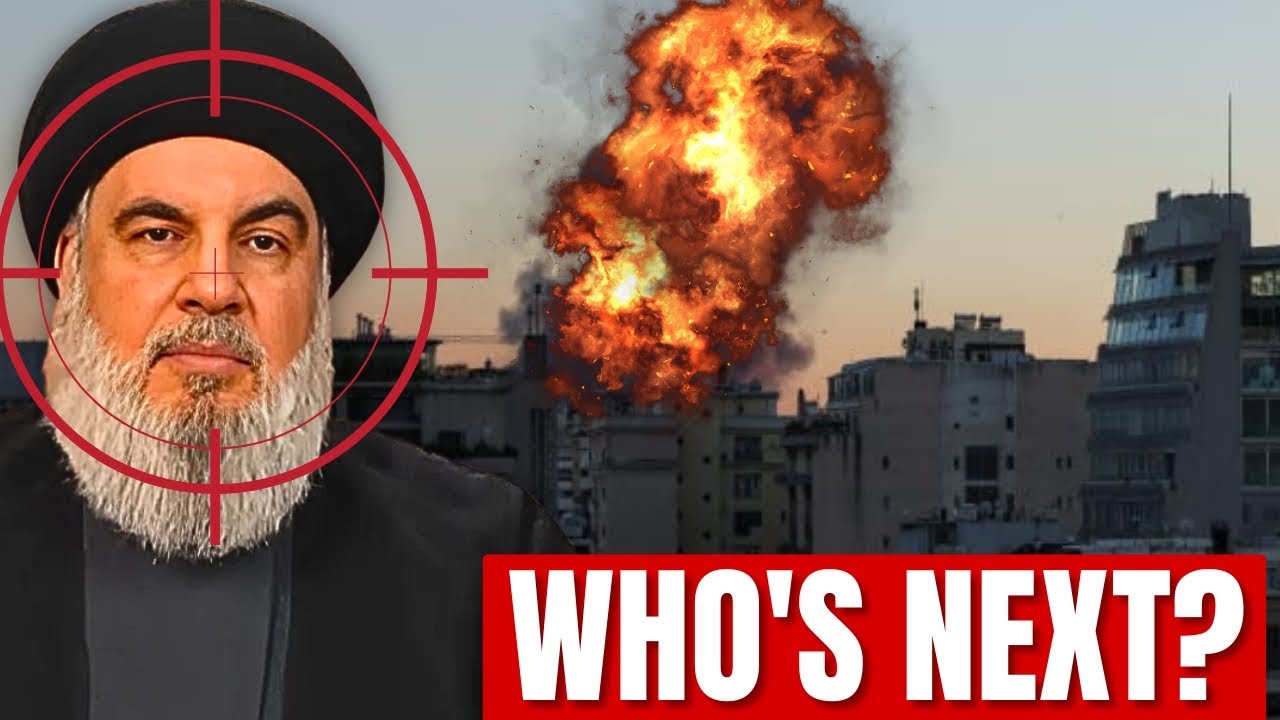
In this live‑stream, the host (identified as Speaker A) provides a rapid, audience‑driven analysis of the reported assassination of Hezbollah leader Hassan Nasrallah by an Israeli airstrike that used approximately 85 bunker‑busting bombs. He describes the physical details of the strike, the manner of Nasrallah’s death (suffocation in rubble), and the death of IRGC deputy commander Abbas Nifshoran, underscoring the direct Iran‑Hezbollah link. The host then structures the discussion around five core questions: (1) whether Hezbollah is finished, (2) Iran’s next move, (3) Israel’s possible incursion into southern Lebanon, (4) the possibility of Hezbollah infiltration by spies, and (5) whether Israel’s ultimate aim is a war with Iran. He argues that Hezbollah’s organizational depth will allow a quick succession, naming two likely successors (Hashem Seyfeddine and Naeem Qassem) and noting that the decision will be made in Tehran. He assesses Israel’s current military posture – shelling southern Lebanese towns, a naval blockade, and troop deployments in northern Israel – as a prelude to a possible ground invasion aimed at creating a buffer zone. The host contextualises the current crisis with historical Lebanese events (the 2005 assassination of former Prime Minister Rafik Hariri, the 2006 Lebanon war, and the sectarian Sunni‑Shia divide) and with broader regional dynamics, including Iran’s internal debate over retaliation, the potential spill‑over to Yemen, Iraq, Syria, and the role of external powers (U.S., China, Russia). Throughout, he engages with live chat, answers audience questions, and intersperses meta‑comments about technical issues and platform moderation. The overall narrative stresses that while Nasrallah’s death is a major blow, Hezbollah is unlikely to collapse, Iran will weigh its response carefully, and Israel’s actions may trigger a wider regional conflict.
Chapters
All right, hello everybody and welcome to Geopolitical Trends, where truth matters. Good to see you again. I know we had the issue of the sound earlier. Before I move an inch, please guys, give me thumbs up if you can hear me. I checked the system, everything is working on this end, but I want to make sure. I don't want to take chances this time around. Because if this doesn't work, then, uh, so please just give me a thumbs up so I know you can hear me. So I'm not gonna move, uh, move forward till I hear— till I see at least some of you responding. Matt Backe, thumbs up! Great, good. So we're gonna move, and if something happens, just, uh, send the comment on the chat box, whatever. Uh, and by the way, guys, just for the record, It was me who removed the video from YouTube, from the platform. It's not YouTube, it's me that did made that decision earlier because I rewatched the recording, the live stream, and yeah, half of it you couldn't hear things. So the right thing to do was for me to take it down and redo it because that's the right things to do for the community. So I'm, uh, I'm— I have only a few hours before I head up to the airport. And head out to Egypt. But anyway, I wanted to do this for you guys because I want you to understand the developments that's taking place now after the assassination of Hassan Nasrallah. So, so let's ask the key questions because those are important. And again, I'm gonna repeat what I talked about earlier, but just for those who did not hear very well. So the first question we need to ask: is Hezbollah finished? It's legitimate question. We need to ask that one. Second question: What will Iran do next? Because as you know, Hezbollah is a cornerstone for that Iran depends on. Third question: Is burning southern Lebanon Netanyahu's next move? At the time of this recording, and I just read a report from the Middle East is that the Israelis have been shelling certain cities in southern Lebanon. That tells me probably the ground movements with troops inside Lebanon is a, is a foregone conclusion. So, fourth question: was Hezbollah infiltrated by spies? Because if it does, it most likely Looks the case to me, knowing what I know, it's a foregone conclusion that is gonna be very, very challenging moving forward. And the last question is, is Netanyahu doing all this with one objective and one objective only, is that Iran is the grand prize, meaning Israel wants to have a war with Iran? Those are the key questions you can ask now. Uh, uh, given the recent development that took place, uh, with the assassination of Hassan Nasrallah. As you know, it's now, it's, uh, uh, known that Hassan Nasrallah has been targeted, it's been eliminated. I didn't want to do the video on Saturday or Sunday. I wanted to wait until I gather my own information, do my own analysis, and present it to you. All I'm presenting you is the information, guys. Of of course, including my own analysis, but you reach your own conclusion for this. Well, the, the, the impact of the targeting, of course, what Israel did, used about 85 bunker bombs. And I'm gonna share some pictures with you guys to see the type of bombs that was used. So this is a picture from the F-15 of the 69th Squadron. That's the one that carried out the operations. And by the way, the pilots, they didn't even know till about when, when they were closer, about an hour or two before dropping the bombs. And each bomb has about a ton of explosives. So you can just see, you're looking at about— here is, here's a crater. And I give a credit of this picture to, uh, AP, Associated Press. Uh, you're looking at about 85 tons of explosives, so it's massive. You know what was interesting about— and I'm not going to talk about all this, I'm going to be talking about the day after, what's next. Now, what's interesting that a lot of people did not know is that Hassan Nasrallah did not die from the strike itself or from the US bombs. He died from suffocation. He was suffocated because with all the rubbles, you know, you won't be able to breathe. That is one of the interesting aspects of it. Another dimension to all this: who died alongside Hassan al-Sarallah? It was none other— so, so the sound is not— I'm just checking. Yeah, it's something going on with this. So, but you guys can still hear me, at least to a degree? Just give me a thumbs up, please. It's more like picture is freezing. Yeah, the sound works, but the picture— yeah, yeah, thank you, Army with Harmony. Yeah, it's, it's— the sound is working now, it's the image. It's one of those guys, there is nothing I can do with this guy, so I'm gonna just move forward with this in the hope that the internet will stabilize. I have the fastest connection, so I don't quite understand what is going on, but in any event What I was saying is what was interesting about is the second person who died alongside Hassan Nasrallah is none other than Brigadier General Abbas Nifshoran. Now Abbas Nifshoran is the deputy, uh, commander in charge of the Lebanese file as part of the IRGC, the Iranian Revolutionary Guard Corps. So So he was there in, uh, uh, uh, southern Beirut. Makes you ask the question, what was the deputy commander of the IRGC doing in southern Lebanon with Hassan Nasrallah? And that gives you the idea of the coordination, because Iran talks frequently to Hezbollah for the sake of the coordination. That is what's important to understand about this development here. So now the idea that, uh, Hezbollah now, uh, Hezbollah will not be— or not, uh, not be— will not have the luxury now to absorb the death of Hassan Nasrallah. Another word, they can't be spending time mourning. They're gonna have to move with the, the business as usual. That just part of this reality. And this is why you already have 2 or 3 individuals already, uh, being, uh, sort of pinpointed as the successors to Hassan Nasrallah. And I will talk about this one, uh, as I move forward. So I had a chance to read an article by, uh, Trita Parsi. You know, I had him one time on the other show. I might reach out to him at some point when I get back from Asia. And he's someone I trust his judgment. He's, he's what, he's very informative when it comes down to Middle East and specifically Iran. And his argument is that Hezbollah suffered now a very major blow in addition to the killing or the assassination of other commanders within its ranks. But That doesn't mean Hezbollah is finished. And this is one thing I need you to understand about organizations like Hezbollah. There is always a structure in place in case the top leadership is decapitated. Someone else will step in and replace that one. And that's exactly what is going to be happening. And that's why within the next 48 hours or so, you're going to be hearing the name of the new individuals replacing or taking over, uh, the position of Hassan Nasrallah as Secretary General. Now the other thing we need to consider is that Hezbollah has at its disposition, or its possession, that is, about either— one account I saw that it says it has 40,000 fighters, another account says that had over 100,000 fighters. I will go with the latter because 40,000 is nothing. Yeah, I will go with the latter. And this is now why Israel is moving forward with a blockade on Lebanon to prevent weapons from getting in, into, uh, uh, uh, Lebanon, or southern Lebanon, that is. And this is why, to me as an analyst, it tells me that the, the ground invasion is a foregone conclusion. This is why Israel right now is shelling certain locations in southern Lebanon in preparation. Whether it's going to be a full-scale ground invasion or a limited scope, I don't know at this point because there is no clear indication. What's clear is that Israel now has deployed its forces in northern Israel in preparation for when they get the green light. I don't know who they get the green light from. Most likely not anyhow. The US now is useless anyway. Israel does what it wants regardless of what the US thinks. So, and this is why, uh, uh, in my belief, Israel is preparing for the invade— land invasion, that is, in Lebanon, and how Hezbollah is going to react to this. So the, uh, uh, Mikati, he's the head of the Lebanese government already mentioned that Lebanon government is going to send troops into the southern Lebanon. I don't know how much, uh, impact this is going to have. So now the key question we need to also consider, beside the questions that I mentioned earlier, is that, uh, the repercussions of now these Israeli, uh, operations that took out Hassan Nasrallah, because this is going to now go outside the parameters of Lebanon. We also— what happened back in 2000, between 2002 and 2006, and at the end Israel end up having to leave Lebanon because he was forced by Hezbollah for pushing it outside Lebanon. Are we seeing the same? It's most— I don't know, it's hard to tell. The dynamics have changed. One thing is sure now, is that the conflict is geographical location. And let me, uh, share a picture, uh, with you as far as the location here. Uh, if you notice here on the map, you see Beirut, just in the southern part of it, uh, that's where the, uh, the, uh, operation took place. But the idea that Hezbollah, uh, Israel that is going to go into Tyre and move forward, not just the— it's going to be a challenging is going to be a challenge for them to do so. And this is where you have experts, military and otherwise, are giving some scenarios. Some of them make sense, otherwise are sort of opinions, and that's fine. That doesn't mean they are wrong, it's just that's their opinion. So, so I had a chance to read up some of those to see really where the conversation is in understanding whether those individuals are providing logical arguments as to what type of repercussions we are looking at. Well, I'll take example, Brigadier General Elias Hanna, asking the question like many of us have asked, is Israel now will be about to launch an attack on Lebanon? Because if you are to think in terms of the movement, that makes common sense. Why would Israel sort of gather its forces in northern Israel in anticipation to go into Lebanon? At the same time, did Israel forgot what took place in 2006? It's unlikely. And because whatever the case may be, yeah, Hassan Nasrallah is gone, But Hezbollah will be ready to fight whether Israel thinks that they can't, whatever, because taking out somebody at the helm of power, it does not mean you decapitated the entire organization. It's a reality of it. So, and, and, uh, the other question we ought to ask is now for Israel itself, if it goes into Lebanon, how far it's gonna go. To what extent? Are they going to go all the way to Beirut, or they're going to just stay in southern Lebanon? And if they stay in southern Lebanon, will it be fair to ask the question? And I'm going to ask you, please just answer yes or no. In your opinion, if Israel moves forward, will they take over some land in southern Lebanon? Yes or no? Let me just see, uh, your answer to that. Muhammad Ali Idrisi, you say yes. Michael, you say no. Menas, you say yes. Uh, uh, Karakolak, Israel will go, uh, where are you? Uh, you say no, I'm sorry, but I say you Israel go as far as the US will, wants it. But US is useless in this case because Israel is doing against the wishes of the US, but US doesn't care cuz it was the US that provided the weapon. Uh, Myra, you say no. Uh, TC66, you say yes. Uh, you know, my point in this, uh, the reason why I asked you just to highlight to you there will be different opinions regarding this particular issue. Yeah, how far are they going to go? It's going to depend again what the Israel— Israeli intend to do, because remember, the issue in Gaza has not been resolved yet. So is Israel ready to open another front? And if it does open another front, who's going to fight it for— who's going to fight for it? Will the Israelis, or it will be some other soldiers from some other nations joining in. Because remember, there are British, there are, uh, US, there are French already fighting for IDF or with IDF. So then you got another opinion by Brigadier General Hanna, uh, uh, which made clear— and this is his opinion, and I can see also the logic into this— that there is no indication that Israel will carry out the ground offensive despite its military buildup? It's hard to tell. You know, Israel is going very on the offense, but that doesn't mean you have won the war. And there is no open war yet because we still do not know what Iran is going to do, if any— if anything. We don't know if Iran is going to get involved or not. So far, Iran has mentioned that it will not send its troops into Gaza or southern Lebanon. And the reason being is because Iran stated that both entities, Hezbollah and Hamas, are able to fight the Israelis. I don't know, I don't know if Israel— if Iran is saying this just for domestic consumption. So whatever the case may be, the next phase, it's going to be very— I mentioned this before, It's going to be very crucial. Back then, which was about almost 2 weeks, when I said the moment, the moment Hezbollah start firing in onto Tel Aviv, the headquarters, not Tel Aviv city, but the headquarters and so forth, I said we already entered into a new phase. Now we enter even a different phase now, which you will see within the next 48 hours. I'm going to be following this even when I get to Asia. Be keeping an eye on this one to understand where things are, uh, moving forward. Because one thing is for sure is that Hezbollah falls within Iran's center of gravity, if I'm use the term. Hezbollah represents the cornerstone for Iran's operations in the region because he's a strong So one thing, again, too many things is going to have to change, not only on the Lebanese territory, but it's going to be in the region writ large, because you're going to have to understand how some other concerns are going to sort of react to all this. A lot, a lot of Arab and Muslim countries were always, uh, wary of Hezbollah. In other words, they didn't see eye to eye. Because if you understand the history of how Hezbollah came about, you will understand that division that existed between Sunnis and Shiites. And I'm going to share story with you here about Rafiq Hariri, the former prime minister who was assassinated. So now there is another issue of why Israel will want to go into southern Lebanon. And this has to do with settling old scores. Go back to 2006. It was Hezbollah that drove Israel out of southern Lebanon. So Israel now is gonna go to great length to settle this old score because they didn't forget. But there is also a strategic reason for why Israel wants to do this. And the reason being, they wanna create a buffer zone. In southern Lebanon. It's no different than the thinking of Israel that did regarding the Gaza Strip. You create a buffer zone. That's one of the, the, the key to all this. And this is why, uh, uh, uh, Israel moved forward with this operation. It's because it, it may be assumed that once Hassan Nasrallah is gone the party is going to go into disarray, but it doesn't look like it. They're still holding together because the— if you understand how Hezbollah is structured and so forth, it doesn't depend on one person. Yeah, it doesn't. So, and this is one of the, uh, uh, uh logical questions that we ought to ask is that the assassination of Hassan Nasrallah is going to lead— it's going to have some repercussions one way or another. So whether the West want to admit it or not, it's just the reality of it. So now another major event that took place, uh, not in, in Lebanon but rather in Iran. And what happened? It was about the Supreme Leader Ali Khamenei. What happened with Ali Khamenei? The moment, the moment Hezbollah announced the, the, the, the death of Hassan Nasrallah, the security services inside Iran went ahead and moved the Supreme Leader Ali Khamenei to undisclosed place for safety and security. Hey, common sense. You think about it, guys, for us here in the U.S. When 9/11 happened, for example. The Secret Service had to remove at that time Dick Cheney from the White House and took him to the bunker. They, when President Bush was at the time in Florida, flew back, they took him to the bunker. It's just a normal procedure, I believe. It's just how it's gonna be interpreted in the West. That will be the only difference. So, but also highlights to you how close contact was between Iran and Hezbollah, constant ones. Uh, the, the, whatever the case might be, the idea is that Hezbollah was trying to be calculated in its move while to retaliate against Israel, but not to go into an all-out conflict, an open one, that is, because that's going to put Iran in a, in a precarious position, which it is now, because Iran has to make a decision one way or another. You know, if it backs down, it lost credibility. If it gets involved, that's going to create an open war where the US is going to get involved and my other players like Iraq, Syria, Yemen. I might even go as far as saying the Russians also behind the scenes. So now, in Iran in itself is divided into, uh, camps population-wise. There are those who agree with not responding, and there are those who disagree with the government that they need— Iran needs to respond. But Iran's government argument is that they are not gonna fall for the trap, because all this what Israel is doing is a trap to lure in Iran into an open war, because we all know what's going to happen if that open war does, uh, uh, materialize. So, uh, and this is why one of those remain unanswered questions as to where now the conflict could expand into and which fronts will be involved in this. We're talking Iran, we're talking Yemen, we're talking Iraq, we're talking Syria as well. So, but the answer is not clear. There is no clear— as a matter of fact, Israelis just bombed, uh, uh, a location near the Hodeida port in, in Yemen because the Hodeida port is very, very crucial for the Houthis. You know, Houthis have 3 locations that are— if they are choked, it's, it's the end. So, uh, as far as the international, uh, and the regional reaction to this is ambiguous as far as, what Israel did. So it's hard to tell, uh, at this point how things is gonna move forward. So now let me talk about, uh, because you need to understand a little bit of history. I have to take you back few years ago, as I mentioned earlier. Uh, without understanding that, it's not going to make sense to you. And after this, I'm going to address as to the possible names who's going to be replacing Hassan Nasrallah. So let's start with this one here first. The image you're looking at, this is the former prime minister of Lebanon, uh, Rafiq Hariri. That's the, uh, who was assassinated. So now what is important about understanding about Rafiq Hariri? Who was Rafiq Hariri to begin with? Rafiq Hariri served as, as I mentioned earlier, prime minister of Lebanon 5 times. Yeah, he was well, well accepted there. So he's a multi-billionaire. And how did he make— how did he make his fortune? He made his fortune in construction, especially in Saudi Arabia. So you can just see the link. There is a link there because Rafiq Hariri is a Sunni, because you need to understand the structure of the Lebanese society. Uh, Lebanon is a mix of the Sunni, the Shi'ite, the Christian, the Alawite, the Maronite, the Druze, you name it. That's why not everybody is mourning the death of Hassan Nasrallah. No, not everybody, because some have not forgotten what Hezbollah did to Rafiq Hariri, because Hezbollah and Rafiq Hariri back then, they were butting heads. And the reason being, you need to understand why, and I'll get into it here. At the same time, Rafiq Hariri, this, uh, the late Rafiq Hariri, uh, was a good friend of none other than the former French president Jacques Chirac. Why is this important? Because Lebanon is a client of France. This is why they speak French in Lebanon during colonialism, when the partition of the Middle East— you all remember after World War I, France took over certain parts of Syria, Iraq, and Lebanon, and that's why they were speaking French. So, so Rafiq Hariri developed this relationship with Jacques Chirac. So Hariri was known also to have very high, uh, uh, level international contacts. And he was also holding a Saudi passport, which means what? He was a dual citizen. He was a Lebanese, but also he was a Saudi. What was the reason for why he was given the Saudi citizenship? Because he was a Sunni, and the Saudis at that time were in confrontation with Iran, religiously speaking, regarding the division between Shia and Sunni. And Rafiq Hariri as a prime minister will push the agenda in the parliament against Hezbollah, who was getting members inside the Lebanese parliament. This is what I need you to understand. Another aspect, the tension that existed right before the death of Rafiq Hariri, or the assassination. So in the year before his assassination, Rafiq Hariri has been embroiled in a political role or a row over the extension of the term for pro-Syrian President Émile Lahoud. Émile Lahoud was the president of Lebanon, but he was pro-Syrian, which means what? He was under Syrian pressure. The constitution in Lebanon was amended for another 3 years to allow the Syrian presence. Rafiq Hariri at the beginning refused that, but he later on caved in and signed that in. And this is why in 2004, a UN Security Council resolution put pressure on Syria over its role in Lebanon, because they wanted Lebanese and all the foreign forces to leave Lebanon and allow the, the, the elections to be by the Lebanese, uh, themselves. And also because, uh, when the foreign forces disembarked, uh, armed group in the country included the pro-Damascus Hezbollah. This is why you need to understand that triangle between Iran, Hezbollah, and Syria. Very crucial. Without understanding This, it won't make sense to you. And of course, the Lebanese turmoil led, led at that time, of course, was exacerbated by the US invasion of Iraq in 2003. And this set the stage for the rivalry between the Sunnis and Shiites. The Shiites, Iran, and its allies on the one hand, including Syria, and Hezbollah, of course, part of Lebanon, and the US-allied Sunni-led Gulf states on the other hand. So this is what's important, and this is why in 2005, uh, Rafiq Hariri was killed along with 21 others in an explosion in Beirut. So I'm going to show you an image of the crater that was created by the truck that carried out 2,200 pounds of TNT. It's right here. This is an old picture from 2005, the crater. There is no way anybody would survive something like that. Yeah, and this is a picture of Rafiq Hariri minutes before he left a coffee shop, because he was at a coffee shop and he was getting into his, uh,, sort of, uh, uh, convoy to head it back to the parliament. And that's when he was taken out. Now, uh, there were 4 Hezbollah members accused. 3 of them were acquitted, but one of them, uh, forgot his name, but Hezbollah, under the order of Hassan Nasrallah, refused to turn the guy over to the UN at that time. So, and this is why it's important for you to understand this existence of why, uh, the conflict in itself, uh, in Beirut, it has to go way back, uh, because Hariri— because his son later on, this guy Saad, Saad Hariri, took over his dad in possession as prime minister, but he didn't last long either. So he had some tensions with Hezbollah at the beginning but they worked out their differences. But he was under the orders of the Saudis. That's, uh, to my knowledge. And I know about it because I wrote about it in a book, and I'm gonna share it with you. This is a picture of Saad al-Hariri with the MBS, Mohammed bin Salman. And this picture is not clear. This is al-Hariri with King Salman when he went there in 2015 or '16, if I'm not mistaken. What's important about this one is that, uh, for Saad Hariri— Saad, not his dad— Saad, when he took over, I argued that time that he went to Saudi Arabia. And here is what I wrote: as a result, Saudi leaders realized that since Saudi Arabia is no military match for Iran, time is of the essence to do something. The only exception the United States has to its benefit is if the United States intervenes on its behalf. Uh, this is what I wrote in the Saudi book right here. Uh, my argument continue. I strongly believe that American people would vehemently object to such a scenario. With a gloomy economic outlook for Saudi Arabia, in addition to the current geopolitical shift in the Middle East, the only option left for Riyadh is to divide and rule. The recent events surrounding Saad Hariri, the Lebanese prime minister, is a case in point. Whoever thought that a prime minister— Saad Hariri in this case— of a sovereign nation could be forced by another country— Saudi Arabia in this case— to tender his resignation under questionable circumstances. To shed further light on this intriguing story, no one was waiting for Mr. Hariri when he arrived at the Riyadh airport. This is very unusual for an official visit and violates diplomatic protocol. Moreover, Mr. Hariri's personal phone was confiscated. The resignation letter Mr. Hariri submitted contained unfamiliar and unusual language, leading many analysts—I was one of those included in this—to speculate that the resignation letter was written for him., and he was forced to read it. And I came across one statement by Nakul in 2017. He wrote, and I quote, in his speech Hariri said he feared assassination and accused Iran and Hezbollah of sowing strife in the region. He said the Arab world would cut off the hands that wickedly extend to it. Language which one source close to Saad Hariri said was not typical of the Lebanese leader, end of quote. It's very, very important to understand these dynamics, guys. Things don't happen in a vacuum. And if you don't understand these dynamics, this is why you are realizing some in the Middle East, uh, they are okay with Hassan Nasrallah being taken out. Some in Lebanon itself, some in the Gulf states. So it depends which part of which ideology, which political orientation you are part of. So now the second thing that I need to talk to you about is who's going to replace Hassan Nasrallah. So, well, you need to understand first of all how Hassan Nasrallah came to power. How did he came to power? Which was about almost, what, 30 years now, something like that. So Hassan Nasrallah took over and was elected to succeed none other than Abbas al-Mousavi. I have a picture of him here. Abbas al-Mousavi was the former Secretary General for Hezbollah. He was taken out by Israel, okay? That's what happened. So Hassan Nasrallah took over. Mousavi, by the way, was assassinated in 1992 on the road of the town of Tufaha in Sidon district. So Hassan Nasrallah himself was— in 1992, he became a target of the Israeli immediately after taking over from Mousavi. So Hassan Nasrallah survived 4 assassinations One in 1992, second one in 1997, third one in 2006, and the fourth one in 2008, till this fifth time on September 26th, I believe, right? On Friday? September 27th, when he was taken out. So that's very, very important, so, to understand this one. Now who's gonna be replacing him? There are two names that's circling right now. All eyes are on those two names. The first one is this individual by the name Hashem Seyfeddine. Hashem Seyfeddine is the executive council for the Hezbollah. The second person is Naeem Qassem. He's the deputy, uh, secretary of Hezbollah, meaning he was the second in command after Hassan Nasrallah. So far nobody knows because the decision, it's going to be made in Iran, not in Lebanon. They do have what they call the council, shura, but the decision will be made in Iran to decide who the next. So most likely you're going to hear within next 48 hours who the next leader of Hezbollah. However, make no mistake, if Israel gets a chance to take him out, they're gonna do that because now gloves are off. That's it. There is no ifs and buts. And that's exactly where my big concern for me personally, it's gonna get out of the borders of Lebanon and it's going to become a regional conflict. And I remember back in the '80s, I remember what took place with the bombing of the US barracks. I remember what took place. Lebanon was devastated when Israel went in. Even Reagan himself, Ronald Reagan at the time, was saying to Lebanon, you need to get out. They didn't care, they didn't listen. So it just, uh, uh, uh, it depends again the next leader what it, what direction is going to take Hezbollah. The, the, the, the fighters, uh, the, the, yeah, the fighters of the party are steadfast, uh, to continue the fight. To what extent, nobody knows. And it's gonna be, uh, depending again how it's gonna move forward. So this is what I wanted to share with you guys because I needed you to understand these dynamics because you're going to be seeing a lot of change coming up. And I want you to have at least a, a foundation of understanding that ties in the triangle Iran, Lebanon, and Syria to make sense to you. So this way you will be informed at least of what's going on, and you reach your own conclusion into all this. All right, let me answer some questions for you guys before I head out, finish up my back in because I gotta head out. Oh, by the way, I do have to share with you something. Uh, you remember when I did the community, uh, discussion and I wanted to share a video— a clip rather, not a video, uh, with you, and I couldn't— it didn't work at that time. So I'm gonna— I have it here, uh, and this one about— I told you when I was in Eastern Europe, uh, and I had a visit to Kraków and I went to Miołów, one of the cities, in the cemetery where the Russian, uh, the Soviet Union soldiers that fought to liberate— everyone, I just want to share this with you guys. What I'm looking at here, so take a listen, guys, of the former Soviet Union soldier Uh, okay, if you can turn it off, I'll go and do it. Okay, remove here. Anyway, I just wanted to share that with you, and because history has been altered that it was the US that won World War II. No, it wasn't. The truth— truth matters. Truth matters. If it weren't for the Soviet Union, it would have been a different outcome. And if the Soviet Union didn't get involved first, the US would not get involved, and the Allies. So anyway, I wanted to show you proof for that. And by the way, those— the headstones that have names, meaning they identify the soldiers. The ones that didn't have a name they couldn't identify who they were. So anyway, let me ask— let me answer some of your questions, guys, before I sign off here. Uh, and Sarah Carol, you are most welcome, you're most welcome. So, uh, oh no, Amanda, it's Matt Becky, not Becky. So that's interesting. So Yeah, uh, Laval. I just want to share this statement. Laval, thank you very much. You wrote, your, your insights and a lot and analysis are so instructive. We learn so much from you, your videos. Many thanks. Thank you very much. Appreciate your kind word. It's all for the community. That's why I wanted to do this. Oh, no sound again. Can you guys hear? Oh, okay, boycott. Thank you very much. Thank you, Teresa. I just couldn't tell when someone said no, no sound. So, all right, let me answer some questions briefly here, guys, before I sign off. And, uh, Uh, uh, yeah, it's something with the internet and not on my end. I have no idea why that is. And apparently when I get back, I'm gonna have to redo all this and figure out exactly, because when I check, everything is working. And heck, I did— I just did a live stream 2 days ago. And it was fine. So, all right, let me— oh, speaking the truth, thank you so much for your super sticker, truly appreciate you for this. Uh, name free, uh, it's the internet, it's not you, it's the internet. Because I'm running into the problem here, but I don't understand. Yeah, uh, and, and really, I, I don't get it because I have the fastest speed that I can get, and it just— so sorry, guys, it's not something I, I, I— it's out of my control. I can't do anything with it. At least I wanted to provide you something. Uh, hi, J, good to see you. As always, good to see you, George. Uh, all right, let me once again— I'm going to scroll down just to see. Uh, uh, uh, you're right, Amanda, I don't make the thumbnails. Uh, my guy, uh, uh, Raj makes them for me. All right, I'll take— if there is question, guys, one question and I'll answer it for you. If there is one. Uh, Muhammad Ali, you said you will talk about the infiltration and who gave the information. Oh no, I don't know the person. There is no such thing. Because this goes beyond just an individual. We're talking about, we're talking about SIGINT, we're talking about ELINT, we're talking about— there are variety of sources to gather intelligence. And this is not a matter of a week or two or three. This is an operation for months that took place for them to get to this point. Of course, the closer the person to the inner circle of Hassan Nasrallah, the better it is. And to me, it was— if, uh, to me, that's one of the idea how Israel was able to pinpoint the location. You know, the SIGINT is not going to do it. Satellite is not going to do it. Satellites will only give you an area, but it has to be humans. You know, this is why you got a combination of ELINT, SIGINT, humans. All those are methodologies in, uh, or, or methods rather in gathering intelligence. That's how. As to one specific person, no, it doesn't work that way. Doesn't work that way. A double agent, if you will, yeah, there will be more than one person. So, uh, uh, Matt Backy, uh, what is your opinion of Dr. Javad Zarif? Most likely you have worked during his tenure in New York. And most likely you won't be able to talk about it, but I would like to know your opinion. Well, uh, uh, Zaved, Dr. Zaved, Zarif rather, was well acquainted with the Western mindset. He understood how to deal with Western. This is why his negotiations with the West during the nuclear, uh, dossier sort of bore fruit for the Iranians at that time. He's savvy in understanding the dynamics, but, uh, Zavad was also limited in how far he can go because the structure, uh, the, the, the structure of the hierarchy within the Iranian government. So Zavad Zarif wasn't a president of Iran, he was a foreign minister, and that in itself, uh, gave him limited space how far he can push things. Yes, he did provide some arguments to the higher-up, the leadership in Iran. Makes sense. But again, my understanding of him is because he was very familiar with the Western mindset, and, and I, I believe he did spend some time in the West, part of his education, if I'm not mistaken. So, uh, one more question here. Uh, how is the weather in Texas? It, it's, it's fluctuating. It's very sunny, was sunny earlier and so forth, but it's hard to tell given what took place with the storm that took place in North Carolina. You will think that is too far for us, but it's not the case. Sometimes if there is a storm system, uh, in, in some close distance by, we will feel the impacts of it. And I believe This is part of that, uh, it's just, just how it is, unfortunately. But again, when I get back, I'm gonna deal with all this studio in a different, different setting. So, uh, Timeline Dunkley, why America's government is supplying Israel with satellite images so they can attack Lebanon if America doesn't want Lebanon and Israel to fight? It's, it's a game. It's a game. We all know because our government, it's not working for the people. I've always said this and I am not shy away from saying it. You know, the, the, the, the government is controlled, it's controlled, and it only does what it's told to do. So despite the statements, when, when Biden says we calling for ceasefire, it's nothing for the— it's nothing but a consumption of ink and is meant for domestic consumption. No more, no less. US cannot stop Israel. Let's just be honest about— let's be frank about it. They can't control them, simple as that. So, and, and, and that's a reality. It's a harsh reality, but it is, it is how it is, unfortunately. Uh, Michael, what do you think China could do to help the Palestinian struggle? Well, what China can do also, they can't. You know, they did issue a condemnation in strong language, but at the same time, if you look at the history of China, China never get interfere in, in, in countries' problems and so forth. You know, what do you think, China is going to send military? No, they won't do that because why they're going to get in themselves into— China is already dealing with its own tensions created by the US in South China Sea and Taiwan Strait. So, and I am gonna be in, be in the region and I'm gonna see with my own eyes because I am aware of the buildup that is taking place right now in Taiwan. You know, why do you think that buildup is for? Why do you think the $500 million of weapons that we have allocated now to Taiwan is for? And all this coinciding with the US presidential elections. So it doesn't make any strategic sense of China to get involved in far land issues when there are issues closer to home that they need to deal with. And this is why, speaking of China, this is why China went ahead and test— uh, they did the testing of an ICBM missile, uh, last week. I don't know if you were aware of it or not. Well, here is the, the point of that missile test. The last time China did an ICBM test It was about 40 years ago, 40 years ago. And the DF-41, this is the type of ICBM, can go about 15,000 kilometers. In a simple language, it can hit from China, it can hit right here in the US. Is China sending a message to the US in a subtle way? Most likely is the case because they are seeing the buildup that's taking place. Philippines, Australia, South Korea, Japan, uh, Taiwan, South China Sea areas in certain parts. So, and this is why I don't see China getting involved. China did something that the West or the US couldn't do. They brought Saudi Arabia and Iran together, which is a major— that's how that— but again, because you're gonna have to think about the history of China and its culture, how they don't see that. Uh, uh, Q78: Dr. O, wouldn't you say that Israel has been successful so far? Okay, successful in what? In destruction? Yes, it does. Uh, successful in intimidating? No, it didn't. It's because what do you think Hezbollah is going to do? They're not going to sit idle. You know, sometimes we think that the reaction has to be the next day. It just doesn't work that way. So on the other hand, you're gonna have to be calculating your moves because anything that goes out of control is gonna spiral throughout the region. And if you set the Middle East in flames, we all gonna feel the brunt of it. I'll start with oil prices. You're gonna feel that at the gas pump. I don't care what part of the world you live in. Some will say we too far. No, it doesn't work. Yeah, Israel is trying to achieve a strategic objective here by creating a buffer zone. They might end up succeeding in that, but also they don't, they don't forget what happened to them in 2006, and the possibility is there. But so far, yeah, he's been, he's been destroying what's needed, I guess, to them what's needed to be destroyed, decapitating the leadership of Hezbollah. They success— they are succeeding in doing so. But on the other hand, will this, uh, save the, uh, individuals, the population inside Israel? When the Iron Dome— sometimes it works, sometimes it doesn't. When you have the northern part of Israel is evacuated completely, there are no settlers. 3 million settlers have left. So, and I'm trying to provide you guys both sides of the argument. Israel is also dealing with the economic downturn. Israel is in a hole, economically speaking, of about $10.2 billion, which is a lot of money for a small entity like Israel. But again, Israel doesn't have to worry about that, unlike Lebanon. Why? Because Israel will get money from the US taxpayers. Yeah, some of my taxes will end up in, in Israel, like we doing with the, uh, Ukraine. At the same time, if you guys see the flooding that's taking place in North Carolina, and the government said doesn't have any money for that, and yet we have money for Ukraine and have money for Israel. Come on, it's not right. It's not right. The government should work for the people, but we all know how it is. Uh, uh, one more question, guys, before I head out. Uh, X, uh, yes, I did, I did. And the US will be sending additional troops. They didn't want to disclose the number. And most likely, when we say the US, I am referring to some NATO members that's going to be probably wearing different uniform. You know, I know how tanks work, I was inside. That's sometimes— or you're going to see some special ops, uh, going in. But again, uh, history— I always use history as my guide. I remember what took place in the early 2000s and how, uh, Hezbollah was able to defeat, uh, because the— what do you expect? Those people in southern Lebanon is going to leave their homes No, just doesn't work that way. Doesn't work that way. The problem is, when we start seeing body bags coming back to the US, maybe, maybe the American people will wake up, but I doubt it. I doubt it. So, so— oh, thank you, Teresa. You said the picture is clear. Yeah, it's so weird how, uh, uh, it's just weird how it works. But I am glad I was able to do this for you guys because That's my responsibility for the community. And when I, uh, rewatched the earlier one, I just couldn't believe it. So I said I'm gonna remove it. So, and once again, just for the record, guys, it wasn't someone in, uh, on my account, on, uh, uh, follows me on, uh, on X, Twitter, said that YouTube— so no, it wasn't Twitter, it wasn't YouTube, it was me that removed it. And I am gonna put a, a statement for that to ensure, because I like fairness. I like fairness. YouTube didn't do that. I removed the video myself. So does YouTube remove some comments? Yes, it does, and I don't understand why. Does YouTube— that doesn't allow subscribers on my channel? Yes, it does. I don't understand why. Does YouTube limit the likes on my videos? Yes, it does. I don't know why. So, so I don't know what they have against my channel. I don't know what they have against me. All I'm sharing with you is knowledge. I'm not saying something that is not there. I'm not making up things. I am not exaggerating things. I am not— you know, my objective is your knowledge because I want you to be well informed. Knowledge is power, and that's what my aim with this community is. Uh, okay, Hong Wong. Doctor, the next Japanese, uh, president candidate is pro-Asia, NATO. How will this annoy the other regional leaders, and will the next POTUS, uh, back Japan up with this, uh, suicidal move? Uh, I admit I am aware of the, the political scene, what's going on in Japan right now, but I have not delved deeper into this. This is why I didn't want to cover it till I, till I gather my own information. You know how I works with this. I'm gonna be in the region, I'm gonna be talking to some people who will have an understanding about that part of the world, and if I can do it from there, I will do a video for you about it. But to me, it's a foregone conclusion that Japan will have to do what we told it to do, because if you look at the, uh, the, uh, struggle in Okinawa Okinawans do not want to have the military presence, US military presence. Okinawans, as a matter of fact, don't even want to be associated with Japan, if you know the history of Okinawa. And I intend to— when I come back, I'm going to reach out to Dr. Ken Hammond. You all know he is a good friend, and I'm going to reach out to him and bring him on to share with us the history of Okinawa and to tie it to how the civilization for China and how they all have worked out at some point. So, uh, Muslim Revert, that is indeed— petrodollar is about to be done because of the announcement that's going to be during BRICS Summit, especially with Petro Yuan. And I did a video, uh, on the other channel, you're going to see it next week, in which I argued that we should not rule out the dollar yet, but you will see the start in petrol, uh, transactions. And, and that's spot on. Uh, okay, one more question here before I sign off here. Oh, that's correct, Matt. Please hit the like button, I will really appreciate it, guys. All right, I am going to sign off here, guys. I wish you a good day, good evening, good afternoon, whatever part of the world you're in, and I look forward to talking to you when I'm in Asia. As always, your support is greatly appreciated. I am so thankful to you guys, and remember, geopolitics impacts your daily life in more ways than one. Till next time, guys. Bye-bye.
More from David


Beyond the Single Actor: Why the Gulf Isn't Choosing Between the US and China


Iran, Iraq's Militias, and the Houthis Are Coordinating! This Changes Everything




Who Controls the Next Decade's Resources? Latin America and Africa's Geopolitical Crossroads

The Chokepoint Trap: How Washington's Stupidity Triggered a Cascade That Now Controls the World

Trump Spooked as IRGC Unveiled dual-use SLV, Deployed Ghadir Mini-Subs & Hinted at Tactical Nukes!
