Hezbollah Rockets Strike Kiryat Shmona Exposing Israel’s Weakness?
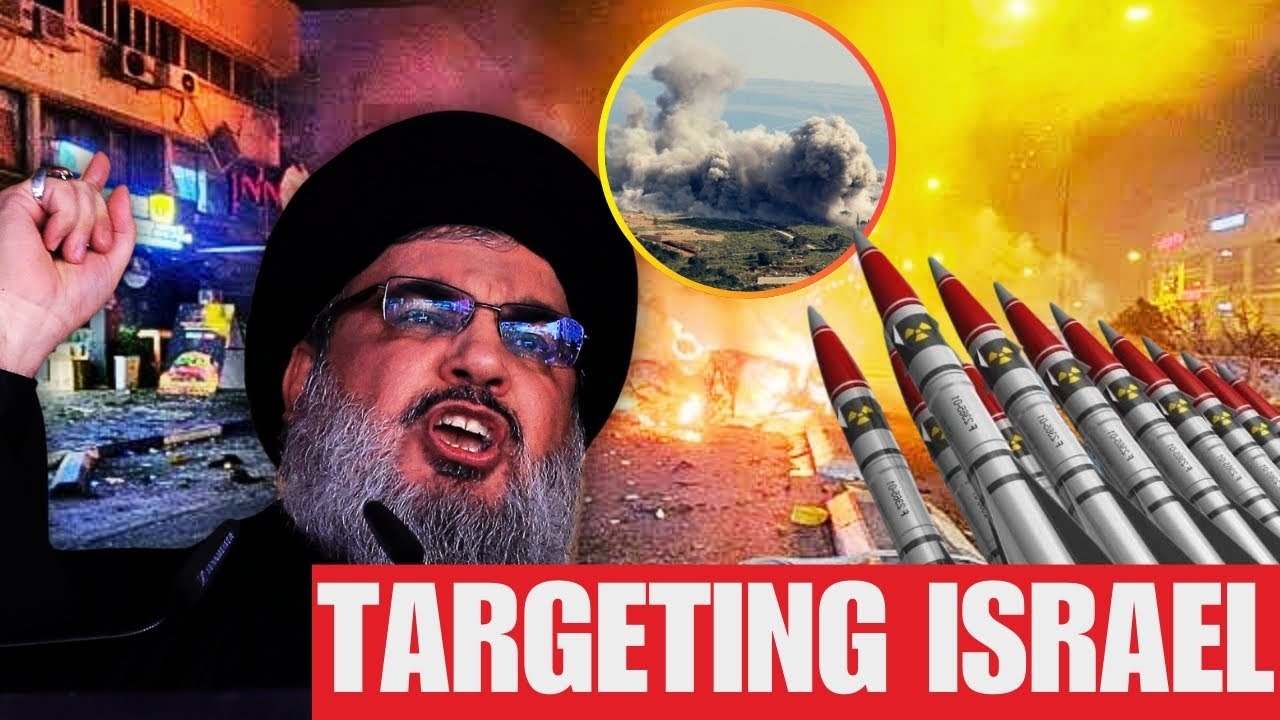
David Oualaalou examines recent rocket exchanges between Hezbollah and the IDF along the Lebanese-Israeli border. He argues Israel fears Hezbollah most among non-state actors because of its 150,000-rocket stockpile and past military victories, and questions whether Israel can fight a second front in Lebanon while still in Gaza.
Chapters
All right, hello everybody and welcome to Geopolitical Trends, where truth matters. Very, very excited to be with you on this March 25th. Hope you had a, a good weekend, a relaxing one. So I did, at least. I, I had to do some yard work, so I cleaned up the whole yard and put fertilizers and, and all that. Then prepare the garden for the summer so you can plant some veggies. So anyway, so I'm very, very excited to be with you guys because I got an interesting topic. Uh, we don't hear much, a lot about it. I mean, there are some coverage here and there. Uh, I decided, you know what, I'm gonna do this. And yes, there used to be some concerns about, well, YouTube will allow certain words, but, uh, sometimes you're just gonna have to move on with it. That's just, just part of it. So, so I decided to go ahead and do this one. So what I'm going to be talking to you today about, it has to do with the attacks conducted by Hezbollah in northern, northern Israel. So, and I'll provide you a big picture given the Middle East is sort of in my academic background, and I kind of know a lot about it. I spent a lot of time, I speak the language and know the culture and so forth. So This is what I'm gonna do or share with you in this live stream. Just a heads up, guys, uh, I'm gonna be having, uh, I am working to have some guests either this week or the beginning of next week, including Professor Hudson, Michael Hudson. I know some of you has been asking me to do so, and Larry Johnson. So I'll be reaching out to him. It's just a matter of coordinating the time and so forth. And of course, I will prepare for you my talk with Carl Zah by the end of the the month. As I promised, we're going to be doing every 2 or 3 weeks, uh, Carl and I will be getting on, on, on the air here and, and talk about a host of issues. Then I'll do the community conversation with you on the 31st. I believe that will be, uh, let me see what day on the calendar. That will be a Sunday. So, and I will, I'll, I'll, I'll post everything for you guys for you to know. So, so So let me first see who is here, and as always, like to welcome you and say hi to you as well. Willie Holman, as always, from Memphis, good to see you. John Smith, New Zealand, good to see you. Truth Seeker, good morning to you as well. Uh, Sang Tam, good to see you. Hi Phil. Uh, Wong KC, Taiwan still. Tuan, good to see you. Uh, Franny, good to see you as always. Man Bilgo, good to see you. Uh, and Peekaboo, that's a nice screen name. So anyway, guys, very, very excited to be with you. Well, as I mentioned, the topic today is I will be talking to you about Hezbollah's attacks on Israel. Of course, Israel had to use aircraft firing missiles on certain cities, and I'm gonna share all this with you. But all this, we have to put it within the context of the key question to all this. And here are the questions, something you need to think about. Is this an escalation? Is this a sign of an escalation that will be inevitable? Because at least as a geopolitical analyst, knowing the history of what took place between Hezbollah and Israel, I just can see this moving into that direction. So, second question, Uh, uh, why Israel fears Hezbollah most than any other group? And this, to me, again, I, I thought of this question and I said, is this logical question? And yes, it is. This has nothing to do with having this, uh, hyper sort of, uh, fighter jets and all that stuff. Is the, is the, is, is the spirit of fighting when it comes down to the group like Hezbollah? But at the same time, Israel has experienced this in 2006, which I will touch on when I talk about the history of Lebanon. And the third question we need to ask is, will the US get involved? Because we did back then, and we all know what the outcome was. And I'm going to be asking you some questions just to sort of see where your knowledge regarding this issue is. So this is what I'm going to be, uh, addressing today. So, but before I'll do this, let's get into that— some headlines. I have just brief, uh, very, very brief one here. Uh, let me share a picture with you, then I'm gonna explain it as to what's going on this time around. All right, share screen. Here we go. Uh, let me, let me, let me— I can't talk. Let me make this bigger for you here. All right, what are we looking at? We're looking at, at the UN Security Council, which adopted now a ceasefire in Gaza. But don't be fooled, guys, don't be fooled, because here is what happened. Only a few days ago, the United States vetoed China and Russia proposal. You know, I'm sorry, I am sorry, I'm sorry, I reversed this. Russia and China vetoed what US proposal. So, and the reason why, it was a trick by the United States because they wanted to show the world that, see, we provided the proposal and here it is, China and Russia, uh, veto it. Well, Russia and China veto it because the language of the proposal did not go far enough as far as ceasefire. So if all of— if Russia and China would have approved it, then they'll say, well, all the, all the permanent members of the Security Council approved it. That means it's fait accompli. Russia and China said no, we vetoing this. Now it changed, and this is why now for the first time the Security Council adopted the Gaza ceasefire resolution. But there is a caveat, and the caveat is that the US abstained, which means if you abstain, it's still going to move forward. So the United Nations Security Council adopted for the first time a resolution calling for ceasefire in the Gaza Strip after more than 5 months of the war there. So of course we know the US is the main supporter of Tel Aviv, uh, refrained from using its veto power. It's because it became sort of very, very, very ridiculous that is the only country— the US, it's not a laughing matter, it's, it's pathetic that my country will behave such manner. But at the same time, as a student of history, I can tell you that this is a reflection of what has been going on throughout history. When a, when a, when a power is on its way down, it starts to embark on irrational policies, irrational decisions, and get involved in conflicts and so forth. This is not about strategy, it's about the failure not understanding how to react to the new reality. This is why I see it. So, uh, second thing, second topic is, uh, uh, yeah, regarding Israel also. I'm gonna share it with you, uh, share the picture here. Okay, let's share the picture here of this individual. Here is a foreign minister, I believe. Share screen. And there we go. And yes, this is the Israeli Foreign Minister, Israel Katz. He believes the war will be stopped through direct negotiations. Well, no, no, no, no, no, no, no, no, you sugarcoating the statements. That's what it is. Here is what happened, is that Israel now is warning 4 European countries against recognizing a Palestinian state. And this is what the foreign minister, uh, is warning. Well, wait a minute, who are you to warn other countries whether they want to, uh, recognize a state or not? And to me, that shows like, well, wait a minute, is the international community this blind? Or is the international community this weak? Because that's what it's in now. You can't be dictating the term to the rest of the world. Yeah, that's what the US was doing after World War II, but that era came to an end. It's over. It is over. So, so, and this is why now Israel warning 4 countries, and the 4 countries are Spain, Malta, Slovenia, and Ireland. Why? Because those 4 countries have announced their intention to recognize a Palestinian state. I mean, hey, it's their country, they can decide whatever they want based on the policies they want to do. And this is why I don't quite understand the arguments for why something like this will be sort of problematic when it comes down to, uh, recognizing a state. So, so that's, that's, that's part of where the problem is. So, all right, let's get into our topic here. Uh, first of all, I want to show you this picture of what just happened yesterday. This one, by the way, just happened yesterday. I had to read up on few other sources to ensure the story collaborates, and, and of course, because that's just how I do business. You all know how it is. I can't just assume things. So, so what happened? Well, what happened is that, uh, and by the way, what you're looking at is the mutual shelling by Hezbollah and Israel on the Lebanese border, which has not stopped since last October, by the way. We just don't read much or hear much about it. So, well, what happened is that the Israeli fighter jets launched a raid on the vicinity of the town of Adeshi. Or Daesh, you know, in southern Lebanon. On— in return, what Hezbollah end up doing is targeting of an Israeli possession with artillery shells on Sunday morning yesterday. And that's what you're looking at. So, and, uh, uh, so Hezbollah's, uh, stay in a statement issued by Hezbollah saying that the fighters targeted, uh, Al-Jalaa'lam site. Now, Al-Jalaa'lam site, it's where he targeted that with artillery shells and achieved a direct hit. And also was confirmed by— this is what Hezbollah stated, but also this statement was confirmed by Al Jazeera correspondent who reported that indeed after this attack, the sirens sounded in several Israeli cities in the Upper Galilee on suspicion of infiltrating a march aimed— intensive fight of Israel fighter jets along the borderline with Lebanon. And this is why I'm saying the question that we asked at the beginning: is the escalation inevitable? What do you guys think? Because I need to know your inputs. Because as I always say, by now you know at least what to look for when it comes down to understanding the dynamics of geopolitical aspects. So in your opinion, do you think an escalation between Israel and Hezbollah is imminent or inevitable? Let me— if you would be kind, please, and type in your answer in the chat box. I'd like to, I'd like to read up your, your feedback because that's how I learn about you as well, is just through, uh, communicating here. So All right, I'm gonna wait till it takes a while for this to show up and I'll, I'll get back to it here. But before I'll do this, I'm gonna get in into geography and history as we always do. And let me share a screen with you first. Uh, John Smith, you see not inevitable. Wonderworld, you say 100%. Wong KC, you say yes. Uh, Franny is saying, I think it's, it's unavoidable, but only because the Israeli government won't allow for an actual political solution. Valid arguments, valid arguments, guys. And I am leaning towards that, that the escalation will keep going if— because here's the thing, Hezbollah will not back down, Israel will not back down. So, but Israel also had sort of a bad experience, especially what took place in 2006, and I'm gonna touch on this After, I'll talk about geography. So, so let me share the screen with you regarding, uh, the map, which I always give my credit to the World Atlas map because that's where I always get the maps. They're just clear picture and just for you to see, at least to put things in perspective geographically speaking. And I'm gonna be sliding this, uh, up in the phone, so Here is Lebanon, here. So Lebanon, or Lebanon, Lebanon, known as the Republic of Lebanon, al-Jumhouria al-Lubnaniyya, or in French, because French language is very— a major language in Lebanon, known as la République du Libanais. So Lebanon is a small Middle Eastern nation, you know, or Western Asia, that is. So we go with both terms— situated on the eastern coast of the Mediterranean Sea in Western Asia. So funny how even a historical record or geographical record, they mention both terms, Middle East and West Asia. So if you look at the map as you are looking there, this is what you're looking on the left side of Beirut. That's the Mediterranean Sea. So that's what you're looking at. So it is located in the northern and eastern hemispheres of the Earth. Lebanon borders, uh, has, uh, Lebanon borders has of course land borders with two main countries. It bounded in the nor— northern and eastern parts by Syria, in the southern part by Israel, in the western part by the Mediterranean Sea. And the country, meaning Lebanon that is, shares its maritime borders with which country? Does it share its maritime borders? That's a question for you guys, a little geography. Which country does Lebanon share its maritime borders besides the, the countries that I mentioned, which they don't have borders there as far as maritime? It's a key question. Let me see. Aziz, uh, Israel, uh, yes, but not on the maritime. That's the key word, maritime. Because if you look at on the map, uh, you look at, uh, uh, right here, that's, that's Damascus, which is Syria on the south. You look, if you go all the way here, this is the Golan Heights. Israel here. I'm looking at the maritime aspects of it. Israel to a degree, but there is another country There is another country that is known, uh, that shares its maritime with, uh, not Yemen, no, not Turkey, not Palestine, not Iraq, no, no, no, you guys went too far. Okay, let's see, one more try, one more try. John J. Jones, Syria. Yes, Syria, but not the maritime aspects of it. There's one specific Oh, you got it, you got it, Nate. Nate Gray, you got it. Cyprus. It is Cyprus. And this is why now you're seeing demonstrations in, uh, actually there are demonstrations in Greece. And I did post this for you guys in the, uh, where did I put it for you? Uh, in the community. Uh, yeah, let me, let me share it with you quickly here so you can see it. Okay, let me share the screen here. I'm gonna stop this and share another one for you to see. This one in, in from Greece, because Greece proximity to Cyprus. Of course, as you all know, Greece and Cyprus, they have some maritime issue. And this is demonstrations inside Greece that they are not allowing, uh, uh, they're, uh, demonstrating against the, uh, transport of NATO US tanks through the railroads, uh, into, uh, Palestine or, or Israel, whatever that is. And this, you guys saw, you are seeing what they wrote on the tanks there. So I just wanted to share that, that with you. So let me bring back the, uh, the map here about the, uh, Lebanon, and we'll get into the history of it. So, so thank you very much for answering that question, guys. So history part, let's talk about a little bit of history here. Now for the history, uh, archaeologists have discovered, uh, in, in, in Byblos, which is believed Now listen carefully. Babylon, it is believed according to historical record and archaeological records, that is to be the oldest continuously inhabited city in the world. And the thing is that the remnants of the prehistoric huts with crushed limestone floors, primitive weapons, and burial jars which are evidence of the Neolithic and Chalcolithic fishing communities who lived on the shore of the Mediterranean Sea over 7,000 years ago. So, so when you look at the history, and again it's a long one, I'm gonna provide you the link, but I'm gonna share with you just some snippets of it, uh, if you are interested in reading more just check out the link that I'm gonna be providing you, and, and, and you can read up more of it, uh, on your leisure time when you have time to do so. Now, the, the, the canonets, because you're gonna have to think about the canonets in Arabic to those who speak Arabic, because I remember reading this a little bit in history, uh, the, uh, Al-Qana'aniyun. If you speak Arabic language, you know which one I'm referring to. So the Canaanites were the original inhabitants of the region, which was approximately in present, present-day Israel, the West Bank, and Gaza. All that region, Israel, West Bank, and Gaza, that's where the Canaanites were established back then. And this because he was joining the coastal lands and part of Lebanon, Syria and Jordan. And here is what's interesting about this, is that, that with the Semitic people are thought to have appeared in Canaan in the early Bronze Age, which was before 2000 BCE. And before this time, Semitic people known as the Amorites became the dominant population group during this period. And of course, the Israelites, according to the Book of Judges, during the second millennium BCE gradually subjugated the Canaanite cities, so that by the end of the reign of Solomon, King of Israel, the Canaanites had been assimilated. That is one of the things. Of course, what came after it is the Phoenicians, which constitute a single nation with the Canaanites. Now the Phoenicians, al-Finikiyun known as in Arabic language, which is the coastal plain of Lebanon, is the historic home of a strain of coastal trading cities of Semitic culture, which the Greeks, by the way, termed as Phoenicia. That is how it was known. And of course, Phoenicia maintained an easy tributary relations with the Neo- Assyrian and the Neo-Babylonian Empires. Cyrus the Great conquered Phoenicia in 539 BCE, and that's when Phoenicia was divided into 4 vassal kingdoms by the Persians. The first one is named, uh, Sidon, then Tyre, then Arwad, and, and Byblos. And by the way, The city of Tyre is the one you're looking at the map right here at the bottom. Tyre. That is why it's very interesting to understand the length of history, at least to put things in perspective. Then you fast forward to the Greeks and the Romans. Of course, when we think about the, the Greeks and the Romans, who we think about? Alexander the Great, who conquered Tyre. In 332 BCE by extending a still-extant causeway from the mainland in the 7-month effort. And Tyre fell to the, uh, Seleucid Empire, which was 323 to 60 BCE, after Alexander's death. That's what happened. And of course, I'm not gonna get into the Christianity and the introduction to Phoenicians from neighboring Galilee soon after the time of Jesus of Nazareth. So that's, that's, uh, then another history of the Arab rule and Middle Ages. Of course, the Arab advances brought Islam soon after the death of Islam's Prophet Muhammad, uh, in 632, see if I'm not mistaken. Muslim influence increased greatly in the 7th century when the Umayyads' capital was established at nearby— which city it was? To those who know a little bit of history about the Umayyads, where was their capital, which is a neighboring country to Lebanon? Which one? Let me see if you guys can type in that on the chat box. Baghdad? No, a good try, good try. Okay, it's not Baghdad, good try. Another country that Lebanon has a close relationship with? Syria. You got it. Which city exactly? Does anybody know the city? You guys got it, the country is right. I'm looking for the city specific. Uh, that— oh, you meant, you meant Damascus. That is correct. This is why you have to understand the relationship between Syria and Lebanon. Be close, because it goes back into the historical record. So, and that's what it was exactly in, uh— okay, let me bring this this map back here. Uh, it, it was in Damascus, that's when it was. And, uh, so you move throughout the Middle Ages, uh, and so forth, till, till one specific event. And that specific event, to those who know who Salahdin is, because what did Salahdin do to the Christian control of the Holy Land? Around 1190? Does anybody know what is the history of Salahdin? Do you guys know? It's a big, big major event that took place. Most of the Arab and Muslim countries, if you mention Salahdin, they will know. Yeah, Saladin is the one who defeated the Christians and freed Jerusalem at that time. So that's the one who controlled there. And this is why— here is one thing I need you guys to understand, because it's not very, very clear to many. When we think about Jerusalem, you know, which is a very, very important city To whom? Can you guys type in to whom the city is very important from a religious aspect? Let me see your answer here, because, uh, okay, Palestine is one. I'm talking religions, religions here, not the country, religions. That, uh, that is correct, Arkel Taros. The Salahdin defeated the, the Christians. Uh, okay, the Christians, that's one. You, you got it, Q78. The Christians, the Muslims, and the Jews. This is why the importance of what happened to the, at least the Christians. And this is why the idea of when the Israel, when, when the, the Jewish community or Israeli, uh, the Jewish religion, whatever, thinking Jerusalem is only theirs. Ah, I have to challenge that notion. Same thing with Muslims when they agree— when they, with the— when they say that, oh, Jerusalem al-Quds, that is, it's only for Muslims. Now hold on a second, just because the Prophet ascended to heaven from Jerusalem, what about the Christians? Because this is when Salahdin defeated the, uh, the, the Christians at that time. I just wanted to highlight this to you Uh, because, uh, during 1190, when he defeated the Christians, the Crusader states in Lebanon and Syria were better defended after that time. Then what comes after that is the Mamluks and the Ottomans, and I'm not going to get too much into this. Uh, one thing that I need to highlight to you is that, of course, as you know, the Ottoman Empire rules for how long? How long was the ruling of the Ottoman Empire? If you can type in in the chat box. And again, guys, I, you know, all this is just for us to learn from each other, no more, no less. And I just want to share this stuff with you. So, and it kind of brings memory back to me, and when I was teaching at the university, because that's how I will interact with my students. Because as you know, students will get bored if you just stand there and talk, and I know that, uh, 1,000 years, no, that's too much. It was 400 years. QE, Q, uh, Q7E, you got it. 400, I mean, 4 centuries or 400 years. And that's what they're linked for, uh, uh, but their role during that time was very, very important. That's why it's important to understand Lebanon is an interesting country, of course, like the rest of other countries, but Lebanon It's so the history of so many. And when you think about the Mamluks and the Ottomans, it's because you have to think about it from, uh, this particular, uh, aspect. Well, because here's the thing, Lebanon was later contested between Muslim rulers until the Ottoman Empire solidified the authority over the Eastern Mediterranean. Because remember, the Ottoman Empire extended all the way to where? Do you guys know? As far as east. I'm going towards Europe. As far as where? Let me see if you guys can type in, because that's where my ancestors came from. All Turkey. Yeah, but towards where? Which country? Spain. You got it, Maria. Spain, all the way to Andalusia and Sevilla. That's where my ancestors are from way back, and they had to flee after the conquest. So, so yeah, yeah, Bulgaria was part of that as well, but we're talking about all the way to Spain. And this is for you to understand, guys, the link This is why it's important. So all the way to the Mediterranean, this is why Ottoman Empire controlled was uncontested— that's the key word— during the early modern period. But the Lebanese coast became important for its contacts and trades with Venice and other Italian city-states. Lebanon was part of the Ottoman Empire for over 400 years in a region known as the Greater Syria. And 1916. So fast forward after this to the French mandate. This is very important for you to understand French role inside that part of the world, very, very, very crucial. Of course, a lot of people do not know in Lebanon there are so many sects, you know. You have the Druze, the Maronite, the Alawis, the Shias, the Sunnis, the Maronites, There are so many, you know, and this is why in Lebanon now, when you look at, for example, the mountainous territory of Mount Lebanon has long been a shelter way back for minority and persecuted groups, including its historic Maronite Christians majority, along with the Druze and local Shia Muslims. And it was autonomous Maronite region of the empire, of the Ottoman Empire at that time. This is why it's important. Now, for French— France, of course, has become part of, uh, uh, Lebanon became part of the French mandate as part of the French mandate of Syria. Syria and Lebanon were one back then, uh, during World War I. And on September 9th, September 1st, 1920, France formed the state of Greater Lebanon as one of the several ethnic enclaves with Syria. This is where that link still, till today, between Syria and Lebanon. And this is what I want you to know. A lot of people in the West have no clue as to why Syria and Lebanon are together. This is why Lebanon was largely Christian mainly Maronites, some an enclave, but also included areas containing many Muslims and Druze and so forth. It was till September, uh, 1926 when the French formed the Lebanese Republic, la République Libanaise, the Lebanese, that is. And the Republic was afterwards separated or separate entity from Syria. That's when it happened. Then comes independence, uh, which happened in 1941, allowed Germany to move aircraft and supply through Syria to Iraq where they were used against British forces. And the United Kingdom, fearing that the German at that time will gain full control of Lebanon and Syria by pressure on the weak, uh, Vichy government in France, that is sent its army into Syria and Lebanon. So, and of course, after the fighting ended in Lebanon, General de Gaulle, Charles de Gaulle at that time, decided— excuse me— to recognize independence of Lebanon. What year was it, guys? What year did Charles de Gaulle of France recognize the independence of Lebanon? Just guess. Uh, the answer, Franny, yes, Lebanon was a part of France along with Syria at that time. So what year was it? What year did Charles de Gaulle recognize the independence of Lebanon? In the '60s? No, no, John Smithon, before that. Uh, Aral, after that, after that, truth seeker, remember 1940s, 1943, Shannon. Now 1946, 1946, that's when Charles de Gaulle recognized, uh, Lebanon, uh, uh, announced Lebanon will become— I'm sorry, 1941, not '46, '41, that's when Charles de Gaulle recognized it. By saying, well, Lebanon now become independent under— but here is the key— it was under the authority of a French, of a Free French government. So sort of they maintain. Fast forward to 1948, that's when the— what happened in 1948, the first war, 1948. You guys should know this because I did mention it in one of the videos. I did mention it, 1940 '48, the first war. Between whom? Which what we are witnessing today in the Middle East. And again, all this, guys, is just for, for us to learn from each other. 1948, Suez Crisis, it was before. Suez Crisis was in the '50s. Arab-Israeli Con— that is correct, it was the war of 1948, the first one. 5 years after gaining independence, Lebanon joined its fellow Arab states and invaded Israel during 1948 in the Arab-Israeli War. That was the first one. So of course it took over the logistic support of the Arab Liberation Army, after which it found itself cut off from its bases in Syria. So, and of course Lebanon accepted an armistice with Israel on March 1949 by which Lebanese-Israeli border remained closed by quiet until the— after the Six-Day War. What year was the Six-Day War between Arab and, and, and Israel? Six-Day War, remember, Six-Day War. What year was it? Let me see. 9, you got it. Who, who answered that one right? Maria, you got it. John Smith, and you guys got it. Q7, 1970s, 1967, I'm sorry, Six-Day War. Fast forward to civil war inside Lebanon in 1975. Civil war broke in Lebanon. I remember all this because I was, you know, back then in the time. I was still— you— I used to pay attention to geopolitics when I was about 11 or 12. That's how far back I used to— I, I won't surprise you if maybe one day I'll, I'll get in my safe one of my journals that I used to write events at that time. So I'll share it with you one day. So, uh, 15— and this civil war in Lebanon lasted for about 15 years. It was devastating, devastated the economy and so forth. And it was estimated that about 150,000 people were killed and another 200,000 were maimed. So the war ended in 1990 with the signing of the Taif— Taif is a city in Saudi Arabia— the Taif, pronounced in Arabic as a Taif agreement with parts of Lebanon left in ruins during the civil war. Lebanon was invaded and occupied by IDF, Israeli Defense Force, in 1978 and 1982. And that's when Israel, uh, Lebanon remained under the control of this— in control, uh, that's where Israel rather, uh, remained in control of southern Lebanon. Let me show you the map here because you need to see Why today with these tensions between, uh, uh, Israel and Hezbollah is taking place in southern Lebanon, northern Israel? Because the assumption was always Israel, uh, is in control of southern Lebanon. And we are looking at this area here, uh, uh, the Litani— Litani River, the Tyre, and of course the Golan Heights, as you see me pointing here. The Golan Heights, which is Israeli occupied here. And that's where the— that goes way back to that era, era of 1982 when Israel took over. Of course, uh, at that time used to be the Prime Minister, uh, Ehud Barak decided to withdraw due to continuous guerrilla attacks by Hezbollah. It's because Hezbollah fought back Israelis and drove, uh, the Israelis later on in 2006. Of course, Lebanon went into some really major internal problems, including assassinations. And this one has to do with the major assassination, assassination that took place of its former prime minister in 2005. Do you guys know who that person was? I was very familiar with this case, uh, unaware of it, unaware of its details. Does anybody know who the name of that prime minister at that time, uh, in Lebanon in 2005? It was well known, was well known. Yeah, you got it, free, free pass. You got it, you got it. Uh, Rafiq Hariri, that is correct. And his son Saad al-Hariri took over the Lebanese government later on, and it was some tensions and so forth. So So, but the problem is not about that. The issue for you to understand is that, uh, uh, when the United Nations Security Council unanimously adopted Resolution 1595 in, in 2005, which called for an investigation into the assassination of Rafiq Hariri, the findings of the investigation were officially published in October 2005. So under what they call the de Maillies Report at that time, because he was used in a vehicle, the vehicle had the, uh, TNT in it, massive amount of TNT, and detonated the entire, uh, and that's when it becomes the beginning of certain, uh, a series of assassinations attempts that led to the loss of the number of prominent Lebanese figures. So Uh, then fast forward to 2006, mainly that one is because that's where cross-border between Hezbollah raid and shelling of Israel, which resulted in the capture of 2 and killing of 8 Israeli soldiers, uh, brought Israeli airstrikes into Lebanon and the entire country for that matter, and the ground invasion incursions in southern Lebanon. But the Israel— the Hezbollah were fighting Israelis, and that's when they introduced the, the, uh, uh, the, the bombers, suicide bombers that is, and the, the cars that start to explode. And, and they start pushing against Israel, and they drove Israeli out of southern Lebanon. And it took years for Israel to recognize officially that it, it left southern Lebanon because of Hezbollah. Now, all this tied to my question: why does Israel fear, uh, Hezbollah than any other group? This is why. So now, uh, and again, once all this, I'm going to share it with you in a link so you guys can look at it and take a look at it. Uh, so here is what happened yesterday. As I mentioned, uh, the, the, uh, uh Hezbollah announced that the targeting of a rocket and artillery, artillery base in the Syrian Golan Heights with more than 60 missiles in response to Israeli warplanes targeting a building near the city of Balbek. Balbek, uh, let me see again if I can point the city for you. Uh, that's the Beqaa Valley. B— yeah, I don't see the detail of the city here. It, it should be in the southern Lebanon. That's where the city is, to those who are familiar with, with Lebanon. And that's where that, uh, shelling took place. And, uh, yeah, this part of that, it took place in that place in, in, in Baalbek, which resulted in 3 injuries at the time. So Hezbollah announced that The rockets and artillery based in Uav and the Kila Barracks, which those are barracks belongs to the Israeli forces which are in the Syrian Golan Heights, were targeted with more than 60 rockets. So, and that's where to me personally, uh, uh, when, when Israel uses planes thinking that it's going to intimidate the the, the Lebanese, or Hezbollah for that matter. As a matter of fact, now, now, FYI, Hezbollah now sent its, its, uh, its, uh, fighters to the, to Beirut, to other locations inside Lebanon, because the army of Hezbollah is far powerful than the army of Lebanese government. Yeah, that's just one thing we don't hear much about it. So And again, this is why Israel will have to think. And because Hezbollah targeted the barracks that— where the soldiers, Israeli soldiers, just came back from Gaza. That's what I'm saying. All this was calculated by Hezbollah to attack those particular locations. And, uh, uh, uh, and this is where, uh, the, the force that belongs to IDF, Israeli Defense Force, is the brigade called Golani. The Golani force, uh, was training in that location and just returned from the Gaza Strip, you know. And right after this, because this attack came in, in response to Israelis, uh, raid on the city of Balbek. And Israeli fighter jets use missiles, by the way, fired about 3, I believe, uh, uh, and targeted 5 missiles. I'm sorry, not 3, 5 missiles according to the record that I found. And I will put the link for you, uh, to read up the story yourself where they targeted 2-story residential, uh, buildings and so forth. And I'm not here to talk about this stuff here. I am here to talk about the idea of how now you are seeing that Hezbollah pushing back against Israel in the southern Lebanon and targeting northern Lebanon— northern Israel, I'm sorry. And this is why northern Israel is deserted. And there is a problem right now that the northern Israel, it can't stay like this deserted. So they're trying to bring the Israelis from, I think, Eritrea, if I'm not mistaken, fly them over. But nobody wants to go to the northern Israel. Why? Because the settlements are deserted, but also they are within reach of the— within reach of rockets from, uh, uh, Hezbollah. And Israel understands the ramification of it going inside southern Lebanon. This is why they didn't go, and I don't think so they're gonna go, no matter what you hear. What Israel is saying is nothing but hypes. It's just hypes. They have experienced what they experienced back in 2006, and now it's even— it's going to be worse for them because at least in my research, what I found, that Hezbollah has about 150,000 missiles and rockets at its, uh, uh, possession. Israel will not want to take chance because here is the reason they will not want to take chance. Because within this 150,000 missiles, and I do not know specifically what types of missiles, I don't know that majority is for shorter distance, short range, uh, uh, distance, which means will be within reach to another— where the settlements. Now it will be naive of us to think that this type of concentration of 150 missiles will not have the ones that can reach all the way to Tel Aviv, that can reach all the way to other cities. It will be naive for us to think, oh no, there is no way they will have that. And this is, in my opinion as an analyst, why I don't think so Israel willing to take the risk by going and invading— not invading, going into southern Lebanon, because that is exactly how their defeat happened back then in 2006. When they were drove out by Hezbollah. It wasn't the Lebanese government, because Lebanese government is so weak. And I tell you this because of the ethnic tensions that exist. Hezbollah, it is part of the government, but Hezbollah made— they made a decision to maintain its own army, its own forces, because they know Lebanese— Lebanon government is, is kind of, uh, not up to the task anyway. And this is where I see the, the, the, the long-term strategy, you know, because here is the key that you need to understand. Should— this is just hypothetical question or, or, or statement— should Israel goes into southern Lebanon Hezbollah— pardon me— will be dealing with that, but Israel will have to allocate all its forces to that part of the, of the country. That's going to become vulnerable in other parts within, for example, in Gaza or some other parts, West Bank, whatever that might be. Why? Because you got another group in Yemen that could find it convenient and start attacking Israel from, from the other direction, because Israel won't be able to maintain two fronts. Is the same arguments can be made about us, the United States. We cannot fight two front wars, main ones. There is no way. We couldn't even fight one straightforward. And to those who say, uh, I, I read the reports of the Pentagon assessments and so the we have a ready force, whatever. No, it's a lie. Let's, let's— come on, come on, people, stop lying. We don't. Even the mindset of soldiers now— gone those days when the— some of us back then, it was a different reason. And even back then, it was a reason for being in the military. Yeah, of course I understand every country has to maintain a military presence. But for where it is today, let alone fighting, I ain't gonna, you know, let alone fighting two front wars. We can't afford it. We can't do it. We, we, we couldn't even deal with groups in some other parts of the world like, uh, Iraq or Afghanistan or Syria, whatever, some other parts. We couldn't do it. What makes us think that we could? It's the same argument I make in the case of Israel being able to say, well, we can fight two fronts. One in southern Lebanon and the other one in, in Gaza and all that stuff. No, they can't, they can't. They are decimated already psychologically. There is no, uh, you looking now at the fighters inside the IDF, they are demoralized. So it's just the idea how it is. And this is why Hezbollah is pushing back I ain't gonna be intimidated by fighter jets and so forth. Now, there is one thing I believe, and again, this is me thinking outside the box. What Hezbollah does not want to show, does not watch, doesn't want to show, is, uh, military capabilities. What am I referring to here? I am referring to certain type of systems. For example, If Israel will fly a jet, can Hezbollah take down that jet? Well, it's not a secret, Hezbollah gets its weapons from Iran, but also Hezbollah produces some of its own, to a degree. Some advanced ones, like, you know, to target jets, whatever— no, you need something very advanced to that. Could it be that Israel— I'm sorry, Hezbollah didn't want to do that to show that saving this for when it needs to— possibly, possibly not. It's just me thinking outside the box of the possibility of something like this. And this is why Israel will have to think twice. And I believe they are not going into southern Lebanon despite what Netanyahu is saying, we're gonna need to— no, there is no way, because the military generals inside Israel are saying What are you talking about? They cannot, they cannot afford it psychologically, but also tactically they can't do it. And this is where I see that change, uh, happening. And that's why the, uh, uh, Hezbollah is pushing back and going forward with it. So it tells me if Hezbollah is targeting the barracks That means you have to have some very precise type of artillery that you are using to target those, let alone the accuracy of it, because those are a direct hit. And it becomes just clear as to where this is going. That, that, that's just how I see it. So now to answer the third question, will the US get involved? And that's question for you guys. What do you think? Hypothetically, should Israel go in— should Israel go into southern Lebanon, will the United States get involved openly? I know there are US special ops, whatever, involved now, same thing as France. I'm talking about openly. What do you think? Let me see. Uh, oh, Ateen Woo, good to see you. You wrote, hello David, finally I'm able to join you live. Yeah, good to see you, Athenu, and thank you for your continued support, really appreciate it. Uh, Freeborn, uh, uh, China, you said no. Okay, uh, USS Liberty, that is correct. If only people know the history of it. Uh, USS Liberty, yeah. Uh, so what do you guys think, the US will go. Yes, because US and Israel are joined in the hip. That is correct. But this one, are you sure it's not Israel battle Lebanon? Uh, okay, Francis Tango, I am not, uh, I'm confused on this one. You said, are you sure it's not Israel battle Lebanon? I'm, I'm confused a little bit on this one here, but, uh, if you can clarify it, that would be great. Uh, uh, Wonky C said no. And, and mainly, mainly the US is saying so far behind the scenes, you know, enough of this, we don't want to do it. But at the same time, what the president of the US says, it's not exactly what's going to translate. The US president will do what he is told to do, even for Trump now that's saying, well, this and that. You know, he's already declared his support for Israel. That's why I'm saying both— there's no Republicans and Democrats, two faces of the same coin. There are no leadership in American, uh, uh, political system left. So that's the way I see it. So even if the US gets involved, mainly will be on a level of some special ops behind closed doors, and that— or it might be on the level of advisements per se. Uh, uh, that's about it. That's about it. Open Americans won't even like it. But what will Americans do? What can we do? So till American people wake up, become educated and informed and understand, nothing's going to change. The same will remain. Uh, uh, that, that's how I see it. So, so, and that's why I ask the question where the US gets involved. But the US also remembers its history, what happened in Beirut when the barracks were targeted, and, and a lot of Marines died in, in that attack. It's because we were in the middle, not understanding the dynamics of the society in Lebanon. As I said, with 17 sects, different religions, different ideologies, different this, different that, we couldn't understand that. We thought they just going to show up with our American flag and thinking that the Lebanese will bow to us, whatever. Well, that was a mistake, and that's why they put the truck and blew up the whole barracks. Kobbar Tower, if you all remember that one back then. So, uh, so, uh, Rampliss, uh, let me see this one here. Rampliss Amir, leave. It's not Dr. O, it's YT block. Yeah, yeah, yeah, sometimes— no, no, it's not me. I don't block. Now what I will do, one thing is I will remove, not even either block or remove, if somebody gets out of line being disrespectful to the community. Now mistake, I understand, being repeated like I did last time. I did remove the individual, whomever that was. It's because it became disrespectful to my community here. And I will not tolerate that. No, I didn't do that, and I don't do— well, you guys express your opinion. I typed in something last time and YouTube took it down, and they sent me notes saying, uh, is the algorithm didn't like this word, whatever. It's what's going on right now in Moscow with the group. I can't even type that group here, so I had to modify it. So, um, So, so it's not— I didn't block anything, Francis Tango. So anyway, oh guys, well, I'm gonna take a few questions from you here. And just to remind you, I am working on having some guests coming over next few days. I'll be working— be on lookout for a video I'm gonna release, is recorded. Uh, it's again about BRICS and Nigeria, but this one is an analysis. That is concise, because in a live stream I can't, uh, you all know how it is. And again, I am leaning more towards not allowing Nigeria in BRICS because Nigeria is not ready. If you only know the amount of corruption that exists because they, the government controlled by foreign entities, that is where the problem. And I am gonna— I did recorded the video and my editor took care of it and it's good to go, and I'm gonna release it soon. For you. So take a look at it. And speaking of videos, please guys, make sure to hit the like button. I will really appreciate it because I am surprised we do have like, you know, you get so many views but the likes are so— I don't know who's controlling that, maybe YouTube. So YouTube, if you are listening, please let the likes go up because those are the voices of my viewers. So, so don't, don't, don't sort of block that. I will greatly appreciate it. So, all right, let me take the first question, uh, since it appears before me here. Uh, Q7E: How did Hezbollah form? Are they an ethnic group? Oh yeah, it's a long history for Hezbollah. Yes, it forms because part of the Shia. It goes way back, and the, uh, and they became a force. Why it became a force is because the, the pushed against the Israeli at the time invasion of Lebanon, and that was the only group that took, took its ground. But at the same time, you have to go way back to during the revolution of Iran. That's how far back you have to go. And Iran at that time, uh, embarked on, in, on, uh, on supporting some groups. Hezbollah was one of those. It just, it was not in the form that is today with which is a political force, because nothing goes in Lebanon government without Hezbollah involvement, because they can, they can veto stuff, they can block legislations, they can— and they have their own representatives in parliaments and so forth. So Hezbollah goes way back, but its main trade, it's its ability to fight. As I said, its army is far stronger than the central government in of Lebanon. So, uh, a ramble question, uh, Dr. O, have you heard the UN passed? Yes, I did. I talked about it at the beginning, but that is not a full because the US abstained, and to me it's a wishy-washy language in it. But yes, it's passed it for the first time, at least, uh, it, it's nice to see I don't see we are doing the right thing, because the right thing is to support something like that, not to abstain. Abstaining, it's not doing right. Here is the thing: between right and wrong, there is nothing in between. You either do right or do wrong. There is no ifs and buts. That's the way I see it. So, uh, All right, Francis Tango, I just heard that Sky Raider saying that Russians are now going to boom more, uh, to boom more the military installations. Uh, I will be talking about this tomorrow on the big channel, I'm assuming. I don't know yet, but most likely I will. If not, I'll do it here on this channel. Yeah, because of what happened, and most likely might do it on Rumble for that one. Uh, what happened is, uh, with the attacks, uh, now Russia is going to have— because so far Putin is using restraint, and some voices inside Russia is saying you can't be this soft, full out obliterate, whatever. So it'll be interesting to see. And yeah, if Sky Raider mentioned something like this I'm, I'm most likely it will happen because I can see just how, uh, uh, that just how it's gonna be happening. So, uh, Lori, question, question, Doc, when are you going to invite Professor Powell back? I will, uh, just usually, usually when I invite a guest, I'll give it about 3, 4 weeks then because, you know, we don't want to do the same topics. It'll become boring. You all know how it is. And, and I wanted to make sure always when I bring the guests back, there is something new that you guys can learn from it, you know. And I know, uh, uh, uh, uh, uh, uh, Warwick, I mean, is a wealth of information. I mean, I'd be happy to bring him tomorrow, you know. It's just I usually— but, but I intend to do so. I intend to do so because there's a lot to cover with him, a lot of issues to cover with So, uh, a question: is it true that Russia is in talks with the Yemeni Houthis? Uh, there are some conversation there. There are those who say that the Houthis, uh, or the, uh, group will develop hypersonic. Well, yeah, yeah, it's, uh, remember, Russia is not going to do this openly. There are certain things are not done openly. They won't do that. So, but yes, they are, because they invited most of the factions groups to Moscow for a conversation back then. So, uh, uh, Lori, thank you, Doc. You're most welcome. You're most welcome. Let me go back to the top, see in case there is other question I missed. I'll take one or two and I will sign off. I have to go prepare some stuff for you guys for the rest of the week. And by the way, by the way, by the way, uh, for those who wants to support the channel, and thank you for your continued support, uh, I'll single out so many of you guys, uh, uh, uh, Drag88, uh, that's for Cyrus Great, who buys me coffee every day, every day, guys, for the last 2 months almost. Yeah, 3, every day. That's quite a— I mean I run out of words of saying thank you, but I am very grateful and I don't take it for granted. So same with TC Quan, thank you so much. Thank you all. Thanks for those who become members. Thanks for all your continued support. It means a lot to me and I am very grateful to you for that. Uh, okay, let me see one more question and let me put the other link for you guys also, uh, this one here for PayPal and for, uh, the channel. All right, let me see one more question. Did you guys hear what happened in Argentina, that the Javier Milei government is going to pass, uh, uh, $820 million for some, uh, what am I gonna call it, uh, transgender. Yep, $820 million. So, uh, Chanel, can you talk about Uh, yes, I'm— I intend, I intend to do it tomorrow on the other channel. If not, I'll do it here. So, so I will. It's just I need to, uh, gather my own. I've already looked into who the individuals were and where they came from and so forth. So I'm very, very familiar, uh, uh, with that. So, question, uh, in the same way BRICS came into its own after the SMO, It just seems that the Axis of Resistance has come to its own after October. What role will this, uh, play in the future of geopolitics? A major one. A major one, because it influenced the trajectory of where things are headed. Now, you think about it this way, from a geopolitical aspect, any government will have some calculations, like what we did regarding the Ukraine. And the calculations we had, geopolitical one that is, And that backfiring. Now you're seeing more countries being sank into a hole, like Finland being now a NATO member. It's basically dug its own hole. Like Sweden, like Germany being deindustrialized, like a whole Europe being sucked in into now massive energy bills and unemployment and all. Yo, this the same thing happen with this, because what is going to be happening is that this axis of— and I'm not going to use the term here because you know why— but this axis is going to now become sort of the symbol by which you— oh, we don't need to have an aircraft carrier, we don't need to have whatever, we still can fight the so-called major powers. This is what it's going to be. So it's going to change the trajectory, uh, moving forward. OMC, uh, question: do you not support Egypt in BRICS? I do to a degree, but, uh, Egypt is— did you— I'm sure you heard that the IMF just— the EU now is willing to give Egypt $8 billion. You know why? S— keep sinking it into further debt. Most African countries that took loans from IMF are sinking So the question is going to become, what will Egypt bring to, to the table? Yes, it's geographically located, you know, but what does it bring? Because Egypt is as corrupted as any other country. And as a matter of fact, corruption in Egypt is far prominent. You know, when I used to work in Washington, we were aware of where the money that we sent— and Egypt gets about $1.2 or $1.4 billion a year from the US tax dollars. So where is all that money? When Hosni Mubarak died, it was about $30 billion or $28 billion in his account in Switzerland. Where the heck did he get $28 billion? Well, you think about it, he's been in power for 30 years, or he has been in power for 30 years. We send $1.4 billion a year. You do the math and you figure that out. So, so it's not— I am not in favor. I am in favor of a country that can contribute something to BRICS. Nigeria, what is going to bring? Yes, it is a major oil producer, but the massive corruption is going to end up hindering the progress of BRICS. Egypt is an interesting country, large population, a great geographical location, and so forth. It will— I am sure it will contribute to a degree to BRICS, even logistically. But at the heart of it, what will it— what will it bring? So that, that's the way I see it, honestly. It's not— I'm against— I'm not against it, but to me, I think, uh, rationally, uh, if for a country that it will bring something of value, otherwise no. You know, we can ask the same question about India. What is the thing of value India is bringing to BRICS? So, and we can do a whole livestream just on this. So, so anyway, guys, I am going to sign off here. I hope you find this very informative. And I look forward to seeing you tomorrow on the other channel, and if not, I'll see you here on Wednesday. And I look forward to seeing you next time. As always, remember, geopolitics impact your daily life in more ways than one. Till next time, bye-bye.
More from David


Beyond the Single Actor: Why the Gulf Isn't Choosing Between the US and China


Iran, Iraq's Militias, and the Houthis Are Coordinating! This Changes Everything




Who Controls the Next Decade's Resources? Latin America and Africa's Geopolitical Crossroads

The Chokepoint Trap: How Washington's Stupidity Triggered a Cascade That Now Controls the World

Trump Spooked as IRGC Unveiled dual-use SLV, Deployed Ghadir Mini-Subs & Hinted at Tactical Nukes!
