Houthis Bring Down US F-18 Fighter Jet & Fired a Hypersonic Missile at Tel Aviv!
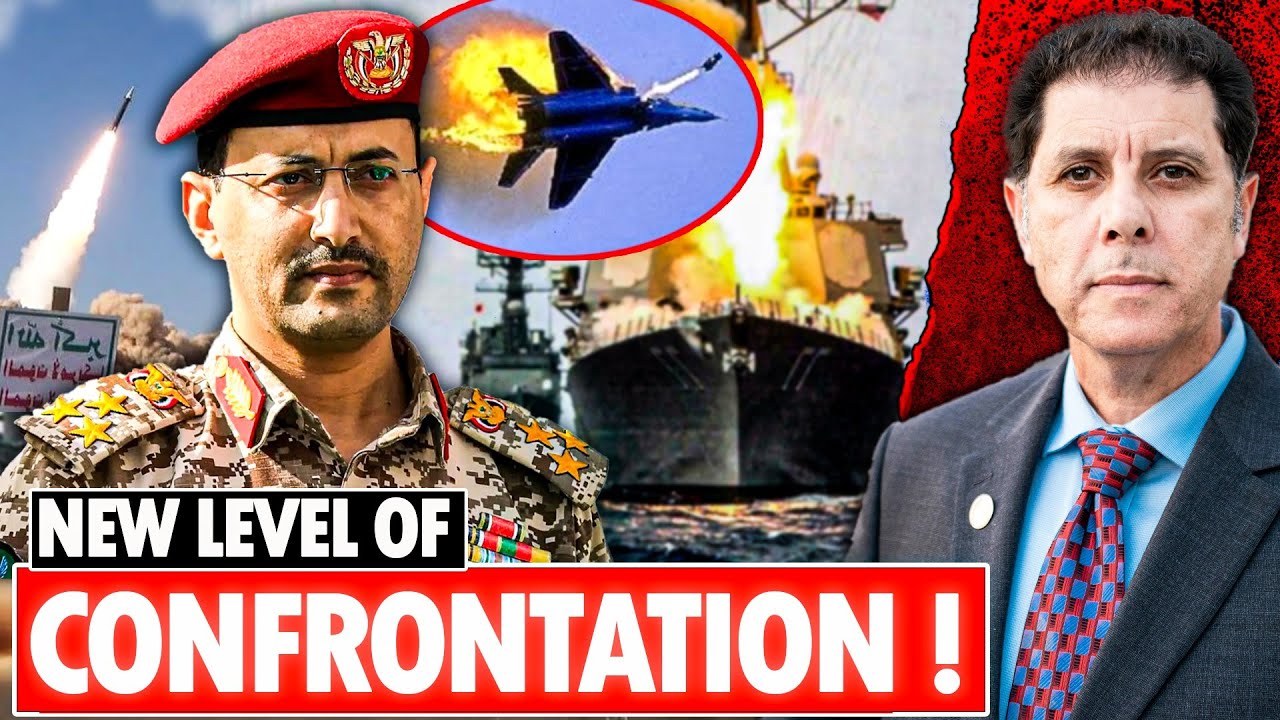
A host examines claims that Houthis shot down a US F-18 over the Red Sea and fired a hypersonic missile at Tel Aviv. He compares the Houthi statement from spokesperson Yahya Sari against the Pentagon's friendly-fire explanation, and questions why the US would immediately strike Houthi facilities if the loss was accidental rather than combat.
Chapters
All right, hello everybody and welcome to Geopolitical Trends, where truth matters. Happy holidays, by the way, to everybody. I'm gonna post something for you later on, so, but anyway, very, very excited to be with you. I wasn't planning on coming on the air, but after what happened over the Red Sea, I figured the community deserves to to know some insights regarding the events of the downing of the F-18 Hornet fighter jets. So very, very interesting topic indeed. So two things I need you guys to give me a thumbs up about to make sure. First, do you hear me clearly? Second, is the image clear enough? Because I have a new system here and I wanted to make sure before I move an inch. So if you will be kind and just give me a thumbs up so I know that everything is working accordingly, because as I said, I'm using a new system here. So, and, uh, and by the way, I got a new computer. That's what I'm going to be using from now on. So, okay, Army with Harmony, thumbs up. Abdul, hey, thumbs up. Phil, thumbs up. Uh, uh, F1 Johnson, thumbs up. Thank you so much, guys. Appreciate it. Well, speaking of that, let me say hi to the community, uh, before we move in and we'll, we'll chat today. Rod Luther, good to see you. Uh, uh, uh, Sean G, good to see you. Hang NG, as always. The Houthis neutralize US F-18. I, I see your point, Hang NG. Uh, uh, who else is here? UTU Z Super, as always. Um, Alexi Raw, good to see you as always. Elisa Lewis, good to see you. Brianna Olive, Muslim Revert, uh, Cosmic, good to see you. Muhammad Mazhardeen, Amanda, good to see you. Amanda always puts some comments on, uh, on, on X on my account, so thank you so much, Amanda, appreciate you. Uh, who else? Matt Becky, as always. So All right guys, let me jump into— Hairless Ape, good to see you. Thunderbolt Phil. All right, go all of you here guys. So let's get into our topic here, uh, but before I'll do this, I need to just share with you some housekeeping items. Uh, uh, don't forget to join me on, uh, December 26th. Yeah, I just— I'm gonna be having a conversation with Anna Malandog, Professor Anna Malandog, that is. We'll be talking about some really key topics. For, for example, the, uh, the, uh, uh, military-grade uranium found in, uh, in Philippines. I know some saying, oh, it ain't happen, but it did. Second thing, we'll be talking about some missile systems that, uh, Philippines is looking for. The second thing, that one will be on, uh, December 26th. Second thing, I'll be joining by with my friend Carl Zaha on December 28th, nighttime here at 8 PM. It will be 9 AM the next day in Bali, Indonesia. And the last thing is the community conversation. Yes, I will be having a, a community conversation on the 29th, which is, uh, Sunday, uh, uh, and I will be joined by Dr. Stewart, who will be answering your questions about, believe it or not, Parkinson's, for those who wants to know the ins and outs. Dr. Stewart knows a great deal about the, the chemistry of the brain pertaining to Parkinson's, whatever. So he's going to be answering some of your questions. Kind enough of him to join me here. So, all right, let's get into our topic here, and we're going to start with the key question, of course, and I'm going to share this with you right here. Questions? How serious is this development? I mean, we're talking about the downing of a fighter jet, okay? Second thing— that's beside the point— second thing is the optics of it. It doesn't matter, doesn't matter whether it was shot down or it was a mechanical error or whatever. The optics of it, like I always say, in international relations, context matters. Something of this magnitude matters. Third question is, are the Houthis, or Ansarullah, that is, in possession of advanced systems? Because to take down an F-18, you have to have an advanced system. And those the questions I'm gonna try to provide you an answer with, uh, in this, uh, analysis that I am gonna be, uh, doing for you guys. So, all right, as I mentioned, Houthis announced Uh, let me see if I have the— I, I did have some pictures. All right, let me see some pictures here. Now, this is the missile system that was used, and I'm gonna get in into, uh, all that. So suffice it to say for now is that the Houthis announced the, the downing of— that they shot down an F-18 Hornet while trying to confront both the United States and Britain. Because Britain, you know, of course Britain will have to always get its nose involved in things that doesn't belong to, but Britain has no choice but to follow its master. So, uh, because both those countries, meaning the US and, uh, Britain, launched, uh, uh, air raids on, on Yemen of late. So now, as I said, besides the questions I ask, how accurate is this? Okay, one question is, will the Houthis just come up with something like this? In other words, will they lie about it, or was it something else? And this is what we're going to try and to figure out in this analysis because it's very, very, very important. Well, the Brigadier General spokesperson of the Houthis military, military, uh, his name is Yahya Sari. He's the one who announced the downing of the F-18 as of Saturday, which was, yeah, recently, of course. Yeah, of course, in addition to the targeting of the F-18, it was also the targeting of the USS, uh, Harry Truman. And I have a picture here for you guys to see. Uh, this is a picture of the USS Harry Truman. So it was also targeted into during that time. When exactly, it didn't disclose that one. So, and this, the operations of the Houthis succeeded in pushing the sort of thwarting, if I may use the term, the US-British attacks on Yemen. So, and this is exactly what the Yemeni spokesperson saying is that American, any And I quote here, any American-British folly will be met with a strong response. So, and that tells you just where things are. So now, of course, you have to take into consideration other events happening around the same time. One of them has to do with the launching of a missile on Tel Aviv, which I will get into later. I decided to do this in two parts the first part addressing the F-18 Hornet and the second part addressing the— which took 2 days prior to the downing of the F-18— the launching of a missile by the Houthis on Tel Aviv, and it landed in Tel Aviv. Now, right immediately after this, after the downing of the F-18, the Central Command, or US, let's just call it the US, Military, uh, did mention that an F-18, F/A-18 Hornet fighter has mistake. And I quote here, let me read it word for word. On Sunday, yesterday, Sunday morning, the US military announced that an F-18, an F/A-18 Hornet fighter jet has been mistakenly shut down over the Red Sea forcing the pilots to skydive, end of quote. Okay, if— and, and I'm gonna just go with this argument here, guys— if it was a mistake, why will the US respond as of yesterday to attack in certain locations in, in, in Yemen? Okay, why the US didn't respond, let's say, a week ago? If the argument is, well, we— because we wanted to attack the, the Houthis and so forth, why didn't they do it a week ago? So to me, it just didn't make any sense. And that is why the idea of, oh, it was friendly fire or friendly mistake, but at the same time, we're still gonna attack or respond or raid, uh, the Houthis. Well, why would you do that if it's not a response for downing the F-18? You know, what do you guys think? Because I need to have your input into this. I know it's very, uh, sort of challenging point, but in your opinion, was the F-18 shot down? When I say shot down, a missile was used, some sort of advanced system to bring it down. Just yes or no, please answer yes or no in the chat box. So please. Just for me to get you a part of the conversation like we always do. All right, let me see. I'm, I'm looking at your answers, guys, here, uh, on the chat box. And so, was the Houthis down the F-18, or was it a friendly fire per se, as the Pentagon, uh, claimed? Okay, uh, Cap, you say yes. Francis Tango, no idea. You got a point there, Francis. You know, some might be— which is smart to be, smart to be skeptical about things till you find the facts. So Rafael, you say it was shut down. Uh, Bebs, you say I think it was, uh, ZN. You know, I don't want to, uh, put that. I'm gonna share it on the screen here, just you know how it is with YouTube. So, which would not be surprising. You know why? You know, actually, you brought in a good point, babe. You brought in a good point. You know why? Here is why. I'm gonna tell you guys about one, uh, uh, uh, events that took place way back. USS Liberty. What do you guys know about that and what happened? So it was a good point, babes. You brought on a good point. Compare this to what took place with the USS Liberty. You all know what happened with US Lib— USS Liberty, uh, so that is why you have to really keep your mind open just to understand where things are. So because for the Pentagon to say, well, it was friendly fire— well, wait a minute, we're talking about some advanced systems here, and how this friendly fire will mess up an F-18 that is all over the radars and so forth? So that, that's just— to me, the argument doesn't hold, and that's why I have my own. It's kind of the way I see it. So, and of course, the military, the Pentagon that is, is saying that the whole incident happened during the, uh, uh, uh, a mission that the fighter jet was, uh, on, uh, as part of the training regarding the, uh, USS, uh, uh, aircraft Harry, uh, Harry Truman, that is. And they explained that one of the escort ships, the missile cruiser Gettysburg, accidentally fired at the plane destroying it. It's just mind-boggling. Accidentally. Now, those missiles that will be launched from the cruiser— from the, uh, I'm sorry, the missile cruisers that will be launched from the destroyers— will have to be— the button will have to be pressed on. Ain't gonna happen on its own. And this is why the central command explanation, it just doesn't make any sense. So that is why— and this is why here is where, to me, where I put the question mark about the statements of the Pentagon or Central Command. It's because of this. On Saturday, the same day after the downing of the F-18, Central Command announced precision— it's called the precision, uh, precision, or rather airstrikes on Saturday on a missile storage facility and command and control facility run by the Houthis in Yemen capital Sana'a. Once again, why would you attack that if you want for responding to the downing of the F-18? So now, of course, the Pentagon or Central Command will have to give a different explanation as to, oh, the whole idea of the strike, or the airstrike that is, was at disrupting and weakening the Houthis' operations, including the attacks on the US warships and merchant ships in the south, in southern Red Sea, in Bab el-Mandeb. Let me, let me see if I have the— I think I do. I, I, I kept those pictures for a reason, just for you guys in case we need, uh, yeah, right there. Look at here the map, guys. Look at where Yemen is. Aliuka, where Babel Mandeb. This is where some of the attacks the US conducted. Well, if we are to say the mighty of the US military, I couldn't even, couldn't even lift the blockade on Red Sea that the Houthis imposed, then where is this mighty military power and so on? That, that, that just to me defies logic. And this is why I personally, I would say I will not believe what the Central Command or the Pentagon statements are. Those are meant to deceive us, all of us, because the optics of it on the international stage— just take a step back, guys, take a step back and consider and think of how it will be perceived that a group Houthis in this case was able to shut down an F-18 Hornet fighter jets. Those are advanced weapon, advanced fighter jets. Because the logical question we ought to ask about this, how were the Houthis able to do this? Because this is not about a drone, this is not about a rocket. There will have to be something a little bit more sophisticated. Like a missile. Now the next question is, is the Houthis are in possession of advanced systems that they never wanted to disclose? And now it's becoming clear as to what is happening. And that's the only, literally the only explanation I could think of logically. So for them to attack the, the, even the aircraft carrier, it tells— it, it says a lot. It says a lot about that. So, and of course, this comes on the heels of what took place 2 days ago, or 2 days prior to this incident, when a missile launched from Yemen hit Tel Aviv. And I have a picture of, uh, of the missile right here. This is called Palestine 2 hypersonic missile. Once again, you guys, just think about it. Just think of light logic. Don't have to be genius to— it's common sense. Is this means now that the Houthi is in possession of advanced systems? If so, where did they get that from? Was it domestically produced? I don't think so, because it— you need a lot of time and testing and so forth. I think they were provided. By whom? It's an open question mark. This is where that challenge is, and because now, of course, And this leads me to the Israel aspects of it. Given what the US is doing with Britain, thinking that they could really intimidate the Houthis, they couldn't so far. Look how long, look how long it has been. And the blockade the Houthis that posed on Red Sea still stand till today. We couldn't lift that. The British couldn't. Well, the British are useless anyway. That's almost like what becomes of Europe right now. So, and speaking of that, before I forget, be on the lookout on a— I did a video for you guys, recorded one on Germany, what's going on. It's going down. UK is no different. In this case, for us, we're saying that, well, we're gonna have this mighty military and all that, but we couldn't even lift the, the blockade in, in, on, in the Red Sea. So And this is why, as I said, 2 days prior, the Houthis launched a missile on Tel Aviv. They were about, I think, and I'm gonna share the link with you, as far as there were 30 injured into that, I think some death that happened into that one. And this was announced by the Israelis themselves. Now, where is the challenge of the, the Israelis regarding this aspect of why the missile was able to make it through. The Israelis themselves are saying— when I say Israelis, I'm referring to the government, but mainly the military intelligence within the IDF. What they're saying is that the Israeli military, the apparatus, all of it, failed to intercept a missile from Yemen launched by the Houthis in Tel Aviv. It was sent to the area of Jaffa, Jaffa area. So, and this was reported in the Israeli media. So because you couldn't hide something like that, and you won't be able to hide something like that. Let me see if I have a picture of it. Uh, no, I don't. Sorry. So the idea— and this is why Israel responded and so forth. But that's not about all this, because here is where the problem for Israel. The problem is that the Israelis are having a hard time. When I say Israelis, I'm referring to the intelligence, military, and civilian, Mossad included. They're having a hard time allocating the locations of where those missiles are in Yemen. So, so, and this was sort of disclosed by the Israeli government itself. So, and by the way, there is a, there is a, uh, uh, not a confirmation but a statement that this type of rocket, the Palestine— so let me show you the picture again. Palestine 2, right here. This one here, guys. This one, Palestine rocket, so, was developed during the Israeli war on Gaza. It reaches its final speed of 16 miles, which makes all— listen this carefully, guys— makes all interceptor systems in the region unable to counter it. And this is the reason why the, sort of, the Israel failed to intercept this particular missile. This is where the difference is. It was reported by, uh, by, uh, an expert, a military expert by the name of— I think I looked him up. It's not I think, I did. I did look the map. He's a colonel. His name is Mujib Shamsen. So, and I looked, checked him out, checked his credentials, and, uh, his, his, his, his, his good. It's good. So the argument was that, uh, uh, this colonel, he pointed it out, he pointed that the THAAD systems, which is the, the air defense system, the US, uh, uh, THAAD, which the Israelis brought in from the US, the US provided the Israelis this to protect, has a maximum interception a speed of only 9 Mach. This missile that was launched on Tel Aviv has 16. So it tells you right there, there will be no compatibility. No system in the region that exists there will be able to counter that one. And the question once again, are the Houthis in possession of those advanced systems to address these particular attacks or operations? Whatever term you want to use. So, and all this falls within the arguments of the geopolitical shifts that is taking place right now in the region. We're talking about Syria. Why? Because Israel wants to take certain parts in Syria. The Russians have already warned the Israelis because Russia still has some assets on Syrian territory, even though they are moving into Libya. But this is far beyond when you start seeing an F-18 going down, when you start seeing a missile hitting Tel Aviv. This is now— we're talking a different phase. Is this a, a sign or a hint that the Houthis are moving into the next level? Is this a sign and a hint for the changes that took place in Syria? It's not going to bode well for both. Israel and the US. And when I say the US, I am referring to the US location, military installations in the region. We have about 30 there, and I remember sharing the map with you. All those dynamics will make you now think about if the Houthis were able to do this, that means we are entering a different phase of the a confrontation, and something that we've been involved in since we called on the coalition to impose sanctions and try to lift the blockade in the Red Sea. But we failed miserably. And again, this is no different than what we did back in Iraq, Iraq, that is what we did in Afghanistan, what we did in Yemen before, and other— Somalia and other location. We never end up winning. We're only getting involved in the conflict because that was the whole idea of it. It's not to win, but rather drag the conflicts. And the decision was made back in early '50s. I remember I mentioned this before. I'm not going to be repeating myself here, just for you to have an understanding of the mindset, how it is with the Washington thinking, is not about winning conflict because we can fight. The, the notion of fight that you and I understand it in its traditional sense, we can't do that. Even now, you think about the recruitments here in the US for military, they had to lower the standards, literally cutting them by half. It's not a laughing matter, but hey, This is what you get for having a corrupted government. Yeah, and it's reflecting not only on that aspect of the military recruitment, but reflecting also on the economy, reflecting of the social setting, reflecting on so many things. We don't have yet what, for example, Germany now it's going through. Well, we don't have what, what UK is going through, France Italy, Spain, you name it. You all know about Europe. And this is the same argument I've made as far as us, the United States, pushing tensions into the Far East, especially now with these two major developments in the Philippines regarding the new missile system, which by the way, they want this missile system to go about way out, about 32 to 36 nautical miles away from the Philippines Why the heck would you want to have that for unless you want it for some specific reason? We don't know what it is. And second thing, the presence of, or the discovery of, the military-grade uranium in the Philippines. Since Philippines doesn't have uranium, why the heck is a military-grade uranium doing there? And all the whole idea is the tensions being expanded. Now, to go back to the re— the— this issue of the downing of the F-18, it's no different as far as the optics of it. When the world sees that an F-18 is being shut down, it tells you right there, now we entered a new phase. So how long we've been bombing Yemen? Let's just, uh, did we achieve anything? And how come— here is, here is what I, you know, I spent a lot of time in Yemen back then, so I used to travel a lot. Wonderful people, by the way. Very down to earth. Yemen is one of the poorest country in the Arab world. Yeah, you won't believe what other Muslim countries were doing to Yemen behind closed doors. I was there. Shame on United Arab Emirates, shame on the Saudis, shame on the Jordanians. Yeah, they were providing the airspace, providing logistics, providing everything even supporting the blockades of food that won't get in into through the Aden airport and Hudaydah airports into Yemen. So, and yet what have we achieved? Nothing. Saudis weren't able to fight in Yemen without the support of the US. Who was providing the targets? We were. And who was even flying some of those planes? Some of us. So when those Muslims are saying, oh, unity, brotherhood, it's nonsense. It's a damn hypocrisy. Because Muslims are known for talking, but when it comes to action, that's when you find out. It's like what the last emperor of Rome, Marcus Aurelius, said: watch what a man does, not what he says. Muslim countries, they're nothing but a— all these hypes about God and whatever. You guys got the idea, you got the idea. And now here you have a group that is standing firm, strong. Who it is that is— we couldn't defeat them. So the success of, it's a— and still the idea of taking down an F-18— it tells you some changes have happened. Same arguments can be made about the targeting of Tel Aviv by a missile from the Houthis, a hypersonic, that is, because that missile, it was used, it was a type of hypersonic, and the defense system in Israel couldn't intercept that one. As a matter of fact, the intelligence, as I mentioned earlier, they are struggling to find out the locations of They just couldn't. And if I know one thing I've learned about the Yemenis, they are fierce fighters. You won't intimidate them. They don't get intimidated. And this scare of death, whatever, doesn't mean a thing to them. But they will fight you till the end. Same thing was in Afghanistan. So same thing was in Iraq, you know. There are some, some of us in the West do not understand this kind of how people see life differently than we do because they don't live in, in this comfort. They don't live in this, you know, if they find something to eat, they are happy about it. If they don't, life goes on. So if the Americans or the Brits or the Germans or the French or the Italians or whomever come over with that attitude of superiority, it's It doesn't cut it. And this now is an example of really this shifting landscape, uh, the geopolitical landscape that is in a region that will now change the trajectory. Because now you're going to have to see it this way: if a conflict erupts, the targeting of the 30 bases in, in the region— West Asia or Middle East, that is— with American presence there. And those Arab systems or Arab monarchies that have been supporting, you know, Qatar behind closed doors cutting a deal with the US for the largest military presence, Saudis behind closed doors, Jordanians, you know, because it was never about the population, it was about the survival of the, the, the the regime, that is. Even Egypt, even Turkey. I'll go as far as saying, you know, they all— I mean, you remember the video I did for you guys about Azerbaijan and Turkey providing oil and gas to Israel in conjunction with the ongoing war in Gaza? Well, if you take stand, why would you want to do that? But you say we stand for this and you do the opposite. Hypocrisy of the highest order. That is where the problem is. So, so now, just when you think about the statements by the Pentagon and the Central Command, if you only know how the media is, and this is not just in the US, look at just in the West, when I say Western world, that is, look at in Europe, for example, especially now I look at Germany because I did the research, guys, I did the research before I did the video for you, recorded one, that is. So, uh, and by the way, I— my editor removed the soundtrack, and thank you guys for sharing your feedback, because your feedback matters to me. And, uh, and, and, uh, so I asked him, please remove that one. So, so the idea of you look at where, where Germany is going economically speaking, but socially also, the social, where things are headed. Their own making. Of course, we have to facilitate that behind closed doors because we never wanted to see Germany moving forward. So the same argument I will make about the— what's going on in, in West Asia, or these attacks on, on the Houthis on the Red Sea, it's just because we wanted to maintain the tensions going on by pulling in other countries into the conflict. We don't do the fighting. No, same thing I see now unfolding in the Philippines. So, so that is where the key arguments into this. By the way, guys, please hit that like button and subscribe to the channel if you have not done so. I think we're gonna miss the target of 100K by the end of the year, but hey, life goes on. So I would greatly appreciate if you could, uh, uh, uh, subscribe if you are, uh, here for the first time. So, uh, Francis Tango, thank you so much, appreciate you, man. And your question from you is, what kind of weapons do you need to shoot down an F-18? What do you guys think? Well, you need a missile that is, uh, uh, hit his sensor that will follow the plane because the, you know, fighter jets emits a lot of heat and so forth. It will be sensor missiles that will fire, that will track all that till it hits the target. So basically, it will be advanced systems. You can't do it with drones, you can't do it with the rockets, whatever. It has to be some advanced systems. So, and if the Houthis were able to, uh, take it down, then it must have something advanced. And now, that was it provided to them, uh, from which I believe it was, uh, yes, they, they could work on their own. It's like what Hezbollah did in Lebanon. They developed their own type of rockets and all that stuff. But this kind of level of Mach 16, uh, that requires a lot, a lot of technology and knowledge and so forth. So, but the possibility is there. So Rafael, thank you once, thank you once again, Francis. Appreciate you. Thank you, Rafael. You wrote, did you realize that the quietly everybody is referring to Iran as a nuclear state? And today they are talking about Iran hitting, uh, us in a half an hour. Wow. That, first of all, thank you for your super sticker, Rafael. Uh, yeah, that means it has always been that argument. Does Iran already have nuclear weapons, or is it on the threshold of building a nuclear weapon? What do you guys think? What do you guys think of Rafael's, uh, uh, question here? In your opinion, do you believe Iran already in possession of a nuclear weapon, yes or no? Let me just see your— I'm going to make the same argument for two countries, North Korea and Israel. Let me just see what you guys have here. Karakulak, you say no. Tony, you say no. Army with Harmony, you say no. The Great Snafu, you say no. Athenu, you say no. Uh, Hangs Iran, you say yes. Interesting. Uh, yeah, to, to me personally, and again based on what I know, uh, it's, it's they don't have it. That's my opinion, and again my personal opinion, uh, but they are on a threshold of doing that if there is one. Uh, uh, uh, yeah, that's the way I look at it. Now this is different than North Korea and Israel. Now that I know for a fact. So, uh, let me, let me share this with you guys. Sorry, not this one, this one right here. Uh, Lens Inc, thank you so much for your super sticker. You can program missiles not to hit your own, uh, signature. I see. Yeah, yeah, to those who understand that the missile technology and so forth There's a lot of ins and outs, and those are— and this is in response to Francis Tango's question. So thank you so much, Lance, for providing this answer. Greatly appreciate you for that. So that is one of the, uh, how it works with this kind of stuff. So, so the idea of Iran, to me personally, I, I don't— I think they are on a threshold. They could do it in no time if they want to. But for now, and again, I could be wrong, that's just my own thinking. In the case of North Korea and Israel, yes, they do. Yes, they do. As a matter of fact, there are even other, uh, uh, countries in West Asia, but they don't have it on their soil. They have the, the, the weapon elsewhere, let's say on an escrow account. If I'm used— read my Saudi book and you will understand. So, so that's the way, the way I see this one here working. So let me just summarize here before I sign out, uh, because I need to go do a few things, the holidays, you know how it is. But I also need to, uh, prepare for the interview with Anna on the 26th. Remember to join me on the 26th, on the 28th at 8 PM with Karza, on the 29th at 12:30, uh, for the Community Conversation, and we close the year with that. So, so that is one, uh, so, uh, what was I gonna say? I forgot. It'll come back to me. Uh, yeah, just please prepare your questions for the Community Conversation for Dr. Stewart. Specifically, that stuff has to do with the chronic diseases like, you know, Alzheimer's, dementia, Parkinson's, and so forth. All right, let me summarize just this here before I, I sign up. Uh, the idea of that the, the statements by the Central Command regarding the friendly, uh, downing of F-18, it just doesn't make any sense. The arguments for it, again, I go back to the same argument that if it was friendly, why would you retaliate and attack in locations in Yemen the same day after the downing of F-18. Why didn't you do it a week before? So the other hand, the Houthis announcing this, I don't see any reason why will they lie about it. For what? Same argument I will make for the Houthis. Why the Houthis didn't say this a week ago? So that just, it tells me if they were succeeded in, in downing, uh, uh, the F-18s, uh, the optics of it will be big. And the US doesn't want that image to be portrayed as like with all this mighty military that is basically useless. So that's the way I see it. So the one thing that I need you to get out of all this is that this one now will change the calculations, geopolitical one that is, for all parties involved in the region and elsewhere. Because Mike, my word, China is watching. About this. Russia is watching about this. Russia might be the one provided the Houthis with those type of missiles. We won't know. So, so you could, because if a country provides, you can make some modifications, minor ones, and, and use it. So, so what's interesting even regarding this aspect is, uh, if it is the case, are we going to see more intensification? In other words, uh, the, the, uh, the, the tensions between the Houthis and the US, Britain will intensify even more. But even with that, well, the US and Britain, and we couldn't defeat them. It shows you it's not about the mighty military, whatever. It's about right here. There's no fear. They are defined to challenge whomever, and they'll do it. I spent time there. I saw they were, they were kind to me. I, I tell you this, guys, I used to go downtown Sana'a by myself, walk around, and you know, I speak the language and I don't have blonde hair and blue eyes. You got the idea. But they were kind to me. But again, because they can differentiate between if somebody treating them humanely, like, like you and I, you You know, it's the arrogance part that is part of our DNA. Not all of us, of course, I shall not generalize, but that attitude of superiority. You know, you look, you look down at people. You can't do that. You know better than others just because you happen to live in the West or live whatever. Who gives a damn about all that? Why don't you just be kind and treat everybody nicely? Human to human. And to them, if they sense that in you, oh, they'll, they'll get on, on the edge with you. And we're seeing it right now through what they are doing, because here, months and months and months, we couldn't lift the blockade on the Red Sea. Still persist. There any company to send its, uh, its, uh, its, uh, uh, ships through the Red Sea. Of course, the Chinese are okay, the Russians are okay, but they won't do it. Why will they even go into— but just though the Iranians for them, but they won't do it anyway. But there, any Western, uh, transport will go through there. And they, and they have one, one condition only. The Houthis have one condition, is for Israeli to stop the attacks on Gaza. So, and this is, to me, was like, okay, uh, if, uh, I can see the reason why the US will have to issue those statements to counter-argue. You know, you know how it is with the information war. It's nothing new, nothing new. So, and that is the reason why I wanted to talk to you guys about this, because I need you to have an understanding before it's going to be a lot of spinning Regarding this information, and, and even I will, I will go as far as saying that soon enough you will see some technical explanation coming from the Pentagon to the media, and the media will release it to the public. Oh, here's the technical stuff, because average Joe, average Jane, I don't understand that language. So when I read that, I say, oh, that must be mechanical error. No, no, no, it's not. It's because he looks bad. He looks bad. So, and that's why I want you have that information. All right, guys, uh, thank you so much for being here. I'm glad the, the screen is not flickering. Nothing happens. So the screen is good. So it was, uh, I even, uh, didn't use this one here today, DJI, um, because I wanted to try this new system. On this computer. It's brand new, but it's working. So, but I like this one. I like the GI. So good product. I think when I go back to China next year, I'm gonna buy some other, other— they do have some good, good products. So, so, all right guys, I do wish you— again, I will post something for the community regarding the holidays, but I do wish you happy holidays for those who celebrate Christmas, and, uh, whatever part of the world you're in, uh, wishing you a happy, happy holidays with you, you, with your family, your loved one, that is. And we will be— I'll be seeing you on the 26th for my conversation with Anna Malindog. She's, she's brilliant. She has some information. I'm still waiting to hear from the Vice President of the Philippines. I was gonna interview her. Right here on this channel. So I hope her office get back to me ASAP, so I don't want to drag this forever. Either they tell me yeah or nay, and I'm okay with whatever. So, and, uh, then I'll see you then. All right, guys, as always, remember, geopolitics impact your daily life in more ways than one. Till next time, guys, bye-bye.
More from David


Beyond the Single Actor: Why the Gulf Isn't Choosing Between the US and China


Iran, Iraq's Militias, and the Houthis Are Coordinating! This Changes Everything




Who Controls the Next Decade's Resources? Latin America and Africa's Geopolitical Crossroads

The Chokepoint Trap: How Washington's Stupidity Triggered a Cascade That Now Controls the World

Trump Spooked as IRGC Unveiled dual-use SLV, Deployed Ghadir Mini-Subs & Hinted at Tactical Nukes!
