Houthis’ Fighting Spirit Forced USS Truman to Leave the Red Sea? Geopolitical Trends
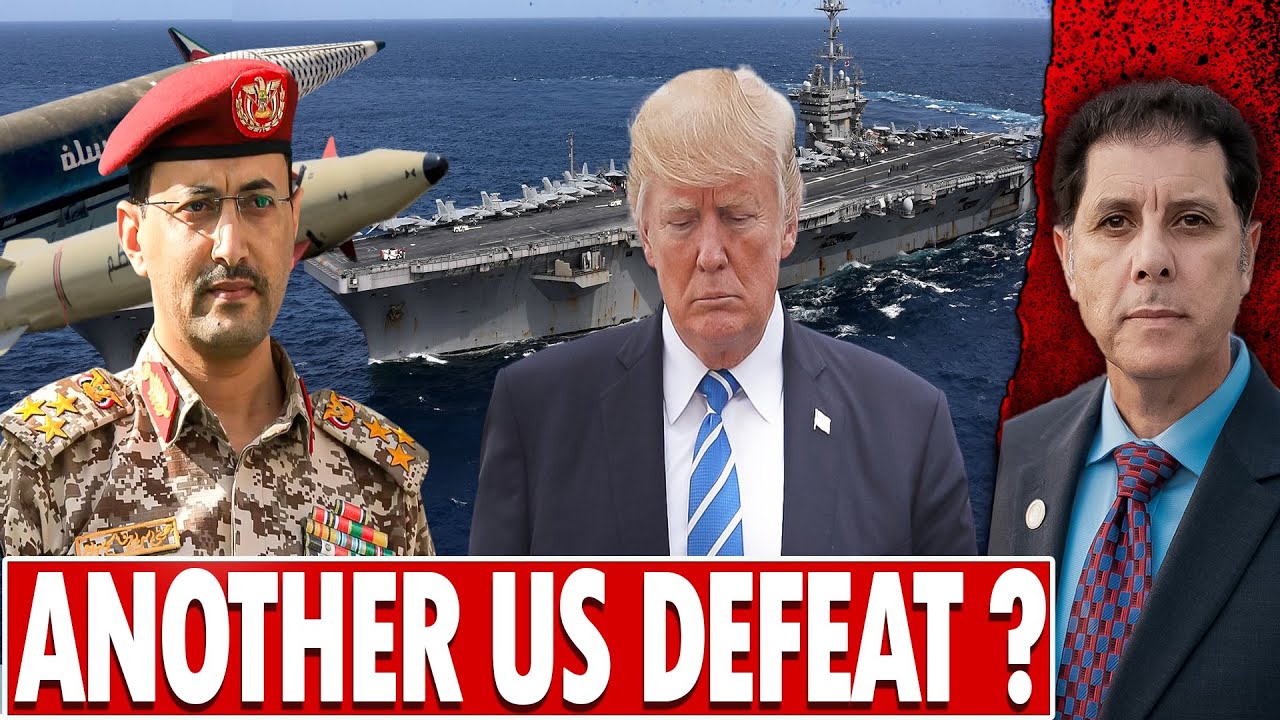
In this May 20, 2025 episode of Geopolitical Trends, the host (who claims a background in the U.S. military and Washington policy circles) offers a detailed, opinion‑driven analysis of why the U.S. aircraft carrier USS Harry Truman withdrew from the Red Sea. The central thesis is that the Houthi movement (Ans Al‑Allah) – through a newly declared naval blockade of Haifa, an expanding ballistic‑missile arsenal, and aggressive attacks on commercial and military targets – created a credible threat that forced the U.S. Navy to relocate the carrier, contrary to official Pentagon statements that attribute the move to NATO exercises or maintenance. The host weaves together several strands: (1) recent Houthi statements and actions, including a blockade of Haifa and attacks on Israeli and Saudi sites; (2) a chronology of Houthi missile development (Qaher, Burkan, SS‑21, etc.) and documented strikes on Saudi oil infrastructure and air bases; (3) the economic fallout from Red‑Sea disruptions – a >50 % drop in Bab‑el‑Mandeb traffic, insurance refusals, and downstream impacts on the Suez Canal, Sudan, Jordan, and Eritrea; (4) parallel diplomatic dynamics, such as U.S.–Iran negotiations, NATO drill narratives, and divergent hawk‑dove positions within the U.S. administration; (5) reactions from other Western powers (UK, France, Canada) and their own naval posturing; (6) the author’s personal observations from prior deployments and a critique of Western media framing. Throughout, the host challenges the official narrative, labels the carrier’s departure a “defeat” for the United States, and argues that the Houthis now hold strategic leverage in the region. The episode ends with a call for critical thinking, a preview of upcoming content on the Haifa blockade, and standard channel promotion.
Chapters
All right, hello everybody and welcome to Geopolitical Trends, where truth matters. Excited to be with you on this May 20th. Literally, I don't know where time goes. It's just like the month of May is already over, so, or is almost over soon. Anyway, excited to be with you. I have an interesting topic, uh, for you. I'm going to be addressing the reasons as to why USS Harry Truman left the Red Sea. Of course, the Pentagon, or the Pentagon, that is, in its briefings, or, oh, we have other obligations to do, we have maintenance, we have this, we have that. So you know how it goes. So, but I'm here to provide you my own analysis as to, as one who is familiar with this kind of dynamics giving both my military time and also my work in Washington, I understand this dynamics as to what, what's going on with us. So this is what I'm going to be sharing with you today. But first, let me say hi, our wonderful community. Hope you all had a good weekend. UTU Zipper, good to see you as well. Alexi Rose, good to see you. Liang, Alisa Lewis, Willie Holman, Brianna, Olivia, Good to see you, Laval. Good to see you as always, Saud Ismaili. Good to see you. Hello to you as well. Here, look out, how are you? I haven't seen you for a long time, so good to see you. Abdul Fal, one as always. Ramples01, good to see you. I'm sorry to hear about your comments being deleted. I, I Really, I don't quite understand why YouTube will do that, but in any event, life goes on. So Amanda, as always, good to see you. Matt Becky, here you are, Matt. Uh, I'm gonna have a guest, uh, tomorrow, someone you will be really interested in listening to, and I'm gonna talk about it, guys, soon. Uh, Gina, good to see you. Rafael, as always, good to see you. Taiwan still And, uh, oh, here you are, Jimmy New York City 21, good to see you. That's Julius, uh, Julius and I will communicate via LinkedIn, so good to see you as always. Uncle Sam, Marco W, good to see you. And Danvisa, as always. Uh, all right guys, let's get in into our topic here, but before I'll do this, I'm gonna have to share some housekeeping items with you. Tomorrow I will be having a conversation with Rick Turan. To those who do not know, Rick or Richard Turan is a friend of mine, by the way, and Rick and I go way back, years ago. Rick is one of the top 4 in the world when it comes down to fintech, somebody you truly want to listen to what he has to say. So anyway, tomorrow Uh, I'm gonna set it up for tomorrow at 8 PM my time because he is in Shanghai, which will be 9 AM, uh, his time. So I look forward to that conversation. Also, I will be having Carl Zha sooner than the end of the month. Uh, I'm not gonna have him on weekend because I will not be available. Uh, so I'm gonna reach out to Carl to coordinate with him to see what days in the upcoming days, and we can do our monthly conversation that I always do with Carl. So, so I look forward to that conversation as always. Once again, to those who just joining us right now, the conversation today is going to be about— or the analysis rather that I'm going to be sharing with you, it will be about the departure of the USS Harry Truman. So once again, always think the big picture, guys. Nothing happens in a vacuum. And once I detail for you, uh, as to— and my own assessment as to why that is. So, but I'm going to do headlines for you quickly here. Once again, I'm going to do about the Houthis. There is one topic I'm going to do for you guys tomorrow. I am working on it, uh, confirming the information As a matter of fact, I did post it on the community, uh, for those who read the community post that I, that I post for you guys. But I will be, uh, uh, uh, talking about this also tomorrow. But for the headlines, here is what I wanted you to know. The Houthis now, or Ansarullah, that is, declared a naval blockade on the port of Haifa. That is a major development. So what you need to know is that the spokesperson for the military, uh, for Ansarullah, Yahya Sareeh, the one you see in on the picture there, announced the start of work to impose a naval embargo on the port of Haifa in response— this is not in response to the attack on, on, or the destruction of the Hudaydah port, no, no, no, no, it's in response to the escalation of the Israeli aggression in Gaza. I'm calling all the companies— here is what Yahya Saree is saying to the foreign companies— he is calling on them, all the companies using the port, to take the decision of the Houthis into consideration. That's a subtle message. Read between the lines, companies. You will be targeted if you happen to be in the way. So, and, and if you know anything about Ansarullah or Houthis, you know they don't bluff. And I think the Israelis are finding out. The Americans found out. We found out. And that is the reason why Harry Truman had to move out of the Red Sea. This has nothing to do with the upcoming NATO training in the Mediterranean, as the Pentagon claimed. And I'm gonna get into that, uh, in a minute here. So, uh, second headline I want to talk to you about is about these three knuckleheads. Now, this one here, uh, the, uh, the leaders of Britain, France, and Canada— you know, that's Carney for Canada, Emmanuel Macron for France, and of course, uh, Starmer of England. So what they saying, those three, they are threatening. As a matter of fact, they threatened yesterday. They are threatening, and this is was, by the way, a joint statement, uh, uh, they are threatening to take actions against Israel if it does not— meaning Israel, if it does not hold its aggressions on Gaza Strip that's been taking place since October 7th. And here is what they said word for word. It says, and I quote, we will take action if Israel does not hold its offensive in Gaza and lift restrictions on aid, end of quote. That's what they're saying. So, and their statement is also adding that while we strongly oppose the expansion of Israeli military operations in Gaza. The level of humanitarian suffering in Gaza is unbearable. That's what this stated in their, uh, joint statements. And they ended the statements with this warning to Israel: if Israel does not halt its new military offensive and lift its restrictions on humanitarian aid, we will take further concrete steps in response, end of quote. Now here is my question to you guys: are you going to trust what they're saying? I mean, let's be honest about it. Are we going to trust what the likes of Emmanuel Macron, the likes of Starmer, and even for Carney, you know, he's new to the premiership because he just took over to Canadian government. But make no mistake, to the Canadian government, policies have always have to fall in line. Yeah, of course, for the tensions, the trade between the US, that's a separate matter. So, but again, you— I want you to think about this, whether you're going to trust what they're saying. Like, like I always use the example of Marcus Aurelius, the Roman Emperor: watch what a man does, not what he says. That applies to them. So, and the last thing I will share with you is about, of course, what took place between India and Pakistan. It's interesting what you're looking at here, guys. Those are the pictures of Rafale fighters, uh, jets, when they were presented to India, uh, during the Ambala ceremony. That's when they bought them. And they had the flyover to show, oh my gosh, Indian gets the Rafale. Well, you all know what the Pakistanis did to those Rafales. But here is what I wanted to share with you. Pakistan is downing the French Rafale fighter jet, raised a Chinese company shares by 40%. Interesting. The dynamics. Why? For a simple reason: the credibility of the Chinese weaponry. Because it was the Chinese missile that shut down those planes. Even, even as the US President Donald Trump— you all saw what he did in, uh, during his last trip to Saudi Arabia, Qatar, and United Arab Emirates, signed over a trillion dollar in deals, or somewhere around a trillion dollars. It was exactly $900-something billion, but in any event, uh, during his time over there and signed the massive, uh, arm deals during his visit to the Gulf. Pakistan's recent conflicts with India has given China now an opportunity to market fighter jets at reduced prices. This is where the advantage is. And we stand no chance in competing with that because the cost and the effectiveness. You all remember the picture I put for you guys in the community about the F-35, that we had concerned that the Houthis could down the F-35. Well, F-35 will not compete with the Su-57, the Russians, or the J-36, the Chinese. There is no chance. And that's what I found it very, very interesting. So, all right, let's get into our topic here. What we're going to be talking about, let me say, and I'm going to start with a question for you here. You don't have to answer this one, it's just question we have to ask. Is this another defeat for the United States, this time at the hands of Ansarullah or Houthis? And again, any common rational person will say, indeed, despite what you see, the movements, the movements of aircraft carrier moving out of the Red Sea, no, no, no, no, no, no, no, no. That spells the sort of the, the, the subtle way of the US defeat against the Houthis. And we're going to get into this. Because here is the thing, as one of the, uh, I believe, uh, hold on, let me, let me get— because I like to get the right name of the person here, uh, put a comment, uh, regarding, uh, this particular, uh, uh, issue here. And I even saved, uh, the— so bear with me, guys, here. Yeah, uh, Godfrey 10 1001. He puts this comment here: Amazing fighting spirit of the Houthis that can send the mighty American warship to flee. Spot on, well said. It's because it reflects the reality. All of a sudden you have it. Why the USS Harry Truman didn't leave a month ago? So, and again, it's fair question to ask. So And once again, of course, what the Pentagon is saying is that the Harry Truman, it's, it's, uh, it's of course it's out of its way from the, uh, Red Sea, and there are no plans on replacing it or to replace it. And this is according to a US official who request that his name would not be released. You all know what mean— what it means. When an official required that his name will not be released, that means he is not or she is not authorized to disclose this information because that spells it out. That's the defeat. Of course, the US will say, oh, we are moving the Harry Truman because we reach an agreement with the Houthis. I don't think so. Yes, you reach an agreement. Of sort. But do you think Houthis will forget what you've done, or what you still even did a week and a half ago when you supported the Israelis targeting of the Hodeida port? And this is what this US official stated. You know, it's because here is what he stated, is that the United States and the Houthis are committed to halting mutual attacks despite their continued attack on Israel. Houthis maintain this targeting of Israel. That's a, that's a foregone conclusion. But this individual wanted to make that distinction clear. You know why? It's because he wanted to highlight, by the way, Houthis, we are not involved with the Israelis regarding the target. Which I don't believe the US, and even the Brits to a degree behind closed doors, will come to the support. The traveling— the troubling with all this is that there are no plans to replace it, and that means that the US does not want to take a risk of having the aircraft carrier being targeted. Remember the optics, the optics. And of course, uh, this official, uh, stated that he stressed that Israel does not inform Washington in advance of all its attacks on the Houthis. And that because Israel carried out the last week on Friday, I believe, uh, for the port of Hodeida and Salif in Yemen. So they were, they were destroyed. That's, that's what they did. But anyway, Oman works out, uh, some sort of a deal between the United States and the Houthis to a degree, and with disagreements so far neither party will target the others, including the American ships. However, there is some sort of misleading information on one part of this statement when they saying that, oh, this will ensure the freedom of navigation. I don't think so. I don't think so. Because the Houthis still maintain the blockade on the Red Sea. This is where you see these discrepancies of how they are misleading this information, misleading people into, you know, hey, listen or look here, but don't pay attention to the truth. That is what I see. And the reason I'm saying this to you, I had a chance to read an article or analysis, if you will, if you will, by, uh, by Mark Urban. Mike Urban deals with the foreign affairs and defense correspondent for the Times. So, and I tend to read from a variety of sources. I reach my own conclusion. I agree with him on certain aspects, but I of course push back against others. I just don't see eye to eye on that. So, but his assessment, and his assessment is, I will say, you know, almost spot on. And this is when you think about almost a year and a half since the launch of the Western military campaign against the Houthis. Till today, the Houthis still remain its ability to threaten the international shipping in the Red Sea and even targeting Israeli territory, and which they still doing. As a matter of fact, like I shared the headline with you, and I am gonna get into that separately tomorrow because I don't want to overlap, uh, or overwhelm you with information, uh, because the movement— here is what I need you to know— the movement of the, uh, USS Harry Truman out of the Red Sea came on the heels of two other— on the heels of two other events. One is the blockade on Haifa, the announcements by Israel, by, uh, Houthis. And the second one has to do with the last meeting of the Arab, uh, summit in US Navy, uh, the F-18 jets that went down, which is approximately $67 million, just vanished. Of course, the argument was during a maneuver to avoid a Houthi missile. Well, if you have your fighter jets that is just by the way to talk about all this, which I'm not saying anything that is not You know, it's, it's, it's, it's public information, you know. Okay, NSA, or the agency for that matter, there is nothing that I'm saying that is not either true or public information already. So in any event, let's, let's move on here. As I said, the idea of you think in terms of where this is going where it's moving as far as the direction. Well, of course, like I said, the loss that we have incurred since we started dealing with the Houthis, you know, what they are saying basically is, you all remember, and I did say this a few weeks ago, that it was a statement from Washington saying that we have lost almost a billion dollars into the, the The campaign that started on March 15 targeting the Houthis. Guess how much was the total for all that since we got involved into that? $7 billion according to this article. And the article, by the way, I read it in a foreign language because it wasn't published in English. So $7 billion that was used, that the US incurred over the past 15 months in its operations against the Houthis. And this is where you have to understand, despite what Washington was saying, describing this military achievement, for example, you all remember, and I shared the stats with you back then, when the Pentagon said, or the US government for that matter, stating that 69% of the ballistic missiles of the Houthis platformed and 55% of the cruise missiles have been destroyed. When in reality, yeah, we might have destroyed some, but guess what? The Houthis still possess the ability to carry out effective attacks. Look what's going on right now regarding Israel. I mean, the targeting of Ben Gurion Airport, and now the Houthis is going to put a blockade on Haifa Port. And if you know anything about Haifa Port, is a major artery for the economy of Israel. And of course, in addition to all this, the Houthis have shut down almost 20 US drones. And you know how much each drone cost? About $30 million. Do the math. But even till today, they still targeting commercial vessels with missiles drones and unmanned boats. So, and this is again, you have to see the big picture to understand where this is all headed. So the idea of that a movement, a movement of, or movement of a US, uh, aircraft carrier, doesn't matter which one, uh, from, uh, some sort of a location, geographical location where tensions are— it doesn't happen, uh, uh, in a vacuum, doesn't happen hastily. It's because there is an assessment of the potential risk to why it has to be moved out of that location. Of course, the Pentagon disclosing and the US government disclosing that, oh, Harry Truman is going to join NATO exercises in the Mediterranean Sea. Say, see, I'm not saying it's a lie. The possibility of these exercises, they might happen. I am going to check on this. But again, makes you just wonder when you could pull some other aircraft carrier. You know, some would say, why is the proximity? That is true. But again, is the convenience, meaning the convenience of hiding the truth. About the possibility of the aircraft carrier might end up being attacked because the Houthis have certain type of weaponry in their disposal that can, it can impact the US aircraft carrier. And if it does, the optics of it, because it's already, like I said at the beginning, we ask ourselves the logical question, is this another defeat? Of the US, this time at the hands of the Houthis. And I'll let you answer that one for yourself. Now, there is the other aspects to all this. You think about it, what the Houthis have achieved, not just on a, on, on, on, on the military dimensions, but also on the economic aspect. Houthis don't have much, but they do have cash of, of weapons, massive. So, and the one I'm referring to, guys, is the serious economic consequences that's take— took place, because what the Houthis have created, a major economic impact with— on especially the ship traffic through Bab-el-Mandeb, uh, uh, because it has already decreased by about more than 50%. Now just think about this. When you have a decline of over 50% of the ship traffic regarding the commodities and so forth, this in itself will directly impact— given where the location of the Red Sea is— will directly impact the Suez Canal revenue in Egypt. One thing is linked to the other. Of course, you're going to have to think about the port in Sudan, you have to think about the ports in Jordan, and you have to think also about Eritrea, because all this have been impacted one way or another. And here is the big kicker. Is that insurance companies are now refusing to cover ships in this region. And that in itself puts major impacts on the international trade, particularly shipping lanes between Asia and Europe. So the Houthis is a win-win. In my opinion, the Houthis have the upper hand. Yes, they've been hammered a lot by the US with what they've been— but again, we were targeting civilian infrastructure. But to tie this back to the movement of the— now we can use the term fleeing, you know, I had to use the term in my title. It's because I wanted to provoke your thought, your thinking. Critical thinking is crucial. If I am to say just the sort of the sailing of the USS aircraft carrier from the Red Sea, it might not resonate well. But if I am to say, and I'm not playing with words here, I am saying what's factual. To those who might say, well, you just wanted to hype the stuff, I don't do that. I'm not in the business of hyping things. I am in the business of providing facts, and I back them up with my own, my own analysis. That's exactly what I do in this channel. Liking this video so far? Don't just be a watcher. Go ahead and hit the like, share, and subscribe button, and don't forget to tap the bell so you will not miss any of my videos or live dreams. This way you will be supporting a channel that stands for the truth and objective reporting. The choice is yours. Thanks for your support. Here's the thing, you have to understand that with this movement of the US as Harry Truman, there's also reflection of the disagreements that exist within the US, uh, administration in Washington. Because you have to think about if the Houthis push this, this far for the US aircraft to be removed, even though no matter what you hear, oh, they just, US Harry Truman has other missions, the training with NATO and all that is nothing but a bravado. Yes, it might happen, but that is not the exact reason. Or the true reason for why that is. So there is also another dimension to all this, and it's— this one has to do with the ongoing talks between Iran and the United States. Why? Because the US is hoping for a deal with Iran in return for Iran telling the Houthis, cut it down or stop, which I don't see that happening anyway. But this is what Donald Trump is hoping for. Because what do you think when you think about the disagreement that exists inside the administration? Because inside the Trump administration, there are also hawks that they want a war with Iran. And all this overlap, this kind of, this overlap in thinking which strategy to use, if there is a cohesive one to begin with. This one reflects the division that exists within the administration, because you have the hawks who are calling for more pressure, uh, uh, and, and, and, uh, war with Iran in this case, and those who prefer diplomacy to avoid the wider confrontation in the region. It doesn't matter which direction, the Houthis still have the upper hand. And he proved it now by having the USS Harry Truman leave the, the Red Sea. There is another dimension to all this, is that Britain, Britain for its part, has now entered the fray. Britain is, is done for, uh, you know, look just how many prime ministers they had in the last 2 and a half years or so. That should give you an idea. Look where the economy of Britain is. Look now how many billionaires are leaving the UK altogether. But in any event, the UK has entered now the fray with some sort of, uh, uh, uh, using or deploying its, uh, Typhoon aircraft. Why? Because this participation may expend— yeah, may expend with additional as an addition to the aircraft carrier of— they have one that called Prince, uh, Prince of Wales, I believe, if I recall. That's beside the, the HHM. This is separate because why? This particular one, the aircraft carrier, is preparing to transit the Suez Canal. That means they are concerned that the Houthis might attack. Well, the Houthis is not going to make any difference between— if you get to where they telling you you can't get here, they're gonna target it. I don't see anything about this one here. And once again, I found myself really going back to this notion because I wanted to make sure, guys, you do understand this particular aspect, that the movement an aircraft carrier like this suddenly, that there is always information behind closed doors that usually pertains to intelligence assessments. And it is my belief that the intelligence assessments suggest that there is a high probability of targeting the USS Harry Truman if it stays in the Red Sea. Because remember, the US administration moved the Harry Truman all the way to the north because they knew that the Houthis must have something that it could target down. And this leads me to talk about the, uh, uh, do the Houthis have some sort of an advanced local, uh, manufacturing of weapons? Because I'm thinking, what makes them different than Hezbollah, for example? Hezbollah was able to produce its own. Well, the Houthis are no different. So, so let me share a clip with you guys, and I want you to take a listen. I'm going to translate for you because it's in Arabic, and I'm going to translate for you. And again, you don't find this stuff here in, in, in the US. So hold on a second because I need to get bit to it right here. Let me make a bit, and I'll, I'll translate for you briefly here. I'm not going to play the entire— it's short anyway. During the first year of the war in Yemen, he's talking about previously against the Saudis, the Houthi and Sarola— the Houthis have at their disposal some missile systems And they have developed those kind of missiles, and these weapons have become strategic, especially after they put— meaning the Houthis put airports and other locations as a target in certain Gulf states. And other locations. And they put those under threats, per se, because they were attacked back into between 2015 and 2018. Remember the Saudis, the United Arab Emirates, Jordan, Qatar, all of those countries, they gang up on the, on the, on the Houthis and they couldn't defeat them. And the US, by the way, was providing intelligence. Targets. So during the alliance between United Arab Emirates and the Saudis, the Houthis were able to launch about 218 missiles, ballistic missiles, This is the keyword, not an average missile, ballistic missiles. That's what they were able to launch, 218. And they launched them on Saudi Arabia. And actually, I can confirm, I can confirm that one of the missiles hit an oil rig because I wrote an article. And what the Saudis were saying, uh, they released immediate statements saying that 'Oh, the Patriot missile system was able to intercept,' which was a lie. They did not, because I fact-checked that one and I wrote an article about it. I'm going to dig that article for you guys and I post it for the community just for you to see. All right, let's continue here. Now, in 2015, so the first time when the Houthis used the missiles the Saudis— the Houthis have deployed. And specifically, the type of missiles they used back then, the first time, were the Scud missiles. Now, for the same year, during the same year, the same year, Meaning, in 2015, the Houthis announced the deployment, the development of another type of missile. It's called Qaher, which means conqueror. And this one can reach about 250 kilometers. Also, the Houthis have used the SS-21 missiles, which called the An-Najm al-Thaqib, which means the piercing star. That's the name of that one. And by the way, this SS-21 are Russian-made. And that's why in 2016 they launched this An-Najm al-Thaqib, which means the Pershing Star system, and that is Russian-made. In 2000— oh, I'm sorry, let me go back up just briefly here. In 2017, they start using missile by the name of Qaher, and this one, M2. This is a Concorde M2, and its trajectory or the distance, it's about 400 kilometers. And with this, they targeted the base of King Khalid in Saudi Arabia with these 4 missiles. And starting in 2016, now they start to use the missile Burkan, which is a ballistic missile here. Yes, hello, kilometer. And it's, uh, it can reach about 800 kilometers. So you can just see now the, the, the trajectory and the length of, of, uh, of these missiles. And with this missile, they targeted the Abdulaziz Airport in Saudi Arabia. This is what I'm saying. Saudis were lying when they were saying the US Patriot missile, uh, the Patriot, uh, uh, batteries have intercepted the missiles. And David Houthi said that this missile can reach the, uh, military base, which is another base. Uh, this Abdulaziz base is in Jeddah. And the other one, I don't know where the other one— I forgot the city where it was. Then there is Burqan too. And Burqan, you can have different translations here, guys. Burqan, that's usually— you think about it as, uh, uh, what we call it when they have, uh, uh, uh, geez, I draw a blank on the word in, in English, uh Vulcan, uh, volcano, volcano too. You can translate that one, but I'm gonna stick with the what they're using. And this one, he's saying that it can reach even longer distances. And with this, they have reached a military base near the capital Riyadh. And they targeted the base of Salman's base. There is a base near Riyadh called Salman Base. Another one, which is Burkan AIM-2H. This is a medium range. This one was used in 2017 and it targeted an oil rig or an oil, uh, uh, uh, what we call it when we, uh, refinery, an oil refinery. And they targeted also with this missile the international airport of, uh, King Khalid. And also the Houthis launched about 7 missiles simultaneously during the same year. So in Jazan, which is in south near— that's the military base— then Burhan, and in, I believe, Jeddah. That's what he said. Let me make sure. Oh, in Riyadh, Abha, and Jazan base, and the air base, King Khalid Air Base, was also targeted. And also another base for the National Guard. In Najran, that's what it was. And in 2018— and again, I'm gonna stop right here, guys, just to highlight to you what's the, uh, let me just stop here so this way we can go back, uh, just to highlight to you the idea of they had in their possession enough missiles back then. And remember back then, and I cover, I was following that closely because remember I left Washington in 2000, I don't even remember, '13, '14, somewhere around that time, you know? And it was during the same time when we started. And my last trip to Yemen was in 2011, if I'm not mistaken. My point is at that time, the Saudis, along with some Arab countries, Like what we're seeing today, pathetic Arab leaders. You know, they all gang up on the Houthis. In addition to the US was providing the intelligence, because I was aware of that, we providing the intelligence targeting. The Europeans were selling weapons to those countries to target the Houthis. United Arab Emirates committed atrocities by also blocking the aid to the average citizen in Yemen. It's exactly what we're seeing Gaza. This is from the Arab nations. Look what an Arab doing to another Arab, let alone what a fellow Muslim is doing to another. That's why, shame. I think the Houthis really, really put the Arab leaders to shame because they all are puppet. Let's just say it straightforward, you know, we're not saying something that is new. And that is the whole idea. My point in all this, once again I fall back to that original question, is, is this another defeat of the US by, uh, uh, of the United States, and this time under the hands of the Houthis? And I— the answer is clear to me. This is where you start to find where things are headed with the Houthis. It's not a, you know, because they— and I said this on a record— they are fierce fighters. Even, even other entities inside Yemen couldn't fight them, because that's exactly what we are witnessing right now. Yeah, they couldn't fight them, and they won't be able to anyway. Because the thing is, this is why— and again, part of this analysis that I want to highlight to you is why you have never seen ground troops or ground forces. We knew better. That's another Vietnam. It's going to be really Vietnam 2.0 for the US. This is why it was some sort of a limited possibility, and other countries won't want to get involved. It's like the US, you're on your own on this. And even, even if you consider some ground attacks by some other Yemeni factions or groups, so it won't work. Houthis are so strong inside Yemen. I mean, look, they defeated an entire alliance They drove the US, the so-called mighty military power in the world, they drove them out. And that's why that deterrence per se, it has a limited option. I said this from day one, the moment we start bombing, nah, you ain't gonna scare those people. They don't fear that. They don't have that fear. They don't look for this earthly material stuff like the, the, the, the kings in the Gulf and some other Arab nations. They don't care for that. They don't care for that. And they don't fear America or whomever. To them, we will fight till the end. At least it gives you really the earned respect because they took stand no matter what. And that's usually apply in everything in life. When you take stand, you don't waver just because you've been bribed or you've been talked to nicely. Yeah, you still can have people talk nicely to you, but you take stand. They took stand no matter what, and they told the Yemeni people, are you in this? And they said, yes, we will support you. So even now, you think about these factions inside Yemen, and they are Because those factions are funded by outside players, including Saudi Arabia. Why? Because the Saudis fear— I argued this in my Saudi book— they fear Yemen. Why? Because in the southern part of Saudi Arabia, especially on the southeastern part, which is closer to Yemen, there are majority Shia. That is also where part of oil is. So the Saudi government, the monarchy, is so scared of that. If there is a revolution— this is why they cater to the Saudi from birth, from cradle to death, to the grave. We'll give you stipends, we'll give you whatever in return for your absolute loyalty, obedience. How pathetic that is. But again, it's their country. Saudis will decide for themselves. I was there, I saw with my own eyes. I don't think so Saudis have it in them. And again, I am not generalizing that notion of, you know, you know, where do we stand on issue. This is why most of the— and I'm not just criticizing Saudi Arabia, most of the Arab countries They using religion, Islam in this case, to just divert the attention from the failure of the systems inside their countries. From education to economy to healthcare to infrastructure, you got the idea. So the average citizen have no idea. And the moment they mention religion, no questions are asked. Why? Because they have brainwashed people not to question religion. And if something is coming out of a religious figure, you can't question it. I mean, look at the history of the Vatican. Go back 2,000 years and look at the history, read through it, and you see. And again, I'm just giving an example here. I respect people's beliefs, values, whatever they worship, whatever, whatever. It's their prerogative. Again, my point is I provide the argument, I put the facts on the table, and you reach your own conclusion. And the thing is that with these groups inside Yemen, even they want to attack the Houthis, they won't be able to defeat them because Ansarullah or Houthis have a long experience with civil wars. They understand, they understand. And this is where one point I agree with the author regarding this particular assessment. This is why Houthis have succeeded. They succeeded in consolidating their position in unconventional regional actor because now by having USS Harry Truman leave the Red Sea, whether fleeing or just leaving, it won't matter the optics. Now you start, the Houthis start carrying weight on a region, regional actor. You're going to have now to think. I mean, tell me if there are any companies sending their ships through the Red Sea. None, except I think, but even the Chinese won't go there. They don't want to anyway because Houthi has made an exception for the Chinese, to my knowledge. So, and this is where you have to understand the organizational flexibility, the structure of the Houthis, the, the flexibility. So, and that is why you have to understand with what's going on on the global geopolitical landscape and the, the, the changes that's going on Houthis found it very convenient. That's why they have the upper hand. So, and look, we've been doing whatever, couldn't defeat them. This is again where the idea is. So, because you think about the departure of this, uh, of USS, uh, Harry Truman, which by the way was not explicitly stated As to, yeah, and even the coverage, media coverage, that is, especially from entities in bed with the government, staying quiet about it. So no matter how you look at it, the presence of the USS Harry Truman was tied to the conflict, whether we want to admit it or not. And this is again where that difference is. You have to understand this reality, and, and many do not want to see it that way. That is where, uh, now there is one other angle to all this, and we're gonna have to think about it this way. Very interesting. The— when you, when you do analysis, you have to see the other dimension of whatever taking place. And the one I'm referring to here is that the withdrawal of the USS Harry Truman, could it be, could it be, and I say could, be interpreted as also reassurance message to Iran? Think about it that way. The U.S. wants a deal so bad with Iran. Yeah, the US wants the deal, make no mistake about it. But you think about it, could the US do this also to send the message to Iran? Possibly, possibly not, because they know if a deal is reached with Iran, Iran could talk to the Houthis. And again, we're just thinking outside the box here. I'm not saying that's what it is. But I'm just thinking outside the box here. And of course, when you look at, for example, certain military, uh, uh, uh, uh, certain military, uh, publications here in the US, all they're saying is, oh no, no, no, no, Harry Truman is going to join NATO drills in the Mediterranean after eventful stand in the Red Sea. That's what was one of the big— I'm gonna share a link with you guys from— to those who are familiar with the Star and Stripes, if you are an American, you will know what I'm talking about. So let me share the link with you here, guys, and you can read on it later on yourself. But just to highlight to you the idea, this is exactly what they're saying. So yeah, it might be true, but still The optics of it, the optics of it. This is where I see it moving forward. And this is why when you think about the panic that existed in America, in Washington, when it was reported by the National Interest that the Houthis almost shut down an F-35. Yeah, that's If that would have happened, guys, it would have been a big blow. So, so, because now makes you just wonder, even the— now the optics of it. How do you think the US can conduct now any effective air operations against more advanced systems? Or think countries like Russia, like China, like North Korea, like Iran, because those countries don't have any American weapons. They have their own. So, and that begs the question, so I mean, the Houthis, which by the way here in some media categorize them as a backward group, call them whatever, they still have the upper hand. They were able to drive you out despite your might. So, and this one falls back on, as I mentioned earlier, about the Arab summit that took place in Baghdad with this pathetic, uh, so-called Arab leaders. And all they're saying is calling for this immediate end of the war in Gaza, more talks, keep talking. It's because they don't have the balls to take stand, make it happen. They can't. Too weak, spineless, useless when it matters. Of course, they are useful to the US and some other entities, whatever they might be. But again, it was never about— it was always about their survival. Survival of the monarchies, not the people. Who cares for the people? That's usually what it is. So, and I'm not going to spend time on, on talking about because it's not worth your time, guys. Uh, Arabs, there's a saying in Arabic, to those who speak Arabic, basically it translates to Arab agree not to agree. All they do is talk. That's it. Anytime you deal with someone who talks too much with no action, time to wash your hand off. That's the way I see it. And look at them, they couldn't defeat the Houthis. They couldn't, despite whatever. Anyway guys, that's all I have to share with you on this particular thing. I'm gonna go finish up, uh, confirming certain info, and I'll do the one about The Houthis putting a blockade on Haifa port, that is a major, major one. So anyway, I'm going to work on this. And also remember to join me for my upcoming conversation with Rick Turan. I will be setting up this, this afternoon. So as, uh, uh, as always, I'm very, very grateful for your kind support. To all of you. Francis Tango, thank you so much for your kind support as always. Question: aircraft carrier, easy target for good missiles? That is correct. You know, the Chinese developed certain type of missiles now, it can sink an aircraft carrier. And to me, and again, this is my own opinion, to me the movement of the aircraft carrier is because we have some high probability intel suggesting that the Houthis have some types of weapons that can create major damage to the aircraft carrier. And if your aircraft carrier is targeted in that way, that's bad. This is why now big aircraft carriers are like a sitting duck. That's the way I see it. So thank you so much again, Francis Tango. Appreciate your support as always. Uh, Taharqa, thank you so much for your super sticker. Truly appreciate you for that. So you put— you wrote rather, who win future wars depend on who has the best missiles and best missile defense. No ships, no tanks. You are absolutely correct. I did one short clip way back, it's somewhere in those short videos. I thought I talked about the future wars. Yeah. Big ships and all that. No, no, no, you'll be a sitting duck. And who wants to do that? Because you will be targeted. It's the type of missiles— that's why the Chinese developed that. And I am sure if the Chinese developed it, that means some other key countries, including Iran, will have those missiles. This is why the US is not— despite what Trump said, Trump is a showman, Trump is a liar, but inherently You know, oh, you threaten this, it's just bullying and stuff. That's all it is. Look, the Chinese put him in his spot by, by calling his bluff. So same thing with Iran. And if you think you couldn't defeat the Houthis, what makes you think you're going to defeat Iran? So, so the US understand this reality. People with the knowledge in Washington understands this reality. It's just in American politics is so, so fragmented, corrupted, and so forth. And, uh, but they know better. They're not going to run a risk for all this. Anyway, guys, uh, I would just want to— by the way, I want to let you know I'm still on for the trip to Asia, my second trip, that is. I will greatly appreciate your support. We are only about 14%, 13% of the, uh, of the, uh, targeted funding for this. I don't know if I even still have the— and I'm going to update that one next time I'll do— yeah, this is the old one that I had, about 12%. So, and I did receive, uh, some, uh, donations in support of the trip, uh, especially from, uh, Ray. Ray, thank you so much, Ray, for your support. Uh, and I don't know if you guys remember Ray. I met with him in China. So an avid supporter of the channel. So I'm very, very, very grateful, uh, to Raycom123 for his support. He bought me many cups of teas, and I'm gonna— all I need to say, guys, is in the double digit. So I need to know— some people prefer that I don't disclose certain— that's just the way they, they donate in support of the channel. So I'm very, very grateful. Also. So if you want to support the upcoming trip to Asia, here is the link for that. I will be grateful to you for that. And this is the link for the channel. If you like the content on this, uh, platform here, you know, the analysis you are hearing, you're not going to find it anywhere else. So please make sure to hit the like button and make sure to share the video with others. As always, remember, geopolitics impacts your daily life in more ways than one. Till next time, guys. Bye-bye.
More from David


Beyond the Single Actor: Why the Gulf Isn't Choosing Between the US and China


Iran, Iraq's Militias, and the Houthis Are Coordinating! This Changes Everything




Who Controls the Next Decade's Resources? Latin America and Africa's Geopolitical Crossroads

The Chokepoint Trap: How Washington's Stupidity Triggered a Cascade That Now Controls the World

Trump Spooked as IRGC Unveiled dual-use SLV, Deployed Ghadir Mini-Subs & Hinted at Tactical Nukes!
