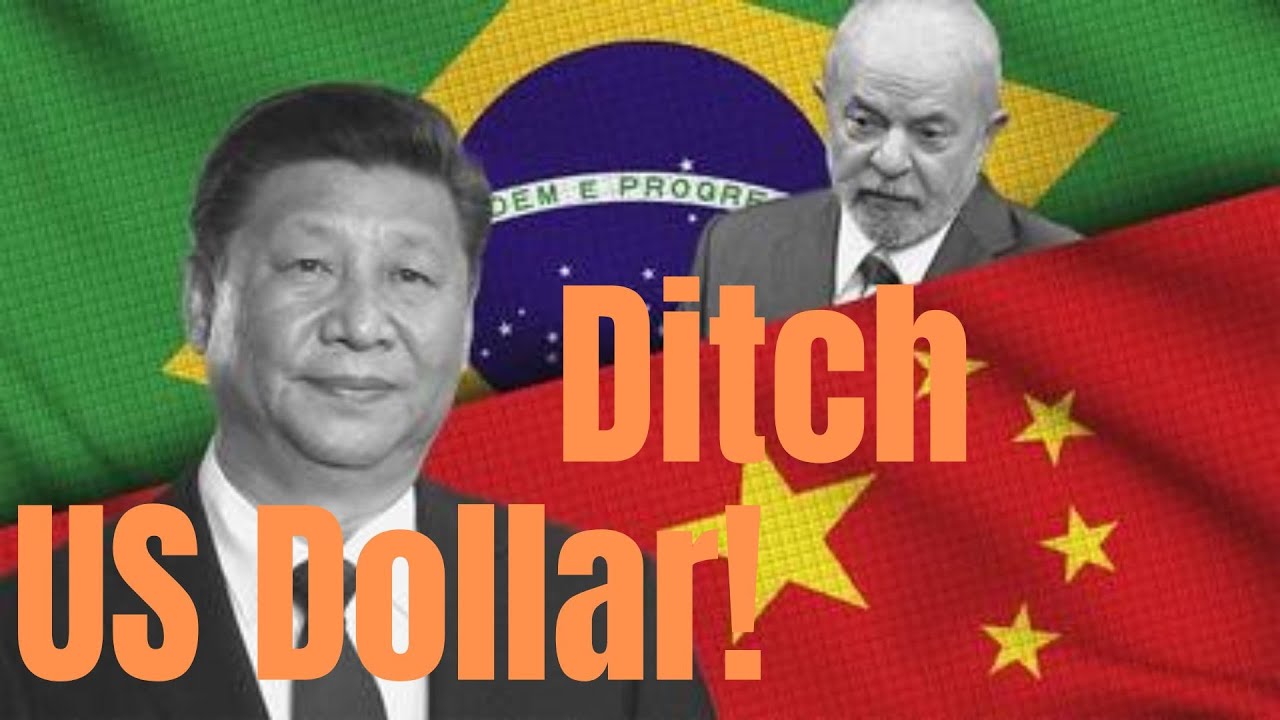
In this video, host David Oualaalou examines recent moves by Brazil, China, Russia, India, and the BRICS bloc to bypass the US dollar in trade and finance, arguing that these steps signal a rapid de‑dollarisation and a shift toward a multipolar global order. He outlines three concrete examples: (1) Brazil and China’s bilateral agreement to settle trade in their own currencies (yuan and reais), reducing reliance on the dollar and lowering transaction costs; (2) the BRICS coalition’s push for a common trading currency ahead of its May 2023 summit, alongside a wave of new membership interest that could further erode dollar dominance; and (3) Russia’s oil‑for‑rupee deal with India, which deepens energy trade outside the dollar system. Oualaalou contextualises these developments within the historical backdrop of the US abandoning the gold standard in the 1970s and using the dollar as a geopolitical weapon through sanctions and other pressures. He predicts that the United States will face inflation, commodity market volatility, and financial instability, while gold prices surge as investors seek safe havens. The video concludes with a call for viewers to recognize the emerging multipolar reality and its economic consequences.
Chapters
Hello everybody and welcome to Geopolitical Trends. My name is David Oualaalou. So good to be with you as always. Brazil and China reached an agreement by which they gonna dump the US dollar in their bilateral trade. Another big blow for the US dollar? What do you think? In this video, I'm going to provide you insights into the economic and the geopolitical ramifications of this development and what it means moving forward as countries trying to really bypass the US dollar altogether. So, but before I'll do this, like always, I like to thank the channel's members and subscribers, you. And for you, if this is your first time landing on my channel here, please hit the subscription button and smash that notification button also so you will be notified every time I upload a new video. And thank you all for your support. Speaking of members, before I forget, I intend to do a live stream for members next week, a Q&A session that is. So I hope you can join me for that if your schedule permits. So let's dive into this because it's very important. Here's the thing. Since 1970s, and we all know what happened in the '70s, what happened? Is when the United States took the dollar off the gold standard. So it's been virtually impossible— yeah, I'll say the term— impossible for any country to function without access to US dollar. And Washington, or the US that is, maintained this highly favorable status quo by putting various kinds of pressures from sanctions to election theft, to outright invasion on anyone who stepped out of line. And I'll say it, you know, it's my country. Like I always say, I will defend my country, but when my country does wrong, I will speak out. And this is one of them. We abused our power beyond belief. You know, like I always say, power is a responsibility. And some knuckleheads in Washington has abused that, and that is now we are seeing the consequences of it. So, so this weaponization of the world reserve currency, the dollar that is, has not surprisingly, uh, created some sort of— you wonder why there's resentment in a lot of foreign capitals. And you're not blind, guys. You can see what's going on around the global state, the global landscape. Country after country dumping the US dollar. So after a long development period, that resentment is now sort of erupting, erupting into rebellion against the dollar hegemony. That is why you're seeing what you're seeing. And this is why I wanted to come on the air and share my knowledge with you about this particular topic, because there are far-reaching implications, both, as I said earlier, economic and geopolitical. And, uh, and the way I'm gonna do this, guys, is by providing you— like, I do brief analysis for you, but I will provide you with 3 examples that is currently happening for you to put things in perspective. Example— and the 3 examples are the China-Brazil, of course, this deal about dumping the dollar. The second example is BRICS, and the third example is Russia and India. And I will detail each one of them briefly, that is. So, so let's talk about Brazil, Russia— uh, I'm sorry, Brazil and China. I'm a little excited, you can tell. What is just the idea of you have to have passion in, in what you're doing. So, so I get excited when, when there's geopolitics involved because that's my wheelhouse, that's what I've been doing for years and years, and I couldn't wait to share the knowledge with you. That is why I'm really excited about this. So anyway, According to the Brazilian government, China and Brazil have reached a deal or agreement, that is, to trade in their own currencies. So ditching the US as intermediary entirely. In other words, you don't have to have the dollar in the middle for you to convert between yuan and the, the, the reais. Reais is plural for real. The currency of Brazil. So, so the deal, uh, which like almost like it's been— it's China's latest barrage against the almighty dollar, because that's what it means. Yeah, and this will enable China to top rival to the US, uh, sort of economic hegemony. Because like I always say, in geopolitics you think of the two main elements. If you can get anything from the videos that I share with you, two things. One is economic and the other one is financial. What I mean by this, the two elements are always an indication of the shift of the geopolitical order, and this is exactly what we are witnessing. So here is the, here is the behind the scenes as to why China and Brazil decided to move forward. Well, you need to consider this. Brazil, the biggest economy in Latin America, and it conducts its trading with China about, uh, it reached about $150 billion a year, which, yeah, that's basically what it is, which is massive for Brazil and China trade and financial transactions directly. Now they're going to be exchanging, rather, the yuan for the reais. As I said earlier, reais is Brazilian real. And reais is plural for real. So, and vice versa, of course, Brazil can do that also. And this now, instead of going through the US dollar, because both countries will be charged, both businesses will be charged, you know. And in doing so, China extends basically in bilateral US dollar exempting currency arrangements beyond countries such as Russia, Pakistan, and Saudi Arabia to now include Latin America exporting powerhouse, which means Brazil. Second example, and in this statement, by the way, that the Brazilian government released, the Brazilian Trade and Investment Promotion Agency stated, and I quote, I got the quote for you guys here, I'll upload it here. So the— it says the expectation is that this will reduce cost, promote even greater bilateral trade, and facilitate investments, end of quote. So you can just see, mind you, once again, China is Brazil's biggest trading partner with a record of 2 and $200 billion in bilateral trade as of 2022. This is the latest stats that I found. Yeah, $200 billion. So let's go with the example number 2. Example number 2 is the BRICS. Well, here's the BRICS: Brazil, Russia, India, China, and South Africa. The BRICS coalition has become, and I feel comfortable saying this, the hottest ticket in geopolitics. Yeah, it's becoming— it becomes now the hottest ticket in geopolitics. Uh, uh, BRICS have been toying— here's the thing— BRICS has been planning and sort of moving slowly on with the idea of forming a political and monetary counterweight to the US dominance And this discussion has been since 2001. But beyond some aggressive, uh, gold buying, which we noticed last 2 years between Russia and China, you can just see now BRICS is moving into that direction. Now here is the thing that I need you to understand as to why China and Brazil decide to do this, and the reason being because In the upcoming BRICS summit, which is going to be in May 2023, this year in South Africa, they're gonna be announcing a currency by which they're gonna trade among the bloc, among themselves. That is why they are paving the way that, hey, we're already trading bilaterally, now we're gonna do it multilaterally among the members. That is the reason why. So, and because we all know after what's going on now, uh, uh, with the sanctions of Russia, uh, you can just see more and more countries are de-dollarizing very quickly. Actually, Washington didn't expect this to happen this fast. That is what's going on. So, and this is why I said now the BRICS has become the hottest ticket in geopolitics. So, so just think about it this way, guys. Just in past year, just past year, you have Argentina, Indonesia, Saudi Arabia, Iran, Mexico, Turkey, the United Arab Emirates, and Egypt. They have either applied directly to join BRICS or expressed an interest in doing so. And now with this new bilateral trade deal between China and Brazil, it bypassed the dollar, the dollar as being discussed all over the world. Now that is what I found very, very interesting. The third example I'm gonna give you is Russia and India. Why is this important? Well, because Russia and India agreed to trade oil That is the key word— oil, energy, not just commodities like, you know, byproducts, you know, agricultural, whatever. No, oil for rupees. So Russia now is India's largest oil supplier with 35% of that massive growing country's imports. And I will provide you, of course, a link to all this. And by the way, guys, If you like the content of this video so far, hit that like button and subscribe if you have not done so. And thank you very much. So here's the thing. The US is not happy about this because they are putting pressure on Prime Minister Narendra Modi. You know, I won't be surprised. And this is my personal opinion, putting my geopolitical analyst hat on. I won't be surprised that soon you're going to be hearing some issues in, for example, Kashmir or some tensions on the border or something like that. Yeah, because we still— the US still can play those cards. Yeah, that's to me a weak approach. If you don't have a solid foreign policy, don't get involved. And this is exactly what we're doing now. We don't know what we're doing. We're just reacting to events because the events coming so fast. But also the changing global order is happening so fast. So consider yourself lucky to be alive because this is historic. That's what it is. So, and but the other thing about India is India doesn't care. India gave the middle finger to the US. We don't care what you think. We don't care what you say. It's because they have to think about the interest of India, and rightly so. You call a spade a spade. You know, if you are a head of a government, what will be your priority? Is to look after the welfare of your citizens. That's the common logical thing to do. Unlike what you're seeing now with the European leaders, unlike what you've seen even for us here in the United States, Canada, Australia, New Zealand, the UK. You know, it's pathetic. I'll say it straightforward. So, so here is my brief conclusion, because I like to keep this short, concise, to the point. To sum this up all together, think of it this way, guys. Tomorrow's world, the world that we are seeing unfolding before our eyes, tomorrow's world is multipolar. And if you remember what I said few months ago, I'm sure you do remember, the New Global Order It's not going to be based on ideology, but rather on economic blocks is what's going to be managing the direction of this global order, a new global order. And I believe there are those who say, well, we need to have a superpower that can manage like a policeman of the world. No, no, no, no, no, we don't, because multipolar can manage itself. That's what I feel, and that's what I believe. So, so here's the thing. As I said, tomorrow's world is multipolar, and for the United States and its allies, it will represent inflation. That's what it means. That means basically commodities, bull markets, at least in the dollar term, and extreme financial instability of the US empire is forced— because now we, the American society, we're gonna be forced to live within our means. It's not gonna be pretty. I've been warning, I've been warning. Most Americans do not know what lies ahead. But here is the big elephant in all this, is gold. Gold is the, uh, is the big elephant. Why? It's because gold prices at the, at the time of this recording, gold prices rose today, heading for, heading almost for the best monthly performance since July 2020. Yeah, yeah. And of course, why is this? Because as the gold going up and as the banking crisis, uh, uh, or the banking system that is led to the expectations that the Federal Reserve now in the US will temporarily stop raising interest rate. You know, there is a denial what's going on in the US that the banking system is fine. The banking system is not fine. There are cracks into the financial system. You all remember the video that I just made for you guys. There are cracks and the Washington is in denial about this one. So And all the while, while this happening, the dollar is, is falling. No. So the question becomes to you, and you can leave me some answers if you like, or comments: does it have to do with countries dumping the US dollar? Yeah, leave me some answers to this question. Does all this has to do with the US, or with other countries dumping the US dollar. So, well, I hope you find this very informative. And as always, remember, geopolitics impact your daily life in more ways than one. Till next time, guys. Bye-bye.