How China Shocked the World with Unprecedented Peace Mission
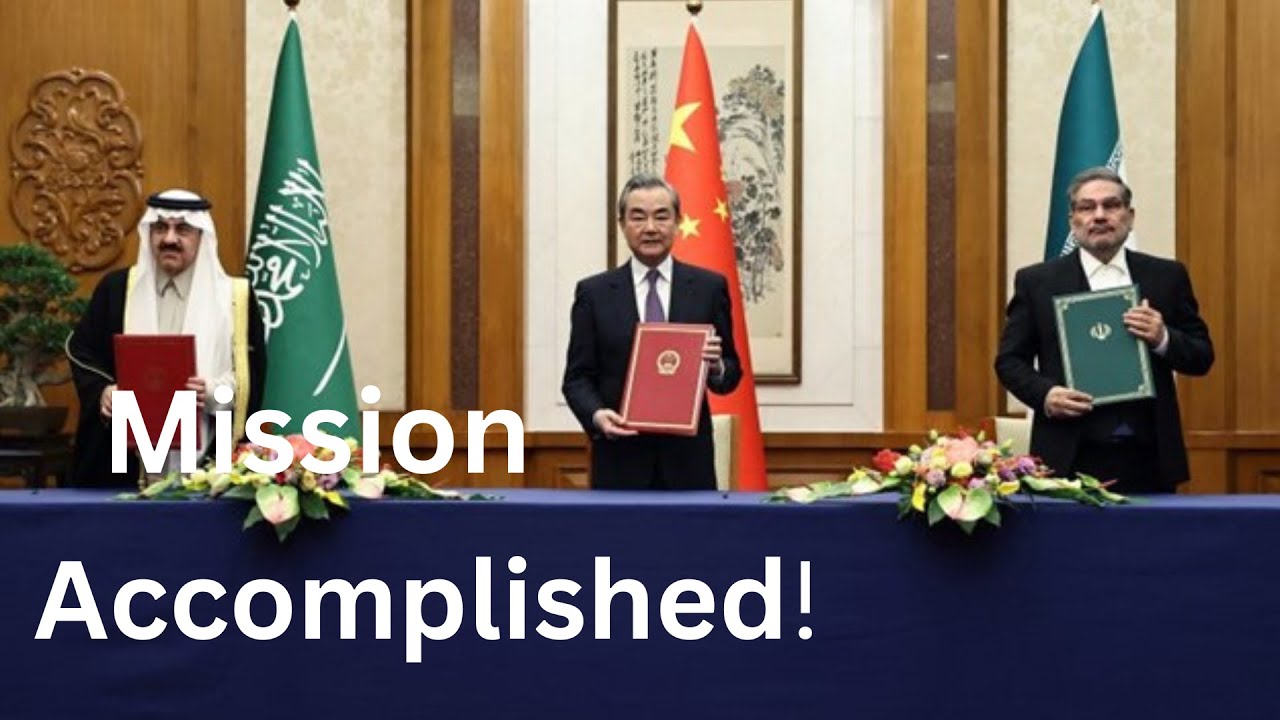
This content was created by David Oualaalou. This content was uploaded by David Oualaalou. This is a YouTube video titled "How China Shocked the World with Unprecedented Peace Mission" (uploaded March 18, 2023). The clip appears to be an analysis or news/documentary-style piece about a Chinese peace mission and its international impact. No transcript or speaker information is provided in the excerpt, so participants and exact context are not specified.
Chapters
All right, hello everybody and welcome to Geopolitical Trends. My name is David Oualaalou. So good to be with you. It's the weekend, so after all, this is the time where I link up with you on, on the live stream here so we can exchange ideas and I'll answer some of your questions and just talk. You know, some people go play golf. I do too, sometimes on the weekend. And some just like to sit down and have a conversation. So this is what we are going to be doing here. So, uh, first of all, before I launch into anything, I always like to thank the channel's members. I can't thank you enough, guys, for your continued support. And by the way, I am going to create Patreon. So if you like to support the channel feel free to do so, uh, and I truly appreciate it. So I always like to extend my thanks to the, uh, channel members and, and to all of your subscribers, and because without you would be no channel. So, so I count on you to spread the word about the channel. You all know by now, and again, you figured that out about me, I don't sugarcoat things, okay? You all know by now what this channel is all about. You all know by now the content of this channel. You know, again, I am not here to be talking about kitty cats playing, you know. And, uh, and this is where I always get, again, frustrated sometimes with those who claim to be geopolitical analysts when they are not. So they need to stop pretending because that's an area that is not of their background. And again, no offense to anybody, nothing against anybody, but it is what it is. So, so I just want to tell you or say to you, thank you for your support. So let me just briefly tell you what I'm going to be covering, then we will launch into whatever we're going to do. So we're going to be talking about, of course, the big deal that— or the big, uh, the broker the deal that China achieved when the West, collective West, couldn't, and the deal between Iran and Saudi Arabia. So for what I'm going to be doing in this live stream here, we're So we're gonna talk about that, but also I'm gonna be providing you some insights. Again, this is based on two things. One of them is my professional background. When I used to work for Washington, you know, I used to travel a lot to the Middle East, so I'm very familiar with those two countries. You know, that's again from a professional level. From an academic perspective, I wrote a book on each country, you know, one on Iran, one on Saudi Arabia. There's a lot of detail there. If you ever get a chance to read them, take my word for it, not because I just wrote it, but you will enjoy it. And again, that's what I'm going to be based my conversation on. So I'm going to be talking about geography because you need to understand a little bit about that. Some of us Americans are very poor readers of history and geography. So second thing, I'm gonna be talking about one of the key pillar that differentiates Saudi Arabia from Iran, and this has to do with religion. So you'll understand, once again, majority in the West do not understand the difference between Sunnis and Shiites. Okay, I'm gonna provide you an insight into that. And the last one I'm going to cover is why this— why China's deal matters, because this one matters, because it has geopolitical and economic implications. Now there's that question that many say, well, only China is going to benefit. No, Saudi Arabia and Iran is going to benefit, and I am going to tell you why. So, uh, but before I'll do all this, let me first of all, let me get my reading glasses here because some prints are so small. Please, like always, let me know where you are joining me from. I truly, truly will appreciate it, and I like to sometimes just you know, put the comments here. Oh, uh, Anna Kebles, thank you so much for your Super Sticker. Truly, truly appreciate it, man. Thank you so much. So, uh, let me see, uh, Michael Cornett from London, good to have you, Michael. Uh, let me see who else joining us from— I'm gonna go all the way back to the top. Uh, Tony Monte from Nigeria, good to have you. And I saw your questions here. Hopefully I'll— remind me please at the end, I will go back to that and answer that. Tony, good to have you. Enjoy your popcorn. So, uh, Jack Robert, as always, so good to have you here, and thank you for literally allocating time to sit and watch what I'm gonna be talking about. So I truly appreciate it. And by the way, guys, all of you, literally, there are some of you that put comments, they are worth reading. And again, just because, you know, I learned from them, so I highly recommend you guys read some comments from other viewers as well because there are some substance in there. So, and again, we all can benefit from all this. So, uh, let me agree. Yeah, Jan Horkor, greeting to you as well, sir. And Jan Horkor, by the way, guys, been with us since the beginning on the big channel. So I truly appreciate it, and I remember names, and I'll tell you why I remember. So, uh, once again, the Anna Kiblis, thank you so much for your super sticker. Uh, oh, oh, Cabasa de Fogo, thank you so much for your super sticker. I truly appreciate it. Oh, I hope I pronounced it correctly. Cabasa de Fogo. It's interesting screen name. So, uh, let me see who else here. Should not— oh yes, you are right, Kasabe Fugo. Yeah, Peter Zion, I am aware of him, and, and really he's been— I, I, I, I know his background when he was working at the embassy, the United States in Australia, way back. So, and he used to work for Stratford. I, I kind of lost respect for the guy, you know. Again, nothing against the guy, And by the way, by the way, by the way, by the way, he is a geopolitical analyst. Now that guy is an analyst, but what he's saying recently, that for example China's economy is going to collapse, uh, that tells me right there you are pushing a narrative that you've been told to do so, because what he's saying versus the reality are on the opposite ends. So I kind of stopped— I have stopped listening to the guy for about almost 2 years now. That's, uh, so I know which one you're talking about. Uh, let me see who is that. Oh, May Plays Go Canada, good to have you here. Uh, Carlos Philippines, good to have you. Oh, Nadia Yvette Chambers, good to have you from New York City, great city. Uh, Crypto Qatar from Florida. Okay, Gator, I'm sorry, Crypto Gator from Florida. Good to have you. What part in Florida? I'm very familiar Florida because I used to spend time when I was still in the government. There are some places there where we used to go, uh, you know, for my own training and all that. But also had a chance to look at the testing at that time back then of the F-35s. So I was, I was lucky enough to see that one. So Uh, Michael Joby from India, good to have you. The Anna Kibbles, here you are from Indonesia. Speaking of Indonesia, and I will tell you guys, be on the lookout tomorrow. I'm gonna release a video about Indonesia. Anna Kibbles, you can comment to this, and this has to do with the corruption that's been uncovered now, massive in Indonesia. So I did the video for you guys and it's going to be released tomorrow. So, uh, uh, Seymour Facts from US, good to have you. Uh, Osiris Great, good to have you on. Good morning to you. Uh, Osiris Great, by the way, guys, is a member of the channel. It's been always generous. They always put super stickers. I kind of give credit where credit is due, and I thank you enough. I can't thank you enough, Osiris, for your support and kind, kind. And here it is, another, another sticker from Josias. Great, here it is. Thank you so much for your super sticker. Let me show, uh, also the super sticker from Cabasa de Fogo. Thank you so much. And let me show the super sticker from the Anna Kiblis. There you are. Thank you all. For your support. Thank you so much. Uh, let me continue here so we can jump in into our, uh, J. Al— J. Abdul, Dearborn, Michigan. I remember Dearborn when I used to cross. Sometimes I used to drive to Canada. I don't feel like flying and I'll just go, uh, through, uh, Dearborn sometimes. So sad to see, uh, really sad to see what has become of Detroit. You know, it was a great state, man. That's where the auto industry here in the US was flourished, and, and it's been neglected. Of course, I never forget, and I'm going to tell you this because I don't shy away, for how the government treated Detroit when they had the, you know, contaminated water. You all remember this right now. Here's the question, if you happen to be an American understanding this: what do you think the US government would have done if that contaminated water was in, let's say, Orange County in California? Or Miami, Florida. So shame on the government because they didn't care for that part of the country in their— in, in Michigan. So they can tell me that, you know, kids were getting sick, and because you're drinking tap water that is contaminated. So, so if I tell you an advice, stay away from drinking tap water. I know it costs to buy bottled water, whatever, but Your health is worth more. All right, let me keep going here. Uh, oh, Chitiro Monos, Dallas, Texas, good to have you. Just Me from Malaysia. Uh, Seymour Fat, Montana. Uh, Let me see someone else from Netherland. Orwellian from Netherlands, good to have you. Irvin from Kentucky, or Irvin Garrett from Kentucky, US. Uh, who else here? Uh, let me see. Oh, Lover of the Russian, thank you so much for your super sticker. And by the way, truly appreciate your interaction when I did the live stream last time on the big channel. So I truly appreciate you here. Uh, uh, let's see, African in Moscow, that's one. Let me see who else is here. All right, okay, let's move on to what we're gonna be talking about here. So Now, as I always do, uh, sometimes I'll share a few things with you regarding what's going on around the world, because you need to know there are certain things doesn't get reported. And if it does get reported— oh, let me, let me remove this one here. Brand, okay. Lover of the Russian, uh, where you are, where you are, where you are. Okay, so now as I said, there are sometimes certain things don't get reported. They might get reported later on, but they were always either, uh, what's the word I'm looking for, yeah, linguistically are manipulating. So if you don't understand, if if you— if, if you don't— not a— I'll take this back. Not if you don't understand. If you don't acquire the skills to understand linguistically how things can be manipulated, you're not going to see that difference. For example, this what we're going to be talking about today in the case of China brokering a deal between Iran and— yeah, there are some Western newspapers and magazines and media outlets, whatever, picking up the story, but they are wording it differently as to minimize the impact of something like this, because China's breaking that deal. It's now sort of set the stage for how the global order is. So they are wording that one differently. And this is why I like to share a few things with you sometimes, for you to know what's going on. So, so, all right, let's start with the idea of that, uh, Let me get to my, uh, pictures here that I'm going to share with you. Uh, the idea that the US is already, already rejecting China's initiative regarding the Ukraine conflict. Yeah, the United States already— I predicted that in the video. I'm sure you guys watched the video, and I told you this one's going to be slightly different. Not because China can't do it. No, no, no, no. It's because it's gonna be sabotaged by the West from different sources. That is the reason why. So, uh, my second story has to do— it's a funny one. And here, let me first show the picture. And, and the reason I'm showing this picture is because the ICC, the, the International Criminal Court, issued an arrest warrant for Putin. You know, it's laughable. It is very laughable because that shows you right there the double standards of the ICC. And you won't put too much faith in ICC anyway because it's, it's corrupted like any other entity in the West. So Indonesia, as I mentioned earlier, uh, be on the lookout tomorrow for a video I'm going to release for you It's worth a little watch. Joko Widodo, the president of Indonesia, really have a big task on his hand. But also with him, I'm putting a big question mark. I was hoping he will really advocate for the Indonesian people. Not after what I discovered. And I'll let you watch the video and reach your own conclusion tomorrow, you know. Next one. Now this one is a sad story, and I'm gonna share it with you. Check out this one here, guys. The picture here, this picture, it's of an African American, okay? This African American who's been released now from prison after being unjustly accused. Unjustly, yeah. Spent 34 years in prison. Now this to me points to the injustice that exists in the American system because here's the question, and I usually get very emotional about injustice. I get very emotional. This is like why right now I'm still like seeing the images of when I was in Yemen looking at the kids, 4, 5, 6 years old, going through the trash to to find something to eat. I remember, and I'll share it with you. I was sitting in a restaurant with my colleagues and, you know, grabbing a bite to eat at the time. And I was able to go out and all that. And all of a sudden I'm looking at the window and here is this kid across the street going through the trash. And I could tell he was like 8, 9 years old. And I just couldn't eat my dinner because how can you? Who is in a right mind, you will be able to enjoy your dinner, lunch, whatever that is, Why are you looking at that human being who's going through the trash to find something to eat? So I called the manager of the restaurant and I said, sir, can you do me a favor? And I was able to speak their language because I do speak their language. So I said, do me a favor, please. Can you get a plate and call that little kid out there and give him this to eat and I'll pay for it? And why am I doing this? Or why did I do this rather? Because I saw the images that could be my own. That could be you, that could be any of us. And you said to yourself, you know, what is the justice into all this? And, and I'm bringing this up because to highlight to you again why this deal— again, this is what a lot of viewers in YouTube miss and miss the opportunity of seeing the big picture. And this is what I bring to you in the channel here and the other channel. That's what differentiates me from other so-called geopolitical analyst. And that's why I get frustrated, because you can't be using a title that you don't earn it. You have to earn it. That's like you guys, you know, to earn my respect, I have to respect you. It's the same thing. You can't be calling yourself geopolitical analyst when you didn't earn it. So back to my point about Yemen, is because the big picture of why China's deal matter and is going to change the implications economically and geopolitically. Because that tension between Iran and Saudi Arabia sort of displayed itself in Yemen. Yemen become the battle, battleground for both Iran and Saudi Arabia. This is why this deal means a lot, because here's the thing which the Western media is not disclosing again. Do you guys know that the moment Both sides agreed— Saudi Arabia and Iran agreed to reopen their embassies and so forth after China brokered the deal. The, the conflicts in Yemen stopped. Yes, and this is what I'm talking about, the big picture. And that's why the implication of this deal is going to be far beyond what you can imagine, and I'm going to detail some stuff with you. So to go back to the image of this African-American individual, you know, who's been sentenced for 34 years unjustly, how would you— what would you do? What would you give him? How much money would you give him? And his life is all about money? You know, who gives a damn about that? Because he lost 34 of his life. Because injustice. Because if there is one thing, and you all know this, I am not saying something you don't know already, what is the most precious things in life beside your health? What is the thing you can buy no matter how much damn money you have? It's time. You can't. That's why precious time, don't waste it on nonsense. Precious time. Don't just do silly stuff that don't mean anything to your life, don't add anything. Precious moments are worth a lot. You might not get a chance to have that again. And guess what? By the time you said to yourself, oh, I wish I could have done this, it's too late. So cherish the time you have right now with your family, your friend, your loved one, your whomever. Because that time you're not gonna get it back. That's so— so it pained me, it really pained me to see this image here because I'm aware of some other stories that happened here in the US because of the injustice system. And that's not right. It's because our system is corrupted, even in, in, in, in a justice system. I'm not saying straightforward. So, all right, let's— and, and by the way, guys, I decided to do one other thing for you from now on. When I move into— when I do live streams, I'm gonna start— I'm gonna start sharing with you a segment about health, some tip or so, you know. I am very careful about my health, and, and, and To me, it's like that knowledge. If you have the knowledge, why not share it with everybody? So every time I do a live stream, I will share something with you. Of course, it's just sharing the information. You can use it if you want to. But today I want to talk to you briefly, just to share this health segment about the importance of olive oil. Yeah, you might be surprised. Here's the thing, and I read the research, by the way, 3, 3 spoons daily of olive oil for 6 months, okay, what it will do, it will have an impact on your brain health. Because the benefit, which a lot of— you think the pharmaceutical industry, the Western medicine, it's not gonna mention that, of course. The benefit of olive oil for your cognitive and cognitive functions That's how good olive oil is. And I'll share it with you. It's my personal life, my private life. I'm a very private guy. I don't talk about much about my private life. I'll share it with you. I do a tablespoon every day of olive oil in the morning, every day. So anyway, that's what I'm gonna— I decided. And by the way, this will improve your memory. Now you see why I remember. So All right, let's jump into our— let me take a look first back to the comment section before I launch into the discussion regarding, uh, regarding the topic we're going to be covering. All right, let me see. Ali, Ali, Ali Jama from London, hello to you as well. So, uh, let me go back up a little bit just to see in case I miss somebody here. Muhammad Ali from United Kingdom, good to have you here as well. Sharif from Ghana, good to have you. Ghana, nice place. I was there a couple years ago, but not in Ghana, in your neighboring country, way back, way back. So, but it was a brief a trip that I did back then. Oh my, here's, here is Boone. Hi Boone, good to have you as always. Boone, by the way guys, has been with us since the beginning, and, and I can't, I can't thank you enough, Boone. And I'll say it publicly, I can't thank you enough for your support. It means a lot. I want you to know that, not only on my behalf but on behalf of the team at Geopolitics in Conflict. All of us. So we truly, truly appreciate you. So, uh, let me see who else here. Uh, uh, Mostapade from Indonesia, good to have you here. All right, I'm gonna jump, guys, into the conversation here because, uh, I don't wanna— believe it or not, this topic will take us about literally I could extend it into 5 hours, but you get bored quickly. You will get bored with me. I'll get bored. I get tired 5 hours non-stop. So, by the way, this is what I'm going to be talking to you about today, is truly put this idea of China's diplomacy that now reach this objective of bringing peace. That's the keyword, bringing peace between an arch enemy. That's another keyword. Archie and me, Saudi Arabia and Iran. And there's a reason to that. There's a historical reason for it. There, there's a religious reason for it. And of course, there's geopolitical. And like I said earlier, if you ever get a chance to read either book or both, I wrote about Saudi Arabia here and Iran, uh, and I detailed a lot of stuff about— because it was a research, it's not a It took me 2 years on each to research. So when I write my books, I, I— it takes me time, but it takes me time because I want to check the information. So, so like I said earlier, uh, I'm gonna start with the geography because very important. Like I said earlier, and no offense to my fellow Americans here, we are poor readers of geography. You know, you ask somebody, can you please tell me where Madagascar is? They're not gonna know. They are not going to know, uh, Ukraine. They won't even know if you didn't put it on a map. If you tell them, can you just point to me where Ecuador— they're not gonna know, you know. Can you ask them, for example, can you tell me where the Strait of Hormuz? And they're like, what is this? So, and again, I'm not putting anybody down here, I'm just highlighting the facts. I don't shy away from stating the facts, and I don't care whom I'm talking to when it comes down to facts. And hey, either be president, the Pope, you name it, I don't differentiate. Facts are facts, and that's, that's simple as it is. So, so we're gonna be talking about— first of all, I'm gonna provide you— here is, let me put, uh, show you the map so you know what I'm talking about here. This is the map of geography. Well, uh, I'm sorry, this is the map of geography. This is the map of Saudi Arabia. So Saudi Arabia is officially known as the Kingdom of Saudi Arabia. You see it by the acronyms of KSA. That's how it knows. And usually, uh, Saudi Arabia is considered the, uh, let me just hide this one here back and go to this one here, the fifth largest It's the 5th largest state in Asia and 2nd largest state in the Arab world after Algeria, believe it or not. Once again, you guys, think the big picture. If you, if you get anything from what this channel here and what I talk about and all that is this: always, always see the big picture. It will help you see clearly. If you have that tunnel, narrow vision, you won't be able to understand or see what is this, is this all about. The moment you start to train your brain into seeing the big picture, it'll become clearer to you. So that's why I said last time, the importance of why Algeria now joining BRICS is going to move that entity BRICS— Brazil, Russia, India, China, and South Africa— is going to move it even further economically and geopolitically because Algeria has a big country and it has a lot of oil under its sand. So, so as I said, the, the 5th largest state in Asia, okay, that's Saudi Arabia, that is, and 2nd largest in the Arab world after Algeria. ASA borders— let me bring back the map so you need to see Here we go. It borders Jordan and Iraq to the north, Kuwait to the northeast, Qatar, Bahrain, and United Arab Emirates to the east, Oman to the southeast, and Yemen to the south. It also separated from Israel and Egypt by the Gulf of Aqaba. I got a, I got a picture for you here, guys, so you can see where the Gulf of Aqaba is. I'm sorry, here it is. This is the Gulf of Aqaba, and that's what separates Saudi Arabia from Israel and Egypt. So, okay, now when it comes to Saudi Arabia, the one thing is gonna have to come to your mind is this: What is the only two main things? And it's like an hypothetical question for you. What is the main two things that when the word Saudi Arabia comes to mind, you can think about that? Two things. And those two things are oil and Wahhabism ideology. Those are the two main things. That's about it. Once again, put this within the big picture. Why do you think Saudi Arabia is shifting east towards China? And as a matter of fact, I am in the process of putting together a video for you. And take my word for this, you won't— you might hear about it in a week or two, whatever. I'm gonna get it done as soon as possible, as soon as I confirm the information. Saudi Arabia officially, officially now It's gonna be trading in Chinese renminbi when it comes out to energy officially. It's a big, big, big thing, and I'll prove— I'll do a video on it for you guys in the next few days. That is one thing you need to understand what's going on. Let's move on to Iran because you need to know about Iran. Let me show you the map. It is Iran. And once again, I did write a book about, uh, about Iran. So, uh, if you ever get a chance to read it. So Iran, officially known as the Islamic Republic of Iran, which is located— and Iran's location is very, very, very strategic— is located between southwest part of Asia, okay, and the Middle East. Very, very strategic, as you see on the map here. To the north, Iran borders the Caspian Sea, and if there is one thing you need to know about Caspian Sea is that it has a lot of oil reserves under it. It also borders to the north, that is Turkmenistan. To Iran's northwest, it borders Turkey, Azerbaijan, and Armenia. On the west, As you see on the map there, on the west it borders Iraq, and on its long southwestern borders Iran meets the Strait of Hormuz. Let me pull it up for you guys here. Here is the Strait of Hormuz, and the Strait of Hormuz is very, very crucial. Why is this, you may ask? And the answer is simple. The Strait of Hormuz, it's where one-fifth of global oil transit, uh, sort of transit through that water. It's narrow, of about 12 miles wide. That's about it, you know. And the, and the, and the, uh, the oil tankers, whatever, has to go only in, in, in, uh, in, in, in a 2-mile wide and narrow. That's it. That's how— that's why if ever there are tensions in the Middle East, let alone in the Persian Gulf, and the Strait of Hormuz is shut down, it's going to be a major seismic energy crisis on the— around the world. All of us, no exception. When you think about it, one-fifth— we're looking at about, uh, If I am to guess, and I'm guessing here because I don't have the exact number, about 18 million barrels a day transits on a daily basis. So that's why the Strait of Hormuz right here, and if you can see right here, guys, this is a narrow strait that's 2 miles. That's about it. That's why it's very, very, very important for you to understand. So why Iran is, uh, is geography important is because it makes Iran strategic location, very, very strategic, that bridges different cultures, okay, and civilizations and so forth, allowing it to play a pivotal role economically, politically, religiously, and yes, you got it right, culturally as well. That is what's important about it. So, and again, Western audience and do not understand the depth of the culture to even understand what the heck is these tensions between, uh, uh, uh, Iran and Saudi Arabia are all about. And this is what I'm going to be, uh, explaining here a little bit. Remember guys, no soda, not good for you. Stay away from that stuff. The sugar industry. Maybe one day I need to do a video about sugar industry. It's worse than cocaine, believe it or not. Yeah, worse than drugs. All right, let's get on our topic. So, but first of all, before I'll get into that, I still have to address the religion aspects of it because the religion aspects is very, very crucial. So, so of course, addressing, addressing or talking about the religious differences interpretation between Sunnis and Shiites, you know, it could take us 5 hours just to talk about brief history of where that tensions all came up. All you need to know for now, you know, the basic stuff, that the Sunnis and Shiites— think about it in terms of if you are to put your Western mindset, or even in the Eastern culture, whatever, even though in the Eastern doesn't exist much, but in the Western Think about Christianity. In Christianity, you have too many denominations. You got the Catholics, you got the Protestants, and so forth. In Islam, it's no different. The only two main ones, the two main ones, and remember I said the word main, those are the main ones, Shiites and Sunnis. There are other entities like, uh, what you call them, Ahmadis in Pakistan, They are the Salafists in North Africa. Uh, there are other dimensions. I don't know a lot about them. I do know about the Sunnis and Shiites because of my research and understanding of the religion aspects. And again, as I said, it will take us forever, but I'm gonna just briefly highlight to you how old that issue is and why it happened. Well, the division between Sunnis and Shiites started from way back after Prophet Muhammad in Islam, who is the leading figure at the time or whatever that was, died. And when he died in 632— yeah, you heard me right, 632— when he died, division existed as to who's gonna be succeeding him. You know, Prophet Muhammad didn't have a son, he has a daughter. I think 2 or 3, something like that, you know, but it was no clear succession for that. So, and that's how the tensions arise between the Sunnis and Shiites. That's at the heart of it. But when you look at the division between Sunnis and Shiites, they both practice the same way. There are few minor differences in how they practice. That's like what the the Catholics say in church versus what the Protestants, or yeah, the Protestants say. You know, there are slight differences there, same thing that exists. But what's the key about this is how old the tensions that's been existing. 632, that's when it all started. We are in 2023. You know, and this is what I made the arguments prior to the US invading Iraq, and I argued against the invasion because it's, it's like a wound. You're gonna remove the Band-Aid and expose the wound to more tensions. So, and I will explain as I move forward. And once again, The problem about— oh, not the problem— the division that existed, or the split, was originally over who would succeed the Prophet Muhammad. That's what it was all about. So, and that's where that rivalry between Saudi Arabia and Iran existed all the way. So, and the reason, because you got a Sunni dominant, which is led by Saudi Arabia, and you got Shi'ite minority dominated by Iran clashing together. That's what exactly happened throughout history, still exists to a degree. But when China brokered the deal, that's a big deal. That is a big deal. That is a seismic, as I used the term before, because I knew exactly what will it mean when it comes down to these aspects of the religion. And if there is one thing you can rally the masses, religion is one of your tools that even governments use as religion. You know, I, I respect religious people, I have no problem against that, you know, I, I understand to a degree, but I am here to state it and I'm gonna say it, a religion is man-made. So you can just see where one religion will And by the way, they all share. There is no one particular religion that has that. All of them share that, you know, because you start to ask yourself the question. And again, I respect people with different religion practices and views and all that. Who am I to judge them? And I don't judge people, and I would never allow anybody to judge me. Same thing. So if I don't see religion as important, then I just express it, and that's what I'm doing here. So, because to me the fundamental question is this: if you happen to be a religious person, and I respect you for that, you know, the question becomes, what is faith? You can ask yourself, well, my faith is religion XYZ because that's how I've been taught. Yeah, that's most the common answer. You follow in the footsteps of your parents and so forth. But at the heart of it, the fundamental— we go beyond just the surface here. You start to ask, what is the faith? Or the faith becomes the, the interpretation of, okay, faith is the belief. You're gonna believe in something, but what are you believing in in the absence of evidence that justifies that? And again, no offense to religious people, and I respect that. But anyway, in this case you know, the division between the Sunnis and Shiites because the acquisition of the religious leadership is part of the issue. What do I mean by this? All I mean, and again, I detailed all this in the Saudi book, especially that one. For the Iran book, I talked mainly about the Shia because it's a Shiite country. What do I mean by the acquisition of leadership? Because Saudi Arabia uses religion to justify its leadership in the Sunni world or the Muslim world, you know, because there are Shiites out there that they don't buy that arguments of Saudi Arabia's leadership, you know. And again, that's how it is. That's how it's been. So, and this is why, again, you put this within the context of the ongoing conflicts that was existing in the Middle East, okay? Because it reflects the ideological attraction also Iran is gaining in countries like Yemen, Syria, Lebanon, Bahrain, Kuwait, and some other Gulf states. Why? Because they do have minority Shiites. Even in Saudi Arabia, in the southeast part of Saudi Arabia, in two locations, Jizan And, uh, I forget the other one, I forgot the name, it'll come to me. Those are majority Shiites, but they are in the southern, southeastern part. And guess what do they have there? They have a lot of oil, but because the government is dominated by the Sunnis, so you can just see. So this is where part of where the difference, and even though Even though Saudi Arabia has two, two, uh, Islamic holy sites, Mecca and Medina, you know, uh, Saudis are justifying that these locations give them the leadership in the Muslim world, which I don't believe in that argument, and I don't buy that, and I don't believe in all that stuff anyway. So, uh, no offense to Muslims, and I respect again, but I don't buy that argument. So, and that's why there are no seeing eye to eye between the two branches of the religion, Sunnis and Shiites. So, so that is the, the main— what's at the heart of all this one here. So now at least you have an idea of what this is all about, okay? That is what difference is all about. So you have to understand to put this within the context of the big picture. So, so now let's move on to talking how the deal of China now sort of, uh, what's the word I'm gonna be using for this? The West only, the collective West, that it only dreamed of and they couldn't achieve. China was able to achieve that. Well, they achieved the peace between the two. Like I use the term archenemy. Look it up in the dictionary to understand really the concept of what archenemy means. That means if there will be no way for them to even see eye to eye on any issue, and China was able to succeed into that. You know, for us, the West, we were trying to ensure, uh, for all of you who are old enough to remember the, uh, Iraq-Iran War You know, whoever is— who, uh, who did the US support? Who do you think? You know, most of you will say Iraq. Well, you won't be surprised to find out that we even supported Iran from behind closed doors. So we were supporting both, you know. But the reason why China succeeded into all this, why do you think it succeeded? Like I argued before, It's because of neutrality. China approached the talks as a neutral party. It, it did not dictate to Saudi Arabia, why are you going to do this for us to reach a deal? It did not dictate to Iran, you're going to do this for us to achieve a deal. It did not. All China did is presented the argument to both parties and allowed them to see the big picture because that's what Saudi Arabia and Iran saw. It's a win-win for all three parties, and I will tell you why. And by the way, before I forget, which Western media didn't disclose— not all of them. I did find— I'll take this back— I did find one specific Western outlet that mentioned this, but the rest of them did not. Do you guys know that the negotiations in Beijing and the final draft were not conducted in English language. That's a message right there. It is a message right there, loud and clear. Because this is why, if you noticed, I put on the thumbnail, on the title— and by the way, guys, the way I put the titles on the thumbnails, because I want you to think outside the box. Sometimes it might not be clear to you But that is a reason why I put certain keywords to trigger your thinking to see the big picture. Because after all, I am here to share knowledge with you, so help you, you know, train your brain, see the big picture. That is the reason why I put certain keywords. And the keywords that I put there, what was it? Was a global peacemaker. Global peacemaker. The importance to that is when you are— when you, an entity, doesn't matter who, doesn't matter what country, are able to bring together two countries that are on the opposite end to sit and agree, you know, that just sends a global message. It sends a message to the global stage. Like I always say, in international relations Context matters. Suffice it now to see that big image like we have right here, and I'm going to share it with you right there. That's all you need to see, that an image. You don't need words, you don't need anything. The picture worth a thousand words, that speaks for itself. It's right there. That's my point in all this. So China was able to achieved that one when the West was only dreaming of it. To give you a counterargument to that, why the West won't be able to do that, look no further than the ongoing conflict between Israel and Palestine. That's another conversation for another day, and there are some issues into that that goes outside the control of the US or the West or whatever, you know, but I'm not here to talk about that. I'm here to talk about the conflict, but I'm going to ask you a question, and please, if you will be kind and just put an answer, you know, doesn't matter, your opinion matters to me. Do you think the US was an honest broker in the Arab-Israeli conflict? That's my question for you. Do you think the United States is or was an honest broker in the Arab-Israeli conflict? So just leave me some— your answer right there on the chat, or you guys can can exchange ideas among yourselves and so forth as I go into the conversation. And once again, to bring it back to our topic, why it means a lot on the global stage is because now it's— China is saying without saying it, we can, we can achieve peace among the most ferocious parties in the world. Interestingly, when I released the second video, guys, remember about the upcoming visit of President Xi to, uh, United— to Russia, you know? And I said, you know, will he be able— well, not President Xi, but China in general— will China be able to do it again by brokering a deal between Ukraine and Russia? And I, I'm leaning more towards saying no. It can't. Not, not that China doesn't have the will or determination. It's because it's going to be undermined. That peace initiative will be undermined from different directions. Washington yesterday just released a statement saying that— saying— when Washington releases a statement that is for public consumption, that tells you how ferocious the debate was behind the scenes. I used to work in Washington. I understand how the system works, you know. And when Washington says it will, uh, oppose any Chinese initiative, that tells me two things. Putting my geopolitical analyst hat, it tells me that either the US wants the war to drag on longer, okay, or the United States is so scared of if China resolves this then that shift in the global geopolitical landscape is here to stay, and China leading that effort. That's the only two explanations. Anything other analysts are saying, and I read some, uh, analysis, uh, from some think tanks, some analysts within the Pentagon, all the rest is nothing but bravado. Or as I always use the term, consumption of ink, no more no less. This is why you're seeing the, uh, the West or the US that is fermenting tensions in Asia. That's why— I don't know if you guys got a chance to see my analysis about why China's building its military on the other big channel, so if you didn't, go look it up, go, go watch that video and listen to it carefully. Usually those analysis I prepare a week for them before I release them, and, and, uh, so that is the reason why. So I don't see China will be given the opportunity. With Iran and Saudi Arabia, the conditions were right, but also in the case of Iran and Saudi Arabia, China was able to achieve that deal because it's been working on it for years. This didn't happen just last week. A lot of people have no clue. This was done behind closed doors. The talks were in secrets back then, but also China reaching out to both in neutrality. It was neutral, and I'm going to tell you why. The reason also why it's not going to benefit just China is benefiting Iran and Saudi Arabia. Now, some of you, I saw some comments, and this is the reason why I read your comments. Some of you said, uh, well, Dr. O, you forget to mention that is Iran and Saudi Arabia also, there is a benefit in it. I agree with you 1,000%, you know. It was a reason why I didn't say it at that time because I knew I was going to be doing live stream to explain it even further. The videos that I do, especially on this channel here,. I like to keep them short, concise, to the point, because I am not here to get involved in niceties and all that. I'm here to give you the knowledge to the point and move on. So here is the reason why— in, as a matter of fact, it's all of, all of three: China, Saudi Arabia, and Iran are benefiting from this, or they're gonna benefit from it. That's why I use the term long-term implications. So So let's start first with Saudi Arabia, and I'm going to show you some images here that I have. This one here, it's a purchase from, uh, China. Saudi Arabia purchased about $4 billion worth of weapons from Saudi Arabia. Okay, that's very important. And why is this, you may ask yourself? Well, the reason being is because the tensions that exist between United States and Saudi Arabia. So, and I argued this few months ago, and again, I look for the trends. That's why you trained to look for us geopolitical as an analyst, you know, even a financial analyst will do the same. It's just on a different dimensions that will be on the financial market, which I can say one thing, and I'm not qualified financial analyst because I am not and I don't claim to be at all. But if I'm to put just my geopolitical analyst head thinking with the tools that I learned over the years, how to use the analysis part, I can apply it to the financial sector as well. Look no further than 3 banks in the United States collapsed. You know, what I see coming is the, the foundation of the US financial structure it's going to start to degrade or collapse one step at a time. Because this is a reflection, this is a— I won't say a replica, but a reflection of what happened in 2008. You know, 3 banks collapsing at the same time, it's no good sign. You know what makes it even more, uh, that most Americans have no clue, and the government will never disclose that because he can't. Is that, as I said earlier, Saudi Arabia and China agreed now that they're gonna use, uh, renminbi for the transactions between, uh, Saudi Arabia and China in energy. No more dollar. So that is one of the— let me see one image here. I need to know what it's all about. Yes, so that is one of the reasons why Saudi Arabia agreed to China's initiative. Peaceful, because China— Saudi Arabia is going to benefit. And how Saudi Arabia is going to benefit from China, not from Iran, from China, is because Saudi Arabia and China have been embarking on, uh, on, on a military, uh, assistance from China to Saudi Arabia. I disclosed in this book here that back in the '80s, which the West didn't know Saudi Arabia had a deal with, with China to provide it with the, uh, there were some types of missiles, uh, they weren't that great at that time. Let me— yes, yeah, they weren't that great at that time, uh, I forget the name of it, is, uh, Fang Fang Dong 3, if I'm not mistaken, because they weren't, they weren't good and so forth. But anyway, uh, China and, uh, Saudi Arabia increased the military cooperation, even though you and I know Saudi Arabia is client of the United States. Billions of dollars of weapons makes you just wonder what the Saudi is going to do with all that weapon. Well, guess what the argument was from the United States for Saudi Arabia buy the weapons. You're gonna have to be prepared for Iran in case. Now you, you see what I'm getting at. Now that Saudi Arabia reached a deal with Iran, the US will have no justification for selling weapons to Saudi Arabia, because back then we had a justification. Oh, you have to arm yourself against the Iran and all that stuff, because Iran's going to take over the Middle East and all that. That was the argument back then. So, and Saudis, of course, just sign a check and, and everything goes fine. This is what's in it for Saudi Arabia. China is also going to help Saudi Arabia technologically. Saudi Arabia is also going to get help from China in, uh, what, civilian nuclear technology. Yeah, as a matter of fact, it was a competition here in the US which was allowed by the government to allow some companies here to sell civilian nuclear technology to the Saudis. Yeah, that's— once again, guys, you have to see the big picture because if you don't, you're going to miss truly putting things in, in, in pieces, how it works. Then there is the big elephant, of course, in the room when it comes down. We're still talking about just Saudi Arabia and China. I will talk about Iran and China. The big elephant in the room regarding the Saudi Saudi-China relations is energy. Saudi Arabia— I did the presentation. I wish I would have pulled up the slides for— I did a private presentation about this, uh, to an audience, and I talked about Chinese consumption of energy. That's why I always give scenarios, what if, you know. So Saudi Arabia now, you know, wants to ensure that the Chinese market will absorb all the Saudi energy. Because the thinking in Saudi Arabia— and again, didn't happen last year or the year before, it happened for the last 15 years— the thinking was there. They just never shared it with the Americans. The thinking was, what if, what if the dollar collapses? What if the dollar becomes weak? What if another currency emerges? Or what if we want just to enter into bilateral trade with China using a different currency beside the US dollar. That was the thinking in Saudi Arabia. That is part— if I am to, and again, this is my personal opinion, if I am to think as an analyst, I would say the agreement for Saudi Arabia to agree with Iran is because Saudi Arabia will ensure that access to the Chinese market when it comes down to energy. Like I said earlier, When Saudi Arabia comes to mind, what is the first thing that you think about? Oil, because Saudi Arabia is rich in oil, top oil producer in the world. That is the reason one, the reason why that is. Then there is another. I'm gonna share another picture with you here, guys. Uh, uh, let me see if this is the right one. Yeah. This is a Chinese model. Saudi Arabia wants to buy this model from, uh, uh, uh, he wants to buy it from China. That is the reason why that relationship and Saudis agreed to move forward with that. Okay, now let's move on to Iran. And of course, I'll finish all this and I'll do my conclusion and open the floor for you for your questions, guys. Excuse me. For Iran, why, why Iran agreed also? Again, it's win for Iran as well. You know, Iran is hammered or has been hammered with the sanctions from the United States way back since the revolution of 1979 when, uh, uh, Khomeini took over at that time, you know. Of course, we toppled— if you go back again, I disclosed all the historical detail in the Russia book, in the China, in the Iran book rather. After 1950, in the '50s, when we toppled the Mohammad Mossadegh who was democratically elected. Both CIA and MI6 coordinated their efforts and toppled Mossadegh. We put the Shah of Iran at that time, was a puppet of the West, went ahead. It's always about access to oil, that's all it was about. But after the revolution 1979, and this is where the Saudis also got scared back then, thinking that the Shiites gonna take over and the Saudis will lose the religious leadership. Because to the Saudis, and I still say it and I don't shy away from it, the Saudis religious leadership is the only currency that they can trade into the markets of ideas and so forth around the world. That's how they can sell the arguments to the Muslim world, you know. Because, uh, uh, it's almost— I feel like, uh, God, however you perceive God to be, uh, had a direct contact, or she had a direct contact with the Saudis giving it, which is nonsense to me. And again, this is my personal opinion, guys. I just think outside the box because I think what's pragmatic and logic and realistic. I don't think emotions. So back to Iran. So, so the revolution of course changed the dynamics in the Middle East, and that's why you start to see the Middle East divided on the religious lines. You got the Sunnis, you got the Shiites, even though they both— again, the best example you can get is in in Christianity between Catholics and Protestants. That's the same argument. But anyway, we fast forward to talking about, uh, Iran and China's relations. But these relations, of course, it goes way back a little bit. But where it gets very interesting— and again, I'm basing this on my academic research, and when I say academic research, I am looking around the world collaborating the information to ensure— because my name, my credibility goes into this stuff. Once again, this is why I lash out at those who claim to be geopolitical analysts when they are not. It takes years to develop that. It takes years to build that credibility, and it takes years to acquire that kind of experience. It's not right when you think you can come from behind the lines and stand in front and call yourself an analyst. So you need to stop, whomever this person claiming to be a geopolitical analyst. And once again, I have nothing against these individuals, but I will call them out on it. So, so back to the point of, uh, uh, the research part. And why this relationship developed or emerged even stronger between Iran and China during the negotiations of the JCPOA, the Joint Comprehensive Action Plan of Action regarding the Iran nuclear deal. Do you guys know which was not disclosed by the West? I disclosed it in the book, and I challenged the government not to redact it because they told me, why you can't disclose? I said, no, I will disclose it because it's public information if you know where to look for. And they said okay, because there are certain things in the book that are redacted. I can't disclose those because they are too sensitive. Now, for the, the talks, the negotiations that took place behind closed doors among the P5 and Germany— P5 are the members, the permanent members of the UN United Nations Security Council, you know, the 5 permanents, uh, uh, US, UK, France, China, and Russia. That's fine. Well, it was only China and Russia that supported and convinced Iran to agree to the deal with the P5+1. P5 again. The 5 permanent members of the UN Security Council and Germany, because Germany was the representative of the EU. Even Germany is, is useless anyway. Uh, they were just there for a photo op. I'm gonna say straightforward, yes, Angela Merkel was great and all that, but her presence, Germany as a whole, or the EU for that matter as a whole, uh, it was nothing but just a photo op. They are useless anyway, you know. Call a spade a spade. You look no further than what's taking place right now with this energy crisis in Europe. And yes, you look at Olaf Scholz, the German, who is not nothing but a puppet. The guy is so weak beyond belief, no different than what just his colleague in Australia, Prime Minister Abbott, just did by being in the United States in San Diego signing or inking that submarine deal. That tells you right there the story. Those, this so-called leaders are so weak. I have no tolerance for weakness right here because those leaders don't have the vision, they don't have the foresight to see down the road, 25 years down the road. China did during the negotiations with the P5+1 regarding the Iran nuclear deal. Why? Because China supported Iran behind the scenes and convinced Iran to agree to that. In return, China knew that once the sanctions are lifted, the trade will be open for Iran, and Iran is no small country in the Middle East. Let alone its energy resources. That's what was at the heart of it. It was still, of course, as you know, in 2018, the United States under former President Trump unilaterally withdrew from the JCPOA, the Joint Comprehensive Plan of Action, which was to me was like, you know, how can you trust the Americans anymore? Administration, not the people. And by the way, guys, as an American, I am here to tell you, American people are wonderful people. Don't ever forget that. You know, some of us will take the coat out of our back and give it to you. We'll take the extra mile for you, for none other than just you being a human being, no more, no less. It's the damn government, like everywhere else. So, but that is— no, I get emotional on stuff like this because passion is a key. To go back to Iran, that is the deal. So Iran was thinking, China worked out, worked with us before. China's been for us It's been there for us before, and now they are trying to establish a peace with, uh, peace for us with our arch enemy Saudi Arabia. And that's why they agreed. But Iran also looking at economic opportunities with China, and I'm going to share a few things with you. Two things that comes to mind quickly. Is the economic agreement that China signed with Iran of $400 billion for the next 25 years. That's one. Second one has to do with energy. Are China buying, uh, uh, uh, oil from Iran at a discounted price? Of course India was doing that till India was pressured by the United States to stop purchasing oil in 2018 from Iran. Which I believe big mistake. This is why now, and I'll say this, I, I don't know if— I know there's one of our viewers here from India, but if anybody works for, uh, the Prime Minister Modi is watching this video, I'm here to tell you there is work behind closed doors in Washington to undermine the Indian government as we speak. Yeah, yeah, yeah, that's what it is. So, so that is the thing, one thing. So, uh, and let alone the, the cooperation between China and Iran in petrochemical industry, you know. Russia, of course, also, as you may know, has great deals with Iran, and they're gonna be helping them out build a nuclear power plant a nuclear power plant for civilian use. So you can just see, that's why I said it's a win-win for all parties, you know. And also because— let me show you something— the military dimensions, the military dimensions between Iran and China are growing beyond belief. You won't hear much about it. As a matter of fact, few years ago I wrote an article about a visit by a high-ranking general. As a matter of fact, he was the defense minister in China, went to Iran. Usually when a defense minister travels to a country, the protocol is we're looking— we are looking at a highest level, not only conversation here, but a strategic plan moving forward. So one of them is that Iran is interested in China's weaponry. China— Iran, rather, is also interested in this aspect of the space program. Yes, you might be surprised, which you won't hear about. Iran is involved in a space program. As a matter of fact, they did launch one satellite for communication. I know another time they had a launch, pardon me, but it didn't work. So space technology, uh, Iran is working on the, the, the satellite aspects of it. And of course, the big elephant for Iran, it has to do with the missile technology, you know. And China and Iran working together, Russia and Iran are working together, but now we are focusing on China. So this is where— and, and, uh, to those who might not know, and once again, this is why I say, uh, why I take pride in what I'm doing here. Because if you don't have— if you don't take pride in what you're doing, then you need to get off. Simple as it is. If you don't have passion for it, get off. You know, it's not enough just to sit in front of a camera and look good. No, no, the reason I'm saying this is because there are certain information not being disclosed, and one of them has to do with Iran missile technology. Do you know they are working on hypersonic missiles? Yes, Iran is working on it. And this is why I said one time in the video that I did about the Pentagon working on a secret war with Iran that it will be a mistake to attack Iran because the missiles Iran has will be within reach to Tel Aviv. They will shower. I use the term shower. You know when you take a shower, you know how the water— that's how the missile is going to be. Iron Dome and all that ain't gonna cut it. And as a matter of fact, even for us back in the day, and it's not classified anymore, I can share it with you guys, Back then it was the conversation about hypothetically will be a war with Iran, what is the first option? And you know what was the first option, or what was the first option on the menu? We call it the menu back then. Usually in any military operations you have a menu. And what do I mean by that? Menu of what are you gonna be deploying, what are you gonna be using. And the first one was a carpet bombing And the carpet bombing will use some tactical nukes in it. And again, what I'm sharing with you guys is not classified. It's just for you to know where things are. So that is where I see— that is where I see why Iran also agreed, agreed to what the Chinese proposed. It's a win-win, win-win for them all. That's how important that is. Okay, so let me see where your comments are. Hey, I don't know why I'm not seeing your comments, guys. But anyway, so that is— I'm just gonna wrap this up and open it up for your, uh, uh, Q&As. Uh, the reason, uh, you have to also, uh, understand the implication of a deal like this. Let me get this here because— okay, uh I don't know why I'm not seeing your comments, guys. Hmm, they disappeared. So anyway, let me finish my conversation here and I'll open the floor, see if there are any questions here. So the idea of, uh, um, what was I gonna say, a win-win for all three. And the implications, as I said at the beginning, will be on two levels. One is economic and the other one is geopolitical. So let's start with the economic one. And again, I'm just gonna be providing you a brief, uh, uh, uh, assessments here on the economic aspects of it. You have again to think on the big picture, and the big picture I'm referring to, it has to do with BRICS. Now just imagine, by the time Saudi Arabia and Iran join BRICS, so now you're going to end up having, in addition to the 5, you add Saudi Arabia and Iran. What, what are 3 key elements, or 3 countries inside BRICS have in common? You get, uh, Russia You got Saudi Arabia and you got Iran. What they all share in common is the energy production. You got the top oil producers in the world in one club, you know. Within the same club, what else do you have? You have the two largest markets in the world, China and India. So now you are seeing, uh, you are— you're going to be witnessing just economically You know, it becomes the arguments for the members from within to argue about the financial structure. If we are among one club that we have all what we need, so why do we need to go through a third party to conduct a transaction? You'll see what's coming, right? Saudi Arabia is going to dump the dollar. It's already did with China. Iran, of course, is sanctioned, doesn't use that. Russia sanctions, doesn't use that. You know, India is gonna say, well, hey, those are— I can trade on a bilateral level using rupees if I want to. So why do I need dollar? Because I have to pay for it and go through the SWIFT, and I will be controlled by an outside element. So for, uh, for, uh, Russia, uh, Iran, and Saudi Arabia, they're gonna say to themselves, we got the two largest markets in the world. You know, we can still sell our energy to the market. They have other clients, of course, you know. Don't forget about the Global South, the entire Global South. And if you add Mexico to the mix, if Mexico end up joining BRICS, you all see where this is going. That's from an economic aspect of it, okay? And let alone that Iran also is is a member of the SCO, the Shanghai Cooperation Organization. And given where the Belt and Road Initiative is going, you can just put the two and two together to figure out. So the other one is geopolitical, and geopolitically speaking, it becomes the idea of the shift in the global order. So when China achieved this deal, Again, you go back to this picture right there. That's all you need to see. Okay, it didn't— doesn't say anything. Just all China needed to do is show that image, because optics in international relations, context matters. The context of that image of China brokering a deal between two arch enemies It's enough. You don't need to say anymore. So, so geopolitically, that also sends a signal as to the shift from a unipolar to a multipolar that is not led this time around by the United States, and it's not going to be led by China either. That's why we call it multipolar. You know, the era of unipolarity the US. And I think the problem that we have and we had is that after the fall of the Soviet Union in 1991, you know, we became the sole superpower. Yes, we did, but we just didn't manage it right. The policies we embarked on were not, uh, uh, yeah, I don't know why. We're not. The policies were so fragmented. So that is where I see the shift that the United States now is struggling with. We having a hard time with it, and the signs are all over, you know. I just feel bad for some of us Americans that they are not aware that, you know, again, this is not about pointing fingers or criticizing and all that. No, no, no, no, no. No, it's the concern, you know. They don't know, they don't understand. But how can they know when they are glued to the idiot box, be consuming whatever the government is feeding them? They can't think for themselves. Once again, this is where I see the role of this channel, you know. I, I have, I have things to do. I'm trying, take my word for it, guys. My schedule is cramped, my day is packed, but yet I say to myself, no, this is important and it is my responsibility and duty to do so. You got a knowledge, you're gonna have to share it with the— with, with others. Doesn't matter what part of the world you're in. So, uh, just to let you know, guys, if you can hear me, I I am not able to see the comments. So— oh, here it is. Finally, it's here. Sorry, sorry, sorry. I thought that it disappeared, whatever, the comments here. So that's my point to you all. So, Faisal, I'm gonna wrap it up here and turn it over for your questions. So just to— again, you put the big picture. And again, if there is something to get out of this channel here, They just train your brain to look for the big picture. Don't ever look what's closer to you, because what's close to you is just right there. You need to see very far. And China's deal, brokering this deal between Iran and Saudi Arabia, will have those long-term implications geopolitically and economically. And I've said enough, because when I talk about what I need to say of substance, then I stop talking. All right, let me turn it over to your questions. I'm going to go back all the way to the top. And this is why I do lives, because it's important. And I will be— once again, just FYI, for those who are first time to this channel, please subscribe if you have not done and spread the word about the channel. Without you, it will be no channel. You know, and I do want this channel to grow, so is the other one as well. We want them to grow because again, I'm gonna have to have support from you guys because your, your support matters. And I'm gonna have to have your support to grow this channel, to have a bigger platform. Because once, as you know, once you become big channel-wise, numbers and all that, it'll be easier for me. For example, at that point If I am to reach out to Paul Keaton, for example, and invite him for an interview, yeah, he's gonna say, well, yeah, that's a big channel, I'd be happy to do. If I am to reach out to— there are some individuals like, for example, Scott Ritter, I'm gonna invite him for an interview. George Callaway, I reached out to him once, didn't hear back, and I kind of moved on. Professor Sachs, I reached out to him, uh, his assistant told me that he was busy and I moved on. Richard Wolff, I reached out to him way back and I kind of moved on and that's it. Professor Kishore, I reached out to his office, they never get back and I moved on. So because to me it's kind of like, your time is no better than mine, so you need to show some goddamn respect also that my time matters. You know, that's just the way it is. You know, if I'm reaching out to you It's because I am thinking about my audience here. I'm thinking about our viewers that can benefit from your views. And if you have knowledge, you need to share it with others. So, but that's, that's what it is. So anyway, uh, just please spread the word about the channel. We truly appreciate it. So let's move on to your question. Uh, hi to you, hi to you as well. So, all right, I'm gonna go all the way back, guys, to the top, and, uh, then we'll go down from there and, and go forward. And please, if you have a question, just put Q so I know it's a question. And again, I am going all the way to the top. So let's start with, uh, Tony Monte, and I'm going to show the comments here, and I Hi Doc, from Nigeria. China soft diplomacy could be termed carrot and BRICS. Could be one of the preconditions for both to join, uh, the BRICS club. Another win-win in WANA— WANA, I mean West Asia, North Africa— and MENA, Middle East and North Africa, on the BRI front. Well, no, I will disagree with you on that one, uh, uh, Tony. The reason being because If BRICS is gonna put the carrots and— no, because that's the mistake the West made with the, like, what, you know, Roosevelt back then, Eisenhower after him, and all that said, use the carrots and sticks. No, what you do, if I were to advise BRICS, what you do is you put a process, a mechanism by which there will be certain conditions. You're gonna have to have you can't just accept whomever either. You look at it no further than in the EU. You know, you get countries that their economy is so low, they are a drag on the EU. That's like in military, when you have a special ops team that's going for a mission. Well, if you have a member of the team that is, let's say, hurt or whatever,, that's gonna impact that because you can't move till you are ensuring that that individual part of the team is able to move with you simultaneously. Same thing for the breaks. So in my opinion, if they put a mechanism by which to ensure that you're gonna have to have certain criteria and just move forward from this. So, uh, let me see the next, uh, question. Okay, let me see here. Excuse me. Yeah, it's always nicer when I see Q. I know it's question, so I can jump on it right away. Uh, and I'm scrolling down, guys, because— and I truly appreciate you guys getting into this conversation among each other because it's very important. And, and so far, and, and I do read some of them later on, and I truly thank you for being, you know, you know, keeping it, keeping it civilized. Uh, All right, here's question from Most Up Day. You know what's happening with Indonesia? You know, so I won't spoil it for you and for all of you. I'll wait till you see the video tomorrow, so, so you will know. Uh, uh, no arrest warrant for, uh, Tony. Yeah, yeah, you're right. No, no arrest warrant for Baby Bush. Tony Blair and Hillary Clinton. Ah yeah, the ICC, it's, it's, uh, and by the way, the ICC, uh, the head of the ICC, uh, I think— no, I'm sorry, that's not ICC, that's the Interpol. The Interpol, the guy of the Interpol was involved in some, uh, he's from United Arab Emirates or something like this, and there were some really questionable things that happened in the past, and yet the EU closed its eyes on it, you know. Some Western institution— I shall not generalize— they lost credibility altogether. ICC is no different, you know, it's, it's just, uh, it's no different. Okay, let me see. Oh yeah, yeah, yeah, Sambat 415. What kind of olive oil do you use? Uh, yeah, I bought, you know, I'll say it, I'll buy the expensive one because I found out a few years ago there were some companies here in the US using olive oil in a bottle, and that olive oil wasn't pure. You know, he went even all the way back to Italy to how some were, were trafficked in the wrong direction. So I buy the pure one. That is usually the bottle is about $18. That's, uh, and that's the one I use. It's usually darker in color. And, and that's— and I felt great for the last 6 months that I've been using it. So, and I intend to use that. So, okay. Uh, uh, okay. Matt Becky, hi doc, could we mix it with all— with, uh, could we mix olive oil with morning coffee? No, no, not to my knowledge. I don't do it. I make my own coffee. And you know what I use in coffee? This might shock you guys. I use turmeric and cinnamon. I mix them up with the— I grind my own coffee. I don't drink Starbucks coffee and all that commercial stuff. Yeah, once in a while when you are on the road, whatever, it's okay. You know, grind your own coffee and you don't need those, uh, you need the, the, the espresso machine, the, uh, the coffee press. You grind them and you do it, you drink fresh coffee. No sugar. Stay away from sugar and use either whole milk or creamer. That's, that's what I use. And I'll be, I'll be talking to you guys about health issues because I have some tips I'd like to share with you just for you to know. Okay, let me see here. All right, here's first question from YT. Thank you very much for your question. What will the US do to sabotage the Iran Oh, that's a great question, believe it or not. And I already thought about that and processed certain scenarios. We could create tensions inside Saudi Arabia. That's, uh, that's one. We could also reach out to certain groups in Iraq— in, in— I'm sorry, in Iran. Yeah, believe it or not, you all remember the recent demonstrations in Iran about the women stuff and all that, and I respect that. Uh, yeah, do, do, do I believe in, uh, head-to-toe cover? No, I don't, because to me, whatever. But that's their culture. Who am I to judge? I don't judge, you know. Uh, but I do know how those demonstrations were stirred up. So that's one way of doing it. Second thing, we could just, uh, sabotage the oil fields in Saudi Arabia. Because remember, we do have military presence in Saudi Arabia. We do have troops in Saudi Arabia. I won't disclose the base because that's off limit. So, uh, all right, next question. Let me see here. Uh, and by the way, I will have a surprise for you next month, guys. All right, question from Boon. Question: I can remember from your book— and by the way, Boon read one of the books. Which one did you read, Boon? I couldn't remember. So anyway, I remember from your book, but can you elaborate the relations between US and Saudi Arabia in the last decade? I mean, it's love-hate. What's KSA trying to get out of the relationship? Uh, well, yeah, because if you're gonna go back in a decade, you're gonna have to go even before that. To me, the way you're gonna think about it is in terms of after we took the dollar out of the gold standard to 9/11. That is the time frame when the relationship was moved. And why is this important? Because you think about it, like I said before, and this is the reason why this live is important and, and, and the content of it. That's why when I said at the beginning, when Saudi Arabia comes to mind, what are the two things you think about? Oil and Wahhabism ideology. Because it's a form of very extreme interpretation of Quran, of Islam, that is, you know. And the reason, again, use history as your guide. When the Russians got involved in Afghanistan, you know, and the Taliban emerged, who do you think was funding the, the mujahideen at that time? It was the Saudi petrodollar. Why? Because Reagan President, former President, late Reagan made a deal with the King of Saudi Arabia, King Fahd, back then in the '80s, that we will— we the Saudis provide funding to the Americans to train the mujahideen to fight the Russians. Well, it wasn't about just the Russians, you know, because we know what came after that— 9/11. Because who was, who was involved in 9/11? You all know, you know. And what happened to the investigation that was supposed to happen in the United States? It was swept under the rug because the Saudis were Saudi citizens. Again, you don't blame the government, but the government provided funding for that, and there is a record for it, but the government kind of kept mum on it. So That is the reason why that relationship, uh, uh, was maintained. The second aspect to that, Boone, is that it had to do with Iran. Iran was expanding, flexing its military and economic. We didn't like the fact that Iran was developing missile technology, sort of, uh, homegrown, indigenous, because they were on sanctions. You know, that's why we were selling so much weapons to the Saudis. Saudis would just write a check because they got enough oil, enough money, you know. Or as I said earlier, all we needed to say to them, well, you need to protect yourself, you need to have this system, whatever. It turns out that during the Yemen war, okay, Houthis were using missiles that the, uh, the Patriot missile defense shield couldn't protect the Saudis against that. Yeah, that is the reason why that relationship evolved that way. So now the tide have turned, and I even wrote in a book that every— ever any, any long-lasting relations when it comes down to geopolitics, even the long-lasting ones, will come to an end one day. And this Saudi-US relations is coming to them. All right, next one, next question. Let me see. I am scrolling all the way down because it keeps changing on me, but that's okay. Oh, Sir Anthony, thank you so much for subscribing. I truly appreciate it. So And I hope, you know, I won't say it, I don't need to. I let the subscriber post something for you to read about this channel because, you know, I, I don't want to be the one promoting whatever. I let our subscriber tell you what this channel is, you know, and I am sure you'll find it very useful and informative. And thank you so much for your support. Uh, okay, let me see the next one. And I'll do one more time to go back to the top and, and, uh, okay, Boone, once again, there's another question from Boone here, you know, uh, uh, the tenacity of US embargoes and sanctions on Iran and Cuba seems to be done much on the emotions of revenge. Would you categorize it so? The planners can't be that emotional, can they? Wow, what a great question. And this is what, uh, Sir Anthony, that's why you signed up for, you subscribe to the channel, because this is the type of content you will get in this channel. And I am proud to say you won't find this anywhere else, you know, and you won't find this kind of, uh, interaction with viewership because, you know, the viewers that on these channels are very, very informed, very educated, and very smart in understanding the big picture. And I'll say it this, and I'm not saying it to be Mr. Nice to our viewers. You all know where I stand on this. So back to your question, Yvonne, you're absolutely correct. It was done on the emotional aspect, but also because we were so concerned and nervous about, you know, what would happen. Because one scenario that played out And again, I was in Washington and we used to talk about this kind of stuff. What would happen if the Russians move a small naval assets to Cuba? As a matter of fact, China bought— China bought some satellites back on, on, on, on Guantanamo, Cuba, on the base, on the island. And those belong to Cuba, but China bought them, and that's not a problem.. But it would be the challenge for the US is if China moves a naval base to Cuba, you know. So the decision was made on the emotional aspect and it didn't hurt the government anyway. It hurt the people, you know. This is why sanctions don't work. I tell you this from experience. If you look at again what's going on in Europe, uh, and, and, and given your location, Yvonne, which I don't disclose the exact location, just your location in, in Europe, somewhere in Europe, uh, uh, you, you, you are witnessing the, the counter-effect of the sanctions because the boomerang— we got 3 banks here in the US collapsed quickly. You got the Europeans now that's struggling with this energy prices, you know. That's just how, how it's gonna be. So he was on the emotional side. We didn't think in a long term. And because we couldn't bring those countries, uh, on their knees ideologically, you look at now where Iran is, because Iran developed whatever it needed to develop domestically. They didn't need all that. So for Cuba, China is building, by the way, telecommunication infrastructure for Cuba. So, uh, let me see. Oh, you are, you are most welcome, uh, Sir Anthony, you're most welcome. So, uh, let me see another question here and I'll go back one more. Leonard, Leonard, let me see your question here. Hi Doc, about Mexico wanting to join BRICS, why announce it and allow US to know when US obviously is not happy about it? Why not simply announce, announce it when it's done like China and Iran and Well, that's one way you can look at it that way, but at the same time, why the, you know, if I were advising the Mexican President Obrador, why would I, you know, I'm a sovereign state. I can do whatever I want. I can join whomever I want, you know, because again, if, and just to go with your arguments, if they would have gone that way, then that shows that how scared that they are of the United States. And why should they? You know, to me, I think it's the right course of action. And what they're going to do? Yes, we heard about policymakers here saying we need to send in the military. What the heck are you talking about? These policymakers, you know, they're not going to go. They're not going to send their sons and daughters to fight. They're going to stay in their cozy houses and watch the images on TV. That's exactly what they're doing in Taiwan. You got delegations from Congress going all the way to Taiwan. You know, when the war breaks out, they're not going to send their kids. And that's what's most amazing. This is why now we have sort of the recruitment in the military is so down. Nobody believes in that anymore. You know, it pains me to say this as a veteran. You know, we used to fight for something that is noble for the country, and— but you don't transgress against other countries just for the heck of it. You can't do that. You can't do that just because you have power. That's what we call abuse of power. You can't do that. In a right mind, no one will ever embark on something like this. So, and that is where the issue is. So the idea of saying, we're going to send the military— what do you think you're going to do? You know, we shouldn't undermine Mexico because history is a witness to this. Did we win the war in Iraq? Did we win the war in Afghanistan? You know, we just left in a humiliating way in Afghanistan. You know, it pains me to say I was there and I saw, you know, why the heck did we fight for? Why did we even go for? But again, most of, you know, I was lucky. I truly was lucky to have that academic knowledge because I knew already about Afghanistan and I knew already what's under that ground, the natural resources and the minerals that exist over there. In trillions of dollars. That's what we want for. We didn't go for Afghanistan and Afghani people. Oh, how wonderful they are. I used to— if I may share this with you guys— I used to sit down with them on the ground and eat dinner. That's how much I trusted them. And they treated me— you won't believe how they treated me— as a human being, not as an American. They They knew I am an American, but they didn't look at me with that American flag. They look at me as a human being. I sat down with them and eat their food. If they had any bad intentions, they would have put poison or whatever, or just shot me in the head, but they didn't. Wonderful people. And like I said before, guys, you know, please, if you happen to be watching from whatever part Don't ever think that all of us Americans are bad. We're not. There are some great, great Americans, and I mean it when I say we'll take the coat out of our bags and give it to you. Do whatever. But again, it's the failed policies. That's what it is. So if we think— and when I say we, I'm referring to the damn politicians, the ignorant one, because they, they am— they are amateurs. That's why foreign policy is so fragmented. And I said this many times, because they are amateurs, they are not professionals. You know, can you see them reaching the same deal China just reached between Saudi Arabia and Iran? No way. Look no further than Ukraine. We are dragging the war forever. And who's being hurt in the long term? Are the Ukrainian citizens? Are the Europeans? Some of us Americans here So if we think we can just bully our way in Mexico, we mistaken, we mistaken. So, all right, uh, AG, what are the most likely next few countries to join BRICS? I would say Argentina, Turkey, Iran, Saudi Arabia, Uh, I don't know about Kazakhstan, I don't know about Indonesia yet. Uh, those are the ones that I see right now. So, oh, Nadia, Nadia Yvette Chambers, thank you for your questions. So, will the US go nuclear in response to the attack on the petrodollar? No, no, it won't. It won't because who you going to target? Who are you gonna target? That, that would be the first question. Who are you gonna— you could target a non-nuclear country with the, with the, with the tactical, not strategic, of course. But you do that, you're doomed. You'll open up a Pandora's box that you don't know what the outcome is going to be. So now, as far as tensions, military, yeah, I do see that. But going to the nuke level, I don't see that. At this moment. So, Ariel, good to see you. Ariel, by the way, guys, also has been with us from the get-go. Good to see you, Ariel. You know, question: do you think Colonel McGregor prophecy— you mean prophecy about all arms tactics being used in Ukraine by Russia will fulfill? Greetings from Argentina. You know, uh, yeah, I have great respect for, for Colonel McGregor. And he's a— by the way, guys, besides military rank and all that, he's a historian. He's a historian buff, you know, great respect for him. It's the, you know, that guy's supposed to be a general by now, but the system, our system is corrupted because he didn't kiss up to the high-ranking officers. You know, we all saw that. You know, I left Washington because, you know, I ain't gonna kiss up to anybody. I don't give a damn about anybody for that, you know, you know. And I had it, and I'll share it with you guys. I was asked one day by some high-ranking officer about something, and I answered, and didn't like the answer. I said in the back of my head, who gives a damn whether you like my answer or not? My answer was about the welfare of the American people. It's because I am not here to meet your, you know, fantasy of making you hear what you want to hear. I don't do that. And I don't work for you. You don't like my answer, take it out with the commander-in-chief. You know, you don't— you know, and then later on said, well, I didn't mean it that way. And I said, yes, you did mean, sir. And then I respectfully— and, and I was done. That's it. So yeah, you're absolutely correct, uh, Ariel. Yeah, Colonel McGregor, he was right in his assessment. That's why you don't see Colonel McGregor's being invited on the, uh, uh, well-established media outlets, because His narrative goes against what they are saying because they are feeding the masses what they want, what the government wants them to know. That's why I'm saying, you think about the big picture. So, you know, uh, Fox, CNN, all CNBC and all that, it's a waste of time if you watch those if you are an American watching this. 'But I won't even trust whatever.' So, so that is the reason for that. And he's right, he's right in his assessment. So, all right. Uh, oh, I just saw one here. What is it? I missed it. Are you absolutely correct, Osiris? Arrogance will kill you. You mean, and I know what you're following a conversation with someone. And yeah, arrogance is some people think they are so damn arrogant that they know everything about the world. They can talk, nobody can challenge them on it because they are arrogant, you know, instead of being, you know, humility is a trait. It's a good trait to have. It's a good trait to be, you have humility. No need for arrogance. No need to present yourself as you are this smart individuals that nobody can, can, can challenge you on whatever, you know. It's unfortunate. It's unfortunate what has become of some of us humans, because we think that the world revolves just around us. The rest, I don't care, which is not supposed to be. You know, I'll tell you guys a quick story. Yesterday I had a— I met a gentleman. He's in later, late 60s or early 70s, and with some medical conditions, whatever. I didn't know the guy, and I end up talking to him for about 2 hours, helping him out till his ride came in. And, and, and, and he was surprised, like, wow, still people like that exist. And I see, yes, they are. Not just me, there are people out there. It's because I believe in paying it forward, because tomorrow I will be at that age, and who's to say I might have a condition or something that I'm gonna need help? You know that saying of what goes around comes around? That's exactly that, you know, arrogance and all that. It's— so you're absolutely correct, Cyrus, I agree with you. All right, let me do— I'm gonna go all the way down here to see. Oh, uh, Defante, thank you so much for your super sticker. So, uh, with these energy deals and diplomatic ties to Russia, Iran, and Saudi Arabia, can China bust US blockade strategy? You know, I, I just let me know if you did watch my video, the, the one I just did about China's building military, uh, capabilities, because I did present a scenario there. If you are referring to that, yes, the answer is yes, because here is the big picture once again, the big picture, and we're just running a scenario here. Let's hypothetically, conflict broke out in Taiwan, straight to South China Sea, you know. You know, you think about 3 countries right off the bat, right off the bat. You think, of course, China, that's, that's of course given. But you think North Korea and Russia. And which one is the third? Iran. Right there off the bat. Do you think, and here is my question to you guys, to all of you, you Yeah, do you think that these three countries will not come to China's aid or support behind the scenes? And if things escalate, do you think they won't deploy their military capabilities? Yeah, so I do see that scenario, but that's the worst scenario because one thing China's going to do is to avoid at any cost, to avoid at any cost any disruption, because China does not forget the system, the global order that made it rich. Will not be a smart idea to disrupt it. Yes, it can go toe-to-toe with the US competitively, but not in a military setting. That's, that's the way I see it. And we already, uh, you know, I'll say it, and, uh, uh, I'm gonna be releasing a video, guys, for you with— it's an interview. I don't want to say the name because I want to keep it, uh, a surprise for you. Somebody I trust. Again, you all remember, like Mr. Hussein Askari, You all remember this guy knows great deal about what's going on, especially in the financial world, financial world. And you tie it to— let— I need to get the— let me see how much battery left I have here. Oh, I got 19 minutes reminder here, so remaining. So, so, and, and, and you might want to watch that, that interview when it's released on Monday. So, all right, I'll do one more question, guys, and, and I'm gonna get off here because it's gonna Oh, oh, J, thank you so much for your super sticker. Uh, one way for China to dump its US Treasury bond is to pay off the debt of Global South countries. Uh, they are working something about that. I, I read it somewhere that China is working with Global South about restructuring the debt. Whether they're going to forgive it all the way, I don't see that happening, and they shouldn't. Because that's their money, that's their— so it's like you going, getting a loan. Are you gonna get a loan that you can't afford to pay back? So that's the same thing. But thank you so much for your super sticker, son. Uh, uh, Leonard, uh, let me, let me guys go get the charger because I don't want it to drop here. Okay, all right, and I'll stay with you as long as it takes. That's like what, what I used to do. There we go, we got the cable back. You know, that's what I used to do with my students after class is over. I always stay in classroom and I'll ask students, I'm here for another 15 minutes if you got any questions. But most of them run away, so they want to get out of class. So anyway, so that's the, that's the idea, uh, Leonard. Uh, so it's just moving forward how it's gonna move. Leonard, what you're saying here, respect to your own— thank you so much, because I mean what I say, you know. I am not acting here, just to put this on record. If you know me personally, I'm a different person, you know. It's kind of, uh, uh, I am what you see, you know. I'm passionate about things, you know, that, that's just That's how I live my life, you know, because I am convinced there is only one life to be lived, and I live it according to my term and how I want to live it. I will not allow not a soul on this earth, not a soul, I don't care who, dictate to me how to live my life, you know. My parents, bless their hearts, they died decades ago, you know, they never dictate to me. My dad was a little bit strict, but it was for a reason. My mom was, was cool. She's like, whatever, go do. The reason being, you know why? They trusted me. I never used drugs, I never had alcohol, I never smoked, I never whatever. Not because I was scared of my parents, it's just because, you know, they trusted me and that was it. So that, that's a, you know, because since I was a kid, I've always— I was a loner, you know. You live life according to what I want. I don't allow anybody to dictate to me anything whatsoever. So I respect authority, I respect whatever, but I draw a line. So, so thank you so much, we truly appreciate your Super Sticker. So Okay. Oh, I saw something, I missed it here. All right, I'll do one more time, go back all the way to the top, and if I don't have anything there, I'm gonna check out here, close this one, and go set the video for you guys for tomorrow. Just make sure, please to watch that video tomorrow about Indonesia. And please, once again, spread the word about the channel because without you, you know, it won't grow. So, and, and we want it to grow bigger so we can have a bigger platform and invite some key, key, uh, uh, individuals for some great interviews. So, and I will do one day an interview live, like here on the stream. And, uh, I'm working on organizing it and all that stuff. It takes me time just to go through a few things because, you know, I, I have other obligations. And again, this is my time with you guys, and I mean it. I, I block this time just for you. I block, you know, whatever else I have I put it aside till I do this with you, because if I am not— and I'll say this, and I apply this to everything I do— if I am not 110%, I shouldn't be sitting here. That's just the way I look at it. So, so anyway, I don't have any questions here. I'm gonna wrap this up. Uh, once again, just to put things in perspective, you know, when you read about China's deal, uh, broker the deal between Iran and Saudi Arabia, put it within the big geopolitical and economic context because the implications of it moving forward is going to be major. So a lot of people will not be able to see that. First of all, when I say a lot of people, I'm referring to the ones in the Western world. Now, there will be some in the Far East might not even understand that because there are certain internal dynamics that have shaped the relationship between those two countries, Saudi Arabia and Iran, for over a millennia. So don't expect things just overnight. This is the mistake we made when we went to Iraq, and I was arguing against it because I said, you guys cannot fix whatever a problem that's been going on for over 1,400 years. You know, the answer I always got was, oh, it will be a quick walk, we liberate Iraq. I said, you don't understand, you're not liberating Iraq, whatever. You are putting now a path for the revival of the Shiism. If the revival of the Shiism is going to be met by another tensions from the Sunni world, and that's going to push for that weapon sales, armed conflict, ideological tensions, and so forth. China was able to put a rest, to put all this to a rest just by reaching a deal. That's why I said win-win for all three. And again, it's not just China benefiting from it, it's Iran and Saudi Arabia. So I hope you find this very informative, not just this live but the whole channel. And I look forward to seeing you next time. As always, guys, uh, remember, geopolitics impacts your daily life in more ways than one. And thank you all for your support. See you next time. Bye-bye.
More from David


Beyond the Single Actor: Why the Gulf Isn't Choosing Between the US and China


Iran, Iraq's Militias, and the Houthis Are Coordinating! This Changes Everything




Who Controls the Next Decade's Resources? Latin America and Africa's Geopolitical Crossroads

The Chokepoint Trap: How Washington's Stupidity Triggered a Cascade That Now Controls the World

Trump Spooked as IRGC Unveiled dual-use SLV, Deployed Ghadir Mini-Subs & Hinted at Tactical Nukes!
