If the EU Polices the Taiwan Straits - What Could Happen Next?
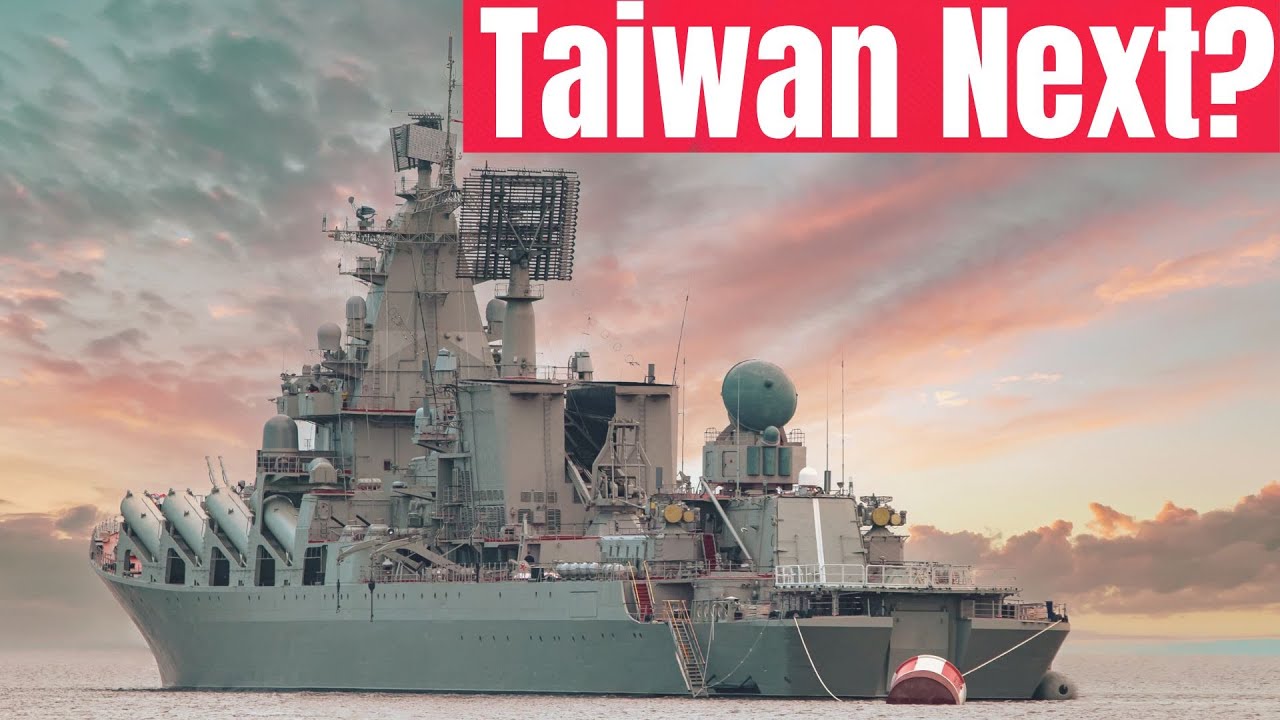
In this livestream, Dr. David Oualaalou critiques the European Union foreign policy chief Josep Borrell’s recent call for EU member navies to patrol the Taiwan Strait. He questions the timing and strategic logic, arguing the move reflects EU dependence on US policy and a short‑sighted, fragmented Western foreign policy. Oualaalou weaves in a broader geopolitical tour: he explains the complex, multi‑agency US response to the Sudan crisis, highlights South Korea’s push to "internationalize" the Taiwan issue, notes a covert French frigate transit through the strait after President Macron’s China visit, and discusses Guatemala’s controversial diplomatic trip to Taiwan amid shifting Latin‑American alignments. He also examines the semiconductor decoupling battle, warning that US‑EU export restrictions may accelerate China’s chip‑making capabilities. Interspersed are community interactions, a brief health segment on cumin’s antioxidant benefits, and calls for audience engagement. The overall narrative warns that EU naval involvement could heighten tensions with China, expose Western policy incoherence, and risk miscalculation leading to broader conflict.
Chapters
All right, hello everybody and welcome to Geopolitical Trends. My apologies for this slight delay because I had a hard time connecting. Uh, it's somehow it says I couldn't connect the device, whatever. So anyway, I am here, so that's what matter. Please, uh, uh, give me a thumbs up if you hear the sound because I want to make sure Earlier it wasn't working, so I want to make sure you guys can hear me. If you would be kind and just give me a thumbs up, I will truly appreciate it. So to make sure that you guys can hear me, okay, let me see if there is a thumbs up from anybody here. Oh, thank you, Abun, appreciate it. Thank you so much. So anyway, so good to be with you guys as always. I know it's been few days I was moving around this part of the world and just to find out the truth, shall we say. So anyway, before I delve deeper into all this, first of all, I'm in a different location. As you can tell, I moved away from the other place. So first of all, I want to thank all— thank all— thank you all for joining me here. I know you give your time to listen to what I have to say, so your time means a lot to me. So I want to also thank the members, uh, and the supporters, and I want to give shout out to Ariel, uh, Popper for us being a new member for the channel. And please, if this is your first time, uh, landing on, on my channel here, please make sure to subscribe. I would truly appreciate it. So, so today's topic, what I'm going to be talking about is the recent statement which was yesterday by none other than the European Union foreign policy chief Borrell, who is now calling— get this, guys— calling for the European members' navies to go all the way to the Taiwan Strait and patrol that one. How insane this is! So, so this is why I wanted to come online, uh, on the air here and share my assessments with you about that particular issue, you know. And, uh, there are always 2 or 3 questions that I will start with for you to think about. First of all, you need to think about the timing of the statement. Why is it now? And second, is this statement send a sort of a strong signal to where the next conflict is going to be? And I am not surprised. I said this, this before. So, and this is something that I'm going to be discussing with you as we move forward here. But like we always do, we'll do a tour around the world. I'm going to share some images with you as far as what's going on around the world. So first of all, let me— oh, first of all, let me say thank you to Osiris. Great, I appreciate your continued support. It, it, it means a lot. I truly appreciate it. So, uh, let me share one particular image with you here. Like I said earlier, this is what our topic is going to be about, the call for now patrolling or policing the Taiwan Strait, which is ridiculous. So anyway, let's talk about a tour around the world, and I'm going to start with— actually, I'm going to only talk about one particular topic but from three, three angles, just to share the ideas with you. And this one has to do with Sudan, what's going on. I'm sure you're aware of what's going on. The reason I didn't do a live stream on it, but there's a lot of moving parts into it. And I didn't want to just cut the corners and do a brief livestream on it. But if I don't— if I don't do full research, I'm not doing the livestream because I don't just kill the time here. You all know where I stand on certain issues. So, but I'm sure you're aware of what's going on in Sudan, and this is an image of the French, uh, airplane, uh, sort of evacuating the French citizen Here is another image. This is an Italian aircraft, this equivalence of C-130, evacuating the Italian citizens. And here is the one about the United States. This is the, uh, what we call it, the, uh, the part of the mission, the diplomatic mission of the US. Well, where is this? In Sudan, in, in Khartoum to be exact. Why is this important for you to know? The reason, because the foreign policy is not dictated by one entity within the US. You're looking at State Department, you're looking at a Department of Defense, you're looking at the National Security Council, and you look at also at AFRICOM, the African Command Center. So then in addition to the White House, which means what? There are 5 elements involved in the policy. You wonder why there's chaos in foreign policy, US foreign policy that is, and it always has been. This is nothing new. This is nothing surprising. You know, our phone policy is chaotic, and I don't shy away from saying it. You know, I know some people don't like me saying this kind of stuff, but I don't give a damn about what they think. That's how I see it. That's how it is. You don't like it, get over it. Simple as it is. So it's because it's coming to my attention that now it's becoming like, you know, well, you are too critical of this or critical of that. No, no, no, no, no, no. When it comes down to truth, there's only one truth. You can't be cherry-picking about this kind of stuff. That's the reality. That's the truth. That's what it is. So you don't like it, get over it. That's how life goes on. So it's just, you know, I have no tolerance for that. That's just me. So anyway, let's think positive, right? Let's talk about a health tip for you for today. Well, today Oh, I got a picture for you guys here. Can you guys guess what this is? So if anybody can type in on the chat room before I say a word, quickly, as to what it is. Oh, let me say thank you to Andrew, Andrew RE. Thank you so much for becoming a member. So I truly appreciate your support. So, all right, what is this one here, guys? Can anybody tell me? You got it, Prison Memoir, it's cumin. Now, why is cumin important? It is very important because it's rich in antioxidants. You know, the cumin seeds contain natural compounds called the flavonoids. That was— is, uh, it's not— and I'm not good in chemistry because they are part of the chemistry into all this, you know. And this has some sort of a protective antioxidant that really the body needs, because these antioxidants help reduce the risk of chronic disease by minimizing— get this, guys— minimizing the damage done by free radicals. I remember when I was a kid, you know, really way back, I remember when I would get like some digestive issue, whatever, my mother will give me a spoon of cumin and she said, just take this with a sip of water. And you guys won't believe it, I'll take this within about 40 minutes or so, I felt fine. So this is why I remember cumin. I, I use cumin a lot. So there are 3 other things about cumin that you need to know. It's, it, it could help you in preventing cancer. Yeah, because what does Big Pharma, uh, uh, when it comes down to cancer, they pump more, more, uh, uh, medication, first of all, and second has to do with chemotherapy. Cumin is your natural way, you know. Cumin also, as I said earlier, will aid and help you in the digestive system because the black seeds in cumin contain a number of active compounds, and one of them is called, uh, mucuin— mucinon— something, you know, very, very specific one. And these will help a lot with the digestive food and so forth. And the last thing about cumin is it does help with diabetes. So that's something you might want to sort of think about. So anyway, let's talk about our topic here. Where is my image? I gotta remove this one here. Let's talk about our, uh, topic of the day: the European Union calling for the Taiwan, patrolling the Taiwan Strait. You know, it looks like to me, and again, this is my personal opinion, that the European Union cannot free itself from the US dominance. You know, it's just having a hard time. That's just the way I see it. It can't free itself because now you hearing that the foreign policy chief of the EU, Borrell, that is who called the European garden, by the way, and the rest of the world jungle, Now he's advocating for, how about if we send the European Union navies, the member that is, send them all the way to Taiwan so they can patrol the Taiwan Strait. You all see what's coming, I'm sure. I'm sure you do. You know, of course this is not going to settle well with China, let alone that even, even South Korea South Korea itself now is proposing— and get this, guys, I read the article and there's specific term that's been used and I put it in quote— internationalize the issue. So you ask yourself, why the term internationalize? Because once you internationalize an issue, you bring in more countries' involvement. You bring in the UN, you bring in whomever, and that becomes an international issue rather than it's a regional— Taiwan Strait and South China Sea and all that, it's a regional matter. You know, other countries, you know, why the heck Europeans gonna go all the way to patrol South China Sea? What for? And their arguments is under freedom of navigation. Hold on a second. Hold on a second. How would we feel if some country— hey, doesn't matter who— come over to our, the coastlines of the, the near Florida and, and just patrol over there? Or go to the Gulf Coast of, of, of Alaska and start patrolling there? Or San Diego in California and start patrolling there? So, John, this is what makes you think about Truly, like I put in the title, did the European Union lost its mind? You know, I'm being sarcastic there. You all know the truth for that. You all know that the European Union lost its mind way back when, especially they embark on these sanctions and, and the, the blind support for Ukraine and so forth. You all know this one here. Let me say thank you to KD. Oh, KL, thank you so much for your super sticker. Truly appreciate it. So, and that becomes the logical question to ask, you know, losing their minds. Yes, they already did. It's no surprise. And again, I use the term for specific reason. I don't, like you say, like, you know, I don't say things randomly. There is a reason why I say it. But also it highlights to you how fragmented, how ill-conceived, how sort of chaotic the foreign policy of the collective West— this is not about just the Western, uh, the EU, this is collective West, all of it— they don't understand how to react to events anymore. Because the European Union— and I did find the quote as to what the justification for them is. Because when the European Union chief, foreign policy chief that is, uh, Joseph Borrell, is calling for, uh, Europe strong— guess the word here— strong presence on the Taiwan issue. Yeah, because those words, by the way guys, those words are measured, you know, those are not some random whoever composed the statements knew what they are talking about. And this is again where China found it very ironic that South Korea will go ahead, okay, and support this kind of nonsense. Yeah, because that's what happens with South Korea now calling for the internationalization. And I'm sure you are aware of the trade that's going on between South Korea and China. Yeah, despite what you hear, there is a trade going on. Samsung has major markets in China and makes you just wonder. Like I said last time, you always take this stuff within a greater— whether you always take this within the bigger picture, okay? And the bigger picture is, you'll remember what happened a month and a half ago when the NATO Secretary went over to Japan and South Korea. You all know what just happened a few weeks ago with the US expansion of 4 bases in Philippines. You all know what's going on with the, the drills between South Korean and US forces. All this comes within that context, and China didn't hold back by issuing warning to South Korea. I just once again, I found myself, who's advising those presidents? You know, it's kind of, uh, when you advise a president, you can't be thinking about in terms of, uh, what sounds right, what sounds intelligent. You have to think in terms of what's right as far as the future of a country. And this is why I feel comfortable saying we have amateurs when it comes on, at least for us. I can't speak, uh, about South Korea or— or China or Japan or Philippines. They have their own people, they have their own whatever. So for us, I am comfortable saying that Washington is full of amateurs, you know, because they couldn't even think in terms of long-term impact. This is another consequences to that. And the most important, like I said at the beginning, for those 3 questions, you need to think in terms of the timing. What does it suggest to you? You know, what do you guys think? What do you make out of the timing of all this? Make sure to leave me some— just comment on the chat box, just your thoughts. And we are here to learn from each other. Remember, it's a community. We're learning from each other here. So, so what I found very, uh, disturbing is how the justification of the European Union as far as the idea of why Europe has to have a strong presence in the, uh, South China Sea, or the Taiwan Straits, that is. Excuse me. And the justification based on what Borrell said in the statements, and I quote here, let me get the quote here. Yeah, Europe's strong presence on the Taiwan issue, stressing that the issue concerns us in terms of economy, trade, and technology, end of quote. Now, how on earth would you be thinking, rationalizing, if you are concerned about the economy, if you are concerned about the trade, if you are concerned about the technology, why would you go and foment tensions in the South China Sea? You know, If you are to think about the economy, the trade, and technology, why would you embark on a blind policy following as far as sanctions regarding the Ukraine conflict? Why would you jeopardize the well-being? I mean, I am, I am here, I am on European ground, and I can see, and I talk to people, and I'll share some pictures with you later on, you know. You know, some are not in, in, in, uh, what's the word I'm looking for, in line with what the government's saying here. You know, it's worse in Germany. You know, and I talk to people in Germany, they're just next door. You know, they're thinking differently, like almost like, what the heck with this government? They couldn't understand what they're doing. This is again another example of that. The whole EU will be pushed into all this. And this was, by the way, published on a French paper called the— it's called Le Journal du Dimanche, Sunday Journal. That's, that's what it is. And what I found again, and I read the article, you know, uh, what I found very interesting is that the quotes— and I decided to share it with you— it says, and I quote, Taiwan is a fixed part of our Get this, guys: our strategic surrounding to ensure peace and defend our interest. And this strait is the most strategic in the world, especially with regard to trade. We must be present there through freedom of navigation operations, end of quote. Yeah, that's really interesting. It's interesting, but it's absurd. You think about it. And again, whoever is advising the president, the, the EU chief, or the French president, or whomever, they don't seem to think far enough, what we call the strategic thinking, because that will be the role of one advisor to us. You know, Ukraine is no China. And this is again where the West, it's not evaluating, it's not assessing what are the risks for engaging China in a conflict. Because to me, this kind of statements, it's an indication of that short-sightedness when it comes down to really the depth of understanding what geopolitics is all about. Because that is what it's going to lead to when Europe is saying, well, we have to protect our interest over there. Well, hold on a second. Don't you have any issues right here on the European continent that you could fix first, especially with the energy, especially with infrastructure, especially with how people now are struggling to a degree? Why are you going to the other side of the globe to be dealing with this? That just doesn't make sense. Common sense would suggest something is way off. And that's exactly what it is. So, oh, let me say thank you to, uh, Elbon. Thank you so much for your super sticker. I prob— I really appreciate it. The problem is values diplomacy. Thank you, Dr. O. You're most welcome, you're most welcome. And you're absolutely correct, Elbon, because the diplomacy is not about just, you know, shaking hand, snapping pictures with the head of states, whatever. Diplomacy is an art, and the art has to be refined and redefined and worked on over years and years and years. Doesn't happen overnight. You don't read a book and you start calling yourself an expert. You don't read an article and you call yourself geopolitical analyst. You don't travel to a country once and you said, I know this country. No, no, it's more than that. Those what I call wannabes and advisors might be the same, fall in the same category. That, that's the sad part, at least in my opinion. So understanding, uh, again, how this all evolved and developed— well, here is the thing. That was not disclosed, by the way, when the French president was in China. Well, what happened 2 days after— get this, guys— after, uh, French President Emmanuel Macron went to China in early April? What happened at that time? And it was not disclosed because I looked into this. It was not disclosed. A French surveillance frigate crossed the Taiwan Strait while on its way from Vietnam to South Korea. It was not disclosed, and, and maybe I missed it, but I looked not just in, in, in U.S. outlets where I looked around different, and I look for information. I know where to look for information. I didn't find this, you know. That's what I found very interesting. So you think of it this way: if a French frigate was right there just after the French president's visit to China makes you just wonder, was the European statements already discussed before behind closed doors? It's fair question to ask. Was this discussed or pressured by the United States? It's also fair question. Because remember, two things happened last week. One of them has to do with the statement from none other than the Secretary of Treasury, Janet Yellen, that is calling for the need for China to cooperate with the United States. Well, hold on a second. Well, it's, it's, it's— I'm not laughing out of laughing, you all know this, guys. I'm laughing out of stupidity. Because that's what it is. How can you dictate the terms, then all of a sudden you reached out because, well, we need to have money, borrow money from China, or we need China to buy our debt? That just doesn't make sense. And you are saying to yourself, like what Secretary of State Blinken said, he canceled his trip to China. Hold on a second. You weren't even invited to China. First of all, it was no record of the invitation. And second, China never, never officially invited Blinken for a visit. So why are you coming up with just making up statements? That's not right. Once again, in diplomacy, accuracy and truth matter. And that is part of where this problem is. Now what you're going to be hearing moving forward, mark my word on it, one keyword you're going to be hearing a lot from Western media, it has to do with— can anybody guess? Freedom of navigation. That's the term you're going to be hearing a lot. Mark my word on it, it's going to be coming. So now there is another issue, Lumi Large, that just happened. Beside the, uh, the China and South Korea trading barbs in the wake of the, uh, interview of the South Korean president, you know, which was earlier this month, by the way. Uh, this one has to do with none other than the Guatemalan president, who is now on an official visit to Taiwan. Yeah, President Alejandro Giammattei ignored Beijing's warning and flew directly to Taiwan. You know, makes you just wonder once again, is the country of Guatemala was pressured behind closed doors? Knowing what I know about the history of the US in Latin America I won't be surprised. I used to go to travel to Latin America. The last trip that I did was to Bolivia and La Paz a few years ago, and it kind of— at that time it was, uh, Morales was still the president, and tensions with the US and all that. Yeah, you could just see. But at the same time, you all know and witness the change that's taking place in Latin America with now BRICS. Especially with China— with Brazil pushing for other countries to reconsider where things are headed economically. So the president of Guatemala, he's in Taiwan today and tomorrow, I think till the 26th or 27th, somewhere around there. That's what I, I, I, I found out. And of course He is going to beg for some money. Well, Taiwan decide to give him $1.5 million to upgrade the air conditioning system. You, we don't know, you know, $1.5 million, what is that? That's just like a drop in a bucket. So, but again, the trip in itself holds significance because in international relations, context matters. You put that context into another Latin American country recognizing Taiwan as a sovereign state when we know Taiwan is not a sovereign state. There is no such thing. That's like for us in the United States, we're saying Hawaii is a sovereign state, even though historically it was at some point. So the interesting thing about Latin America, you think about Nicaragua, you think of about El Salvador, you think about Panama, and you think about Costa Rica. They all sort of severed their ties with Taiwan and moved into strengthening ties with Beijing. And all this happens between 2007 and 2021. So, so the question that many of us needs to be asking is whether, uh, within the context of all this, that now the EU is stating that we might have to consider policing or patrolling the Taiwan Strait. You know, my big concern with that, if one shot is fired by mistake it will be too late. That's it. That is where my big concern— a miscalculation. Miscalculation is going to lead to a really, really out of control outcome. Not the US, not China, not Taiwan, not South Korea, not Japan, not anybody can control. And this begs the question for those now in the West, collective West, calling Because some of us here in the US are asking— I had some conversation with some intelligent people that they don't get emotional about this kind of stuff, and they don't think about it like criticizing the US. Rather, it's being pragmatic in assessments. And the conversation that I had, which was very enlightening, enjoyed it. This conversation lasts for 2-3 hours some at a time. You know, the key question that came out was about whether many of us should be asking ourselves, should the US get involved in a devastated war on behalf of Taiwan? And the other question is, do Americans truly understand what a conflict with China will entail? And I won't say just the Americans, I would say the collective West. Because those are the right questions to ask, because it's very important. Because you can't implement policy like this, because this now it's a matter of policy. It's not implemented yet on the ground, but if it is stated as policy, you can just see they're going to be working on the, uh, the, the, the fine prints, the details, that is. And this is why I take this opportunity to say I will not stop from criticizing when my country, the United States, does wrong, whether some like it or not. It's irrelevant to me at this point. It's because, you know why? You know why? If you couldn't stand for something when it matters, then what's the point? You can go through life, it's just like a dead body moving around, dead man walking as the movie goes, whatever, because you have nothing to stand on. You know, you go through the routine, you know, what's the point? What is the point of your existence if you couldn't ask questions that matter? Human nature, what will become of humans? How many wars were there during last century? How many died from genocide and political oppression? Did we ever learn from those? When it is the right time to step in and say, no, no, no, no, no, no, no, this is wrong, this policy is wrong and leading us to serious consequences. I am gonna voice my concern because I know something about It's not going to settle well with everybody. I don't care about everybody, whether they like what I say or not. It's irrelevant to me. Why? Because truth matters. That is what's important. And like I always say, guys, we are all just passing through here. You ask yourself one day, what have I done for humanity as a whole? Why have I contributed? If it is just matter of, you know, go to bed and wake up and eat and move through the pro— the routine and go to bed again, what's the point? What is the point of it all? But again, I can't speak for others. I speak for myself. And this is why I have no tolerance For those who think that, oh no, you criticize the US, whatever, hell with it, because truth matters. So let me see. Yeah, I want to see the answer to that question, guys, if you guys did, as to, uh, where do you think the timing of this was? The timing coincidence, or was it very strategic? Because to me, you know, I, I, I think different. But again, this is my opinion, not, not yours. I want you to reach your own conclusion because that's what this community is all about. I can't tell you everything. It's not I don't want to. That's not the point. I want you to reach that conclusion yourself because it belongs to you. That outcome you reached, it's because of your own thinking, not someone else says because Dr. O said so. What? No, no, never let it be said that because Dr. Oualaalou said this, he said no. Because to me, that's what the role of an educator is. Because I want you, when you leave this live stream, you go to your personal life, whatever, you are left with more questions than when you came in. Because if you don't, then I have failed you. I have not achieved the whole purpose for why you're here. That's how I look at it. So, all right, let me see. Let me ask you guys again another question separately. Let me know where you are joining me from. I always like to take a look at that. That's interesting how somebody spelled my last name. Oh la la la. Yeah, Oualaalou. So, but hey, it's just community. We are all here to learn from each other. So All right, let me— I'm gonna take a look at some of your questions here, guys. Oh, David K, you said, I like Dr. Oualaalou's new livestream background. That's the paper wall in the— where I am staying at. So that's how— it's an incredible art, you know. I'm very impressed with this one here. So it's not a background on a computer. So All right, let me go back to the top and take a look at some of your questions, guys, and, uh, and that would be it. And by the way, uh, maybe, maybe this is my last, uh, live stream from this location. I will be going to another continent. I can't disclose this at this point, but you probably— you will be hearing from me once I arrive to my final destination. And I will let you guys know. All right. Oh, Iceland, uh, I am so sorry, I can't pronounce that name, so I don't want to butcher it. So good to have you. Uh, Denmark, uh, who is it from Denmark here? Penguin from Denmark. I enjoyed my time in Copenhagen back then. Uh, South Africa, World of Luxury. By the way, you guys gonna be looking at the BRICS upcoming summit in August, not May, you know. Malaysia, Jonathan from— Jonathan, Malaysia. Germany, Erbun, good to have you, Erbun, as always. Who else here from Malaysia is Juniper Lee. Love from Indonesia from Herman. Thank you, Herman, truly appreciate it. Tom Putra from Jakarta, Indonesia, good to have you. West Bengal, Afif Khan, good to have you from India. Pennsylvania, Penn— let me see this one here, you know, Penn-daluminium from Pennsylvania. I don't know if I mentioned that I went to school in Pennsylvania, so Lancaster, Pennsylvania, that's where I was. So, uh, Steflin from Canada, good to have you. Oh, Marshall Tupola from Poland, whoa, good to have you. You know, as you may know, I'm in Poland right now. So, uh, uh, who else here? Godspeed Max from New Jersey— rather not New Jersey, from Jersey. Good to have you. Uh, okay, uh, and John Adib from Malaysia. So, all right, let me take a look at one question. How's, how's, uh, T-Boy from UK? Good to have you. Let me see a question here from Afif. It says, what role does US and Israel play in Sudan conflict? Uh, it's an interesting question. Of course, the statement coming out of State Department earlier was that no, no, no, no, no, US personnel were not evacuated, whatever, which a lie. Uh, like what they expect, you know, they're not going to say the truth anyway. Uh, the concern is not about whether Israel— as a matter of fact, Israel volunteered get this, guys— volunteer to mediate between the SRF, the, uh, Support Reaction Force, and the Sudanese Army. But here is what's interesting, and I— that's why I didn't want to do the live stream on it, because it requires some research. So be careful about what you are hearing or listening on YouTube from whomever. Just be aware, because there are the complexity of this issue. There's a lot of moving parts. And weapons is flowing into the country from different parts of the world. You know, at the heart of it is not about just the SF, the, uh, Support Reaction Force, and the army. At the heart of it is the presence of Russia and China in Sudan, which the US wanted to counter. And of course, with Israel has to do with Ethiopia. That's why It's very complicated, and, and I rather wait till I get the opportunity to dig into the information before I share the knowledge with you. So the question is, yes, there are some role involved into those two countries. No, uh, all right, let me see another question here. Uh, oh, multipolar. Thank you so much for your Super Sticker. Multipolar, by the way, guys, has been with us since the beginning, you know, and I can't thank you enough for your support, man. I truly appreciate it. Uh, hang tua from Melbourne, good to have you. Speaking of Melbourne, by the way, guys, be on the lookout for a video soon. We're gonna be releasing it of an interview I did with an Australian politician. I don't want to disclose the names because I don't want to spoiled it for you, but, uh, it's going to be released soon. So I'm going to do my last question here for you guys, and I'm going to check off here. Oh yep, from Bangkok. Yep, I enjoyed my time in Thailand. Wonderful people. As they say in Thai, kap khun ka, thank you. So all right, this question from David K, and that's the question I'm going to take here. Will the US chip, rather, backfire and cause China to more quickly develop its own chip manufacturer abilities, which will ultimately make China more independent from the West? Uh, it's an interesting question. I did a video on this, David. I don't know if you got a chance to look at it. As a matter of fact, we did one— I did one with Ross way back, and I did another one, uh, uh, just recently, about 3 months or so, uh, in which I disclosed that China now is able to manufacture the 5mm, uh, chip. You know, it's working towards the, the, the, the high standard is the 3 nanomillimeter, that is. China is already developing 5, and it's working towards the, the 4, I think., the three, I didn't find anything concrete that tells me China has developed that, but they are on their way for that. You know, the US already understand the consequences of that. We already know this. This is why we, the United States, forced the Netherlands, uh, not to sell certain key technology equipments, that is for microchip, to China. We forced, Netherlands to do that. So, and, and right there, that tells you where the European Union is as far as its foreign policy. European Union doesn't have an independent foreign policy, you know, and I just don't see them how they're going to develop one because they just can't. So, so what it's going to do is that the US is going to have a hard time moving forward because China will be, you know, self-sufficient. And again, I am not defending China here or speaking on behalf of China, as some might have think, you know. I'm saying what is pragmatic and what is realistic, you know. There will be— they— China will be able to develop its own and be self-sufficient the same way they did with the space when they developed their own a space station in a matter of 1 year and a half. They put the whole thing together. So what makes the West think that China will not be able to develop microchips? That's, to me, shortsightedness of the West to think of this. And this is, again, I don't understand who's advising the president or whomever, not thinking in terms— won't you think that cooperation will lead to a better outcome than confrontation? That's the way I see it. So anyway, guys, uh, I'm gonna go all the way up to the top here. And okay, oh, Koho Choi from Malaysia, as always. Koho Choi has been a, a member for the channel from way back. So we thank you so much for your support. David Oualaalou from Indonesia, thank you so much for your continued support. So anyway guys, uh, as I said, uh, this, uh, next time you will be hearing from me will be from a different continent. And, uh, so I have to wait till I get to my final destination, and, and there's a specific reason as to why I'm going there. And I will be sharing certain information with you. As always, guys, I appreciate your support. By the way, before I forget, I am going to put a, a survey question for you, uh, because, uh, we were talking with the team as to creating, believe it or not, a health channel for you guys. Will you be interested in that? And again, it's not going to be just me. Because those are just tips that I share with you. If it is going to be involved, it's going to be with someone that has an understanding of, of chemistry and all that stuff. So, so that's just food for thought. Let me know your thoughts. But I will put a survey for that because I figured I'd rather create a channel where I will directly take one specific health tip and will detail on it for, uh, 20, 30 minutes, whatever the time is. So just let me know what you think, guys. Well, as always, I truly appreciate your support, appreciate you being here. Your time means a lot to me. And as always, remember, geopolitics impact your daily life in more ways than one. Till next time, guys. Bye-bye.
More from David


Beyond the Single Actor: Why the Gulf Isn't Choosing Between the US and China


Iran, Iraq's Militias, and the Houthis Are Coordinating! This Changes Everything




Who Controls the Next Decade's Resources? Latin America and Africa's Geopolitical Crossroads

The Chokepoint Trap: How Washington's Stupidity Triggered a Cascade That Now Controls the World

Trump Spooked as IRGC Unveiled dual-use SLV, Deployed Ghadir Mini-Subs & Hinted at Tactical Nukes!
