India-China MUST Settle Border Tensions! Here’s why!!!
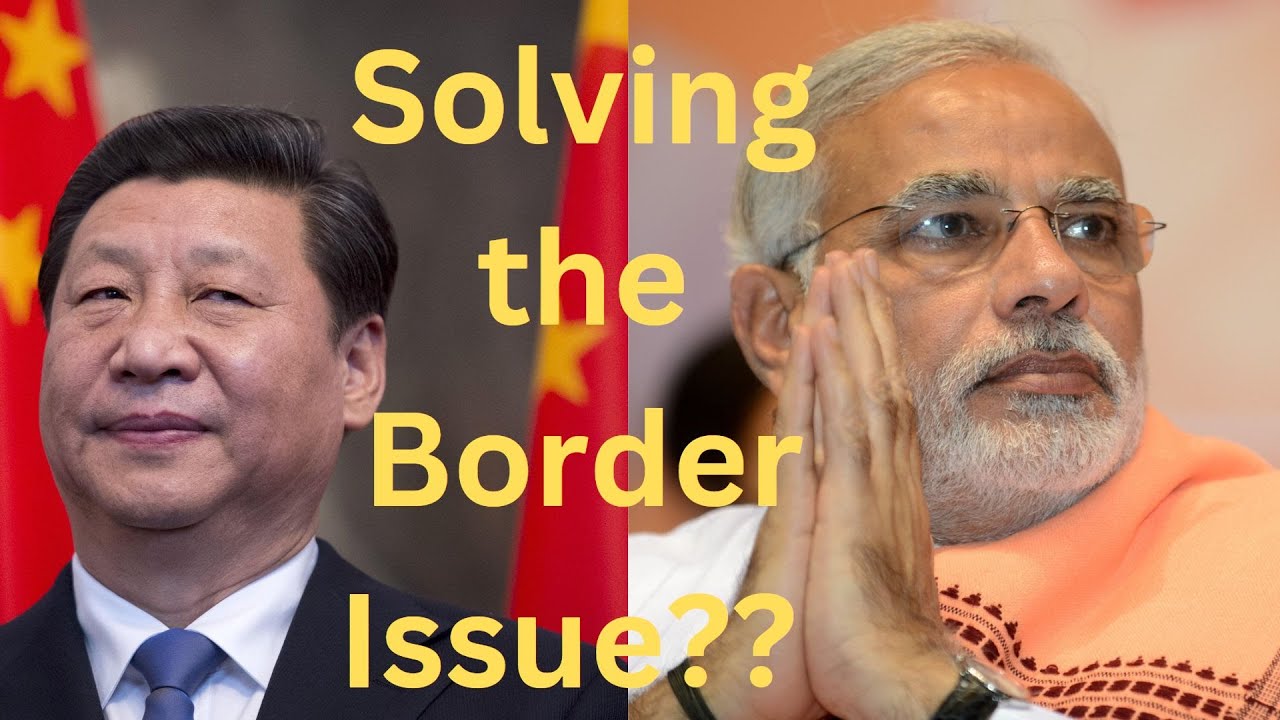
David Oualaalou breaks down the India-China border conflict along the Line of Actual Control and McMahon Line, exploring why tensions matter for BRICS and regional security. He connects it to broader geopolitical shifts including U.S. involvement in Ukraine and Turkey's military developments.
Chapters
Hello everybody and welcome to Geopolitical Trends. My name is David Oualaalou. So good to be with you as always. So excited to be here for this live stream and I have a, a great topic for you here today. So Before I'll do all this, like we always, I ask for to make sure the sound that you guys can hear me. So if any of you can give me a thumbs up, I will greatly appreciate it because I can't tell from here. So, so far everything is working, but I want to make sure. So, so if you will be kind, just give me a thumbs up, let me know that the sound, that you are able to hear me. Sounds good. The imagery is blurry. Thank you, Hong Long. Yeah, it's the— yeah, there's not— I mean, I don't— I only have one specific camera that I use for this, so it's— it is what it is for where I am till I get back home. So, but I'm glad at least you can hear me. So anyway, let me, uh, first of all, thank the members, supporters, all of you for your continued support of this channel. So, because without you, uh, there would be no channel, and you guys know this, and, and I am very, very grateful. If this is your first time, uh, watching my channel here, please make sure to subscribe, and this way you can, uh, support this channel moving forward. So, so today's topic, what we'll be talking about is It just— I was, I was gonna talk about the Singapore and US, uh, I'm sorry, Singapore and China military exercises, but this came under my radar yesterday and I kind of like, wait a minute, I've been reading on this for the last few months, but this is surprising. So why all of a sudden China-India dialogue stalled by the Himalayan conflict, or the border that is? So because the question is Why all of a sudden? This is the question you need to ask. Second question is the timing. Everything within geopolitical arena has to do with the timing. Nothing happens in a vacuum, you know. The third one that I am thinking of as geopolitical analyst is the ramification if this issue is not resolved. And this is what I am going to provide you some insights and assessments about. In addition to providing you a historical snapshot, because you need to know the historical background for those who do not know. So, uh, but before I'll do this, I'm gonna do a tour around the world like I always do with you guys. Let me share some pictures with you here. So, oh, oh, Osiris! Osiris, great, thank you so much for your Super Sticker. I truly, and I mean it, Osiris, you know, I can't thank you enough, man. I truly appreciate your continued support. You know, it, it's, it's all— I'm, I'm very grateful. I just want you to know that. So, uh, let me share some images with you guys here because you need to know as to some place what's going on around the world. So our topic, like I mentioned, it's, uh, okay, why it's not showing up the image here? Here we go. Uh, it's, it's internet connection is slow here. So this is basically what we're gonna be talking about, and I am going to provide you, uh, insights on all this. So, well, first of all, uh, one of the topics that's going on around the world has to do— not a topic, but some sort of an information pertaining to US Air Force. Yeah, here's the image for it. This one, guys, has to do with the, uh, United States Air Force Command in Europe. Confirmed now. It's been a while. I've kind of, uh, knew about it at the time, but it just wasn't out. So they confirmed that today that American air tanker began working in their new main location. And guess where the location is? Is in Poland. So because usually this, uh, the, the, the air fueling tankers are in Germany But now they are in Poland, and it was under the name of— it has a special op name, code name was named Copper Arrow. That was the operation was under. So basically what it is now, it demonstrates that Europe wants sort of to show the strength in its eastern flank. That's usually what it is. But what's interesting about these guys is the— when I was in Poland and I crossed to the— I'm going to share a picture with you, uh, when I was crossing the border. This is me looking at these images you are looking here. Those are trainees that they were coming from either Poland or Bulgaria and crossing into Ukrainians. To me, they did look like Ukrainians. You know, I've been in Eastern Europe, so I can know what to look for. And there were American presence, US soldiers here, uh, sort of, uh, managing the, the crossing over to Ukraine. So this is why, uh, the fueling tank is in, in Poland. No, the second topic has to do with this one here. This is about Turkey. Turkey is now, uh, moving forward. The president Tayyip Erdoğan revealed the name of the new fighter jet. It's called Kaan. It's Q-A-A-N that Turkey now began producing. Yeah, I don't know why the image is not uploading here, but I have it on, so it's— the internet is slow. Show here, so it is what it is. Uh, it might show up later. Uh, what's interesting about— here it is. This is the image of the Kaan, again Q-A-A-N, which is the new Turkish fighter jet. This one is the 5th generation. So, uh, but this is not about that. It's about now that Turkey is moving into the production of defense industry. And this will make— with this production, it will make Turkey now one of the 5 countries producing this type of 5th generation fighter jets. So that is what's important about it. So, all right, on a health segment, yes, I do have something for health for you here. So here's— I'm uploading, uh, the image for you here. Uh, this one is about You guessed it, guys. That's about almonds. Almonds are good for you. Why is this? You know, you may ask, well, almonds sort of have really a lot of nutrients on it. So 1 ounce, 1 ounce, or about 28 grams of serving of almonds will have about— get this, guys— 3.5 grams of fiber, okay? 6 grams of protein. 14 grams of fat, which is, by the way, the good fat, the mono, uh, unsaturated fat. It has about 48% of vitamin E, which is, by the way, that's your daily value of it. It has about 27% of magnesium. Yes, uh, I'm sorry, 27 of manganese and 18% of magnesium. So, uh, let alone it has also a decent amount of copper and vitamin B2. Yeah, this is very, very, very important. So, so, so if you, you like snacking, snack on almonds and walnuts, stay away from chips. So anyway, let's dive in into our topic because it's a very I'm going to use the term very concerning for me personally as geopolitical analyst. I am thinking in terms of if this issue is not resolved, first of all, it will create an issue, security issues, not only in Asia but global. That's one. And second is going to hinder the credibility of BRICS—Brazil, Russia, China, India, and South Africa. Why? Because India and China, both of them in the same organization. Because the world will be looking at it and said, well, look, they couldn't even resolve their internal conflict, which is the border. That is, how can they project this credibility or cement their status on the global stage? This is why it's very, very important, uh, to understand what this topic is all about. So, and this one here, uh, I have another image that I need to share with you because you need to know who the key players here, uh, is this one right here. So yeah, those key players here, uh, this one here from the left, from the left to the right, this is the Chinese Defense Minister Li Shangfu. There's also near to him is the Shanghai Cooperation Organization Secretary General. Third in line is Indian Defense Minister Rajant Singh, and of course the Russian Defense Minister Sergey Shoigu, uh, or the day before, I think. Yeah, on, on, on April 29th, uh, that's what it took in New Delhi. And this was in the eve of that Shanghai Cooperation. So, so here is now the, the concern with this, you know, because now it looks like at least From where I'm sitting looking in, it looks like the mutual dialogue between Chinese Defense Minister, uh, uh, Shangfu and his Indian counterpart Singh in New Delhi on the eve of the, uh, Shanghai Cooperation, uh, organization sort of was, uh, how I'm gonna describe it, it was kind of tense based on the reports that I read. Again, I wasn't there physically, of course. But based on the report, and I read it from different sources, what I gathered was that, based on my own analysis here, what I gathered was the meeting was tense. What I have a question about, because some reports, like for example, there are reports coming out of Le Monde from France, uh, because they had their correspondent there, saying that the two sides didn't even shake hands. I put a question mark on that. Because if they really didn't shake hands, we're talking about a serious problem here. So the question becomes, like I asked at the beginning, the timing of it and what's really, really going on. So, so like I said, the reports that I read suggest that the Indian Defense Minister described the dialogue as, and I put it in quote, frank. So if it is frank, how come all of a sudden these tensions emerged? You know, which seems to me personally to explain it is underlying some serious issues there, because right after that, the defense, the Indian defense minister stated, and I quote here, I found the quote, it says the violation of existing agreements between the two countries— India and China, that is— has eroded the entire basis of bilateral relations. End of quote. Now, this is a kind of strong statement, and this is why I am putting a question mark as to how all of a sudden this kind of tensions flared up and emerged on the scene. You know, they had this disagreement, they had tensions, and I'm gonna tackle this from the historical aspect. But again, the timing of it— why now? That is where the, the key question that we ought to ask. So, so you start to— for those who might not know the background of it, what is the source of this tension here? Well, the root cause, without going into more detail because I will need more time to cover the entire historical time frame for it. Uh, the root cause basically is an ill-defined— yes, I will use the term that— ill-defined, uh, 2,100 miles long disputed border which was set by none other than the Brits back then. Because now you have rivers, you have lakes, you have snow caps along the frontier, which means what? That the line can shift. You know, today you have snow, that snow melts, it's like your house, the foundation shifts back and forth. This is part of one of the issues, and this is again what prompted the tension that brings soldiers face to face at many points, sparking confrontation. You all remember, uh, the tensions that took place in 2020 in 2019 and 2020. So, but there is another issue there on both sides, because this is not a just one-side issue. Of course, the politicians use this issue to push the votes one direction or another. We all do this, we do it right here at home. India and China will not be different because There is something called nationalism, and there are of course the tensions to draw attention away from domestic issues, which will be mainly on India side than it is on China. And if it were on China, I would say so. It's just we all know the economy in China versus the economy in India. So both nations are also competing to build infrastructure on each side. Yeah, in the literature, the Line of Actual Control, or LAC, that's how it's known. So India's construction of new road to a high-altitude airbase is seen as one of the main trigger for the clashes that took place in 2020. And I am sure you guys recall that one. So, so the next question becomes, within this context here, uh, let me see, because I am looking at a different screen here, uh, the next question that we're gonna ask is, you know, how bad is this situation right now? Because it is. So, and this is again, I personally I'm very, very surprised at the timing of all of a sudden the border issues coming up to the forefront again. So, so despite the military level talks, tensions continue, you know. And again, what signal is this sending to the rest of the world who might be thinking now, as the world shifts from a unipolar to a multipolar, about the role of BRICS. Because like I said last time, and I don't remember saying it, and I will repeat it for you guys, I said few months ago that the new multipolar system, it's not going to be based, or it is not based, or will not be based on ideology. Gone that era of the communism versus capitalism. No, no, no, no. The new multipolar system is and will be based on economic blocks. What do I mean by blocks? I'm referring to BRICS— Brazil, Russia, China, India, and South Africa. I'm referring to SCO, the Shanghai Cooperation Organization. I'm referring to RCEP, the Regional Economic, uh, uh, region. I'm referring to ASEAN. You get the idea. So if you have tensions persisting between India and China over the border, the rest of the world is going to be looking, well, how can we trust the BRICS to be or take the lead? How can those two organizations be in the same— be as team players, and yet they couldn't resolve the issue? This is where I see the problem. And again, this is what prompts that clash back in December 2022 for the first time in more than a year, because it happened before. And, and if you recall, and I think I found the picture, uh, of, uh, a town sector of, uh, Arunachal Pradesh. Let me get the image for you guys so you see what I'm referring to here. Uh, right here. Here we go. Arunachal Pradesh. This is on the eastern side of India. That's, that's where that image is. So, and the border aspects here, which, you know, it's just very, very, very serious concern if it doesn't get resolved, and it needs to be resolved ASAP before it's too late. This is why I, I was thinking about the title, and I had to think of something that will make meaning, that will make sense, and, and it dawned on me to write down now or never. Why I use the term now or never is because of the shifting global order, because the global order is happening, is shifting before our own eyes. So it is now or never for China and India to resolve this border issue once for all. So, so now the de-escalation of sort It took place, it has been taking place between both countries. And because, well, I remember the images of the, the, the Galwan Valley battle. You all know they were fighting with sticks, no guns were used. I'm glad they didn't, didn't get to that, to that level. So, and it became the concern seeing those images of, of India and China facing off, because it happened before that in January 2021, which left some soldiers injured on both sides, you know. And that one, it took place near the, what they call, the Indian Sikkim state between Bhutan and Nepal. That's where, where it took place., where these tensions happen. So, and it becomes now the question of, okay, now if we know a little bit about the background on it, where that line came from, who decided on that line, the line of actual control, which is a fair question to ask because we need to know how this line right here came to be. You know, was it approved by both countries, India and China, or was it just the Brits decide to do it themselves because they, because they feel like it? Like, it's no different than what the Brits did in, uh, in the Middle East, dividing the, the, the, the Middle East along the lines of religious and sectarian line. So, so that becomes another question of how did we came to understand the Henry McMahon Line. So the line of actual, uh, control was shared between India and China goes back to the British colonial era. That's how far back it goes, you know, when McMahon, McMahon Line was drawn in 1914, believe it or not. Between the borders of Tibet and India at that time. So China, on its end, has repeatedly protested the British drawing of the boundaries because it was drawn just willy-nilly, because that's what the Brits felt like doing. So McMahon Line— McMahon Line, the frontier between Tibet and Assam at the time in British India was negotiated by none other than— of course it was negotiated, guess who was negotiated between? Tibet and Great Britain, not China and Great Britain. So that to me spells trouble to begin with. So, and this was sort of negotiated between Tibet and Great Britain at the end of the Shimla Conference, which took place in October 13, then July 14 after that, and named— this is where that name came from, just for you two guys know— the name came for the— it was named after the chief British negotiator at that time, Sir Henry McMahon. So, so in this agreement, here is what happened. The border between the two countries, you know, was fixed by drawing a line That's exactly how it shows right here. That's how it happens. So by drawing the line on the map, here is what's interesting, and I know some, some, some historical facts have been twisted. After the first map I wish I have access to it. I don't here. After the first map, uh, uh, which came out on April 27th, 1914, on which the representative of China signed— that's what happened. The second map came on July 3rd, 1914, on which China refused to sign. On the status and boundaries of Tibet. You would ask the question, why? Well, the question— the answer is because it was on the ground that Tibet was not— was at the time subordinate to China, meaning it was not independent. And so if you are not independent, that's like the case of Taiwan right now. You know, when Taiwan says, "I am a sovereign state," no, you're not. That would be the same argument made back then. Tibet wasn't independent because it was subordinate to China and had no power to make or to enter into any treaties. Those are sort of the norm of the international law, how things are laid out. Once again, I find myself arguing in the case of Taiwan because it's a familiar case, you know, when those who argue Taiwan is a sovereign state, it is not because there is no international recognition of it. That's one. Second, Taiwan doesn't have any representation in the UN. Second. And third, you know, Taiwan still falls under the One China policy, which is recognized by majority of the world, countries around the world. So this is where that issue of similar what happened between Tibet and Brits when they made the, the treaty. Tibet was in no place to enter into a treaty. That's like for us here in the United States as an example let's say in the state of Alaska or California or Texas. No, let's just take the example of California. California will enter into a treaty with Mexico. No, it can't. Now California can have some sort of certain trade or whatever, but to enter into a treaty, that treaty will have to be ratified by the Senate in the US House of Representatives, in Congress, that is. It's no different. So, so this is where this McMahon Line defines now clear boundaries between India and China. And this line was determined once again by none other than Henry McMahon, you know, who was then the foreign secretary in the government of British India. So historical facts are important for you to understand the context of it. So the length of this line, which is about, uh, I think about 900 kilometers if I'm not mistaken, uh, but, but as of today, China does not accept that. So, so that leads me to go back to my original question. About what signal, or what sign rather, this is sending to the rest of the world that the countries are now considering joining BRICS. India and China. India soon will surpass China when it comes down to, to population size, but economically India still has a long way to go. And this is once again, I find myself, uh, uh, whomever is advising the Indian government, whomever is advising the Chinese governments, it will behoove both of them to sit down and really resolve this issue. This cannot be dragged forever because it will only create more tensions. Like again, The world is shifting, and the last thing you want is this kind of tensions persist between the two supergiants in that part of the world. So categorically, if we are to think the, uh, sort of the developments between of India-China relations depends, in my opinion, on having stability in that region, because you can't function when you have instability. You know, look at now the fomentation, the, the, the how tensions are being fomented in Asia with the Taiwan issue. Look at now South Korea just approved about allowing the US consideration of nuclear submarines. Look at Japan, look at Australia, you know, the Philippines. Now you add this in the region, it doesn't bode well for the whole region and the global security for that matter. So now one thing I need you to understand, and again, I am being— somebody, by the way, put a comment way back that I wasn't being fair in my, in my assessments. I respect the person's assessment, or, but I disagree with that because I'm always fair and objective to the best of my knowledge, because that's what you will expect from me. So the way I see it is that China China is having a different read, uh, uh, uh, different than what India presented. You know, here is why. Because China has the same reading— get this, guys— when it comes down to this, about the trade and the conflict. So the border situation from a Chinese perspective seems to be generally stable as of today, you know. And this is where the statement by— and again, I read from different sources about the statements of the Chinese defense minister, and he argued that the bilateral relations should be separated from the border conflict. What do you guys think? Should the bilateral relations between India and China be separated from the border issue? Because remember what the Indian Defense Minister said, and I'm gonna go back here to my notes and share it with you, as when he said that he is concerned Yeah, he is concerned about the relationship, the bilateral relations. Uh, uh, he said, and I quote, the violation of existing agreements between the two countries has eroded the entire basis of bilateral relations. That is why I said earlier, that's, that's stretching it, that's pushing it too much. You know, is he stating this because of nationalism? He meaning the Defense Minister of India, because China has a different read. So this is where we have to think about the, the bigger picture to all this. So if the Chinese are saying that the bilateral relation should be separated from the conflict, Somehow it makes sense, you know, but it will make sense only in one condition: if there is determination and willingness from both sides, India and China, to resolve the issue. You can't drag it to the next 5 years or 10 years. So this is what I see personally, that both sides should somehow adopt or embrace or embark on some sort of a long-term view. It's because if BRICS is going to— BRICS, Brazil, Russia, India, China, and South Africa— if they are going to play a major global role, economic one, on the global stage, they can't have this kind of tensions exist. And this is why this issue of the border has to be put within its proper context, within the bilateral relations. Otherwise, I, I just don't see how it's going to be resolved. Because like I said earlier, remember two things always: nationalism and external— uh, what's the word I'm looking for— external support by entities who wants to ferment the tension in that part of the world. I, I can think of certain aspects of how some entities might benefit from it. You know, it's because it is a point of contention. This is no different than India and Pakistan. You know, if you want to create tensions between the two countries, just go to the border and create an issue there. And you all know what I'm referring to here. So, and this is where that separation of the bilateral relations from the internal conflict comes in. And this is why I wanted to address this issue because it really surprised me. I didn't see it coming, but it surprised me and makes me now think in terms of, okay, are there issues on the horizon for Asian or Asia as a whole security issues. This is what I'm realizing. It's, it's, it's, it's, it's on the horizon because we already seeing now, uh, tensions between— not tensions, actually, just some sort of scrimmages, if I may use the term, between China and Philippines regarding some, some maritime, some fishermen and so forth. I just read this yesterday, and I'm kind of like, no, no, no, they can't have this at this point. They have to resolve these issues. And all of a sudden, you got the border issue, uh, Ladakh area and so forth, or, or the McMahon, uh, borderline between India and China. It had to be— it has to be resolved. It has to be resolved. Uh, let me say thank you to— oh, Lover of the Russian Team, thank you so much for your super sticker. I truly appreciate it. Thank you very much. Uh, yeah, it's, it's very— Asia is gonna have, uh, countries in Asia, but mainly it's gonna be the likes of, uh, of course, uh, China, but the likes of Singapore, the likes of Philippines, the likes of South Korea, Japan. But Japan and South Korea, I won't count on them much. Uh, they're almost like— I, I feel comfortable saying they surrendered their sovereignty. No different than Australia. Speaking of Australia, Be on the lookout, guys, for an interview I did on the other channel with the politician from Australia. So it will be released tomorrow, I believe. So yeah, you think in those terms, okay, why these tensions are being fermented in that part of the world is for a simple reason or simple answer is because that's where the next conflict is going to be. You know, tanks are going different directions now. When it comes down to the, uh, Russia-Ukraine conflict. Uh, as, as, uh, that's the reason why I went there and crossed the border. Actually, I wanted to share with you, uh, let me see here if you can— I don't know if you guys can hear. Yeah, that's when I crossed the border. The, the, uh, the sound here, it's, it's internet. My apologies for this. So I'm gonna stop. This is the image of, uh, that's the distance to Kiev. And I think this was, was Lviv. It's close, but right here, Lviv. So it's close by. So, uh, and again, because what I'm seeing is What I noticed in Poland and when I crossed over into Ukraine, things are like, for example, recruits for Ukraine, that there's not enough recruiters there, you know, they're not finding people to join the cause, shall we say. This is where I saw those individuals, we're talking about a long line escorted by the US military, and I bet you two possibilities: either they were trained in Poland or were trained in Bulgaria. Those are the two countries. So I see the same pattern emerging in Asia now, you know. First, it was the AUKUS part. Second, it was the Philippines adding more bases to the US. Third is now South Korea allowing the US to enter into some discussions regarding the nuclear submarine. And we all know where this is going to lead to. But to add now the India-China border issue to the mix, it's just not going to be well. It's not going to bode well for both parties, and especially now if both countries belong— India and China, that is— belong to the BRICS. Again, it's sending the wrong message here. All right, this is what I have to share with you guys. I'm gonna take a look at some questions here if they are, but like always, if you would be kind and just type in where you are joining me from, I will really appreciate it. So I'm going all the way to the top. I don't know if you can guys hear, this is the call to prayer at the mosque and so forth. All right, let me see where you are joining me from here. Uh, uh, okay, I'm scrolling down here. And the other thing that I am thinking about, what I'm thinking about it, India has a lot to work on domestically. So focusing the energy on a border, I'm not saying they can just let it go. No, no, no, no, that's not what I'm saying. It's just instead of, you know, allocating resources and so forth, you— India can use that internally because, you know, the infrastructure, it is a poor infrastructure. You know, it's a reality. You know, even though India has a lot of talents, you know, it has the manpower, but there is not enough economic opportunities there. So And, uh, this is what I say. I hope they can work that out. So, uh, all right, let me see who's joined me from here. I know it takes a while to upload here because, uh, oh, I like this one here. Somebody put the Kingdom of Hawaii. That's interesting. And yeah, there are some in Hawaii, they think that way. Yeah. Uh, I always give the example of Hawaii and Taiwan. Can the US go and invade Hawaii? No, of course. Why is the same thing to those who say, uh, uh, Taiwan is a sovereign state? It is not. All right, so I don't see anybody, any, uh, mention here from which countries you guys joining me me from. So I'm gonna look for questions. If they are in, I will answer one or two. Uh, let me see here. Losio Delgado from Montreal, am I correct? Montreal. Okay, Boon, as always, originally from Malaysia, is from Berlin in Germany. Boone's been with us for so long. Thank you so much, Boone, for your continued support. Truly appreciate it. Steve from UK, good to have you, Steve. I truly appreciate your support. Uh, uh, uh, such it's, uh, Canada, Toronto, good to have you. Uh, let me see who else here. Hong Wong from UK, good to have you as always, truly appreciate it. So all right, let me see a question here. There's a question from Boone. I'm gonna look at this one here. Boone question: could this tension between India and China be fake just to string US along? I remember Modi and Xi have had many meetings. Uh, no, no, Boone, uh I won't consider it fake because if it is fake, it will have to— uh, you think about it this way. Let's say, for example, and this is just as an example, make it simple so I can explain it. If I am to create this problem for India and China, okay, hypothetically, I'm a third party creating that problem. Why would I create a problem that will be fake? If I couldn't benefit from it. The reason I'm creating the problem is because I want to benefit from it. So the more tensions I see between India and China, the more it benefits me because I either want to create a wedge between the two countries, or I want to slow down the progress on China, or I want to prevent India from shifting all the way East. Because remember, India already has deal with Russia regarding the energy. Okay, later along they are sort of paying for it in their own currencies, in rupees and ruble. Okay, China has of course deals with Russia as far as energy, but China has a different ball game altogether as far as its technological progress. Which we in the United States trying to slow down. So if this issue is fake, it won't benefit me if I am trying to create the problem. That's why I don't think so it's fake. I think it is timely, it's strategically timely for it to emerge right now because it surprised me personally. That's why I decided to come on the air and share it with you. Right away. So, all right, let me see one more question here, guys. And oh, Pendam, thank you so much for your Super Sticker, truly appreciate it. So, and to all of you, I truly appreciate your support. You know, uh, uh, uh, Hank from Melbourne, good to have you, good to have you here. Uh, let me see. Yeah, that's about it, guys. So I, uh, I'm just going back up quickly here, see in case there's something else. So, uh, uh, yeah, so I'm still in North Africa. I will be here for, for few more, for another 2 weeks or so. I will be doing— sorry guys for the image, it is what it is. I work with what I have. Internet is slow here, but that's, that's how it is. Uh, uh, I'm still thinking about doing the Singapore and China, uh, military training because it has a significance and it has some really, really settled messages that I would like to share with you. So I'm gonna, uh, hopefully nothing else comes up that will require me to get on, on it right away. Because something like this, this topic of the border issue between India and China, is very crucial for you to understand because it's an indication for where the trajectory as far as BRICS is headed. And you got two major economies in that part of the world. If they are locking horns, that is not good. So I hope they can figure it out and work out their differences. Well guys, I hope you'll find this informative. And as always, remember, geopolitics impacts your daily life in more ways than one. Till next time guys, bye-bye.
More from David


Beyond the Single Actor: Why the Gulf Isn't Choosing Between the US and China


Iran, Iraq's Militias, and the Houthis Are Coordinating! This Changes Everything




Who Controls the Next Decade's Resources? Latin America and Africa's Geopolitical Crossroads

The Chokepoint Trap: How Washington's Stupidity Triggered a Cascade That Now Controls the World

Trump Spooked as IRGC Unveiled dual-use SLV, Deployed Ghadir Mini-Subs & Hinted at Tactical Nukes!
