India & China Reached Border Breakthrough; Will it Hold?
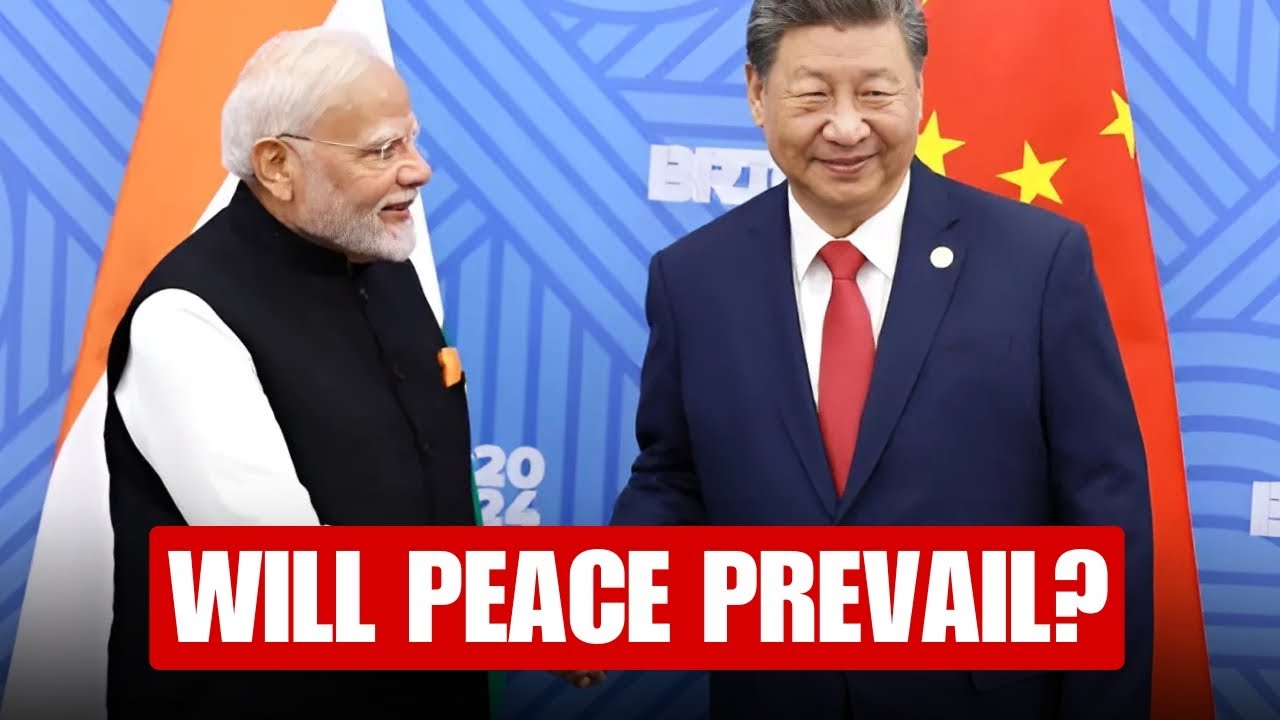
This content was created by David Oualaalou. This content was uploaded by David Oualaalou. This is a YouTube video titled "India & China Reached Border Breakthrough; Will it Hold?" (published 2024-10-29). Based on the title and metadata it appears to be a news/analytical piece discussing recent developments on the India–China border and whether the reported breakthrough will hold. No transcript or speaker information is provided in the excerpt, so participants, speaker roles, and language cannot be determined from the available data.
Chapters
All right, hello everybody and welcome to Geopolitical Trends, where truth matters. Excited to be with you as always, also because of the nature of the topic I am going to be covering for you today in this live stream. So this is very— there's a lot of history which I am going to get into, uh, and I always, uh, welcome your feedback, of course, your inputs, your whatever suggestions you may have. And I also have some comments. I read your comments, guys, on the community post. You all know me, I read your comments, all of them, and I answer when I have a chance. But I do answer most of your comments. But there were some very, very interesting comments, and I'm gonna share some with you in this live stream here. So before I'm moving in, I do— I did see some, a name here for Eric Hotel. I don't know, is maybe first time here, so I want just to welcome Eric to our community here. So good to have you here, Eric. And to all of you, Taiwan Steel, Truth Seeker, uh, Wong Kee See, uh, Li Yang, and, uh, who else here? Uh, I'm starting from the bottom up. Hang and G, as always, good to see you. Willie Holman as well. So All right guys, let's, uh, let me— because there's a lot to cover into this. And again, I want you guys, please, please, please, you all know in this community we keep things civil. Uh, we're not gonna be sort of negatively talking about India or China or what have you, because in this community, guys, we are all about intellectual learning. So, and, and, uh, so, and I know I'm not worrying about you, I'm worrying about the outsider, if I may use the term. And if I spot something, I will just, uh, remove them out of the chat straightforward, because I will not allow that kind of, uh, conduct here. So anyway, before I'll delve deeper, let me share two things with you as far as some housekeeping stuff. Uh, there are two main topics coming up, and I am working on the details of them. One of them has to do with Germany, and the other one has to do with Saudi Arabia. So I have not decided yet whether to do a, a, a, a recorded video or do live for you. Uh, both of them are interesting. I might end up doing both. We'll see. Like, for example, for the BRICS, I just sent my editor the, uh, footage yesterday, uh, because I did an analysis, a composed one for you guys, and we'll have it ready whenever he sends it back to me. So, so be on a lookout for— and third, third topic, by the way, is Canada and India. There is a lot going on in the tensions for the expulsion of the diplomats. So, and I'm going to get into the detail of that once I, I, uh, confirm certain information and just go from there. So, all right, now for our topic here today, as I said, I'm going to be talking about India and China reaching an agreement regarding the border dispute. You all know about this by now, I am sure you're familiar with it. But one thing I want you to make sure of, don't jump to conclusions that it's a fait accompli. Oh, no more issues, no more tensions between India and China regarding the border. No, no, no, no, no, no. Don't let this fool you, per se. I'm not saying that both countries, China and India, didn't move forward with this. They did. But as they say, the devil is in details. So, so let me start by, uh, uh, sharing the questions with you that we ought to ask about this particular, uh, topic here. First question is, will this agreement ease the tensions for good? Worth asking. Second question, why was the deal not made public? Because it wasn't. I looked, I looked from different sources. There are no details as far as the spilling out the outlines of A, B, C, and D. There's none of that. But there are certain key points, if I may use the term, that's been highlighted by both countries, from the Chinese, the Foreign Ministry, and from the foreign minister in, in, in China, Mr. Nasri, if I'm not mistaken. Third question, uh, who initiated the talk? Was it China? Was it India? Or a third party? Which is very interesting to know because you need to understand this, this didn't happen in a vacuum. So, and the fourth question which we ought to ask, if you only know the history, for example, of the, uh, three-letter agency in that part of the world and elsewhere for that matter, but for that particular region, is the question is, what is the US position regarding the deal? Already, uh, two— I came, uh, uh, uh, sort of cross two reports from Washington already talking about the possibility of peace and so forth. But no, no, no, no, no, what they're saying versus what it is are on the opposite end. So that was just for domestic consumption. So it is worth for us to really ask those kind of questions. Then we'll get into the detail of all this, and once I get into the history aspects of it, we'll, we'll elaborate more. So, so as I mentioned, uh, uh, both India and China on the sideline of the recent BRICS summit in Kazan. So I have sort of, uh, uh, even though certain media portray this as resolving the longstanding this border dispute, no, there is no— no, it's not resolved. This is just an agreement. And that's what I'm saying, why the details weren't made public for people, for us to know. You know, some of us as analysts, we will be able to read between the lines in the language of the agreement. There are some, but there's no detail. So when it says that China and India have resolved their longstanding border dispute in the Ladakh region, I have to have some reservations regarding that statement. But for the sake of the conversation, we're going to move on, we're going to move forward with this statements here. So the agreement was reached during BRICS Summit, as I mentioned, in Kazan. And here is the answer to the third question: wasn't initiated by India, wasn't initiated by China. Let me see your answer, guys. Please put in the chat box who do you think initiated that and launched, uh, for them to, to sit down and have the conversation. Let me see. Uh, Truth Seeker, you, you guys got it, you got it. It was Russia, it was the Russian President Vladimir Putin, because of the much bigger picture. And this ties to what I've always said about BRICS. BRICS challenges are not going to be from the outside. It will be some from the West, and because they will try to undermine BRICS and so forth, it's gonna be from within. And I, I was referring to this back then about India. I, I don't shy away, and I'm not going to hide this one. Uh, I'm going to say it, the same argument I'm making today about Philippines will not be a good fit. I will question even Egypt for that matter, or now even more Saudi Arabia, which just, uh, announced that it will not be a full member of BRICS. Read between the lines geopolitically. I'm gonna do a, a live stream for you and do an analysis. I wrote a book about Saudi Arabia, so I understand the ins and outs of the dynamics of the government, the Saudi government, or the royal family, because it's not a government, is the royal family that is controlling everything, how it operates. So same thing for this, you have to think in terms of Russia initiated that because Russia understands that if India and China do not resolve this, it will always cast a shadow over the credibility of BRICS. It's the big picture, and that's to me what makes more sense. So Putin was the one behind scenes pushing for those, uh, uh, sitting down, negotiating, and so forth. And this, by the way, India and China, all this agreement, that they reached, it was about implementing some, some sort of a new patrol arrangements along the line of the actual control to prevent what happened in 2020 and back in 2015. And I'm gonna get into all this one here. So, so I had a chance to read a few articles for the last 48 hours, literally, to confirm certain information. Uh, there is one particular one, and I'm gonna put, put the link for you from Al Jazeera with some details. Very— if you get a chance to read it, please do so if you want to educate yourself about an issue, to understand the bigger picture. So one article I read by Frederica Marcy, uh, which is from Al Jazeera, that is, it was very, very detailed, uh, and, and, and, and poignant, straight to the point. And, and it made more sense to me by highlighting the fact that she, Frederica, addressed the idea that Well, we have to ask questions why the deal was not made public. Unlegitimate question, that is. So, so India and, uh, and China have reached this deal to end the military standoff, uh, at their dispute, uh, uh, frontier. So, which is, of course, if you go back 4 years ago, that's when the deadly clashes, uh, uh, in Western— it happened in Western Himalayas, uh, that's where sort of, uh,— what's the word I'm looking for?— plunged the relationship and the ties between India and China to their lowest level. Of course, it was music to the ear for us in the West, here in Washington, because we wanted to maintain this kind of tensions. Look no further now what's going on in Bangladesh. Okay, you have to understand the role of India into all that and why for us we're going to have to push the narrative always to ensure that the tensions persist, not only, uh, vis-à-vis India and China, but vis-à-vis India and Pakistan. So, so the external minister affairs— the external affairs minister, rather, uh, Jan Sakkhar, he's the one who mentioned to the Indian media that the agreement pertained to the border patrol aspects of it. So And this is where you have to put in perspective the larger picture, the larger dispute that is, because the larger disputes remain unresolved. And that's why this agreement ain't gonna cut it, because here is the thing, guys, if truly was this is gonna be the result, then they need to enter into a pact, sign the treaty of sort between India and China to resolve it once for all. And like I said before, I will be wondering who's going to breach that particular agreement. You know, no offense to India, and I will say it straightforward because I don't shy away from— I will expect the issues to come from the India side rather than the China side. That's just my assessment, knowing and understanding how both systems operate on the global stage, and based on— well, based on the last 25 years' observations You know, and as one who works in Washington, DC dealing with both countries, yes, we were dealing with both countries. So you understand the dynamics of how each country is going to respond to certain aspects. This is one, one of them. So, and like I said, the idea of this agreement is just to sort of, uh, uh, figure out the petroleum aspects along the border of the Ladakh region. But for us to understand, let me share— I have a lot of pictures, uh, that I need to share with you. First of all, let me just show the map of, uh, this is the meeting, during the meeting of President Xi, uh, uh, President Xi rather, and the Prime Minister Modi. This is during their conversation, uh, uh, uh, I think during the summit, that one. See, uh, here's the map that I want to share, and I give credit to the StudyIQ, and I'll put the link for you for this one here. This is just in general term to highlight to you one thing I'm going to share with you as I move forward later on is the political maps. But the political maps are worded differently depending on where the map is coming from, and I will disclose that to you as I move forward. So this is just to highlight to you where the areas like the Axis Chen, uh, which is administered by China, the Line of Actual Control Lak. And so you get the idea of where things are geographically, and I am going to detail. As a matter of fact, first of all, let me just tell you what the deal is all about, then I'll move into geography and history, then I'll finish up with the analysis and answer your questions, of course. So, so like I mentioned earlier, the deal has not been made public. So, and this is where the Indian foreign minister, not the external Affairs Minister Jan Sarkar. This is the Foreign Minister, Secretary Vikram Misri, said that the pact, and I quote, aimed at the disengagement, in quote, of troops of the Line of Actual Control, or LAC as is known, which separates China— Chinese and Indian-led territory. So, so the LAC, of course, if, uh, let me just put the map back for you guys., to see right there. The LAC, the Line of Actual Control, stretches from Ladakh in the west of India's eastern state of, uh, uh, Arunachal Pradesh— or Arunachal Pradesh, that is— parts of which are also claimed by China. And this one spans about 3,488 kilometers, or 2,167 miles. And as its name suggests, the LAC divides the areas of physical control rather than territorial claims. This is very, very important for you guys to understand. So, so now let me get into geography, because in the geography I'm going to highlight a few things for you, uh, and I'm going to share— I think I have a map Not I think, I do have a map here. Uh, let me open the link and share it with you, uh, on the screen, which is basically— oh, oh, I don't have to because it's the same map. Uh, I have a different map from a different site, but, uh, this is the same right there. But I'm gonna just do brief here before I'll, I'll jump into history. So the total boundary shared between India and China, as I mentioned, is about, uh, 3,488 kilometers. The second highest after Bangladesh. The border is generally divided into three sectors, uh, uh, those three sectors are namely Eastern, Western, and Middle sectors. So a total of five states shares boundaries with China: Jammu and Kashmir, Himachal Pradesh, uh, Uttarakhand, Sikkim, and Arunchal Pradesh. Those are the 5 locations, or 5 states if I may use the term. Now, when you hear the term states, you're going to have to think about where the issue with Kalinistan comes in, if you go back in history. So this is something I intend to— as I am looking into the information regarding what took place in Canada, I will be able to provide you insights regarding this. Now let me move into the history here, and the history aspect is very, very interesting. So first, let me share— and again, I'm going to put this link for you later on, uh, with, uh, uh, as far as the Al Jazeera's, uh, uh, article regarding pertaining to this. So, so first, let's, uh, let's, let's detail some of the history, about, uh, uh, India and China regarding the border. So, so the territorial disputes between both countries, so resulted from what? This is the historical consequences of the colonialism in Asia, which we all know. For India, it was the Britain, all right? And the lack of clear historical, uh, boundary demarcation created the problems. It was almost similar to the issues that happened in West Asia or Middle East. The Brits didn't understand the, the dynamics of the tribe, the social setting, the tribes and so forth, and they just were clueless about that one because their concern was always about resources and so forth. So there was one historical attempt to set proposed a boundary. Does anybody know which one I'm referring to here? It's well known in history. If you will be kind, then just type it in the chat box. And once again, I like to get you engaged into the convers— conversation. Uh, what is your name here, man? Uh, you say, 'Bill Komali, I don't like China.' Yeah, you are entitled to your opinion. So, uh, you don't like it, whatever your reasons for that is, you know, you're entitled to your opinion. As long as you are respectful here. So, uh, the— when I was in China, they call me monkey. Okay, was it just joke? I mean, you're not taking that seriously, are you? So anyway, let's move on here because I gotta— I got a much bigger picture to deal with here. So what is the treaty that is historically known? Oh, you got it, Hank, you got it. It's McMahon Line, 1947. Very important to understand that one. And what's interesting about that, because the McMahon Line was of course dealt with between 1913 and 1914, okay? And, uh, this was during the Simla Convention that traces back. And of course, later on, when the Republic— the Republic of China was established in what year? What year China was formalized as far as its name, the PRC? Can you type in the year, please? Psych-Peak Island Treaty in the Middle East. Uh, uh, uh, Mikasa. Oh, Hank, 1949. That is correct. You were close by, uh, Hollywood too, you were close by, 1948, but it was 1949 to be exact. Why is this important? Because it was a momentous occurrence in the Chinese history to understand the switch from Peking to Beijing, okay, which was formalized in 1949. So, and this with the establishment of the People's Republic of China, known as PRC. So, so this transition was part of a larger mission to sort of modernize the nation of China in that, at that, at that time, but thinking forward, and also unified identity of its citizens. It's very, very crucial to understand. But anyway, let's go back to the, uh, McMahon Line. So of course the proposal was rejected, uh, at that time, okay? The boundaries were rejected. So the unresolved dispute over the boundary became contentious after India gained its independence and the PRC was established. So you can just see, this is the longest dispute, uh, border dispute that's still in history today. So, and this is what I'm saying, this cannot last forever. They're gonna have to figure out— but this agreement they just reached doesn't mean it's resolving the issue. It is not. So let's just make that clear. So the disputed borders, uh, the disputed borders rather, are sort of complicated and lack administrative presence in the disputed area, which are remote. Because that's— I'm, I'm going to share the maps with you now here, guys, so for you, uh, to see. Let me, let me— I have a, I have a lot and I have them in order here, so for you to see. Here's the first one here. So just to put things in perspective, uh, for us to understand where things are. So, and once again, if you are to go back to the beginning of this, uh, when, uh, uh, India and China, the two nuclear-armed Asian neighbors, uh, because they're sharing this 3,500 kilometers or 2,100 miles unmarked border through the Himalayas but an easy peace has held— sort of, uh, uh, has been held so far since the two countries signed the truce following which war? What year they signed the truce? Let me see in the chat box, guys, if you can type in the year. What year did they sign the truce? After which war? Hang on, you got it, 1962. That is correct. And that is where— on, on, uh, that's when, uh, uh, uh, the truce been held. And so far, till they had the tensions, uh, when, uh, when, uh, 20 Indian soldiers died in a hand-to-hand combat involving clubs and rocks. You all know about this one here, so But here is the important aspects of this. We need to understand the dynamics. I'm going to share another picture with you. Uh, let me close this one and get this one right here. So why is this important? It is important to understand that, uh, no bullets were fired in nearly 50 years now. So until June 18, where in that incident that took place But both countries claim these vast swaths of each other's territory along the Himalayan frontier, with the border problems rooted in the demarcation of boundaries by British colonial rulers. So basically, the Brits created the problem and left a mess behind them. So, and this is what I'm saying, the border can be grouped into three different sectors. And I have a map for you that highlights this particular— I believe I do, uh, if I'm not mistaken. Uh, not this one here. No, I don't. I thought I did. So anyway, I'll keep this up here just for you guys to see quickly as I move forward. So, uh, and like I said, this agreement resulted here in the idea of where both countries is gonna have to be moving forward. So the thing is, is that you have to go back in history. You have to go back in history. 19— I'm gonna take you back to 1914. Why is this important, guys? 1914, China, or Beijing that is, never recognized the 1914 border drawn by the Brits because the, the Chinese were never involved into that. So Henry McMahon, that's— he's the one, the officer who decided on that. Well, first of all, how can you decide without having both parties involved? That just doesn't make any sense. So, and this is why, as of today, China claims about 90,000 square kilometers, or, or, or 34,000 square miles of the territory, nearly all of which constitutes India uh, Arunachal Pradesh state. And, uh, because on the maps, this is where you see the difference. And I'm going to show some maps here. When you see the, the political map in China, it shows that Beijing shows it as a southern part of Tibet on its map. It's very, very important. So I'm hoping my next trip to China, I'm gonna head out to that location in, in the Tibet and and Xinjiang and all that area. So on the other hand, when you look at India, India claiming of the land currently under Chinese control, which include Aksai Chin Plateau near the Ladakh region. This is where the challenges comes in, and, and you need to understand all this. So I'm going to take you to 19— let me share a picture with you. I'm going to take you to 1962. Uh, because 1962, that's where the Sino-India War— so India and China have mostly avoided border clashes since 1962 truce. So the border protocol agreed after several rounds of talks since the 1980s have largely prevented violence. When I say violence, I'm referring to fire shots being fired. So, but again, we need to go back to 1962, two sides, meaning China and India, fought a 4-week war over a border dispute that left thousands dead on the Indian side. So Beijing at that time retained access to strategic corridor linking Tibet to western China. And that's why I said that the war ended in a truce. Fast forward to 19— uh, I don't know if I have another picture here. Uh, now fast forward to 1967, and 1967 saw the Nathu La clashes. So it was another flashpoint. Uh, this one is India's highest mountain pass in northeastern Sikkim state, which is, by the way, if you look at the map— I don't have the detailed one to show it, uh, Maybe, maybe this will show it, but I doubt it. Yeah, I doubt it. This will show that, uh, why is this important? Because this one is sandwiched between Bhutan and China's Tibet and Nepal. So, and during a series of clashes including the exchange of artillery fire, New Delhi said some 80 Indian soldiers died. And counted up to 400 Chinese casualties. Now, I don't buy these numbers, you know, it's kind of, uh, and by the way, uh, when I checked, it says right there, uh, reference not available or unconfirmed. So fast forward to 1975, the Tulong La Ambush. This scrimmage was the last time shots were fired reported, reportedly to have been fired across the disputed border. 4 Indian soldiers were, uh, killed along the dividing line. So New Delhi, of course, blamed Beijing for crossing into Indian territory, which was a claim dismissed by China, because if it was under the Chinese control, then China will have the right to go to its territory. Now, 2017, which you all know what happened in 2017. That's the, uh, Doklam standoff. This one, India and China had a month-long high-altitude standoff in Bhutan's Doklam region after the Indian Army sent troops to stop China from constructing a road in the area. The, the, the challenge that I have with this is that wasn't India also building some construction So why China didn't send its troops to stop India from doing that? So to me, I see kind of, uh, didn't make sense unless India was pushed to do that. And there is a reason you need to understand why this kind of tensions will have to persist, because it fits the narrative inside India for political domestic consumption. So the Doklam Plateau is strategically significant. You need to understand that because it gives China the access to what's called the Chicken's Neck, you know, which is a thin strip of land connecting India's northeastern states with the rest of the country. And the interesting thing, according to this historical record, it is claimed by both countries— China and which country? Let me see, because most of you is gonna say which, which countries claim this part here. It's China. And what is the other country? Let me just see if, uh, if when you type in, there's a delay here by the time, uh— oh, you got it, Steve! You got it, you got it, Steve! Uh, Teresa, you guys got it. It was Bhutan. That is correct, which is an ally of India. So the issue was resolved after thought. Then fast forward to Ladakh confrontation, which was in 2020. And this, you all know the history of this, uh, uh, this is where the tensions, fistfights and clubs were involved. And that was one of the reasons why this particular, uh, this view, this particular agreement, uh, is, is good, is good, except it's not gonna resolve the whole issue. That is where I see the challenge. So Uh, what you're looking at here, guys, is this is the Pradesh area, which shares about 700 miles border, uh, between India and China. So, and this one, it forms, by the way, part of the Eastern sector, which is by— it is claimed by Beijing and was the center of the full-scale war back in 1962. So, and that's where India lost that territory to China. Uh, the next, uh, picture I think I have is just a picture to show you here, guys. Uh, this one is some soldiers, uh, in, in Pradesh again. Uh, uh, they're just patrolling, uh, that, that, that area. So, uh, there is another one here, uh, which is between the two, locations. This one here, guys, the central sector. Now we're dealing with central sector. Remember, there are three: eastern, western, and central. The central sector is the shortest, with the distance of about 55 miles. And in early May— this was the May of 2020— that's where the fights erupted, uh, at Nathu La Pass in the Indian state of Sikkim, between Indian and Chinese soldiers. So Uh, what other picture I have for you right here? This is the old one. This is the outcome of that 1962. Uh, this is a view of the, uh, the Himalayan region of Ladakh. You know, I heard it's very pretty, so I'm hoping one day to visit there and, and see with my own eyes where things are. So, so this one here Interesting thing, it was carved out of Indian-administered Kashmir. So, but again, the Brits didn't do a good job in, at least after creating that mess, to leave a demarcated location so it won't create tensions down the road. So, and this is where you have on both ends India and China, uh, especially when it comes down to Dimok in Ladakh, uh, that's where the Chinese PLA soldiers built bunkers and brought in armored trucks and artillery. Of course, China did the same on the other side, and, uh, still today, uh, kind of, uh, the, the, the soldiers still there. That reminds me of DMZ, uh, it's just the way it is. That's why I hope this agreement can move beyond just signing a document to something concrete, like, like a treaty of sort, because that will put an end forever for, for this. And, uh, uh, and, and of course, this is where you are noticing, uh, uh, the defense budget for India, by the way, which increased, uh, for next year, 2024-2025, uh, budget, it will be about $75 billion. And one of them has to do with upgrading the defense the border in Ladakh. So makes you just wonder, wouldn't it make more sense for India to work out these differences and use that money to rebuild its own country, to alleviate poverty, to get rid of the, the sewage in the streets and build, uh, uh, bridges and roads and so forth, and financial and telecommunication? And you got the idea. But again, you need to understand I don't claim to know in detail the dynamics of internal dynamics of political domestic agenda inside India. What I know for a fact is that the administration of Modi, since he came to power, he came on power based on nationalism. That's one. And second, to ensure that tensions like this persist to feed the narrative and create whether an imaginary or real enemy. That's the way I see it. So, and again, it's very, very, uh, complicated for us outsiders, uh, to, to understand, uh, because we won't, we won't be able to. Uh, I have another picture here, uh, right here, guys. Uh, this one is just some flyover, uh, uh, part of that India's defense upgrade near the border of Ladakh. Uh, now I'm gonna show you a picture with 4 images on it. Uh, not this one, sorry, it's right here. Now this one here. What it shows is that the sort of the Indian-administered Kashmir— remember, Kashmir is also a tension area between Pakistan, and, and same thing as far as Punjab. And this is again where the Khalistan movements came about. It's because there are certain areas. This is why the countries neighboring India close by are kind of on the edge. I'm referring to Nepal, and I was in Nepal and talk to people over there, and I could tell the influence of India inside Nepal was very visible to me. Same thing with Bhutan, same thing with Bangladesh. But now Bangladesh now is different, especially after kicking out Sheikh Hasina, which fled to India. So, uh, the administered Kashmir is one of the most militarized zones in the world, with more than half a million Indian forces deployed, uh, sort of to quell decades-old armed rebellions. It's because they never wanted to be sort of a part of, uh, uh, to be associated with India. So, and again, it's their territory, they can decide. To me, the arguments, like I always make, you know, if it was part of the country, then it's part of the country. But if it wasn't You know, and I am specifically saying this for reason, to provide the parallel or comparison to the Taiwan issue. Taiwan issue has always— because Taiwan has always been part of China's history, so it was part of the territory. It makes different than what it is in the Kashmir location right here, because there is the argument, and I looked at the historical records, that some said it was always part of the shared between Pakistan and of course other regional countries. And this is what you are looking at. So Kashmir is claimed by both India and Pakistan, as you know, and in its entirety, but they control only parts of it. That— and now you have the— this is why the tensions between even Pakistan and India, which are two neighbor— two nuclear countries, uh, sort of, uh, created that war between the two of them. And all of this thanks to Britain, especially after 1947. So a small portion of Kashmir called Aksai Chin is this under the control of, uh, China. So you can just look at this one here. So this is the territories that is claimed by India. This is the administered region. If you look at the map here, the ones claimed by Pakistan, the ones claimed by China. So you can just see the dynamics are very, very, very, very, uh, some sort of, uh, uh, very interesting. And we have to understand the big picture. When you take India and China, uh, between the two of them of about 3 billion plus people, with the combined population, yeah, almost 3 billion, it'll make more sense for, for this issue to be resolved once for all. But this agreement ain't gonna do it. This is nothing but a— I don't know, will I call it just a consumption of ink? Yes, I am leaning more towards that because this is to me not conclusive. It won't lead to any sort of, uh, uh, cessation of hostility once for all. In other words, demarcation of this is my zone, this is your zone, and stuff. Till China and India sits down and figure that out, I— it's not going to happen on its own. And this is why when you think in the history of this oldest, uh, the earliest, uh, uh, treaties regarding the boundaries in the western sector, because this one goes back to 1842 and this one was following a war that took place back then between the Dogra and Tibet, way back. And this is where the Sikh Empire of the Punjab region has annexed Ladakh in the state of Jammu in 1835— the— '34, 1834, according to the record. So once again, when you think about Khalidistan, this movement. You have to understand this part of history. Uh, uh, then in 1841, they, they invaded Tibet with an army, and Tibet faces defeat. Uh, uh, actually, Tibet forces defeated the Sikh army and in, in turn entered Ladakh and besieged an area called Leh, L-E-H, to those who are familiar. And after being checked by the Sikh forces, the Tibet and the Sikhs signed the Treaty of Chushul. It's C-H-U-S-H-U-L, Chushul, in September of 1842. So it goes way back. And this treaty— and here is an example, and the reason I'm sharing this with you, to highlight that if truly, uh, uh, India and China wants to put this conflict to rest forever, they need to enter into— sign the treaty similar to this that will stipulate where, uh, the differences are and all that, and end it once for all. Of course, for us in Washington, we're not going to want that to happen. We're going to ensure that the tensions persist because we know how to press the buttons inside India. Uh, we don't have much success in doing this with China except for the Taiwan issue, but for India it's easy for us to do it. So, and I'm talking from experience here, I'm not talking on the top of my head. I was aware of certain aspects that unfortunately I cannot disclose, uh, that we were able to manage, and that's how we got the Indian government in line to toe the line. Otherwise, they know what the consequences responses would be. All right, now, uh, the Treaty of 1842, the, uh, the Treaty of Sheshal, which stipulated no transgression or interference in other countries' frontier. Remember, it didn't say the other locations, it says in other countries specifically. Of course, the British defeated the Sikhs in 1846. Which resulted into the transfer of sovereignty over Ladakh to the Brits. So the Brits were looking at it just in terms of taking control, because remember, most of the, the, the trade at the time and the resources, uh, British was taking, uh, used India forever and used the territories around. And if I am to go as far as even saying, in, in recent history for the Opium War, if you think about how it was introduced in China and so forth. So Britain was aiming at some specific outcome. So, and this is why, uh, British commissioners attempted to meet with the Chinese official to discuss the border they now share. They were playing double edge or double sword or double double face, if I may use the term. However, both sides were sufficiently satisfied that a traditional border was recognized and defined by natural elements, which in my opinion was a mistake. You don't say, uh, natural element. You put the boundaries, the sticks on the ground to know where— that's like your house. When you build a fence, you're gonna encroach into your neighbors by about a foot or two No, because the boundaries— that fence states that this is the official footage or square footage for my house, and that's where the boundaries end. So, and this is the problem, that because they let, let it be to the elements, natural elements, it was never demarcated, and that was the problem. So the boundaries of the two extremities, Pongong Lake and the Karakoram Pass were reasonably well defined, but the axi-chin area in between lay largely undefined. But here is the, the key that I need you to understand. I was trying to allocate the source for this, and it says— you know what it says? Unreliable source. I just wanted to share this with you for the record. But again, I will not put it for you if it doesn't have a source. That's like what happened yesterday when I, uh, uh, coincidentally saw the Caspian Report talking about Pakistan having now discovered oil and it's going to be rich, which wasn't true. Now I'm surprised that this Caspian thing talking about this, that is not true. Why? Because I reached out to one of my contacts in Islamabad and ask, and they said there is none of that. We don't— we're not even aware of that. There's no such thing. So this is what I'm saying, guys, be aware always when you are hearing information. So, and once again, and I'm, I'm going to move to a little bit of the analysis here to share a few things with you. And this again, I got a chance to read another article, was written by Anupiri Das. And Hari Kumar and Vivian Wang. There are 3 authors in version this. I read it, to me makes sense. I would put the link for you if it does make sense to me, then I'll share the link, uh, with you about this. So, and here's the key about this one. The key is that, uh, when the Indian foreign minister, uh, I don't know, I think I have a picture of his, uh No, no, I don't. No, I don't. So anyway, we got to keep moving here. So, uh, like I mentioned, uh, the foreign minister, when asked the report of a border patrol deal, uh, on the China part, by the way, the Chinese foreign minister, uh, Ministry spokesperson Lijian said, and I quote, China and India had been in close communication. Now both sides have arrived to a resolution on the relevant matter, which, which China views favorably, end of quote. And that's why, uh, the question to me as an analyst, and I did already mention this? Will this agreement hold? What do you guys think, in your opinion? Because now they, they signed this agreement. This is not a treaty, by the way, just an agreement. Do you think, in your opinion, this agreement will hold? Please just answer in the chat box, yes or no. Oh, Francis, Francis Uh, Francis, you say no. Okay, I see, I see the logic of your argument. Hamed Sidi, you say no. Uh, John Smith is saying maybe. Steve, you say yes. Uh, 1KC, you see, you say yes. So yeah, I just wanted to put this out there to highlight to you the, the complexity of this. And of course, India has made the announcements, uh, that it's going to be talking with China regarding the border disputes and all that stuff. Uh, but China— uh, India rather— had to ensure that the message will be for domestic consumption more so than anything. So, and, uh, to India, to them, it was— the meeting was the first interaction between the two leaders since 2019. So, but here is the geopolitical angle that I see personally, and again, the timing of the announcements. So, because if you look at it, and, and I couldn't agree more with the authors of the article that they, uh, indicated, because this announcements indicated that the timing of it, that Prime Minister Modi My address: the political and economic implications of a military disengagement along the border. So any thaw in relationships between India and China could have global implications as the United States courts India to act as a counterweight to Beijing. Just take a step back and think about this. That's what I'm saying. For me, as geopolitical analyst, I will say that this agreement, while it is good in faith, it's not going to yield the desired result because it's not enough. Once you enter into signed treaty— there is a difference, guys, between agreement and treaty. So, and this is why The foreign minister of India, Mr. Misri, did not specify how even this patrolling will play out along the line of the actual control, or like the 2,100 miles. So it becomes very, very, uh, uh, crucial to understand, uh, after, of course, that 1962 event uh, because the border in itself runs through a high altitude. So it's, it's not going to be easy, but you're going to have to figure out— you won't want to have scrimmages here and there because that's not good. So, and of course, when you look at about it, both countries will have to define— to defend their side of the border. So even though it's not inhabited, but they still It's part of their land, so they're going to have to defend that one. So, and I'm not going to go through what took place in 2017, 2020, and so forth. Uh, what, what I'm thinking about, it was, uh, uh, a statement by, uh, a retired lieutenant general. So, and his name is, uh, Deependra Singh Hooda. Let me, let me get a picture. I, I looked him up and, uh, that's his picture right here, guys. So, uh, he's saying, and I, and I quote, restoring petroleum rights is the closest we can get to attempting to reach the pre-2020 situation. So, so it also set the stage for repairing the ties between the two countries. Yeah, there, there is more than meet the eye regarding this one here. And this is why, guys, when you look at the maps, certain maps, this one here for example, how the definition— this is from an Indian institute, uh, uh, the demarcation. So, and again, depending where you get, where you look at the political map, I'll show you another one. I brought three for you to see the distinction. Between those ones here. So, so each one of them is marked right here. So because political maps can tell you a lot, and this is the Jammu Kashmir location right here. So, and that's why you need to understand this dynamics because, uh, this is not an easy conflict. Uh, it, it's— of course I disagree with the, with the retired Lieutenant General, uh, because he's, he's saying that the agreement was a win for India. Hold on a second, man. Hold on a second. Why is this— why is this is a win for India? You know, I'm sure China will say also on their side it's a win for China, but does it truly resolve the issue? That's what matters. Uh, and of course, for us, the, the, the, the Americans, we're always going to be looking at that, uh, as, as a, a flashpoint that we could always press, mainly India more so than we do, uh, uh, China. So what I was— what I found very interesting is that statement by the national security, uh, uh, uh, expert. This guy is from India who is affiliated with the New Delhi-based Center for Policy Research. His name is Bharat Karnar, you know. And again, to me, you guys know me, uh, when, when an argument is right and logic, I don't care where it's coming from. So he— I, I argue, I concur with him regarding his statement. He said, and I quote, China is stringing India along the agreeing-in-principle It will take years by the usual Chinese timetable to negotiate the modalities of patrolling. Now, from this part here, I disagree with him because the issue has to do with trust. And a simple question I will ask the audience here is, who you're going to trust more, China or India? I'll let you reach your own conclusion to that. For me, I know what the answer is, and again, based on evidence. So, and this is where that difference is, in my opinion, how I see this one. So the bottom line, the bottom line is that while this agreement is a step in the right direction, I hope that China and India can engage in more direct talks. And again, I am looking at the big picture, especially now with BRICS growing. BRICS uh, it's gonna be undermined from within, not from outside, because of one of this issue here is the India-China tensions. And this is where when some say, uh, that, well, because India is pushing for its global super status and so forth— no, all that is nonsense because it has nothing to do with the reality. The reality suggests otherwise. And if I am to ask any individual from India watching this, before jump to conclusions and start criticizing me, tell me what India has achieved in the last 14 years since Mr. Modi came to power. Simple as that. All right, let me, uh, Yeah, and this is where, uh, when, when the authors, even the authors of the article, uh, were mentioning about, uh, the conflicts between India and China have taken more of a global significance in the past decade, with the nuclear-armed nation competing more intensely for dominance in South Asia. No, there is no dominance from India's part. It's common sense. Because India's economy is not at the same level of that of China's. So this is why I disagree with the authors regarding this point. Yeah, China's military is mightier, you know, than India's New Delhi. As it becomes, even India trying to be more assertive, but it's not, it's not. It's because what India wants to do is to keep up with Mr. Modi's ambitions to transform India into a world power. No, there is no, no grounds for reality regarding this. If, if Mr. Modi would have, uh, his ambitions have not materialized in the last 14 years, when will they? You know, and again, I am not, I'm not judging Mr. Modi that— no, I am presenting facts here based on the reality what's on the ground. I look at the infrastructure and I talk to some people inside India, you know, you look at where the infrastructure is, you look at where the economy is, you look at when even foreign companies are leaving India going back to China and so forth. And when you are reading statements like the India's ambitions for the global superpower status, no, no, you can't, you You can't be saying hypes and assume that people's going to consume that. Now, for domestic consumption, that might work for political reasons, because one thing is sure, Mr. Modi will have to respond to the elites inside India. The same thing we have here, you know, this is no different. Uh, it's just I have to be realistic, uh, uh, when I present my own argument. And this leads me to share with you two comments from 2 viewers, uh, on the channel that, uh, this is why it's important if you guys get chance to read the comments. Uh, one of them is from ES Chu. Uh, he wrote, and I— he or she wrote, and I quote, the border conflict is a kind of political ATM machine for the Indian politicians and the army generals. It will flare up when one overly large armed force is fighting irrelevance and justifying the big budget. India's defense is 13% of the GDP. Two, Indian politicians need to coagulate the public opinion towards a designated foreign enemy to divert attentions, uh, uh, uh, or for elections. And three, Indian leadership is in the pocket of the colonial masters. Anti-China gains favor 'in the eyes of the West,' end of quote. Uh, spot on. I couldn't agree with that argument. Uh, it was another, uh, uh, comment by Land Grab in India, uh, wrote, and I quote, 'Every neighbor of India hates India because of India's expansionist policies. If one neighbor hates you, you are probably not the problem. However, if all your neighbors hate you, you are definitely the problem. India is the problem. For example, one, Maldives wanted India out. Two, 2015 Nepal blockade and the Indian annexation of Kalapani from Nepal, uh, on year 1962. Three, Afghan Embassy in India shuts down. Four, 2001 Bangladesh-India border clashes, and now Bangladesh wanted India out. 2, 5 Chinese and Bhutanese officials wrap up new round of border talks and agreed to work towards formal diplomatic relations, which I covered, by the way, in this channel here, guys. Uh, 6, 2013 Indian annexation of Mure from Myanmar. 7, tensions between India and Sri Lanka are on the rise as Sri Lankan fishermen complain of continuing— of continued bottom trawling and overfishing by Indians. 8, Pakistan conflict with India is well documented. They don't see eye to eye. 9, India tried to invade China through a forward policy and tried to play victims on year 1962 war. And lastly, India tried to block the Henderson Brooks and Neville Maxwell report when it was leaked momentarily in the year 2014 on the internet. Why? Something to hide. End of quote. Very, very interesting comment, and that's why I respond to the comments. I read through all that because once again, this channel is about intellectual curiosity and knowledge, and I want you guys to get something out of this. Speaking of channel, make sure to hit the like button and please share this video and all other videos or the channel for people you know, your friends, and ask them to subscribe. Like I mentioned earlier, I want to re— I want to cross over 100,000 by the end of next month, so I count on your help like you did for the Asia trip, which I am so grateful to you guys for all this. And again, uh, it takes me time to prepare all this. There is a lot of time consuming, there's a lot of energy. I do it, my heart is into it because I, I want to do this. I feel like it's my mission to do this one here. And that's the same with the trip to China, which is nothing but my first. I am gonna be going back over and over and over, not just to China but the whole region for this, because what I need you to understand and see the changes that's coming up. So, so I'm very grateful to you, uh, no exception, for all your continued support. It means a lot to me. So YT, you said very in-depth, uh, and well-informed analysis. You're most welcome, you're most welcome, man. So I'll be happy to answer a question or two from you. Uh, in the meantime, I'm going to post the link to the channel. Uh, uh, uh, Antoine, by the way, thank you for your PayPal, uh, support. I just saw it this morning and answered that one. So And here is the link if you want to sort of buy me coffee, or you want to also— there are my books there if you want to purchase my books and so forth. So I'm still working on uploading, uh, the Russia book, and I'll take care of that in due time. So, all right, let me answer some questions from you guys. Hank, you wrote, my opinion, disagreement is zero, nothing. I, I happen to agree with you. My back starts to— because I'm sitting too long. I move every hour, basically. Uh, I agree with you, Hank. You know, to me, it's, uh, I'm looking at the big picture because I also understand what, what Washington is going to be doing moving forward. So, uh, uh, right, let's see. Yeah, just put Q so I know, guys, it's question. Uh, Johnny, you're right. I, again, till we see something concrete, uh, if, if you are to reach this one, why it's not public for the details? Because some of us, we are trained. I speak for myself, I don't speak for others, because there is a difference between an expert or an analyst who is well-versed into the field and an amateur who is getting into this just because it's the trend. So, and no offense to anybody here, but I state the facts as they are. So I am trained to read between the lines, but till I see the text, how it's worded, for me, for now, there is nothing there. There is nothing there. Yeah, it's like I call it consumption of ink, no more, no less. So till they reach some sort of a, a treaty and spells out the details and put the stakes on the ground, the conflict will persist because we want it to stay that way. So, uh, all right, let me see, guys, uh By the way, guys, I, I got a, an invitation with the, uh, uh, I'm not going to share it. Forget that. I'll share it in due time because it will be a surprise for you. All right, let me see. Uh, once again, just to remind you, I am going to be working on two other— three topics. Three, not two, three. Uh, uh, Canada expelling the diplomats, Saudi Arabia decision to not become a BRICS, member? Makes me wonder, and I got an idea why. Uh, and, and second, Germany— why is Germany in India? And I got an idea also why that is. So, and I'm gonna do, uh, both, either live stream and an analysis for you. I wrote the book about Saudi, especially Saudi Arabia. I, I kind of, uh, have an understanding why, uh, uh, they decide to leave, uh, or not become, uh, a full member of BRICS. Uh, uh, Ramprose, yes, I'm aware of it. I, I am, I am, I'm aware of it, and I'm gonna get on this, as a matter of fact, even tomorrow, because I have the— I, I understand why. So I might even do it tomorrow or Friday, we'll see. So, but let me see. Uh, India and China have a common enemy, the warmongering. Yeah, uh, I will have to, uh, disagree with you on this one here, David. Uh, for one, that India doesn't think in those terms. India doesn't think in those terms because India, uh, even though most of its purchases are from Russia regarding the weapons, India receives weapons from Israel. Where does Israel get its weapons from? The United States. This is why Saudis, for example, Saudis just have to— is going to sign about a $400 billion weapon purchase from the US. Put the two and two together and figure it out. So, uh, okay, Johnny, question: what made Argentina to move out of BRICS? Pressure from the US. It's because one thing you guys need to know is prior to the election in Argentina, Javier Milei was flown into Washington, DC, and met with both in the White House and with the National Security Advisor Jake Sullivan to get the marching orders. The first order of business was pulling Argentina out of— some say for the better because Argentina's economy is in a mess. So That's, to me, it works out. As much as I was hoping that it might be good, because now you look at Latin America moving forward economically, we don't want that to happen. This is what makes me now think about Lula's decision to block Venezuela, Nicaragua, and I forgot the third country. I'm, I'm, I'm like, there is no way he didn't receive a call or something. He's getting something for it. So that's just my opinion. Uh, so that's, that's the, uh, I'm sorry, that is the answer to that one, in my opinion. So, all right guys, I'm gonna sign off here, uh, because I'm gonna need to put together the Saudi, uh, presentation for you, and I might even do, uh, uh, a recorded one. I'll decide this afternoon and prepare some other topics for you that I'm now back here in, in the States. And, uh, look forward to that. So as always, guys, remember, please, please hit the like button and share this video with others, or talk to them about channels. Uh, we all know YouTube, please let it be. Anyway, wishing you guys a good day, good afternoon, good evening, whatever part of the world you are in. As always, remember, geopolitics impacts your daily life in more ways than one. Till next time, bye-bye.
More from David


Beyond the Single Actor: Why the Gulf Isn't Choosing Between the US and China


Iran, Iraq's Militias, and the Houthis Are Coordinating! This Changes Everything




Who Controls the Next Decade's Resources? Latin America and Africa's Geopolitical Crossroads

The Chokepoint Trap: How Washington's Stupidity Triggered a Cascade That Now Controls the World

Trump Spooked as IRGC Unveiled dual-use SLV, Deployed Ghadir Mini-Subs & Hinted at Tactical Nukes!
