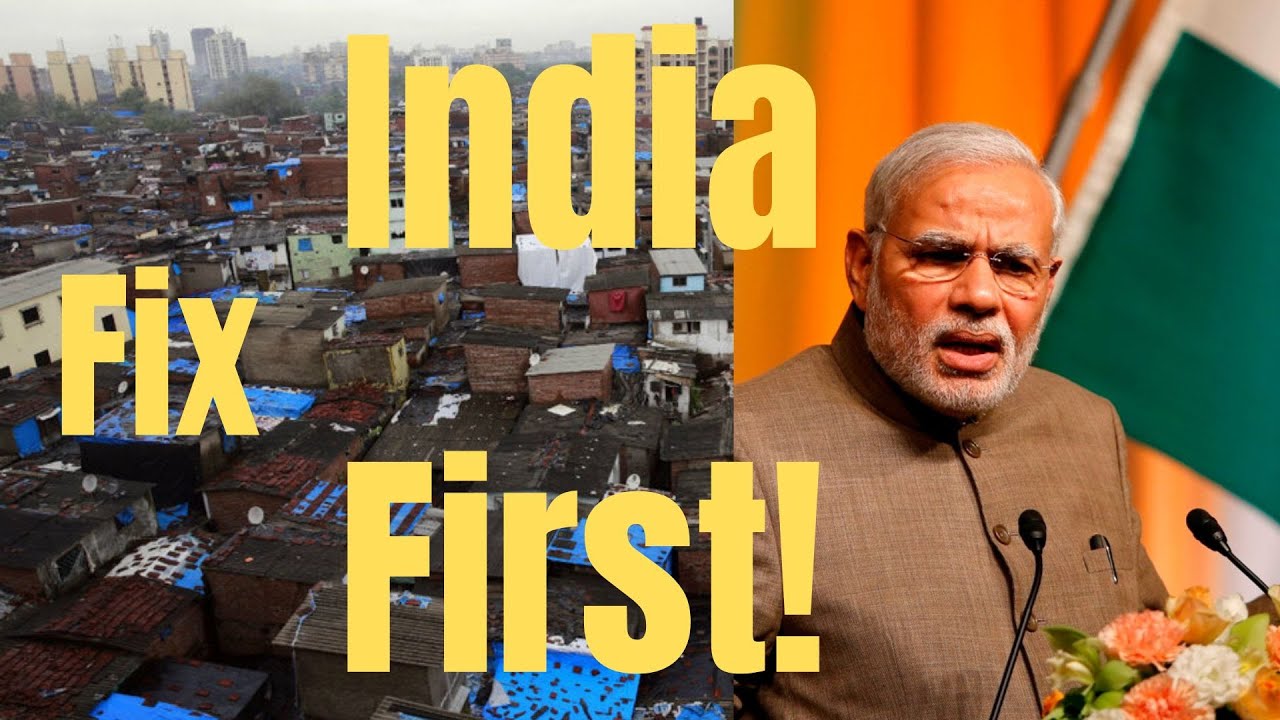
This content was created by David Oualaalou. This content was uploaded by David Oualaalou. This is a YouTube video titled "India Not Ready to be the Voice of Global South!!!" (published January 18, 2023) featuring David Oualaalou as the sole presenter. The content is a geopolitics commentary in which Oualaalou analyzes whether India can emerge as the representative/voice of the Global South, discussing India’s G20 presidency, recent virtual Global South summit, comparisons with China, impacts of US pressure and sanctions, energy and food crises, domestic challenges in India (poverty, infrastructure), and the broader shift toward economic blocs in a multipolar world.
Chapters
Hello everybody and welcome to Geopolitical Trends. My name is David Oualaalou. So good to be with you as always. Can and will India become the voice of the Global South? In this video, I am going to provide you insights whether India can influence the geopolitical trajectory in the 21st century. If you like the content of my videos and want to support this support this channel, consider becoming a member or a supporter. Speaking of supporters and members, I'd like to thank and give a shout out to my channel's new member, Hedi Lokel, and the two new supporters, Hop Cyrus Great and Kevin Thong. Thank you so much for your support, guys. And for you, if this is your first time watching my channel here, make sure to subscribe and smash the notification button so you will be notified every time I upload a new video. Let's dive in into this. Recently, India's External Affairs Minister Shankar said, and I quote, it is India's duty to become the voice of the Global South as the world looks at New Delhi with high hopes, end of quote. So you may ask yourself, why is the case? You know, since India assumed the G20, uh, presidency on December 1st, 2022, remember, after the recent G20 in Bali, uh, India now is going to be the one hosting the G20 summit in 2023, this year. And I will talk about it as, as I move along here. But since India assumed the presidency of the G20, India believes it can play a pivotal role in shaping the trajectory of the global order more than what it is, given the Ukraine crisis, the energy crisis, the colossal energy crisis in Europe, the fragmentation of tensions between the East and the West. Of course, the US-China tensions, all this. India believes it can play a pivotal role into all this and also becoming the voice of the Global South. Well, that's very big. It's a big statement, you know. And by the way, when we talk about Global South, we're referring to largely the developing countries in Asia, Africa, and Latin America and South America. So I have my reservation. If I am to put my geopolitical analyst hat, I have my reservation regarding the minister's arguments for what he said. But, and the reason being because the developing world, which is facing multiple challenges currently, will be looking at India for sort of leadership. That kind of makes me just put a question mark because why will the Global South be looking at India when they can be looking at China? Given the economies of the two, between India and China, are very, you know, different. We can just see why, you know. And this begs the question as to why Global South would be looking to India but not China. What are the concerns? And could US and Western sanctions on Russia convince the whole Global South to reconsider their alliances? And I think the answer to this is yes. I do believe that the, the geopolitical order or the new multipolar system will not be guided by ideology. Rather by economic blocs. That's what I see, that's what I've been seeing it going, and that's what I've been arguing before. It's the economic blocs that's going to manage the trajectory of the new multipolar system. Because here is why the Global South might not be literally looking at India 100%, because you go back to 2018 and 2019, what happened there? Well, India gives in. India gives in to the US pressure to stop importing oil from Iran. You all remember. I'm sure you do. So, so because India kind of had to sort of accept US pressures and stopped. As a matter of fact, it was India and 7 other countries. Back in 2019 that stopped the import of Iranian crude. So, so it makes the Global South wonder, okay, well, why should we follow India in this context? And even the, uh, uh, uh, Jel Sankar was quoted saying, and I quote here, today developing countries are worried due to issues like rising prices of oil food and fertilizer. They are also concerned about mounting debt and worsening economic conditions. Thus, it is our duty to become the voice of such countries known as the Global South in diplomatic terms. End of quote. You know, yeah, it's, it's a big, big statement. And again, I'm gonna explain as I move forward here. Of course, this statement comes on the heels of India's hosting a virtual summit which just took place 2 days ago. Actually, it was exactly on the 12th and 13th, if I'm not mistaken. And the virtual summit basically brought together countries of the Global South, all of them to share the common concerns. And like I said earlier, And also this comes on the heels of India taking over the presidency of the G20 summit. Well, the G20 presidency come at a time when the world is facing a host of challenges. You know, you're looking at ranging from food and energy crisis to the Ukraine and Russia war and other geopolitical problems. So that's what I see, it's very, very, very challenging for India to become the spokesperson because it has some internal and domestic issues they need to address first before they take the lead on something like this. Uh, if you like this video so far, make sure to hit the subscription button and hit the like button also because it motivates me to create more content for you. So, and thank you for your support. So And here's the thing, the 18th G20 Head of State and Government Summit, which will be hosted, as I said, in India between September 9th and 10th. It will be in September, yeah, the 9th and 10th based on the— I did find out the dates and it's gonna be held in New Delhi, of course. And here is the significance of India's presidency in the G20. Well, the G20, just FYI, is a major force behind the world economy, okay, accounting for about 85% of worldwide GDP, gross domestic product. It accounts also for 75% of global trade and accounts also for 90% of global patents. And I will provide you a link to all these stats as to where I get this information from. And due to factors like the ongoing worldwide conflicts, of course, we're talking about the energy crisis in Europe. We're talking about the Ukraine conflict with Russia, or should we say, with NATO-US proxy war with Russia. So other conflicts, the reorganization of the global supply network, you know, the record high level of global debt. You know, all this, among other issues, all these are major, major conflicts going on on the global stage. So India's presidency of the G20 will be very, very important. And this is again because it will beg the question, is India shifting from West to the East? And I will leave it up to you to answer that question because, you know, You know, you'll be your own judge. You'll decide on that one. So I do believe it is an excellent chance for India to showcase and promote its image and ensure that after the summit, when everybody returns, they kind of saw what India can offer. You know, it will also raise India's sort of global image. And responsibility as well regarding the global economy. But like I said earlier, India has some major challenges domestically. You got to think about poverty that still exists in India. You got to think about the infrastructure. And when I say infrastructure, I'm not referring just to bridges and ports, and I'm referring to telecommunication infrastructure, financial infrastructure, civil engineering, and even the energy refineries and so forth. All this requires India to give full attention to those issues first before they will take on to become the voice for the Global South. That's where I see the challenge of India is. So I respect the foreign minister or the Jaan Saar statement, But also we have to be pragmatic and realistic as to the expectations that match the resources of what India has to. Because here's the thing, Global South will be thinking in terms of who do we look at to? Do we look at India or do we look at China with a large market, global markets with a major— because China is known for when it comes down to infrastructure, India does not. So, but that does not mean India cannot move up the latter, shall we say. But India has to address some domestic issues first before they do that. So here's my conclusion for you. You know, India is using— and I applaud them for this because they are seeing where the trend is headed, the geopolitical, that is— and they want to shift with it before it's too late. So I would say it's a smart move on them to— they're like putting two— one foot in the East and one foot the West. There's nothing wrong with that because they're going to have to think about their own strategic interests. So, so India is using its strategic unmarket weight of 1.3 billion people, you know, openly sort of taking geopolitical sides. What do I mean by this? Because the US pressured India not to buy oil from Russia, and India said, no, we will buy oil from Russia because it's in our interest. Well, yeah, because they buying oil at discounted prices. So they said straightforward no to the US. So, so openly taking geopolitical sides and affecting serious economic reform to back up its desired positioning in the 21st century. If they want to play a role in the new trajectory of the geopolitical landscape, they ought to take care of their domestic issues first. So because India can be a reliable partner. You know, I do believe in this, you know, and is more equi— in a more equitable global supply chain of virtually physical and geopolitical elements, you know. But again, without India resolving its domestic issues first, it cannot sort of shift its attention to the global stage when its domestic affairs are not in order. Like I always say, foreign policy starts at home. Fix your home first, then you can deal with the, with the outside world. So, so here is my question for you for today. In your opinion, do you believe India is capable of becoming the representative of Global South? Let me repeat this. In your opinion, do you believe India is capable of becoming the representative of Global South? Make sure to leave me some comments. I, I always like to read your feedback. And as always, remember, geopolitics impacts your daily life in more ways than one. Till next time, guys. Bye-bye.