India Playing the China Card, Will it Succeed? W/Carl Zha
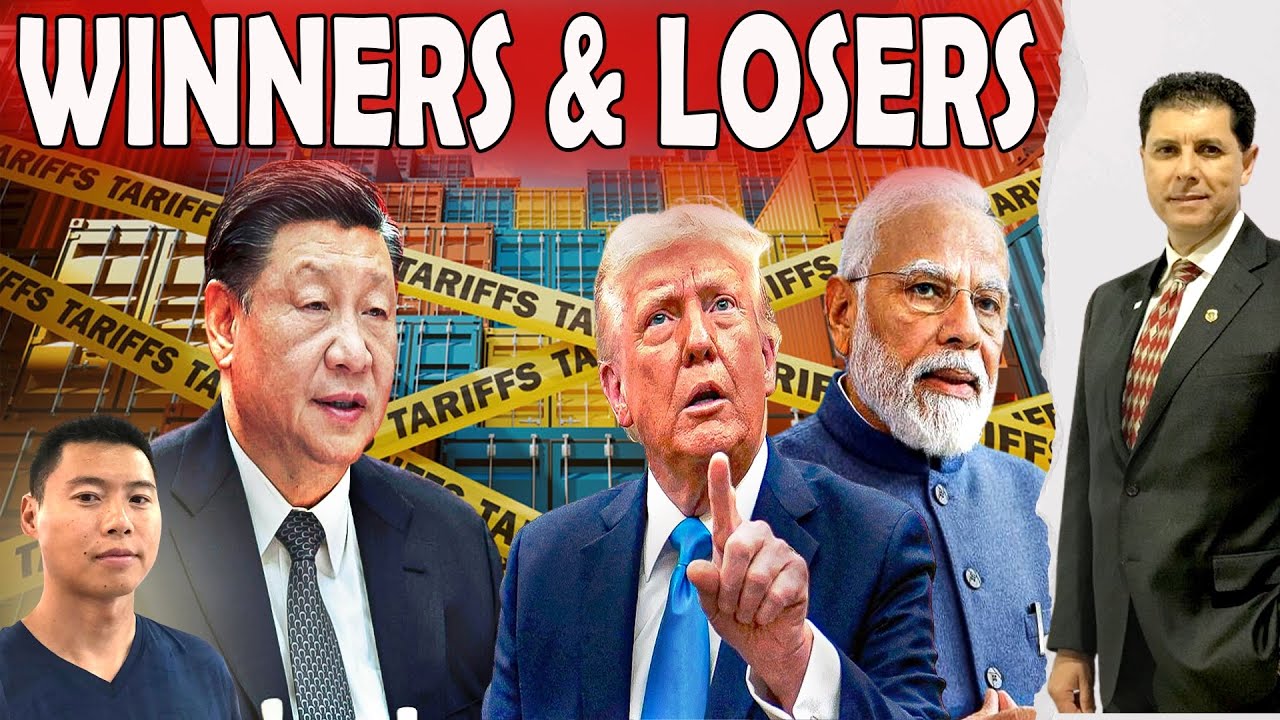
Carl Zha analyzes India's attempt to balance between the U.S.-led Quad and China as Trump's tariffs push New Delhi toward Beijing. The border dispute remains unresolved, and India lacks real bargaining power. A lukewarm, competitive relationship is the most realistic outcome.
Chapters
All right, hello everybody and welcome to Geopolitical Trends, where truth matters. Excited to be with you as always, but I am even more excited because you all know who's here, right? It's the end of the month, usually when we do our monthly conversation, my dear friend Carlza. So I'm gonna bring him in right away because we have a lot to cover. Hi, Carl! Can you hear me?
Hi, David Oualaalou. I think there's a little bit lag, but I hear you now.
Great, great, great, great. So anyway, as I said to the community, we are very excited because that's our conversation, the monthly conversation, and we all get excited about it. So, uh, I'm gonna get right away into our conversation here, Carl. And I would like to start with your take on the upcoming SCO, the Shanghai Cooperation Organization summit that's going to be taking place in Tientian. I hope I pronounce it correctly. What do you make out of it? What are your expectations as far as the outcome of this summit?
Well, I think one of the most important part about SCO SCO summit is there's going to be a separate on-the-side bilateral meeting between Modi and Xi Jinping. Uh, this right now what we're seeing is a soft reproach among— between India and China after their border clashes in 2020. Uh, you know, a lot of the work, groundwork has already been laid, uh, for this, uh, Modi's visit. You have Indian Defense Minister, security, National Security Advisor, uh, Foreign Minister visiting China. And then you just had the Chinese Foreign Minister Wang Yi visiting India very recently. This is all to pave way for Modi's visit, but more importantly, for normalization of ties between China, India, because After— since 2020, uh, clash at the Galwan River Valley, the, the ties between India and China has been anything but normal, right? And, you know, like, United States actually said, uh, they publicly stated that they have provided India with satellite intelligence during that border clash. Um, and, and India, for more recent years, they have been more aligned with United States in the so-called Quad. To contain China. And India was also hoping to benefit from this, the decoupling, uh, of, uh, from China, you know, when the so-called China Plus One strategy pushed by the Biden administration, or so-called friendshoring, uh, to push Western multinationals to move their— shift their supply chain out of China. And India was expected to receive much of that outsourcing, uh, you know, as we've seen with Apple, for example, uh, Tim Cook moved more product— iPhone production to India to, um, to produce iPhone specifically for the U.S. market. But, but then, then we had this 180-degree turn in the U.S.-India relationship thanks to, you know, the great peacemaker Donald Trump, uh, because he's, he's He has put such a squeeze on India right now that India have no choice but to seek closer ties with his fellow BRICS members, uh, to reach— particularly to repair the relationship with China. I mean, that, uh, the process of normalization has been underway even before, uh, you know, both sides has been meeting. I mean, all these meetings are scheduled way ahead of the time, you know, it's not the last minute thing like the Alaska summit between Trump and, and, uh, and, and, and Putin. The— we know that Alaska meeting was last minute because they didn't even have hotels ready for the Russian journalists coming in. They have to put them in stadium, right, with dividers, uh, like an emergency, emergency field hospital wards. Because, because it was, uh, it turns out it was fishing season in Alaska, so all the hotels were already booked. So that tells me that, that Alaska meeting was a really last minute thing put together because they, they don't even have time to book all the hotels. So, uh, whereas the India and China, like, SCO schedule, this has been ironed out long before. But what Trump did is he's just given an extra push for the India-China normalization. Um, you know, right after Modi has been basically singing praises of Trump ever since he got elected, and, and responded by slapping India on the face with, you know, double, uh, double— doubling the tariff to 50%, uh, and demanding, uh, India to allow access, uh, zero tariff access for American agricultural products, which is a no-no for India because India has more than 60% of its labor force employed in agriculture. Uh, you know, that's, that's not an area where India like to give up. So in this respect, I have to say Indian leaders actually have more backbone than the Europeans because you— I'm sure you saw that picture of all these European leaders sitting around like schoolchildren at the White House waiting to be assaulted by Trump, uh, and they just take it. They just, they just sit there and take it, um, and call him daddy. That's just embarrassing, man. That's just so, so cringe. But, you know, so I have to give credit where credit is due. India at least have more strategic backbone, and they say no, they will not give up on the purchase of Russian oil. That's a, that's an ostensible reason for U.S. Putting, um, putting additional tariff on India is for India's purchasing of Russian oil, because Trump has threatened to slap secondary sanction on anybody who buys Russian oil. But guess who is the largest purchaser of Russian oil? Number one is China, number two is India. And China already said, who we buy oil from is our business, you know, Russian oil.
Yeah, that's why, Carl, they couldn't, uh, Trump couldn't say anything about China. As a matter of fact, he gave so-called the permission to China to go ahead and buy oil from us. Who the heck are you to give a permission? I didn't get it. Trump saying, yeah, we allow China to— it's like, no, man, they can buy oil from whomever they want.
That's, that's exactly what the Chinese Foreign Ministry said, that we don't need permission from anybody to buy oil. This is our sovereign rights. And, and when Scott Besson asked about it, it's like, oh well, we can't, we're not, we already have tariff on China, so we're not gonna, uh, put additional tariff. Because he knows if they're gonna raise that issue with China, we're just gonna go back to the, to the days of the month of May when, uh, Chinese ships simply stopped coming to Port of Los Angeles. And then he, that, that's when he had to chase the Chinese vice premier all the way to Europe to work out a trade truce. So they're not going to do that. And on top of that, China still have the US by the balls in terms of rare earth shipment. Because right now all US companies, they have to go to the Chinese Commerce Ministry to file application to ask, please, please, can I have export license for rare earth? And, and, and there's no way Trump is going to risk that by, uh, by, by putting additional tariffs on China. So the— but the reason he's slapping India with more tariff is because India is a weaker party in its bilateral negotiation with United States. Uh, China has a strategic rare earth chokehold over United States. India doesn't. Um, so this is why Trump feel like he can get away with it. It's like the bully logic, right? Why, why does the, the bully will choose the ones that can't fight back? Yeah. Um, and this is why, uh, um, like, it comes as a shock to the Indian elite because, um, they for a while they thought they, they hitch on the U.S. bandwagon and they're able to kind of ride the coattail of the, the, the, the, the US hegemony and get access to, uh, more advanced US technology, including military technology. But now we just had statement from Trump administration saying, oh well, we have concerns about giving advanced military technology to India because India's close tie with Russia. You know, we feel like we could— our, our our technology could be compromised by, you know, through leakage to Russia and eventually to China. So we, we have to consider very carefully. So, you know, um, and, and also India didn't do itself any favors when Trump tried to claim credit for being the peacemaker to bring about the ceasefire between India and Pakistan, right after that conflict. Trump came out, said, I called both leaders, you know, I told them to stand down unless you want more tariffs. And Pakistan played Trump very well.
Like a fiddle.
They immediately welcomed it, and then they nominated Trump for Nobel Peace Prize. Trump really loved that. I mean, Trump is a big ego guy, you know, just butter him up a little bit, you can get what you want. That's exactly what Pakistan did. This is why their, you know, Pakistan army chief was in Washington back in June, and that didn't play well with India at all. And India immediately came out and said, no, no, Trump has nothing to do with the ceasefire. We did it completely on our own because we have achieved our mission objective, and Trump has not. So Trump really did not like that, you know. Trump did not like to be contradicted publicly. And, and, and, you know, so, so he's— that's an additional reason for him to slap India around.
Yeah, well, that's true because I was aware of the visit of, uh, the Field Marshal General Asim Munir, who came to Central Command for the ceremonies of the change in command there. So, uh, we're gonna get into India in a second here, but I'm gonna need to ask you one, one key question, Carl. I'd like to have your your insights on it. In your assessment, do you believe the United States made a geopolitical mistake regarding India, India, by pushing it into the, uh, the orbit of China?
Well, I— yeah, definitely. If your, if your goal is to preserve the US Empire and the US imperial alliance system You of course want India on your side because India is still, uh, the world's most populous country. It has, uh, uh, you know, by any measure matrix, India is a large regional power. And, and India is also very eager to sign on this, uh, U.S. anti-China bandwagon. So, you know, why— I mean, it doesn't make sense. It doesn't make sense to antagonize your, your allies such a way. But, but, um, David, US have no allies. US have no partners. US only have vassals. And this is why the difference between Biden and Trump is Biden at least put a— at least sugarcoat it, call them allies, call them partners. Yeah. Whereas Trump, you know, he just tore the emperor's clothes open and says, hey, yeah, we are, we are America first. So that means you got to come here and bend your knee and kiss my ring. And, and it's very hard to swallow for a proud country like India, because India, they see themselves as inheritor of a great civilization. They are— they see themselves as a regional power. They don't want to play the part of, uh, just, just a pawn in the, in the, uh, geostrategic chessboard of United States. They want to chart their own strategic autonomy. That's what they have been doing, kind of straddling between the Quad and then BRICS, because idea was maybe that way India can get the best from both sides. Um, but, but United States is not giving them that choice. US's policy has always been either you're with us or against us. So, so the fact that you are not 100% on board with our agenda Uh, that, that makes you— that, that will make us bring out the big sticks. And, and do I think that's a mistake for US side? Absolutely. This is exactly what US did with Russia back in 2000, early 2000. Vladimir Putin actually asked Clinton if, uh, Russia could join NATO, and Clinton, Clinton have to say, oh, let me check with my people, and then he had to come back, say, sorry, sorry. My people said no, um, which raised a lot of interesting questions. Why, why could Clinton make that kind of decision? And, and what, what kind of people, you know, what kind of people he was consulting? You know, he was consulting with his own handlers, um, and, and so the, the, that's so— I mean, like, the, the India-China reproach among has already been happening. Before the, the 180 turns by Trump administration. But Trump definitely give a big push, uh, you know, it, it provided the urgency for India now to seek normalization with ties with, uh, with China, uh, particularly on trade, because they have announced, uh, India— so after 2020 border clash, India has put a whole slew of restrictions against Chinese investment inside the country, uh, particularly, um, in that high— the tech sector. There was a lot of Chinese capital from like big player like Tencent, Alibaba, etc., into Indian tech startup scene before 2020. But that was all capped after Indian government come— came down really hard on Chinese investment. And India was the first country to ban TikTok also. And this is how, this is how where U.S. Congress got the idea to also to ban TikTok, uh, claiming national security reasons. And, and, but, and, and, and right now what they're, they're taking baby steps to normalize the ties. So one of the things they're doing is try to restore the direct flight. You know, can you imagine that two of the most world's most populous countries don't— neighbors don't have direct flights? Because the direct flight was suspended during COVID and it hasn't been restored till now. They're going to restore maybe next month. They're talking about next month. So this will be good for, you know, uh, people-to-people exchange, because that's what's really needed for, for China and India, for to, to have more people-to-people exchange. So, so, uh, you know, so that way at least build the understanding of what's going on in each country. Um, so Yeah, I, I do. I think U.S. is making a big strategic mistake. Absolutely, absolutely. But, uh, I think with the, uh, but this, this, this current policy might just be a particular particularity of the Trump administration. And you know Trump, you know, he, he changed his mind in like, of course, like, it's like 2 days, you know, he can change his mind over a tweet. So if U.S. decide to do another 180-degree, uh, face turn on India, I think they could still possibly salvage that, uh, that alliance because, uh, you know, India still very much like to have access to the, the, the U.S. market because a lot of the, um, Indian IT sector depends on providing back office support for big U.S. multinationals. So that, that, that's, that still remains unchanged. So, um, so there's still a lot of— I mean, India very much would like to work with U.S. It's the U.S. that's pushing them away, right? I mean, it's so, so, so now they're being forced to, to, to draw closer ties with, with China. Not, not, not that they're, you know, not that they, they— that's what they really wanted to do. So if US do change course, they can still potentially, uh, make India reverse course.
Yeah, well, I still believe into that. I'm, I'm, I'm holding my judgment still. I see certain development of certain events before I reach my final conclusion as to whether India is sincere about this rapprochement with China. Because here's the thing, Carl, And please correct me if I am wrong. If we are to say, which I concur with you, that the US has made so far a geopolitical mistake by pushing India into the arms of China, I'm gonna have to ask the counterarguments to that, especially from an Indian perspective. To me, the way I see it, and please correct me if I'm wrong, is India pivot to China, is it because a desperation move or a strategic one?
Ah, well, that's a, that's a great question because I think first I, I call it a soft reproach, man. You know, we're not talking about Hindi returning back to the Hindi-Chini bye-bye period, you know, like the, the China-India brotherhood period of early 1950s. That, that's, that, that period is gone, never, never coming back. Um, we're talking about just, just normalization of ties, you know, because the, the ties between two countries has been anything but normal since the 2020 border clash. So right now, the, the first top priority is just simply have a normal relationship, you know, restoring the trade, uh, restoring the direct flight is the first step. And then India have promised to lift some restriction against the Chinese investment And it's gonna take, uh, that, that process is going to take a— it's going to take time to rebuild the trust, you know. So, you know, one of the issue is, you know, the border issue still remain a big thorny side on the bilateral relations because, um, for, for China, China have proposed, okay, let's put our difference aside on the borders, let's work on other back our relationship because we are big countries and we have many overlapping interests in other areas we can cooperate on. This is, this is kind of China's, uh, uh, foreign policy approach in a lot of areas. For example, in the South China Sea dispute, that's what China proposed. Let's, let's shelf our dispute, but let's work on our other areas of cooperation. For example, economic cooperation. But in the— for India's side, there's all— has always been an insistence, no, no, no, we gotta solve the border issue first, um, resolve the border issue first before we can even work on the other, other areas. But, but the problem is when it comes to resolving the border issue, China had very reasonable proposal back in, uh, late 50s, early '60s that said, hey, let's just make the current Line of Actual Control the permanent international border. Then all we got to do is then sit down and hammer down where exactly is the Line of Actual Control, demarcate it, and then we're done. But India refused that offer. Yeah, you know, that led to the 1962, uh, Sino-Indian Border War. And, and this, this, this— and a lot of the border clash that happened in more recent years happened is because there's no clear demarcation. And there, there's a— first of all, they have overlapping claims, but right now there's not even an agreement on where the Line of Actual Control is. You know, the, the Indian side thinks that the, the Line of Actual Control is, you know, maybe 50 meters, 100 meters, uh, the east. And then where the Chinese thinks that the line of actual control is 100 meters, 200 meters to the west. So what happened is when the two patrol team, uh, come, come to patrol their own areas, what they think is a line of actual control, when they come into contact and there's border skirmish. And, uh, so, so that that, that hasn't been helping. And, and I— this is my, just my take— I think the, the— for the Indian military also has a stake in not resolving this, uh, uh, border issue immediately because, because that's— this is a, this is a very easy way to justify increase in defense spending. You know, whenever the border clash flare up, there's— that, that's more chance to ask for more funds to devote it into shoring up the border security. So I, I think, uh, and especially like in the, in the back in 2020, Galwan River clashes, I mean, you know, India side of course blaming China for instigating it, but yeah, I just felt the timing was odd because Prior to that, there was a period where India and China relation had been relatively good. You know, you had Modi visiting China and, and, and, and, and, and, and, and things, things were looking up. Like, it does not make sense, uh, you know, at least from a Chinese perspective, why would you then, you know, uh, push, push a border issue dispute to to, um, to, to, to, to sharply deteriorate a bilateral relationship. But we do know U.S. had the hand in that because, you know, the Wall Street Journal report says U.S. intelligence official very proudly announced that they have supplied Indian side with satellite intelligence during the border clash because, you know, obviously that played well to U.S. strategy of bringing India closer into the Quad of anti-China alliance, which, which now Trump is single-handedly dismantling. This is why I call Trump my president. My president for accelerationism, and he is my president for international peace and cooperation. Give that man a Nobel Peace Prize already. He deserves it.
Just for that, for dismantling organ—
That is true.
That is true. Well, on a serious note, Carla, and I am glad you brought up the issue of the border. I've been arguing since the development, since the beginning of this development here, and I said if India is sincere about really the— it's a, it's this relationship with China that you want to restrengthen their relationship and so forth, it has to do two things. One of them, in my opinion, one of them is resolve the border issue. And second one is to show, uh, sort of, uh, good faith is to withdraw from Quad. Well, Trump is doing that on its behalf, maybe. But for the border issue, I believe India will not want to move into that direction. In addition to what you stated, which I concur with you 100%, it is also my belief that why India will not want to resolve the border issues It's because it does not want the neighboring countries, the likes of Bhutan, Nepal, Bangladesh, given what's going on in Bangladesh, to establish any, any economic ties with China. And that is the way I'm reading it. Am I wrong in this?
I mean, okay, let's just look at the facts, right? China had— when People's Republic of China was established in 1949, it had inherited the border dispute with basically all its neighbors. This is a result of colonial era border drawn by colonial powers. You know, it's particularly the, the Sino-Indian border. It was just literally arbitrary line drawn by the British. And, and, and then, um, then China over the last 70, 80, 70, 80 years have sat down to work out border agreement with neighbors. So today there are still maritime disputes, you know, South China Sea, East China Sea, whatever, but China has resolved all, all land border dispute with its neighbors, including Russia Mongolia, Vietnam, Myanmar, Kyrgyzstan, Kazakhstan, Tajikistan, and with the exception of two countries, that's India and Bhutan.
Bhutan.
And Bhutan is because Bhutan's foreign policy is, is handled by India.
By India.
So you, you, you see a common denominator here. It's, it's It's, it's, it's the Indian side that refused to, um, they refuse to, uh, negotiate on the border issue. Um, you know, China already— China has resolved its long land border dispute with Russia in the early 2000s, uh, with Vietnam, with the land borders with Vietnam, uh, with, with all the Central Asian former Soviet republics. India is, is the one that, that's, uh, it's the thing is, um, there are two major areas of dispute on the border. There's one in Aksai Chin in the, in the, in the north, and the one, the, uh, what India calls the Arunachal Pradesh, which China calls Southern Tibet, um, and China controls Aksai Chin, India claims it. India controls Arunachal Pradesh, South Tibet, and China claims it. Back in late '50s, early '60s, Zhou Enlai proposed deal is, okay, you know, you recognize the— if you recognize our hold on Aksai Chin, which we already control and then we will recognize your control over, um, you know, at that time India didn't call it Arunachal Pradesh, they call it like Northeastern Frontier Agency, whatever. But we'll recognize your, your claim that on the land you control, then we'll make an international border so, so there will be no more dispute. But India rejected that, that deal, um, and, and ever since there has been no movement on that issue because India would want both. Like, they, they want to, they want to get all their claims. Now they, they like, they don't see this as a, a give and take negotiation. They just like to have their claims, all of it. So, so there's this really hard— so yeah, so there's really, it's really hard to have to conduct a negotiation in such a case. And also you have to remember, India is, um, quote unquote democracy, so they have a lot of, uh, uh, you know, different— I don't, I don't think any Indian leader have the political will and the strength to, to say, oh, we have gave up this border claim in regards to China. Like, that will be political suicide in India. So, so that's why no, no, there's no— nobody want to do it. Nobody want to touch that issue. And because of that, because of that, I think, uh that the border issue will always be, um, you know, all will always be, be there, always be persisting. Um, I mean, there, there are ways to ameliorate the issue, you know. Uh, one is both sides pull back from certain, uh, distances from their perceived line of actual control, so there won't be any contact of the border, border patrols. But it's not really— these are not really long-term solutions. Um, and, and yeah, and then there's, uh, so I, I don't see— unfortunately, I don't see a resolution to the border issue anytime soon, you know, in the immediate future or the intermediate future. Um, but on the, on the India side, they're, they're not— right now they're not, um, they're not ready. I mean, yeah, yeah, they're definitely being pushed They're also definitely being pushed by this, by basically rejection by Trump to try to fix their, their relationship with China. I mean, they, they, uh, so it's, uh, it's, uh, it's, it's by circumstances. They've been pushed by circumstances to, to, to improve their tie with China. There's still a lot of distrust about China, both from the Indian public who has been misled have been many times misled, I would argue, by their— by the Indian media. And, and I just don't— yeah, I just, I just don't see that, that this, this Indian-China ties will ever get to like, um, like back in the, like, the honeymoon period of the early '50s. I mean, I mean, the best they can do is to be— to have some sort of détente. Where it's not, it's not warm, it's not cold, it's just like normal room temperature, room temperature relationship. So, but at least the two sides can get together to trade because there's a lot of trading, uh, uh, between, between the two countries. And there, there's a lot of, uh, also Chinese investment looking for investment opportunity in, in India because India is a large market. So there are areas that the two sides can cooperate on, many areas, and there could be more people-to-people exchanges. But, uh, yeah, but the fundamental issue I think is still the border, and I don't see the border getting resolved anytime soon.
Well, I'm using it as a yardstick by which I will gauge the truly intentions of the Indian government towards really ameliorating or improving the relationship with China on, on all levels, politically, economically, and socially as well. So because when I look at this, Carl, and once again, I'm— I, I know some been criticizing me for being too harsh on India, and all I'm doing is providing the facts or, or, or placing the facts on the table. Because when I heard— when I read the statement, recent statement of India regarding South China Sea and they claim of the support for what the Philippines is doing. And in addition to India selling missiles to Philippines, it makes me just wonder, Carl, and I am like, well, wait a minute, you want to have an improved relations with China and you turn back and stab it in the back? It just doesn't make sense. Doesn't make sense. What do you think?
And Indian— and Indian Navy— and Indian Navy had just recently had a joint exercise with the Filipino Navy, uh, you know, in the South China Sea. I mean, like, they're— they're— so what India sees itself doing is they, they see that China have friendly relationship with all the— all its neighboring countries like Pakistan, Bangladesh, Sri Lanka, Maldives, Nepal. And India feels, okay, I— this is, uh, this is a Chinese conspiracy to contain India. So we're gonna do— we're gonna— we're gonna do the reverse. We're gonna form alliance with like Mongolia, with Vietnam, with the Philippines to contain China. I mean, that's literal talking points in the Indian media. They, they, uh, there was— I remember, uh, a few years back they were like join India-Mongolian military exercise called like Nomadic elephants. But these are just for show. These are just PR. Like, how— there's no conceivable scenario where India and Mongolia can ally together militarily against China. You guys don't share a border. Mongolia's landlocked between China and Russia. And, and so these are all for show. It's great for PR, but it's, it's meaningless. And, and, and even the, um, uh, you know, the, the talk about, oh, how India is gonna, gonna, uh, ally with, uh, with, uh, countries in South China Sea to create problems for China. Like, look, most of the countries in the South China Sea, with the exception of the Philippines, Philippines, you know, are, are happily trading with China right now. I mean, like, like the, the idea that somehow India is going to ally with Vietnam against China is, is ridiculous. Vietnam, they just roll the red carpet for, for Xi Jinping. And they had a recently— Vietnam and China just hold the first ever Vietnamese-Chinese military joint exercise, you know, since forever.
Yeah.
Um, so, and, and, and, and this is the fantasy of United States or, and, and some Indian elite as well, to, to somehow using Vietnam as a counterweight against China is just that— it's fantasy. And the only Philippines is willing to be— play the role of Ukraine in Asia, in East Asia. And, and, uh, so, so I mean, like, uh, yeah, so, so I'm— what, what, what India could really do is take a chapter from China's playbook. Yeah, concentrate on its own domestic domestic development, right, to build infrastructure, to grow its economies. And once you are strong, you are naturally— you can attract more allies, you can have more relationships, and also you can push back against bullying attempts by people like— persons like Trump. Because, you know, to Trump, China can say no because because China actually holds cards. And, and right now, in bilateral relationship between India and, and United States, India is a weaker party because India don't have much cards when it comes to, comes to the United States.
Yeah, you're right. You mentioned Southeast Asia and how India wants to sort of develop relations. It's not going to succeed. Uh, that to me, it's not putting India down, It just does not have what China does, especially when you consider, for example, BRI and all the investments that have been poured in into this. Uh, my dear— I have a dear friend, Dr. Daquan Feng, just had his book BRI translated to the Chinese language. So I'm going to share it with you guys. I'll, I'll see if I can get a link to that and put it up for you. But it's the idea that here you look at at countries that, you know, they look in long term as far as improving economic ties with China because it's going to benefit them and it's going to benefit China as well. It's a win-win. India is not willing to go that route. And again, that's to me that why I am holding on on this hoopla about, oh my gosh, India is going to China. It's like, hold on a second, there are some fundamental issues that have to be resolved.
I think, I think it's, uh, you know, I know India get a lot of flak. They're being called the weakest link in the BRICS, etc. But I think there's some unexpected, unreasonable expectation on India, you know, because India has a very different vision for BRICS than other BRICS members. Like Russia and China, they see BRICS as alternative. To a world system, to push back against the US-dominated world institutions. They see BRICS as an alternative to US global hegemony. India wants an alternative, but they don't— they don't want BRICS to be anti-Western. They don't want BRICS to be anti-US. This is why India was against the BRICS currency that was pushed by Brazilian President Lula. Uh, this is because India came out specifically said we're fine with the dollar, right? We're happy to trade in the dollar system. And they do not want BRICS to be seen as an anti-American alliance, um, even though Trump sees BRICS as anti-American alliance anyway. But, but India still do not want to position, uh, they, they do not want to be seen as anti-Western and anti-US because you— India itself is not anti-US, anti-Western. So, so they don't want the, the large grouping of BRICS also to be seen as anti-US, anti-Western, because India very much would like to work with the US. And it's, it's, um, it's a, it's a part— it's kind of, uh, like the— a lot of the willingness right now, it's on the Indian side to work with the US. It's, it's the Trump that's rejecting them. And this is why it hurts really bad, because, you know, you are kind of, uh, you know, India is kind of like the jilted lover right now. It's been, been, been, been rejected by, by Trump. Um, and it is what it is.
At the same time, Carl, at the same time, we cannot forget— I will not forget how, for example, India has been a roadblock in, in not only BRICS but also in SCO. So, and didn't, because I recall this one didn't want to join China earlier last year. If you remember when China wanted a United Global South, India didn't want to join that one because why? It gravitated towards the US. It's because it was the thinking at that time that Trump was their mate per se. And look where the outcome is. This is why I mean, I, I just, I need to see concrete evidence coming out of New Delhi before I'll say, oh, India now is really pivoting towards China and go from there.
So, but, but by having said that, I still, I still give them, India props for having more backbone than Europe. That's true, right? I mean, they, they actually stood their ground and said, yeah, they actually stood ground and say, we are continue, going to continue to buy Russian oil. We're not gonna place our traditional friendly relationship with Russia at, uh, at risk because to please United States, because that's what US want them to do. They want, uh, India depends on Russia for weapon system purchase and for, for Russian oil. Trump want India to purchase US energy, US oil and gas, and US weapons. And, and, and India said no, like, we can't do that because like our, our ties with Russia is too important for us to, to reject it out of hand, you know, which, which makes sense because, um, you know, India is actually making a lot of money re-exporting Russian oil and gas to Europe right now. It's like after 2022, somehow India just discovered this large reserve of oil somewhere in the north and start to export into Europe. Everybody knows what's going on.
5 times the price, at a 5 times the price.
And yes, yeah, and Europe is just, just paying the premium because they have to. And then they go to Washington to be scolded by Trump because they have to.
That was very humiliating. So, and we're gonna get into that, especially when it comes down to one particular European country. So I want to get your take on one aspect regarding this before I move into Europe here. The recent visit, which we talked briefly about, the, uh, Mr. Wang Yi visiting India, but that's not what I want to focus on. I want to focus on the day after he visited New Delhi when he met with the representatives of Pakistan and Afghanistan. Once again, Carl, I'm reading into this as a strategic move on part of China to ensure that if India wants to play double sword, per se, or play or put, uh, be on both sides of the fence, he won't succeed. Is this the reason for the meeting between Mr. Wani and the representatives of Pakistan and Afghanistan?
Well, first of all, you know, Pakistan— China has a long-standing tie with Pakistan, and China has also friendly ties with with Afghanistan. Even before, before U.S. invasion of Afghanistan, China already had a working relationship with Taliban. China, during the U.S. occupation of Afghanistan, China had a friendly relationship with the government in Kabul, which is a puppet government, so, or by U.S. After the, the U.S. withdraw from Afghanistan, you can— China continue to have friendly relationship with Taliban-led Afghanistan government. This is because China understand Afghanistan is a neighbor. China want to have friendly neighboring relationships. And, and Pakistan on the other side, you know, they have this so-called China-Pakistan Iron Brotherhood. Uh, China had had a very tight relationship with Pakistan ever since, ever since 1962. China-Indian border war. That's when Pakistan sensed the opportunity and made an overture to China. And since then, Pakistan and China has been very tight. There is a, a change in the more recent, uh, after the Indian-Pakistan conflict. That was the— there was a warming of ties between Pakistan and United States, right, after Pakistan buttered up Trump calling him the peacemaker, nominate him for Nobel Peace Prize. And now, now, now, now Trump is saying, oh, there's— we can work with Pakistan. Pakistan have so many minerals, we're gonna get those minerals. And Pakistan have oil. And all the Pakistanis scratching their heads like, we have oil? What? Trump probably just— oh, Pakistan is a Muslim country, probably somewhere in the Middle East, must have a lot of oil, right? And, uh, and, and so Wang Yi's visit at this juncture is to reaffirm China-Pakistan ties, you know. And, and, and, and it's not because I think there's also a US attempt to possibly peel, try to peel Pakistan away from China, China, um, and in the, in the aftermath of the Pakistan Indian conflict. And just, just like Trump holds Alaska summit, you know, part of the reason is they want to peel Russia, peel Russia away from China. You know, they keep on talking about reverse Kissinger, right? Like how they're gonna make peace with Russia so, uh, U.S. can concentrate on China and, and possibly draw Russia together against China. They've been talking about this for years, so So possibly US is also trying to do that with Pakistan, but, um, I don't think that's going to happen either with Russia or Pakistan, right? Their, their relationship with China is pretty solid right now. And, and, and, and, and, and so Wang Yi's visit is to, to reaffirming the ties, but at the same time, uh, to mediate the relationship between try to triangulate the relationship between Pakistan, Afghanistan, and China, right? I mean, the ties between Afghanistan and Pakistan at times can be quite testy, and, and, but China wants stability among its neighborhood, right? They don't— doesn't want any conflict. And, and the, the Wang Yi's visit, uh, actually, uh, they have a very important topic to be discussed, which is bring Afghanistan into the broader framework of China-Pakistan Economic Corridor. So Pakistan is— Afghanistan is being brought in under the BRI, uh, umbrella, right? Because the China-Pakistan Economic Corridor, that's a flagship project of the BRI, of the Belt and Road Initiative. And, and now China is about to extend that the, the investment framework into Pakistan, into Afghanistan, which kind of naturally makes sense because all three countries are, are neighboring, uh, our neighbors. And, and, and China do have a lot of interest in, in, in Afghanistan. Afghanistan have some, one of the world's largest, uh, copper reserves and, and a lot of, uh, uh, reserve for rare earth minerals, for example. And, and, and, and, and I think, uh, Chinese oil company also did some, did some exploration over there. So, so there's a— so, so China wants to see Afghanistan develop. This is the same reason China wants to see Pakistan to develop economically. So because a prosperous neighborhood is, is a guarantee for stability, and that stability in its neighborhood is what China really after. And, and, uh, and, and the, the, the China is still trying to build this. The, the whole idea of China-Pakistan Economic Corridor is for China to have another alternative route to reach Persian Gulf, right? And, and this is why they're developing the Gwadar Port in Pakistan, which sits like, like 100 miles from the mouth of the Persian Gulf. And, and the idea is that the, the energy from Persian Gulf then can be unloaded in Gwadar and possibly transported via a pipeline across Pakistan into northwest China. That way, all this energy supply will not have to traverse the Strait of Malacca, which US Navy made no secret of wanting to be the choking point against Chinese energy supply. So bringing the Taliban from Afghanistan into this project is just part of broadening the Belt and Road Initiative across the entire Central Asia. Right.
That's an interesting point, and I couldn't agree more, Carl, because I just see it going that direction as well. And this is why even, even why the US went ahead and brought in Armenia and Azerbaijan for an agreement only for us to set up shop in Armenia. And we know why, is because we want to prevent any pipeline going into that direction. So, but let me ask you one last question, my friend, before I let you go, and this one has to do with this particular prime minister. I call her the fox. That's what I call her, Carl. And why am I saying this? This is the prime minister of Italy that is now, uh, uh, giving orders to the government to restrict Chinese investments in Italy. I remember I did a video a year ago when Meloni went to China. Begging, begging the Chinese for investments. And even back then, Carl, I did put a note and I said, be careful, you can't trust what the Italians or any European for that matter. How do you make up of this decision by Meloni, you know, to restrict the Chinese investments after it was the one, of course, under pressure from from the United States. And when we look at this picture, it speaks for itself. What do you think, Art?
Well, I— yeah, this is, uh, again, this is due to US pressure, right? And Meloni is trying to curry favor with Trump, obviously, um, because US has threatened, um, tariff again against the Italian companies that has, uh, a, a, a, a state— like, that, that, that Chinese that had any kind of Chinese ownership, you know, even a minor minority stake. And, and for example, uh, one of the Italian tire makers, the Pirelli, uh, uh, tires, they claim that the, uh, the, the sensors they put on the tires could be used to spy on American citizens, right, for surveillance. It's like, I— because really, you know, Xi Jinping has nothing better to do to try to monitor what's going on on the everyday roads in in Middle America. Um, and of course that's just the excuse. What—
it's ridiculous.
This is, um, this is a series of effort that the US has initiated back, um, during the first Trump term. This is when, uh, you know, back when US had pressured UK and Germany to cancel Huawei uh, its role in building up the 5G network in Europe. And, and, and now they're extending it to everything. They're extending it to like tires companies. Italy, for its part, they, they receive a lot of Chinese investment after 2008 financial crisis, right? Countries like Italy, uh, Greece, they were welcoming Chinese investment to come to their country, you know, to save their asses. And, and now, um, now they, they're singing a different tune because, um, U.S. is kind of worried, worried about the China making inroads into Europe. And, and that also— Chinese investment into Europe is also prying Europe away from the transatlantic alliance, right? And this is the logic of decoupling. Is also, it's really kind of tightening the American grip on its vassal states, uh, like Italy, like, like the other EU countries. And, and, and Meloni is only happy to comply because, you know, she feels it's, uh, it's— she just have to make some concessions to make, make Trump happy. Uh, so, so it is what it is. And, and, uh, China will find other partners. I mean, China is already investing in, in more, uh, countries more welcoming to Chinese investment, like Serbia or Hungary. Um, and, and, you know, BYD is building factories, uh, in, in Hungary and, and, and, uh, and, and Serbia, right? So, so they'll find a way. China will find, find other, other— if they're not welcoming Italy, they, they will reduce their stakes, like some Chinese company has already done, and, and they will, they will move elsewhere. I mean, um, it's, it's, it's, it's, it's, it's Italian loss, uh, but, you know, that this is— China is the one with actual money. They can, they can take their money elsewhere.
I won't be surprised that we will see another visit by Meloni to, to Beijing in 6 or 7 months. So that's usually how these do it. So I'll give you a last word, my friend. I'll give you a last word about how do you see— for first of all, this, uh, literally, this is to me, uh, it's an indication of really where Europe is right now politically and economically. That just sums it up. And, uh, what are your—
there's no—
yeah, yeah, go ahead, Carl.
Go ahead. No, Go ahead, go ahead.
Now I was going to say, just politically and economically, they are done for, Europeans. For the India part, I'm still putting question mark. What do you think?
I give you last word. There's no strategic autonomy in Europe. There is none. I mean, all the European leaders are put in their position precisely to be the voice of Washington. You know, like von der Leyen, she was elected by 40 people. 40 people. She has no— I mean, she does not have to answer to average Europeans on the street on, you know, what she did for them. Her job is to be the pliant puppy dog to whoever's in the White House, you know, whether Biden, Trump, it doesn't matter. And the Europeans right now, they You know, there was a time— I'm old enough to remember back in Iraq War, you know, European leaders actually show some backbone to resist and to criticize the Iraq invasion.
I recall, right?
And that, yeah, that seems so long ago now. Like, this is, uh, now everybody just kneel over and rush to Washington to kiss the ring. And, uh, I, I don't see, I don't see any possibility of Europeans kind of break free of their, uh, bondage to, to the Americans. It's, it's done. Europe is down. Europe is, uh, um, as for Washington, uh, for, for, for, for India, I mean, um, India will find itself, it can— it's, uh, its maneuver room is getting increasingly restricted. You know, for, for a while they were able to straddle the fence, right, between the West and the East. And they can say, oh, we're the BRICS South, and then they go to, go to Washington, say, hey, we are, you know, MIGA and MAGA, Make India Great Again and Make America Great Again. It's the same thing. It makes MAGA. And, and, but now, but they now have to come to realize the true nature of US Empire. You know, US Empire does not want allies, does not want partners. They only want pliant vassals, complete blind obedience. And I think that's too tough of a pill for even India to swallow. So they will, they will continue to try to uh, do the best. But I don't think India and China ties will ever gonna be like, like, uh, like, like, like the China-Russia tie, for example. That is not never gonna get there. Um, uh, and, and, and this is just a— just the— because the way Indian government is structured Um, you know, because right now the Indian both opposition and the ruling party, they're, they're trying to outdo each other to see who is the more anti-China party. So I mean, that's not gonna— that's just not gonna— they're gonna accuse each other of selling out to China, right? And, uh, when there's any, uh, anytime there's a border skirmish or a border negotiation, so there's a that, that border issue will never be resolved, uh, but I think there's still possibility for at least a lukewarm relationship between India and China, meaning there will be competition, there will be commercial, uh, uh, trade competition, but there even be strategic competition. But I think at least they can go on and, uh, carrying, uh, carrying bilateral trade and, you know, to, to, to, to remove some of the restrictions. I think that's the best we can hope for. I mean, China always hold the door open for a better India-China ties because people don't understand why, why, why China— India is not dependable, whatever. No, you, you don't want to push India into your opponent's camp. The way Trump is doing. You don't want to do a Trump, right? You don't. India, regardless, is still a very important country. It's a large populous country with a large market. You don't want it to be fully inside the enemy camp, you know. You want at least to have some kind of relationship, working relationship with India. Um, and also for India and China, the border at least for China, the border dispute is really a distraction. For China's focus, strategic focus is still Taiwan, it's still just South China Sea. Like, I mean, to any kind of resources that have to be diverted to, to the Himalayan border, it's just a really unnecessary distraction. So, so China on its own has an interest to kind of dial down the, uh to see the border tension dial down between India, and so it can shift more of its focus towards the Pacific. I mean, the same, same, same way that, uh, U.S.— some, some in the U.S. national security establishment argue that United States should get the fuck out of Ukraine, get the hell out of Middle, uh, West Asia, in the Western Pacific. In the same way, China does not need the distraction of having another— have a side border conflict with India while, uh, the real threat is posed by United States to its east, to its eastern flank. Uh, so, so, so any kind of, uh, détente with India is still welcome. And I, I, I think my, my best hope for India-China relationship is just people-to-people exchange, you know, to, to have more people traveling, uh, between the two countries will help build some understanding. But I don't, I don't expect any kind of breakthroughs. I mean, just, just have realistic expectations that you will at best be lukewarm, and hopefully it doesn't turn ugly. That's the best you can hope for.
Let's hope it doesn't get to that. But also the reality suggests that India has an uphill battle in front of it to reach the level of China's economic developments. I mean, when you look at China's numbers, the numbers speak for themselves. I mean, there is no comparison to those— even some scholars in the West that argue about, well, India's economy and it will play a role in the global it maybe in the next 25 years, 30 years maybe, but nothing in a short term.
That's just my opinion.
So, well, my dear friend Carl, I can't thank you enough for sharing your knowledge with us, with the community. We are always excited to see you here, and I look forward to our conversation next month. So, uh, wish you a good day. I know it's Sunday your time here. Enjoy your time with the family. And hey, go play some games with the kids, they're gonna keep you busy, I'm sure. All right, my friend, you take care. On behalf of the entire community, we say thank you. You take care. Uh, to the community, let me say thank you quickly to Say It Like It Is for your Super Sticker. Truly appreciate your support for the channel, and I look forward to seeing you again. And also Arch Crusader, an avid supporter of the channel, I'm very, very, very grateful for your continued support. And to all members of the, of the channel, I'm very, very thankful to you. To those who bought me tea, uh, recently, uh, I think there is, uh, Niar Shilan Lopez There is also someone— it was no name there— bought me about 10 cups of teas. I'm very, very grateful. And one particular individual, John Dutchman, I want to say thank you for your support. So I wish you guys, uh, you enjoyed the hearing from Carl. Enjoy your weekend, be safe whatever you're doing, and I look forward to seeing you maybe on Monday. I shall see. As always, remember, geopolitics impacts your daily life in more ways than one. Till next time, bye-bye.
More from David


Beyond the Single Actor: Why the Gulf Isn't Choosing Between the US and China


Iran, Iraq's Militias, and the Houthis Are Coordinating! This Changes Everything




Who Controls the Next Decade's Resources? Latin America and Africa's Geopolitical Crossroads

The Chokepoint Trap: How Washington's Stupidity Triggered a Cascade That Now Controls the World

Trump Spooked as IRGC Unveiled dual-use SLV, Deployed Ghadir Mini-Subs & Hinted at Tactical Nukes!
