Inside Iran's Uprising: Economic Collapse, Internet Blackouts, and Foreign Intrigue!
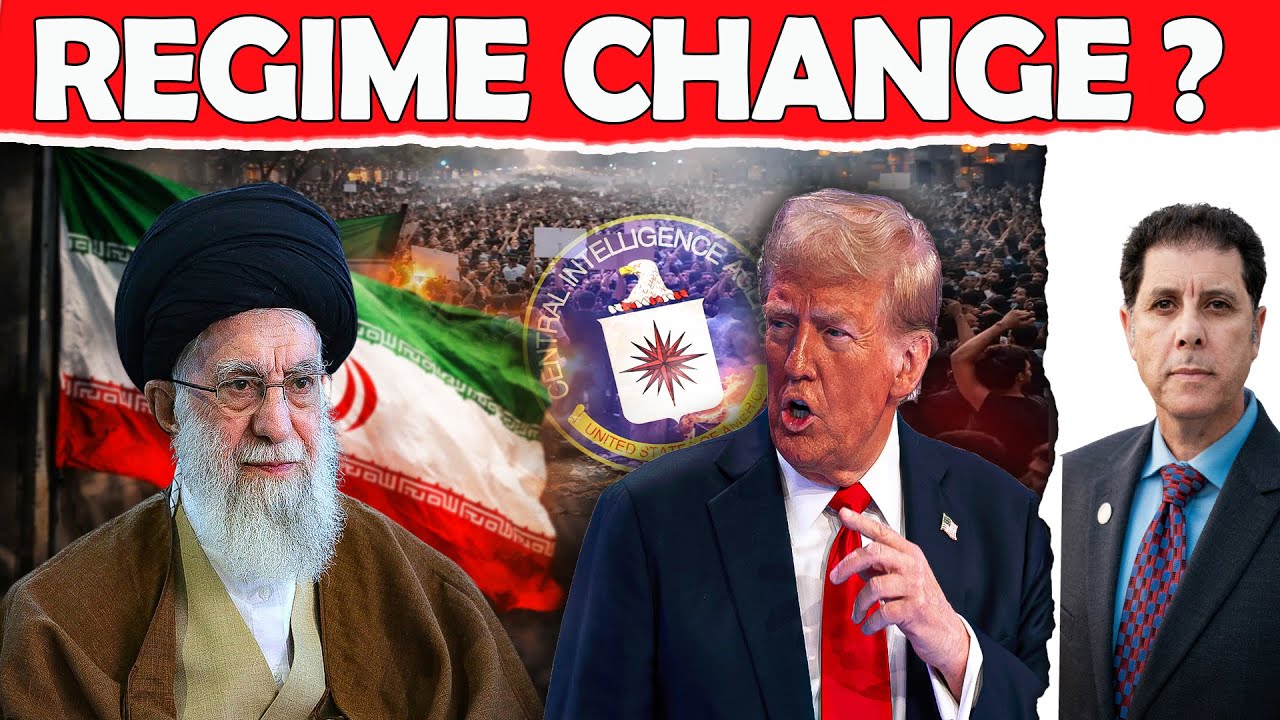
Dr. David Oualaalou analyzes Iran's 2026 protests sparked by hyperinflation above 48%, a collapsing rial, and shortages that spread across 111 cities. He examines the government's internet blackout response and traces historical CIA-MI6 involvement in Iran's 1953 coup, while evaluating current claims of Western intelligence amplifying the unrest.
Chapters
Hello everybody and welcome to Geopolitical Trends, where truth matters. I'm your host, Dr. Oualaalou, excited to be with you as always. Today's topic, we will be talking about what's going on in Iran. I know I didn't, I didn't forget about it. It's just a matter of, uh, for me confirming certain information. And so you know how I do it. I don't just jump the wagon here and follow whatever. So Anyway, that's what I'm going to be providing you today, is my own analysis about what is going on, you know, what's behind all of a sudden, the sudden eruption of these protests, you know. And are they asking legitimate questions? Are they having basic demands? Yes, they are. So, and I'm going to detail for you, of course, with the main question whether any other foreign intelligence agencies are involved. So, and I'll provide you my own answer into this, uh, down the road. And I will conclude with an excerpt from my, uh, my Iran book in which I detailed some of the aspects here. So it's— it'll come to be very, very, very, uh, important in this discussion. All right, let me, uh, start directly here with, uh, with some, some headline— not a headline, I'm sorry, with with— actually, let me say hi to our wonderful community. As always, Leanne, good to see you. Keith, good to see you. Sarah Carroll, you made it to class on time, good to see you here. Willie Holman, truth seeker as always. Athene Wu, good to see you here. And Soccer 088, good to see you. And Gina, good to see you here. And Sunny, good to see you. Dave H, here you are. Good evening to you as well. So, uh, let me just start some housekeeping items and I'm gonna move directly into the analysis. I don't have any, uh, headlines today. So, well, uh, Jayant Bahandari will be here tomorrow, so make sure to join me for this fascinating conversation with Jayant because we're gonna be talking about, first of all, the, the crash of the stock market in India, then about the revelation of really some nefarious activities that is, are now emanating from different parts of the world that involves Indian nationals. We're looking at a scam of money, we're looking at pedophiles, we're looking at all that stuff. So I'll be addressing this with, uh, these topics with Jayant tomorrow at 1900 hours. So make sure to join me for that fascinating conversation. So, uh, let's talk today about our particular topic, what we're going to be addressing here in this live stream. My own analysis about whether is Iran next. We've seen this movie before, you know, to those who say, oh, this is it, regime change. Don't jump to conclusion, don't jump to conclusions right away. There is a lot of moving parts into all this. What is for sure is that Iran now welcomes 2026 with some sort of a domestic unrest. In addition to the international pressure. And again, when I wrote my Iran book back then, uh, I kind of kept in perspective what are the possibilities for things to change in Iran, and I always left the door open just in case. So, and this is where you see now this massive anti-government protest triggered by severe economic crisis On one hand, you're looking at inflation that is exceeding 48%. You're looking at the collapse of the currency, and you're looking at also the failure of the government to provide basic services. You know, let's call spade a spade. You know, the government, Iran government in Tehran, is some sort of not meeting its own obligations. And this is not just my word. Is the word of the president of Iran, which I will share with you a clip and translate for you what he's saying. And this is where you have now the demonstrations moving from just one location to about 111 cities in 31 provinces. That makes it one of the— literally marking some sort of the largest uprising since 2022. To those who are familiar with what took place in Iran back then. So you have now the government is responding, uh, sort of, uh, uh, always dealing with this kind of, uh, uh, tensions, uh, domestically. They're always trying to contain it, you know, where the danger into all this is if there are foreign elements financing this, which is exactly what took place in 1953. And I'm gonna share with you the declassified, uh, part of this, uh, particular operation that took place back then. So the Iranian government is kind of concerned about similar outcome, and this is why one of the first, uh, uh, uh, order of business was the limitation of the access to internet. So the blackout in itself, the crackdown that is moving because you start to see now the tensions of violence moving up an inch up by having now, you know, former security officers being killed. You have also the Ali Khamenei, the head of the Supreme Leader for Iran, is kind of his first argument was, you know, let people distinguish between the, the elements that they are just causing havoc and the elements that they are, uh, demanding legitimate— they have legitimate demands. That was his argument at the beginning. Apparently things are changing. So, and this is why now the, uh, the, the logical question we're going to ask, because the situation is getting further complicated, and some will say, well, because now more people are coming out to the street Yeah, that will be one element, but it's complicated in my opinion from another aspect, which has to do with so far the alleged involvement of the Mossad and the CIA. So now, will we not include MI6 into this? It will be naive of us not to think of that, and I'll get into the, the three agencies, uh, uh, in, in a second here. So And this again, why it makes it very concerning for the Iranian government, it's because it reflects Iran's historical distrust of Western intelligence agencies, which goes back to the 1953 coup that overthrew, uh, the, the former prime minister Dr. Mohammad Mossadegh. And I will, as I said, I will discuss the detail, of this as I move forward. So, so for now, suffice it to understand when we look at this particular, uh, uh, issue, Israel and the US are already coordinated their potential military, uh, uh, I won't use the term strike, but planning. Yeah, it will be naive if you don't think that the US is not coordinating with Israel on the military aspects of it. And this pertains to the two main, uh, elements Iran programs and Iran missile, uh, program, uh, uh, Iran program, nuclear program, and the missile technologies. Those are the— because what you have now is Donald Trump threatening, you know, here's what he's saying to the Iranian government, hey, we will, we will strike if you crack down on protest. Well, first of all, Donald Trump, who the heck are you? To tell another country whether they want to crack down on, on protesters or not? You know, why, why isn't he doing this regarding France? You know, why isn't he doing this regarding what Germany is doing to the citizens? You know, that's to me gives you an idea of what is the preconceived notion from the Trump aspects. And remember, it was only a few weeks ago, not even 2 weeks, actually 2 weeks or so, when Netanyahu was in, in Florida, you know, do you think that Iran didn't come up in the discussion? It did, most likely. And this is where you're going to see now the convergence of the internal instability. Then you add the external military threat, okay? Then you have the, uh, the unresolved, uh, questions about foreign interventions. And all this when you combine them together, you're going to have like some sort of— it creates an extremely volatile geopolitical flashpoint. And of course, this comes on the heels of the other two main things, which is the abduction of the Venezuelan President Maduro, but also based on the other event that took place in three different maritime locations when Russia seized 12 cargoes and took them. That's now under the control of Russia. That was worth about, to my knowledge, about $3 billion or so. So all this gives you an idea of where things are. So, so let's play a clip first. I'll translate for you, then I'll continue with the conversation. So let me share a screen with you here. Please give me time here, second, and I'll do the translation for you as we move forward. Okay, let me put this on a full screen and I'll be blocking it so you— I can, I can do the translation so you can hear. A new wave of protest taking place in Iran. Which started from, from the marketplace, but specifically from the places where they are selling the electronics. And this is in protest against the, the, the, the, uh, the currency collapse, or against the dollar. Yeah, the local currency against the dollar because it devalued so much. And after this, moving from the markets into inside universities and into other regions inside Iran. First, it started with the slogans or the calls for the currency issue. Then this demands moved into social— social and economic conditions in call for the government to improve the living conditions in Iran. In other parts of these demonstrations, in different parts, They were calls on a political level for the current political status or situation in the country. So the Iranian government is trying to control the pace of this protest and to control it through policies of of containment. And this is what I wanted to really distinguish here. That's why we don't want to jump to conclusions. We're going to hear what the Iranian president— this is, uh, Raisi— is saying. So I'm going to translate for you here. First, let's not, uh, the, the discontent of the Iranian citizens, we're not going to blame it on America. I'm sorry, we're not going to blame it on external elements or the US. We are the one that have shortcomings into this because we have to do our duties and we provide services. So the people are content. We must sort of take care of our own resources in a, in a good manner. We do have massive amount of resources, but the people are suffering, are suffering from the economic, uh, conditions, and we are sort of— we are the one to blame, meaning we, the government in this case. Now what the government ended up doing is it wanted to take some measures, and he already started by embarking on the first one, and the first one was the the dismissal of the central bank governor, and the government intervened in some sort of stabilizing the currency. And there are also promises from the government that they will provide the necessary support for the people. And take an overview or review the financial or the fiscal policies in the country. All these particular promises will face reality, reality of the current conditions on the ground that the Iranians are living, living. But also based on the pressures from outside elements. Or also is going to be based because facing this reality, also based on the sanctions that the country is facing, which is imposed on, on, on Tehran. So this is one. There was another clip, but it's similar to that, so I'm not gonna play both of them. So Suffice it to say, we need to understand, since the protest starts on December 28th, that's when it start. So the widespread demonstrations erupted. That's why I'm saying it was like, what is leading to this sudden eruption? And of course, like what you heard on the clip there, they were driven by the economic hardship, inflation, currency devaluation, rising food prices, electricity, gas disruptions, and so forth. So This is why I always say, you always look at that, the performance of a government, you know. I mean, I look at it for our own country here, you know. Do you think the Americans are taking any stand? No, no, because the— they don't care, you know, till it hits them hard. The way it works for us here, to those who are not familiar with how the American system works, Americans won't do anything till they are broke. Till they start going hungry, then you might see some movement. But that's what exactly what the Iranians are doing in this case. So because what began as an economic complaint now is evolving into a broader political uprising because now you're starting— there are slogans that the protesters are chanting, which is surprising to a degree, at least given the conditions. But on the other hand, it's not surprising. When you have an angry population, don't be surprised at what they can do. For example, there are slogans that, that saying now, death to Khamenei. That is a strong one. So they're also demanding an end to the current regime. So, and the protests now, as I mentioned, are spread across the country. However, there are similar situations where this happened before. Because there are some voices inside, some universities are calling for the return of the monarchy, which is not going to happen. You and I know that's just wishful thinking. But at the same time, you don't dismiss something like that because you have to understand where those kind of statements are coming from. And we'll get into that. The internet outage, that one you have to understand, uh, which happened on Thursday, happened yesterday by the way. The internet connectivity and the phone services sort of dropped in different parts of the country. So of course, it was first in Tehran, then it moved to other parts of the country. And this was basically to prevent the spread of information from one region to the next. Governments usually do that. You all remember what happened in Morocco when they tried to do this. And all of a sudden, Iran— the protesters were using, uh, I think, uh, what is— I forgot the app they were using, and the Moroccan, uh, uh, security services weren't aware of that particular developments. And that's because the government was trying to clamp down on the internet. This is exactly what Iran is trying to do. So, and what makes this even worse now is when you add the, the elements of the foreign threats, especially by none other than Trump. Because here is what Trump is saying. Trump is saying that, oh, I am warning you, Iran, if any protesters are killed, you know, because he's saying— and I'm paraphrasing here because I remember reading, uh, the article, uh, that was on CBS, if I recall— basically what he's saying is we are going to hit them very hard. So that is what he's saying. So, and he posted on the, uh, his platform is that if Tehran violently kills peaceful protesters, we will lock and load, meaning to intervene. So that's Trump talking. On the other hand, you don't dismiss something like this given the political climate that is going on. And this is where the political dimension of what's going on takes place. You don't look at this just from the social aspect or the economic aspect. You have to include the political dimension in your analysis to give you a much better read on the landscape and how it is. So the internet cuts— here's the interesting part— came as an exiled crown prince, none other than Reza Pahlavi, the son of the former Shah. This is what I'm saying. You have to understand the elements coming before. Now, I'm aware— I was aware— I'm aware of the link between the prince who lives in California. Majority of the Iranian that fled from Iran concentrated in San Diego area. So, so I was aware of his contacts with the CIA. So, and it's not classified. It's to those who knows, you all know the dynamic. So And the reason why Bahá'u'lláh is calling for Iranian, because he asking them to use the chants, "Death to Khamenei," from the windows. So, and that's where the chants— to those who are familiar with what's going on in Iran, you start hearing some other slogans that saying, "Death to the dictator." This is basically what Bahá'u'lláh has been calling on people to say. So there you have to understand the link between the two. So the scale of this response could really determine, so, whether so far the 10-day protest, you know, it's going to grow into a major challenge for the government. And yes, the doc— there are documents, especially if you, if you live here in the US You know, uh, we have, uh, what we call the, the Freedom of Information, uh, Act, which you can request certain information or the congressional, uh, uh, uh, information regarding the link between Pahlavi and the CIA. So there are documented links between the CIA and the Crown Prince, the exiled son of Iran's last Shah, and this started not yesterday That was back in the '80s, and that involving support for coup attempts and the Bahá'í receiving some funding from the agency. So of course he has to deny. We all know how the, how the narrative goes. Oh, I have nothing to distance myself from that. It's the same what that opposition in Venezuela, Machado, was saying, even though she was receiving Heck, she had a, a, a, I think, 5 or 10-minute meeting with Bush in the White House. That tells you the story right there. So, so the connection stems from a long history between the Pahlavi dynasty and the US intelligence, which goes back to 1953. And this leads me to just provide a brief snapshot of the historical, uh, events of the 1950 3, the overthrow. So the key details to all this is you have to go back, just to go back to the, the, uh, the, the Baha'i, the sun connection. You go back to 1980 specifically. I don't know how many of you are familiar with the journalist Bob Woodward. He's well known here. He's the one who reported on the ties between Baha'i and the CIA in the '80s. You know, and as a matter of fact, he even provided information that Bahá'u'lláh was on the payroll for the agency or with the agency. And that is also back at the time, the conversation was also about the coup plots. There were alleged plots at that time for Bahá'u'lláh to return to power, reportedly with the support of the agency, and of course Israel. And that is where, if you understand what took place before— what am I referring here? I am referring to the establishment of the SAVAK. You all know what a SAVAK is. That's the Shah's secret police. Who do you think established the SAVAK? You know, as the agency and the MI6 at the time. So, so the 1986— it was a broadcast in 1986 I, I looked at the record. That's, that's what I did the research for you here. And actually, it was the agency— the Central Intelligence Agency was reportedly behind the secret 1986 TV broadcast into Iran featuring Bahá'u'lláh. That's what it was back then. Even though, here is the, here's the thing. Even though it's still till today, and I can confirm this, it's still unclear whether Bahá'u'lláh himself knew the agency involvements in that broadcast or not. So, but suffice it to say that Bahá'u'lláh has— meaning the son here, that's this one right here— has constantly denied the involvement or his ties to the CIA and so forth. And this is, again, I need you to understand this historical background to put it in perspective. And I will talk about the three agencies— MI6, Mossad, and CIA— in a second here. So, and this is why Iran now today is in a— government is in a difficult position. So I remember when I, uh, did my research for my, uh, Iran book, I had really to spend— I spent about a year and a half just, just reading and gathering information in understanding how the system works and so forth. So I could provide my readers with some better understanding of the realities. So Iran's government is in difficult position. So because Iran is facing two tracks, one is domestic with discontent population and the other one is Trump explicit warnings. About intervention. So, and this sort of, uh, put limits or constrain the Iranian government how harshly they're gonna respond to the protests. So I, I don't believe they're gonna go full force with, with— yeah, they could if they do, but it's only gonna add more fuel to the fire. And this is where you ask the question whether MI6, CIA, Mossad are behind the protest? It's, it's legitimate question in my opinion, whether they are or not, that's beside the point, you know, and, and my role here is just to, uh, sort of, uh, uh, uh, what's the word? Challenge your intellectual curiosity and provoke thinking into the, the possibility, the realm of possibilities of what if. Why? Because there is a precedent for this. There is a historical record. For something like this. Of course, we're not going to deny that the root causes are genuine, which is the economic crisis. So this is why the protests are originated from, originated from severe economic crisis. You're looking, as I mentioned earlier, inflation over 40, surging to 40, 48.6%. So as of October 2020, 5. So, and of course, the Iranian rial, which is the currency for— yeah, reaching a record low, uh, vis-à-vis the dollar as of January 6th. So, so 1.5 million to the US dollar. That almost reminds me of Zimbabwe when they were printing, what, a billion, whatever that was. So, so this, in my opinion, these aren't invented crises. No, it's the reality on the ground, harsh reality. So Iran's economic conditions are legitimately devastating for an average Iranian. There are wealthy Iranians and so forth. We're talking about the average person. And this is where that claim comes in regarding the intelligence, foreign intelligence involvement. So of course it's going to be back and forth, controversial regarding the Mossad, for example, involvement, the CIA involvement, the MI6 involvement, you know, because it was an account inside Iran, a Farsi language, a Farsi language that, uh, on, on even on X, that is sort of disclosed as an unofficial Mossad messaging channel which was writing this, and I'm gonna share it with you here in quote: 'We are with you in the field as well.' End of quote. Read between the lines. This is a Farsi language, widely regarded as an official Mossad messaging. Because remember, in Iran there are a lot of Jews living in Iran. They've always lived in Iran. They are Iranian Jews. There's nothing, you know, they always been protected, living like everybody else. It's just their existence does indeed so. Then you have, for example, the former CIA director Mike Pompeo, so, posted on X that Mossad agents are walking beside protesters. So, uh, because Pompeo was still a hard, a hawk, uh, hardliners when it comes down to Iran. So additionally, this says from the outside, you have Iranian officials or authorities inside Iran claim to have arrested a Mossad agent who allegedly received instructions to encourage people to protest. You know, will I be surprised as one who worked in the intelligence community? No, I won't, because the same thing that happened before when Iran— pardon me— when Iran was attacked, it was an infiltration from none other than next country in, uh, uh, what is, uh, Azerbaijan. So there were even Indian nationals involved in working on behalf of Mossad inside Iran. So that's my point. That's why I won't be surprised, and I won't rule that out. So, but the question once again we have to ask is about what this means. What does it mean? Should we go with this theory? It is a significant, uh, uh, sort of proposition here, but it's also, it's very challenging how to interpret these public claims. So of course, as an analyst, like many others, we suggest this is an entire genuine admission of involvement. And conversely, will be— to me, if I am to think from a military perspective, I will think about psyops. This also could be a deliberate psychological tactic to provoke Iran into a harsh crackdown. Because you all remember what happened prior to the 1979 revolution. And that might justify— because if that happened, that's why Iran is using— the Iranian government is using restraint as of now. Because if they go with a harsh crackdown, it's going to justify the US military intervention, which will serve Israel's objective. Of course, Israeli officials have been notably cautious. So, and this is why Netanyahu is saying, stating on the record, so regime change, in quote, regime change will come from within. In quote, once again, read between the lines. But he is also emphasizing the risk of visible— that's the key word— visible Israeli involvement. So, which, by the way, because what he is concerned about is that it could be— this will allow the regime to reframe the organic protest as Zionist plot. So see what I'm getting at? You know, he is also concerned. To him, this plays out for his political, uh, career or political calculations. But on the other hand, it's gonna backfire. So the bottom line, the core protest, if you are to look at this, appears rooted in a real economic hardship. This is the key aspects of it. So, and as to the whether intelligence agencies have infiltrated or amplified the movement, you know, it's not as clear. Uh, it so far is contested, but for me personally, and I speak for myself, I can see the elements of the involvement. So that, that's, that's my own interpretation into this. Liking this video so far? Don't just be a watcher. Go ahead and hit the like, share, and subscribe button, and don't forget to tap the bell so you will not miss any of my videos or live streams. This way, you will be supporting a channel that stands for the truth and objective reporting. The choice is yours. Thanks for your support. Now let's talk about the history of the US, UK in supporting opposition groups in Iran. In Iran, yes. Why is this important? Because this historical snapshot, you know, sort of provided deep understanding, deep relevance vis-à-vis what's going on today. So we go back to 1953, the watershed moment that took place, which happened in August 1953. And that's where both the MI6 and CIA, both of them orchestrated the coup that overthrew, uh, Dr. the democratically elected, uh, Dr. Mohammad Mossadegh. This is where I see the double standard on our part when we say we support democratic elections and so forth. And when, when a leader is elected that is, that we don't like, all of a sudden we have to, uh, turn the tables around. So Mohammad Mossadegh was democratically elected as prime minister, and of course the first course of action was to, uh, nationalize Iran industry, uh, oil industry. So, and that in itself cutting into the British and the American oil profits. And the, of course, the operation included a false flag attack, paid protesters, propaganda, bribery of politicians and of course military officials. It's almost similar scenario that just took place in Venezuela. So, and that's where back then, of course, you had almost 200 to 300 people were killed. And here is where the declassified one that I had to pull out of the record for you. It was an operative by the name Kermit Roosevelt. So I'm going to share a picture of him Oh, Kermit, I didn't— hold on a second, guys, let me pull up the picture here because I have it on a record here. Kermit, where are you? Right here. This is the individual. There we go. That's Kermit. Kermit Roosevelt was a CIA operative who arrived in Iran at that time with suitcases of cash. What was the purpose? Is to hire people to protest, bribe the newspaper's editors to spread misinformation, and of course to orchestrate and organize a fake communist demonstrations as a pretext at that time. However, you need to understand the role of MI6 also. Both of them. So both CIA and MI6 collaborated with none other than Shia, radical Shia Islamist at that time, and it was the predecessors of Ayatollah Khomeini to organize street demonstrations, you know, and even considered installing at that time Ayatollah Kashani as a client leader. So, and by the way, just to let you know who this person is, Kermit Roosevelt. Kermit Roosevelt, as I said, wasn't— it wasn't— was an intelligence— he died, uh, Roosevelt, uh, he died in 2000. Uh, he was, uh, he was an intelligence officer for the CIA. So, and he served at that time under the Office of Strategic Services. So following World War II, that's how Barbeck— what's important is that he is the grandson, or he was the grandson of none other than Teddy Roosevelt, Theodore Roosevelt, the 26th President of the United States. So Roosevelt, of course, want to establish, uh, he established the American Friends of the Middle East. And that's where Kermit played the leading role into the Central Intelligence Agency and so forth. And you all know the rest of the history, the overthrow of Dr. Muhammad Mossadegh. So then what happened after this particular time came the aftermath of the Shah dictatorship. And after the coup, the Shah returned to power, and the first order of business was to sign over 40%. Yeah, 40% of Iran's oil fields to US companies. Yeah, so at that time, this is where the establishment of the SAVAK. And the SAVAK were established not with MI6. The SAVAK was established with the coordination between CIA and Mossad. So, and the SAVAK was, as I said, the Shah at that time's secret police, which became notorious for systematic suppressions, political oppressions, notorious torture, and so forth. Then came the long-term consequences, and it's important to understand these historical facts, you know, because 1953, the coup that took place Because it's been historically viewed and assessed and considered to have been sort of sowed the seeds of the Islamic Revolution of 1979. So, and that's usually when Iranians overthrow the Shah himself. So the memory of Dr. Mohammad Mossadegh's overthrow, became the symbol of a foreign interference that resonates strongly with Iranian public opinion across different political lines and from all walks of life. So, and this is why this history, this history is very, very sort of crucial context for understanding the current Iranian suspicion when I say Iranian, the government, that is, and some people, their suspicion of the Western involvement in domestic affairs. That's what I'm saying. You have to leave the door open to the possibility of the involvement of the foreign intelligence. So whether that suspicion is justified by recent CIA, Mossad activity, it's a contested question, of course, remain to be debated. So The other legitimate question we had to— we ought to ask is whether Trump threatening of Iran is on behalf of Israel. So, and of course, because the interests overlap significantly. So, but it's very important to distinguish between the two to give us a clear picture into what's going on. The first thing that has to come to your mind is the aligned strategic interest of both the United States and Israel vis-à-vis Iran. So both Trump and Netanyahu, so jointly, have warned against, uh, reconstituting Iran's nuclear program. So, and even during December 29 meeting, that's when Netanyahu was in Mar-a-Lago in Florida, they discussed, as I told you, they— there is no way they will not have discussed the Iran issue, and it's recorded, it is reported on the record that they have discussed the possibility of another round of military strike against Iran in 2026. So, so I'm gonna provide you the link. You can read the article yourself if you decide to do so. But where the difference that— and I had a chance to read the, the report for that— what I— where, where the issue was, is, or was, is that they didn't agree on specific timing. And not only just the timing, but also the condition. So in my opinion, the condition issue has been resolved because you have now demonstrations. And that's why Donald Trump warned the Iranian government, if you crack down on protest, we will strike. As I said, there were two conditions: the timing and the conditions. The conditions part is dealt with. Now we are left with the timing. So, and that is why Donald Trump confirmed that he would likely, uh, uh, back another military operation, uh, if the US, uh, sees Iran taking verifiable steps to rebuild nuclear program. But at the same time, Trump, to Trump, Iran is his own strategy. So because Trump has his own independent, even if you can call it geopolitical concern, even you and I know Trump has no clue. The guy doesn't know. He will have no clue. About the geopolitical concerns. Otherwise, he would have thought through what he did in Venezuela, what he's doing in other parts of the world. But let's just go with the theory and the, the, the hypothesis that he has geopolitical concerns. So, and this, his own geopolitical concerns will go beyond just supporting Netanyahu. Why is this important? Because to Trump— and by the way, he did mention this in one of his conversations, whether he remembered or not, that's beside the point— he did mention that he would prefer to strike a nuclear deal with Iran. This is why I am telling you, based on experience, don't rule out the possibility of the United States negotiating with Iran behind closed doors. Except that is going to be very tricky because what Iran wants— it wants the conversations to be only about the nuclear program but does not include the missile technology. Why? Because Iran has some sort of advanced in its missile capabilities. Most of the missiles within reach to Tel Aviv and any other parts of Israel. Of course, it can go beyond a little bit. And this is where I'm seeing why Donald Trump might have his own calculation. As I said, it goes beyond, uh, what Netanyahu wants. So don't rule that possibility out. So because Donald Trump could be just doing all this to pave the way for negotiating with Iran. So because now he's realizing what he did in Venezuela is backfiring, he didn't expect and anticipate what's coming up. So he didn't expect what the Russians did when they, they took over 12 cargo, uh, ships. Worth $3 billion. And those are with commodities— liquefied natural gas, oil, uh, uh, some other commodities. And this is why he is not simply— in my opinion, Trump is not simply some sort of a proxy for Israel interest, but also he's thinking about his own. And this is why When you think about his warning about the protests are seen driven by his, meaning by Donald Trump's, broader anti-Iran stance. And I bet you this, I will not rule out, of course, we will never know. I can tell you, for example, which declassified by now, I can talk about it. I was aware of, I was in the middle of the, of the talks that took place between US and Libya back then, you know, was never disclosed. So that's what I'm saying, this kind of stuff like this, it will never be disclosed. And this comes with the political angle to all this, because when you think about it, so both, meaning in this case Israel and the US, will have domestic political motivations. So, and not only just Israel, but Iran also, because, uh, but we are to think in terms of, if I am to remove Iran from this particular point of the political angle, then I'll— my focus will only be on the two, Netanyahu and Donald Trump. So, because here's the thing, the Iranian threat This is if we look at it from the perspective of Netanyahu. He serves Netanyahu politically. Why? By shifting the focus away from domestic Israeli protests, because there are also protests inside Israel, you know. And in this case, Netanyahu will need to convince Trump with intelligence to justify military action. This is what I'm saying, you're going to have to look at it like a chess, uh, chess game. How they going to move? The bottom line to all this is that Trump appears to have so far an independent reason for confronting Iran. Of course, the nuclear concern, the regional competition, oil, missile aspects of it. But his approach, Donald Trump's approach, is much aligned at the same time with Netanyahu's interests. This is the irony of all this. So the two of them, Netanyahu and Donald Trump, are converging on a similar strategic goals, except we don't know, it's not clear whether Trump is acting primarily on behalf of Israel so much as both of them are pursuing compatible policies that happen to benefit each other. So because Iran clearly see both of them as coordinating, and whether Trump is following Israel lead or they are simply aligned partners. That, that's one thing Iran is trying to figure it out. So, and that leads us to the next question: will Israel and the US jointly engage Iran militarily? You know, to me it's critical question because you're going to have to see how the US started 2026 regarding the, its military ventures. How Iran is starting 2026. I'm not going to rule that out now for the rest of the year. We're going to be seeing more chaos, especially coming from the US engagements in different parts of the world. So, but at the same time, you have to consider the recent assessments and statements about this likelihood of a military joint military actions. So Israel calculus for a second strike on Iran is kind of on the table. So only in one condition, and the condition is the nuclear threshold. But Iran not only concerned about that, is concerned about the missile asymmetry. Do you all remember a few years ago that Israel, Israel Told the US, if you don't attack Iran, we will use nukes. And we kind of were a little bit concerned. Will Israel go for it? And we didn't want to take a chance. So, and this is where you're going to have to assess the risk assessments, not only regionally, but globally. So the short answer, in my opinion, will be possible, but not imminent. From the Israeli perspective, because both military and political leaders, some sort of, they have to consider the other factors that can complicate this particular likelihood or likely or Israeli calculus for this. Then you think about the current status. So the current status Meaning, meaning the statements coming out of Washington, from Tel Aviv, from some other European countries, even the Europeans, as you are useless anyway, we don't, we don't include them in this conversation here. So because it will be considered more of a rhetoric than it is an urgency. Because here is the hard facts, and I had to look into this to confirm this particular information. And the fact is that Israeli military intelligence and Mossad. Both of them don't think that Iran's current pace for rebuilding the missile capabilities create urgency for military action. But there is one condition, and this condition is that is only for the next 3 months, 4 months max. They're not saying for the next year, we're looking at the next few months. There are others who are saying, hold on a second, a second strike could come within 3 or 4 months depending on the tactical timing and Iran's internal development. You all remember what I mentioned earlier, the two conditions that Donald Trump puts? The timing and the conditions is the same assessment by the Mossad and the Israeli military intelligence. So that means what? The time frame of 4, uh, 3 to 4 months, you know, because 3 or 4 months puts you in a different, in a specific timing within the region, because within 3 or 4 months you have the month of Ramadan that's going to start around that time. So you have to think about other conditions. So then the next question pertaining to this particular aspect will be, what are the trigger mechanisms? What is going to be the triggering, uh, factor for action? A second Israeli strike remains plausible but also conditional, and that will be basically driven by the nuclear reconstruction. It will be driven by the missile regenerations, in other words, the upgrade of them. And of course, it will be driven by the regional alignment. You all know what's going on in Syria right now. You all see what's going on in Yemen. You all see what's going on in Lebanon, in Iraq. All this should give you an idea. And by the way, I, I think next week I'm going to do an update for you about Yemen, you need to understand what's going on in, in that part of the world. And this is where the Israelis are thinking in those terms. The regional alignment is going to play a major role. And in that case, Israel will conclude that— if Israel concludes that Iran is rebuilding its nuclear capabilities under reduced visibility or even gaining capacity for its large ballistic missiles, then that's going to become a different question, and the action might be triggered. So, and, and what gives me sort of confirmation for me to say this is Donald Trump's statements. And Donald Trump's statements, and I'm paraphrasing here, is that he will back Israel and eradicate Iran's nuclear and missile programs. That is my own assessment, the way I see it. But again, we can think of it this way, but we have to consider the political complications and the realities. So despite this aggressive rhetoric that is going on, both governments are serious facing serious domestic pressures that's going to complicate military actions. So, so this saber rattling that coming out of both Tel Aviv and Washington serves as an attempt to deflect from instant or sort of even the pressure of intense dissent both governments facing. Donald Trump is facing pushback here from even MAGA himself. Uh, uh, Netanyahu is facing pressure. He was just in court the, the 56th time going to court regarding his bribe stuff. That's why this Iran issue, if it keeps going, that's a political saver for him. So, and remember one other factor, especially for Israel. Is an election year in Israel where Netanyahu faces corruption allegations and pressure over October 7th. And at the same time, you don't just look at the US and Israel, you look at also Iran because Iran is confronting now a widening, widening anti-regime protest. So the risk equation is that a second round, in my opinion, for Israeli strike would likely be primarily air-based, similar to what took place in June, except this time, in my opinion, is going to be more tense, really ferocious. But what Israel is going to have to consider is that Iran stand ready to fire 2,000 missiles all at once. There is no way the Iron Dome or the David's Lion, whatever, is going to protect Israel from that. That is how— the way I see it. Because for Iran, any new war would likely escalate much faster this time around than it did in June. Why? Conditions. So And that is where I see the idea of Iran using a large, large missile barrage. So, and Israel will have to think about the consequences of that. So there is an elevated risk that is renewed now. And I'm going to keep my eyes open for the next few weeks. So usually I have my own people I can reach out to for certain type of information, and I will share with you what is unclassified versions of whatever I need to share with you. Suffice it to say, you're going to have to also consider that regional alignment I talked about, that talking about the Houthis, uh, Hezbollah, and some other groups in Iraq and what have you, even in Syria. Now Syria is descending into another civil war. So the bottom line is that a joint action by the United States and Israel is on the table, but it is not immediate. That is the key because the current protest in Iran may actually give both U.S. and Israel a window to exploit. So, but it depends. We'll see how it goes. So that's the— and I'm going to conclude here with, as I mentioned earlier, later on, as I mentioned earlier, that I'll share one excerpt. But suffice it to say, here is the thing. Like I argued one time, and I always think in terms of what if, and what I argued back then is that I said it is a challenging proposition, an audacious undertaking, to forecast what the world might look like in the years ahead. I find no point of reference, okay, no images and no sort of precedent on which to base my own predictions in a sense of exactly what's going to be happening 100%. What I can, however, I can create a possible scenario that addresses sort of vital issues, the upcoming geopolitical shift in the region and what it may consist of. So then I find my sort of human instinct may guide me to present a clear picture of this new reality as closely as possible. So, and when forecasting the scope, for example, of this geopolitical shift, I have to consider the vivid imagery of sort of human experiences, including my own, the political conditions, the historical events, both distant and recent. Now, as I ask myself, could my prediction become a reality? And that's what I found myself thinking about. So, so here is what I wrote when I wrote— here is what I disclosed when I wrote, or when I wrote my book. Many security analysts, academics, and pundits agree that the Iranian Revolution of 1979 changed the security architecture of the Middle East on multiple fronts and reversed the widely held notion the region will remain an ideological battleground between the East and the West. Whether or not we want to admit it, the Iranian Revolution of 1979 reshaped security alliances. One thing is certain: the Middle East's perception of Iran nuclear program provides a glimpse into the future of the geopolitical landscape of the region. That future will be marked by hostilities and a nuclear arms race in a region that remains deeply sensitive about nuclear weapons. I argue that the acquisition of nuclear technology by the Middle Eastern countries listed above will have to consider Israel's vehemently opposition to such an outcome. Simply stated, given its policy of nuclear opacity, Israel wants to maintain— Israel wants to maintain its undeclared monopoly on nuclear weapons. The suspicion among regional players and Western power is that Iran's nuclear ambitions are aiming at rivaling Israel. And that is where I see this particular trajectory going. I hope you guys enjoyed this analysis here. So remember to join me tomorrow for a very fascinating conversation with Jayant Bhandari. We will be talking about really what's going on with the crash of stock market in India, very bad, but also about the criminal activities of Indian national— some Indian nationals, not all, of course. We cannot generalize. We're talking about fraud, we're talking about pedophile, we're talking about— I mean, it's disturbing. And I have the proof and the evidence to share with you tomorrow. So just remember to join me at 1900 tomorrow for my conversation with Jayant Bhandari. I take this opportunity to once again say thank you to FU for your continued support. Really, you buy me sticker for every time you're on, man. I, I'm very grateful, and I want you to know how much I appreciate it, and I don't take it for granted. So your support for the channel, for the content, for the work that I do is greatly appreciated. And to all of you, I am sure you are enjoying this, this, this type of analysis. I would greatly appreciate if you could support the channel, of course, if you choose to do so. It's your decision. Thank you so much, F, for your continued support. So, uh, let me share the link with you for those who wants to, uh, support the channel here. Here is the link for it, and I'm gonna put the link for you in the chat box quickly here, and I will sign off. I can't wait for you guys to join me tomorrow for my conversation with the giant Bhandari. So, uh, for my Asia trip, as you all know, I have, uh, I have launched the funding campaign for the upcoming Asia trip. We are so far at about 4%, uh, you know, it's, it's, we just started, so it will be in the next few months. I would greatly appreciate if you can contribute to my upcoming Asia trip. And you know, this is to provide you, uh, information that you're not gonna hear anywhere else because I will be on the ground and I'll report to you. Yes, I know the recording sometimes is not as clear as it can be, but you know, you work with what you have. So I will be grateful if you want to support my upcoming Asia trip, and I'm gonna put the link in the chat box for you. You can do so. All right guys, I hope you enjoyed this analysis and I look forward to seeing you next time. As always, remember, geopolitics impacts your daily life in more ways than one. Till next time, bye-bye.
More from David


Beyond the Single Actor: Why the Gulf Isn't Choosing Between the US and China


Iran, Iraq's Militias, and the Houthis Are Coordinating! This Changes Everything




Who Controls the Next Decade's Resources? Latin America and Africa's Geopolitical Crossroads

The Chokepoint Trap: How Washington's Stupidity Triggered a Cascade That Now Controls the World

Trump Spooked as IRGC Unveiled dual-use SLV, Deployed Ghadir Mini-Subs & Hinted at Tactical Nukes!
