Iran Kept Its Nukes, Its Proxies, and Its Missiles; So Who Really Won?
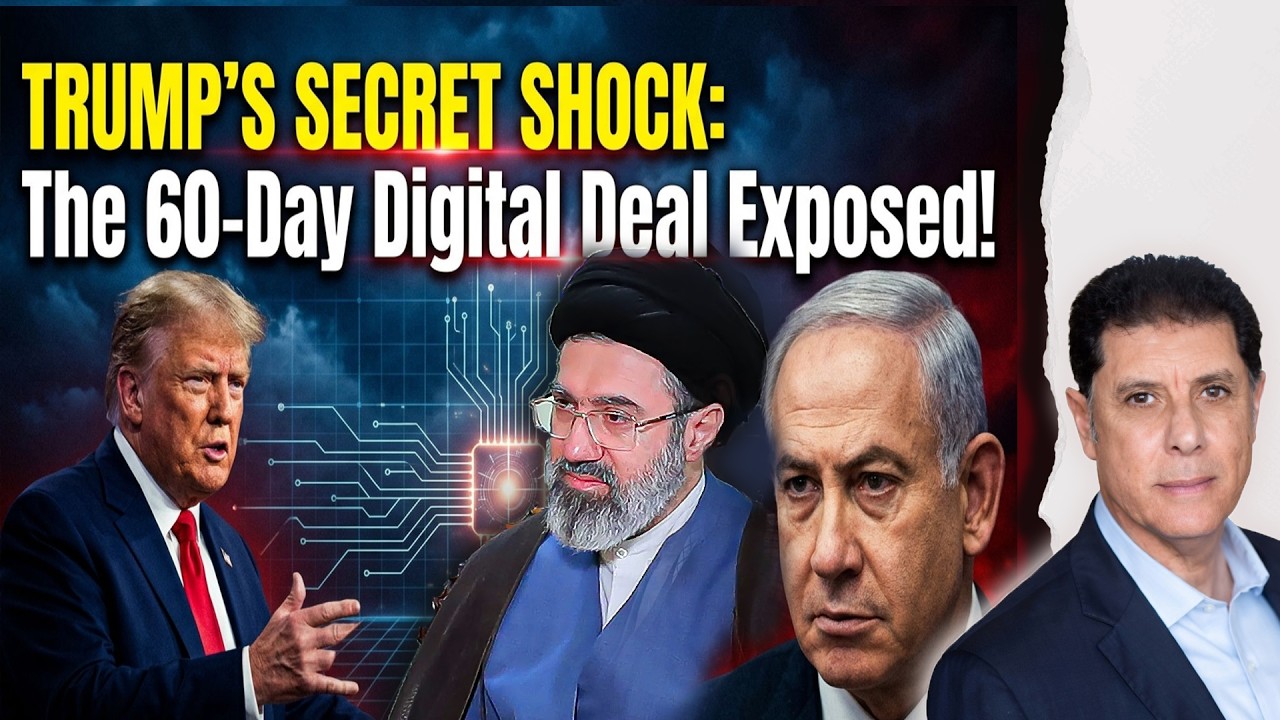
In a live‑stream on Geopolitical Trends, the host analyses the June 14 2026 US‑Iran Memorandum of Understanding (MOU) that was digitally signed and touted as a historic peace deal. He argues that the agreement is a strategic defeat for the United States and a diplomatic victory for Iran. The MOU is described as a vague, non‑binding framework that merely pauses hostilities, lifts the US naval blockade of the Strait of Hormuz, promises limited sanctions relief and a 60‑day window for nuclear talks, but leaves Iran’s nuclear enrichment, missile programme and proxy networks untouched. The host highlights the United States’ credibility deficit, noting past US actions (withdrawal from the JCPOA, 2026 strikes) that erode Iranian trust. He examines how the war reshaped regional geopolitics: Gulf states move from reliance on the US security umbrella to hedging and diversification (including deals with France, Canada, and outreach to China); China emerges as the structural beneficiary, deepening economic ties without security commitments; Israel seeks to sabotage the deal through actions in Lebanon, potential strikes on Iranian nuclear sites, and intelligence operations, but its capacity is limited. The analysis also identifies the economic winners of the war – US defense contractors, major oil firms, and large banks – and stresses that the cease‑fire is fragile, the nuclear window likely to collapse, and the broader implication that American power in West Asia is eroding while Iran retains leverage through its nuclear, missile, and proxy capabilities.
Chapters
Hello everybody and welcome to Geopolitical Trends, where truth matters. As you know, on June 14th— that was actually when I was flying back to the state— the US and Iran signed a deal that was almost celebrated around the world, basically, and it was looked upon as a historic peace agreement. That's how the world saw it. Markets soared, oil prices crashed. And Trump delivered victory, believe it or not. Iran declared victory as well, and every major news outlets around the world called it a breakthrough. But here is what almost nobody is telling you, is that both of them are lying. So because beneath the, uh, the headlines there is one country that walked away from this war with more power, more influence, and more leverage in West Asia or Middle East, and it has nothing to do with firing shots. And it isn't America, and it isn't Iran either. So you'll find out. So make sure you stay with me here, uh, so stay with me here in this one here till the end of the video because I'm gonna share with you some clips provide you my own analysis about all this and also give you an understanding of the geopolitical or the geopolitics of this deal, even though— because things will never look the same now. Okay, and this is again where the whole idea of, uh, the, the United States and Iran, uh, sort of now reaching this agreement that everybody's hoping will be signed on the 19th in Geneva because it was just digitally signed. But how can we forget that when America launched the war against Iran on behalf of Israel, the US killed the Iranian Supreme Leader Ali Khamenei and fired also about, to my knowledge, about 900 strikes, nearly 900 strikes, uh, uh, in, in, in a single night. And that's all, you know, the, the rest of what happened. The Strait of Hormuz was shut down, gas prices went up, market crashed, and of course 13 American soldiers died. That's what the Pentagon is saying. No, and after all this, no, after all this, Iran still standing. So what exactly did the US win? Because that's a question many will have to answer. Many will deserve an answer to it. And that's why I want to break down for you in this live stream what this deal is all about, okay? What, what lies inside it? What are the clauses and, and so forth? And I'll provide you the links to all the information, and, and we just go from there. But so far, Donald Trump is saying, you know what, I am going to finalize this deal with Iran. No, and it's scheduled to finalize pending peace framework. So, and we don't know, we don't know how this, this is going to evolve anyway. So now here is the thing, the first question, and I have about 4 key questions that I'm going to be providing you my own insights about, or providing you answers first, and my own analysis about them. The first question is, how likely is this digitally signed agreement between Iran and US will hold? So, but before we answer that, we need to understand what has been agreed upon. So this MOU, the Memorandum of Understanding, this is not a final agreement, a Memorandum of Understanding, which means what in a simple term? Nothing is agreed, nothing is agreed upon %. We still can go back and forth in it. So, so far it's been stated that the US and Iran will sign this officially on June 19th, about two days from today, uh, in Geneva. But here is what includes into this: cessation of hostilities in Lebanon as the first. And as a matter of fact, Israel were already and fired at Lebanon. So an end of the Iranian restrictions on the Strait of Hormuz, the reduction of the US military assets in the region, some sanctions relief, and of course the key one is the release of the Iranian frozen assets. And there is one other clause within this is a 60-day timeline for resolving the nuclear file. Think about it. How will this— how, if you are an analyst looking from outside in, you're gonna be thinking in terms of, was this the surrender of the US? It's because it cost the US over $100 billion just to go into this. It cost taxpayers here in the US over $300 billion only to sign digitally an agreement with Iran. That looks to me like a surrender. While not denying that the economic pain on both sides, it exists, it exists for the cost to US families is approximately was about $100 billion since the war started. That is why I put that number on the thumbnail, by the way. You look at about the, the, uh, The Iran— for Iran, of course, it was impacted because of the lack of shipping its oil. And the global market in general soared after the tentative deal was announced. Automatically, oil prices went down less by about, uh, $4 or $5, $4 or $5 a barrel. So what I'm going to do now, I'm going to share with you what has been leaked to the information— to the media, rather— some information from the content of this, uh, MOU. I'm not going to share all of them because it's a long one. The ones that I found very, very interesting. The first one is that Tehran and Washington and their allies announce an immediate and final end to the war on all fronts. That's just what's been stated. Does it go into effect, into practice? We don't know. We don't know. Tehran and Washington pledge to reach an agreement within approximate period of 60 days, which can be extended. And there is a reason why it is worded certain ways, because Iran doesn't trust America. And rightly so, because we tend to not honor our commitments. The United States will lift the naval blockade on Iran immediately upon the signing of the memorandum of understanding, not the agreement, which means as of this morning the US should have moved its naval assets and lifted that blockade. The US also pledged to move, or to withdraw rather, its forces within 30 days of the final agreement from the neighborhood of Iran. There are some other key ones, like for example, Washington is committed to ending sanctions on Iran according to an agreed-upon timetable as part of that particular agreement. Washington also pledged to exempt Iranian oil and related banking services from sanctions. All this is good, but we, you know, trust but verify. So I'm going to put a link for you in the chat box. You can read that later on should you decide to do so, because I have a lot to cover in this one here. So far, what you need to understand is that the ceasefire and the Hormuz reopening framework has a reasonably good chance of holding in the near term. No, because let's, let's be frank about it, both sides, Iran and America, are exhausted, and the economic incentives are overwhelming. This is why they put this 60 days, uh, uh, for nuclear talks are a different story entirely. Those are— will be to discuss the nuclear file. But at the same time, we have to remember history. The JCPOA collapsed, the failed 2025 rounds of negotiations, and that in itself created a gap between the two sides. And this is why that extension of the talks for 60 days is included into, into this. So now here's the first question we need to think about: what about the US lack of credibility? How likely it is to impact this moving forward? And to me, in my opinion, this is one of the questions that I— when I read the stuff for the last— yesterday, as a matter of fact, I didn't come across any sort of think tank or analyst that addressed this particular question, because this is the most underappreciated structural risk in this entire deal. And if I am to use history as my guide, there is plenty, because the credibility deficits of the United States is very deep and it is documented, and the history here is damning. So why is this important to understand? Because it was Trump himself that withdrew from the JCPOA in 2018 despite Iran being in compliance, then participated in the military strikes against Iran, when diplomacy was still normally ongoing in 2026. This is again— Iranian negotiators have drawn the explicit lesson, and rightly so, and that one is is that Iran must have wonder right now how long any commitment will be with the US will last. And that's why Iran will be very hesitant to give up something that is tangible, like for example its nuclear program, like for example its missile technology. And it's, it's, it's a right to, to have those. Or they give up their enriched uranium stockpile in exchange for anything that, that doesn't— because you can't trust the US. And that is one of the problem about the US entering into all this. And this isn't an abstract of sort because this one shapes the sort of the sequencing disputes at the heart of what's going on. Iran— Iranian officials have explicitly stated, and I quote here, let me get quoted for you as it is, quote, we have no, no trust in guarantees or words. Only actions are the measure. No action, meaning in this case opening of the Strait of Hormuz, accepting limitations on its nuclear program, will be taken before the other side, meaning the US, acts to lift the blockade of Iranian ports and ease the sanctions. End of quote. And why is this important? Because this is the direct product of the gap, or the credibility gap, that the US suffers from. Iran is insisting on front loaded US concessions precisely because it does not trust Americans to follow through. And that is exactly what the former, uh, foreign minister, Jawad Zarif— I have a picture of him right here— that is exactly what he articulated back in 2017. It was articulated about after the JCPOA was decertified No, because at that time Zarif warned that nobody else will trust any US administration to engage in any long-term negotiations because the length of any commitments or the duration of any commitments from now on with any US administration will be the reminder of the term of that president. End of quote. This is exactly what Zarif said, and he is right about this one. So now the ceiling we are looking at this is now 2029, barely 3 years. Iran knows a future administration in the US could walk away from all this. That's why I'm saying, and I've said this to you, uh, uh, before, I've always questioned whether Iran is making a strategic mistake. Engaging in the US into all this, because I can see what's going on right now. I can see it about 8, 9, 10 years from now happening again. And that is, again, just to follow up on our conversation here, what does this 60-day window, nuclear window as they call it, is all about? Because given the mutual distrust and intense domestic pressure that exists on both sides, it might be easier sometimes to, uh, on, on both sides, both parties, Iran and the US, it might be easier for them to agree on, on things that They cannot negotiate affirmative commitments about— in other words, it may be easier to agree on what each party will not do than to negotiate affirmative commitments about whatever they're going to agree on. And that is, again, Iran is very suspicious about the credibility of the US because we don't have any. And that's again the important about why this MOU, the Memorandum of Understanding, it, it, it's ambiguous. And that ambiguity is what compounds the problem to begin with. Because what, what I found out through the reading, through some analysis, some white paper from some think tanks, some military institutions is that officials close to the talks have said that because negotiations took place primarily through Pakistan and Qatar— Qatar behind the scenes, China also behind the scenes, Saudi Arabia also behind the scenes— mediators rather than direct US-Iran talks, it has never been clear whether the two sides, US and the, and the United States, uh, US and, and Iran, I'm sorry, have been working on the same version of the MOU. That's why I'm saying the MOU's own ambiguity is compounding the problem. No, and that's why now both sides are requesting clarification, further clarification, and that will include, for example, a timeline for this commitment. What are we looking at? We also have to talk about the enforcement mechanisms. What kind of mechanisms are we going to do to— what has to be in place to enforce this particular agreement? Then you have to talk about the final structure of a permanent war termination agreement. Remember, I'll give you example, the, the Korean War, which is technically is not over yet. Technically. Why? Because it was never a final structure of permanent, uh, termination agreement to that war. That's why things still, uh, the way they are in, uh, in, in the Korean Peninsula. The same can happen here, and that ambiguity is itself a credibility problem because both sides now can claim the other violated the terms they never actually agreed upon. So suffice it to understand in this aspect of this question here about the US credibility deficits, probably doesn't kill the ceasefire or the Hormuz deal in the short term. It might not do that, but it is likely will be the central reason The 60-day window of nuclear talks will fail to produce a durable agreement. To my knowledge, Iran will not surrender its nuclear leverage, its enriched uranium stockpile, its enrichment infrastructure, because it's, it's right. And why should they? And that is where I see things moving in a different direction. Many analysts, based on— again, based on the reading that I've done— consider this particular deal— I don't, I don't like to call it a deal because it's not a deal, it's just a memorandum of understanding of sort, a framework. Nonetheless, Majority of analysts, objective ones, they see this particular agreement of the US with Iran as a US strategic defeat. That means in a simple term, Iran won. And that's to me one of the contested questions. That deserves an answer. Now, if we are to be logic in our argument, we can say that the honest answer is partially accurate. The US surrender— the US was defeated strategically. But at the same time, we have to think about, uh, not oversimplifying an answer like that, because you have to sort of, uh, the, the segregate the US war aims or objective, that is, and at the same time whether those objectives have been achieved or not. And none of them was achieved, by the way. And I'm going to give you a few examples here to put things in perspective for you. What the US explicitly set out to achieve and didn't. Remember, the stated goals were to strike Iran, which started back in February 28th. What was one of the first objectives? Is regime change. Did it happen? No. Second one has to do with, uh, uh, uh, enrichment, uranium enrichment, to reduce this to zero. Did that happen? No. What about the elimination of Iran's ballistic missile program? Did the US succeed in doing that?
No.
And I'm just giving you 3 examples here. All of them, the deal or the objective for the war falls short. In other words, the US didn't achieve that. Because when you look at the reality on the ground, Iran governance still, or Iran the people in charge still in power. And both Trump and Netanyahu, both of them— I think I have picture of those two, uh, yes, right there— both of them indicated the goal of the strikes was regime change. You remember when they were calling on civilians to seize control of the government and all that stuff? And it didn't happen. So, and despite Iran losing many of its top leaders, Iran remains in charge, or Iran governance or regime or government still in charge. That's just one, one example. On the enrichment, for example, the US demanded zero enrichment. No, it didn't happen because Iran still holds its, uh, enriched uranium and it's not going to give it up, and rightly so. Then comes the big one, and the big one was the Strait of Hormuz problem for the US, not Iran, because it's a self-inflicted strategic liability for the US. Why is this important? Because this is where the strategic defeat As, as some analysts have been talking about, framing has the most force. That's exactly where that strategic defeat is all about. Because why? Iran entered the war based on everybody else saying, oh, Iran is weak, they won't be able to stand a chance against the US. So to them, they assessed Iran as a weak regional country. No. However, Iran demonstrated that it can, and it did, shut down 20% of global oil supplies and at the same time extract diplomatic concessions from the US, which many consider this powerful military, which is in on papers, no more, no less. The other aspects of this has to do with the Gulf States. The— let me put the map for you so you'll see the Gulf States, because the damage to the Gulf partners was also severe. And I'm not going to get into the detail of, of, uh, of the, the attacks and the launching of missiles and so forth. Suffice it to say that Iran missile and drone strikes which hit Dubai International Airport and hit also the Ruwais Refinery in the United Arab Emirates, forcing the, the, uh, ADNOC, which is a company, uh, to close production. And at the same time, the closure of the Strait of Hormuz added another disruption to that. That is why it's important to understand these aspects here. The counterargument to, to all this is that what did the US and Israel achieve? Because both of them were calling for a total defeat, framing it as so simple. Oh, it's just Iran, we're gonna go bomb some, some targets, uh, call for regime change, and we call it a victory. And that is the mistake. That's the arrogance that they can remember in the book Sun Tzu, to those who have a chance to read it, is you never underestimate your opponents. US and Israel did underestimate Iran. And that's exactly because the way you're going to be looking at it now is that Trump, given his mindset, uh, the guy doesn't think logically, uh, he's going to be thinking in terms of, uh, could I credibly claim to have halved Iran's nuclear program? Because that's probably what he— he already stated that, oh, we degraded, severely degraded Iran's missile drones and proxy forces. In addition to restoring to the UN sanctions, uh, uh, uh, against Iran, because that's what Donald Trump's going to do. The, the real goals, the real goals of the war with Iran from the perspective of the US and, and, and, and Israel was to push back two existential threats. By a couple of years. One is the nuclear weapons, and the other one is the massive ballistic missile value, which, by the way, we already saw a glimpse of it, that it overwhelmed Israeli defense shield. And that is why I asked you that question, uh, about, uh, whether Iran, um— where was the question that I asked? Whether Netanyahu— when Netanyahu threatens unilateral confrontation with Iran, I asked you the question, uh, in the survey, uh, do you think he can really do it? 19% of you said yes, 77% of you said no, and 4% of you said we don't know. We had about 2,600 participants into that. And by the way, thank you for participating in that survey. That gives me an idea how you see the developments of this particular problem, and rightly so. And this is again where you see this strategic defeat, because it is, in my opinion, uh, is labeled accurately. Some said no, it can't be, because it will only be if the US, if the US holds its original stated objectives. So no, to me it is a strategic defeat. And this leads me to ask the other key question. And the other key question is, will Israel's ability to sabotage the deal— what do you think? First of all, I want to just— if you can just share your answer, yes or no, in the chat box there, just for the community to know. In your opinion, do you think Israel will be able to sabotage this recent agreement? And this is a question that requires really a lot of thinking about because it's revealing about Israel's real capabilities as a spoiler. And the picture is more complicated than you think, more constrained than the rhetoric suggests. In this opinion, one thing is sure: the risk is there, is very real. Israel has tried to sabotage the deal and partially failed. And that's why towards the end I'm going to share with you one particular clip about Donald Trump lashing out at Netanyahu. If you want my honest— I mean, my accurate assessment on it, it's just for show, but I'll let you decide once you see it. Now you think about the reaction of Israel in Tel Aviv. Once Donald Trump declared that a deal will be reached with Iran, Israel said, you know what, it does not bind us, meaning Israel does not obey to that, and that Israel was not party to this agreement, which means it can do whatever it wants. Netanyahu himself declined to criticize the deal publicly but stressed He is not limiting himself into acting to prevent Tehran from obtaining a nuclear weapon. You all know what it means. So the other aspects of all this is that one of those objectives is that the nuclear file has not been resolved, which, if I am to say, the whole reason for why the war launched, among others, has not been resolved. And that again shows you the defeat, that strategic defeat we were talking about earlier, because the differences, significant differences about this issue remain on three key issues: Iran's nuclear ambitions or program or file, whatever you want to call it, the, the dispossession of the Strait of Hormuz, okay, uh, and the timing, the amount, and the source of the monetary compensation to Iran. And that is what the US has agreed now to do. They're going to be releasing about, to my knowledge, about $100 billion, uh, because remember, we spent $100 billion just to get into a war, and we spent $300 billion of taxpayers'— my part of it, my taxes— going into supporting and buying these missiles and all that stuff, only to turn at the end and sign the agreement Hey Iran, we're giving you all this. And that is why this nuclear file will remain unresolved for some time to come. So, and the one of the key other issue is that the implementation of this deal is gonna— it's not simple. They makes it sound like, oh, we're just going to sign and it will be easy. No, it's not. Because even a signed agreement faces significant obstacle before you start to see, for example, oil flowing, going back to its normal, uh, capacity. Uh, you have to consider the clearing mines from the Hormuz Strait. You have to restart the idle production fields. You have to repair energy facilities damaged during the campaign. That's why it's, it's, it takes time. It takes time. The deal that was announced on June 14th, after only hours after Israel strike on Beirut, because that tells you an idea right there. Israel has the intentions of derailing these talks. So, and that is why Donald Trump went ahead and condemned Israel publicly, but that's just for show. Even though Donald Trump used the F-word when he said, uh, uh, telling Netanyahu he had no F-word judgment, in quote. But I don't buy it. But that's me. What do you think? I think for me it's just for show. Remember, No American president can say no to Israel. And I'm telling you based on facts, I'm telling you based on one who was in Washington, I was in some circles there that understand how these dynamics are. So, and this is again, when you see what Israel is doing in Beirut, this is a clear attempt by Israel to sabotage Donald Trump's deal and drag the United States back into the war. That is exactly the objective of it. So whether this is gonna succeed or not, I, I do not know at this point. If the truth matters to you, hit like, subscribe, and tap that bell. No spin, no agenda, just the stories they don't want you to know. Don't watch from the sideline. Be part of the movement. Your support keeps the truth alive. Thank you. Now, when we think— and I'm going to briefly, briefly mention to you 3 possible scenarios in my— in the way I see it, how Israel could sabotage this. You have, of course, the, the Lebanon Hezbollah front. This is the most active sabotage, uh, Victor, right now for Israel because Iran insists any deal must include cessation of Israel hostilities in Lebanon. Will they do it? It remains to be seen. The other one will be is unilateral strikes on Iranian nuclear sites, which the question I asked you and 79% of you said— 77% of you said no, they won't be able to do it. And you are right in that. Israel cannot, cannot face Iran one-on-one. It stands no chance. Yeah, of course, if they end up using the nukes, that's different, uh, ball game altogether. And the third one has to do with the intelligence operations. Of course, Israel can continue the assassination, uh, campaign of Iranian nuclear scientists and, and sabotage the facilities, uh, like they did before. No, the most likely scenario, sabotage, from a sabotage perspective, it's a, a full unilateral Israeli strikes on Iran during these 60 days. But even with that, it's unlikely. That, that just, uh, because that will be openly defying Trump, openly dragging the US more than we already have. Into this war, and that could damage the relationship between Washington and Tel Aviv. So, uh, the other one will be like a slow bleed, if I may use the term here. Israel will continue grinding operations in Lebanon, uh, as, as a way of letting America know we are not happy with your decision. So So that is— so, so far, the bottom line to which is that Israel has meaningful, meaningful but bounded sabotage capacity, because they're going to run a risk into all this. And with this leads me to the next question, and the next question is, how can this framework, if we are to think of it that way, a deal, whatever, shape the new geopolitical realities in West Asia or Middle East. And this is exactly where you have to use history as your guide, because it has meaning, it has significance. We're already seeing that, because the deal— this deal or agreement doesn't end the war. The war's still on. It just reshapes sort of the structural logic in West Asia. And this will be for years to come, because now once the dust settles on this conflict, we're not going back to what it used to be. The US will have no say. They may have say on some, uh, uh, states that it controls, like the Gulf states, because their survival, the monarchy survival, depends on the United States. But they have reached a conclusion now. So, and that is why I found this particular question of great interest, because that's, after all, falls within the geopolitical realm that you need to understand where things are headed. So I'm going to provide some explanation or my own analysis about 3, 2 or 3 points, the key ones that I found very interesting. First is the Gulf States. If we are to think about the Gulf States, That's going to be now moving from, from a permanent— this is a permanent shift in my opinion, on my assessment, from an alliance, okay, to hedging. Because the way you're going to look at this is that the war proved something to the Gulf States, and that the Gulf States has long suspected but hoped, uh, sort of it wasn't true. But it turns out to be, and that reality is this, is that the US security umbrella has real limits. That is the key, because when Iran was able to strike Dubai International Airport, the Ruwais Refinery in United Arab Emirates, the Al Ubeid base in Qatar, Saudi Arabia, in Bahrain, in Kuwait, because these countries Even though some saying, you know, in Washington, oh, those countries haven't attacked Iran, so why Iran has to respond? Well, wait a minute. What those countries have in common? All of them, all of them host the US military installations, the US military assets. But their argument, the Gulf States, is that they're saying when their countries were attacked, Washington couldn't stop it. And in reality, they couldn't. So, and this is why you are going to see now dealing with Iran, it changed the equation in, in West, in West Asia, you know, because the US reliability as a security guarantor has been shattered. And what the Gulf States going to end up doing? Is most likely they're going to focus now on steps that build domestic defense capabilities. Even with that, I don't see that happening because they are inherently weak in comparison to Iran. So no matter how much weapons they buy from the US, who do you think is going to be using those for them? So some others, others have argued that Well, what the Gulf States is going to do is going to do what we call the intra-security, uh, the intra-Gulf security cooperation. Yeah, but that would only remain in words, no more, no less. Remember, that was the whole reason for why they are allowing US military to be on their territories to fight on their behalf. I remember we used to train some of those, uh, soldiers from the Gulf States and After 1300 hours, they are not in the mood to train and all that stuff. They just want to take a nap and all that. That— so the mindset is not, is not for that. So I don't see how that's going to happen. And this is already materializing, the changes that is already materializing. For example, you consider, uh, United Arab Emirates already signed the defense cooperation agreement with France. Yeah, at the same time, Qatar signed an MOU with Canada to increase the cooperation in defense and security. So that's why I don't— I just don't see— I don't see how this is going to move forward. Mind you that the world is moving, especially in the military side, we're moving towards AI. So how are these Gulf states going to manage that? They need brain power and they need the AI infrastructure. Yes, they have the money to build whatever, but who's going to operate that? They don't have the brain power for it. The Gulf states are not, are not China. That's, uh, and when you think about it, the deeper logic of this is that Iran is growing stronger and it will be harder for those Gulf states or any other country to deter it. And that is why Gulf states will have an incentive to hedge, diversify, and reduce exclusive reliance on Washington. Simple as that. And that's, in my opinion, represents a fundamental departure from what happened post-1991 Gulf War model where Washington was the unquestioned security patron. That model is gone, no more. The second one that I think very interesting is China. China is the structural beneficiary. Why is this? Because China didn't fire a shot and came out ahead. So China will not displace the US, that is not what I'm saying. As a regional security guarantor. But what Beijing could do is it could play an important role in rebuilding the regional— the new regional order, because that is important as we are already into a multipolar system. So the Gulf states will have to rethink their security strategies. That is why I see uh, even though some within the Gulf region are saying, well, we can consider the economic corridors, like for example the IMEC or IMAC, the India Middle East Economic Corridor, which is nothing but a concept, you know. I mean, come on, guys, do you think India has the capacity to build that long infrastructure? They couldn't even take care of their own, which by the way, I will be talking to Jayant about what's going on in India soon. So, so this one is just nothing but a concept. It will not move forward because China has— and the reason for all this, because they wanted to reduce China's connectivity influence, but they won't be able to succeed. Meaning this, uh, this, uh, India-Middle East Economic Corridor, it won't work. It won't work. And the key other point here is the regional order. This is where you move from the US primacy to a managed multipolar order. So that is the overarching geopolitical shift, in my opinion, because we're going to be seeing the US, as it used to dominate West Asia, no more. Because it's going to be moving towards something different, a more multipolar order. And for years, the Gulf States had leaned on a familiar set of assumptions, and that assumption was the United States should remain the dominant security guarantor. The war with Iran has proved the US cannot be Cannot be, because the New World Order that is emerging before our own eyes looks like something like this, the way I see it. And I disclose this in my upcoming China book, which once it's done and completed, you will be the first one to know about it. So I will share it with the community. The US remain some sort of a dominant military force. But is no longer the unchallenged security patron. That is the key to this emerging look of the new order. That is why the Gulf states are building independent defense capabilities, diversifying partners. As a matter of fact, it is my— to my knowledge, Saudis have already reached out to China for consideration certain types of weapons. Egypt is reaching out to China for certain types of weapons. Iran, of course. And that is why, in their perspective, Iran retain the leverage. And what is that leverage? Is the Strait of Hormuz. No. And at the same time, as part of this multipolar order, you have China that is deepening its economic and diplomatic footprint without taking on any security obligations. And of course, that leaves us with one country, that is Israel. And Israel in this setting is more isolated regionally than at any point since 1970. So that is, that is the, the important The single, in my opinion, the single most important geopolitical consequence of this deal that just Iran and US agreed upon is not what it does to Iran's nuclear program. No, no, no, that's remain unresolved anyway. So it's what it does to the psychology of the Gulf states, states that have spent decades trusting Washington as the ultimate guarantor of their security, spent trillions of dollars. At the same time, it watched Iran's missiles strike their airports, their oil facilities, and the US struggled to reopen the Strait of Hormuz. That is the, that is the important point. So That memory doesn't fade. We never— history will always remember that. And that is again where things are moving forward in that direction. So the hedging, the defense diversification, the quiet economic engagement with Tehran, these aren't temporary adjustments. No, no, no, no, no, no. They are the new baseline. In my opinion, of Gulf strategic behavior, and they represent structural erosion of American power or primacy that no single deal can reverse. That is the conclusion they are coming towards, because when you look at the map, no matter what these Gulf states say, Iran remains the neighbor. They're going to wake up tomorrow Iran is still there, so they're going to have to learn how to live with it. That's the harsh reality of it. So here's my conclusion before I'll play some clips for you. So when we think about the US wanting to war, claiming to wanting to eliminate Iran's nuclear program, topple its regime, and cement American dominance in in West Asia and walked away with none of those, none of those things. Iran kept its enrichment infrastructure, it still has its proxy network, it still has its ballistic missiles, and proved to the entire world it can shut down the, uh, the global economy. And force the United States, a superpower in this case, to negotiate. At the same time, the Gulf States are now quietly rearming, hedging towards China, and reconsidering security— every, literally every security assumption they built around Washington over the last 4 decades. That's why I'm telling you Media is not going to report this. I, I, I have it on, on, on good authority that the Saudis have reached out to China for consideration of certain types of weapons. So far, this deal that's been signed digitally didn't end the conflict, it just paused it. We have a 60-day window, a pause. The real question isn't whether it holds No, no, no, no, no. The real question is, if the United States couldn't impose its will on a sanctioned, crippled, war-weakened Iran, as they claim, what does that tell us about the future of American power in a world that is already watching, has been watching? Because that's what they're saying in Washington. Oh, Iran is weak. That's what they're saying in Tel Aviv. We have destroyed Iran's infrastructure. We have destroyed its missile capabilities.
No.
And all this happening while Iran is still under sanctions and has been under sanctions for almost the last 4 decades or so. So that is the one key point I want you to, to get from this brief analysis here. So I want you to leave me a comment, drop me some comments in the comment section. Uh, answering this particular question: Do you think this deal holds, or does Israel blow it up within 60 days? Once again, I just want to have your feedback. I read your comments, we exchange ideas, that's how we learn from each other. In your opinion, do you think this deal will hold, or does Israel blow it up within 60 days? So, and if you want to add another question to that is, do you think, uh, who do you think really won the war? The US, Iran, or someone else entirely? So I would really like to read your feedback when you get a chance to post a comment. So, all right, let me share the first clip with you, and this one has to do— this might surprise you— World Cup, of course there is, uh, uh, in, in Dallas here, they playing here in Dallas. Uh, what I want to share with you, of course, it's not about World Cup, it's, it's what happened in during the World Cup, one game for Iran. Take a look here, or take a listen. Iranians display their flag on US territory right after the US and Iran deal, and the interesting thing is the US crowd goes wild. Subscribe. Yeah, that's interesting. They displayed that in the stadium, so a lot of people would, uh, oh, by the way, I forgot to mention to you, uh, I am looking into specific information and I will do a live stream about it once I get particular confirmation. And this one pertains to whether Yes, yes, whether Netanyahu is going to disclose some of the files in Epstein that pertains to Donald Trump. So I don't want to get ahead of it. I am waiting to confirm some stuff, but I will do that. So I'm not going to play that particular clip for you. I'm going to save it for next time. Uh, next clip is— has to do with this MOU. The memorandum of understanding. So let's, let's do this one here. And again, there are some analysts that, uh, that saying, uh, Trump basically— take a listen and I'll let you, you decide for yourself. All right, here he is.
Papers with Iran, 107 days of war. Trump just signed his surrender papers with Iran, 107 days of war, $29 billion of American taxpayer money spent. Here is what Iran is walking away with: Hormuz reopens. U.S. blockade ends immediately. All sanctions on Iranian oil lifted. Billions in frozen Iranian assets released. U.S. forces withdrawn from areas surrounding Iran. All military operations stopped permanently, including Lebanon. Iran's own Deputy Foreign Minister said it on Telegram today. Iran sees this as a victory. Now here is the part nobody is saying out loud. Before this war, Iran was sanctioned, isolated, selling oil through ghost ships, could not access its own money. Today, America is handing all of it back. And here is what America actually achieved after all of it: Iran's nuclear program not dismantled. Iran simply reaffirms the same commitment it already had before the war started. No uranium handover. No new restrictions. 60 days of talks with zero guarantees. Iran's missile program not in the deal. Iran's support for Hezbollah not in the deal. Trump posted the deal with Iran is now complete. Iran called it a victory. Signing ceremony in Switzerland. June 19th. Iran got everything it wanted before this war even started.
Very interesting. And I'm going to keep an eye on that to let you know. Once again, I will do the separate one about whether Netanyahu is going to release some of that information. From the Epstein files about Trump. Uh, here is the clip about Trump lashing out at Bibi, which I think is just for show. I, I, I, I don't trust Donald Trump anyway, and, uh, I know, I know better. This stuff is just for show. Take a listen, please. United States, there would be no Israel. Without the United States, there would be no Israel. Israel is fighting Hezbollah too long and too many people are being killed. And you don't have to knock down an apartment house every time you're looking for somebody because there are a lot of people in those apartment houses and they're not all Hezbollah. That I can tell you. I didn't like where 2 hours before we're signing the agreement that there was an attack in Lebanon, in Beirut. It wasn't like in the southern side, you know, was in Beirut. I did not like that. I let them know that. No, I'm not happy with the way Israel has handled themselves with Lebanon and with Hezbollah. They should have been able to do the job faster. It just goes on forever. And when that happens, it throws a negative light on the big deal, and that's the deal with Iran. All right. And once again, what do you think? Was it just for show? Or I— that's how I feel about it. And again, it's my own opinion here. Next one is about, uh, uh, let me see this one here. Yeah, this is a statement from one of their top generals there regarding this deal. So take a listen, please. Iran says their peace deal agreement includes the US withdrawing all of its forces forces from the Middle East. Otherwise, Trump and the deal can go to hell. Subscribe, subscribe for more. Iran says their peace deal agreement includes the U.S. withdrawing all of its forces from the Middle East. Otherwise, Trump and the deal can go to hell. Yeah, straightforward. That's what I'm saying. The next 60 days is going to be very, very important. Uh, one more here. I do not know, please let me know in the chat box if I already shared this with you because I couldn't remember, I will greatly appreciate. So this way, so I won't have to do things twice. So let me share the screen with you and, and we go from there. Okay, did I share this with you about, uh, who made the most money from, uh, from the— this war, the ongoing war? Just please let me know yes or no. Uh, because if I didn't, then— okay, I don't see any answer, so I'm gonna go ahead and just play it and we'll go from there.
Russia, wrong. China, wrong. Iran, wrong. It was the companies sitting in American office buildings. War? Russia? Wrong. China? Wrong. Iran? Wrong. It was the companies sitting in American office buildings, counting the money. Number 1: Lockheed Martin. $18 billion in sales in one quarter. Full-year revenue projected at $80 billion. Their own CEO called it a golden opportunity. America fired 1,000 JASSM missiles at Iran, Lockheed makes every single one at $1.5 million each. Number 2: Northrop Grumman, RTX, Boeing. All 3 reporting record order backlogs. Every bomb, every interceptor, every drone, all paid for by American taxpayers. Number 3: ConocoPhillips. Oil jumped from $72 to $120 a barrel, made $2.3 billion in one quarter. American oil producers combined $63 billion in windfall profits. Number 4: JP Morgan made $11.6 billion in one quarter. 6 largest banks combined $47.7 billion profit in 3 months. Number 5: The Insiders. Polymarket. Trump Jr. sits on its advisory board. Someone placed $500 million in oil futures minutes before Trump announced military strikes on Iran. Do you know who made the most money from the Iraq—
Yeah, that gives you an idea. Uh, uh, oh, sorry. Oh, thank you, Dave. Sorry, guys, I couldn't remember whether I, I, I did or not, so truly appreciate you, uh, letting me know. So, uh, and the last one I am sharing with you here is One. Yeah, yeah, okay, that's the last one I'm going to share with you. It's from Tucker Carlson. Very, very— I, I couldn't agree more with his assessment on this one here. So take a listen, please. And this is the saddest to say out loud, is that it is suddenly obvious to everyone, both in this country and around the world, that the United States does not have sovereignty, which is another way of saying American leaders aren't really in charge of America. They can make some decisions, they can make noises and give speeches, but big decisions, the ones that change the course of history, are not up to them. They're employees, they're not the boss. In this war, it has become very obvious, undeniable— in fact, it's been admitted by this administration— that The president of the United States didn't decide the time and place of this war. The prime minister of Israel decided the time and place of this war. Benjamin Netanyahu was in charge. Admitting that out loud, and of course it was known to everyone who was paying close attention, is a sea change in the way not just the rest of the world thinks about the United States, but the way Americans think about their own country. Yeah, very, very interesting. And, uh, Uh, that's why I've always said the system is corrupted. It's, it's, it's rotten. That's another word of describing this one. So anyway, I want to really thank you for being here. Uh, let me first say thank you to, uh, Noel, or Noel, for your continued support. Truly, truly appreciate you, Noel. Uh, it means a lot to me, and I'm very, very grateful. I want you to know that, uh, the support you are providing here goes in support of the channel. So I want just to make that clear so you guys know. And the reason I'm saying this, because I am still working on setting up the trip to Asia, assuming we reach the, the goal for that. Here is the link for that, and I'm going to show you where we are for the funding campaign. We are at 49%, uh, as of now. So, uh, if you want to support my upcoming trip to Asia, I would greatly appreciate it. And, uh, uh, there are some— two major donors were so generous in, in, in helping us out to get to this number here, so I can't thank them enough for that. So if you want to, uh, support my upcoming Asia trip, I will be grateful to you for that. The other one is if you want to support the channel, here is a link for it. You know the type of information that I get for you, to you, for you and to you. It's, uh, it's well researched, is, uh, and I will not do anything less than that. So that's my commitment to you. So I appreciate the support that you already showed and provided for the channel. And the last one is for my books here, to those who might be interested in getting a copy of my, uh, my, my books that I published. Is the Saudi, uh, let me put the, that link again if you are interested in that. Uh, there is this one here, that's Iran book, and the last one is this one here, American Foreign Policy. And as you know, I am currently working on the China book, so you— I made it public now knowledge. Uh, once I complete it, I will let you know. You'll be the first. Our community will be the first to know, and I'll share some excerpts, uh, uh, with the assumption that the US government will clear the book, because I have to clear my books through Washington. So it's just part of the— my deal with the government. So, so anyway, I hope you all enjoyed this. And again, I'll be working on that story, whether, whether Bibi Netanyahu is going to release, information, damning, in on the Epstein files about Donald Trump, uh, for agreeing to a deal with Iran. It'll be very, very interesting. Uh, I will keep you posted into this, and we just go from there as we move forward. As always, remember, geopolitics impacts your daily life in more ways than one. Till next time, bye-bye.
More from David


Beyond the Single Actor: Why the Gulf Isn't Choosing Between the US and China


Iran, Iraq's Militias, and the Houthis Are Coordinating! This Changes Everything




Who Controls the Next Decade's Resources? Latin America and Africa's Geopolitical Crossroads

The Chokepoint Trap: How Washington's Stupidity Triggered a Cascade That Now Controls the World

Trump Spooked as IRGC Unveiled dual-use SLV, Deployed Ghadir Mini-Subs & Hinted at Tactical Nukes!
