Iran Rejects Direct Negotiations w/US while Missiles from Yemen Target Israel | Geopolitical Trends
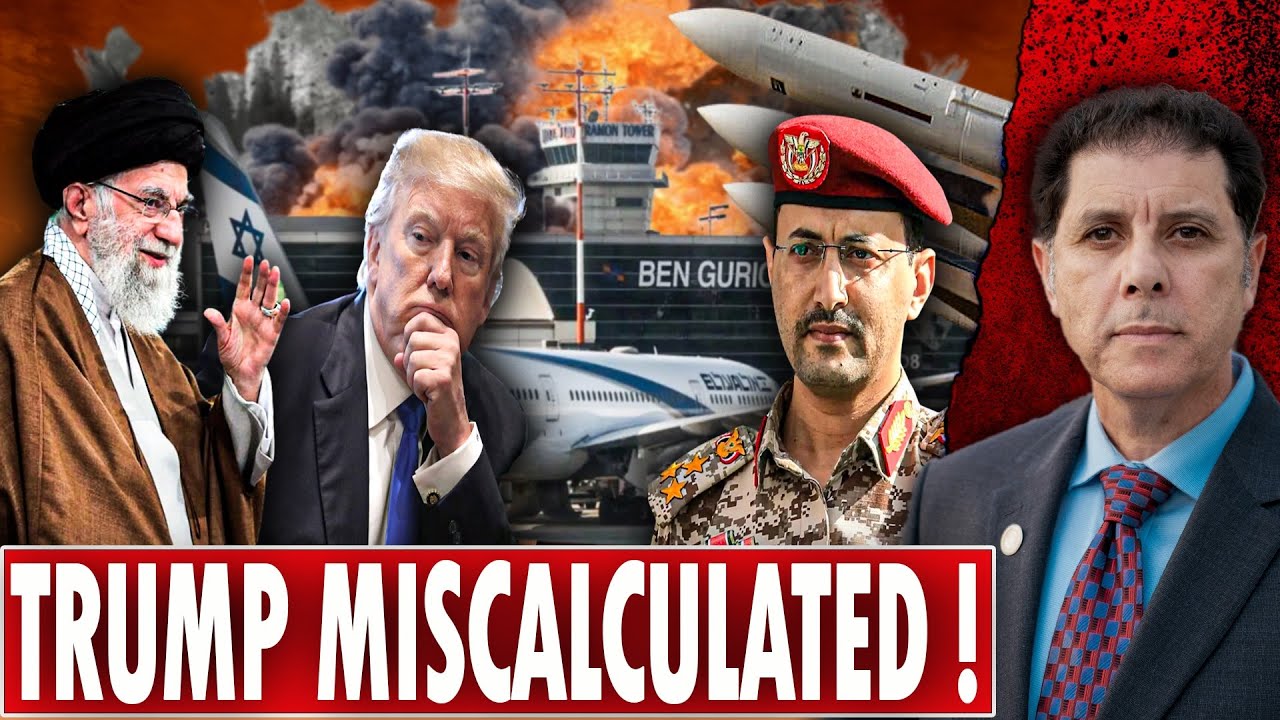
Iran's foreign minister Abbas Araghchi rejected direct US nuclear talks, citing sanctions and broken credibility after the 2018 JCPOA withdrawal. Meanwhile, Houthi missiles from Yemen hit Israel's Ben Gurion Airport, halting flights. The host argues US military deployments in the Red Sea won't stop the strikes without addressing Gaza.
Chapters
All right, hello everybody and welcome to Geopolitical Trends, where truth matters. Excited to be with you as always. It's March 24th. My goodness, the month of March is gone. And, uh, and by the way, because I think it's the last week of the month of Ramadan, so the whole Muslim world is going to be celebrating the holiday that comes after that, Eid That is so, so to any of you who celebrates that, wishing you a happy— so anyway, very, very excited. I got an interesting topic, uh, of course I'll do my own analysis, but I'll also provide you updates about all this. But before I'll go any further, I want to make sure that you guys can hear me. Please give me a thumbs up because I want to make sure this time, because I'm going to keep an eye open on the chat box to make sure, in case I don't hear, uh, in case you guys don't hear me. So I want to make sure, please give me a thumbs up if you hear me loud and clear, because I remember what happened last time. So, uh, Kara Kulak, okay, say good. All right, let me make sure here. Thumbs up, Army with Harmony. Donald's— Donald Smith, thumbs up. So we're good to go. Great, great, great. I just want to make sure that everything's working well. First, let me say hi to our wonderful community, uh, to all of you. Willie Holman, as always. Timeline Dunkley, uh, I agree with you on that one, Timeline Dunkley. I'm going to share it with the community here. Instead of fighting Yemen, Trump should have just helped the American people to fix America. And the infrastructure and stop giving Israel money. You're absolutely spot on. I couldn't agree more. So Abdul, good to see you. Peace be with you as well. Francis Tango, as always. Phil, good to see you. Taiwan Still, Tom Soya Wires, uh, who else? Laval, Sangman Pang, good to see you. Uh, Thunderbolt, as always. Good, good evening to you as well. Uh, Ping Yu, Alistar, Karakula, good to see you. And who else here? Lava, Lori, Everyman, good to see you. Rise of Atlas, good to see you. Juan Casey and UTU, uh, Z Super, good to see you all, guys. All right, as I said, I have a, a very interesting, uh, uh, uh, topic to address because of what's going on and the developments. You need to understand them within the context of the geopolitical landscape of the region. So, and this is where those moving parts is going to be that I'm going to be sharing with you. Some housekeeping items: be on the lookout for my upcoming interview with Larry Johnson. It's going to be on the 27th. Uh, also my conversation with Carl Zah is going to be on the 28th, and we are— I'm still working the details with Professor Anna Malendag for for my upcoming interview with her regarding Philippines foreign policy. There are some major development that's going on, so I'm waiting to get a confirmation from her regarding the time, and I will let you know. So, but before I'll do all this, if of course this is your first time in, uh, joining us here in Geopolitical Trends, I would greatly appreciate if you could subscribe to the channel and share it with others. Here is the link to the channel in the chat box so other people from around the world will have the opportunity to hear the truth like you do. So, because as I always say, and I'm proud of it, the analysis you are hearing is unique to this channel. So I, I put a lot of time and research into what I share with you guys. I don't talk on the top of my head. I just want you to know My weekend I was dealing with this, confirming information, ensuring the accuracy of it, and ensure that I will provide you an accurate assessment of what's going on in the region. So, so I will greatly appreciate if you could subscribe and share it with others. So let's do some— what I was gonna do today is I'm gonna do some headlines for you because there are some moving parts that you also need to consider. So Here's the first one, which, you know, it might shock you, it might not. To me it doesn't because I know that this country is playing both sides anyway, despite what they say, uh, because I never trust them anyway. Uh, let me get the picture and we'll just go from there. Here is the picture right here, and I give, uh, by the way, I give credit to this picture to the Army Technology website. That's slimming. So what are you looking at? This is Saudi Arabia. I actually— the US approves the sale and the Saudis approves the purchase of the precision weapon system that the United States is going to sell to the Saudis. So this advanced precision weapon system is to be sold to the Saudi Kingdom, which is— this, the picture you're looking at, is a laser-guided missile capable of hitting air and ground targets. Okay, here is my question to you: if the Saudis are buying this many weapons, why aren't they helping the Palestinians? And by the way, this deal just by itself is about, uh, $100 billion— I'm sorry, $100 million. So, and this was confirmed by the State Department, US State Department, that the deal Here is what it says, and I quote, because I keep the quote for you guys: will enhance Saudi Arabia's ability to confront current and future threats and enable it to strike targets with precision while reducing the risk of damage compared to other guided missile systems. End of quote. You all know it's nothing but hoopla line to all this, because when the war was against the Yemen, the Yemenis And the Houthis were able to fire missile inside Saudi Arabia. The US Patriot missile systems was unable to defend the Saudis against it. So what makes them think that buying this precision-guided missile is going to be like, uh, uh, sort of protect them? No, it's nothing but hypes. But it highlights to you the double standards of the Saudis and some other Arab and Muslim countries, which I'm going to be addressing. So next one is— has to do with, uh, where is he? Oh, I didn't get his picture. No, I did. Uh, Lil Marco. Lil Marco with Netanyahu. What happens? Netanyahu called Lil Marco, resuming— to let him know that, hey, we're gonna be resuming the war in Gaza, or on Gaza, that is. So And that's what I said to you last time, guys. Remember when we were talking about, what, ceasefire, whatever? And I remember telling you, mark my word, it's not gonna hold. And here we are. So, and this is what Eleni Markou is now pushing for. So, so the statements from, uh, uh, Bibi's office, Netanyahu, that is, called the US Secretary of State Marco Rubio to discuss resuming the war in Gaza Strip and the return of the detainee prisoners. No. Well, here is the hard truth. What the media here in the West is not disclosing— actually, it is disclosed within Israel but not here— the massive demonstrations that's going on inside Israel. As a matter of fact, they wanted— the protesters or demonstrators wanted to storm the house of the prime minister. I think Israel is descending into some civil war of sorts. So, but anyway, that's just my take. And the last thing I want to share with you, it has to do with Rachel Reeves, and I give credit to Reuters for this picture. Rachel, Rachel Reeves, she is the finance minister in UK. Why is this important? Because here is what Britain now is going to do. It's pledging to adhere to the financial rule despite Trump's war, uh, war trade tariffs. That's not about that. No, the British Chancellor Rachel Reeves said on Sunday, yesterday, that the government will stick to its financial rule despite global turmoil, raising the prospect of thousands of public sector job cuts in a budget review this week. You know what it means? They are already cutting about 10,000 jobs in the public sector. Oh, and last October, Reeves sought to win the investors' back, uh, the investors' confidence by pledging to balance the daily spending with the tax revenue. You all know where Britain is headed. Britain is going into bankruptcy. And the economy is sinking down. So despite what you hear, and I just wanted to let you know about these developments here. So, all right, let's get into our topic. Well, it became now confirmed that Iranians have rejected the US call for so-called negotiations on the nuclear deal. So, so it came through, it's Iran Foreign Minister Abbas Erakchi, Erakchi, uh, said that his country will not enter into direct negotiations with the US. At the same time, while he was saying this, at the same time, the Houthis are continuing to target Ben Gurion Airport. As a matter of fact, for the second, uh, in the last 40 to 72 hours, uh, I give credit to this picture to, from the archives of the Shutterstock. So because you give credit where credit is due. So you can see how the airport is deserted. Why? Because it came to a complete halt. So when Iran's foreign minister Abbas Arakchi said that his country will not enter into direct negotiations with the US, at the same time Ansarullah, or Houthis, it's known both in the West here, to target Ben Gurion Airport for the fourth time in 72 hours. And here is the, here is the thing: the Houthis or Ansarullah missiles, uh, uh, from Yemen targeting Israel despite US threats. So what I'm going to do in this live here, guys, I'm going to tackle two directions: one on the Iran negotiations and the other one on the Houthis. This way it provides you with a better understanding of the big picture. So, so let's talk about the Iranian Foreign Minister Abbas Araghchi's statement. So this statement was issued yesterday, that the nuclear agreement in its current form, it's not going to work for the Iranians, and rightly so, because they had a deal, as you know, back in 2015. In 2018, the United States pulled out of the JCPOA unilaterally. So, and now Iran's saying, why should we even consider talking to you again? So, and at the same time, here is what the interesting aspects of this, uh, Mr. Abbas also mentioned that Iran's nuclear situation is progressing significantly. So he's hitting two birds with one stone. One is to hit at the US lack of credibility, which is— will cement that around the globe, on the global stage. And second one is to ensure that we are moving forward with the nuclear process or program, whatever term you want to use, to the point that, you know, we are not going to be intimidated what the US is saying. And this is why this decision came in, or this announcement rather, from Mr. Abbas Raisi, that they're not going to be willing— they join the Iranians, not willing to negotiate directly with the United States. It's because if Iran to do this, because he can no longer return to the terms of the nuclear agreement before. It's not in the interest of Iran because if they do, the US will turn on them again. So however, Iran leaves the door— left the door open a little bit, and that door is that they could consider an indirect, indirect negotiations with Washington, which is usually not a good way for the Americans, not the Iranians, because Iran's tactical approach is moving forward. So, and this is what the timing of it. So, because now according to the Iranian foreign minister statements, and I quote here, Tehran's priorities are neutralizing the sanctions that the enemy uses against us to achieve its goals. That's one of the first thing. If the United States wants to negotiate with Iran, US needs to lift the sanctions first, because there were no sanctions by the time the deal has been reached in 2015. And this is why at the same time, Mr. Irakshi is mentioning that his country wanted to avoid the war and does not seek it, but it is prepared for it and is not afraid of it. Those are strong messages to the Americans, and I can't stress enough, you know, because what Donald Trump is doing is dragging us into another war. This is the guy who said, oh, by the way, here is what he said on November 4th, the final day of his reelection campaign. This is what Donald Trump said in a rally in Grand Rapids, Michigan, and made the pledge, said, and I quote, "I will restore peace in the world," he said as supporters waved signs, uh, that reads Trump will fix it. Where is it? Because now, 2 months into his, his, uh, second term, all we are seeing that Mr. Trump has carried out this series of large-scale military actions against Ansarullah or the Houthis, killing at least 53 people, if not more, but at this time. So makes you just wonder about the double standards. And this is why I always say American presidents has no power. You know, you still send in $15, $18 billion to Israel. You still giving green light, or you gave the green light to Israelis to resume the war. I mean, when this is going to stop? And yes, you're saying you want to bring peace. And this is what I believe Mr. Trump miscalculated. He miscalculated thinking that he's going to intimidate the Houthis. You know what my belief is, is that, uh, Yemen is going to become next Vietnam for the US because they have no options now. The US has no options. The only other option left, in my opinion, is to renegotiate or negotiate through a third party or behind the scenes, which I will not rule that option out. So, and I'm gonna get into the Houthi aspects. I want to finish the Iran part, then I'll move into the aspects of this. So as I said, what the Iranians now are evaluating is to see whether the US is gonna be sucked in, which it already is, into Yemen, because that's gonna move the sort of give at least breathing room for the Iranians to figure. But it is my belief that Iranians have already a strategy and plan in place because they run this scenario, what if. And as I always say, as one who been reading and doing a lot of writing regarding West Asia or the Middle East, Iran is not Arab. Iran is not Saudi Arabia. Iran is not Jordan. Iran is not United Arab Emirates, or even I compare it to Turkey. So, so it behooves the United States to think twice. It behooves Mr. Trump to think twice about, uh, targeting Iran, because that if we do, it's going to go outside the borders of the region. And, and, and end up being, uh, uh, uh, but again, you're going to have to think about the people that voted for Mr. Trump. You know, if that is what they want, this is what they're going to get. Simple as that. So now all this, this, this statements by the Iranians coincided with the Yemen's, uh, uh, Houthi group, or Ansarullah, that is, statements that was issued yesterday. That's when it was issued, yesterday. And this statement has to do with targeting the Ben Gurion Airport, uh, uh, with the Palestine II hypersonic missile. So now this is for the third day. This is what Yahya Sari spokesperson for the group's military. You saw his picture right here. That's the one, uh, that said that they targeted Ben Gurion Airport in the second occupied Java region and that the operation— and I put in quote— was successful and led to the suspension of air traffic at the airport for more than half an hour. End of quote. You know, you give this guy credit. You give Yahya Sariya credit because he didn't lie. He didn't say that he hold traffic for 3 hours, 2 hours, for half an hour. And that tells me about the, the, the, uh, the how, how accurate and honest his statement is. So now when you think about this What Sari, the spokesperson, uh, uh, Yahya Sariya— in Arabic it says Sariya, in, in English we say Sariya because the double AA, the equivalency of English into Arabic is letter A for those who speak Arabic, you know what I'm talking about. So what Mr. Sariya said also is that, and I quote, we will confirm— we can— we will continue rather to support the oppressed Palestinian people and prevent Israel navigation until the aggression stops and the siege on Gaza is lifted. Once again, this is the request they are asking. They are not about to target Israel and the US. They don't want all that, but they put a condition, and that condition is, is that Israel will lift the sanction, the, uh, the blockade on the, the, the Gaza and let the aid move on. And maintain the ceasefire agreement. So, and this is where it becomes problematic for Israel more so than the US. Of course, the US will be in a, in, in, in a delicate position as well. But now any attacks on Israel is because of the US. So this is why Bibi Netanyahu is coming to the US next week, and this is why You have the likes of, uh, uh, uh, Rubio here supporting, because if you know about Rubio's, uh, political career, it was funded by AIPAC. No, there's no secret. It's not a secret. It's a well-known information here in the US. So, but this is where you have to understand the Houthis attacks on the airport of, uh, uh, Ben Gurion. And I got the picture here for you, Ben Gurion Airport. And as I said, it came to a halt completely, completely. It's because the Houthis mentioned that on, on Sunday, yesterday, that we will follow with our attacks as it did in the last 72 hours, because the Sunday attack that took place yesterday is the fourth Following the group's announcement at dawn on Saturday that it has targeted it for the third time. So on Sunday was third time, on Sunday is the fourth. So, and on Sunday, here is where it gets very, very— I'm gonna share a clip with you because you need to hear it for yourself, and, and, and also will provide you my own assessment of this. And I'll let you decide. Before I do this, I need to continue on this one here. Here is what the Israeli military, or, or army, uh, said. Here is what they said. They said that they intercepted the missile launch from Yemen before it penetrated the Israeli airspace. Okay, if they saying this, so why two Israelis were moderately and seriously injured when air raid sirens sounded in Tel Aviv. Take a listen here, guys. Okay, I just wanted to share this with you. For you to see with your own eyes. If they're saying they have, uh, down this, then why, why all of a sudden people are right? So what they say versus what it is are the opposite. So, and as a matter of fact, even Mr. Yahya Sari, which he posted on his, uh, believe it or not, he has an, uh, he has a, an X account on the— let me get it for you here because I want you to see it. With your own eyes. Let me share screen, and I'm going to read it for you guys. So, after the success of our, uh, our Yemeni Armed Forces in cutting off Israeli shipping in Red Sea, a blockade is imposed on Bir Guerion Airport, is occupied Palestine A warning is issued to all airline companies to avoid Ben Gurion Airport for everyone's safety. Very, very interesting statements. Why is this? Is because most of the airlines diverted their, their flights except for one country. And you know which country was it? Turkey. Turkey kept its flight to Ben-Gurion. It shows you Turkey playing both sides. Like I always say, the Muslim countries are playing both sides. That's why you can't, you can't trust this one. Uh, let me first say thank you to Fred Ball, and, and I can't thank you enough, Fred, for your continued support. It means a lot to me, and I'm very grateful. You wrote, whatever happens to people in HS, uh, they can die in peace given they fought for the right cause. Unlike those Muslim countries or flip-flop Tulsi, how can you live with yourself like that knowing the truth? Spot on, I couldn't agree more. Spot on, couldn't agree more. Much appreciate you for your support. And like I say, here is one airline that is continuing the flight, which is Turkey. Why the heck you doing that? So if you are to show support, show support for, for, for, uh, with the rest of But Muslims, they just talk— Muslim leaders, that is. That's what I'm saying. So, so basically, with the attacks of the Houthis, all the landings and takeoffs at the, uh, David Ben Gurion International Airport in Tel Aviv were halted, and planes attempted to land were forced to continue flying after air sirens sounded. That just shows you where things are. And speaking of the, uh, the, uh, Muslim, uh, here is one thing I want to get ahead of it before, uh, I forget, is this one right here. Look at this picture right there. What this one here is that the Arab League now is calling on all countries to end economic and military relations with Israel. Let me just tell you something. Are you going to trust what they're saying? You know, don't, don't. They're saying one thing and they will do the opposite, because behind closed doors they will still maintain their ties, uh, with Israel and of course do the US or follow US orders. Because here is the thing, should there be a war or should the US attack Iran, where do you think those, those, uh, those attacks is going to be launched from? It's going to be launched from the bases that are in Bahrain, in Kuwait, in United Arab Emirates, in, in Qatar, in Saudi Arabia, in Jordan, in Turkey. No, you know, despite what you hear, that's why you can't, you can't trust what the Arab and Muslim leaders say. So they're saying Well, we're gonna end the economic and military relations with Israel. Okay, why didn't you end this when the conflict started about a year and a half ago or so? Where were you when the little— when, when Israel put sort of, uh, uh, uh, blockade on, on food and water, which is like a basic human needs? So where were you? Where were the Arab? Where were the Muslims? None of them even condemned whatever. And that's why when you hear this summit and all that, it's nothing but a consumption of ink, no more, no less. So now let's go back to our conversation about the Houthis targeting Ben Gurion, but I'm going to move it from another angle, and this one has to do with the United States decision to send now another aircraft carrier. This is the Carl Vinson. Now, the Carl Vinson sort of, uh, uh, it's a, it's a— how do I explain it? Because I don't want to get into the technical aspects of it and so forth. So the, the Carl Vinson is another, uh, another aircraft carrier that, that moves around with accompanying destroyers, and now is joining in the Red Sea and conduct exercises— not exercise, but rather targeting. And where is coming from this one? The Carl Vinson is coming from the recent exercise been conducting in East China Sea with the Japanese and the South Koreans. So this is an old picture of, uh, Harry Truman's, uh, aircraft carrier arriving at Nairo, uh, Marathi Pier complex in Souda Bay. And Souda Bay is in Greece, and this was in February 6th, 2025. And this was a schedule of port visits. But my point in all this It's not about— the point is, is that now it became clear that the Harry Truman aircraft carrier couldn't defeat the Houthis or stop the missiles, to the point the US now is sending a second aircraft. This, in my opinion, is not strength. This is weakness. You are sending two major aircraft carriers against a group that you think will be unable to challenge you. And here we are. If you only, guys, know the cost of moving an aircraft carrier or flying an F-35 or, or, or S-437 or what have you, they cost a lot of money to move. And yet you couldn't defeat them. That's the point. This is where I see the challenge for the US, because Donald Trump miscalculated. Donald Trump doesn't know. Donald Trump is a showman to those Americans that, you know, it's your decision if you happen to be an American watching this, it's your decision if you voted for Trump. You're free to vote for whomever you want, but you live with the consequences of it. Now you see why I didn't vote, and I have no intentions of voting ever. Because what are you gonna vote for? Democracy is corrupted. Let's just be honest about it. And I'm not saying something that is not known already. So when Trump is saying, I am gonna bring peace, and all of a sudden you're launching attacks, that tells you right there who controls the process, who controls the decisions. Trump is just for show. Yes, he will do one little thing here and there for domestic consumption, like immigration, like getting rid of the Education Department, whatever. Yeah, all that is great, like what Timeline Dunkley said at the beginning. How about Mr. Trump fixing the problems right here at home? But now this becomes even a bigger problem for him, and the problem is, is that he did not expect this pushback by the Houthis or Ansarullah. So, and this is why the Secretary of Defense Pete Hegseth now ordered Harry Truman Carrier Strike Group to stay in the region for another month. That shows you right there what the plan is. So is Mr., uh, the, the Secretary of Defense the same guy who is now going to be heading out to the Philippines You all know why he's going to the Philippines and after that to Japan. And I'm gonna do, uh, actually I'm gonna do a video for you about this, but I'm gonna also discuss this one with Professor Anna Malendoc. You all see what's coming. Like I always say, look over the horizon as to where things lead. But I don't think so the US will be capable of managing two fronts, one in the Red Sea and create new one in the South China Sea. And this is why the question will become is, should this move forward, how will China react or respond to this? And this is my question for you guys. In your opinion, should the US move to the South China Sea? Do you think China should respond with force? Yes or no? If you will be kind in, in sharing this on, uh, on the chat box, because this is what I see going, guys, and, and it concerns me a great deal. It concerns me a great deal. So yeah, let me see in the chat box your answer. Uh, okay, Dave H, you say no. Uh, uh, Jamie Dodger, you say yes. Kossim Garan, you say yes. Al It's time. Uh, YT, uh, you say not necessarily. Vad Iban, you say yes. Dev, you say please create a poll. Okay, I will, I will create it for the community. It's just for now, I just wanted to get a quick feedback here to highlight to you where things might be moving forward. Because here's the thing, when you think about the Houthis or Ansarullah, what they have done so far Here is what they have done. And even now, even the National Security Advisor Waltz— I have a picture of him, another bonehead also— uh, what he's saying is that, which is true, but also he's saying it from some, from not wanting to accept the facts and the reality. And the facts and the reality is this, is that the Houthis have forced Now, 75% of American ships to avoid the Red Sea. This is what he said during an interview in Washington, DC, and that three-quarters of US shipping traffic that should pass through the Red Sea is currently forced to bypass the region and pass through the southern coast of Africa. Due to Houthi strikes in Yemen. 75% of our US flag's cargo has to go through the southern coast of Africa instead of the Suez Canal. Just let that sink in, and it gives you an idea right there. And this is why I am convinced now that if Trump will continue on this path, as far as bombing Yemen and all that stuff, it's going to become another Vietnam. And his legacy is going to go very bad. It's going to— because as a matter of fact, the polls I read somewhere, the polls are start to show a decline of Mr. Trump's popularity. No, no American president to my knowledge, and if I am wrong, guys, please correct me, but to my knowledge, no American president has ever reached uh, like 75 or 80%, give or take. So Trump now is going the other direction. And this is where it became clear as to the idea that we're gonna just target the, uh, the, the Houthis. No, because the Houthis were prepared for all this. And anytime the US conducts an attack on the Houthis, the Houthis will launch something into Israel. And now it's an open, per se. And we are talking about all this without even adding Iran to the picture. That's why I'm saying, that's why I'm saying, I can't stress enough that it behooves Mr. Trump to think twice about, uh, going even further with this, because he dug himself into a hole. He's not coming out of it. It's a trap now. He's trapped. Why? It's because of the thinking of the superiority mindset. Oh, they're just whatever. We're gonna— no, no, no, no, no, no. You have no idea about how fierce the Houthis are. Or the whole idea about Yemen. At large. And this is where the challenge for Mr. Trump is. Now, all this coincided, of course, with the Israelis relaunching the attacks on Gaza. Brutal. You know, it's— you know, to me, it's kind of like, uh, what's, what's the word I'm looking for? Yeah, uh, you— truth cannot be cherry-picked. You know, you have to speak the truth. And what's going on right now is beyond self-defense, is beyond, you know. And where is the Arab and the Muslim world that they're just watching? Oh, we're gonna, we're gonna boycott the, or, or cut off the economic ties with Israel. Really? So what happened to the Saudis buying billions of US weapons? Jordanians, United Arab Emirates, Qatar, Bahrain, Kuwait, all of them buying this. Morocco's buying this. Egypt, you know, Tunisia used to be at that time. So, and this is why now you are noticing massive demonstrations around, around the world. I'm going to share some pictures with you. This is from the city of, uh, Strasbourg in France, you know. This is another demonstration in Spain. So it is another one in Paris, and it says right there, 'Vivre à Gaza tue,' which means basically 'living in Gaza kills,' meaning if you live in Gaza, you die. So it is another one in London. I have another one here for you. There is one in Morocco, you know, the support for the Al-Aqsa and Palestine is from the religious duty, min sami'ah al-din, basically a religious duty that is. But again, you, you, you, you don't get misled by those demonstrations and so forth because you have to understand, uh, this one is in Paris, by the way. This, you have to understand the bigger context of all this. You know, governments will allow this kind of to divert the attention. This is what I meant by misleading. So when you hear about the, the, the Arab League calling on all to end economic and military relations with Israel, no, it's nonsense. Because if it were the case, you have the 4 countries that have relations with Israel United Arab Emirates, Jordan, Morocco, and what was the fourth? Jordan, United Arab Emirates, Egypt, and Morocco. Four of them, you know, they could have cut off the diplomatic relations. So that's, to me, will make more sense, but they won't do it. They won't do it. So, and the other Arab nations, the likes of the Saudis, the Bahrainis, the Qataris, Egypt, and so forth. They just talk, no more, no less. You know, because like I always say, what the Houthis have now exposed, exposed two main things. One is the hypocrisy of the Arab and Muslim world, and two is that they are able to challenge the mighty American military power. Yeah, with all our might, you know, I mean, you move in an aircraft carrier with all its, uh, its, uh, uh, vessels and the, uh, the destroyers and all that, and you couldn't defeat the Houthis? You know, that, that, that's to me the bigger message and where things are headed. But we have to think in terms of what if, because you always have to run that scenario. What if the craziness of Trump, or what if he is pressured to go ahead and strike Iran with Israel? What are the possible scenarios? So, because there will be scenarios into all this. So, and, and at this point, the only other thing that I can at least see based on the reading of the landscape is that the military installations of the US will be targeted, and Israel will be targeted with missiles because Iran's, uh, uh, uh, missile technology and range far exceeds those that the Houthis have. And when that— once that happened, it's going to become very problematic for the host countries, like for example Qatar, like for example Bahrain. Kuwait, Saudi Arabia, Jordan, Egypt, Turkey. You got the idea. Because Iran, it's not gonna— you know, you kind of like— they become the— they, meaning US military installations, become legitimate targets. And that is where my fear and my concern is, that Mr. Trump thinks that he can bully his way by escalating Well, the Houthis already mentioned this: if you escalate, we will escalate as well. And they are true to their word. They didn't back down. For the last 72 hours, they attack Ben Gurion Airport. That tells me they're not backing down. That tells me they are not being intimidated. That tells me they are not scared of that. That tells me they will challenge the Americans. But also, it tells me the optics of it on the global stage. And you think we're gonna fight the Chinese? Really? This is why Hegseth is going to the Philippines, is because he wants to really push Marcos into the front line, meaning create some scrimmages with the Chinese vessels on the South China Sea, and we will support you and defend you. This is how it's going to start. Same with Japan, same with South Korea, same with Australia. But for now, the visit is limited to those two locations, to my knowledge, because I confirmed it— Philippines and Japan— with other stop in Hawaii and another one in Guam, which, by the way, if you know anything about Chinese missiles, they are within reach to to Guam. No, that is my point in all this, guys, because I need you to see the big picture as to what lies ahead. And the idea that Mr. Trump is just arguing for, uh, threatening Iran with 2 months— I give you 2 months, you know— or the Houthis for that matter, that I'm gonna destroy you, I'm gonna wipe you out. No, man, what are you talking about? You know, that kind of language doesn't work, let alone coming from so-called the president. President doesn't— but again, Trump is not— you all know, you all know. So yes, there are some here in the US that they are support of Trump. There is no problem with that. If you want to support the guy, support him. It's your prerogative. But at least do you have an understanding? Again, most of those people, you ask them about where Yemen is, they won't even know. So as a matter of fact, we are not good at geography or history, and that is why I wanted to do what I want to do in this channel by providing you, uh, information and knowledge that can help you decipher the complexities of what geopolitics is all about. Because what you are witnessing right now, yes, in a military realm, in a military dimension, but it is tied to what geopolitics is all about. And if you don't have that basic understanding, things will not make more sense to you. So, and that is my point in all this one here. Uh, what else do I have to share with you? I think I have one more thing and that's it for me. If I am— no, actually that's all I have to share with you. So, uh, I just hope you guys— and oh no, no, no, no, no, no, My apologies, there is one more thing that I forgot, very, very crucial regarding this so-called the, uh, the, uh, the Arab and Muslim. And it's laughable, but there are some countries, they are not Arabs, but some of them have majority Muslims, like Malaysia. Take a look at this picture, or post rather, and this, it was, uh, in my, in my, uh, Twitter feed. So by, uh, Ryan, uh, Rosbani. So take a look. Yeah, Malaysia. Malaysia drafted the resolution now to remove Israel from the UN. Yeah, tell me, tell me if there was any other Muslim country took initiative like this, or even, or even, uh, sort of have behind closed doors talks with Israelis. Hey man, you gotta, you gotta stop this. You can't be starving people. You can't be, because it's inhumane. Even the ambassador of Israel into Austria, you know what he said? He said that the kids in Palestine should be killed. This is an ambassador. What a shame, the ugliness of human beings, some of us, not all, to reach this level knowing that children are defenseless, elderly are defenseless, women are defenseless. And I'm talking about civilians here. And yet the Muslim and the Arab world, and, and I am sort of You know, I want to use the term angry because anger is a negative emotion. No, but I am upset. I am upset for the fact that you look at the Saudis buying millions of dollars in weapons from the Americans only to be stored on the shelf. So what is that for when the Saudis themselves couldn't defeat the Houthis? Because we— and I was aware of this because I was in Yemen— we have to supported the Saudis by providing intelligence, sometimes even helped them in flying. We didn't fly the planes, but we are the one helping. So that's what I'm saying, the Muslim and the Arab world, he just talking. Even for Turkey as a Muslim country, not an Arab, but for Turkey to be keeping its flight to, to Ben Gurion, it tells the story. As a matter of fact, Turkey was getting gas through from Israel into its— so anyway, guys, that's all I have to share with you. I am very, very grateful for your support. Please, please hit the like button and share this, uh, video with others from around the world because people needs to hear a different perspective. So a different sort of, uh, That's very, very important, very important. So I will greatly appreciate if you can give it thumbs up and share the, uh, uh, channel with others. And once again, just to, uh, wrap up all this here, uh, remember to join me on Thursday with Larry, on Friday with Carl Zaha, and soon I'm going to finalize, uh, with the professor, Professor Anna Malindog regarding the conversation, for the Philippines foreign policy. So, uh, I would greatly appreciate if you can support my upcoming Asia trip. I intend to travel after August, uh, no dates have been set yet, uh, and the funding where we are, I need to share with you, uh, I didn't update it, but there were some donations in support of the trip, so it's crossed over $900. So, uh, that I know for sure. And I will provide you an update next time, uh, we do the live here. So once again, thank you so much for your support and greatly, greatly appreciate you. So as always, remember, geopolitics impacts your daily life in more ways than one. Till next time, guys. Bye-bye.
More from David


Beyond the Single Actor: Why the Gulf Isn't Choosing Between the US and China


Iran, Iraq's Militias, and the Houthis Are Coordinating! This Changes Everything




Who Controls the Next Decade's Resources? Latin America and Africa's Geopolitical Crossroads

The Chokepoint Trap: How Washington's Stupidity Triggered a Cascade That Now Controls the World

Trump Spooked as IRGC Unveiled dual-use SLV, Deployed Ghadir Mini-Subs & Hinted at Tactical Nukes!
