Iran Retaliates in Response to Israel’s Attack on its Embassy in Syria!
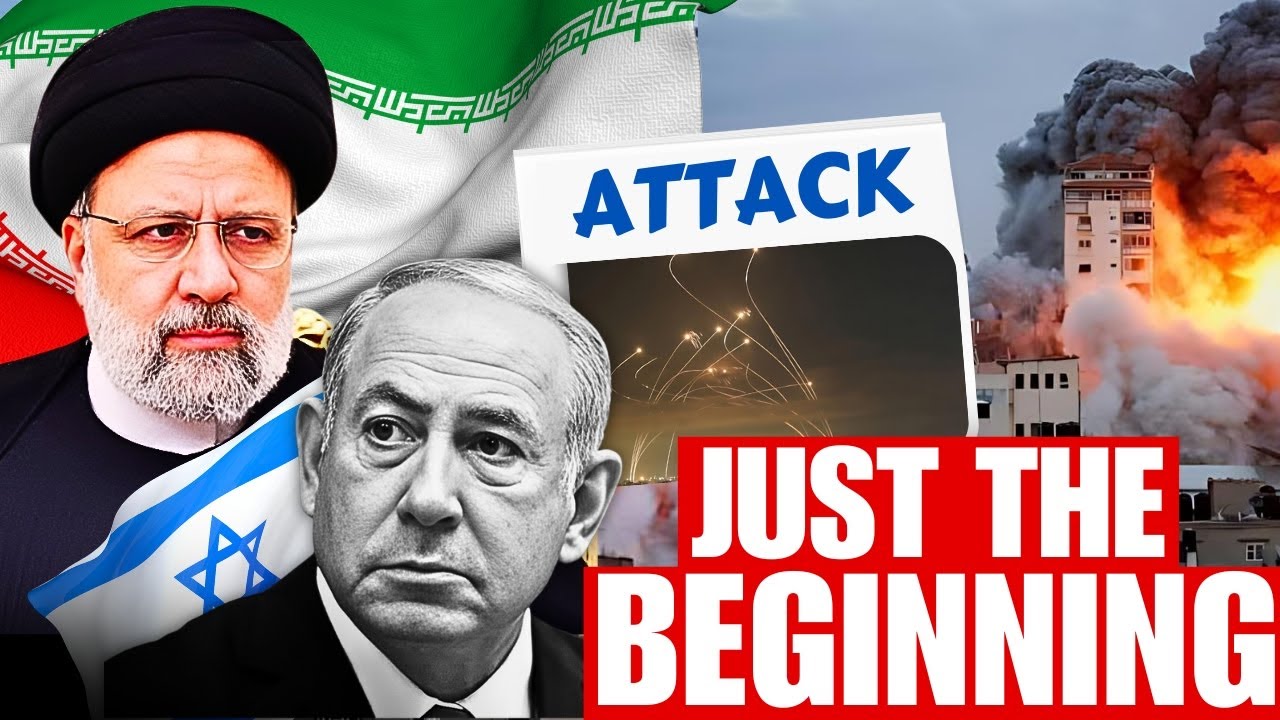
David Oualaalou covers Iran's retaliation following an Israeli attack on Iran's embassy in Syria. The video examines the escalating tensions between the two countries and what Iran's response means for regional stability.
Chapters
All right, hello everybody and welcome to Geopolitical Trends, where truth matters. Very, very, very excited to be with you given the topics we're going to be addressing today, and this one has to do with Iran's retaliation, uh, to the Israeli attack on Iranian embassy or consulate in Damascus, Syria. So And thank you to— I'm gonna have to say thank you. One of you suggested the title, so, so thank you for that. Uh, this is what I'm gonna be addressing, given my familiarity with the, with the, uh, the region, the country that is. I wrote a book about Iran. I detailed some of these aspects, uh, even back then, and I share it with you so you'll have an idea. I discussed about the possibility of tensions between Iran and Israel will, will be in the open. Now, this one of the situation that we could be seeing this moving forward, we don't know yet. So, uh, and, and that's what I intend to share with you in this live stream. So hope you all had a, a relaxed weekend and you are gearing up for the new week. Uh, so let me just say quickly hi to Lucio Delgado from Montreal, Willie Holman as always, uh, uh, Haron Sades, good to see you. Timeline, Dankly, good to see you. Michael Long, good to see you. Taiwan Steel, good to see you. To all of you, Chanel, good to see you as always. Uh, Dr. Shabaz Khan, good to see you from Bahrain, good to see you. Ash Gianni, good to see you. Markup, good to see you. And OMC, good to see you as always. So, all right guys, let's get in this because there is a lot to cover, uh, covering the region of West Asia, especially with Iran involvements It's, it's an hour is not enough, but I'm gonna be as, as, as focused as I can in my analysis. Before I'll get into this, before I forget, remember to join me on Wednesday at 12:30. I will have a part 2 conversation with Larry Johnson. Yeah, he's willing to— I reached out to him yesterday and he said sure, of course, I will be happy to So he'll be here on Wednesday at 12:30. I'll post it for you guys and we just go from there. So now, just for those who might not know the background of the story here, I'll be talking about— I will provide you analysis about, uh, what, what is the, the significance of Iran retaliation? How can we quantify it within the scale by which Iran— or Israel, that is— attacked the consulate? And this is where we're going to get into as far as discussion. Now behooves us to ask the questions. There are key questions we need to consider. First one, what will Israel do now? That because they thought that Iran's not going to react, now it's different ball game. The, the, uh, uh, the war cabinet, whatever they call them in Israel, they made in now to discuss what kind of retaliation. Well, here is the thing. I, I, I tell you this right now, you know, Israel will not be able to attack Iran on Iranian soil. So in retaliation, they might do it again in Syria because they can't go to another country and attack the Iranian embassy in that country because that's a violation of international law, because the sovereignty, the air sovereignty of the host country will be violated. That's a big problem. So this is why even for Israel the retaliations will be limited, and we shall see. That's what the conversation of the war cabinet discussions right now. Second question is, did Israel bite off more than it can chew? I think so. I think so because they thought that, well, if we want as far as taking out their scientists, if we want as far as targeting some other locations If we went as far as targeting a consulate, which is like, you know, you're violating the UN, uh, uh, international treaty as far as the, the protection of the— there, there's an article, I— not an article, yeah, Article 55 of the UN Charter, if I'm not mistaken, that deals with the, uh, the, the sovereignty of an embassy being in, uh— so Israel, when it did this, thinking, oh, Iran won't do anything. No, that's just one of the questions. Third question: are we on the verge of an open war? And when I say open war, what do I mean? It's not just Iran and Israel. We talking about the West. We already seen what the West did— UK, France, and yes, Jordan, an Arab country, which I will get into that soon. What I mean by open war, are we going to be seen on the other side Russia and China. And here is the wild card. Would you be surprised if I tell you we could see North Korea somehow? You know, I, I know some might think I'm out of my mind suggesting something like this. Not if you know the history of the nuclear exchange technology between North Korea and Iran. You know, that's just something to think outside the box. So what do you guys think? Do you think hypothetically should there be an open war where allies on both sides will get engaged when North Korea get involved? Not directly, but indirectly somehow. And the last question is, what will the US do now? Because here is the problem for us as Americans. We have to cater to Israel now. Israel is like that child that is, uh, very, very— what's the word— unruly. And it's not a laughable matter because the politicians here in the US are in the pocket of the AIPAC. Let's just say it straightforward. Senators and the like, which is shame on them because they put our country in jeopardy. No. So now what will the US do? Why am I saying this? I'm I'm saying this in relation to US bases in West Asia, which are all of them within range of Iranian missiles. And by the way, there is a conversation going on right now behind closed doors between Washington and Tehran through third party. So, and those are the questions we ought to ask as we move forward into our conversation here. Uh, two things I want to highlight to you on the headlines very, very quickly. One of them from Malaysia, and second one, believe it or not, Philippines. So here's the first one. Uh, where is that one from? Excuse me, let me get to my, uh, uh, right here. This is from Philippines, and I'm gonna share the screen with you. Now you tell me, guys, would you believe in something like this or not? And I'm going to share it with you, and I'd like to have your reaction to it, your yes or no, simple as that. So let me share a screen. And I usually get this through my, my tweet, through Mario Nofar. He's the one who shared this with me. So let me, uh, make this full screen. You all know Marcos Bongbong was in Washington recently. What, to get a marching order or what? But here is the thing. What happened now is that Marcos is saying to the US that you will not be permitted to build any more bases in the country. So this says, and I quote here, the Philippines has no plan to open or reestablish more ADCA bases, American bases. What do you guys think? Would you believe Marcos Jr.? So just put in yes or no for that one, please. And second one has to do with Malaysia, which I am going to be looking into this, given that I got a heads up last week about a particular event in which Israel is blocking Malaysia from accessing, uh, some economic forum or sort because of Malaysia's position regarding Gaza. So here is the— let me just share this with you, and once again, I like to have your feedback, uh, on, on this one here. And this one turns out to be involved with the Mossad. I'm not surprised. I mean, I'm aware of the Mossad activities in that part of the world. So, so let me share a screen with you. And, and we'll move on into our, uh, analysis about, uh, Iran. So, all right, let me, uh, uh, I mean, can you guys hear? And I'm gonna rewind it from the beginning here. So Israeli man arrested in Malaysia because he had some weapons in his hotel room. What turns out to be he's tied to Mossad. Now, what will a guy will be with in, in Malaysia with 6 weapons? And again, this one is tied to Israel blocking Malaysia's access to some international economic forum. Why? Because Malaysia sort of turned down normalization of relations with Israel. They didn't want to because you have, uh, you have 4 countries in the Arab world: Morocco, Jordan, Egypt, and United Arab Emirates. You know, well, we saw what Jordan did, right? Which to me becomes a question. I'm questioning now the king per se, you know, because, you know, I'm starting to doubt that he, the king of Jordan in this case, uh, what's his name, King Abdullah, or Abdullah, whatever the heck his name is, uh, if he is an MI6 agent? What do you guys think? I mean, will I be out of, uh, sort of way out of line if I am to say something like this? Yeah, let me share a picture here with you because you need to see it. And I did post it for you guys, by the way, in, uh, in the, uh, in the community tab. So, and, and I'll share something with you that I disclosed in my Iran book about Jordan. So we'll put it in perspective because you need to understand, okay, what's going on with all this. So, all right, let's get into our conversation here about the analysis for all this. So I'm not going to get into the detail how many missiles were launched and all that stuff, or drones, whatever. Of course Israel and the US said we shutting them down, which is a lie. You won't believe— I got some images here, I'll share some, but it's not about— it's the idea. Now here is what I want you guys to get: Iran's retaliation. Because if Iran didn't retaliate, that will be so bad for one thing and one thing only. You know what it is? Is the deterrence. Iran's deterrence. Because Iran now is operating on the ability of deterrence. This is why we didn't want to attack Iran. This is why Israel couldn't go and attack Iran on its own. Israel won't be able to do it anyway, so doesn't even have air fuel and stuff. We're going to have to provide that. Then comes the second question to all this is which Arab country will allow its airspace for Israeli planes to go through and hand target, like exactly what Jordan did. Which, by the way, most of the people in Jordan are now pissed at the king. I am starting to see the signs that probably the end of the monarchy is coming. Because if you know the history of the whole monarchy, how it, how it was established— who helped establish the, the, the monarchy in Jordan? Can you guys type in, in the chat box now? You have to go back in history a little bit. If you can tell me— and one of you guys suggested for me to do a topic about this, and I will— who helped establish the Jordanian monarchy back then? Oh, YK, you got it. Arsteed, you got it. Stephen, you got it. Don, you got it. You guys got it. He was the British, to the point that now I am going as far as saying, is he an MI6 agent? Even though he's a king, so what? And Jordanians are like pissed. Usually there's a— is a tribal society. The tribes mean a lot, that respect for whatever. But now this is coming out of some other— but I'm gonna talk about this as I move forward, so So now here is the question we need to ask. You know, this is why I wanted to do this, is to highlight the key question. Like any geopolitical analyst, one who's been involved in this field for decades and decades, will ask that question: are we moving from the era of the Cold War, by which the status quo was set as far as, oh, you can retaliate Because if you go 2 or 3 decades ago, you know, will we see the same reaction from Iran against Israel? No. To me personally, and again, my personal opinion, the way I interpret this is now the status quo of that post-Cold War era is changed completely. And by the way, Iran, it just launched some few drones and This is nothing to do with their capabilities. Let me make this clear to you guys. They didn't want to show off what they have, and it makes perfect sense that they will not show that up. And you know how much it cost Israel now, or the US for that matter, just to deal with that? $1.5 billion, our tax money that is wasted. Of course, you got the idiots, French French, that is, or France, that is, UK, and now Jordan get involved. Because if there is an open war— this is why I ask the question, are we going to be moving into open war? Why? Because you're gonna be seeing— I don't like to use the term World War III— open war. We all know what it means, and we all know where it will lead to. Because what's going to happen? Israel cannot go alone. The US cannot go alone. I mean, we couldn't even win a war in Afghanistan or Iraq. What makes us think— and Iran is not Iraq— what makes us think? So which means what? We're gonna bring our vassal states like the UK, which is useless. UK is saying that, oh, we shut down the drones. They couldn't even fire a missile that was malfunctioning from their own naval assets. But it won't matter. France getting involved, what for? And again, to me, the kicker was Jordan, a Muslim country. That was— but if you only know why, as I move forward, then I explain this to you. So, so, and I, again, I am not getting into, well, how many missiles were shut down, whatever. There were images of the missiles, Iranian missiles, landing inside Israel. But here is the thing Iran didn't want to do. What Iran didn't want to do, it did not want to go a full-scale retaliation. It's not out of fear, as some Western analysts are saying, oh, Iran feared. No, no, no, no, no, it's a calculation. It's to the degree by which Iran had to show, first of all, retaliation That's one, even though the scale of it was lower than anticipated. And second, because if it doesn't do that, that will pave the way for Israel to do more. Now Israel is going to have to think twice. Why is this? Is because the statements coming out of the Iranian president that the next time— that's why I put in the thumbnail, I just put a, a new thumbnail there, you guys check it out later. Is this the beginning? Because the retaliation next time is going to be far worse for Israel, which in my opinion will include some advanced missiles. Of course, the world was shocked to find out that Iran has ballistics. And if you know anything about the missile technology in Iran, what did you notice? Iran didn't use hypersonics. They didn't use some advanced stuff because they don't want to play their cards right away. And the Iron Dome, whatever, turns out to be useless anyway. Yes, some of them got shut down, but some of them— all it takes is one missile too, if it were some upscale type. And this is what I'm saying, uh, for, uh, uh, uh, you're hearing from the West saying, oh, we have to really, uh, support our deployment, extraordinary skills of our service members. He just hypes. He just hypes. They are— they, collective West, not willing to accept now that the status quo has changed. To me, the retaliation of Iran to Israel inside, it's affaire accomplie. And even hypothetically, if this will not go as far as many might have anticipated, Iran has another alternative. And the other alternative has nothing to do with launching missiles. It has to do with something far out, far more concerning for the collective West, mainly Israel. Can anybody tell me what it is? Can you guess? Just guess one major thing that will like throw things upside down for Israel and the collective West. Let me see your answer because I like to have your input here, guys. Very, very important. And the way I see it, going that direction, and that will be a big win for Iran. Uh, money? No. Strait of Hormuz? To a degree. Uh, gold? That, that's good. I'm talking about tangible thing. Nuclear? Nuclear. You got it, you, you got it, Hamed Sifi, you got it. Some of you answered this one here, guys. Uh, Michael Harding, you guys got it, you guys got it. Because here is the big win for Iran, is now that's it, gloves are off, we're gonna go nuclear and develop the bomb. Because remember, Iran has enriched uranium to, to above 80 degree— 80%, which means once you get closer to the 90, you can turn it into weapon grade. And that will be a big win. Why? Because Israel caused it. Of course we wanted to keep Israel the only nuclear power in the region. No, not anymore. And this is what I'm saying, we have to think in terms of— there are those who saying, oh, is that all? Iran sending some drones? Yeah, you have to think strategically. And Iran, believe it or not, is a pragmatic regime. They think pragmatically, you know. So like I always say, you don't give up— you, you, you don't give in, or rather not give up, give in to emotions. I know the population will expect the government to do this and this and that and, and so forth. So, so now let me tackle briefly here Jordan, then I'll move on to other aspects. So Jordan, of course, took part in intercepting Iranian missiles. You ask yourself a simple question: If really the monarchy cares about, uh, the, the Muslim world or about Palestinian or whatever that is, and here is a Muslim country, you know, it's a Shia Muslim country, so what? But isn't that a common enemy per se as far as Israel for the Muslim world? But what you need to know is that this has to go way back to 1994, and that's what I disclosed in my book That's what I disclosed there. I disclosed back then that the year was 1994. What did it see? It saw the dramatic change in Jordan policy, and the kingdom at that time, under the, uh, the, the late King Hussein, signed the peace treaty with Israel. But here is the kicker, which a lot of people do not know. To Jordan's detriment, not all segments of Jordanian society approved the measure, leading to internal tensions within the kingdom. This is why I'm saying, and again, I'm thinking outside the box, is this king— which, by the way, we were aware of his training at Midhurst in England, we were aware of his involvements in, in with the MI6 You know, it's kind of— I'm saying it, you know, is he an MI6 agent? You know, that's to me a reality. I'm not one shy away from asking those questions. So, and this is why following the death of King Hussein, uh, which he was battled— he was battled with a battle with cancer, by the way, that's where he died from— that's when King Abdullah took over, but not to the satisfaction of every segments of the Jordanian society. And now this proved, this proved that the Jordanians are getting on the edge now as far as this monarchy thing. Of course we had to bribe the king. We bribed him with yearly— listen carefully— $1 billion yearly assistance. This is why for me personally, I don't trust Arabs. I don't trust Muslim, Muslim countries. Of course you can't generalize. That's— you know what I'm referring to. This saying one thing and doing another. Hypocrisy at the highest order. And you got now these four countries, Muslim countries— Morocco, United Arab Emirates, Egypt, and Jordan. They have a, they have a, they have a, a normalization. This is why Malaysia turned it down, and Israel now wants to create chaos inside Malaysia. Why the heck is an MI, uh, uh, Mossad guy doing in Indonesia with, with 6 weapons in his room? You know, you, you, you guys, you guys got the idea. So, so let's move on from Jordan because we know where that country is. When I see that country, I'm the leadership, that's what I'm referring to. So the same thing apply to, to Saudi Arabia, the same thing apply to Egypt. You got the idea, all of them, no exception. 22 countries in the Arab League, you know, they're useless, you know. Now let me, let me briefly talk to you about where are the US concerns with this. Now, of course, we know that the US got involved, France got involved, the UK, the usual, you know, they had to follow orders from the US, the UK and France, so they have no say into the matter. But to the US is a big problem For us is a bigger problem. We do not want this. By the way, I give credit to Shutterstock for this picture here. Uh, to us is a big problem. Why is it a big problem? It's because you're looking at a military— US military installations in West Asia, and they all— listen carefully, guys— they are all within reach of Iranian missiles. No exception. So we are now thinking twice. Do we really follow blindly what Israel is doing? Which of course our politicians are useless. They are useless as far as serving the interest of the Americans. What they are serving is the interest of AIPAC. I start with the, the idiot Senator Rubio from Florida, and all of them, no exception. No exception. So, because once we start seeing body bags coming over here, it's going to have to change the equation. Now, can the US get involved in direct confrontation with Iran? My answer is no. Despite what you hear— we moved an aircraft carrier to the Middle East, we move this, move that— it's nothing but hypes. We do not know what Iran capabilities are. And as I told you, they just use drones, some few missiles, over 100 or so, overwhelmed the, the, the Iron Dome system. And those are basics. So if Iran, which by the way developed a hypersonic— the technology was given by Russia— this is why I'm getting into for you to understand, should this open up, should this get into an open war, I will not be surprised that on the side of Iran you will see Russia, you will see China, and you might even see North Korea behind the scenes. Of course, on the western side you're going to see the UK, Germany, and France. Germany, by the way, the idiot Olaf Scholz is in China right now. It's just double standard, I tell you. I might do a show on this one for you guys later on to highlight to you a few things. But so this is where I see that the US now concern is, you know, they couldn't control Israel. On the other hand, Israel didn't think— yeah, they didn't think that Iran will retaliate. I bet you, I bet you the calculations inside Iran was, oh, we took out some of their scientists, they ain't gonna react. No, because the Iranian government will be under tremendous pressure from domestically, like, like in any other government. Inside Iran, there are hardliners, there are this, there are— there's a competition inside there. You have to show the Israelis that we can retaliate. And now that they did on a limited basis for a reason— this is why a lot of people do not get It was a reason— for a reason, that is. I had a chance to read a report by an Iranian expert regarding why the Iranian missiles sort of were capable of penetrating radars and hitting targets inside Israel. So, and this is Despite what the United States and Israel claim of readiness, of course they had to call in on France, they had to call in on the UK, and of course they had to pressure Jordan to close its airspace. Of course, like I mentioned earlier, a lot of people in the West, they saying, oh, this retaliation is nothing. It's really— we didn't anticipate this. Nothing, it won't do much, you know. No. Well, of course, like I mentioned, Iran did not want to disclose the capabilities it had, especially its latest military industries, including the hypersonic. Those are missiles, by the way, which are known for their effectiveness. They got the technology from the Russians. So, and of course the Russians, and now even the Chinese has developed those that can sink in an aircraft carrier. So to us, moving an aircraft carrier, uh, over there, it's a big target. It says, here I am, sink me. That's what it means. But it's just for show, to flex our military mus— muscles. But in reality We cannot, we cannot attack Iran. We know what the outcome is going to be. So, you know, on the other hand, Israel— I'm sorry, Iran has other alternative beside all this. This is in case an open war. This is why Israel is thinking twice about retaliating. And if you see something down the road, it might be targeting another scientist maybe, I don't— it will be something of that level unless it is, uh, targeting a building, whatever. It's going to have to be in Syria, not in some other countries. They're not going to go to Iranian embassy in Malaysia and do that, which they could, but do you know what the consequences will be for, uh, the Israelis? Because Iran made it clear, next time you conduct your craziness, we will escalate the retaliation. Without disclosing what's going to be included in this, because that's what the Iranian leadership decided to do. So, and by the way, all this comes during a time when one particular information was not disclosed. I found out overseas, not here in the US, and this one has to do with IRGC taking control of an Israeli MSG Ares ship near the Strait of Hormuz. It was not disclosed. It was the same time. That's when they did. And by the way, the Israelis took— the— I'm sorry, I'm sorry, the Iranian took over the ship right before they launched the attack on Israel. And this one sending clear message. Remember, certain countries, including Iran in this case, They do calculated moves. Those are strategic moves for a reason. You have to keep your enemy, uh, uh, uh, sort of, uh, uh, uh, just get guessing what you're going to do next. And you don't want to show your capability at first hand. So, but also, this is a message also from Iran to two other countries. The US and the UK. So because Iran has the capability of shutting down the Strait of Hormuz. So speaking of Strait of Hormuz, I need to share with you some information regarding the Strait of Hormuz. Let me share a map with you quickly here, then, uh, if I can find the map. All right, here's the map for the Strait of Hormuz, because you need to understand it. Very, very, very crucial. All right, let me share a screen. And excuse me. And I give credit to, of course, uh, World Atlas. That's the one they What? I get the maps here. There we go. Strait of Hormuz. Why do they have this too many commercials here? I mean, just ridiculous. All right, Strait of Hormuz. Why is this important? Well, of course, Strait of Hormuz is a narrow waterways between Iran and Arabian Peninsula, okay? And specifically near the United Arab Emirates and Oman. In— it's called Musandam in Oman. So Iran is located on the north coast of the Strait of Hormuz while the United Arab Emirates is on the south coast. The Gulf of Oman is on the Strait of Hormuz east while the Persian Gulf is on the west. The strait— Strait of Hormuz, that is— is about 160 7 kilometers, the equivalency of 103 miles long. That's it, it's not that big, uh, and its width varies from 39 kilometers or 24 miles to about 95 kilometers or 59 miles, uh, and this width sort of, uh, will allow the passage of large vessels. And of course, some of the islands located near the Strait of Hormuz includes Hengam, Hormuz, and Qishm. So now there is one thing I need you to understand historically, is where the origin of this name came from. So, so the passage connected— connecting the Persian Gulf was described as early as the 1st century. That's how back far it goes. It goes into the Periplus of the, uh, uh, Erythra Sea. However, this description did not provide any name for the opening at that time, and it went from the 11th to the 17th century AD when the kingdom of Ormus— it's O-R-M-U-S— Ormus was located on the Persian Gulf's eastern side. Now academic scholars and historians believe the strait may have derived its name from that kingdom, Ormus. Because if you look at the closer pronunciation, is Hormuz. This one is Ormus. So it's derived from the Persian word herma, which translated, translated from Farsi or Persian into English as date palm. So you have the Strait of Hormuz, and, and the Menab tribes still refer to the straits as Hormuz. So the other aspects of it has to do with the strategic aspects of the Strait of Hormuz, and I'm going to show you just few pictures. The strategic of it— this is one thing, by the way, the US was talking about with Iran about through a third party, because what would happen if an open war happens? Iran will shut down the Strait of Hormuz. What's going to happen to the flow of energy? What's going to happen to the global economy? What's going to happen for us here in the US given the upcoming elections. And I'll tell you this, as far as our domestic politics, any president or candidates running for office will not want to have the oil prices high during the presidential elections. So here is the strategic importance of the Hormuz Strait, or Strait of Hormuz rather, considered one of the most economically important choke points The Arabian Peninsula has the world's largest oil and gas reserves. Why? It's because the country is nearby. You're looking at Saudi Arabia, is one of the largest oil producers, accounting for about 16% of oil reserves. About 30% of the world's liquefied gas and 25% of oil pass through the Strait of Hormuz. If you go back a few years ago, and I remember because I did a, a private presentation about the, this particular issue here to a military audience at that time, uh, and I argued even back then, now it's even more. Back then, about 17 million barrels of oil was shipped out of the Persian Gulf, uh, on a daily basis, representing 20% of the oil traded worldwide. In 2018, it was about $1.2 billion worth of oil passed through the Strait of Hormuz. This is what I'm saying, guys. Open war, it's not gonna bode well for not only Israel but the Western world. But on the other hand, we cannot trust the Arab or Muslim countries. You saw what Jordan did. Will I trust Egypt? No. Will I trust Saudi Arabia? No. Kuwait and all the other? No, I won't. Personally, knowing what I know, given my time in the Middle East or West Africa— or West, uh, Western Asia, that is West Asia— given the books that I wrote about the Middle East, I mean, I even go as far as back then when I wrote my first book uh, about the ambiguous, uh, US foreign policy in the region. It was always about ensuring access to energy, and this is one of them. Why the US now is very concerned and what we're going to do. And this is why I'm saying I need you to understand within the bigger context that Iran retaliated on a very limited basis. For a reason. It's not that he's afraid of retaliation from Israel, because if Israel now— because they made it clear, they, Iran made it clear to Israel, you do some crazy things again, we're gonna escalate the retaliation. Now next time you will see those advanced missiles being used, and it might not be just from Iran directly. This is where I see it going. And all this ties to, to what, uh, what's his name, the new head of the military in, uh— I have a picture of, uh, let me, let me get his picture here for you guys. And then this is what I'm saying, uh, I read an article by, uh, by, uh, uh an author by the name Muhammad Ghazi, uh, Al-Jamaa. I want to give credit where credit is due. Uh, his, his, his analysis was spot on, spot on. It aligned exactly where I see personally the geopolitical landscape moving forward, you know. And, and that's why I found it very spot on. He was spot on that in my assessment also, this is the first time in a decade that now the status quo has changed. By having this retaliation. Why? Because now Israel finds itself facing both American and Western pressure to not to respond. Now Israel already, as I said, did Israel bite off more than it can chew? And I think it did. And if the West gets crazy involved On the other side of Iran, the other— you're looking at Russia, China, and North Korea will get involved, in addition to other groups in West Asia, which we all know what it means. So, and this is why I'm thinking Israel didn't think hard enough or long enough. Why? Because they always wanted to pull the US into direct fight with Iran. We understand the ramification of that. We understand the consequences and we don't want to do it, let alone we're not going to perform anyway. Look at our history for the last 20 years, that should speak, uh, it's a case in point. So, but I also have to take you back to 2022. Why is this? It's because it was a document released by the White House at the time, it's called the National Security Strategy. Of 2022. And with that, and I remember reading it, I, I'll get you guys the link for it, because back then it became evident. Of course, we go all the way back to 2008 when, uh, the Obama mentioned about, well, we're gonna shift now to Asia because we're gonna have to contain China, which is ridiculous, uh, just in 2022, the updated version of it. There were about 5 key points, and I'm going to just summarize them for you guys. Uh, all this falls within the context of, uh, the Strait of Hormuz, the Persian Gulf. All this falls within that, that aspect of it. And the US had to think twice about now just moving blindly behind Israel. So So what the document mentioned, the first one is to reduce tension or de-escalate, and this is what we're doing with Iran now through a third party, even though we can't be trusted because we don't have credibility anymore. Second one is promote regional integration, and we failed miserably on this. Why is this important? Is because the two arch enemies that we were counting on maintaining, Saudi Arabia and Iran, we wanted to keep them at odds because it served our benefit, or interest rather. It was till China brokered the deal. This is what we didn't count on, that China will be able to do this and succeed it. So the idea of promote regional integration— no, it's nothing but hypes. Third one, well, here we go again, promote human rights. It's laughable. I'm really— it's laughable. I, I just, I just find it very, very pathetic. The fourth one, support and strengthen partnership with countries that share the rule-based international order. You know, it's the same. Now the book has been open. The world knows the truth. Come on, we can't be— we can't be playing. It's, it's, it just doesn't make sense. Doesn't make sense. And this is where I see the challenges moving forward, uh, uh, Because any escalation now, it's gonna threaten the US interest. And as much as limited interest we have, but mainly you have to think in terms of energy. That is one of the keys. And given what's going on right now in Gaza, it just add more. Of course, Israel had to request an emergency summit or emergency UN Security Council. Well, Uh, that's, that's to me double standard. You know, when an Arab country requested that because of what's going on, it was no response. And even, uh, uh, uh, with that, it just, uh, there is no trust left. There is no elements left into all this. So let me share— I need to share one particular uh, uh, think with you that I need you to know. And this one has to do with, uh, uh, the possibility of the, uh, support from Russia and China. This is how I see it playing out if this will escalate to that level, even though I don't think so, uh, uh, is, uh, uh, US will really sort of push Israel not to do this. But to what degree, I don't know. I don't know. But let me share something with you about this particular gentleman right here. This one is the, uh, is the new, uh, Iranian Chief of Staff, Major General Mohammad Bagheri, or Bakheri, Bagheri, depends how you pronounce it. So now, what did Bakheri say? He stated that Iran wasn't willing to continue its attacks on, on Israel, in other words, in retaliation, no, but confirmed that next time if Israel embark on some crazy action, that the response will be stronger, without elaborating what does it mean, what does it entail. No. And of course, this was also a message to the US, because this will push Iran to target now US bases in Western Asia. And all this, by the way, falls under Article 55 of the UN Charter as far as, uh, self-defense. In this case, Iran's retaliation against Israel was an act of self-defense because a territory of Iran has been attacked unjustly by Israel. This is where that difference is. So that means if the US gets involved and hypothetically Iran is attacked by any means, it has the right— as a matter of fact, they already disclosed— they, Iran, disclosed this at the UN Security Council yesterday, that we will reserve the right to, uh, uh, retaliate. And rightly so. So, and this is where again I need you guys to understand, sometimes the retaliation of a country, especially in this case of Iran, is very, very, very limited. This is an image of Bakr, or Bakri rather, the, the chief of staff, in an underbunker. Here is one thing that I want you guys to know. As, as once again, one who wrote a, a whole book about Iran and detailed the military capabilities, and even in there I disclosed about the depth of their bunkers underground. No, no, no, no cluster bomb, no, you, you can't get into those. Those are deep down. And if you know anything about geography of Iran, it's a very rugged terrain, mountainous, very, it's, it's very deep down. You won't reach it. I mean, it's meaning Western, whatever. So, so Israel will be just risking its own existence, if I may use the term. It's because I don't see them— yes, they could if they went back to, uh, consider the nuclear option. And no, no, that would be suicide. And once again, all Iran can do now is go ahead and move forward with the nuclear capability, and it's over for, for Israel or US dominance in the Middle East. This is where I see things moving forward. And that's exactly what I, uh, what I argued back then, uh, that for Iran, it's gonna have to really, really consider, uh, its, its options carefully, carefully. It's because they're going to have to think long term. Iran, Iran would not react emotionally. It's not like what we do or like what Israel does. They don't do it that way. They're going to have to think about— no, uh, is, is different. It was something that I wrote, uh, if I can find it. So yeah, I wrote about— because you have to think about the history of Iran or the Persian Empire back then. So, so by the way, here's a question for you guys: who founded the Persian Empire? Let me just see your— test your knowledge of history. Who tested— oh, I'm sorry, who founded the Persian Empire? Just to see, uh, let me see. It takes a while for this to show. Oh my gosh, you got it, you guys! Uh, Jesus Aguilar, you got it! And who else? Second person, Muslim Revert Cyrus. Yeah, Cyrus the Great. You're absolutely correct, because Cyrus first conquered the Median Empire, which was back in 550 BC, and then went on to conquer the Lydian and the Babylonian back then. And under the rule of its latter, uh, or later king rather, the empire will grow, governing vast territories including Mesopotamia, which is modern-day Iran, Syria, and and Kuwait, in addition to Egypt, Israel, and Turkey. That's how far back then. And its borders back then would stretch over 3,000 miles from east to west, making it the largest empire on Earth at that time. So, and this is what's interesting about, uh, Iran and, and its history. And by the way, what's interesting about this era back then is that despite conquering different lands, the Persians allowed those they conquered to maintain their cultural customs and traditions in return for paying taxes. And evidently, the Persians' approach contradicted what other conquerors such as the Assyrians did. In addition to cultural tolerance, the Persians extended their tolerance to governmental and religious institutions. And this is what I'm saying, it behooves now the critics to put to rest this nonsense statements about what Iran's gonna, uh, is gonna dominate the Muslim world and do this and do that. It's nonsense, it's nonsense. Or even when it comes down to the nuclear aspect, is going to dominate the world. And yeah, just hypes, just nothing helps, hypes. So, and this is where I see that difference is. So what I want you to get out of this, guys, what I want you to get out of this, the retaliation of Iran was measured, limited for a reason, with a minimum. What Iran, 200 missiles and drones, and it's nothing. It's nothing if you only know how much, or how many rather, drones Iran produces and not even used the advanced ones. What I need you to understand is that the limitation of this retaliation, but also to send the message in a subtle way: next time you do crazy things, we're going to escalate the retaliation. Because now the equation has changed, the status quo has changed. Before, Iran was holding The, the— of course Iran will have to think also objectively that it doesn't want to have the fight on its own territory. Who wants that? Who wants destruction and so forth? So I mean, I am sure all Iranians will come forward and fight for their country. It's their country. But what also this shows is how odd certain Muslim countries like Jordan. In this case, I'll be, I'll be curious to see what the Jordanian people do. I'm starting to sense, and again I could be wrong, but I'm starting to sense they are starting to get fed up with the monarchy there, the Hashemite per se. Maybe it's time to be done with the monarchy there and ask the king to exile elsewhere. He can come over to the US, live in Florida, or go to the UK. So that, that's just the way I see it, the way I see it. So, and I, I could be wrong, but that's, that's my, my, my, uh, my assessment. So, all right guys, I'm gonna, uh, answer a few questions. Once again, just to remind you, uh, remember to join me on Wednesday for my, uh, conversation Part 2 with Larry Johnson. We're going to be talking about the changes in, in, in, in, in, on, on, on the global stage, but I have some specific, uh, key themes that I'd like to address with Larry. I am also reaching out to some other individuals. I don't hear back from them, I move on, they're busy and all that. I just want you to know, when you recommend someone, of course I have a list already, I can't just Uh, but I do reach out sometimes to find out if there is, uh, uh, availability and all that. And if I don't hear back for a week or two, then I move on. So, uh, to all those, I want to say thank you for your continued support. Truly appreciate it. Speaking of Cyrus, I want to say thank you to Cyrus Great, the supporter here that buys me coffee every day. Uh, Casey Kwan also, and many, many of you guys. I am very grateful. For your— Juniper Lee was way back, the first one that support. Thank you all for your continued support. I truly, truly appreciate you for that. Here's the link should you decide to support the channel. It's your support that sustains this channel, keeps me going. I want you to know I decided not to teach, to do this. So I'm not a millionaire, so I'm just an average like, like everybody else. So Uh, and, and that, that's where, where things are. So anyway, let me see a question or two from you guys, and, and we just go from there. And thank you for being here, first of all, and thank you also for keeping the conversation civil. I truly appreciate you guys for that. All right, let me scroll all the way back. If, if you wrote your question earlier, retype it again, please. And, and I can see it at, at the— because I'm going to start from the bottom here just to see there. We had over what, 1,100 live, so which is great to have you all. Uh, all right, let me see. Uh, and just please put, uh, uh, okay. Ouattou, my apologies, I can't pronounce the last name, I don't want to mess it up. Question: would you say World War III has begun? To a degree, but not in the same setting as we witnessed in World War I or World War II. This one will be different because this one will be depends more mainly not on moving troops forward to battlefield. It, it's, it's different, uh, because you're gonna have to think about, for example, cyber. You know, some Iranian groups are already targeted Israeli Defense Ministry. And again, you don't hear much about all this. So, so yeah, I'll say yes, but it's not the same way as we always, uh, uh, assume it to be. So, all right, let me see another question. Uh, Y— uh, let me share your question with everybody here. Why, if Trump was elected, or if Trump is elected instead of Biden, do you think all this mess would happen? How close is Trump with Israel? Well, Trump is just another phase of the same coin. I, I won't count much on the guy, you know. Trump is not qualified for president. I have nothing against him. There are no leaders here, you know. Trump is for Trump, you know. After all, remember, it was Trump himself that pulls us out of the nuclear deal with Iran that we signed along with other, uh, major powers plus Germany. So how can you move from an international treaty that you sign unilaterally just because you feel like it? It doesn't work that way. So to, uh, to, uh, uh, Trump winning, it won't make a difference. Americans now are really have no other options except to have maybe a third party, but that ain't gonna happen this time around. So, so yeah, this might not have happened because the circumstances will be different, but Trump will be no different than Biden when it comes down to being submissive to Israel. Simple as that. Because the, the, the political establishment here in the US is controlled by AIPAC. So simple as that. Uh, M said thanks, Dr. You're most welcome, you're most welcome. Uh, Jesus Aguilar, I'll take my last question here. Uh, what do you think will happen if the Jordanian monarchy was overthrown by the military with the popular support from the people? Would the West accept it? Uh, most likely not. We will back them up because We already have a presence here. Is one thing that Jordanians do not know: we do have military presence on Jordanian soil. They don't know about it. Of course, the Tanaf base that was targeted recently, of course Jordanians were shocked to find out, oh, there are American base here. We have more than that. As one who's familiar with what's going on, without disclosing stuff because I can't, uh, yeah, but Jordanians feeling now They are being— the people, they're like starting to feel fed up. Egypt is the same way. Egypt, except that the military controls the economy. Egypt is as corrupted as any other country in the Arab world. As my— corruption in Egypt is very rampant. Yeah, I mean, who allowed— who allowed Sisi to get into power to begin with? We did. We, the US and Saudi Arabia, we gave him the green light to go ahead and conduct the coup. So, so yeah, the, the people will be, uh, uh, it's already fed up, but ain't gonna happen overnight. And we will intervene indirectly, both the US and the UK. That's, that's the way I see it, uh, moving forward. Uh, Francis Tango. Uh, question: why doesn't the US leave Israel and Iran? Then they know what Iran has. No, no, it's because the lobbyist inside Washington controls the politicians. The president cannot make unilateral decisions. We did it twice, in the invasion of Iraq, and we did it in Panama. Both of them, the war wasn't, wasn't declared. Even in Afghanistan, wasn't declared officially by Congress because it's Congress that declared the war. But the president has, according to our Constitution, will have about 60 days to go back to Congress and request sort of in writing the permission to declare war. If not, Congress will pull out the funding from it. But Congress is not going to do that because Congress is corrupted also. So that, that's why the system, the whole system is corrupted. I, I just don't see, uh, uh, I just don't see anything changing. So, uh, one last one here from Dr. Serhat Khan. Will Trump campaign to office change anything? No, no, it won't change anything. It's the same, meet the new boss as the old boss. That's the sad reality of American system, because our system, it's, it's, it's done for, really done for. And we need to start reconsidering how to rebuild. But how can you rebuild, uh, uh, uh, you build a foundation if you don't tear it down and rebuild from scratch? So that, that's just the way I see it. So, oh, I see Jack Roberts! I haven't seen you for a while, Jack. Good to see you. Question: will Saudi Arabia and Iran peace break? No, no, it won't. That would be bad. And if it does, I have only one theory for that, is that we pressured Saudi Arabia to do so. That's the only way. That's the only way. So, uh, Chinese succeeded in bringing those two countries together, and we won't want that to, uh— of course we are not liking it. But, uh, if, if we could— yeah, if we could create tensions again between Iran and Saudi Arabia, no, but it ain't gonna happen. I don't see it unless a major attack happen and blame it on each other or whatever that might be the case, which sometimes we do. It's like what happened right now in Balochistan, you know, especially with the Chinese engineers being targeted. You know who's doing that? Pakistani government? No, you know, and it's the groups that we are finding. So, uh, Zanita Petroski, thank you. You're most welcome, you're most welcome. All right guys, I hope you can join me again. Uh, uh, Johannes Dharma, okay, what do you think the world should do to attain peace? Ah, the things I would like to say are the things I can't say here for that to happen. But for it to happen, you have to change the rules, because the rules are tilted one direction only, towards the West. And to do that, you can't— you have to allow all countries around the world to have a say into how we want to move collectively. And I don't think so. The West now, especially headed by the US, is at a position to allow that, because that's historically— you look at the British Empire on its way down, what it did. Look at the French on their way down back then, got involved in too many conflicts around the world. The same thing's happening for us. We are— it's— the end is near. It's reality. I just hope my fellow Americans, if there are Americans watching this, you need to wake up and prepare because it's not going to be pretty. And I, like I mentioned earlier, guys, there are some people already leaving the US, uh, elsewhere. So, and that's the only way to do this and, and get rid of certain aspects of international, uh, organizations because they are useless. You know, allow people to have a say, allow more referendum for people to express their opinions. That's the only way I see it happening. Uh, why? Hey, I use Rumble not a lot, but yes. Oh, not— I don't say that word here. Yes, I do, I once a while, but I move certain things over there, so I need to do one over there next time soon. I'll, I'll do that. All right guys, I wish you a good afternoon and I shall see you— or good evening, whatever part of the world you're in. And I look forward to seeing you on Wednesday at 12:30 for my conversation with Larry Johnson. As always, remember, geopolitics impact your daily life in more ways than one. Till next time, bye-bye.
More from David


Beyond the Single Actor: Why the Gulf Isn't Choosing Between the US and China


Iran, Iraq's Militias, and the Houthis Are Coordinating! This Changes Everything




Who Controls the Next Decade's Resources? Latin America and Africa's Geopolitical Crossroads

The Chokepoint Trap: How Washington's Stupidity Triggered a Cascade That Now Controls the World

Trump Spooked as IRGC Unveiled dual-use SLV, Deployed Ghadir Mini-Subs & Hinted at Tactical Nukes!
