Iran & Russia’s Railway: Alternative to the Suez Canal!!
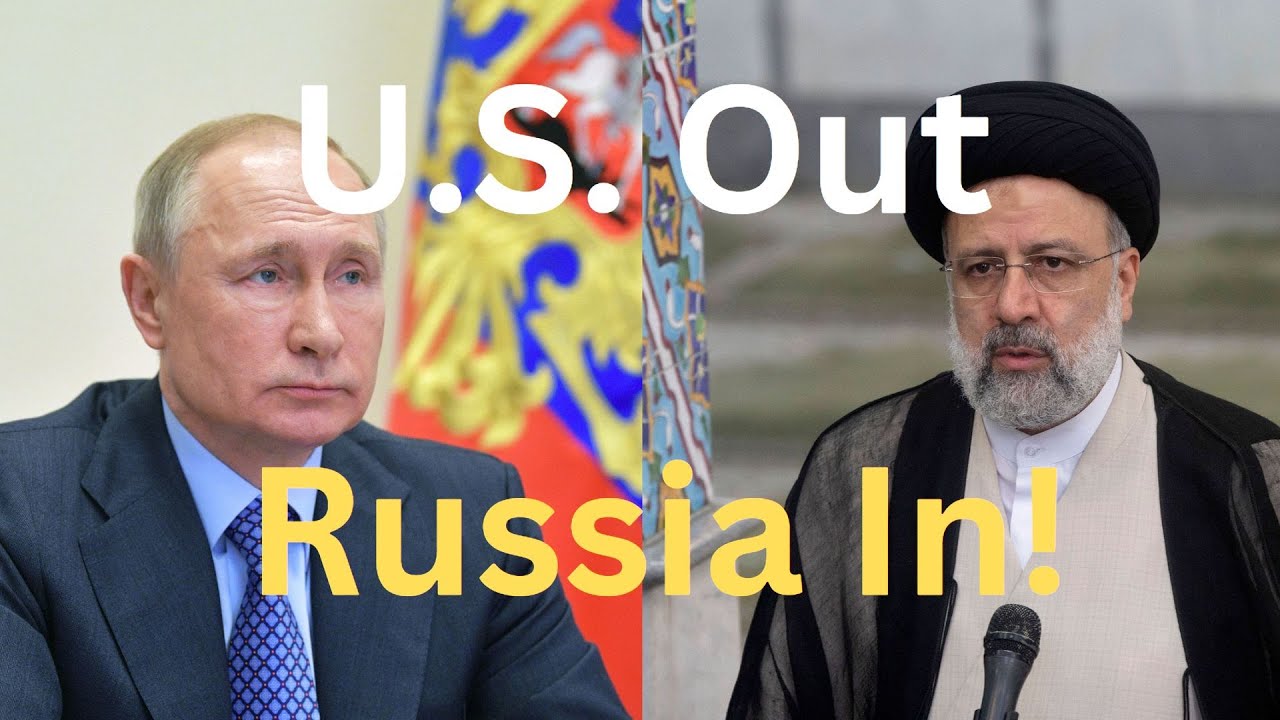
In this live‑stream, host David Oualaalou, a self‑described Middle‑East specialist and author, walks viewers through a recent Iran‑Russia agreement to finance and build a railway segment of the North‑South Transport Corridor (the RASHT‑Astara line). He frames the deal as a strategic move that could rival the Suez Canal by diversifying global trade routes. The discussion weaves together a series of ancillary news items (Morocco’s phosphate stake, Taiwan’s stance, US‑approved F‑16 training for Ukraine), a health interlude on honey, and extensive historical context (the Great Game, Sykes‑Picot, post‑World‑War‑I carving of the Middle East). Oualaalou analyses the geopolitical ramifications for the Middle East, Central Asia, and the broader BRICS bloc, noting sanctions on Iran and Russia, potential military cooperation (S‑400, Su‑35), and the prospect of a joint gold‑backed digital currency. He also previews upcoming coverage of the Arab League summit, Syria’s inclusion, and Zelensky’s appearance in Saudi Arabia. Personal anecdotes about his teaching career and community interaction punctuate the broadcast. The overall narrative emphasizes how the railway could reshape trade flows, alter regional power balances, and signal deeper Iran‑Russia alignment amid Western pressure.
Chapters
And welcome to Geopolitical Trends. My name is David Oualaalou. So good to be with you as always, guys. Very excited to be here again. Uh, so I'm— I wanted to come on the air here to address the topic I mentioned yesterday about Iran and Russia. Signing an agreement. And I am going to provide you some insights about— Middle East is a geographical area of my specialty, uh, academically speaking, uh, in addition to writing a book about Iran, writing a book about, uh, Saudi Arabia, and of course the US foreign policy in the Middle East. So I'm very, very, very familiar with that region. I speak the language fluently. So I have some insights I wanted to share with you, but before I'll do any of that, like I always do, I would like to extend my thanks to the channel's members and supporters. We are— we still stand at about 30 members and supporters, so we like to reach 100 so I can do an exclusive Q&A just for members and supporters. So for you, if it is your first time landing on this channel, please make sure to subscribe. So that's how you support this channel moving forward. So, all right, today's topic— what are we begin talking about? Let me share a picture with you for you guys to see. Uh, where's the image? Right here. This is what we're going to be talking about. We're going to be talking about Iran and Russia strengthening their economic ties by agreeing to finance and build a railway line in Iran. So it's very, very, very important to understand the dynamics of something like this. Of course, you're going to ask yourself the question like I always do. I would— I will always start with 2 or 3 questions for you to start to think not only outside the box but see the big picture. First question is, uh, uh, what will, what will impact this agreement will have geopolitically, not only for those two countries, for the Middle East at large. Second, how will countries in region will react to that? What I mean by this, I mean that will other countries want to enter into another agreements? Because remember, Iran is already has a 25-year agreement with China. Keep that in mind. And the third one is, uh, of course, the timing of it. So nothing happens in a vacuum. So that's, that's very important for you to understand. So, so let's do our tour around the world, uh, first here, because there are some really cool stuff that I want you to be aware of. We'll start with this first one here. And by the way, I have this on my Twitter feed. If, uh, you want to follow me on Twitter, I'm at @D Oualaalou, D-O-U-A-L-A-A-L-O-U, my last name there. So, so this image here, this is a picture of— has to do with Morocco and phosphate. Why is this important? It is important because you're looking at about $11.3 billion in sales value And this is why Morocco has acquired 50%— yeah, get this, guys— 50% stake in a Spanish phosphate producer. Because remember one thing a lot of people might not know: Morocco has the largest phosphate reserves in the world, with an estimated of 85% of global reserves. Yeah, Morocco is considered the second largest producer of phosphate with about 30 million tons per year and the first exporter of phosphates in the world. Yeah, so it's very, very interesting to just, uh, highlight something like this one here. Second one, this is— what should we call her— the governor of Taiwan. Uh, this is Tsai, you know, the They call her President Tsai. I call her Governor. Governor Tsai vowed on Saturday to maintain the status quo of peace and stability across the Taiwan Strait amid rising tensions with China. What it sounds to me, it's like she wants to ensure that the US— well, of course she can't control it. It's the US that dictates the term, not Tsai. Just straightforward, because that's how it is. So, uh, third one has to do with this image here. This is an F-16. The White House, the Biden administration, has now agreed to sort of allow the delivery of, uh, the F-16, uh, fighter jet. So, so basically the announcements that the US will approve this training of Ukrainian pilots on F-16 fighter jets. Uh, the UK of course will work together. Well, UK has to follow what its master orders, like Australia, like New Zealand, like Canada. The United States will dictate to them. So, so the UK will work together with the US and the Netherlands. Get this, The Netherlands and Belgium and Denmark, you know, to get Ukrainian fighter, uh, uh, pilots to train on this, which is gonna be useless anyway. We all know, because it takes them a while to train for something like that. Plus this F-16, probably— I don't know, I'm not laughing out of laughing, but all the weapons that been sent to Ukraine so far, some of it are useless. It's useless. Doesn't work properly. So I don't see what a difference with this. And the last thing I want to share with you is just an image without a comment. I'll let you see this and you make your own comment on it. Check this out. So this one came on my Twitter feed, so I'll let you sort of make your own comment on it. So it is, just in case some of you missed it, sorry, it's right here. So, all right, let's move on to health section. Yes, I do health section here. And guess what we're going to be talking about today? By the way, guys, if I made a mistake— if I make a mistake of repeating myself as far as health topics, because sometimes I forget, please don't hesitate to tell me, you've already talked about that, David Oualaalou. So just let's move on to something else. So I want to repeat myself. I forget, so I'm just a human like you. So anyway, here's the image. I hope we didn't talk about this, right? Let me see. First of all, uh, by the way guys, if you hear me well, if you're gonna give me thumbs up as always, I want to make sure. I don't assume. So, uh, let me see a sign from any of you that tells me that you can hear me very well. And it takes a while for— once you guys post something, it takes a while for it to come up. So, so my assumption is that you can hear me, because if it weren't the case, I would have seen something else. So anyway, let's talk about honey. Why honey is very important. Well, it is important for so many reasons. Uh, honey contains a variety of, uh, nutrients. You know, think of it this way, guys. 1 tablespoon of honey, or 20 grams of it, it will contain about, uh, 61 calories, okay? Zero fat, zero protein, zero fiber, 17 carbs, and, and 1% of, uh, riboflavin, which is— that's basically the daily value of it— and 1% of copper. This is not the important thing. The important thing is to understand that honey is essentially pure sugar, okay, with no fat and only traces, amounts of protein and fiber. And this is why most people don't even get the— or consume, rather, enough of it to be significant dietary. So I remember a couple of years ago when I used to go to Afghanistan and the Middle East, I used to have honey a tablespoon every night before I go to bed. And I tell you this, guys, from experience, it really, it really, it gave me some sort of energy. I was, you know, my colleagues at the time, so because we will go up some elevations, whatever, and said, you don't look tired, what's your secret? I didn't share it with them. I said, well, I sleep well. I used to, of course, and I still do. But I used to take honey every night. Pure honey, not processed. So, and I used to buy very expensive honey, but it was good. So, so I'm gonna share quickly 5 or 6 facts about, about honey. One of them is rich— honey is rich in antioxidants, you know, including phenolic acids and flavonoids, you know. Another one is better for blood sugar level. Because it can regulate that naturally. Another one, it can improve your heart health. That's very, very, very crucial. Another benefits of it, it promotes burn and wound healing. If you use honey on a cut on your skin, skin, it will really, really help. It also helps suppresses coughing in children. No, And of course, it's easy to use in your diet. You can just add it on your, uh, uh, tea or whatever else you use, because that, that's the only way I use it personally. So, so the bottom line: honey offers several potential health benefits, and thanks to beneficial compounds it contains, such as antioxidants and propolis. All right, let's move on to our narrative, which is the key as to why we are doing this live stream. Let me remove this picture here, by the way. Uh, okay, where is it? Right here. There we go. And let me check to make sure that I'm assuming you guys can hear me. Yeah, okay. So no issues with the sound, great. All right, let's move on to talk about our topic of the day. And the topic is, as I mentioned, is, uh, Iran and Russia decided to sign an agreement, uh, uh, uh, by which, as a matter of fact, uh, both President Putin and President Raisi via link, uh, uh, uh, virtually, that is, witnessed the signing of the agreement, the deal to finance and build an Iranian railway line as part of the North-South Transport Corridor. And that basically, it involves more than a dozen countries, and I'm gonna get into this in more detail. So the line, basically, uh, the Rajasthani Railway which to be built by the end— so should be completed by the end of 2027, you know, is basically how it is, is perceived as an important link. Because here is what you guys need to understand, and for you to have a better understanding, I need to share this image with you for you to see, uh, right here. Look at this one here. Let me put my glasses here. So here is Moscow, and here is Iran right here. And, and, uh, rushed, as I said, it's gonna link, it's gonna link, uh, the Rush-Astara Railway between Russia and Iran, and it's gonna have to extend it to connect all the way to India, Russia, Azerbaijan, Iran, and other countries by rail and sea. So Russia said basically that this project you know, could rival the Suez Canal as a trade route. Why do you guys think that is the case? See if you can leave me some answers on why, in your opinion, if you think that this railway that's going to be built between Russia and Iran will rival the Suez Canal. Remember, Suez Canal There is a lot of traffic goes through it, so it's a major, major hub. Okay, now with this railroad, it's gonna change the equation, and it's going to change the equation from both ends— geopolitics and economics. That is where, uh, the, the difference is, and it's very, very important for us to understand how— what, what type of impact it's gonna, uh, have. So So basically, the Russian president Vladimir Putin said, and I quote here because I, I had to listen to the statements because he witnessed the events on his end in, in Russia, and the Iranian president in Iran, uh, via video conferencing, that is. So the Russian president said, and I quote here, I got the quote here for you guys, The unique north-south transport artery of which the RASHT-Astara Railway will become a part will help to significantly diversify global traffic flows. End of quote. This is very crucial for you guys to understand. Why is that? Remember what we talked about yesterday with Central Asia. What does Central Asia have? Natural resources. What does also Central Asia has? It has also where the, the route for the BRI, the Belt and Road Initiative. So all that area is going to see a transformation in infrastructure. So this railroad is going to sort of cement that region as an economic hub as well. This is why The Russian president used the terms carefully: to significantly diversify global traffic flows. That means the global traffic flows will not be limited only on certain areas. For example, the Strait of Hormuz when it comes down to oil, the Suez Canal when it comes down to commodities, and the Indian Ocean when it comes down to all sort of commodities as well. One-fourth of the global commodities traverse through the Indian Ocean. Now you have the, the railway that's going to pave the way for that. The Russian president also added that this 162-kilometer railway, it's going to be passing along the Caspian Sea. Again, you have to understand and see the strategic thinking of what it means when you are building infrastructure near or along the Caspian Sea coast. You know why? Because it benefit Russia. Of course it's going to benefit Iran and the other countries, but it's going to benefit Russia because it will help to connect Russian ports to the Baltic Sea. That is why. And with Iranian ports in the Indian Ocean and the Arabian Gulf. So you can just see, this is where geopolitics comes in. You have to think about— there is a— in the field of, in, of, uh, political science, uh, there is something called political economy that, that, that's basically what it addresses, the idea of how certain economic dimensions will impact the political outcome. Political economy— geopolitics is part of that. Geopolitics deals also with, of course, the, the borders, the boundaries, the geography, but also how that's going to impact the political decisions. This is the perfect example for you guys to truly understand that, uh, the impact of, of something like this on geopolitics. So But before I move forward here, it will help us to understand a little bit. You remember the first question that I asked, how this is going to impact the Middle East? Because it will have a major impact on the Middle East. When you look at this map here, just look around for where the countries that's going to be all impacted. And we're already seeing this. And by the way, Tomorrow I, I am gonna— I think I'm gonna do another live stream for you. Some of you been asking about, uh, to do the— to do, uh, uh, not a deep dive, but at least an assessment or brief analysis about the, the Arab League summit in which Syria was invited. So I decided I'm gonna do it for you guys tomorrow because you need to know I read through the, the, the what was stated in Western media, especially for us in the United States. They did cover it. I'm not saying they didn't. It's just nothing in depth, you know. And again, I feel comfortable enough to say that the Middle East is my wheelhouse, per se, academically speaking. But also, I spent years in the Middle East back and forth. Uh, when I was still in Washington. I speak the language, I speak the Middle— I speak Arabic fluently, and I understand it. So I understand the culture, and I wrote books about Iran, Saudi Arabia, and US foreign policy towards the Middle East. So I'm very, very familiar with that part of the world. So I'm gonna do one for you guys tomorrow, so make sure to come in tomorrow to listen to what I have to share with you. So let's, let's talk briefly about really the Middle East history. Because majority, at least some of us in Western world, do not truly understand the history of the Middle East, how the Middle East evolved over time. Countries in the Middle East behave today because you have to understand their past. It's no different than Asia, it's no different than China, it's no different than Japan, it's no different than Philippines. You know, every country, you know, they evolve over time because a reflection of its past, you know. So the Middle East, the term Middle East, which by the way in Arabic it translated to Ash-Sharq al-Awsat, and in French it's called le Moyen-Orient. I speak French also, and I'm not showing off, I don't do this kind of nonsense. I do speak those both languages fluently, and I'm very familiar with the culture on both, on both, on both ends. So, so the term in itself, the Middle East They are, uh, what's the word, I'm not, uh, it's not conclusive. There's still disagreement among scholars as to how the term was originated in the first place. Majority, I won't say conclusively, agreed that the term was originated back in 1850. Yeah, 1850, in the British India's office at that time, because remember India was under British rule. So, and it became more widely known when American naval strategist by the name of Alfred Thayer Mahan— Mahan is M-A-H-A-N— used the term in 1902. He used the term Middle East, you know, and the reason why he used Middle East, uh, uh, It's because he wanted to designate the area between Arabia and India. If you look at the map— I, I wish I had the, uh, this one doesn't elaborate on this— when you look at this side here, I don't know if you can guys see my cursor moving. If you look at this area, that is the reference to that. So let's see that the area between India and Arabia. So during this time The British and the Russians, believe it or not, the British and the Russian Empires, what happened? They were vain. They were competing for influence in Central Asia. That brings me back to my conversation yesterday. This is why, if, if one, one advice I can give you guys, always remember to take a look at a historical context and try to at least read briefly that part of whatever you're looking at from a historical perspective. This is where both the British and the Russian Empires were competing over influence in Central Asia. This rivalry, which would become later on known as— and scholars have used the term, still used till today. I conducted the research for all my books, and when it comes down to the Middle East, in that part of the world, I still see the term. It's called The Great Game. I put this in quotes because it's not my word. That's what's been— most scholars have been using, the Great Game, the Great Game. So, and this is where the man realized not only the strategic importance of the region, but also how it could impact the geopolitical trajectory. This is why after World War II or even after World War I, rather, the Middle East has always been the center, a competing ground among major powers to conquer it because of its natural resources. So we all know that the Middle East was carved out after World War I, okay, or even before. Here is what's interesting for you guys to know from a historical perspective. Even before the outcome of the war, the Great War, that is World War I, that is, you know, it has been determined that Great Britain, France, and Russia secretly, secretly discussed how they would carve up the Middle East into sphere of influence. This is why you are, you, all of us, you are seeing the Middle East is divided according to what it was before. Of course, because the Middle East is a tribal region, so it's divided within a religious and tribal setting, but also from a political aspect of it. So why, why is this important for you to know? Because you have to understand, during that time, after, during, around, around the time of World War I, Who was the most dominating force at that time? The Ottoman Empire. Okay, the Ottoman Empire at that time started to be in decline, and it's been because it's been in decline for centuries after that. So prior to the war, we're only looking at the era of the World War I time frame. So, so the Allied power in this case was Britain, Russia, and France— of course the United States came later on— uh, already had given some thought to how they would divide up the considerable spoils of the likely events that the Ottoman Empire will go down, or they will defeat the Turks. And that's exactly what happened. So, so Britain and France already had some significant interests in the region between the Mediterranean area or the Mediterranean Sea and the Persian Gulf, because that area is rich in natural resources. So what happened after that? A victory, of course, offered— now, because they defeated the Turks, now the victory offered a better deal for them. This is why still till today France and England, they have now to go behind and follow the United States, whatever it does. That's why France— and when you think about the European Union, who do you think of? You think about Romania, Bulgaria, Portugal, Spain, Italy? No, you think about Germany and, uh, France at this time. Of course, when UK was part of the EU As a matter of fact, guys, uh, I got a word that there is a conversation now inside the British government that the possibility of UK returning back to the EU— we'll see how this will evolve, but that's the word I got so far. So the, the, uh, so it was the significant interest between those major powers or, or victorious powers that at that time France, UK, and Russia, because they wanted the regions between the Mediterranean Sea and the Persian Gulf. But as I said, the victory offered even a better deal for them. And the great deal, because Russia as well wanted to have a piece of the pie. This is why you are noticing, or you noticed back then, that Russia has an influence, for example, in Syria, in Iraq, in Libya, in Egypt, to a degree. That's for a reason. So from November 1915 to March 1916, okay, representatives of Britain and France negotiated an agreement with Russia, offering it, uh, assent, meaning they agreed to what Russia wants. And the secret treaty known as the Sykes-Picot Sykes and Picot were the representatives of France and Britain. That's why they named the agreement after, after that, was named after its lead negotiators, those two. His name is Sir Mark Sykes from England and François Georges Picot of France, you know, and the term was set out at that time to carve out the Middle East. That is why you need to understand this history of the Middle East and why I said earlier that this deal between Iran and Russia, it's going to impact the Middle East. Because now you're going to be noticing countries, they already having changes. And I, I, I don't want to get ahead of myself for the talk tomorrow because tomorrow I will detail for you as to what's going on right now on the political scene with Iran and Saudi Arabia, uh, reestablishing diplomatic ties following China's brokered deal between those two. That opened up the door wide open for many other countries in the Middle East now to reestablish reestablish ties with Iran, believe it or not. And as a matter of fact, Washington now threatened to sanction some countries if they move forward with that. And I'll talk about this tomorrow. I don't want to get ahead of myself. So, so let's go back to our topic about this corridor, the railroad that Russia said the corridor could rival the Suez Canal. Uh, let me show you a picture here because you need to see. Where is my reading glasses? Here's the Suez Canal right here. Very crucial, very, very, very crucial. Once you build the railway, uh, uh, that's gonna tie, uh, Russia into Iran, of course gonna go through other, uh, uh, countries. Uh, like I said earlier, China is already having a deal already signed an agreement, 25-year agreement with Iran. So that's going to pave the way for much more economic trade in the region because Central Asia cannot be ignored no matter how you look at it, you know. And this is why we are— we're going to be trying to figure out how we can influence the outcome somehow, one way or another. So So the idea of this, according to Russian president, President Putin, said that the unique north-south transport route of which RASHT and Astara Railway will become part will significantly diversify the global transport flow. It's very crucial because you can't just be depending on one specific route. In this case was the Suez Canal. This is why you have to understand, this is why in Sudan as we speak, tensions by the way is getting even worse now, uh, uh, it's getting worse in Sudan. The, the concern of the Western powers because Russia was talking, and I mentioned this yesterday, was talking to Sudan about establishing a naval base, naval base that's going to be on the coast of the Red Sea will have access to Red Sea. Having access to Red Sea will pave the way for access to the Arabian Sea, around, around, allowing access to the Arabian Sea and the Indian Ocean. And whoever— and this is, uh, this is the norm in understanding— whoever has access to water has an advantage. That, that just been always the norm for countries. Like, you look at the British Empire over its history, uh, access to water always paved the way for a much better outcome, politically speaking. So for Russia, like I mentioned earlier, it will be the idea of Caspian Sea and the Baltic Sea. Those are very, very important to understand. So So this is from the Russian perspective. From the Iranian perspective, uh, President, uh, the Iranian President Raisi, uh, argued from his perspective that the agreement is undoubtedly, uh, an important and strategic step in the field of cooperation between Tehran and Moscow. Now, I am not surprised at this. I argued this in my book about Iran and in the book about Russia. And back then, and, and it's on the record if you get a chance to read these books, especially the Iran one, I argued back then that I said, because I remember because I wrote it, I said it will be just a matter of time before Iran and Russia will enter into some agreements that will go beyond economic dimensions, including military one. And here we are. When I wrote that down, that it would be just now matter of putting those plans into action, and that's exactly what we're seeing. So the other— let me, let Let me take a look here first of all, because I always like to check this one here. Oh, I need to say thank you, uh, I want to say thank you to Osiris Great. Thank you so much, Osiris. Hope you're doing well. I haven't seen your name for a while because usually you put a comments, so hope you're doing well. But thank you so much for your super sticker, truly appreciate it. So, uh, what was I saying? I lost my train of thought, but it'll come back. So the idea of that, uh, both countries, Iran and Russia, they both of them under Western sanctions. When I say Western, I'm referring to the United States, you know. And this why also, beside the economic, this This is also what prompts both countries, Iran and Russia, to move forward. The two countries, they decided now to strengthen not only their political ties but also economic. Military, of course, emerged as well because Iran, it's going to purchase, I think, the S-400 missile systems. As a matter of fact, there is a talk between Iran, between Tehran and Moscow about, uh, Iran purchasing the Su-35, if I'm not mistaken. Not the 95, not the fifth generation, the most developed one, uh, but Russia is willing to sell, uh, and I think the US is concerned about that because if Iran, or once Iran acquires, uh, the knowledge of, of— it's going to be a game changer, mark my word on it. So So this is why, of course, in the case of Iran, following the 1979 revolution, of course, that swept back— and I detailed all this in my, in my Iran book— that swept the US-backed, at that time used to be the Shah, Reza Pahlavi. He was the one that we put in power. But when, uh, uh Iranian voted, they voted for Dr. Mohammad Mossadegh. Mossadegh was neutralized in 1953 coup that was organized by two entities: MI6 and the Central Intelligence Agency. So there are those who say, why, it was just the, the, the CIA that did that. No, no, it's both the Central Intelligence Agency and MI6 was involved in that one. So, so, and since, since then, when he was ostracized, since he was removed from power at that time— not removed, but rather when Mossadegh came to power. And of course, after all this, Mossadegh was taken out and all that. The revolution took place 1979. That's when Ayatollah Khomeini. Don't confuse him with the current president, because the current president, president name almost spelled the same but is pronounced differently. The previous one who passed away, uh, Khomeini. The current one is Ali Khamenei. So two separate pronunciations because two different people here. So, so when Khomeini at that time flew back to Iran from Paris where he was exiled. Since that time, 1979, sanctions were imposed on Iran all this time, almost 40 years. And believe it or not, Iran survived and still surviving because these sanctions forced Iran to produce things domestically. You know, and this is, this is the reality of it, and I don't shy away from saying it. Uh, you know, there are some, uh, uh, not all, I shall not generalize, but those who wants to, uh, word it differently, in other words, cherry picking. No, no, no, no, you say it the way it is. And the way it is is that we have not succeeded in bringing down Iran on its knees, economically speaking, because Iran's still standing. That's the fact, that's reality. I disclosed it in a book, and since my books have to be cleared by the US government, you know, I wrote that down and they didn't, they didn't ask me to remove it or something like that. So because we have attacked Iran with the myriad of, of, of sanctions, different types of sanctions and all that, and it didn't work. So, but also Iran also has, uh, how, how should I put it, around a quarter of the Middle East oil reserves. Iran has a lot of oil underground and gas for that matter. So same thing now, the sanctions on Russia. And by the way, Russia is making more money today than it did prior to the, uh, conflict, to the start of the conflict in 2022, on February 4th, I believe that's when it was. So, so both Russia and Iran, you know, have been pushed now because circumstances, political one, the sanctions that is, pushed them now to work together on both ends, political and economic, which makes perfect sense for them, you know. And this is why I keep saying, just think about it. If Iran— it's not if, but when Iran joins BRICS, Brazil, Russia, India, China, and South Africa, you know, when Saudi Arabia joined BRICS, you know, when United Arab Emirates, when Qatar— Qatar, that is, you know, you think of this, uh, those countries that are oil-rich, natural resources— is going to change the equation for the West and is going to change the economic outlook on the global level. So you add to all this is the tensions that exist as we speak over Iran's nuclear program. You know, I think Iran is going to move forward. Doesn't matter whether the West likes it or not. But they're going to move forward. So, well, what's interesting about this dynamics as far as the, uh, signing of the agreements, it comes on the way of the one main event. Like I said earlier, is the Arab Summit that just concluded in Saudi Arabia, and I'm going to talk about this one tomorrow in more detail. But I, I'll share a few things with you about it, uh, for example, uh, the summit the Arab League, all of them welcomed the Syrian president Bashar al-Assad, which means that's a big blow to the West, to the US, because we the one who imposed sanctions on Syria. We the ones who said, you know, uh, Bashar al-Assad cannot be in power, and here he is still because Russia supported Syria. But Russia supported Syria because of its own interest. The reason being because Russia has a naval base in a place called Tartus. Tartus Naval Base has access to the Mediterranean Sea. That's why I say anytime you have access to water, you have an advantage. So, and I will detail all this tomorrow. I don't want to take the surprise away. Uh, maybe one, I'll share the surprise with you, and the surprise is that the The comedian President Zelensky was in Saudi Arabia attending the summit, believe it or not. He was invited, and I will tell you tomorrow why. Why? This might shock you and surprise you. So this is where I see the changes that's going to be emerging from this deal, because again, remember, China has already had a deal with Iran of 25-year deal of $400 billion. That's going to include telecommunications, finance, uh, petrochemicals, and I think even some military hardware to a degree. So, uh, but now with the changes that's going on on the financial market on the global level, that is, you know, uh, for Iran, for example, Uh, they are thinking in terms of between Iran and Russia. They're thinking about creating a currency between the two of them that would be backed by gold, even a digital one for that matter. So the, the idea is just the fact that they are thinking about this, you know, like I always say, in international relations, context matters. Just the context of it. So as more and more countries moving away from the US dollar. No, of course, it goes without saying the dollar is not going to collapse tomorrow. It's going to take time, and that's the norm. But at the same time, when you look at the trajectory of where the gold is going— this is why, by the way, that company approached us to do their promotion, promotion video for them. It's because where the gold is headed. And I usually, when I'll do something like that, I'll research it first and I consider investing first before I'll say anything. Like the one we did last time about Gazprom in Europe, I intend to invest in that company. So it's because where I see things moving, uh, uh, forward as to this deal between Iran and Russia is going to change the trajectory economically speaking And of course, politically, with the deal between China and Central Asia, you think about it like a chess game. You have to know where to move, how to move the players, and you have to be strategic about it. Uh, it's not going to be easy, it's going to be challenging, but that's just the norm of it. But the reward or the outcome is going to be worth it. And this is what I believe. This deal, uh, it's not getting much coverage in the West, but it's going to be, uh, it will have an impact. It will have an impact. So, all right guys, let me see if you have any questions, because that's all I want to share with you today. And tomorrow I'm gonna talk to you about more about the Middle East and the summit that just included, uh, and, and I have a lot to share with you about that. Like I said earlier, it's, it's part of my academic background, Middle East that is, and, uh, and I, I have some information I will share with you. So let me, like I always do, I like to take a look, see, uh, just see. Oh, oh, let me say thank you to, yeah, Pandolmonian. Thank you so much for your Super Sticker. Truly appreciate it. So, uh, let me see, where are you joining me from? Then I will be, uh, just FYI, I will be heading out, uh, to Eastern Europe soon. Uh, uh, like I said last time, I will, uh, do a live stream when I get back to the US and And I'll have photos and videos and all that stuff for you when I get there, so when I get back home. So all right, let me see, where are you joining? Oh, by the way, I want to share something with you guys because I, I believe in our, uh, in our community. By the way, we put everything on the table. There is no sugarcoating, there is no cherry picking, because we community, we look after each other. So, and again, I share with you the good and the bad. So this one is good, and I wanted to share with you. One of our viewers, uh, and I'm gonna share the name here, it's a screen name, usually I will never disclose the name, is Orange Snake 2256. He wrote, he said, and I quote, I can tell David is a real teacher because he always yell angrily at the students who are present while the students who deserve the yelling are absent. Teachers always make that mistake. I laughed at it when I read it the first time. I kind of, you know, I don't take it personally, but just I had to sort of put a response to the comment. I did not yell. I do speak firmly. When I make comments about those stupid comments, I usually talk firmly. I have a loud voice, it's just that's how, that's how I am. So, uh, but as far as students, no, I do not yell to my students and I will not do that, of course. Uh, it's just because I care for my students. And I'm gonna share personal story with you. Once again, I don't talk much about myself here, but I had to leave. I left a full-time teaching position at a prestigious university without naming names, without putting them on the map, whatever. And the reason I left that, it's because I wasn't willing to put the welfare of my students second. I made it clear to them, my students' welfare comes first, no matter what the cost is. 'Even if I have to leave.' And when I said that, the administration, even the president of the university, was thinking I was bluffing. I don't bluff, so I made it clear. And I lost my respect for the guy. Here is a president of university and telling me indirectly that I have to sort of change the the direction as far as students and just stand in a classroom and read the slides, which is pathetic. You know, students don't need me for that. It's like us here, guys. You know, we want to challenge each other intellectually. We wanted to know, you know, if I am to just sit here and read to you, what's the point? What's the point if we can sort of challenge each other if we can learn from each other. I did the same with my students, and that university didn't like that because my name started to circulate quickly on campus. Everybody, all the students were like, were like, hey guys, if you want to learn something about the government and the world, go take Dr. O's class. They couldn't pronounce my last name, so they were referring to me as Dr. O. Go take Dr. O. So I And that was within the first month that I just came on board. And at the end of the— I was like, no, no, no, no, no, no, no. I finished the academic year and left. I kid you not, guys. And I usually don't make up things because that's not my personality. I had students crying once I told them I'm leaving. And you know why? You know why they cried? Because they knew They could differentiate between a professor who will just bullshit them basically, and students who— or a professor who really cares for their well-being. Students are smart. They can differentiate. Some of us professors, we don't give students enough credit. And I used to do it this way in classroom by including my students' input in the decisions we make. Because they are part of the process. And to me, that's how education ought to be. And the university, they don't like it. And I was like, well, I can't, I can't compromise on the welfare of my students. There is no way, no matter what. Of course, he thought I was bluffing. I shook his hand and I said, it's been nice meeting you.. And I finished my— finished the academic year because I signed the contract for one academic year and left. As you can have it, of course it saddened me that I left my students, but I did explain to them what it was. Still, some sometimes email me, sent an email because now they find out that I have YouTube channel and all that stuff, so they wanted to show their support and all So just to go back to this comment of, uh, uh, our viewer here, Orange Snake, you know, I, I know he— this is a— he didn't mean it in a negative way, so I just wanted to share this with you. All right, let me see, guys, if you have any questions here, and if not, I'm gonna sign off. So I'll be back from Canada, as always. Good to see you, good to see you here. Uh, let me see who else from what other parts of the world. Yeah, if you can just type in please where you are, if you feel like it. You don't have to, you don't have to. Just, uh, Jack Robert, as always, good to see you. Uh, Osiris, good to see you as always. Okay. Steph Lange said hello, Dr. David. Hello to you as well. So, uh, Charles— Charles, uh, I'm sorry, I couldn't pronounce this one. Charles Good, hello to you as well. So, uh, all right, let me see if there are any questions. Athene Wu, good to see you as always. Yeah, somebody mentioned this. Who is this one here? Mentioned Syria. Stephen Lynn, I will address Syria tomorrow, part of the Arab League Summit. So, uh, because it's very, very important for you to understand, uh, there's one saying, by the way, that goes in the political, uh, jargon that all Middle East politics goes through Damascus. Damascus is the capital of Syria. So, so, and there is a reason for that. And, uh, all right, let me see if there is any question here. Uh, uh, okay, okay, okay, okay. I don't see any questions, guys. Oh, uh, let me see who's from Ottawa. Yeah, always has it from Ottawa, rather, Canada. You know, uh, I will be going to Canada at some point soon. I might do live stream from there, so So, all right, let's see a question here. Question more. There's a question: what's the contribution of other member countries in Central Asia on this project? Not to my knowledge, because this is mainly between Iran and, uh, and, uh, and the Russia. But I am sure if, if, for example, a train that's gonna drop commodities in your country, you're gonna have to contribute somehow. There is nothing— there is no free lunch, as we say. So it's no different, and I am sure it will be some sort, sort of, uh, contribution. The way I can see it, and if I am to think outside the box, it will be the idea of, for example, tariffs. They could eliminate tariffs as an example. Uh, uh, they'll figure out something, I, I am sure. I am sure they will have something. Uh, so it'll, it'll, it'll work out. All right, let me— another question here quickly here. Why is Russia and Iran only financing the project? Well, it's because it's convenience, you know. If you have to have too many countries involved, it becomes problematic. And I'll give you a quick example here. Think of BRICS, okay? BRICS, because you have one country there That is, at least the people that I talk to outside the limelight, and they don't come on the air and all that, those are private conversations. And when we talk, we talk about how BRICS is going to be moving forward. But BRICS has a weak link in it, and the weak link is— can you guys guess which country? If you can type it on the chat room, or the chat box rather, which one is the weak link in BRICS? You're absolutely correct, Hong Long, it's India. And this is where it's going to be concerning if all the BRICS enter into a project together. Here you are. Of course, in the case of BRICS, they have to decide collectively, not one country decides, but it still is going to be problematic. This, to me personally, in the case of Russia and Iran, they decide to do it bilaterally. That doesn't mean the other countries that's going to have the— where the route is going to go, they will contribute to a degree, but the main, the main players are only two: Russia and Iran, to avoid any, any issues. That's the way I read it. That, that's just how, uh, that's how I see it. So, all right, let me see, uh, there was somebody from, I think, Singapore, if I'm not mistaken. Yes, I was right. That was right. So Philip 2 from Singapore, good, good to see you here. Uh, Gambia, Gambia, that's Casey from Gambia, good to have you here. So, uh, oh, Minnesota, that's, that's boycott smartphone, smartphones, Minnesota. So it's getting warm there anyway. Uh, okay, let me see here one more question and I am going to check, uh, sign off here. Uh, all right, question from Jack, Jack Robert. You know, question: will Azerbaijan and Armenia be used to stop this trade terrorism war? No, no, because they are meeting in Moscow, not in Europe. This is why I mentioned yesterday, Jack, and to all of you This is why I said the picture when they put, what's his name, Charles Michel in the middle, you know, by the way, that picture is an old one. You gotta, we gotta state the facts. It's an old picture. That's the only one they had on the article. But you tell me they couldn't find a picture where Putin is between the Azerbaijani president and the Armenian prime minister. Come on. So, and since they are meeting in Moscow, I don't think so they can hinder that project. And I am sure Russia will ensure, uh, one thing that you guys need to understand is that the, the tensions, the conflict in, uh, Nagorno-Karabakh, that's where the, the, the, the, the border parts where the problems are, those are sometimes fueled by outside elements. You know, their, their, their tensions will rise, then it'll subside, then it will rise again. Once any time they get pushed to foment tensions there. So I hope they can figure that out. So, so the short answer, Jack, is no, I don't see them hindering the, the, uh, the movement or how that project is going to move forward. Where you might see that it will come from the collective West, and we all know what it means. We all know what it means. So, all right guys, I hope you find this very informative. Uh, like I said yesterday, I planned on coming here to share this with you, and tomorrow I will be talking about the, the, uh, the Arab League Summit that just concluded in Saudi Arabia, uh, and I'll share some insights with you. So as always, remember, geopolitics impacts your daily life in more ways than one. Till next time, guys. Bye-bye.
More from David


Beyond the Single Actor: Why the Gulf Isn't Choosing Between the US and China


Iran, Iraq's Militias, and the Houthis Are Coordinating! This Changes Everything




Who Controls the Next Decade's Resources? Latin America and Africa's Geopolitical Crossroads

The Chokepoint Trap: How Washington's Stupidity Triggered a Cascade That Now Controls the World

Trump Spooked as IRGC Unveiled dual-use SLV, Deployed Ghadir Mini-Subs & Hinted at Tactical Nukes!
