Iran Uncover Missile City Deep Underground: A Nightmare for Israel? | Geopolitical Trends
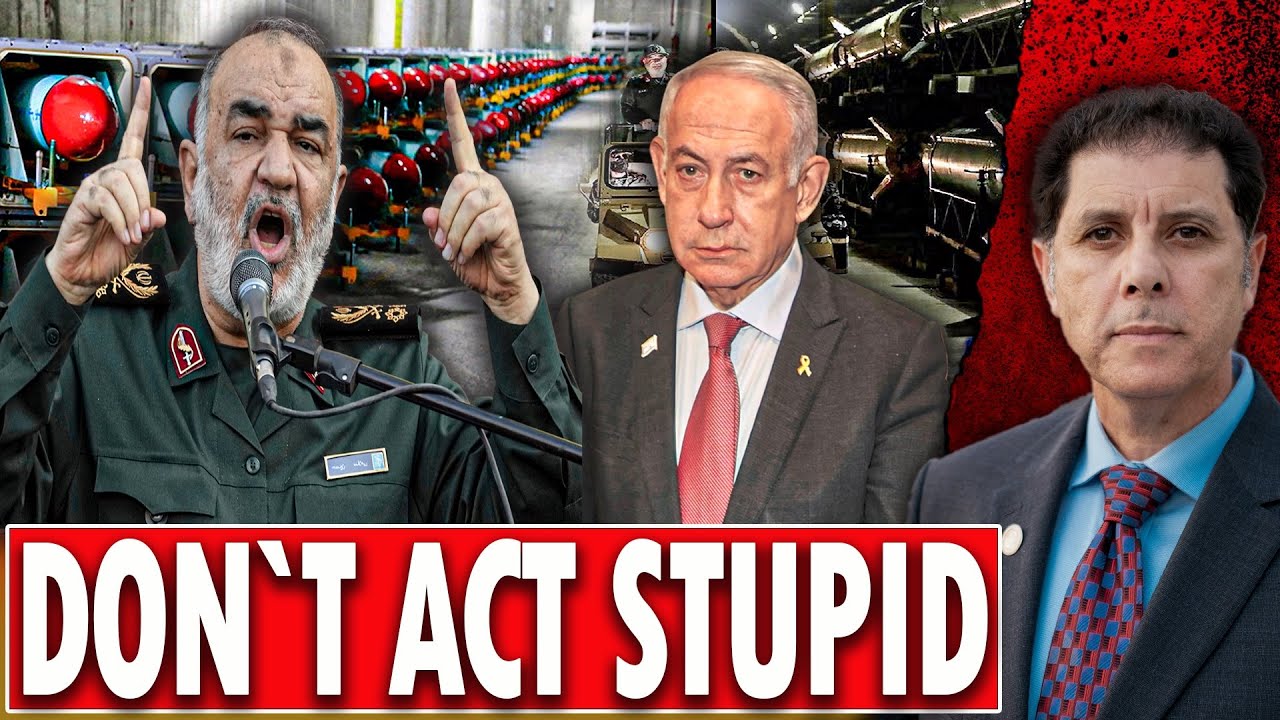
In a live Geopolitical Trends broadcast, the host (Speaker A) examines Iran’s recent public unveiling of a massive underground "missile city" and its broader geopolitical ramifications. The discussion begins with community greetings and promotional plugs before diving into a detailed overview of the IRGC’s organizational hierarchy, the historical roots of Iran’s missile program (reverse‑engineered Scuds from the Iran‑Iraq war), and the specific missile families (Shahab, Zulfiqar, Qiam, Sejjil, Khomeini‑Shahr, cruise missiles) with their ranges. Satellite‑derived estimates place the underground complex 80‑100 m below ground, housing thousands of precision missiles and naval assets. The host argues that the disclosure is a strategic signal aimed at Israel and the United States, highlighting why an Israeli strike would be infeasible: dispersed nuclear sites (15‑18 locations), deep‑buried reactors, the need to neutralize Iran’s air defenses, missile launchers, communications, and the logistical hurdles of over‑flight rights, mid‑air refueling, and bomb quantity. Economic fallout is explored, especially the threat to the Strait of Hormuz and global oil prices. The host also critiques the IAEA’s credibility, US defense spending, and speculates on possible Chinese or Russian naval basing in Iran. Throughout, short expert clips (Speakers B and C) provide technical validation of tunnel depth and missile‑range data. The program concludes with promotional reminders for upcoming interviews and a call for channel support.
Chapters
All right, hello everybody and welcome to Geopolitical Trends, where truth matters. Excited to be with you as always. Got an interesting topic for you today. I will be addressing what Iran just did by uncovering, or, uh, sort of, uh, taking the lid off— it's a missile city deep underground. Now the first question that comes is the timing of it, and of course to whom the message is intended to. It's very, very clear. But what I'm going to be talking about here in this analysis here, guys, uh, I'm, I'm going to be sharing with you of course why Iran is doing it now and, and, and what the message is and so forth. But you have to look at it from the bigger picture, and the bigger picture is the geopolitical landscape in the region, West Asia or Middle East, which at the same time is reflective of what's going on on the global stage. And this is the reason why I wanted to do this for you. So, but before I do this, like always, I gotta say hi to our wonderful community. 72 Marshflower 15, good to see you. Uh, MYT Account, oh, thank you very much. Get authentic analysis here where truth matters. Indeed, thank Thank you very much for being here. Uh, Anwar Ahmed, good to see you as new member for the channel. Good to have you here in our community. Uh, Leanne, good to see you. I got another member here. Uh, PLMYK, good to see you becoming a member and welcome to our community. So Willie Holman, as always. Timeline Dunkley, good to see you. Oh yes, I did hear about this one. I won't buy, uh, I won't buy what the Western media is saying. The demonstrations took place, but those are protesting the war in itself, not Hamas. You gotta be, uh, pay close attention to what the media saying versus what it is. So, and as a matter of fact, I got you guys a link here. You can look it up yourself that it says that they were protest, but this against the war. Not against Hamas. So here's the link for you if you want to check it out later. And thank you, Timeline Dunkley, for bringing this up. So, uh, because here's one thing that you guys all need to know is that Hamas is part of the fabric of the Palestinian societies. All right, uh, Truth Seeker, good to see you. Sanktan, good to see you. Francis Tango, as always. Francisco, uh, yeah, Francisco L, good to see you. Alice Talokin, Hangi G, good to see you as always, babes. Salaam alaikum from the UK, good to see you. Peng Yu, as always. Femida, good to see you. Ryan, good to see you. Karakulak, as always. And Emerson Bangura, so good to see you. Amanda, good to see you here. So, all right guys, let me get in because I got a lot to cover and I have some clips I'll play for you. And also provide you my own assessment based also on what some other military analysts have put in. And I couldn't agree more. I did the research when I wrote my book about Iran, so they both— the analysis that those military analysts provided and my own, some sort of coincided with that. But all right, some housekeeping here before I launch into all this. Remember to join me tomorrow for my conversation with Larry Johnson. So I'm going to put the link for you in the chat box for tomorrow. So if you have a chance to join me tomorrow at 12:15 for my Larry— for my conversation with Larry Johnson, it will be an interesting one. So a second one is remember to join me also on Friday at 19:30 for my conversation with Carl Zha, and I'm gonna put once again the link, uh, for that live on in the chat box for you. And the third one of— is my upcoming conversation with Professor Anna Malindog regarding the Philippines, and this one has to do with the upcoming visit of the Secretary of the defense to the Philippines. Read between the lines, guys. So here is the link for that upcoming interview with Anna on Sunday. That's going to be on Sunday at 8:30 AM. So, and of course, don't forget to join me tomorrow on the other channel, Geopolitics and Money, formerly known as Geopolitical— uh, Geopolitics in Conflict, for my conversation with Elizabeth. We're going to be talking about some domestic and some good topics. I didn't set it up yet, but we will. So anyway, let's move on to our conversation here about— I have one thing about headlines you need to be aware of here, and I wanted to share it, and I will be addressing this tomorrow with Carl as well. So what you're looking at, a picture— BYD is here. Why is this important? Because here's the thing, The Chinese automaker doubled— they doubled the production on the global figure. So here is what, what happened in China. Uh, let me see if— yeah, right there, this is a picture right there, guys. And I give credit to AFP, the Associated French Press. Here's what happened. China is now selling about 11.3 million electric vehicles in 2024. That's what I said, that's what the recent data shows, that the electric vehicle sales in China reached that point. So, which is nearly double the sales of the rest of the world combined. So, and this to me, in my opinion, this remarkable growth is attributed to the continued rising domestic demand. Uh, I was there when I was in China, I saw a lot of electric cars, uh, and I hardly ever saw any gas station. So, and, and to me, that's— it shows you where things are headed. So now you know why the US and the European Union put in tariffs on the electric vehicles of the Chinese, let alone the Chinese ones are affordable cost-wise. So I asked my son last time, and I said, because he drives now and all that, and I showed him a catalog that I brought with me from China. And he saw that, he's like, wow. And I said, do you know what the cost of this is? And I said, it won't cost you more than $20,000. Well, he said, can I get one? I said, no, you can't, because if you get it, they're gonna put a tax on it or tariffs for 100%. This is why the government doesn't want you to know that the efficiency and the cost of a vehicle like this. And I said, listen, maybe one day I'll take you to China and you see with your own eyes. So anyway, let's, uh, let's get into our topic here. So Iran, as I said, uncovered the missile, uh, uh, deep— yeah, it's deep, um, missile city, if I'm use the term. And I got some pictures for you here, guys. This is underground, very deep, deep underground, uh, that, uh, uh, uh, Iran decided to disclose. So, and before I move on, please make sure to sign, uh, to subscribe to this channel if this is your first time here. I will greatly appreciate it because the analysis you're hearing here, it's unique to this channel. And please make sure to share it with others around the world. So here is the link, I'm going to put it in the chat box for those who might be joining us for the first time. So So now the idea that, uh, Iran uncovering this missile, uh, city— yeah, interesting that it's like a city because I took a look at some very variety of, uh, public sources, uh, not the classified side because I am not in the government, and even if I did, I will not be able to disclose that. But the question is, when you see this massive, uh, production underground, the first thing that comes to mind is is this going to be now a nightmare for Israel? It's straightforward, because for the IRGC, the Iran Revolutionary Guard Corps, known as the IRGC, unveiled this new missile city, uh, uh, and even for its Aerospace, uh, forces. So the question becomes is, what kind of missiles are we looking at? What kind of, uh, uh, uh, uh, weaponry that is under the— they even had underground some types of, uh, naval assets. When I say naval assets, I'm referring to ships, small size. Those are compacted, but they are specific for that zone. And I will be showing you again some other pictures as I move forward. But first, let's do at least a brief description of what IRGC is. A lot of people do not even know, uh, what, what it is. So, and here's the thing, just for, for you to understand, the IRGC— and I have some pictures for you here, it's, it's different types of IRGC. I give this credit of this picture to the European News Agency. So, and, uh, so when you look at IRGC the structure of it. Its organizational pyramid consists of the Supreme Leader, Ali Khamenei, who is appointed— the Supreme Leader, I'm sorry, of the IRGC, who is appointed by the Supreme Leader, and the Supreme Leader, the Deputy Supreme Leader. So in other words, they got the commander, vice commander, there are 3 layers into that. Then you have the chief of staff, who regulates relations between the 5 forces of the IRGC. The equivalency, the way to understand it in a simple term, the equivalency of our Joint Chief of Staff. We have like all the branches of the military, uh, that we have, uh, Navy, Air Force, uh, Marines, Army, uh, that's the same thing the IRGC have. So this one has like the 5 forces of the IRGC, which includes the ground force of the IRGC Corps. You have the Air Force, you have the Navy, you have the Resistance Force, or Basij, and I wrote about it in my Iran book, and you have the Quds Force. Now you remember who used to be the former commander of the IRGC, Does anybody know? The previous one, not the current one. So if you know, type it in the chat box. It's, it's well-known figure, uh, and, and actually the developments of the IRGC, uh, he's credited for that. Uh, Shelly, you got it. Soleimani, Qasem Soleimani. And we decided to take him out in Iraq. But here is one thing I can share with you about that, that intel was leaked from within the Iraqi government. Just FYI, to let you know, because nobody knew about that movement of his at that time except some elements inside the Iraqi government at that time. So, but that's separate conversation for another day. So now, the Revolutionary Guard or the IRGC also include two other agencies, and you need to understand those agencies that operates directly under the supervision of the regime's Supreme Leader and reports to him directly. And this one, the office is the Representative Office of the Supreme Leader and the General Office of the Maintenance of Information of the Revolutionary Guard. Basically is the equivalency of the MI. And I was in MI in my military experience, what I served and all that. I served in the MI unit. So they do have similar to what we have, the military intelligence service. So, so that is what, what you need to understand about the IRGC. It's, it's a very, very, very, uh, intertwined. There's a lot of moving parts in, in into that particular, uh, entity. So now when we think about why Iran did what it did as far as the revealing or unveiling the new missile city deep underground, which just did, by the way, yesterday. So why? It's because, first of all, he wanted to now show certain capabilities. They're not showing everything. You know, it's a smart move. Why would you want to show your— your— what you— why would you want to disclose your plan? Why would you want to— you know, it doesn't work that way. You always have to keep the wild card, and this is part of the wild card. This is not everything. So because what this, uh, underground bunkers houses are, uh, thousands— they houses thousands of precision missiles. That's one of your key word right there. This is what the Iranian, uh, uh, TV have reported because it includes the Khaibar, uh, they include Qadr. Those are types of missiles. They include Sajjil, Ehmad, Haj Qasem, which is Qasem is named after Soleimani, uh, missiles. Those are the type, as well as There are other types of missiles that are solid and liquid fuel ballistic missiles. So when you look at, for example, as an example here, this is what the Houthis are using, but this is the, a different version of the one that Iran has, Dolfakar. So, and, uh, here is one thing that you need to understand as far as how far those missiles go. And we give credit here to Al Jazeera for this picture here. See this radius here, guys? The Iran ballistic missiles— you're looking from the Shahab first, that goes about 300 kilometers, then Shahab-2 was 500, then Zulfaqar, which is 700, then you have Qiam-1, which is 800, then you move into the category of about 2,000 kilometers. You have the Shahab-3, Ehmad, and Qadr. Then you have Sejjil and Khomeini-Shahr. Then you have one other type, the cruise missiles that goes about 2,500 kilometers. Now there is a reason why this is important to understand. So And as I said, when you think about how this came about, how this Iran developed all this, you have to go back to the Iran-Iraq War, and specifically for one particular officer inside the Iran's IRGC back then. Okay, I'm gonna take you to the UNSCOM. You all remember the UNSCOM, right? The United Nations Security Council. Uh, uh, the UN— I'm sorry, the United Nations Special Commission. That was, uh, Scott Ritter was part of that because it was tasked with the ins— it's an inspection agency that oversaw Iraq's weapons of mass destruction, so-called weapons of mass destruction, after the Gulf War, which we all know how it turns out. There was no WMD. It was— the war was based on on a lie. Our invasion of Iraq was based on a lie, but beside the point. So now, roughly, because here is what you need to understand, roughly about 63% of Saddam Hussein's missiles were fired at Iran during the war, which is what— this is where Iran prompted to create some sort of a missile command This is why you have to understand how it's all started, because everything now Iran produces domestically. Yes, they get assistance from some other entities. To my knowledge, you got the Russians, of course, you got the Chinese to a degree, but mostly the Russians. Then you might even have some with the, uh, North Koreans. So to this day, to this day, the outlets continue to singing the praises of the IRGC officer. Why? Because he was the one who had the foresight to reverse engineer the Scud missiles. Remember, Iraq had the Scud missiles. So, and instead of firing now the missiles, all of them, because after he reverse engineered that, instead of firing all of them on Iraq It didn't, because that's what became the basis of Iran's, uh, missiles forces. So a lot of people do not know, they really do not understand how this all came about. So, and this is why it's important now to understand why Iran is doing this, providing or showing all this. Of course, there are some other, even state TV The state TV has explained that this facility has also some naval assets, or attack missiles and missile launchers are stored. So 500 meters deep down in Iran's southern waters, without providing any further details into all this. Now What's interesting about this is that, uh, uh, Iran revealed this military site aimed at growing expectations of an escalation between Iran and, uh, the United States, and of course, in addition to Israel. This is why Iran decided to move forward with this particular move. So, so to President Trump He's gonna have to think because he's already made the mistake by going after the Houthis. Well, guess what the Houthis just did yesterday? They attacked Ben Gurion Airport for the 6th time. So what happened to all bombing that we are doing in Yemen? Did it stop the Houthis? No, it didn't. No. And this is why Iran had to think very, very strategically as to when they will do all this. I'll take you back to January 10th of this year, because it was on January 10th— if you were, I don't know whether you were paying attention to this or not— it was during the 10th of January of this year that the Iranian state TV broadcasted rare, rare footage of Salami. Salami is the current major, the guy who oversees I thought I had a picture of him. No, I didn't. But anyway, Salam. Let me see if I can get you guys a picture to see who he is, because it's worth at least, uh, uh, understand of Iran. Yeah, let me, let me share quick picture. Allow me here, guys, just bear with me for a second. Images, and I'm gonna share it with you. And I thought I did. Oh, that happens. That, that's part of being human, you forget things. So, okay, here's the picture coming up for you guys, and thank you for your patience.
It is.
So, uh, this is the, the General Salami. So, so what happened with this one here? So because on January 10th, it, it was a rare visit by him, uh, going to underground missile base. And this one, by the way, here is the key: it was that base that was used last October to launch the attack on Israel that included, if you remember, there was a hypersonic missile. Of course, Iran doesn't want to show all all its cards. It doesn't make any sense for them to do so. And this is where you start to think now, with Iran showing this at this time, it has a specific message to both United States and Israel. But we're going to focus on Israel specifically. This is what's, in my opinion, what is preventing Israel from attacking Iran. Because first of all, you won't be able to destroy— meaning Israel will not be able to destroy Iran's nuclear facilities. Why? Because they are dispersed around the country. So I'm going to share a picture with you, uh, about the locations of where those nuclear facilities are. So you— sorry, it's in Arabic here, and I'm going to read it to you. You have Tehran, you have Fardoo, You have Natanz, Asfahan, and Kandeb. Those are the— then you have Bushir right here. Those are some of the known locations. Remember the keyword, known locations. And that's what's going to make it very challenging for, uh, Iran— for Israel, I'm sorry, to go ahead and attack those locations. Later along, some other 5 or 6 or 7 other challenges which I'm going to share with you. And I coincide this with exactly what some other military analysts from overseas, not here in the US— it was a conversation inside the Pentagon, uh, back then. I remember back in the day when I was there, because it was, uh, a conversation about, uh, what should we do should we decide to attack Iran. And like in any military operation, you have what we call the menu. And the menu, you have options. One of them was a carpet bombing at that time, but it was a thinking we didn't know because Iran never disclosed what kind of capabilities it has. So, and that plan was shelved. So Israel, of course, couldn't do it by itself. And this is why you have to understand all these dynamics that happen in, uh, in, in coins, in, in, in sort of conjunction with what's going on with the Houthis, with what's going on with Israel relaunching the, the war in Gaza, with what's going on with the US being trapped in, in, uh, in, in Yemen, and also what's going on with some other Arab countries, especially in the Gulf, that are now worrying about what's, what, what might be happening. And this is why I wanted to— there was an article by Ahmed Hafez, and I'm going to share with you later on. So now let me talk to you about the key points that I see that could, uh, uh, provide, uh, the problem. First one is that the nuclear program for Iran is not limited to one specific location. Like I mentioned, it's dispersed. So that's one. You need to understand this, this reason here. And this one, when you have some sort of a geographical area that is so widespread across— Iran is not a small country, it's very big. And when you have to, to consider, when you have, uh, when you have to consider Uh, when you have to consider— I'm getting distracted here because I'm getting some text here. So, you know, when you have to consider that the locations are about over 15 locations, so what I showed you here is just limited. But even within the same region, we don't know, like, like the region of Fardu, that is a big place. Asfahan, Natanz, all of them. So in total, you're looking at about 15, 16, 17, or even 18, to my knowledge, locations. So this is what makes the challenge for Israel to consider targeting those. The other thing is you have these sites within Iran that consist of 4 types of nuclear reactors. You have one with 4 other one with heavy water production plants, which is about, uh, 3 or 4 of them. Then you have other 4 or 5, uh, nuclear research centers. Then you have the other sort of 3 or 4, uh, uranium enrichment sites. And of course, if you have all this, you have to have another aspect to that, which is what is the bomb body and the detonator manufacturing sites for all this. So, so let me play a clip for you guys because I want you to hear this, and then, then we go from there. Ah, let me get it here for you. I'm going to share a screen and we go from there, and I'll continue on what the challenges that, uh, Israel will face if it decides to attack Iran.
Over the last 2 years, there's been a series of tunnels constructed in a mountain near the Iranian nuclear site at Natanz. Now, these tunnel systems are really worrying both nonproliferation experts as well as intelligence analysts who've been monitoring the construction for years via satellite photos.
We compared the, the two entrance, entrance and exit of the underground facility, which we know the actual height, the elevation of those at the mountain, and we know that the elevation of the mountain itself. And this underground facility, we estimate to be anywhere between 80 and 100 meters below ground. The depth of the facility is a concern because it would be much harder to destroy using conventional weapons such as like a typical bunker buster bomb. And so the Iranians are trying to build resiliency into their program, and it's evident here.
For its part, Iran says that its nuclear program is peaceful, that it follows and complies with the orders of the International Atomic Energy Agency, and that it does not seek to build—
Sorry, I wanted to stop this quickly here to tell you something about the IAEA, the International Atomic Energy Agency, which is corrupted, by the way. If you only know what happened In Japan, you remember when the Japanese decide to dump the nuclear waste? You know, the IAEA, especially the guy, the head of, uh, uh, I forgot his name, the, the head of the— was in the take from the Japanese at that time. That's why you didn't hear much about it. So the IAEA has no credibility whatsoever. So I just wanted to point that out.
Build a nuclear weapon. However, over the last couple of months, we've heard Iranian officials increasingly talk about their ability to build a bomb should they choose to do so. Both America and Israel said they're not going to allow Iran to build a nuclear weapon, and both have been blamed for sabotage attacks on Iran's program in the past.
And of course, the sabotage— you are aware of the sabotage that the Israelis and the Americans embarked on. On for that. So, but the idea, which is true, that if Iran wanted to develop the bomb, it, it, it could have done so. Now it became evident to them. That's why they showed these types of missiles. But on the other hand, I am certain there is no question inside Tehran, within the government, that because if Iran declared officially, openly, publicly that they are in possession of the bomb, Israel will have to think twice., the US will have to think twice because it will be a form of deterrence, no more, no less. And this is why you are seeing the developments that is going on right now.
What experts fear is that this new construction could push what's been a shadowy conflict out into the open.
Okay. And by the way, when they said could push, Uh, because here is the thing: Iran already developed another nuclear, uh, location, uh, for its nuclear program. It took it 5 years to develop from 2020. So it's because we didn't hold our end of the bargain. And this is why it came to the decision by the Iranian leadership that we reject negotiating with the Americans. It's because you can't trust the Americans. So, so that was the first, uh, point that I wanted to share with you. So now, what does it mean for the first point that I mentioned about Iran's nuclear program being dispersed? Is that it's going to be very, very hard and very challenging for Israel Air Force. You know, uh, this is different than what Israel did to Iraq and Syria. Why? It's because when Israel attacked or destroyed the nuclear, uh, location facility for Iraq, because it was only in one specific location. The same thing for Syria. Iran learned from that. They dispersed all that all around. So this is why the difference. Second challenge, it will be that, uh, hypothetically, I should— Israel wants to strike Iran's nuclear facilities that when I mentioned to you over 15, 16, 17 locations, they have to do them simultaneously, which Israel cannot— they won't be able to do that because they're gonna have what they're gonna need to have, uh, all this. Because Israel will have to destroy the air defense systems for Iran. Israel will have to destroy the missile launchers. Communications, satellites, control systems, command, all of them. All of this has to happen all at once. There is no way they can do that. So third, the challenge that I believe will be facing, uh, uh, the Israelis is necessary— the quantity of bombs needed to do all this. This is not a mission you're gonna go with 3 bombs, 4 bombs, and that's it. The qual— and, and which Israel doesn't have the capability for destroying all these reactors. It just can't. And let alone the type of bombs, because those, uh, facilities, the one that I shared earlier in a picture, right? Where is it?— right, this one. Sorry, guys. Right here. Those are very deep down in the ground, very deep. So Israel will have to secure large and massive quantities of these bombs that are capable of penetrating this kind of reactors, and I don't think so it, it, it can do that. Otherwise, you— because you won't be able to destroy something like this in a single attack. And that, and that's going to be, uh, challenging for them. So number 4, that I believe will be also a challenge if hypothetically— and I use the term, uh, specifically here, hypothetically— decide, because Israel figure out they can't, they won't be able to. So it must secure the passage of air, air is, uh aircrafts over certain countries. Once again, let me bring this map back, and I'm gonna read them for you since they are in Arabic. So you have Saudi Arabia, you have Oman, and I'm starting at the bottom right near the Arabian Sea. You have Oman, uh, United Arab Emirates, Qatar, you have Saudi Arabia, uh, Iraq, Syria, Turkey, Armenia, Azerbaijan, those are from the other side. We're talking about the Middle Eastern or Western part of Iran. So, which means, because when you look at the big picture of where Israel is, and let me see if I could show a map here, it's unlikely even. Yeah, yeah. When you look at where Israel is, look where Iran is. Well, the, the, the planes, the, the fighter jets will have to cross through the airspace of those countries. So which will be very challenging. Why is this? Is because that the— these countries will have to give the approval, and if they give the approval, which means what? They are part of the problem. They become a target also. And as a matter of fact, I will not see this much as a challenge. You know why? Because you can't trust those Muslim countries. Look what they are doing right now regarding the, the people in, in Yemen, the Houthis, or, or even in Gaza? Did any of them condemn anything? Like I always say, the pathetic Arab and Muslim leaders, they will— they are spineless. They won't be able to do anything because we will be able to force them, because we have say over all of them, no exception, except you take Iran and the Houthis. In this matter. And this is why that will be another challenge. And this specific one regarding the rights to fly over airspace of those countries, uh, because it will be very challenging for those countries themselves. Because once Iran find out that, for example, even though now Iran and Saudi Arabia have diplomatic relations, but if you are to go and allow Israeli airplanes to go through your airspace to attack Iran, Why will Iran maintain its diplomatic relations with Saudis? Because in this case, once Iran discover what this country is, they're going to become a target for Iran itself. Number 5, this one will be another challenge for the Israelis. Why? Because it requires refueling. Now you only have two options for that, either to land And I remember when I used to travel for the US government back in the day, we will land in some countries. I remember sometimes we land in Azerbaijan, in, in, in Astana, sometimes just for refueling. We'll sit for, stand for, usually we step out because it was a, it wasn't a commercial flight anyway. Uh, we will step out, I'll go for a walk a little bit for 20 minutes or so, because it will take about an hour or so. So which means in the case of Israel, we'll have to either land on those countries where they're going to be getting over or through, or it will have to have refueling in the midair. Well, who's going to do that in midair? Israel doesn't have those kind of capability. That means the US will have to do it, or maybe some other NATO countries, maybe. So, and this is why if the Israeli fighter jets will have to stop in for refueling in these countries, that means those countries are assisting Israel in attacking Iran. So, and this brings back the sort of the question of whether those countries would agree to allow their airspace to be used by the Israelis. You have number 6 as a challenge, which this now takes us away from the military realm into the economic aspect. Once again, you look at where, where, uh, let me get the picture, where Iran is, and what do you see? You see the Strait of Hormuz, of course. And if you consider that 20% of of the global oil shipment goes through this location right here. So what that's going to do to the economic front? Because if hypothetically, once again, uh, uh, Israel decide to attack Iran, which I don't see that happening anyway, uh, they're going to have to target also the economic infrastructure. And this one has to do with the oil facilities, which will lead into an increased prices around the world. This is what I'm saying, everything is connected when it comes down to dealing with the geopolitical, uh, issues. You can't think only of one. Well, we got this, uh, F-35s, we're going to fly and bomb this and get out. No, no, no, no, no, it doesn't work that way. I made the same arguments, literally I made the same argument back in 2003 against the invasion of Iraq because I said it's not going to be an easy walk. Oh, Mr. O, we're just going to go bomb this, liberate Baghdad, and we get out. I said you won't. If you get in, you are in for the next 15, 20 years. And that's exactly what happened. There will be the same argument I will make regarding this aspect of, uh, if they are to go about thinking we're just going to go and bomb whatever. So economically speaking, this is going to now create more problems on the global economy. And as you know, if you know anything about— for us here in the US, we depend on oil from the Saudis and all that, even though we have so much oil here. It's cheaper for us to buy it than it is to reproduce it here. So Number 7, as I said, the Strait of Hormuz will be closed. In this case, Iranians have the means to close it. The US said always, no, we're going to send an aircraft carrier. No, no, no, no, no. Look what just happened in the Red Sea. We couldn't, we couldn't defeat the Houthis or lift the blockade that's still till today in the Red Sea. By going and sending the second aircraft carrier, which is this picture right here. This is the Carl Vinson. Uh, we already had the, uh, USS Harry Truman, which to my knowledge, but has not been reported, and, and it says that it was attacked by the Houthis. As to the extension of the damage, I do not know. So, and that's what I'm saying, in the case of the Strait of Hormuz, When you look at the map, Iran has that possibility. To my knowledge, there is already some ordnance in the water right in this location of the Strait of Hormuz, just in case that Iran can activate. So basically, if you do the— if that happens, what are we looking at? We're looking at, at the expansion of the scope of the war. And this is why I always say attacking Iran, it's not going to be limited to that geographical location. It's going to expand. It will be the same thing if we make the mistake of sending our troops to Yemen. If we think we're gonna— oh, it's just Yemen— it will become the graveyard Because what you'll be looking at in this, in this case of the Strait of Hormuz being shut down, because this is going to open up a window, as I said, the expansion of the scope of the war, which will push other countries to get involved because of their strategic interests. I can, I can tell you right now, I'm thinking about two right there, China and Russia. As a matter of fact, there is now a conversation, it's just a conversation. When I say conversation, it's not formal, about Iranians allowing for the Chinese to establish a naval base in Iran. Am I surprised? No, I'm not, because I talked about it back in 2018. I said, Mike, my word, down the road, if things move forward, we will see probably another, uh, we will see probably a Chinese or the Russians' naval presence in Iran similar to what the United States has in Qatar or Bahrain with the Fifth Fleet. So this is what, what I am thinking about. So, and, and, and the way I see it is, uh, the, the other point, just before I forget, the next one, uh, seventh or eighth point, whatever that I'm thinking about, is the idea that Israel does not have sufficient air power to conduct this kind of approach. And that's why I don't see— I just do not see, uh, the Israelis embarking on this, because they won't have the capabilities. And when you consider, like I shared earlier, when you consider the ranges of Iran's missile I have another one here. This is from the CSIS, the Center for Strategic and International Studies, I believe. I'm familiar with them. So when you look at all this, those are the ballistic and cruise missiles, which means look at the range, guys. It makes sense because here is the interesting aspects. The interesting aspects about Iran is is that they didn't want to develop anything beyond a 3,000-kilometer range. Why? Because they said we don't need it. They're not going to develop one that, that is a 4,000, 5,000 kilometers. They don't want that. What they want is to ensure that everything within range of targeting a presence of US or whomever will attack Iran. Look at the next one, and I'm going to give credit to NewsX. That's picture. The same. Look at this one here, guys. Just look at the range, and it shows you right there. Each one, each number corresponds with the range. Like Fatah, uh, 110 kilometer, uh, 110 is 300 kilometers. Shahab 1 is 300. Fatah 313 is 500. Shahab 2 is 500. Zulfakar 700. Qayam 1 is 800, Shahab 3, 2,000. Yeah, Hormazbar is 2,000 and Hormazbar 4 is 2,000. And there is one that is 2,500 kilometers. But look at the locations and specifically look at this within the 300 kilometer range. What do you have? You have United Arab Emirates, Qatar, Bahrain, Kuwait, Iraq. Then you move a little bit towards the, the 6th, which is, uh, number 6 here will be about 700 kilometers that goes between Saudi Arabia all the way to 2,000 to 800. And why is this important? Because that's where the US military presence is there. And that's why it makes more sense, in my opinion, for Iran to go ahead and show what its capabilities are regarding, regarding the missile. This is why to Iran missile discussions is off-limits, is a red line. And what the US wants to do to pressure Iran to go back to the negotiating table by negotiating two things instead of just one, negotiating the JCPOA and also the missile technology. And Iran said, first of all, missile technology is a red line. That's off the table. And second, JCPOA, we are not going to talk till you lifted the sanctions that imposed after the agreement was reached between the P5+1. And that's to me, Iran was thinking in terms of why should we even bother with this? Let's just do it through a third party, which means third party, there is nothing specific about it. So because if there is no direct contact, this is exactly what I'm seeing happening now in Far East, especially when it comes down to South China Sea. And I'll be addressing this with Professor Anna Manda because I see the purpose of the trip of the Secretary of Defense to the Philippines and Japan then Guam and Hawaii. So, but we'll focus on Japan and Philippines, but mainly the Philippines. I see the same thing is to give marching orders to the Philippines, basically pushing the Philippines over the cliff, then go to Japan and secure their contribution into more conflicts with the Chinese. So the same arguments I can make about this one here. So it behooves those countries, the, the likes of, uh, Qatar, Bahrain, United Arab Emirates, Kuwait, uh, even Iraq. I go now as far as Iraq itself, which they couldn't extend and tell the US, no, you done here, you pack your stuff and get out. Because there is one country in Africa that did this to the US. Can you guys name which country asked the Americans to leave? And I'm going to check the chat, uh, the chat box. If you can tell me which African country did push the US out. Let me see in the chat box. No, no, not Somalia. It was Burkina Faso, and actually also Niger.
They—
because we had a treaty with them and they said, you know, it's over, we don't want you here anymore, and we give you a time frame. They gave a time frame for the Americans to pack their stuff and leave, and they had to leave, and they left. So why is Iraq not doing the same? That, that's, that's my argument, the way I see it. But for the other countries, Bahrain— because remember, in Bahrain we have the Fifth Fleet. Qatar has the largest military presence of the US in the region. United Arab Emirates has a presence there. So, uh, Kuwait, of course, we have the, the infantries over there. So that shows you right there, but they're going to become a target because any launch of attack against Iran is going to have to be launched from there. So even if you send the aircraft carriers, where the aircraft carrier is going to be refueling? It's common sense. And this is why, to me, literally, it makes perfect sense as to a strategic move regarding what Iran is doing, because they think pragmatically. As I argued in my Iran book, uh, don't think just because the way they dress, whatever— they are as shrewd and as smart as they can be. And it's just for us, we don't, we don't think in these terms. Yeah, because we think, oh no, they're not gonna— they're not— here is what I wrote back in my Eran book. To those who got a copy of the Eran book, uh, here is what I wrote. Let me share this with you quickly here. So, so according to ANSCOM, uh, yeah, according to ANSCOM Uh, roughly 63% of Saddam's missiles were fired at Iran during the war, prompting it to acquire and create a missile command. To this day, outlets continue to sing the praises of the IRGC officer who had the foresight to reverse engineer Scuds as opposed to firing them at all at Iraq. This becomes the basis of Iran's missile forces. And that's why it makes perfect sense how Iran is moving strategically. They're not going to play all the cards. Those— the, the bunkers where they have— those are not bunkers. This is like cities underground. So when you have a short naval, uh, uh, uh, attack, uh, boats, it tells me you have to develop some major structures over there. Now, this is not an easy, easy stuff here. That just, uh, that just, uh, that's why I don't believe Israel will be in position to, uh— and it's exactly what General, uh, Hussein Salami— now don't confuse Hussein Salami with Soleimani, they are two separate Qassem Soleimani, who was the head of the IRGC, already was taken out. But this is the current one, his name is Hossein, Sayyid Hossein Salami. So that's his name. So for him to show up and all this, that just tells me they're sending a message loud and clear to the Israelis. Like I put on the thumbnail, don't be stupid. Or we're ready for a war if you want one. And a war with Iran, it will be nothing compared to what we've ever seen before in the region. And again, I am talking based on my knowledge, on the research that I conducted regarding Iran. So it behooves us to think twice. And I don't understand Why Trump? What Trump? I understand that his limitations in understanding what geopolitics is all about is very, very limited, to say the least. No, I don't shy away from saying it. I give credit to credit when it's due, but I also understand how manipulative Donald Trump is. So you give the American people something to chew on, keep them distracted. This is why now you are seeing Oh, Doge is doing this and Doge is doing that, uh, finding corruption. Yes, it, it exists, but how about going to where the fraud is, where the waste is, by cutting the U.S. Department of Defense budgets? We're spending, uh, more over a trillion dollars when you add the supplemental bill to the defense budget, $855 billion. Add the supplemental bill, you cross a trillion dollar. You get the 10 most advanced NATO members combined and they won't even reach the level we are spending. So if Donald Trump really wants peace in the world, as he claimed, then you go and cut that down. And second, why would you launch the attacks against the Houthis or trying to threaten Iran? Because that's not a language. Do you think country is not going to stand up? And now he even advocating for what we need to fight the Chinese.
Really?
Do you have any idea what will become of us here? You know, it's, it's, to me, it's a pragmatic argument. You know, you gotta, you gotta think hard about the consequences of not that other countries have to be scared of us And that era is gone. I mean, we couldn't even come out victorious, so-called victorious, in Afghanistan and Iraq. What makes us think we're going to come victorious against the, the Chinese? I mean, let's be honest about it. And that's why I don't think so Trump thinks logically or pragmatically, and those around him, they just being used. There is a hidden hand, like I always say, that controls the direction of the policies of all this. And that's, that's, that's how I see it. So, all right guys, that's all I have to share with you. It's just I need you to understand, uh, that the, the, the key, uh, challenges that Israel will face if it decides to attack Iran, which I don't see happening, it became clear Israel will not be in a position to do so. Israel will not be in position to do it even alone because the US, UK, Germany, France will have to get involved. So whether they're going to get involved directly or not, that remains to be seen. But for now, suffice it to say that Iran is playing its cards right because the strategic aspects of it. Yeah, this is how they're going to do it. So, and I don't see them— I mean, as I said earlier, that, that's just how it works. That's how it works. So All right guys, uh, just to remind you once again, remember to join me, uh, tomorrow on, uh, with my conversation with Larry Johnson, but also on the other channel for my conversation with Elizabeth. We'll be talking about economics aspects of it. And on Friday I will be joining, uh, uh, Carl at, uh, 17:19— I'm sorry, 19:30. 7:30 PM, which will be the morning next day for, for Carl. On Saturday, I will be joined by Dr. Stewart. I got a full schedule this week. I've been online, I've been with you guys here almost every day, and this takes a lot of, a lot of energy and a lot of research, a lot of work. I want you to know this. I don't sit here and talk on the top of my head. Yes, I did the research before on my books, whatever, but this is different. So, and this is why I will greatly appreciate if you can support the channel, because I, I don't— it's straightforward, without your support there will be no channel. Let me just be honest about it with you, because that's what you would expect from me, honesty and straightforward. So, uh, and on Sunday I will be having my conversation with Professor Anna Malendog. So here is for if you want to support my upcoming Asia trip, my second upcoming Asia trip. I can't wait. I cannot wait to head it back to Asia because to me that's just, uh, it's become clear to me where things are headed. I've been aware of this for over 15 years, 20 years. And again, that is where the mistake I made by not embarking on learning Chinese. But again, it's my mistake, I bear the consequences of it, and I deal with it. So Anyway, appreciate you guys supporting the channel. And, uh, once again, I want to say thank you to all those who've been— became a member channel. Uh, TNT, I want to say thank you for your kind support. This is not your first time. You've been supporting the channel from way back, and I— how can I even forget? And all of you guys, to those who've been supporting the channel financially, how can I even forget that? So I'm very, very grateful, TNT, to you for all the support you've been providing before. So same thing goes for Rafael. Uh, Rafael, let me, let me remove this. Uh, yeah, Rafael Legon. So thank you very much for your support. You, you wrote, I frankly believe nothing going to happen over there. Saudi Arabia told Trump already a nuclear war will damage, uh, their water supply in the whole area, which is true. You got a good point there, because that is the next challenge, guys, that's going to be facing the region, is water, lack of it. And believe it or not, wars can erupt over lack or access to water. So as a matter of fact, to go back to your point, Rafael, while I, I'm, I'm here— I worked a lot in Saudi Arabia, you know, I'm very, very familiar with how their government operates and all this. And it was one request from them one time that they asked us to allow the share of nuclear technology on a civilian side. So of course for us it was always off-limits. You can't trust the Saudi. And I even wrote an article about it and I said, are you going to trust the Saudis with the nukes?
Technology.
But the Saudis have also another alternative or an option. So, uh, unfortunately I can't disclose this because it is classified still till today. The only thing suffice for you to know is that the Saudis have an alternative. There is an alternative thing to that. So you're absolutely correct. So Once again, thank you all for your kind support. Truly appreciate you, and I look forward to seeing you tomorrow. As always, remember, geopolitics impact your daily life in more ways than one. Till next time, guys. Bye-bye.
More from David


Beyond the Single Actor: Why the Gulf Isn't Choosing Between the US and China


Iran, Iraq's Militias, and the Houthis Are Coordinating! This Changes Everything




Who Controls the Next Decade's Resources? Latin America and Africa's Geopolitical Crossroads

The Chokepoint Trap: How Washington's Stupidity Triggered a Cascade That Now Controls the World

Trump Spooked as IRGC Unveiled dual-use SLV, Deployed Ghadir Mini-Subs & Hinted at Tactical Nukes!
