Iran's Jaw-Dropping Threat to Diego Garcia Base if Attacked! | Geopolitical Trends
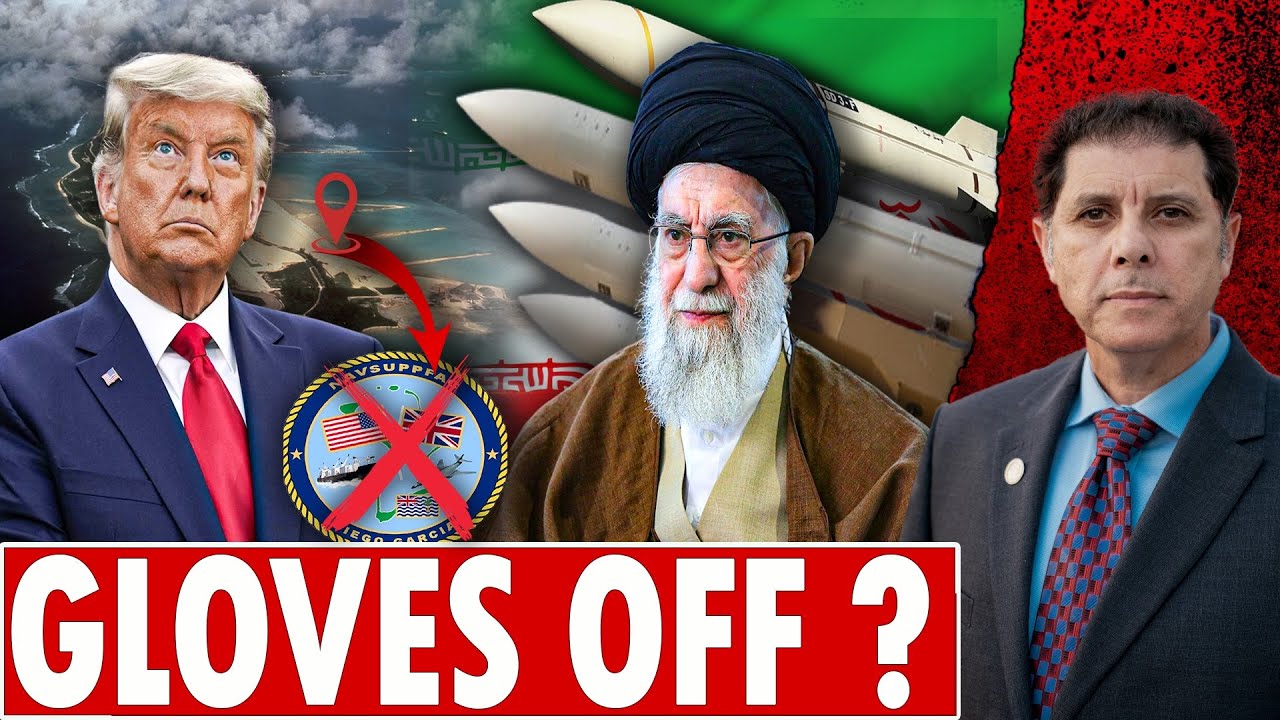
This content was created by David Oualaalou. This content was uploaded by David Oualaalou. This is a YouTube video titled "Iran's Jaw-Dropping Threat to Diego Garcia Base if Attacked! | Geopolitical Trends" (published 2025-03-31). Based on the title and metadata, it appears to be a geopolitical commentary or analysis focused on Iran’s stated threats regarding the Diego Garcia military base and related regional/security implications. No transcript or speaker information is provided in the excerpt, so participants and exact format (host, guest, narration) are not specified.
Chapters
Hello everybody and welcome to Geopolitical Trends, where truth matters. Excited to be with you on this last day of March. So we are going to have a great, great, uh, show, very, very interesting topic. So get yourself a cup of coffee or a tea or a popcorn. The reason, because it probably will take me more than 1 hour to to cover what I'm gonna be covering because I'm gonna add history, I'm gonna add geography, and I'm gonna add also some of my academic and professional background into the conversation. So this is, to me, the announcements of Iran regarding the targeting of San Diego Garcia base is a seismic, it's a major one if you only understand the ins and outs of how this is going to basically change the geopolitical and security landscape on a larger scale. So, so this is what I'm going to be addressing today. So, uh, let's first say hi to our wonderful community, and good to see all of you. I saw some names, by the way, I've never seen before, but welcome to our community. Uh, John Richard, good to see you. Elbow A210, uh, good to see you. Randy Craft, good to see you. Noah 1996, good to see you. Uh, J1YKB, good to see you. MT, MYTA Account, Truth Seeker, Timeline Dunkley, Francis Tango, Willie Holman, History Discovery. Uh, who else is here? Bobby, good to see you. Ramzi Abdurrahman, good to see you, sir. Rample 01, as always. Matt Becky, here you are. I was wondering— Amanda, good to see you. Phil, good to see you as well. So, all right guys, let me get in into— first of all, I have some housekeeping stuff to share with you, then I'll do headlines because there are some key things you need to know. Then I'll move in into, or I'll dive in into my own analysis. So, uh, first of all, remember to join me tonight at 9 PM Eastern Standard Time, which will be 8 PM Central Standard Time. I made a mistake yesterday by posting something for the community, but it wasn't posted anyway. I don't know what happened to it. So anyway, I will be joining, uh, uh, uh, Nixon Garland and, uh, Brian Burlaric. So we're all gonna have a conversation. It will be, uh, Garland who's gonna be hosting, uh, this panel discussion. So look for that at 8 PM. So basically I'm gonna just click on the link they're gonna send me and it will stream automatically on my channel here. So the second thing is, as you know, yesterday I had to cancel the, uh, uh, uh, interview with Professor Anna Malendog. She couldn't make it because, uh, technological challenges in a location where she was at. She had to be in another location and it didn't work. So we end up having to reschedule it for either April the 3rd or the 4th. I will let you know. And by the way, guys, I want to put this on record. It was me who took down the video, not YouTube. So let's, uh, give credit where credit is due. It was me because it was very short, and since the host was— the, the guest wasn't there, so I decided to remove him. So now there is one comment I want to share with you, uh, from a viewer who wrote, uh, The ongoing, uh, you remember when I did the, uh, what did I do, the, uh, survey for you guys? And I know I share it with you regarding whether Canada is gonna join the EU. Isn't that something? So, uh, and 33% of you said yes, 57% of you said no, and 11% said, I don't know. But here is what I found very interesting. It was a comment by, uh, Joe Roy, uh, very, very interesting one, uh, Joy, Joy, Joy Roy 316. He said, and I quote, I believe that all provinces except for Alberta and Saskatchewan will join or attempt to join the EU with the possibility of the aforementioned seceding from Canada to join the US creating a pipeline and possible highway connecting Russia to the Pacific Northwest. If I were able to play a diplomat for a while, that would be my goal. Very interesting. And I commented on this by saying, what would happen to Quebec? Because Quebec wanted to always be independent from the rest of Canada. So anyway, I just wanted to share this, guys, with you quickly. So Now let's move into our headlines. I have few key things you need to know that they are down the pipe, uh, moving forward. The first one has to do with this guy. You all know who this is, right? Well, no need for a comment, right? Anyway, the reason I'm showing this, that for you, is because Bibi will be visiting Hungary in defiance of international arrest warrant. That's what I found very interesting. Now we're gonna see really the credibility of the ICC, whether they're going to arrest him or not. So, so Netanyahu will travel to Hungary next Wednesday. Yeah, his first visit to a member state of the ICC. Hungary is part of the ICC. So, so since it has issued an international arrest warrant for him, so Netanyahu's office said in a statement that the prime minister will travel to Budapest where he will meet with his Hungarian counterpart Viktor Orbán. The visit will be about for 5 days. So it makes me just wonder because remember there is an arrest warrant on both of those. This is Gallant, the former defense minister, and Bibi Netanyahu. Of course, both of them based on what they've been doing and still doing, especially Bibi Netanyahu since the other one has been dismissed, but nonetheless, uh, uh, justice has to be served. So, uh, second one is in a location nobody expected to be. Yeah, Burkina Faso. Isn't that something? Burkina Faso. Dozens of soldiers and civilians have been killed in Burkina Faso. So, uh, what you see on that, uh, uh, that, uh, uh what you call it, on a wall. They draw that stuff. That's a reading that says— it's written in French, of course— it says, restons vigilants et mobilisés, which basically translates to stay alert and mobilize or prepare. So, and this one was in Ouagadougou, which is the capital of Burkina Faso, and that's where you had dozens of soldiers and civilians from groups supporting the Burkina Faso army were killed on Friday. Now the question makes you just wonder, because here is the thing: since 2015, Burkina Faso has been facing attacks by armed groups linked to both ISIS, uh, the Islamic State, and Al-Qaeda. Well, two of the same, uh, cut from the same cloth anyway. So these attacks have resulted in more than 26,000 since 2015 and forced about 2 million people to flee. Makes you just now wonder who is behind and funding those attacks. I'll let you decide on that one. So third thing I want to share with you has to do with Marine Le Pen. You all know who she is. She's the French opposition. Now, the French government decided to bar Marine Le Pen from running for office. So makes you just wonder, and here is why, because they're saying that a report published by Wall Street basically that the political landscape in France now could witness a seismic shift if Marine Le Pen, which is the leader of the far-right National Rally, is barred from running for president due to her current embezzlement trial. So the French prosecutors are seeking to sentence her to 5 years in prison in addition to another 5 years of disqualification from public office, which would basically prevent her from participating in 2027 presidential elections. So what happened to France, pays de l'égalité, la liberté et fraternité? You know, democracy is nothing but an illusion because that's what it is. You bought in her. It's the same thing that is going on in Philippines right now. You all know what they're trying to do to the VP, Sara Duterte, by trying to impeach her. Because if she is, uh, getting tangled into the, uh, legal stuff, she won't be able to run. So what makes that wrong but makes it right for our current president who was entangled in legal aspects and yet was able to run for office. Double standards, you know, that's just a— and speaking of Trump, here is the last thing I want to share with you about Mr. Trump, is that now Mr. Trump is thinking about hinting at a third term. Yeah, he wants to run for office for the third term, which violates the Constitution to begin with. So So what Mr. Trump is saying now, he, even though he just took office, you know, for his second term, and he's already begun now the conversation, him and his allies, regarding hinting at the possibility of running for third term. What a joke. But on the other hand, you all know how it is in America. Even though you and I know it's unconstitutional, But yet, don't be surprised there, but we become like a monarchy here. So that's ridiculous. So I, I, even if, if the case, leave it for people to decide, leave it to us in a referendum. This is why, guys, if you notice in the West, mainly in US, we don't have a referendum because they know they don't want to give the, the, the voice to the people. So All right, let's get into our topic. We're going to be talking about how Iran has issued now a warning to target the Chagos Islands where San Diego Garcia base is, which is a home— the Chagos Islands basically is home to the US-British base, uh, San Diego Garcia. And only this is the condition that if the United States end up attacking Iran Iran is gonna respond. Well, there is a lot to unpack into all this. Uh, by the way, guys, for those who just joining us here for the first time, make sure to subscribe to the channel. I'm gonna put the link to the channel in the, uh, in the chat box. So I will greatly appreciate, because the analysis you are hearing on this channel here is unique to this platform here, is unique to this channel. So So if you are enjoying all this, I would greatly appreciate if you can support it, uh, the channel, and subscribe and share it with others. So now here's the thing. First of all, it behooves us to understand a little bit of history and a little bit of geography. So I'm gonna do geography and history first, then dive in into the history, into the analysis aspects of it. So, so the islands of the, uh, the, the Chagos were inhabited by descendants of the African slaves and Indian contractors. Because remember what— when you look at the big picture, look where India is, look where the islands are, look where Africa is. Makes perfect sense, doesn't it? And this population came to be known as the Chagosians. So after the British Indian Ocean Territory You all remember, was established because that's when the UK government purchased all the coconut, uh, the, the coconut rather plantations and forcibly relocated the entire Chagosian population to none other than two locations. One of them is Mauritius and the other one is Seychelles. Yeah, Mauritius and Seychelles, that's where they— so the, the expelled Chagosians continued to contest the situation surrounding their expulsion because it wasn't right from the island. So, and calling the actions of the UK illegal, which was illegal to begin with. And that's why in 1971, the United— King Britain leased the Diego Garcia atoll to the United States for its use as a naval and military base. This is where part of that geography— when you look at here, I have— even though it's written in Arabic, guys, uh, it's right here in the middle, it says Island of Chagos, Jozor, Chagos, or Chagos, that is. You have Madagascar to the bottom left, Somalia to the middle here, then you have Yemen, then Oman, Sultanate of Oman, Saudi Arabia, Iran, and India. So this is what's important to understand. Now for the history of the Diego Garcia. Diego Garcia, which is, is, uh, if you look at this, I got a picture for you here from the Google Maps, is shaped like a, like a horseshoe, if I may use the term. And this one, that's what the Chagos Archipelago, but its history has more, was marked by none other than the Portuguese. Does anybody know what century the Portuguese discovered it? If you know the answer, please type it in the chat box. And once again, I want to get you engaged into the conversation here. We are all learning here. So does anybody know what century did the Portuguese discover, uh, the Chagos Islands? Let me see if any of you, uh, rough estimates. Emmanuel, 15th. No, yo, actually Bamboo got it. Bamboo Soja got it on the 16th century. That's when they did. Then who came after them? Does anybody know? If you know a little bit about the history of that part of the world, who came after the Portuguese and when? Let's just see again. Christopher Columbus. No, no, not the Dutch. Good try, good time, good try. Multi Tom Tom, not the Brits, not yet. Not Spain. Army with Harmony, you got it. There is another country in Europe. Francis Tango, not the Netherlands. No, Cecil, Cecil, you got it. It's the French. The French came after the Portuguese. What century, does anybody know? 18th century. Multi-tom-tom, you got it. 18th century, that's, that's when it happens. 18th century, that's when the French came after the Portuguese. Now what happened? So here it is, just look and remember in history during this time, that was where the imperialism was very expanded. So you got the Portuguese You get the French after them. And who specifically for this location— we're not talking around about around the world, just this specific location— then who came after them was the Britain. That's where Britain took control, becoming, and later on becoming eventually a joint venture between the UK and the US-based. There is a great, great academic research on this one. I'm gonna share the link with you. It's too long for me to to cover here. You guys can, uh, read it later on, but it's an academic paper. I had a chance to read, uh, about it. So now one thing you need to understand is that the Chagos Archipelago was leased by the Americans, leased from the British to the Americans, uh, uh, which by the way, that's where the attacks on both Iraq and Afghanistan were launched from. And even today there is a, a conversation that some of the attacks, even though we are using the aircraft carriers, uh, on Yemen, that's where they are originated from. So this is what you need to understand. That's why I thought of the geography. It's important because the, uh, the Chagos Archipelago, it's right in the middle of the Indian Ocean. When you look at the map once again, just look at that, uh, connections between the Indian Ocean and the Pacific Ocean. So, and south of the Indian subcontinent, and it's about 2,200 kilometers northeast of Mauritius and 500 kilometers south of the Maldives. And of course, this is what happened also, part of that history you need to understand, uh, the role of the ICJ, the International Court of Justice. There is very important to understand, or known as the World Court, which is the principal organ of the United Nations. Uh, that's the ones that settles legal disputes between states and issue an advisory opinion and legal questions. Now here is the thing. The court in itself— when was the— by the way, when was the court established? Does anybody know when was the ICJ was established? And there is a reason why I'm saying this for you guys, and, and I'm going to tell you why in a second. If you can tell me the year, if you happen to know. 1949? No, before that. Milti tam tam. Matt Backe, you got it. 1945, that's when it was established. And very important because it was by the UN Charter that began its work in 1946. And the thing is, the status of the ICJ, or International Court of Justice, is similar to that of its predecessor, because it was one before that. And of course, it is located in The Hague and the, uh, in the Netherlands, uh, at the World Palace, which what you are looking at the picture. Now, here is the important thing, and the reason I'm saying this— let me remove this one here— the reason I'm saying this, because Britain has been ordered to pay, uh, to pay, uh, what we call them— I draw a blank on the word— reparations for the locals because they illegally evacuated or got them out of their locations. So of course Britain refused. Yeah, Britain refused to do so. So, and we all know the history of Britain in not only in that part of the world, but everywhere else. So anyway, I just want to provide you those insights here before I move forward into my own analysis. So, so here is the thing. Let me first say thank you quickly here to— oh, oh, Valen, I am Valentina. Oh, thank you so much for your teachings, greatly appreciate your support. I am very, very touched by this. Thank you so much, Valentina. Appreciate it. Um, let me share this with you guys, my own analysis here. The first question you need to think about if Iran makes these statements of this magnitude, the first question you need to ask is, does it have the capability to follow through? That's the first question. Second question you need to ask is, is Iran just bluffing or is it able to follow through with its threat? What do you guys think? Because I need you— I need— I'm going to be asking you a lot of questions, guys, because I need to have your input into all this. What do you think? Do you think Iran is bluffing, or it will be able to follow through if attacked? Because remember, there've been some incidents before that Iran decided not to react, and I can understand why. As one who deals with this, uh, uh, this domain in understanding why countries sometimes do react and others don't. So in your opinion, regarding this specific threat, in your opinion, do you think, will Iran follow through, or is it just bluffing? Let me just see your answer here, if you could share. Yes or no? Oh, oh, Abel Malcolm, you say sort of. Okay, uh, yes, Iran. Uh, oh, I am Valentina. You said, uh, where are, where are you, man? This, this screen moves so fast. You said, uh, my apologies here, guys. Uh, you said, I am Yeah, they will follow through. Iran will follow through. Uh, Iran. Ramzi, you say Iran can hit based on Iran hypersonic when? That's the key. Uh, Kevin Baptist, you say ain't bluffing. I see your point. Who else? Uh, Abel Malcolm, US attack. Okay. Francis Tango, I thought yes. Okay, you guys got a point there. And I happen to share your opinion on this one here, that Iran will react, will retaliate, will attack San Diego Garcia or Diego Garcia, rather. So now the thing, the second thing to me, thank you, putting my geopolitical analyst hat on, is that the idea is, does he have the capabilities to do so? Because targeting the Diego Garcia base will mean what? You see, I have to think big picture. It will mean a complete— yeah, and I use the term carefully— complete disruption. Notice I didn't say destruction, but rather disruption of American bases and fleet not only in Diego Garcia but in West Asia or Middle East. And when you think about Diego Garcia's geostrategic location in Indian Ocean, its presence as a home of the most important logistical facilities and the strategic weapons— remember what we have in, in, in that base. So what do we have? We have the likes of most of the bombers. As a matter of fact, we moved now about, to my knowledge, about 6 bombers into that. So why did we do that? To target Yemen? No. Even though some of the operations against Yemen are launched or initiated from the Garcia base. But again, you think about the logistical, uh, uh, importance and the geostrategic importance, uh, of the base and its role, because the base plays a role, has always did. I was familiar with the two locations, one in Iraq, one in Afghanistan. Most of the operations were initiated from Diego Garcia. So, and this is also Diego Garcia Kind of the base serves as a coordinator between both US air and naval assets in the region. And that's what I'm saying, it extending all the way from the Indian Ocean to the Arabian Sea and to the Arabian and Red Seas in the Gulf water. So take a look at the map once again, the map will give you an idea. Just look. There is importance why it's important to understand this kind of, uh, geography, because it put things in perspective, uh, for you to understand. Look at this one here, same, the, the, the Gulf and the Arabian Sea, uh, that's why it's important to understand this one here. So now when you think about the US, and if this to move forward And I'm gonna get into what kind of weapons Iran has in its possession that allowed it to issue a statement like this. Because this is not a— in my opinion, this is not a bluffing. You don't bluff on something you can deliver on similar to this. This is a major— and he only convinced me personally. And again, I did the research about Iran, I wrote a book. And I'm gonna share an excerpt with you from the book specifically for this aspect. That tells me specifically that Iran has in its possession some type of advanced systems that can challenge the US. Otherwise they won't say this. There is no way. There is no way. So, and it becomes now one of the geopolitical context to think about within this statement, like I always say, in international relations, context matters. The context of this from a global geopolitical aspect, you know what it is? Is the, the reduction of the significance of the American presence in West Asia or Middle East. Because here is the thing. If this to move forward, which by the way, many, some of you, not many, I shouldn't say many, some of you have argued, and I couldn't agree more, that Iran reserves the right to defend itself if attacked. Any country, it's, it's under international law. That makes perfect sense. And this is why if attacked, All the US bases in West Asia or Middle East becomes a foregone conclusion that they will be a target. And that in itself will reduce or degrade completely US presence in the Middle East or West Asia. It's already declining, but this one will do it completely. That's it. And this is why I am saying when Trump issues this threats and all that stuff. I don't think so. The man can sit and think pragmatically, logically, as to the consequences. Iran of today is not Iran of 15 years ago. I said the same arguments about China, and the reason for that is what I see also coming regarding China. And that's why I decided to, uh, take down that video, and I'm gonna, uh, do the conversation with Professor Anna Malindog, because I gave her my word, you know, I follow through with what I say. I got her my— I gave her my word that I will do the foreign policy segments about Philippines with her. Then I'll do my own analysis about where I see things going regarding China. And that's the same arguments I can make. So it behooves China to start to think about You can't be negotiating with the Americans anymore because they can't be trusted. That's one. And second, if you don't show force, we're not going to understand. Only if you show force. Look at now what's going on in Ukraine, even though we do know that American presence in Ukraine is there. I was there, I saw what I needed to see. So So within the geopolitical realm, you're gonna have to think in terms what these statements by Iran means. Because if you know anything about the history of Iran, Iran is, is some sort of— throughout its history has always been very, very concentrated on ensuring its, its borders, its country Uh, it goes way back into the Persian era. That's how it's always been, and we don't understand that part of history. And this is why, uh, if Iran end up targeting Diego Garcia, because this one, it's gonna put— the US is gonna put its weapons, especially the key strategic weapons. You're going to look about the radars, you're going to look about the air, you're going to look, look at into the naval capabilities. Uh, from now on, this will be a major challenge because here is the thing: Iran already, already won, not on the battlefield yet, but he won already the information aspects because now the Americans are thinking we are, are crosshair from whatever type of weapons Iran has. That is what's important to understand because once again, let me repeat this, Iran's targeting of Diego Garcia is going to place now the US assets in West Asia, in the Middle East, in addition to those in, in, in Diego Garcia, that includes weapons, that includes radars, air and naval capabilities. All of them are crosshairs. And why is this important? Why is this important? Like I asked earlier, if Iran issued this statement, it must have something regarding this. Well, let me share some pictures with you. About the types of weapons. So I'm gonna share with you one partic— actually, I'm gonna go back to a previous picture that I shared with you back then, guys. You remember this one here that I told you about? Iran ballistic and cruise missiles, and extends all the way to about now 2,000. Okay, and I give credit here to CSIS. Now I shared another picture about the ballistic. There is something that is not disclosed here, and of course it was for a reason, because this one was done way back. So this one only shows the extension to 2,500 kilometers. These are Iran ballistic missiles. Now, for San— for Diego Garcia, what Iran intends to use is this type of ballistic missile. It's called Khyber or Kars-4 ballistic missile, right here. What's important about this? What's important about this missile is that it can travel at a speed over Mach 16. When you go over Mach 16, What's he— you know, and I'm not gonna get into the technical aspects of it. I told you I will share a few things based on my previous work and all that. This is one of these opportunities. I don't get a chance to do this much, but this one here, that's why I was very excited to do this for you. When you think about Mark 16, so because Mark 16 will go outside the atmosphere in comparison to, let's say, Mach 8 or Mach 9, which what Iran has. Because Mach 9 go inside the atmosphere. Mach 16, anything above 12, Mach 12, goes outside the atmosphere. And the interesting thing about this particular missile right here, you know what, what is it, is that its warhead contains approximately 80 bombs. Yeah, 80. 8-0. 80 bombs, each weighing about 1,500 kilograms. And it has another dimension to it that's gonna have to make us very concerned. It already did. And you know what? Its trajectory, the trajectory of this, uh, uh, Khoramshahr-4, that's the name of it. Khoramshahr, this is part of the, uh, K-Bar, uh, uh, uh, uh, yeah, the K-Bar. So Khoramshahr-4, its trajectory can be remotely controlled, which means what? It will enable it to bypass the enemy air defenses. So just think about it for a second. And that's why it leads me back to my original, uh, question is if Iran issued this kind of statements, it must have something to back it up. That's why I concur with you when I asked you the first question. Iran is not bluffing on this one. Later along, it reserves the right to defend itself. So it behooves us to think This language of threat, you know, and the whole reason, you know what, guys, Trump wanted to threat, uh, threatened Iran if they don't want to negotiate. Well, they don't want to negotiate with you because they don't trust you. And how could they after what we did to them when we pulled out of JCPOA? And all of a sudden now you want to renegotiate that particular agreement in addition to its missile, uh, defense systems. Well, guess what? The negotiations is not about GCPUA. The negotiations is about Israel, because it's Israel that's telling the US, you need to pressure Iran regarding its missile, because Israel is so concerned. And I am going to be detailing some stuff with you as I move forward. This is the big picture that I need you guys to understand. Now, if we are to talk about just this aspect here of the, uh, of the Khaibar or, uh, Khoramshahr-4 ballistic missile, now at least you know one aspect that Iran has. Iran has other, uh, types of weapons which I'm going to share as I move along with you. Now think about the IRGC, the Iran Revolutionary Guard Corps, Aerospace Force. Yes, there is one entity there. And by the way, I remember, while I'm remembering, I made a mistake last time, uh, when I said, uh, uh, Qasem Soleimani, not Salami, Soleimani, who we took out in Iraq, was the head of the Quds Force, not IRGC. I made a mistake and I remembered Because one of you made a comment, and I'm glad you did. So it was a slip of the tongue. That makes me human. Anyway, uh, so the IRGC Aerospace Force. So here is the key. And now again, I'm gonna show you one picture. Is this one. It's called Shaheb 136B. Take a look. Those are drones, not any types of drones. Okay, here is the important thing to understand about those. The Shaheed 136B, those are which what the IRGC Aerospace Force disclosed. So because this drone is capable of flying for 16 to 20 hours and has an operational range of more than 4,000 kilometers. Which means what? Think about it. Just between this one here, guys, okay, and this one's here, that puts everything within range for Diego Garcia base. There's where the military base is. I'm going to show you the big map here. Here is Iran, to those who, uh, read Arabic. Here is Iran. Here is the, uh, the, the Chagos Islands, and that's where Diego Garcia is. So the distance of those missiles can go up to 4,000. So, so let that sink in. And this leads me— while I'm remembering, as I said earlier, think about the big picture. This is what you always need to do when it comes down to geopolitics. You can't be looking at just Diego Garcia as the only— that's the only target, but that's all, that's it. No, no, there are others. Because you think about the bases, remember I told you they are about 50 bases inside West Asia or Middle East that belong to the US. Some of them are small, we call them the FOB, Forward Operating Base, you know, but some of them are major, the likes of— what are the two countries that have a major US presence inside the West Asia or Middle East? Can you name the two countries? Those are major. And as a matter of fact, one of them has links to Diego Garcia. So let me see, uh, what you guys can come up with here. And once again, this is just a— I need you to be part of the conversation. Two main countries. I'm scrolling down here to Uh, oh, oh, Ramzi, Ramzi, I saw you here. Ramzi, Ramzi, you got it. And I'm talking about inside West Asia or Middle East. Yeah, yeah, Bahrain and Qatar, those are the main ones. Now there are some of you answered United Arab Emirates, that is correct. Saudi Arabia, that is correct. Jordan. That is correct, even though not every Jordanians know about it. But the ones— the main one I'm talking about is Qatar and Bahrain. Why Qatar and Bahrain? What's in Bahrain? Do you guys know what type of assets we have in Bahrain? It's well known, and that's why I'm saying it's tied to Diego Garcia. Navy. Which one? Does anybody know exactly? I'm looking for specific one. Hello, database. That's correct. Oh, oh, BY, you got it. I knew, guys, you know the things. I know, I just have to get it out of your mind. And that's the beauty of sharing knowledge. Uh, BY, you got it. It's the Fifth Fleet. Fifth Fleet coordinates with San Diego— with San Diego, I keep in San Diego with Diego Garcia and the 6th, the, the, the, the Asian Fleet, the 7th Fleet. Remember, the all coordination right from Diego Garcia. But the 5th Fleet is in Bahrain, and in Qatar we have the major, uh, the major presence of the base, the largest in the region. And this why I want you to put in perspective what Iran said about these statements regarding the targeting of Diego Garcia. And like I said earlier, this brings me back to what I said earlier. This is not about just targeting Diego Garcia, and this is not about what the US saying now, oh, we have to force Iran to the negotiating table. No, no, no, no. This is about ensuring that Iran's missile technology has to be dismantled. Because Israel is concerned. Basically, the bottom line, we are doing all this for Israel. Simple. It's not a secret. It's not a secret. Well, here is the thing that I need to share with you, something that I didn't want to talk about it previously because this happened now about a week, a week or so, to my knowledge. I didn't want to talk about it. And the reason why, first of all, I couldn't confirm it. And second, it was one of those very, very, very, very, how should I put it, off-the-books operation. And this one has to do with Israel attacking a location inside Iran. Yes, Israel did. So. However, and here is where the key comes in, what Israel saying on a limited basis versus what happened are the opposite. Basically, it was just exaggerating. Why? Because it was a lie, first of all. And second, whatever, you know, whatever Israel did as far as the the targeting on these locations, it didn't cause any damage. So, and there is a reason for that, which means that Israel didn't go deep inside Iran. It couldn't. Why is this? There is one specific reason: the presence of the Russian military hardware, on the ground in Iran. What are we talking about? We're talking about the S-300 and the S-400 missile system, the, uh, missile defense systems. So now the challenge for Iran— for Israel was, because despite this so-called operation on targeting, like I always say, Iran is not Iraq, is not Syria, is not Yemen. What happened is that Israel did not know how to jam this particular system because that's usually how it works. When you go into an operation, the first thing you do, you're going to have to jam communication. That's the norm. So Israel did not know how to do that, didn't even know how to read Because, uh, to, to read the signals, that's what I meant. Why? Because the S-400 missile systems have different capabilities. Yeah. Sorry, Lockheed Martin. Sorry, Raytheon. All the defense missile systems are, are, are, looks like a, a child play in comparison to the accuracy of the S-300 and the S-400. And as a matter of fact, the Russians now have the S-500. I don't know which country has that. I don't think so any country has that. I do know, to my knowledge, that the Israel— the, the, the Russians have the S-500. And this is why Turkey went ahead and purchased the S-400 despite the objection of the US. Why it did that? Because they will be able to lock in on the F-35s. On the F-18s. This is why Israel couldn't go deep inside Iran, unlike what they did in, in, in, uh, in, uh, in, in Iraq and what they did in Syria. They went right in because they didn't have— those two countries didn't have the capability. Iran is different. That is one of the reasons that I need you to defend. So basically, the— what Iran What— I'm sorry, what Israel couldn't do, couldn't do, he couldn't take down those air defenses. So this is what we called the— in military jargon, the suppression and destruction of enemy air defenses, known as SEAD, suppression and destruction of enemy air defenses. So, and basically it amounts to destroying the air defenses. So, and this is why I always say, mark my word, Israel will not be able to attack Iran. Yeah, you do some things here and there. Iranians are thinking, are calculating their action, are calculating their move. They are very strategic. And this strategic thinking, it didn't happen yesterday. It didn't happen after the revolution. It goes back to the Persian Empire history. Read about its history and it will make more sense to you. That's why, again, I go back to my original— when I— my original statements, when I said Iran issued this statement, it must have something to back it up. And it's enough for Iran to say this, that now the US is concerned about all its presence in West Asia and Middle East. And if the— if Iran said is within reach to Diego Garcia, game is over. And that's why I believe, like you, I don't think so Iran is bluffing on this one. Let alone it gives it justification if attacked to retaliate. It's within its right. So, and this is why, kind of to go back to this Israeli attack, uh, in, in Iran, it was nothing despite what the Israeli government, the information they are releasing. Which is nothing. So that's what forced the Israelis to retreat. They couldn't go any further. So, because here is the thing, and I used to do this in my presentations, you know, when I used to, to private audiences, I will do this kind of, uh, uh, speaking engagements. And explain to the audience to whatever I was allowed or I could say, uh, with the— because remember, it's— there are some sensitive aspects that I can share— that I can't share, rather. So, and this is when— and I'm gonna share the link to those who wants to take a look. Take a look at the link here, guys. That's to my speaking engagements. So, and I used to explain Because I did this on Iran, I did on, on, on China, I did on Russia, I did on, uh, the US being entangled in a war like this. And that's when I disclosed when the delivery of the S-300 missile systems and the S-400— the Russians are far superior for what, uh, uh, Lockheed Martin and, and Raytheon provides, there, there, there is no comparison, let alone they are less expensive. You all remember, uh, when I shared with you in the community about Qatar buying drones for $2 billion. $2 billion. So yeah, MQ-9, I think that's what they believe in. And here is the hard truth. Here is the hard truth that I need you to understand. The Russians and the Chinese defense systems outperform those of the United States. So you look at this technology or the capabilities that if Iran within its reach of Diego Garcia, it tells you what you need to know. This is a, this type of missile, this is a, it's called Jihad missile. That's only about 1,000 kilometers to my knowledge or 1,200. And I give credit to Tasnim for this picture. So that makes what? When you have the S-400 missile systems, you know, the B-2 will become also a target. So And this is why, and, and as I said, think about the cost of the S-400 missile systems, of the S-300 versus the Patriot missile. The Patriots, we sell them at 4 or 5 times more what the price of the S-300 or S-400. Same thing with, uh, uh, F-35, J-20 of the Chinese versus the F-18s. Or the Su-57, the Russians, because far less and more effective. And this is why, if you notice, one country right now— why country? I'm gonna ask you a question. One country that play both sides, it's now trying to go back to Russia. Can you get— uh, it's, it's gonna be challenging, you know. It's India. This is why now you're hearing the tone of voice in the Indian diplomats, that they are leaning more towards the camp of China, towards the camp of Russia, because they are realizing that the US is going to just use them and abuse them. But I'll say, and this is my opinion, I will not trust the Indian government no matter what they say. Please guys, make sure to keep the conversation civil here. Because I know how some of you feel about India. We're talking about the Indian government, not the Indian people. I know people from India, wonderful people. I'm talking about the government here. So this is why you are now noticing India is now asking Russia for more armaments. So, and just to go back to my point about Iran when we think about Iran. Like I said before regarding China, and I did share this with you before, when I was during my time in Washington, there were about 18 scenarios regarding a war with China. 17 out of 18, we lost to China. The same thing has been done about Iran later on. At least I'm aware of two war games, and in both war games we lost to Iran. This might shock some of you. Yeah, when you see the US moving with the, for example, uh, what is it, let me show. Yeah, right here, aircraft carriers and all that stuff. Aircraft carrier is, is a sitting duck basically, and Iran has the possession to take that down or to take it out. This is where that concern is. So in both scenarios, that outcome was suggesting, based on a computer simulation, we will lose to Iran. Because remember, Iran of today is not Iran of after revolution. Yeah, because the first thing you're going to have to think about, what will Iran do now that it has those capabilities? It'll take out the air defense systems in Diego Garcia or any location within its range in West Asia or Middle East because gloves will be off. Yeah, gloves will be off if Iran is attacked. That means the countries that host US military bases become the target, because Iran is going to say, I am targeting US locations, they happen to be on your soil. So, and even, even we'll go with this hypothetical scenario, and the high— it's not a hypothetical, we're gonna be moving the aircraft carrier, okay? We're gonna probably move it into, let's say, I don't know, near Persian Gulf, which will be a mistake anyway. But with what Iran has, you know, they're not gonna— they're not gonna waver from targeting that. So, and this is why I need you guys to think in terms of the aircraft carrier. So how many personnel are on on an aircraft carrier? Can you guess a number? Just give me a number, guys. How many sailors do you think are on an aircraft— on, on, uh, yeah, aircraft carrier? Just guess. Alex Talokin, 3,000. Uh, Hong Wan, 250. Not that, too small. Oh, oh, oh, one of you guys— I don't know if you guys are former military or not, but yeah, about 5,000. Give or take, 5,000. So you think about it this way, guys, and the problem now with our aircraft carriers— what happened with that? Did you notice something with this aircraft carrier? This is the Carl Vinson. Carl Vinson, when he moved, it has less escort that goes with it. Before, you have— you will have the aircraft carrier with the escorts going. We don't have that anymore. First of all, because we have an issue of recruitment. A lot, a lot of young people here do not want to go in the military, and rightly so. It's because they're saying, what am I joining the military for? Gone the era. At least when I was there, it was a little bit different. And before that, on the older generations, they were in the military. Now the military in the US is, is forget about it. Because some of them will be asking question, why do I join the military for? Those, those countries didn't come to invade me here, they didn't attack me, why should I do it? But if even we are to go with this, uh, scenario, so here you have an aircraft carrier with about 5,000 to 6,000 personnel with less escort, which means what? If the aircraft is targeted, which it will be targeted Because Iran has some capabilities, naval capabilities that I am aware of, that will be able to cause major damage. I will even go as far as saying I won't be surprised that the Russians might provide the Iranians with some, because everything's going to be underwater. You sink in that aircraft carrier. So, and that's why I'm saying it's a major undertaking. It's because for us, you know, and when I say us, I'm referring to the government, we never wanted to admit our mistakes because we are the Ha'eri Me'iri. So what do we end up doing? We double down. I've been through some experiences before. It's like my first time in Afghanistan back then. My first argument was, this is not a winnable war. Wouldn't it make more sense if we can decide either negotiate with the Taliban, leave their country, let them live whatever they want? Oh, Mr. David, that's a human rights issue, whatever. I say, come on, we have issues in our own home. Why are we going over there? Why are we putting the soldiers in harm's way? For no reason. So, because you're going to have to consider the cost into all this. Remember Afghanistan and Iraq, what have we gained from it? Nothing. Well, guess what, guess what, guess what, guys? A war with Iran will be nothing like you've ever seen. In comparison to what we had in Afghanistan or what we had in Iraq. So, and I am not even talking yet about the cost, and I am on both the treasure and blood, because if you know about how much the war in Afghanistan cost, if you know how much the cost of the invasion in Iraq cost regarding dealing with Iran, with Iran, you will be crossing to about $12 trillion. That's what you're looking at. And like the same arguments I made prior to the invasion of Iraq, I said, do not do it, because if we go in, we are not coming back out in 5 or 6 years. We're gonna stay in for 15, 20 years. And my argument was dismissed. Oh, it will be a cakewalk. We're gonna just go liberate Baghdad and get out. I say, you go in, you are staying in for 15 to 20 years. And here we are. That's exactly what happened. As a matter of fact, some of us still— some of the US presence still in Iraq. This is part of where that problem is. Then you start to— this is— and it's going to be a long war with Iran. Ain't going to be over in 1 year or 2 or 3. You'll be looking at over a decade. And this is why I say you have to think in terms of— when you try to analyze these kind of situations, you have to look at the whole big picture. And if we are to go with these threats, or we carry out these threats of attacking Iran, Where are we going to launch the ground forces from? Because you're going to have to have some ground troops. You can't do this just from the air. Where are they going to be launched from? Where are you going to bring them from, the US? Forget about it. So you have the bases, you have the presence of the US troops in the Middle East or West Asia. That's why I'm saying Qatar, United Arab Emirates, Bahrain, Saudi Arabia, Jordan, Egypt. They all going to have to become target, even Turkey to a degree. So, and this is why you have to understand history. And a lot of people are not— some of us are poor readers of history. We don't want to learn, because if you are to think about where the, uh, the operation is going to be launched from. So, so, so I will tell you this, guys, use history as your guide. So use history as your guide, and especially when it comes down to the role the Soviet, uh, the Russians is going to play into this. Because if you go back into the history of, for example, the Soviet Union, what was the, the, the most, uh, important things for the Soviet Union at that time is to have access to warm waters, especially in West Asia. Especially near Iran. When you look at two locations, Chabahar Port and Bandar Abbas, two key locations. Look at just again, look at the map for where the Chabahar Port is and Bandar Abbas. Those are very, very, very crucial because warm water— that is one, one of the reasons why Russia right now There is— they will go to a major whatever to protect the Black Sea. And like I always say, Iran is not Iraq is not Syria. So here is what I wrote in my book, because I promised you I will share an excerpt with you, uh, from my, my book that I wrote about Iran. And I conducted a deep research into this, took me a while, but Here is what I wrote: In either case, containment or containment or living with the nuclear Iran, Tehran's behavior will be closely watched. But for how long? After all, there are those who argue that whatever Iran's behavior may be, it is merely a reflection and function of its past experiences. But how can this say that when Iran never had nuclear weapons before. Iran is not losing sleep over what the U.S. policy might be when the former acquires nuclear weapons. I am convinced that Iranian political elite are conversing among themselves, saying, if we managed to endure the hardship of sanctions for over 30 years, what makes the Americans And their allies think they will enforce their policy, this policy or that policy on us as we join the nuclear club. That was my arguments back then. And here we are. So, and when we think about, to those who say, well, now Iran lost some— no, no, no, no, no, no. Iran didn't lose any influence in the region despite what happened in Syria. Despite what's happening in, in Lebanon. And by the way, in Lebanon, the media is not disclosing to you how many dead Israeli soldiers. They are not disclosing that truth. So, and to my knowledge, it's between 3,000 and 4,000. It's not even being disclosed. So, and that's what you need to understand. What's going on? And this is why you are seeing a lot of Israelis now are leaving Israel. Once again, to my knowledge, it is about between 900 to 1 million people have already left. So this is the big picture I need you guys to truly, truly grasp and understand. So here's the thing. I had an opportunity to read in a foreign language an article by Karam Aziz, and, and very interesting insights. And I'm gonna react to some of those and, and add something on my own. So the one thing that I concur with the author is that should Iran, should Iran launch or target Diego Garcia, if attacked, one thing that Iran is not going to differentiate between is that it's not gonna differentiate between Britain or the US personnel or military assets. And you're right so, and rightly so, because UK is just, UK, I tell you, is a mess. It's just following what the US, to the point, this is how to show you how weak Britain is and it's done for anyway. The UK couldn't take any action against the US regarding the tariffs. That's how scared they are of the Americans. So despite what you hear, so the Iranians are saying there will be no distinction. And this was issued by an official inside the Iranian government without disclosing the name because it was anonymous. So those guys, they don't talk loud and, you know, So what they're saying is, what they're saying, there will be no distinction in targeting British— and I'm quoting— a distinction between British or American forces if Iran is attacked by, from any base in the region or within the range of Iran's missiles. End of quote. And this particular individual added, which I found very interesting, pay attention to this quote here. He said, and I quote, "When the time comes, it won't matter whether you are an American, a British, or Turkish soldier. You will be targeted if your base is used by Americans," end of quote. And that leads me to my original statement that Iran is not bluffing on this because their survival This is about their survival, and that is why Diego Garcia— for how strategic that is. And like I said, Diego Garcia has been a launchpad for the American bombers and also for the surveillance since 1970. That's how far back it goes. So all the, the Five Eyes— you all know the Five Eyes countries. So even though the Pine Gap is in, is in Australia, Diego Garcia plays a role into all this. And that's why I'm saying, for Iran to issue this, it must have something. And that something is, it does, it does, it intends to use its ballistic missile and long-range drones. And those are within a range of 4,000, uh, kilometers. I'm going to share a link with you guys, uh, in the chat box, uh, should you want to read up more, to inform yourself about literally what, what, what they have. So now we think about us deploying bombers. Oh, uh, I want to say thank you to FU. Thank you so much for your Super Sticker, truly appreciate you. Actually, there are some of you there. I'm, I'm gonna do this one. Let— just let me continue, guys, here quickly, and I'll, uh, and I'll give my thanks to everybody here for those who posted super stickers, and thank you in advance. So here's the thing, when you think about the B-52 right here, let me share a picture with you. Yeah, the B-2 Spirits, I'm sorry, the deployments, which is nothing but a posturing, no more, no less, you know. And that's why I always say now, and I might do a live for you about what China might be thinking of right now, and and what kind of plan it will have in place. So even though the B-2 Spirit bombers, you know, which those, by the way, they have the capability of deep penetration strikes, you know, and they are now being deployed to Diego Garcia. It's within range, and Iran's not gonna hesitate. So because it's survival, like I mentioned earlier, it's about survival. And if you know anything about the history of Iran, the history of the Persian Gulf— the, the Persian Empire, I'm sorry— the history of how Persians are, they are very— it's not secluded, it just— they just like to live within their own space. They don't, you know, you go to Iran, I, I know some people Americans who went to Iran, nobody bothered them. Nobody. Just you go, you travel, you visit tourism. This person that I know went over there, it was a professor, so it was for academic. And I know because he is a professor of world religions, and one of his major academic background is the study of Zoroastrian, which Zoroastrian is in Iran. And this is why, if you think about this development, these statements by Iran, now the inclusion of this Diego Garcia in these statements, in my opinion, literally, literally raises the stakes now even higher. And that, that's just how I see it. It's because if we think that we have Diego Garcia, that is remote, far from any targeting elements, we're mistaken, because the Anglo-American, meaning the British and the American assets, will be within range. So that's how I see it. That is how I see it. So for Iran's Foreign Minister Abbas Araghchi, Rouhani, when he announced that, you know, we don't respond to the American sort of letter about the negotiations and the threats and so forth. No, no, we're not going to do that. And we're not willing to negotiate directly with the Americans. And this is what Donald Trump is saying. Well, you either negotiate with us or we will target you militarily. Well, Iran is saying, bring it on. So, and when Donald Trump— you know how he is, he's not a— he doesn't have finesse in understanding how to use diplomacy. So when he— when, when he writes for you, somebody wrote for him anyway, uh, and I quote here, I wrote them a letter. This is what Donald Trump's saying. I wrote them a letter saying, I hope you negotiate because it will be a terrible thing for us to go in militarily, end of quote. What makes you, Trump, this arrogant thinking that you're going to just walk your way in? You know, and this, by the way, was done through the advisor of United Arab Emirates president, which United Arab Emirates, this is as hypocrites as they can get. Most of the Arab and Muslim countries, you all know You don't know where they are as far as where they stand on the spectrum of truth. There is no truth about them. Look at all of them right now still watching what's going on in Gaza. None of them has the gut to even, to even condemn what has been done unjustly. This is why I need you to— and I'm wrapping this up, guys— this is why I need you to understand the big picture of all this. Is that all these hypes, the attack of Iran and all this, is about serving Israel. That's what you need to understand. So, and the bottom line is we will lose a war against Iran if we get involved. That means the only way is if we do it through proxies. Well, Iran made it clear, if an attack on us is launched from your country, you are a target. Simple as that. And this is what happened when you start developing your own in-house missile technology. You know, I'm wondering why, if Iran had— if Iran declared— I'm not going to say if it has a bomb, Only this. If Iran declared that it in a possession of nuclear, do you think we will have all these hypes? Most likely not the case. Think about North Korea. Dare the US to even consider, even threatening North Korea? We can't. Because we know. And because they're saying You mess with us, we will let you have it. And all their— by the way, their missiles are within range to every location in Asia where it hosts a military presence. And this is why my big concern is how Philippines is going to be now used for the upcoming proxy war, tensions, conflict, whatever term you want to use. And I am very concerned. I'm very concerned. So I'm going to keep you updated on this one here. And I mean, look, we couldn't even defeat the Houthis, waran sallah. And I'm starting to feel it's exactly what happened for us in Afghanistan. I don't know how many of you know the ins and outs. Do you know, remember the battle of Tora Bora in Afghanistan? To those who know, you know what I'm referring to vis-à-vis the Houthis. That's what I'm starting to fear because the world has changed and we need to change with it. No more what it used to be. Yeah, we used to be at the top some 30, 20 years ago or even 25 years ago. After that, we started to decline, and the decline started back in mid-'80s, in my opinion, start going down. That's where I see it going. So, all right guys, let me say thank you once again to all who supporting the channel for your Super Sticker. I'm very, very grateful to you. First of all, I'm gonna go again and say, I am Valentina, thank you so much for your, uh, Super Sticker. You wrote, thank you for your teachings. You are most welcome, you are most welcome. Uh, Donald Sneed, much appreciate you for your generosity and support of the channel. I'm, I'm very, very grateful to you. Kevin Baptist, thank you so much. You wrote, US wants total capitulation from Iran. Dr. O, do you think that Iran has nukes? Uh, it's one of those, if I am to say yes either I'm breaking protocol or I am not certain of. And that is one of those things. I, I, I can't, I can't say because I am not 100%. And, and, and if I know, and I will be within my prerogative to say, then I'll say so. But to my knowledge, based on the conversation that I had with people inside, and as Iran is, they could surprise the US with the presence of a device of sort, the equivalency of nukes. But as far as them going the same way, the same way as let's say the US or France or Britain, no, no. Because even for India and Pakistan, while they declare that Pakistan doesn't, even though we know how many they have, whatever, but it's still, they won't talk much about it. So, so that's— so it's hard to, to, to tell. So once again, thank you so much, Kevin. Truly appreciate you. Francis Tango, as always. Hi, Dr. O. I always hear that the end of the world starts in the Middle East. What do you think, Dr. O? Can that come true? I've heard that before, and there is a possibility of that. Why? Because Middle East is a volatile stew of conflicting passions and ideologies, you look at the history of the world, most of the conflicts emerges from that part of the world throughout the empires that moved through, or throughout the, the, the time or the periods where empires expanded through that region. You know, I will go as far as Central Asia, but they had to expand through Europe to, to a degree. And, and yeah, that region And it could become the center of gravity or ground zero for some major event. That doesn't mean, and I didn't rule that out in my old writings. Yeah, this might surprise you guys. I didn't rule out the possibility that the next conflict, a major one, could be on the Korean Peninsula. I don't even go as far as Taiwan Strait. No, the Korean Peninsula. That is where another thinking outside the box I've, I've been considering. So, so, so the possibility is there, Francis Tango. I really do. And once again, thank you very much, Francis. Truly appreciate you. EFU, once again, much appreciate you. And please feel free to ask any questions since you are sort of supporting the channel. I would I would love to answer your questions. Lee Chang, thank you so much for your Super Sticker and your generosity. I'm very, very grateful to you. And speaking of your generosity, guys, uh, I want to share with you the link for my upcoming Asia trip. This is if you want to support the channel, uh, this is where you give the donation— not support the channel, I'm sorry, support my upcoming trip to Asia. This is where you donate, or that's where the funding goes. And I'm gonna share with you because I like transparency. I need you to see where we are. We are about 11% as of now. We crossed the first thousand, so we have about 9,000-some to go. So, so hopefully, uh, some of you will be able, uh, uh, it would be kind if some wealthy donors would be able to do this. And on behalf of everybody. So I will be very, very grateful. But, but this is where we are, and I look forward to your support, and thank you in advance. This is the one for channel, for those who want to support the channel. All right guys, I am going to sign off here. I'm gonna be working on my other— there are some other hot topics. I'm I'm going to be preparing the stuff for you, and I look forward to seeing you again. Remember to join me tonight at 9 PM Eastern Standard Time, 8 PM Central Standard Time, for my— I'll be joining Garland Nixon and Brian Berletic for our panel discussion. So much appreciate you guys. I, I can't leave without saying, uh, thank you and appreciate you for keeping the conversation civil. In the chat box. I'm very, very grateful to you for that. So as always, remember, geopolitics impacts your daily life in more ways than one. Till next time, guys, bye-bye.
More from David


Beyond the Single Actor: Why the Gulf Isn't Choosing Between the US and China


Iran, Iraq's Militias, and the Houthis Are Coordinating! This Changes Everything




Who Controls the Next Decade's Resources? Latin America and Africa's Geopolitical Crossroads

The Chokepoint Trap: How Washington's Stupidity Triggered a Cascade That Now Controls the World

Trump Spooked as IRGC Unveiled dual-use SLV, Deployed Ghadir Mini-Subs & Hinted at Tactical Nukes!
