Iran's Missile Strikes in Pakistan Spark Security Concerns!!
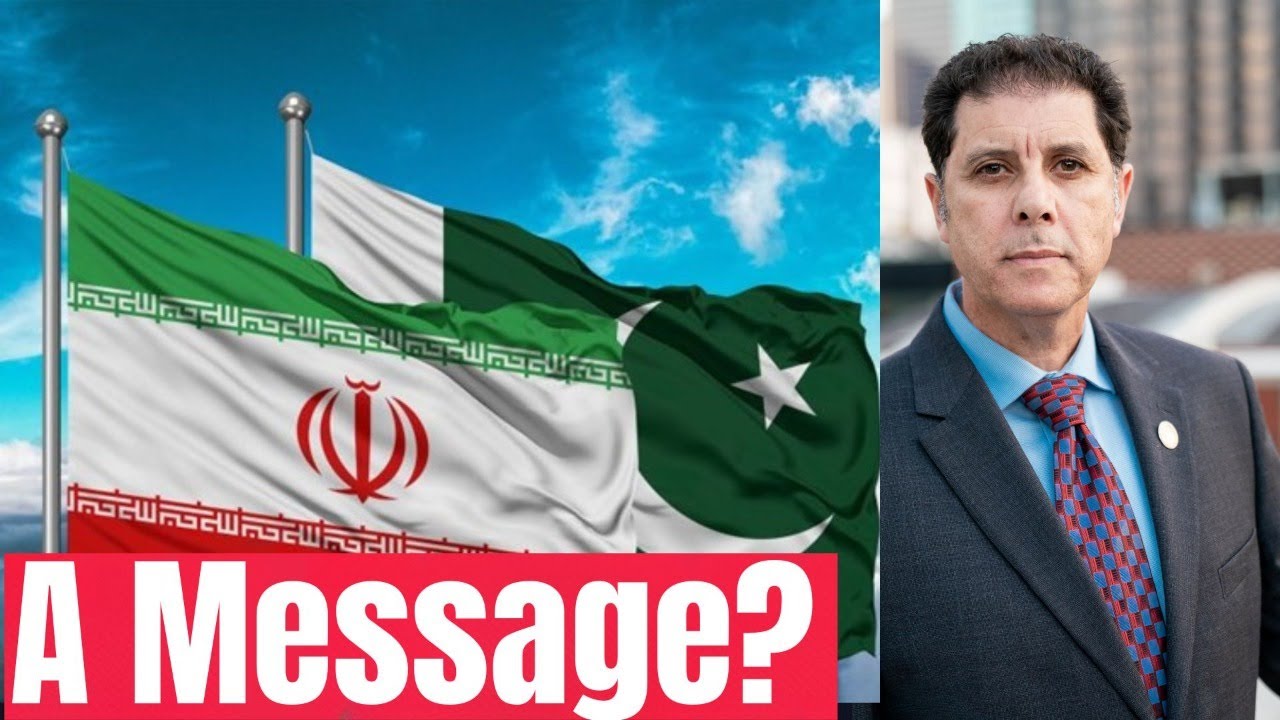
This content was created by David Oualaalou. This content was uploaded by David Oualaalou. This is a YouTube live-streamed geopolitical commentary titled "Iran's Missile Strikes in Pakistan Spark Security Concerns!!" (published January 20, 2024). The excerpt is a monologue by a single host (addressing a live chat of viewers from locations like Montreal, UK, New Zealand, Ghana, Nairobi, etc.). The host surveys multiple international headlines — chiefly recent Iran–Pakistan tensions and missile/drone strikes near Balochistan — and provides background on Balochistan geography and history, Pakistan’s nuclear status, regional triangle dynamics (Iran–Pakistan–Afghanistan), and who might be fomenting unrest. He also discusses related items: Iraqi refusal of more US forces, an EU ceasefire vote, oil price and Red Sea disruptions, criticism of US diplomacy (Blinken), Macron’s Israel visit, NATO/Europe relevance, and US debt concerns. The presenter repeatedly notes some sensitive details will be moved to another platform and encourages viewers to join that follow-up session.
Chapters
All right, hello everybody and welcome to Geopolitical Trends, where truth matters. Very, very excited to be with you on this January 20th, and it's the weekend, so I figured yesterday I said to myself, no, I'm not going to do live on Friday, but do it with you on Saturday. I know I like to have my own weekend with my own women and spend my time at home and do my things, But it comes with the responsibility. Sometimes you have to— I know weekends is for resting and so forth, but for me it's work because that's what I spent yesterday, the whole afternoon, working on this topic. It is a lot than what meets the eye. Of course I can't disclose everything here, you all know why. This is why I'm gonna talk briefly in general terms here, and we're gonna go to the other location where I will provide you some detail, very, very disturbing. And I can see why. By the way, uh, fingers crossed that they already resolved the issue, these two countries. So anyway, let me see who's joining me from— oh, I saw one here from, uh, Lozio. Where is Lozio? Right here. Lozio Delgado from Montreal. Lozio, by the way, uh, was, was, was, was an avid supporter of the channel from the get-go, and he's now a member on Buy Me Coffee. So thank you very much, Lozio, for your continued support. Truly appreciate it. So let me say hi to all of you. Willie, Willie, I believe was the first one signing in here at 11:46. Wow, that's earlier time, man. Good to see you as always. Uh, who else is here? Muslim Revert. Oh, I see your question already. Check this out. I'm not gonna read it, you all know. And I will answer this one in the other platform because there are some sensitive info regarding this. I can share one thing quickly regarding this question here, and I'm starting in reverse. This picture, that's part of the answer to that question, uh, Muslim Revert, and I will explain this later on, on the other, uh, run. Hairy, here's Hairy Lokal. Good to see you as always, great supporter of the channel, became a member of the Buy Me a Coffee also, so I can't thank you enough, Hairy, truly appreciate it. You know, Avi from— Avi Mahmood from UK, uh, good to see you. Uh, Dara Costar from Santa Monica, California, good to see you. Franny, good to see you as always. My— oh, I'll share this with, with our community. Is the community here, guys? My 7-year-old, they listening in. So if kids needs to not be listening, please say so. No, what do you guys think? You know, this is how you're gonna help the next generation. 7-year-old, it starts sort of train his brain about all this. So why not? Why not? And by the way, Franny, you mentioned something about you hadn't chance to watch the— you— my channel for a while because you were busy with preparing some things. You are correct, you need to prepare. And all of you guys, I had to listen something yesterday to the financial, uh, what's going on here in the US is, is mind-boggling. And I am going to share that information with you because you need to know. So anyway, good to see you, Franny, as always. Uh, oh, check this out, guys, where this individual is joining us from. Look at that. Vaness from, from New Zealand all the way, man. Thank you for being here. Army with Harmony from Oregon, good to see you as always. Uh, Salim, Salim Akil, great supporter of the channel. Thank you so much, Salim, for your continued support. It means a lot. I appreciate you and all of you guys for that matter. To all of you, hello to you. Set Truth Free. Couldn't agree more. Uh, who else? Farhad Razavi, good to see you as always. And you are right about that picture, that's what it is. Let me, let me share it here with the screen for you guys to see. That is correct. And you saw what the— I'll be talking about this in the next platform. Huan, as always, good to see you. Uh, Born Fame from LA, good to see you. As always. And Anik, good to see you. And, uh, uh, okay, what's going on here, guys? Did somebody put something that is not right? We are not vulgar here, that is correct. Now, who put something vulgar here? You know, I don't have a moderator here, but I'll, I'll check it out. And please, if it was a mistake, we understand, we all make mistakes, we let it go. But please refrain from that. I will not allow that on this platform here. If you don't have anything to contribute to the conversation, please just sign off. Straightforward. So I, I kind of, uh, I do frown upon this kind of stuff. That's just how I operate. So, uh, Anik, good to see you. Uh, Argenis Mills from Montreal. Wow, we got two individuals from Montreal here. So anyway guys, let's get in into our topic because we got a lot to cover here. So now what's for the topic today? Well, of course, the tension that emerged between, uh, Pakistan and Iran. Major, major, especially on Pakistan side. Why, why is it a major on the Pakistani side, guys? Can you type in the answer? Why it will be major from the Pakistani side, more so than Iraq. Let me see what you guys type in on the chat box. Hello, Nobody, good to see you. Daniel from Ghana, good to see you. Maha from Nairobi, good to see you. You got it right, you got it right, Farhad, the nukes. Yeah, but surprisingly, guess what? The issue has been resolved as of this morning according to my research. So because I had to confirm whatever I worked on yesterday, and but anyway, this is what I'm going to be talking about for to you. What led to that? Who? And the questions that we need to ask are, are those— here are the questions for you guys. That's straightforward. Who is or was behind it? This didn't happen in a vacuum. Okay, so, and what is the message? Okay, especially now, the message not from Pakistan, but the message from Iran. Who is Iran sending a message to? Very clear, very— I'll talk about all this in detail on the other side. And the third question is the timing of it. I mean, you tell me, we just, we just talked about, uh, well, when was it, about, uh, the, the Korean Peninsula and so forth. It was no issue at that time vis-à-vis Iran and Pakistan. All of a sudden, they emerged on the scene. So the timing, we cannot ignore that one. So those are worth considering as we move forward into the conversation briefly here, and we will detail on the other, uh, side. Speaking of the other location, uh, here is the link for you guys because you need to See that one. And by the way, I have it in the description for this video on YouTube. So this is where I'm gonna be as soon as I'm done here. I'll just jump on— jump over the other, uh, platform. So, so I'm gonna leave this here for a little bit here for you guys, but once again, it is on the description. And let me share it with you on, uh, I'll share it with you on the chat box. And if you will be kind and just share it with others, copy. And let me share it with you guys here. And this is where I'm gonna be in about— after we're done here, in 25 minutes or so. So this is what I'm gonna be. All right, let's do our tour around the world for the headlines. So because there are a lot of stuff— by the way, there are some stuff I can't talk about here. I'm saving them for the other one, but I'll share with you a few things that I came across. Uh, it's worth, uh, your knowledge, and, and you need to know about. All right, here's the first one. All right, what are you looking at? You're looking at, at US convoy. I used to be in one of those way back in the time. Uh, a revas, that is. Uh, what you looking at? You're looking at, at, uh, as I said, US convoy. And that was in the, in the, in Iraq. But this one about an unprecedented move now by the Iraqi government. The Iraqi government has refused officially the entry of additional US forces into its territory. It's a sovereign state. Yeah. So now the start of the negotiations is already underway. As far as the removal of US forces, which is to me is imminent, you know, and this is what the Iraqi Army spokesperson said. Now I do know, it is my, you know, I used to work in DC. When you work in DC, you still have some contacts here and there. So what the Pentagon is saying quietly inside the halls of the Pentagon is that we are not leaving. Well, that's problematic. It's not a laughable matter. It's problematic because when a sovereign nation, when the host country asks you to leave, you're gonna have to obey that because it falls under international law. That host country is allowing you to be on its territory, but if it wants you to leave, you're gonna leave. That's like when you go to somebody's house. Let's say you go to somebody's house and you make a mess. Well, the person who invited you had enough patience, you know, enough patience of this. They're gonna say, would you please leave? Straightforward. So when the Pentagon said no, which by the way is not been disclosed, it's gonna become problematic. Why is gonna become problematic? Because those forces will become attacked. This is where the issue that I see coming. So next one is— has to do with the EU. Uh, let me share a screen with you here because I need you to see, uh, well, actually, let me start here first. Uh, the EU now voted to pass legislation on ceasefire a resolution that is, uh, uh, for Gaza. But that's not about that. It's the shocking in who, who was against it, who abstained, and who sort of, uh, uh, voted for. So let me, let me access something here, and, and I'm gonna share it with you because you need to see. Truth matters, and we need to see the countries. And by the way, This was during the tweet that I got. So, so let me share quickly with you here, uh, which the country that voted against, so you have an idea. Austria and Czech Republic voted against the resolution. Another word, they don't want ceasefire. On the other hand, think about history, guys. If you think about World War II and those two countries, what comes to your mind? Could this have to do anything with it? You decide. The countries that abstained— listen carefully— you got Germany, Hungary, Italy, Lithuania, Netherlands, Romania, Slovakia, and Sweden. And again, the countries that voted for are Belgium, Bulgaria, Croatia, Cyprus, Denmark, Estonia, Finland, France, Greece, Ireland, Latvia, Luxembourg, Malta, Poland, Portugal, Slovenia, and Spain. Very— to me, very disturbing. And if you think about all this, put it within the context of none other than the incompetent Ursula von der Leyen, or the liar one, her statements at the World Economic Forum. Yeah, you put all this within the same context, very, very, very troubling and problematic. So I needed you to know all this so you can, uh, see this for with your own eyes. And by the way, let me share the screen here so you'll see it. Because like I always say, truth matters. It is. And by the way, this tweet that I got from, uh, uh, Hinckley— yeah, his name is Jackson Hinckley. All right, here is the screen, full screen, and you guys see the country over there, countries who, who voted against. That's Austria and Czech Republic and so All right, next one. And next, uh, issue has to do with the Middle East tensions. Of course, we shouldn't be surprised. Why is this important? Why, why, what is one of the commodities on the global, uh, uh, uh, economy or global trades, whatever? Anytime there are issue in the Middle East, this issue will come up to the surface. Can anybody type in, in the chat box What is this one key commodity? Commodity, that's what it is. Ah, you got it, you got it! You were ahead of me, Hongwan, you got it, it's oil. And Boon, good to see you, Boon, you're watching while cooking. Hey, what a best way of doing it, man. You're absolutely correct, guys. Karakulak, good to see you also. Black gold, uh, Daniela, mother's cutter, you're absolutely correct. Gold— I mean, uh, uh, oil, because there's also something going on with gold that I, I'm gonna, I'm gonna have to explain a few things to you guys, uh, as to tie to what's going on with our Federal Reserve and the massive debts that we are accumulating. Did you guys know that the US accumulated $1 trillion in only 3 months vis-à-vis the debt? My fellow Americans, if you are an American watching this, you need to wake up and be aware. Even for you guys in some other parts of world. You need to be aware of this. So, so anyway, let me share picture with you here about the oil and what's going on with that. Well, oil prices rose yesterday. So of course, as the geopolitical tensions in the Middle East or West Asia— because that's how it is now, let me clarify this once, one, once, once for all. The, the term that has always been used, at least when I checked the record, the historical one going back, it used to be West Asia. Of course, with the changes with the Western world and the domination and so forth, we changed it to the Middle East. So to Western audience, it is always referred to as Middle East. This is no different than the Pacific, uh, uh, the Indo-Pacific or the Asian Pacific. So the common term that was used is Asia-Pacific. Now we're using the Indo-Pacific. Why? So anyway, that's what it is. The tensions in West Asia or Middle East, whatever term you want to use, were overshadowed by the continued aggression of what's going on in Gaza. Uh, in addition to Red Sea— and speaking of Red Sea, while I'm thinking about it, there is something major that I need you to understand about the Red Sea. Uh, let me get it for you here, guys, because I need you to see it. I got so many things to go through. To, uh, uh, I don't know if you guys will be able to read this, uh, because it's, it's a little bit too small. Let me see, uh, not here. Oh, well, let me— I'll share it with you here, guys. Uh, the, the HI, you all know which group is that, right? Type in, in the chat box to see if— because I want to make sure you get, you get that. HI, you all know which group is that? You got, you got it. Nuclear reaction. Let me share it here on the screen. You got it, you got it. So anyway, that group, that group, now you know what he's doing, is allowing, promising a safe passage for Russian and Chinese ships in the Red Sea. Yeah, that's That's what's going on. So, uh, this is tied to the conversation about the oil prices that I said because of the Red Sea. And now that the disruptions to the oil supply production, uh, also in addition now to the cold weather, it's also coming— especially Europe is going to be suffering from that. So, uh, the other thing I need to share— let me stop, uh, this picture here. Now this one here You all know who this guy is, no comments needed, right? So now anyway, this is our so-called Secretary of State. He is the Secretary of State, but it's, it's useless anyway. Uh, Blinken's efforts have failed now, and the solution to avoid a major, uh, conflict exists in Gaza. So, so for him, his efforts to secure peace in West Asia have failed miserably. Straightforward. And this, by the way, was reported even by Western entity like Times. Yeah, yeah. And what this means, what does it mean, guys, this failure from a geopolitical perspective? It means this, this is a sign for the continuous or the continued decline of the US influence in the region. Straightforward. There is no ifs and buts. There is no ifs or buts. That, that's what it is. So, so it'll be fair to say, at least in my opinion, Tony is not a diplomat. You can compare him like Lavrov or Wang Yi of China. And again, I am not praising those two, Sergey Lavrov or Mr. Wang Yi. No. I am giving sort of the accurate assessment because of their ability to articulate the severe complex issues in geopolitics. Those two, Lavrov and Mr. Wang Yi. Our Secretary of State is incapable of doing that because he is not qualified for the position, same as his boss is not qualified for the position. So, and the last thing I will share with you on this here, because I'm going to save the other ones for the other one, because I— about this one here, guys, because I can talk a little bit more on this one here. The last picture is this one here. Uh, Macron is in, uh, Israel visit. Oh. We all know what it means, right? Even though it says they're supporting the ceasefire or they signed to that. So he went to Israel with his 4-point plan. Basically what Macron is doing, he's seeking relevancy because France is— France has lost Africa. You all know what's going on. And now what is the role of France? What is the role of Germany? What is the role of the UK? What is the role of Italy? They have none. They have none. So they are trying to seek relevancy, to stay relevant on the global stage. And this is why, guys, NATO is preparing now one of the largest exercises, and I'm gonna cover this for you next week, about 90,000 soldiers. What is all this for? Relevancy, to stay relevant, because it's becoming clear and clear to the world that NATO, the EU, Europe, they are becoming irrelevant. The US, for that matter. So you saw the video that I released this morning, guys. It's, it's the reality of it. So anyway, let's get in into our, uh, let me remove this banner here. So this way, let's get on into our topic, uh, briefly here before I'll jump into the other location. So, and by the way, this one I read an article by, uh, uh, someone named Fadel Alhari and Zain, two, two authors of the article. If you notice, of course you got to give credit where credit is due, but I also like to highlight some authors from overseas, not the US mind, not Western mindset. Because they'll provide a different perspective. And if there is one thing I've learned about learning a new language, it just, it changes your perspective about life. That was the same thing for me when I was in Afghanistan. I had to learn a little bit of their, uh, local language. I do speak briefly, uh, the language in Afghan— especially the, uh, uh, uh, the Dari. In Afghanistan, there are two languages. Mainly one in the south, Pashtun, and the one in the north in Dari. So I learned a little bit of Dari because that's where I was, uh, so that's why I do articles from overseas and I react to them. So that's usually how I do this analysis and so forth. So now here's what happened. Well, what happened, Iran's missile and drone, they're the kind of strikes on Pakistani soil. Pakistan in return retaliated with that. And all, all this happened in the city of, uh, there is one city here that is called Banjor. This is where the area, the vicinity where it all happens. All this falls within the area of Balochistan. So, and again, I'm gonna just talk very briefly on this. Uh, I got a word that, uh, this platform is kind of canceling this conversation if it goes too far. What do you know? You know what they mean by that, if it goes too far, as far as disclosing who was really behind it. So, you know, we all know what it means. So this is why I'm going to just highlight few things, but I will expand, uh, in detail on the other one. So, so Banjur is in Pakistan, western Balochistan area, the province, and all this, uh tensions that, that happened, it's in the past. Yeah, two countries, Pakistan and Iran, decided, you know what, let's move on beyond that. Yes, two children were killed. I am sure they're gonna— Iran will have to do something as far as compensation for their family, is the right thing to do. But there is much bigger picture into this. But the diplomats in both countries decided We need to resolve the issue. You know why? Because he came to realize who fomented the tensions. That is what's at the heart of it. So, so, oh, because be— before when the issue happened, in my opinion, as one who wrote about Iran and one who spent a lot of time near the border in Pakistan, so I'm very familiar with Rawalpindi, I'm very familiar with Islamabad and all the cities and what was going on into that, I was thinking in myself, well, this is not good, this is not good, because not only it will lead to break off or breakout in, in diplomatic ties, but also here it's an increase in security tensions in the region, which will be much problematic given the status of Pakistan being a nuclear power. That is where my concern. The third one that I had is about how will India react to this, because there is something called the triangle, and I'm going to get into that. India is the border also that shared with the— with, with Pakistan and Afghanistan. So all this was very, very crucial into understanding that, uh, why the Pakistani response was was delayed, but nonetheless the military made the decision because it's not the government, the civilian government, and there is a, a caretaker government because remember Pakistan is coming up on elections, so is Iran regarding the parliament. This is why I believe the two diplomats from both countries decided to resolve this issue ASAP before it gets out of control and other outside entities will ferment this kind of tensions. And I will tell you again when we go to the other platform, I'll detail for you. But before we move forward, I need to share geography with you because you need to know where Balochistan is, and also a little bit of history, because without it, really, that, that part of the world will not make sense to you. Uh, let me see where I can find— I have two maps, but I'm gonna share the first one here. And by the way, I always get— try to get the map from, uh, uh, World Atlas because they clear. You guys can see it here, and I will explain, uh, on the other one as well. All right, let me share screen. All right, Balochistan, here we go. So So Balochistan, the location of it, it's in southwestern province of Pakistan. Now sometimes you may hear Balochistan on the Iranian side. There is also a, a Sistan area there. So this is why it's so important. But just for now, for the sake of understanding a little bit of geography and for you to know, it extends from the Kumal river in the northeast all the way to the Arabian Sea. And by the way, the Arabian Sea, that's where the US, uh, uh, when, uh, UBL— you all know what UBL is, right? When he was taken out in, uh, in, in, in Abbottabad, uh, they wrapped his body and threw him into the Arabian Sea. That's what it was. And in the south, and from the borders of Iran and Afghanistan— this is why I said the triangle: Iran, Pakistan, and Afghanistan. So in the west and in the northwest, to the Sulaiman Mountains. Those who are familiar with the Pakistani would know which mountains I'm talking about. Then there are also the Kirthar— it's called Kirtar Hills in the east. And all the way, the continuation of this mountainous area, it goes all the way to the Iranian Balochistan. This is why it's important for you to understand it's on both sides. And the, the experts, the geologists especially, who surveyed this area, they all agree that the land of Balochistan is exceedingly inhospitable. I mean, they have— those geologists have compared it to landscape of Mars. No, I was in certain areas on the border in Afghanistan, between Afghanistan and Pakistan, and I tell you, it is a rugged terrain, very, very, very, very rugged. So And it's not easy to maneuver around that, that area. So, uh, let me share another screen with you here so you'll see about the geography of Pakistan in itself, because it's important to understand this. This is one thing we didn't understand when we went to Afghanistan, the continent. Yeah, right there, guys. This is Pakistan, and if you notice, uh, uh, what you have— Afghanistan. Here's Pakistan. This is the city of Quetta, which is right on the border. Mazar right there. Afghanistan is here, okay? India is here, and Iran is right here. And Balochistan, if you see right here, I'm pointing at it. So, and if you see this red line, that's where it stretches all the way into Iran. This is why it's important to understand, uh, the geography. Now, the history of Balochistan, uh, let me see if there is another thing I could share with you, because you need to understand the history of, uh, of, of Balochistan. Now, Balochistan, as I said, occupies the, uh, the southernmost portion of Iran plateau. And once again, I need to bring that map back because without map I'd be talking, but I need you guys to see what I'm referring when I mention the name so you can see it. There we go. So that's what it's important to understand. So on there, as I said, uh, the, uh Belushistan occupied the very southernmost portion of Iran Plateau, and the setting— this setting was for the earlier known farming settlements in the pre-Indus Valley civilization. Not Indo, Indus. That goes way back because we're talking about the era of between— I found two records, one of them says 7,000 The other one said between 6,000 and 7,000 BC, before the Common Era. And the earliest settlers during this civilization of the Indus Valley civilization were known as the Maghrar. So, and this was within the province of Balochistan. So Balochistan marks the water— the westernmost extent of civilization. And centuries before the arrival of the religion of Islam, in the 7th century, parts of Baluchistan were ruled by the Paratarakh or Paratajas, that's how it's called, which was an Indo-Scythian dynasty. It goes way back. And at a certain time, they had the Kushans also held political sway in parts of Balochistan. And now, like I said, the earliest evidence of a human occupation in, in what is known today as Balochistan is dated back to the Paleolithic era, which goes way back between 7,000-6,000 BC. That's how far back it goes. And there's, as far as the, uh, the population for, uh, Baloch. It's known as Baloch people. They're from different countries and they are in different countries. I'll give you a quick example here, guys. Pakistan, of course, is a country in South Asia and is a host. That's where most of Baloch people are, about 6,800,000. Balochistan is also considered as the largest population with the highest poverty rate, illiteracy, infant mortality rate, and maternal mortality rate in the country, meaning in the country of Pakistan. This is because most of the population lack adequate amenities, leaving the region underdeveloped. Why is this important for you guys to know? Underdeveloped because that's how it is exploited by certain entities that can foment tensions into all this. This is what's important for you to know, because Pakistan understands this very well. So is Iran. Why? Because the activation of certain groups. Now the next question you need to ask yourself, and you're smart enough to, to know, is who is supporting those groups? This is what this is all about, by the way, guys, just for you to know. Then you have now, for example, you got— there are numerous languages spoken by the Balochi people in Pakistan. It's not one language. They are not all speak Urdu. They don't. So, so Balochi is the most spoken language of Balochistan. Which constitute about 54%, at least based on the record that I saw. And this is followed— remember, I spent time in Afghanistan, I mentioned this before, and I was— I learned a little bit of Dari, but there is another language in Afghanistan in the south called Pashtu. So the Pashtu and Dari are two different— so, and this is why the language in Balochistan as I said, constitute about 54%, followed by Pashtu, which means what? They speak Pashtu there. Sindhi, Sindhi, S-I-N-D-H-I, then Punjabi, then Sarekay, then Urdu, then English, and others. That's why it's very important. So the Balochi people in Pakistan have different religions whereby the majority of them are Muslims, comprising about 98%, followed by the Hindus and Christians. Other religions include Buddhism, Sikhism, and Jainism. And there is also Zoroastrianism— that's, that's part in Iran as well. So you move to Iran, then you find that there are Balochi people there as well. Now Iran is a country in Western Asia, as you may know, but it comprise about 2 million Iranian Baluchi people. Same thing with the Jewish people. They are Iranian Jews inside Iran. They live in, in peace and they are protected. So there are also population 5%, uh, uh, uh, uh, I'm sorry, 2 million in Iran because that's where they are. And the majority reside in the Sistan. This is what I mentioned earlier. There is another area called Sistan and Balochistan provinces in Iran. So when you hear Balochistan, don't get confused, guys. They are on two locations. It's just one on Pakistan side, the other one on Iran side, in addition to Sistan. So Balochi people in Iran occupy the region considered as the poorest and more— and most underdeveloped, the same thing. So, and, and here is where the difference— the Baluchis in Iran, they don't speak like Farsi, they speak Rashani Baluchi and speak Persian. Very important to understand this dynamics. And a large number of them are Muslims but the majority belongs to the Sunni Islam and a minority belongs to the Shia Islam. This is also one of the key elements in understanding the tensions. So you got also Balochis living in United Arab Emirates, uh, which about 5%, it's about 468,000 people living there. So this is what's important. So, uh, anyway, let's move on to a brief conversation here before I'll head out to the other location, because that's where I will detail some other stuff. Uh, what I do need to— what do I need to say to you is that, uh, Iran's launching of a strike, uh, came at a time, during a time where, believe it or not, Both countries, Iran and Pakistan, were conducting military exercises, war exercises, that is, between Pakistan and, uh, Iran navies. That was mind-boggling. The same thing was during the time when the foreign minister— they were at, uh, foreign minister of Iran, Hossein Amir-Abdollahian, was in Switzerland on the sideline of Davos Forum. And even makes me wonder, what is he doing in Davos to begin with? And same thing with his Iranian, uh, Pakistani counter— counterpart, or counter— yeah, counterpart. See, they both in, in, in Davos. Makes you just wonder. So that's why I'm saying, guys, it's what meets the eyes is beyond what you are reading or hearing from the media. That's why I didn't want to tackle this. One of you— no, it's not one of us, I think it's a new person that I just saw for the first time— made a comment about, uh, this particular issue, and he put, well, it's too late, sort of me reporting this too late. Well, this person— I might be mistaken here, maybe it's too late for the reaction, whatever— but if it is what I understood, then I said, you don't understand. You don't understand that I had to vet the information, ensure its accuracy before I'll come on the air. And this is why I didn't do that back then, guys. I had to wait. I was aware of it, but I had to wait because I can't buy what Western media is saying. So, so this is why I didn't disclose that earlier, and I wanted to wait here. So, uh All right guys, I'm gonna head out to the other location here because I need to explain to you, except that I can do it here. So yes, you're right, Muslim Revert, our debt is going and we're looking at another $3 trillion soon. Yeah, I wish Americans will wake up, but again, it's their, their problem. So Anyway guys, uh, please keep your question, bring them over to the other place, other location. Here is the link once again, and I already put it on the description. So Anna will see you over there in about literally 5 minutes or 10, or even 5 minutes. So okay guys, I'll see you over there. And as always, remember, geopolitics impact your daily life in more ways than one. See you soon. Bye-bye.
More from David


Beyond the Single Actor: Why the Gulf Isn't Choosing Between the US and China


Iran, Iraq's Militias, and the Houthis Are Coordinating! This Changes Everything




Who Controls the Next Decade's Resources? Latin America and Africa's Geopolitical Crossroads

The Chokepoint Trap: How Washington's Stupidity Triggered a Cascade That Now Controls the World

Trump Spooked as IRGC Unveiled dual-use SLV, Deployed Ghadir Mini-Subs & Hinted at Tactical Nukes!
