Is Australia Reversing its Stance on China? W/Robert Barwick
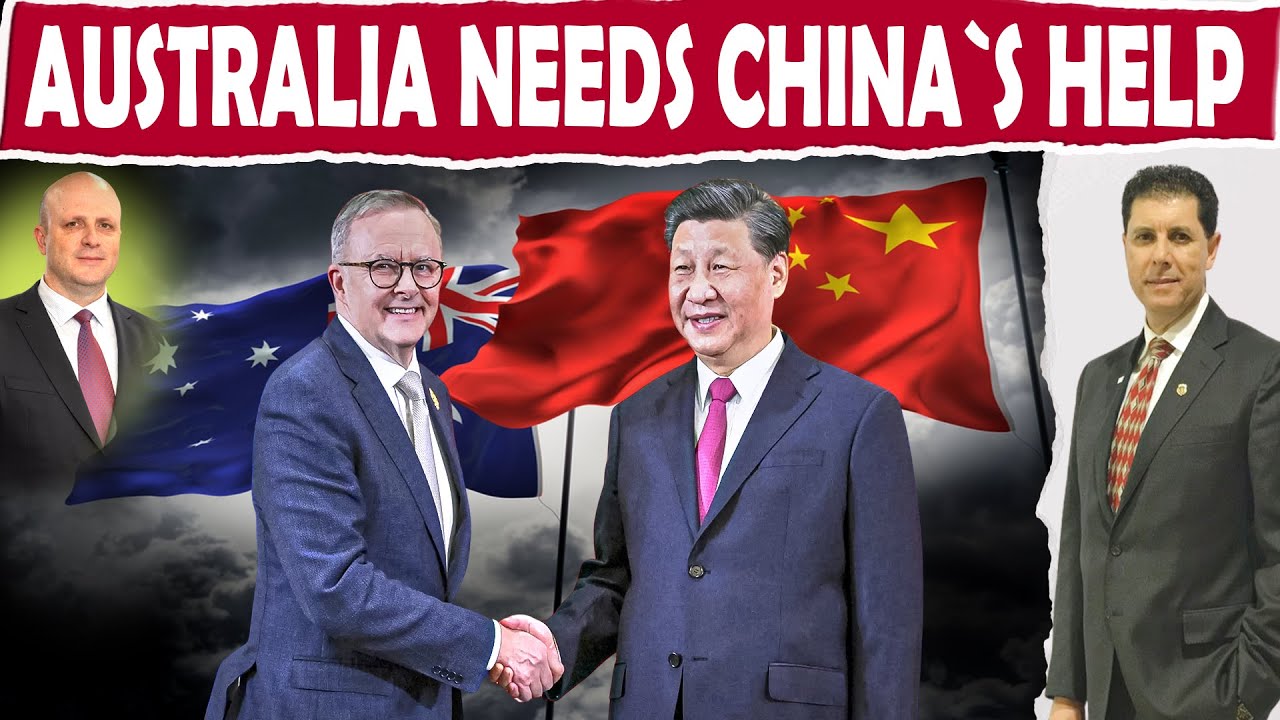
Robbie Barwick, chairman of the Australian Citizen Party, argues that Australia's recent diplomatic moves toward China are superficial and constrained by US interests through AUKUS and military basing. He frames the Dan Duggan extradition case as politically motivated and critiques Australia's economic problems: soaring debt, housing crisis, and corporate consolidation in banking and airlines.
Chapters
Hello everybody and welcome to Geopolitical Trends, where truth matters. I'm your host, Dr. David Oualaalou. Very, very excited to be with you. I'm even more excited because I have a, a dear friend. I haven't talked to him for a while on the channel here, and, uh, his name is Robbie Barwick. So I'm going to bring in Robbie right away. To those who do not know who Robbie Barwick is, he is the chairman of the Australian Citizen Party. So let me bring in Robbie, and we're gonna get into a very interesting conversation. Hi, Robbie.
Hi, David.
Good to see you, man. It's been a while since we last spoke.
It has been a while. You've, you've been busy. I've, I've, I, I've noticed, uh, you had a good trip to China, and, um, I'm, I'm preparing for my first trip to China on the— leaving on the 14th of October. So I'm looking forward to that.
Oh my gosh, you will be in for a surprise, Robbie, to see where that country is. So, but there is one thing I want to say before we launch into our conversation here, is that I want my community to know that I will hold you just for the record, you know, I, I promised that when you— you promise— when you become a prime minister of Australia you'll grant me an exclusive interview. So I want to hold you to that.
I absolutely make that promise. That's it. Yeah, you become Prime Minister of Australia.
Your word is enough for me. Because here's the thing, Robbie, I've seen enough in my life how things can go. And never say never.
So anyway, we're in politics. I'm in politics to change it. So never say never. Um, there's a long time, there's a lot, there's a long road ahead yet.
Indeed, indeed. So anyway, we are very, very excited to have you. First of all, on behalf of the entire community, I would like to extend my thanks for carving out time for us here. So before we get into the geopolitical aspects of Australia, where Australia is headed and it's sort of pivot to China and so forth, there is one thing I want to get your take on, especially for my community here to understand, and you have a better understanding than anyone else. And this one has to do with none other than Dan Duggan. So to those who are not familiar with Dan Duggan's story, uh, can you please, Ravi, can you just provide a brief history about what's going on with Dan and where his case is right now as we speak?
Well, Dan is a former American citizen who's been an Australian citizen since 2012. And soon after that photo was taken, where he's taking his 3 youngest children to school in 2022, he was arrested by the Australian Federal Police and ASIO at the behest of the United States on an— who are, um, ex— trying to extradite him to America on an indictment, um, uh, sealed by a grand jury in Washington in 2017. For training that he provided to Chinese pilots in South Africa in 2012. And essentially the accusation is that, um, he, he is in breach of America's laws against trafficking in arms. Well, they're— he's in breach of the regulations on trafficking in arms, except this is the first time those regulations have been applied to training not to actually, um, selling equipment, right? Um, and, and they're trying to extradite him now because of this. He's been in maximum security prison in Australia for the last 3 years. Um, it's next month is the anniversary of his arrest, so almost 3 years. He has 6 children actually, and a wife. They're all Australian citizens. Um, the children were all born here in Australia. Um, his wife is an Australian citizen, and he is an Australian citizen, just a naturalized one. And, uh, he's never broken any law, David. He's never been charged in, in either country, not the United States nor Australia, has he ever been charged with breaking any law. Um, and so he's an innocent man put in maximum security prison. He could be— look, let's, let's think of it this way— he could be, um, have his passport taken away from him and just be allowed to live at home with his family while this— while, while he appeals this decision to extradite him. But no, he has, he has been, um, made an example of in the cruelest possible way by the government. And here's where— here's the essence of the case and where the— where this is pure— a purely political case. First of all, um, under extradition You have to be— first, you have to be under the jurisdiction of the country that wants you, and you have to meet a requirement under the Extradition Act called dual criminality, that what you've been charged with by that country is a crime in both countries. It's got to be a crime in Australia as well as a crime in the United States. Now, he was a naturalized— he became a naturalized citizen in— on Australia Day, January 26th, 2012. The— he, he had already provided some training to pilots in South Africa in the year before and the year before that, but he's only been indicted for training— for some reason, he's only been indicted for training that he gave to pilots later that year in 2012. Well, he relinquished his Australian— his American citizenship by then. So what the, the acts they're indicting him for, America no longer had any jurisdiction over this guy. So that's one, um, and this is relevant to the Australian government because the Australian government has to approve the extradition and they have total authority. The Attorney General has total authority just to deny it outright. So, but the Attorney General has ignored the fact that there's no jurisdiction over him. And the second one is dual criminality. There is no equivalent law in Australia to these trafficking in arms regulations in the United States. So what our government did, and this is really, uh, to use an Australian term, dodgy— I don't know if Americans use that term, but you know, it is, it is underhanded— the, the, um, the grand jury in, in Washington asked for what's called a toll. Once they indicted him in 2017, they asked for what's called a tolling period because there's a statute of limitations on the kind of crime that he's accused of.. And by applying a what's called a tolling period, they basically suspended the, the clock so that they can extend it further. And when they did that, they made a request to the Australian government to provide more information. In that time, the Australian government put a law through Parliament here in 2018 that has— that is associated with the general issue of trafficking in arms and training, etc. And then they, the Australian government, applied that 2018 law retrospectively. Oh, what Dan Duggan was accused of doing in 2012, just so that our government could meet the requirements to do America's bidding.
Bidding.
In this case, now our party is the most outspoken party in Australia on the Duggan case. Everyone's run a mile, most. I mean, and individuals have started speaking up, but mostly everyone has run a mile because there is so such terror in this country of doing anything against the wishes of the United States. Absolute terror. China, I can tell you now, China does not frighten Australian politicians. China, they, they, they tell you they're afraid of China and China's going to invade us, whatever. No, the country that actually frightens them, the country they're terrified to, to be offside against is the United States. That's, that's what we're dealing with. So our party saw this, and we saw without even having to know all the details of what's involved. Yeah, we had a firm conviction this man in this political climate would never, ever, ever receive a fair trial, um, because of the political climate. And one of the proofs of that is they're trying— they're deliberately— the Australian media that are all sort of like the Murdoch media, and, and they're all to the United States. They have all deliberately given— he was arrested in 2022. No one heard of Dan Duggan before 2022, um, uh, and it took him a while to be arrested after the indictment because he actually lived in China. So when he came back to Australia, um, and he's not been indicted for anything he did in China, this was back in 2012, um, but by the time he was arrested in 2022, our politicians were talking about war with China. But when he was— when he did the training in 2012, David, we— our country was conducting joint military exercises with China. In fact, we recently played a clip on our show from 2010 where Australia was the first country, Western country, that the Chinese invited to conduct joint military exercises with. We were the first that they trusted. We were thrilled to bits. And according to this ABC News report— our ABC, Australian Broadcasting Corporation— according to this news clip at the time, the Americans were lobbying to be included in these military exercises. Because in 2010, 2011, 2012, nobody was talking about war with China, right? Everyone wanted to do business with China, right? China was the future. China— Xi Jinping was, was, was, um, being invited around the world, etc. I mean, Obama was starting to put in prac— you in training certain things that later led to that, right? So I'm not, I'm not dismissing that, but from a public sentiment standpoint, right, especially here in Australia, it was total positivity to China. And people have forgotten that. So that he's— when he was arrested in 2012, they were able to present this guy as if he's some kind of traitor, training the enemy, training the enemy, right? Um, even his— now Let's talk about Dan Duggan, the American. This guy is a top gun. He is a patriot. He was a patriot. He only— he didn't leave America because he hated it. He fell in love with an Aussie woman and he came here and made this his life, right? And then, you know, because he knows this is, this is going to be his life for the rest of his life, he becomes an Australian citizen. And there's probably some tax benefits to doing that and things like that, right? So you calculate those things. But he didn't leave America because he hated it. Right? This guy was a patriot. He was the all-American guy. His biggest defender is his commanding officer when he was in the US, a US Marines pilot. That guy, this commanding officer, says outright not only was Dan Duggan the most upstanding person that served under him, he said when he tried— when he provided this training in South Africa, it was not— it was not, um, his responsibility at all to vet the pilots he was training. Damn, he was training Chinese domestic pilots, right? But what the Americans do and the British do is they say everything in China is dual use, so they don't accept there's a distinction between them, and they just use that as this blanket thing. In this case, I know some other people that were involved in this flight training school in South Africa, and they have confirmed to me that when he was there doing the training, the US Embassy in 2012 came and visited it They visited the facility. They had no problem with the training he provided. When he got back from, from there, um, in 2012, ASIO requested a meeting with him because they knew he was going to go start a consultancy business in China. And when he attended the meeting, ASIO sort of ambushed him with a U.S. intelligence official was at that meeting, and they raised to him, we know you've been, we know you've been training Chinese pilots in South Africa, and we know you're starting a business in China. And because Dan is such a, like, a military professional, right, a patriot, and doesn't consider— would consider himself still sentimentally a patriot of America as well— straight away said to him, he said, well, if there's any problem with that, I don't need to— I can stop doing that. I don't, I don't have to do a business. And they said, no, no, no, no, no, we— no, that's all great. When you're in China, they hinted to him, maybe you could, maybe you could, um, uh, introduce us to some generals or something. And this is where they were trying to groom him to potentially buy for them, right? And he— that never happened. He didn't want to have a bar of it, and he had a, he had a falling out with them over that. But that's, that's, that's 2012. And the fact that it took till— despite the US authorities knowing everything he was doing, it took till 2017 and the Trump administration to indict him. Shows you how political that this is. And so the US is going after Dan Duggan because they're trying to make an example of him. The issue to me, um, so I'm, I'm, you know, you have an American audience and an Australian. I know you have a big Australian audience. Yeah, I do. Um, my, my message to Americans is please look at what your government is doing to someone that you should still consider one of your fellow countrymen, even though that, you know, he, he became his, his he's an Australian now, um, a hero of your country. And to Australians, my message is, why is your government facilitating this, right? And, and so the bottom line for me and why I strongly got involved is that this shows that if America is a country coming after you, the Australian government will not protect its citizens, right? So, um, I have an appeal. I really, I, I appeal to the viewers who've listened to this. Dan Duggan needs our help. He's not going to get it from either government. Um, he is— they're making an example of him. And one of the things they've done is they've destroyed the family financially. Um, the breadwinner is in jail and has been in jail for 3 years. He is not entitled to legal aid in Australia. And so, and they have a property, they have an asset that they were prepared to sell to fund his legal defense, and the Americans came in and got the Australian government to freeze that asset so they couldn't sell it. So even though this is the great powerful United States up against one man and his family, these, these utter bastards at the U.S. Justice Department will not let this family fight them on a level playing field. An even playing field. They're demanding the family fight them with one hand tied behind their back. And so they've had to— they have not wanted to beg for money, but they've had to appeal to the public for donations. Dan's final hearing is on the 16th of October. His final chance in court to try and get the Australian government through a court or through a government action to stop this is on the 16th of October., and I'm madly trying to publicize this case because I consider it a grave travesty of justice. And he— and here's— he's— they're making an example of him to everybody, and only his fellow citizens will defend him. So please look at— click on those links. Um, if you're an Australian, send a message to the Attorney General that she should free Dan Duggan. And, um, anyone Australian or American or anyone around the world please donate at that MyCause link. And on the Free Dan Duggan website, you can donate— you can make a direct money transfer if you want to donate that way and not go through a platform. But please help the family. They desperately need financial help, um, uh, as they face this last hearing.
Yeah, wow, what a sad story. So, uh, just one thing quickly here. Was he finished with his commitments with the military back in 2012?
Yeah, because this is all— yeah, this was— he'd been out of the military since 2002, so he received an honorable discharge, right, in 2002. Um, he became an American and Australian citizen, like I said, in 2012. But there's an interesting Wall Street Journal or Washington Post article from a couple years ago, um, David, talking about there's actually a phenomenon in America where and not just in America, but they were talking about the American ones. There's a lot of ex-servicemen in America who go on and, um, you know, uh, sell their skills, right? And there are rules, there are rules about what you're supposed to do, get permissions and these sorts of things. But this Washington Post article was all about the fact that most of the people who do it flout the rules, and the US government doesn't crack down on them. Right? They've always been very casual about it. So at worst, if he was still under their jurisdiction, at worst he was doing no more than what the Wall Street Journal or the Washington Post recorded thousands of servicemen were doing, at worst. And by the way, do you know who the biggest trainer of Chinese pilots in the world is?
Who?
The United States.
Wow.
Even though they're using this dual criminality interpretation against Dan Duggan, There are places like in Arizona where there are thousands of Chinese pilots coming through and being trained because the people in America training them are making money out of it.
Yeah.
And why thousands? Because China's economy— and you've just been there— China's standard of living is rising so fast. It is the fastest growing, and it's such a big country and with a big population, it's the fastest growing airline sector in the world. Right? And they need their pilots to be trained, um, and, and they need specialist pilots that, that Dan was training, test pilots who can test the other pilots, um, and that's the sort of training that he was providing in a 1960s aircraft. By the way, the training he was providing in South Africa was in this 1960s aircraft. There was nothing cutting-edge, uh, military secrets about it at all, and it's just what they've been able to spin it into. And yeah, so he was, he He was out of the military, completely out of US jurisdiction, but our government is facilitating a McCarthyite crackdown that's destroying an Australian family.
Yeah, well, it's clear to me now based on your explanation that it was a political hit, no more or less. So yeah, yeah, once— guys, if you get a chance, you want to support, uh, this, this cause, here is the link to, uh, Dan Duggan. This is if you want to donate for in support of his legal, uh, sort of fees. I mean, I can only imagine the cost for something like that. So that would be noble of you, uh, whether you are in Australia or any, any other part of the world. I was aware of his case back then. I, I was just questioning, okay, if he's out, you know, shouldn't— because when I was in the military, uh, you know, after I left and so forth, there were people that I know, they end up going back to the Middle East and training certain governments over there. Now, were they training on a high level on certain classified tanks? Most likely not the case. And same case that you explained, he wasn't training on some high-end fighter jets. It was just a plane of the '60s. So to me, it became a political hit. And I hope the Australian government, even though I'll say it with due respect, Robbie, I have no respect for the Australian government. It's because I know how it works. I was in Washington. The decisions pertaining to Australia are made in, in Washington, not in Canberra. Sad to say, but that's the reality. So this is what I'm hoping, uh, a party like yours, the Citizen Party, I hope the Australians will see where things are headed and vote for the right people. We have the same problem here, Robbie. So, and this leads me to talk about our conversation regarding, uh, what do you make out of the recent, uh, visit by Albanese, the Prime Minister Albanese, that is, to China? Uh, are we looking at a pivot here, a strategic one by the Australians, even though they don't want to come forward about it, uh, just to appease the Americans? Or are they realizing, you know what, If we don't do this, we're gonna fall behind.
Well, let me— I'll give you the brief answer and then explanation. So the brief answer is no, we're not looking at a strategic pivot. We are looking at a def— a significant turnaround and improvement in the relationship. And so there's been a reversal of the direction from around— from before 2022. And, and, and this meeting, this visit by Albanese to China to meet Xi Jinping, and he was there for, um, more than 5 days, which was by, by any standard a long, a significant meeting, a significant trip. Um, that is emblematic of where it's at. And there's been a more recent meeting I want to tell you about in a second too, from the Premier of the state of Victoria where I live, that's even, um, more, you know, symbolic of how how, uh, advanced the relationship is, is becoming with China again. Um, but unfortunately, that is mostly, uh, superficial because there's some real downsides in terms of Australia's concrete actions. And we, you know, I think what we, we benefit from the fact that the Chinese are incredibly realistic in their view of Australia now. We We have shown them the limits to what we're prepared to do, and China is, is, you know, China knows, well, okay, those are the limits we have to work within. So they're happy to be cordial and courteous, um, but if we wanted to ever stand up for ourselves as a country and, and, um, act truly sovereign, then the Chinese are definitely going to be prepared to take it further. Um, but, but that— let me go back to the positive. That was a good meeting. Like, that was, that was a good, good trip. Um, there's a— you can read the, the, uh, the, the readouts from the, uh, public part of, of, uh, Albanese's meeting with Xi. Xi Jinping gave fairly short remarks, and he emphasized that Australia is now in the second decade of the comprehensive and strategic partnership with China that she and our Prime Minister then, Tony Abbott, signed in 2014. So that is, as of this year, that's— we're now in the second decade of that, and China has— China wants to continue it. And the first thing that Albanese did concretely when he was elected in 2022, when he met with the Chinese, was actually say, yes, we want to continue the Comprehensive Strategic Partnership. From about 2020 to 2022, it may as well not have existed. The hostility from the former Morrison government to China, it was— that made the Comprehensive Strategic Partnership a joke, right? Yeah. But nevertheless, it was still there on paper, and, um, Albanese made it clear that we're committed to it. In his remarks, Albanese emphasized, um, the business links. And this is, this is the big issue for— on the Australian side of the relationship. Business. Um, he talked about collaboration, steel, medical technology, um, sport, all businesses associated with that. Um, he talked about the fact that they're committed now to annual leaders meetings between him and Premier Lee, right? And that's a, that's a, that's an advance in the relationship as well. So that part is good. And yeah, that's him.
Yeah.
That part is, that part is very good. And, and if I can continue to talk a bit, I want to— let me, if I can mention the Victorian trip now.
Sure.
That was even more extraordinary. And, and there's a phenomenon here, uh, David, where it's like anything associated with Canberra, the central government, where the US Embassy is and the British one politicians still walk on eggshells to do with China. But outside of that, at the, at the, the provincial government level, the state government level, there is a lot more freedom. And only for one reason. And the reason is politicians, as you probably know, are defined very much by public opinion. And so not so much any change. It's not so much a change of a view towards China per se, but the reaction in Australia to Trump is so striking. There is such a deep-seated animosity here about what Trump has done to the relationship that suddenly China is rising in everyone's estimation as the reliable partner. Right? And so the state governments are taking advantage of that. And, and in this trip, uh, the state premier here, Jacinta Allan, she went to China. She spent a couple of days there, and it was, it was unbridled enthusiasm. And she did business deals, she bought infrastructure, um, she, she did sign contracts to get them to come over here, help with big infrastructure projects here in Melbourne, um, and, uh, and, and emphasize like more international students, which is a big thing that is that Australia does is international students. Plus there's a push to get our tourism back on track to where it was before COVID because we were getting up to a million visitors from China a year, which for, you know, there's only 27 million people in Australia, right? A million from one country is by far and away the most, and it's huge. That died off. Um, so she was doing all that But she was challenged by the media because the media is always cynical. And, you know, this was the Murdoch media, and they're running the Murdoch US neoconservative line. And I want to read you what she said in response to the challenge, because The Australian reported— that's this, that's the newspaper, The Australian newspaper— she said, it reported, she rejected suggestions she was being naive and overlooking the transactional nature of the Chinese government. And this is what Jacinda Ardern said: with all respect, that's not how I see the Chinese community here. The government— the bit she's talking about here being in China— the government, the business leaders, the leaders of cultural institutions, that is not how I would see leaders that I have been meeting with. Every meeting I have, it's a conversation about family, shared values, hard work, about wanting to build a more secure future. So I would reject pretty strongly that from China's perspective it's all transactional, because from what I saw this week, it was an incredibly warm extension of friendship. That is the strongest thing any Australian politician outside of the Citizens Party—
yeah—
has said about China for 6 or 7 years. And it shows you how they're confident that public opinion is shifting. So that's the good side. That is, that is a— and there's a lot of potential there that if, if, if what we do— I haven't given you the bad side yet, but there's a lot of potential there that if what we do, um, as a party where we're trying to get Australia to adopt an independent foreign policy and stand on our own feet and deal independently with these countries, that there could end up being a strategic pivot And I wouldn't put it in the way of, you know, to a country, but just to independence, right? And the Americans will see it as a zero-sum game that we'll be pivoting to China or whatever, or to the BRICS. No, no, just be independent and deal with everybody fairly, right? Then Australia would be much better off.
What do you think, Robbie? What do you think is preventing Australians from seeing this, what you just talked about? In your opinion?
Well, well, like I said, they're seeing, they're seeing some things because they're definitely, they're definitely upset with Trump, right? One of the things Trump did, um, is we're one of the few countries that America runs a surplus with, you know, because Trump's whole tariff thing was based on, you know, I mean, that, that seems a legitimate gripe, all these deficits it's running, right? But he's running a surplus with Australia. Um, we have a, we have a free trade agreement with America. And of course, we console ourselves that we're America's most loyal ever ally, right? Even more than the Brits. We are, because we're the lapdogs. We're fiercely lapdogs for America. Every war America goes in, we're there. The Aussies are there, right? We've fought along— this is the catchcry in Australia. We've fought alongside the Americans in every war for the last 100 years. And then Trump turns around and slaps us with tariffs anyway. Against the law, which is a free trade agreement, right? That's a treaty, right? Against that law, um, against the fact that we have a surplus, that they have a surplus with us, right? We got whacked with tariffs in anyway. And this was, this was deeply, um, infuriating to Australians. Plus, plus there's a shift in opinion, like the, the shift in public opinion in Australia on things like Gaza has been extraordinary. You know, after October 7th, I think it was more than 70% of Australians said, you know, in polls, Israel has a right to defend itself. Now it's only 14% of Australians are defending what Israel's doing, right? We had— you saw the, you saw the march across the Sydney Harbour Bridge a couple of months ago, right? When you get that many people, probably 300,000 people across the Sydney Harbour Bridge in a massively symbolic, you know, um, landmark, the Sydney Harbour Bridge, it was a message to the whole world. Um, that's public opinion in Australia. And of course Who flies in the face of that? It's not just the Israelis, but it's the American president, right? So that— those are all good signs. But what stops them from seeing it, David, is this deep-seated, ingrained conditioning over a century, more than a century, of— that gets called variously the Yellow Peril, this idea that we're a white country in the Asian region, the Asian region that has the most people in the world.
Yeah, right.
And then where this— we were this white outpost of the British Empire here and always conditioned to be utterly terrified of, ironically, the one part of the world that's less known for invading the other parts of the world. Yeah, that's funny. We were the invaders, but this is, this is deep-seated. And so the, the, the other side, the bad side of, of the picture, which is why this is not a strategic pivot because I have to go through these negatives. We Albanese, so, you know, like I said, I think that— I think we benefit from the tolerance of the Chinese, to be honest, because they're realistic about the limits of the relationship. We're still pushing ahead with this AUKUS deal— Australia, United Kingdom, United States. It's the biggest, um, you know, uh, what do you call it, boondoggle ever. We're never going to get the submarines anyway, right? Um, but we're going to be— but we're going to be paying out like the The figure that we're working on is $368 billion, the single most expensive project in Australian history. By the time, um, uh, but you know, maybe the one thing Trump will do for us is cancel AUKUS because we are begging for it. We are, we even though this, even though this is so in America and Britain's favor and not in our favor at all, we're so desperate for this, for this deal, our politicians, um, that, that Uh, Trump has said, well, you know, he thought— I think he tried to test us out because he is a businessman. Yeah, you know, he goes, well, give us more money. Yeah, yeah, yeah, we'll give you more money, right? Even beyond that. So this, this level of desperation is quite extraordinary. There's a, there's a, there's a psychodrama playing out in Australian politics about will Albanese get to meet Trump. And it's like, and it's like, this is, this is a, um, you know, a pilgrimage thing. Like, this is— unless we go and kiss the ring of the emperor of the world, that, that we're a lesser country, right? So at the UN General Assembly this week, Albanese did the single most embarrassing thing.
Oh, I saw.
So he, he somehow corners Trump.
I saw.
Whips out his phone and gets a selfie. And you know why he's doing that? That's to show back in Australia, I see, I met the president.
Yeah, it's embarrassing.
It is embarrassing, especially because what I went through before, it flies in the face of the public opinion. Yeah, that has allowed people like him and Jacinta Allen to do in vis-à-vis, um, China. Yeah, right. The public opinion in Australia is dead set against Trump. Why is Albanese so intent on, on sucking up to this guy. It is, it is. But the— but there's an extreme right-wing Murdoch media ecosystem here that, um, they just, they just hammer him all the time. And that's what he's appealing to, even though it is not the majority of public opinion, right? So, and of course, that's tied up with all the corrupt stuff to do with the military-industrial complex, um, and all of that. Um, the government, our— the Before he took this trip to America, because Pete Hegseth, the Defense Secretary, said to our Defense Minister, Australia has to increase its military spending, spending 3.5%. What does Albanese do just before he gets on the plane to go to America? He announces a $12 billion spend in Perth for where the submarines— if we buy these Virginia-class submarines off America, that's where they're going to be based. Yeah, and, and a former defense minister who's a, who's a pro-American sycophant named Kim Beazley— you may remember back in the day, right? His nickname's Bomber Beazley. Yeah, he was a former ambassador too to Washington for a while. Yeah, David, he admitted the other day that that base, which is Australian, Australian base for us, for Australian-owned submarines that we're going to buy off America. Yeah, easily admitted. No, that's, that's just effectively going to be an American base.
That's true, right?
Um, because we're not going to have sovereign control over these things. Now, to again, to show you how, how sycophantic they are, we have a housing crisis in this country. Housing is completely unaffordable. The way we used to keep housing affordable years ago, decades ago, was the government would build a a percentage of public housing, which was— which made sure the poorest people could be housed, but also kept a check on the market, and the market never got out of control. And you know, David, our big policy is a— is, is a government bank, right? We want to bring back a government bank for doing this kind of investment. That's how they used to fund it back then. Um, Albanese will not do anything to address the housing crisis, but he passed a bill a couple of weeks ago where the government is going to, in this place in Western Australia, build a whole heap of public housing for American military personnel. So they can't build public housing for Australians, but for the American military personnel, they'll get essentially, you know, really low-cost housing to be at this base, right?
Yeah.
Um, couple of the other things that we did that are, that are real concrete signs of of how crazily the government is committed to this relationship. We, at America's bidding, we've taken the port— we're moving to take the Port of Darwin off its Chinese owner. So this was, this was a port that was in the, in the red. Now our party, we're not really on privatizing assets, so we would never privatize it. But the Liberal Party at the time, um, this was a port that was losing money it was a bit of a basket case, and they, they, they, they didn't sell it. They leased it for 99 years to a Chinese company called Landbridge. And over the last 10 years, that, that company has made it a profitable port. It's booming. And the Americans ordered us to take it, you know, make it sound like the fact that it's got Chinese ownership is some kind of a threat to Australia, right? So we've taken it We've basically confiscated the port off this company after they've made it profitable. And that, of course, that's discrimination against Chinese investors, right?
Yeah.
In fact, discriminate— we have discrimination against Chinese investors anyway, um, but that shows them there's no security for their investments in Australia, right? Which is a big deal. Um, we have on top of that, and mainly in places like the Northern Territory, we have the biggest military buildup in peacetime we've ever had in this country. And, and it was never allowed until 2012. And this is where, when I was talking about, uh, Dan Duggan before, we talked about Obama. You know, you would remember the Asia pivot, right? Oh yeah, Asia pivot decision in 2012. From World War II to 2012— 2011, sorry— no Australian government had allowed an American actual military presence in Australia, right? Even though you were right, our decisions were still made in Washington, there was a, there was a basic level of understanding that, no, no, if you allow, you're giving up your sovereignty to that, right? Julia Gillard allowed the US Marines to set up in Darwin. It's much, much bigger now. The former ambassador Chas Freeman, who I'm sure you've familiar with. I was in a conversation with him last year. He pointed out to me that, that this, this American, um, buildup here is on the same terms as America's occupation of Japan and Germany after World War II. It's essentially a US occupation of our country that's just taken over since, um, 2012, 2013, when the, when the Marines building up, um, And it's the— and that's, that's even whatever happens with AUKUS, that's there, that's now, right? Um, and then how far do we take this stuff? My last example, we— something that John Howard, uh, you know, introduced as an idea when he was Prime Minister back in the early 2000s after the Iraq War, etc., was he actually said that Australia was, was America's deputy sheriff in the Pacific, right? We were the deputy sheriff. Now Albanese has just tried to get deals with Pacific Island countries, uh, security deals including Papua New Guinea and Vanuatu, and in exchange for a fair amount of money to each country, The deal required them to give Australia a veto over their foreign policy. And in other words, we want these Pacific countries to do for us what we've done for the United States. We've effectively given the United States veto over our— you know what, these Pacific Island countries, they have more self-respect than Australia does because they said no. They refu— they, there was going to be signing ceremonies, and the, the most embarrassing one was last week. Albanese was in Papua New Guinea to celebrate the 50th anniversary of Papua New Guinea's independence, and there was supposed to be a signing ceremony for this treaty, and the Papi said, no, we're not signing. We're not going to give you a veto over our sovereignty. And this is— and what are we like? We're telling them, what do we want to veto? We want to veto their relationship with China, and they know China is our biggest trading partner. They know that we get more benefit from China than any country in the world, and we're telling them on America's behalf, oh, but you're not going to get those benefits from China. Yeah, right. And that's, that's the, that's the stuff that's really happening that unfortunately is, is quite heartbreaking for, for what we do, because we know our work— if we are ever going to pivot properly, pivot strategically, yeah, we to change that point of view, and we've got to get Australia back in a different direction. But we're up against the— there's been a lot of US foreign interference in our country, and we've got to keep exposing this to get citizens to see it for what it is.
Indeed. So I want to just touch on one thing before we move to the next segment about finance. We're going to be talking about finance, uh, the idea of Perth. Uh, for me, but I'm gonna speak for myself here, I knew ahead of time that once that nuclear deal, submarine deal was struck between Australia and the US and Britain, especially the US will be providing the Virginia class. The Aussies, even with their top security clearance, will not have access to certain compartments within the submarines. It's the same setup we decided to have in Pine Gap. I'm familiar with how Pine Gap is. There is there are parts inside Pine Gap that is off-limits to Aussies, even the ones with the high security clearance. So, and it says you're absolutely correct about the description of how Australian government, not the people, but at the same time the people are the Aussies. That's why I asked, why do you think the Aussies are not seeing what's going on with their country? Their leaders are taking them on a wrong path I recall when the tension started with Australia, with China, how the economy of Australia sank. Yeah, yeah, yeah. It was, it was so bad, so bad. And to me was just common sense why the Aussies do not see it. And voices like your party, you know, the hope that they're gonna sort of wake up the consciousness of the Aussies to see, you know what, maybe we ought to do something different here and vote for a different type of individuals that can take Australia back to where it needs to be. That's the only way I see it moving forward.
So the last, the, the last time an Australian government actually took on the United States was over Pine Gap in the 1970s. Gough Whitlam. And Gough Whitlam said that Australia would not renew— he didn't kick, he didn't kick the Americans out of Pine Gap, Yeah, he said when the agreement expired in a couple years, they want to renew it, would not renew it. Yeah, he was toppled, his government was toppled undemocratically before that happened. Wow. And, and it's really scarred the Labor Party ever since. And, and someone like— and then, um, uh, you know, people like Paul Keating, who was a prime minister in the '90s, he's become quite outspoken recently in, in defense of the China relationship, and it's been great to hear him. And he's he's, he's never been someone like me. Like, he's, he's, he's just, he just knows that, you know, um, Australia doesn't have to act this way. But he actually identified something that I think is quite insightful about why someone like Albanese is what he is. Paul Keating said that, um, there was this thing set up in 1990 called the, uh, Australia-United States Leadership Dialogue, and it's the number one channel for foreign interference in this country. And every year American Australian politicians get together and wine and dine, etc., and they take turns. You know, it's one year America, one year Australia. And, um, Paul Keating never attended any of these events, but he said all when his colleagues did, they came back forelock tugging, he called it, bowing and scraping to the United States, right? They saw themselves as little Americans, as, as, um And Albanese, you can— this Australian-American Leadership Dialogue has a website with lots of photos, a photo gallery. It's quite interesting. You can actually see for years going back Albanese attending all these events as well, right? And it really gives them a sense that they— that it gives them this idea that, oh man, we cannot survive without— we have— our number one strategic objective is to keep the United States engaged in the Pacific. That's what they openly say. Right? So even if Donald Trump did what I would consider a favor, yeah, right, and say, no, we're not paying for this anymore, we're pulling out, right? Even if we would say no. And, and what are we afraid of? Our best trading partner.
That doesn't make sense. Yeah, I'm, I'm aware, Robbie, of, uh, the funding of certain think tanks inside Australia. So, yeah, and even, even I'll go as far as saying even some universities like the Australian National University. I'm very aware of the funding that goes behind the scenes to articulate the arguments regarding the fear of China and pulling away Australia from even getting closer to China. So I want to get on, uh, uh, uh, one thing before I let you go here, uh, has to do with the finance. You've been, you've been working on the financial aspect. I remember last time You and I, we spoke and you were leaving to go attend some major event, and this has to do with the finance committee of sort of the parliament. What I would like the community to know is how is the financial situation in Australia as of today?
Well, it's pretty bad. We're barely able to keep inflation under control. Uh, and some of that is a legacy of, of, uh, COVID, um, and, and the amount of money that was spent to keep the economy going in COVID. Because we went— as you, as you remember, David, Australia implemented the most extreme measures to deal with COVID of any country in the world. There's been a lot of, there's been a lot of acknowledgement of that now. Even the, even the dictator, the, the, um, the man who was the Chief Health Officer in this state of Victoria, which was the most extreme state Yeah, recently, the other day, made headlines and said, yeah, um, they were— that was a lot of poor decision-making. And of course, it had to be funded, and they pumped out— they shut down a lot of businesses and they pumped out a lot of money. They invented— they created money, and it led to inflation. Um, now we— now we have a, a national debt that is, uh, absolutely soaring towards— it's, it's actually relative. It's by the, by the rest of the world's standards, it's not bad. It's about to hit a trillion dollars, and that's about 40% of our GDP. So there's a lot of, there's a lot of countries that are much worse than that, but for Australians, these are psychological shocks, these, these kinds of milestones, right? Um, and, and the big issue is what's the economy that can sustain that? Well, um, we are becoming a— we're a basket case when it comes to housing because we are just a massive speculative bubble on housing. And so the number one, um, thing that all families need, which is affordable accommodation, no one can afford in this country. And it's a real— it's a massive attack on our living standards. Australia, you know, back in— Australians are always proud that, that, um, when these things started being measured, like, there was a— there was some point back in the 1890s where we literally had the highest standard of living in the world. Right? And of course, we've all— we've— we've— we're a developed country, um, thanks to a lot of investment going back years. We've lived off the legacy of that. But, um, we— we— because we don't manufacture anymore, um, we have— we've just— we've just fallen down. Get this, we've fallen, um, to 105th on the Harvard Index of Economic Complexity. Which measures 140 countries. We're now 105th, and we're, we're alongside African countries like Botswana and Uganda on that, at that level, right? Um, undeveloped countries. Because we've gone, you know, we, we were as high when they first started measuring this in 2000, we were at 64, and we're now down at 105th because our, our economy is the our manufacturing in our economy is now the smallest in the OECD for only 5% of our economy. Now there's a political backlash to this. There's a big debate in Australia. We've got to bring manufacturing back. But the debate's heartbreaking because all they're talking about is military weapons, right? So the, the whole impetus to bring back manufacturing is, oh, we can make this weapon, we can make that weapon. And then it would just become a subset of America's military-industrial complex. That's the pro— we're the pro-manufacturing party in Australia. The Citizens Party is— these other guys are pretenders. All they want is a war economy, right? Which, if we ever got the war— like, once you go down the path of a war economy, you start making war almost inevitable, right? And if it ever happened, you don't— don't say last one out, turn out the lights. The lights will turn out like that because China's not going to send a navy here. China has no interest in occupying Australia. China's happy to buy our raw materials. But if, but if we've got— because we've allowed the Americans to build up their military here, we've made ourselves a threat to China, and we're going to get the world's most sophisticated missiles just rained down on us, right? It'll be over like that. And it's just crazy. This— the whole thing's insane. And that, and that's the thinking of the people that look like they're pro-industry. Yeah, right. Um, they don't— and what you're referring to from our last conversation is the worst part about the Australian economy, and it's, and it's probably— there may be some equivalent ones, but I doubt if it— I doubt if many countries are as extreme as we are in this. Every single sector of our economy is dominated by 2 or 3 massively profitable big corporations. Only 2 or 3 of them, maybe 4 sometimes, every single sector. They don't— there's no competition. So while the Australian people are having plunging living standards, the, the cost of living is crushing, our corporations have never been more profitable. It's just being rubbed in the public's face. And this is— we have 4 big banks that dominate 80% of, of finance. 80%, 4 big banks, right? They're the most profitable banks in the world, and I'll come back to them. We have 2 airlines that, for a, a developed first world economy, just 2 airlines, and they're just gouging the public like crazy, and they're completely unreliable. They got the worst record on punctuality, um, and they pay their executives the most money. There's 3 insurance companies that— there's, there's about 29 or 30 insurance brands, but that's just the front for 3 companies. Um, and their, their profits are jumping up like 50% a year, and they won't insure half the country. So half the people can't afford insurance, right? They just— these, these companies just gouging. There's, you know, the Big Four consulting firms, you know, PwC, Ernst Young, Deloitte, and KPMG, the big global ones. They run, they run the whole country. The government will not do anything without an order from those Big Four consulting firms. They— the government sacked thousands and thousands of bureaucrats, public servants who worked for departments, and their job was to have the knowledge, institutional knowledge and skill run the country. The government sack them and say, oh, we're gonna, we're gonna rationalize, save money on the budget. I need to replace them with these consulting firms that cost a lot more money, but they don't come under, they don't come under the category of wages in the budget line item. So the government still pretends they've saved money on the budget, on the wages budget, right? Um, and it's just on and on. There's, there's 3 gas companies. We, we are the, we rank alongside Qatar and the United States as the biggest gas gas exporter in the world, but the Australian people are paying the most expensive gas prices in the world. We're losing businesses like crazy. We just lost the last domestic glass manufacturer in this country because the gas prices are so expensive, because it's all exported overseas and we don't even keep a, a minimum amount here for the people. And these 3 companies that are the gas cartel, they're just— they're so profitable. It's not funny. That's the real Australian economy. And what our party is trying to do is break the power of these corporations because they have this corrupt relationship with the two major parties that are— that dominate government, Labor and Liberal. And they just, they just donate to them and buy them off. And, and, um, uh, even though that they don't vote, the people vote. When it's the two major parties that basically have the same policies, the people have the sense there's no alternative. And so we're trying to highlight that and say, look, the number one economic problem in Australia is this— the power of this, this corporate power over our government. What Franklin Roosevelt said in 1938 was fascism. He said, the liberty of a democracy is not secure if the people tolerate the growth of a private power to the point where it's more powerful than the state itself. That is fascism— ownership of government by any private interests. And in Australia, it's these corporations. They're all owned by BlackRock, State Street, and Vanguard, right? The big corporations, right? It's, it's a totally incestuous relationship, and they've got all the power. And the biggest one is the banks. And the banks have— the, the banks run Australia. They've got more power than the government. And we're trying to bring back a government bank. Yeah, break their power and start breaking the power of this whole system.
Yeah, well, I hope the— I hope Aussies Would really, as I said, wake up and see the reality for what it is, at least for what your party is trying to communicate with the society for the benefit of having that independence. I know exactly what you're talking about, Robbie. I know what exactly what you're talking about when it comes down to this independence, because we are seeing similar problems here in the US that the standard of living is going down. It's going down. And, and because of the corrupted system. And, uh, this leads me to ask one final question— not a question, or rather it's just your insights into— with this developments that's moving on, especially from an economic perspective, in your opinion, Robbie, uh, Robbie, do you, do you see the possibility of, for example, this is just hypothetical, Australia joining BRICS? Is— will it be any possibility of something like that?
Um, not, not with the dominance of, of government by these, by these two bought and paid for political parties. But, you know, over time, given what I've described about public opinion in Australia, right, if, if people actually understood, you know, because they're, they're really upset with, with where our relationship with the United States is going.
Yeah.
And then, and, and China has just shown itself to be the reliable partner. But of course, BRICS is not just China, you know. We, um, everyone acknowledges our most important relationship clearly should be with Indonesia, right? One of the biggest countries in the world, right to our north. Or, and both our economy and, and our strategic security depends on having a good relationship with Indonesia. Well, that's part— that's a member of BRICS now, right? Um, they're, they're showing through their collaboration with China things like you know, the development around high-speed rail, etc., things that, that Australia could become interested in. We advocate for investing in high-speed rail for this country, and we advocate let's invite the Chinese in to help build it, right? As you know, we'll, we'll, we'll skill ourselves up and get the know-how, and we can keep building it. But to kickstart it, we don't know, they know, they're the best in the world. Invite them in, let's, let's help build it. And they're happy, they, they love to do that, right? Um, the Chinese and other countries associated with the BRICS, uh, keep offering economic opportunities, and it's up to Australians to realize, well, okay, we have this one-sided relationship with the United States. It's all about, you know, we, we lose money in that relationship. They, they have the surplus, we don't. And, um, we— they're demanding control of everything, including, by the way, our rare earths. We used to make— a couple of years ago, we were, we were, we were making um, uh, hundreds of millions of dollars a year on our rare earths industry, exporting rare earth metals. Now, um, as part of the deal with the Americans, we're stockpiling it, and we're, we're not even making $20 million a year anymore. We're stockpiling it for American use because this is, this is how we're sucking up to Trump. And so people, as people learn those details, David, and then realize, well, but there's these other you know, look at the rest of the world. Why are they doing deals with the BRICS? We keep documenting this in our publication. We have a magazine called The Australian Alert, and we, we keep documenting these, these great meetings and the agreements that come out of it, the infrastructure that's being built across Eurasia and in Africa, etc. It's all to do with, with all to do with BRICS investment and saying to Australians, hey, this is our potential here too. What do we want? So over time Over time, I think there is potential, but it's not— it's going to come through the leadership of parties like ours. Right now, it's not going to come through the major parties.
Very, very interesting, Robbie. Very— thank you so much for these insights, because, you know, I wanted the community— that was the reason why, uh, and I'm glad you had a sort of— you carve out time for us here. I wanted the community to know what is going on with Australia beside what the media is saying, because we always— I don't trust what the media is saying. So I'll give you the last word, Robbie, whatever you need to say.
I'll say two things quickly. One, thank you for having me on. Of course. As you know, I, I'll tell the funny story. I was at an event a couple of weeks ago, and I had to use the, the, uh, the public toilet at this event. And as I was leaving, someone called out, Robert Barwick! And it was this young Chinese guy, and and he said, oh, I've watched you on David Oualaalou's show. Oh, okay. Um, so that was good. Uh, so anyway, I appreciate the exposure, David. And finally, please, um, if you tune in late, go back and watch the beginning where we talk about Dan Duggan. Please help Dan Duggan. Any, any size of donation would be greatly appreciated. And if you're an Australian citizen, call the Attorney General. It's really vital that we rally behind this family. It's totally unjust what's happened Indeed.
I also going to add something else, uh, uh, for the community. You might want to check out, uh, the Citizen Party, uh, uh, YouTube channel. I watch, uh, Robbie's interviews with— he, he brings in some really interesting guests, uh, just for the sake— for me, because I need to learn more about what's going on in Israel. So make sure you guys log in to this channel here, subscribe to it, and you will learn more about what's going on with, uh, with Australia. And also to the Australian, to my Aussie viewers, you know, I'm not here advocating for— I'm advocating for what's right, for what's right. Go ahead and check out the Citizen Party and support that party for the sake of the future of Australia. So I mean, we have similar problems here, but you know, at least you have a voice of reason of, of someone with, with some rationalism and pragmatism to push and move Australia forward. So, so, Robbie, on behalf of the entire community, I want to say thank you for covering our time for us, for us here, and we look forward to seeing you again.
Definitely. Thank you.
You take care. Bye. For the community, remember to tomorrow to join me for for my conversation with Dr. Yasser Massoud. It will be at 09— I think 0900 hours my time here. It would be 1000 hours— I'm sorry, 2200 hours in Beijing. So I look forward to that conversation with, uh, with Dr. Massoud. And quickly, I want to say thank you to Noel for your Super Sticker, and you also saying hi to Mr. Barouk. I let him know. So thank you very much, Noel, for your continued support. Greatly, greatly appreciate it. And a last note I want to share here, this is from Kat Kiss. This is the Citizens Party. Understand, left-right division was created to keep us fighting against each other and not against the 1% intent on techno-fascist world domination. So I, I, uh, uh, you're absolutely correct. Citizen Party will have a far better vision for Australia moving forward. So in any event, I look forward to seeing you guys tomorrow. As always, remember, geopolitics impacts your daily life in more ways than one. Till next time, bye-bye.
More from David


Beyond the Single Actor: Why the Gulf Isn't Choosing Between the US and China


Iran, Iraq's Militias, and the Houthis Are Coordinating! This Changes Everything




Who Controls the Next Decade's Resources? Latin America and Africa's Geopolitical Crossroads

The Chokepoint Trap: How Washington's Stupidity Triggered a Cascade That Now Controls the World

Trump Spooked as IRGC Unveiled dual-use SLV, Deployed Ghadir Mini-Subs & Hinted at Tactical Nukes!
