Is Global Perception of China Changing for the Better (w/Carl Zha)? | Geopolitical Trends
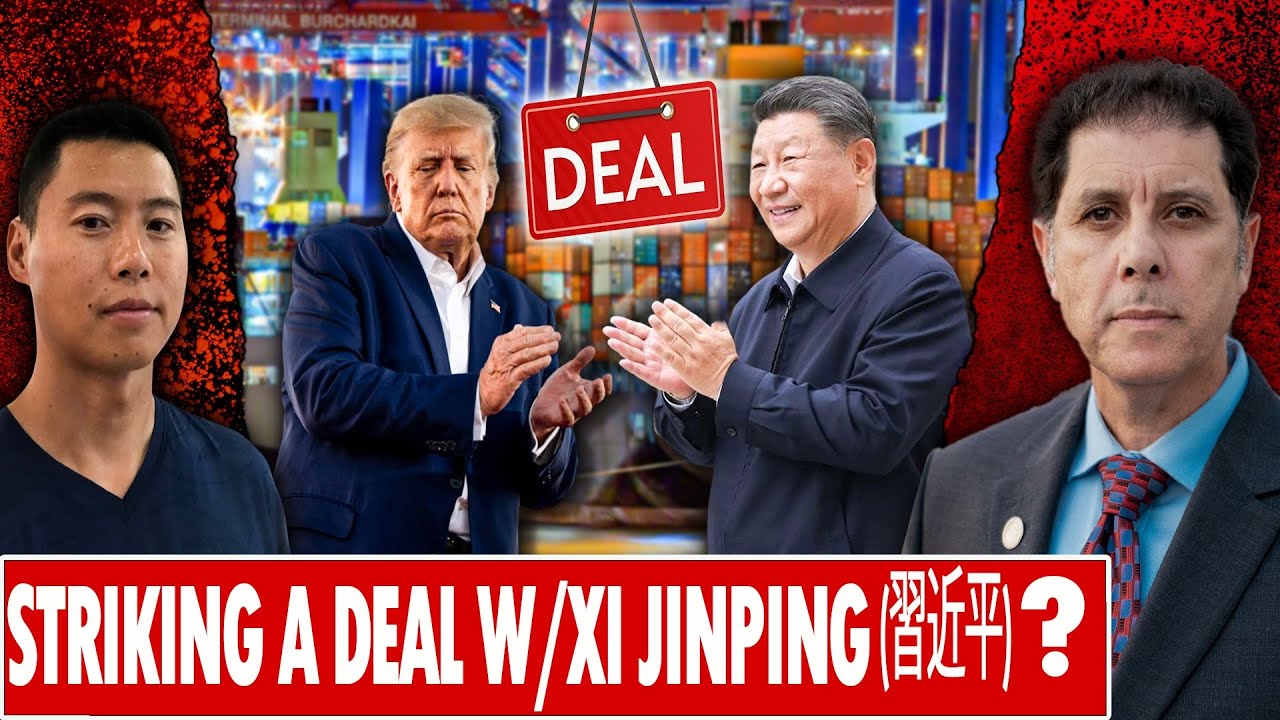
Carl Zha argues Trump's tariffs may inadvertently strengthen China's global position. China is rapidly expanding trade and investment in Southeast Asia, accelerating electric vehicle exports through BYD, and building automated ports and high-speed rail networks while the US shifts focus away from the region.
Chapters
All right, hello everybody and welcome to Geopolitical Trends, where truth matters. Excited to be with you once again today. I know we did the live stream earlier at noon, but this is a special time because it's none other than my guest Carl Zah. Let me bring him here. Hi Carl.
Hi David, how are you?
Good to see you as always. The whole community was excited waiting for— as a matter of fact, a week ago, Carl, I got a comment Somebody said, Dr. O, is Carl coming? I said, yes, he will, assuming he has time.
I always have time for you, David.
Well, I appreciate it. I really don't take it for granted. I want you to know, Carl, how much the community appreciates you. You're really carving out this time for us once a month to address, you know, uh, global issues and with great depth. And, and I'm very, very grateful. So I want you to know that.
Thank you.
All right, I'm gonna get into it right away, Carl, because again, there are so much to cover. And I would like to start our conversation rather with the— it's a question, but it's not a question, sort of it's a statement, if I may use the term. And the way I thought about this as a geopolitical analyst, I thought about it in, in, in, in view of President Trump's policies mainly towards China. We all know the focus for the tariffs and so forth, which, speaking of that, today China leadership plans to hold a meeting next week. And the reason for that is because they want to develop some sort of a plan to protect China's economy from the impact of the US trade. And the reason for that, because as of, uh, March 4th, which is 2 days from today, the, the tariffs is gonna go into effect. So President Xi Jinping is already preparing, uh, his strategy along with his member of his government, and we're gonna see how this is gonna unfold. Now, my sort of question to you is, in your opinion, do you believe that Trump's policy towards China are inadvertently opening the door for China now on a global stage?
Well, in many ways, David, uh, you know, right now, as we know, uh, President Trump is sabotaging the, the, a lot of the international institutions that US has helped to set up to enable US hegemony since, uh, World War II. Um, you know, we're talking about UN, we're talking about, uh, you know, ICC And, and, and Trump is, uh, talk right now totally gives a, um, middle finger to, to Europe right now, to EU. He wants Greenland, he, he wants Canada, he wants, uh, you know, uh, Gulf of America and invade Panama. So a lot of the countries around the world are being thrown back. I mean, especially EU leaders with the 180 turns White House has done on Ukraine. Uh, you know, now a lot of EU leaders, they, uh, they're saying crazy things like they're gonna go support Ukraine alone without U.S. I mean, that's, that's, that's all hockey talk. They're just trying to spin this as a face-saving way, um, because they, they have been slavishly following the Biden administration's lead, and now they're just being thrown thrown, thrown into the wild. And, and this is why a lot of people— I mean, even Canadian leaders are now talking about, um, developing relationship with China as a counterbalance to, to, to, to decouple, you know, to use the, use the language of Washington, to decouple from United States. Um, you know, so there's a lot of opportunities. As for the tariff itself, Um, you know, Trump didn't just slap tariff on China, you know, it's China. Trump is threatening tariff on the rest of the world. Uh, you know, we're talking about Canada, Mexico, Europe, Australia. Um, nobody expected this. And yeah, whereas China, China has long expected, you know, China has long been preparing for this moment. Uh, the, the recent meeting, uh, that Xi Jinping is gonna hold That's— it's more like put a formal process around it. I mean, China has had Plan B for a long time. They, they, they have been expecting the Trump tariff, um, you know, you know, you're back in the Biden administration. So, so China is prepared. China has, uh, you know, China has its own strategy in place, unlike Europe, unlike Canada, unlike Australia, all these so-called US partner countries who totally did not see this coming. So yes, in many ways, uh, you know, one, one way for China to decouple from United States is grow its trade relationship with the rest of the world, particularly Global South. But now, you know, countries like Europe and Canada also reorient their economy toward, uh, toward China as well. So there's a lot of opportunity there for China. Yeah.
Now, is there— you, you are a history buff, Carl, and, and, you know, a great deal about the history of China. Is there like a period in Chinese history that is reflecting through the current policies, uh, the government of President Xi Jinping is embarking on? Is there any similarities in your opinion?
Well, um, I, I know not, not probably not in the recent history. I mean, yeah, in the, in the modern times, China has been under sanctions, uh, you know, ever since. Yeah. Establishment of People's Republic in 1949, China has been under sanction basically up till 1970s, until Nixon visit to China. Uh, China has been sanctioned by the Western Bloc, you know, whereas the West been gaslighting China, is calling it bamboo curtain when it's the West was imposing the, the, the blockade on China. And so China is no stranger for Western sanction or, or blockade. But it, you know, China has a long history, you know, 2,000, uh, have 2,000-year history of dealing with centralized bureaucracy. You know, there's a, there's a saying, you know, there's, there's policy from above, but there's, there's always ways around it on the ground level. This, this is a pragmatic Chinese approach. They will always find a way around. Um, you know, that, that's not a problem. And US can slap sanction left and right, China will find an alternative route. I mean, before, what they did, for example, was, uh, off-sourcing a lot of manufacturing to, uh, you know, to again use parlance in Washington, friendshoring to countries like Southeast Asia. You know, like a lot of the factories went to Vietnam, some to Indonesia, Cambodia, uh, etc. So, so, so for, you know, a lot of the components are still made in China, but it will be shipped to those country to— for the final assembly, and then they'll get slapped on label made in Vietnam and then exported to United States. I mean, China has done that not only Southeast Asia but in places like Africa as well. So this is— China is no stranger on how to do sanction busting, tariff busting. But one, you know, interesting thing you brought about history, I see a lot of the Chinese, you know, strategists, they make reference to really ancient Chinese history, to this period, you know, from 750 BC to um, to, to 220 BC. This 500 years of, of disunity, you know, during the Eastern Zhou Dynasty when China kind of split into many, uh, many states. There's, there's a period called Warring States period where many states in China fought for influence. And, and, and, and so China has this very long history of, strategic thought that can drew, uh, as presidents and this example. And, and a lot of people see the present-day international system, let's face it, we're already in multipolar world now, you know, like the unipolar— this was admitted by US government official, you know, Marco Rubio of all people, have said we are, we're in the multipolar world right now. And you got multipolar world, um, you know, China has, you know, had to, had to deal with that kind of, uh, intense state competition environment 2,500 years ago, you know, like during, during the Warring States period, various states in China had to compete with each other for influence, um, to, to maximize their own gain. So, so China has this wealth of experience and historical knowledge on how to deal with this very uncertain, uh, international system. Um, and, and, and, and, and, you know, just to make it short, China is prepared.
There we go. Well, speaking of the Narco Rubio, I call him Narco, by the way. Yeah, I mean, I'm— I was surprised to hear that coming from a Chinese hawk. He is as hawked as he can be. Now, he softened his language towards Russia, but he maintains that towards China. You brought up two points, Carl. One of them is the PRC, People's Republic of China, which we will talk about right after I finish, uh, the— this particular segment here, or this point. And you mentioned Vietnam, and I have a picture here I would like to share with the community. And the reason I'm sharing this picture here, guys, just for you guys to know, and I'll have Carl comment on this. It's because Chinese companies now account for about a third of new investments in Vietnam, which means what? Like you exactly stated, Carl, which could now expose the country to tariffs, of course, but China is going to work around that one. My point in this is that Vietnam has been now one of the biggest beneficiaries of the trade between the world's two largest economies. And I found out that their trade has surplus of about $123 billion last year, the, the third largest after China, of course, and Mexico. Like you mentioned, Carl, China has the Global South. Are we seeing now the trajectory going definitely towards ensuring that the economic transactions will be with the Global South writ large?
Well, I mean, China will have to because, you know, US and, and in some parts EU as well has been putting up trade barriers now. They have been doing that since the Biden administration, try to keep China out. But what China did, then they, they, they try to branch out to the rest of the world, to the Global South nations. Like, um, you know, EV, you can't get Chinese EV in US right now, but if you go to, uh, places like Southeast Asia, uh, you know, Chinese EV is, is very fastly catching on, taking over. In fact, so much so that, uh, the Japanese, who traditionally treat like Southeast Asia as their backyard for car manufacturing now are under serious pressure. This is why, uh, Nissan, Honda, Mitsubishi, they, they recently were talking about merger. I don't think that talk went through, but the reason they, they talk about mega merger is because all of them are in trouble. You know, the only Japanese carmaker that's still holding ground in Southeast Asia is Toyota. The rest of them, every single one is in trouble because they are not growing, whereas the Chinese EV makers, they came from zero market share to went on to very become one of the fastest growing, you know, car makers, sellers of cars in Southeast Asia. I'm here in Bali, Indonesia. I myself, I'm waiting for BYD to finish their Indonesian factory at the end of the year. So by January 2026, if everything went according to schedule, they will start manufacturing cars in Indonesia, and then, you know, the price will come down because Indonesia also have tariffs on, you know, uh, auto import, like about 75%, uh, tariffs. And, and so this encouraged foreign companies, uh, to, to manufacture in Indonesia, um,. And this is what BYD has done. So I'm waiting for BYD factories to— so I can buy my, my Chinese EV cars. And I, I, I don't think I'm the only person, you know, many people are doing the same. And, and this is why, uh, but you, you would not know that staying in U.S. unless you pay attention, unless you are a follower of EV news. Because in U.S., you know, it's very— it's still kind of stuck in the 20th century in many ways. And, um, and this is the effect of US-EU tariffs and sanctions against China. What really happened is the rest of the world are moving ahead into the 21st century, and, and, and whereas EU and, and, uh, American consumers are getting stuck paying more money for outdated technology.
No, well, that's correct when you consider Tesla's costing $75,000. I was like, that's ridiculous. As a matter of fact, there is now some sort of a decline in the purchase of the— of these vehicles right here. So very, very interesting. Uh, you mentioned the PRC, the People's Republic of China, and I would like to get your take on this particular issue that just came up. And this one has to do, Carl, with the United States, or State Department, that is stop calling China PRC, the People's Republic of China. Now what they call it, just straightforward, China. What does it mean? Why, why the sudden change from officially switching the name from the official recognition as it has always been since the bilateral relations between the United States and the PRC have been established?
Well, um, you know, I don't know what internal thinking among the Trump administration is. You know, as we, we know, there's a lot of changes going through the Trump administration. But, uh, traditionally PRC is also used as a way to distinguish between with ROC, Republic of China, which is a predecessor government, but also what the government on Taiwan like to call itself. So, um, you know, even though after Nixon visit, uh, China, United States had pledged that he only recognized one China and that its legitimate government is in Beijing. This is the one China principle that was laid down the foundation for the Sino-American relationship. So I mean, it's, uh, it's, it's, it may be that they're finally stopped pretending there's two Chinas. Uh, I, I, I don't know. I mean, I can't I can't second-guess the Trump administration because they're coming out with a lot of initiatives.
Yeah, that's usually, uh, well, usually that tells you a lot about where the government is, is heading out there. So, uh, for those who just joining us here, I am having a conversation here with Carl Zeeb, uh, and, and we're gonna be addressing a host of issues. Please make sure to subscribe if this is your first time, uh, visiting this channel here. I will greatly appreciate it. So Let's move on into addressing what's taking place in Singapore. And I've been following now the development that's taking place regarding the Port of Tuas. How do you pronounce that, Carl? Tuas? T-U-A-S?
I have no idea.
Yeah, Tuas, Tuas, whatever that is. That's the one. So what happened with this? I found out that, uh, Singapore now is aiming at expanding this using— this is where the key to all this is— the idea of the fully automated port by 2040. How significant, how significant is this?
I mean, I'm surprised they, they set up the, the, the, the, the dateline to like 10 years from now, more than 10 years from now, uh, uh, you know, almost 20 years, 15 years from now. I mean, like Right now, if you go to China, a lot of the major Chinese ports, the Yangshan Port, deep water port outside Shanghai, for example, it's already fully automated. A lot of the Chinese ports are fully automated. So I mean, I guess it takes more time and effort to upgrade existing infrastructure than when you build a brand new one. And, you know, for Singapore in particular, you know, like port is big deal. That's, that's how Singapore distinguished itself, uh, in the first place, because, um, it's, it's, uh, it's, it positioned itself initially as an entry port, um, where, where, like, uh, you know, it's like gateway to Asia, as you will. Um, but, you know, Port of Singapore, it has been, you know, it's, it's a legacy port. I guess it just takes time, um, to, to, to, to, to bring it to up— bring it up to date. But, you know, 2040, uh, most of the Chinese ports already living in 2040. They're already fully automated. And the, the new mega port China is building in Peru, uh, the Changkai Port that just completed, that's also a fully automated port. So Singapore, in a way, it's, it's playing catching up right now.
So basically, but, but is there like, because they are concerned about this US-China trade tensions that might end up creating some sort of instability politically speaking in other regions of the world that depends on a supply chain?
Well, um, I mean, yes, of course, the US-China trade is still a very significant portion of the global trade even though it's becoming less and less a percentage of the overall Chinese GDP. I mean, the, the, the US-China trade is about 3% of China's GDP at the moment. Um, if you take away, it's gonna hurt, no doubt, but it's not, it's not gonna cause any significant damage. And so, but, but for a lot of the smaller nations they're gonna feel the impact. But I think, you know, I think for Southeast Asia nation though, most of, uh, it will be positive because like I said, a lot of the companies to reroute their supply chains, they move their supply chains to countries like Southeast Asia, uh, like Vietnam for example. And you know, the, the idea, uh United States is pushing is to decouple from China, to move your— to diversify your supply chain away from China. But actually, what actually ended up happening is you are seeing an expanding Chinese supply chain. So reason a lot of companies choose Vietnam, because Vietnam is physically close to China, it has rail links to China, it has ports that's close to China. So it's very easy to leverage the existing Chinese supply chain. So essentially what happened is Vietnam is getting integrated into the existing Chinese supply chain, and that's going to be the same story play out in the rest of Southeast Asia. That's going to integrate the rest of the Southeast Asian economy even tighter and, and further with China, uh, and, and, and so, so it's not going to have the intended effect, um, of the US, US push decoupling, um, from China, or de-risking, whatever they call it. Um, but it's— I think it's overall, it's going to be positive for the region because now there's a— there's a— it's spreading the wealth, you know. When China, um, uh, it gets involved a lot of the BRI project, for example, they're not just building stuff, they're also doing technological transfer, you know. When, when the Chinese investment come to Indonesia to build, uh, like, uh, to invest in nickel and, uh, cobalt production, for example, they're bringing with them technology. So, so they're setting up processing plants in Indonesia that will, um, that will refine the ores that's been, uh, that's being mined in Indonesia. So it's— so in a way, it's helping Indonesia to climb the ladder of, uh, of manufacturing chain. So they're not just a pure exporter of raw commodities anymore. Now they refine their own commodity. And this story is, is, is kind of widespread throughout the world, not just Southeast Asia. You know, when, when China goes to Africa to build a railway, for example, they also train the local staff to operate the, the, the, the railway. So there's technological transfer built in. And so, yeah, I mean, there is definitely impact of the US redirected trade through tariffs and sanctions, but I think overall, I think overall it's positive for the rest of the world.
Perfect.
Yeah.
Let's switch gears towards what just took place a few days ago regarding the The US-Tai military drills, Cobra Gold 2025 military exercises, those are usually on a yearly basis that they take place. But now, given the circumstances in South— or not circumstances, I rephrase this one— given the dynamics that's taking place in South China Sea and how the United States now is sort of focusing now on ensuring that the next phase of tensions will be in that part of the world, and we can see it through two countries, Australia and the Philippines. I mean, to me was like, how, how do you see this, Carl?
Okay, so first of all, the, the, the Thai, uh, US military drill, this is a, uh, um, you know, this is a routine drill. They, you know, US have participated with a joint drill with Thailand for many years now. People have to remember Back during the time of Vietnam War, South China Sea was basically American lake. You know, US has its client states all around South China Sea, from the Philippines to Thailand. You know, all these are all, uh, US so-called partners, right? And, and, you know, like, the US warship was sailing into South China Sea like no one's business, and And, and what happened since, since the end of the Vietnam War is China is chipping away at U.S. traditional influence in the region. So for example, Thai— Thailand, um, you know, Thailand was firmly a, a, a part, like a, like a U.S. client state. So was Singapore, um, and, and Indonesia. Malaysia, you know, you name it. But after, after '80s, uh, you know, after '80s, '90s, after China started to establish— so China actually only started to establish formal relationship with Singapore, Indonesia in the 1990s, right? It's fairly late. But since, since then, China has, uh, has, has made great strides in developing relationship with these countries, and especially Thailand. Since 1980s, China had a very close tie with, uh, with the, with the Thai government. So, so, so right now Thailand is kind of, uh, they're kind of in between. They're both, they're both friendly with United States and, and China, because you can see by their military procurement, uh, you know Thailand purchased their warships from China, right? And warships and tanks. And that's, that's a pretty significant relationship. So, so Thailand and all these Southeast Asian nations are basically hedging their bets right now. You know, they don't want to, uh, cut tie with America per se. You know, they, they want to continue to benefit from being friends with United States in terms of market access, etc. But they also want to be friends with China to benefit with, uh, the trade with China. You know, they, they're the last one that want to choose. You know, China is not making those nations choose, you know, you are either with us or against us, right? It's the US that has been forcing people to choose side, and that's something a lot of the Southeast Asian nations do not want to do. They just want to be friends with everyone so they can trade. Um, and, and, and, and this is where, you know, you can see kind of subtle shift in places like Singapore. You know, like Singapore tradition, ever since its independence, it has basically been a U.S. client state, a bridgehead in Southeast Asia. Um, you know, let's, let's not kid ourselves, it has been a U.S. client state. Um, but Singapore, since '80s, '90s, 2000, it has developed very, very close ties with the Chinese government. Uh, you know, China— Singapore had very significant investment on mainland China. Uh, they're one of the earliest foreign investors in Suzhou Industrial Park, the city just outside of Shanghai, um, which is, which is run by the Singapore government. So they, they have vested interest to see that, uh, you know, the, the state— they have very vested interest in stability in the region. You know, the last thing they want to see is rising tensions that will disrupt the trade flows. So this, this goes for the rest of the Southeast Asian nations. And you, you had— you brought up the case of Philippines and Australia. So, you know, Australia recently, they flew, uh, you know, they have been— they have been flying spy planes on behalf of United States in South China Sea near Chinese coast for 20 years. And, and recently there was an incident where they, um, got close to Chinese airspace and the, the, the Chinese fighter jet dropped flares on their spy planes. Now, now Australia made a very, uh, rigorous protest and say, oh, we're doing this in— we're a— we're, we're, we're, we're law-abiding, you know, doing— we're doing this in international waters.
Waters. Yeah.
And then, okay, guess what happened? Then China send its own warships into international waters around Australia and hold, hold, hold exercise. Now the Australian media is going to a frenzy, like the fans, like, oh my God, unprecedented. China is holding live fire drills off Australian waters. Look, you have been doing this like for 20 years, you know, like this is what the reason they have been, you know, was able to do this, uh, yeah, and claim that, oh, it's no big deal, we're doing this international waters, because for those 20 years they know like China did not project power, you know, China couldn't project power into— but I have said a long time ago, the so-called freedom of navigation What's good, good for the goose is also good for the gander. You can't expect China just going to take this lying down forever. Uh, at a certain point in time, you know, Chinese economy is growing, Chinese military power is growing. At after a certain time, you're gonna find China doing freedom of navigation around your neighborhood and see how you like it. And that's what Australia is finding right now. And, and now And they're doing this at a time when, um, Trump is cutting a lot of fundings, you know, through USAID. Uh, one famous Australian, uh, think tank, ASIP, Australian Strategic Policy Institute, which is ostensibly Australian, funded by Australian government, but in the recent years it has been spearheading a lot of the anti-China narrative that's been building, you know, building the case for decoupling from China, uh, building the case for sanctions. And we just— the news just came out that ASP has canceled their China Research Center because of the funding cuts by the Trump administration, you know, because, you know, like, if you look at the founding of ASAP— as, uh, um, uh, ASPI. Yeah, huge portion of their funding comes from the United States government. It's from the State Department. And, and now, now with the funding cut, you know, if you look at the role of ASPI, you know, it wasn't— they, they've been— they have launched aggressive campaign to lobby the Australian government to increase military spending You know, which means buy— Ping got some of money buying this nuclear submarine from, from United States. That's the whole— that's the whole AUKUS alliance is about. And, and, and, and for which ASPI actually receive a nice kickback for, for, for facilitating the deal. And, and it turns out because they were financed by the US government, and now that US government is withdrawing funding They can't even maintain their China Research Center anymore because the whole project was to push Australia more firmly into the US camp, to, to, to push it away from China, which is Australia's largest market, largest export market. And, and so, uh, Philippines— the one thing I have to say, Philippines, is, uh, Mark— maybe Bongbong Marcos should watch the recent, uh, Trump-Zelensky— oh yeah, Washington, where Zelensky just got a public scolding by Trump. Now, Zelensky, he's a guy who very dutifully towed the line. He, he did everything Biden administration asked him to do, and now he's been thrown off to the side, to the curb. Uh, just Just like, uh, you know, Bongbong Marcos may need to have a closer look at that and, and consider how, how important is the Philippines to the Trump administration. I mean, they can just easily be discarded, uh, anytime if Trump do come, um, reach some kind of deal with, with Xi Jinping. Because Trump repeatedly said, I have great friend with President Xi Jinping, I love to work with President Xi Jinping to work for peace. So Trump is the guy who wrote The Art of Deal, you know. For him, nothing is off the table, including Taiwan. Everything could be used as a negotiation chip. So, and, and we, we also saw that what Trump is slapping sanctions on TSMC, Taiwan Semiconductor, he is slapping sanctions on TSMC, and he's forcing TSMC to form a joint venture with Intel because Intel is in serious trouble. Yeah. And the idea is that TSMC, by forming joint venture with Intel, would do technological transfer from TSMC to Intel. So to, to keep all the advanced chip manufacturing in United States rather than in Taiwan. Now there's a recent survey in Taiwan where it says 80% of the Taiwan public are very much against this forced technological transfer to United States because they know, understand TSMC is a pillar of Taiwan economy. And what Trump administration is doing is hollowing out Taiwan. And, and the Taiwan public is actually very pissed with their own government, the Taiwan government that just kind of, kind of acquiesce to like the, the, the US pressure and, and basically going along with it. When they're, they're literally selling out Taiwan's future. And, and so, you know, Philippines, Marcos, you know, like, maybe you need to look at that. But maybe, maybe his priorities lies elsewhere. Maybe he's, you know, because he, he does his, uh, like, more than tens of billions of his dad's corrupt money is still stashed away in US banks. So, you know, Trump does have that leverage on.
That is correct, Carl. There is that money. I was aware of the issue and I was in DC at the time. So to me, it was always like— to go back to the Australia thing, we were always convinced that the decisions for, uh, when it comes down to Australia are not made— were never made in Canberra, they were always made in Washington. I would say the same about Manila, you know, that decisions for Philippines are always that because of that issue of the assets, you know. And this is why you— we're seeing what we're seeing now with Zelensky being scolded in, uh, in, in the White House. What a lot of people do not know is that, uh, in the draft agreement between the US and Ukraine regarding the rare earth element stuff, which by the way Ukraine doesn't have any— a whole trillion, $10 trillion worth of untapped natural— there's none of that. There's none of it. Uh, all that, all the, uh, the funding for that, that's going to be extracted from the Ukraine government. Guess where it's going to be kept? It's going to be kept in a private fund. Well, who's going to control the fund? Is the United States. We all know what it means. And you will think countries like Philippines, uh, uh, the— even for, for Taiwan, You think they will learn from this, these lessons, seeing that we don't care? When I say we, I'm referring to the government. Uh, but it's unfortunate. I just found the timing of this training, uh, for the Thai. Yeah, it's regular one, they always do it. But again, like I always say, Carl, in international relations, context matters. The optics of it, that always what worries me the most. But, but speaking of Thai, uh, Thai, uh, of, uh, of Thailand You mentioned a good point regarding the economic aspect with China, and my reference here is to what's going to be now, uh, the, the Thai government has agreed, got a license to the fast train. I think there is one that, correct me if I'm wrong, it's called the CR300 train. I have an image of it here. This one now, I believe that the Thai government got the license and one of an avid supporter of the channel, uh, Hang Ng. He wrote this, and I quote here: High-speed railways is coming to Thailand. One is Vientiane to Bangkok, which is work in progress, which estimated date of completion is 2026. Two, Bangkok to Chiang Mai. This is the original high-speed railway tender offered to Japan However, nothing happened. So now Bangkok, Chiang Mai, Chiang Rai, or Kunming, China, is given to China. That's to me where, uh, so it looks like the, the Thai or Thailand government now is inviting the Chinese infrastructure companies. And especially I looked at the map. Yeah, here is the map here for that one. Where do you see this going, Carl?
Yeah, this is, uh, this is interesting because China and Japan has been competing on building the high-speed rail project, uh, glob— worldwide, but particularly in Southeast Asia. You know, for example, uh, Vietnam initially contracted Japan to build, um, metro system in Ho Chi Minh City in the south. And they contracted China to build a metro in Hanoi, and, and China ended up getting that job done, Hanoi first. And now, so now Vietnam has agreed to work with China to build, to upgrade their existing rail links with China. So the current links, uh, rail links from Vietnam to China to Kunming are built by the French colonial authority back in 1900s, you know, literally the turn of the century. Was completed in 1910. And, and it's a meter— it's a very narrow gauge railway. It's about meter wide because, you know, it was building a lot of mountainous areas, uh, back then to save money. Um, French use like the narrow gauge railway, uh, but now they're gonna, gonna build a new brand new rail with standard gauge which is used in China, and they're going to build it up to the Chinese standard, and, and they're going to link Vietnam, uh, to all the major Chinese, uh, capital of Chinese border provinces like Yunnan and Guangxi. So this is gonna— again, it's gonna bring a major boost to the Vietnam economy because now they're going to be further, more tightly embedded with the Chinese supply chain. You know, like, they're already— a lot of manufacturers are moving there, um, and because they're closer to— their physical proximity to China, this, this upgraded rail link is gonna again bring this integration even tighter. And, and in Thailand's case, you know, they have been talking about building that rail, a high-speed rail, for a long time. But you're right, there was a lot of delays, and this probably led to the decision why the, the project was awarded to China. And, you know, the, the initial phase is they're building the high-speed rail from Bangkok, uh, north, but eventually that, that was to link with, uh, Laos capital Vientiane, where there's already existing China-Laos Railway. So that way, you know, one day you can take the high-speed rail from Kunming all the way China, all the way to Bangkok. Um, you know, I'm, I'm, I, I'm not holding my breath for 2026, but yeah, um, I, I think, uh, you, you will definitely get down in next few years. You know, like initially there was a lot of skepticism about high-speed rail development, uh, in Southeast Asia. You know, Malaysia, they canned the high-speed rail for a while, um, because they thought that's too much incurring too much debt. But then they look to their neighbor. China just completed high-speed rail in Indonesia, and, and I think that really made people reevaluate, uh, you know, like, do you want the high-speed rail or not? You know, you work with China, China can get it done. And so now, now we're seeing, uh, these new impetus for completion of these long-planned high-speed rail, uh, project. You know, the, the, the, I— the goal for the Pan-Asian Rail, uh, Link Network is to connect China, Southwest China, all the way to Singapore, which is— wow. Yeah, so that, that's a, that's an eventual goal, but one country at a time, you know. Now we already have, have China to Laos. Looks like Thailand is going to be next, and then maybe next is, uh, stop is Malaysia. And, and so, so then, then, then you will— I, I can— I, I think we will definitely see that in our lifetime, and the the— this is all great for, you know, Southeast Asian, uh, economic, uh, growth and, and integration. I, you know, I, I have very— I'm very optimistic about Southeast Asia. Like this, like in, in the country I live in right now, Indonesia, it's one of the world's most optimistic countries. You know, if you buy public opinion survey after survey You know, people in Indonesia, they are— they believe 5 years from now, 10 years from now, lives are going to get better and better. And, and I think this is, uh, this plays into that. You know, there's a lot of economic growth in the regions, there's a lot of natural resources. And, and, and since Vietnam War, finally there was a time of stability. You know, people can build, rebuild in peace. Um, You know, because even though the Vietnam War ended in 1975, but you know, there's the, the conflict and the tension didn't subside until the end of Cold War, you know, because that's when Vietnam pulled out of Cambodia and Vietnam and China signed their peace deal. Um, so it's really like a lot of the construction really started going, uh, after 1990. And now we're seeing like things are— the peace dividend is finally bearing fruit. And so I look forward to see more of that.
Well, this exactly what you said, the tracks exactly with what Hank Ingy, which by the way he is here, I'm gonna just show. Thank you Hank for being here and thank you for sharing this content with the community. I truly appreciate your insights. And actually Hank mentioned, Carl, that now the you consider the trade between China and ASEAN exceeds $1 trillion. It tracks exactly with what you're saying as far as the future of what lies ahead in Southeast Asia writ large, the whole region, that is. So the $1 trillion was in 2023 and 2024. But where the difference is right now, at least in my opinion and the opinion of Hank as well, is that you have now Malaysia, you have Indonesia, and you have Thailand as part of the BRI and BRICS. Yeah, that is to me is a, is a seismic— is going to create a seismic shift in the region economically speaking.
Yeah, yeah.
And I wonder about, and I wonder about countries like Singapore and Philippines, what they're going to be doing.
Well, I mean, Singapore has traditionally playing a balancing role. It, you know, its status— it started as a US client state in Southeast Asia.
That is correct.
Bridgeport for US, a bridgehead for the US military and financial power to project power in Southeast Asia. But now, you know, Singapore also has its own ethnic and cultural ties with China as you know, 75% of Singaporeans are ethnic Chinese, and they, you know, many of them are already parlaying that cultural link into business ties, personal ties with mainland China. So Singapore, for Singapore to switch, it's, it's, it's quite easy actually. And so, so, um, it's— but the— on the Philippine side, it has to come down to, their elite. You know, right now, unfortunately, Philippine elite are more care more about their own pockets than the welfare of their nation. So, so this is why we're seeing what's going on in the Philippines right now. Um, but, but the rest of Southeast Asia is already moving ahead, like Thailand, for example, uh, because you brought up the, the, the, the US Thai military drills. But if you look at Thailand, Thailand is where BYD opened its first overseas factory in Southeast Asia. And, and as soon as the BYD opened the Thai factory, the price come down. The price of BYD EV came down across Southeast Asia because it's a new, new capacity. So this is why I know, I know once that factory, BYD factory gets completed in Indonesia end of the year, I know the price is going to come down again. So I'm And, and, and not only the price will come down, but they will be packed with new, new technology because the battery technology is moving very fast right now. And China completely dominate the car battery business. Um, you know, the, the, the Trump— this is the Trump tariff on everything Chinese. That's so ridiculous. That was even criticized by the Ford CEO Jim Farley, because Jim, for car— a lot of American cars use a lot of components right now that's made in China.
China.
And, and, and so, so for them, this is like, you are not just hurting the Chinese, you know, you are hurting American manufacturing because the, the, the two economies so, so much entwine, intertwined. A lot of American cars actually source their components from China. You're just going to jack up their price by, you know, whatever tariff amount you're raising. And, and so, but the rest of Southeast Asia, they don't have that problem. So, so they're gonna continue to get— they're, they're already, you know, in Indonesia they already have a high-speed rail, which you guys don't have. And soon they're gonna have cheaper, uh, uh, BYD EVs. I mean, there you can already buy EVs in Indonesia right now. Today there's several brands available,, but the price will come down even further. And, and whereas United States right now, again, you're stuck by paying more money for outdated technology. That's, that's a, that's an effect of the US government policy.
What frustrates me the most, Carl, is that, uh, uh, we don't even have high-speed trains. I had to leave town a few days ago. I, I had to spend 4 hours, so it's almost like felt like wasted 4 hours out of my time because there's no— if the speed train existed, it would have— the whole trip would have taken me literally 40 minutes. But there's not that because of, uh, and as to the BYDs, I saw them when I was in China. I'll tell you, the comfort of those cars and the all the technology on the dashboard and, and the price for that, that I was floored when when I saw the— I calculated the prices. But again, if I would have bought one DeLorean here, I have to pay 100% tariffs on it.
Yeah, so the Chinese consumers are getting spoiled right now. I mean, they're getting the cheapest price on everything with a lot of features, a lot of technology that technology on it. Whereas like even outside, even Indonesia, you know, if I want to get Chinese car, I have to pay a lot more, almost double the price the Chinese consumer pays in China. So they're— Chinese consumers are getting the best of the world right now. They're, they're getting very, uh, affordable cars with great technology.
Yeah, I am hoping next time I go to China, I'm gonna go request a visit to one of the manufacturers for BYD, and if they grant me the, uh, the, the, uh, the opportunity to interview their CEO, I'll be happy to do it. Because that would be important. So, all right, I want to tackle one last point here before I let you go, Carl. I know it's the weekend and you need to spend time with the family and all that, and we are very grateful to have you here share your knowledge with the community here for everyone to be informed as to what's going on. Now, with what you stated, especially— and I want to focus this, Carl, on the economic aspects of it. I know geopolitics always plays a role into this, and it's part of that big picture. But since we are talking of how you do you— how you foresee the future of Southeast Asia, this brings me to talk about BRICS once again, because I— we can't ignore that conversation. Uh, and, and the question that I wanted to ask your opinion about, it has to do with whether President Trump will have the ability to stop BRICS from de-dollarizing. I know a lot of some here in Washington saying no, he's gonna do it with the tariffs and the threat he's saying. I'm seeing articles coming up, one of them, and I'm gonna share the link with you guys, that stated, and I quote, Brazil President Lula da Silva has said that BRICS, uh, the member countries is committed to ending US dollar dominance no matter what, end of quote. How do you see it, Carl, moving forward?
See, I think first of all, right now there's no— there has no— there's no definite roadmap for a BRICS currency to reserve US dollar as the world's reserve currency yet. So what, what Trump is really saying, he's, he's like the Don Quixote fighting the windmill, I mean, like, this is— there's no— there's, there's no BRICS, there's no BRICS, uh, a reserve currency to replace dollar yet. Uh, but I mean, the dollarization trend, I, I don't think that can be reversed because, yeah, Trump is— have a lot of, uh, conflicting priorities. You know, one thing he wants to— he wants to, uh, bring manufacturing back to the United States. To do that, you need to weaken the dollar. You need to weaken the dollar a lot. I mean, that is not going to help the US dollar hegemony. You know, you— when you try to weaken the dollar, that's just going to make people look for more alternative as a— because the dollar as a world reserve currency, it's a store of value. And if you devalue US dollars, people You're gonna see their savings shrinking if they keep their money in dollars. That's gonna make them seek an alter— alternative, uh, a place to park their money. I mean, that's, that's just natural. So, so again, Trump administration, they have a lot of conflicting goals. And, and, you know, you can't have— another thing about the, the, the, the very fact that US dollar is a world reserve currency. It means that US have to maintain a trade surplus with the rest of the world. There's no way around it. If you— if your dollar— if you're exporting dollar to the rest of the world, that means you are importing goods, manufacturing goods. That's not gonna help manufacturing. You know, your dollar is a reserve currency. That, that's actually very bad for manufacturing in the United States. Because people can just use their dollar, yeah, those paper IOU to buy manufacturing products from China. And, and so, so, so you— Donald Trump, if he's really serious about bringing manufacturing United States, he should be all for the dollarization. He should, you know, because he need to weaken the dollar, then he need to weaken the, you know, the, the— it takes the dollar off its status, the world reserve currency. So, but again, he's fighting too many battles. I'm just, I'm still waiting to see, you know, the fallout. I mean, so far I enjoy it. I, I really enjoy it, and I enjoy him like cutting off. So, so, you know, so far that those are positive things. So I'm waiting to see, uh, uh, Trump— what Trump will do next. But as far as us reversing the trend of dollarization, I don't think that's realistic. I mean, yeah, there's just— it's a secular, uh, I mean, the dollar is in a secular decline as a world reserve currency. I mean, it's not going to happen overnight because, of course, as I mentioned before, uh, China is not ready to have yuan to replace dollar as a world reserve currency. Because, because as I mentioned, if you— yeah, once your currency become a world reserve currency, that means you have to accept trade, a large trade deficit with the rest of the world, because you're exporting your currency to the rest of the world. In return, you're taking in other world products. And, and so, so, you know, Trump can't— he can't have his cake and eat it too. He can't maintain the, the dollar hegemony at the same time bring manufacturing back to United States. My, my, my— I'm guessing he will fail on both attempts, but who knows. Let's see, see what happens.
Well, you're absolutely correct, Carl, on this assessment. It's because also there is another issue that looms large, and it has to do with Fort Knox. What if there is no gold there? Yeah. I mean, I, I don't know if my fellow Americans understand. What if there is no gold there at all? So which means this dollar that is circulating with nothing to back it, to back it up except debt. And how much can we go on? How far can we go with all this? So that's, that's another issue.
And the faith in the Trump government, the dollar is backed by the faith in the Trump administration.
Yeah, well, if we do that, we know where we're gonna end up. So I mean, anytime a politician says here, well, we're gonna bring the manufacturing jobs back to the US, I know they're lying. This is— I will go as far, even as far as the statements by Tim Cook of Apple, where he stated recently that they wanted to invest the $500 billion. But you know who he wanted to do it with? Foxconn in, in Taiwan. What makes us think that they're gonna give up their technological knowledge to share it with the Americans? And, and they're, they're lying to the American people as far as the economy, where it is. Yeah, I just don't know what the real problem in the US is.
Yeah, distribution problem. It's like, I mean, American companies like Apple, they are— Apple is making made $360 billion profit from China on selling iPhone to China. I mean, not— that's not just, just using the China as manufacturing base. China's a market. But all these money they made from China, that's, that's distributed to all the Apple investors and all the stockholders and all the, all the CEOs. That's not gonna— that's not distributed to average Americans who saw their their, their job taken away. So this is a distribution problem. So globalization benefited the elite, the Wall Street elite, and, and this is why they keep doing it, uh, but it's not— there's no trickle-down, there's no trickle-down economy. That the, the money is not trickling down to the rest of the, the, the, the working-class Americans who are getting squeezed. So that is a problem, and, and to, to, to fix that problem, you need a fundamental restructure restructuring of the American society. And I, I just don't think Trump will be the one that's carrying it out.
He's not. And, and, and on that point, Carl, on that point, do you think, in your opinion, this one now exposed the failure of the system, of the system itself?
Of course. I mean, it's— US is a— it's a systematic, systematic problem. It's a systematic failure. This is, you know, this is what happened when you let big money dominate everything, you know, like this is what happens when you have rampant capitalism and all the Silicon Valley VCs now control the government. And we're witnessing this, the result of that. Yeah.
And that is where the whole problem is with all this. So, all right, well, I can't thank you enough, Carl. I'm going to give you the last word. And by the way, guys, uh, where is, uh, where is Hanging G? Is the— here is for you, Carl. It is what the Hanging G wrote. They, they, they truly— the whole community here admires you, Carl, because of the knowledge you share with all of us here. And, and, and everybody gets excited when they know the end of the month is here because Carl's gonna be here. So, so anyway, I'll give you the last word, Carl, as far as Where do you see things going geopolitically and economically?
Well, I think, uh, right now, um, you know, China, by focusing on itself, its own domestic, uh, development, is actually sitting pretty right now. Right now, now there's European leaders are saying, oh, you know, what's what Trump is doing, we need a world leader that can, uh we can look up to? Well, there's Xi Jinping doing nothing but winning, you know. That's because this is a leader that's actually working to improve their lives to the Chinese people, his domestic constituency. This is what the European leaders should be doing. Um, and, and this is why, um, I, I think, uh, things are, you know, for China everything is, is looking fine. There's some there were, there were a lot of headwinds, um, you know, like during the Biden administration, uh, you know, with all the American sanctions. But by weathering the American sanctions, that actually made China much, you know, leave China in a much stronger position. You know what, all the chip sanctions that the Trump— the Biden administration has slapped on China ended up creating a very competitive semiconductor industry in China with— and, and, and it's still failing its stated goal, which is to slow down China's AI development. China AI development still caught up with the United States with the rolling out with Deepseek and several other large language models from, uh, from Tencent, Alibaba, ByteDance, etc. They're, they're not slowing down. And, and the China's human capital pool is still deepening. You know, there's a lot of talk about, oh, China demographic decline, you know, they're all going to die off. But the, the reality is that large number of people entering, yeah, college and getting a STEM degree is increasing year after year. I mean, China already produced like 4.5 million STEM graduates every year. That, that, that number is only going to increase in the future. So, so I, I And my outlook for China and its neighborhood, particularly Southeast Asia, it's very bright. Um, you know, I think there's really not much that could stop the, the progress of the region, um, short of a thermonuclear exchange, you know, in which case all bets are off. But other than a nuclear war, I mean, this, this region is going up is, is on up and up.
Wow, wow, wow, wow. Well guys, I hope you, you learned something from Carl as always. Carl, I can't thank you enough, my friend, for really carving out time for us here. So I look forward to our next conversation, guys. By the way, remember, on Monday I will be releasing the, uh, analysis video about the Ukraine and the rare earth and Europe and the geopolitical dimension to it. And as I mentioned, that was because an entity approached me to do an analysis for them, so I did it. And so be on lookout for that. Wish you guys a good weekend, and I look forward to seeing you next week. As always, remember, geopolitics impact your daily life in more ways than one. Till next time, guys. Bye.
More from David


Beyond the Single Actor: Why the Gulf Isn't Choosing Between the US and China


Iran, Iraq's Militias, and the Houthis Are Coordinating! This Changes Everything




Who Controls the Next Decade's Resources? Latin America and Africa's Geopolitical Crossroads

The Chokepoint Trap: How Washington's Stupidity Triggered a Cascade That Now Controls the World

Trump Spooked as IRGC Unveiled dual-use SLV, Deployed Ghadir Mini-Subs & Hinted at Tactical Nukes!
