Is Japan Picking a Fight it Can't Win? Geopolitical Trends
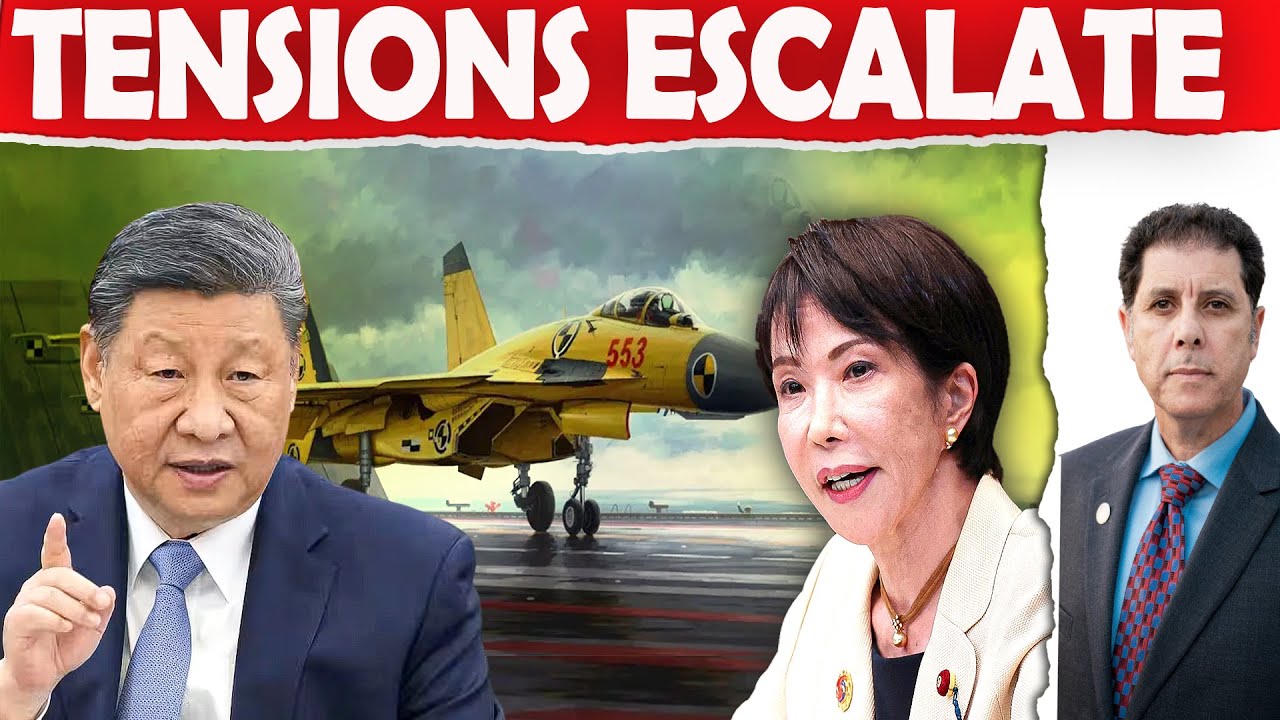
In this YouTube livestream, the host examines the recent escalation between Japan and China following a radar‑lock incident involving a Chinese J‑15 fighter jet and Japanese aircraft. The discussion traces the incident back to provocative statements by Japanese Prime Minister Sanae Takahashi about defending Taiwan, outlines the competing historical claims over the Senkaku/Diaoyu islands, and contrasts the official narratives of both governments. The host evaluates the strategic calculations of Beijing and Tokyo, the role of the United States and regional partners (Australia, South Korea, the Philippines), and the broader economic fallout for Japan, including tourism and trade disruptions. He warns that while a full‑scale war is unlikely, miscalculations could trigger a larger regional conflict, especially if Japan deepens its security alignment with the US and Taiwan. The video ends with a call for viewers to join a follow‑up conversation on the Philippines and a reminder of the channel’s community support.
Chapters
Good to see you. Muhammad Mazhardi, good to see you. I haven't seen you for a while. Willie Holman, as always. Muhammad Nasser, good to see you, sir. RDNO, good to see you. Yes, giant Bahndari is, is an incredible. So Farhad Razavi, good to see you. Alice Talokin, good to see you. See, we see— we know it's working now. The sound is working, I'm assuming. So Oh, Assad, good to see you. Uh, Assad here is my graphic designer. He's joining us here live too. Truth Seeker, good to see you as always. Uh, and, and Famida, good to see you here. So let me get in into our, uh, uh, details of what I'm gonna be talking to you. Before I do this, I have one housekeeping item. Remember to join me tomorrow for my conversation with Professor Anna Malendog. We will be tomorrow at 9 AM Central Standard Time, so I'm gonna put the link for you in the chat box. If you are available to join us tomorrow, that will be great. So, uh, and I have to thank my graphic designer, uh, Asad, for creating this thumbnail. So thank you very much, Asad. For your, your really, really impressive work. So I'm very, very grateful. Uh, I am Valentina, good to see you from Arizona. I haven't seen you for a while, so good to see you. Really happy to see you here. So, all right, remember guys, tomorrow, as I said, if you got a chance to join me at 9:00 AM for my conversation with Professor Anna Malanduk, that would be great. So once again, what I'm going to be talking about today, I'm going to be talking about whether Japan is picking a fight it can win against China, because that's usually what these tensions are all about. Because what happened on Sunday is that the Tokyo, the Foreign Ministry summoned the Chinese ambassador over the fighter jet incident. They called it threat. I call it an incident because it was a reaction to an action. And this is what I'm going to be detailing with you. I have one headline that I'm going to share with you today, and it has to do with Europe. You know, sad to say, but it's reality. There is a magazine in Spain called El País, well known. It has a good global reputation, and it disclosed now in its article how Europe become now a global hub for cocaine trade. Yes, don't be surprised. In a lengthy report published by the Spanish newspaper El País, there was a writer there who wrote the article. His name is Elias Camqui. He asserted that Europe is facing a historical shift in the drug issue, having become a global center for cocaine trade, while current policies appear incapable of confronting this complex challenge because they couldn't deal with it. And now you have sort of the intersection of drugs with organized crimes. You see the problem with this, I think. And yet the Europeans are going and spending their money, sending it to corrupted Ukraine, useless, you know, it's It's beyond me. Anyway, that's what I wanted to just share with you. All right, let's get into our topic here. Tokyo, as I said, summoned, uh, summoned the Chinese ambassador over the fighter jet incident. So, and this happened when— and I have a picture of him right here. This is the, uh, uh, Funkashi Takehiro. He's the Deputy Foreign Minister. So here's the foreign minister, Deputy Foreign Minister of Japan, Foreign Ministry, that is. And why? What happened is that the Chinese, when the Japanese sort of got too close to the boats, the Chinese boats, one of the fighter jets of the Chinese locked its radar on the Japanese planes. So, and of course, as you know, this comes in deteriorating relations between the two countries following the statements of none other than, uh, the, uh, the Japanese Prime Minister, uh, uh, uh, Sanae Takahashi, which by the way, everybody agree, to those who are in the know, everybody agreed that her statements were none other than provocation to the Chinese. And that is why this, this, this tensions that just happened on Sunday between Japan and China comes in deteriorating, deteriorating relations, both politically and economically between the two countries following the statements of the prime minister regarding Taiwan. Now, what Japan said, Japan said that the J-15, which is a Chinese fighter jets right here, very, very sophisticated plane. So what they said is that the fighter jet from the aircraft carrier Liaoning locked its radar twice on the Japanese fighter jets over international waters. Now that's what the Japanese said. The Chinese boats were on the Chinese waters. This is where you have now this issue of, you know, who's saying who, who's saying what, who is saying the truth. So, and that's what prompts me, at least in my perspective, is Japan picking a fight with China that it can win? And I am concerned that if it is the case, it's just a question. We're not saying there is a war, a war is imminent, and I'm going to talk detail to you about it. It's just I am starting to get concerned because it's not going to be a pretty fight. Forget about winners and losers. We all know that China could deliver, and I say could deliver, a crushing defeat to Japan. On the other hand, I am starting to think already, is Japan now thinking about going nuclear? Because they have the capability to develop a nuclear weapon within a span of one year. This is what I'm— this is where my concern moving forward. I look over the horizon. So when you have the radar locks in, is a feature, by the way, just for FYI, when a radar locks in on, on a fighter jet, that's usually— it's a feature that allow a fighter jet to identify a specific target. Place it in its firing range and track it continuously and automatically. And J-15 has that capability beyond what you can even imagine. So, and this is why the Japanese vice foreign minister, the deputy, that is, uh, Minister Tikehiro Funakoshi, that's his name, is this gentleman right here. That's the one he summoned the Chinese ambassador to Tokyo, Mr. Yu Jin Hao, on Sunday and lodged a strong protest. Well, wait a minute, Mr. Debiri, Foreign Minister, why are you provoking the Chinese to begin with? And again, I'm just being fair here, you know, all this would have not have happened hadn't the Prime Minister didn't provoke China to begin with. So, and that is part of where this problem is. So now China returned by saying, now China accuses Japan of obstructing naval exercises in its territory waters, meaning the Chinese water. And of course, because that what the Japanese Prime Minister said few weeks ago, paved the way for the setting we are in right now, and especially the statements about coming to the defense of Taiwan. I'm gonna share a clip with you about the Chinese maneuvers they did around Taiwan to give you an idea how easy, how easy for China take over Taiwan if it wants to militarily. They're not gonna do it, I'm just saying That's how we're gonna think about it. So the Chinese Navy on Sunday, that's when it accused the Japanese Self-Defense Force aircraft of repeatedly approaching its ships, meaning the Chinese ships. This is an image, by the way, it's not the one from Sunday. I just wanted to illustrate it's the same location. This picture was from November 26th of this year. So I just wanted to illustrate, this is the area where the Japanese are saying, oh no, no, no, no, no, the Chinese have crossed over. No, the Chinese are saying we are on our own water. That is why they issue the statement, uh, repeatedly approaching its ships and obstructing. That's what the Japanese aircrafts, uh, uh, uh, were doing or fighter jets, I'm sorry, obstructing drills that the Chinese were conducting in their territorial waters. Because that's, to me, what does it mean? Is that now Japanese wants to assert the widely circulated Japanese account? But at the same time, regarding the islands, you all know the disputes that is ongoing, but you all know that doesn't reflect the reality of what happens on the ground. This is why you have to hear the Japanese version, you have to hear the Chinese version also. So the Chinese stance came in response to the statements made earlier, uh, in the day by the Japanese defense minister, Shinzo Kuzumi. And what did the defense minister say? He confirmed that the Chinese fighter jets had activated their fire control radar towards the Japanese aircraft over international waters. Well, wait a minute, this is where the issue is— what the Japanese version is stating versus what the reality is. International waters near the Okinawa Islands, what the Chinese also have a claim, part of the Senkaku Islands. Orokiyo Island, as it's known. And this happened, by the way, according to the defense minister, Japanese one, he said that it happened in two separate incidents, describing them as extremely serious. Well, hold on a second, once again, if it is extremely serious, why are you getting closer to the Chinese ships to begin with? So, and that's what the Kozumi, the Japanese Defense Minister posted on X platform. And I quote, because I had to follow up the, the, the lead into this to see what has been stated in the Western media or social media platform versus what the reality on the ground. Here is what he said, and I quote on X, the intensity of the radar illumination exceeded what is necessary to ensure flight safety, end of quote. Once again, if you didn't provoke the Chinese, the Chinese would have not done that. If you didn't come too close to the Chinese ship conducting their own drills on their waters, we will not have this incident. And that is why Tokyo has lodged this formal, uh, protest with Beijing over what it described as an unfortunate incident. You creating it. So let's, let's call what's fair, it's fair. And that's what I meant. This is what I, uh, now for my own analysis, the one I'm going to be sharing with you personally, is that I'm going to be asking some key relevant questions pertaining to all this. Why? Because I am looking at this tension escalation from a different perspective altogether. It concerns me. On one hand, on the other hand, on one hand rather, and on the other hand, I am seeing that where this is going to lead to. So it behooves us to just start with the basic and the basic, and I don't assume everybody knows, and we're not being, being sort of, uh, what's the word I'm looking for, biased here. I'm gonna ask you the question, who's provoking who when it comes to the Japan-China tensions? So of course the answer depends on whom you ask. If you ask people in Japan, they're gonna tell you, oh, it's the Chinese. If you ask people in China, they're gonna tell you the Japan. If you ask the West, Western people, they're gonna say, I don't know, but most likely is China that is provoking Japan. No. And this is usually when you have those answers without the knowledge. That's why I am putting this out for us to consider. So But here is what you need to consider. The answer depends somewhat on perspective. But what fundamental— what triggers the crisis to begin with? You go back to November of this year, 2025, when the Japanese Prime Minister, uh, Sanae Takahashi, stated in Parliament— this is, again, you have to go back to the source of the problem— that the Chinese attack on Taiwan could potentially constitute an existential crisis and that will allow Japan to take military action in collective self-defense. Of course, the Chinese consul in Osaka responded with strong language. And I'm not gonna get into the detail again. What I wanna provide you here is two perspectives. One from Japan, one from China, and we'll continue in our analysis here regarding this particular issue. So from Japan's perspective, they were articulating an existing security position, even though it wasn't worded that way. So Takahashi appeared to go several steps further than her predecessors who had only expressed concern about the Chinese threat to Taiwan. And what threat are we talking about anyway? But here is what the predecessor of Takahashi never mentioned, a military response. That is one the difference. And this is from the Japanese perspective. So the Japanese diplomats said Takahashi remarks were in line with Japan's stance when China demanded a retraction, which we all know it's not true. It's because former Japanese prime ministers, none of them ever crossed this line. From China's perspective, Japan has crossed a red line. The PRC foreign minister stated that Japan, and I quote, crossed a red line. End of quote. And even apparently the threat of violence were made. And this is where you have to understand where the Chinese coming from. The Chinese views Japan's willingness to defend Taiwan as an unacceptable interference in what is considered an internal affair or an internal matter. And rightly so. So the escalation, this is where my concern comes in, the escalation has been rapid. Looking at both politically and economically, over 40% of flights from mainland China to Japan scheduled for December have been all canceled. You're looking at Chinese authority now have suspended the screening of Japanese films and banned Japanese seafood. Yeah, more good luck to Japan if he wants to sell their seafood to India. Yeah, more power to you. No, Indians don't eat a lot of fish anyway. Additionally, the Chinese Coast Guard vessels sailed through waters around Senkaku or Diaoyu Island, which is disputed between the two nations. It's a fact, it's a historical known. And that's when you have the Japanese sending the fighter jets in response. Why would you escalate to that level? See, see the difference what I'm getting at? And I'm providing you now the Chinese perspective. We did the Japanese. So as an analyst, what this reflects, in my opinion, it reflects the strategic choices by both sides, by Japan and by China. The timing, the circumstances, in my opinion, highlight one key factor, especially when it comes down to China. And you know what that is? Is that the PRC or Beijing leadership, that is, has made now a conscious decision to press harder and move forward against Japan. Will this go to a war? It's unlikely. And I'm going to detail more. But at the same time, the Chinese leadership is also gauging the reaction of Japan's new government. And this is why you have the warnings that China is sending not only to Japan, but to other states— Philippines, Australia, South Korea, the US— that might consider offering further security to support for Taiwan. And I'm going to share a clip with you as I move forward to highlight this particular point. Now, this is where China accuses Japan of obstructing the naval exercises in its territorial water. Of course, China's going to react to that. It would have been the same if Japan would have conducted their, uh, their drills in on their water and the Chinese come closer to that. Of course, it's common sense. Japanese will react. So what makes it wrong that China reacted this way, and if Japan would have done it, it will be okay? This is again, I'm trying to highlight to you even the double standards that exist with under the lenses of the Western, Western lenses, that is. And this is part of the broader pattern that exists. So What the Chinese claim, that the Japanese aircraft repeatedly approached and disrupted the Chinese Navy as it was conducting previously announced carrier-based flight training east of the Miyako Strait. Meanwhile, you have Japan saying this conduct by Chinese jets which involves directing fire control radar at Japanese aircraft. Well, why are you getting closer? Japan will have to react. It's common sense. Uh, China— I'm sorry, China will have to react. That's exactly what we are witnessing here. And so for the Japanese to say, to say, oh, this is extremely regrettable, Chinese don't see it that way. Because what the Japanese are saying is that this one beyond the— it's beyond what is necessary for this safe flight. Well, if you want to have a safe flight, you shouldn't even get closer to where any— for any country when they conducting military drills, we didn't know or we don't know whether there will be live fires or not. So why would you even want to get closer to that. And the Chinese have announced previously about the conduct of the naval drills. So what the core issue I need you to understand is that this reflects the classic asymmetry in how, for example, each side, the Chinese side, the Japanese side, view these waters. Because remember, the issue has not been resolved yet. Whether Japanese will be willing to resolve it, you know, peacefully, I have my doubt. You know the reason why, because who pressures Japan? And that's a question for you. You know the answer to that. And again, China maintain its stand on these islands. That it belongs to it. It's the same arguments that China made forever regarding Taiwan is part of the mainland. So, and China, if it claims this or when it claims this, that means it can routinely deploy Coast Guard vessels and military aircraft to assert its claim. Every country who has sort of its territorial water will be able to do that. So what makes this case different? And once again, I'm finding myself asking the logical question: why would you send your aircraft closer to another country's conducting naval drills? So Japan Coast Guard has reported— reported— they have reported multiple violations by the Chinese vessels. And urged them to stay clear of Japanese waters. Well, wait a minute, wait a minute. What makes that claim right versus what the Chinese are saying? So the pattern, in my opinion, shows that, you know, of course, China, if it wants to conduct the naval drills and operations on its waters, it's because— simple— this is not a coincidence. Because what China is doing is what it's called effective control. It's its waters, simple as that. Disputed water, we might call it. So, and that is why when you have the Chinese vessel transit through restricted Japanese territorial water west of, it's called Jima Island in the Tsukara straight. Well, if Japan didn't provoke China, China would have not been doing that. But now it's gonna become the norm. And they're China— they're Japan, you know, because let's just face it, I— it's not gonna happen. A hot war between China and Japan ain't gonna happen. But if we are too hyped, just, just hypothetically, China will crush Japan. I don't care what, what they say, it will be a crushing defeat. And if the US gets in involved, it will only broaden, because if the US gets involved, the Russians is going to get involved. If the Russians get involved, the North Koreans going to get involved. And by virtue, you're going to have Philippines becoming a target, South Korea becoming a target, Australia becoming a target. So that is what, what, uh, so when you look at what the Japanese saying versus what the Chinese are doing, to the Chinese, that's just an innocent passage. You all remember Freedom of navigation? That's when the US goes to the South China Sea and gets closer to the Chinese territorial waters and saying, oh, freedom of navigation? What makes this case different? So, and as a matter of fact, China will be within its rights to claim this under international law. The UN, uh, uh, uh, uh, uh, sea of the law. And those, by the way, China haven't done this, this before, but because of Japanese provocation, that is why, you know, because now what the Japanese are saying is, oh, we view these transits by the Chinese as a provocation. Deliberate provocation. That's what the Japanese saying. Well, wait a minute, how do you think the Chinese feel when the Japanese made the— when the Japanese provoked China with the statements regarding to get involved in a war in Taiwan? So, so in this case, what you're looking at, you're gonna be asking the, the logical questions. Some will say, well, both countries have legitimate grievances from their perspectives. Of course, nobody's denying this, you know, because here is the harsh reality. Japan sees China encroaching on its sovereignty through aggressive military exercises and unauthorized entries into its waters. This is what the Japanese claiming. Well, how do you think the Chinese feel or the Chinese think? The Chinese sees Japan as obstructing its own— obstructing the Chinese operations and siding with Taiwan against Chinese interests. So the current escalation that exists right now, it's reflecting Really, how contentious. Even, even as simple as a military or a routine military activity could become or raise tensions. And that's exactly what just happened on Sunday. This leads me to the second question: Is China right in its claim? So And this is, of course, becomes a fundamental— the reason I want to bring this up, and to those who say, "Oh, no, no, no, no, no, you can't be defending China for—" No, this is not about defending China or not defending China. This is about providing the logical arguments. It's because the moment you think in this case, and that's the reason why I brought it up, is because this is fundamentally a question of sovereignty. About international law. So yes, the two countries have— Japan and China in this case— have conflicting claims. It's no different than what, you know, you look at what India is doing in the southern part of Tibet, took it away from China, you know. Why is nothing being said about that? Okay, or you think about Kashmir. Between India and Pakistan. So, so what makes this different? And this is where you have to understand the Chinese position and the Japanese position, and I'm going to provide you both assessments and you reach your own conclusion. From a Chinese position, China argues that these islands, the Diaoyu or Senkaku— it's easier for me to pronounce Senkaku, my apologies because I don't speak Chinese— Senkaku Island belonged to it historically, and not only historically, legally also. So from China's perspective, Japan is the occupying power, and China conducting exercises, there is asserting its rightful sovereignty. China has also stated and, and provided evidence and sites, historical documents and maps that support his claim. I'm gonna tell you something. I had a chance to look. I wish I would have kept the picture. I saw an old map where he chose this Senkaku Island part of way back. I don't even remember which dynasty. That's how far back This old map that I saw, I wish I would have kept an image of it. And this is again what the Chinese are saying. The Japanese possession, they are stating that, oh, we have administered this island since the 1890s and formally, formally incorporated them in 1895. You'll remember when Carl Zah, when I had him here and I asked him personally to please provide us a snap, historical snapshot about the islands, and he provided a framework as to how the islands have always belonged to China back then. So for those who have not seen this video, just go back and check it out and you will have a better understanding. So what Japan is arguing when it has effective control But the international recognition of it, it's not there. So how can you have full control of something that is not internationally recognized or historically legally belongs to you? And what the Japanese are saying is that, oh, by the way, the Chinese only began making competing claims in the 1970s. I don't think so. And why? The justification is that oil and gas reserves were discovered nearby. So basically what Japan is seeing in China's exercises as an invasion of its sovereignty and territorial boundaries or integrity, whatever you want to used. So, and again, I wanted to provide you both sides of the argument. Then comes the international law angle, and the core issue that, of course, there has no been any international adjudication as of yet. That has the— it's no different than the borders between— in Ladakh, okay? It's no different than what happened between China and, and, and India. It's not— it's no different than what happens in the, uh, The, uh, what's the— in the Philippines, there is one area that has been claimed also between the Philippines and China, or even in the, in the line of Kashmir between Pakistan and India. And that's what I'm saying. Yeah, we want to hear both perspectives, but also we want to keep into, into perspective how it is perceived from an international law. So, so the United Nations Convention on the Law of the Sea does not resolve this issue. So what makes Japan all of a sudden saying, oh, the Chinese are crossing into our own territory when all Chinese is doing is abiding by this so-called the law of the sea? The US does it to the Chinese on— have done it on many occasions. Claiming the law of the sea, oh, freedom of navigation. And when the Chinese and the Russians did it in Alaska, we freaked out. So, so now the arguments from an international law angle is that this issue only governs the maritime zones around the territories. So basically, if we are to say Well, if only Japan claiming this, so is China has the right to claim that too. Because if you are to go with this argument, international law doesn't provide a clear mechanism to override the so-called the status quo. And the status quo of what? The status quo of this so-called Japanese administration of the islands, because there is no such thing. And if we are to even go with this, You know, this is going to trigger the question of Okinawa. Go back again in history and find out way back the Chinese presence in those islands. Okinawa. Yeah. So the practical reality, so, is that the so-called de facto control, because that's where we are at right now. And that in itself, because what China was doing, conducting drills on the claimed part of its waters. So what makes Japan have the right to come close to those naval ships and disrupt the training or the drills or whatever? And there is where The way you see it moving forward, if this is not resolved, it's going to become some sort of whether both parties in this case will be less willing to tolerate the ambiguous status quo. But I think China does not want that, will not allow that. That's the same arguments made about Taiwan, because China wants to remove this ambiguity regarding that Taiwan is part of China. They're letting them conduct their own affairs, whatever, but if ever Taiwan declares independence, China will move in. Made it clear. And that's again where this difference is. So, so what I'm gonna do, I'm gonna play a clip for you, uh, and, and because it was from not the West, of course, it was from in Arabic language, and I'm going to translate it for you So this way you'll have a better understanding. And the reason I wanted to do this is I wanted to share the, uh, I wanted to share the message with you that these drills are sending. So, and I'm going to just try to make it quick here. So let me share the screen. Bear with me here. All right. And I'll stop it as we move forward so I can translate for you. All right, let's see here. Let me make this bigger so you can see. It's not a real war. It's not a real war as of now. That is a certain one. The fight between the titans in the South China Sea. The Chinese just conducted, completed their naval drills. And this to circle, encircle the islands of Taiwan. As far as this will also send the message between Washington and Beijing, Washington, and that exchange of messages is continuing and there is no limit to it. The naval drills were conducted were completed successfully. And this one had the name of the Common Sword. That's the name of the drills that the Chinese— and the, the, uh, the Defense Ministry of China, the leadership, declared that the trainees include integrated combat capabilities, were tested in actual combat conditions in different branches of the military. In other words, and, and I'm just paraphrasing in this part here, basically what they're saying is that they conducted on different platforms like a triad, for example. With anger, anxiety, and lack of sort of just concerns. Taipei had followed these drills. The neighboring countries have followed this drill. and the allies also. The Chinese display of military capabilities was clear, and its objective was to send a warning message— another one— to those who are supporting, to those who are allying with Taiwan. Taiwan, or those who are advocating for the separation of Taiwan from the mainland. And this is exactly what the Chinese meant by the drills, is to provide an idea of the scenario how it can encircle Taiwan quickly. And, and the drills also, that message is not only how Chinese can encircle the island of Taiwan, but they can control it. These exercises included destroyers, frigates, Qadhafat Sawarih, those are rocket missiles, I believe. And of course targeting ground and sea targets near the western— the western part of Taiwan with precision, meaning the weapons that were used were precise type. This also, this drills included Oh, sorry, I'm gonna go back up just a second here because I missed that first one that you need to hear. Yeah, this is when it says to target the western part of Taiwan with precision, precise. The drills also included the early warning planes. Fighter jets or only radar systems or whatever that is. That's what the one of the type. There's also the recon planes were also used. There are also fighter jets in addition to teshwish, which means the, uh, the jamming, jamming systems. The Chinese deployed those planes as well. Okay, that's about it right there. Uh, and, and the reason I wanted to just highlight this to you, to provide you the idea that what the Chinese message is, but also China exposed its naval capabilities. And not only naval, you have the triad. This is why this type of drills, and makes me just wonder, why will Japan go ahead and try to disrupt these drills, even though they were announced. The Chinese announced this before, unless they just didn't want the world to see what the Chinese capabilities are. That is why I wanted to do this particular clip for you. As I mentioned, I did the idea of the Chinese clip, uh, the Chinese, uh, possession, the Japanese possession, and the practical reality of all this. So And this is why now you have to see, rather than having one side, one side or the other claiming the right, you're going to be looking at these tensions that each one of them will justify the arguments. You know, my big concern as, as an observer from outside in is whether this escalation in tensions is going to go beyond the threshold. And when you start having, you know, this kind of activities, it's a concern to me. That's to me basically how I see it. Liking this video so far? Don't just be a watcher. Go ahead and hit the like, share, and subscribe button. And don't forget to tap the bell so you will not miss any of my videos or livestreams. Streams. This way, you will be supporting a channel that stands for the truth and objective reporting. The choice is yours. Thanks for your support. Now, I shared with you the, the, the Chinese perspective. I'm going to share with you now the Japanese. What about the Japanese? Japan's actions and claims also sort of deserve some sort of an examination. And again, you know me, I'm being fair because that's what objective analysis is all about, provide both sides of the argument. So here's what the Japanese are saying vis-à-vis the islands, because that's also what's the source on Sunday of what triggers this particular escalation beside the statements that was made in November by the sort of, she's a novice. She's not, she's not, well-versed in international affairs for her to say what she said. So anyway, suffice it to say, Japan argues that it has clear legal claim. This is again the keyword. You have to understand the terminologies that is coming out of the Foreign Ministry of Japan. So it's saying legal claim based on effective administration and control. That dates back over a century. What is wrong with this sentence in your opinion? Because if they are saying only based on a legal and effective administration, where is the historical traces to this? You know, this is where you see that difference between when you look at, for example, the Senkaku Island back then, we're talking about 2 or 3 centuries under the Chinese versus what it is today. What the Japanese are saying. The same arguments I can always make about Okinawa. So if Japan is saying, oh, this is based on clear legal and effective administration, that ain't enough to give you sort of the authority to take control over whatever. And the control over a century, since when? So the Japanese once again arguing, oh, we have incorporated the islands in 18— 95 and administered them continuously. But have been they recognized internationally? No, because same can be said about Okinawa. Okinawa was never given to Japan. And this is again, from this view, the Japanese thing that Chinese claim are relatively recent. Which is not the case. And this is again, you move into the Japanese assertiveness. Japan has also taken more active steps recently. And that's again, and I'm not gonna beat the dead horse here. What I mean by this active steps is the Japanese Prime Minister statements that was differ from her predecessors. And we're not gonna talk much about this one. So, as an analyst, and I'm going to be thinking and saying to myself, I heard this argument, I heard this argument from this country and from this country, but I also checked the historical facts from both sides. And I found on one side, the Japan case, there is no historical ties to that. And that's going to lead me to my own fair assessment. And I'll be thinking, well, in this case, given what Japan just stated about the legality of it, Japan isn't simply a passive victim here. So it's actively strengthening its military posturing, making bolder security statements. And that's the concern, of course, of aligning with other countries in ways that is now concerning to Beijing. And at the same time, China will have to react to all this. And that is why I'm saying, like I said at the beginning, is Japan picking a fight against China that it knows it can't win? So, and this is where you're gonna, once again, as someone looking from outside in, I'm gonna be saying, or questioning, are both countries now provoking and escalating against each other? Some will say yes, others will say no. Some will say, yeah, one is provoking, the other is reacting. There is also a reaction to an action because what you are witnessing right now is that both countries, Japan and China, are locked in a dynamic where each— here is the big concern for me— each side's defensive measures will most likely look like provocation to the other. But again, I still cannot fathom the idea that Japan will allow its planes, its vessels, or whatever to come so close to where the naval drills, the Chinese naval drills were conducting. Why would you do that when you know it is a provocation? So because what Japan is saying, oh, we are just reacting, we are just responding to China's assertiveness. Well, assertiveness about what? It's no secret that China has claimed, has made the statements, and even the US signed the three communiqué regarding Taiwan as being part of China. But it's the two, it's one China, two party systems, or two systems and one China. So where do we see Japan's arguments regarding Chinese assertiveness? The same applied to Senkaku Islands. Yeah, because if Japan will say this, China will have the legitimate and the legal basis by which to say, well, you're a minute— wait a minute, Japan, you are blocking our rightful exercises to do on our own waters. And by the way, you You are interfering in our internal affair regarding Taiwan. So, and this is where you see both things are happening simultaneously. And that leads me to the next key question. And the key question is, what are the geopolitical and security implications of this escalation? Because this escalation is significant and it will have a significant ripple effect across not just the region but globally. So because when you look at this, you look on— have to look at it from multiple dimensions. So I remember when I was doing my master's degree, and, uh, I was doing it in international security, and we had to study at that time, uh, Asia security issues. And I remember I wrote a paper back then. I don't have it anymore, of course. That was way back when I did the master's degree. And we talked, and I talked about this specific issue of that any escalation in that part of the world will have implications across multiple dimensions. And back then, I only focused on the South China Sea, but I also touched on Japan, South Korea, Australia to a degree. So, and this is where you're gonna now consider Taiwan as the central flashpoint, because that's exactly what paved the way for Japan to provoke China through that point. Same thing we are doing to the Chinese. Anytime we want to press China's button, we press on Taiwan. So the military tension poses significant risk now to that regional stability in that part of the world, but also it will affect Taiwan one way or another. Because here's the thing, the potential of a minor, minor incident could trigger some sort of a larger conflict. And the way China is assessing this particular adjustment in temperature is by seeing, for example, Japan's deployment of medium-range surface-to-air missiles in Yanaguni. Do you think China is gonna just forget that? Which is an island only about 110 kilometers from Taiwan. Once again, just think about it. Put yourself in Beijing's shoes and think when you are seeing those missiles moving. Only 110 kilometers from Taiwan. And that's, to the Chinese, marks a strategic shift with the implementation far beyond the immediate defense regime or posturing that Japan is taking. Once again, I found myself going back to that question: is Japan picking a fight against China that it knows it can't win? Because to China, What this suggests is that it just, it's that Japan is aligning with the US and Taiwan's interest on its doorsteps, meaning on China's doorsteps. And if this is not enough, you're going to have to think about the regional alliance formation. Australia comes to mind. As a matter of fact, the Australian Defense Minister You know, very concerning. It's not a laughable matter. It's sad to see what has become of Australia. And the Aussies have no say into all this. It's like exactly what's going on in Britain right now. You know, in Britain now, they would arrest you if you talk logic, if you criticize the British government for its ill-conceived policies. So the Australian Defense Minister stated that Oh, Australia is deeply concerned, in quote, by China's action, not by Japan, by China's action. And here is what the Defense Minister of Australia, which is mind-boggling, he pledged to work with Japan in upholding rule-based order. You know the language, the same thing, freedom of navigation, No, this is about Australia. And like I told you, I worked in Washington. I was aware at that time when certain decisions were made in Washington, not in Canberra, when it comes to Australia. The same argument I still make today regarding Tokyo, regarding Seoul, South Korea and Japan. Certain decisions are made in Washington. So, you know. And basically the way China interpret this, you know, if we are to really analyze this deeply, you're going to come to one particular conclusion. And that conclusion is, is that China now think in terms of Japan following a US containment strategy. So, and that is where you think in terms of of how China is going to see it. Because you think about the Quad, you think about the defense pact with Australia, you think about the Philippines. Of course, Indonesia, Malaysia, and others, so far they are aiming for neutrality. And this is where you have to think of the big picture. And the big picture is, especially from Washington via Tokyo is to create regional division. And this leads us to move into the economic consequences, because you can't ignore that one. The economic damage is already substantial for Japan. You know, like I said, think of it, Chinese tourists make up about of all visitors to Japan. So what you have now, Japanese, uh, travel agencies lost about 80% of their remaining booking for 2025. 80%. And I'm going to provide you a link where I get this from. And you know where I found this? I found it in Strategic and International Studies Whoever thought that they will address something like this? So I put the link for you if you ever want to read it later on. And that is why— and I'm not going to get into China suspended the seafood import and so forth. What I need to tell you is that what you're looking at now between China and Japan remain among each other's largest economic partner with roughly $125 billion of Japanese goods sent to China annually. You can assume what's going to be happening by the end of this year. China will stop that. $125 billion is no small change. But the key that I wanted to focus on is the broader geopolitical calculations. So the timing and the circumstances, in my opinion, suggest that the PRC or Beijing, for that matter, the leadership has made— like I mentioned at the beginning, I am convinced that the leadership in Beijing has made a conscious decision now to press on press forward against Japan. So this is not about Chinese testing the waters of Japan. China will care less for testing waters because it has the capabilities. Like I said, if Japan is picking a fight against China, then Japan will most likely defeat, experience a sort of a suffer a crushing defeat. I hope it never gets to that. I truly hope it never gets to that, because after all, if that will ever happen, Japanese— Chinese will have another reason to press on with that. The atrocities that the Japanese committed against the Chinese, you know, Chinese will never forget that. This will be like their historical opportunity. I know China doesn't think in these terms. But at the same time, if they keep being pushed, they're going to push back and they're going to push back hard. So, and all this happening at the same time, Japan is suffering economic problems. Yes, they are increasing the defense budget by 2% for 2026. That ain't going to cut it. That ain't going to cut it. And this, in my opinion, So this idea of this, uh, the geopolitical calculations, it's gonna be sort of very, very problematic. I had a chance to read a white paper regarding, uh, uh, uh, from Japan about their defense. You know what's in it? I'm gonna only tell you one sentence, is that The white paper, the defense white paper 2025, Japan's white paper explicitly names China as its greatest strategic challenge, in quote. The same terminology the United States used in its defense strategy. The same statements NATO did in its released analysis. I had the chance to read the three. So that is one of the reasons why Japan is increasing its defense budget by 2% in 2026. Now you see, now you understand. So the risk of escalation is spiraling. So if Japan links the Taiwan question to its national security, and uses it as a pretext to intervene in the Taiwan Strait affairs, it will only intensify the tensions that could extend conflicts into East China Sea, South China Sea, and the broader Asia-Pacific. And that potentially, like I said at the beginning, drawing in the region into military conflict. Confrontation that will include the North Koreans, the Russians, maybe the Iranians, uh, Australia, South Korea, and Philippines. For Philippines, South Korea, Japan, of course, and Australia will become automatically targets. Oh, tell me about it! North Korea will be excited about that because that's an opport— historical opportunity. Wipe them out once for all. They'll target all in South Korea. So this is where I see the core danger, is that even— and I'm not saying one country or another, because the way I look at it is that each side, China and Japan, each side sees the other's defensive measures as a provo— as provocative. So That's how they are seen. This leads me again to another question, key question. We're already at the top of the hour, but doesn't matter because I still have some key information that I need you to understand. Is there an imminent war between China and Japan? We ought to ask the question. We can't shy away from this. Imminent war, a hot war, direct military confrontation between Japan and, and China, in my opinion, does not appear imminent. I don't see that yet. I cannot ignore how volatile this situation is, and because this volatility also has elements of significant risks in it. So if we are to do the current assessment about this particular potential hot war between China and Japan, which is not going to happen. Fingers crossed, hope it doesn't. So here is the thing, if you look at the global assessments, you know, which by the way, the Japanese defense analysis for 2025 did mention that. So funny how the interjected the international community. And here is what it says, and I'm paraphrasing because I recall top of my head, is that the international community is facing its greatest risk conflict since World War II, with China as the greatest strategic challenge. This is once again why I'm— the current assessment versus the reality. Of course, that's what Japan is saying. But if you have to understand is that Japan is part of the US containment policy regarding China, which I argued even during my days in Washington. I remember in office, and I will make a point, containing China will not work for a simple reason: China is not the Soviet Union. Economic conditions of China are not comparable, will never be comparable to those of the Soviet Union. And as a result, containing China will not work as it did with the Soviet Union. But this doesn't prevent us from considering the danger which lies down the road in an escalation dynamics. You can't ignore that. Because what you're looking at, both sides now are engaging in some sort of, I don't know, should we use the term hostile rhetoric? It will be sort of make sense to use the term. You're looking at a military posturing also, but also all those can go spiral because China has warned Japan. That if Japan militarily intervenes in Taiwan Strait, both its people, meaning China, and the nation itself will face catastrophic consequences, meaning Japanese, I'm sorry, the Japanese people and the country Japan. And I'm gonna quote it here word for word, both its people and the nation itself will face catastrophic consequences and the fall. This is what the Chinese are saying. To the Japanese. That's why there is a risk that if Japan enters the battlefield, you know, it will suffer a crushing defeat. And those, by the way, aren't just some casual warnings. Those are specific, deliberate escalation messages. And remember, no matter what has been said, Taiwan remains the flashpoint. The real danger about China is not about Japan. Japan ain't gonna attack China. That will be suicide. It's the scenario, the scenario where the conflict over Taiwan could involve Japan. That is also one of the consideration in Beijing. Japan is also increasingly nervous about China. At the same time, if you are to think about who is a sort of revisionist power, will it be China or Japan? The answer is clear, because the, to the Japanese, they view Chinese threat Taiwan as a risk to its own national security. How? That's what I don't get. And China has made it clear. So the idea, the idea that you have now the Chinese making it clear to Japan. You've crossed the red line. Hope you can retract, otherwise we will be ready for you in either way, because Japan will suffer devastating defeat at the hand of the Chinese military. What I know. And the timing, of course, of all this— and I'm going to conclude with this— the timing of all this matters in geopolitics. The timing is always a key. Never ever, when you do an analysis geopolitically speaking, never ignore the timing. So no previous World War II Japanese government, even that the militarists Abe, Shinzo Abe, remember? None ever has publicly, even Abe, has publicly indicated that Tokyo would go to war with Beijing over Taiwan. And this in itself represents a significant shift in rhetoric that signals, in my opinion, a changing strategic thinking in Tokyo. So the most likely near-term, danger isn't a war, but rather a miscalculation, because a military incident spiraling beyond what either side, meaning Japan or China, particularly intended for, will involve disputed the islands, it's gonna expand it to a much larger operations. And I don't know I don't know if the region is ready for that. That is why I get concerned about this. That's all I have to share with you. I hope you find it very interesting. I'm gonna see if there is any question from you. I'll be happy to answer it, but at the same time, I am going to do an exclusive, uh, live stream Q&A for the members. So I'm, I'm working on that. Uh, let me say thank you to, first of all, uh, uh, Pea9596. Thanks for becoming a YouTube member and welcome to our community. Look forward to having you contributing to the conversation here. Uh, ABCM Mick, thank you so much for your super sticker. China is protecting Taiwan, which is China. Makes perfect sense to me. Much appreciate your support, uh, to the channel here. So, and of course, Kevin Baptist, another avid supporter for the channel. I can't thank you enough, uh, Kevin, for your continued support. It means a lot. Doc, capitalism always requires collaboration via coercion from countries. US empirical West is breaking away from the Western grip as a matter of will. Or is my question naive? No, it's not naive, Kevin. There are certainly different dynamics taking place in the West as we speak. Look no further than Europe right now. Look no further than the conditions inside England, which is getting very, very bad. That's to me a hint for what lies ahead with the collective West. To China, especially vis-à-vis this issue with Japan, Japan is being used to push this narrative that the West wants, because this narrative is what keeps the lifeline for the West. That's the only reason why. So no, no, that is not naive. Your question is, is, is, is very deep. It requires more than 5 minutes to answer, but you are spot on. So, so I thank you so much, Kevin, for your continued support. Truly appreciate you. To all of you, if you want to support the channel, here is the link. If you ever want to buy me coffee as a way for you to support the channel, I will be greatly, greatly appreciative to you for doing so. So let me put it in the chat box for you. And once again, remember to join me tomorrow for my conversation with Professor Anna Malandar. We'll be talking— pardon me, we'll be talking about the Philippines, not only about ASEAN. I will be talking about really what Marcos stated during ASEAN and how he attacked China in his speech. Why will he even bring China issue to the Forum of Asia. Makes you just wonder. So I look forward to that conversation and also hope my fellow viewers from the Philippines will join us for that. And of course, you join us too tomorrow. Uh, anyway, I hope you enjoyed this, and I look forward to seeing you next time. As always, remember, geopolitics impacts your daily life in more ways than one. Till next time, bye-bye.
More from David


Beyond the Single Actor: Why the Gulf Isn't Choosing Between the US and China


Iran, Iraq's Militias, and the Houthis Are Coordinating! This Changes Everything




Who Controls the Next Decade's Resources? Latin America and Africa's Geopolitical Crossroads

The Chokepoint Trap: How Washington's Stupidity Triggered a Cascade That Now Controls the World

Trump Spooked as IRGC Unveiled dual-use SLV, Deployed Ghadir Mini-Subs & Hinted at Tactical Nukes!
