Is the Philippines Being Used as a Pawn Against China?
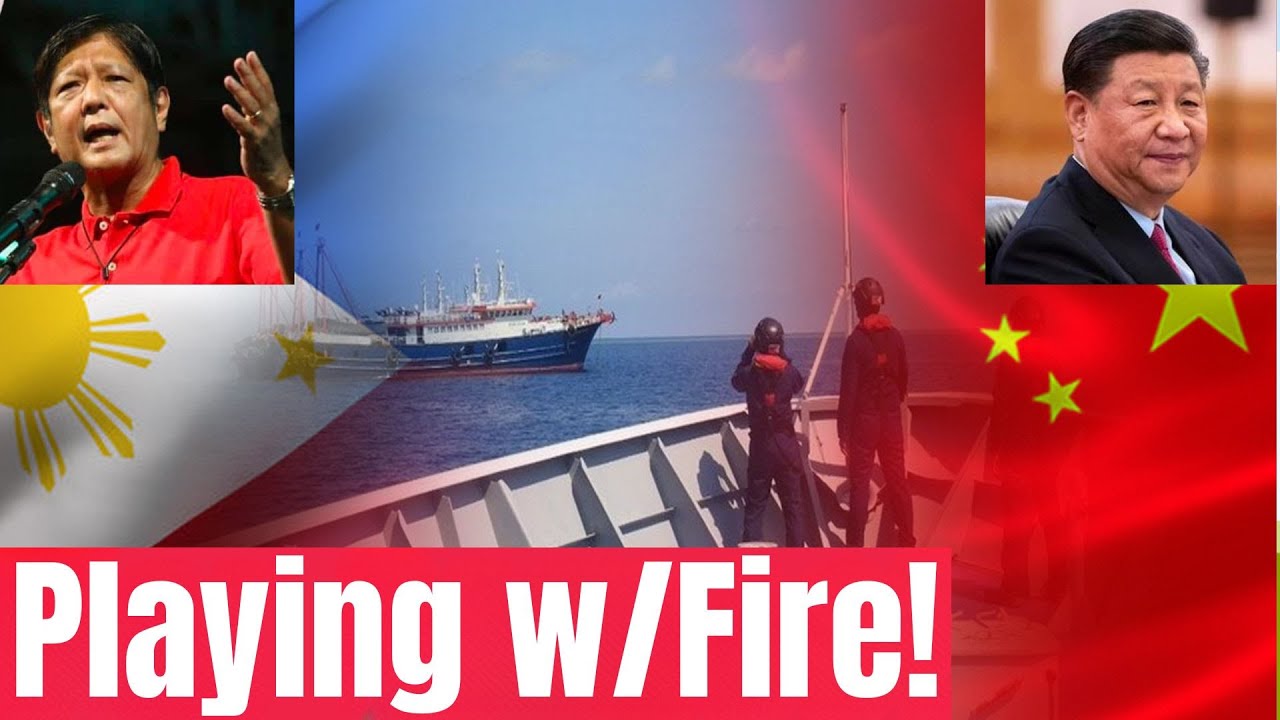
A geopolitical analyst examines whether the Philippines is being manipulated in U.S.-China tensions, focusing on Scarborough Shoal disputes, South China Sea claims, and American military bases. The discussion covers the 2016 arbitration ruling, Manila's timing with Taiwan elections, and what's at stake economically for the Philippines and the wider Asia-Pacific region.
Chapters
And welcome to Geopolitical Trends. So excited to be with you on this December 29th. We got 2 more days for the end of the year. Very, very, very exciting. Uh, we're hoping, of course, uh, 24— 2024 will be better. Uh, we're gonna talk about this later on as I move forward into the conversation. So good to see you all. Uh, Full Tilt Boogie heading off to work, but look forward to watching when I come home. Thank you, Dr. O. You're most welcome. I understand it's the end of the year, some of you might be busy, some— it's perfectly okay. Hong Wan will be watching the replay, no worries at all, guys. Whoever can make it here— Alan Ray, uh, from Montreal, good to see you. Uh, somebody says, oh, I can't wait for 1 hour long, I'm gonna unsubscribe. Good for you. We don't want individuals like you in our community. More power to you, man. So, uh, puni, good to see you as always from Canada. So anyway, very, very excited to be with you guys today because I got an interesting topic that I talked about few months ago. And of course, I always keep up with those kind of topics because as a geopolitical analyst, I always have to watch where things are headed given the policies emanating from whatever a country that deals with the issue. Well, in this case, it's the Philippines. And the question, or the, uh, the reason why I wanted to address this is because I wanted to highlight to you how all of a sudden Philippines is taking, uh, about-turn, or making about-turn rather, when it comes down to its policies. This is what I wanted to talk to you about. Put it for you within the context of Asia security policy. So this is what I'm going to do. Uh, hey, good to see you, man. Good to see you, and happy New Year to you too, as well. So, all right guys, let me, uh, and again, we do like we always do. I'm going to keep my thanks to all the channel members, supporters, subscribers, uh, everything else towards the end. So I'm going to get in into the, uh, topic, uh, about this one here. But before I'll do that, I'm gonna do for you the headline— headlines, what's going on around the world. So this is one thing we're gonna, uh, be talking about briefly here. So let me share some pictures with you so this way it'll make, uh, put it in a context for you here. Uh, you all know who this individual is. Can you guys type in, in the chat box? Yeah, you should know who is, right? Yeah, just, uh, that is correct, that is correct, uh, uh, Taiwan Steel. And Taiwan Steel, by the way, if you permit me to say something, so sorry to hear about the passing of your mother. So I just, I read your, your comment last time and I wanted just to acknowledge this one. So sorry to hear that. Them. But you guys, absolutely, you are absolutely correct here. So, uh, Lee Kuan Yew, the statesman who transformed Singapore— I mean, let's just be, you know, there are those who disagree with his policies, you know, that, that's just the norm when it comes down to— but you're gonna have to highlight both sides of the, uh, of the argument. So, so he transformed Singapore from a small port city into a wealthy global Huh, it's a fact, you know. So he just passed away yesterday, I believe, or, or the early, uh, early morning yesterday, local times in Singapore. He died in a hospital at the age of 91. So the city-state's prime minister, he was for 31 years, and he was widely respected as the architect of Singapore prosperity, but he was also criticized for his iron grip on power. That, that's just the reality of it. You make your own conclusion how you want to assess or judge him, whatever way you want to go about. For me personally, I was aware of the type of power he exercised, but I also was aware of how he transferred— he transformed Singapore to be where it is today. So just to be fair in my sentiments, and this is my personal opinion. Second one has to do with the French. This is De La Conne. This is the French destroyer. Why is this important, you may ask? Well, what just happened, guys, is that the, the, the well-known French magazine Le Figaro sort of questions now Washington's true intentions in the Red Sea. I read the article in French language. I'm going to share just paragraph with you untranslated, and of course you reach your own conclusion. Well, here is what it says in its original language: Paris is a skeptic, uh, objective de l'opération menée par Washington en mer Rouge, a indiqué Le Figaro, citant les craintes de la marine américaine qui a jusqu'à présent adopté une position défensive, puisse adopter une stratégie de représailles Fas os attaques des Houthis. Basically, what it translates to: Paris is skeptical of the purposes of the Washington-led operation in the Red Sea, Le Figaro said, citing fears that the US Navy, which has so far adopted a defensive stance, could shift to a retaliatory strategy under Houthi attacks. I don't see that happening. The US is— the intention wasn't about fighting the Houthis, none. And this is why the article is saying that sort of now you have allies, allies, US allies are expressing doubt. This is according to the article, expressing doubts about Washington intentions for reasons of domestic politics. The countries like Italy, France itself, Spain, and others, but there are only other three. Canada is useless because Canada just have to follow the orders from its masters. UK is the same arguments, UK has to follow the orders from its masters. So, and this is why it's very important to understand this dynamics as to— well, pardon me, as to what is taking place and what was the reason behind the whole. I'm gonna share this, not a secret, but I share with you what was the reason for all that. Do you guys know this whole fiasco about the coalition ain't about attacking Houthis or this? It was about insurance. Yes, monetary gain for insurance companies, mainly the ones in the US that insuring the ship or ships that carrying goods and commodities and so forth. That is what's at the heart of it, because now you have like Germany had to reroute 25 ships. Just make the calculations about the insurance cost for all that. That is what's at the heart of it. Uh, the last thing I want to share with you as far as headline is this one here. I am working on this story, by the way. It just came to my attention yesterday. I will do a video for you at the beginning of the year because this one requires some very, uh, confirmation. But it's not something I am surprised about because I wrote about it in my Russia book. So what are you looking at here, guys? You're looking at a potential new geographical areas in the Arctic. So basically, the United States is working, okay, on a plan, uh, a part of confronting Russia in the Arctic, and is declaring that now certain areas in the Arctic are part of the US. So Washington has announced plan to claim significant portions of the seabed in the Bering Sea and the— I'm sorry, in the Bering and the Beaufort Seas as its own. Very, very, uh, don't be surprised, guys, what I wrote in the book, in my Russia book, that I said, Mike, my word, in few years— I remember I wrote this about 3, 4 years ago— I said, Mike, my word, that the Arctic is going to turn into a geopolitical, uh, ring where the US and Russia might collide. And here is the other thing that has to do with the US moving its troops to Finland. Yeah, so this is why I'm gonna do a video for you, and I'm gonna do a live, uh, stream for you down the road on this particular topic. So, all right, uh, let's move on to today's topic, as I said, Philippines. So I'm going to start with the questions as we always do, and I post them for you here. And here's the questions to take a look at, or, or to consider, or rather, why the sudden rise of tensions? I mean, literally everything was fine. I mean, of course there's always tensions there, but why all of a sudden this one particularly? Okay, what's truly behind all this? And the timing of it, of course, the death of Lee Kuan Yew, and also the Taiwan upcoming elections. I usually don't use the term presidential because Taiwan is not a sovereign state, let's just say it. So I don't— I know Western audience only associate Taiwan with the presidency per se, but It's not a president of Taiwan. I'll call him or her as a governor, no more, no less. And that's my position has always been, because I don't recognize Taiwan as a sovereign state because it is part of China's, uh, it's, it's, we all know, I mean, even for us, the Americans, we have signed the three declarations or three communiqués rather, '72, '74, and I believe '82. 2 or '84, don't quote me on the last one here, uh, recognizing One China policy. So, and the, the last question into all this, how this will impact the security landscape of Asia or Asia Pacific? Those are legitimate questions to ask because it's very, very concerning to me that all of a sudden tensions flare up. Well, just for those who might not know the background of the story, yes, it happened a few days ago To be exact, is about a week and a half or so, but that's beside the point. The timing, it's important, I'm not denying this, but you're going to have to understand the long-term impact of such decision or policy or whatever maneuver, politically speaking. So, so here is what happened. The foreign minister, uh, foreign affairs secretary rather, of Philippines, Enrique Manalo of the Philippines, said in a statement, and I quote, We had a frank and candid exchange with the Chinese Foreign Minister Wang Yi, and that the two of us have a clearer understanding— that's the key word— a clearer understanding of our respective positions on a number of issues, end of quote. So even the, uh, foreign, uh, The, the Philippines Foreign Affairs Secretary Juan Azfara saying, adding that China and the Philippines— listen carefully, guys— China and the Philippines each noted the need to use dialogue to address issues between the two countries and tensions in the South China Sea. That's what he said. So Juan, he on his part said in the call with Manalo, when he made a phone call, that China and Philippines and I put this in quotes, are facing serious issues. Why do you think he said that specific, uh, term? It is because there are foreign entities fomenting more provocations using, in this case, Philippines, like we said elsewhere with India, like we said elsewhere with Australia, like we might be seeing elsewhere with New Zealand, and of course South Korea and Japan. This is why it's very, very interesting. As an analyst, you're gonna have to always pay attention to the— how the wording is very measured. Those are not some hypothetical statements in the, in, in, in the, uh, in the void. No, no, no, no, those are very measured. But at the same time, Mr. Wani also warned that the Philippines must act with cautious Now you see why I put on the thumbnail playing with fire. And like I always say, guys, to you, I always have my reasons for why I word certain things certain ways. And this for you to also think outside the box. Um, so, so the relationship, if you look at the Philippines and China, which to me was mind-boggling, mind-boggling when Marcos Jr. took over power. And I already made a video on this way back, and I highlight this I don't want to be repeating myself, but I'm going to focus exactly on these tensions. But nonetheless, we're going to have to mention, uh, let me just see if I could, uh, one image of— yeah, right there. We're gonna have to mention, uh, the idea of why Marcos Jr., uh, is, is— Bongbong is following this very, very risky policies on whose behalf and why. You know, there are those who say, well, the US is pressuring him to a degree, but also has to do also with his family assets in the US. There are two sides to the arguments here. And this is why Mr. Wang Yi's statements— and I had a chance to read it, by the way. I always like to read press releases either from foreign ministries or whatever, and not just for China. I read it for every country that I address or talk about. I always look at the press releases because they're very, very interesting, a wording of it. Well, what he said, and I put this in quotes, is that the two countries are, in quotes, at a crossroads. Very, very measured, but also is a telltale sign for what lies ahead. Now you understand why China had to go and sort of, uh, initiate diplomatic ties with Bhutan to secure— to, to secure that. China also is doing it strategically, don't get me wrong here. China's thinking long term. It's because in preparation for what might lie ahead, that is what it's doing. So Philippines is next door there, it will be very, very problematic if things are not resolved. Remember, when I talk about briefly about the geography of this, not in detail like I did last time, because I did one on this already. If you didn't get a chance, just watch the old video that I posted back then. So, because China has to think now in terms of, you know, the next— you know, this to me, it's a hint for what lies ahead. That's the bottom line to it. And I'm going to get into the, uh, uh analysis of it. So, and basically what Mr. Wanyi is saying, like I said earlier, so funny that I didn't see that word because that's how I think about it. He used the same term, the same term, provocations, you know. And this is what he said, that the, the what, what happened is a provocation at sea by the Philippines that undermines China's legal right. And I'm gonna get into all this because there are both sides of the arguments. If you read what's coming out of Western think tanks regarding this issue versus the East, I'm gonna provide you with both. So, so, and of course, you, as you know, historically speaking, China and Philippines has some overlapping claims and tensions regarding, uh, the islands in South China Sea, in addition to other countries. But that's not what we're going to focus on. What we're going to focus on now is understanding that today, because of the external, uh, uh, what's the word I'm looking for, the external influence— this is why to me Philippines, it's not acting on its own and suddenly, it's for a reason. Could it be because the fear of what might happen in the outcome in Taiwan? Could it be because some settlers in Philippines came from Taiwan, which are Chinese descent, of Chinese descent. There's a lot of movement, a lot of moving parts, because this also has to do with the statement yesterday by North Korean, uh, Kim Jong-un. Yeah, this is where you put the puzzle of all this. But today, the way we're looking at it, the Scarborough Shoal in the Philippines, in, in, in the sea, in the South China Sea Even though some Western, uh, literature mentioning it this way, the Scarborough Shoal in the Philippines Sea. See what I'm getting at? I'm gonna provide you both sides of the arguments. This way I'm not cherry-picking because I don't do that. You all know this by now. It's not about China, it's not about Philippines, it's not about the US. It's about objectivity. That's all it is. Has been the subject of a matter that has been brought before the United Nations Court. I was aware of this because I was doing the research back then, and several countries have made territorial claims into the islands. And interesting enough is that among those countries, China and Philippines. But Western literature is adding Taiwan. Why would you add Taiwan if it is not a sovereign state? So this is again how you look at the aspects of reading reports and so forth. So, so historical record— and this is again based on Western think tanks— a record showed that the Scarborough Shoal was named by Philip D'Avorges, a captain of the East Indian Company ship with the same name, uh, in 1784. Other islands in the South China Sea are being disputed are the, the Paracel Islands and the Spratly Islands. So the Paracels are being contested by Vietnam, China, and once again they put Taiwan there. Why is Taiwan? I don't know. While the Spratly are being disputed by China, Brunei, Malaysia, Vietnam, Taiwan, and Philippines. So, and, uh, and this is where I'm gonna get into geography, a brief snapshot of history and I'm going to get into the analysis of it. So the idea of understanding the geography of, uh, let me first see where I can, uh, pull up, uh, these aspects of the island. The, uh The South China Sea is, is basically where, where all tensions have been now moved to a degree. And, and let me share a, a map with you guys and, and just to show you where that is. Here is the map. This is a, this is an overview. Oh, let me remove this one here. And I'm going to share the screen with you just for you to see what I'm referring to here. Uh, it's not very clear because it's, it's a big map, and I'm gonna make it bigger a little bit here. There we go. I don't want to do too much here because you need to see. Okay, let's see this one here. And screen bigger. Here we go. There we go, perfect, right here. So you guys can see this one here. Exit full screen. Yeah, right there. So to understand the, uh, to understand first of all the, the, the, uh, geography of, uh, of the of the Philippines. And again, I'm gonna focus briefly because I already talked about this in previous video. I don't want to spend too much. The one thing that took, uh, got always my interest— and I have Filipino friends, those are close friends, uh, of mine— so I'm— I've always took an interest. I took interest in, in the Tagalog people, which are the large majority, uh, uh, I'm sorry, a large minority. I'm sorry, not majority, minority ethnic group in the Philippines. Many of which speak the Tagalog language. The term Tagalog itself, which I didn't know, believe it or not, I'm learning about it too, is a combination of two words, Taga and Ilog, which literally means the first part, people living along the riverbank. That's what it means. So the Tagalogs are famous, uh, uh, there called bayanihan, spirit, which is interpreted as striving in cooperation with fellow villagers in doing any heavy manual labor work and so forth. So, so the interesting aspects of all this is just for us to understand where this, this happens, especially when it comes down to the Tagalogs. It is said that the Tagalogs migrated from Taiwan to Luzon Island in the Philippines around 4000 BCE, before common era. So there is evidence concerning this migration in the 9th century, uh, uh, copperplate called the La Luga Laguna, Laguna Copperplate Inscription, which was found along the Luzon coastline. So very, very interesting that all of a sudden, uh, we are finding out how far back it sort of goes. So, but today there are some historical records indicate that the people of Tagalog includes a mix of either Spanish, Chinese, or Malay ethnicities. Which is creating a Mestizo, or half-blood population. I don't know if anybody from Philippines watching this, uh, would you please just share your input since you are from there and, and, uh, uh, indicate whether the record here is accurate or not. And again, this is based on the research that I did on my own. That, that's what I found. So the Tagalogs played a central role in trade with the early Chinese that arrived in junks before the Spaniards arrived in the Philippines. So China was there first before, uh, the Spaniards. So, and they were also the first revolt against the ill treatments of the Spanish, uh, and their religious persecutions and so forth. So that's just part of what I wanted to to highlight this to you. No, it's very important because without understanding this part, we won't be able to put things in perspective. So, and that's why, uh, without understanding this, we're not gonna, uh, be able to see, of course, what is creating the tensions now in that part of, of the world. So And I do have another, uh, map that I need to share with you here because you need to see, um, certain aspects of the location exactly where tensions are. Now what I'm going to share with you guys is two maps in one picture. Why is this important? Because it shows you the current, as of today— when I say today, the contemporary time— and the old one. Okay, and again, I'm gonna explain a few things and you reach your own conclusion. All I'm doing here is sharing the information with you guys. It is— yeah, it's not very, very clear here. Uh, it's just because the way it is. So what's important about this is that if you think about the disputes now that have sort of risen over the years, it's nothing new here. It's been coming up back and forth. So, so the Philippines, as I mentioned earlier, launched that formal legal arbitration in January 2013. Decision was made in 2016. Uh, some. And the arbitration proceedings began, an investigation on claims that they had historically exercised— meaning they, Philippines, exercised power over the Nine-Dash Line. But again, we're gonna have to see who conducted the investigation. So, and this is what that decision in 2016— it was exactly July 12, 2016— arbitrators whomever those are, arrived to a conclusion that there was— listen carefully— no substantial evidence over China's claim. And I'm going to show you another counterargument to this. So, so the ruling faced rejection from both Taiwan and China. Well, we suffice it to say from China, because again, Taiwan is not a sovereign state, and I don't subscribe to that. So, and with the claim, how did China push back? Is by saying that it was not based on reliable facts and evidence. So of course, the United States, on the other hand, has also increased its military presence in the surrounding area and acts to reassure its partners on their commitments to ensuring their security of the, uh, against the Chinese forces. Well, that's problematic, very problematic. Because makes you wonder, is this the reason now why we are seeing what we're seeing as far as the rise of tensions? It, it's, it's worth thinking about. There is possibility for that, maybe, maybe not. So, uh, once again, let me put the map again here because I'm going to highlight something very important, uh, for you to see with your own eyes. Um, it's, it's not a— you have to dig into the records and you have to provide, uh, to the best of your ability as far as the accuracy of the information, because without it, it will be very problematic. So, so here is what I wanted to share with you. Like I told you, I'm going to provide you the other side of the argument. So, so the historical evidence is indispensable to China's South China Sea claims. So, and you to understand it, and by the way, I found this, I had to look back forward for the contemporary article which was published on November, uh, 2020. Wasn't that far, 2020. So, but what's interesting, and I read it and I found one thing very interesting, I'm gonna read it word for word because that's the word of the Here's the quote: A more telling example is provided by Bill Hayden, a journalist with the BBC World and an analyst on China's affairs. In his interview with The Diplomat in August of that year, he highlighted that there is nothing historic about China's historic right claim in the South China Sea. He views China's historic right claim as poorly researched, a laughable idea based on a nationalistic and evidence-free Chinese history. End of quote. The same guy came forward with his book in 2020. You can just see where this is going, right? It's called The Intervention of China. In his, uh, and this is what he's claiming on, and again, I'm just challenging the narrative here, because he argued that China nation-building process was marked by mistakes, confusion, and calculations based upon what was politically expedient at the time. As such, the origin of China's territorial claim were full of most fraud problems. 'From Xinjiang to Taiwan to South China Sea,' end of quote. This is his argument. So, and this is why I wanted to provide both sides for you to reach that conclusion in understanding. You have to always be careful about what you read. This is why I made that case about Indonesia. Remember that article I talked to you about? You guys don't buy What has been said about Indonesia being wedged between, uh, the United States and China— none of that is happening— is creating fear. And the authors of those articles want to mislead the population. It's no different than this. So, so, and the idea for, uh, uh, and again, based on this evidence that— or based on this article rather— that to say the historical China historical right claim is laughable and does not depend on a gushing, uh, drive, but on comprehensive archival research and academic analysis. So this, uh, to, to me was just a statement without any, any sort of, uh, any justifications, because it was easy. Because if you look some other sides, you're going to find that, for example, Chen Jianmin is a Chinese-American legal expert. This is not an average Joe, he's a legal expert. Based on an abundance of historical evidence, China was the first recorded discovery of the Xia, Nansha, and other groups of islands in the South China Sea. These historical sources range from official chronicles of successive Dynastic to Folk Literature. This is what I want you— and I'm gonna provide you the link to all this, you guys can read it if you get a chance to read it. So, but just once again, you have to understand why all of a sudden this is put in this kind of context. So, all right, let's get into our analysis of all this. Because here is the thing, if you think about Philippines, what comes to mind right off the bat? Philippines has always been an important sort of, uh, uh, what's the word I'm looking for, tool or checker. You know, when you play checkers, you move them That's how we in Washington view Philippines— an important checker piece, a tool that is important to Washington Alliance in Asia Pacific. It's because of the geography. Remember the map I shared with you, the geography of Philippines? Let me again just to get to that map because it's very important as we talk about the analysis part. That's not this one here. The, uh, the islands themselves will have to be seen in the context of what Washington is presenting in its sort of strategy, if you will, about Asia Pacific, including the regional countries there. So, so here's the map once again, just want to share it with you. Okay, so this is where that idea of thinking about why Washington sees Philippines that way, okay, because the geography— no, because The geography is gonna sort of help make or break China's access to maritime transport corridors. It is important because this is why China is thinking already, they're already getting into plans with Thailand regarding another alternative to the Malacca Strait. And I have, by the way, the information that I'm going to share with you later on in a separate video about Malacca Strait. But some geography has usually meant that the Philippines will some sort of be in between China and the United States, which means it becomes a target should there be a conflict. No, and all this changed, as you may know, when Marcos Jr. came to power. I was one of the first to say, you know, maybe he might embark on a policy of, uh, of, of figuring out, uh, through diplomacy with China to sort out all this, like what China did with other countries. So, and apparently he started that way. That's why I didn't kind of, uh, sort of drop the ball, thinking, well, maybe he's moving in the right direction. To my surprise, after 2 months, he flipped. Flipped because I guess pressure from Washington. No, because I remember his trip to China. Right after he came back from China, signed the deal with Lloyd Austin, Secretary of Defense of the US, to extend 4 more bases to the US in Philippines. So, and this is why when you look at when, uh, he pursued from the get-go, I guess he was already set on to pursue a pro-US foreign policy, one that is already exampled or exemplified by other examples like Australia, like India, like Papua New Guinea. Because remember, Papua New Guinea, PNG, signed the military agreements with the, uh, with the US. This is why, uh, uh, what's the name of, uh, the, the new president of, uh, the Maldives Right away kicked India out because the trust— he didn't trust the Indians because the Indians weren't behaving, weren't looking for their own interest, but rather acting on behalf of the United States. What he did, end up kicking them out of, uh, the Maldives altogether. So, and this is where Marcos Jr., or Bong Mo, is left now sort of his corner. He is cornered, but at the same time, what he's doing is contributing to encircling China, even though you and I know ain't gonna work. It's not gonna work containing China. It's too late for that. So, and this is what happened because Philippines has breached, you know, all this dispute, by the way. All this, why has it happened? It happened because, uh, it happened because the idea of, uh, the Philippines breached the mutual commitment, uh, that they made with the Chinese, because it was literally, uh, sort of presented as intended provocations. But to me, Philippines won't do this on its own. Unless it is directed to do so. That's the way I see it. And, and again, I have to think in terms of the, uh, I have to think in terms of the timing of all this. Even though the Philippines is coming and saying, and I quote, the Philippines is not provoking conflict, we follow international law and we are only implementing our domestic laws, end of quote. And this quote came from the Armed Forces spokesperson, Colonel Medel Aguilar. I do find it very troubling, very, very, very troubling, because again, I tie it to what North Korea just stated yesterday. I tie it to these elections on January 13th in Taiwan. I tie it to the passing of Lee Kuan in Singapore, because Singapore has a way, or has a weight, if I may use the term, in ASEAN. Singapore can always convince, even though I still disagree with Singapore on one particular decision that they made, which is to sanction Russia. Makes me just wonder, was Singapore pressured into doing so? So, and this is where I see it. Even Marcos himself. So when Marcos Jr. speaks, I kind of just shake my head because I know he's not speaking from a point of strength. He's speaking because that's what's been given to him to say. He said, and I quote, we are, or we've gone down the wrong road. We have to disengage and find ourselves a more peaceful road to go down. End of quote. Yeah, but I just don't buy that because he showed his true face when he made the trip to China, gave the Chinese one aspect of the conversation, turned around, came back to Philippines, signed a deal with the Americans regarding the expansion of military bases. So why didn't you, when you went to China, why didn't you say this to the Chinese? Hey, by the way, I intend to— yes, it's your domestic affairs, whatever, but you don't, you don't be two-faced like that. So, and the importance of all this is that because South China Sea— what I need you to understand, I don't know if I still have that map there. No. I took it out, no problem. What I need you to understand, uh, and I don't have another map here, guys. What I need you to understand is that the South China Sea serves as a crucial, very crucial gateway for international maritime traffic. It's no different than the Red Sea, except the difference is that the volume in Asia is far greater than the volume on the Red Sea because the wealth has shifted to Asia. It's not in the Middle East, it's not in, uh, Europe, whatever, or the West for that matter. So, and nearly— here is the interesting aspect that I need you to understand— the traffic, the maritime traffic, almost 30% of the global trade that flows through, uh, this maritime zone. So you can just see why China will be concerned strategically And rightly so, because they're going to have to ensure it's a choking point. This is the reason why they want to head with the, the deal with Thailand and to bypass the Malacca Strait. Malacca Strait still plays till today, still plays a major role into all this. So there is the importance of it. And of course, all this came on the heels of, or against the backdrop of, the US-China talks, the military one, which I will talk about on Rumble because there are certain detail I am gonna— I am not going to provide here. We all know why. Here is the link to where I'm gonna be in about, uh, 30 minutes from now, and I'm gonna talk about this aspect, and I'm gonna provide you just a brief, brief, uh,, uh, uh, uh, idea about it. China just lashed out at the US, militarily speaking, between the two top-ranking generals. As I said, I will address it, uh, in the— here is the picture of it, uh, this is the Chinese, uh, uh, top general, this is the US top general, uh, Brown, uh, this is the— by the way, the Chinese general is the youngest ever So, so I will be addressing this on next, uh, in, in 30 minutes if you would like to join me, because that's a— that's conversation that is tied to this. But there are certain things that needs to be said over there then, because we all know freedom of speech. You all know this, it's nothing new. I don't need to, uh, uh, uh, acquire to the, uh, uh, sing to the choir as we say, or preach to the choir. So Let me say thank you here to TNT. Thank you. Have, have a Happy New Year, Dr. Dave. I feel for the Philippines, they are being played and will not end well for its people. I couldn't agree more, TNT. Literally, I could— what I see come in, it concerns me a great deal, and I intend to address this on the other side, on the other Rumble, on the other platform rather. It's because you guys need to know. Not about being negative, not about being pessimistic. No, no, no, it's about objectivity, because I care for you. I care for your— it's like this idiot who's saying, I can't sit here for 1 hour. What? Duh, don't be here because you are intellectually challenged. Maybe you can't understand this kind of stuff, so get off. Simple as that. But because I care for you guys, I need you to know, I need you to know, especially in that part of the world, this is what I'm doing, what I'm doing. And Happy New Year to you too. Speaking of Happy New Year, uh, make sure, guys, the members to join me tomorrow because I am going to do a live Q&A, exclusive Q&A for the members. So make sure to join me tomorrow. So thank you again, TNT, truly appreciate it, and Happy New Year to you as well. Be safe, whatever you might end up going or doing, just be safe. Thank you so much. So this is the idea, guys, that I need you to understand where this is going, where this is going. So, uh, uh, that is correct, Athin Wu. They did indeed, and that was the picture right here, is this guy here that I'm going to be talking about soon. Uh, I forget his name. His— no, hold on a second, I think I have his name. I usually keep, uh, certain information close by here just in case. And, uh, his name is General Liu Zhenli. Z-H-E-N-L-I. Zhenli. So, so that's what I'm going to be talking about in, in the next, uh, uh, 30 minutes or so on the other plot of on the other platform. So, and by the way, guys, there is the link, uh, for, uh, here is the link where I'm gonna be. So make sure you take a look or take a note of this if you are— you have time to, uh, join me over there. So, all right, guys, I'm gonna take a question or two from you, and we're gonna head out to the other one. Just give me about 20 minutes or so, uh, uh Oh, before I do this, of course I have to, uh, express my thanks to the channel supporters and members. It's a priority to me. I don't waver from that. So, so I want to give a shout out to the new channel supporter by the name Chikin Ngay. I hope I pronounce it correctly. Thank you so much for becoming a new channel supporter. Truly appreciate it. And for the, uh those who bought me coffee. Yes, there are some of you guys who bought me coffee recently. Some of you became a member. Uh, okay, where is my— here it is. So I'm gonna give a shout out to, uh, those who bought me coffee first, then I'll give a shout out to the new members. So, so Drag bought me a coffee. Thank you so much for, uh, your, uh, uh, support for my work. Rosemary Pietras, thank you so much for your, uh, continued support. It means a lot to me. So TC Kwan, by the way, you bought me coffee twice. Thank you so much for your support. Uh, ONG, they bought me coffee but also became a member, so a gold member. Thank you so much, ONG Dragon, for becoming a member. Uh, uh Then I have Jennifer Lee. Thank you for buying me coffee, so kind of you. By the way, Jennifer Lee was the first to buy me coffee when I launched this platform here. So as to the members, I'm gonna give a shout out to ONG, as I mentioned, and Om C. Thank you very much for becoming a gold members here. Your support means a lot to me, as you all know, guys. It's because of your support that I am able to be on this platform here, because without your support, it will be nothing here. So you all know how it is going, where things are. And, and mark my word on this, within 3, within 3 to 4 years, what you see in here might not be here at all because of the big picture of what lies ahead. And we will be— once, once everybody moves to the other location we will be happy. I'll be happy to detail that stuff for you, uh, knowing what I know. Uh, if you are interested, we'll be happy to do that. So, so thank you so much for your continued support to you all. All right, let me take one question or two and I'm gonna go over to the other platform and I hope you can join me there if your time permits or your schedule permits. So, uh, one thing I want to just summarize quickly here, one thing I want you to understand about Philippines Philippines is not doing this on its own. Philippines is being pushed into one direction because it will be sacrificed the same way South Korea, the same way Japan, the same way Australia. Sad to see. I don't know about New Zealand, I'm still keeping an eye on it, but for those countries that, that I mentioned, it's a foregone conclusion. So it's a foregone conclusion. Even though Philippines, uh, they could solve those issues with China, you know. This is why, for example, in the case of Bhutan, why India doesn't want that. It's because it's going to change the dynamics for the better for the Bhutanese people, economically speaking. Or just ask any Nepalese in Nepal. I know that's so same thing for Philippines. And this is why I, I am seeing why it is being pushed into that direction. All right, I'll take this question from Hong Long. Uh, hello, Dr. O. Happy New Year. Happy New Year to you too. My question is, what will be the damage to the Philippines if China cut off all the trade ties with them? What is the people— it's the people that concerns me the most. The damage will be is that you're gonna see, uh, of course, uh, uh, what's the word I'm looking for, uh, inflation. Jumping up. Poverty is gonna go up because the elites in the Philippines, they already parking— they have already parked their wealth outside Philippines, including Marcos Jr. himself with his assets here in the United States. You know, is the worst thing is they're gonna just pack and leave. They already have their wealth elsewhere. Is the Filipino average Joe, average Jane that's going to suffer the most. China is not going to go that far unless it is forced to do so, but economically speaking, Philippines will be shooting, uh, itself in the foot. It's because economically is not viable for them, so it will be very bad, the outcome. And again, I'm not being negative here, I'm just being objective the way I see it. They will suffer tremendously, economically speaking. That's the way I see it. All right, let me see one more, uh, if, if, uh, if there is one more question here. Otherwise, I'm going to check out here and I will meet you on, on the other one, and I'll take questions on the other one if you guys can prepare them and so forth. All right, guys, I'm gonna check— I'm gonna sign off here and go prepare for the other one within the next 20 minutes or so. Awesome. Hope you find this very informative. And by the way, I wish you a happy New Year. Please be safe, whatever you are doing, whatever you're celebrating, be safe. And I look forward to seeing you in 2024. As always, remember, uh, geopolitics impact your daily life in more ways than one. Till next time, guys. Bye-bye.
More from David


Beyond the Single Actor: Why the Gulf Isn't Choosing Between the US and China


Iran, Iraq's Militias, and the Houthis Are Coordinating! This Changes Everything




Who Controls the Next Decade's Resources? Latin America and Africa's Geopolitical Crossroads

The Chokepoint Trap: How Washington's Stupidity Triggered a Cascade That Now Controls the World

Trump Spooked as IRGC Unveiled dual-use SLV, Deployed Ghadir Mini-Subs & Hinted at Tactical Nukes!
