Is the US Considering Going NUCLEAR on Iran? Here's What That Means…
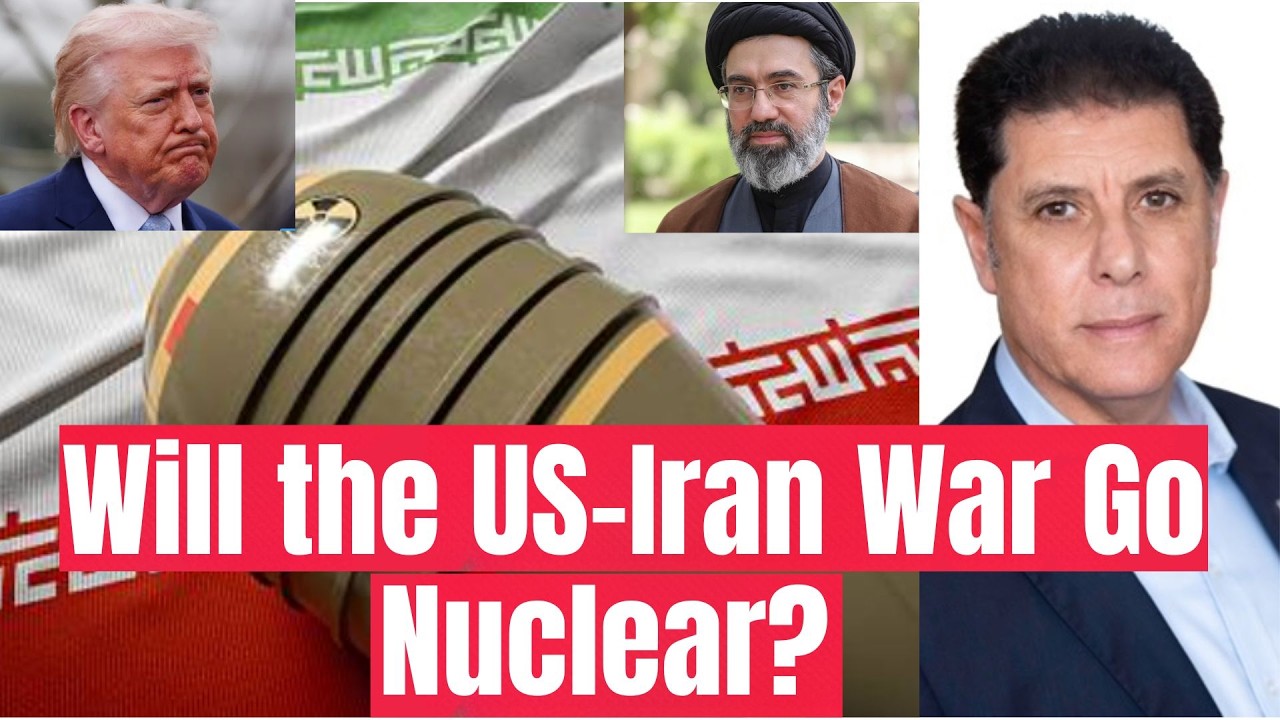
David Oualaalou breaks down escalating US-Iran tensions and the unprecedented debate over using tactical nuclear weapons like the B61-11/12. A fragile Pakistan-China brokered ceasefire has collapsed, the US is building up military forces in the Gulf, and Iran has an extensive missile arsenal. Nuclear escalation could shut down the Strait of Hormuz and destabilize global markets.
Chapters
Hello everybody and welcome to Geopolitical Trends, where truth matters. Excited to be with you on this April 30th, last day of the month. Conventional bombs usually have already sort of failed, which we are witnessing in Iran. Negotiations have collapsed, and now for the first time since Hiroshima, the United States is openly discussing the nuclear option against Iran. Don't be surprised, don't be shocked. So what happens if they actually pull the trigger? That's how messed up Washington is. So conventional bombs have already failed because Iran is still standing. Negotiations Of course they faltered. And for the first time now, again, we are thinking about what could happen if some crazies in Washington decide to go that route. Think about it this way. The current ceasefire, which, which took place on starting April 8th, But this ceasefire is fragile, very, very fragile, by which the US and Iran agreed to a 2-week ceasefire mediated by Pakistan and China behind closed doors. And since the declaration of this fragile ceasefire, it has been violated. Think about what happened on April 21st when Donald Trump announced he was extending the ceasefire pending negotiations. Makes you just wonder, was he really intended to extend it to seek peace, or was he intending to extend the ceasefire to prepare for a possible of a second strike? That is, again, because what you have right now, you have the, because what Donald Trump and them doing, instructing the naval blockade to remain in place and telling the military to remain prepared to resume the, the fighting. I am working on one story for you for tomorrow, if I, if I, if I get everything done, regarding the Central Command. A well-informed individual inside disclosed it, not publicly, that there are plans to launch swift and powerful strikes against Iran. That's what the Central Command is doing. What's surprising also on the other side is that Iran declared through the head of its naval— its navy, and I'll disclose all this to you tomorrow when I finalize the verification of the information. And paraphrasing what he said is that If the US ever attacks Iran again, we will deploy our secret weapon. I don't know what that secret weapon is, but the fact that— and this is in my opinion, and I am 100% certain of this— Iran is not bluffing. That is the way. So I'm going to do this for you tomorrow. For now, I want to talk about in this live stream I want to talk about my own— I want to provide you, or rather, my own analysis about the possibility of whether the US could consider the usage of tactical nukes. Because it is concerning to me now that the negotiations have stalled, diplomatic effort to end the Iran war stalled again. Because why? Is the demands. What the US is asking of Iran is impossible. You know, Iran, on the other hand, what is asking, in my opinion, is logical. For example, they're asking for the complete lifting of sanctions if they want the Strait of Hormuz to reopen. And they're also asking that the nuclear program will not be part of the conversation. And rightly so. Why that is? Is because Under the rules set by the IAEA, every country has the right to pursue civilian nuclear technologies. So why are we blocking that? And that's what Trump wants. Trump wants a deal that will end— and that's the key word— end Iran's nuclear program and address its missile program and support for regional proxies. Well, good luck, Donald Trump, with that. You know, what makes us think that Iran is going to agree to Donald Trump's request? It's pathetic. And that's exactly what the foreign minister of Iran, Dr. Abbas Hairatshi, rightly so, criticized the maximalist demand from the United States negotiators. Let alone that this, uh, uh, Werikoff and Kushner, which are not qualified for this kind of talks, are the one leading all this. Uh, and, and that's why the, I think, again, me thinking outside the box, I think the US is preparing for something. And this is why the threat of resumed attacks is real. That's why I decided to do this topic for you. I want you to get you a step ahead as to what might happen next. So this way you have at least some basic information as to the possibility of, of, of this one here. While the diplomatic outreach now is continued somehow, but it's not 100%, the US is moving forward with the deployment of its military. What you're looking at there, it's the US Marines heading to their barracks at Dhahran Air Base in Saudi Arabia. That's where they are. Yes, in Saudi Arabia, that's where they are. So the US Marine and airborne units are moving forward. As a matter of fact, on April— it was on the 20 28th or 19th, don't quote me on this because I don't— I remember vaguely because I was in one of the locations in Europe, I was reading about it, that Trump said if an agreement was not reached, the US will attack energy and bridges across Iran. Well, that amounts to a war crime, man, because once you attack civilian infrastructure, it's a war crime. Yeah, you can attack the military installations, that's a different story. But even with that, what makes us think that Iran just gonna take it? No. And this is where that bravado of Donald Trump and the whole US government— oh, we give you 3 to 5 days to engage in negotiations and resolve these issues, or we will attack you. Yeah, do you think we're gonna intimidate Iranians? And this is again where that key sticking point— and I'm gonna get into the details about the tactical nukes in a second here. So as you know, talks have broke down largely because Iran is refusing to abandon its nuclear program, and rightly so. What makes us think that we're gonna tell the Iranians, you need to give up your nuclear program, and the Iranians gonna say, sure, we will do so? Here is Iran's position regarding this file. The nuclear is that the nuclear issue and the Strait of Hormuz reopening must be, must be— that's the key word. This is what Donald Trump doesn't like— must be linked to the end of the war and the lifting of sanctions. On the other hand, The US wanted a comprehensive deal covering the enrichment of uranium, the missiles, and the regional support. The Russians have stepped forward and said, we will be happy to take the enriched and store the enriched uranium and store it in Russia. And I think Iran will trust Russia for that. But at the same time, Iran will not do that It's your own enriched uranium. Why would you want to give it to another country to hold it for you? This is the exact problem right now that is going on in Iraq. Let me just, uh, while I'm thinking about it, do you guys know that we are holding the funds that belongs to Iraq regarding the sale of its oil? We're holding them as of now because we wanted to have specific individual in the, uh, as a prime minister in Iraq. We didn't want Nouri al-Maliki, which by the way, he's, he's out. But it gives you an idea. We controlling the money that belongs to another country. The same arguments can be made about the Iranian uranium. Yeah, they can trust the Russians, but why should they give it to the Russians? So as we stand right now, the situation is very fragile. Because this contested ceasefire per se, in addition to the stalled negotiations, to me is a recipe for disaster. It's a real risk of the resumption of the largest-scale US military strike if no deal is reached soon. And that is why Iran went ahead through the head of its navy and declare that if we are attacked, we're gonna deploy our secret weapon. And everybody's gonna— what I have learned so far, not only from what happened with this war, but also from when I wrote my Iran book and the research that I did through— I spent about a year and a half, almost 2 years doing the research for this book. And you learn the pattern that they are not bluffing. They are not bluffing on certain aspects. And this is why when you see the movement of the US troops now, this is in Saudi Arabia, you see the, the third aircraft carrier heading out to that area. You see the preparation of certain aspects of the— I am not ruling out the tactical nukes option. Why? Because Donald Trump is not going to accept the defeat. That's humiliating already to the Americans, because that's the same arguments one can make about what took place back then regarding Japan, regarding Vietnam, and all. We couldn't— especially in the case of Vietnam, we couldn't defeat that. And since— and I'm going to ask this question Since defeating Iran proves very challenging for the US, they will never achieve it. We will never defeat the Iranians. I am leaning now to asking the uncomfortable question: will the US use tactical nukes? What do you think? Please share with the, in the community, in the chat box, yes or no, in your opinion. Since it became proven that defeating Iran is not reachable, it's not feasible. Will the US use tactical nukes? And that's one part of what I want to talk to you about before I share some clips with you to put things in perspective. And this to me is a serious question, whether analysts or not, nuclear policy or not, or nuclear experts for that matter or not. Doesn't matter. This question is being debated as we speak. It becomes a question of no nukes or no nuclear use so far. But the question is being raised. We can't ignore it. And I am not, as you know, in this channel, we're not about saying what is comfortable. No, we don't do that in this community. We lay out the arguments. And we think about it and we reach our own conclusions. So far, on the public forum, there is no indication that the US, uh, uh, uh, intend to use nuclear weapon against Iran, but privately there are conversations. So, so far the conflict has been fought entirely with conventional weapons. However, the question is no longer purely theoretical or in theory, you know. No, it's not, because it is openly discussed. When I say openly, behind closed doors, but still openly among those people in charge. And the next question that we ought to ask about this is why the question is on the table, why the ability of the, of the the tactical nukes are on the table? It's a legitimate question to ask because when we remember the conventional, uh, uh, bunker buster, the, uh, GBU, that now Iran has, uh, in its possession, and some reports indicate that they have already reverse engineered— that is what's been said. Again, I can't confirm that one, But so far, that's where it's been. So, but if we are to go with this argument is because GBU has already been used. We dropped about 14 of those on Fardau and Natanz in 2025. Yet the heart of Iran's nuclear program still alive and still going. And in this case, this is why this question has been raised about the tactical nukes. Because to achieve the absolute destruction of deeply buried facilities, some geopolitical and military analysts have argued that the US might end up using the hammer. Another word for nuclear. And if the US chooses to go that route, the Pentagon's likely— the Pentagon's likely solution will be an earth-penetrating warhead like the B61-11 or the newly deployed, the B61-12. And if you want to learn more about this, I'm going to put the link for you in the chat box. This is from scholarly research that deals with this issue. You can, you can read it there. And this is again goes back to Donald Trump's wording. You know, the guy is narcissistic, is out of— I don't know, I don't know. I'll let you decide on that. Trump's threat to obliterate, you remember, Iran and bomb it to the Stone Age and all that. Because that in itself, that statement, some geopolitical analysts have interpreted that as signaling that the administration With respect to a few norms, the tactical nukes or the use of tactical nuclear weapons may be considered acceptable. Once again, it's uncomfortable conversation, but we can't shy away from it because truth matters. And if no journalist or no, no administrator or official inside the Donald Trump's Cabinet has the guts to tell him to his face. At least for us here, I don't work for the government. We feel comfortable addressing the uncomfortable questions because that's the responsibility, at least my responsibility towards you and the community. On the other hand, there are those who are saying, oh, Dr. Oualaalou, there is an argument against the use of nuclear weapons. Why is that? It's because using tactical nukes weapons, sort of what now into 8 weeks into this conventional war, will be perceived as a sign of technological and military weakness. A superpower, so-called superpower on the paper, because we proved we are not. Look what happened in Afghanistan. Look what happened in Iraq, Yemen, Somalia, and now Iran. When a— when so-called superpower resorting to this kind of act, and this will be Trump's last card with serious consequences to this, what you're going to be seeing is a reaction of some other country. And even with this option, Iran will not surrender and will retaliate with everything it has. That is why I, I didn't want to overlap you, yeah, overwhelm you rather with so much information. That's why today I don't want to talk about what the statements of the head of the Navy stated, the type of secret weapon, and I don't want to talk about what is the secret plan for the US. I'll do this for you tomorrow. For now, I'm I want to focus on these aspects here. And this is again, Iran will retaliate. And that will be from— how Iran might retaliate in this case, at least to my knowledge, it will retaliate by some sort of a sophisticated usage of a missile that could sink the US aircraft carrier. We know those missiles exist. No, the Chinese have them. The Russians have them. As a matter of fact, the Russians have both sides, the torpedoes and the water and the regular missiles. And if you think that China or Russia will not support Iran in this endeavor, then you're going to have to rethink your assumption on this. And even if we don't rule this out or we don't consider this possibility, Consider a coordinated sort of swarm of drones and missiles, what it will do. And that's again where the nuclear escalation or risk can go both ways because we don't know what Iran has. And if this head of the Navy stated about secret weapon, think about it. So let's just go with the ballistic missiles, the hypersonic, the Fattah missile, or the Khorramshahr. No, I'm sorry, this is the, uh, North Korea. This is the Khorramshahr-4. You know, think about the, uh, the, the Qadr missile. Think about the Emad missiles, you know, and think about the 500 ICBMs that Iran has. Just in case. And this is again where you have to think in terms of this risk, the nuclear usage will go both directions. Yeah. And remember, last time, Iran ballistic missiles have already struck communities adjacent to Israeli Dimona Nuclear Research Center. And I did a video for the community for that. You can go back and check it out. And what happened with that? Of course, the media put a lid on that information. It shattered the buildings, injured about 180 civilians to my knowledge. And of course, Iran went ahead and targeted Dimona itself, not the nuclear center, but the Dimona city vividly, vividly illustrating the ultimate consequences of any new attack by the US because we don't care at this, meaning we, I'm talking about Iranian in this position. They're gonna say, we don't care. If the US use that, Iran's gonna first of all deal with the Israelis because Israel is at the backseat pushing the US forward and dealing with the Israeli side, Iran will turn its attention to the US aircraft carriers and anything in the region. When I say anything, I am referring to this right here. This is where what I meant by risk goes both directions. So the ceasefire currently is in place makes nuclear use in the near term unlikely. And I'm not, I'm not arguing against this one. But I am arguing against the possibility that if this ceasefire, fragile ceasefire, extend 2 months, 3 months, the Strait of Hormuz stays closed 2 or 3 months, we might see, because the stalled negotiations and this mutual threat keeps the scenario, at least from the perspective of an analyst, in discussion. That's how I see it. So far, when you consider nuclear experts, there is a consensus, there is a broad consensus among them, is that it will be a strategic catastrophe if the US goes ahead and use tactical nukes. First of all, it will trigger regional escalation. Second, it will create a global a global economic shock beyond just the shutdown of the Strait of Hormuz. Then you're going to have, which is for sure, the collapse of the Nuclear Non-Proliferation Treaty regime, which Iran is a signatory to. You know, I can't speak on behalf of Iran. They can decide for themselves. But right now, being part of the NPT is useless anyway. And this in itself, those three main elements will make it an extremely high-risk path, even for an administration willing to push conventional norms. So, so as of now, at this moment, the US strategy, even though it's, it's ambiguous and unclear and it has failed already, remains focused on conventional strikes. Remain focused on economic pressure so far. And diplomacy is still normally going, but it's not at the same pace. So let me just share a clip with you about Iran missile firepower to put this in perspective for you. Then we'll just go from there. And again, I just want to put it in perspective for you to see that the possibilities of something like this is there. Let's take a listen here.
Dropping footage of a mass ballistic missile launch, multiple sites, mobile launchers, full barrages raining down across the southern shores of the Gulf. The ideological arm of Iran's military are showing the world just how far they can strike. State media calls it the Combined 1404 exercise, but make no mistake, This is a roar aimed directly at Washington. The video is stunning—missile after missile launched in near-perfect synchronization, leaving trails of smoke that stretch across the horizon. From the deserts of Iran to the waters of the Gulf, Tehran is flexing muscle, sending a signal the world cannot ignore. It's not just a display of firepower; It's a statement, a declaration that Iran can and will project force, even as global tensions rise and war drums echo louder across the region. Military analysts are calling it one of the largest coordinated missile exercises in recent memory. Multiple launch sites, mobile platforms ready to strike on the move, and a barrage designed to overwhelm defenses. Iran is showing that its military isn't static. It's agile, unpredictable, and deeply committed to sending a clear warning: any attempt to intimidate or strike Tehran will meet a response with devastating speed. Washington is watching, but so far, no reaction. And that silence? It's exactly the kind of tension Tehran wants. The footage isn't just propaganda, it's a psychological weapon, a message that Iran can unleash firepower at any time from multiple fronts. Across the Gulf, ships, cities, and airspace sit under the shadow of this display. The message is unmistakable: Iran is ready, Iran is capable, and Iran wants the world to know it. These war games are not just for show. The Revolutionary Guards are drilling, testing, and rehearsing strikes that could reshape calculations in Washington and beyond. Every launch, every countdown, every missile that streaks across the screen tells a story of preparation and resolve. The imagery is terrifying. Smoke, fire, and the relentless power of a nation unwilling to back down. The drills stretch beyond the southern coast; the entire country is involved, signaling a nation on alert, ready for escalation if provoked. Iran's missile barrage is a warning and a challenge, a thunderous reminder that the Revolutionary Guards are armed, ready, and sending a message the world cannot ignore. From the sands of southern Iran to the halls of power in Washington, the stakes are soaring, tensions mounting, and the drums of war pounding louder than ever as US commanders sound the alarm.
All right, I want to stop there. It's a little bit longer. I give credit to AFP, the Association of French Press, and as you saw, the date of that was on 4. So my point why I wanted to share that clip with you is to highlight to you the idea of this, this so-called the US thinking in terms of, well, we're gonna, we intimidate, we're trying to intimidate Iran, but it's not going to succeed. We might consider the nuclear option. And Iran will have already, already, I bet you this, and if I, again, if I'm wrong, I'm wrong. I bet you Iran already has a plan in place for this scenario in case. And all this comes during a time when the Russian president warned Donald Trump against a new military action in Iran. This is exactly— it came through the Kremlin, but it was of course the Russian President Vladimir Putin. He warned by using the term sort of damaging consequences. This is what Mr. Putin said of a new military action in Iran. And the Kremlin sort of told, uh, uh, the international news that Putin highlighted the inevitable and extremely damaging consequences not only for Iran and its neighbors but also for the entire international community should the United States and Israel resort to a military action once again. It'll be interesting to, uh, uh, I— once again, uh, it'll be interesting to see where this is, is going to move forward. If the truth matters to you, hit like, subscribe, and tap that bell. No spin, no agenda, just the stories they don't want you to know. Don't watch from the sideline. Be part of the movement. Your support keeps the truth alive. Thank you. Indeed, appreciate your support. Now, uh, before I continue here quickly, I wanted to— remember last time I told you I will do a, a, a video for you about the preemptive Iranian attack on a larger— on a largest US warship? I still have that information, except what I found out is that half of that information was AI-driven. So I am going to make a decision whether to move forward with sharing that and make clear to you where that AI information is. So this way, because there are some truth to that particular information, I confirmed it and it, it does exist. The other part of the story That's what it didn't add up to me, and I checked and it's not— it's AI-driven. So, so what do you think? Would you like me to go ahead and do that next time, next day or two, or you want me just skip that one? Please just let me know in the chat box because I want you to hear both sides of the arguments, but I am not one to be doing, uh, the, uh, for the sake of clicks and all that stuff. I, I don't That's not me. To me, credibility is very crucial. And again, I have nothing against to whomever is doing this. That's their prerogative. They can do whatever. For our— the sake of our community, I like to ensure the accuracy of the information that I am sharing with you. But the information is— half of it is accurate. So, so I'm gonna— uh, David Oualaalou, you say no. False, you say go ahead. Fat soul, I'm sorry, you say go ahead and do that. Uh, so yeah, we'll see. I'm gonna take a look at this later on and, and, and, and move from there. It's very compelling given what it was with the clips of it, but again, when I verified the info, I found that not all of it is 100%. So anyway, I'm gonna leave this for, uh, next time when we do this one and and go from there. So now, uh, what I want to do is I want to share some clips with you. Those are, uh, again, from, uh, none other than a close US ally, and it tells you now where things are headed as, as far as how the world now perceiving, uh, the United States and its humiliation against Iran. Uh, now this one comes from none other than the German Chancellor Mörs. It's, it's in German language, but I'm gonna go ahead and do the, uh, do the translation for you. And it has some soundtrack to it, so that's why I'm not gonna play that one. So basically what he's saying, Mörs, at the moment I do not see which strategic exit the Americans are choosing. The Iranians are evidently negotiating very skillfully. The German chancellor demolishes all of Trump's lies, confirming that Iran not only failed in the negotiations but humiliated him, meaning Trump. At the moment, I do not see which strategic exit the Americans are choosing. The Iranians are obviously negotiating very skillfully, skillfully. The most egregious thing is that the statements did not come from an adversary, but from a capital that has long stood in the same camp in stark expression of American loss of its European allies. I am very deluded and quite simply because the United States of America and Israel were there from the beginning that this problem will be solved in few days, and we must declare today that it is not solved. Tehran did not confront Washington and Tel Aviv in a direct conventional battle, but rather played with the cold intelligence on the most dangerous strategic card, the Strait of Hormuz, the lifeline for about 20% of the world oil. By threatening to close it, which he already did, or partially close it, Iran forced the world to pay a heavy price for targeting it. Oil prices jumped to record level and hit European economies hard. And it's true, I'm here and I can see. And on the negotiating table, Iran excelled with exceptional skill. It sends positive signals through intermediaries, then cancels meetings at the last minute, leaving the Americans to return from Islamabad empty-handed. In this way, Tehran has succeeded in buying time, exhausting its adversary, preserving its nuclear program, and transforming the conflicts into a battle of revenue and a long-term patience. Even German Chancellor Frederick Merz acknowledges its careful management of the conflict, admitting that the Americans were concealing Very, very, very interesting dynamics. When I read it— when I came across it, rather— and I have family who lives in Germany, so I can always send an email and ask about the accuracy of this info, and they're like, yeah, he already stated that where things are. And this leads me to my next clip to put it in perspective for you as to the reality of what Donald Trump is saying versus what it is on the ground. It's worth listening to. And as a matter of fact, I'm gonna do the translation for you because it's in Arabic. And I give, I give credit to, uh, uh, Meme, uh, it's called Meme Magazine, uh, that's their, their, uh, their clip. So, so let's take a lesson here, and I'll do, as I said, I'll do the translation for you. It's very, very interesting. I, I, uh Listen to it in Arabic. So, giving them till tomorrow, 8 o'clock Eastern time. Basically, such was his bluster, issuing threats, making dire warnings, and granting one ultimatum after another. Yet after 40 days of the conflict with Iran, the arrogant US President Trump finally capitulated to Tehran's terms. He announced a ceasefire and spoke of 2 weeks' truce intended to pave the way for a long-term agreement. However, reading between the lines reveals a completely different picture. The United States is scrambling to find an exit from the quagmire into which it was dragged by its Israeli ally. Iran is, for its part, declared that its adversary had repeatedly requested a ceasefire, yet it rejected all demands and threats, pressing on until its objectives were achieved. The result was the imposition of new strategic equations in the region and a defeat for the United States that has been described as historic. The 10-point Iranian plan revealed the true balance of power. It entails a complete cessation of hostilities, not merely a temporary truce, along with the lifting of all US sanctions, recognition of Iran's right to uranium enrichment, compensation for Iranian losses, and the unfreezing of frozen assets. Most significantly, it involves establishing effective control over the Strait of Hormuz through a transit protocol under Iranian supervision, complete with the imposed toll on passing vessels. Put more plainly, it transforms the strait into a sovereign and economic asset firmly in Tehran's grasp. The plan's scope extends beyond Iran itself. It also demands the withdrawal of U.S. forces from all bases and staging points across the region, as well as an end to attacks against Iran's allies, a move that implies a curb in Israeli aggression against Lebanon and other nations. The negotiations are scheduled to take place in Islamabad— that was back then— over a 2-week period amidst first assertion from Iran that replaces no trust in the Americans and that its fingers will remain on the trigger. A clear message signaling that it is negotiating from a position of strength, not weakness. What has transpired is not merely a truce, but a revelatory moment exposing America's decline and making Iran's transition from a phase of a mere steadfastness to one of dictating the pace and terms of engagement. As for Mr. Trump, he found himself compelled to negotiate on the very terms he had once strived so vigorously to dismantle. Left with nothing but an empty blaster, the terms of his agreement to end hostilities between Washington and Tehran represents a major strategic defeat For the United States, cementing Iran's rise as a fourth global power center, it constitutes Washington's greatest loss since the Vietnam War. That's what's important about this, and I want you to be aware of this one here because exactly where things are. So, so before I'll do my conclusion, before I conclude rather this livestream, I want to let you know what I'm going to be working on. There is one particular story which I'm— I didn't forget you. It has to do with India. India went ahead and stabbed BRICS in the back after what they just announced two days ago. So I'm gonna do a video for you about it. I reached out to my dear friend the Giant Bahndari. He's busy with some stuff, and I'll have him here in about two weeks to address this from his perspective. But I'm gonna go ahead and do this for you. Because what it proves to me is that Donald Trump still have exert power on India, no matter what India says. It still exert power on, on, on, on India. And second one I'm gonna work, uh, I'm gonna share with you, uh, in the next live. It has to do with the statement by the head of the Iranian Navy. Here is what he says: the Trump administration plans a powerful surprise strike against Iran, and Tehran threatens to deploy its secret weapons. So make sure not to miss this livestream when I announce it, once I figure out the timing and confirm some information. So let me conclude this one here for you as far as where we are regarding the possibility of the US preparing something here. So far you have the US and Iran conflict, which has reshaped now the Middle East. Remember and pay attention, we don't even mention Israel anymore into this because Israel succeeded in dragging the US into this, take step back and let the US deal with it. I mean, literally based on the readings that I do and I read extensively regarding this topic, you don't see Israel word come out as much because they succeeded in pulling Trump, because how idiotic he is, pulling him into the trap. But anyway, this conflict reshaped now the Middle East in ways no one fully anticipated. You know, whoever thought— no, Iran proved that it can redirect the direction, the trajectory direction, and the geopolitical trajectory of the Middle East. It's not Saudi Arabia, it's not Turkey, as they might have you believe, it's not Israel, it's Iran. Because what began as a high-stakes nuclear standoff has now exploded into an open warfare. Of course, when we went into assassination of leaders and so forth, Iran responded by choking the Strait of Hormuz, shattered economies of the region and the world for that matter. Then we end up with a fragile ceasefire hanging by a thread. So, and that tells you right there, conventional weapons have failed to deliver the knockout blow the US was sort of talking vociferously about. And that's what was the whole objective. Negotiations have repeatedly collapsed, which tells you the story right there. And the shadow of nuclear escalation looms larger with every passing week. That is the important aspect that I need you to understand. So the world is watching as of now, for example, the energy markets being trembling, the millions of lives hanging in the balance, you know. And where the concern for me personally, and I speak for myself, one, one miscalculations, one broken deadline One violated ceasefire, that's all it takes, could push the conflicts into territory humanity has never returned from. That's my fear. I hope it never gets to that. I hope it never gets to that. So, not really. I hope it never gets to that. So I want to leave you with this question here. Just if you want to share your feedback in the comment section, I would greatly appreciate it. Uh, with now the conventional weapons, as I mentioned earlier, failing to, to force Iran's surrender, which I don't know even why we were thinking that. Why Washington will even think that you're gonna force Iran to surrender? Yeah, you might do that with the, uh, the weak states, but not Iran. So, and now you have the nuclear threat already being floated. The conversations are there behind closed doors. In certain halls of power in Washington. In your opinion, do you believe the United States will cross the nuclear threshold, or will diplomacy finally prevail before the unthinkable happens? So please make sure to drop me your thoughts below in the comments section. I will greatly appreciate it, and for a reason. Why? Because the world needs this conversation. And that's at least what I try to do on my end. And with your help, the community here— and I'm not talking about just the support for the channel, whatever— I'm talking about your intellectual contribution to the conversation. That in itself is a support. That's what makes the community different, and that's what helps the truth sort of spread out because the world needs this conversation that you and I are having. And I am very, very grateful to you for that. So I take this opportunity, I want to say thank you to— I have some individuals that been supporting the upcoming Asia trip, which I can't thank them enough for responding to the call. If I am to go this one, I'll take this one first from Francis Tango. An avid supporter of the channel. Thank you, Francis. A question: why doesn't someone give the big thanks to Iran? It doesn't work that way. It doesn't work that way, Francis. There are certain protocols, and, and you don't just hand a nuclear weapon that you spent a decade resources and hand it. I do know one country. I do know one country. Unfortunately, I can't disclose it openly. It's my commitments to observing the law, and, and you know how it is, and I'm sure you understand. But I do— I'm aware of one country. Actually, if you want to find out, you need to read my, uh, I'll give you a hint, just read this book and you'll get the answer. Okay, it's redacted right there. Once you read, you'll— it'll make more sense to you. But anyway, one country that has purchased this, but doesn't have it in its possession. It's somewhere else, and if it needs it, they might get it. So, so that is the reason why, uh, Francis, uh, uh, countries will not just hand their nuclear weapon to other countries. They might help them, but not hand them over. So, uh, I take this opportunity also to say thank you to Paul Green for your PayPal, uh, uh, donations in support of the channel. I'm very, very grateful to your generous donation in support of the channel. I can't thank you enough for this one here. And for those who bought me tea, in addition to, uh, uh, Dr. Essa Salerno, who gave a major donation in support of the— my upcoming Asia trip and vowed to, to match dollar for dollar up to $1,000 in support of this endeavor as far as the fundraising for the upcoming trip to Asia, which, by the way, I have updated the Thermometer funds. I'm transparent regarding the monetary aspects here. That's just my nature, how I deal with money. I like, I like transparency and I like to share with the community where we are regarding this. But so far we are close to the 30% mark. And thanks to those individuals who've been donating to this cause. So I'll give also my thanks to Shana— Shana Lee Allen for buying me cups of teas in support of my upcoming Asia trip. Army with Harmony, that's Robert Denny, thank you so much for your, your support and also appreciate your note You put— you wrote, and I quote, "Thank you for sharing your knowledge." You're most welcome, most welcome, Robert. You've been an avid supporter since, since first time you came on board a few years ago. So I'll take also this opportunity to say thank you to Sarah Lewis. What a wonderful— not only your, your donation in support of my Asia trip, but your comment, and I'm going to share it with the community. You wrote, and I quote, "I love the way you give me a clear insight into what is really going on behind the preponderance of nonsense we get from the MSM. End of quote. You're most welcome, you're most welcome, and I truly appreciate you, Sarah. And the next person is Daryl— Daryl— Darren, I'm sorry, Darren. Appreciate you buying me cups of teas in support of my Asia trip. You wrote, and I quote, good luck on your Asia trip and thank you for speaking up for humanity and for the truth. End of quote. You're most welcome. So I truly, truly appreciate the community, those who decided to support this upcoming true— this upcoming trip, rather. And here is the link should you decide to do that. I will be grateful to you. Once again, I plan on going if we reach the at least 50%. I plan on going either towards the end of August, September. If we reach that— if we don't, I'm going to postpone the trip till we reach at least the threshold because of where I intend to go and report to you from requires that kind of funding for— that's why I put it at a $10,000 fundraising target. So if we get to it. So that's all I have for you guys. I hope you enjoyed it. And remember to join me tomorrow. I think I'm going to do again— I'll work on the stories for you. And the— and, and just go from there. I'll update you on what's going on. As always, remember, geopolitics impacts your daily life in more ways than one. Till next time, bye-bye.
More from David


Beyond the Single Actor: Why the Gulf Isn't Choosing Between the US and China


Iran, Iraq's Militias, and the Houthis Are Coordinating! This Changes Everything




Who Controls the Next Decade's Resources? Latin America and Africa's Geopolitical Crossroads

The Chokepoint Trap: How Washington's Stupidity Triggered a Cascade That Now Controls the World

Trump Spooked as IRGC Unveiled dual-use SLV, Deployed Ghadir Mini-Subs & Hinted at Tactical Nukes!
