Is there a Way for US-China to Manage Differences Without Conflict?
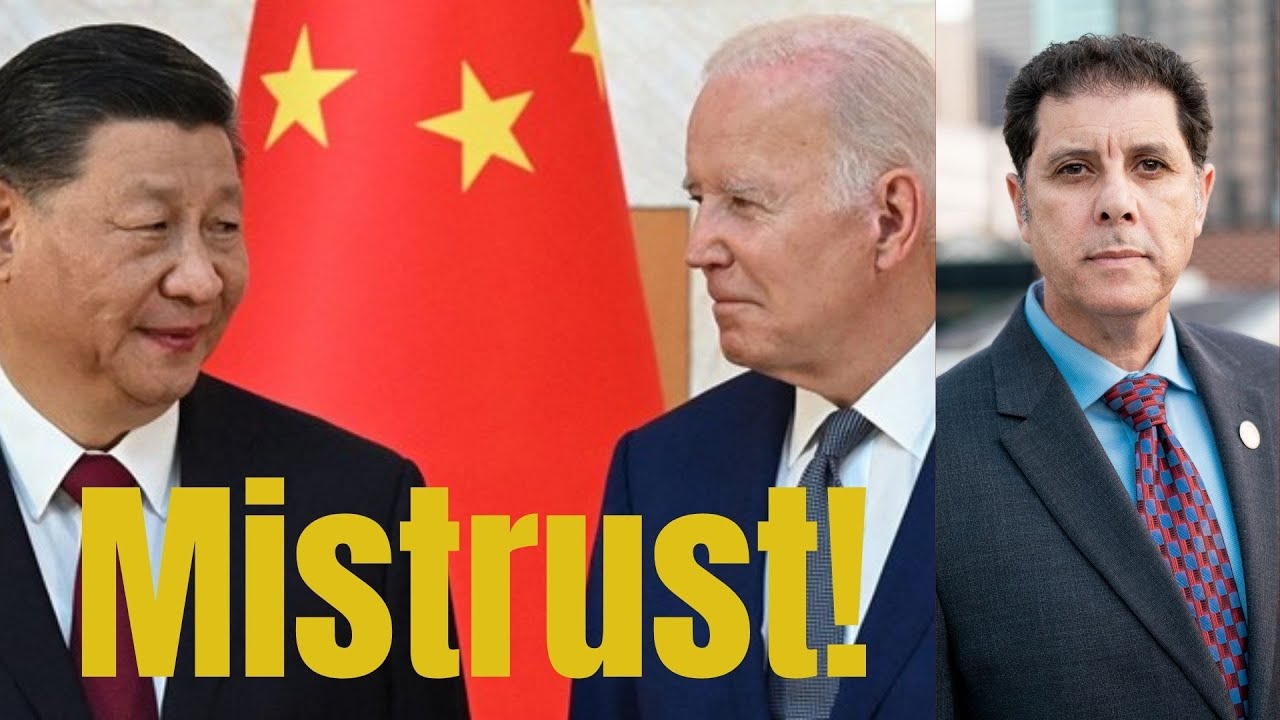
David Oualaalou examines why the U.S. is sending senior officials to China after Xi's visit to Saudi Arabia. The Gulf states are pivoting toward China for energy and trade, while the U.S. faces credibility questions over Taiwan support and shifting Middle East alliances.
Chapters
Hello everyone, welcome to Geopolitical Trends. My name is David Oualaalou. So good to be with you as always. Why all of a sudden United States government is sending high-ranking officials to visit China soon? In this video, I'm gonna provide you some insights into why that is. And but before that, I want to thank you for your support. And please, if this is your first time, uh, watching this channel, make sure to subscribe, you know, and don't forget to smash that notification button so you will be notified every time I upload a new video. And also, I want to give a shout out to our members. Thank you for your continued support. It means a lot. So let's dive in into this topic, which I found very surprising. Why am I saying surprising? Because the announcement by the US government came only one day after President Xi left Saudi Arabia to return back to China. So I found it very, very interesting. Of course, there are those who's gonna say this is a visit by the senior officials is a follow-up to President Biden and President Xi's meeting during G20 summit. There is a possibility to that also, but the way I'm looking at it as an analyst now, I am looking at it from this perspective of what this President Xi's visit to Saudi Arabia meant for the new global order and the role, or the role of the United States in the Middle East. So this is what I'm going to be diving into this in this video. So as I mentioned, the US will be sending a delegation to China in the coming days, you know, following up on President Biden's meeting with Chinese President Xi, uh, last month at the G20 summit in Bali. Indonesia. So, so what I found interesting about that is that the US announcements, as I mentioned, came only a day after President Xi completed his official visit to Saudi Arabia, where the country of Saudi Arabia provided President Xi with a lavish welcome, very lavish one, to the point I'm calling it the royal welcome. And I did a video on it, guys, so in case you didn't see it yet, so Because here is how I see it. I see this visit and the welcome that Saudis provided President Xi as a warning sign to the United States and to President Biden. That's how I see it as an analyst. So the delegation, of course, the American delegation that's going to be going to China will comprise of Assistant Secretary of State for East Asian and Pacific Affairs. His name is Daniel Crichton Brink. Yeah, Crichton Brink. And a National Security Council Senior Director for China and Taiwan. Her name is Laura Rosenberg— Rosenberger, I'm sorry. So the two officials also plan to visit South Korea and Japan as part of their December— they're going to be, they're going to be going between the 12th and the 14th of this month, of course, which is, uh, 2 days from today, because they want to hold consultations on a range of regional issues and bilateral issues with the South Koreans and the Japanese, but you all know what the topics will be, right? So the Assistant Secretary of State will also prepare for the Secretary of State Antony Blinken's visit to China in early next year. It's going to be at the beginning of 2023. But do you think that the Chinese forgot how Blinken was treating them during Alaska meeting? I didn't, because I have a video on it. Did a video on that one. You know, the Chinese is not gonna forget that. And this is why there are questions now. Uh, will, will China trust the Americans? You know, I'll let you reach your own conclusion here, but I'm gonna look at this issue from two angles: one geopolitical and one economics. So from geopolitical perspective, The move is to continue responsibly managing the competition. This is how the United States interpreted it between the two countries and explore potential areas of cooperation. That's the statements by the State Department. Now, it is not perceived that way, you know, because Chinese not gonna interpret that that way. Given, for example, with the defense budget that includes in it $1 billion to Taiwan on a yearly basis, how do you think the Chinese is going to interpret that? You know, second thing, given the Chinese president's recent trip to Saudi Arabia, and you all know the tensions that exist between Saudi Arabia and the United States, So this is why this trip, you have to look at it also from a geopolitical perspective, given what's going on between both countries, Saudi Arabia and US, and China and US. Because here's the thing, even before, even before President Xi stepped in, uh, on Saudi soil, there were already talks of stepping on Washington toes, is that China now is interfering in the US sphere of influence in the Middle East. No, because the Middle Eastern countries are seeing the shift and the kind of start to gradually pivot from the West to the East. So, and we all remember when President Biden went to Saudi Arabia and the visit was a failure, and I'll say it straightforward, you know, because it was that lack of trust, credibility, you know. And as I always say, we say one thing and do another, you know. So the concern for the United States was that if there is a vacuum in the Middle East, they don't want the Chinese to fill that vacuum, or the Russians, or the Iranians, you know. Yeah, but in geopolitics, because the global order is, is changing whether we like it or not, you know. You know, let alone the Middle Eastern countries were watching when the United States withdrew from Afghanistan and how that withdrawal was very, very humiliating, to say the least. No, you know, and here's the thing, U.S.-Saudi relations, much like U.S.-China ties, have been strained despite American attempts to maintain some sort of an appearance of constructive engagements. You know, look no further than President Biden's frantic or even desperate attempt to shore up the dwindling authority of the United States in one of the— its most important sphere of influence, you know. And it is, of course, geopolitically speaking, it is driven by fear. That China is willing and capable of filling the void that the United States may leave behind in the region and beyond. That is where the key geopolitical aspects to it. From an economic perspective, you look at it this way: the current generation, the younger generation now, the leadership in the Gulf states, you know, is showing, is showing more agency as they seek greater independence from Washington. And why is that, you may ask yourself? Is the reason because they want to diversify their partnership in energy, technology, security? So this is why They are— they, those new leaders, young leaders in the Gulf states, they are seeing in China as a natural partner for them because it seeks reliable energy sources and markets for its goods and services, let alone it prioritizes development, trade, over democracy or human rights or rule of law or whatever you want to call it. This is how they are interpreting this. You all remember in 2021 when, when Biden administration snubbed Saudi Arabia because of its poor human rights record and because it could afford it. With the excess of oil and gas in the global market, you know. Yeah, Western nations, in my opinion, at that time were bullish about the transition away from fossil fuel to green energy. Ain't gonna work. It's not an easy transition and it will take time and resources. So of course, what makes matter even more complicated economically speaking is the conflict in Ukraine. So because what it did to energy prices, it just shot up the prices up. So US and the European allies have suddenly found themselves facing either oil and gas shortages or higher prices that have hurt their economies, their economic recovery, but also the average citizens in both here in the US and in Europe, you know, and the pandemic also, you add that to the factor into all this. So the idea that President Biden is trying to appease now the Saudis in the hope of lowering oil prices ahead of the US, as it was during midterm, have failed. Now this is why the Saudis kind of took a step back and thought to themselves, uh-uh, where we're gonna need to invest, in the West or in the East? The outlook in the East looks more promising. The outlook in the West, we don't have any guarantees because this scene, what's going on right now to Russia as far as sanctions And the— even the West now wants to target the gold, which I will do a special video on this topic separately because we don't want to sort of overlap the topics per se. But I will talk about the gold. But it's just to give you an idea that even Western central banks now are trying to purchase more gold, you know. So countries like Saudi Arabia is seeing this and say to themselves, no, no, no, no. We better embark on this, on this train right now before it's too late, even though Saudi Arabia has massive amount of gold in the United States. So, and not just Saudi Arabia, the Gulf countries as a whole. So, so China will also make a full use of its energy consumption because the countries in the Middle East, mainly the Gulf states, will find great markets where they can sell at a good price their energy products. So, so this is how I see the visit of the US delegation to China to sort of warm up the ties between the US and China. It's not gonna work because the Chinese government, that is, won't trust the Americans. You know, and how can they, Chinese, trust the Americans when the US is saying, well, we want to warm up the relations, but also we're going to provide a billion dollars to Taiwan? You know, just you sending conflicting messages. And usually anytime you send conflicting messages, it put a big question mark on your credibility. Simple as it is. That's like you with your close friends. If your close friend says one thing and does another, Are you going to be trusting your friend? You're going to have to say, sit down, we need to talk, you know, what's going on, or that friendship is over. That's basically what it is. So here's my conclusion for you, you know, history, and I am a student of history, history tells us that a rising power and a dominant power are bound to a costly collision. So, but history also teaches us to learn from its pages, to see and learn that accommodation and integration surpass collision and confrontation. So, with more than its share of conflicts and wars, no region No region knows this better than the Middle East, and this is why Middle Eastern countries are now realizing we better get on that train because it's heading west before it's too late. Let me know what you think about this video, and as always, remember, geopolitics impacts your daily life in more ways than one. Till next time, guys. Bye-bye.
More from David


Beyond the Single Actor: Why the Gulf Isn't Choosing Between the US and China


Iran, Iraq's Militias, and the Houthis Are Coordinating! This Changes Everything




Who Controls the Next Decade's Resources? Latin America and Africa's Geopolitical Crossroads

The Chokepoint Trap: How Washington's Stupidity Triggered a Cascade That Now Controls the World

Trump Spooked as IRGC Unveiled dual-use SLV, Deployed Ghadir Mini-Subs & Hinted at Tactical Nukes!
