Israel Fears another "Yemeni Far Flood"! Geopolitical Trends
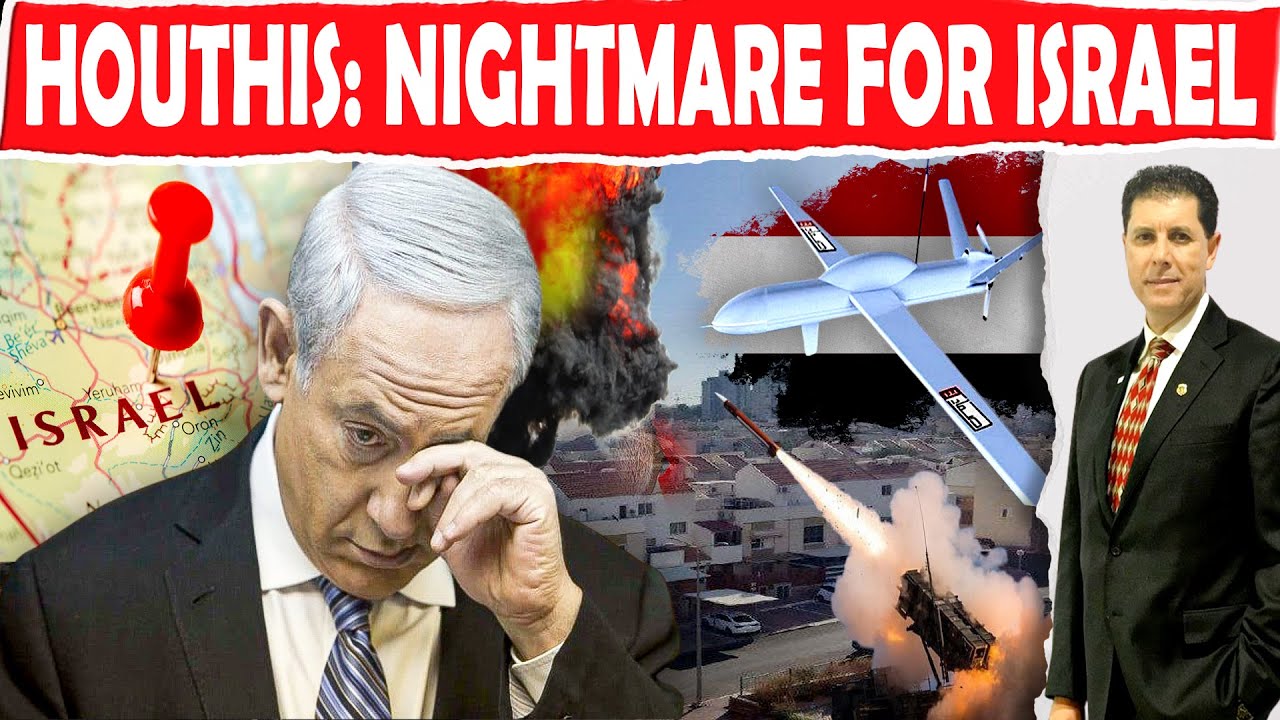
In this episode of Geopolitical Trends, host Dr. David Oualaalou greets his community, outlines upcoming content, and shares a series of headlines ranging from China’s record‑breaking bridge to corruption cases involving former French President Nicolas Sarkozy and former UK Prime Minister Tony Blair. He then pivots to a deep dive on Israel’s internal security assessment concerning a growing threat from Yemen’s Houthi movement (Ans Ansar Allah). Oualaalou provides a concise geography‑and‑history primer on Yemen, explains the strategic importance of the Bab el‑Mandeb strait, and traces Yemen’s evolution from ancient kingdoms to the modern civil war. He argues that recent Houthi advances in drones, long‑range missiles, and tunnel‑based production, bolstered by Iranian expertise, have prompted Israeli intelligence to label the situation a “Houthi threat” comparable to the 2023 Al‑Aqsa Flood in Gaza. He cites translated excerpts from an Israeli newspaper (Yedot Aharonot) describing the threat, notes Israeli preparations for possible incursions, and links the concern to broader regional dynamics, including UN snap sanctions on Iran, perceived weakness of Arab governments, and China’s infrastructural efficiency as a contrast to Western corruption. Throughout, Oualaalou intersperses personal anecdotes, community shout‑outs, and calls for audience engagement, while promising future coverage on North Korea and the United States.
Chapters
Hello everybody and welcome to Geopolitical Trends, where truth matters. I'm your host, Dr. David Oualaalou. Very excited to be with you. Hope you had a, a relaxing weekend and you are geared up for the new week. So very, very excited. I have, as a matter of fact, I will be, uh, talking about some very interesting topic this week. So I'm gonna be sharing with you what I'm going to be covering. So, but first, let me say hi to our wonderful community quickly here, then I'll jump into what I need to talk about. I got a lot to cover for you guys. Leanne, good to see you. Willie Holman, Laval, good to see you. Whitey, as always. Uh, uh, Bully, good to see you. That's a good question— why do Indians support Israel? Yeah, there's a lot of behind the scenes, so Uh, William, good to see you from Mauritius. Uh, Francis Tango, as always, Taiwan still. Kevin Baptist, good to see you and hello to you. Um, San, good to see you. Uh, Bully, good to see you. And Bobby, Marco W, good to see you. And Jimmy, New York City, good to see you as always. All right, let me get in into First of all, I want to do some head— some housekeeping items for you. Tomorrow, tomorrow is the 30th, so I will be addressing a very interesting— some information just came out of the intelligence service from South Korea, so I will be addressing for you tomorrow something pertaining to North Korea. So Make sure to tune in tomorrow. So I'm not going to get ahead of myself. Just, uh, uh, be on the lookout for when I, uh, post the information regarding this. I didn't want to release it right now. So, uh, second thing is I am working on, uh, inviting two interesting guests. I hope they can make it before the 5th. Uh, the reason I'm saying before the 5th, because I might be off, uh, the air for a few days. Uh, I'm gonna have to, uh, travel outside the US, so I'll let you know when I get closer to that. So now I'm gonna be sharing with you some headlines. There are some key things you need to know. Then I'll get into the, the analysis of what's going on with the, the assessments that's coming out of the internal security services inside Israel. I'll do geography and history of Yemen. I don't assume everybody knows, uh, exactly what the history and the geography, because it's very important for you to know. Then I'll, I'll conclude with the other parts of my analysis regarding this development. So, so some of the headlines, and I'm going to share a clip with you here, uh, to highlight to you one of— I'm going to show you a picture first. Check this out. This is India— I'm, I'm sorry, I am so sorry— this is China's highest bridge in the world. They just inaugurated this one yesterday, so I'm going to be playing a clip for you, then I'll highlight to you something about it. So take a listen, please. Oh, I didn't share it yet, my apologies. All right, take a listen here. Uh, not that one. Sorry, sorry, sorry, sorry, sorry, sorry. Uh, it's this one right here. Okay, there are so many— I have so many tabs, uh, that, that are open, so I need to make sure I'll get you the right one here. So, and Judeshin, because I read it in Arabic and of course I get the, uh, English translation for it. So take a listen, please. And by the way, I give credit of the soundtrack to the Global Link, that because that video belongs to them and the soundtrack belongs to them as well. So I'm giving credit where credit is due. The Huajiang Grand Cannon Bridge, now the tallest bridge in the world, has opened to traffic on Sunday. Construction began in January 2022 The bridge runs 2,890 meters end to end. From deck to water, it rises 625 meters, a height that makes it the tallest bridge on Earth. Travel across the canyon, which once took 2 hours, now shrinks to just 2 minutes. Wow, wow, wow, wow. That tells me right there, China builds. And I asked the question because I put this on, uh, on, on, on my account on X. And I said, when was the last time US government built a bridge or any major infrastructure? And this is again, and again, I am not promoting China here. What I am promoting is the fact that you got a responsible government that is working on behalf of its citizens. You remember the announcer mentioned that now it cut down the travel time from 2 hours to 2 minutes. You know, how is that if you are a citizen enjoying this infrastructure won't be happy. See what I'm getting at? This is why, again, I am just, you know, I'm, I'm, I'm surprised— not surprised, but I'm, I'm at awe with how far they are going with this. I have another, uh, interesting clip that I'm going to show you, uh, because I need you to understand what's going on, to highlight to you the importance of all this. So Now let me share this with you. Take a listen here. Okay, what were you looking at? You were looking at the former— that's the former agricultural minister in China, you know. His name is Tang Rengtan, was sentenced to death with 2-year reprieve for accepting a bribe over 268 million yuan, the equivalency of $37 million in bribes. That's what he was accepting. So his political rights, yeah, his political rights were revoked sort of permanently, okay, for life. And his personal property was confiscated, and rightly so, because that's what's needed to be done. Here is his picture here. This is the former, uh, agricultural, uh, Minister of Agriculture and Rural affairs, 10 renminbi. So, and I asked myself the question, you know, why aren't we having a similar system with corruption? Where corruption is so massive here, you know, has anybody ever been held accountable? So to my fellow Americans who are watching this, if you are watching this video here, you know, this is almost like almost a wake-up call to understand this is how you need to deal with corruption. You know, I remember a couple years ago when President Xi Jinping embarked on this, and what was the critics here? Oh, he was climbing down or eliminating his opponents, or his sort of, yeah, his opponents and so, which was nonsense when all at that time was President Xi Jinping was doing was cleaning house. And here is an example, even today, his Xi Jinping's been in third term, so why will he be doing this now if he is concerned about opponents? But this to highlight to you how efficient the system is. At least for them it works. So I wish we have something like that. So, uh, second thing, as I mentioned, for the bridge, like that's the, the 625-meter height, a bridge, and that now is the highest in the world. So that highlights to you the technicality of it, how, how, how good the Chinese are in building this kind of, uh, and it was over the valley in mountainous Jiangsu Province, which is in the south, uh, southern part of China. So that's considered now the world's tallest bridge, which opened to traffic yesterday. So the second, uh A headline I want is about the former French president. You all know who this is, another corrupted politician here. So that's Nicolas Sarkozy, uh, from France. So Nicolas Sarkozy, now, uh, sort of, uh, the Paris Criminal Court has convicted him now, uh, uh, for criminal, uh, conspiracy in the case he was accused of receiving illegal funding, illegal money from the late Libyan leader Muammar Gaddafi back in 2007. I was in— I was aware of the case. I was in Washington. We were aware of certain funneling of money for his campaign, and now he's going to be sentenced to 5 years in prison. And once again, this is where you see the flaws of the system. How long has Sarkozy been out of office, enjoying everything? So Look how the Chinese dealt with the guy that of course was given a fair trial and proved that he did receive a, a bribe. So sentenced to death, end of story. Sarkozy, now he's going to be probably in prison, but what kind of prison will it be? You know, do you see the double standard? That's the way it works out. However, the court in itself acquitted Sarkozy, Sarkozy, of other charges You know, including corruption. That just shows you how, uh, you know, system is flawed. Anyway, a second headline I want to share with you has to do with this guy. You all know who this is. So now there is a report coming out of here in the US with the knowledge of some Arab leaders. You know, Arab leaders are in support of this. This is why Arabs, the Sunni Muslims, uh, leaders are corrupted. So you have now the Americans and the Arab leaders agreeing that Tony Blair will assume the position of an interim governor of Gaza. You all know what it means. So basically, the, the, the, the corrupted and criminal Tony Blair is going to serve as an interim governor for Gaza Strip. Under the Trump administration plan. So, you know, hold on a second. Who are you as a foreign national to be a governor of a sovereign entity? Doesn't matter, Gaza or West Bank or whatever, it's a sovereign entity. But you all know what it means, and you all know where this is going. So almost like the era of colonialism never ended. And especially with this guy. If you only know and read the reports they were issuing prior to the invasion of Iraq back in 2003, this guy, what he did behind the scenes will make you just shake your head. So the, uh, that's— it was that, that one, the French and the World Tours. Yes, that's all I have to share about headlines. So let's get in into our topic, uh, which by the way, I'm gonna start with, uh, I need to show you another clip. This one has to do with the Ramon Airport in Eilat. Why is this important? Because Eilat was just attacked by the Houthis using some advanced systems as far as drones. This is why I put on the thumbnail Uh, the Houthis now are Israel's nightmare. And that's why, um, I decided to do this for you, because I'm going to be providing you, uh, my analysis about the, uh, release of that internal security, uh, information pertaining to where the concerns inside Israel are. So, so now, uh, let me get to the clip and I'll share it with you because I want you to see once again with your own eyes And by the way, uh, let, let me, let me share the entire screen first because I want you to see the date when this was released, which I read it in Arabic, by the way. Uh, here you see in your screen, you might not see it, it's way go above, right there, right there it says, I'm highlighting it, it's September 29 2025. That's as of today. So, so here is what I wanted to share with you. So let me, let me click on it. And yeah, the airport is deserted. So that is exactly what is going on. And that's, by the way, was for Ben Gurion Airport. Now there is another one, and this one has to do with Ramon Airport. Let me show you a picture. And as a matter of fact, uh, there is a clip I'm going to share it with you to show you the destruction inside Ramon Airport. And I'll tell you about Ramon Airport. In a minute here. So, so let's take a look at this, at this clip here. Then I'll, uh, here we go. By the way, what it says in Arabic, and I'm going to translate for you: Destruction inside Ramon, uh, inside Ramon Israeli Airport. And in the bottom it says, due to a, a, a drone from— that was launched from Yemen. Okay, by the way, the, uh, let me just close this one here. The airport in itself, which was opened only a few years ago, so actually 6 years ago, to be exact, after it was open. So, and Ramon Airport is one— the second largest airport in Israel. So, and where it is, is near Eilat, and that's where Eilat was— the Yemenis launched the recent, uh, drone into and hit the target, because I have information about that one. So, and the airport now is in a state of total paralysis. So, and that's due to the sort of what's going on between Yemen, between the Houthis, I'm sorry, in Sa'ula and Israel. So that's exactly where, where this is the airport right there, Ramon Airport. So in Eilat. All right, let me get into my analysis here. And as I said, a report came out of a newspaper, but newspapers usually— you have to understand the dynamics inside Israel, how the main newspapers and media inside Israel deals with the government. And there is always the back door when the government, if it wants to release certain information as a sort of to divert tensions, they do it. We do the same here in the US. It's no secret, guys. If you only know how members of Congress deals with the media for a positive coverage. They'll throw them a bone here and there, uh, to get sort of— if they want to leak whatever story. In any event, this information came out from Yedot Aharonot. Yedot Aharonot— I'm, I'm sorry if I'm mispronouncing this in Hebrew— is an Israeli daily mass market newspaper, and this one is inside Tel Aviv. And this is not new. This paper particularly has a good reputation. It was established in 1939, still in circulation as of today. So, and it's the largest, by the way. So, so what is reporting is that the internal security inside Israel, whether it is part of Shin Bet, is also involved, the, uh, uh, uh, uh, or not. I do not know the fact because they didn't mention this, but the moment I hear about security, in internal security memo, that points me directly to the internal security services. So, and the reports indicate that now Israel security establishment in its entirety, what it has observed, it has observed now some sort of major developments in the military capabilities of the Houthis or Ansarullah. And this developments, by the way, is limited to two main aspects. One of them is the area of defense, which means the Houthis have the capability to start defend against certain type of aircraft. This is why during the last, uh, event when Israel attacked Sana'a, some of the fighter jets returned. They didn't stay in the air. They realized Houthi's my lunch, something that can bring them down. And like you all— like I always say, in international relations, context matters. The fact that you're going to see a picture of a fighter jet— most of the fighter jets in Israel are Americans— is being downed, that just tells you the story. And the second part is the self-manufacturing. So this is where the security apparatus inside Israel now having concern. About this area of development of the military capabilities. One is in defense, this is on part of the Houthis, and second one in self-manufacturing. And this now what the Israeli security services— and I am sure Shin Bet is also involved in this, Mossad to a degree— but you're going to have to be looking at the military intelligence aspect and of course the civilian, the equivalency of our agency the three-letter agency. So the aspects of all this has to do with the concern, and this concern in Israel is about another— you remember the Al-Aqsa Flood? You remember that one with Hamas? Now they are concerned about one from Yemen. So, and I'm going to tell you something right now. Is that the Israelis are thinking in the right direction. Yeah, because if they don't do this, that means they are asleep. So in my assessment, in my judgment, they are on the right track in assessing it this way. And the reason for that is because you have to tie it to something else, and that something else has to do with the UN triggering the snap sanctions on Iran, which means what? The possibility that another confrontation between Israel and Iran is a foregone conclusion. I'm gonna do a video for you later on about this particular aspect. So to, in my opinion, if the Israeli security apparatus, be they in the civilian or military, are disclosing disassessment about the possibility of another Aksaf lat from the Houthis this time, that tells me the possibility of a war, the second one between confrontation between Israel and Iran, is a foregone conclusion. So, so here is the thing. What has been disclosed in this report is that the Houthis have made, or Ansar Allah that is, have made progress in producing— you're looking at drones, You're looking at long-range missiles, and of course, for the missile technology, it's benefiting from the Iranian expertise. And in addition to the local engineers, when I was in Yemen— and I'm gonna share a story with you— one day I was just one hour to have tea. I was sitting in a restaurant, a small coffee shop, and had a tea, just sitting. I had some downtime, I was off the clock, and to me, I'm not gonna sit inside the compound, that's ridiculous. So I went out, I was okay, I speak the language, you know, you just don't harm anybody, nobody want to harm you. So I sat down and next to me was a guy who sat there and he looks at me and he said, hi. And I said, hello. So we spoke English, I didn't speak Arabic, so because I didn't know who the guy is. So, and one thing led to the next till I found out He is a nuclear physicist. And to me was, what is a nuclear physicist doing in Yemen? So that was just like, you know, it's a, the first question you're going to ask yourself. And that's exactly my point. And my point in this, based on the assessment that the Israelis have stated, is that now you have the local engineers are able to develop In addition to the support from Iran's expertise. So in addition to all this, Houthis are developing the drones, the long-range missiles, but also have tunnels. And that's why there is a code name in the intelligence security services using the term secret. That's all they use when they use the term secret. That's a code for the tunnels that underground where these missiles are being manufactured. And speaking of that, I am going to do a geography for you, a little bit of history, and continue on my, uh, and continue on my, uh, analysis for this. But before this, I'm gonna play this short clip here. Liking this video so far? Don't just be a watcher, go ahead and hit the like, share, and subscribe button. And don't forget to tap the bell so you will not miss any of my videos or live streams. This way you will be supporting a channel that stands for the truth and objective reporting. The choice is yours. Thanks for your support. Indeed, please make sure to subscribe. I will greatly appreciate it. So let me, let me share the screen with you regarding geography, and I am going to share some info with you about that. Then I'll do the, uh, uh, doesn't give me here the full screen, which is okay. So you guys can see the map here. No, here we go. So, uh, Yemen. And once again, I don't assume everybody knows, but it doesn't matter. So Yemen, where is Yemen? First of all, Yemen is an Arab country situated in the Middle East or West Asia. Region. It's both. You see, some, uh, political, uh, geography will mention both Middle Eastern region or southwestern, uh, region of Asia. So, uh, south, uh, uh, uh, Western Asia rather. So in Yemen, in the case of Yemen being in the Middle East region and the southwestern corner of the Arabian Peninsula in Western Asia. This is how they are referring to it, located of course in the northern and eastern hemisphere of the Earth. Yemen borders two main countries. One is Saudi Arabia to the north, and I'm going to slide the, uh, Arub al-Khali here, and I'm going to share a picture with you about Arub al-Khali. As a matter of fact, I'll do it right now. Uh, I've been in that, in that ground. It's right here. I'm going to share a picture with you This is a Rub al-Khali, meaning the empty quarter. There is nothing there, just dirt, stones, and valleys. That's it. So I was just walking around there with my— some of my colleagues, so back in the day. So this is some pictures there. So, and it is really— you can see as far as the sky meets the edge of, of the, uh, uh Yeah, it's very steep, by the way. If you throw a piece of stone, it's going to take a while before it hits the ground. So that was the time when I was in this particular area. It's called Ar-Rub' al-Khali. And Amman— so Saudi Arabia to the north and Amman to the east. If you look at the map right there, this is Amman. Okay, right here on the right, and on the north here is Saudi Arabia, or Arabia Saudia. That's what it is. So Yemen has a coastline on the Red Sea to the west, the Gulf of Aden, the Arabian Sea, and the Garada Furi Channel, which is bounded to the south. Yemen is strategically located at the entrance of Bab el-Mandeb. Bab el-Mandeb, if I raise the Here's right here at the bottom. If you look at it, it is close because when you go to Djibouti, for example, you can really get a ferry from Djibouti into Yemen, Bab-el-Mandeb, that is. That's where Aden or Aden is, and Taiz is another major province there in Yemen. So, and the strait links the Indian Ocean to the Red Sea. Via the Gulf of Aden. That is why it's important to understand. Of course, the Houthis or Ansarullah controls now the Red Sea. Bab el-Mandeb, you can't get through it because you, you won't be able to anyway, uh, except I think the Chinese vessels or the Russian vessels. But there is nothing there. Iranian vessels can, can pass through, but anything else will not, uh, move through that part of the world. So now when you think about— let me stop this screen here— when you think about the history of Yemen, now the history of Yemen goes way back. You know, we're talking about almost between 1500 and 630 CE, 1500 BCE, before common era, 630 CE. Common Era. And, and, and the reason I remember all this stuff is because I wrote about it in my Iran book. I addressed some details about Yemen. So suffice it to say that for Yemen, uh, history expands like sort of an ancient kingdoms. So almost like an Arabia Felix, if I may use the term. You're looking at the Islamic expansion, you're looking at the centuries of the Ottomans and British rule And of course, moving forward to the modern division and unification of Yemen starting in 1990. So, so the country, if you think about Yemen back then, you know, this is still today, you see some sort of trademarks when you go to old towns inside Sana'a. And I used to go there because I used to walk around and go to inside city. They were kind to me. That's all I can say. To me, I was never felt threatened or whatever. So, but when you go, you see why the country was significant trade center back then. It was known, you know, especially when it comes down to the transport of coffee. So, so, and after World War I, you have the north and the south of Yemen gain independence separately. And they gain independence from whom? They get independence, one from the Ottomans and the other one from the British, respectively. And that's why it took a while, but in 1990, both they reunited. Uh, regional and political tensions even though persisted. So, so if I am to go back in history, take you back to between 1500 BCE and 635 or 630 CE, you're gonna think about the ancient kingdoms. And Yemen was one home to the one of the major powerful kingdoms, the likes of Minyans, Sabaeans, or Sabaeans. You can pronounce it in, in, in both terms. And by the way, to those who read Bibles and so forth, it's referred to as the— in the biblical terms, as Sheba. So then you have the Himrayat kingdoms. All of those were during that era. And like I mentioned, the trade and prosperity we know in this— why? Because these kingdoms control the vital trade routes, and that allowed them to amass massive wealth. And that's from spices, that's from myrrh, that's from ivory, and earning them sort of ancient Roman name of the Arabia Felix. That is where the name came from, which means in translation Happy Arabia. So, and with this come the influence, because you have to always think in terms— every kingdom that goes through history have to leave its mark, per se. So the ancient influences in Yemen, because the region, that particular part of the world, saw the rise of the South Arabian alphabet, and that was influenced by none other than African, Mesopotamian, and the Persian civilization. So it's very, very important. You need to understand the role of Yemen in history, and I'm gonna get to one specific one towards the end of here. Move to 630 CE, all the way to 16th century. Why is this important? Because in the 7th century, this region witnessed the spread of Islam. Islam was spread in the 7th century, and by— we— through— I mean, through this religion, it became a center of the Islamic learning and contributing to the early conquest of the caliphates. Yeah, it didn't start in Baghdad. Baghdad became later on during the golden years of the Arab, or the Arab golden years, because it was known in history and all that stuff. But when I say Arabs, remember, I am also referring to the Persians. Of course, Persians are not Arab, but you remember last time I mentioned about Khawarizmi, which is the equivalency in English to algorithm. Algorithm is the English term for Al-Khwarizmi in, in Arabic. But Al-Khwarizmi was not an Arab. Al-Khwarizmi was a Persian. The same applied to Ibn Sina. Ibn Sina wasn't an Arab, he was a Persian. So, and this is where came after this the Zaydi Imams. The Zaydi Imams, or Yazidi, that is The Zaydi Imamate branch of Shia Islam spread in North Yemen, and the Zaydi Imams ruled large parts of the country for centuries. And this leads us to between the 16th to the 20th century. Two main powers played a role in shaping Yemen to what it is today. You have the Ottoman Empire on one hand, you have the British rule on the other. And that in itself paved the way for division. So Yemen was divided into Ottoman-controlled north— just for you to remember in history, because there are some misleading information— the north of Yemen was controlled by the Ottoman, al-Imperatoriyya al-Uthmaniyya, the Ottoman Empire. And the British were influencing the south of Yemen. In the 19th century. This is why when you go to, uh, Aden, or Aden, you still see the influence of British over in that area. Then comes the independence. Now, there is no specific one day for the independence of Yemen. I'm, I'm telling you this up front here. Why? Because you have to think about each region took its own independence first. We go back to 1918. Why 1918? Because north of Yemen gained independence from the Ottoman Empire, and that's when it became a kingdom, al-Mamlaka al-Yamaniyya. That's what it was known back then, 1918. And of course, fast forward to almost 1967. Why is this year important in the history of Yemen? Because that's when the British left the southern part of Yemen after a nationalist campaign. And that's when the People's Republic of Southern Yemen was established. I, I, I truly need you to understand this history because it's very important. A lot of people do not know how it all came about. And that leads us to modern-day Yemen, starting from almost 1962. North Yemen in 1962 coup overthrew the monarchy, and that's when it established Yemen Arab Republic, 1962. So South Yemen adopted a communist system. The unification between the north and the south took place in 1990. To be exact, on May 21st or 22nd, 21st or 22nd, so 1990. And that's when it formed what is known today as the Republic of Yemen. So then you have what happened post-unification conflict, and that's when again the tensions rose between the north and the south, which led to a civil war in 1994. This is where we entered the fray because we were supporting Ali Abdullah Saleh behind the scenes. Ali Abdullah Saleh is a former, uh, was a former president. There's a joke about him inside Yemen. He used to say, he told me, they explained it to me, they said he's the only one who can dance with this, with the serpents. You know how serpents are, they'll strike at you. Uh, uh, uh, Ali Abdullah Saleh was the only one who will dance with them. That tells you how he's manipulative. That almost reminds me of India since they have a lot of snakes as well. So anyway, uh, so unification 1994 till it led to the current crisis of 2015. That's where the civil war broke involving the Houthi rebels or Houthi groups or Houthi movements, whatever term we want to use, and the internationally recognized government. And this is where the involvements of both the US— let me put the map back for you because you need to see where Ansarullah or Houthi's main hole is. You see this area? That is called Saada. Let me show it to you. Sada, that's where— this is the, the, the headquarters of where the movements of the Houthis came about. Sada, that's what it is. So however, uh, uh, the Ansarullah is not there right now. They are in the capital because they are in charge of the government. I just want to clarify this for you to know. So, and this is why the Saudis Because the Saudis— why the Saudis went ahead and supported, uh, supported the rebellions against the Houthis? Because the Saudis were nervous about the minority Shia in the south of Saudi Arabia, which is on a border with Yemen. And the other thing that which media doesn't disclose, and the Saudis will never disclose, is that majority of oil in Saudi Arabia is in that part of the country. The southwestern part of— again, if you get a chance to read my Iran book, I, I devoted like 2 or 3 pages about Yemen disclosing— actually, no, not in this book, in the Saudi book. I'm sorry, that's where I detailed about Yemen and why the Saudis are afraid of— that's why they want to head back then and supported the, the, uh, to topple the Houthis, because the Saudis and the Americans supported that. So, so when you— once again, I just want to provide you this, uh, this snapshot about where the history of Yemen— it was divided as always, uh, uh, it has always been because throughout its history. One thing I want to highlight to you, one particular city, and I don't know if you can see it here. Let me see the map if it is mentioned. No, it is not. To those who know about West Asia or Middle East culture, you know what I mean when I mention the city of Hadramaut. Hadramaut, which by the way, Hadramaut was where the ancestors of none other than Osama bin Laden family were from, you know, because Osama's father, Muhammad Awad bin Laden, immigrated from Hadhramaut to Saudi Arabia, and that's where he founded the construction company and became one of the leading, uh, sort of, uh, construction for the monarchy and building the mosques and all that stuff. My point is not about that. My point is about the role of Hadhramaut. Hadhramaut plays a major role inside Yemen, so I just want you to know this. All right, let me get back to my analysis about this. And I hope, by the way, I hope those, uh, snapshots of history helps you put things in perspective. So going back to our assessments about the Israeli military intelligence assessments or the security apparatus regarding the fear now they have vis-à-vis the Houthi or Ansarullah, because now they are describing it, and I had a chance to read the, the translated version, of course, not the classified one. You know, I don't have access to that. Uh, they mention it as the— and I put this in quote— Houthi challenge. That's how they are wording it in the report. So, and this one paved the way now for Israel, just to let you know, especially on the military intelligence divisions. Now they are including the preparation of certain units. They are training as we speak for a possible of an invasion of Yemen. I don't see that happening. On the other hand, I see the rationale for why Israel will want to embark on this and have those units on standby just in case. So, so, and this is again was reported from two separate sources And I got verification on both. So, and this is why the internal security services inside Israel now seeing that the Ansarullah threat is not limited just to missiles or drones, but now it is extended. That's how they elaborated for it. I'm going to read it word for word for you so you'll have a better understanding. Here is what the report stated the translated version of it. The Houthi threats, quote, the Houthi threats is not limited to missiles and drones attack but extend to what is described as the Al-Aqsa Flood plan, the Sana'a version of that, and the possibility of a large-scale attack that could be launched from either Jordan, Syria, or both, similar to the attack from Gaza on October 2023, end of quote. This highlights to you now the fear that exists within the security apparatus inside Israel. You know, we couldn't defeat the Houthis. You know, you all remember the Red Sea, we sent the aircraft and those all posturing and all that, and what did we end up doing? We had to move the aircraft up north, farther away from the Red Sea. I remember on that incident, and I did video for you, I asked someone I know who is in the know, he said no, because the Pentagon, the Pentagon report said that the aircraft need maintenance and they needed to return home. I got the confirmation it was none of that. The fear was, we were concerned, they might damage the aircraft, which will be a big blow. So the US, rather than taking a chance, we decided to withdraw. And that's exactly what I see, what the Israelis now are concerned about. And this is what the military sources inside the military intelligence stated, and I quote, we do not want to reach a stage where the Houthis possess thousands of precision missiles. Because that would pose an existential threat to Israel, end of quote. And all this happening, where is the pathetic Sunni Muslim countries? You all remember the meeting that took place between President Trump and some Muslim leaders, which was very degrading to even see that picture of them sitting like a student in, in kindergarten You know, pathetic. None of them had the gut to say, you know what, Mr. President, there is no need for us to sit down with you. They don't have the courage. This is not about, you know, being, you know, chest thumping and all that. No, no, no, no, no, no. It's about having the courage, the moral courage to take stand when it matters, because that's what leadership is all about. You know, you look at the pathetic Jordan and Qatar and Saudi Arabia and all of them, Egypt and all that. They all haplala in, uh, during the UN speeches. Well, we condemn what this, we condemn what that, and all that. What for? Houthis do not talk, they act. And that is where the difference is. And that is where, and once again, I see the reason and the rationale for why Israeli security are taking now this uptick in Houthi military capabilities very seriously. It's because they know, meaning the Israeli security apparatus know, Houthis will not hesitate once they develop something even more destructive. They won't hesitate, they will launch the thing. So of course you will know if the missiles is coming or not. That's what happened at the, uh, the first time, I think, Ramon Airport was, was targeted. On the other hand, Houthis are looking at it, looking at it from the perspective of the mutual escalation. That's why they are continuing to target Israel with missiles and drones. In addition, with all this, they are still attacking ships linked or heading towards Israel, you know, and all this still standing by their conviction. All this in support of Gaza. Once the attacks on Gaza stops, Houthis will stop. But you all see what I told you. That's the reason why I did the headline for you, why the US is moving forward with appointing this criminal for as a governor. You know, do you think it's going to be fair? There is no way. There is no way. We all know what it's going to lead to. We don't know what it's going to lead to. I, I, I just don't buy it for a second. That's it. And second, why will this— why will somebody like that is getting involved in, in, you know, the guy should let history remember him as a, a criminal because that's all he's going to be remembered by. Same exactly what's going on with Trump, Netanyahu, and everyone else. Even the— even I'll go as far as saying even some of the Sunni leaders. The likes of Jordan, the likes of Egypt, the likes of, of even Syria. Now you look at what Zulani is doing, you know. Did you guys know it was Zulani the only one who stayed inside the UN when Bibi Netanyahu was giving a speech, in addition to some others but from the Muslim countries? Zulani, it was a point man for the US and Israel inside Syria. I'm not surprised because I did tell you this few months ago. So, and this is again where that launch, that the attack by the Houthis on, on, on the city of Eilat sort of raised serious concern for the Israelis. That's what the Houthis end up doing. So, uh, and that was in the southern city of Eilat, and that's why a rescuer inside Israel reported that 22 people were wounded. It's beside wounded or not, This is not the point of it. The point of it is that their military, meaning Israel defense shields and all that, couldn't stop this. And if you only see the map, I don't— I think I do. Let me, let me show it to you, a map of the region, not Yemen, but the region. Yeah, right there. Look where Yemen is, look where Israel is. And this recent attack that the Ansarullah did was launched from Yemen across this area. It didn't go across the Saudi airspace or Egyptian airspace. It went through right here, the sea, all the way to Israel, which tells me right there about these capabilities of the Houthis. Because if the radars of Israel couldn't detect something that is traveling, you're looking at about 2,100 kilometers. That's quite a long distance. But also, he tells me that the Houthis developed, either upgraded those drones or have some other technology besides flying very low. Something, something. I don't know exactly what. I don't know the technical aspects of it, but I know something that allow them to fly those drones from, from Yemen, like like what you're looking at the map, all the way from Yemen across the Red Sea all the way to Israel, the southern part of, of the country. That, that, that just tells me where the capabilities is. So the idea that, uh, uh, of course what Israel is going to say, yeah, we, we, we shut down, uh, this and shut down that. I am not saying that they have not succeeded in some occasions. Like exactly what happened. I know, I don't know if you were aware of last week, uh, it was some explosion was heard near, uh, of the mosques in Saudi Arabia, one of the main mosques. It wasn't an attack on, on, on the Saudis. It wasn't none. I saw some videos that's like, wait a minute, where are you coming up with this information from? There's a lot of misleading out there things. So you guys please pay attention to what you are watching and listening to. It was the interception of a missile. Now the question is, who intercepted it? Was it the Saudis or was it the Israelis? I couldn't confirm which one. All I know is that it was a, a, uh, interception. Now the idea of the attack on Hila, those drones that the Houthis launched, they won't intercept it. So even though, of course, the military intelligence in Israel would have to disclose that So, so, but, but, but, but, this last one was confirmed that it was through the Red Sea after air defenses of Israel failed to intercept it. And I have it on a record, and I'm going to send you the link later on. So this is again what I need you to understand. So Uh, it was a reporter from Amman because he wasn't allowed to be in, in, uh, from Al Jazeera. His name is Hamda Sarhout. He was in, uh, I'm sorry, I can't take the phone call. So, and who's that? Who has been banned by Israel. So, so he argued that it is worth noting, and this is his word, that it is not the first time Eilat has been struck or targeted. We just don't hear much about— you all remember what Google end up doing with Israel and even YouTube. But now YouTube is kind of, uh, uh, uh, going back on certain— because now they are reinstating the channels that have been banned during COVID You all remember. So, but for what Israel have provided Google with, $52 million, in order to suppress any negative reporting on Israel. So whether, whether YouTube is doing this or not, so far I'm able to talk here, share with you the facts. That's all I'm sharing with you. If I don't know something, I'll disclose it ahead of time so you know I am just analyzing it from my own perspective. But if I know the facts, I state them as they are. So And this is why this particular journalist who is in Amman arguing that, you know, the attacks on Eilat, you know, have been not the first time, not the last time. So, and that is why, uh, sort of the, uh, uh, Houthis have been targeting this particular location, uh, as part of what they, they always say. So, so So now what Israel is doing, part of this internal security memo, what they are doing now is they are investigating why the interceptors did not go off. Because you crossing almost 2,000 kilometers and the interceptors didn't go off. Why? That tells me, gives me one answer. It's not a part of the Israeli devices, but rather the upgrade of the Houthi mortars. That's the only way I see it. So, and that's why in response Israel went ahead and attacked, uh, Yemen with 12, uh, uh, uh, raids. But they just hit, and what you're gonna destroy, it's already destroyed. So it's just for show and to save face. So, and this leads me to my last point. It's about an analysis by none other than Dweiri. Now there is a military expert by the name of Dweiri. Dweiri is a retired— I think I have a picture of him because, you know, I'm aware of him, was aware of him because we used to train some Jordanians. He wasn't in that crew. He's from Jordan. So he is a retired general. He is a military strategist, well-respected, well-respected. And I read some of his assessments in Arabic language when it comes down to Middle East geopolitics. So his argument is that, and I couldn't agree more, is that the air defenses of Israel have failed to detect the Yemeni drones that reached its target. He reached his target. So despite the long distance of 2,100 kilometers, as I mentioned earlier, so he's confirming it. So, so, because here's the thing, that drone was supposed to be detected, so, but it did not, even flying at a low altitude, it did not. And that, it tells me right there, even Mr. Dwyer, uh, uh, support that argument that I'm making as far as the effectiveness of now where the defense systems, uh, uh, of the Houthis going and the lack of the effectiveness of the defense system in Israel. So, so, so, and that pro— and, and I couldn't agree more with him. He is closer to the area than I am, so I'll, I'll, I, I'll trust his judgment on this. And I verify— I verified, uh, those statements— is that the promotional claim, which indicates that 95% success rate in intercepting missiles, it's not true. It is not true. So it's because that success range— and he's a military man, he will understand this better— that success rate was always limited between 65 to 70%. That's it. So for the Israeli military to state that it's 95% success rate, no, it would not. So, and this is again where that difference is as far as what the Houthis or Ansarullah are able to do. And that it tells you right there why all of a sudden, why the concern of the Israeli security apparatus about, are we looking at another major Al-Aqsa Flood, except this time is going to be from the Houthis? And if it is from the Houthis, it ain't going to be sort of, not nice, but rather it will be very destructive for the Israelis. That's the only way I see it. So moving forward with this. All right, we are at the top of the hour. That's exactly where I aimed with this. I'll see if you have any question, I'll be happy to answer it. Suffice it to say, one thing I want to leave you with is to put this in perspective with the assessments of the Israelis coming out at this time, and of course the snapback of the sanctions against Iran. And you put the two and two together and you realize, okay, are we looking at a foregone conclusion regarding a war between Israel and Iran, even though I don't see it. But again, some other times I see some hints here and there, but I just— but again, if I'm wrong, I'm wrong. I don't see it because Israelis know at this point what the response is going to be from Iran, and Iran will be gloves off, and it's about time. Iran, the fact that I posted for the community, uh, the fact that Iran is, uh, and by the way, appreciate you taking a vote on the, uh, on the question that I asked you earlier, uh, about Iran. And, uh, let me, let me go back to that. Uh, uh, I did two, one about, uh, uh, one about, uh, South Korea and one about Iran. And majority of you were arguing that no, at this point Iran shouldn't, shouldn't even be considering discussing with IAEA anymore. So it's almost a blind spot for Iran to be doing what it's doing. But again, it's their prerogative. Just to highlight to you, that's where I see it going, moving this direction. So, so I would not be surprised. This is, by the way, a picture of old Sana'a. I forgot to share this with you earlier. Yeah, this is all Yemen. It's known for this. I think I have Uh, I don't know what it is. I— next time I'll share with you. I have a gift that I received from, uh, Yemen. It shows an old, old, uh, old town in glass. So it's very, very, very nice. So anyway, uh, remember to join me tomorrow for a really— you don't want to miss this because I have some very, very important information I want to share this with you regarding North Korea and the US. So, uh, I'll take this opportunity to say thank you for your continued support. For those who are interested in purchasing some of my books, here's the link for it. And if you want to support the channel, uh, I thank you for that. Speaking of that, there is one individual bought me 4 cups of coffees, and I couldn't see the— hold on. Sometimes I just see the name someone, so, and, and no, no answering to that, but, but it's okay. So I'm very, very grateful for your support for that. So, all right guys, I hope you enjoyed listening to this, uh, analysis. You also enjoyed listening to a little bit of history and geography, and I look forward to seeing you tomorrow. As always, remember, geopolitics impacts your daily life in more than— oh, before I do this, I am sorry, I just saw this. I have to say thank you. I have to say thank you. I can't go without saying that. Rafael Legon, thank you so much for your support. As always, you wrote, Israel will be the reason Xi will break up with Putin if China realizes that Putin is a Zionist. They will not like it. China is standing tall. That is correct. But there is one thing also I need to point you to, Rafael, is that also China has economic ties with Israel for certain exchanges of certain aspects of it. So, so China also has to think strategically about its own strategic interest. But you are absolutely correct. If this goes that direction, China will have to reconsider. It's a— but it's a win-win for both of them, for Russia and for China, given the changing, uh, the seismic change on the geopolitical landscape with the US going down. Somebody's going to have to sort of manage the global order moving forward. So that's the way I see it. But appreciate you sharing that one, Rafael. Next one is F you. Good to see you as always. And much appreciate your continued support. I'm very, very grateful to you for that. So thank you so much if you appreciate it. Uh, once again, Rafael, you get one more here. China is serious about outjust world fairness. I agree, I agree with you. You know, during my recent trip to China, I did converse with some people regarding this, and I asked with the pertinent question. And the pertinent question that I ask is What role will China play in the new global order? There was no answer. It's not that they couldn't answer, it just wasn't something that has become very clear to the Chinese authorities as to, did we define the role we're going to be playing? Because without defining that role, it's not going to be good for China, because China will have to show and put concrete things on the table regarding its role on the global stage. All right guys, thank you so much. And now I can say to you, as always, remember, geopolitics impacts your daily life in more ways than one. Till next time, bye-bye.
More from David


Beyond the Single Actor: Why the Gulf Isn't Choosing Between the US and China


Iran, Iraq's Militias, and the Houthis Are Coordinating! This Changes Everything




Who Controls the Next Decade's Resources? Latin America and Africa's Geopolitical Crossroads

The Chokepoint Trap: How Washington's Stupidity Triggered a Cascade That Now Controls the World

Trump Spooked as IRGC Unveiled dual-use SLV, Deployed Ghadir Mini-Subs & Hinted at Tactical Nukes!
