Israel Fumes as Türkiye's Deploys F-16s to Syria | Geopolitical Trends
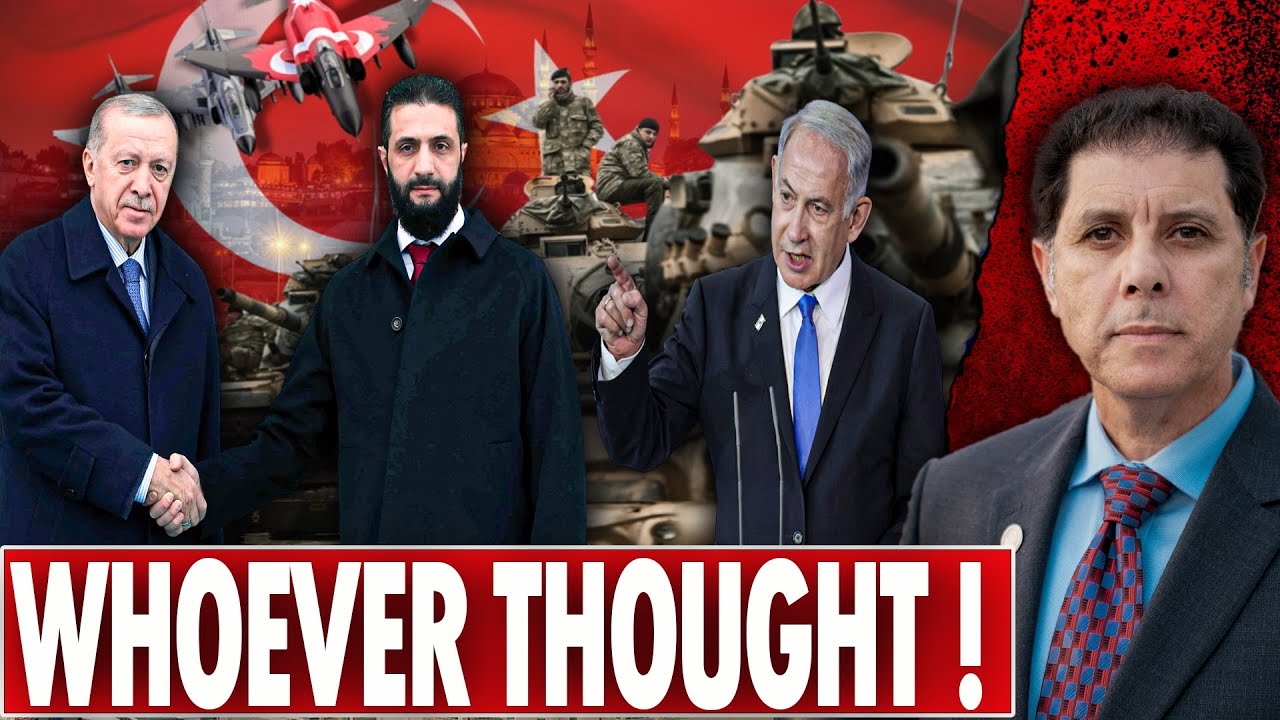
In this livestream, the host examines Turkey's recent establishment of a permanent T4 air base in Syria, exploring its strategic motivations, historical background, and the ripple effects on regional actors. The discussion begins with a rapid news roundup—Houthis launching a cruise‑missile attack on the US carrier Harry Truman, the death of four US soldiers in Lithuania, and Iran's testing of the Qader‑380 anti‑ship missile—setting the stage for heightened tension in the Middle East. The host then delves into Turkey’s geography, centuries‑long empire legacy, the founding of the Republic in 1923, NATO membership, and the ongoing PKK insurgency, arguing that the Syrian base offers Turkey a forward position to strike PKK elements. The narrative moves to the base’s hardware: deployment of Turkish‑made Hisar air‑defence systems and potential integration of Russian S‑300/400/500 missiles, which Israel views as a direct threat to its freedom of air operations over Syria. Israeli security sources, Turkish‑Israeli economic ties, and the broader US military footprint (including the recent carrier deployment) are examined to illustrate how Turkey’s move complicates both Israeli and American strategic calculations. A brief technology interlude highlights China’s new quantum processor (Zhu Changxi 3) and a clip of physicist Michio Kaku explaining quantum code‑breaking, underscoring the broader theme of emerging tech reshaping security. Throughout, the host engages a live chat audience, announces upcoming guests (Prof. Anna Malandog), and promotes future livestreams on China’s economy and other geopolitics topics. The overall take‑away is that Turkey’s base is a multifaceted maneuver—securing a foothold against the PKK, leveraging Russian defence tech, and positioning itself amid a volatile US‑Israel‑Iran triangle—while also reflecting Turkey’s internal political calculus and historical cycles of empire and decline.
Chapters
All right, hello everybody and welcome to Geopolitical Trends, where truth matters. Excited to be with you as always. Have an interesting topic for you, a development if I may use the term, and this one has to do with Turkey, uh, already taking the necessary or concrete steps to establishing a military base in Syria. Talk about the dynamics, uh, changes in the geopolitical landscape. So, and makes you just wonder, why now? And is Turkey have sort of a good intentions regarding this? So this is what I'm gonna be getting into in this discussion here, providing you my own analysis, asking you some questions, of course, and we'll just go from there. So first of all, let me say hi to our wonderful community. You know, this is the rule. Lydia Grace, good to see you. Uh, inbezer, I'm sorry, I couldn't pronounce that one correctly. Here it is, I'm gonna share it here. Uh, no, they are working together. You, you got a point there, you know. Grizzly, good to see you. Tariq Abdulaziz, good to see you. Uh, oh yeah, that's a strong one. I don't believe it, Erdogan is an Israeli slave, he wouldn't dare, the coward of Istanbul. A lot of people agree with you, Tariq. So, uh, NOA 1996, good to see you. Wisdom, good to see you. Alexander, good to see you. Karakolak, as always. Uh, Karakolak, you got a good point there. I was aware of this particular, uh, uh, reference you are referring to here. So yeah, this is what the tension is going on right now inside Turkey with the arrest of the mayor Istanbul. So, uh, who else is here? Let me— Willie Holman, as always. Dave H, History Discover, good to see you. Truth Seeker Bobby, Marco W, Alex Talukin, as always. Taiwan Still, good to see you. All right guys, let's get into our topic here. First of all, I have some housekeeping. I got a confirmation yesterday from Professor Anna Malandog She will be joining me on the 5th, which means on Saturday at 8:30 AM my time here. It will be, I think, 10:30 PM Manila time, if I'm not mistaken. So anyway, she couldn't make it last time due to technical challenges in the location she was at, and now she's back to her home base and, and we'll be talking So make sure to join me on that, uh, uh, for on Saturday the 5th. So, all right, let's do some headlines here, guys, because there are some major developments you need to be aware of, given our conversation always is linked to some other aspects. So I'm going to start with this one first, right, right away. And this just happened within 24 hours, so the stuff I'm sharing with you is the recent one. The Houthis have announced now the targeting once again of the USS aircraft carrier. So makes you just wonder why the US now is sending more, uh, support, including planes, drones, and so forth. So they couldn't defeat the Houthis. And here is what, uh, the Houthis military spokesperson Yahya Saree announced the launch of a cruise missile and drone attack targeting warships in the Red Sea, including US aircraft carrier Harry Truman. And of course, this came in a reaction to the 3 people, Yemeni people, who died following the US airstrike in— on Hodeida. That's what happened. So, and this, as I said, within the last 24 hours. So we need to keep that in perspective. So Uh, second one I want to share with you, something that died down completely. The 4 US soldiers that died in, uh, in, uh, Lithuania. Don't hear much about it anymore, slept under the rug. So, so what is the story of the killing of 4 American soldiers during so-called military mission in Lithuania? What, first of all, American forces doing in Lithuania? Whether 4 people or 10 or 1,000, what, doesn't matter. Why the American military presence on Lithuanian soil? Because if you know Lithuania borders which country, by the way, which country Lithuania borders, uh, let me, let me say, just see your knowledge of geography here. In your opinion, okay. Uh, okay, uh, where is everybody here? Come— there you are. Which country it borders? Russia. But there is another one, Belarus. Taiwan still, you got it. This is very crucial for you to understand given the relationship between Russia and, uh, Belarus. So, so it's very, very interesting. So now they, they're saying, well, we, we confirmed they found 3 dead, but they are looking for another one. So They're still missing some. Uh, third thing I want to share with you, once again this is about Iran. Within the last 24 hours, uh, once again, uh, Donald Trump's threats. So Iran warns again with a decisive response. And what you're looking at, it's a picture of Qader 380 anti-ship cruise missile being tested by the Revolutionary Guard earlier this year. However, it's just the idea that the anti-ship cruise is in the picture, it gives you an idea as far as targeting the aircraft carrier. So, so to me, once again, a clear and loud message. And the last thing I'm going to share with you, it has to do with the world of technology. So very, very important discovery here, and I'm going to play a clip for you shortly after. Um, this one has to do with the— and by the way, regarding the Iran, regarding the Iran and the Houthis, I forgot to mention this. This is why the Pentagon announced this morning the deployment of an additional aircraft carrier in addition to warplanes to bolster US naval assets in West Asia or Middle East. Well, you know why? It's because they couldn't even defeat the Houthis, and maybe they are in preparation for Iran, but Iran is ready for that. So, uh, and the last thing, as I said, I will share with you, this one has to do with China building, uh, China right now builds a quantum computing that solves problem that will take almost 6 billion years in seconds. So this might shock some of you, might not, I don't know. I just wanted to share this with you. A new development that strengthens the position of the Chinese quantum computing in the scientific arena. This is where a team of researchers from the University of Science and Technology of China announced the developments of the new quantum processor called Zhu Changxi 3. Which represents a breakthrough in the field of quantum supremacy. Now I'm gonna play a clip for you guys, and I give credit, by the way, the sound, the music, the sound and the video, the clip itself, I give credit to Cosmic Waves. That's their video here. I just wanted to share it with you for the sake of knowledge. So, so take a, take a listen to a physicist who is— that's Professor Michio Kaku. I don't know if you know who he is, but he's one now. So take a listen, guys. Let me— oh, sound is off. There we go. Why is the CIA afraid of quantum?
Because in principle, they're so powerful, you can break any digital code. Because how do you put a code into a computer? If I have a number that's 100 digits long, I ask the computer, factorize it at the product of two smaller integers. That could take 10,000 years to solve that problem. That's why you're safe. That's why no one can break into your code, because you know how to factorize these two numbers, but the, the criminal does not. A quantum computer can crack it just like that. Why is this—
anyway, I just wanted to share that with you, by the way, and I give credit once again to Cosmic Waves. That's their clip, and the Sound of Music is there. So that's how it works. When it comes down to this kind of stuff, when you share it, because YouTube sort of— that's what they ask for. Anyway, let's— it's a very, very interesting development, guys. You know, this is another seismic change that's going to be, uh, into the technology world and so forth. So, all right, let's get into our topic here with Mr. Erdoğan and Gülen, the, the, uh, the extremist that became now the interim president. But again, doesn't matter what views you hold on the guy, If once you know the background, you know the understanding, it'll start to sort of make sense to you why all of a sudden Turkey is establishing a base there, knowing that we the Americans are already illegally in Syria. And of course, uh, the Israelis are taking advantage of the security vacuum. So this is what's important to understand about this dynamic. So, uh, the idea is that the Turkish air base in Syria because Israel now has considered this as a threat to its security. Well, hold on a second. What makes you think that to begin with? So it's because what Turkey is bringing to this, uh, base, they already start moving certain hardware, and I'm going to be sharing pictures with you after I'll do geography and history You need to understand these aspects of it. So let's start with geography first. Let me share the screen with you regarding the map because it's a very, very important— once again, like I always say, geography is so important to understand, uh, how the sort of the evolvement of events as they move forward. So, so Turkey, where is Turkey to begin with? Not everybody knows what it is. Turkey is a transcontinental Euro-Asian country. Now, there are those who think it's the Middle East, there are those who think it's Europe. There are— it's a transcontinental. It has a very, very strategic location when you look at where it is in comparison to the rest of the, uh, the rest of the world as far as the location there. So the major part of the country of Turkey lies in the Anatolian plateau of Western Asia, while a small part of Turkey is located on the southeastern part of Europe's Balkan Peninsula. Very crucial for you to understand this. The Turkish Straits, uh, uh, Dardanelles and, uh, Bosphorus and the Sea of Marmara separates the European part of Turkey called East, that's how it's known, from Anatolia. So when you look at it, basically Turkey is located in the northern and eastern hemispheres of the earth. So it is bordered by, believe it or not, 7 countries: Greece and Bulgaria to the northwest, Georgia to the northeast, Armenia and Iran to the east, Iraq to the southeast, and Syria to the south. So, and remember, uh, uh, Nakhchivan— Nakhchivan is an enclave of Azerbaijan, also borders Turkey to the east. And one thing good about Turkey regarding its strategic location, it has coastlines on the Black Sea to the north, Aegean Sea to the west, and the Mediterranean Sea to the south. Very, very interesting geographical, uh, location regarding, uh, where, where Turkey is. And that is one of the important aspects, uh, for you guys to understand its importance. So that's why I— it, it behooves us to understand this geography to make sense out of the move of Turkey into Syria. Now, geography is not the only aspect. You have also to understand its history. And I'm, I'm gonna go back, but not too long, because I'll have a link for you guys later on. You can take a look at it. So suffice it to say, to understand Turkey, you have to go back in history because its history spanning about a millennia, and that one sort of, uh, it encompasses the ancient civilizations. If you know anything about ancient civilizations, I'm sure you have heard of, uh, what's that place called, the, uh, Göbekli Tepe. There were some artifacts that was found that traces back to old civilizations. So, so this is why you have to think of the ancient empires ancient civilizations, and of course fast forward to the birth of modern Republic of Turkey. So now there are some key periods that, that includes, for example, the rise of the Hittites, the Seljuks. Of course you can't, you can't ignore this and overlook this because those plays, they, they played the foundation of what modern-day Turkey is founded on. Then you have, of course, the Ottoman Empire. So all of them, the Hittites, the Seljuks, and the Ottoman Empires, all of them have shaped and molded what modern-day Republic of Turkey, which was established in what year? This is a question for you guys. What year modern-day Turkey was established? Just give me the year if you happen to know. Before I'll get into the detail of the history aspect, does anybody know? Uh, Karakulak, you got it! 1923. 1923, that's, that's the exact one. So, so let me just take you briefly through the certain eras briefly here, and we'll jump into our— so let's go back Let's go back to ancient Anatolia, because that's where the early civilizations are supported. So where do you go? Which era is this? This is the Paleolithic era, which is where sort of the modern human, uh, habit, uh, habitation in present-day Turkey dates back to the late Paleolithic period. This is why it's important. And that's why if you go back some 12,000 years ago You go back to, uh, Quebec Littape, this is where certain sites, the world's oldest Neolithic sites, were located in this location. Then what comes after it was the Hittites. The Hittites, which is an Indo-European people— remember, an Indo-European people— formed a major empire in Anatolia. They weren't in Istanbul. There are certain records that mentioned about— no, no, no, no, it was in Anatolia, and it was followed by the Assyrians and the Greeks. They came after it. So talking about Greeks, Greeks settled in the area. This is why you are noticing certain tensions between, uh, Turkey and Cyprus, which has some Greek, uh, inhabitants., within its land. So, so the Greeks settled in the area, and this is where they found, uh, they founded the cities like Byzantine, so which is late known, later on known as Istanbul or Constantinople. So then after that came the Persians, the Romans, and the Byzantine eras. All of them came. So the region was ruled by the Persian Empire, believe it or not. And none other than after that was Alexander the Great, then of course the Roman and the Byzantine, uh, Empire. So now the key aspect from the historical perspective, the key one that I need you to pay attention to is from the rise of the Seljuks, because they play a major role in shaping what modern Turkey is all about. Then the Ottomans. So the Seljuks turn in the 11th century. That's when it was Seljuk turn. The Seljuk Turks migrated into Anatolia, leading the Battle of Mazgirt, and this happened in 1071, which basically paved the way for the Turkish dominance. So then what came after it? Because remember, 11th century. What came after that? 13th century. What happened in the 13th century? Can anybody tell me, guys? Which empire emerged to the surface in the 13th century? It's all— when now? Let me just see, guys. Remember, 13th century, key, key aspects, uh, for you too. Uh, Mamluks, uh, that's correct, but also was the Ottomans. That is correct, it was that time, but it was the Ottomans on the 13th. So what do you think about in terms of what happened, uh, when Anatolia was founded in the 13th century? That's where the expansion of the control took place to much of the southeastern part of Europe, West Asia, and North Africa. This is where you see that expansion, you know. I have ancestors in Sevilla, in Spain, in Andalusia area, area that is. And if you know anything about that era back then, it was under the control of the Ottoman Empire. So then comes the fall of Istanbul which was known back then as Constantinople. The fall of Constantinople, this one, what happened is that the Ottomans conquered Constantinople, which is modern-day Istanbul, exactly in 1453, to be exact. So, and that, by the time they did that, they ended the era of Byzantine Empire. So all goes in, in cycle. Then comes the decline of the Ottoman Empire in itself. So what the Ottoman Empire of course started to experience decline in the 17th century. So, so because it's, uh, its efforts to modernize have failed. And this is the reason I'm saying this to you guys is to highlight to you the importance of doesn't matter how strong the empire is it will come a time where it will fall. This is exactly, I feel, where my country is going through that cycle. It's a cycle, simple as that. So this leads us to the talk about the birth of Turkish Republic. So of course, the Ottoman Empire collapsed during World War I, as you know. And, and prior to World War I, by the way, and I just want to share this with you while I'm thinking about it, What we are witnessing around the world right now, mainly in West Asia or Middle East, I am giving it similar— I mean, I'm comparing it rather to the exact event that took place in the Balkans prior to World War I, but by about a year and a half to 2 years, when it was massive killings of civilians, destructions, and so forth. We are witnessing the same. Sad to say, you will think we will learn from history, and that's what led to, as you know, the, the details of World War II. But suffice it to say, for the sake of our conversation here regarding the Ottoman Empire, it collapsed after World War I, leading to the Turkish War for Independence. So, and of course, who emerged? Who was the major figure? That emerged after this? You guys should know. It was a former military guy, and, and he made a mark in Turkish history. Does anybody know? Uh, no, no, not the British. No, I mean, it was a Turkish individual. It was individual who, who really shaped the, the modern Turkey to where it is today. It's called the father figure for Turkey, uh, and he emerged after World War I. Uh, oh, oh, you got it, Karakulak, you got it, you got it! Mustafa Atatürk, because he played a major role. Mustafa Kemal Atatürk. Atatürk because he was a war hero. So he's the one who led the Turkish national movement and founded the Republic of Turkey in 1923. And the rest is history, as you know, especially when you move. Of course, the one thing that they did after the establishment of the new republic, what was it? It was the, the, it was abolishing the caliphate or, and the Ottoman dynasty. That was the end of it. Modern Turkey, suffice it to say, in 1952 Turkey joined NATO because we wanted that. And of course the other event has to do with the Kurdish conflict, which, because the PKK launched a guerrilla war in 1984. This is one of the key, really key aspect as to why Turkey is establishing a base in Syria, and I'm going to get into this as I move forward. It's just you need, you need to know the background history of all this, and this is where leads to where we are today. So, so I'm going to share a link with you guys in the, these, in the chat box should you want to read a little bit of history. It's very, very short, this link. I looked it up elsewhere and I found it. So, uh, Noel, I want to say thank you once again and good morning to you as well. Noel, thank you so much for your super sticker. Lali Peltonen, uh, Lali Peltonen, thank you so much for your Super Sticker. Truly appreciate your kind support. And of course, it goes without saying, Fernanda G, thank you, much appreciate your continued support for the channel and its content. I'm very grateful to all of you guys, I want you to know that. Thank you so much. All right, let's get into Now we're going to have to think, and I ask the question, is Israel and Turkey on a collision course in Syria? There are those who say no, it's unlikely. Why? Because both of them are two faces of the same coin. No, that— it's logical argument. I mean, are you going to trust the Turks? You know, because all of they've been saying about, look what happened in Gaza, we're we talking about? What they— what have they done? As a matter of fact, the gas that Israel uses was using, uh, the ports in Turkey. So, uh, what the right hand is doing, the left hand doesn't know. So, but this one here, the establishment of this T4 base, it's, it's an air base, it's kind of going to change the dynamics. Why is this? The reason being because Turkey is going to be deploying an air defense system And I have some pictures here. Uh, there are certain defense systems that Turkey is going to be deploying to that base. Very, very interesting aspects that, uh, because remember, uh, Turkey is a NATO member, so it has some hardware. But that's beside the point. Deploying this defense system is gonna— might end up limiting the free rein of Israel in attacking Syria. On the other hand, you say to yourself, what makes us think that Israel is gonna— that, I'm sorry, that Turkey is gonna shut down or challenge Israeli airplanes? So, and this is where in Israel there is a serious concern right now. There was a security source inside the government argued that if Turkish airbase were to be established in Syria, and they are moving forward with it, this in his or her opinion will undermine Israel's freedom of action and considering it a potential threat that Israel has to oppose. Makes you just wonder what will Turkey do. Because here is the thing, and I'm going to ask you guys a question because that's what we do in this community. We talk to each other, and I want you to think outside the box. And this is only hypothetical. Hypothetically, if there is to be a conflict between Syria— I'm sorry, between Turkey and Israel, who will have the capabilities to destroy the other? Will Syria win? Will Israel win? Or Turkey, in your opinion, knowing what you know about the capabilities of both Israel and Turkey? If there is a conflict, who will come on the top? And I just want to, want to get your take. Uh, 4DC, you say Turkey. Karakolak, you say Turkey. Uh, Jamie Dodger, Jamie Dodger, you say Turkey will win. Very interesting.
Uh, wow.
Sarah Carol, you say Turkey. Jesus Aguilar, you say Turkey. Uh, Akil, you say Turkey. Very, very interesting, you know. Uh, I will have to agree that Turkey has some major hardware from the West, but it has also another advantage that Israel doesn't, and that can consists of the Russian defense systems, which is— are far accurate than anything the West have. You consider the S-300, S-400, and the S-500 missile systems, which by the way, Turkey is going to take part in the production of the, uh, uh, S-500 missile systems, to my knowledge. It's— you just wonder. So Israel will have nothing to defend against it. Remember last time when I shared with you As far as the attack Israel conducted on Iran, but it was just from the surface. They didn't go in because of the defense systems, the air defense systems Iran has. Israel couldn't read the radars, couldn't jam the systems because those are Russians made. So, so it becomes now Israel is concerned that the Syrian government now is going to allow Turkey to establish military bases because of the close cooperation between the two. And I'm going to share a picture here between Erdoğan and Zulani. And this is where the Israelis are concerned. As a matter of fact, they were behind closed doors talks inside the Israeli cabinet regarding this particular issue. It didn't make it to the media. It was till after the fact. This conversation didn't start yesterday. This has been going on for a while. Why? Because when Erdoğan and Giuliani met, that was part of the discussion for himself. So this is why, because if you think before what Israel did, it attacked, it targeted the T-4 military base. That is how it's known. So, and the base in itself, where is located? In the Homs countryside area, which is almost the central of Syria. And the attack happened last month in March. So, and this is why for Israel the main concern now, it will, it will not have the free rein of the freedom of air operations, if I may say the term, because now it will be compromised.
Why?
Because Turkey has this kind of defense systems that can take down those kind of aircraft. So, and this is where the challenge of the Israelis that they are concerned about. So now the construction of these activities in the base Because Turkey is considering making it a permanent base. This is not a temporary stuff, it will be a permanent. Because remember, this is a problem not just with the Israelis, a problem is also with the Americans. You remember, you guys remember during the invasion of Iraq, what did Turkey do? It didn't allow presence of its troops to launch from Turkey into Iraq. That's the same argument I made about should the United States decide to launch a strike against Iran, beside the aircraft and all that, it has to have some base on land somewhere in its bases, be it in Bahrain, be it in United Arab Emirates, Qatar. Kuwait, Saudi Arabia, Jordan, Turkey, Egypt. You got the idea. And this is why even our presence in Syria, which is illegal once again— and as a matter of fact, I will go as far as adding, uh, Iraq into the mix because we still have a presence. The Prime Minister of Iraq wasn't strong enough to tell the US, you need to pack and leave. He's not strong enough to do so. So, and this now, the presence of Turkey inside Syria, it only complicate the matters for, uh, the, uh, the Americans in addition to the, the Israelis. And that's why you need to understand why Turkish decided to deploy The Hisar-type air defense system, that's the one you're looking at right here, guys. Uh, where's the picture? Right there. Yeah, yeah, those are some, uh, the— it's called the Hisar-type air defense system that will be deployed to T4 Air Base. Why? To provide air cover for the base. So I don't see the Turks is going to deploy the S-300 or S-400 systems to that base. They won't do it. Too early. Because once that system is in place, what's next is going to be? It's going to be the reconstruction and the expansion of the infrastructure. That's needed there. And this is why sort of, uh, uh, uh, the type— you start to think in terms, what are we looking at here? Because what Erdoğan is thinking in terms— Erdoğan is playing two, hitting two birds with one stone, as the saying goes. On one hand, he wants to move the attention from within Turkey out to something different. In addition, beside the illegal arrest, detention of the Turkey, of the, uh, uh, the mayor of, uh, Istanbul. Because here is how it works in the Turkish, uh, uh, elections and presidency and so forth. Before you make it to the top, you have to be the mayor of Istanbul. That's one of, uh, uh, stepping stones. Well, this guy, like what Kara Polak mentioned earlier, It's been a talk back in 2020 regarding this. Why? Because Erdoğan can play both sides whenever he feels like it. The Americans are fed up with him. They, they don't get along, they don't like him, you know. And especially made it worse when Erdoğan made the decision to go ahead and purchase the Russian S-400 missile systems despite the objection of the Americans. As a matter of fact, We terminated the training of the Turkish pilots for the F-35. We canceled the whole program.
What we done?
The Turks said, we don't care. But for Recep Tayyip Erdoğan, he's thinking differently because he wants to stay. I bet you if elections were conducted today, he will lose elections to the mayor. Imam— I think Imam Uğlu, if I'm not mistaken. If, if anybody can confirm the name, Imam Uğlu, that's the one I remember. So he will lose the election to that guy. So what Erdoğan wants to do is to divert attention from that. But second is his aim, the overall objective, and the overall objective has to do with wiping out the PKK altogether. What a best way to coordinate with— because remember, this has been in the works back then when Erdoğan made some sort of an agreement with HTA, HTS, Hayat Tahrir Şam, at that time to move forward into targeting the elements of PKK. So this is also where the Israel is. You have to think of this as a chessboard, guys. You have to know where the pieces are moving, otherwise it won't make sense to you. This is how it works. Uh, West Asia or Middle East is a very, very complicated region ethnically, socially, religiously, politically You name it. You have to decipher these complexities. And this is where the Israelis now have came up publicly and voiced their concern for this close cooperation between Turkey, President Recep Tayyip Erdoğan, and Hayat Tahrir al-Sham leader, the interim president, Zulani, that is, or Asharaf. His name— I, I know him by, uh, Julani. So this is where the concern for the Israelis, because think about it, guys, and we have to be realistic regarding this. If truly this HTS, Hayat Tahrir al-Sham, is really cares for the Muslim world, okay, if Turkey, as it says, care about the Palestinian people Why haven't they done anything? Have you even seen any attack by HTS towards Israel or towards US interests in the region? None whatsoever, because it was the US that prompted the, uh, uh, Zulani for power. Because the reason we do this is because we have the means to also take him out should that time come. Because in my opinion, he's a dead man walking. It's just a matter of time. If he doesn't toe the line, we don't know what's going to be. There is a precedent for this. And this is where I believe, uh, thanks, is going to move into that direction, uh, for why Turkey wanted to control, uh, uh, the T4 airbase. Because you think about the whole idea, the range of what Turkey is going to be expanding and reconstructing the base and the deployments of the hardware. We're not talking just the Hisar-type air defense system, we're talking about advanced— also advanced surveillance and strike capability drones. Why would you want to do that? See what I'm getting at? This is exactly what you have to think in terms of what is the big picture. And the big picture for Turkey is ensuring, first of all, we can wipe out, with the support of the interim government in Syria, wipe out PKK once for all. Because here is the thing, and to me is as clear as daylight, this is the only historical opportunity Turkey will have. After this, that's it, because it will be closer to where the, the locations, uh, of the PKK, uh, are. So remember the location where Turkey is, and I'm gonna share once again quickly, if you allow me, just share the map because I have it here. I, I kept it just for you to see. So just look at the map and look where, uh, uh, I'm gonna make it big. Look where, uh, where, uh, Turkey is. Look, I'm sorry, not Turkey. Look where Damascus is. Okay, right. Remember, uh, Homs is in the center of the country, closer to the Iraqi border where PKK usually are in the mountains and so forth. So Turkey is aiming at this. There are those analysts who say, well, this also creates an opportunity for Turkey should want to move against the Israelis. I don't see that happening. No Arab country— let me just repeat this— no Arab— Turks are not Arabs, they are Turks— but no Arab country or a Muslim country, including the Turks, will take on the Israelis. They won't. They'll talk too much, but that's where it ends. That's usually a norm for the Muslim countries. That's just how it is. I just don't see them doing any of that. But here is another interesting development that all of a sudden emerged now to the surface, and this one is coming from Tel Aviv. So, and what is that? Is that the Israelis now— when I say Israelis, I'm referring to the government— they are now observing a worrying trend that is headed by none other than Zulani himself, which is the interim president of Syria. Yeah, all of a sudden, the Israeli government have now revealed on Tuesday, as a matter of fact yesterday, and I was reading this in a foreign language because I didn't see this here in the West at all. Media and all that. You all know how it is. So because now they are concerned about the, the, uh, the interim president, uh, Zulani, even, uh, given that the Israelis disclosed his— meaning Zulani's— alleging his extremism and efforts to undermine Israel's security. Not to my knowledge, never said what, because he never dare to attack. What did he do for the Palestinian people? So if he is calling for this, the, the, uh, support Muslim brothers and all that, where is that? But fine, interesting enough is that the Israelis are releasing this information or making it public. So, so, and this was released by unnamed Israeli security source. So saying that Tel Aviv— and I quote here, let me, let me quote it for you— Tel Aviv has noticed a worrying trend led by the Syrian president, Ahmad al-Sharif, adding that President al-Sharif is an Islamist who wears a tie. He is an enemy, a hardliner, and not partner for dialogue, end of quote. It tells you the story right there. It tells you the story right there, because Zulani agreed with Erdoğan to allow him to establish a base. Because what happened in Syria, you all know, Iran lost some of its influence in— Russia's base still there, but Russians moved their, uh, their advanced systems and all that out to Libya. And all of a sudden, he, Zulani, allowing now Turkey to come. And as I said, Turkey does have a strong military in comparison to others. Turkey does have some advanced systems, even though they are Western. They will stand no chance. And this is why Erdoğan— and I repeat this— Erdoğan went ahead and purchased the S-400, uh, systems from the Russians and working currently on the production of the S-500 systems. So I even argued, uh, when I wrote my Russia book, I addressed the Turkey aspect of it. So let me share a clip with, uh, an excerpt rather. So here is what I wrote back then, if you allow me to share it with you. I, however, disagree with Dostoevsky's assertion that the threat from Russia over its long-range missiles have been overblown. If that is the case, why didn't NATO act when Russia annexed Crimea? Why didn't NATO react in Syria? At the time of this writing, countries in the Middle East are considering purchasing Russian missile S-300 and S-400 instead of the US Patriots system. Turkey, a NATO member, has acquired the S-400 missile system despite a strong objection from the United States. However, some argue that the S-400 systems are deadly accurate in comparison to the Patriot missiles. Consider, for instance, how Saudi Arabia Patriot missile defense system failed to stop the Houthis' missiles and drones launched from Yemen, causing major damage to an oil pipeline and targeting the Najran Regional Airport. Saudis claim they intercepted the drone, a claim that lacks an evidential basis. This is what I wrote back then. And by the way, I confirmed this story. They didn't intercept anything. They did not. And Najran, it's really in the area way out in the skirt. This is far from where I was. I was in this part of the country. Najran is a little bit up north of where I was right there. So those are just some pictures I made it to that, uh, it's called the Empty, uh, uh, Quarter. That's why there is no, no civilization there, just So, so that's my point. You needed to— you need to understand this dynamics to make sense as to why all of a sudden we are hearing about Turkey's establishing a base, knowing that the Americans are still in Turkey illegally, and the Israelis will not now have a free rein regarding just taking control of the airspace. So the question is And I'm sure you'll be asking the same question. Question is, if once the dust settles, in other words, once the base is established and the air defense system is there, and if Israel flies one of its fighter jets, will the Turkish system shut it down or not, or shoot it down rather? I don't know. I don't know. What do you think? In your opinion, will the Turks shut down the Israeli fighter jets if they hover around the base once it is established and the air defenses see it? Let me just see, because remember, again, Turkey is playing both sides. Like I said last time, when the atrocities were committed in Gaza and so forth, The gas was still flowing into or still getting into Israel using the Turkish sort of what we call them. I draw a blank on this. Geez, couldn't think of the word. Iflan. You know, the oil tanker or the gas tanker. So yeah, they were using the Turks because there is a deal between Turkey and Israel, economically speaking, and they maintain that. So that's why I always say Muslim countries say one thing and do another, except for those two, Yemen and Israel, and I'm sorry, Iran. The other question that looms large is, should the US decide to attack Iran, will anything be launched from Syria? And what will Turkey do in that case? So those are questions, uh, uh, uh, you, you have to consider, you have to think about within the big picture. To make sense of why we are all of a sudden hearing of all of a sudden Turkey is going to be establishing, you know. There is another sort of aspect that I look at it, you know, thinking geopolitically, is that is Turkey preemptively reacting prior to what's coming? And what's coming, maybe Turkey is reading it differently, that there is a turmoil that's coming to West Asia. There is a turmoil, there is a conflict that's gonna be between the US, Israel, and Iran, and Turkey wants to preposition itself for that shift in the geopolitical landscape in the region. The possibility is there, knowing that now the United States is sending more assistance as far as, uh, uh, air, uh, aircraft, and also the idea of sending like what the Pentagon just announced. The deployments of the aircraft carrier and additional warplanes to bolster US naval assets in the Middle East or West Asia. So that tells me right there the US is struggling to really eliminate the Houthis. Couldn't, they couldn't. So, so could it be that Turkey is reading all this and saying to itself, uh, because I know how active its, uh, new defense minister, uh, his name is, uh, I think I have a picture. His name is General Yasar Güler. There's a picture here. So he's been around long enough to, to understand how these developments work. So, so this is the possibility for what I'm seeing, and I just wanted to share this with you guys. So Ah guys, that's all I have to share with you today regarding this topic. Once again, I want to go back and say thank you to, uh, Noel for your Super Sticker. Truly appreciate you for that. Lali, Lali Piltonen, thank you very much for your Super Sticker. Fernanda G, thank you very much. And Whitney, where is Whitney? Whitney, uh, Whitney, here's Whitney. Thank you so much for your Super Sticker, truly appreciate you. And I am Valentina, greatly appreciate you, your words. Thank you for the truth, people. Add for the Axis of Resistance or Axis of Heroism, good choice indeed. So thank you all guys for your support. Uh, remember to, uh, to those some of you have been asking, by the way, way, uh, if, if I do, uh, I do have a link to, uh, hold on, bear with me here, guys. Some of you have asked me about the My Speaking, uh, uh, uh, website. So here's where I— if you go there, you'll see some, uh, of course, I— there are certain presentations that I did Those are for private audiences. There was no recording. It was no— because the nature of the information that I had to share. So this is why I happen to know this kind of— because I've talked about them before, except now that things have changed. So, so this is the link for those who might be interested in wanting to know some. And of course, it goes without saying, regarding your support for my upcoming, uh, trip to Asia I am very, very grateful to those who bought me a cup of tea in support of my, uh, you know, in support of my Asia trip. I wanted to see someone here that got me the Buy Me Coffee. If I could just give it a shout out quickly here. No, it's not here, so, so I'll do it next time, guys. But anyway, that's what I wanted to share with you. Uh, should you decide to support the, the trip, that's the link for it, and this one is for the channel, and I'm very, very grateful. Remember to join me tomorrow, uh, on the Geopolitics and Money, still Geopolitics in Conflict. We'll be talking about the very, very interesting developments coming out of China, economically speaking. Uh, so we will be— I'll be addressing tomorrow with Elizabeth on that channel. So, and on Friday I will do another live stream for you. Then Saturday I'll have, uh, Professor Anna Malendog, and I am working on two guests. I'm gonna have them here on the channel, uh, in, in due time. So, okay guys, wishing you a good day, good afternoon, a good evening, whatever part of the world, and look forward to seeing you next time. As always, remember, geopolitics impact your daily life in more ways than one. Till next time, bye-bye.
More from David


Beyond the Single Actor: Why the Gulf Isn't Choosing Between the US and China


Iran, Iraq's Militias, and the Houthis Are Coordinating! This Changes Everything




Who Controls the Next Decade's Resources? Latin America and Africa's Geopolitical Crossroads

The Chokepoint Trap: How Washington's Stupidity Triggered a Cascade That Now Controls the World

Trump Spooked as IRGC Unveiled dual-use SLV, Deployed Ghadir Mini-Subs & Hinted at Tactical Nukes!
