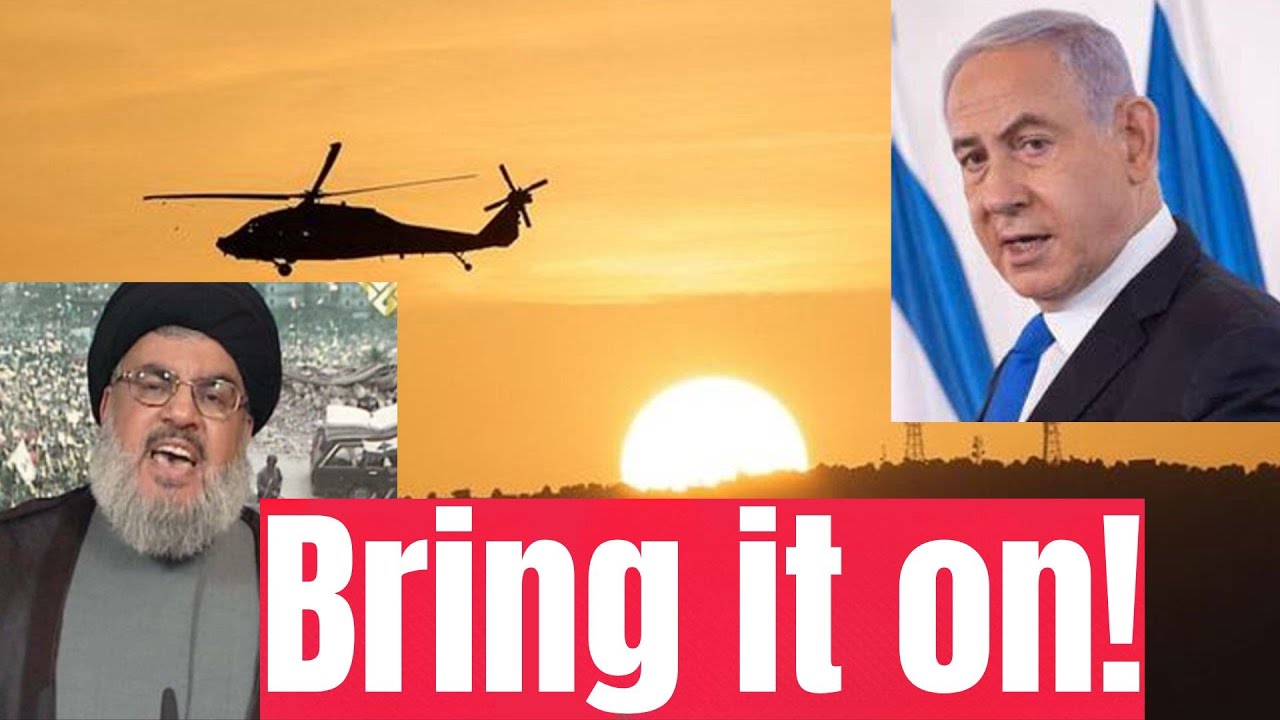
David Oualaalou reports on escalating fighting between Israel and Hezbollah. The video provides commentary on the conflict, though specific details about the fighting, casualties, or military operations are not included in the available information.
Chapters
Hey everybody and welcome to Geopolitical Trends. So excited to be with you on this November 24th. Yeah, the first day after Thanksgiving. So for all American viewers here, hope you had a, a happy and wonderful Thanksgiving along with your families and loved ones. So excited to be here because of the nature of the topic I'm going to be addressing, which something we don't hear much about in the Western media. Most of the information that I found, uh, is I looked at it from overseas. And given even my recent trip, which I was in, uh, uh, certain locations that I happen to be passing through, I kind of ask the questions. And anyway, this is what I'm going to be sharing with you. This one has to do with the, uh, fight intensifies between Hezbollah and Israel. And what you need to know about all this. So, so welcome to all of you. Please type in when you are, where you are joining me from, what part of the world. Hello Jack, good to see you as always. Athene Wu, good to see you. Uh, uh, Mega Macan, good to see you all. So, uh, but let me, let me, as always, I have to extend my sincere thanks to all channel members, supporters And I'm gonna share something with you guys because we are a community here, you know. And I'm getting some comments about, uh, I am alienating the viewers just because I give my thanks to the supporters. Uh, I'm at a loss here. I'm really— I'm lost for those people to be thinking like that. I've learned something— to show gratitude, to show appreciation, to say thank you for the supporters. That doesn't mean I'm alienating all the viewers. That, that just doesn't make any sense. So, so, and I am not going to wave away from this because I am going to say thank you to the channel members. The easy solution to all these guys is fast forward. If you don't want to listen to this, just fast forward to when I start my analysis about the topic. So in any event, let's, uh, let's extend our sincere thanks to a new— there are 10 new channel members. And speaking of channel members, Remember to join me tomorrow, the members and supporters, for the exclusive Q&A that I will be doing for the members only. So let me, let me give a shout out to the new channel members, and I'm going to start with, uh, because I have the list here in front of me, with Agricola Urbanus. Thank you very much for becoming channel members. Uh, also next one is Hard Rocker. 73, 73, uh, more, less, uh, Hong Long, uh, the truth, uh, seed sense, Francis Tango, the Emancipator. And I have a, a Chinese name here that I looked at the translation. I hope I get it right, is Huang Ming Kong. I hope I pronounce it correctly. And also I want to give my, uh, appreciate my, my thanks and recognize and give a shout out to Ramplus01, uh, Horus Lim, and the last person here is Tony, uh, Badrawi. Thank you all for becoming channel, uh, members, and I look forward to seeing you tomorrow. I also take, uh, the opportunity to say thank you to those who bought me coffee recently. Horace Lim, uh, Mustaq Ahmed, uh, someone by, uh, the email DGOA— there's no name there, uh. So to all of you, I say thank you for buying me coffee. I truly appreciate it. All right, let's get in into our topic here, and I'm gonna start with the question for you like we always do. So, so the question is this: How significant are Hezbollah attacks on Israel? It's because, again, if we don't hear the information, we will not know the extent to how, how fierce the fighting is on that part of the, uh, the, uh, uh, the southern border, uh, between Israel and Lebanon. So second thing is, if Israel is saying this hype about its military might and so forth. Why didn't they go in into Lebanon? Is he scared? Is he concerned? You know, if it has that might, why not? And the third question we need to think about is what's next? Because you can't just think all this is happening in a vacuum. What is the next step? I know today they've reached, uh, some sort of, uh, uh, truce whether it's gonna hold or not. Some 24 prisoners have been exchanged. All this to me is nothing but a window dressing. And actually, as an analyst, I see it as a, a sign for a loss that Israel now is experiencing, because this is not a sign of winning. That's the way I look at it. And when you put this within the context of what's taking place in southern Lebanon, then you start to draw or have a bit different picture about all this. So, so here's the narrative, just for those who might not know the background, that recently Hezbollah has announced that it's conducted simultaneous attacks on Israeli possessions at the Lebanese border, which was just like recently, few days ago, you know. And this is what also has been reported. I had to check from different sources to make sure that even from the locals, the residents in southern Lebanon also confirmed that there are fierce fighting between the two. Of course, Israel conducted, uh, some strikes during the weeks prior to this. So of course Israel is not going to want to admit this. So what Israel narrative is, is like this. For For example, the army, the Israeli army has said that its warplane has struck Hezbollah targets and in response to an earlier attack from Lebanon territory. But they didn't say that Hezbollah was able to shut down one of the Israeli drones. And the question that comes after that, if— it's not if, they did— how was Hezbollah able to shoot down a drone. That means this is not a— you fire an RPG because you can't bring it down unless it is close or close proximity. So that makes— means what? That means that Hezbollah might have in its possession some advanced type of systems. Of course Hezbollah is not going to come over and disclose that because it will be stupid of them to do so. Like I said in the post for the community, Hezbollah is holding the wild cards. They're not playing their hands right now. For now, they are using the artillery, okay? They are shelling their, their possessions. And I'm going to describe detail with you and provide you the links in the description later on as to where that information, uh, is. Uh, first of all, you need to see where this location is. And I'm going to share it with you on Mapcarta so you can see. Let me share it with you guys. And I did a, a brief, uh, uh, uh, historical snapshot on it so for you to see. Here is the location here, and usually I can switch between the map and the satellite view for this one here. Uh, let me see here. Here's the satellite. This is the satellite view of it. No, so this is, uh, uh, Tahrir al-Harfa. Tahrir al-Harfa is in the border, literally on the border with the, the Israeli part, uh, the borders, that is. So this is the regular map here. So, so what's important about this is the geography of this location. You know, as you may know, in southern Lebanon there are about 3 main geographical areas. There is a plain, there is a plateau, and there is mountains. So, and seashore in that part extend all the way from— there is an area there called, for those who are familiar with that location, called— it's called Nakoura, Nakoura in the south, of Sidon in the north, in addition to other locations close by. So the south in itself, for the southern border of Lebanon, the south is characterized by its rugged terrains. This could explain why Israel didn't want to go in, but I don't think so, uh, and of course the whole location in the southern Lebanon is strategic, is strategically located, uh, uh, geographical area, that is. So, and this one has some sort of like triangle borders with Syria and Palestine. That's, that's what makes it very interesting. It has been— I mean, in this location, the southern part of Lebanon, it has been the epicenter of decades-long conflicts between Israel and Lebanon. This is why I believe, and this is again my own, uh, uh, let, let me stop this sharing here of this map here. This is why I believe, uh, uh, Israel is very concerned about going in into Lebanon this time around. This is not like what they did back in the '80s or even for the last conflict they had in 2006. No, things have changed and Hezbollah is well armed I mentioned to you before, guys, that, uh, Hezbollah disclosed that it has in its possession over 150,000 types of missiles. Most of those, I can guarantee this, most of them will be short range because they don't— yeah, they might have medium range that Iran will have to put in there just in case, but the majority of it will be short range missiles because that's where their aim is going to be. So, and this is why I believe Israel is thinking twice now about going in. So why this area has always been the epicenter? Because it witnessed so many conflicts between Israel and Lebanon. And this is why, again, Israel will always have to think twice before going in. So if you look at the history of this, after 17 years— yeah, 17 years without confrontations between the parties because it goes back to 2006. I was aware of it because I used to travel at that time to the Middle East. So, so Southern Lebanon, now after this, it became now the new battlefield because here is the reality that it's not disclosed openly that Hezbollah has been involved since October 8th. You all know because the, the, the operations that Hamas did was on October 7th Hezbollah was involved since October 8th, and this coincided with what, what the operation, the Al-Aqsa Flood, that is very interesting enough, uh, is that how it, how it works, the whole dynamics of it, and we don't hear much about it. And like I said, on the southern border, because it's very important to understand those dynamics, I know there are some, uh, uh, uh what's the word I'm looking for here— some viewers, you know, I don't think so, they are channel members or supporters, they're saying that I need to stop this, uh, talking about history and all that, which to me was puzzling. It was very puzzling to hear something like this from someone saying, oh, you don't need to talk about the history. Do you guys— and I'm gonna ask you a question, please just answer yes or no Would you like me to keep doing the history or historical facts about the topics, whatever topic we're talking about? Please just put an answer, yes or no. And, and because you are part of the community, you have to be part of this conversation. You know, I know those are like destructors, those individuals that put in this nonsense, but, but I can't hide this from you guys because you are part of this. So I need your input into all this. And I'll go by what the community wants, not what an individual saying. You know, to me that's kind of, well, you don't like history, then don't listen to this. Simple as that. All right, let me see, where was I? See, this is why I don't like to get distracted with this stuff here. But, but I have to say it, I can, you know, I'm all about truth. I can't just tell you the good. I, yeah, I need to— you guys need to know what the type of comments that I read, and I'll share with you, uh, because it's, it's, uh, to me it's important. You need to understand this. Uh, yeah, the, what the person wrote, wrote, stop the history lesson business you have started doing. Once again, if you guys like me to keep doing the history, please put yes. This way those individuals can read, unless they are mentally challenged. You know, I don't shy away from— I have no sympathy for idiocy. I'll tell you straightforward, guys, and you know where I stand by now. This is where I stand. The community means a lot to me, and I got to make sure your time that you are spending with me here is worth it, because I'm not here to be chatting with you. I'm here to share information and knowledge that that will be of use to you. Simple as that. So where was I? So understanding the southern Lebanon part, and the southern Lebanon part, those three sectors, they are what they are known as the Blue Line, you know, the western sector which include the Napura area, the central sector which is the most prominent area of which are, uh, uh, there are locations like, uh, Maroun al-Ras, Ben Jabil, and the eastern sector, which is considered the most strategically important. This is why Israel will have to think twice now about going into all this. And I do believe, uh, uh, Israel's consideration for why it's not going in into— because You know, it will be, it will, it will be destroyed basically, because again, time has changed. This is not back in the '80s. Hezbollah is well armed. Iran has provided a massive advanced type of weapons, especially the missiles. This is why you have to understand this particular location. And when you look at also the, the, the demographics in, in, in this part The majority— and the majority of the people in this part are of Arab descent. You know, there are few of Turkish there, the Persians, and even of European descent in this part. But here is the interesting aspect, and many coastal areas or families are of Moroccan origin. This is where you see that link between the Middle East and North Africa to a degree. So, so the demographic developments in southern Lebanon, what did that show? Diversity. This is why you have about 17 sects inside Lebanon, each one of them sort of competing for the political dominance and so forth. And of course, you can ignore how much the Shiites, constituting the most numerous or numerous components of course followed by the Maronites, then you have the Sunnis in addition to other, the Catholics and so forth. So then, and it's very important to understand this dynamic. So, so the, the history, historically speaking, and we can't ignore this, historically speaking, uh, that has been always mentioned about the political era that has followed the region whose architecture and urban sort of testifies to this reality that they're still visible till today. When you look at certain structures in, uh, in, in, in southern Lebanon, and this starting way back with the Umayyads back in the 11th and the 12th century, that's how far back it goes. Then you move with the Mamluks in the 13th century, and of course the Ottomans starting in the 16th century. So in the Arab era, it was attached to the Soldiers of Palestine and remained, uh, as in the Crusader era, which you all know the history of the Crusade at the time. So, so during the Mamluks era, it sometimes followed the state of Safed and other times the state of Levant. This is why history is important to understand the changes that took place between 1888 and 1918. And this is where everything start to be affiliated with modern-day city of Beirut, which is the capital of Lebanon, which was known in the Arab world at some, uh, distance past as the Paris of the Arab world. So this is what's important about all this one here. So, all right, I just wanted to provide you this, uh, brief, uh, uh, historical snapshot about it. So now here is about the Israeli, or, uh, what Hezbollah has been disclosing, that Hezbollah targeted Israeli military sites, you know, as of 3 days ago. So, and how did they target those? They target them with what's called Burkan missiles, short range. And there is something else called swooping planes. So, so at the same time, the Israeli military itself revealed that a military base was severely damaged as a result of fire from the Lebanese side. They didn't say from an attack, from a fire. So you can just see the language here plays a major role unless you know what you are looking for. It was also reported, uh, that— and this one, by the way, the report was inside Lebanon, and I checked on it. This is why I'm making sure. I might— it might take me a few days, guys, before I come on the air, but I have to check on the information. I can— most of the information I came across and checked was not from here in the United States. So what was, uh, reported is that the outskirts of the towns of Yarin Dara and Tare Harfa, which what I showed you on the map, were also subject to Israeli artillery shelling. So it's on both ends, which means it's fierce, but we don't hear much about it here in the West. So In addition to all this, Hezbollah also used rockets and artillery shells and targeted an Israeli infantry in the, uh, uh, Tihat triangle, which is the triangle that I talked about, and has achieved— and I put this in quotes— direct hits. Now, excuse me, who confirmed this one? It was Al Jazeera, and this is why Israeli was after targeting certain Al Jazeera journalists. So what the Al Jazeera correspondent revealed was that the sirens were sounded in eastern sector of Israeli border with Lebanon. Because that's where most of the shelling from Hezbollah towards, uh, the Israeli locations, or the infantry, or the military, was taking place. And he confirmed 4 rockets landed in the vicinity of the settlements in the Kherat Shomona, or Kherat Shomona. Arabic word is Kherat Shamuna. So that's what it was. In another, uh, statement, once again inside Lebanon by a Lebanese, uh, uh, news agency, it, it, it stated that the— its fighters targeted with appropriate weapon an Israeli infantry force in Quarantina Hill near the border post of Hadab Yaron. So what's key about this? The word appropriate weapons. They didn't say artillery, they didn't say rockets. Appropriate. Now you may ask the question, what is the reason for this? Well, the reason is they won't want to disclose what type because they're going to leave it on Israel to whether you want to disclose that or not. Or it could also be just Hezbollah show sort of, hey, this is just the beginning. This is the type of weapons we intend to use moving forward. That's why they never disclosed it. And again, this is just my assessment of how I see it. Now, even the Israeli Army radio couldn't deny the reality on the facts because they were journalists. Those journalists not from CNN Or the BBC, which by the way, you all know what's going on with the BBC, right? Because the BBC journalists are now, uh, sort of— what's the word I'm looking for? Uh, even the journalists themselves, those are BBC journalists, uh, are accusing their organizations of bias towards Israel in its coverage on the war in Gaza Strip. So this is why, you know, those journalists are not from CNN and they're not going to report that. So this is why the information came in from inside. Uh, but even now the Israeli Army Radio had to confirm that serious damage was caused to a military base in the north, once again as a result of gunfire from Lebanese side. No, without mentioning the name of the base. No, no, it wasn't from the Lebanese side, it was on the Israeli side, because Hezbollah was the one that launched the attack on— and as I mentioned earlier, a direct hit. This is what I found very, very important. Equally important, I mean, I'm going to ask you a question. Have you heard how many, for example, Israeli vehicles have been destroyed? Can you guys type in a number? Just give me a guess. Just put a— put in a number. How many Israeli vehicles do you think have been destroyed thus far? So, and I'm gonna check here on the, uh, chat box to see if you put in that, because it's, it's, it's important to understand all this. And, and again, it's, it's, it's, it's not been reported. And this is why I was thinking in terms of you need to understand this reality that is emerging from the southern tip of, of Lebanon, of, of Lebanon, yeah, on the border with Israel. Because here in Western media is not going to want to disclose how much the Israeli forces have been targeted in southern Lebanon. And this also, to me as an analyst, suggests why Israel will not want to go inside Lebanon— because they are scared, they are concerned. They know what will lie ahead if they ever move forward. This is my opinion, and I could be wrong, and please correct me if I'm wrong, and I welcome your feedback, of course. Oh, Boon, here you are, Boon. Thank you very much, Boon, for your Super Sticker and your continued support. As always, truly appreciate it. Yes, keep doing the history and the geography. Thank you very much, Boon. I, I kind of didn't understand the comment from that individual, so unless it's just some distractor of sort, but, uh, because it's you guys, I'll do what you guys want. All of us as a community, it's not about me, and the community's inputs mean a lot to me, and I will challenge anyone else regarding this aspect because your opinion matters to me. That's why I don't shut down those individuals. They're, they're, they're, they're a lot. One of them wrote that I don't like you because you talk too much. What do I say? He's entitled to his opinion, he or she, but it shows me the, the, the, uh, the, the intellectual handicap this individual suffers from. Like one of our viewers put a comment for him, hey, you need to see a psychiatrist or a counselor. Spot on, spot on. So, so I intend to keep this history if you guys want it, and that's what we're gonna do. Oh, thank you so much, uh, Alan Messine. Thank you so much for your Super Sticker. Truly appreciate your continued support. I'm aware of all of you guys, of your support. Means a lot to me, and this is why I can't move forward without saying thank you. It's just not right thing to do. You express thanks and appreciation to people who support. That doesn't mean you alienate the other viewers who might not put a Super Sticker. It's not about that. It's about showing gratitude. You know, we're all just passing into this life. You know, am I taking all this with me? No, I'm not. But at the same time, you can't ignore, uh, when people show support, whatever, by not saying thank you. I, you know, to me, just a matter of patience. If those individuals couldn't listen to that, they can just fast forward. Oh, Robo, thank you so much, Robo. I truly appreciate your support. It's first time I see the name here, so much appreciate you being here and much appreciate your, uh, kind support. Thank you so much. Oh, John Jelena, you've been great supporter, John Jelena. Thank you so much. John J has been with us, with me here on this channel and the other two channels, the big channel and the health channel. So thank you so much for your continued support, truly appreciate it, and look forward to seeing you on Monday night for the conversation. So all right, let me see your answer, guys, here. About 200, David K, you say. Jack Robert, 400. Uh, you, you guys in the ballpark. Here is the what I found. It was about, and I'm going to share it with you as is, the spokesperson for— and this is a quote, and I will provide you the link— the Abu Ubaidah, the spokesperson for Hazadin al-Qassam Brigade, which is the military wing of the, of the Hamas, announced the destruction of 335 Israeli vehicles since the start of the war, including 33 during the last 72 hours. Which means what? Stressing that the occupation government was forced to accept the truce and sent several messages inside and outside. End of quote. What do you guys think? Was this individual spot on? I think so, because all of a sudden truce is being reached You know, why wasn't it reached a week after the beginning of the conflict? You know, because this is where our topic of today about, uh, Southern Lebanon comes into the conversation. Because if Israel didn't realize now that it's being bombarded from different directions, they won't move forward. And by the way, I am working on a story for you about Algeria now declaring war on Israel. Again, it's not reported here, but I am waiting to confirm. And once I confirm, I'm gonna do— I did see images because I was in my last trip, I was in that part of the world. Usually I don't disclose where I go, you all know why. I was in that part of the world and it was, uh, it was a parliament session by which a vote took place inside the parliament declaring— yeah, declaration of war on Israel. So now you have two: you have Israel and you have the Houthis, Ansarullah, as is known inside Yemen. Yeah, then you have a third element, and the third element is Saudi Arabia that now intended to move forward with what it described as sanctions of sorts. I'm yet to see in the case of Saudi Arabia. I don't want to jump to conclusions right away, you know. So this is what I want you guys to understand. So the other thing I need to bring to your, to your attention, part of where those attacks took place, you know, and again, it's not here in the Western media, not in London, not in Paris, not in Frankfurt, not in You know, not in Washington, of course, because we are, we are, we are a mess here in Washington because we find ourselves deep into this conflict and taking part of the atrocities that is committed against defenseless civilians. I distinguish between, as a former military myself, I had a rule: elderly, children, women Can't. You have to deal with military targets. You know, war conflicts are a nasty business. You know, that's why we're sick of this conflict. And when I say we, I'm referring to us Americans. You know, I, I, I'm sure the rest of the world share this same opinion. We're tired of this, man. Live and let live. Live and let live. Life is too short. We just passing through. So anyway, but here is what has been announced again by, by Hezbollah, that it targeted, uh, the barracks in Bir Anit. So those are, uh, uh, uh, Israeli belong to the 91st Division, if I'm not mistaken, because I remember reading about it. So they targeted that, and the, this 91st Division Uh, it's one of the command centers. It's been targeted also. Uh, and how was it targeted? By 4 high-caliber Volcano rockets in 2 batches, meaning 2 launches. So, and also they targeted the Zabdeen Barracks, which is in the occupied Lebanese Shebra. Shabra Farms, it's still under the occupation of Israel, or under the direct— under the, yeah, the, the occupation of Israel. In this Shabra Farms, it contains about 14 farms based on my knowledge, because remember guys, I spent time in that part of the world. You kind of learn where everything is back in the day when I was still traveling and so forth, so when I still work in, in, in the government, so But some of these locations in the, uh, in the, uh, Shabra farms, some of them, not all, some of them still under, uh, uh, uh, Israel control, and that's the ones that were targeted. So now I mentioned earlier to you that there was some swooping plan. The swooping planes is the idea of, uh, within the context— and this was reported by— there is a TV station inside Lebanon known as Al-Manar. Al-Manar is Hezbollah's TV. Uh, the swooping drones were launched from southern Lebanon towards the sites in northern occupied Palestine. So that's what they refer to swooping planes, you know. Uh, those are the key, uh, information that I need you to know about why the, the, the, the, the, the fight is intensifying, but it's not been reported on because we all know how the Western media is biased. Let's just say it's straightforward, and it's nothing new, guys. You all know this one here. Know. And, and this is why I've said on many occasions that Hezbollah has been involved since October 8th, not just yesterday or a week before. It's been involved ever since. So, and, and, and, and just FYI, guys, for you to know, we are now at the 45th consecutive day and still major devastation in Gaza that left so far 13,000 Palestinians dead, including more than 5,000 children and 3,500 women, as well as 30,000 injured. So war is ugly. I, I— conflicts are ugly. But when you have, uh, uh, certain parts that we are contributing to Uh, especially for my country that is taking part of that, that's very problematic. Uh, here is a map that I found here, guys, but it's written in Arabic. Uh, this is the, the, the Nakoura. This is the region I was talking about. It's right here, all these locations here. This is the, the Mediterranean Sea. This is Israel. This is Syria. And this is Lebanon right here at the top. So that's the, the one I wanted to, uh, share with you. And it's very important to understand this dynamics because, uh, without having, uh, sort of access to information like this— this is why I'm doing all this for, uh— you, you will be only hearing one side of the arguments from the mainstream media that is being tailored towards, uh, uh, specifically sharing with you what they want you to hear because they don't want you to know the truth about it. So, uh, and this is why it's important for you to understand. And of course, this region, uh, the South Lebanon, uh, as I said, that turned now into a battlefield for— it's not new, that's been going on for quite a while, uh, to my, to my record that I looked into I looked into some database, historical database, and, and, and find out that, uh, uh, there were about 140, 140 incidents of aggression between 1949 and 1964. That's, that's, uh, from Israel towards that part. So from 1967, if I'm not mistaken, to 1976, uh, the, the, uh, Israel occupation has carried out about 1,434 violations of airspace, 1,818 artillery shelling, 120 aerial bombardments, 266 incursions into territory or territorial waters, 388 entered the southern territories, and built 24 roads and 453 possessions in the interior of the, of the, of the country. And this one, by the way, was according to, uh, statistics from the Arab Information Center in Beirut, and I will provide you the link for all this. So, uh, there was another issue that I need to bring to your attention also, why these tensions, beside what's going on right now There is another reason also, and it has to do with access to or control over water. I was aware of a report that was back in 2013, if I'm not mistaken, and some forward analysis was, was, uh, sort of conducted regarding that, how water, especially in that part of the, of the Middle East, will become a security concern for all parties involved. And I think this is why it reflects the seizure of the southern part of Lebanon, uh, on, on, uh, from Israeli, uh, perspective, is to, or to secure access to quantities of water Israel would need. This is why I believe also that tension it has to sort of— water also plays a role into this one here. So, and, and we can't ignore that one. So, all right guys, uh, that's what I wanted to share this with you today. I'm going to keep it brief here, to the point. Be on the lookout, by the way, remember once again for the members and supporters, uh, to join me tomorrow, unless you want to become a channel supporters or a member, I will greatly appreciate your support. But thank you all for— I mean, just last time I mentioned that there were 10 of you guys became a member, so thank you so much for your support. And once again, to those who bought me coffee, I say thank you very much from the bottom of my heart. I truly appreciate it. So, uh, so remember for tomorrow, but remember also I will be doing a live stream about, uh, uh, the recent agreement between Saudi Arabia and China regarding swap of the currency. It's major, guys. It is major. We are not giving it any coverage here in the West because we are concerned, because we all know what it means. You all know where this is headed, right? You know, that is why when it came under my radar, I decided I'm gonna do, uh, this live for you. I already did a video. It's— my editor is working on it. We'll release it soon. But also because I wrote the book about Saudis, and I put the relationship between Saudi Arabia and China, and I targeted— or I addressed rather this particular point. So I will intend to do this. I am working on two more stories for you. One of them has to do with Algeria declaring the war on Israel, and second one has to do with the election of Javier Milei, the psychopath in Argentina. Yeah, I call him psychopath. If you only know what I'm referring to here, if you only see some images of, uh, that emerged as far as his behavior. That's the reason I'm saying this. So let me, let me see, uh, let me see some of your— oh yeah, I just see your answer, guys, for how many vehicles. Some of you put, uh, uh, 180, 220, 500, 350. Oh, oh, Jawad, Jawad, Uh, you were up to almost on a target, man, on the target. Hussein, 60, uh, 200 from, uh, atmosphere. So yeah, you, you, you guys got the idea, and that's exactly what it was. Yeah, that's exactly what it was. It's a— and we're not hearing from it, and that's again what prompts me to do this for you, because you need to hear. You reach your own conclusion. All I'm doing, guys, I am sharing the facts with you. We never— and I said this before and I will repeat it— we never reach a conclusion for you. All I'm doing is sharing my analysis with you, sharing my input about, given my professional academic backgrounds. And again, I've been on the ground, boots on the ground in that part of the world. I understand its culture, I speak the language and so forth. But that doesn't mean I reach a conclusion for you. I'll provide you the facts and you can reach out. Oh, Abel Malcolm, you are right. The Arabic nations are quiet. You're absolutely correct because it's, uh, there is a lot of dynamics going on, especially if you look at it from the perspective of monarchies. Uh, monarchies, because they're concerned about the survival of the monarchy. This is why you get like Jordan and Saudi Arabia. They will, will be more concerned about the survival of the monarchy than about the Palestinian cause. Uh, Morocco to a degree, but Morocco also is involved deep down into, uh, its, uh, recognition of Israel and so forth. And now things might be coming back, uh, backfiring on, on the Moroccan government. But again, how much the king in that country knows, I don't know. Whether they're sharing the truth with him or not, I don't know. So, uh, but for the Arab countries, yeah, they all talks because you look at now Algeria, if it's confirmed Once again, big if, if it's confirmed, that changed the dynamics because even in Africa, Africa now is split between those who are in support and those are against. I take one country in particular, Kenya. Kenya showed no backbone right now because it's backing Israel. And again, it's their country, they can decide whatever. So that's just how, how it goes, uh, uh It's just how it goes. And, and, and to me, it's the idea for why I choose certain topics. And I know not all the topics are, uh, as one of our viewers put it, I watch your videos, but even though I don't like some topics, I am very grateful that he's being honest. You know, to me, that says a lot about person's character. You know, truth matters. The fact that he wrote it down, that yeah, I don't like some of your topics, but But at the same time, I bring some topics for a reason, you know. I don't do random and I don't do silly stuff, as you may know. My personality is not for that. I bring topics that will make more sense for you to form that big picture about really what's going on, because I know how biased the Western media is and the politicians and all the, the likes. So, and this is why you look at now in Europe What just took place in Holland, uh, hey, hey, they— you can tell, uh, uh, further, uh, just won the elections now with majority. He's a far right. Same outcome happened in Argentina and makes you just wonder where things are headed. Is it by design? Ah, you reach that conclusion, uh. History. I, I couldn't agree with you more. Uh, Joe Cho, geopolitics, the prefix is geo. How can you understand policies and strategies without history and geography? You're absolutely correct. After all, that's what geopolitics is all about. Geopolitics is part of it, has to do with geography also. Oh, uh, Shaukat Khan, thank you so much for your super sticker, truly appreciate it. Truly appreciate it. And, uh, and this is why I don't get it, those people that's like, oh, you don't need to say too much, too many thanks, you don't need to. No, I will, I will. It's important. Yeah, Monique, thank you so much for your Super Sticker. You wrote, please consider thanking your supporters at the end. Can you make it in Q&A? It ruins the quality of the show when you do it in the middle of your message. Which is the most important thing. I welcome your feedback. I'll be happy to try it, you know. We'll try it towards the next, next video I'll do, livestream. We'll do the thanks at the end. Well, I'm open to your suggestions, guys. It's just I will not waver from not expressing my thanks. I don't, I, and I don't, I don't bluff either. So, so thank you so much and appreciate your input. And I will. All right, let me take a question or two, guys, from you, uh, if you will be kind. Just put Q so I know it is. Here is another thanks, another super sticker from Born Fame. Thank you so much for your super sticker, truly appreciate it. Uh, yeah, let's, uh, let's take a question or two, guys. So I'm gonna go to the top all the way and, uh, and, and do that. So, and FYI, once again, just to remind you Tomorrow I will be doing the Q&A for channel members and supporters. So, so if you're interested to join us tomorrow, become a channel supporter, remember, and please prepare your questions for tomorrow. So this way, because that's what I'm doing, I'm answering your questions, I'm not addressing any topics. In addition to, I'm going to share the surprise that some of you have missed from last time we did the exclusive Q&A. All right, let me see if any questions. Oh, I did see one question here. Uh, oh, here's question from, uh, ceasefire indicative of a failed on the ground in Gaza, another, uh, Israel. I, I think so. I think so, because all of a sudden the, uh, the, the, the ceasefire all of a sudden happened. Why didn't happen a week after? Unless Israel realized that— and this is not about convincing Israel, but no, no, no, no, no, they are realizing they losing, they losing both on the ground and the, the public support. Yeah, it's around the world, some are waking up to that reality. So, so you're absolutely correct in that one. Uh, that the US Uh, Abel, Abel, you wrote in the Project for the American Century, before 9/11 happened, they predicted that the US will invade, uh, Iraq, Syria, Lebanon, and Iran. Is Iran next on the chopping block? No, no, but the first part of your question is right. I was aware of the— that report at that time, it was classified, uh, made its way sort of, uh We were thinking the same at that time about the, the, about Russia regarding Ukraine. It was the same argument, but for the Middle East, yes, it was, but it's too late for Iran. This is why I always said Israel and the US could not attack, uh, Iran, and they would not attack Iran because they can't. Do you know what the outcome is going to be? Iran is no different. It's very different from what it used to be 30 years ago. Militarily. And, and if you think we can take an aircraft carrier near the Strait of Hormuz, you'll be mistaken. First of all, it's a— the, the, the, uh, aircraft will not get that, that close anyway. Yes, you can send some frigates and, and, and some destroyers and so forth, but, uh, no, it's not on chopping blocks. And yes, you were right about Iraq, Syria, and Lebanon, but in Lebanon, usually we won't do it. The Israelis, uh, does it for us. Because remember, Israel, as one of our viewers puts it, it's the large American base in the Middle East. Because what is Israel without the US? Doesn't— I mean, they're surviving on our tax dollars that we've been giving them since 1948. And I found some info about how much they have so far received, over $230 5, uh, 36— don't quote me on this— $36 billion. But that's just on the conservative side, the, the numbers might be— most of it goes to the military. So, uh, no, the short answer to the last part of the question is no, it won't happen. As I argued in my Iran book, that, uh, it's too late for that. That's the same arguments can be made about China. It's too late for the US to, to contain China. This containment policy won't work for China. It won't work. It's too late for that. It is too late. Yeah, Athin Wu, you wrote, uh, yes, please, knowing history is very important, please help us with that. And, and I intend to do that. Thank you very much, Athin Wu. Uh, let me see another question here. Yeah, yeah, thank you, David K. I forgot that. Please hit the like button, we really appreciate it. It's, uh, and I don't know, I don't know why, guys, uh, we have like many views on the video but the likes is not— I don't know, is YouTube doing this? I, I don't understand that, so I can't claim that's what it is. So if anybody knows anything about these aspects, please let me know. So I can understand and learn, because I don't understand, uh, and I'm sure you guys do hit the like button, but it doesn't, doesn't show. And that's, you know how the algorithm work, because that's the way, uh, to, uh, send the videos to many viewers. So, and that's how, uh, all right, here is one from Francis Tango. Question, Dr. O, it is because of the English government that the Middle East is such a chaos after World War I. I have to agree with that, uh, because the British didn't understand the, the, the demographics, the, the, the structure of the social setting within the Middle East. This is why Middle East will always be a volatile state, not because of just the tensions religious, but also the social makeup, the demographics of it. You get so many facets to the Middle East And when the, the British at that time were carving out the Middle East, they just didn't take that into consideration. You know, I don't know who was advising them at that time. Uh, uh, the— you all remember the Sykes-Picot, uh, agreements that carved out. You will think they will take into consideration, but they didn't. And yes, we are witnessing— we have been witnessing now the outcome of that ill-conceived policy that the British government has embarked on. British government is gone, you know. UK, as you and I used to know, is gone, is irrelevant now. UK— here is the story, uh, that I know about as one who worked inside, and we used to work with London on close proximity on many issues. UK will not move an inch regarding global affair issues without getting the green light from the US. That's the bottom line to it. Despite what you hear, no matter what you hear, uh, this is what the whole issue— I've, I've read some comments from some of you that, uh, Sunak, the Prime Minister, the incompetent Sunak, father-in-law, he's involved with the BP. That's why Israel is dealing with Gaza regarding the gas and oil. So there is always the back door. So Sunak is, is, is not qualified for that position to begin with. So UK is irrelevant. So it, it just— no, but again, it's their country. They, uh, the people have to decide on that themselves. All right, I'm looking at one more question here before I sign off, guys. And if I don't see it— and, uh, I look forward to seeing again, just a reminder for the channel members and supporters tomorrow for the exclusive Q&A, and I will meet with you guys on Monday for the live stream. Uh, okay, yeah, it's hard to, to see so many here. Uh, Oh, Ravi, Ravi, thank you so much for your super sticker. And you said— you wrote, thank you for your analysis. You are most welcome. We're here to learn, man. We're here to learn from each other. I'm learning from you as well. Thank you so much for your super sticker. Uh, I do see something here. Someone wrote— oh, question here. Uh, question from Army with Harmony: what will it cost to take your class at a university? Uh, I don't know because that's university that sets that stuff. I don't get involved in, in— I do, I do the course for our big channel privately. Uh, I don't, I don't go with university stuff, you know. The universities, most of them are for monetary gain anyway. That's the— they charge their own fees. I, I don't know what it is. I am thinking of doing course on this channel, guys. Uh, it will be like a minimum fee of $40, $50 maybe. Uh, I haven't decided yet because I gotta figure out the, the, the, the medium by which to do the course, which will be one set, one time. And, uh, if I decide on that, I'll let you guys know. Okay, Ravi. Okay, I want to say thank you for your Super Sticker as always. I'm just looking for another, uh, question, guys, here. And yeah, we're gonna try this next time when I do the live stream. I'll keep all the thanks towards the end and I'll do the questions towards the end. So this way we see if that format works, because it's hard, as you guys know, it's hard to please everybody and I can't do that because that— but I will not shy away from stopping saying my thanks to all of you. So, so guys, I thank you very much for being here. Truly appreciate it. Uh, uh, oh, oh, oh, quick question here from Joy Cho. Did BRICS hold a joint meeting on Gaza already? It said Modi has or will skip the meeting. Yes, I did hear about that. Well, we all know where India stands, you know. This is why I was never a fan of India being part of BRICS, even though it was some sort of a founding members. But India doesn't have— India does not have its dogs in a row to be a player at that club at this time. So, uh, like I always say, and I still stand by my conviction regarding this, that India is the weak link inside BRICS, you know. But BRICS cannot just kick India out because the protocol— how, uh, maybe if India realized that it's not in sync with the group, maybe they can excuse themselves, which to me, that's the right thing to do. Now, will India do the right thing? I don't know, I'll let you guys decide on that. So yeah, India is the weak link. And in any— I am even wondering now what's going to be happening hypothetically with the movement— not hypothetically— when, uh, the decision comes forward to put gold as the currency to use within BRICS. How will India react to that? So they already said they are not going to support the BRICS currency. Well, if you don't want to support it, why don't you just get out? Simple as that. That's like I always say to some who put some nasty comments here: if you don't like this, then don't watch it. Get out. Simple as that. So, so it's, uh, yeah, it's hard to tell. Uh, Moody's is wishy-washy. We all know this. His policies have been a disaster since he came on board 7 years ago or so. I was never, uh, not a fan, but I was never sort of thinking highly of Modi because he never have— he never acquired the depth of what geopolitics is all about, what international relations, global affairs are all about, because it goes beyond just nationalism. You know, that's to me, that's not how you lead a country. And this is where India is where it is, or this is why India is where it is. So, all right guys, I thank you very much for being here. I look forward to seeing you soon. And as always, remember, geopolitics impacts your daily life in more ways than one. Till next time, bye-bye.
More from David


Beyond the Single Actor: Why the Gulf Isn't Choosing Between the US and China


Iran, Iraq's Militias, and the Houthis Are Coordinating! This Changes Everything




Who Controls the Next Decade's Resources? Latin America and Africa's Geopolitical Crossroads

The Chokepoint Trap: How Washington's Stupidity Triggered a Cascade That Now Controls the World

Trump Spooked as IRGC Unveiled dual-use SLV, Deployed Ghadir Mini-Subs & Hinted at Tactical Nukes!
