Israel Inching Closer to Another War with Iran? Geopolitical Trends
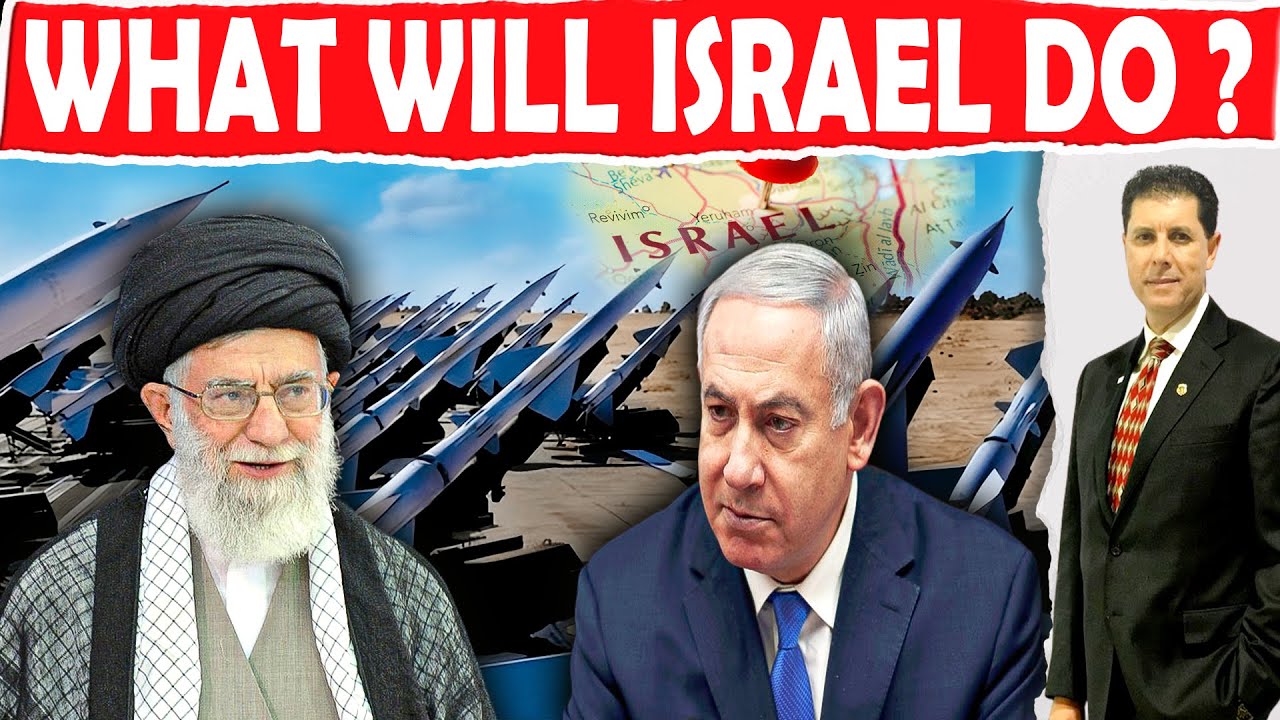
This content was created by David Oualaalou. This content was uploaded by David Oualaalou. This is a YouTube livestream titled "Israel Inching Closer to Another War with Iran? Geopolitical Trends" (published October 4, 2025) featuring Dr. David Oualaalou as host. The recording is a geopolitical commentary / live analysis in which Dr. Oualaalou reviews recent developments — an arrested alleged Mossad operative in Turkey, public warnings from Avigdor Lieberman and IRGC commander Mohsen Rezaei, and the June "12-day" confrontation — and assesses the risk of a wider Israel–Iran war. He discusses weapons and force-posture shifts (Russian MiG‑29/Su‑35/Su‑34/Su‑57 deliveries, Chinese HQ‑9 air defenses), regional actors (Azerbaijan, Houthis/Ansarullah, Hezbollah), U.S.–Israel relations, and historical strategy documents (the 1996 "Clean Break" policy paper and its U.S. proponents such as Richard Perle and Paul Wolfowitz). The livestream includes audience chat interactions and calls-to-action (subscribe/support), and the host draws on his government experience and declassified material to contextualize the analysis.
Chapters
Hello everybody and welcome to Geopolitical Trends, where truth matters. I'm your host, Dr. David Oualaalou. Very, very excited to be with you even though I am on my way to the airport, believe it or not. So, but I wanted to do a live stream for you as promised, uh, before I head out. And I wanted to address— I'm going to be addressing the issue of Iran and Israel. Is there sort of— it's not is there,, uh, as far as the upcoming war. Is it inevitable? You know, most of the signals that I'm saying suggest that it is indeed inevitable. It's gonna happen. As to when, nobody knows. But I'm still— I'm seeing the signs, the signals. I know I didn't want to address it a few days ago, uh, to me I just needed to confirm a few things on. So this is what I'm gonna be sharing with you In addition to disclosing to you one particular information that is from an old one, but it pertains to the big picture as to what's going on between Israel and Iran and West Asia or Middle East writ large. And this one got declassified, and so I had a chance to— I was aware of it back in the day when I was in Washington, DC. So, all right, let me say quickly hi to our community here. Matt Becky, good to see you. Phil, as always. Leanne YT, oh, you wrote, uh, good morning, Doc, uh, thank you for spending your Saturday with the community. You're most welcome, you're most welcome. As I mentioned, I'm on my way to the airport. So Willie Hillman, good to see you. Won KC from Malaysia, good to see you here. Bully, hi to you as well. Your opinion on India supporting Israel? That is, uh, it's becoming now more evident as to especially what the Indian government is doing to the minority Muslims. So we all know, you know, Israel, the problems it have with, with, with, with some Palestinians there, and the Indians on their part with the, with the Muslim minority. So Terry, good to see you from the Philippines. Good to have you. I'm always concerned about what's going on in the Philippines. Army with Harmony and Sam Karina. Oh, I'm sorry. Sam, Karina, good to see you here. Uh, all right, let me do two headlines for you and I'm get— going to get into the analysis because I'm going to keep it short this time around. So, so let me start with what I told you yesterday. I needed to sort of confirm, uh, some information. This pertained to the, uh, Israeli Mossad inside Turkey. So what happened is that the Turkish authorities arrested the person yesterday early morning And this was where this person was working for the, uh, uh, I'll share the link with you. You can read it in detail if you want to, uh, uh, you can translate the article if you want to. And, uh, so he was working for the Mossad, uh, that's why he was arrested, uh, in Turkey yesterday at dawn, very, very early. So the security sources, uh, sort of, uh, we said that within the intelligence service of the Turkish agencies or the intelligence agency, that is, carried out the, uh, joint operation that was between the security forces and the intelligence service. So they are two separate entities. So, and, uh, so what happened is that the, uh, individual, his name is Cicek, is C-I-C-E-K, who was found to be working for Mossad. By the way, this didn't happen just yesterday. This guy, based on the report that I read, has been under the watch for months, you know, this is nothing new. And, uh, so the Istanbul Security Directorate for Counterterrorism branch, the one's been conducting the investigation. So, and according to the information gathered by the Turkish intelligence service, it was revealed that Cicek has connections with another guy by the name Faisal Rashid. Faisal Rashid was a member of the Israeli Cyber Operation Center. So I just wanted to share that with you. And the second one, which pertained to our topic today, has to do with Avigdor— I'm sorry, Avigdor Lieberman. He used to be the former prime minister, I believe, and he is now the head of the right-wing opposition party. He's the leader of that. Basically what he's saying is that he warns now of a surprise Iranian attack on Israel. You know what it means when he is issuing this statement. So, and this is why he said, don't be surprised, Israel, don't be surprised of a surprise Iranian attack. Iran will not surprise Israel with an attack because Iran will not do it. Iran doesn't want to do it. Iran doesn't want to get involved in that. Ready for, which one I'm gonna detail here, is that they are prepared this time for any type of conflict, and it doesn't matter against whom, whether the US, whether the Israel, and whether both. So, and when, uh, Lieberman stated this, this is like it just to push the narrative for the need for war with Iran. But who's gonna do the war? It's not Israel, it's the US. And this will tie us to what I'm going to be talking about later on regarding one particular, uh, shall we call it document strategy, uh, that was way back a few years ago, but it has the hallmark of exactly what was intended to do. This called the clean break strategy. So to those who are familiar, or if you are, if you've been inside the government, you wouldn't know exactly what I'm talking about, but I'm gonna be detailing to you, about this one here. So, all right, let me remove this picture here and we'll get into our analysis as to, uh, so here is what the, the, the head of the, or the senior IDF, the Israeli Defense Force, is stating, you know, and I quote, we may need to act again. So that's all he said, you know, and that in itself carries the message for where the scenarios are. As we speak, Israel already prepared certain scenarios, and I am sure Israeli, be, be it intelligence service or security or the military intelligence, they do know for a fact that Iran is also prepared for all scenarios. So of course this is going to be different from the last 12-day conflict between Israel because sort of Iran wasn't sort of not ready, but didn't expect the full force of both the US and Israel to team up on Iran. This time around, Iran went ahead and upgraded its defense, which I'm gonna talk about, its fighter jets, and I'm gonna be talking about that. And to give you an idea how much they are now saying, you know what, bring it on, we are ready. So of course Iran took some sort of a big blow, uh, back then, uh, from the idea because it was surprising. Of course, we can't forget what Azerbaijan has facilitated for Israel because the Mossad intelligence agency had cells inside even Tehran. And that's why Tehran recently— Iran— went on a purge within the intelligence community and also the execution of so many. You just don't hear about it. I was talking to some people in the know. They have been executing people, you know. And again, what they expect, you, you, you know, you get into the spy business, expect that outcome. So, and this is where, uh, I had a chance to read an article by Avi Ashkenazi, or Ash— yeah, Ashkenazi. It was a very interesting article, sort of highlighted the big picture. So what I like about this article is it brought the idea of the Gaza front, okay, as part of that big strategy of what Israel wanted to do. So, and this is why sort of what IDF is trying to do is trying to secure the best possible conditions for a ceasefire and the hostage deal. So of course yesterday Hamas responded that— responded, and I don't think so out of fear from Trump. It just responded because that's— they said they will respond. But the idea of them laying down their arms and all that stuff, I don't think so. Why Hamas responded is because they wanted to see a ceasefire because for the civilian sake. That is why. So for now, given these tensions now, because it's a foregone conclusion that the conflict between Iran and Israel is a foregone conclusion. It will happen at some point. And this is why the IDF, and as they argue, and I sort of quote them on this by saying, quote, we are monitoring what is happening across the Middle East and in Iran and are prepared for a variety of scenarios and options. One of them is that we may need to act again against Iran, end of quote. That tells you right there the idea. This is why Netanyahu is going to be pushing Donald Trump because Donald Trump, you know, just don't get the hypes that, you know, it's Netanyahu that dictates the term to Trump, not the other way around. No matter what you hear, the loud, mouth of Donald Trump and has nothing to do with the reality. I'm here to tell you, has nothing to do with it. So, so when you think about this so-called coming out of the IDF, the renewed Iranian threat against Israel, first of all, what the IDF is saying is that Iranian has threatened Israel. They did not. What Iranian did, they issued a statement And that's through their, uh, uh, IRGC commander Mohsen Rezaei. He issued a string of threats against Israel and United States in case Iran is attacked. You know, what IDF is saying versus what the Iranians said are on the opposite end of the spectrum, and I need you to be clear about that, that the, the statements from the Iranian side is as part of the 'should you,' meaning US and Israel attack us, we will respond forcefully. But it's not being perceived— the, the IDF is translating it as a threat against Israel. Of course, that will give the Israelis the justification for preemptive strike. This is why the IDF is going with that. So Rezaei Uh, the head of the IRGC, uh, warned that Iran would enter a war with the United States if Israel carried out another attack against it. And this is where I see the statement. The statement is not meant to threaten Israel itself because Iran doesn't want that. But Iran is ready and prepared this time around, far better than what it was before, and it will not be pretty for the Israelis as well because of the type of weapons Iran acquired recently. So, and I'm gonna share with you from both, from China and from Iran, from Russia, I'm sorry. So, and what the IRGC commander stated is that Tehran will not accept negotiations with Western countries that will give Israel time to prepare or strengthen its position. That to me It gives me an idea that is finally Iran realizing that all the time they spent with the IAEA and with the United States regarding negotiations was nothing more than buying time for the Americans, for the Israelis, for Western Europe to, to do whatever he wants to do. IAEA had no intentions of providing an objective assessment. Regarding Iran's nuclear program. I mean, think about it. If the director of the intelligence services here in the, the DNI, the Director of National Intelligence, uh, Tulsi Gabbard, stated that Iran is not pursuing nuclear, uh, program, you know, you, you will think that will the assessment from the IAEA will be far better than the, uh, the the DNI? Some would say yeah, maybe, maybe not. But as one who works inside the government, they kind of— when you think about the intelligence services, they will have far more reach to certain type of information that a civilian entity will not. That's to me where the idea— so Iran, that is the reason why they are stating what they're stating. What's interesting about the statements of the IRGC commander is that his tone, some sort of a struck a darker tone to, to the statement. And this is what he said, and I quote, "If the last war—" I'm sorry, "If the war lasts 2 months today, there will be nothing left of Israel." End of quote. Why am I sharing this with you? Because to me, the way I read it, And again, this is my opinion. The way I'm reading it is I am reading a hint into this. And what is that hint? Once again, I'm going to repeat the quote and, and see if you can pick it up. If the war lasts 2 months, today there will be nothing left of Israel. End of quote. Is this a hint that Iran might have some other capabilities not disclosed at all? That could include the nuclear aspects of it. And again, we're just throwing the ideas out there because to me, a statement— this is not a vague statement. This is not in the ethos or just in, in an empty space. Those words are measured. You won't state something like this unless you have something to back it up. So, so, and what he continued with by stating And I quote, the Israelis want to try their military luck against Iran again. If that happens, we will use all our forces, we will change our red lines, and things will happen that are not right for me to say now. End of quote. Once again, and, and what do you guys think? I, I, I need to have your insights. What do you think of this statement? Is this, in your opinion, a hint to some other capabilities that have not been disclosed before? Just answer yes or no if you feel like contributing to the conversation. And that is what prompted me to ask that question at the beginning: is Israel and Iran on the brink of another war? So, because when you think about it, it was another article by Eli Jernamé, and I'm gonna put the link for you here in the description— I'm sorry, in the chat box, should you decide to read it. Very, very interesting. Rafael, you say yes. Dave H, you say yes. Uh, that means there was a hint into that. Uh, Pierce, you say 100%. Uh, Sanktan— oh no, that's not the answer to that. I'm looking for the answer to what I stated earlier. So suffice it to say, those who answered that one— oh, Francis, you say yes. So that makes more sense to me, and I couldn't agree more with you regarding your assertion or your assessment as well. The article by Eli, or Eli, uh, Jernamé, so highlight a very, very good one. I read it in its entirety and made more sense to me. So Because what the 12-day war in June between Israel and the, and the, and Iran was like marks a watershed moment, you know, because when you look at all three, the US, Israel, and Iran, so all demonstrated what an unprecedented willingness to engage in a direct military confrontation. I mean, You think about it on our part, and I speak for my country here, you know. It was back then in a day when I was in— and I'm going to share it with you because it's, it's— I think it got declassified. We don't talk about it anymore, but back then it was an idea about how we're going to go about striking Iran, okay? And I want you to know how it works. What we have usually in a military setting It's like a menu when you go to the restaurant, you have a list of things you can choose from. We had what we call the menu as far as the options. And one of the top one at the top of the list was a carpet bombing, which means what? We will flatten everything. How are you going to flatten everything unless you're going to end up having to use some sort of a tactical nuclear device? That was back then. But the idea was we're not gonna go that far is because we couldn't assess or determine what the consequences will be knowing that Iran outreach inside the region is very far. This is nothing new. Following the revolution of 1979, Iran built this kind of setting for this reason. Qasem Soleimani, the late Qasem Soleimani, he was well known for establishing all this funding, training, uh, overseeing all this. The example of Hezbollah, the example of, uh, uh, the, the Ansarullah or Houthis. That gives me an idea. Back then we said no. Now it's different. What the 12-day war has shown is that now Iran is ready and will be willing to engage in a military, in direct military confrontation. Of course, what we witnessed after the large-scale Israeli strikes inside Iran, which was facilitated with agents from within, so that in itself, and of course the reaction of Iran sort of gave the idea, it broke the taboo. Now gloves are off. This is where the surprise came in. Israel wasn't expecting a retaliation. Why? Because when it will strike in Syria, what, what, what response is going to be? When it will strike in southern Lebanon, what, what, uh, response is going to be? It's going to be nothing. And this is why even till today, and I agree with the author of the article, that region still now, still absorbing the effect of, of that war and wondering about how will the next one be. So because if you remember, the Israeli jet fuel— the jet, jet, uh, fighter jets were fueled by the US, which bombing targeted across Iran. So you can just see. And where did it taking off from? None other than Qatar, Al Ubaid. So, so, and with Iran— with the US and Israel attacking the nuclear, military, and energy facilities altogether. So, and this is where there was this unprecedented, uh, uh, or breaking the taboo regarding what Israel did and what Iran responded with. Because what Israel did sort of breach the defenses of the Iranians because the defenses of the Iranians were sabotaged. This is where the role of Azerbaijan came in because all the equipment has entered through the borders between, with Iran from Azerbaijan. It's not a secret. Azerbaijan has been in the shadow paving the way and facilitating everything. Why do you think We went ahead and brokered this so-called deal between Armenia and Azerbaijan because we wanted something very, very crucial. And that something is we got a military installation in Armenia. It's gonna be quiet. You don't hear much about it. It's called a forward base, you know, a FOB, as we know. But what do you think it's gonna be for? You know, placing nuclear missiles? No, it's gonna be for the spy gear. All the gadgets for the military intelligence. This is what is going to be sent. And this is why sort of the idea of what happened after Iran started firing back at Israel, targeting the Haifa oil refineries, and that's when it became some sort of a race between Israel and Iran. Who would run out first of missiles? So, so is it Iran or is it Israel? What makes it even worse for Israel is that this is where that taboo has been removed. So Iran surprised that it was able to penetrate the so-called air defense systems for Israel. And that just got the Iranian, even though they weren't prepared for the massive attack from the US and Israel. But this in itself provide them an opportunity to realize, you know what, I ain't gonna be intimidated next time, and we will be better prepared. So, and this is why even after what happened in 12 days, and I'm here providing you this analysis for you to put things in perspective, even after that and after the ceasefire, what the Iranians did, they projected the confidence into. Of course, nobody wants to have his airspace invaded or penetrated or violated. Nobody wants to see the destruction within its own territory. You know, that just— but nonetheless, what the Iranian did by firing inside Israel gave them confidence. And this is why the idea of why the US sort of halted certain operations. Why? Because the US understood it's going to be dragged into something, which what the Israelis want the Americans to fight their war. Is Donald Trump smart for doing this? No, no, no, no, no, no. It has nothing to do with Donald Trump being smart in this aspect. Donald Trump is— no, it's the conditions that have forced the United States to— it was just for a show. Wow, we bombed Iran's nuclear facilities. You targeted the gates. That's all you did. And even now, Houthis are attacking the US naval in the Red Sea as we speak. Well, think about it. If the second war erupts between Israel and Iran, what do you think the Houthis are going to do? Or Ansarullah, that is. And Ansarullah has been firing at Israel at will. Because everything they send, even Israelis said they intercepted. Yes, they did, some, but not all. And all it took, all it takes is one to get through. So, and that is why Trump sort of sought to avoid a prolonged conflict, because he saw what happened with the Ansarullah and how damaging was to the image of America with all your aircraft carriers and so forth. And you couldn't defeat the Houthi. They didn't bow to you. So, and this is why the only remaining other entity that is capable of striking directly, striking Israel, is Iran, beside Ansarullah. So, so, and this despite the bombings that's taking place in Lebanon, is taking place in Syria, in Gaza, Yemen, And I was at that time in Qatar. So this should give you an idea as to where this is going. And that in itself leads me to talk about the geopolitical landscape, the regional deterrence equation, if I may use the term as it was used in the article, and spot on, spot on. And why is this important? I have to take you back to 2003. What happened in 2003? The invasion of Iraq. And that's when that regional rivalry between Iran and Israel came to the fore because it centered on that. The invasion of Iraq wasn't about Iraq, it was about that rivalry. So, and for this you need to understand, and that's why I told you I'm going to share something with you that was back then classified. It's declassified. You can find it if you know where to look for. I'm gonna take you back to, uh, 1996. That's how far back I'm gonna take you. And this, it was an Israeli document, a strategy that's called Clean Break. Again, if you either been in the military intelligence, and you will be exposed to something like this if you served in the Middle East, or if, if you will, if you were within these either State Department or the intelligence community. Clean Break, what is it? Clean Break was a strategy for securing the realm. The realm of whom? It's Israel. And this was a 1996 policy paper and prepared exactly for one individual. Who is that individual? It was none other than Benjamin Netanyahu because it was his first newly elected in 1996. And this paper wasn't produced— it was produced by Americans, but you need to know who those Americans are. I'm gonna have— I have pictures and I'm gonna share with you. And this was based— was proposed or, or crafted or drafted or prepared by US-based study group led by none other than Richard Perle. I have a picture, I'm gonna share it with you. Once again, to those who are familiar with the government and military, you will know who this guy is. Richard Perle is a Jewish. There's nothing wrong with that, except that Richard Perle was the one pushing very hard for the invasion of Iraq. It's because the idea came from Israel, didn't come from the United States. And the document at that time advocated a dramatic shift in Israel foreign policy away from, you remember the deal, the Oslo Accord, land for peace, shifted away from that. I remember I had a conversation with the Ambassador Dennis Ross. It was a private event. I met him, we stepped aside and talked privately. And I said, Dennis, tell me straightforward why the deal wasn't struck. Was it the Israelis? Wasn't it the Palestinians? He said, no, it was too complicated. And I could tell he was in an awkward position to answer whether it was Yasser Arafat didn't want that or whether the Israelis were pressuring, were pushing even harder for that. It won't matter. Suffice it to say that this deal, land for peace approach of the Oslo Accord, which was towards more aggressive strategy that paved the way for this paper, Clean Break. Remember this term, Clean Break. Why? It paved the way for this, if I use the term, aggressive strategy, if I may use. For what? Why? For securing Israeli possession in Middle East as the only power in the region. This is where the concern was about Iraq. Why? Because even Iran couldn't defeat Iraq. We were providing weapons to Iran. Yes, the United States was providing weapons to Iran during Reagan, you know, the Iran-Contra, because we wanted to defeat the Iraqis. We couldn't. The Iranian couldn't. It was a bloody war that shouldn't even happen, but we were funding both. But the objective was this particular strategy. And as I said, the author of this policy, you have Richard Burr, this guy here, okay. It was this guy also, Danny Douglas, Douglas Feith. He was the assistant secretary or undersecretary of defense. It was also David Oualaalou right here. Uh, it was Paul Wolfowitz. I remember him vividly because he was the one pushing very, very hard for, uh, the invasion of Iraq. Then you have James Colbert— I don't have picture there— and Charles Fairbanks Jr. So, and this is what you need to understand, because these individuals held influential positions in the George W. Bush administration, mainly in the defense. And were the key— this is the key word— were the key proponents of the 2003 invasion of Iraq. Because here's the proposals that the— why am I sharing this with you? Is to show you there is always a link. Things don't happen in a vacuum, especially in this domain of geopolitics. You can't assume, oh, this is a standalone issue. Because here is what the Clean Break report recommendations centered around, centered on one particular idea, and that idea is reshaping the regional environment of the— to Israelis' benefit. And I'm gonna share 4 or 5 key points. One is abandoning land for peace, and that's why the paper called for the Clean Break. That's what the break means. Clean break. Land for peace, clean break from it. So from the Oslo, which is viewed as a strategic retreat. Instead, it advocated for a peace for peace approach. Second, containment and destabilization and threats. This might shock you. Israel was advised to work with Jordan and Turkey to contain and destabilize regional threats with an emphasis on rolling back Syria. That's why to me, you know, are you going to trust Arabs and so forth? Third, targeting Iraq. Targeting Iraq, or Iraq. A primary objective of the paper was to remove Saddam Hussein's regime in Iraq. Why? Because the authors of this strategy believed this will be, this will be a major positive outcome and impact in the region, because doing so will also weaken Syria. The fourth one was confronting Hezbollah. That was during the time when, uh, Hassan Nasrallah was still alive. So confronting both, or all three—Hezbollah, Syria, and Iran. So Israel was advised to seize the initiative in its northern border by striking Hezbollah and Syria and Lebanon, as well as counter in Iran. This is why we went ahead as of today, we went ahead and put the, what's his name, terrorist Joulani in power. We put him there because we know he's gonna serve the agenda and not the United States' agenda, is the Israeli agenda. Another one, changing Palestinian relations. The report or the paper, this Clean Break, the report recommended reserving the right of the hard pursuit anywhere within Palestinian-controlled area and promoting alternative to Yasser Arafat's leadership. So Yasser Arafat himself used to play both sides. The same thing Abbas Mahmoud is doing. This is where the issue at the heart for why The US and Israel, both this plan they proposed, which is nothing but a, you know, it ain't gonna work. Uh, they wanted to remove Hamas from the equation altogether. It's because Hamas didn't fall for what Abbas is doing. And the one another key point is restructuring of the US-Israeli relations. The documents suggested a new US-Israel partnership based on self-reliance with Israel cutting off U.S. economic aid that will grant Israel greater freedom of action. Because remember, most Americans do not know, and once again, I have Jewish friends. You know, this has nothing to do with an individual being Jew. No, no, no, no, no. It has to do with the government. But when you think about an average American doesn't understand that we, the United States, 350 million people serving a nation of 9 million people, because that's all Israel is, 9 million. The size of Israel is the size of New Jersey. So, and it begs the question, you know, how come a small entity like that controlling a large country like the United States? It's a simple question. This has nothing to do with antisemitism or this or that. No, no, no, no. As I said, and I said it for the record, I have dear Jewish friends. Those are friends of mine. These are good friends of mine and I trust them because I know them. But those are not the government. And this is what most Americans do not understand. This is why, do you know that since October 7th, we send about over $30 billion from our tax dollars to Israel? What for? And Israel, what is that? Dollar for dollar. They take that dollar and spend it on their citizens. Free education, free healthcare. Look in America here. Come on, you know, it's time to— now they are move— they meaning Netanyahu is moving forward now publicly. He said, and I listened to one and I'm paraphrasing here, he said, well, now we got TikTok. The next thing we're gonna have to work on is X. We're gonna have to talk to Elon. He's a friend of Israel. You know what it means. And that's raised a question. But again, you have to understand the background and the history of all this. And all this sort of paved the way. If you look it up, just look at Clean Break strategy. And you will be able to read more details about it. Liking this video so far? Don't just be a watcher. Go ahead and hit the like, share, and subscribe button. And don't forget to tap the bell so you will not miss any of my videos or live streams. This way, you will be supporting a channel that stands for the truth and objective reporting. The choice is yours. Thanks for your support. Indeed, make sure to subscribe. And I know someone told me, one of you guys sent me a comment, so Dr. O, I hit the like and he blocked it. Yeah, I don't know why. Well, we know why, so let's not, you know. Anyway, it's, it's minor thing, I won't worry much about. Let's continue our conversation here and I'm going to wrap it up soon. So when you think about just over the past year. Just think about it. Just, you know, and you've been with me for over a year now, but since just last year when we start to talk, especially when the tensions Iran-Israel came up to the surface. So what you think about is that the deterrence, the deterrence equation that kind of at that time dissuaded or prevented Israel from striking Iran kind of been removed. So because to, to Israel's mind, we are weakening now the Israel's axis of resistance. That's what the Israelis think. So, and this is exactly where now you're going to have to consider, are things changing? Did they change within both nations, Israel and Iran? And the answer is yes. So, because on one hand, the attacks by Israel on Iran demonstrated the failure of the Iranian defense systems to protect the Iranian territory, to protect the nuclear facilities, and so forth. And, and I'm not even talking about the intelligence, penetration. She was massive because you will— you look at it, 30— I counted from way back— 30 senior officers and security officials and 11 nuclear scientists have been assassinated. That is a large number. Even if you lose 5 or 6 senior officers, you know, you know how long it takes to get to that rank from First of all, the training involved, the knowledge you acquire to get that 30, 35 years of knowledge. So that highlights to you. So this in itself showed us one side of the equation, and that side of the equation is that Israel's ability to penetrate deep inside the airspace of Iran. So that means Iran's defenses are not up to date. And the level of its air defenses will have to be upgraded. So, but this is not about just that. This is about the region, because remember, the strategic paper was about ensuring Israel dominance for the region. Because by the time Israel did this, you have Saudi Arabia, you have Qatar, and you have Turkey. Because to them, this was a moment of Oh my gosh, we could be next, because if Israel can do this in Iran, that's all he needed to do to project similar force that can be used elsewhere. There are those who are saying there is no way Israel will do this against Turkey. First of all, Turkey member of NATO, and second, Turkey has some other capabilities. But the question is Will Turkey retaliate against Israel forcefully? I can't answer that. I know how Turkey's government, Turkish government behind the scenes operates. I can't answer this at this point. The same argument, if you ask me a few months ago or a few years ago, will Israel attack Qatar? I will tell you, eh, it's unlikely because that will be a breach of, but even if they do, Qatar will reserve the right to response. However, few months later, few years later, it became clear to me that Qatar or any other Muslim country will not retaliate except for Iran and Ansarullah in Yemen. So, and this is where it became clear that Iran, by the time it was attacked, it faced some sort of an upheaval or uphill battle for rebuilding its military capability. And the question became, can they, how quickly can they do that? Because its conventional military deterrence has to be updated. So, and one question, and I asked it a few months ago, how far will Russia and China will come to the aid of Iran? As a matter of fact, during the recent summit in Sochi, The Russian president Vladimir Putin mentioned that China should, in addition to Russia, assist Iran. So because it became clear where things are headed, so, and that is now where the idea of, in my opinion, the idea of negotiations between Iran and US off the table. That's it. If Iran This is, to me, will be a strategic mistake if Iran ever opened the door again for negotiations. That doesn't mean diplomacy has to be shut down. No, that's not what I'm saying, except these negotiations. If they open the door to that, they'll be making a strategic mistake. So because what the US was seeking, a total destruction of Iran. So because you remember Donald Trump's statements, We have obliterated Iran's nuclear program. You know, that appears to be— no, that's not the, that's not the reality. And with all this comes the point of what Iran— what prompts me to say that Iran now is much prepared than it was back in June. Here is why. I'm gonna share pictures with you and I need you to— and I'm gonna elaborate on this as I move. Forward. Let's start with this one here. Iran just received a batch of Russian MiG-29 fighter jets as of September 2025, and this one is nothing but a temporary measure to bolster its aging air force. And all this in a reaction to what took place on June 12th. The, the 12-day war in during June. And the delivery was confirmed by the Iranian Parliament. So, and as a matter of fact, as a matter of fact, Iran is also awaiting the delivery of the Su-35. Those are little advanced types of fighter jets from Russia. This is one thing that they are also expecting. And this is not coming just from Russia. This is another picture of the MiG, and you see the flag here. That's Iranian, uh, uh, MiG-29. The Chinese also went ahead and delivered the HQ-9. Those are sort of the, uh, the air defense systems. This is from the, uh, the Chinese air defense systems from China. There is another reason to why China did this. There's another delivery. So Tehran gets Chinese surface-to-air missile batteries. So, and we know what happened last time when Iran fired, when Houthis fire, some of these are able to penetrate the airspace of— so now you have the, as you Well, I'm sorry, you have the MiG already in service. Iran is waiting the Su-35s. And by the way, there is another country that already received the Su-35. They're surprising to me. And that, that, uh, here is what happened. A document released by the Kremlin. So just recently, and in it was leaked information, and I know that's by design. So indicated that significant deliveries of fighter aircraft are expected within the next 3 months, and this includes the transfer of 48 Su-35. It's right here, Su-35, 48. Okay, this for the Iranian to re-equip Iranian Air Force. That's one. There is also the transfer of 14 Su-34 strike fighters, jet, and 2 Su-57, which is the really the advanced, uh, 5th generation. And guess where they are going? They are going to Algeria. Does this has to do anything with what's taking place in Morocco with the violence? Is this has to do anything with what's going on in Mauritania and Morocco joining forces with NATO training? Is this also has to do anything with the Sahel region? I'll let you think about that one. So, and this, by the way, documents that I read were corroborated, so from the Iranian officials themselves confirming the order. I want to go back to China for one reason, specific reason. Why do you think China went ahead and did this now, but not, let's say, back then, 3 months ago? There is a reason, and that reason has to do with the visit of Doborsky to Porzowski. He is a member of the Israeli Knesset and the chairman of the Israeli-Taiwan Parliamentary Friendship Association. This guy, Boaz, went to Taipei multiple times, and he was just recently and led the delegation, okay, during his visit in September, during which he met with the governor of Taiwan, What's his name? Lei Chai-te. I hope I pronounce it correctly. So he met with the governor and stated something that aggravated the Chinese, meaning the Israeli representatives. You all remember what it means when the members of Congress of the US goes to Taipei. So, and what the Chinese described this politician? The boaz toporsky as a troublemaker. And that is why China went ahead and issued a strong-worded condemnation for the Israeli lawmaker's visit and met with the governor of Taiwan. So of course, the Chinese Embassy in Tel Aviv issued a highly critical tone Because that's usually an insult. But at the same time, the Chinese looks at it, you know what? Fine, you did that. Here is what we're doing. We send in, we send in this surface-to-air missile batteries too. And Israel is concerned now that is Iran receiving both support from Russia and China. To the Russians, there's also some dynamics going on inside the Kremlin. Because they are the Russian Jews. It's politics, it's domestic politics. So, and but for the Chinese, this is more of agitation for having the members of— because here is how they see it, because what the Israeli member of Knesset said is that Taiwan is true friend of Israel. That has supported and continued to support the citizens of Israel from October 7th until today and even funded the establishment of Maritime Resilience. This is what it says, which has already treated over 1,000 survivors of October 7th. You know, what is the purpose of this statement? Is to not only foment tensions, but also to see if they can pull China into the conflict. Yeah, because one of the main objective of, of Netanyahu is to have the US fight its war against, uh, Iran. So, and this is again where you see this dynamics, and I want you to be aware of those. And I'm going to end it right here. Uh, uh, you need to understand these dynamics, what's going on right now. And with these deliveries, it sort of, what's the word, lock Israel and the United States and even possibly Europe into now some sort of a foregone conclusion that there is another upcoming confrontation with Iran. That's going to be also marked by recurring military strikes, and this time is going to be involving some other advanced systems that Iran will not hesitate to use, and they will not. They will use whatever. And it won't be not just Iran, it will be Ansarullah as well. I don't know what Hezbollah is going to do, so it remains to be seen. Anyway, I just wanted to share with you this, uh, insights here as to the possibility of— is Israel inching closer to another war? With Iran. And when I say Israel inching closer to another war, that means the US will conduct the war on behalf of Israel. Once again, if you are an American viewer watching this, you ought to ask yourself, you know, how come a nation of 9 million controlling a population or a nation of 350 million? There's nothing wrong with it. We're just stating the facts here. It has nothing to do with the Jewish heritage, and so forth. No, we put that aside. We focus in on the facts on the table. And as a citizen, it is my duty to just question this kind of stuff, brought the conversation to the fore for my community to, you know, it's worth talking about. It's because I already concerned about now that TikTok is moving into the hands of what's his name, David Allison. He's the son of Allison, I think. He's the one who's going to take over TikTok. We don't know what it means. We don't know what it means. Anyway, I hope you enjoyed listening to this brief analysis here. If you want to support the channel, I will be very grateful to you. By the way, if you get a chance to get a copy of my Iran book, I disclosed some really aspects of what I'm talking about here. Regarding Iran-Israel. So, and feel free to let me know if you have any question after you read the book. I'll be happy to answer those questions for you. So as I said, I will be off the air for a few days and I'll reach out to you. So as always, remember, geopolitics impacts your daily life in more ways than one. Till next time, bye-bye.
More from David


Beyond the Single Actor: Why the Gulf Isn't Choosing Between the US and China


Iran, Iraq's Militias, and the Houthis Are Coordinating! This Changes Everything




Who Controls the Next Decade's Resources? Latin America and Africa's Geopolitical Crossroads

The Chokepoint Trap: How Washington's Stupidity Triggered a Cascade That Now Controls the World

Trump Spooked as IRGC Unveiled dual-use SLV, Deployed Ghadir Mini-Subs & Hinted at Tactical Nukes!
