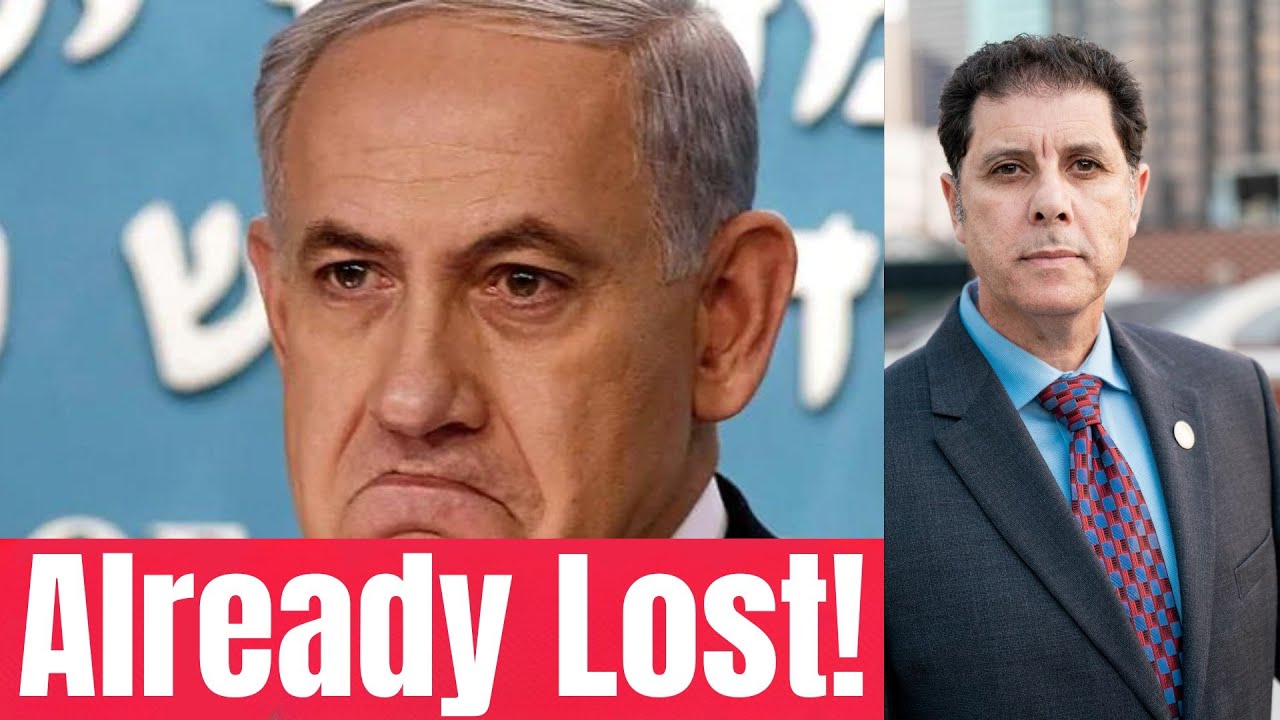
In this video, the presenter argues that Israel is losing control of its war in Gaza despite its military superiority. He interprets the recent ceasefire and hostage‑exchange deal as evidence that Israel cannot manage the conflict without U.S. pressure and that it has been forced to accept terms that limit its operational freedom. The analyst highlights internal political chaos in Israel, especially criticism of Prime Minister Netanyahu’s war strategy, and points out that Western media under‑reports Hezbollah’s cross‑border attacks on Israeli positions in southern Lebanon. He draws a historical parallel to Hezbollah’s 2000 victory that ended Israel’s 15‑year occupation of southern Lebanon, suggesting that non‑state actors can force Israeli concessions. The video also details Hamas’s guerrilla tactics—rockets, tunnels, IEDs, snipers—that hinder IDF advances, and criticises Israel’s strategy of pushing Gaza civilians south while destroying the northern part of the Strip. Finally, the presenter speculates on the next phase of the war, questioning whether the IDF will use the pause to reposition, rebuild intelligence, and restock weapons, while concluding that Israel is already managing defeat rather than achieving victory.
Chapters
Hello everyone and welcome to Geopolitical Trends. So excited to be with you as always. As an analyst, I ask, is Israel losing control of its ongoing war in Gaza? In this video, I'm going to provide you with my insights on a brief level here about the ongoing developments in the region, of course, and place this for you within the context of the changes in the geopolitical landscape in the Middle East. Let's dive in. I agree with some analysts who suggested that Israel's war in Gaza is going terribly wrong despite IDF, the Israeli Defense Force, military capabilities or superiority, you know. And, and the way you look at this is what the current ceasefire suggests is that Israel is incapable of managing the war on its own, and without the support of the US, Israel won't be able to move an inch forward. So, so the ceasefire, in my opinion as an analyst, and the exchange of the hostages is an indication of how Israel has lost control of this, of of this conflict or war. Mind you that most we do not hear about in, in, in Western media is the attacks conducted by Hezbollah on, on, on the military locations or installations on the Lebanese borders. That we don't hear much about in the southern Lebanon parts. One thing is sure is that there is a major chaos inside the Israeli governments in Tel Aviv, you know, about what Netanyahu, the prime minister, decided to do to go forward with the, with the war per se. So the question we need to ask is, did Israel agreed to swap prisoners in order to avoid losing the war? Because that becomes very questionable as to how all of a sudden Israel agreed to that? You know, another question that could be asked is, did the U.S. exert pressure on Israel to accept the terms for prisoners exchange? So what do you think? So despite its large numbers, over— actually, Israel has committed about over 500,000 troops, soldiers. Still, Israel is losing control of the events on the ground. At the time of this recording. So the big picture is that it is becoming evident, not like many around the world do not know already, that Israel had to agree to what the US proposed. In another word, Israel was bowing to US pressures. And this is, again, leads me as an analyst to ask the next question. And the question is, What will the IDF do, the Israeli Defense Force? Will they take advantage of this pause in the fighting to reposition themselves in preparation for the next phase, if there is a phase? And all this for the purpose to improve, for example, its intelligence image because it's destroyed, or to restockpile the weapons in preparation for new attacks, which I don't see. I don't foresee because already Israel lost the war. So all it's doing now is trying to manage the defeats, if I may use the term. And here's the historical reference here just for you to put this in perspective. In past conflicts, most of the Israelis braced together, per se, avoiding— when I say together, I mean within the government. They always sort of avoid questioning the government too much about its decisions. Now, many inside the government, that's why there is a chaos inside the Israeli government, accused the Prime Minister Netanyahu of being responsible for what took place on October 7th. And of course, Netanyahu has adamantly retorted that, "Oh, this is a time," and I put this in quote, This is a time for war. We're going to have to fight and defeat Hamas. And they couldn't. They won't be able to anyway. Mind you that there are states in the region, countries, that is Turkey, Saudi Arabia, Iran, Lebanon, and others. They have armies, right? You know, and those are when it comes down to the northern part of Israel, the neighboring, especially Lebanon. But in Lebanon, the national army is so weak in comparison to, for example, non-state actors like Hezbollah. Well, the Hezbollah is stronger than the national army inside Lebanon and not under the control of the central government. And here's what's interesting about the group. It is so sort of strong that it can be said to be the only Arab force ever to defeat Israel in a battle. If you recall back in 2000, you know, because remember, Hezbollah's resistance forced Israel to end its occupation in southern Lebanon for over 15 years. It was Hezbollah that pushed them out, pushed the Israelis out. And of course, Israelis angrily refused to call their withdrawal after a stay of 15 years, a defeat, which we all know it was a defeat. But even with that, Israelis admit that it was because Hezbollah was a major factor in their decision. So here is one, one thing is sure that I wanted to share with you is that the military arms, when you look at, for example, the conflict now, and we're not talking about Hezbollah here, we're talking about Hamas, the military arms of Hamas— is far more than 3 decades relied on the guerrilla warfare. That's why they are also capable of fighting. And this guerrilla warfare style tactics in its attacks against Israel is what's sort of hindering the efforts of the Israeli to move forward. So, and the group is using rockets, using snipers, using improvised explosives devices. And of course underground tunnels. The interesting aspects of it is that Israel is pushing the Gazans, the Gazans or Gaza residents, towards the south rather of the Strip, you know, at the same time destroying the north of it. But it's fundamentally, in my opinion, fundamentally strategic mistake to do so. Why? Because Netanyahu is fast approaching the end of an impasse, in my opinion, that he would have no other choices. And if he has no choices, that means what? That he's not able to achieve his so-called military objectives. So there's disagreement inside the Israeli government. So let me know what you think, your thoughts are in the feedback. I'd like to read your comments and so forth. And if you guys would like me to expand further in this in a live stream, I'll be happy to do so. Please remember to hit the like button and don't forget to subscribe. As always, remember, geopolitics impacts your daily life in more ways than one. Till next time, bye-bye.