Israel on Alert as Iran Acquired Chinese Surface-to-Air Missiles! Geopolitical Trends
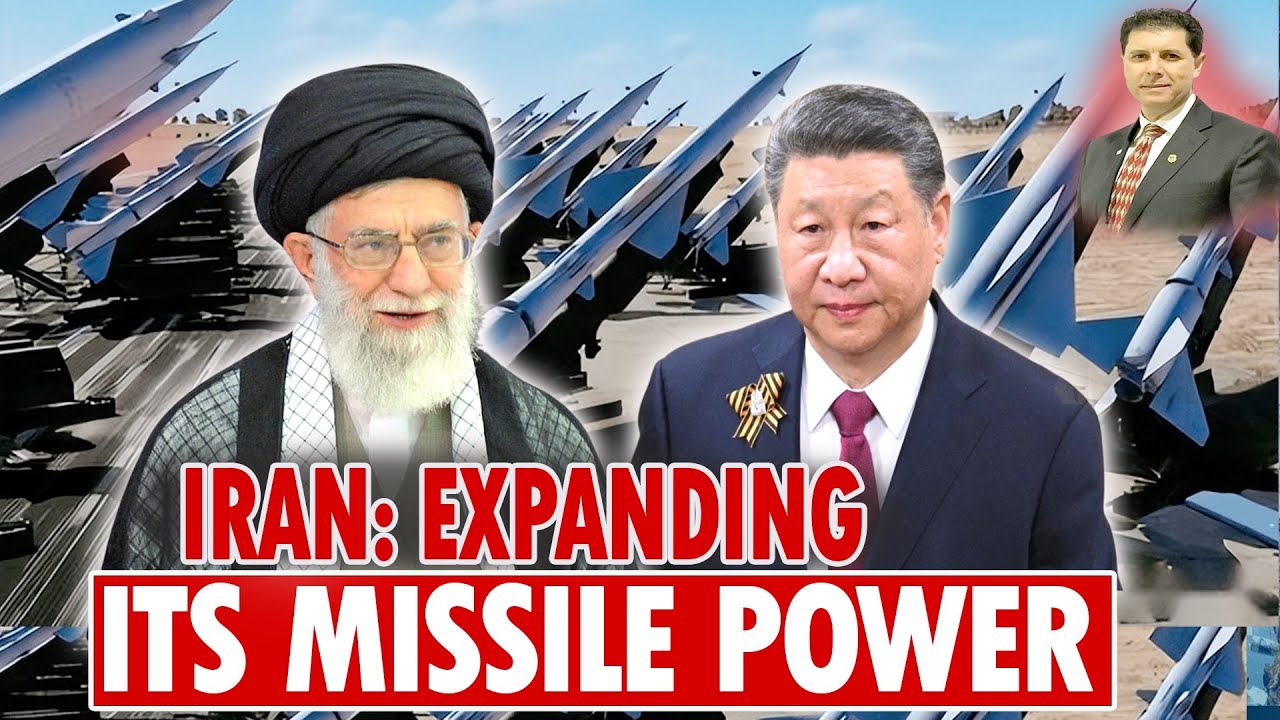
In this hour‑long YouTube episode, host David Oualaalou (speaking as Speaker A) delivers a dense, opinion‑driven briefing on Iran’s recent procurement of Chinese surface‑to‑air missile (SAM) systems and the broader strategic fallout for Israel and the Middle East. He begins with community greetings before outlining two main developments: (1) Iran’s acquisition of Chinese SAMs (notably the HQ‑9) and the replacement of its damaged air‑defence network after an Israeli‑Azerbaijani strike; (2) Iran’s parallel pursuit of Chinese J‑10C fighter jets as an alternative to Russian platforms. Oualaalou cites statements from Iranian Deputy Commander Mahmoud Mousavi, a Middle‑East Eye article, and an intelligence source that mentions a deal for 24 Chinese aircraft in exchange for Iranian support for Chinese energy‑corridor projects. He argues that the new Chinese hardware dramatically shifts the regional balance, putting Israel’s Iron Dome and broader air‑defence posture at risk. The host contextualises the weapons deal within a historic pattern of Iran‑China arms cooperation (1980s HY‑2 Silkworms via North Korea, 2010 HQ‑9 purchase) and contrasts it with Russia’s recent reluctance, which he attributes to Russia’s domestic political constraints (large Russian‑Jewish population in Israel). He also critiques Europe’s re‑imposition of sanctions on Iran, the United States’ domestic political dysfunction, and Egypt’s military alignment with the United States, suggesting that these dynamics further isolate Iran and push it toward Beijing. Throughout, Oualaalou intersperses personal commentary, calls for community interaction, and promotion of his book Volatile State: Iran in the Nuclear Age. Key take‑aways: (a) Iran now fields Chinese HQ‑9 SAMs and is likely to receive J‑10C fighters, enhancing its air‑defence and strike capabilities; (b) Israel’s current air‑defence systems may be insufficient against the upgraded Iranian arsenal; (c) China’s strategic interest lies in securing energy corridors and expanding influence, while Russia’s support wanes; (d) Western diplomatic pressure (EU sanctions, US aid to Israel) is portrayed as ineffective and counter‑productive; (e) The host frames the situation as a warning that Iran’s military modernization will reshape regional security and may compel Israel to reassess its defensive posture.
Chapters
Hello everybody and welcome to Geopolitical Trends, where truth matters. Excited to be with you as always. Hope you guys had a, a relaxing weekend and you just chilled out, did nothing. Sometimes it's good not to do anything. So anyway, I'm very, very excited because of the topic I'm going to be addressing for you. This one has two, two dimensions to it. One of them has to do with the acquisition of Iran, uh, Iran's acquisition, acquisition of the surface-to-air missiles from China, the SAMS. And the second one has to do with the upgrade of the Iran, or the replacement of the Iran, uh, uh, air defense system. Now, one thing is, has not been disclosed openly as to who really replaced the air defense system. So we're gonna be talking about all this in addition to providing you my own analysis about this major development that is now raising serious concern— concerns inside Tel Aviv, or Israel for that matter. So, but first, let's say hi to our wonderful community. As always, Willie Holman, good to see you. Taiwan Steel, Alwan Omer, good to— good to see you. Coach Hoy Hoy, as always. Laval, as always. AF Garden, Carl Leon, good to see you. Salam to you. Timeline. Danke, Abdulfattah. Oh, I like this one. I'm gonna share this with you. Look at, look at this one, guys. It's 1 AM, uh, where, uh, where, uh, uh, let me see. The China Decide You Don't See is joining us from. So it's from the city of Fuzhou. Good to have you here, man. Yeah, Musa Dem, good to see you. Alastar O'Kane, Army with Harmony, as always. Uh, and Francis Tango. All right guys, let's go in because we got a lot to cover. First of all, I'm gonna do some housekeeping quickly here to remind you to join me for my conversation with none other than Jayant Bhandari at 1900 hours, 7 PM my time here. So we will be addressing the failure of the Che Wala To those who know what I mean by chihuahua, you go check it out. Anyway, we're going to be talking about this, the failure of Modi, of course, on all fronts. So remember to join me for this conversation at 1900. Also, I am working to coordinate in due time with Dr. Yan Yan. Uh, who's gonna be visiting us here on the channel to talk about really some key information. Speaking of that, guys, I'm gonna share a link with you to an interview. I listened to her, uh, she was interviewed by my dear friend Dr. Warwick Powell. So if you guys want to learn something about finance and economics, here is the link. I'm gonna share it with you. Take a look at it later on when you have a chance to do so. So, all right, uh, oh, the last thing before I forget, the last thing, guys, I want to say thank you for the survey, to those who took the survey when I asked the question, has Trump become a part of the deep state? 90% of you said yes, 5% said no, and 4% say I don't know. So, so thank you for taking part of that survey, and, and to me, become clear as to, you know, where things are headed. And America is going down, you know, there is no other way of looking at it. And I don't shy away from saying this, it's because the truth has to be told. No, no cherry-picking, no whatever. It has to be told as is. We are going down due to our own mistakes, due to our own failure. Shouldn't be blaming other countries for that. That's a conversation for another day. So All right, let's get into our, uh, main topic of today's conversation, or shall we use the term lecture? Anyway, I'm— I get excited with you, community, just to— because of the exchange of knowledge. No more knowledge. So as I mentioned, Israel is on alert. Why? Because Iran acquired a Chinese surface-to-air missiles, those R-SAM, uh, uh, systems, and in addition to replacing its entire, uh, air defense systems. So, and of course, when you think about this, you have to look at it from a much bigger picture. And there are some 3 key points I'm going to address later on as part of this analysis. Suffice it to ask right now the key question: How will this upgrade in the military hardware for, for Iran change the equation on the ground? Because we can't ignore this question. It certainly will. And the second question is, what will Israel do now? It's because it became clear as to air defense, uh, uh, shield didn't work, meaning Israel's, that is, you know, uh, the Iron Dome and so forth. It didn't work. So, but now with Iran acquiring this new technology, and I have, uh, images and pictures for you regarding this Chinese systems and so forth. So, and here is the thing, is that the, uh, there is the Iranian Deputy, uh, Commander of, of Operations. Of course, couldn't find his picture. And I can see why they're not going to put his picture, but his name is Mahmoud Mousavi. So he was the one that announced— it's coming from him directly— that Iran has officially replaced the defense, uh, uh, air defense, uh, system. Of course, as you know, it was damaged during the military, uh, confrontation with Israel, and Israel targeted specifically the air defense system. So now, of course, Mousavi, the army, uh, the Iranian Army David Oualaalou, he doesn't have to hide or doesn't have to sugarcoat it. He did say openly and publicly that Iran's defense system were damaged. Yeah, and, and, and as I'm going to share word for word with you, here is what he said. Let me, let me get this over here. So, some of our air defense systems were damaged, and we cannot hide this, but our colleagues used domestic resources and replaced them with alternative systems that were already prepared to maintain airspace, uh, air— yeah, uh, airspace security, end of quote. Now, I will challenge the last part of the sentence. I'm not saying he's lying, but I'm going to challenge one aspect of it. And this one has to do when he said replace with alternative system. Yes, you could have an alternative system in place just in case, but to me it's kind of when I put the two and two together and figure, okay, if you are acquiring the Chinese SAM or surface-to-air missiles, you're gonna need to have the batteries that go with it along with the air defense system that, that can, uh, work with this. And again, I'm not saying it's like— it's just that's my own interpretation. And please, if any of you has a different, uh, uh, uh, take on this, please share it with the community. So, and here is the thing, uh, as I said, it was mentioned that during the, uh, that during the, uh, uh, Israel attack on Iran, did they destroy the air defense system? So So suffice it to say, and this is where I found it very interesting because I read through the entire report that he issued, that the agency that reported this inside Iran, you know, did not indicate that any foreign air defense system has been imported in recent weeks. And that leaves a lot of interpretation to that. So Suffice it to say, we need just to keep that in mind. And I want you to keep in mind that this, this air defense systems that's been, uh, that's been implemented, that change now the equation regarding what lies ahead moving forward. So this is why I'm saying, uh, Israel might not disclose this, but it is on a, on alert given now the surface-to-air missiles have been already, uh, put into operations. So that, that's just a fair complaint, as we say. So I also had a chance to read an article by Sean Matthew. Sean Matthew is a journalist with The Middle East Eye. You know, it's a good publication. I read some stuff, uh, from them, especially pertaining to geopolitics, when they address this kind of issues. And this particular article had to do with the Chinese surface-to-air missile, uh, batteries that Iran quickly acquired. Uh, and, and so the reason they acquired this, of course, it has to rebuild its defensive, uh, uh, uh, capabilities, which was destroyed by, by Israel. So of course, when I say destroyed by Israel, of course with the support of Azerbaijan, believe it or not, as small as Azerbaijan might be, And again, I am preparing— I've been sitting on one particular analysis regarding this country, didn't want to release it yet. I will release it in due time, but you will be shocked and surprised to find out the role that Azerbaijan played in facilitating Israel's attack on the Iran defense systems. Now, the delivery of this surface-to-air missiles, of course, happened specifically— there is a time frame when this happened, and this happened right after, right after, between that time of, uh, right after the, the ceasefire was announced. Well, the ceasefire wasn't like sort of, uh, 100%, if we may use the term. So, and this is where uh, uh, uh, sort of, uh, when, when Iran was struck on June 24th, right after that one, it was an announcement by an Arab official who wants to remain anonymous. And I can guess here because, remember, most of the Arab leaders will do the bidding for the United States. There is no mystery about it. This is the reason why this individual, the official— I don't claim to know who that is, but if again, if I am to guess, given my professional background in dealing with those countries in the Middle East, I will know exactly which country to point to. Suffice it to say for now is that this Arab official who was familiar with this intelligence, you know, uh, as I said, spoke on the condition of anonymity. Because he wasn't authorized, or she wasn't authorized to discuss— of course, we go with he most of the time because in the Arab culture you still have the male dominant— uh, wasn't authorized to discuss this sensitive intelligence. So, and what said, what he said basically was that Iran went immediately into ensuring access to back up and reinforce its air defense systems. And interesting enough is that at the same time, the White House was informed about this. And that to me makes the point as to why this Arab country will have to announce this without disclosing, you know, because they have to feed the information to the White House. Remember, during just around that time, prior to the attack by Israel, who went to, to Iran? It was none other than the defense minister of Saudi Arabia. Do you think he want to, uh, talk about Saudis? No, he want— he was on a fishing mission, if I may use the term. You know, it will be a mistake to trust the Saudis. You know, that, that's just, uh, the way I, I— again, based on my experience working in the country, Saudi Arabia that is, and in the regions. The one thing that was not disclosed, of course, uh, not by only the Iranian, but even by this official, the Arab official, is that he didn't disclose how many surface-to-air missiles Iran received from China. It's not a secret now that they did receive these systems from, uh, from, from China. It's nothing secret about it. So, and this is why even the, the, the, the, uh, the director of operations of the naval operations, uh, of, of, of, uh, Iran sort of, uh, confirmed that particular information. But if you only understand how this works, why China went ahead with this, it's not a br— it's no-brainer because, uh, Iran, uh, China rather imports massive amount of oil from Iran. So given that China is the largest importer of Iranian oil, so, and that is why it's very, very important to understand these particular aspects of it. So now, what does it say about the relationship between China and, and Iran? And I'm gonna get into the Russia side of the arguments into all this. So as I mentioned, because China imports so many, so massive amount of energy, oil from Iran, it makes perfect sense to deepen this relationship, which by the way, it goes way back. I remember, if I am to recall, one particular meeting between Mr. Wang Yi, uh, let me see if I have a picture. I don't know, I don't have the picture here. Um, it was, uh, it was when Iran and, and China signed the, uh, Strategic Partnership Agreement. And among this was one of the requests by Iran to, uh, get a hold of the Chinese weapons. And at that time, China didn't move forward with it. Back then, we thought we're going way back a few years. So on. And this is why when you think about how this relationship is going to move forward, the deepening of this relationship, it's because at the same time when you see China and Iran deepening their relationship, Russia appears to be keeping slight distance. And that's beg the question as to why. Well, now it's almost becoming clear as to why Russia is backing down from providing advance systems to Iran. It's because when you look at who is in Israel, a lot of Russian-speaking Jews, and that's where puts Moscow in a limbo as to whether to go ahead and provide those advanced weapons to Iran, because Iran won't hesitate. And I'm going to be sharing with you the massive devastations that Iran caused, uh, uh, in Haifa for the oil refinery, uh, as we move forward. And that becomes clear. I know at the beginning a lot of people didn't understand what the heck Russia is doing not supporting Iran in a time of need. Now you have your answer, because also Russia has to calculate about its Jewish population inside Israel. Well, that's kind of, uh, okay, which side are you in, Russia? You know, and this is what provide— this is what compelled or convinced Iran, you know what, we're not going to be, uh, uh, holding our breath on the Russians, we're going to move forward with the Chinese. And that is the reason why he moved, uh, regarding China. I remember when I wrote my Iran book, and I'm going to share an excerpt with you regarding this deepening relations between Iran And China, uh, I, I wrote the following regarding China. Observers have noticed in recent years its increased economic, military, and political footprints in the Middle East, meaning China, that is. The pursuit stems from two main reasons. One, China's need for access to energy sources, mainly in Saudi Arabia and Iran, given its proximity, especially when it comes down to Iran, its proximity to the Caspian Sea And of course, uh, two is China's economic involvements in the region, or West Asia, that is, facilitates expansion of its political sphere of influence. As a result, projecting to the region the perception of its ability, meaning China's ability, to challenge American leadership in the region, not to replace it, but not, not for that. So One may fairly state that the West, including the United States, did not expect China to be where it is today economically, politically, and diplomatically. Former US Treasury, uh, Treasury Secretary Henry Paulson stated, and I quote here, 40 years ago, most Americans wouldn't have imagined owing China one red cent. Now it is the US biggest creditor, owing just under $1.3 trillion of our government's debt. It's enough to make the head spin, or for Americans to wonder how the world got turned upside down so fast. This is what I argued back then, just to put this in perspective for you to understand why Iran made the decision now to move forward regarding its armament. So of course, as we know, Israel at the time had some sort of air superiority. We're not denying this, given that the, uh, the weapons we are providing it, including the F-35s and so forth. So, uh, and that is why Israel was able to destroy Iran's ballistic, uh, missile launch pads. Not all of them, of course. Here is another truth that a lot of people do not know, is that what Iran used, all the missiles he used and all that stuff at the beginning, those are the old systems that it has in old stockpile, in its own stockpile. And they wanted to use those first to see, first of all, what there is, what the response of the Israeli air defense to see what the reaction is going to be. And it became clear to them, if they were able to enter or break through the, the, uh, the Iron Dome with the old system, can you imagine what they're going to do with the new ones? And despite what Iran sort of experienced as far as the targeting of its— and the, the assassination of its generals and scientists and so forth, it was able to endure those strikes. However, it was also able to fire its missiles inside Israel, and that's exactly decimating several sensitive sites in both Tel Aviv and Haifa before the ceasefire took place. And that is why, if you remember last time, I don't know if I have the— still have the picture of the— yes, I do. The port, this is the Iliad port, was shut down completely. So it's because of those airstrikes by, uh, by Iran. Well, let me share with you quickly here before I move into the types of missiles and so forth. Israel, and now the investigation has been released by none other than Israel's Bazan Group. Bazan Group is the one that conducted this investigation. $200 million in losses from Iran's attack on Israel Haifa Refinery, just the refinery by itself. And this report, by the way, was released only 2 or 3 days ago. So, and that the damage, this $200 million loss was due to the damage caused by the Iranian missiles that attacked the Haifa Bay refinery and its subsidies, all of them, which is, as I said, that was estimated at about between $150 to $200 million. And this is why this particular company, the, the, the, the, uh, the refinery has sort of informed the Tel Aviv Stock Exchange that it's already received. I think they just wanted to calm the nerves of the investors. I don't see where that money is going to come from unless you know where it's going to come from. As a matter of fact, it was, uh, legislation that just passed in the US 2 days ago in Congress about allocating another $500 million to Israel. And guess how many members of Congress voted for that? 400 26 of them. Yeah, it's, you know, when you say enough is enough, you know, I mean, if you only know, you know, there is free healthcare in Israel, there's free education in Israel. So we don't have that here. And I kind of question the judgments of the government. That's why our government is damn corrupted. And to those who say I only criticize other countries, I am saying it here on the record, our government in Washington is damn corrupted. Simple as that. So when you have this company stating that, oh, it's received $160— about $48 million, I'm sorry, $48 million US, uh, to begin repairing part of the damage and so forth. It's all, it's all, uh, uh, uh, it's all about hypes. There is nothing, nothing sure about that one because the devastation was massive. My point in this, guys, it's just when you look at now the mayor of Haifa himself, Yonah Yahav, he's the one who's calling on the removal of the entire facilities from his area. He didn't want him there, and you know why? Because he argued, and I, and I quote for you here, this is an unparalleled recklessness. Bazan poses a clear and direct danger to the residents of Haifa. The facility must be relocated in accordance with the government's decision. The residents will not remain hostage to reckless populist decisions, end of quote. Because Haifa has become a target. Like I said earlier, Tel Aviv, Ben Gurion, all the landmarks inside Israel. And remember what I said earlier, Iran was using its all type of missiles. It started towards the end deploying some of its advanced systems. But before these systems, by the way, here, and I found out that this can reach even Europe, which by the way we're going to be talking about that as part of this conversation. So when you think about what was Israel— was, was Iran just testing the waters with those, uh, uh, uh, missiles? I think so. And it became clear to them what's need to be done. Now they acquired the Chinese air-to-surface missiles, the equation now has changed. This is the way I see it. So, and that is what's important to understand in this conversation. Liking this video so far? Don't just be a watcher. Go ahead and hit the like, share, and subscribe button. And don't forget to tap the bell so you will not miss any of my videos or live streams. This way you will be supporting a channel that stands for the truth and objective reporting. The choice is yours. Thanks for your support. And yes, I do appreciate your support, guys. I would greatly appreciate it if you are new here to subscribe to the channel. So now let's talk about the Chinese SAM, or surface-to-air missiles. Very, very important. And what's important about this? I'm going to show you a picture of an old system here. This is the SY, uh, SY1 system. That was way back. So why is this important to understand? Because you have to go back— pardon me, let me take a sip of water here— you have to go back to the late '80s. Why '80s? Because that's where the war between Iran and Iraq took place, right? And Iran at that time received the HY-2 Silkworm cruise missiles from China, and it was received indirectly through a third party, and that third party was none other than North Korea. As you know, it's not a secret. Uh, at that time it wasn't disclosed, but North Korea, you know, is a client of China. So now, of course, at that time, uh, uh, Iran used this missile, uh, to, uh, toss, uh, this stroke, if I recall, if my memory serves me well, uh, stroke a US-flagged oil tanker. During the, the so-called— at that time it was the tanker wars, you know. And in 2010, yeah, Iran received an upgrade of a different kind. It's the HQ-9 anti-aircraft missile from China. My point is that the delivery of China's missile, uh, air, uh, surface-to-air missile recently is nothing new. So to those who've been arguing, oh, China is, uh, is, is part of the firing against Israel, whatever, no, no, it's not. It never was. And I know in the West they were saying this because they wanted to pull China into the conflict. The deal has been agreed between Iran and China from way back. And even at that time, and still recently, the, the, uh, the, uh, Iranians were using the, the Russian S-300 missile systems, which is usually, as you know, are capable of engaging, uh, aircraft in addition to unmanned aerial vehicles. Uh, it could also be argued that they could also provide some cruise uh, that the Russians provide some cruise and ballistic missiles defense capability. But it became clear in time of need Russia didn't step in, because that's when you find out when it matters, not after the facts. So, but again, as I mentioned to you earlier, you know now why Russia didn't do it, because of the Russian Jews living inside Israel. So maybe Russia should have asked them, leave the country if you want to, uh, save your life. That is— now here is what's interesting about the Chinese systems here, especially the HQ-9. What's important about it? You got two other countries that already purchased some of this. Can you name which two countries? I'm going to show you a picture to just trigger your memory. So let me see in the chat box, guys, which two countries, if you happen to know. You know, it's not a big deal, uh, Oh, Joker, you got it. That's one, you got it. Pakistan. What's the other, the other country? You guys got it. Abdullah Farooq, you got it. Taiwan still, you got it. Not Myanmar, even though Myanmar received, or old Burma that is, received some Chinese systems. Not, not North Korea. It's an Arab country, it's an Arab country. Egypt, you got it. Earl, you got it. I know you guys, you wouldn't know this. I know you wouldn't know it. You wouldn't know it. So the two countries were Egypt and Pakistan. And that is why when you look at the visits by the defense minister of, of Egypt into China, what was that for? It's because they want to now move with the J-10, uh, fighter jets. So, and this brings me now to talk about the three key points in this analysis that I wanted to provide you with. So now we'll start, as I mentioned earlier, with Europe. So I'm going to talk about, uh, uh, uh, 3 key points. So Iran engagements with Europe, the second one is China's weapons, the third one is the, uh, uh, uh, uh, Egyptian president meeting with Korela. He's the general commanding officer of the Central Command. All this within this context. So let's start first with the, uh, Iran engagements with Europe, which I believe, uh, I think I have a picture for you here. I hope I did. No, I didn't. My apologies. So anyway, I didn't. Uh, it will be a mistake in my opinion. It's because as of this morning And I'm providing you information that I just received this morning, is that Iran now— Iran is accusing 3 countries in Europe, Britain, France, and Germany, of failing to respect the 2015 nuclear agreement. After the 3 countries, you know what they did? They threatened to reimpose sanctions on Iran its nuclear program. So that begs the logical question: why the heck, why on earth will Iran even consider entering into negotiations with Europeans? That becomes— pardon me— that becomes on Iran. So, and this is why now the Iranian foreign minister threatened the three countries with deprivation from any future talks if they activate what's called the trigger mechanisms. This one is they can reimpose the snap sanctions again on Iran. Why would you even give them the opportunity to consider this? Move on with what you need to do. If I were advising the Iranian government, and I'll say, put these negotiations aside for now. Focus about strengthening your air defenses, upgrade your missile technology, acquire a new technology from China. That's what I will advise for. Forget about negotiating with the West, it's a waste of time because at the end the West is not going to agree. So, and the Europeans made it clear they have the intentions of reimposing all UN sanctions on Iran if it doesn't reach an agreement, which means they are forcing Iran into agreeing to the negotiation, agreeing to, to whatever they decide on. And that doesn't make any sense to me whatsoever. And this is even Germany, its chancellor, another bonehead, uh, uh, but it wasn't the, the, the chancellor, it was the foreign minister. I'm sorry, the foreign minister that stated that Germany, France, and Britain are continuing their intensive efforts to find the permanent diplomatic solutions. Why, if you are trying, what are you threatening? This reimposition of sanctions? That's just not a way of doing business. And speaking of the German Chancellor, another bonehead, and I shared this with the community, you all remember what I posted there, and I find it fascinating. It's fascinating, not in a good way. Fascinating in a bad way. Why? What's so wrong with the Western leaders? And what's so wrong with Western voters? They keep voting idiots to the office. So here is what the German Chancellor, uh, uh, uh, said, and what I shared— rather, what I shared with the, uh, with the community. And he did say that he thanks Israel for its dirty deeds. Yeah, this is what he said during an interview with ZDF television on the sideline of the G7 summit that took place in Canada. It is what he said word for word, and I quote, Israel is doing dirty work for all of us. All I can say is that I have deep respect for the Israeli military and the leadership of the Israeli state who has the courage to do this, end of quote. And that's why to me, when I put this for the community, I was like, it looks to me that Germany just replaced a bonehead with another. I, I just couldn't fathom. I mean, we have the same here. I'm not criticizing just Germany. We have an idiot here in the White House. We have corrupted members of Congress. Remember, 426 of them voted in support of allocating an extra $500 million to Israel. You know, I mean, come on, let's be realistic. It's our tax dollars. We should have a say into where our money goes. When you have healthcare that is so damn expensive here, education People cannot afford to go to school here because they end up with a massive amount of debt. So why are we sending our money to the Israel, Ukraine, Jordan, Egypt, you name it? Why? And that is what I need you to understand about this aspect. Iran needs to think strategically and pragmatically. Forget about dealing with the Europeans in a pragmatic way. They have no— they, Europeans and collective West— no intentions whatsoever to enter negotiations in good faith. This is where the problem. So why would you waste your time? Second point is the Chinese weapons, and this very, very important for you to understand. So I'm going to share pictures of you, uh, with you rather of the China J-10C, very multi-role fighter jets. You already seeing the, the, uh, the Iranian flag there. So, but I want to show you, first of all, let me, let me start with my own, uh, understanding here of how— because now what you're going to be seeing, or we're going to ask the question, are we going to be seeing now the Chinese fighter jets flying in the skies of Iran? And if we are to ask this question, we're going to have to ask a second question, which is, you know, logical. Is Iran forgoing Russian Su-35s? Let me show you a picture of the Russian Su-35s. Does that mean that Russia now— I'm sorry, Iran now is foregoing the Su-35 for China J-10. Very important to understand these dynamics. So here is the thing. Since entering the service, uh, uh, which was, uh, of course in 2000, if I recall, the Chinese launched this one in 2005. I was still in DC at that time, so I was very keeping an eye on the developments, especially on, uh, on, on the international or global security aspects. And one of them has to do with the military upgrades. So the, the Chengdu J-10, so it is also known as the Mighty Dragon, by the way, which, uh, here is the picture right there. So the important aspects of this is that, uh, uh, has been a cornerstone, of the Chinese Air Force modernization. This is one. So, and why is this important? Because this is considered China's domestic, domestic production of this multirole fighter jets, and one that has some capabilities like, for example, advanced technologies and capabilities that rival those of the West, even rival those of Russia's fighter of the same generation, because that was the, the fourth generation at the time when they came out. And China has one advantage. I think the Russians have also that advantage. Both countries, Russia and China, they use their own navigation system. They don't have to depend on GPS, US. China, of course, with its Baidu Makes perfect sense, except that China has an advantage over Russia and America, of course, when it comes down to the fighter jets. And this one has to do with the cost. The cost of the J-10C runs roughly, give or take, between— at least my research, uh, what I remember— between about $33 to about $48, give or take, or $50 million per unit, of course. And why is this important? Because it makes it more affordable for countries comparison to F-35s. When you think about the F-35s, all three categories— F-35A, F-35B, and F-35C— Those are very, very important because to those who do not know, there are 3 categories. Of course, I remember when I used to, back in my days, I will watch the, uh, the testing of the F-35A at that time. Now this one, the F-35, is the conventional takeoff and landing. So, and it has sort of the, uh, the control variants and its cost is about, uh, $84-85 million. Yeah, F-35B, this one has a short takeoff, doesn't need— and but the, the advantage of this one is it has vertical, vertical landing. So, and this usually used by the Marine Corps, the UK, the Italian Air Force, and its cost is about, uh, between $120 to $125, uh, uh, no, no, between— if I recall, between $110 to $115 million. Then the third category is the F-35C, and this one is the carrier variant used by the Navy and Marines, and that cost about over 100, uh, 105, over $105 million. So it makes perfect sense for Iran to now, instead of depending and be waiting on the Russians, to go ahead and cut the deal with the, with the Chinese, which they end up doing, you know. And this is where, as I said earlier, it If I were advising the Iranian government, I will say put the negotiations regarding your nuclear program with the West and US aside. Focus on rebuilding your military capabilities on all fronts and incorporate the technology from China into the systems. Because if they do it now, they will be set. Because remember, each time you replace a system, you have to replace so many other variants that comes with it. As to Russia, well, it was an opportunity for it to prove, and I think I feel comfortable saying it failed. Straightforward. I'm— there's no, there's no other way of saying it. Because like I always say, it's when it matters, you know, leadership, uh, whatever, it's tested when it matters. I look at it now with Ansarullah and Houthis, just to give you an example. Look, when it matters, who is standing up? Is it the Saudis? It is the Jordanians? Egypt? No, none, none except the Houthis and Iran for that matter. So, and this is why to the, uh, this upgrade, uh, sort of, uh, of this J-10C that China got involved in those are similar, if not better, than the Western fighter jets. And that in itself provides the pilots some sort of, uh, very, very maneuverability, the ability, the agility for the fighter jets to conduct the mission successfully and with— if I may use the term— with great efficiency, if I use that one. So And this is where the conversation comes in between Iran and China. The recent talks of this potential deal between China and Iran, uh, for the sale of the J-10 aircraft came only days after the ceasefire between Israel and Iran, temporary one. The war never stopped. Actually, Israel realized, realized it dug itself in a big hole, in a deep hole, because if, if Iran would have kept firing missiles, they will really destroy Israel completely. That, that's my belief, because it became evident. That's why they agreed You know, they agreed to the ceasefire because they know I was coming. And that question— and I'm going to ask you the question, guys— did Israel lost the war against Iran, or vice versa? What do you guys think? I'd like to have your input into this. Did, did, did Israel lost the war against Iran. And I know there are some out there saying, no, Israel destroyed Iran. It did, did, did cause some damage, there is no doubt. We're talking about the big picture here. Oh, oh, John Dutchman is say lost. Amanda is say— sorry, This, the screen moves so fast. Amanda, you say yes. Bruce, you say yes. San, you say yes. Israel lost big time. Uh, uh, uh, Santar, you say yes. Uh, M, yes. Isa, Isa, you say yes. Cambridge, yes. You guys got it, you guys got it. And, and it makes perfect sense in my opinion. They lost. That was one of the reasons why they wanted to have this ceasefire. So because, you know, what was, uh, is, is coming up. So, but with Iran now, the acquisition of these advanced systems from China is going to now raise questions and concerns, not only about the objectives but also the strategic implications of it. Like I said earlier, you know, and I said it from way back, when I was arguing against the invasion of Iraq. And my argument back then was, listen guys, if we go in, keep this in mind, we are changing the geopolitical landscape of the region forever. And the response that I got was, oh, don't worry about it, it will be a quick war, a cake walk. We're just gonna go into Baghdad, liberate Baghdad, and get out. I said, you going in, you are staying there for the next 15 to 20 years, and Iraq will never be the same, and the region will never be the same. But here is the interesting thing about this particular deal, is that Iran has been seeking to acquire this aircraft from China for years. And of course Iran understands it has a shortfall in its Air Force capabilities due to the sanctions. So, but again, uh, if they are to depend on Russia, it proved that— I'm not saying you can't count on Russia, that's not what I'm saying. All I'm saying is when it matters, Russia didn't step in, suffice it to say. And here is one piece of information that was released on— it was, it was classified at that time, believe it or not. It got, it got, uh, uh, it's, it's declassified to my knowledge based on the intelligence sources as of June 26th of this year. And this intelligence source is in Asia. Actually, it wasn't just one source, there were two stating, and I quote here, because when it comes down to matters of intelligence, guys, should you ever get involved, whatever, and if you have to say something about an event particular to this, always make sure to get the quote as is, because those words tends to turn into policy and And you don't want to be the source of either misleading information or mistakenly or whatever. Just make sure of this. That's why I want to share this with you, uh, word for word. Here is what this intelligence source in Asia stated: The agreement between Beijing and Tehran includes the delivery of 24 aircraft in batches beginning at the end of this year. 'in exchange for Tehran's support for Chinese companies to establish themselves in Iranian energy corridor.' End of quote. And what do I mean by corridor? You're going to have to think about the Caspian Sea. You have to think about access to the, uh, uh, uh, Central Europe, uh, Central, uh, Eurasia. I'm sorry, Eurasia. Let me share because I need to look for picture here for you to put it in perspective, if I still have that picture. Oh, bummer. Uh, let's see. Yes, right here. I know it's in Arabic, guys, but I'm looking, and at the, the top here, Armenia, Azerbaijan, Turkmenistan, Afghanistan, Pakistan, and Iran here. So This is what Iran is hedging its bet on vis-à-vis its cooperation with China. It's going to pave the way for Chinese to have access to— because this area here is natural rich. And if, if, if China, which, which is known for its infrastructure, can you imagine what they can do? So in addition to that, when you consider also Iran's access and control of the Strait of Hormuz. This is what I'm saying for considering what Iran is thinking about. So, and to Iran, this, uh, uh, this potential strategic move is also reflecting China's role in the region. So remember that. So, and that is why I always, when I do those analysis for you guys, you don't just focus on one particular aspect. There are other elements that comes into this. So, okay, this is what I need you guys to understand. This, the role of China in this region is because China's ascendancy now to global superpower status is fait accompli. We are in denial in Washington. Don't want to accept this one. Yesterday I got a, a message from my dear friend Dr. Dashaan Feng, in which he shared with me about, uh, some sort of assertions by three thinkers: Professor Mersheimer, Professor Kishore, and Professor Sachs. And it was only Professor which I disagree with, Professor Mersheimer, which by the way, I extend him an invitation to come over here and we addressed the China topic. And his argument is the US is going to contain China. And I was like, I respectfully disagree with your assertion, Professor Mearsheimer. It's because what the mistake in Washington is, because there is a mistake in Washington, is that the assumption that we could do to China what we did to the Soviet Union It won't work because the landscape, the geopolitical landscape, has changed. The global order has shifted, and now we entering into a multipolar setting. So I didn't understand where, uh, Professor Mearsheimer was coming from there. So, but suffice it to say, for now, this is my point of why I am sharing this with you. And my final point is the third point. It has to do with And none other than the little pharaoh of Egypt. Now, would you call him a dictator? I don't know, I don't care. All we know is we know how he came to power. He came to power because of the blessing of the United States and Saudi Arabia, conducted a coup against Mohamed Morsi, who won the elections fairly based on the votes of what the Egyptian people want. And because Mohamed Morsi wasn't willing to follow what the US wants, so what we end up doing is giving him the green light. You know, Sisi— and I don't shy away from saying it— is as corrupted as any of other Arab leaders, no exception. They all put them all in one basket, and that basket called a basket of hypocrisy. This is why I always say Houthis have exposed the Arab leaders' incompetency and hypocrisy. So, and anyway, suffice it to say, this guy sitting here in uniform, this guy is General Kurela, the commander of the Central Command. That begs the question, why the heck is General Kurela doing in Egypt yesterday? That was yesterday. So this is where Sisi met with the commander of the US Central Command in Cairo yesterday. And it becomes the question, because here is what the official statements are saying: oh, we just discussed ways to develop bilateral cooperation and joint coordination in all fields, particularly military and security, end of quote. Like, I, I put this already to the community yesterday, to those who are members of the— those who are subscribing to the channel, usually you get these notifications when I put something for the community. And I read— I wrote to the community, read between the lines. I'm going to repeat the statement: discussed ways of developing bilateral cooperation and joint coordination in all fields, particularly military and security. Well, two things that comes out of this, actually three, but two things. The first one is when you hear about military cooperation is because we are concerned that the Egyptians are moving forward with purchasing the Chinese weapons, which means US weapons will become obsolete for the Egyptians if they want to modernize. Because don't, don't, don't think we give them top of the lines. No, no, no, no, no, no. We give them the old stuff, the F-16s and all. Yeah, they're not gonna get the top, the, uh, the, uh, the top of the line. Second has to do with what's going on in Gaza, because remember, it was Sisi himself who blocked, who blocked Gazans from entering into Egypt to flee the massive starvation and the, uh, the aerial bombings by Israel. And by the way, shame, shame on the UN. Shame on the UN, never moved forward with the declaration of the starvation region inside Gaza. Till today, they still didn't do it on an official statement. They haven't, you know. Are you going to trust the UN? You'll be mistaken if you do. But suffice it to say, for the Egyptian Because Egypt, Egypt and Sisi is under the thumb of both the US and Israel. I saved the picture here for a reason. Here's the picture. This is Sisi with, uh, uh, Bibi Netanyahu, and this is the translator in, in the back here. So we dictate the term, and that brings me to the third point in this This is not about just discussing military and security. This is also about getting marching orders. And that's exactly how this is going. So when you hear all this, this is why I wanted to provide you the big picture into this analysis. And I'm going to end right here, guys. I wanted to provide you this so you understand the big picture as to what lies ahead. And I can't warn enough, Iran to move forward with rebuilding its military capabilities. Forget about negotiations. Iran already showed both the US and Israel what it can do. I don't think so for us US have the stomach to go for another war given what's going on with the Epstein stuff here, which if you only know who's involved into that, what a shame, what a horrific— when you have 12-year-old girls being used for sexual pleasure by those, you know, it's shame, it's shame. The degradation of, of the morality here reached the bottom line, rock bottom. There is no other way of saying it. If you were up to me, how I will handle those guys, you all know what I will do once proven guilty with all the verification and evidence. I will not wait a second. All line them up and take care of it. Same with the corrupted members of Congress. I'm going to end this, uh, uh, convers— this analysis here with the, with the, an excerpt from my book, uh, Volatile State: Iran in the Nuclear Age. It is what I wrote, uh, to conclude this. The US now tries to minimize its footprints in the Middle East after its disastrous invasion of Iraq and political paralysis in dealing with the civil war in Syria and Yemen. Meanwhile, China realizes that it makes sense to pursue its foreign policy in the region. China's policy will not challenge the US leadership in the region, or whatever is left of it. Instead, China focuses on strengthening its economic ties with the region, mainly in the energy sector. Yan Sun, an author and non-resident fellow at the Brookings Institute, argue the underlying retreat-pursuit philosophy of March West still anchors on a zero-sum perception of the US-China relations. As the US pivots away from the region and becomes deeply immersed in Asia-Pacific, it needs to seriously consider The Implication of and Prepare for China's March West. This is what I shared back then. So anyway, guys, to those who wants to get a copy, uh, of this book, guys, uh, I do have a link somewhere. Yeah, right here. So let me share it with you guys if you want to get a copy of this book. And I'll be, by the way, I'll be happy to answer any questions once you, you read the book. And, uh, yeah, I, I put it in the chat box for you guys. So there is what I, uh, wanted to share this with you. As to my upcoming Asia trip, here is the link for it for those who wants to support the, the trip here.. I would greatly appreciate it. Let me put the link for you guys in the chat box. Copy. And I'm very grateful to those who bought me tea in support of this, so, uh, thank you very much for that support. So, uh, once again, guys, remember to join me tonight for my conversation with Giant Bhandari, uh, about, uh, chaiwala failed card of failures, uh, regarding his tenure. He's been— do you guys know, uh, Modi's been in office for almost 11 years now and has nothing to show for, you know, I don't know if you ask an average India. But anyway, we're gonna have, uh, uh, Mr. Jayant Bhandari, who is a friend of the show here, and he's going to be sharing with us some of his insights and, and we just go from there. So anyway, guys, uh, I look forward to seeing you next time. As always, remember, geopolitics impact your daily life in more ways than one. Till next time, bye-bye.
More from David


Beyond the Single Actor: Why the Gulf Isn't Choosing Between the US and China


Iran, Iraq's Militias, and the Houthis Are Coordinating! This Changes Everything




Who Controls the Next Decade's Resources? Latin America and Africa's Geopolitical Crossroads

The Chokepoint Trap: How Washington's Stupidity Triggered a Cascade That Now Controls the World

Trump Spooked as IRGC Unveiled dual-use SLV, Deployed Ghadir Mini-Subs & Hinted at Tactical Nukes!
