Israel: Retaliate or Hold Back? Conversation w/Larry Johnson
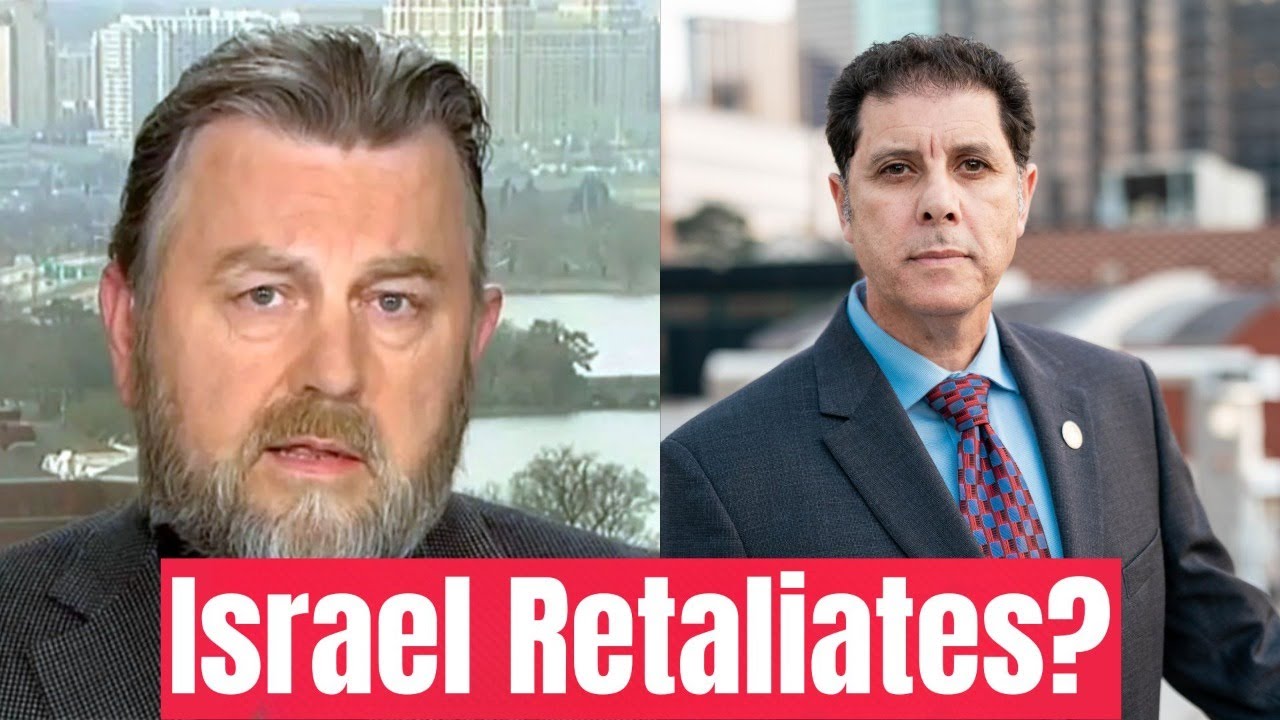
David Oualaalou talks with Larry Johnson about whether Israel should retaliate after Iran's strikes. They discuss Iran's military capabilities, what Saudi Arabia and the UAE might do, and how U.S., Russian, and Chinese interests shape the region's next moves.
Chapters
All right, hello everybody and welcome to Geopolitical Trends, where truth matters. Very, very excited to be with you because again of my guest, one that does not need any more introductions because you all know who Larry Johnson is. So I'm going to bring him in right away because we got a lot to cover with Larry and he's like very, very limited on his time, but he was kind enough to sort of come on, on the show here, and I'm very grateful to him. On your behalf, guys, we all say thank you to Larry. So here's Larry. Hi, Larry.
Hi there, David. Thank you.
Yeah, my pleasure, my pleasure. And we are very excited to have you here. So, uh, let me— I'm gonna get into it right away because I don't want to waste much time here. Larry, uh, in your opinion, do you think Israel will retaliate against Iran Knowing that Iran just issued a statement through its president. As a matter of fact, the statement was this morning, uh, uh, through the— they had a parade, military parade in Iran and so forth. And the president, Raisi, mentioned that any, any act, doesn't matter what size, any act by Israel will be, uh, Iran will respond swiftly and the intensity of the retaliation will be far than ever Israel could even imagine. Yeah, what do you think?
Uh, I think all of that is true. I think Israel is going to retaliate. I think Israel will likely— the most likely target will be to go after one of the, what I call, conventional nuclear facilities, production plants, uh, in Iran, if they can, with a missile. That's not where Iran's got its actual military and sensitive nuclear work buried underground, so that this is— it's not above ground. But nonetheless, I anticipate Israel is going to do something like that. They might hit an oil refinery, maybe try to hit one of the Iranian naval bases, but they're going to do something that is going to be seen by Iran as a significant blow and Iran's going to retaliate. I think Israel has calculated that, oh yeah, we can shoot down all the Iranian missiles. They didn't understand what happened on April 14th, that Iran pulled its punches. But Iran did demonstrate that even with all the missile defense, even the most sophisticated missile defense system in the world, failed to stop the ballistic missiles which hit Israeli air bases in the Negev, and I think farther up north, as well as one on an intelligence collection center in the Golan. So I, you know, I think Israel is right now believes its own nonsense that they're— that this, uh, the Iran is weak that this represented the full effort of Iran and Israel is going to teach them a lesson now. Absolutely stupid.
Do you think— I got a word and I couldn't confirm it. I'm still looking into this. I got a word that the U.S. reached out to Iran through a third party saying that, hey, just let Israel not lose face by allowing something even as minor as it might be. Is there any truth to something like this?
Yeah, there's— there are reports, and I think they're credible, that, uh, CIA Director Bill Burns was in Oman and met, uh, with a representative of Iran's government.
That's what it was.
Yeah, so, and it— I know Pepe Escobar had that information, um, and I think Pepe's got good sources on that.
Yes.
So you, um, the— this is both Iran initially is saying to the United States, look, we're going to hit them, but we're not going to hit them with everything we got. We're going to do it in a way that it's going to send a message that you can't attack our people and our diplomatic facilities anymore, because if you do, we're going to hit you in in Israel. And that was Iran's goal, to send that as a— not to cause death, destruction on a wide, wide scale. And I'm, you know, it's— I've got a number of friends who are, you know, they're Jewish, they're almost Zionists, and you can't even have a rational discussion with them about this. And I know that one person in particular is just adamant, oh no, that was a major defeat by Iran. Oh, they got, you know, and you try to say, look, step back, take a look. You know, the video of the one Iranian warhead coming in to strike at one of the, I think the Nevatim Air Base, and then they got desert. Is you see, literally, you see this missile come down, the warhead's coming down, and an interceptor's coming up, and it goes this. Well, I mean, it, it literally maneuvers and evades the interceptor. That's sophisticated technology right there. That's what Iran demonstrated to Israel the other day. And, you know, Israel is— it will be a damn fool if they don't, uh, take that lesson on board.
Yeah, yeah, I do believe, Larry, that what Iran did was nothing but just, uh, sort of, uh, just teasing the Israelis, if I may use the term here. But also it has some other objectives to the way it conducted the, uh, the, the retaliation. I think, in my opinion— I could be wrong, and please correct me if I'm wrong on this— I think the first— there were 2 or 3 goals that I believe Iran wanted to achieve. One is to show that now the status quo has changed. No more, we are not going to be— so Iran wants to show strength and defiance by striking Israel directly. Second one is, of course, Iran had to calculate its counter or its retaliation by staying below the threshold of a war, if I may. They use the term openly, that is. And this is where I see the idea of Iran wanted to test, first of all, the response time of the Iron Dome and so forth, knowing that Iran used only the basic. It didn't use some advanced systems. I came across one that I read up on a few years ago, and I kept an eye on that one. It has to do with the Shahed-238. This is the advanced system, uh, that they just created. This was, uh, the second version of the Shahed-136. Those are very, very advanced ones. This is what the one Iran used. So in your opinion, do you think that Iran wanted, first of all, to show Israel that that game of you striking, uh, unilaterally no more? And second, could this open up the path for an open war? And when I say open war, I am not referring to just between Iran and Israel. I am talking about the US getting involved on side of US, UK, Germany, France on side of Israel, and Russia, China, and I may even go as far as North Korea on side of Iran.
Yeah, well, no, I agree with you that Iran had several objectives in its response, in the attack carried out on the 14th. And I think you accurately described this. I think one of the key factors in Iran's decision to show restraint, believe it or not, because I would claim that their retaliation was a restrained one. It came because of intervention and advice from China and Russia, letting Iran know that, look, we've got your back, so you don't need to go too extreme on this, but make sure that, you know, Israel gets the message that Iran can now reach out and touch Israel if it cares to in a way that it never has before. That the the reality of that missile attack, despite all the propaganda afterwards that it was a massive victory for Israel. That's all spin and fluff. Yeah. Problem is a lot of people genuinely believe that, and they're, oh yeah, no, that's true. That's right. And you can't even persuade them to take a look at it from Iran's side, what Iran accomplished. So what that means, and it goes towards your question about a wider war, that if Israel ups the ante and does a significant attack on Iran in Iranian territory, then Iran will make good on its threat, promise, call it what you will. And only this time there will be, I think, significant damage throughout Israel. It won't be confined to just military facilities. I think, I think they'll go after government buildings. I think they'll go after economic targets. I think they'll go after intelligence targets. So they're not going to just kill civilians to kill civilians, but there will be collateral damage and civilians will die. So at that point, then you look at Israel saying, okay, by God, you know, they're going to use nukes. Maybe they'll trot out the possibility of trying to hit a particular center in Iran with a tactical nuke. That then puts us into an entirely new world because Russia and China aren't going to stand for that. They will not stand for that. Israel runs a real risk of being destroyed as a nation out of this, and it runs the risk of the United States being dragged into a war it can't win. Because I remind people, I've got again several of these Jewish, I'll call them acquaintances. They're not deep. There's no deep friendship there. But we're on, you know, some social gatherings together and they say, oh, we just go and bomb Iran. And I say, okay, guys, step back. We now have an empirical database of how effective is U.S. bombing and bringing about political change or the change we want. We bombed the shit out of Vietnam. How'd that work out? No victory. Uh, we bombed Iraq in the first Gulf War, and then we bombed them in the second Gulf War. Again, it didn't didn't fix the problem on the ground, didn't make Iraq go away. Now, since December with Operation Prosperity Guardian, the United States is unable to open the Red Sea to safe transit by any ship, particularly those owned or under by Israelis or the connected to the Israeli government. We've got an aircraft carrier group out there. We've had several allies. I mean, for God's sake, the French pulled, pulled out the other day, you know, the surrender monkeys. No, you know, we can't do this. They literally, they said it was too violent. Oh, it's too violent. We're not accustomed to this. That's the Houthis. So if the Houthis can wreak that kind of havoc on the U.S. Navy, What do people anticipate will happen if the United States decides to attack Iran? Iran, right off the bat, Iran can shut down the Gulf of Hormuz. I mean, the Straits of Hormuz in the Persian Gulf, and there won't be any oil coming out, at least no oil destined for the United States. And so an oil shortage like that that pops up is going to be immediately reflected in price hikes at the gas pump in an election year. You know, that would be a death knell for the Democrats and especially for Biden. Yeah. So I don't, you know, I don't see even the Biden administration being that crazy. So there's, uh, this has, you know, real potential if it all hinges upon what's Israel going to do. If it decides to just do a show of force and that it doesn't really cause any significant damage to Iran, uh, I would anticipate that the, uh, the Chinese and Russians' advice to the Iranians would be, okay, let this one go. This is this is more for Israel's domestic political consumption. Yeah, but you know, that raises the whole issue of why in the world would Iran want to even help Bibi Netanyahu's political position? You know, what Israel has become, it's pernicious. They are really a genuine force for evil right now.
Yeah, for sure.
Yeah.
Uh, you mentioned the word intelligence. I'd like to address one particular aspect, uh, uh, that I— and by the way, before I forget, this morning I, I got a word again. I do have my own sources, per se. I got a word that the Israeli cabinet, the war cabinet, did not reach a decision as to what to do next. So it was no decision as the meeting of this morning at the war cabinet. So that tells me personally, Larry, and please correct me if I'm wrong, that means they don't know what to do. Are they concerned of the ramification or implications of their— of if they retaliate? Or are they being pressured by the US? I don't know. I don't know the answer to that.
Yeah, I think what you're looking at is the— yeah, it's the difference between somebody who's thinking with their brain and the others who are thinking with their, with their emotions. So, uh, the, the people like Itamar Ben-Gavir, uh, Smotrich, Beliziel, uh, Beelzebub, I call him Beelzebub Smotrich. Those two in particular are like, oh yeah, let's go out, shoot them, kill them, let's do whatever we can. But with, you know, really no understanding of military tactics, strategy. I think someone like Benny Gantz, despite whatever he said in public, in private understands how consequential Iran strike was the other day and that it represents a genuine threat that if Israel makes the wrong move, could very well lead to the destruction of Israel, not with nuclear weapons, but with conventional weapons. Weapons, Iran has enough conventional missiles that it can really significantly damage Israel as a nation, and it's already economically struggling because of the war in Gaza, the war on the Palestinian people. But this could be a real knockout blow to the Israelis.
Yeah, well, the stock market is not doing well in Tel Aviv, and people are leaving Israel as we speak.
So let's go back.
Yeah, go ahead, Larry.
No, no, no, I agree. I think that's, that's the thing that is ultimately going to, I think, affect the decision-making. If the economy winds up in a tailspin and they're losing population, particularly guys who are supposed to be in the reserves and filling out the ranks of the military that are leaving. Wow.
Well, this is almost the same tragedy that's going on right now in Ukraine. They don't even have enough soldiers.
Yeah.
Yeah, which we'll get into that later. Uh, let me go back to the word, uh, the— you mentioned the intelligence, and I would like to get to your, uh, as a former, you know, intelligence, uh, official that you dealt with this and so forth, you have a better grasp and understanding of what is the role of some Arab countries. And I'm gonna mention two here. One is Saudi Arabia. Second is United Arab Emirates that shared intelligence with the Israelis. The third country is Jordan that shut down its airspace to any sort of against Iran. What do you make of the three Muslim countries that are sort of in support of Israel? How is that translates into the reality of the geopolitical landscape?
Well, my understanding is that Iran as well communicated with the Saudis, with the Jordanians, with the Omanis about this is, this is what we're going to do, this is our plan. So I think that there was, uh, put those countries in a position where they could appear to be cooperating with the West, you know, shooting down drones, because Iran had no intention of those drones actually hitting targets and causing significant damage. The drones were like pawns, that they were simply a piece in a chess move that is designed to be lost and to draw out, to draw something out of the other side, out of the opponent, in this case Israel. So it was clear that the Turks as well were informed. Now, the United States, it's interesting to look at the denials. The United States said, we were never warned by Iran. That's not true. Iran did not warn us. Well, you ask the question, did Iran tell the Swiss who warned you? Well, no, no, the Swiss didn't tell us anything. How about the Turks, the Jordanians, the Omanis, the Saudis? They all knew it was coming. And you're saying not a one of them said a word to you? And yet they lined up to, you know, help. They did— well, Saudi Arabia did not block, uh, or make any attempt to shoot down Iranian missiles, drones going to its territory. So, uh, the point of all this is that there's a, a lot of what we're seeing in public is a staged theater. Because, uh, the countries and people behind the scenes, they knew more. This was, uh, this was, I call it, a symbolic, uh, retaliation by Iran. It was not intended as a tactical military action designed to accomplish a particular objective. It had more of a— this is more of a political objective to put Israel on notice, to force, frankly, force Israel to stop going outside the country and assassinating Iranians. If Israel doesn't stop that, then Iran is going to continue to retaliate. That was the message here.
And they did issue the statements, and I do believe Iranians will not be bluffing on this, because that's just how, how, how it's gonna work. Now, uh, I am thinking outside the box as one who, uh, wrote a book about Iran, uh, a few years ago that were right after the, uh, the P5+1 agreements regarding the nuclear program, uh, the, the agreement that is, which by the way, it was the United States that pulled out of that treaty, uh, that, that agreement unilaterally, which violates every uh, every record, or, or, you know how it is. My question to you, Larry, is, do you foresee the possibility that Iran could just go ahead now and accelerate the production of a nuclear weapon because now the gloves are off?
No, I think, um, I've heard two different— you know, we've got two different things going on. One, The intelligence community continues to insist Iran does not have an active nuclear weapons program. Okay. Maybe true. One of my friends, a longtime colleague at the CIA, who specifically worked, handled Iranian agents, Iranians who'd been recruited to spy for the United States, Uh, he told me, good Lord, almost 20 years ago, Iran's going to get the bomb. Iran's going to get it. So we just need to stop kidding ourselves and pretending that they're not going to get it. Because you need to step back and say, why does Iran want a nuclear weapon? They want a nuclear weapon so that they'll be safe. So that they will not be subject to attacks by the United States. The United States and Israel, uh, have carried out terrorist attacks inside Iran. And let's put it this way, if Iran carried out those same kinds of terrorist attacks, like assassinating prominent scientists in the United States, would be— we'd be attacking Iran tomorrow. So it, uh, I personally believe, you know, sort of setting out, uh, I, I would disagree with, uh, well, let me put the— the only thing that would slow down Iran's nuclear program is if they got guaranteed assurances from China and Russia of that they would be protected. Yeah. Without that kind of assurance, then I think Iran would necessarily go ahead and continue its work to develop enriched uranium. So what— it's got the missiles, you know, the actual— the reality is the actual construction of the bomb itself, that's not going to be that difficult for Iran. They've already solved the problem with how you deliver it. They've got one of the most advanced missile programs in the world.
Yeah, and they do have— I found out that of course they developed the ICBM capabilities for those missiles, so which was surprising to me at that time. So I think, I believe, Larry, for Iran to act the way it did recently by retaliating against Israel, that tells me personally that the relationship that Iran has cultivated over the years with both Russia and China. Because I remember I wrote an article back in 2015, way back, and I argued that, mark my word, down the road you're gonna see the alliance between Russia, China, and Iran. So I am convinced that because of the technology that Russia shared with Iran, Iran developed the capability, let alone that we all know that Iran has acquired the S-300 missile systems. They're going to be acquiring, I believe, the S-400 missile systems.
I think they already have it.
They already did. Okay. That was the last time I heard of that. Then the Su-34, if I'm not mistaken. So their capabilities are really up to standard as far as they will challenge the Israelis or any Western entity for that matter. Is this could pave the way for us to say we're going to be seeing the geopolitical landscape shifting in a direction that the West didn't anticipate. And I'm referring here to the access to the, uh, the role that Russia and China would play in, in this case.
Yeah, well, what, what we're, what we're seeing is the end of the US hegemony in the world. That started with the US reaction or provocation of Russia with respect to Ukraine and the start of that war. And then the imposition of the intent of the United States is to destroy Russia. Let's be clear about that. And it's backfired in a very dramatic fashion because the entire premise of US foreign policy going back into the 1960s, but it was really fully articulated by Richard Nixon and Henry Kissinger, was to keep China and Russia apart. Uh, you know, don't let them get together, don't let them unite, because that would be seen as a threat. And so that was a— that was always a key It's like one of the cornerstones of U.S. foreign policy. Well, that has now gone down the toilet, and with it is made Iran and China— they see the United States as this power that is hell-bent on intervening in the affairs of every other country that it can. To make every other country do what the United States wants it to do, regardless of whether it serves the interests of those people or that nation or that culture. And I think both Russia, China, and a growing number of countries— India, Brazil, South Africa— they're drawing a line in the sand. Okay, we've had enough. We've had enough. We're not gonna, we're not gonna tolerate the US bullying anymore. And with that, you get countries like Iran, North Korea that are, you know, we're constantly demonized here in America, as you know. And we fail to take responsibility for what we have done or our country has done, our political leaders have done to create these conditions. Iran would not be in the position it is today were it not for CIA and MI6 intervention in 1953 to overthrow the government of the democratically elected leader of Iran at the time, Mossadegh. You know, we did that, and that set in motion a serious chain of events that culminated with the Iranian Revolution, a religious revolution, the return of the Ayatollah Khomeini, and then Iran trying to establish itself as this theocracy is what it is. And yet, again, the United States clueless about all of this. We are condemning, you know, They say death to America. Oh my God. They want to give death to America. Everybody remember John McCain singing bomb, bomb, bomb, bomb, bomb Iran? What's that?
I remember.
Yeah. You've got, and so across the board, what the United States, we don't ever listen to ourselves and how we talk about these other countries. We constantly accuse Iran of being the largest state sponsor of terrorism in the world.
No.
Not true. The United States is. I'd make that case. And actually, the case for Iranian, what they describe as terrorism, is Iran's support and assistance to groups like Hezbollah and Hamas that are fighting Israeli aggression and imperialism. So, you know, it's not real simple. They like to make it a simple black and white, that, you know, we're the good guys, the Israelis are the good guys, and all these Muslim and Iranian and different groups, they're all bad, they're all evil, and they need to be destroyed. So we've got this Manichean view of the world. It's all good and evil. There's only one side that's right, the other side's wrong. And there's no room for any kind of understanding.
Yeah, well, we don't seem to learn from, from history. Literally, it pains me to see where our, our country is headed. It's been heading in the wrong direction. So anyway, but I want to go back to your point about the, the '70s when you mentioned the Soviet Union back then. And I do believe if we would have let one particular aspect happen back then, we would have seen a different outcome on the global stage. What am I referring to here? I am referring to Brzezinski, who's the one who created that, the, the path forging forward towards, oh, the Soviet Union is the enemy. And I'm asking, what would have happened back then if all the three countries, the Soviet Union back then, China, and the US What would have happened if they sat down and hash out their differences? What the outcome would have been?
Oh yeah, no, at least in the '70s, yeah, prior to, uh, Zbigniew showing up with the Carter administration as his national security advisor, yeah, there was still open communication with the Soviets despite the United States seen itself as in a global confrontation or competition with the Soviets. Yeah, they still had open talks. They produced the SALT agreements for nuclear control, the control of nuclear weapons. They continued talking to get controls with the anti-ballistic missile treaties. So there was dialogue on that front. The— if you go back and read, uh, the book Legacy of Ashes by Tim Weiner and about the creation of the CIA, it was apparent from the outset that there, there was just this emotional opposition to the Soviets that wasn't predicated really upon anything that, that the Soviets, quote, did. But it was more this belief that they represented this threat to the American empire. And because, you know, we did, we, we, it was presented that the Soviets were hell-bent on conquering the world, that the global communism, it was just good, the communism is going to sweep the world. That was never their intent. And we didn't understand that their takeover of Eastern Europe that the motivation there was not part of some commie plan to conquer the world. They wanted to make sure they had a buffer on their western flank because they had been invaded by the French, by the Germans a couple of times, by the Brits. You know, you go from the War of 1812 to the Crimean War. I mean, so, you know, it was not paranoid on the part of the then Soviets, but the Russian people to want to have a buffer between them and the West. Because the West— Russia wasn't invading the United States. And the only time Russia marched into Europe was in the aftermath of Napoleon's invasion of Russia. So, you know, this is failure to understand history. But instead of, you know, think about this during World War II, China and Russia were our allies. And who did the United States at the end of World War II ally itself with in terms of recruiting them as spies? Nazis.
Yeah, I—
it just makes no sense.
Mind-boggling.
Yeah.
Speaking of Eastern Europe, we'll shift into talking about Ukraine briefly here. Uh, I just read something last night that some military groups, Ukrainians, surrendered to Russian forces. You know, yeah, are we— are— what are we looking at now that Russia is moving forward with its plan and that Zelensky is calling now? I think they're passing a legislation, whatever, uh, to mandate, uh, people from the age of 26 to— between 26 and 60 to serve the military.
They don't have any Yeah, I think it's 25. I think they lowered it to 25. They had also had a— the original legislation, as I recall, had a demobilization provision allowing people to be demobilized after a 2 or 3 year period of service. That was removed. But yeah, let's— even if they get these people, even if they line them up, and put them into a uniform, where are they going to train them? You know, the training that's required to operate on the modern battlefield is nothing that's going to be acquired in 13, you know, in 3 months. You're looking at a good 6 months to a year of training. Well, Ukraine doesn't have 6 months to a year to wait. Their forces already are suffering attrition at a growing rate. They are in positions that are less well fortified and less well supplied than was the case a year ago. And Russia, by contrast, has built up its army, has bolstered the number of people in service. They've all had the luxury of being trained for a year. You know, think back, this mobilization that started in September of 2022, so, you know, a year and a half ago. Yeah, yeah. Those, you know, those soldiers were out being trained since then. And so they've been arriving over the last 6 months. And yet every month you're getting around 30,000 new recruits. Those 30,000 new recruits, those go to the to boot camp, and then they're on to train within their battalions, regiments, and divisions. So, you know, this— Russia's doing what Ukraine wishes it could do, and it doesn't even matter if they pass an aid package in Washington, D.C. It's not going to change a thing. On the ground for Ukraine.
So basically assigning this aid package, which by the way, the Speaker Johnson, the incompetent Johnson, just approved, is this nothing but just sort of a political theater given the elections, presidential elections?
Well, yeah, in fact, I'm looking for it. I'm just trying to pull up here now. I've got the amount of money that's actually being allocated. Yeah, yeah. Okay, so here we go. Here's the House proposal. They want $20 billion for restocking U.S. arsenal of weapons sent to Ukraine. So that money's going to U.S., to Raytheon, Lockheed Martin, uh, General Dynamics, uh, SAI, you know, pick, pick the particular defense contractor, they're going to get that money. $15 billion for EUCOM AOR in Stuttgart. So European Command, which is based in Stuttgart, uh, is, uh, they're going to get that money to cover their expenses for operating the region. That money's not going to, uh, Kiev. Then it says $14 billion to Kiev to purchase new weapons. Yeah. Do you think that they're really going to give, hey, Zelensky, here's $14 billion. Now you go shopping for your weapons. No, no, no, no, no. That's not how it's working. Uh, that money's already designated for particular, again, US defense contractors. So that's just a, on paper, it looks like we're giving that money to Kiev, but that's going to, uh, the defense contractors. So right away, you know, we, we're, we're up to, uh, let's see, that's, uh, $49 billion, then another $8 billion for DOD Anti-Corruption Oversight. That gets you up to $57 billion. Do you see any money in there for, uh, I guess there— oh yeah, there, there's $8 billion as well, finally, for the National budget of Ukraine. So that's— so Ukraine itself is going to get $8 billion. Maybe Zelensky can use that to buy off all of his key commanders, and, you know, they'll get their money stashed in a Swiss bank account and they'll get the hell out of Ukraine. But wow, it's not 6— there's nothing on there that says, hey, we're gonna, we're gonna have, uh, $20 billion to train new Ukrainian soldiers to create a training ground where they can all be brought together that's outside the reach of Russia's missiles. Don't see that.
So, and this basically is doomed for NATO now. They're realizing how fragmented the alliance is. And, and, uh, what I found very disturbing, Larry, was the recent statement by Tony Blinken. Regarding the admission of Ukraine into NATO. How stupid. And I don't know, it was a week and a half ago. It was irresponsible of him to issue a statement like that. As I always say, and I believe that words turns into a policy sometimes. Why would he say something that is not going to happen?
It's just a political ploy for Ukraine. Try to convince Ukraine, oh yeah, no, we're still with you, man. We're gonna get you into NATO, I promise. Cross our hearts and hope to die with their fingers crossed behind them. Yeah, we don't mean that. You know, I have likened— look, bringing Ukraine into NATO is like bringing a guy that has no arms and legs onto a basketball team. Okay, what does he do? He can sit on the bench and cheer you on. If he gets some prosthetics, he can, you know, move up and down the court, but he's not going to be an effective player. He's not going to make the team stronger. He's not going to make the team better. Well, Ukraine, all Ukraine's going to do is further fragment NATO. Look, it's been a de facto member of NATO anyway for at least the last 20 years. Yeah, they've been, or yeah, we're coming up on 20 years since NATO started doing military exercises with Ukraine. And this was, it was always done with an eye towards, we gotta, we gotta figure out how we can use Ukraine to weaken Russia, to destroy Russia.
Even though we promised, we promised when James Baker, former Secretary of State, said in the St. Catherine Hall Specifically, we will not move an inch eastward, we promised. So that looks like we can hold our end of the bargain when it comes down to that. So, uh, I want to turn your attention to, uh, one particular, uh, uh, even— I don't know if I will call it an event or development, whatever. It's in Eritrea. Why is this? Because the ambassador of Russia mentioned that there is a possibility of a conversation between Eritrea and the— and this— and Russia to establish a military base of Russia on Eritrean, which means access to the Red Sea. Now, I know historically this has been a wish from way back, Soviet Union, for them to have this one. Do you see this happening anytime soon. And if it does, Larry, how this is going to impact the geopolitical landscape in that part of the world?
Well, you— we've already seen that Russia had reached an agreement with Sudan to build a port facility there. So I, I, I don't think it's a matter of if Russia will get access to maritime ports, uh, in, in the Red Sea area, in that area. But when, you know, it's just they're in the process of doing it. And I think this again goes to the, the overall shift in, uh, power away from the United States and more and more countries turning to Russia and China as an alternative to the United States. So, um, I, you know, this is— Russia is on a trajectory that it's, it's re-emerging, it's re-establishing its status as a superpower, and everything the West is doing to try to destroy it is just making it stronger, actually.
Wow, wow, wow. Yeah, so it's kind of like, uh, whatever way it goes, nothing's gonna be to the benefit of or in service of the United States' interests. So this is what I believe, just to go back to our main topic here regarding Iran and Israel and so forth. This is one of the considerations the United States has regarding its military installations in West Africa— in West, West Asia, or Middle East, as it's known in some, because every base in the Middle East is within reach of Iranian missiles, to my knowledge.
So yeah, I mean, Iran, um, you know, there's— there is not a natural affinity, yeah, between the Iranians and the Arabs, uh, because, you know, the Persian culture is different from the Arab culture, for starters. True. And then the Shia version of Islam is quite different from the Sunni version, and that is, you know, people in the West don't appreciate that. Well, those who are Christian, just ask them how well Catholics get along with, say, Jehovah's Witness. Yeah, those are, you know, they don't meld. They may both claim to be Christian but have diametrically opposed views about what's what. And, you know, that happens within Islam as well, but They are finding, you know, with the work of China and primarily in Russia to a lesser extent, reestablish relations between Iran and Saudi Arabia. And that, that is another game changer that changes the dynamic. It's no longer the United States calling all the shots and pitting all the Arab countries against Iran.
And we played that game very well back then between Iran and Saudi Arabia. The two main rivals. So till the Chinese brokered the deal, and of course things changed. So guys, just prepare a question or two for Larry before we close this out, but I'm gonna give Larry the last word as to what should we expect, Larry, moving forward.
Yeah, go ahead. No, I, um, the war in Ukraine is, it's heading towards a predetermined end. Ukraine is going to be defeated. They may try some desperation moves, but with each desperation move, they're putting themselves in a more difficult situation. I did, I raised on another podcast, I wondered why Russia had not taken out the bridges over the river of the Dnieper River in order to cut off the resupply. Well, then I had a construction guy point out to me that The railroad bridges, a lot of those are on top of dams. So you've got a lot of hydroelectric dams along that river or dams that control the water flow. If you destroyed them, you could really cause massive flooding downstream that would— could damage a lot of even Russian assets. So That's one reason why they probably don't do it. But it's going to become increasingly difficult for Ukraine to hang on and control events. And it's really on— Russia's got the full initiative. The danger is really what happens in the next, I'd say, next 24 to 48 hours. I think the pressure for Israel to do something, you know, it's great. I was— I'm glad to hear what you, Dale, heard. If the, if the cabinet is still arguing over what exactly to do, then that gives me some hope that they may, uh, that maybe finally come to their senses and not do anything, because they know Iran will retaliate with a full force this time. Yeah. There are at least, there are at least some in the Israeli government that understand that these are not idle threats by Iran. And so since it's not an idle threat, they've got to take it seriously. But there are others who say that it's just, they look at Iran as just being a blowhard. Oh, they're just making threats. They're not going to follow through. Yeah, but what if they do? That's always, what if they do? Can we survive that? Is that going to be in our interest? Is that going to make us stronger? Is that going to make us safer? Yeah, answer to that is no.
Yeah, and I think Israel didn't consider, didn't think hard enough in the long term as far as what if the possibility of Iran responding, because whatever action it did before, it was restraint, tremendous restraint from Iran not to react to that in that manner. But now the gloves are off, as we say. But also it changes the equation Now I believe things have changed now. If moving forward, there is no more the status quo as it was before.
So, right.
And for us, we're going to be sucked into a conflict, another conflict in the Middle East. I mean, enough is enough.
So yeah, the average American doesn't have stomach for this anymore. I mean, we've been fighting, you know, a 22-year war. Wow. We've been, we've been at war since 9/11.
Yeah.
And I think Americans are saying, okay, enough of this. We don't, we don't need to go to war with Russia. We do not, don't need to go to war with China. We need to stay at home, get our own act together, clean up our own house.
You know, Larry, my first year when I went to Afghanistan back in 2002, at the beginning And I had a conversation with some commanders there, and I was like, this is not a winnable war. And they looked at me like I'm speaking some foreign language or whatever. And I said, you guys, I mean, no offense, but if you only know the history of this part of the world, no other major power was able to conquer this country. What makes you think we're going to do it? Well, we just— I said, it's not winnable. Mark my word on it. Exactly what happened. Let me take a question or two here from, uh, some of our viewers here, Larry, if that's okay with you. Uh, uh, first question from Johannes, uh, Dharma. Question: when Ukraine finished, what is Russia's agenda? South China Sea with China or Palestine? I don't quite understand the last, the second. Oh, meaning the support for either South China Sea or Palestine. I, I quite didn't understand. I'll, I'll answer the— I'll ask the first part. When Ukraine finished, what is Russia's agenda? In other words, after the dust settles in Ukraine, what will Russia do?
Russia's agenda is to create a buffer state where Ukraine will not have a military, uh, will not capable of hitting Russia, and will not be part of, uh, It can join the EU, but it's not going to be part of a military alliance with NATO. Hmm.
Would it be fair to say, Larry, that could— and this is just a question for you, I'm asking this— could Russia go as far as getting to Kiev, taking over Kiev?
Oh no, I think they will take Kiev. Absolutely.
Well, then if they do, it's over.
Yeah, because Kiev, remember, Kiev's a Russian city. When everybody pronounce, you know, they call it, you hear a lot of American commentators, Kyiv, Kyiv.
No, it's Kyiv. It's Kyiv.
Yeah, Kyiv. Well, that's the Russian pronunciation. And what's interesting is I've heard people like Nuland and Blinken complain that, you know, their grandfathers or great-grandfathers had to flee Russia Yeah. Mind you, Russia because of the political persecution, the pogroms. Oh, where do they live in? Where do they live in Russia? Ukraine. Wow. The point is, you know, look, go find a map of Ukraine in 1904. You won't find it because Ukraine didn't exist as an established country in 1904. Um, the— there is the ethnic identity, but Kyiv, whether it's Kyiv or Kiev, that was the— that was a Russian city and had been for centuries. And to try to pretend that it's no longer Russian, uh, Russians are going to take it back.
Yeah. Yeah, it was the same argument was made about Crimea. Crimea was always Russian, and a lot of people in the West did not understand the history of Crimea going back.
Well, yeah, there was— I mean, you know, and you go back into, uh, the Ottoman Empire when they controlled large swaths, and but then, you know, the French and Brits decided that they needed to intervene and, you know, and take Crimea, which they did actually. You know, at least the war turned out more in the favor of Britain and France, but, you know, Russia ultimately reclaimed it. So again, you got to go back in history and say, what is the obsession of the West with trying to take over Russia? Well, it's natural resources. Resources, nice one. The gargantuan size of the Russian state geographically. It's just, it's mind-boggling. Nobody in the world has anything, uh, if you think about it like this, it's like if you drive from one side of China to the other and then you drive from China's border with India and all the way across India, then you drive all the way across Pakistan that you'd still be only two-thirds of the way across Russia. Wow, think how big that is. Yeah. Oh my gosh, wow, wow, that's huge. That's a good—
interesting. There's another question from Alam. Question: if the US protects Israel in the war, will Russia and China protect Iran?
Yes, very simple, yes. That's why Russia and China have been doing joint military exercises with Iranians, started over 4 years ago, 5 years ago. So they've been— they've done both joint naval exercises to— for guarding freedom of navigation in the Persian Gulf, but they've also done some ground-based, land-based exercises as well. Interesting, interesting.
I'll take a last question here, Larry, from Y.A. If Israel attacks Iran, will the EU be dragged into it too as well?
Yeah, with what?
You know, it has nothing to offer.
Is Macron going to dress up as a woman and, you know, go threaten? You know, this is It's— the question's not silly. It's a legitimate question.
Yeah, that is.
Just remember what happened the other day when the French frigate that was part of Operation Prosperity Guardian, the French commander said, nope, we're out of here. We can't handle this. This is too violent for us. So Europe doesn't have any assets to provide Israel. They're struggling to figure out what to do about Ukraine.
Yeah, well, isn't that— Macron said that he wants to send troops to Ukraine. They don't have— they was talking about 20,000. They don't even have 20,000. I don't know what he was— I don't know what he was smoking that day, Larry. Yeah, that's Macron. So anyway, well, Larry, I can't thank you enough on behalf of the entire community. Those here in the US and those overseas, would truly, truly say thank you for carving out time for us here. I know how busy you are, I know how the demand on you as far as coverage, and I'm very grateful to you personally for really carving out time for us here. So I truly, truly appreciate you. You know, I thank you for the opportunity, of course, and I look forward to having you again. Your insights, Larry, this is again what this channel is all about. It's about the truth. You know, I, I, that's, that's what I stand for, and I'd like to help people become aware. Awareness is very important, and it saddens me to see where our country is because people are not willing to do the, the work by informing themselves and, and do that. So anyway, I thank you so much, and I look forward to having you next time. Thanks, Larry.
Take care. Thanks. I look forward to getting your book too. Bye.
Of course, of course, we'll take care of that. All right guys, as you have it here, as Larry was kind enough to show up here, really I appreciate him because he did tell me that I, I get so many emails, but it was, it was kind of him to really carve out time for us here. And, and we all enjoyed the conversation. Uh, we both worked in Washington, we understand how the, the system works and so forth. And once you're out of that, that, that corrupted city, it, you have a different, different perspective. So So I hope you'll find this very informative. Please remember to support the channel because that's all I count on, your support, guys, because without it, that's, that's how it works. I count on your support for this. I am also working on setting up some other interviews for next week, and I will let you know once I make those, once I confirm those interviews and set it up for you., and I will let you know. As always, remember, geopolitics impacts your daily life in more ways than one. Till next time, guys, bye-bye.
More from David


Beyond the Single Actor: Why the Gulf Isn't Choosing Between the US and China


Iran, Iraq's Militias, and the Houthis Are Coordinating! This Changes Everything




Who Controls the Next Decade's Resources? Latin America and Africa's Geopolitical Crossroads

The Chokepoint Trap: How Washington's Stupidity Triggered a Cascade That Now Controls the World

Trump Spooked as IRGC Unveiled dual-use SLV, Deployed Ghadir Mini-Subs & Hinted at Tactical Nukes!
