Israel Strikes Damascus: What's Behind the Sudden Airstrikes? Geopolitical Trends!
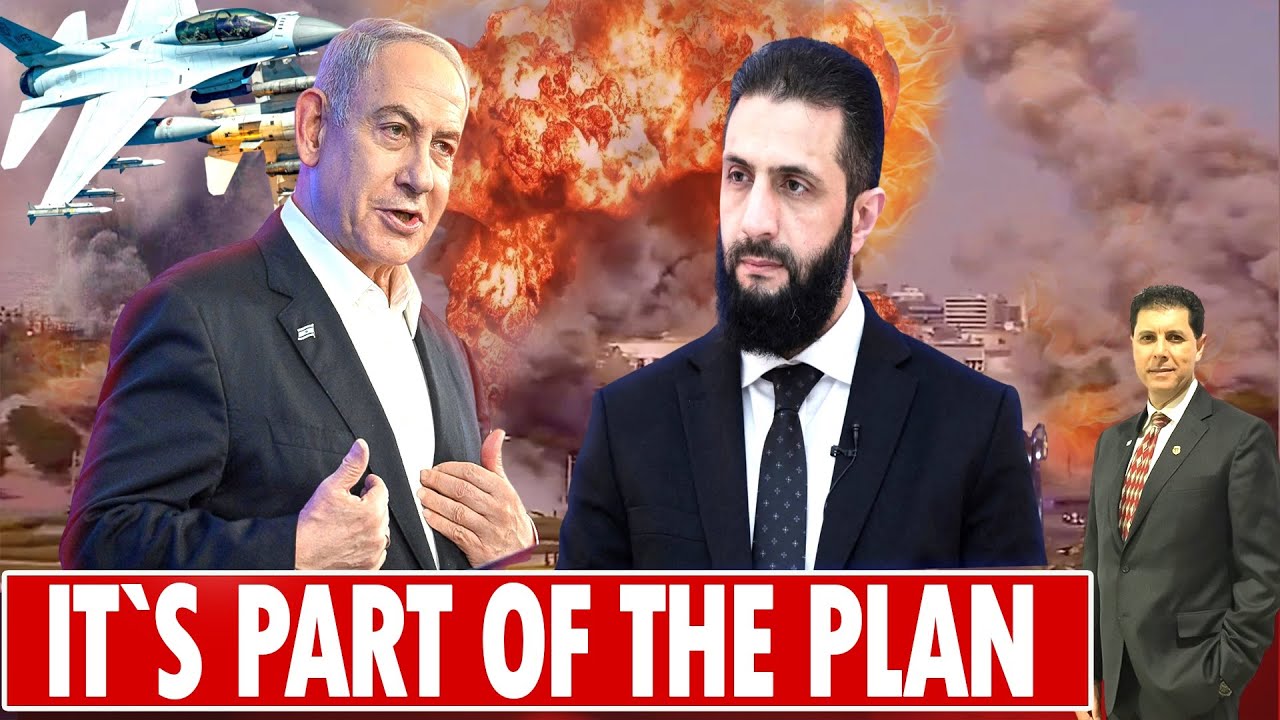
This content was created by David Oualaalou. This content was uploaded by David Oualaalou. This is a YouTube live/video titled "Israel Strikes Damascus: What's Behind the Sudden Airstrikes? Geopolitical Trends!" (posted July 18, 2025). The content is a geopolitics livestream/presentation hosted by an on-screen presenter (labeled SPEAKER A) with clips and contributions from others (including SPEAKER C/Catalina Marchand) and an archival interview excerpt featuring Dr. David Oualaalou. The video analyzes recent Israeli airstrikes in Damascus, examines strategic geography (Suwayda, Daraa, Golan Heights), the Druze community and its history, regional actors (Israel, Syria, Turkey, Arab states, Ansarullah/Houthis, Iran), and longer historical context (Sykes-Picot, post-1948 dynamics). The host engages the live chat/audience, shares clips and academic commentary, and situates the strikes within broader Middle East fragmentation and Israeli strategic objectives.
Chapters
Hello everybody and welcome to Geopolitical Trends, where truth matters. Excited to be with you as always. I have an interesting topic. Uh, I— why, why is it interesting? It's because you have to understand the much bigger picture regarding what Israel just did in Damascus. So we'll be talking about, uh, I know it happened 2 days ago. Once again, you guys know me, I don't jump into stuff till I verify the accuracy of certain information that I share with you and just go from there. So, so this is what I'm going to be providing you my analysis on today. It's, it's worth really understanding. And this is why I always believe the West Asia or Middle East will always remain a volatile, volatile sort of region., that will always, attract the interest of the world. So before I'll do this, let me say hi to our wonderful community. Uh, and, and you know what, guys, it feels like we're gonna do attendance here for class. But now I just wanna say hi to our wonderful community like I always do. So Leanne, good to see you. Willie Holman, Abdou Fall, Francis Tango, Athene Wu. Good to see you. Happy you wrote. Happy to join the live stream on time. Cannot wait to hear you talk on it. So, Santang, as always, and thank you very much for your generosity, uh, for the support of my upcoming Asia trip. So, Francis Tango, as always. Gina, good to see you. Fred Paul, and who else? Wisdom, good to see you here. So, all right guys, let me— first of all, I want to start with the a housekeeping item. This has to do with tomorrow, and yes, even though the weekend tomorrow, but I'm still gonna do live stream for you tomorrow. So I put the questions, uh, into the community as a survey. I have not looked at the results, so let me take a look quickly here just to see what you guys wrote. So, so 60%, 63, uh, there were two questions Do you guys want me to address China's targeted German recon plane with laser over the Red Sea, or you want me to talk about Ansarullah firing more missiles into Israel, shutting down the port of Eilat, but also Ben Gurion to a degree? Now I think the sort of flights have resumed, but it was shut down. So 63% of you said they want Ansarullah, so I will talk about it. Tomorrow, guys. Okay, so for now, just wanted to make sure, and thank you for taking part in that survey. So, so as I said, Israel launched powerful airstrikes in Damascus, and that's part of it was blowing up part of the Defense Ministry. So how about if we start with the, uh, uh, I'm going to start with the clip from that particular part, uh, of the world. So for you, uh, to see, and we just go from there. So let's take a look, uh, take a listen here. Basically what he's saying is, hey guys, hurry up, hurry up, take the pictures, because this is live as the bombing is taking effect. So that's basically what he was saying in Arabic. Quick, quick, quick. Yeah, do it live here. And what you saw, guys, was part of the, uh, sorry, uh, what you saw, that's part of the Defense Ministry, uh, that was, uh, targeted for that. Also, it was another—
another—
yeah, right here, I'm going to share another one here. Also, this is a broadcaster who was talking. She didn't realize what was happening. All of a sudden, just the explosion happened behind her.
Take a listen here.
Yeah, she had to, she had to run away because it was just literally, uh, uh, behind her where the explosion took place. So, but anyway, what the Israelis end up doing is hitting, uh, sort of the, uh, blowing up part of the Defense Ministry, okay, in addition to hitting near the Presidential Palace. As a matter of fact, I did find out that there were some diplomats in that part of the, of the city, uh, where the explosion took place. But suffice it to say, because the logical question you guys have to ask is, why will Israel target the Defense Ministry? You all know how Syria is, is now sort of fragmented, fractured, if I may use the term. So, but you have to understand the big picture of this, and this is why— is this about a much bigger objective than just targeting Syria? And that is— I'm not going to answer this till we go through the analysis, and of course you reach your own, uh, uh, uh, conclusion on this. I had a chance to read some stuff for the last 48 hours from, uh, uh, some, uh, special professors who deal with the history of, for example, Lebanon and Syria, but also from some other academic and strategic experts that deal with— one of them was, uh, I recall Dr. Ahmed Chourifi, if I'm not mispronouncing the name here. So suffice it to say, what we are looking at right now in, in Syria, because it is, uh, sort of, uh, a dangerous precedent. You never expect Israel to really bomb inside Damascus. Yeah, they did some before in certain areas, so And this should give you guys an idea as to what the objective of Israel is or was, you know. Is this about sort of carving out Syria? I won't be surprised at that because we've seen this, how it happened. And I have a clip for you that I'm going to play later on, how the Middle East or West Asia was carved out between the French and the British, the psych peacock, you know. Are we seeing the same here? The partisan of, of, uh, of, of Syria, the federalism of Syria, if I may use the term. So, and this is why when you look at as to where the problem started, in a location of called As-Suwayda. And by the way, I'm gonna do geography and history for you to understand, uh, because we are understanding the history and geography, this will not make any sense to you whatsoever. So when you look at the, uh, as a matter of fact, why don't, why don't we do the geography right away? So let me start with geography, I'll do history, then I'll go back to my analysis. I have a picture here for you that you need to understand. Now, excuse me, see with the arrow at the bottom here, that's where it says Sueda. Sueda in Arabic. So, and when you look at the border of where that is, you look at near to it is Daraa, then you have Damascus, but on the left side here is the border with Israel. So the— to understand about Sueda, or Sueda, that is this location, this location, guys, is mainly the Druze city, which is in the southern part of Syria, as you look in at the map, closer to the border with Jordan. It is also, it is also the capital of the Suidah Governorate, which one of Syria's 14 governorates bordering Jordan in the south. Daraa I can't speak it, uh, uh, uh, governorate in the west and leave Dismag in the north and east. So the city in itself, Sueda, that is, is referred to by some as Little Venezuela. You may ask yourself, why the heck will they call it Little Venezuela? Well, here is why. Because due to the city influx of the affluent Venezuelan Syrian immigrants. You know, those are originally from Syria. Their ethnicity traces back to Syria, but they have migrated to Latin America, to Venezuela, and some of them have come back. And this is where many of them originated, originally emigrated from the Sueda into the 19th century. That's how far back it go. So when their descendants return, they brought back with them the Spanish language and the South American culture. This is why it's called Little Venezuela. So that's very, very important to understand. Once again, look at the location here. Keep in mind, guys, and I'm not gonna spell out for you, but I will in, in a moment. Keep in mind, uh, Aleppo right here in the north. And look at the country that is bordered, Turkey, and you will understand the big picture as to why you, you really have to understand this, uh, uh, uh, strikes by Israel on Syria and who is the message is meant to or meant for. So this is why it's important to understand. So let's do a little bit of history about— you've been hearing the Druze Who are the Druze? What are we talking about? And I remember, and I'm going to share some excerpts with you from my first book that I wrote about the ambiguous US foreign policy, and I did talk about the Druze as part of the Lebanese society but also in Syria. So I will be talking, uh, I will be rather sharing excerpts, uh, with you from the book towards the end. So now, the Druze Remember, where did they came from? First of all, you have to think about religion, then you have to think about culture. We start with the religion first. The Druze faith, it is a faith, has developed from the Ismailism, or al-Isma'iliyya. To those who understand Arabic, you know what I'm referring to. So here is one thing that I need you to understand: Druze do not identified as Muslims. They are Arabs, but they do not identify as Muslims. They maintain, of course, Arabic language— they do speak it— and culture as an integral part of their identity. So, because why? Because Arabic language is their primary language. This is why mainly the Druze are located in Lebanon in Syria and some in Israel. So most of the Druze religion or religious practices, they are kept secret for a reason. And one thing that I know about, because I did the research on this one, is that the conversion of their religion— it's a conversion into their religion— is not permitted. You can't go and become a Druze, especially outsiders. It's like some other countries that I'm aware of, some countries where you go and ask for citizenship, they won't give it to you. You have to be born in the culture, or even if you get another citizenship, you will always recognize under the constitution of that country. In the case of Druze, they always religiously, that is, they don't allow outsiders to convert into their religions. They also do not encourage a sort of what they call interfaith marriages. It's very, very, very rare. That's not happening in this. One key that I need you to understand about the ethnic— this is where it comes, as I said, the religion and the culture and ethnic— the ethnic group of Druze dates back to 10th century. That's how far back we go. And why is the 10th century? Because that's when they broke off from Islam in Egypt. So, and the Druze consider themselves, as I said, Arabs and speak Arabic, but they don't consider themselves as Muslims. So their monotheistic faith blends sort of the elements of Islam, elements of Hinduism, and elements of the classic Greek philosophy. Believe it or not, it's a mix of some— they're unique people. I, uh, I, I never encountered any, but I am very aware of, of them and their practices and so forth. So here is the thing: why they keep their actual belief secret? Because that is very closely guarded. By their religious leaders. So when you look at around the world, how many are they over there? They're approximately, give or take, historians give a number, uh, roughly about 1 million people worldwide. But the largest population of Druze are in Syria and Lebanon. This is why I'm saying, when you look at the map, guys, there is, uh, Syria here, there is Lebanon here, This is where the most of the Druze are concentrated, in Syria and Lebanon. It's very important to understand, uh, this here, guys. So however, there is a minority population in Israel. The Druze population inside Israel is about 143,000 according to the last stats that I looked at, which by the way, it's less than 2% of Israel's population, which is, you know, very, very, very minority. So they mostly live— where do they live in Israel? In northern regions of Carmel, in Galilee, and of course the Golan Heights. You all know how strategic the Golan Heights is. Let me see again if you can see it on the map here. So Golan Heights, uh, They don't have it here on this map, they didn't put it there. But the Golan Heights, which will be right on the, uh, northern of the, uh, of Syria, another part of Syria, very, very, very, very crucial, uh, yeah, crucial location, uh, for that. So now, based on their, once again, the religious obligations Druze are fiercely loyal citizens to which country? The country they live in. They're not loyal to Lebanon, they're not loyal to Syria, they're not loyal to Israel, they're not loyal to whomever. They're loyal to the country, whatever they live in. That's how it is. And this is why in Israel, you know, 85% of Druze men serve in IDF, Israeli Defense Force. Because this military service in Israel is a requirement. So primarily, where did they serve? They didn't serve, like, for example, in intelligence services within the military or some— they serve in combat units, you know. And this is actually a higher percentage of the Israeli Jew who serves in the army, which is about 73%. So There is one former member of Knesset who is a Druze. His name is Saeed Nafaa. I have a picture of him here. Yeah, Nafaa, I'm sorry, Saeed Nafaa. No, this guy here, uh, uh, he's an Israeli Arab politician and lawyer who served in the Knesset from 2000, I think 2007 to 2013.
13.
So here is what he wrote, and I quote: We had hoped that serving in the military would afford us equal rights to those of other Israelis. We soon, however, discovered that this is a mere illusion. End of quote. So basically, the Israelis just using the Druze or any other minority That's like what you see right now in Africa. Israel is trying to bring in the, the Jews from Eritrea. Yeah, bring them back to Israel to serve in the IDF. So, uh, and only in addition to other foreigners who've been serving into the IDF. So suffice it to say, like I mentioned, I had a chance to read some, uh, uh, articles by some academicians that includes, for example, Rami Zidan. Rami Zidan is a professor at the University of Kansas right here in the US who specializes in the history of the Druze in Israel. And I couldn't agree more with him when he said, and I quote, both communities were minorities at that time. So some Druze villages established individual alliances with the Jewish communities around them.
And of world.
But there is one key element from the historical perspective that you need to understand, is that this Druze issue, it goes back to the eve of 1948. What happened in 1948, guys? What happened in 1948 for Israel? So let me see in the chat box. And once again, I just want to get you into the conversation. I know someone said You, you, you question the students? No, I just want to get you into conversation. What, uh, what happens in 1948 for Israel? Oh, Uncle Sam, you got it! Israel was born. Israel was born. You're absolutely correct. And this is why it's important, because the Jewish and Arab communities each pressured— remember, the Arabs And the Jewish, each one of them pressured the Druze to join their side. The Arabs want the Druze to go with them. The Jewish wants the Druze to go with them. Now you see, for example, why Netanyahu is justifying, we have to defend the Druze. But don't fall for that. What Netanyahu is saying is not true, except that that's how he justify the attack. So initially, many Druze leaders preached a stance for what? Neutrality. And even it was a professor by the name Yuval Gilbert. He's a history professor at the University of Haifa, and I had a chance— this is why what I share with you guys, it's not— it's more of academic research stuff, but also I need you to understand the background history because it will make more sense to you. That is the reason why. So, and this is where he argued, and I couldn't agree more, that the Druze leaders gave different explanations for their neutrality. They never gave a straight answer. So are they wishy-washy? Maybe, maybe not. You decide. So while some said it was a mask to conceal their real possession of support for the Jews. That's what one group said. Other groups said, well, wait a minute, this is just to maintain their, their, their position as a neutral impartial. Well, whatever that is, you'll be the judge for that. So to decide how this goes— liking this video so far? Don't just be a watcher. Go ahead and hit the like, share, and subscribe button, and don't forget to tap the bell so you will not miss any of my videos or live streams. This way, you will be supporting a channel that stands for the truth and objective reporting. The choice is yours. Thanks for your support. Now let's get into our analysis about really what took place in, uh, in, uh, Damascus. So, so I, I have a picture here of the shrine of Shua. Shua, he was a prophet back then. It's in, uh, in, in Syria, that is. So, so once again, this is where the importance of history comes in, because if you are to think about what took place with the bombing of the parts of the Ministry of Defense, uh, in, in, in, in Damascus. This goes— pardon me— this goes back, way back, way back to the Israeli first prime minister. Does anybody know who was Israel's first prime minister? So let me see again in the chat box if you happen to know. And I need just again for your knowledge, no more, no less, So the idea is that this first prime minister had a theory at that time, and that theory called, and I put in quote, "tightening the limbs," end of quote, because that's what was referred, uh, not Sharon, not, not Rabin, before, before. There is an airport named after him. So I'm giving you a hint here, guys. So yeah, Ben-Gurion, Emperor King. You got it, it was David Oualaalou. So show right there. Oh, not this one. Yeah, you got that one right, right there. There we go, Ben-Gurion. That was the one. Uh, sorry. Yeah, it was Ben-Gurion. So Tyreen the Limp. Theory. So, and now it looks like it's becoming a reality. Just think about it for a second, guys. Take a step back. You look in what's going on in Gaza, right? And by the way, this bombing just took place yesterday, and this is why the Ansarullah retaliated by firing missiles, which I will talk to you about it tomorrow. So you think about what took place with Iran, but Iran responded And the Israelis find out that you better not mess around with Iran because Iran is no small matter for Israel. And now Israel is thinking about Syria. And all this was a part of a much bigger plan. Remember, tightening the limp. This is what Bill Guerrión said back then. Because when you look at the map once again, Look who's surrounding this area here, okay? This is what you need to understand, this part. So, excuse me. And what is this theory, by the way? This theory suggests the activation of the role of minorities like the Druze, you know, because of course the Israeli will have to justify it under— or the oppressed one. Well, wait a minute, what Israel saying versus what it's doing is just contradictory. So, so, and this is where you start to realize the objective for Israel was to form small national states. This is why I go back to the beginning and I said, is the objective of this to fracture Syria into small states? Because it will be easy to control. So, and this is where, based on the region, when you look at it based on this, what we're saying and what happened also, the region formed from what? Administration, administrative units closer to the state. Because when you have small entity that is affiliated with the state, is easy to control. And because Ben-Gurion's vision back then about tightening the limbs was about sort of having the upper hand originally, and of course that in itself would translate, uh, uh, internationally. And this is why some have questioned why Israel like attacking countries with impunity. You know, tell me if any Arab state came forward and, and said this is wrong. You can't do that. Or they even showed up, the Egyptian, pathetic Egyptians, the United Arab Emirates, Saudi Arabia, Jordan, Bahrain, Kuwait, all of them, all the Arab states, none of them. Who was answering to this stuff? It was Ansarullah. And by the way, Ansarullah just issued a statement today, and I'm going to talk to you about it tomorrow, you know, addressing these attacks on Syria and they saying they will retaliate against Israel. So, but Arab state, Arab state, it's pathetic anyway. And this is where the whole idea of it— why is this important to understand? Is because those cracks, this lack of unity that exists within the Arab, uh, uh, uh, uh, countries is paving the way for this. But this is nothing new, didn't happen yesterday. This happened all the way back. I argued Back in 2003, when I remember writing something to the higher-ups in Washington, do not go in into Iraq under the pretext of, of, uh, uh, weapons of mass destruction, weapons of mass destruction, or an invasion. Because what you're gonna do, you're gonna alter the history and the landscape, geopolitical one that is, of the region that you will have no control over. Whatsoever. And of course, my argument was dismissed, especially from the higher-ups, without getting into the names and all that, because what I wrote was meant to go to the boss, the president, that is. But again, I am a small fish in a big pond, you know. And there is something also, uh, in my military background, that chain of command— you do what you can That's all I argued against the invasion of Iraq. My point in this is to bring this to the argument of why these cracks happen, because since the first Gulf War— what happened after the first Gulf War? You're looking at a sectarian, you're looking at racial and ethnic tensions and dimensions that have sort of promoted sort of, uh, yeah, paved the way to the explosion in West Asia or Middle East. That is, when I say explosion, I'm talking about social, uh, social tensions. I'm talking about conflicts, and I'm talking about us fueling those dimensions. So, and that's led also to the fragmentation into small states. So you look at what Israel plan, for example, in right now with this area thing. Let me put the map back so you'll see what I'm talking about. The way I look at it, you're looking at Sueda, you're looking at Daraa, you're looking at other, uh, uh, uh, there's a small city called Quneitra, uh, or Quneitra, or Quneitra in, in What Israel is aiming at is to create small states into this. This is why the central government of this terrorist, Zulani, end up sending security forces. As a matter of fact, they sent them back this morning. So, but you all know this guy, we the one who put him there, which means we put him with the knowledge of the Israelis and the approval of the Israelis. In other words, Zulani works for both the US and Israel. And even the Defense Minister of Israel threatens— and I'm sorry, I'll take this back, not the Defense, it was Ben-Gvir, the National Security Advisor of Israel— threatened now to take out this guy, Zulani. So that tells you the story right there. So But there is a reason to why Israelis consider these plans of, for example, in, in Daraa, in Sweida, and Quneitra. Why? It's because these locations represent a strategic depth that will guarantee the strength of the Israeli home front when it comes down to fighting. This is why Israel went yesterday and sent reinforcements to where? They didn't send them to Sueda, they sent them to the Golan Heights. And that tells you the story right there. So the strategic depth that guarantee now the Israeli national security per se extends all the way, all the way to the outskirts of Fallujah in Iraq. You have to understand the big plan. The big picture. And like I said, the big picture is what? The big picture is to have Israeli's implementation of the Middle East project. That is why it's important, because without understanding this, guys, this will not make any sense to you whatsoever. And so what's required now is for Israel to ensure that they have this strategic depth. That is the reason why they went forward with this plan. So of course, as I mentioned, uh, uh, where is that one? Yeah, as I mentioned here in the idea of, uh, sorry guys, yeah, right there. As I mentioned, uh, when you think about the— where is the picture? Right here, Julani. When you think about that, it was us who put him up into this position. We, we the one who prompt him up because we want him to serve our agenda. And the same arguments, we put him, of course, with the knowledge and the approval of Israel. You know, nothing we do in the Middle East without coordinating with Israel. I tell you this for facts. So, excuse me. The important thing also, it was highlighted that the, uh, Netanyahu has met, uh, sorry guys, here, Netanyahu has met with Giuliani. That is not true to my knowledge, and I'm gonna share a clip with you because I want you to see that the picture shows that they are, uh, shaking their hands and all that stuff. That is not true, guys. It's not true. I, I checked and I couldn't confirm that indeed that meeting took place.
It was not.
So take a listen here, guys. All right, let's play this one here. Okay, where is this one?
Next, it's true or fake. Catalina Marchand is here in studio. Catalina, tonight users on social media, they're sharing an alleged image of Syria's al-Sharif with Benjamin Netanyahu. Truth or fake?
That's right, Sharon. Here's the viral picture in question. It was posted in the post we're going to show, seen nearly 1 million times on X, allegedly showing, as we see, Syrian President Ahmed al-Assad meeting with Israeli Prime Minister Benjamin Netanyahu, both shaking hands in this alleged picture. Users on X claim that al-Assad spoke fluent Hebrew during the meeting, with the caption in the image that reads, Syrian president slips up, starts speaking perfect Hebrew during meeting with Netanyahu. This other user shares the same image, also viewed nearly 1 million times on X, and says That would explain it all. Explain what, you might ask? That would be speculation growing over Syria and Israel normalization efforts. Israeli media recently revealed that direct talks between Syria and Israel have taken place, with discussions reportedly facilitated by the United Arab Emirates through a secret back channel. Time—
once again, guys, just to highlight to you the role of Arab state, United Arab Emirates. Hypothetically there is a conversation behind closed doors that they are trying to sort of break diplomatic or have diplomatic ties between Syria and Israel. Yeah, it's the Arab countries that are pushing for that.
So Times of Israel reported on June 30th, Israel in advanced talks for deal to end hostilities with Syria, according to a senior official, while Syrian official media reports talks of signing peace, uh, peace agreement with Israel is actually premature. All the while, today, as we've reported, the Syrian president arrived to the UAE on his second official visit since taking office to discuss ways to enhance bilateral—
All right, I just want you guys to see this with your own eyes here, because that's not true.
The—
but the meeting between Zulani and, uh, other Arab states. Yes, it happened even with the foreign minister of Turkey, and I think even the Turkish president himself. So suffice it to say, to say, guys, the idea of understanding why this important. And this brings me to my next point about Turkey, you know. And here is the qu— not the question, but rather what I need you to understand. Could this attack by Israel on the parts of the Defense Ministry in, in Damascus meant to send the message to Turkey. And if it is the case, I'm going to ask you a question, and I would like to have your, uh, your answer, yes or no. Do you foresee a clash between Turkey and Israel on the horizon? Yes or no in the chat box. Do you foresee a clash between Turkey and Israel, yes or no? Uh, Emperor King, you say yes. Uncle Sam, you say yes. Oh no, this is for the previous question. A channel upload, you say no clash. Mr. Puros, you say no clash. Francis Tango, you say no clash. Athen Wu, no, Erdogan dares not. Uh, uh, Cambridge Business, you say yes. Uh, Desert Mantis, you say no. Alexander, no clash. Yeah, there are those. Uh, Ping Yi, you say no. Yeah, there are the— but, but suffice it to say, guys, just for us to think, because what Israel is concerned about is that Turkey wanted to strengthen the military inside Syria. Why? Because they were siding, meaning Turkey, during the civil war They were siding with the rebels, with Yulani, the terrorist Yulani. That's what the Turks were hoping against Assad, because the argument was at that time that the Turks wanted to eradicate the, the PKK, which by the way, they turn in their weapons. But that's bad news anyway. As a matter of fact, now Kurdistan is being targeted, the oil fields are being, uh, there, there is there were some bombs that exploded in the oil fields in Kurdistan. So it looks like— makes you just wonder. But also, when you think about the location of Kurdistan, I was there. So what you see over the border is the mountains in Iran. So this is why there's two locations, Kurdistan and Azerbaijan. Both of them are a key to Israel. Will Syria become the next? And this is where that arguments regarding why Israel did what it did. Is he sending a message to Turkey? Uh, because to me, uh, it just won't make any sense on part of Israel. Because here is the dilemma: if Israel ever attacks Turkey, hypothetically— we go with the hypothetical— what do you think NATO is going to do? Because NATO will be under the obligation to activate Article 5 because one of its members has been attacked. Is NATO gonna target Israel? You know, come on, let's be real, right? We gotta keep it real here. NATO is useless, and NATO is doing the bidding for whatever the US wants. And of course the US is not, uh, but for Turkey, Turkey might not— Turkey now is dealing with its domestic politics because Mr. Erdoğan wants to stay in power forever. Again, it's their country, they can do whatever. But again, what happened to this, we stand with the Palestinians, we stand with this? Even Mr. Erdogan himself, you know, their talk is cheap, as the saying goes. And like what the Emperor Marcus Aurelius once said, watch what a man does, not what he says. And that applies to all Arab countries. So I, I, this is why I always keep repeating this anytime we talk about Ansarullah or Houthi, you know, they really put the Arab world into shame. So I mean, look at them when Israel went ahead and bombed Gaza yesterday. Houthis didn't hesitate, they didn't negotiate. So, and with this, what's going on with the— what's going on with the, the, uh, the Syria issue? You know, this claim that they are to defend the Druze. You have the leader of the Druze himself, Walid Jumblatt. Walid Jumblatt, I remember him when I was a kid. That, that's how old this guy is, and that's how long— excuse me— this guy's been in politics. Walid Jumblatt, you know, he was played a major role in the politics on Lebanon. So Walid Jumblat, he confirmed yesterday that Israel is not protecting members of the Druze community, you know, in the southern city, province, or Syrian province rather, of Sweida, you know. And he warned the Druze people against what's called, and I put this in quotes because that's his word exactly, weak-hearted, meaning another word for weak minds. And this, this came in statements made by Jumblatt, which was the former leader of the Lebanese Progressive Socialist Party, in a phone call with the Syrian television. This is what he said: Israel is not protecting the Druze in Sweida, but rather is using some weak-minded people to claim that it is protecting them, end of quote. So, and at the same time, Walid Jumblatt, the Druze leader, called that one of the reasons, and I put in quote here, one of the reasons for the civil war in Lebanon. You all remember civil war in Lebanon, 1975 to 1990. What was the reason for it? It was because Israel claimed at that time to be protecting some in Lebanon, and it ended in disaster, in wars.
No.
And also before that, 1967, you know, when Israel has occupied most of the Syrian Golan Heights, and that's with taking advantage of the events that led to the overthrow of Bashar Assad regime in 2024. This is why you see now Israel is expanding its presence in the Golan Heights and of course wanted to sort of occupy the buffer zone, uh, in, in, uh, in Syria. So, so, and this is why you need to understand this context, guys, because it will make more sense. And, and here is what I talked about way back back in time. And I'm going to share something with you here, if you allow me to play the clip for you. All right, let me share the screen with you guys and just take a quick listen here. I'm not going to play the entire clip. I'll put the link for you, uh, later on. So All right, let's share this one with you and we'll play the clip full screen.
In the news today is the human struggle occurring in and around Syria. The civil war there began after the Arab Spring of the early 2000s, but the roots of this conflict have been growing in the region for much longer.
And guys, remember I had this interview Really few years ago. You're talking about a decade or so.
We have with us again today Dr. David Oualaalou, international security lecturer, regular contributor to Huffington Post, and author of The Ambiguous Foreign Policy of the United States Towards the Muslim World: More Than a Handshake, and the forthcoming book Volatile State: Iran in the Nuclear Age. Welcome, Dr. Oualaalou.
Thanks for having me.
Can you talk about about how the borders in the Middle East have changed over time and how those changes have contributed to the current geopolitical status of the Middle East.
Certainly. Well, as 2007 unfolds, the Middle East continues to implode, and with each new event, it suggests greater threats to its people. Syria is ravaged by a civil war that no one the outcome of, uh, Iraq is marred by sectarian violence, Yemen is a failed state. Then add to that the security and political instability in Iraq and also the tensions now between Saudi Arabia and Iran, and what you have basically is a volatile stew of conflicting passions and ideologies. But before we move forward, we need to understand What are the reasons and the causes that led to this turmoil in the Middle East? The first thing that comes to mind is the secret agreement of the Sykes-Picot of 1916. When the borders were drawn back then, only they didn't realize that it will have an impact on today. Well, just a brief notion about the Sykes-Picot, uh, that was a secret agreement that was made between between France and Britain. Mark Sykes represented the British government and François Picot represented the French government. The negotiations for that agreement were conducted secretly, first of all, between November 1915 and March 1916. And in May 26th, 1916, the agreement it was signed. And the deal was, as we see on the map here, the deal was that the A part will be given to the France, will be under the control of France, and the B part will be under the control of Britain. And this is why till today, you still see, for example, in Lebanon, people speak French over there. Yeah. And the deal was, as the Sykes-Picot agreement highlighted back then that Lebanon would be under the control of France, which may be also a haven for Christians at the time, the Maronites and the Druze. On the other hand, you get the Palestinian territory, which was at the time around the Bekaa Valley, which with the main population of Jewish people. Then you have also the Bekaa Valley, which was given land between the two rivers was given to the Shia. And also you have now the sectarian Sunni Muslims mainly in Syria. So, so what we see in today in the Middle East is a reflection of the secret agreements that Sykes and Picot made without taking into consideration certain aspects. There are three major points that I'd like to highlight as to the outcome of this agreement. The tribal lines, which means borders. If you look at on the Middle East now, with all the countries where they are, there's all those made-up borders, but those borders are made up without the context of the tribal mindset on it. So when the Saikan-Pikakot made those borders, they did not take into consideration the impact of the tribal mentality. And that's how the Middle East is.
I'm gonna stop— oh, oh, sorry guys, I'm gonna stop right here. Uh, I'm gonna stop right here because, uh, it, it was a little bit longer, but I just wanted to highlight to you because now who's fighting in Sueda? It's the tribes against the security forces of Zulani, of the main government in Damascus. And that's when Israel find it convenient to sort of the pretext of defending the Jews. So, and that is where, uh, I see what lies ahead. It's not good, uh, uh, moving forward because the idea of thinking in terms of, well, this is like, uh, just we're gonna defend the minority. No, no, no, no, no, no. There is no, there is no defending the Middle East because it was never about the Middle East. And that's exactly what I remember arguing in my first book. Let me share a clip with you here, guys. Back then I wrote, as stated in this chapter, it was the introduction chapter that I did. I am trying to present a reasonable scenario regarding what this geopolitical shift in the Middle East might look like in the next 30 years. I remain optimistic that the scenarios listed above will not occur, assuming American intelligence agencies are not chasing their tails. However, if and when these scenarios become a reality, the US will have some difficult decisions to make, including whether to A, leave the Middle East to its own perils, or B, convince other countries to give full-fledged support for the containment policy. The latter proposition will prove challenging in my opinion. So that is exactly what I argued back then, and looks like this is where things are, are headed towards. So I will say that, uh, the region current decline where things are, are headed towards, and what Israel doesn't realize is that it's digging even a deeper hole for itself. So, and, and, and remember now, if Israel is going to go with this idea— let me put the map back here, guys— if it goes with this idea of creating a buffer zone, especially on the Golan Heights, or especially wanted to ensure that in the northern part of Syria— why northern part of Syria? Because also that's where the Russian base used to be. And as you know, there is no role for Russia as much as it used to be. Maybe there might be some arrangements, but I don't see that happening. Things have changed. So Turkey will want to take advantage of that void and fill that void. Israel will not want to have Turkey presence over there, which could lead into the clash between the two. Uh, what, what is for sure is that you have Iran and Ansarullah will not let up on Israel because Israel now sort of opened the gate that it's not going to be able to close. And especially when it comes down, uh, to the, uh, what Iran has in mind regarding dealing with the Israelis. I know Iran now is dealing with the Europeans that have threatened it with sanctions if they don't reach a deal by the end of the month. Excuse me. I'm just shaking my head at the Iranians Why are they entertaining this idea of negotiating with the West? You know, it's almost like, haven't they learned the lesson yet? But again, it's their country, they can decide. But, but tomorrow I will be talking to you about the complete shutdown of the Elia port, in addition to the temporary shutdown of Ben Gurion Airport, when I address this topic for you tomorrow. So, and I'm going to conclude once again, guys, with just an excerpt from my first book, if you allow me. This is when I argued that when an American president gives foreign policy statements to Iran and other countries, those countries hear only meaningless bravado, absurd, absurd partying, or absurd prattling rather, about global leadership. Global leadership being a rare political commodity these days. America lacks resolve, and its greatness in standing for freedom and democracy amounts to nothing but a consumption of ink. That's exactly what I wrote, because it became evident now as to what we have become. So it behooves Israel to think twice about what it's doing. So anyway, guys, that's all I have to share with you on this this particular analysis here. Uh, I want to say thank you to those who have been supporting the channel. Uh, let me just put up the link here for you, for those who wants to support the channel. Many, many thanks for your continued support. And I want to provide you just an update on when, where the funding for my upcoming Asia trip is as of today, but about 38%. So I am hoping to at least reach 50% by, uh, sooner than— if, if, if it's possible, before the end of this month. But it is what it is. So like I always say, maybe some, uh, some wealthy donors will support the cause, but again, that's their decision. I'm very grateful for whatever. So anyway, in event, I will be, uh, preparing this, uh, for you guys tomorrow. So if you want to Uh, oh, I showed you the wrong— here is the link for the channel and here is the one for the trip. So I will greatly appreciate your support. Uh, by the way, I don't know if you guys got a chance to look at my analysis that I did, released the video this morning. Please check it out if you have not done so already, and I will appreciate— that's, by the way, a sponsored video that I was asked to do a brief analysis analysis about. So I would greatly appreciate if you could, uh, uh, just check it out, give it a thumbs up if you feel like it. So here's the link for that, and you can share it with others. So I will also be doing an update about, uh, Africa because of what's going on in Africa. You guys need to know what's going on there. So we got a lot of feedback about the last video I did about Emmanuel Macron wanting to go back to Burkina Faso so bad that he's begging. Uh, it was a lot of feedback and I read all the comments. So thank you for sharing your perspective with the community. This is what we are all about, guys. It's, it's about learning, it's about being informed, about being educated. This is the problem. My fellow American citizens here have no idea because they are so, uh, so, uh brainwashed. You know, I don't shy away from saying it. They are so brainwashed with this, you know, just, uh, looking at the idiot box and watching the nonsense stuff. But again, it's their choice. They, they don't want to take the effort to educate themselves. I am so grateful we have a community for us here to exchange ideas. That is the reason why I read all your comments. I respond to all your comments. It It takes me time, but it is worth it because you are worth it. This community is worth it. So, and I don't say this to be Mr. Nice. You guys know me by now. You've been with me for a long time now. We beyond that nonsense because that's nonsense to me. So, so if, uh, and that is the reason why I, I sort of, uh, what's the word I'm looking for, dedicate myself to ensuring that you get, uh, quality information. Takes me time to prepare all this, takes me time to do the research, but it is worth it. So your support is greatly appreciated. So, so I look forward to seeing you tomorrow, guys. As always, remember, geopolitics impacts your daily life in more ways than one. Till next time, bye-bye.
More from David


Beyond the Single Actor: Why the Gulf Isn't Choosing Between the US and China


Iran, Iraq's Militias, and the Houthis Are Coordinating! This Changes Everything




Who Controls the Next Decade's Resources? Latin America and Africa's Geopolitical Crossroads

The Chokepoint Trap: How Washington's Stupidity Triggered a Cascade That Now Controls the World

Trump Spooked as IRGC Unveiled dual-use SLV, Deployed Ghadir Mini-Subs & Hinted at Tactical Nukes!
