Israel/US Furious| Saudi Arabia to Acquire Nukes from Pakistan! Geopolitical Trends
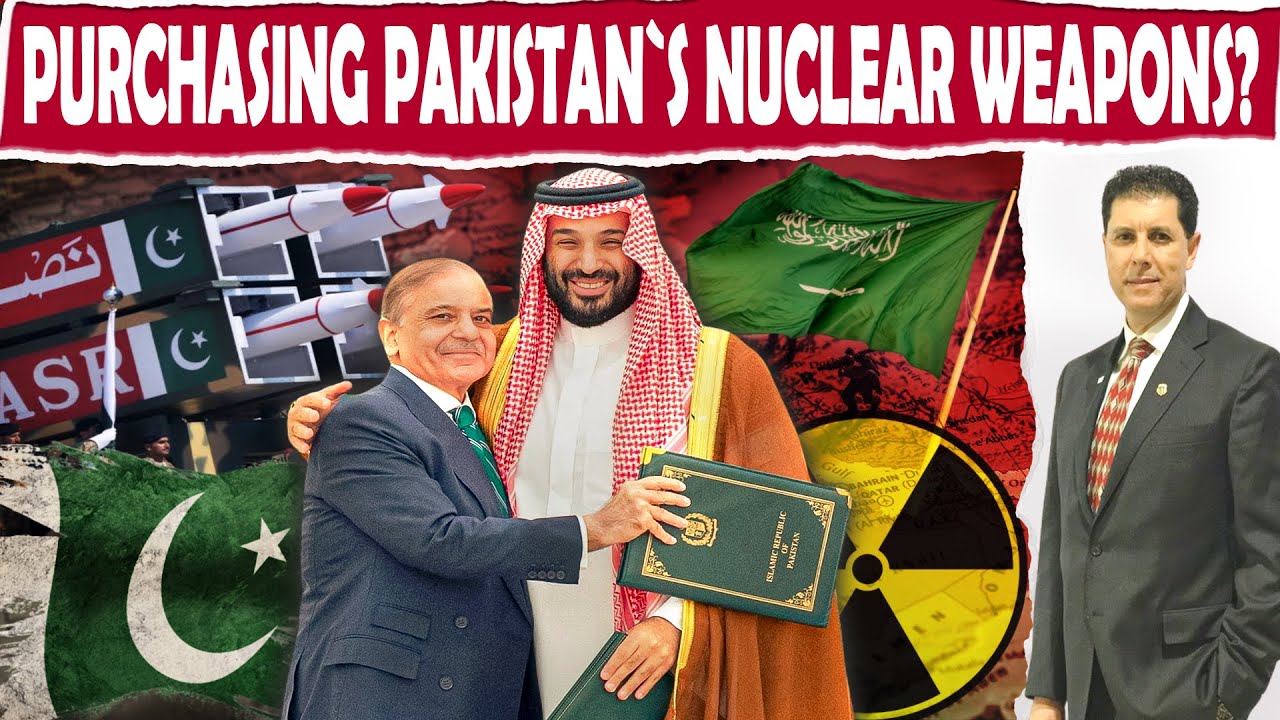
In this hour‑long YouTube episode, Dr. David Oualaalou examines the newly signed Saudi‑Pakistan mutual defense agreement, arguing that it effectively creates a Pakistani nuclear umbrella for Saudi Arabia and reshapes Middle‑East security dynamics. He traces the historical military cooperation between the two states, from 1950s friendship treaties to Pakistani training of Saudi forces and financial support for Pakistan’s nuclear program. Oualaalou critiques US reliance on the Gulf monarchies, highlighting Trump’s stalled $6 billion arms sale to Israel and Washington’s waning credibility after repeated sanctions on Pakistan’s missile program. He discusses the broader regional context—Israel’s attacks on Qatar, Saudi‑Iran rivalry, India‑Pakistan tensions, and the potential for other Gulf states to seek similar nuclear guarantees. The host interweaves personal anecdotes, excerpts (some redacted) from his book on Saudi Arabia, and commentary from analysts such as Ashpandar Mir and Sahar Khan, while also addressing audience questions and promoting upcoming interviews. Throughout, he emphasizes the danger of Saudi‑Iran rivalry, the role of Wahhabism funding, and the strategic calculations of China and Russia in the nuclear arena.
Chapters
Hello everybody and welcome to Geopolitical Trends, where truth matters. I'm your host, Dr. David Oualaalou. Very, very excited to be with you. Uh, I will be addressing a very, very interesting topic because of the, uh, the geopolitical ramification of it. This one has to do with the pact, the military or defense pact signed between Pakistan and Saudi Arabia.. It's nothing new, but it's, it's, it's what's in it and how it's going to now reshape the trajectory of where things are headed in West Asia or Middle East, that is, and what it means for Pakistan vis-à-vis its issues with India. So we are in for a treat given the fact that I wrote a book about Saudi Arabia. So I detailed some of this. I will be sharing with you some excerpts, except certain parts of those excerpts are redacted by order of the US government due to the sensitivity. Unfortunately, I will not be able to share the specific words for those. But, uh, before I'll get into all this, uh, I'm gonna have to share with you about some housekeeping items here. First of all, remember to join me on the 23rd for my conversation with a world-renowned author, James Bradley, whom, by the way, I just had a conversation with him earlier this morning. So I look forward to that conversation. You guys gonna be in for a treat because of what we're gonna be talking about. It's very, very interesting. I look forward to that. I am also, uh, in the process of setting up some other interviews Uh, it will be another, uh, high-profile individual coming in on the 26th. I'm working on confirming the times, and once I do that, I will share it with you. So, all right, let me, uh, let me just say hi quickly to the community. Good to see you all here. Uh, Bully, I see you here. Liang, Myra Page, good to see you. Michael Russo, good to see you. Uh, Abdul Ali, Abdul Ali Muhammad, good to see you. Uh, Francis Tango, as always. Taiwan Steel. Uh, Booz Booz, good to see you. And Sami Git, good to see you. Rose, good to see you. Sarah Carol, good to see you, Carol. Haven't seen you for a while here. So, all right, let me get into all our very, very— because it's a long one, there's a lot of moving parts. So, uh, to my advantage, or to our best luck here. Uh, I, as I said, I had a chance to write a book about Saudi Arabia, and I had an entire section about Pakistan vis-à-vis Saudi. So it works out for the better. So, so here is what we're going to have now to ask the key question with this security pact between Pakistan and the, uh— oh, by the way, before I'll get into this, I have one major headline that I have to share with you because I can't let this go. You know, uh, here is our incompetent president. Yeah, Trump. You know what he's waiting on right now? He's waiting on an approval from Congress for $6 billion in weapons sale to Israel. Yeah, and tell me how this guy, meaning the president, deserves the Nobel Peace Prize. Forget about it. You know, what a shame. It's really shame given what's going on in Gaza. And yes, the American president is waiting for Congress, for the corrupted Congress, to approve $6 billion weapon sales. So to do what? And for what? You already torn that part, that place apart. You know, people can— I mean, from starvation to I mean, why would you need $6 billion for more weapons? For what? I would say shame, shame on Trump. But again, Trump is for Trump, he's not for— uh, too bad those who voted for Trump. It's, it's whatever. I just wanted to share that with you. So let me get into my topic here, the key aspects of it. As I mentioned, when you consider the pact between the, uh the Saudis and the Pakistanis. This is more than just an agreement. It's what's in it and how it's going to shape the trajectory moving forward. But there is one key question, you know, which I asked in my Saudi book, and now it's an opportunity to ask it again. Will now Pakistan provide the Saudis with a nuclear umbrella? You know, a lot of analysts already made the comments that it's not going to be part of that. Well, I'm here to tell you, you are absolutely wrong, and I prove to you why that is as I move forward. To those who do not know the background of the story, uh, recently Saudis and the, uh, uh, nuclear-armed Pakistan have signed a formal mutual defense pact, you know. And that in itself, which means that the Pakistanis will come to the defense of the Saudis if attacked, and the Saudis will come to the defense of Pakistanis if attacked. That is usually what a military defense pact— now, how this— now this military, uh, uh, or defense pact is going to now change the calculations, not only for Israel in the region, which by the way, the whole reason for why this happened Part of it has to do with what Israel did in Qatar by attacking Qatar, but also has to do also with what other Gulf states gonna now be doing. Are they gonna join the wagon? Are they gonna sort of jump on the train with the Saudis and say to the Pakistanis, we'll give you— because the Gulf states have a lot of money. Pakistan needs a lot of money because of its, its down spiral economic conditions. But also Pakistan, it's known for corruption with its ISI and all the military establishments. It is no secret, and I don't shy away from saying it as one who dealt with the, with the Pakistani government at that level. I mean, we're aware of the massive amount of corruption. I mean, from the generals to the high-ranking officials. I mean, all you have to look for is their assets in England, you know. Even the recent one, General Bajwa, you know, I'm aware of his accounts in, in, in England. So that's my point. If the Gulf states have all that money, is this money is going to be benefiting the average Pakistani citizen? So, and this is again where this, uh, whole idea of the Saudis and the Pakistanis signing this strategic— and I will use the term strategic mutual defense agreement which was only, what, 2 days ago, 3 days ago. So this now is not only formalizing, because they do have some sort of a military cooperation agreement. This one is about formalizing and elevating sort of the old security ties between the 2 countries. So, and once again, we have to think in terms the conditions that paved the way for this. No, because now this pact, the defense between Saudi Arabia and Pakistan, will give the authorization to either country in case one nation is attacked. That means what? They are both attacked. It's almost similar to the Article 5 of NATO. And the bigger question of all this, you know, you start to think in terms Is this the beginning of the equivalency of NATO in the Arab or Sunni or Muslim world? I don't see it that way, even though there are those who suggested the idea, which is nice to think outside the box. But given how the Sunni Muslims are so, so, you know, they say one thing and do another, I, I just don't see it going to that level. But in this case of bilateral between two or three countries, the possibility is there. And given also the geopolitical landscape and the growing regional instability in the Middle East, this particular defense pact was a response to that shift, in addition, of course, to what the Israelis did in Qatar. So, and make no mistake, this pact, defense pact, which by the way raised some eyebrows in Washington because it leads to one particular aspect, is that the US cannot be counted on. That's exactly what the Saudis— the political message they were sending with this: we can't trust you, America, even though we have so many of your weapons, we have so many of your troops on our grounds, but we still cannot trust you. So, and that is exactly how this defense pact in my opinion, is going to now reshape the region's geopolitics. So it comes also, in addition to what happened in Qatar, the anxiety that has been introduced in some other, uh, countries like Kuwait, Bahrain, United Arab Emirates, and, and Oman, you know, because all of them, remember, they all care about the survival of their regimes. But Israel's attack on Doha kind of paved the way. But this is not limited just to the Gulf States, it expands all the way to India, because now you have India that is very concerned. So, so I had a chance to read some articles with the last 24 hours from white papers and some analysis or articles. Those are articles different than the white paper that I read in, in coming out of Washington. But one of them that got my attention, by an author by the name Abid Hussein, you know, very interesting take into all this. Of course, I disagree with some assertions of the article, but that's the whole point of knowledge and sharing ideas and so forth. So suffice it to say that how the, how the Saudis welcomed the, the prime minister Sheikh Bashar al-Assad with the sort of the red carpets and of course the, uh, the F-15, uh, flight and so forth. It's the hypes of it. That's how, you know, some Sunni Arab countries tends to be big on this, especially in the Gulf. You all remember when Donald Trump went over there and how they did the hoopla and all the waste of money. But again It's their countries, they can do whatever they want. Suffice it to say that this full royal protocol that took place highlighted the importance of this, of this defense agreement, you know. And to some say this is considered like a landmark. For me, I would say just it's an extension of what is happening already, except now it's going to move into another level. This is where the deal— and like I said earlier at the beginning, this really comes at a critical, critical juncture in the Middle East geopolitical history, that is. And is that the region, the region's politics, you know, sort of, uh, which has been, uh, impacted by the last 2 years of Israeli operations, aggressions, whatever term you want to use. You know, that including the two aspects, the war in Gaza, the attack on Doha, and of course the attack on Iran. So, and we're not going to forget Yemen, of course, and southern Lebanon. And all this sort of pushed those countries, starting with Saudi Arabia, to reconsider reliance on, on, on the United States, because they have been relying, relying on the United States for over 5, 6, 7 decades. The whole survival— I'm here to tell you, as one who did the research on the book, I worked in Saudi Arabia on behalf of the US government when I was there, so I spent time, interacted with the, the governor representatives. You know, I'm here to tell you that the survival of the monarchy in Saudi Arabia depends greatly on American security, but Now with the signature of this agreement with Pakistan, are the Saudis reconsidering? I don't think so, except that it's gonna now put the US on notice. That's basically what it's good— what it's, what it's aiming at. So, and this is again, when you consider about this cooperation between Saudi Arabia, you have to know Saudi Arabia and Pakistan, you have to understand the history of it. So I'm going to share with you brief snapshot of the historical ties between, uh, military, uh, uh, dimensions of Saudi Arabia and Pakistan. It goes way back. Both Sunnis, even though Pakistan and Saudi Arabia have some minority Shia in their country. So, so one thing that stands out, and you need to know about this historically speaking, is that Saudi Arabia was the first to recognize Pakistan after its independence. What year did Pakistan got its independence? Does anybody know? Can you type in in the chat box? And once again, this is just to share knowledge with— that's how we do it in our community. So why year did Pakistan got its independence? So let me see. I know there's a delay here, guys, but, uh, it's okay, it'll show up here. Uh, oh, Priest of Hiroshima 47. Uh, who else? Uh, AZ 47. Mr. Abdul 47. Uh, John, John, John Karina, you say 1948. No, it's 47. Francisco, Francisco L 47. That is correct, in 1947. However, here is where the importance comes into all this. In 1951, this is where both Saudi Arabia and Pakistan signed what was known at that time as the Treaty of Friendship. And that in itself laid the foundation for decades of strategic, political, military, and economic cooperation. So, and I'm going to be detailing as I move forward certain aspects pertaining to both the military and the political aspects. So And over the years, just to continue on this, uh, brief his history of the relationship between, uh, the, uh, uh, Saudis and Pakistanis military cooperation. This is the focus of this particular, uh, uh, aspect here. So is that over the years, the Pakistani force, armed forces, that is, have deployed to the kingdom several times, and they even trained the Saudi personnel, both in the Gulf, in the— meaning in the Middle East or West Asia, Saudi Arabia, that is, and in Pakistan. So they did an exchange. So, uh, there is an official record, and I looked into it, and, and it's confirmed that the Pakistanis had trained more than 8,000 Saudis. We trained the Saudis. I was involved in training some of the Saudi units. Those are the special ops unit is to come to the US. So, so, but the Pakistanis were involved with this since 1967. That's how far back you go. This is why I'm saying these agreements, this defense pact that was signed, it's just an extension of something that already existed, except it has new dimension to it right now. That's where the difference is. So it was also another agreement between Pakistan and Islamabad and Riyadh was signed in 1982. And that the purpose of it was to cement this kind of cooperation and ensure the deputation— this is the reason why— of the Pakistani Armed Forces personnel and military training. Another word, in other words, that the Pakistanis took over the training of certain units, and it was the Pakistani unit that manages all that, either in Saudi Arabia or in Pakistan. So And of course, when you consider the latest, uh, sort of, uh, uh, uh, changes that's taking place on the Middle East geopolitical chessboard, it leaves us all wonder what lies ahead. And of course, the fallout from Israel's, uh, war, the ongoing war in Gaza, and the strikes on regional neighbors have now made Saudi Arabia consider what if. I disagree with those who say, oh, the Saudis and Israel is going to have a— it's going to enter into some military conflict. That's nonsense. I'm here to tell you it's nonsense. It's not going to happen. So however, the Saudis, because of the survival of the monarchy, that's what they care the most about. All this is not about protecting Saudi Arabia, it's about protecting the monarchy. Simple, straightforward. So however, this Middle East geopolitical chessboard that is now in flux sort of compelled the Saudis, we better do something now. We can't trust the Americans, we can't count on the Americans, because look at even in, uh, in Doha, where is the Iron Dome, the American Iron Dome? None. So, and here is what I argued back then in my Saudi book. I'm going to share one with you here. Uh, back then I argued that it all started back in the 1970s when the Saudi royal leadership diverted some of its petrodollars in promoting Wahhabism in the Muslim world. Saudi charities funneled money into establishing religious schools known as madrasas, which is basically a soft version for Wahhabi schools. These religious schools grew immensely. Madrassas were being established in rural areas of Pakistan, Afghanistan, the Philippines, Indonesia, Nigeria, Somalia, Algeria, Egypt, and Malaysia. It was a global project of global outreach facilitated by Saudi Arabia's— vast petrodollar largesse. Interestingly, estimations of the dollar amounts Saudi Arabia spent on spreading Wahhabism vary from one country to another. For example, Great Britain opined that an estimated excess of $100 billion was spent on exporting fanatical Wahhabism to poorer Muslim nations worldwide. Similarly, the US State Department has estimated that over the past 4 decades, Riyadh has invested more than $10 billion into charitable foundations in an attempt to replace mainstream Sunni Islam with Wahhabism. European Union intelligence experts estimated that 15 to 20% of this amount meaning the $100 billion, has been diverted to Al-Qaeda and other violent jihadists. My argument, however, about the danger of Wahhabism has less to do with, with its origin or its past. It has more to do with its itinerary and long-term objective. This is what I argued back then. And why am I sharing this with you? To highlight to you that it was the Saudi petrodollar that has helped Pakistan in its nuclear program. You need to understand the link of this, and I'll get into that with one particular excerpt. So for now, I, I just need you to understand this big picture. So here is what the Pakistani Foreign Ministry, uh, sort of stated regarding this agreement. And I put this in quote, shared commitments, meaning that disagreements reflect shared commitments. It is true, but however, Pakistanis have never always responded to when Saudis requested the military intervention of Pakistan. And I was aware of one case because you might ask yourself, how did I know that? Because I was on the ground. So And this is where that idea of both nations wanted to strengthen the security of both countries, and of course they will argue for promoting the regional peace. Well, what regional peace are you talking about? First of all, for the Saudis, it's about the survival of the monarchies. For the Pakistanis, is about the issues with India. And this pact Now, sort of the way I look at it, which is the Pakistanis were smart enough because after they defeated India, it became clear that the Pakistanis have gained a strategic leverage when it comes down to foreign policy. So basically India, Modi, end up holding the end of the stick in every direction you can consider. And this one, this deal between Saudi Arabia and Pakistan, it's only put things over the edge for India. And I have one section about India that I am going to be talking about. So here is one quote from the Foreign Ministry of Pakistan, stated, and I quote, the agreement states that any aggression against either country shall be considered an aggression against both. Another version of the Article 5 of NATO. So Now you have to think in terms of how these arguments— and I read, once again, I read some white paper coming out of Washington, DC. For example, I had a chance to read one particular analysis by the name of Ashpandar Mir. He's a senior fellow at the— fellow rather— at the Washington, DC-based Steinem uh, Stimson, or rather, Center. And the way he described this pact as— and I put this in quote because that's his word— is watershed moment for both countries. Maybe, maybe not, you know. For me, I look at it differently. Why is this? It's because Pakistan has previously maintained a mutual defense with other countries like the United States. Don't be surprised. And when was that? It was during the Cold War time, you know. However, what happened to that pact? It crumbled in the '70s. You all know why, right? You remember what happened in Pakistan in the '70s. You all remember General Zia-ul-Haq. How do you think his helicopter was crashed? So you have to understand the history for you to make sense of what is trans— what is happening as we speak. So, and this is why even for Pakistan, and I agree on this part with the, uh, with the, the, the Mr. Mir regarding Pakistan deal with China. So, and that despite this defense cooperation, Pakistan sort of lacks a formal mutual defense pact like what they just did with the Saudis. This is where that difference is. So when you consider what just happened, it could pave the way for some other pacts with other countries. In other words, could it serve as a template for, for Pakistan? Maybe, maybe not. And why is this? Because Pakistan has something most countries would be interested in— nuclear weapons. And that is why I am saying Iran is making a mistake, strategic one, by getting into this agreement with the IAEA or talking to the Europeans or enter into negotiations with the Americans. We will never, ever negotiate with Iranians in an honest faith. I'm telling you this based on experience. So I don't know why the Iranians can't see this. And this is why I'm saying this pact, this defense pact that the Pakistanis have signed with Saudi Arabia, it's going to be serving as a template. In other words, Pakistan will tell some countries, not all, we'll be happy to provide you our nuclear umbrella in return for— and Pakistan needs funding because of its economy, which do, by the way, to corruption. Not— they have manpower, they have brains, there are some smart people in Pakistan. I, I worked with some very, very highly intelligent people, but the corruption inside the ISI and inside the government, that is what's preventing Pakistan from moving forward. Suffice it to say that this template is not going to be applying to, let's say, countries in Latin America or countries in, in Africa. No, it's going to be applied to Gulf states, United Arab Emirates, Qatar, Bahrain, Kuwait, those where— even Jordan, I won't count on it, but all of them are concerned about the survival of their regimes. So they have the money because they have oil, they will be willing to pay Pakistan for whatever. But this could become a double-edged sword for Pakistan because they're going to anger the Americans, and for the US We have the pressure points on Pakistan because the ISI works closely with the United States. That is how it works. So, and this is why when you consider this, uh, it's going to be very, very delicate dance between these two countries moving forward. Liking this video so far? Don't just be a watcher, go ahead and hit the like share, and subscribe button. And don't forget to tap the bell so you will not miss any of my videos or live streams. This way, you will be supporting a channel that stands for the truth and objective reporting. The choice is yours. Thanks for your support. Indeed, appreciate your support. So now we're gonna talk about the reason Middle East, West Asia, that is now on the edge. And, and with what just happened this morning, that's why I had to share with you that headlines that Donald Trump is waiting on Congress to approve $6 billion, uh, weapon sales to Israel. That, that just tells you the story right there. Of course, as you all remember, uh, uh, earlier this year and mainly in June, uh, it was— I think I did a video on it. Yeah, I did a video, uh, when Israel waged a 12-day war with Iran. So, and that's trying to target the nuclear facilities. Of course, the US was involved into this. Qatar in itself allowed the plane to take off from its territory. Saudis allowed their airspace to be used. Jordan allowed their airspace. I don't know about Iraq, you know, but I did found out that something might have happened over the skies in Iraq, in Iraq. So why? Because you still have American presence there. Suffice it to say, when the American bombers supported the assault, when they dropped the massive bunker buster bomb on Fordow, one of Iran's nuclear facilities— now this has put, of course, the region on edge. Only 3 months later, the Israelis went ahead and targeted Doha for, for the, uh,, uh, where Hamas leaders were meeting to negotiate the US proposal for ceasefire in Gaza or ending, uh, the, uh, so, and of course, where those attacks came from by Israel, because Qatar in itself serves as a forward headquarters. Usually we call them, uh, FOB, a foreign, uh, a forward operating base. This way, it's headquarters per se of the US Central Command. Well, if you are hosting the Americans, do you think the Americans going to prevent Israelis from not attacking you? You would be mistaken. So the mistake is on Qatar, not the Israeli. Or yeah, of course Israeli— what Israeli did violated all international norms and the law and so forth. But it's Qatar itself that is hosting the, the US largest base there. So what are you complaining about? It behooves you to make a decision on asking the Americans to take off. And by the way, just to let you know, as of mid-2025, which means in June, there are about between 40,000 and 50,000 US troops stationed across the Middle East, which deployed in large bases and small forward sites. Large bases being in Qatar, Saudi Arabia, there are some in Jordan, and at least 19 of those smaller forward bases including Prince Sultan Air Base outside Riyadh. I'm very familiar with this. I was there in, in Riyadh. I spent a lot of time, so I'm very, very familiar with— so when you start to think of why Qatar already making this noise. Well, wait a minute, you're the one who allowed the presence there. So this is again where that, uh, uh, challenge comes in. So suffice it to say, just to go back to our conversation regarding the Saudi-Pakistani deal here, so this didn't happen overnight, and not just because it was the OIC meeting, the Organization of Islamic Countries meeting in Doha following the attack by Israel. No, no, no, no. This kind of deals regarding defense pact usually takes time. It's been in a conversation back in the day when I was there. There used to be private visits by members of the ISI to Saudi Arabia. So, so now I will share with you one particular one in, in detail as I move forward. So I had, once again, I had a chance to read another assessment from an independent security analyst in Washington, D.C. His name is— her name rather is Sahar Khan. So, and again, I agree with some of, some of assertions. I disagree, or I agree with others. Some— one thing that I agree with is that this kind of pact, defense pact between Pakistan and Saudi Arabia, some sort of raised very eyebrows and concerns in Washington. You know, well, of course it will, because you consider what happened during the Biden administration. And what happened during the Biden administration? It imposed sanctions on 7 occasions targeting Pakistani individuals and firms over alleged ballistic missile developments. So this is why I'm saying The pact, defense pact agreement that was between Pakistan and the United States, which crumbled back in the '70s, which followed the, the, the death of, uh, Zia-ul-Haq at that time. So the idea that we never wanted to see Pakistan moving forward in its defense capabilities. So when Pakistan— that's why we went ahead and issued sanctions against this, because Pakistan was working on some ballistic missile development. And that is why the Biden administration at that time raised serious concerns over the range of the missiles Pakistan was building. Why? Because Pakistan is a nuclear power, which means once they develop the new— the, the, the capabilities as far as delivery, like what North Korea has— and I'm going to share the picture, I always keep this picture for you guys in case, you know, this one here, it will hit the US. No, no questions about it. That's why we can't mess around with North Korea, and we won't. We won't threaten them. We won't say whatever we're saying about other countries. You can't do that with North Korea because we know what's going to happen. So the US was thinking in terms of what if Pakistan delivers those kind of, uh, long-range missiles that they could carry nuclear weapons as far as the US. This is where you have to understand why we would never want Pakistan to move forward with development. So because the one thing that is certain, and I'm aware of this because once again, I unfortunately I can't detail the stuff I was involved in, you all understand But suffice it to say that Islamabad had always had an issue of credibility in Washington. And the reason why, because the civilian representatives of the Pakistani governments were not in charge. There was the ISI, and the ISI wasn't working with the White House. The ISI was working with the— still working with the intelligence community. The three-letter agency. That is where that difference is. So, and that is why sort of the idea is what Pakistan— and I agree on this point with the independent security analyst Sahar, I agree with her on this— the reason why when we sanctioned Pakistan regarding the ballistic missiles, the Pakistanis responded by saying, wait a minute, wait a minute, This has nothing to do with targeting America. This program, the missile program that is, is India-centric, meaning is specifically to be dealing with India. Why? Because India was developing also some long-range missiles. That was the whole reason for why this bilateral relations between Saudi Arabia and Pakistan remain strong. Suffice it to say, Saudi Arabia has also some deals with India. So I'm here to tell you, so they're going to be playing both sides. So, and this is where you see now with what just happened with the Israeli target in Qatar, the, uh, now, now the, uh, the, uh, snapback of the sanctions against Iran the attack on, on, on, as I said, on Qatar, on Iran before, and, uh, Southern Lebanon, and what's going on in the Red Sea and all, all this, all this exacerbated now the security atmosphere or architecture, uh, uh, uh, or landscape in the region among the Gulf States. Because the Gulf States' number one concern, it's not the security and safety of their people. I'm here to tell you is the survival of the monarchy, of the, of the regimes. So, so it, it also exposes, of course, one thing that now, uh, sort of the confidence in the US security umbrella is kind of waning. This is why you see, you saw the Saudis went that direction, and soon you will have some Gulf states following suit. So, and this is why Gulf states now look to bolster their security, uh, uh, with, uh, either Pakistan, some other countries like, uh, to my knowledge is Egypt, and the third— there's a third country on the list that they trying to work with is Turkey. So all they share one common factor, that they all Muslim. So that's that. But Pakistan has an edge over them all because it's a nuclear power. And this is again where I see that difference. So, and this leads me to talk about the other side of the equation. And the other side of the equation has to do with India question. So suffice it to say, uh, before we talk about India, there's still one another question before that, is that will Pakistan now risk some sort of entanglement, if I may use the term, in Saudi Arabia's regional rivalry, because Saudis still have some, you know, despite China brokering a deal between Iran and Saudi Arabia. You know, Saudi Arabia never wanted to see Iran's military strength. So that's why I didn't trust, and again, my opinion, I didn't trust when the Saudis reached out to Iran to conduct a joint military training. It wasn't about training, it was about finding out the types of weapons Iran will display during the exercises. So I don't trust the Saudis, but that's me. So, and this is again why the Saudis have committed themselves to Pakistan disputes, notably with India and potentially with the Afghan government. Because Pakistan run into some issues with this, and Saudis have an influence on both. So as I mentioned, the India question, it's, it's, it's— India was watching this deal very, very closely because it's a deal that is with its arch enemy Pakistan that the Saudis have signed. So, and of course, when you consider what happens even now, the historical low of the relationship between Pakistan and India. So, and of course, that's plummeted after what happened in April when the, uh, the Pakistanis defeated, you know, and I use the term defeated, the Indians. You know, there are those who saying, what, it was Mr. Trump that brokered the deal? That's nonsense. Trump will take advantage of whatever. You know, Trump is not an honest person. You know, and I'm not judging, I am not— I'm stating the fact as they are. So, so you remember in May, the two countries, India and Pakistan, some sort of had a— for a 4-day, 4-day scrimmage, and that's where each one of them sort of hit at the bases, uh, with missiles and drones, except that the Pakistanis had an advantage and shut down 6, 6 fighter jets, which mainly were Rafale from France. It was a big blow to India. Of course, India will never admit or accept that reality to it. And on May 10th, that's when Donald Trump claimed, claimed he brokered the deal. No, he didn't. You know, a lot of, a lot, a lot of people been refuting that kind of claim. You know, anything coming out of the White House, you can't believe it as an American. And I'm here, you know, I don't even listen to what the White House saying because I know it's a lie anyway. So, and when you have a president of the United States lying, that tells you the story of where the country is. But here is what the Indian foreign minister representative said, we will— and I quote— we will study the implications of this development for our national security as well as for regional and global stability. Wait a minute, why the heck would you worry about global security when you have your own issues? You know, uh, the argument— the statement continues: the government remains committed to protecting India's national interest and ensuring the comprehensive national security in all domains, end of quote. Well, here is the hard truth I'm going to be sharing with you. And by the way, I will reach out to Jayant Bahndari to talk with him about some other specific, uh, things coming out, out of the Indian government. But for now, since I am talking about the geopolitic— uh, geopolitical aspects of this, Modi's foreign policy has been exposed, the failure of that. And this been not just last year 2 years. This been since he came to power in 2014. So, so, because what did Modi presented at that time? He presented some sort of a vision to strengthen India's position regionally and internationally as a rising power. You all used to hear— I know I had some Indian, uh, uh, viewers were sending some messages, comments You know, I respect their opinion as long as they are respectful, because I will not tolerate that. But when they were stating some nonsense that India is going to be a major power— I even disagree with Professor Sachs regarding one of his statements vis-à-vis India's ascendance to global hierarchy. Come on, man, you know, call a spade a spade. And that's the problem, because Modi was at that time saying that India is a rising power, and he used the raising slogan, Strong India. And all this was because he relied on an active religious nationalist discourse. It wasn't about fortitude, it wasn't about forward thinking, it wasn't about strategy or a diplomatic activity. No, he was relying on nationalism. Religion, religion is not going to cut it on the global stage when it comes down to geopolitics. So, and this is why Modi was highlighting the economic and military capabilities, which by the way Pakistan proved that they are not up to the task. And that is why, that is why when you think now the successive development geopolitically speaking that's taking place around the world, be it in a region or be it in other parts of the world, have shown and demonstrated that for what Modi was stating, achieving those ambitions faces a major uphill battle and major and complex challenges. And that is why New Delhi's path towards sort of a greater role on the global stage is, is just a fantasy, to say the least. That's my opinion, how I see it. But also this in conjunction with Pakistan-Saudi defense pact. So, so for Pakistan, on the other hand, when you consider about Pakistan's economic, uh, flattering or faltering rather Because Pakistan has some serious problem economically. It is growing increasingly dependent on Saudi Arabia's money during the last decade. So, so one thing you need to understand, both countries, Pakistan and India— in the case of India, India has been steadily deepening its own, its own relationship with Riyadh. So, and that's why Modi made his third trip, third trip to Saudi Arabia, uh, in a decade this April, this past April, on that past. So, and that is again when you have to see what India is aiming at, and it's aiming on one specific aspect, and that aspect is to convince other countries to distance themselves from Pakistan. However, the conflict with Pakistan that took place in May and the defeat of India shattered any hopes for, uh, for, uh, for India. So now the big question is that, is Pakistan nuclear shield over Saudi Arabia? In other words, This recent deal will provide Saudis with a nuclear umbrella. I'm going to share a clip with you from my book, uh, an excerpt rather, and I am going to show you where it is redacted because I can't, uh, disclose that particular aspect. So I'm going to just show you the picture right there. It is redacted. Uh, if you get a chance to get one, a copy of my book, the Saudi book. And actually, I, uh, it's not that expensive, literally, if you get it. And I, I hope you do because it'll open up your eyes on some other aspects of it. So there is the link for that one. Uh, you're smart enough, and I know you guys are smart enough to read between the lines, except you have to read about 2 pages before that for you to make sense, uh, for you. So So let me share the excerpt with you from my Saudi book. It is what I wrote: as it stands now, Iran, Russia, and Turkey are the key players who decide on the future political landscape of the Middle East. Remember, the book was written back a few years ago, and I wrote back then that that group, meaning Iran Russia and Turkey. That group most likely will change as the rivalry between Iran and Saudi Arabia intensifies. The intensifying Saudi-Iran rivalry presents major challenges for Europe and the United States, but not as much for China and Russia. So I agree that the rivalry will witness renewed tensions over oil prices, medium and long-range missiles, and nuclear apparatus. In fact, Saudi Arabia has already expressed an interest in having American companies bid for contracts to build nuclear power plants in the desert kingdom. As for nuclear weapon, Saudi Arabia has made it clear that if Iran acquires the bomb, it will follow suit. After all, the Kingdom of Saudi Arabia are redacted in Pakistan. So this is what I need you to understand. Uh, I hope you get a copy of the book and you will understand what I'm referring to here. So suffice it to say, and I was following this closely because when I used to travel Saudi Arabia, there was a conversation back then about all this. And I— my argument has always been, and still till today, you will not trust the Saudis with the nukes. Simple as that. So Saudi Arabia has long expressed an interest in acquiring nuclear technology for civilian use. That's what they're saying, to diversify from fossil fuels. And as you know, in January, back then, Saudi Energy Minister Prince Abdulaziz bin Salman Al Saud— remember, all the key positions in Saudi governments are held by the Saudi family. You see why the need for ensuring the survival of the monarchy, not about the Saudi citizens, reiterated Riyadh's readiness to enrich and sell uranium, a key component of a nuclear program. But, but, but, but Saudi Arabia has already also repeatedly made clear that it does not seek to pursue nuclear weapons. Here is where the difference— I had a chance to read only a section of the book where this was involved in, uh, Bob Woodward. You all know who is a journalist, Bob Woodward. He recounted a conversation in which Saudi Crown Prince, imbecile, reported, told the Senator Lindsey Graham, the pathetic corrupted Lindsey Graham who's still in Congress, you know, Lindsey Graham. He told him that Riyadh plan to enrich uranium only for energy purposes. When Graham expressed concern about the prospect of a Saudi bomb, Woodward wrote, and I quote, MBS replied, and I quote, 'I don't need uranium to make a bomb. I will just buy one from Pakistan.' End of quote. And by the way, I did a video, I'm going to share the link with you in the chat box about this particular topic, and I title it Can We Trust the Saudis with the Bomb? So there is the link in the chat box if you want to look at it later on. So, so it is important, in my opinion, it is important to understand that Pakistan By making this defense pact, none of those will have led to nuclear assurances. That's what it was before. I know some analysts, you know, be it in, in Europe, in, in, in Japan, Australia, Washington, they're all saying, oh, the nuclear aspect is not part of it. Wrong, wrong. So because there is the possibility that the agreements indicate— this is the idea. Of course, they're saying, oh, nothing indicates the agreements that will include, or the formation of, a nuclear umbrella or any extended deterrence. Of course it's not going to say that in words that way. So however, when you consider the Pakistan Defense Minister. Uh, let me, let me put a picture. I have his name, uh, is, is Khawaja. That's his, that's the Pakistani Defense Minister. His name is, uh, I forgot. Yeah, his name is Khawaja Muhammad Asif. You know, here is what he said, so Pakistan says its nuclear program can be made available to Saudi Arabia under defense pact. So, and I'm going to share a link with you that was just published yesterday. I put it in the chat box for you to read should you decide to do that. This is where you see the contradiction between what some analysts are saying— and I'm not saying they're wrong, they just didn't see it far enough— and a word coming from the defense minister himself that the nuclear Pakistani program will be available to Saudis and their defense pact for a simple reason. You know what that simple reason is? It's because the Saudis are the one who funded the nuclear program in Pakistan. So when Abdul Qadir Khan stole the information from Netherlands, went back to Pakistan, built the— that's why they called him the, the Pakistani nuclear, the father of the nuclear bomb or nuclear program in Pakistan. He was revered by everybody. When we asked for Musharraf to turn him over, Musharraf said, you got to be out of your mind asking for Abdul Qadir Khan. Why? Because at that time It was intelligence suggesting that he was selling the information to Libya and Iran. So, and that's again what I am seeing. Uh, the one thing I need you to understand, uh, the big picture of all this, where this is going to now lead to, is going to lead to really, uh, going back to the drawing board to reconsider all the possibilities. It's because, first of all, Israel went too far, way too far. So the Americans are part of it, you know, don't get me wrong. My country, my country serves Israel. Let's just be straightforward about it, you know. I mean, with all what's going on, and yet Trump wants to— Trump has no say. Let me just state this for the record: Trump or any other politician, they have no say into this. So, and that is why you have to understand, even when you're considering the, the defense cooperation between Pakistan and, and Saudi Arabia, this recent one is nothing but an extension. So, because this is how you're going to have to look at it. So, uh, uh, you all remember— I don't know whether you do or not— but back in 1979, it was the Mecca Grand Mosque siege. So who do you think was involved in that, in solving the issue? It was the Pakistani special ops. Saudis couldn't do it by themselves. It was this Pakistani special ops that assisted the Saudis during the seizure of the Grand Mosque in Mecca. And that cemented the relationship between, you know, as I told you, we, you know, was involved, and I'm not denying this, I was involved in training the Saudi special ops. And they used to come here, you know, the Pakistanis trained the Saudis as well. So the same thing, I take you back to 1982, the bilateral security cooperation agreement. And this is where this agreement institutionalized with an agreement that allowed Pakistani troops to be stationed in the kingdom. There will be no problem with that. You know why? Because they are Muslims. So, so the problem in Saudi Arabia is because the presence of Americans without the knowledge of the Saudis. The same arguments I can make in Jordan, the same argument I can make in Egypt. The same argument I can make regarding Morocco, but Morocco did it differently. When the, the central, the AFRICOM was about to be established, guess which country the US wanted the AFRICOM to be stationed at or headquartered at? It was Morocco. And Morocco said, no, I ain't gonna have it. That's why they, they, meaning the US, moved the AFRICOM to be headquartered in Stuttgart in, in, in Germany. So that's what it was. And this is again, when you think about, uh, 19— between 1980 and 1990, it was a large-scale troop deployment. Up to 15,000 Pakistanis were stationed in Saudi Arabia. So all the way from the '70s through the '80s. So during the First Gulf War 13,000. So, uh, Pakistanis, 6,000 advisers were deployed to the kingdom. So, so, but you have to understand that it was the Saudis that provided the financial support throughout the '80s for the Pakistani nuclear program. Don't be shocked and surprised. That is the reason why the defense minister had to declare this publicly. So, and now that's going to change the calculations for— and how to understand all this, the commitments to all this, you have to think about this particular individual. Uh, I don't know if you will know who this guy is. This is, uh, Kiani, General Kiani. Now General Kayani is retired. He was a 4-star general, was the Pakistani Army, who served as the 8th chief of Army staff. And he was appointed back in 2007, because I remember, because I was traveling at that time to Afghanistan. And, uh, uh, what's his name, Mueller, used to be the Joint Chief of Staff. Because one of my former commanders became the vice chairman of the Joint Chiefs. So at that time, Admiral Mullen used to start to develop a good relationship with General Kayani. So, so after his predecessor— and who was his predecessor? It was none other than Pervez Musharraf, who retired from the military service, became of course the head of, uh, Pakistan. So Now, why am I saying all this important? It's because General Qayani used to take secret trips to Saudi Arabia. And I remember, you know, especially in 2011. Why? Because in 2009, General Qayani publicly met with the Saudi king at that time. So King Abdullah bin Abdulaziz at that time, 2009. So however, in 2011, in October, Kiani visited Saudi Arabia for a secret meeting with the US National Security Advisor Thomas Donilon to discuss US-Pakistan tensions over the Haqqani Network. Now you may ask yourself, how did I know that? Because I was on the ground. Simple as that, and we leave it at that. Uh, 2012, he traveled once again to Saudi Arabia for an official visit, leaving from none other than Rawalpindi. So, and my point in all this, that it has always been ties between Saudi Arabia and Pakistan regarding the military dimensions. Now he moved to a different level for. That's why you see in the presence of here of Asim Munir, the new head of the marshal, field marshal. And Asif Munir— Asim Munir, rather— is considered now one of the most powerful individuals in Pakistan. You know, even now, uh, Shabaz Sharif, uh, will not— you know, he will not challenge Asim Munir because this guy holds the key And remember, the key to that is the ISI and the military or army writ large. So that is one of the challenges. So, and I'm going to conclude with another excerpt from my Saudi book, and I'll see if you have any questions. I'll be happy to answer some. Once again, this section I'm going to read to you, or this excerpt, had some, or have some, redacted parts to it. Unfortunately, uh, you all know, guys, I can't break the law. It's— that's how, that's how it is. So here is what I wrote back then: Ideologically or not, the danger of Saudi-Iran rivalry will persist for decades to come. As it intensifies, it will show both countries' inability to manage the crisis. I compare this rivalry to that of the United States and the Soviet Union in terms of West for dominance and ideological influence. Yet the United States and Soviets managed to avoid war, knowing each other's nuclear capabilities and the con— commitment— capacity for destruction. Of course, my comparison is figurative. Radical elements in both Iran and Saudi Arabia advocate for using nuclear capabilities if available. The Desert Kingdom has vehemently opposed the West's reaching an agreement with Iran over the latter's nuclear program. The reason is that Saudis are afraid. Yet the Saudis have the financial capability to purchase— redacted. No. As of this writing, Saudi Arabia has requested Pakistan to send ships, aircraft, and troops, according to Reuters. The reason for the request is unknown. In my opinion, Saudi Arabia's request from Pakistan to send military aid shows that the situation in Yemen is not going according to the Saudi plan. Riyadh fears the Shia influence hitting close to home given the recent killing of Saudi troops near its southern border. I argue that if Pakistan is careless, it will pull the inter-sectarian regional power struggle between Iran and Saudi Arabia. I am convinced that the Pakistani leadership, including that of its inner service intelligence, ISI, is weighing how far to go in supporting Saudi Arabia. After all, Pakistan shares a border with Iran and has a sizable Shia minority, which could create major domestic challenges for Islamabad. If Saudi Arabia gets a bomb from Pakistan, all Iran has to do is to reach out to India to counterbalance those efforts while offering lucrative energy deals, which India needs desperately to fuel its economy. Equally important, China and Russia will most likely support Iran's nuclear ambitions either by acquiring more nuclear power plants or even sharing nuclear technology on a limited basis. Iran has options. Note that Russia has already signed an agreement with Iran to build two new nuclear power plants in Iran's southern city of Bushehr. That's exactly how I saw it at that time, thinking in terms of where this could lead to. And that again leads me to that point about Iran. Iran is making a strategic mistake. If you would like me to do a topic about Iran regarding the recent decision about the Security Council, the UN Security Council refusal to, uh, uphold the sanctions— the— I'm sorry, the, uh, sanctions relief, I'll be happy to do that next week. So, uh, once again, just to remind you Next week I will be having my conversation with the world-renowned author James Bradley. I really look forward to that conversation for that. So, uh, let me say, let me see if you have any questions here. Oh, there are some, uh, super stickers here. I'm gonna have to say thank you to Army, uh, with Harmony. Thank you so much for your super sticker. US will take on Bagram by force. Stepping stone for Afghanistan invasion. Yeah, but it won't work. What Army with Harmony referring to is that the Afghan government refused to relinquish control over Bagram Base while we the one who left it. When we left with the weapons, almost a billion dollar there, and now the US government wants it, Trump wants it. Forget about that. And it's almost like the defeat we experienced in Afghanistan We are about to embark another one. So, and, and I don't see how the group in Afghanistan that control the government, it's, it's not gonna allow that. They won't. So, so thank you so much, Army with Harmony, for that. Rafael, much appreciate your support for the channel and for your super sticker. Something is weird about Pakistan becoming this powerhouse. They lost every war they got involved. They hang about 3 prime ministers, country is broke. I agree with the latter part, uh, because also you have to keep in mind, Rafael, what something doesn't come up to the media is the role we play behind the scenes in undermining Pakistan. So, and, and I'll say it, I am aware of certain aspects that was involved into that. That is the reason why you see in Pakistan what it is. So, uh, but Pakistan is in desperate need of financial assistance. We gave them about $10 billion, uh, at least during my time when I was in Washington, and I was aware of that. Uh, Pakistani citizens didn't see, you know, if that, uh, that aid, uh, we all know where it went. So, so much appreciate you, Rafael, for your support. So, all right, I'm gonna sign off here. Once again, if you guys would like me to do Iran topic, I'll be happy to do it Monday. I'm gonna, uh, find out, uh, through your comment later on, uh, when I, uh, see if you would like me to do that. It's worth knowing what's going on, really. It's worth knowing what's going on. So that's all I have, and I think I have— I had enough. So, but I enjoy being with you guys. I like our community. So it's all about learning and knowledge and sharing ideas and information. So, and I thank you for your, uh, for you being here sharing this time with me. So, as always, remember, geopolitics impacts your daily life in more ways than one. Till next time, bye-bye.
More from David


Beyond the Single Actor: Why the Gulf Isn't Choosing Between the US and China


Iran, Iraq's Militias, and the Houthis Are Coordinating! This Changes Everything




Who Controls the Next Decade's Resources? Latin America and Africa's Geopolitical Crossroads

The Chokepoint Trap: How Washington's Stupidity Triggered a Cascade That Now Controls the World

Trump Spooked as IRGC Unveiled dual-use SLV, Deployed Ghadir Mini-Subs & Hinted at Tactical Nukes!
