Israel VS Hezbollah: Can Israel Survive the Ongoing Attacks?
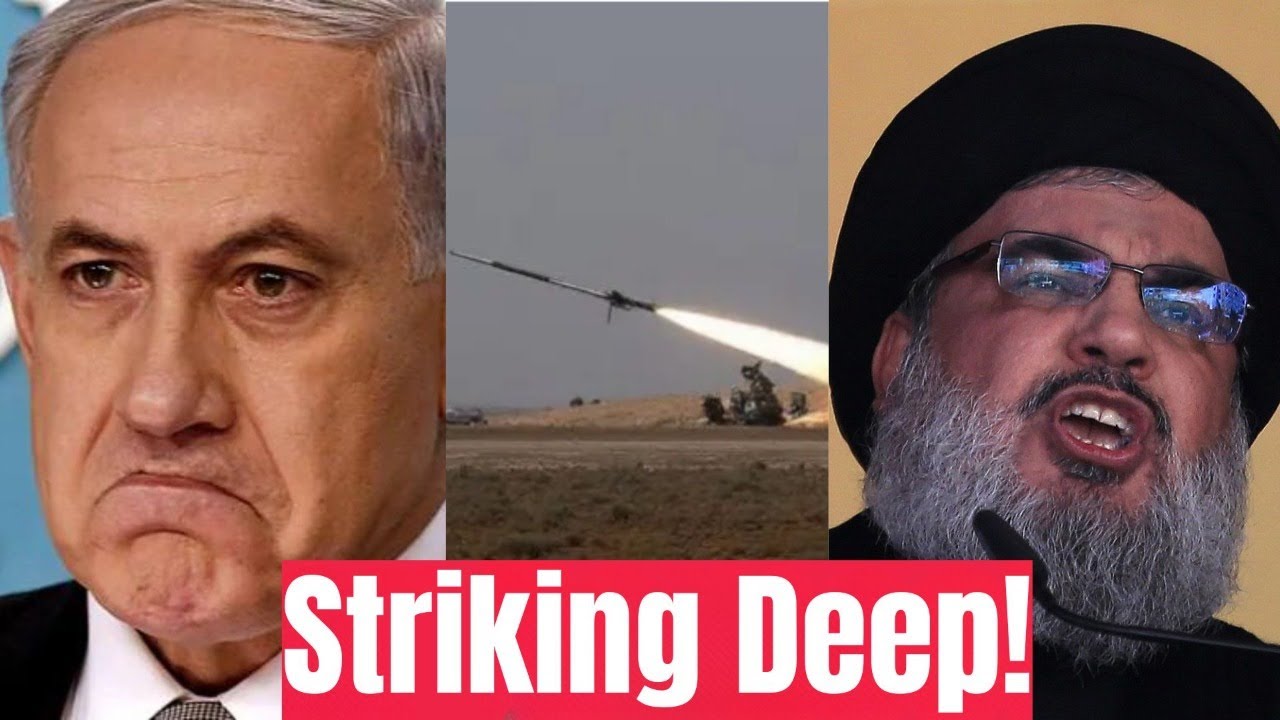
In this live‑stream, geopolitics analyst Dr. David Oualaalou provides a detailed, real‑time assessment of the recent escalation between Israel and Hezbollah. He outlines how Hezbollah has intensified rocket (Katyusha, Falak) and kamikaze‑drone attacks on Israel’s northern border and the Golan Heights, prompting the Israel Defense Forces to redeploy troops from Gaza to the north and to consider shifting the centre of the war to Lebanon. Oualaalou distinguishes Hezbollah’s tactical strikes from a broader psychological campaign aimed at eroding Israeli deterrence. He examines the strategic importance of the Golan Heights—its history, water resources, and military value—and discusses the potential for regional escalation involving Iran, the Houthis in Yemen, Iraqi militias, and the possible role of the United States, NATO, and Russian‑supplied radar systems to Iran. The analyst reflects on past Israeli‑Hezbollah wars (2000, 2006), the perceived failure of Israel’s deterrence, and the limits of Israel’s air‑defence systems such as Iron Dome. Throughout, he engages with live‑chat participants, references his own prior video on psychology and geopolitics, promotes his book, and offers personal insights from his former government experience. The stream concludes with a series of audience polls on the likelihood of open war and NATO involvement, and a reminder to support his content.
Chapters
All right, hello everybody and welcome to Geopolitical Trends, where truth matters. Excited to be with you as always. Uh, I have an interesting topic today. I'm going to do an update regarding what's going on between Israel and Hezbollah. Yeah, there are a lot of developments going on. As a matter of fact, the Israeli forces are now being moved to the north And that gives you an idea of what lies ahead. All this, uh, comes within the context of the— everybody's waiting, especially in Israel, they're waiting for what Iran's reaction is going to be. So today I'm going to be providing you my own analysis as to where I see things moving forward. So before I'll do this, I hope that you guys get a chance to, uh, uh, watch the video that I released this morning. About the dynamics between psychology and geopolitics. That's a brief, brief analysis just to highlight a few things, uh, for those who, uh, might not or have not seen it. I'm gonna post the link for you guys in the chat box here so you can check it out later. And please hit the like button because the way the algorithm work for a video like that to reach the masses for the sake of knowledge, that's all it is all about. Please hit the like button and make sure to share it with others. So, uh, uh, Horace Lim, good to see you becoming a channel member. Appreciate your kind support, Horace. I hope all is well. And, uh, I'm gonna— I had to remove somebody here from the chat box because, as I said, I have no tolerance for nonsense. So anyway, I'm gonna get on onto this right away, guys, because I am short on time this time around. I have to leave by certain times for, um, an appointment. So anyway, what I mean, what I'm going to be talking about today, uh, I'm going to be talking about, uh, sort of, we'll start with the questions. I have the questions for you guys here, uh, and, and we're all gonna, you know, sort of share, uh, the knowledge. By the way, someone said that I, uh, when I asked you, when I ask you guys a question, I'm like a teacher asking students. Uh, I don't see it that way. The way I see it, guys, It's just to have you part of the conversation, no more, no less. So, so I don't know if he meant it in a good way or a bad way, but in any event, there are the questions here. Did Israel fail to deter Hezbollah? That's the first question. Second question: can Israel venture into Lebanon? Third question: is an all-out war inevitable? This is why now I'm starting to read in some circles as to the Far East regarding the inevitable conflict or war between US and China. So in this case here, for Israel, is an all-out war inevitable? And the first— the fourth question, I just had to put that in, the reason being because, uh, uh, the US failure in all this. You all saw the the, uh, the, the recent visit of Tony Blinken to, to, uh, to Middle East, to the Gulf States. And after that, he went to Egypt, which, by the way, when he landed in Egypt, it was no Egyptian official waiting for his arrival. So that tells you the story right there. And Egypt also is playing both sides. And, and I might highlight this as I move forward into this conversation. So those are the questions that we ought to, to ask as, as we move forward. And the reason being, because in my opinion, and again, putting my geopolitical analyst hat on, the way I see it, how Hezbollah is doing this is doing it on two fronts. One is tactical, of course, and the other one is more psychological. And I'll tell you why the psychological aspect as I move forward. Well, at least from the tactical aspect, you were looking at a dozen of rockets that has been, uh, hitting, uh, in, in, in Israel, the Golan Heights mainly, uh, uh, and all this came as a reaction to Israel aircraft strike deep inside Lebanon. So it's, it's like tit for tat. That's, that's what we're gonna be expecting moving forward. The key to all this that I want you to understand All this comes on the heels of the waiting. Everybody's waiting now on Iran's response. Now, will Iran back down? I don't see that happening. I don't see that. Uh, but that does not mean Iran will react tomorrow. We don't know. I don't know. So, and, uh, so what happened with the Hezbollah, by the way? I need to show you some images here., uh, uh, as to what was taking place. Those are some rockets, uh, fired, uh, missile from, from, uh, the southern part in Lebanon. Uh, so what happened with, with this one here is that, uh, in two separate operations— those are with two separate ones— so what did the, the Hezbollah group end up using? It end up using, uh, what they called the, uh, Katyusha. And Falak rockets. Falak, that's the Arabic word for it, uh, Falak rockets. So, and those ones sort of were launched recently, as, as far as even 2 days ago, based on— and I provide you the links, guys, where you can read all this, uh, for, for yourself. So, so the Israel, uh, uh, the— I'm sorry, the Hezbollah objective what the rockets, the Falak rockets and the, uh, Katyusha rockets were targeting specifically the headquarters of the Brigade 769, the Israeli brigade, uh, and, and that's exactly what was the objective of it. So now in response to all this, what happened with the Israeli military, and this was reported by the way inside Israel, uh, through, I believe, Channel 12. That's their channel that reports all this stuff. And what it did, what it reported, is that the head of the IDF, the, uh, his name is right here, uh, this is General, uh, what's his name, uh, this is the, uh the, the, the head of the IDF. So what it end up doing is that they decided now that they're gonna have to move the troops from Gaza, okay, to the north because it's getting bad in the northern of Israel. As I mentioned in previous videos, that there is a lot of people who, uh, Israelis who live in the, in in the settlements in the north left. So the area is kind of deserted. So, and the reason why you have to consider the importance of this, to highlight to you how the Lebanese front now becomes the priority for the IDF. It's not Gaza. Gaza still, of course, but when you start moving troops at great numbers into the north That tells you right there. And the reason for also to this is the reaction to what Hezbollah has been doing, that the number of drone attacks that Israeli interceptor systems were struggling to defend against. In other words, all the defense shield for Israel, it's not working or is overwhelmed by the amount of rockets and drones being launched at it. So, and all this because Hezbollah has intensified its, its, uh, its, uh, its attacks, uh, on, on, on the northern part of, uh, Israel. Uh, the picture, that was the Defense Minister Yoav Gallant. So the Defense Minister Yoav Gallant, uh, that was the head of the inspection, uh, of the IDF. So this is why he's saying the Defense Minister Defense Minister Yoav Gallant announced during a visit to military sites in northern Israel that the army— now the Israeli army— is ready to move the center of the war from, uh, uh, Gaza into the north. And all this should provide you an idea as to what lies ahead within the context Let me, let me share a picture here with you within the context of, uh, uh, uh, what's taking place. Very, very, very important to understand. Now, the, uh, what has been also launched, uh, by the Hezbollah is that the swarm of kamikaze drones towards the coastal battalion the Israeli battalion. And this was part of what was created, the Western Brigade, uh, and, and that's what was reported recently. So, so you're looking at now the idea of, uh, the attacks which, as I mentioned, just took place on Tuesday, Tuesday and Wednesday, those are just the day before, uh, those ones were kind of, uh, uh, have left Uh, because here's the thing, the action of Hezbollah was a reaction to Israel's attack which wounded about 20 individuals in eastern Lebanon, and that including 8 children, according to the article. And this is why, uh, the Hezbollah went ahead as of Wednesday, meaning yesterday, one ahead with the attacks in the Golan Heights. That's one. And this is why the Israeli army is moving, uh, its troops into the north. So now in this regard, okay, here is what was stated by Hezbollah. He said, and I quote, in response to the aggression of the Israeli enemy against the region of the Beqaa Valley, Beqaa Valley, the fighters of the resistance bombed this Wednesday with Kachua, uh, uh, uh, yeah, Kachua rockets, uh, uh, raiding the logistic base in Tsnobar on the Golan Heights, on the occupied Golan Heights, end of quote. That's what the quote says. So basically, so then there is the idea, uh, the, the other location that was hit also. The attacks also took place in Nakoura and Al-Mashab in southern Lebanon. So I have a picture for you to show you where this location is. Of course, it doesn't show it very clearly here, but I am going to be pointing. It's in the southern part. Actually, I have a better— I have a better, uh, right. Let me, let me show you the map. Okay. Let me share screen with you. All right, let me share the screen here so for you to see. This is an interactive map, uh, that you guys can, can see. Let me make it bigger here, full screen. There we go. So what you're looking at here, and I'm going to make it smaller first for for you to see, uh, Al Majeshab. This is the location where it is on southern Lebanon. This is Nakoura right here on the left, okay? And, and this is why now the Israelis moved their troops to the north. In other words, on the border side between southern Lebanon and of course northern Israel. In that part, this is one of the region where they have moved the troops over. So let me, let me— yeah, if I make it too big here, you guys won't be able to see, uh, where it is. So now in, in this area here, uh, this is where, uh, sort of the escalation of the conflict, uh, it's taking place in conjunction with also what's taking place in Gaza. So all those, those things are going parallel. And all this, we are not even talking about yet what the Iranian response is going to consist of. They're still vowing to respond to the, uh, assassination of, uh, Ismail Haniya and also to the Lebanese, to the Hezbollah, uh, commander in Beirut. His name is Fouad Shouker, and I give credit to this picture to AFP and Getty Images. So, uh, and, and this is where we have to consider the consequences of what will happen if this moves forward, and from what aspect we need to be considering, uh, this. We have to consider it from the aspects of whether Israel— like I asked in the question, will Israel venture into Lebanon? Because if you look at history We all remember on two occasions Israel was end up driven out of Lebanon by Hezbollah. So, uh, like the saying goes, third one is charm. Well, we all know what it means, not in a good way in this case here. So, and this is where you have to understand where, for example, the, the, the, uh, uh, the, the the events that's taking place in, in Gaza in conjunction to what's taking place in southern Lebanon, northern Israel. And this is why it's important to understand why Hezbollah is doing this on both ends. One is tactical, the other one is psychological. And the psychological one has to do with now this escalation, okay, uh, for the, uh, Hezbollah, uh, attacks on the Israeli military sites. I must tell you this, guys, the targets are military sites, not civilian places. So, so far what Hezbollah is doing, so in northern regions and in Golan Heights as well. So what's important about this is the accuracy of what, what, uh, uh, Hezbollah is doing with the rockets and the missiles and the drone. It's the accuracy of hitting the targets that were reinforced after unveiling of the huge tunnel network. Yeah, it was just revealed a major tunnel network. It's called, by the way, it's called the Imad 4. That's the tunnel that was specifically prepared by Hezbollah to confront the Israeli. This is a psychological approach to it. So because that's part of it, you're going to have to think smart in terms of how a war like this will be conducted, because this is not a, you know, face-to-face. Yes, there is some of it, and we didn't even get into the aspects of Iran being in the picture yet. Uh, this is why when you have now rockets reaching Tel Aviv That highlights to you the, the how, how sort of the comprehensive this confrontation is going to be moving forward. Now the question also we need to ask ourselves is, is Hezbollah and Israel ready for an open war? What do you guys think? In your opinion, do you think Hezbollah and Israel are ready for an open war? And just yes or no, please. Let me just see in the chat box here. Uh, let me see here. Uh, that is correct, Naz. You wrote Lebanon is such a beautiful country. And Farhad Razavi responded, why Lebanon was the paradise of the Middle East. That is correct. It was called— they give it the equivalency of, of Paris of, uh, Middle East. But, but it's— Beirut is, is incredible. Sad to see what has become of it, but it is what it is. So, uh, all right, let me see your answer, guys. Uh, uh, uh, Sam, you say yes. AG, you say yes. Steve, you say yes. John Smith You say, yeah, repeat question please again. Is an open war— another word, is Hezbollah and Israel ready for an open war? So, Tarek, you say yes. Francis Tango, you say yes and no. Uh, I, I, I can understand your arguments onto this. Well, just to sort of— we continuing the conversation here. Yeah, it could go both directions. Of course, Hezbollah and Israel, both of them stated they don't want an open war because we all know what it means, you know. But on the other hand, none of them is going to be backing down. And this is why, if you notice the title, uh, what I started the conversation with is that, is Israel has failed into deterring Hezbollah? Well, the answer is clear, is because Hezbollah today is not Hezbollah of 20 years ago. Even though Israel had the experience of dealing with Hezbollah inside Lebanon, to the point that they end up being kicked out, and it took the Israelis a while before they admitted as to why they were driven from Lebanon in 2000. Actually, I'm gonna ask you, what year the last event that drove, uh, that made Hezbollah drove the Israeli out of, of Lebanon? What year was it? I was gonna say it, but I want you again be part of the conversation here, guys. No more noise. There were two occasions. I'm talking about the last one. What year was it? Oh, Jason, you got it! Jason Sanger, 2006. Uh, uh, Avant 2000, Army with Harmon 2008. No, it was 2006 to be exact. And this is when it took a few— as I said a while for Israel to admit that because of the ferocity of, uh, uh, of Hezbollah, that's what end up losing. They couldn't conquer this one. And that's exactly where I am leading into the conversation here regarding are they both open to a war. And if they do, on those ends you have to add, uh, you have to add the, the, the Yemeni group, and you have to have Uh, you have to add Iran to the mix of this. Then you have to add another group in Iraq. So will Israel be able to manage all this? I don't think so. Which means what? We have to get involved. If we're getting involved, if the US troops get involved in, that means we are at war. And if we are at war, that means the, uh, US bases will become legitimate target. This is why it's like a chain, guys. That's how it goes. One thing is related to the next. So, and this is why both countries— of course, Hezbollah understand you don't want to bring in another devastation to Lebanon by having an open war. Israel also understand that now with its Iron Dome is not performing to the, uh, to its, uh, potentials per se. And just with what the, the, the Houthi group in Yemen and Hezbollah is doing with just rockets and certain types of missiles. Now imagine what will happen if Iran gets involved with its own advanced missile systems. And this is one of the things I want you guys to understand. The reason why Russia went ahead and supplied— and the intelligence community, by the way, here in the US confirmed it, and I checked it and it is confirmed— Russians went ahead and delivered Iranians, the, the, uh, some advanced radar systems. Those are meant for the missile aspects of it. They can detect the moment a missile is launched from whatever direction. So, and if the— if, if, if, if Iran got a hold of those, that gives you an idea as to what the thinking is regarding what Iran— what Iran is planning on doing when it moves forward with its operation. So, and we all know Hezbollah is backed by Iran, it's not a secret, everybody knows it. And, uh, and this is why the Hezbollah is targeting for now military targets, uh, positions in the Golan Heights, because they targeting that with the rockets. That's exactly, and it's been confirmed by the Israeli government So of course they're not going to detail exactly what is going on. And, uh, and, uh, now there is one aspect, uh, Israel did, and that one in my opinion has one objective and one objective only. And this one has to do with the, uh, the assassination of the Fatah, another movement inside the, the PA, the Palestinian Authority, and so forth, uh, Fatah. Fatah, or Fatah, that's how it's known. The whole reason for why Israel targeted this senior individual, for one objective, because he was in Lebanon. This individual was in Lebanon. What was the objective of it? Is in an effort to ignite a regional war or regional conflict. So this is what the aim of Israel, because Israel understand it's not going to be the one that is doing the fighting, it will be the US that's doing doing the fighting on its behalf. So that's, uh, and I won't even be surprised, I won't even be surprised. And here is a question for you again, and again, thinking outside the box, hypothetically, this is hypothetical, should this come to here with an open war, what do you think NATO is going to do? Will NATO intervene behind the scenes on behalf of Israel, ordered by the US? Yes or no? So let me see your answer, guys. Uh, Sam, Karina, you say yes. Truth Seeker, you say yes. Uh, Francis Tango, you say yes. Oshia, you say Yes. Topez, you say no. Okay, interesting. Yeah. Uh, Kurt Lee, you say yes. Taiwan still, you say yes. So to me it makes sense, and the answer is yes, in my opinion and based on my experience. Of course we're not going to open because Israel is not a NATO member, and if the Article 5 would not apply And you're all familiar with what Article 5 in NATO is. However, however, however, however, we control NATO, so when we dictate, that's what's going to happen. So it's going to be clandestine operations behind the scenes. It's the same thing that is going on right now in Ukraine. We all know, it's not a secret, the presence of Western, uh, uh, uh, I call them troops, but you call them special ops, you call them trainers, you call them, uh, instructors, you call them advisers, you call them consult— whatever, you got the idea. So that's what it will be. And the same scenario that I see moving forward in this direction, and because Israel won't be able to fight on its own, it just— it can't, doesn't have the logistics to, to, to do that. Israel doesn't have, for example, the, the fuel tankers that can do mid-air fueling. We're gonna have to provide that for Israel if they want to cross all the way to Iranian airspace. So, and if they do that, they're gonna have to be escorted. In other words, we have to provide protection. So, and then what's going to happen to those countries? Whose airspace going to be now? And And this is why the Saudis and the Jordanians went ahead and said to the Iranians, sorry, we can't let you use our airspace. And yet they will let their airspace to be used by Israel. Oh, Egypt is on both sides of the, of the fence. Okay, you can't trust the Egyptian government anyway. So, and the, uh, as I mentioned earlier, Hezbollah is funded and supported by Iran. It's not a secret. But again, it just highlights to you the importance of what Hezbollah now has as far as missiles. To my knowledge, they had about 150,000 types of missiles. How they get that? Of course, it was provided, uh, through Iran. And the whole idea for why Israel went ahead and attacked, or, or, or took out the, uh, the Fatah senior, uh, uh, individual as I said, is to ignite a conflict in the region because they'll take the heat out of, of, uh, of, of Israel, but it will push us into, uh, the conflict given our upcoming presidential elections, which both side— both, uh, candidates are two faces of same coin anyway. So, and this is why, uh, as I mentioned earlier, the Israeli defense minister Yuvan— Yov Gallant. Uh, let me see if I can get a picture of him for you guys to see. He went ahead and decided on moving. Uh, all right, let's share this picture with you guys quickly. Yuvan, just to— you— all right, my computer froze. There we go, it's working. Funny how these things happen, right? Uh, and I was working this morning on the computer, it was fine. So, all right, let me share the picture and just to show you here, that's, that's the, uh, defense, uh, Israeli Defense Minister Yoav Gallant. So, so the point is, is that as of Tuesday, yeah, he got the order to sort of move the center of gravity of the war in Gaza from Gaza into, uh, northern Israel or southern Lebanon border, on the border of, with Israel. That, and that in itself highlights to you the concerns that the Israelis have when it comes down to Hezbollah. Because the— here is a, here is a, a fact. If it's not— if when Iran gets involved in a direct dealing with Israel, Hezbollah is going to be taking part of that as well. This is guaranteed. And if you see Hezbollah getting— taking part of that, you're going to see other groups. And this has nothing to do with Shia-Sunni stuff. Yes, the other groups are mainly Shia, but this is not about the ideology for now. They are looking at an enemy that they all share the same sense of, you know, we need to deal with this one here. Uh, regarding the Golan Heights, which by the way, it's— I need to, uh, show you, uh, if I still have— I don't know if I can show it, if I have it here. Am I not? Let's see if we can see the Golan Heights. No, I don't see it. But, but just to highlight to you a little bit about the Golan Heights, you need to to understand a little bit of history, is geographical, uh, uh, area in southern, southwestern Syria, which is occupied by Israel since 19— since when? Yeah, let me ask you, since when Golan Heights been occupied? Now if you can type in the year, please. All right, let me see. All right, let me see why you're— oh, NAS 73. No. Sanktan, '75. No, T, T, you got it. Uh, Munir Ali, you got it. You know, 1967. You were right. It's not probably, you were right. So 1967. So, and was formally— here is the, here's where the difference. And a lot of people, if they don't know the history of the conflict of not only Yom Kippur and so forth, the war between the, the Six-Day War and so forth, uh, they don't know that when Israel took over, occupied the Golan Heights, 1967. It was till 19— what year did formally annexed the Golan Heights? Yeah, one year, because he wasn't in 1967. And that's part of history, because if you are to read about the history of the conflict between the, the Arab-Israeli War and so forth. This is one part you need to understand. So Golan Heights was occupied in 1967. Uh, Hosia, you got it, 1981. Exactly, that's when the formal annexation of the Golan Heights— and by the way, it was the United Nations that classified it as still till today, in quote, and I'm going to put it in quote, as Arab territories occupied as a result of acts of aggression, end of quote. This is the UN, United Nations quote, not mine. So, and of course, if you are to think of the history of the Golan Heights, you have to think of the, uh, of the, the, uh, the, uh, Arab-Israeli battles. Because why? The Golan Heights sort of is the location that witnessed the largest Arab battles, uh, Yarmouk and Deir Hittim back then, and has historically undergone border changes and changes on many, many, many occasions. Why is this? Is because its strategic location and the nature— let me see if I can, uh, share the map with you for you guys to see if it shows here. I don't know. Uh, this is the Beqaa Valley. You won't see it here. And, uh, uh, this is— yeah, it doesn't show here because the, the Golan Heights, it doesn't show here. No, right here at the bottom, guys, right here at the bottom, the southern part of Syria where it says the Golan Heights, right there. And there is that demarcation that is not recognized by the UN, by the way. So So that is why, why it's so important. So it's a strategic location, and of course the nature of its distinctive geography. Now there is another thing that is known about that region from an economic perspective, is that its richness in water. And if you think about water, I had a chance to read few years ago an analysis that was inside the government when I was still there, whatever, at that time. And what it showed is that water, lack of access to water, could trigger a war, especially in that region. This is where that richness, the economic of the Golan Heights, because of a massive, uh, amount of water that exist, uh, water wealth. And this is why sometimes the Israelis will go ahead and destroy the pipelines for water and so forth. For the, for the Palestinians in certain farms and so forth. So settlements were established on its territory in that location, and this is why it's considered to Israel this is a productive depth, very, very important because of food and water storage facilities. And why is this important if you think from a tactical perspective? Because they can act as a defensive zone. It's very, very, very important. So, and that's why I wanted to just highlight to you this aspect, to understand where the dynamics are headed right now, uh, uh, moving forward with the escalation on, on both parts, from Hezbollah and from Israel, but not to the point of an open war. It's because neither party wants that. But neither party, especially for Israelis thinking they could deter or intimidate the, the Hezbollah, it didn't, it didn't work. And that to me personally tells me that Hezbollah is very, very confident in what it can do or what it can sustain regarding any defense from, uh, and as a matter of fact, and, and again, I couldn't collaborate this one here couldn't corroborate it, that the US administration reached out to Hezbollah behind closed doors and telling them, we don't want to come into Lebanon, we don't want to fight you, we don't want anything. I won't be surprised if this happened. We've done something like this before during my time in the government. We will go— even Iran in itself, we had a talk with them behind closed doors. And I can bring you a former late president, uh, which one was he? Can anybody tell me? He passed away. Under whose president in the US that we had a talk with Iran through behind closed doors? Let me see again, uh, uh in, in, uh, in the chat box. Just see under which president. Uh, uh, yeah, you got it. Camp 35, Ronnie, you got it. No, no, no, it's not Clinton, it was Ronald Reagan. It was Ronald Reagan. You're absolutely correct, guys. And that's exactly— so to me if something like this happen, I will, I will feel comfortable with a high probability saying yes, it will take place. So to my knowledge, and again, I, I couldn't confirm it from a third or fourth or whatever, so other sources beside— I don't count just on one— that we reached out to Hezbollah behind closed doors saying we don't, we don't plan on coming in into Lebanon. Because you all know what happened in 1981 in Lebanon. In Beirut. You all know what happened, right, when the barracks were bombed? Because we didn't understand the dynamics of the— how Lebanese society, the makeup of the society. Like I always mentioned, beside the Sunnis, Christians, Alawites, Maronites, Jews, it's a mix, it's a mix. We didn't understand this dynamics and thinking we can just show up there. And that's why we never understood West Asia. We never understood the cultural aspects of it. We never understood, uh, the idea of you have to understand the mindset, you have to understand the tribes, you have to understand the, the loyalty, you have to understand so many dynamics. You know, not everybody can get corrupted here. That just doesn't work that way. Yeah, there are corrupt individuals in the region. I'm not denying it. You know, like every other part. But on the big picture is, is we just didn't understand this dynamics. Now Israel has an understanding because it experienced on two occasions inside Lebanon, they couldn't bring them down because of that group. I mean, the strength of Hezbollah far exceeds that of the Lebanese military. Shows you right there. And, uh, and this is why none of them want an open war, but none of them is kind of— especially for Hezbollah, it's like, no, bring it on if that's what needs to be, to be. And this is what I'm saying, should this move forward, mark my word that Hezbollah has the capabilities to move forward with this direction. They're not— they're not playing their cards You don't do that anyway. If, if, if, if any, in any tactical situation, you don't play out your cards. I mean, you look at it just between, uh, what's going on in, uh, in, uh, in Ukraine as an example. No, Russia is not playing all its cards. Same thing inside the, uh, uh, uh, uh, in, in, in Gaza, for example, or the conflict between Israel and, and Hamas and so forth. No, not everybody's playing the four cards per se. So now where the challenge that I see moving forward, and I hope it never gets to that, is the term nuclear. That is where my big concern is. So, and I hope it never gets to that because that will be, uh, it's the end basically. That's all it's going to be. So, all right guys, um, that's all I have to share with you. I am going to answer a few questions Uh, I wanted to say thank you to an individual bought me about 20 cups of tea. Ray, that's all I can say. I don't disclose the full name. Uh, uh, thank you very much, Ray, for your support for my Asia trip, and I'm, I'm very grateful. Uh, another individual by Antoine on PayPal, thank you so much for your kind support. And to all of you, I'm very grateful. So All right, let me, uh, by the way, to those who, uh, who got a copy of my book, uh, please don't hesitate, don't hesitate to reach out if anything is not clear to you in the book or you got confused, whatever, something didn't make sense to you, whatever, just let me know and I'll be happy to answer that question for you. So, so this is the link to the book, guys, if you are interested in getting copies of my books there. Uh, I didn't put the Russia book yet. Uh, I might do it soon, but I'm still waiting for a confirmation from the, uh, publisher. All right, let me take a question or two, guys, before I sign off here. Uh, ABN: Dr. Oualaalou, what do you think is going on with Assad now? It seems he's moving away from Iran and at least trying to— no, no, no, no, no, no, that ain't gonna happen. No, no, no, no, no, no, no, it won't. What you are seeing is that he is coming back into the— at least within the Arab world, that some of them— because remember, he was invited to the recent last meeting, I believe, and the Saudis welcomed him, and even the Turkish president, Recep Tayyip Erdoğan, uh, set a meeting with him through Russians. It was the Russians that brokered that deal. There is the same reason why the Russian president went to Azerbaijan. Very, very interesting dynamics. I might do a video for you later on. But, but no, as to, uh, Syria getting away from Iran, no, it will never happen. It won't. Uh, let me see next question. One more question here. Oh, oh, oh, I need to say thank you to Uh, Universe Energy, thank you so much for your, uh, super sticker. Truly appreciate you. Uh, the occupying power will fall. Yeah, indeed. All right, let me see a question, if there is a question. Uh, one more. All right, I think And by the way, guys, uh, I don't know if you still want me to do, uh, a live stream for you about the Chinese Therium plant that is gonna go into, uh, full operational mode in 2025. Uh, okay, let me— I don't see any questions here, so all right guys, I am gonna sign off here and thank you for being here. Thank you for keeping the, uh, uh, uh, the conversation here, uh, uh, very civil. Truly appreciate you. All right guys, I hope you find it very informative and I look forward to seeing you next time. Remember to check out the video that I released this, this morning. Please, please check it out, hit the like button on it and share it with others. The same with this one, please don't forget to hit the like button. That's how the algorithm work and you guys know how it is so we can move forward with this. So, uh, and I'm sure you heard what happened to George Callaway. Sad, very, very sad. Anyway, uh, I hope you find this very informative, and I look forward to seeing you next time. As always, remember, geopolitics impacts your daily life in more ways than one. Till next time, guys, bye-bye.
More from David


Beyond the Single Actor: Why the Gulf Isn't Choosing Between the US and China


Iran, Iraq's Militias, and the Houthis Are Coordinating! This Changes Everything




Who Controls the Next Decade's Resources? Latin America and Africa's Geopolitical Crossroads

The Chokepoint Trap: How Washington's Stupidity Triggered a Cascade That Now Controls the World

Trump Spooked as IRGC Unveiled dual-use SLV, Deployed Ghadir Mini-Subs & Hinted at Tactical Nukes!
