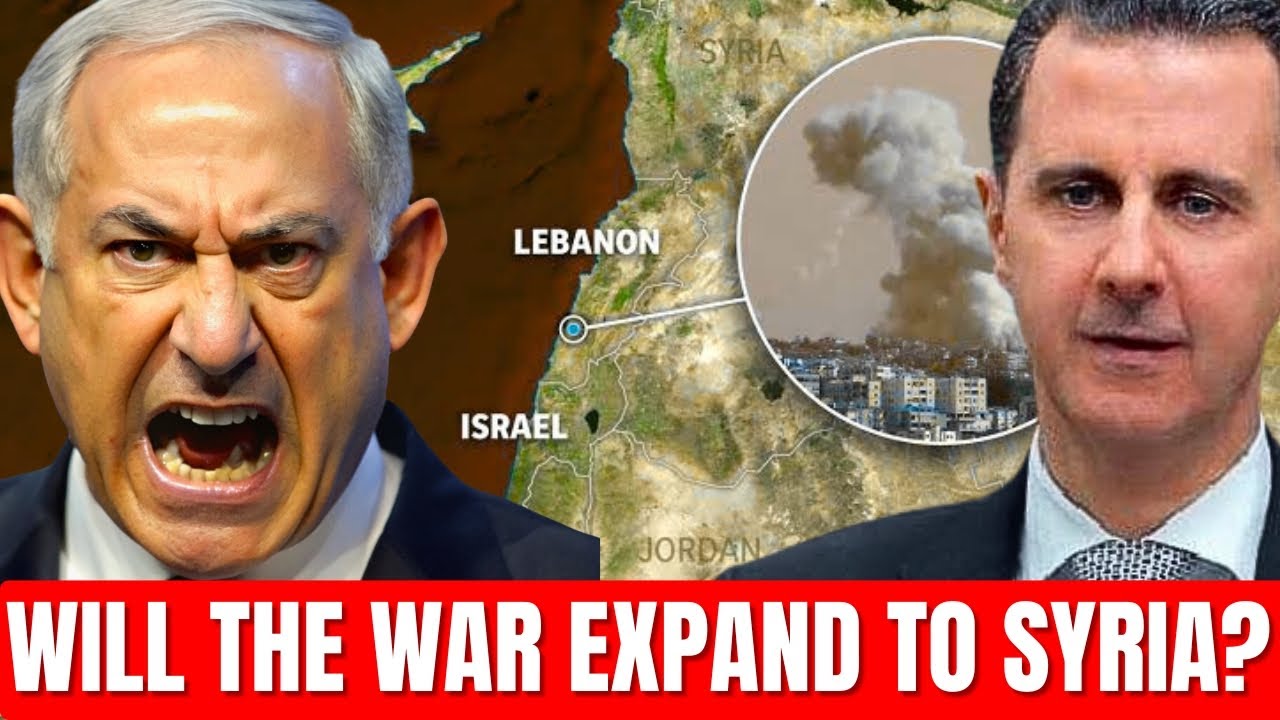
In this live‑stream, the host examines the recent large‑scale Israeli air campaign over southern Lebanon, detailing the scale of the attacks (over 500 casualties, including children), the use of advanced aircraft such as F‑35s and F‑22s, and the strategic objectives behind the raids. He frames four core questions: (1) whether the Hezbollah‑Israel clash could spill into Syria, (2) Iran’s hidden role, (3) the likelihood of a full Israeli incursion into Lebanon, and (4) Russia’s possible reaction given its military foothold in Syria (Tartus naval base, S‑500 missile system). The host discusses the U.S. decision to reinforce its regional presence with roughly 40,000 troops, the opaque nature of the deployment, and the broader implications for regional stability, including potential involvement of Turkey, the UN, and other actors. Throughout the stream, he answers audience questions on topics ranging from Turkish troop deployments, the credibility of the UN, possible North Korean involvement, and the future of German elections. The overall tone is conversational yet analytical, with a cautious, concerned sentiment about escalation and a critical view of diplomatic institutions.
Chapters
All right, hello everybody and welcome to Geopolitical Trends, where truth matters. Excited to be with you as always. I decided to talk about the recent Israeli raid in Lebanon, a major event. I was planning on talking to you about the elections in Germany, uh, because Olaf Scholz's party won, but a very, very, very small margin. 30% versus 29.2% to AFD, the, the, the far-right German. But anyway, I just— you need to understand what is going on right now with Israel's raid on Lebanon, a major one, and the consequences of this. The US is already sending troops to the region. So this is what I'm gonna be detailing for you in this, uh, live stream here. So before I'll do this, I want to give you a heads up, uh, join me on Friday the 27th at 1900 hours for my conversation, my monthly conversation with Carl Zah. Yeah, he will be here, he just confirmed with me yesterday. So I'm, I'm so good to hear, uh, about Carl's health is back to normal. So after the accident, so the second thing is on Saturday the 28th. Uh, remember also to join me for the Community Conversation. You do not want to miss this session because I'm going to be sharing with you some information regarding my last trip to Eastern Europe and some other information you might find very, very interesting. So, all right, let's, uh, let's get in into our topic here because we got a lot to cover today. And, uh, so I'm not gonna, you know, I'll say hi to all of you without mentioning names and so forth, because I gotta get in into this because there is a lot to cover. So, so I'm gonna start with the questions, guys, because those are key questions that you're gonna need to address. I addressed some of them when I wrote my book back then about Iran, uh, because of the centrality of— okay, I'm seeing some stuff going on on the, uh Okay, that's so weird. There we go. So, uh, let's ask the questions. And the key question— the four— the key questions that I could think of were, first one, Of course, could Hezbollah and Israel conflict spill into Syria? Now, some of you always said, what Syria has to do with all this? Well, if you understand the dynamics in Lebanon, you will understand the dynamics in Syria and vice versa. Syria and Lebanon are intertwined. Whatever politics goes in Lebanon has to go through Damascus. That's one thing you need to understand. Second one is Where is Iran into all this? Because it's a legitimate question we need to ask, because there are a lot of, uh, analysts now are asking questions. Okay, where is Iran? Why is this important? It's because both Hezbollah and Syria are clients of Iran. Third question, you know, with this intensive raid of Israel, and I'm going to share some pictures with you Is Israel going into Lebanon? Remember last time we talked and I asked you guys question, what is your opinion? Some of you said yes, it will go into Lebanon. Others said no. At that time, even for me, I said no at that time because I didn't realize it's moving into this direction yet. And with the US, the Pentagon this morning confirming the shipping, or the deployment rather, of the US troops, that tells me something. And the last question is, what will Russia do? Because you need to understand, Russia has a naval base in Syria. Syria is client of Russia. And for the Kremlin to issue a statement today about those raids, it tells me where things are headed. And those are the key questions we ought to consider as we move forward into this. Well, as you all know, Israel raided or conducted, uh, a major airstrikes between yesterday, the yesterday morning and afternoon. So you're talking about estimates from the Health Ministry in Lebanon stated that this is the official account, about 558 people including 50 children were killed in those deadliest bombardments by Israel. So, so it was, uh, it was forthcoming. So when you're gonna see, uh, the, the raids, when you use air, air power, that changes the calculations, you know. And I mean, let's, let's be real about the reality of it. Drones, missiles are one thing. Air power, meaning fighter jets, is another. So Israel was using the F-35s, the F-22s into these raids. Massive, massive destruction. And, and I have some pictures I'm going to share with you here. Oh, what happened to my screen? It went blank. I don't know if you guys can hear me, uh, I can't see the screen here. Interesting. There we go. Wow. Okay. Here we go. Yeah, I don't know what's happening, guys. It's my screen went black, went dark completely. So, so anyway, these are the images that has been reported. It's nothing, you know, sort of even, uh, uh, the Israeli newspapers have disclosed all those, uh, uh, uh, or shared those pictures and, and so forth. So the idea that to be thinking in terms of now this, uh, the Israeli latest, uh, those airstrikes in southern Lebanon, by the way. So, and, uh, because in also in a reaction to Hezbollah targeting certain locations, including the Israeli military headquarters, the intelligence headquarters, which I did a video for you about this one here. So, so the, the only difference right now is the, the, the level Like I said, use the term at the beginning, the intensity of those raids suggest there is more that can meet the eye here. Another word, is Israel really about to shift from Gaza into southern Lebanon? So, and this is why, as of the 23rd, which is yesterday, at about, uh, uh, uh, 10:00 AM, 10:00 AM local time, Israel launched the hundreds of airstrikes. Yeah, not one, not two, in southern Lebanon. Uh, and, and back then, between yesterday, there were about 270 people dead. And with the extensive, uh, additional raids, uh, the number reached about 500. So now here is the interesting aspects of it. What Israel did, you know, this is considered for Lebanon the deadliest day since 1990s. You know, very, very, very important to understand this dynamic. So, and this leads us to consider some other geopolitical calculations, which I'm going to get into the detail of it. Speaking of that, by the way, I'm going to prepare a video for you, recorded one. I'm going to do my own analysis separate, and I'll present it to you in a form of a recorded video, scripted one, that is. So Uh, and, and I have the information that I read up on in addition to what I wrote about, and I'll put it together for you, well packaged. So, so as you know, for Hezbollah, it expanded— that Hezbollah expanded its targeting or, or the range of fires beyond Haifa. How so? That's when Hezbollah was launching hundreds of rockets And of course establishing booby traps as well, uh, drones that affected the Israeli military depth. So because here is the thing, the reality that is not been disclosed much: Hezbollah rockets that's been launched from way back since October 8th have forced now about 3, 3 million Israelis to leave the settlements in northern Israel. So basically 3 million settlers in northern Israel have left. Where did they go? They go to the outskirts of Tel Aviv. So, and this is where that concern— by when the Houthis launched, yeah, the Houthis launched the missile into Tel Aviv, of course they didn't target the civilians, It was in the— some open field, but that wasn't about that. It was about the targeting of Tel Aviv because the settlers now are thinking in terms of, well, Tel Aviv will be well protected. Turns out not to be the case. So what Israel is doing, basically Israel wanted to push Hezbollah back so the settlers can come back and settle back into their homes in northern Israel. There is where the issue— when you have 3 million people leaving northern Israel, that doesn't bode well for, for Israel, the big picture. So, and this is why the, the, the range of the Hezbollah targets extended over 110 kilometers from way, way back. So, so, uh, uh, Israel is very concerned about this. And that's what prompted now Israel to embark on this raid, massive. By the way, they did inform Washington about it, and that's why the Pentagon yesterday announced that it's going to be now bolstering the US military presence there, the troops, that is, because they are, uh, uh, foreseeing the escalation between Hezbollah and Israel. To the point that Israel might end up going into Lebanon, which will be a suicide in my opinion. Because if you go into Lebanon, you're gonna have to deal with Syria as well. This is what I'm saying. Could Syria become the next front as well? And if Syria becomes the next front, that's problem. And I'll get into that soon. So the move by the US sending its troops to undisclosed number— by the way, they didn't disclose the number We already have about 40,000 troops in the region. So, so, and this is why the US didn't want to disclose the numbers. What, of course, why are they going to go for— the Pentagon is saying, oh, this is just to evac the citizens, US citizens in Lebanon. No, no, no, no, no, no, it's a lie. You know, while it is true to a degree that most other Western countries have no issues order of evac to their citizens in Lebanon in an anticipation of what's coming up, to the point that France this morning requested a UN Security Council meeting. Because why? Lebanon is a client of France, but Israel won't care what the French are saying. So because the US will veto anything, like we talked yesterday about the, the uselessness Uh, it's, it's, it's useless. UN Security Council, it's useless. So, and it's not right for the way that 5 members control the process. So, so, and this is why the idea that, uh, uh, uh, uh, the intensity of this Israel raids suggests that things are coming ahead, moving forward, which only going to be far more complicated than anticipated. So, and like I mentioned earlier, the US has a presence in, uh, in, uh, in the Middle East. We all know there's the US military base, naval base in Bahrain, uh, there's in Qatar, there's Saudi Arabia, Jordan, uh, even Iraq to a degree, even though Iraq doesn't want American troops on its territory. So, but all this It's because there is the— it's almost like what the US is bracing for is the significant escalation that is inevitable. It's becoming clear. I am still, uh, uh, uh, standing by my statements that Israel will not go fully into Lebanon. I could be wrong. We shall see how things, uh, uh, evolve and develops. So, so like I mentioned earlier, the US has about 40,000 troops in the region, and now that's going to be— with the tensions between Hezbollah and, and Israel is going to be very, very, very problematic. There is one thing you need to understand, the locations of where tanks were targeted, and I'm going to share a picture with you here. I know it's written in Arabic, uh, I got this picture by the way from Al Jazeera. Uh, uh, that is where the southern part of Lebanon, all this, you have the western part, the central part, and the eastern part. It's, it's called the al-Qahta'ah, the sector, the eastern sector, central sector, and western sector. And this is what Israel was targeting, the locations in, and in southern Lebanon, all of this one here. So, and this is why it's going to become very problematic. And of course, the highlights the intensity of, of, of, of, of the, the escalation of the tensions. And this leads me as geopolitical analyst to really consider what are the geopolitical calculations. And this is what I am going to be providing you here, and I will do a recorded video for you guys. So the first question, as I mentioned earlier, could Hezbollah-Israeli conflict spill over into Syria? So why is this? Because the possibility of the conflict between Hezbollah and Israel spilling into Syria is not only plausible but highly likely. And this for a reason, because you have to think about the complexity and how intertwined the nature of the alliances and the military presence in the region. When I say this, I'm referring to Iran, Hezbollah, Syria, And you talk about some other groups that we are supporting inside Syria. So, because here's the thing, Syria has long been a battleground for multiple actors, not just one, non-state actors, that is. So we're looking at Hezbollah, we're looking at Israel, we're looking at Iran, Russia, and various other groups. And this is why these fresh escalations between Hezbollah and Israel could spill over into, uh, Syria. Why is this going to be problematic? It's going to be problematic because Hezbollah has bases inside Syria. That's why I said earlier, to understand Hezbollah, you need to understand Syria. To understand Syria, you need to understand Hezbollah and Lebanon. And Iran for that matter. It's a very, very, very intricate, delicate, uh, uh, uh, uh, dance, if I may use the term, geopolitically speaking. That is going to be— now this is where the US is concerned. That's why we— the Pentagon end up issuing, uh, uh, the statements that the deployments of the US troops. So, so, and here is the thing, what you need to understand Israel has already at some point launched certain attacks inside Syria, except when Russia warned Israel that the next time Israel is going to launch anything, the missiles that exist in Syria, they're going to target the Israelis' warplanes. And Israel stopped. Why is this important for you to understand? Once is because you need to understand the presence of Syria inside— I'm sorry, the presence of Russia inside Syria. What is the name of the naval base that— in, in which area the Russian naval base, uh, operates? Does anybody know? If you guys can type in that in, in the chat box. It's a well-known naval base. And I'm scrolling down here to see, guys. Uh, uh, uh, Latakia. Uh, no, no, the naval base, the name. Uh, good, are you— you— oh, I saw it right there, you wrote it in Arabic, is Tartus. That is correct, that is correct. That's where the Russian presence is. Now you need to understand that Syria is client of Russia. This is why Russia moved its advanced missile systems, including, to my knowledge, this type of system. This one is the 500 missile system, not the 400, the 500 missile system. They're deadly accurate. So of course we don't know what other types of weapons the the Russians have deployed into Syria. The ones that I am very familiar with are the 500 missile system, and that is important to understand. So it's because, uh, uh, uh, Israel does not have a free rein now in, in Syria. This is what— why Russia stabilized, uh, uh, Syria. And sort of protected, uh, the Assad regime from being overthrown because that's what we wanted. So, and that is where now I'm seeing this escalation into the tensions into Lebanon, that the strikes were already demonstrate now the potential for the spillover of the conflict. And this, as I said, where Russia comes in. That's why Russia issued the warning of a complete destabilization of the region. We're not talking about Lebanon here, we're talking about the region. Why do you think Russians will state something like this? In my opinion, and the answer is that tells me that Russia's involvement is going to be a foregone conclusion, not ifs and buts. Might not be directly, it's just by providing advanced systems. So So the Kremlin has already warned yesterday of a complete destabilization of the Middle East by the escalations between Hezbollah and, uh, uh, Israel, because they know anything happens to Hezbollah, Syria will have to intervene. Anything happened to Syria, Hezbollah will have to intervene. It's the reality of it. So, and that's when the spokesperson for the Kremlin, Dmitry Peskov, uh, uh, uh, he's the Kremlin spokesperson, said, and I quote, this is of course an event that could be very serious and portends to potential for the current conflict to widen and completely destabilize the region, end of quote. It's a very, very important statement to understand, and the measure, the measure of the word used sends the message right there to the US. So could it be the reason why the US never wanted to disclose the number of the troops deployed? Possibly, possibly not. So, so Russia, as we know, is a key ally to, uh, the Syrian regime and played a significant role in Syria's geopolitics. This is why back then in 2016 and '17, we proposed— we, the American government, proposed, uh, some sort of, uh, uh, uh a legislation, uh, or a bill, or, uh, some, uh, some announcements at the UN Security Council by asking the provision of international force on Syrian territory. Russians vetoed that, and the Chinese supported the Russians because they know the moment you open the territory to foreign international force, you know what's going to be happening. And because here is the thing a lot of people do not know: Americans will never fall under the authority of any foreign commander. So basically, in a simple term, that this international force, it has to be under the US command. So Russia's vetoed that and China supported that. So, and here is the thing, because Russia maintained its military presence in Syria since 2015. That's why they want to hit. I was aware back then of the deployment of the advanced missile systems, and those missile systems weren't about Syria. They were about in case some crazy in NATO will want to attack Russia, whatever. Those missiles will be closer proximity to Europe. That is the reason for it. So, but of course, show of force in supporting the Assad regime, which by the way is still in power. So, and that is why the Israeli airstrikes at that time used to target Hezbollah locations inside Syria and some Iranian forces as well. Not anymore, not anymore. So, so here's the thing: if the conflict between now Hezbollah and Israel escalates and spills over into Syria, Russia will be forced to really, really now navigate a very complicated landscape. And the only way I see it, Russia will not inter— Russia will not get in, into war directly, but it will provide massive and major support behind the scenes, including advanced systems, to not only the Syrian forces but Hezbollah, Iran, Houthis, and any other group in the region that is ally with the Syrians. And that's why I always say Russia may not, may not support Hezbollah directly. It's because Russia will want to play that mediation, being a mediator to calm things down. But in reality of it, China will want to see— I'm sorry, Russia will want to see the US back down. Because here's the thing, If Israel goes into Lebanon, the US is in whether we like it or not. To those who say, oh, the US is not going to involve, it's a lie. We have no say into that, if you know what I mean, as to who controls Washington. And if Russia has its own defense missile systems there, you know what it means, because it's not a, it's not a secret, it's not a, it's a reality. Are they that we can sugarcoat it. It is the way it is. So because while Russia might leverage its relations with China— with the— I'm sorry, with Syria, uh, to sort of de-escalate the tensions, Russia will also want it to hit the US where it hurts, given what the US has done or is doing in Ukraine. Is the game, is geopolitical game, uh, that's part of it. So the other geopolitical calculations that I wanted to share with you is has to do with the potentials for a wider regional conflict, because once again, a conflict spillover into Syria risks drawing in regional actors, and that of course will destabilize the region. For example, if we are to take Iranians back, uh, militias operating in Iraq, or groups, whatever you want to call them, in Iraq, what do you think they're going to do? They're going to be just standing watching by? No, they're going to get involved. This will open another front against Israel that it can afford. This is why personally, personally, for me, guys, it's my opinion, I, I just do not see Israel going in all the way to, to Lebanon. Because that will be the problem. And this is why Israel could find itself entangled in the conflicts from different areas. Even, even you're looking at— even Turkey might end up being involved behind the scenes. So then comes the other aspects of it. And the other one has to do with the idea of de-escalation between Israel and, and, and Hezbollah. The importance of it is to understand also that the, uh, the strikes that Israel conducted were concentrated on villages and outposts in the let, let me share the map once again and the outposts in the, in the region. Because here is before, before Monday, before yesterday, all the strikes were in some outpost pertaining to Hezbollah. However, as of yesterday, what happened? The scope of the Israeli strike expanded into new areas in southern Lebanon, including Nabatiyeh governorates. You know, you're not going to see it there because it's written in Arabic. Because when you look at, for example, Rameesh, Bayan, uh, uh, Beit Jemil, all of those are populated areas. So the point is civilians now are at the crossfire. So And when you go into the interior of the Beqaa Valley— those who speak Arabic, you know what I'm talking about. I'm talking about Beqaa, Beqaa Valley, uh, and the Baalbek-Hermel, in addition to the Mount Lebanon, which, uh, I wish I had a different map here in English, guys, for you to see. Let me see if I can show this map. Let me show this name. No, it's not, it's not detailed enough. But all this where you see those sparks, that's where the tensions are as we speak. And like I argued, uh, back in, uh, when I wrote my, uh, which book was it? I can even remember now, uh, it was on, on my Iran book when I wrote my Iran book. At that time. Even back then, I had to argue, I had to argue that the question— that I said, the question that international security analysts and citizens of the West will have to ask is that, will— because it was all pertaining to the nuclear program at that time when I was writing about— will the nuclear program, or the deal rather, between Iran and P5+ Germany, uh, bring Iran out of its isolation and allows it to integrate into the international community? That was a question I put back then. I also asked the other question: or will Iran continue to be what it is? So, and at the same time, no one in the West was in a position to answer those kind of questions because we didn't know what the trajectory, the geopolitical one that is, it's going to be moved forward. I mean, nobody expected what's going on right now, right? And even with that assumptions, I have to keep the door open in the analysis. That is, by writing, even I said, and I wrote rather, that said, Iran support for the Assad regime and non-state actors including Hezbollah the, uh, in Lebanon and the Houthis in Yemen, or Ansarullah, that is in, in Yemen, will continue whether or not it reaches an agreement over its nuclear program. In other words, it doesn't matter whether Iran reaches the agreement or not, this support will continue because this is what's at the heart of Iran policy inside the Middle East. And Israel understand these dynamics very well, and they are not going to be some sort of taking a chance in going into Lebanon. This is why I'm still not convinced 100% that they're going to go into Lebanon. I just don't see that because they know what's going to happen if that spills over into Syria. You're talking about too many fronts Israel won't be able to control and manage, which means we're going to end up having to conduct the war on behalf of, of, uh, of Israel. And that is where the dynamics— that's why I wanted to do this for you guys, because I need you to understand this dynamics. And I might even be focusing between now till I leave to Asia soon. I might just do another updates on this because you have to understand the basics of this to understand where it is headed. Otherwise, it's not going to make sense to you. So, so as I mentioned earlier, I was going to talk about German elections. I might still do it, I might not. But the fact that things turns out to be— it's very concerning for the, the, the Democratic the Democratic Coalition, the Coalition of the Democratic Christian Democrats in Germany, which is headed by Olaf Scholz. Even though they won the elections, 30% in comparison to 29.2% to the AfD, the far-right German. That's very close. Maybe the next elections you'll see a change. Same thing happened in France. But anyway, that is why I wanted to talk to you about today, and that's all I have. I'm going to answer some of your questions. By the way, guys, just to remind you, uh, remember to join me on Friday at 1900 hours with Carl Z, and on Saturday at 12:15 for the Community Conversation. I'll be sharing with you some information about my recent trip to Eastern Europe. Maybe I'll talk about Asia trip and, uh, uh, we'll answer some other questions for you and share some pictures. So, uh, once again, to all those who have been supporting and continue to support my Asia trip, I'm very, very grateful to you. And I am going— here is the link if you want to support that. And I am going to answer some of your questions here. So, all right, let me go all the way back to the top. Oh, Hanji, uh, hold on a second. I saw something there that you wrote. All right, let me see your questions. I'm sorry, guys, didn't get a chance to call out some of the names, but you understand. You understand? Uh, Hang and G, uh, uh, you say happy to see you today, your voice is good now. No, I'm back to normal, but I still drink tea at night, so Chinese tea with, uh, turmeric, ginger, honey, and lemon. So, uh, and you wrote that YouTube is deleting some messages. Oh wow, why, why will YouTube do that? YouTube, if you're listening, please don't delete the messages. I would greatly appreciate it. Please hit that like button, guys. I will greatly appreciate that. All right, let me take a look at a question. All right, let me scroll all the way down. Yeah, my, my computer is flickering very, very, very bad. I don't know why. No, YouTube won't do it, right? Yeah, I don't think so, right? Okay, let me see a question from you guys. All right, question from Francis Tango: Is Turkey also going to send troops, or are they going to ask the Lebanese government, or are they just going to send troops to Lebanon? It's hard to tell. Turkey playing both sides. Turkey is wishy-washy depending on where the wind is blowing or what direction the wind is blowing. So however, Turkey understand also the complexity of if it gets involved into a confrontation with Israel. I don't see Turkish doing this. They just saying it because they wanted to keep their, uh,, uh, uh, uh, you know, status on the— in the Muslim world and so forth. But I, I don't see them doing that. I don't see them doing that. Uh, could Turkey provide support as far as material, whatever? Yes, they would. But other than that, I, I don't see them doing that. So, all right, let me see another question, except that my screen went dark. I can't see. That is very unusual. There we go, it's back now. Uh, I don't know what happened with the screen, so maybe I need to go get me another computer. Uh, question: would the US send its ground troops to assist Israel? Yes, he will, no matter what they say. They might even send them quietly, you know. American people are oblivious, they're not going to know anyway. And the US government is corrupted enough that they can do whatever. So, so they will, mark my word on, on that one. That's why it is my belief that If Israel end up going into Lebanon, they know that the US will have to be involved. So let me take one more question here, guys, and, uh, and I'll sign off. Uh, uh, M, do you think Israelis— I mean, you mean the settlers— are ever going back to the north? Not anytime soon. If you have 3 million people left That is a concern now for— and maybe this is the reason why Israel is shifting from Gaza into southern Lebanon, because it has to stabilize that part, which I don't see that happening because, uh, uh, the Hezbollah didn't even, uh, uh, display all its weapons. It's not a full-fledged conflict yet. It's not an open one. This is just a, uh, tit for tat. If it expand— because the next question that many are asking, well, where is Iran into all this? Why is Iran quiet behind the scenes? Are they thinking of something, or are they just— I don't know, I don't know. So, all right, let me see, uh Another question, uh, Matt Backy, Carl gonna appear with his new crutches? No, no, I don't think so. No, no, no, no, no, I think he's doing better. I don't know, but, but he doesn't need that because he'll be sitting anyway, so, so I don't think so, uh. Steve, question: if Syria gets involved in the conflict, will Syria try and get Golan Heights back from the Israelis? No, Syria will not get involved. Syria will be drawn into the conflict. Remember, the spillover to Syria, not be— not because Syria wants a war, no, it's because it will be dragged into it. And if it gets dragged into it, Russia will have to step in because Russia's interest inside Syria will become a target if they are not defended. You know, like I mentioned, Russia has moved some advanced systems into Syria, in Tartus Naval Base. So they're going to protect their assets there. So, and of course Syrian will get involved, and we are going to get involved behind the scenes through proxies. So that's why it will become a very open conflict, and it will be major. So, Army with Harmony, uh, any word on troops from Yemen in Syria? Not to my knowledge, no. No, Yemen deals with what it's doing inside Yemen. So this is why we wanted to cut a deal with the Ansarullah or Houthis behind closed doors by recognizing them, uh, as the legitimate, uh, player in the government in return for them, meaning Houthis, stopping the, the firing of missiles and attacks on ships and so forth. So, and, and Houthis didn't buy it. They He didn't want to. Uh, Nicole Jacob, why is Turkey still supplying Israel with oil? Business. So that shows you, it's, it's, you know, what, what, what countries say versus what they do are two, two separate things. You know, you hear the Muslim world, all of them saying, oh, we need ceasefire, we need this. They just talk. No more, no less. They, they are incompetent, incompetent, and they won't— like Egypt, you know, they, they won't be able to fight Israel. They won't want to fight Israel because they can't fight Israel. We will turn them upside down because we control them. Simple as that. This is where the issue is. So, uh, uh, Jim, good to see you. Question: will Turkey hand over the S-500 in exchange for F-35s? Uh, not to my knowledge. First of all, I do not know even if Turkey has the 500. They do have the 400 missile systems. There are only few countries that have the 500, and I don't, I don't know. I am going to check into this. Uh, uh, and yes, because we expelled, uh, the, uh, the Turks from the F-35 program, But Turkey has other alternative, and, and the alternative that I can tell you guys— think about the Su-35, the Russians, or think about the Chinese, the J-10 or J-20 fighter jets. There are some upscale level. So as a matter of fact, Turkey now is considering purchasing— uh, not Turkey, I'm sorry, Egypt is considering purchasing the J-10 from the Chinese. Because Egypt in this case using the F-15s, the old model. So, but I don't see, uh, Turkey doing this because Russia will be pissed and will, will cement the, the, uh, uh, how much you cannot trust the Turks anymore. Once your credibility is gone, it's like for us, our credibility is shattered beyond belief. Around the world. This is why yesterday when the US was saying, oh, we're gonna give two African countries a permanent seat at the UN Security Council, what credibility do we have that they can trust what we say? Same thing. So I, I don't see that happen, uh, Jim. I, I don't see it. Uh, and speaking of UN, there is the Assembly General going on right now in, in, in the UN. Uh, Dr. O, can you inform us about the US, Australia, Japan, and India conference that happened in, in, in Biden's hometown recently? I was aware of that. Yeah, I didn't do a video on it. I can do something on it. That's just, uh, just to keep them under the thumb, per se, uh, to kind of final words before the presidential elections, whatever direction that turns out. And it's just to touch base with them to ensure that they are toeing the line. That's all it is. You know, those countries won't do anything that the US would not want them to do. They serve the US. Yeah, there are those who say, well, India is playing both sides, and rightly so, and it needs to because that's for its strategic interest. But at the heart of it at the heart of it. India will end up doing what the US wants, otherwise we will sanction them. Simple as that. So, uh, let me see one more question from you guys here. And much appreciate you guys keeping the conversation civil in the chat box here, so thank you for that. I know sometimes we get whatever, but it is what it is. Always be happy, always keep the positive energy. Uh, Amanda, question: North Korea join in via Russia agreement? The possibility is there. It's like what China said, that they will come to the defense of Russia in case Russia is attacked by NATO. I won't be surprised that the North Koreans will do the, the same, because remember also Russia has been helping North Korea. Iran has been helping North Korea's missile, uh, uh, industry. So, but mainly Russia because of the nuclear, uh, aspects of it. Uh, Maria RH question: How much UN is significant in stopping wars? No, it's not. It's toothless. It's toothless. Uh, it's no matter what you see, uh, no matter what you see, no matter what you hear, UN is useless. It is my opinion. Again, get rid of— if you are to keep the UN, okay, keep the UN as an entity with a majority vote. There is no UN Security Council. There is no— no, all countries on an equal footing, one vote for, for each country. Simple as that. You have proposal, you introduce that to the floor, debate it. Representative of countries will argue why or why not to support or not to support this and put it to vote. End of story. And the, the outcome is the, is the final decision. To me, that's what true democracy— but we don't have true democracy. That's why I say, if you do, if you don't do this then get rid of the UN. Simple as that. That's almost like that idea of Switzerland being neutral. Switzerland is not neutral. If it were up to me, you get rid of Switzerland altogether and have the lake, you know, uh, divided between, uh, uh, the Germans, the French, and the Italians. There will be no, no Switzerland, because where is the neutrality of Switzerland? It's a, it's a farce. You know, if you guys only know what Switzerland is doing behind the scenes, So, all right, let's see one more question here. All right, what is your, uh, X— what's your prediction, Doc? I mean, about, uh, Israel and Hezbollah, uh, you think you're gonna win? Who's gonna win? However it— well, as far as winning, there is no such thing. It's because once things escalate, you, you, you'll move that equation of winning aside. It's because you don't know what the other party has as far as weapons. In the case of Israel and Hezbollah, the problem won't be, or the conflict won't be limited just those two in that geographical area, meaning southern Lebanon. No, it will go beyond and expand. Like I said, and I'm gonna do the analysis video for you guys about what if, what if the conflict goes into Syria, and I provide some key information there. Because as I said, into Syria, you're gonna now enter into the idea of the, the, the— because Syria's society is a mix of many ethnic groups, from the Druze to the Maronite to the Shiites to the Sunnis, the Alawites, you name it. All of them now, if they found the common cause, they're all gonna converge on that. To them, it would be the common cause is Israel, and that becomes a problem for them. Then you're gonna add other groups— Yemen, Iraq, uh, Turkey, who knows else from some other groups in, in, in, in some other parts of the region. This is why it's gonna go out, and if it goes out You're talking about we supporting Israel by providing some advanced weapons. Well, what do you think Hezbollah is going to get? They're going to get some advanced weapons too. There's always an interest in sort of supporting behind the scenes, uh, uh, uh, the, the, the, uh, any conflict. Go back to Afghanistan in the, in the, in this, in the '80s when, when the, uh, the '70s, late '70s and so forth, when the Russian Soviet Union went back then, you know, we were supporting the groups behind the scenes. Even in the Middle East, we were supporting groups against each other because we wanted to— or just the best example would be the Iran-Iraq War. We were supporting both. We providing weapons to Iraq and we providing weapons to Iran through a third party. Same thing. So it will be no winner. But it will be devastation, and I hope it never gets to that because civilians end up paying the price. That is where, where the, the sad part of all this. Oh, Steve, thank you so much, Steve. Truly appreciate you, man. You know, I'm very touched by your gesture. Thank you very much. And, uh, oh, William N, I just want to comment on yours. I see this one here, uh, Russia doesn't have enough Su-57 for themselves anyway. I see your point, but also Russia did not disclose the next, uh, generation of the fighter jets, which they already developed, but they're not disclosing that because remember, in Ukraine Russia didn't want to show all it has. I can tell you, in one aspect, it showed that the jamming technology that they have, how advanced it is. How do you think they end up shutting down the US tanks, the, the Leopard from Germany? How do you think they end up, uh, figuring out where the locations of the officers from NATO and bombing the whole location? So, so yeah, they didn't show that one yet, but they might in due time. Sometimes you don't play out all your cards. The same for us. We do have some advanced, for example, uh, some advanced submarines. If you only know the technology involves in those kind of, uh, type of, uh, systems. And this is why the Chinese went ahead and developed their own advanced sonar system, is to be able to detect those kind of submarines, uh, because they can stay submerged for, for a long, long, long time. They have the capability, uh, because they are nuclear powered. So, so, so that's, that's the way I see it, uh, going into that direction. Oh, here he look out! Here you are, man! Good to see you. You know, you know, uh, good to see you, Harry. Look, you say go to China. Oh, I might, I might surprise you. So it's in the plan anyway. It's in the plan, Harry. Look, and, and, uh, I just had a conversation with someone yesterday, an avid supporter. Uh, I'll put his name out there, is Ray. That's all I'm gonna say because I didn't get the, uh, uh, green light from him to disclose the name. And he was kind enough to give me some pointers, and, and very, very kind soul. So, so there are good people out there in this community, guys. That's why I am so, so proud of, of, of our community here. Very content, very happy that this came to be in this way. And as I said yesterday, uh, we're going to be thinking about, uh, moving forward for us to embark on some peace initiative of sorts. I don't know how I am thinking we're gonna have to figure something out if we get all our heads together, because you have stake into all this. Don't tell me you live in some part of the world, you are, you are sort of protected, whatever. No, no, no, no, no. Whatever is going on in the world right now impacts all of us. Doesn't matter where you are at. So, well, we either have to face that head on Or we can just sit down and worry about it. But to me, that's useless if you just sit down and, and, and, and, and, and just worry about that one instead of thinking. You think of solutions, and we need to come together as a community. And, and I'll be talking about this when I get back from Asia to figure out how we're gonna move with this forward, because we can't just be talking about it either, you know. Talk is great, but action is better. You know, you know, like, like I always give that example, guys, of Marcus Aurelius, the, the Roman Emperor. Watch what a man says, not what he does. I'm sorry, watch what a man does, not what he says. Talk is, you know, I look at it now with these Arab leaders, they're just talking. Where is the action? Where's the action? They're all pathetic. Uh, hi Steve, once again, thank you, man. Uh, did Iran not responding to Israel embolden them to attack Lebanon? You know, you got a point there, Steve. You got a point there. And they are, believe it or not, Some analysts are questioning that ability, or inability rather, for Iran not to respond. And that's maybe emboldened. Yeah, you know, you're perfect in your statements and that keyword emboldened. You know, could it be also an element of surprise? I don't know. I wish I have an answer to it. This one is a little bit tricky given the new president. The moderate, the new president wants to reopen— this is to me what another concern— wants to reopen the negotiations with the US regarding the Iran nuclear program. I, I, yeah, and again, like I always say, it's my country, but I can't shy away from saying the truth. Trust the American government at your own peril. So So yeah, knowing that Hezbollah is client of Iran, so what will Iran do? We don't know. So, oh, this is— you must be joking, William, right? If you only know the dark side of Oprah. Maybe one day I might do a video for you. Not here. She's part of the establishment. If you only know the dark side. And you know what, I'm gonna give you guys a hint. The fire in Maui, just think about it. Oh, Jim, Dr. O for US Ambassador. No, no, thank you. They won't let me do what a real ambassador does, the role of an ambassador, you know. And I don't like to talk much about my family background. I have in my family background those who served in those capacities. You know, the role of an ambassador is to bridge that, is to sort of pave the way for having a bridge between two different cultures. And the cooperation, it's at the heart of it. So if I am to be an ambassador of the US, let's say to Country A, what do you think I'm going to advocate for? Well, of course Washington's not going to like it because they won't want me advocate for peace. For cooperation, for live and let live, they're not going to like it. And for me, I wouldn't want to be there just as a, as a— what you call it— as a checker. They can dictate to me this and that. No, forget about it. So, so till I know if the system was, was, was reasonable, our system, that is, if the government was acting right and doing what's good for the American people. This is a possibility I could consider. But even for in the US here, ambassadorships is bought. You have to donate money to the party. That's how you get the reward for becoming an ambassador. Just look around the world right now. Look at the ambassadors and check out their background. No qualifications whatsoever, but They have money, they have donated money to the political party. And, and to me, I refuse to do that. If I am to give money to get a position, no, no, I, I can't live with myself like that. And that's what I did in my education at the university. I left university because I said, hell no, I will not compromise the welfare of my students no matter what the cost is. That, that's what I believe in. Yeah, KL, please hit the like button. Please, please, please do so. I know YouTube, if you're listening, you know, be kind, be kind and let things be. All we're doing here is sharing knowledge. No more knowledge, no more, no less. No, uh, Rumples, uh, Uh, Dr. O, have you heard, uh, that YouTube is deleting many channels? Uh, no, I didn't. I don't, I don't pay attention much to others. That's why, uh, uh, yeah, I, I don't, because I've been watching way back, uh, and some who talk about certain things in global affairs and geopolitics are kind of, to me, it's not right. And I refuse to— no, no, I, I, I don't believe in, uh, if, if, if whomever the host will talk concrete, substantive, uh, information, uh, uh, yeah, but otherwise I don't buy that argument. So, so I don't watch. I don't know, I don't know who's— now you tell me some names, I wouldn't even know who they are, even though they might be in geopolitical realm. But you know, I, I will not know. So, oh, oh, Arimov, thank you so much for your super sticker. You wrote, 57 Islamic countries voting against one Jewish state is not UN democracy, that's Islamic colonization. Yeah, rightly so. Yeah, yeah. Yeah, yeah, it's, it's kind of, it's weird to have the setup all together. And even when some are voting in a certain ways, they, they, do they mean that vote? No, no. So it's very, very hard to really decipher what the Arab or the Muslim world really think. When I say the Arab and Muslim world, I'm referring to governments, not the people. So, I mean, I've heard now some even Soccer players in some Arab countries are taking stand against their own government. So it's, uh, it's, it's very, very problematic. So, all right guys, I'm going to sign off here. We've been on about an hour, so I'm going to sign off here, and I look forward to seeing you. I might do a live stream for you tomorrow, again, depending— again, I'm going to read up some developments of what took place yesterday. And if it's worth having another, uh, uh, uh, live stream to elaborate more— I don't like to repeat myself— I will do it. Uh, otherwise, I will, uh, see you next time. And, uh, on— just remember, on Friday at 1900 hours and Saturday at 12:15. And I will post all this for you guys. So as always, remember, geopolitics impact your daily life in more ways than one. Till next time, guys. Bye-bye. Oh, oh, oh, oh, I see one here, The Strong Organization. Thank you so much for your super sticker, truly appreciate you, man. And, uh, it's the first time I see the name here, so, so if it is, you know, welcome to our community. Thank you so much, truly appreciate you. You take care, guys. Bye-bye.
More from David


Beyond the Single Actor: Why the Gulf Isn't Choosing Between the US and China


Iran, Iraq's Militias, and the Houthis Are Coordinating! This Changes Everything




Who Controls the Next Decade's Resources? Latin America and Africa's Geopolitical Crossroads

The Chokepoint Trap: How Washington's Stupidity Triggered a Cascade That Now Controls the World

Trump Spooked as IRGC Unveiled dual-use SLV, Deployed Ghadir Mini-Subs & Hinted at Tactical Nukes!
