Israel’s Next Target? Why Türkiye Is the New Iran
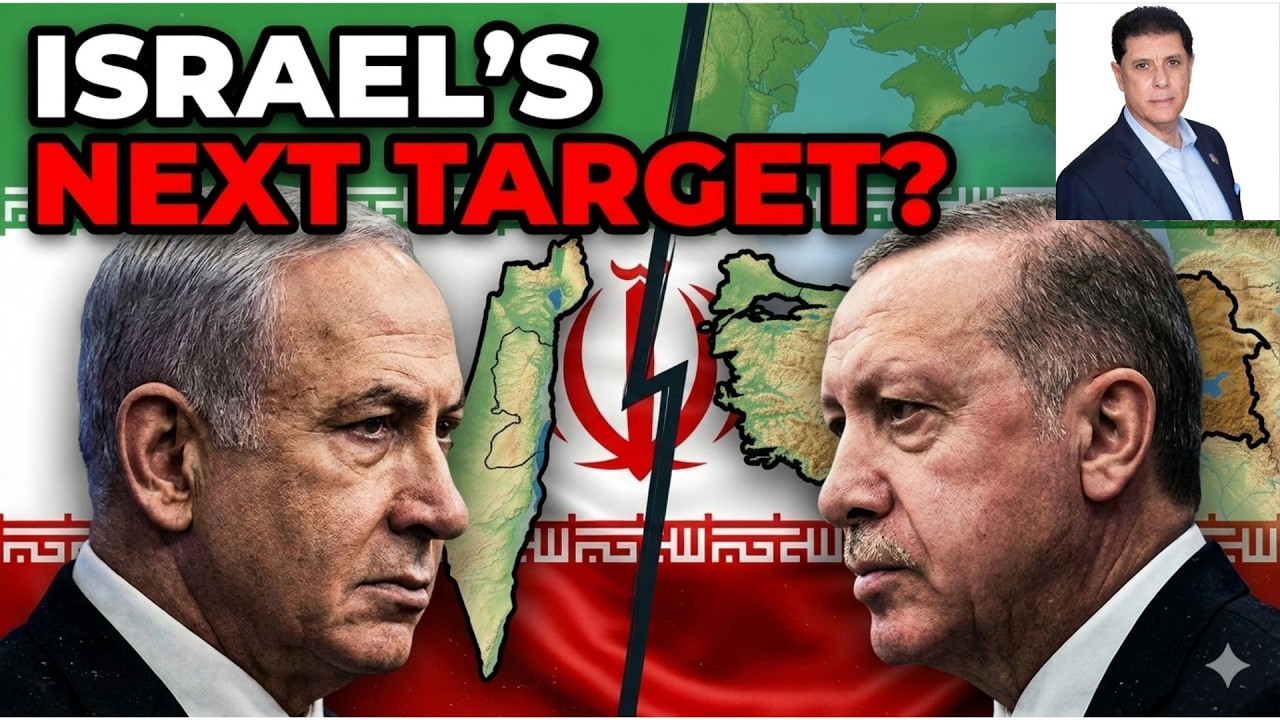
In this extensive Geopolitical Trends video, Dr. O (Speaker A) argues that the regional balance in West Asia is undergoing a dramatic shift. He claims that Israel has officially designated Turkey as its primary strategic threat, akin to how it once viewed Iran. The analysis traces a series of recent diplomatic moves: a high‑level phone call between President Recep Erdoğan and Iran’s President Ebrahim Raisi, coordinated talks between Turkish and Iranian foreign ministers, and back‑channel involvement of Qatar, Pakistan, China and Saudi Arabia. Dr. O highlights the strategic motivations behind Turkey‑Iran rapprochement – safeguarding the tentative US‑Iran peace MOU, counter‑sabotage by Israel, securing energy supplies (Iran provides ~15‑16 % of Turkey’s gas), managing refugee flows, and confronting a shared Kurdish insurgency. He examines Saudi Arabia’s sudden pivot to support Iran, driven by economic vulnerability, oil‑shipping security, and the desire to prevent Iranian expansion. The video also covers the revival of the historic Hejaz Railway, Turkey’s growing military-industrial capacity, and Israel’s attempts to encircle Turkey via alliances with Greece and Cyprus in the Eastern Mediterranean. Dr. O warns that the US‑Israel‑Turkey dilemma – whether NATO’s Article 5 will be invoked if conflict erupts – could trigger a broader global confrontation. Throughout, he intersperses clips of Israeli and Turkish officials, former analyst Jonathan Pollard, and media maps, urging viewers to consider the “new red lines” and to comment on whether this fragile coordination will preserve regional stability or precede a larger explosion.
Chapters
Hello everybody and welcome to Geopolitical Trends, where truth matters. Forget about everything you knew about West Asia, aka the Middle East, because right now you have Saudi Arabia is backing Iran. You all remember when I did a video for you, a recorded video about an analysis about Saudis will back Iran at some point. And here we are, and Israel now is treating Türkiye, which is a NATO member, and we all know NATO members are vassal states, like an enemy state. An unexpected alliance is about to completely sort of rewrite global politics as we know it. And one thing is that the media is completely missing and not disclosing, of course, And this is what prompts me to do the video for you, providing you my own analysis as far as where this is going moving forward. So, uh, make sure you stay with me till the end. I have some interesting info and also some very interesting clips to share with you as part of this analysis. So what we have right now, we have Israel just officially— and that's the key word, officially— labeled its major threat. And it isn't what you may think, you know, as a massive new four-nations bloc— four-nations bloc— forms now to reshape the post-war order in West Asia, aka Middle East. And the line in the sand has officially been redrawn now. And this is why this particular development— this is the high-stakes chess game, or chess move, if we may use the term— that could now spark the next global conflict. So I'm going to play a clip for you to launch this, uh, analysis here, then we take it from there. Take a listen, please.
Next, Iran. This statement from Israel has now become part of the geopolitical debate. For years, Israel has viewed Iran as its biggest rival in the region, but But now, Israeli officials are suggesting that Turkey could become their most significant competitor in the future. According to Israel's assessment, Turkey is trying to build a Sunni bloc in the region alongside Pakistan, Saudi Arabia, and Qatar. On the other hand, after Iran's influence weakened in Syria, Israel believes that Turkey could emerge as the most powerful player there. But perhaps the most important point is that Turkey is a member of NATO, while at the same time, most of Israel's oil imports from Azerbaijan pass through Turkish territory before reaching Israel.
Very, very interesting dynamics. And, uh, and that is why we're going to be asking, uh, some key questions. I'm going to of course provide you my own analysis, my own assessments, my opinion. And of course, I welcome your feedback. If you disagree, please just, uh, share your, uh, insights, uh, in the chat box with the community here. We are all— we are all here to learn from each other. That's the key. Anyway, the first question is, how significant is Turkey and Iran engagement? Is actively engaging in a diplomatic communication regarding regional stability. They didn't say regarding Israel, which you and I know this is about Israel. That is the engagement between Iran and, uh, uh, uh, uh, Turkey. And I think I have a picture right here. This is, uh, uh, President Recep Erdoğan during a meeting with the Iranian president, Massoud Raisi. Very, very important dynamic to understand this. So Turkey and Iran active diplomatic engagements is exceptionally significant at this stage of the conflict. What's going on in West Asia?
Why?
It's because it's serving as a security anchor, if I may use the term, for the region's stability. That's what prompted Saudi Arabia to jump on the wagon before it's too late. Saudi is not doing it because they care, even though there is that religious duty in supporting a Muslim country. Uh, I'll let you be the judge of that. But this follows, of course, this development between Iran and Turkey followed the recent, uh, tentative US-Iran agreement to halt, uh, their military conflict. And that's exactly what happened on June 22nd, which was yesterday. That is where this picture came from, and I had to confirm. That's why I didn't want to do this yesterday. I told you I was waiting on some confirmation for some information. So what happened yesterday is that Recep Tayyip Erdoğan, Turkish president, uh, and his counterpart, Iranian President Masih Masihian, held the crucial phone call and they coordinated steps to protect the fragile peace process from potential regional sabotage. But also there is another angle to this rapprochement between the two, and I will disclose it to you as I move forward in this analysis because it's very, very important. Both of them have a common enemy that's beside Israel, by the way. There is another enemy that they have. So, so the high significance of this current engagement is driven by a host of factors. So I'm going to share two or three with you. So first of all, uh, which is common sense, is to safeguard the US-Iran tentative peace deal, even though I don't believe it's going to hold given what the dynamics that's taking place, place. But at least for Iran and Turkey, they are trying to, uh, sort of, uh, prevent sabotage. By whom? Israel, of course. And this is why the phone call between the two leaders of Turkey and Iran emphasized this particular aspect. The second thing is to promote follow-up talks. Follow-up talks between whom? Between Turkey and Iran. This is why you have the Turkish foreign minister, Hakan Fidan, has been coordinated heavily with his Iranian counterpart, Abbas, Dr. Abbas Arakchi. And there is a player into all this behind the scenes, and that player is Qatar. Very interesting dynamics. Once again, this is why you find Saudis are jumping into this before it's too late. You don't see United Arab Emirates doing this because United Arab Emirates is the back door for Israel and the US. And this is why both of them, Iran and Turkey, are sort of trying to push, uh, this deal, uh, uh, sort of to finalize the outstanding technical negotiations and so forth. Then you have the back channel, uh, uh, backing. Of course, Pakistan is serving as the primary former mediator for the Islamabad MOU, Memorandum of Understanding. There, Turkey provides some vital behind-the-scenes diplomatic leverage to secure the breakthrough, in addition to Qatar, in addition to China and in addition, to a degree, to Saudi Arabia. But one of the major key aspects is the prevention of the regional collapse. That is the stability, because they want stability. Because who are the two main players that's going to emerge once the dust settles? And as a matter of fact, only one is going to emerge, is Iran. Of course, we are not going to underestimate also Turkey, even though Turkey flip-flops. We all know this. But at the same time, you can ignore Turkey's role in the region. And that is, again, for them to avert some sort of an existential fallout of this. So for Turkey, the threat of a total state collapse or a chaotic regime transition in Iran, which it would not happen anyway, but Turkey is not taking chance, is viewed as an existential threat because it will impact Turkey one way or another. You think about the refugee migration, hypothetically, should the, the Iran government fail, which it won't. Surely fall, it's not going to happen anyway, but we just— what if scenario, you'll be looking also because Turkey is already hosting about 3 million Syrian refugees and Ankara is desperately desperately communicating with Tehran to ensure the border security. Because all you need to do is look at the map. Let me pull it up for you so you can see. Just look at the map, and then that gives you an idea of where things are. Doesn't show this one here clearly, uh, this one either doesn't, to a degree. In any event, that is one of— because you have Iran's, uh, uh, uh, I mean, Turkey rather, is going to have to think in those terms. Then there is one factor, and that factor has to do with the Kurdish variable, which I will detail later on in detail as I move forward into this. For now, I don't want to jump on it, uh, quickly. The third element to all this has to do with security, energy, and trade independence. So crucial, because you can think about geopolitics from the military aspects, but also you cannot ignore the economic factor. Think about, for example, the gas infrastructure. Iran historically supplies about 15% to 16% of Turkey's natural gas. Because Iran is a major producer in addition to Qatar, with the crucial bilateral gas supply contract expiring this year, mid-year actually, is going to expire— to my knowledge is about, uh, if I'm not mistaken, next month, May 2026, next month. This is why you're seeing the active diplomacy is required to renegotiate the terms under highly volatile post-war conditions. Turkey is not doing this because they care. Iran has to do it because of necessity. Saudi Arabia is getting into— involved into this because they feel that they're going to be left behind. Israel is finding itself is going to be surrender, surrender by, by 3 multiple, 4 multiple fronts. And that is why it's important to understand the movements of these dynamics. Think of it like I always say, within the geopolitical chess mat, or chessboard rather, you think of this movement. This is one of them. So you have the economic repair. In this case, the recent war severely strained regional trade because both presidents, President Erdoğan and President Mesut Özil, That's why they agreed yesterday to swiftly establish some sort of an intergovernmental committee to reconstruct and expand bilateral economic, energy, and financial ties. And I know some of you is gonna say, hold on a second, Dr. O, where was Turkey when Israel was pounding Gaza and Turkey was still providing gas to Israel and energy and other— she's logical question, you know. That's what I'm saying. I am not overlooking how flip-flops Turkey can be, but at the same time, I have to look at the current conditions dealing with that, because nobody's going to forget that. Nobody's going to forget. A lot of people who are in the know and understanding these dynamics did find out that despite the, the atrocities that was committed in, in Gaza, uh, Turkey was still providing energy to Israel. The other factor, number 4, that I want to address, and this has to do with the shaping of the post-war, uh, the post-war order in West Asia, aka the Middle East, because you're looking at a new strategic alignment now. Turkey is leveraging its communication with Iran to position itself as some sort of a key regional broker. I don't know about that, but that's what they hope for. And that is why it's bridging the lines between Tehran and Western powers, in addition to the Arab Gulf States, sort of playing the role of a mediator. But at the same time, should Iran trust Turkey like the other countries? Remember, when the US start pounding or, or attacking Iran, where was the Muslim world? Turkey, uh, Turkey is considered a Muslim, uh, country, right? Where was it? Why they didn't step forward and say to the US, listen, this is not right, you can't be attacking a sovereign state just because of the whim of your desire? Where was Saudi Arabia? Where was Qatar? Where was the other Gulf states? The whole Muslim world at large, if they saying the Muslims have to come together in time of crisis, where were they? Only now you find out the Saudis are declaring officially that they are standing by Iran. I remember when I did the video, the analysis back then, I know I read the comments and some said, no, you are way off, Dr. O. Which I respect the opinions, but I wasn't looking at, as they said, at the end of my nose. I was looking very far because I knew the dynamics will change. And I said, mark my word, that Saudi Arabia will switch its position. And here we are. And this is why when you look at this engagement between Turkey and, and Iran is both of them, they have a common enemy, Israel. In this case, opposing Israel regional actions is a powerful unifying sort of factor between Tehran and Ankara, but it is only a piece, one piece of a much deeper, highly, uh, complex strategic alignment. This is— these things doesn't happen overnight. Don't think next month they're going to be, uh, holding hands and singing Kumbaya. No, no, no, it's going to take time. It's going to take time, a long time, because remember, Turkey is a NATO member. Keep that in mind. Suffice it to say, as of now, both countries, Iran and Turkey, view Israel as the primary threat to the regional stability. And that is why their engagements is also driven by shared fear of the regional chaos. Because in chaos, you won't thrive economically, socially, and otherwise. And what those countries, especially Türkiye and Iran, are aiming for, in addition to the Gulf states, they're aiming at economic stability. So, and that is why they're gonna have— they mean in both of those countries, Iran and Turkey, have to manage this, this transitional era, the post-war, uh, war era. They have to manage it very, very, very carefully. So, and the idea of for them sharing the common enemy about Israel, because it's aimed at one objective, and that objective is preventing sabotage of the tentative peace deal that was just signed digitally between the United States and Iran. As I always call it, call it for the record, the surrender deal. This is why the foreign minister of, uh, Turkey, Hakan Fidan, explicitly warned that Israel might try to militarily sabotage the fragile US-Iran, uh, MOU. And that is why you have Ankara, uh, Ankara, that is, is cooperating with Tehran to prevent Israeli action from pulling the region back into a full-scale war. And the same question that I asked you last time, I find myself asking the same one: does Israel stand any chance against Türkiye. What do you think? So just, uh, uh, yes or no, uh, in, in the chat box, if you can just, uh, voice your opinion there, I would greatly appreciate it. So the other thing that both, uh, Turkey and Iran, but mainly Türkiye, is kind of concerned about, it has to do with the possibility of Israel's expansion. Remember what Israel was aiming at And when you look at the map, Israel wants to expand. That's why they are doing what they doing in Lebanon, because they want to take over. But it ain't gonna happen anyway. That's why they doing what they doing in Syria as well. And this is why you have the, uh, uh, uh, President Erdoğan himself. Let me, let me share a picture of Yeah, I have right there. That's President Erdogan on the right here. President Erdogan himself, he framed now Israeli leadership as a network of murderers, in quote. He argues that Israel's military action in Syria and Lebanon directly threatens Turkish borders, effectively drawing some sort of a joint strategic red line with Iran. This is how you understand these developments moving into this direction. So then you have the next Iran label that Israel has already mentioned, and I'm going to share some clips with you to highlight to this point. The next Iran, in quote, the label that Israel now are stating, Israeli politicians now And the media have increasingly, if you notice, if you follow through, you notice that there is now an uptick in the word usage enemy state, Türkiye enemy state. You know, if you read the, uh, the, the publications within Israel and some of them even here in the US, they are addressing it this way. So why is this? It's because the media inside Israel have, and politicians have increasingly begun branding Türkiye as an enemy state, almost giving it the equivalency of the new Iran, in quote. And this due to Ankara's sort of anti-Israel rhetoric and of course trade embargoes. Once again, I found myself asking, why did Türkiye didn't step up when it matters, when the atrocities were committed in Gaza. That, that I just can't get over that. So because to me that's what matter, that leadership matters when it's tested during the hard time, not during the easy time or peacetime. When it matters, Turkey didn't step in. They just saying statements here and there. And I'm not just picking on Turkey, I'm talking about the, uh, the whole Muslim world writ large. Statement sometimes is not going to be enough. But suffice it to say regarding this is that this mutual hostility has now— between Turkey and Israel— has pushed Turkey and Iran into a tactical partnership to counter Israeli influence in the Mediterranean and the Levant. Because that is the objective of Israel, is to expand all this. Era, uh, uh, Turkey, I will not allow that because that means if Turkey allowed it, geographically they will be, uh, surrender— they would be surrounded rather, uh, uh, or cornered. It's like a Russia in the Black Sea. I ain't gonna allow any NATO presence there, or any other country for that matter. So Then you think about the deep interdependence, not just geopolitics for this matter. What are we talking about here? We're talking about energy security. Türkiye relies on Iran, as I mentioned earlier, for roughly 15 to 16% of its natural gas. That's not a small amount to manage an economy. So securing this energy pipeline amidst the regional volatility is some sort of a matter of Turkish national survival. This is completely separated from the issue of Israel, which is the right distinction to make because we're not going to confuse all of each one of them. Each issue has its own trajectory. And like I mentioned earlier, Türkiye is worried also about the refugees. That is one of the— and this is where you have the friend me is the enemy of my enemy is my friend, per se. And that leads me to the key question addressing this one here. Ultimately, you think about the act, Israeli act, as the immediate catalyst forcing both countries, Iran and Turkey, together. Of course, this relationship of this government recognized the cooperation is only way to prevent total regional collapse. This is the conclusion that Tehran and Ankara have reached during, first of all, the phone call between the presidents And second, the visit of the foreign ministers of Turkey to Iran and the conversation with Dr. Abbas Erdoğlu. You're talking about the prevention of regional collapse, you're talking about the securing their economies, and you're talking about managing their own underlying rivalries. Don't over— don't ever underestimate that there is a rivalry that exists. Between Iran and Turkey. It's hidden, it's quiet. And that's exactly where the Saudis came in. And I'm going to be addressing this after I play this clip for you. Right now, there is rapidly a growing community of us right here dissecting these global shifts together. And to me, that is not just a number on a screen, it's a real movement of people who are actively choosing deep, honest truth over mainstream noise. We live in a world where the real geopolitical realities get buried under some clickbait headlines, but you are here because you want the actual analysis, the structural shift, the defense economics, and the uncompromised facts about where our world is heading. And if this mission matters to you, I want to ask you to hit that subscribe button right now. Your subscription isn't just a follow, it is the fuel that helps this independent analysis break through the algorithms and reach the people who needs to hear it the most. So let's take this global, and thank you for being the backbone of this community. In this, we have— indeed, we have our wonderful We have, we have a great community, and I'm so thankful to all of you for that. And, uh, just to go back to addressing Turkey and Israel tensions that are now on the rise, they are increasingly— Israel increasingly viewing Turkey through the same hostile lenses as Iran. That's, to me, dangerous way of even approaching this, because Israel label, uh, explicitly— pardon me— explicitly labeling Turkey as the next big challenge. I recall about 4 months ago, 3 or 4 months ago, I don't quote me on the exact timing, I mentioned something like this and I said I'm just gonna keep my eyes open over the horizon to see what lies ahead. And at that time they were just whispers inside Tel Aviv regarding this. And here we are now, it becomes a reality. So because Israel now is stating that they see Turkey, uh, Türkiye, as a primary threat to regional dominance, and this dramatic shift has stunned now former allies into bitter, bitter rivals. This is again, when you go back to the statement, uh, that was issued by Turkey's, or Turkish, Foreign Minister, uh, Hakan Fidan, who publicly warned that Israel— and I put this in quote— cannot live without an enemy, end of quote. That's a heavy statement. And it is systematically— Israel, that is, is systematically now shifting It's a state strategy to frame Turkey as its newest adversary now that Iranian military capacity has been, uh, altered by recent war, which is the wrong assessment on part of the Israelis because Iran's military capability, while it might have been degraded to a degree, Iran still standing there. Israel to attack Iran right now, because we all know what it means. But suffice it to say that with both, uh, uh, Turkey and Iran thinking in terms of how this is going to move forward, I'm going to show you a clip here, uh, I'm not going to play because it has a soundtrack and I know, uh, YouTube doesn't like that, so they tend to get— so I'm going to just silence it. And there is nothing— just for you to read what is stated, because I want you to, to, to see that. Israel: Turkey is the new Iran. Turkey: We are not Iran, but we can make Israel a part of the Greater Turkey Project. Think about it. That's, uh, that's the diplomatic, uh, uh, tit for tat, basically the response of Turkey. And you have to think about the level, the escalation level that has reached now a point where Israeli officials now, uh, literally explicitly treating Turkey as a hostile state. Yeah, that, that's, that's the official statements now, and it's coming from high-ranking officials. I have, uh, one picture of the Likud president, uh, this is the, uh, the Likud MK Ariel Kirchner. He has publicly declared that Turkey as an enemy state for all intents and purposes, end of quote, calling President Erdoğan a dictator. That's exactly what he said. And he's, uh, it is the other picture of him during the Knesset. He's the one right here on the right. So this is not just some media stating this, This is a statement of the politicians inside Tel Aviv. The other aspect has to do with the warning of a war. So why is this? Is because following Israel's military interception of the Turkish Organized Global Summit for TIA bound for Gaza— you all remember that picture— Israeli Culture and Sport Minister Mickey Zohar warned that Turkey will pay a heavy price if it chooses a path of war, explicitly drawing a parallel to how Israel handled Iran. Well, wait a minute, man. How did Israel handle Iran? He couldn't defeat it. So what is he saying? What is he talking about? And Turkey also is no small matter. It has a major military industrial base. This is a type of drones Türkiye has developed, and a lot of countries around the world are buying this particular drone. Türkiye has developed some major advancements in the military hardware. This is a tank by Türkiye. The, the booming military production is, is, uh, is, is noticeable. So And that is again where you have the idea of how Israelis now are moving into this direction of hostility towards Türkiye. So I'm gonna play a statement for you by a, a former analyst. Uh, I was aware of his case when he was arrested for espionage, uh, Jonathan Poller, uh, when he provided, uh, classified information about a particular submarine, US submarine, nuclear submarine, to Israelis. And he got jailed by Netanyahu, who's been lobbying the presidents forever to— for his release. And guess what? He was released, and, uh, he was kicked out of the US permanently and moved to Israel. So to those who know, uh, his case, his name is Jonathan Poller. So let me, let me share the screen and take a listen to what he has to say? That I'm not so sure that we will have as easy a time with the Turks as we've had with the Iranians. I've been following Turkish military doctrine, so I look at Iran as a problem we absolutely have to finish And I'll explain what I mean by that. Gaza, same thing. And the, uh, Hezbollah. Why, why am I fixated on this now? Because we have to be prepared for the next war, which will be probably against Turkey and Egypt. Once again, the statements, they are really off the cuff regarding you want to finish Iran. Oh, you won't be able to. That's one. You won't be able to finish Hezbollah. You couldn't even finish Hamas in Gaza. So when you hear the statements versus the reality on the ground, make you pause, really, and think about the objectivity of this kind of statements emanating or coming out of individuals like that. And this is a guy who used to be an analyst. In other words, he will have some sort of, uh, an objective assessment of the realities. But for him to say we're going to have to finish Iran Well, good luck to you with that. So that nonetheless, I just wanted to, uh, share this with you. So you have to understand also the objectives of all this, because there is now a battle that is going on over new red lines. Remember what Iran have done so— has done so far is redrawing the maps of the, uh, geopolitical landscape in West Asia, aka the Middle East. This is what we talk about, the new realignment. This is where we talk about the new order, which means what comes with it. What comes with it is the new red lines, and the first one I'm going to talk about is Syria and Lebanon. As one who spent extensive time in West Asia, you kind of become very familiar. I, I speak the language, I know the culture, I dealt with the locals, government that is. So you kind of understand the dynamics, how this is moving forward. And I put that knowledge that I've acquired over decades, I put it into my own assessment, how I see, for example, the statements of Recep Tayyip Erdoğan regarding Israel, when he stated that Israel military action in Syria and Lebanon directly threatens Turkey's border, effectively drawing now a Turkish military Red Line in the Levant. That is the point of this, why you are seeing a new red line. And Turkey has even deployed advanced radar systems in Damascus to track Israeli aircraft. If you notice, you don't see any more incursions by the Israeli Air Force inside Syria, not anymore. There is a reason for that. The other key one that I am really, really zooming on is the Mediterranean encirclement. What do I mean by this? Israel is aggressively deepening its military and intelligence apparatuses or ties with two countries, Greece and Cyprus. And to Türkiye, Türkiye views this as a coordinated attempt to encircle Ankara and limit its maritime footprint in the eastern part of the Mediterranean. Because remember, there is also, uh, uh, tensions between Turkey and Greece regarding Aegean Islands. Uh, Greece is part of NATO, you know. Put the joints together and figure why will Israel will do this one. And that in itself falls within the geopolitical chess move that I mentioned earlier.
Why?
Because you're going to be looking at a post-war vacuum. That's going to be because, because it's gone. The era where the United States used to dominate West Asia, not anymore. That era is gone. You know, we are over that. So, but what's going to be left is a vacuum. And that is exactly where Iran comes up because Iran now in the eyes of the locals, when I say locals, I'm referring to the region. You know, Iran is a power militarily speaking. You know, US couldn't defeat— US and Israel combined couldn't defeat Iran, and Iran came up at the top. And that's again what prompts Saudi Arabia to move into this direction, what prompts Turkey now to strengthen the diplomatic ties with Iran, because with Iran, conventional military influence you know, sort of, uh, it exposed— Iran exposed the weakness of both Israel and the US military capabilities. And that is why to Israel, they thinking in terms of, well, if we can get rid of Iran, that will be it. Well, first of all, you won't be able to get rid of Iran, but hypothetically, if we are to go with that Their second thought, from Israel's perspective, is that we only now have to contend and deal with Türkiye as the only remaining non-Arab military powerhouse capable of blocking Israel's regional expansion. This is again where that geopolitical chess game comes in, and with this not just from a military, you put in the economic aspects of it. What am I referring to here? I am referring— and I'm going to play a clip for you shortly here— I am referring to the Hijaz Railway. It's a project. This is a nightmare for Israel. You all remember way back at the G20 when, uh, when, uh, President Biden back then, former president Uh, Biden said that India is gonna establish this called India, uh, Middle East Economic Corridor, which was nothing but hype. I knew it was just, uh, uh, uh, written words on a paper. India stands no chance. India doesn't have the infrastructure nor the capability to embark on such a heavy project like that. India is no China. The same now, same thing that the, uh, Israelis are afraid of. What Israel is afraid of is this Hejaz Railway. And this is— Israel's security establishment is deeply alarmed now by Turkey's recent partnership with Saudi Arabia, Arabia Saudita, to rebuild the historic Hejaz Railway through Jordan and Syria. Because to Israel, they are viewing this as an aggressive Turkish push into Israel's immediate backyard. Economics, remember, because if this to go forward, which most likely it will, and can you imagine Saudis, the Turkey and Iran coordinate their effort economically, they can chokehold Israel economically speaking. So let me play a clip for you here quickly pertain to this Hijaz Railway. A lot of, a lot of people do not even know that such thing exists, and it does. Take a listen, please. As railway once connecting Damascus to Medina, the historic Hijaz Railway once connecting Damascus to Medina is set to be revived under a new agreement between Turkey, Syria, and Jordan. Earlier this month, the three countries signed a draft memorandum of understanding in Amman. Turkey will lead the project, drafting an overall plan and rebuilding 30 kilometers of missing track inside Syria. Jordan will focus on the technical side, researching how to maintain and operate the locomotives. The countries will also study ways to boost Turkey's access to the Red Sea through Jordan's port of Aqaba. The original railway was built in 1900 under Sultan Abdul Hamid II to link Istanbul to Mecca, making pilgrimages faster and safer. It is not yet clear whether the revival will restore the entire line all the way to Istanbul or stop at Damascus and Medina, but the project could once again connect three countries and bring a historic railway back to life. Very interesting dynamics, and this is one of the concerns Israel has. Uh, let me just say one thing for the record. As of now, things could change a month from now, but as of now, a direct military clash between Israel and Turkey remain unlikely. Of course, why? Because Turkey status as a heavy armed NATO member. So, and of course, if the war is to break out Turkey will invoke Article 5. So the US will find itself in a really, really delicate position, either to defend a NATO member as obligated by its article, or stand by its staunch ally Israel. So, and that is again a tricky, tricky one. So Israel officially treats Turkey not as a diplomatic partner now, but rather a strategic threat., on part with Iran. That's where it stands as of now. Now, you remember earlier I mentioned to you that both Turkey and Iran have a common enemy beside Israel, which is true. And guess who that enemy is? Is the Kurds. Kurdish movement. The Kurdish movement is arguably the most deeply rooted common enemy that binds Turkey and Iran together. Because remember, we used the Kurds. And, and another, I remember when I used to go to Kurdistan, and, and sometimes I'll have a conversation with the, uh, some members of their governments, and they always tell me, well, Mr. O, we never understand why your government never stand by our sides. And I said, well, trust the American at your own peril. Sorry to say this, but it's the truth. So because we betray them, you all remember, go back to the history when Saddam Hussein was there, we promised to support. Now what we're finding is that the Kurds, the opposition on the eastern part of Iran, is being armed by foreign entities. You know who. Turkey has an issue with the Kurds movements, especially the ones that infiltrate into— despite the, uh, they, they have laid down their arms recently, but they still— there is a common enemy for both. And that is, again, for both nations, meaning Turkey and Iran, Kurdish ethnonationalism, because they're demanding an autonomy, represents a fundamental existential threat to their territorial integrity. Both countries, that is why they have this common enemy. And if they can coordinate and quash that once for all, first of all, Israel will not be able to use the Kurds especially the one near the Azerbaijan-Iran borders, and of course the ones in Syria or Iraq because of Turkey. They will be used against Turkey. Nonetheless, we still have to think in terms of the competition for regional influence from the perspective of both countries, Turkey and Iran. For them Managing and suppressing the Kurdish militant factions serves as a permanent baseline for security cooperation between Ankara and Tehran. That's how they're seeing it moving forward. So, and it's important to understand, and I'm not going to detail much on this, I just want you to understand the importance of, uh, uh, uh, uh, the, uh, organizations like the PKK, the Kurdistan Workers Party, which Turkey has fought for decades. So Iran is fighting the Kurdistan Free Life Party, the PJAK, which is an offshoot of the PKK operating in Iran's western mountains, because the two militant groups, PKK and PJAK, share the same leadership structure. That's why they make a common enemy for both Turkey and Iran. So they have the same leadership, they have the same ideology, they have the same logistics, and of course a victory for one is seen as a threat to both countries. That's why they want to eliminate them both. Then there is the element of shared intelligence. This is where you're going to have now Turkey and Iran constantly share cross-border intelligence and conduct coordinated military actions along their rugged, uh, frontier. I remember when I went to, to Kurdistan and I went over the border with Iran from the top, from the north, all you see is rugged mountains, man. There's, uh, if, if you go for, uh, there, there is no life there. It's just, just rugged terrain, rugged mountains. That's it. So, but again, that's part of the infiltrations, uh, to Iran, uh, from that part. And this is why you have the blocking now of the US and the Israeli Kurdish card. Remember, the US during the conflict with Iran wanted to arm some opposition Kurdish So, and this is where, where Turkey and Iran wanted to stop this new front from emerging, because during the recent war between the US and Iran, Washington and Israel together actively explored back channel to heavily armed and mobilized Iranian Kurdish opposition group. And I have it on good authority. So why? Because the objective was to collapse the Iranian government from within, but they didn't succeed. So, and that is why Turkey in this case intervened. To my— to your surprise, Turkey intervened against this plan to arm the rebels. And that is why the Turkish Defense Ministry publicly warned that fueling ethnic separatism with the PJAK this is the offshoot party of the PKK, will destroy regional stability. And that is why Ankara used its diplomatic leverage to convince Washington to back down from supporting Kurdish insurgency. That is the importance of this. So, and the other aspect is, uh, uh, the next question that I want to ask before I conclude here is why Saudi Arabia suddenly supports Iran. I'm going to share clip with you once again because I need you to see this for yourself, and I'll put, uh, I'll get you the link. Uh, sorry, I can't, uh, play the, uh, the soundtrack because it just soundtrack on it. Uh, uh, I just need you to see what's written on it, and, and you see Right there. Saudi Arabia says if Iran is attacked by the Israeli, it will be our responsibility to protect Muslim brother country. I don't know, why am I sensing some sense of hypocrisy here? Where was, where was the, uh, where was the Saudis when the US launched, uh, uh, the, the attack on Iran. So is that Iran wasn't a Muslim country worth of supporting at that time? What, what changed? And this is again where, uh, and I'm gonna provide you with the link in the chat box for the, uh, let me close this one here, for the analysis video that I did back then about Saudis will come to the support of Iran. Here is the link, I put it in the chat box for those who have not seen that video, so you can check it out. Now let's talk about Saudi pivot, sudden pivot towards supporting Iran integration. Why is this? Because it's a calculated move on part of the Saudis, uh, because they think in terms of the new geopolitical landscape. And I did argue this in my Saudi book back then, that if Saudi Arabia has one fear, and that fear is if Iran expand its influence in West Asia, aka the Middle East, that's gonna leave Saudis, uh, towards the end of the line. And Saudis, with the coordination with the US, were doing everything it's good to undermine that one. Till the Chinese were able to broker, uh, diplomatic, uh, relations between Saudi Arabia and Iran. And now to the Saudis after this, so what happened when they get attacked by Iran? Because the Saudis have US military presence, they start to think in terms of the energy, economics, and, and, and self, uh, self-preservation. That is exactly the calculated move of the Saudis driven by these factors. Of course, I am not gonna forget the historic US-Iran peace deal signed on June 17th. It is a tentative— I don't know why some in here in Washington call it peace deal. It is no peace deal, it's tentative. So, but beside all this, Riyadh, Riyadh does not— no matter what you hear You saw the statements. Oh, there's a Muslim Brotherhood, we have to support them, and all that stuff. Muslim country, that is. Saudi Arabia does not trust Iran. However, Saudi government concluded that keeping Iran stable is the only way to protect the Saudis' multi-billion dollar domestic economic project and prevent some sort of a further devastation to global energy market. I highlighted in this book about the higher unemployment in Saudi Arabia, but remember, it was a Saudi society that was sort of brainwashed from birth, from cradle to grave, depending on stipends from the government in return for the absolute loyalty to the monarchy and not questioning the monarchy. At all. This is the reality of the Saudi people. That's why Saudi Arabia can— I'm not against Saudi Arabia, as you all know. I state what's objective. Saudis, if it weren't for oil, we won't be talking about Saudi Arabia because Saudis cannot produce anything. Basically, they import everything. And now with this project of the, uh, Project 2030 a sort of vision, it ain't gonna— is gonna materialize. And who's going to be managing that anyway? So, and this is one of the reasons why Saudis went ahead and support Iran by issuing the statement, the protecting the Vision 2030 and domestic investments, because Saudis realize the economic vulnerability. Saudis are already investing hundreds of billions of dollars into massive infrastructure, data centers, and financial sectors. So, and where were they, by the way, when Gaza was bombed? Once again, I, I'm— to me, uh, to me, it's leadership when it matters. But Saudis also realizing the cost of war because the recent conflict between the US, Israel, and Iran Iranian retaliatory strikes hit regional civilian infrastructure and severely disrupted trade, which the Saudis never disclosed. That's why MBS realized— his dad, by the way, is crippled now, he can't do anything— realized that Western-backed military campaign against Iran were directly endangering Saudi security and driving away foreign investors. Well, once again, why didn't you step forward, MBS, when it mattered? So that's one. Saudis, like I mentioned earlier, they are one of the players behind the scenes playing a role in ensuring or backing the tentative US-Iran peace deal, uh, that the MOU that was signed digidly in Islamabad. So that is one of, uh, and the third key element is Saudis wants to secure global oil and shipping corridors. Remember, when Iran closes the Strait of Hormuz, that means Saudis cannot ship oil, period. As a matter of fact, not just— all those countries right here, they won't be able to ship their oil. So Saudis are thinking in these terms because the Hormuz Strait, or the Strait of Hormuz rather, or the crisis for that matter, showed not only how crucial global maritime chokehold the Strait of Hormuz is to the Saudi oil export. That's why Riyadh is actively backing the diplomatic de-escalation framework to a permanently restore safe and normal navigation through the strait. But yet the Saudis didn't come forward and stated publicly that they are asking the United States to pack and leave. Can they do that? Can Qatar do that? Can United Arab Emirates do that? Can Bahrain do that? Can Kuwait do that? The answer is no. You know, whispering is different than when you come forward publicly because you stand for something. When you do something publicly, you stand for it. You know, I am standing here because of the truth. That matters. So you're gonna have to take the heat for it. Even though I get criticism or whatever, I don't care because truth matters. So you have to take stand for it. It's no different than when I see if those— of those countries, the Gulf States If they really wanted to take a stand, they could have come publicly and say, we are issuing a 30-day memorandum for a moratorium for the US to pack and leave. It was a country in the Sahel region that did that. You all know that country, which is Niger, that asked the US to pack and leave within 30 days. What makes them different? It's the leadership, simple as that. That's where I see the difference. The other aspect is the Saudis are very concerned about Ansarullah or the Houthis because the Houthis deterrence by engaging diplomatically and politically with Tehran Saudi Arabia aimed to prevent the Iran-backed Houthi, or Ansarullah, group in Yemen from picking up weapons against the targeting of the Saudi oil infrastructure or the Red Sea shipping lanes. And I have it because I wrote an article, I published it, uh, in which I disclosed that some of the infrastructure of the Saudi energy has been hit by a missile from the Houthis or Ansarullah. Of course, the government told me, well, that's not proven. I said, no, it is, it is. You just want to minimize the damage publicly, so you don't want people to know. And I'm not here to cherry-pick the information. I'm here to provide the facts as I know them to my ability, and let the community decide for that. And that is why you see the Saudis now moving into this direction. And the Saudis are doing one thing because they have access to money. Saudis now are setting hard boundaries on financial aid. What do I mean by this? Because remember what the Americans are saying in response to the rumors that the United States and Iran tentative deal requires the Gulf state to fund a $300 billion Iranian reconstruction package. Uh, guess where that money is going to come from? From those wealthy nations. And that's why the Saudi Foreign Minister Faisal bin Farhan explicitly stated that trust must be built before discussing any economic cooperation. So Saudi Arabia is demanding a strict policing, uh, policing of Iran's nuclear program and regional behavior before a single dollar of financial support is released. That's what I'm saying. All I'm saying is, when you hear the Saudis saying we have to support our Muslim, uh, brother country, uh, they care less for that. They care less for that. All right, here is my conclusion for you, and I'll play 3 clips for you as we always do. What you're noticing right now is that West Asia, aka the Middle East, order is being now rapidly rewritten because you have forcing, forcing now historic sort of rivals moving into a different direction, moving into the direction of alliances to contain Israel's next moves. And with Turkey, Iran, and Saudi Arabia now altering their strategies, the old lines in the sand have officially vanished, as it was before. Like I said earlier, the role of the US is gone. So, and that leaves us with the key question that I would like you to share your thoughts in the comment section later on if you feel like it. With this fragile, unexpected coordination even greater explosion. Let me repeat that. With this fragile— will this fragile unexpected coordination successfully anchor regional peace, stability, that is? Or are we witnessing the calm before an even greater explosion. So make sure to leave me your comments in the chat, in the, uh, in the comment section, uh, below the video. So let me share the first clip, and I'm gonna conclude with that one first. Okay, first clip. Uh, okay, let me upload it here. I'm sorry, let me share it on the screen with you and we'll just go from there. Take a listen, please.
In front of Netanyahu, his message is blunt. Turkey will not leave its brothers in Lebanon and Syria alone, and Ankara will not allow Israel to complete what he calls its delusional promised land ambition. Israel To understand why Erdoğan's warning matters, you have to look at the map. Israel has declared nearly 10% of Lebanon, up to the Litani River, as a no-go zone, and now its operations appear to be pushing even beyond that line. On Israel's northeastern front, the situation is just as dangerous. Israeli forces are reportedly positioned only 20 to 25 kilometers from Syria's capital, Damascus. That means Israel is not just striking Lebanon and Syria.
Okay, I just want you to see, uh, that particular one. I have, uh, by the way, while I'm thinking about it, I have a picture Uh, that was just issued in China. Take a look at this. China removed Israel from its Vee digital map and added Palestine territory. Do you agree with this decision? What do you think, yes or no? And again, I just want to share this. I am gonna go and verify to make sure that's a digital map. It's not a publicly whatever, it's a digital So that means it's subject to changes to that. So I just wanted to share that with you. Uh, next, uh, clip is about, uh, uh, KSA. And again, uh, I don't know if I showed this one or not, but nonetheless, and, uh, it just, uh, this statement here Yeah, like, I think I shared this one earlier. So, uh, next one is Jonathan Pollard. Uh, that's a different clip from the one I shared earlier. Remember the spy, uh, for the Israelis? Uh, and it's the same thing, it's just the statements. There is nothing, uh, because it has a soundtrack. I'm just going to show you the image. Israeli spy Jonathan Pollard warns next conflict could involve Turkey and Egypt, saying the storm is coming. So, and, and as a matter of fact, if, uh, if, uh, if, uh, can you imagine, can you imagine Turkey and Egypt joining forces against Israel? That will be the end. And last one I'm going to share is this one about attacks. Uh, this one, the possibility— we're just saying this is a, uh, what's the, what's the word I'm looking for? It's a scenario. It's, uh, just a scenario. What if— take a look. Uh, by the way, sometimes I share this stuff with you. I know some of them is AI. It's the content that I am interested in. Not a— is the content. So that's the reason why I did this.
This isn't just a military conflict. This is the moment America's entire foreign policy breaks in half. Israel moves first. Electronic warfare, precision strikes, F-35s targeting Turkey's radar grid before Ankara even processes what's happening. Turkey responds immediately. Over 200 combat fighters airborne. Layered air defense systems engaging. This isn't a weak adversary. This is NATO's second largest military. And that's exactly where everything collapses. United States now faces the most uncomfortable question in its modern history. Turkey invokes Article 5. NATO demands a response. But Israel is America's closest ally in the Middle East. Decades of military aid. Billions in funding. Ironclad political protection. Does America defend Turkey? Does it abandon Israel? Does it stay silent and watch the alliance it built crack from the inside? There is no clean answer. Meanwhile, both air forces are dismantling each other's defense shields. Iron Dome absorbing strikes. Turkey's network pushed to its limits. When those layers break, strikes go deeper. The conflict stops being regional. America doesn't just have a dog in this fight. America is the fight. Now the real question is, when Washington finally picks a side, what's left of the other?
Very, very interesting, uh, dynamics. And that's the possibility to consider, because you also have to think in this term. So, uh, let me express my appreciation to Francis Tango for for your continued support, Francis. Dr. O, can you trust Turkey like India? No, I don't. Here's the truth. I know, I, uh, no, no, I don't. I used to have a, a decent friend of mine, a good friend of mine, who was the commander of the Incirlik base back then. So, uh, no, Turkey, but Turkey has to think about its own strategic interest. India is different story. India, it's which I will, by the way, invite Giant Bandari, but we're going to be talking about this on the other platform, not here. So I will let you know in the time. Thank you very much, Francis, truly appreciate you. I also give, uh, uh, my thanks to Jose, uh, for your support of becoming a member. Uh, you wrote, I've been listening to you for several months now. I love your hard work, honesty, and enthusiasm. I am from Australia and live in I'm not going to disclose the country, guys, where this person lives, out of respect for the, the privacy of this person. It has been interesting time lately, and by listening to you, I can fully understand the situation better. Thank you so much and take care. Truly appreciate your kind word, Jose, and your support for the channel, uh, as I move forward with this. Uh, next person is Kalim, uh, Kalim Thank you again for becoming a member. You wrote, Dr. Walalou, keep up the good work, uh, we appreciate all your efforts to promote the truth in this geopolitical space. I'm very, very, very grateful, uh, to you for that. Uh, I just saw Kevin Baptist once again. Kevin just was here yesterday and you all saw it. He had a super sticker here. And Kevin, I can't thank you enough, man, for your continued support for my work, my channel. You all know what I do. I don't need to keep beating, uh, the dead horse here. And this is why I'm gonna do a short clip, by the way. I'm gonna title it, uh, for the people of the world, because some people might not even be aware of this channel. That is the reason why I count on you. I count on your support, not just a financial Super Sticker here or for my upcoming trip, whatever, but also to spread the word about, because you are lucky to have a chance to come across this. Someone else might not if he or she not being exposed to it. So thank you very much, Kevin, for this. You wrote, Doc, what destroyed the US or any nation is a lack of consequences, not the exposure of its crimes. Am I, uh, am I on the right track here? You're absolutely correct, Kevin, because when you take an action You have to think about the consequences of that action. And for us, we seem not to be doing so. I mean, I remember during the Iraq invasion, I argued against Iraq invasion because of the consequences. But when you have the vice president shows up in your office, that's a subtle message for shut up and do whatever we say we do. You know, there is a chain of command. You know, and so you're absolutely correct, Kevin, and I couldn't agree more with your assertion. And that's exactly where we are living, this kind of consequences as we see it right here. So, so once again, Kevin, truly appreciate you, and you too, Francis Tango, and for the entire community. Hope you enjoy this. I look forward to seeing you next time. As always, remember, geopolitics impacts your daily life in more ways than one. Till next time, bye-bye.
More from David


Beyond the Single Actor: Why the Gulf Isn't Choosing Between the US and China


Iran, Iraq's Militias, and the Houthis Are Coordinating! This Changes Everything




Who Controls the Next Decade's Resources? Latin America and Africa's Geopolitical Crossroads

The Chokepoint Trap: How Washington's Stupidity Triggered a Cascade That Now Controls the World

Trump Spooked as IRGC Unveiled dual-use SLV, Deployed Ghadir Mini-Subs & Hinted at Tactical Nukes!
