Israel's Worst Nightmare Is Happening Right Now — What Comes Next?
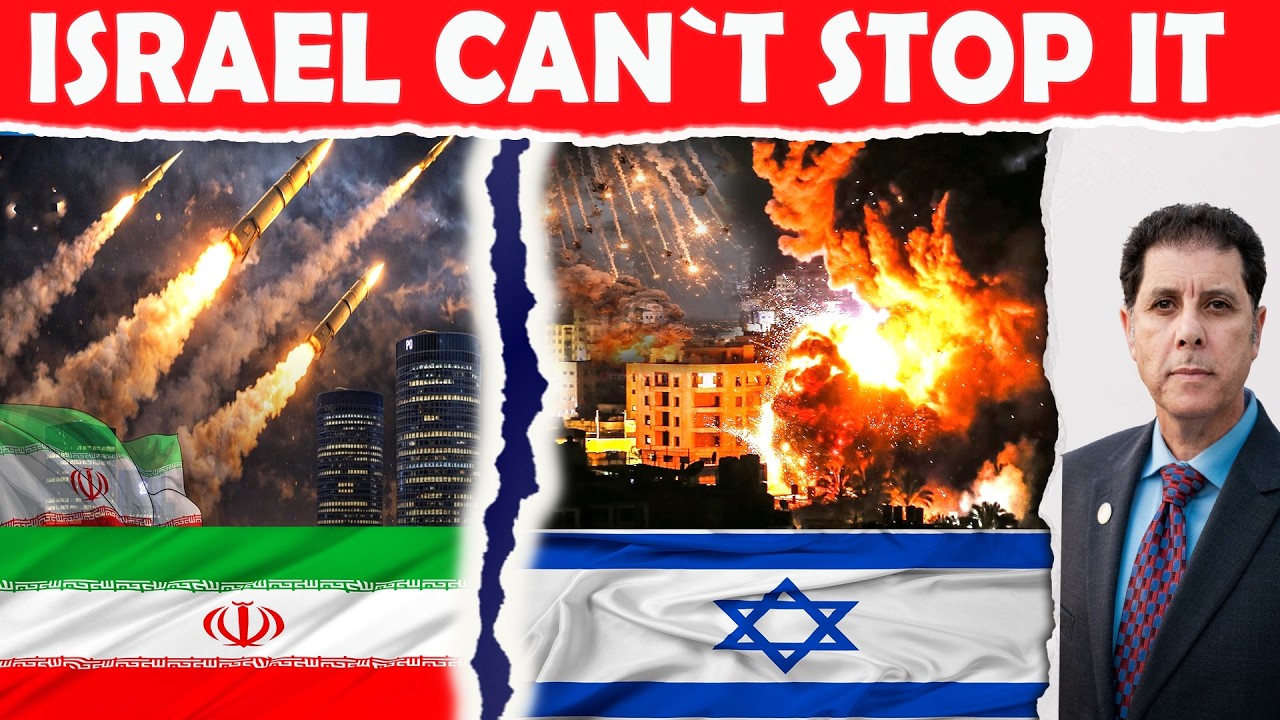
David Oualaalou analyzes Iranian ballistic missiles and cluster munitions striking Tel Aviv and Israeli population centers, with translated Arabic news clips and on-the-ground witness accounts. The livestream covers military and strategic implications, escalation risks including potential nuclear use, and commentary on Israeli leadership and U.S. policy.
Chapters
Hello everybody and welcome to Geopolitical Trends, where truth matters. The sirens are screaming across Tel Aviv. You have now cluster bombs that are falling from the sky over Tel Aviv and other areas. Israel's most advanced defense systems now are being overwhelmed. And in a secret bunker somewhere A finger may be inching closer to the most dangerous button in the Middle East. You all know what I'm referring to here, and this is not a drill. This is happening as we speak. Because here's the thing: what if I told you that a weapon that is designed to nearly impossible to shoot down is currently raining in across one of the most densely populated areas or cities on the planet, beside Tokyo for that matter. And the country being hit, Israel in this case, has nuclear weapons. But there is one more dangerous aspect: the will to use them. So in this livestream, I'm going to be providing you my analysis about the developments that's taking place. Which by the way is not reported openly here in my country. I'm not talking about other regions. What I'm gonna— what I found is from overseas, and I will do a translation except this time, and I have to thank Jason for this, for suggesting just to do— let the clip play in Arabic language and I'll do one-time shot translation for you. I was doing simultaneous translation as we move, but it takes so much long time anyway. Here's the thing. Iran has been, as you know, using ballistic missiles to fire cluster munition against Israel almost now on a daily basis since the start of the current conflict. And this was also confirmed by the IDF itself, which confirmed of the attack starting from February 28th that Iran is using ballistic missiles. The Iranian missiles reportedly spread between— here is where the details have not emerged openly. What I found in my research is that you're looking at about, you know, those cluster bombs that Iran has been now launching through. I'm going to share a picture with you of, uh, missiles like, for example, uh, this one. This is the Sejjil, the last one they just launched. But my reference is also to the Khoramshahr-4 that has been used before. And those are the ones that some of them have this between 24 and 80 submunitions, meaning when they fire a missile, okay, it launches, you know, assuming even if there is a contact, it's been intercepted, you have between 24 and 80 submunitions across a 5-mile or 8-kilometer radius. This is why you are seeing the spread of these submunitions in different areas that even Israel itself couldn't, couldn't counter that one. And this is where that military challenge presented itself. The munition represents a significant challenge now for the Israeli air defense system. In some cases, even, even here is what you need to know. Even if an Iranian ballistic missile can be successfully intercepted, which so far the last ones that Iran launched, like for example Sejjil, Israel had no way of countering that. There is no way when Iran launched those kind of missiles. And this is just what Iran disclosed. We don't even know what Iran has, and they do have some other types that they are not enter into deployment as of today against Israel. But here's the thing, even if this Iran missile is successfully intercepted, the bomblets, meaning that, that, uh, the, the cluster munition that is, are still being deployed. And this, even because the missile wasn't hit head-on directly, or the other explanation is because the pamphlets were already released by the, by the time the missile entered into the airspace in Israel. And this exactly why Iran developed this type of missiles. Why? Because it's a mechanism to bypass any active missile defense systems. And the other information that has not been disclosed, which is the reason why I'm doing these updates for you, because I want you to have the full picture, is the scale of destruction that is existing as we speak right now inside Tel Aviv, Haifa, and some other areas. And I'm going to be detailing a few with you. With some links, with some clips of videos, because I want you to see the images. Here is, here is, to my knowledge and based on confirmed information that I sort of checked on for the last 48 hours to make sure, you have now schools in Tel Aviv area and the northern of the country have completely been closed. The sirens sounded across not just Tel Aviv, not just Haifa, but across Israel. Remember what Larry Johnson mentioned yesterday? Israel the size of New Jersey. Because what you have now, the sirens sort of sounded almost between 5 to 10 times a day. Like, for example, what happened over the weekend. In one day, especially on Friday, I recall, because I remember that's why I did the live stream for you on Saturday, because the event of what happened in Haifa when Israel— when, I'm sorry, Iran launched a missile targeting that shelter. On that Friday, the sirens went up 7 times according to Times of Israel itself, and I have the link to prove it to you. And on that Friday, and what happened, it sent millions of Israelis running into shelters. So I'm gonna share the link with you, uh, as a, as a source, so you can read the article yourself should you decide to do that. But here is what I need you to understand about why now, uh, Tel Aviv, it's no longer safe. It's not safe. The whole Israel is not safe anymore. Because when you have submunition, even a submunition that fails to detonate, at some point it will, because there remains some sort of an unexploded ordnance. And that is exactly why you have now the Home Front Command in Israel is instructing citizens not to get closer to this ordnance that has been not exploded. So I'm going to share a clip with you. Okay, uh, first of all, uh, I'm not going to play the sound at the beginning because it has a soundtrack. Okay, uh, just bear with me here. Let me share it on the screen and we'll go from there. All right, let's play this one here. Okay, I'm gonna start. I'm going to stop this one here. What I want you to see, I want you to look at the dates right there. Tel Aviv, March 15. And I'm muting this because of the soundtrack. Here we go. Now you can see, and you can see in here. Okay, let's stop this one here. All right, the next clip I'm gonna play with you, or play for you rather, which is the main of why I'm doing this, because that's the results of what took place the last 48 hours regarding Tel Aviv, the massive attacks that Iranian missiles have been raining in on the— because the report that, that I'm going to share the clip with you and do the translation for you tracks some sort of the unfolding events of the night, the night before, and that includes the nature of the missile strikes that impacted areas surrounding Tel Aviv, the whole state. You, you're looking now at the state of Israel is in a state of heightened alert, and that is observed by what's going on, the scenes of emerging from the cities around the, the, the country. What the footage also shows or provides is the coverage of the political and the military developments linked to this particular attack by, or launching of missiles by, uh, Iran towards Tel Aviv. It also shows the Prime Minister Benjamin Netanyahu, which by the way, there were some, uh, clips out there that he's dead and all that stuff. I'm not getting into that because I don't have a confirmation or this, and I don't get in this sensational stuff. No, no, let's— we are far better in this community than just to get into this. Hypes of nonsense stuff. But anyway, I'm going to show you the clip of Prime Minister visiting an Air Force base in southern Lebanon, because what Israel has now is the problems in its northern part of the country. Why? Because the missiles from Hezbollah. And that is again where, where I'm gonna be providing you the translation for this. So let me First of all, share the, uh, the links here. All right, let's bear with me here, guys. All right, here is the— and I'm going to make this one even bigger for you. Oh, sorry, let me upload it. There we go. All right, I'm gonna widen this one here. And what we're gonna do is, uh, just to let you know what I'm gonna do, this way will be no confusion. As I said last time, I've been doing this simultaneous translation, it takes a little bit longer, but this time I'm gonna let a clip play in segments and do the translation for you. All right, I'm gonna stop right there. I'll provide you what he said. There are two, by the way, two anchors. One, his name is Raed, the male, and the female, her name is Ala. So this way, you know, when I say Ala, you know I'm referring to the female. And here is what Raed said at the beginning of that clip. It says, at this very moment, viewers, the skies over Tel Aviv can no longer contain the incoming missiles. The earth itself is swallowing up what remains of the illusion of deterrence tonight. We are witnessing a massive missile barrage striking the Tel Aviv area and its surroundings, making one of the most violent nights the home front has experienced since the outbreak since the outbreak of this confrontation. Let's continue here. Okay, let's translate this section from, uh, uh, uh, Ala. What she said: indeed, we are facing a missile saturation. That's what she meant by means the overwhelming of the amount of missiles. We are facing a missile saturation, if I may use the term. This saturation has transformed residential blocks— in the heart of Tel Aviv, as well as the entity's vital strategic centers, into isolated zones battered by a barrage of explosions that have completely overwhelmed the effectiveness of the defensive systems, all while ambulance crews struggle to reach the central impact zone. So let's continue here. All right, let me stop here. Here's what he said: We are witnessing an extraordinary night for Israel following a massive missile wave that targeted the greater Tel Aviv area. A development described as one of the most violent the home front has endured since the beginning of this confrontation. What is truly astonishing here is the sheer intensity of the firepower unleashed in this strike. We are now on the 15th day of this escalation, yet the pace of events tonight feels entirely different from anything witnessed in previous days, particularly given the fact that such a large number of missiles have penetrated deep into densely populated urban areas in the very heart of Tel Aviv. It is what she said. All raid sirens. Have been wailing continuously across several districts, including Bavli, Yad Eliyahu, and the vicinity of Jabiru Street. We are speaking here of the beating heart of Tel Aviv. In other words, downtown Tel Aviv. We are speaking here of the beating heart of Tel Aviv, now in a state of high alert that has engulfed entire neighborhoods across the city. Residents have rushed to shelters following a rapid succession of explosions that rocked the area within just a few minutes. Let's continue here. It is what Allah said. She said preliminary reports remain unclear at this moment, of course, because the event just happened, or the, the launch of the missile just happened, so it's going to take time. Uh, uh, we are observing missile after missile in a relentless bombardment that affords them neither the luxury of catching their breath nor the opportunity to tally the casualties and death as the explosions continue to shake the very foundations of the city. Within just a few minutes, An unexpected scene— I'm sorry, an unprecedented scene unfolded in the course of this confrontation. Let's continue here. Let's translate this part. Indeed, these developments reflect an unfamiliar reality. On the ground in this war, where the city skies appear saturated with missiles while a state of heightened alert persists across various districts, accompanied by a widespread deployment of emergency and rescue teams. We can observe plumes of smoke billowing from, uh, billowing from several locations within the city. Meanwhile, authorities continue to enforce strict security measures around the areas where missiles or their shrapnel have landed, in an attempt to contain the fallout from this extraordinary strike. What he said is that indeed the events unfolding right now paint a clear picture of a new phase of escalation in this confrontation, a phase in which, in which the home front appears to have become an integral part of the equation of mutual pressure between the two sides. All eyes are now fixed on the coming hours, which may, which may bring further developments in this confrontation, one that is now entering one of its most tense phases since its inception. This one is very interesting, what she said. She said, beyond the tongue of flame— I'm sorry, not this one here. Indeed, the events unfolding right now paint a clear picture, and beyond the tongues of flame, we see something far deeper, far deeper is burning in the Tel Aviv night. We are not merely talking about the impact of missiles, but about the collapse of a concept. This strike did not target geography alone. It struck at the very psychological core of those who for 7 decades believed they possessed an impenetrable sky.
Bedabt ala wahada yajroona ila tassaa uli anan nukta til jawhriyatifi mayahduthul layla. Fal qadiyatuhuna la tata'ala kufakat bi adhdi sawariikh, aw bi mawaka'ay sukutiha. Bal bisu'alil akbar ala dibaad ayyutra hoodakhila israeelan nafsiha. Kayfa wasalat hadhihi sawariikh ila hunaa bi hadh shakl. Li an al aqidatal anliyat al israeliyya tiwa la aqood kamata ala fikratin asasiyyatin wahida. Anal jabhat adhakhiliyat mahmiyya wa anna sama'al mudunil kubra wa ala rasiha tal abeeb What he said, he said exactly, Allah.
And this leads us to a pivotal question regarding what is unfolding tonight. The issue here is not solely about the number of missiles or their impact sites, but rather about the larger question that has begun to be raised within Israel itself. And that question is, or that concern is, how did these missiles reach this far and in such a manner? For decades, Israeli security doctrine has rested upon a single fundamental premise that the home front is secure and that the skies over major cities, foremost among them Tel Aviv, remain beyond the reach of genuine danger. Yet what we are witnessing tonight suggests that this premise is being put to a severe test. When such dense barrage of missiles penetrates the very heart of the country's largest urban center, It signifies that the deterrence system painstakingly built over decades is no longer functioning as it was believed to function. Consequently, the events of tonight are not to be interpreted merely as a military strike, but rather as a fundamental shift in the very balance of the conflict itself. We are now facing a phase that demonstrates the capacity of Iran, or the entity orchestrating these strikes, to overwhelm defenses by unleashing a massive volume of missiles simultaneously. This is a well-known military tactic aimed at overwhelming any defense system, no matter how advanced. Here's the issue: The issue transcends a mere military confrontation. It transforms into a genuine test of the deterrence equation that has governed the region for decades. If Tel Aviv, with all that it represents politically and economically, now falls within the zone of a direct targeting with such intensity, It signifies that the rules of engagements we previously knew are no longer the same.
B.
Consequently, all eyes will not be focused solely on what transpired tonight, but rather on what will unfold in its aftermath. For the question that will be raised tomorrow within decision-making centers is not merely how many missiles struck, but rather how the very nature of this confrontation has shifted following this night. What Ala said, she said, the irony, viewers, is that at the onset of this escalation, they spoke of a target bank. Yet tonight, that target bank appears to have been opened unilaterally and in, in a manner that leaves no room for interpretation. The neighborhood we mentioned— moments ago were, according to their own military doctrine, classified as relatively safe zones deep within Israeli territory. However, what we are witnessing tonight suggests that these very areas have suddenly entered the sphere of direct targeting, a development reflecting the widening scope of the confrontation and its penetration into the heart of a sensitive urban area. I want just to, before I continue here, I want just to highlight to you this point and to bring into sort of your understanding when Israel and US was talking about, we have this target bank of, of, uh, uh, target, uh, sites and so forth. What we are looking now is the reverse. Meaning, based what Ala was saying, meaning that this target bank is now Iran that decides on that, not Israel. Yes, Israel launched some stuff here and there inside Iran. Destruction is there, but what we are witnessing is the massive overwhelming of the missiles and what— pardon me— what Iran is doing simultaneously. This is the point that I want you to truly, truly understand. Let's continue here. Oh, let me bring this one back up so you can see the images. This is precisely what distinguishes tonight from so many previous nights during this escalation. We are not merely discussing sporadic strikes, but rather a battlefield scenario that compels a reexamination of fundamental questions regarding the capacity of defensive systems to contain such a high volume of missile fire. Thus, The repercussions of tonight's events will not be measured solely by the number of sites struck, but also by the strategic questions this event will trigger within decision-making circles over the coming hours and days. For what is unfolding in Tel Aviv tonight may not remain a mere fleeting tactical deployment; it could well evolve into a pivotal turning point that redraws the deterrence equations which have governed this confrontation since its inception. And as the state of heightened alert persists across several cities, and as the situation continues, as field assessments of the recent events continue, all eyes remain fixed on the coming hours, hours that may, that may reveal the true extent of the repercussions stemming from this night, which is already being described as one of the most critical nights of this entire escalation. Amidst these rapidly unfolding developments, a striking image emerged within the military landscape. Israeli Prime Minister Benjamin Netanyahu visited an Air Force base in southern Israel earlier today. There, he met with Israeli Force pilots alongside U.S. military pilots operating under existing military cooperation agreements between the two nations. This visit carried clear significance in its timing, occurring at the moment when the pace of confrontation was accelerating and pressures on the home front were mounting. Let me— before I'll do this translation, I want to explain one thing here. This what Netanyahu just said is a part of psyops, remember, because there are now massive, massive anger inside Israel against the government. As a matter of fact, some of the footage that sometimes come out of Israel is by Israelis themselves. You know, there are some reporting that major newspapers are disclosing the truth. It's just some of the information doesn't get out of Israel, out of Israel. So when I get a chance to get a hold of something like this, I I want the community to know. So when the Prime Minister is saying whatever he's saying, it's nothing but a psyop because he is realizing that Israel is not safe anymore. As a matter of fact, there are those now who are arguing that is Tel Aviv falling? It's a legitimate question to ask. So let me, let me do the translation. We're almost finished with this one here. Let us listen to what Netanyahu had to say during this meeting. From the heart of this airbase in the south, one of the 15th day of Operation Lion's Roar, I stand today among the Israeli Hawks of the skies and their brothers in arms from the US forces. The reason he's saying this, he wanted to pull the Americans in, which he already did succeed in that. What you witness here is not merely a joint training exercise. It is a unified first to, uh, it is a unified fist, uh, or fist of steel that is tonight determining the fate of the Middle East. The coordination between the IDF and the United States has reached levels unprecedented in military history. We do not merely share intelligence, we share the cockpit and the objective. Our strikes tonight do not target mere sites. They strike at the very spine cord of the terrorist regime in Tehran, and they ruthlessly crush the infrastructure of its proxies in Lebanon. What a bunch of baloney, Mr. Bibi. Okay, let's do the last part of this one. Here's the idea that my message to the enemy is clear. Let all who raise a weapon against us know that the skies above are now ours. I don't think so, Habibi. And that their underground bunkers will offer them no protection from our long reach. The achievements we have secured over the past two weeks are monumental. What achievements? It's the same argument Donald Trump is making. You know, he's saying here now to the American people, some, some of us, oh, we have won the war. What a bunch of baloney. Our president is delusional. And that's the same thing now for Bibi saying We will not stop, nor we will rest until the terrorist machine has been completely dismantled. Interesting enough is that Bibi using the term terrorist and Donald Trump is using the same term terrorist. It shows you now where things are headed. As a matter of fact, before I continue this translation, I am now concerned that— not a concern, but I can see something happening. We might have another event like 9/11 and blame it on Iran. That is what I'm seeing coming, because I saw the FBI released a, a statement saying we're gonna have now to watch for attacks from Iran inside. Iran has no interest in that, but Iran has an interest in defending itself. So the statements of Bibi Netanyahu is also to pull more and more corrupted politicians in the US in Congress to support support and really gets involved in the war. Because now we found out that America has been sucked in into a war that is not ours. And that leads me again to something very fundamental. Does Bibi Netanyahu has something on Donald Trump? Because Donald Trump now proved that he has no authority whatsoever. He is doing what he's being told to do. So let me just continue quickly here and then move on with what we have. I re— I, I reiterated my deep appreciation to my dear friend President Donald Trump. The, the clarity of his vision and the courage of his decisions have transformed this alliance into an impregnable bulwark against the axis of evil. Together, through the strength of arms and shared resolve, we will redraw the balance of power. We will continue to work, to work hand in hand, and God willing, we will seize victory decisively. What a bunch of nonsense. It's because the map of the Middle East is already redrawn, but not because of Israel. It's because of Iran's capability. What Iran demonstrated not just to the US and not just to, to the Israelis, but to the Muslim world as well, that it has the stamina, the, the, the determination, and the courage to take a stand and fire at Israel when the last 70 years no pathetic Arab or Muslim country dare to even throw a stone over the walls in either American military base all over Israel except for Hezbollah and of course Ansarullah. And what Israel showing now, it's to me, that's why what Netanyahu is saying is nothing but just a psyop. I want you to just be aware of this and understand what is exactly the objective of Netanyahu from this. Liking this video so far? Don't just be a watcher, go ahead, and hit the like, share, and subscribe button. And don't forget to tap the bell so you will not miss any of my videos or live streams. This way, you will be supporting a channel that stands for the truth and objective reporting. The choice is yours. Thanks for your support. And of course, I cannot let this go without giving credit to Roja That's the video you were watching earlier. That's from, uh, this one, the Roja you watch. That's from— I found them reliable. I've been, uh, watching and verifying their, their, their, uh, footage and so forth to make sure the community is getting the accurate information. Now, you saw what you saw. Of course, you decide yourself. You, you, you'll be the judge on this. To me, the idea is Tel Aviv is falling. That's the way I look at it. When you couldn't control anymore, not just in Tel Aviv, but the whole area. But the thing is that Iran's missiles are targeting the heart of Israel. I mean, think about it, guys. 20, 30 years ago, or even 10 years ago, who would ever thought someone is gonna fire at Tel Aviv? I mean, just let's be honest about it. And here we are now. That's why I'm, I'm feeling comfortable saying, uh, Tel Aviv is falling gradually. But here is the bigger question that I, I am now looking over the horizon, and I already mentioned this to you about 2 weeks ago, and I'm gonna repeat it again because I am seeing the trend for it. I am sort of concerned If it becomes inevitable that the demise and the fall of Israel, it's foregone conclusion, will Israel use nukes against Iran once it becomes evident that Israel is collapsing? And this is, to me, is a serious geopolitical and strategic questions that for me as an analyst, I have to ask. I have to debate and I have to bring to the fore because that's a question that's been sort of reverberating in different parts, capitals in the West and in some in the Muslim world. During my time in the Middle East, and I work in different countries and I dealt with some high-ranking officials, both on the military and the civilian side, this was always one of those you just whisper about it. And because we have to understand this reality, since Israel that controls America, not the other way around. And if the— to me is the concern, if Israel use the nuclear weapons, what will the US do? The US will have to support Israel in this matter. Of course, Israel always maintain this ambiguity, a policy of nuclear ambiguity, that is. So, which is neither confirming nor deny— you know, nor denying, but we all know. So, but it is understood, it is understood that even— and I'm gonna be sharing clips with you towards the end, so make sure you stay with me because it's very, very crucial— is that Iran also is moving forward. We're talking about a time frame of one month. Because before it could have its first nuclear weapon ready, if not already there does. And this is why I am compelled to put forth this question regarding the nuclear aspects. So will Israel actually use the nukes? It depends. It depends. If you're looking at an imminent collapse and the state, the, of the state and the military, which becoming clear That will be one of the options. You're looking at a catastrophic conventional military defeat with no recovery path. That's also possible. But I don't see Iran invading Israel. They will run over Israel in no time. We know this. Even the Saudis themselves stands no chance against Iran. But I'm just saying, and Iran will not go that far because they're not interested in that. They don't want that. They want just safety and security for their own country and to live in peace with the neighbors. And this is where the Iranians are saying to the Gulf states, Qatar, Kuwait, Bahrain, and to the Greece, Saudi Arabia, you need to get the American bases out of your territory. We still can live in peace. Is the presence of the American military forces that is causing these problems. And this is where you're gonna have to consider what are the key considerations for Israel to end up using the, the nukes, the deterrence, the deterrence value that is part of that. Yeah, it could do that and it could not. It's hard to tell, but also make no mistake, Iran also has some surprises in its pocket. It's just not ready to play those cards yet or to reveal them. The bottom line, which I am sure most defense analysts will agree that, and I am on that, on that camp as well. Israel will use the nuclear weapon as an absolute last resort, you know, if the, if the state itself is faced imminent irreversible destruction. That's the way I see it, because the current conflicts So far, yes, this devastation does not appear to reach that threshold. But at the same time, when you're seeing what's happening, like the footage you looked at, Tel Aviv being overwhelmed by the— Tel Aviv is the heart of Israel. You know, you destroy Tel Aviv, there is no Israel anymore. And that is where I'm looking at this and I'm thinking about it. Because here is what I want you to get out of this. This particular question that I asked earlier, which I said it's a strategic and geopolitical question, you know, this remains one of the most consequential and sovereign questions in modern geopolitics. That is what you need to understand, and that's part of it. So I'm going to share with you some clips. I have few, so bear with me here. Because to put it in perspective with you, for you, first of all, the what's going on inside Israel as far as the Christian, they are Christian Jews, you know, Jewish people that are Christians, they're being denied access to shelters. So let's start with the first, and I'm going to share it with you here, and I want you to see it yourself. All right, let me get the clip here. All right, here is the link. I'm gonna upload it and we'll take a look at it together. There we go. Here's what he's saying. That's a— it says in Arabic right here. A Christian family in Tel Aviv is trying to enter the shelter to— for protection from the missiles, the Iranian missiles. However, the Jews, the, the men, they, they didn't allow them because they are not from the same religion, and they are saying that this is a private shelter. You know, that's, that tells you about the state of how the Christians are living inside Israel, which is concerning to begin with. So another clip I'm going to share with you, this one has to do with the destruction inside Israel that I want you to see. All right, let me pull up the clip here. There we go. Oh no, that— not this one here, sorry. Let me remove that and put the new one. Shop screen, share screen. Here we go, right here. Now what you're looking at, this is the distraction that exists.
Around 2:30, there was a siren of a bomb that warned us to go to the bomb shelters. We went to the bomb shelters, we slept there. Then I saw, then I heard a big, big boom, something not normal. Then after that, I— after when we got out of the bomb shelter, we went— I checked my phone and I've seen that there is— that it fell in my city, in Huron. Then I went with my bicycle, I went with a bicycle to here. Around here. Then I suddenly see— so a car, a car flipped, burning. Fire, fire extinguisher on the, on the car that light down.
Okay, I'm gonna stop right there and we're gonna play the next clip because there are many of them here. So I just want you to see with your own eyes. Uh, the next one, it has to do with the turmoil that exists also. Let me pull this up. Now this one here has to do with people inside Israel that is now discontent with the government. Once again, we don't see right here in the media— and I speak for my country, I can't speak for others— uh, that the extension of the report is very, very controlled and limited. So let's take a look here. All right, that was inside Israel, and that tells you the psychological turmoil that is going on. So now it was another clip. You remember who been here was the— I think the security— Homeland Security Minister, whatever. And he died. So let me pull up the, uh, pardon me, the clip for, uh, and I'm gonna silence it because it has the soundtrack and, uh, YouTube doesn't like that, I guess. All right, let me share it and we're gonna see this one here. It says right there in Arabic, this is the Hebrew media, it says, you what, Israel? Bin says bye. To Israel. Okay, I'm gonna stop right there because it's, it's, it's very, very short clip that I want you to see. Uh, the last one, uh, I think two more Oh yeah, two more I want to show you, and I'm going to do the translation for you on this one because you need to understand, and especially, uh, uh, the ones that's coming up here. This one has to do with an Iranian commander, what he's saying to the Israelis, and I want you to see it, and I'll do the translation for you. Uh, let And once again, I'm going to silence— I think it has a sound, I'm not certain, I don't remember. All right, let me see here. Let's play it. Yes, it does have a sound, so I'm sorry, guys, I'm not going to play the sound here. What it says right there, to those who know Arabic, but here is what it says: The commander of the Iranian states, We are issuing 24-hour ultimatum to all residents of Tel Aviv to evacuate immediately before it is too late. We are preparing to launch an extraordinary attack on Tel Aviv within the next 24 hours. Tel Aviv will become an unsafe and uninhabitable zone. We will deliver the final strike of Iranian wrath. This is not merely a threat, it is reality, and the coming days will prove it. So that's what it says, uh, right there on that clip here. Now let's do one more, and this is the one that I need you to put in perspective of what I said earlier about will Israel end up using nukes against Iran. If it becomes— the collapse of Israel is inevitable. This clip here, let me, let me upload it first and then, then we'll see it. And by the way, I just want— again, this has a sound. I'm not going to play it because of sound. What I wanted to say is I check this, the, the veracity of this clip before I'll share them with you. So I know this is not just some hypes. So let's take a look here. Oh, oh, sorry for the sound. Uh, here is what it says. It says, officially, Mr. Khamenei has directed the cancellation of all international agreements pertaining to the suspension of the nuclear program asserting that nuclear weapons constitute sovereign right of Iran. This measure is intended to safeguard the nation's sovereignty and security against any violation, and no negotiations regarding this matter will take place. Iran has 700 kilograms of enriched uranium And it's expected to produce its first nuclear bomb within the current month. It is sufficient to produce several nuclear warheads in less than 2 weeks. Very, very, very straightforward, and that tells me the story right there. And I know Mujtaba Khamenei, or the Iranian IRGC for that matter, are not bluffing about deploying a nuke, a warhead on a missile like this, since now the Israeli defense systems or even American defense systems will be powerless, will be paralyzed to stop that. I mean, think about it. If Iran put a nuclear warheads on this missile and launch it to Tel Aviv, That's again where I see the, the, the, the, the issue of this particular aspects of it. And I want to share last clip. Yes, it might be laughable, but this is something I want you just to see. Sometimes it's not all gloomy and all that, but, uh, it's our community. And I'll do my last conclusion and we'll conclude this livestream. And once again, I'm not gonna play the sound because it has a soundtrack. But you will be able to read this one here yourself. Take a look. Let's hear the last part. Why nobody helps me to open Hormuz? Okay, that was a laughable one. Why nobody helps you? Well, you know why, idiot. Uh, here is what I want to conclude with. Uh, so historians— now I look at this and I'm looking at the next 30 years, next 50 years, what will historians say about this one? Because in my opinion, in my assessment, that when I, for example, when I wrote the Iran book and I wrote the Saudi book and the Russian book and American foreign policy in the region, all of them, I had to refer back to history, what historians have said. And for this is no different because maybe one day these historians will point to this exact moment when you have Iranian cluster bombs falling on Tel Aviv as the spark that has changed now the world forever. And because when a nuclear-armed nation fights for its survival, there is no script, there is no rule book. To that, and there are no guarantees how it's going to end. And that's why, to me, the way I see it, if Iran— if Israel, I'm sorry, use the nuke, you have two countries that they said they will come forward to support Iran, but I'm only betting on one, not the two countries. The two countries are Pakistan and North Korea. I will not count on Pakistan for this.. But I will consider North Korea will move forward into coming to the aid of Iran. That is the way I see it. And I'll be addressing this tonight with my dear friend Carl Zah. I will be here at about 20:30 Central Standard Time. So make sure to join me. You don't want to miss this because we're going to be talking about some really high-advanced Chinese systems. That is now paving the way for Iran to do what it's doing. We're gonna be talking about also why the US aircraft carrier had to leave the region. And we're talking about also what Iran— what the Russians have been also providing the Chinese into— providing the Iranians into this. This is an image, by the way, destruction inside Tel Aviv., that I got a hold of, and I wanted to share it with you. Uh, I take this opportunity to say thank you to Fatima Santiago for supporting the channel with buying me cups of coffees in support of the channel. I'm very, very grateful to you. And I also this opportunity to say thank you to Mr. Saleh for your generous, uh, donation in support of my channel, and to Tarek Mujahid for your, uh, support of the channel. You all know the type of information that I share with you. I will be grateful if you will be kind and support the channel because I don't have outside sponsors because I don't want to be beholden to anybody. I am holding up to you, the community, because there is no strings attached to your support. If you want to support the channel, you support it. If you don't, you don't. Life goes on. But you, uh, should you decide to do this, here is the link for it., and I will be forever grateful. I am also planning on my Asia upcoming Asia trip. For those who wants to support my upcoming Asia trip, you can buy me, uh, uh, cups of teas, uh, for this particular trip, uh, in Asia where I will report to you, uh, from the ground when I'm on the ground over there. So as I always do. And finally, To those who are interested in reading my books about not only Iran, but also Saudi Arabia and Russia and American foreign policy, and I am working on another book, I'm not going to disclose it right now. This is the link if you want to purchase a copy of my book. I thank you very much for your support. I look forward to seeing you this evening for my conversation with Khalid Zahar. And I hope you enjoyed this livestream. As always, remember, geopolitics impacts your daily life in more ways than one. Till next time, bye-bye.
More from David


Beyond the Single Actor: Why the Gulf Isn't Choosing Between the US and China


Iran, Iraq's Militias, and the Houthis Are Coordinating! This Changes Everything




Who Controls the Next Decade's Resources? Latin America and Africa's Geopolitical Crossroads

The Chokepoint Trap: How Washington's Stupidity Triggered a Cascade That Now Controls the World

Trump Spooked as IRGC Unveiled dual-use SLV, Deployed Ghadir Mini-Subs & Hinted at Tactical Nukes!
