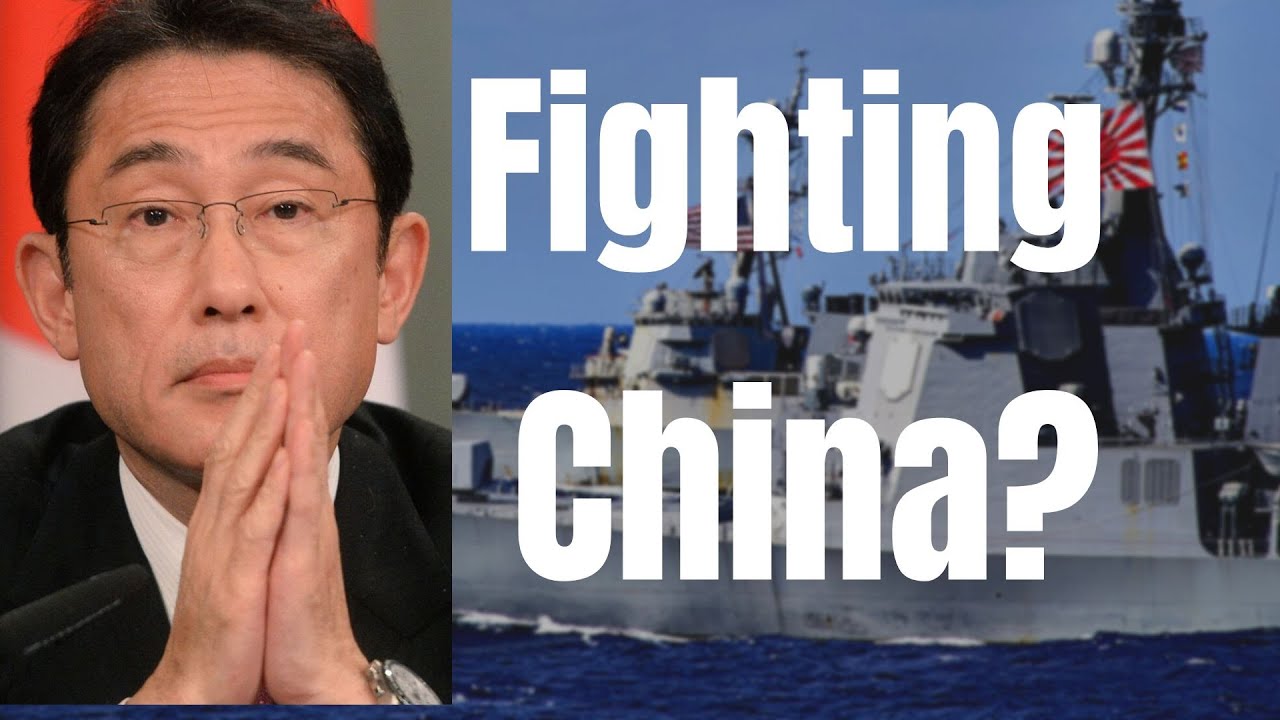
In this Geopolitical Trends video, host David Oualaalou examines Japan’s recent 26.3% increase in its 2023 defense budget, questioning whether the move is driven by U.S. pressure, domestic political motives, or a resurgence of imperialistic instincts. He links the budget hike to the upcoming G7 summit in Hiroshima, where Japan will hold the presidency, and to a deepening U.S.–Japan security partnership aimed at countering China. Oualaalou argues that this alignment pushes Japan to the front line of any potential Indo‑Pacific conflict, making it a likely target if tensions over Taiwan or broader U.S.–China rivalry flare. He highlights the newly signed U.S.–Japan Space Cooperation Framework, noting its strategic focus on lunar resources (helium‑3) and the broader militarization of space, especially in response to China’s lunar ambitions. The video also discusses domestic trade‑offs, warning that higher military spending may divert resources from Japan’s pressing social issues such as an aging population, infrastructure decay, and welfare needs. Regional reactions are explored, including the Philippines’ shifting stance and ASEAN’s desire for neutrality, which Oualaalou predicts could turn against Japan’s perceived aggression. Drawing a parallel with Ukraine’s war, he cautions that Japan could suffer a similar fate if it continues on this path. Throughout, he urges viewers to consider whether Japan will become the frontline target of a regional military conflict, inviting comments and engagement.
Chapters
Hello everybody and welcome to Geopolitical Trends. My name is David Oualaalou. So good to be with you as always. Why suddenly Japan approved a 26.3% increase in its defense spending for 2023? Was it pressured or does it have something in mind? In this video, I will provide you insight whether Japan's imperialistic instincts are resurfacing and how it may impact security issues in the Indo-Pacific region. But before I'll dive deeper, if this is your first time watching my channel here, make sure to subscribe and smash the notification button so you will be notified every time I upload a new video. To my supporters and members, I can't thank you enough for your support. I truly appreciate it. So let's dive in into this. Looks like the United States and Japan have discussed recently during a meeting between the Prime Minister Fumio Kishida and President Biden, they wanted to strengthen both Japan and the US ties and also bolster the alliance in the Indo-Pacific region under the excuse of countering China. No, you all see where this is going, but also it could be very dangerous. So, and I'm gonna tell you why as I move along here. So this comes, of course, on the heels of, uh, the Prime Minister Kishida's visit to the U.S. on its last leg of his tour of 5 countries of the G7 members. So he stopped in every country, and I'll tell you why that is. No, well, here is why. Because Japan will be holding the presidency of the G7 upcoming summit, which will be in May, uh, May this year, 2023. And it will be the meeting, I believe, based on what I found out, it will be held in Hiroshima. And we all know the history of Hiroshima, what happened there. So, so the logical question that any practical individual will be asking— you don't have to be geopolitical analyst or, or whatever that is, it's common sense, pragmatic, and you guys are smart enough to know— the logical question will be is why is Japan increasing its defense budget with a focus on offensive weapons? No. Is it aimed at China, or was it an order by the United States? Or I should say, was it an order by its masters, the United States? So Japan's decision represents, in my opinion— and again, if I am to put my geopolitical hat on— it represents a ticking bomb for the region's hard-sustained peace. Because it was peace in the region for quite a while. No. So Japan is laying, as I said earlier, is laying the groundwork for hosting the G7 summit, you know. And what he wants to do, he wants to woo members to concentrate on attacking China. You all see why Fumio Kishida, the Prime Minister, that is, you give him the proper respect, Prime Minister went on a tour of 5 countries, but those countries of the G7 will be— it will be madness if they agree to something like this. But on the other hand, look what's going on in Europe. You will think common sense will prevail. Obviously not, apparently not. So, so my assessment is that Kishida, Prime Minister Kishida's government is embarking on a very, very dangerous path, you know. And if it believes, if Japan believes that its alliance with the US is gonna save it or it's going to scare China, Japan needs to think twice or needs to think again because that policy, it's, it's wrongly headed. So So Japan expansion— and again, as I always say, I'm a student of history, learning from history— Japan expansion, it's a double-edged sword. Yeah, it will be. It pushes Japan now to the front line of attack, which means if there is a conflict, Japan will become first, you know. And of course, at this stain a disdain, a disdain against or across the Indo-Pacific. So it becomes a double-edged sword. It becomes the sort of the— Japan becomes the front line of an attack and a disdain across the Indo-Pacific region. And why is this important for you to know? Because as tensions, as more tensions rather, will trigger by Japan's increase in military budget in addition to its ties with the United States. And when you take into consideration the, the tensions between the United States and China over Taiwan, I argue that the outcome will not be in Japan's favor. So you can just see where this is going. Once again, it doesn't take genius to figure this out. So all the while this is going on, Japan's increasing its budget and so forth. Philippines is reconsidering its strategy and alliance with the United States. And you take this in consideration of the recent trip by, uh, the Filipino President Marcos Jr. To China. You know, another consideration you need to keep in mind is that ASEAN countries, all the 10 members, wants to stay neutral and will certainly, in my opinion, will certainly push back against Japan given its imperialistic instinct, nature, and history. So here is what I found very, very interesting. About this meeting between the Prime Minister Kishida and President Biden, which took place a few days ago, by the way, so, is that the United States and Japan also cooperating regarding— cooperating in another dimension, which is space, as it becomes increasingly militarized. Shall we say. The two countries, Japan and the United States, signed a Space Cooperation Framework Agreement. This one basically to jointly both countries will explore the moon and other celestial bodies for peaceful purposes. Yeah, right. You know, we all know it's for military objectives. As a matter of fact, I am thinking of doing a live stream on space regarding geopolitics and military and all that. Let me know what you think. If you guys will be interested in, in, in me talking about this topic, I'd be happy to do it for a live stream. So just leave me some comments so I can see what your feedback says, and then we go from there. So, but also, you all know why Japan now wants to go with the United States regarding the space. Because China just completed its space station, it does not need the ISS anymore. So China is also mining the dark side of the moon. And if you know one thing about the surface of the moon, whether on the dark side or not, there is one thing that it has plenty of, is helium-3. And if you have access to helium-3, you will have access to unlimited amount of energy. But China is already cut a deal with Russia. They are building a research lab. It's gonna be on the surface of the moon. And it's gonna be exploring because Russia has very, very extensive experience when it comes down to space. This is why if you guys are interested in the livestream about this topic, I'd be happy to do it. So, so, and by the way, if you like this video so far, please make sure to hit the like button and hit the, uh, subscribe button also, because it motivates me to create more content for you, and I truly appreciate your support. So, so here's the thing, the strengthening the strengthening of the ties between Japan and the United States, you know, apparently to some it might be seen as benefiting the Prime Minister's government, you know, and is believed, in my opinion, to backfire on Japan more so than it does on the United States. Why? Because it has put now, as I mentioned earlier, This alliance, this increase in military spending, especially with defensive weapons, it has put now Japan at the front line of counterattacks and riskier positions. Mark my word on it, if there is a military confrontation in Asia, which I don't foresee at this time, Japan will be the first one to pay the price because it will be Japanese soldiers in front line, not the US, because we don't have the strength and the numbers of troops to be there. So, and by the way, Philippines also could be considered that if they don't change or reverse course. So, so Prime Minister, uh, Kishida's aggressive military expansion is depriving his country of a strategic independence And at the same time, it is confirming how Japan is a tool of the United States for achieving its hegemony in the Indo-Pacific, meaning US hegemony, not Japan. Japan has to serve the master, you know. And in my opinion, and I could be wrong, and please correct me if I'm wrong, such plan, uh, may win, may win the Prime Minister's political support at home, but it will be only on a short term. But in the long term, or in the long run, that is, it is made at the cost of the Japanese people and Japan's national interest and people's welfare. You know, because here's the thing, it's common sense. We have it here at home. Here in the United States. Because as more Japan spend more money goes, or more money goes to equipping the military, and at the same time less money will be used to solve Japan's pressing social issues or problems such as its aging population. We have it right here at home. You all know how much we spend on defense, $858 billion, while our infrastructure is crumbling, while our healthcare system is crumbling, while our education system is crumbling, tax system is broken. Homelessness is increasing, poverty is increasing. Those are the issues that most Americans, I don't know whether they are aware of or not. I can't speak on behalf of everybody else. It's what I know. And why the way I know it is because when I go outside, I see with my own eyes. I see people sleeping in the street. And I'm like asking myself, you know, this is America. And yet look what's going on. And the government doesn't care, of course. Why is the same thing Japan is doing? You know, and I bet you sooner or later you're going to be seeing demonstrations inside Japan, which I am sure there will be media blackouts on that. They don't report stuff. It's like the video I did about France. You don't hear much about it here. So, so here's my conclusion for you. The introduction of Western powers— I won't say the introduction— is the reintroduction of Western powers in the Indo-Pacific will undermine regional peace and stability in Asia, you know. It also propagates discord among regional countries. As a result of this, it will be making international cooperation very, very difficult, you know, on a host of issues such as economic recovery, such as trade, such as maritime cooperation or security. You know, you can just see where this is going to be leading to, you know. And Japan, once again, will be at the forefront because it will be the one used. Look no further than what's going on in Ukraine. You know, Ukraine right now is paying the price. It's sad to see what has become of the people of Ukraine. You know, you know, the president, comedian Zelensky, oh, we care less for the guy anyways. Comedian anyway, so it doesn't understand. But it's the sadness that is now about the Ukrainian people. You know why? It's because he dragged his country— he, comedian Zelensky, dragged his country into a conflict with Russia. So Japan could be heading out the same direction if they don't reverse course. And again, so here's my question for you for today: will Japan become the target of any military conflict in the region? Let me repeat, in your opinion, will Will Japan become the target of any military conflict in the region? Make sure to leave me some comments. I always like to read your feedback because I learn from them. So, and as always, remember, geopolitics impact your daily life in more ways than one. Till next time, guys. Bye-bye.