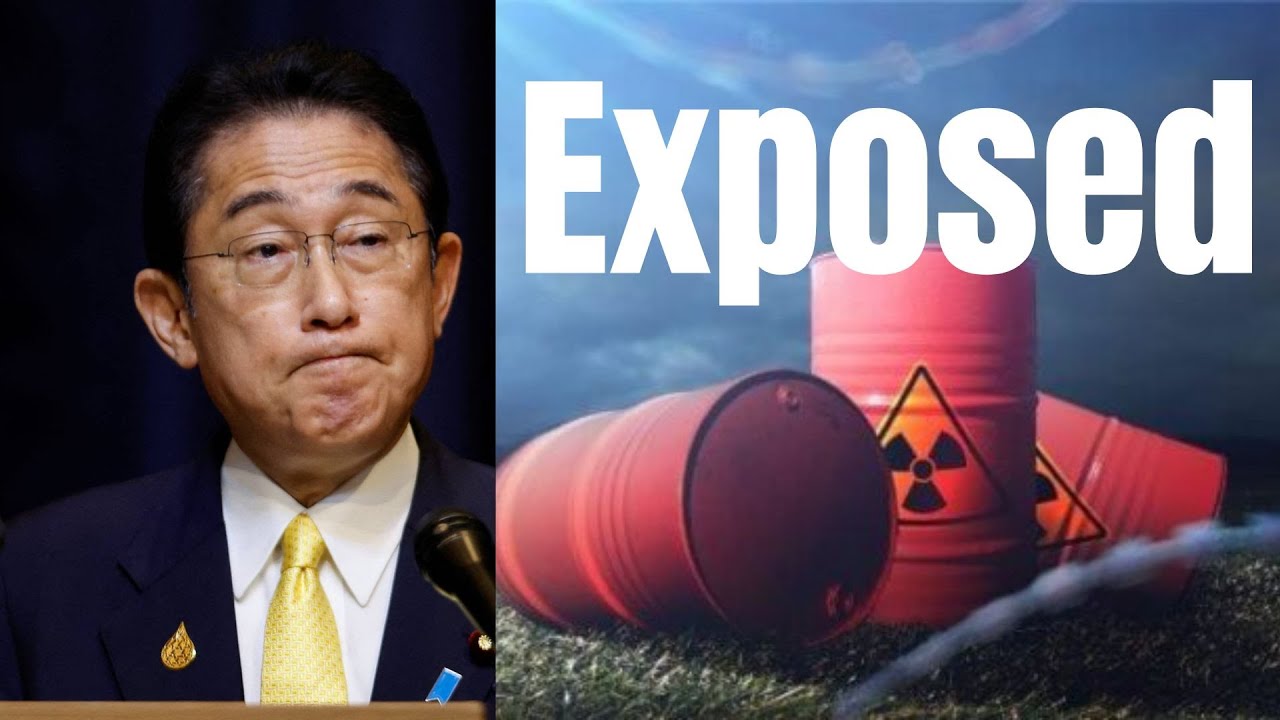
Japan plans to dump one million tons of treated wastewater from Fukushima into the Pacific by end of 2024. South Korea and Pacific island nations oppose it over fisheries and health risks. Scientists disagree on safety, and the video questions whether Western silence reflects geopolitical loyalty rather than genuine consensus.
Chapters
Hello everyone and welcome to Geopolitical Trends. My name is David Oualaalou. So good to be with you as always. Japan plans to dump water containing Fukushima nuclear waste into the ocean. Is it safe? Is it responsible of Japan to be doing this? In this video, I'm going to provide you a brief explanation as to what this entails and how it could have serious health implications moving forward. But before I do this, I'd like to thank the channel's members and supporters. And for you, if this is your first time landing here on this channel, please make sure to subscribe, and I truly appreciate all your continued support. Let's dive in into this topic. So Japan will be releasing Fukushima nuclear waste into the ocean come next year, by the end of 2024. They're already talking about it. Well, you got the regulators right now beginning the final safety inspection before treated sort of the Fukushima water, wastewaters, is released into the sea. Some of Japan's neighbors are already skeptical about this, this plan, despite sort of claim that, oh, the water to be released into the ocean is tap water. That's nonsense. First of all, you need to think about if you drink tap water, you might want to think twice before you do that. And second, if this is going to be released in neighboring countries like South Korea, for example, like the islands in Pacific and so forth, What do you think is going to happen? What is going to do to the fish industry, for example? So now you already have demonstrations or activists— I take this back— activists in the South Korean capital, Seoul, giving some sort of performances on the streets calling for Japan to reverse its decision because they're going to be releasing radioactive water. From the Fukushima nuclear power station. And once you release this sort of 1 million tons, by the way, that's the quantity, 1 million tons of lightly contaminated— funny how they use these terms, lightly. It's either contaminated or not. There is no lightly or not. In this case, it is contaminated. So the water is going to be released into the Pacific Ocean. And by the way, this water was used to cool reactors at the crippled Fukushima nuclear power plant. So what's interesting about— what prompted me to even do a video like this? It's because I want to highlight to you one key factor that you always need to be aware of, which has to do with the scientific community. The scientific community, it can flip-flops based on who's funding the research, like what we just witnessed with the COVID stuff. You know, it has to do with the lobbyists. There's a lot going on behind the scenes. So don't assume just the scientific community said, oh, it's white, that means it's white. No, no, no, no, no. This is the reason why I wanted to do this, and I'm gonna share with you why that is. Because to me, this division that exists within the scientific community about the implication of releasing this radioactive water, it's basically hypocrisy. Otherwise, what would you call it? So water, water containing amount of nuclear waste from Japan's Fukushima nuclear power plants, once it's released in the Pacific Ocean, which is going to be in the upcoming months, by the way. So that's why I want to get ahead of this. I don't know whether you're going to be hearing much about it because majority of countries, especially in the West, are staying quiet about it because Japan is an ally of the West. So they want to keep hush-hush about this one. But who's going to be harmed in the process? It's the neighboring countries. And the Japanese people for that matter. As a matter of fact, Japanese themselves, they are against their government for doing this. Some of them, not all. But here is the brief history because you need to understand the background of all this. Back in March in 2011, a magnitude of 9.0 earthquake, which was, uh, assessed on the record, uh, scale. 9.0 earthquake struck off the coast of northeastern Japan, which triggered tsunamis. Usually those are tidal waves. It's about 38 meters high, which basically wipes out everything on its path. So, so the tsunami caused a major accident at the Fukushima power plant further south in Japan, where the water flooded the reactors. And by having that happen, a sparkling radiation leak and forcing the evacuation of tens of thousands of people because that area is not safe to live in. This is no different than what happened in Chernobyl. You all remember. It's no different than what happened in the United States in Three Mile Islands. Near Pennsylvania way back. So, so you have now politicians in neighboring countries like South Korea, for example, have come out strongly against the decision, uh, sort of to let this water flow into the ocean because it's gonna impact the, the fish over there. People eat fish, you know, there's a livelihood of people making a living about through fishing. People drinking tap waters. This is gonna spill into tap waters. You can just see the health catastrophe that's gonna result from this decision. So even though the country has engaged in a practice in the past, they are saying, oh, it could be safe. No, it's not. And this is again where this scientific community is coming out, divided of course, There are those who saying, you might wanna think twice about doing this. The other camp of the scientists saying, no, no, no, no, it will be safe. And right there, it tells you, it depends on who's funding those kind of entities. That's just the name of the game. That's usually how it works. So here's the thing. You have now about 1,000 tanks that have been used to store the treated radioactive water after it was used to cool down the melted fuel at the Fukushima Daiichi nuclear power plant, which was run, by the way, it was run by Tokyo Electric Power Company Holdings. It's a big company. I remember reading a lot about it. So, so as I said earlier, the scientific community appears to be divided over the issue, with some saying, oh, the decision is completely safe. While others, such as, for example, the University of Adelaide Associate Professor Tony Hooker— I'm sorry, Hooker— Tony Hooker, an expert into the health effects of radiation, have termed it, and I put it in quotes, controversial. Controversial, because it is controversial issue. How can you say it's safe to dump the radioactive waters into the Atlantic— into the Pacific Ocean. Did you think about the safety and the health, uh, well-being of the neighboring countries? So, and what this professor said, uh, Professor Tony Hooker, what he said, he said the plan was robust, and I put in quote here, but there is growing question regarding the use of the sea as a dumping ground when our oceans are already stressed and struggling, end of quote. And you know what he meant by struggling? With the dumping of plastics, for example, the waste. You know, this is what I'm coming to realize now. Maybe the idea of why we pushed for Australia to become a sort of— to acquire the nuclear submarines, because that will give us an excuse to dump our nuclear waste in Australia. Because if Australia acquires the nuclear submarines, that means they will be dealing with radioactive material or waste. That'll give us justification, just dump the nuclear waste in Australia. That's the way I see it. So the question we need to ask is why the Japanese government is releasing this waste. Well, the government Japan, in this case, it is expected to release the waste once it receives a report from the Korean technical experts group that visited last month. So the Korean delegation was there and waiting for a report from, uh, this delegation to say whether it is safe or not. Well, the water in the power plants the nuclear power plant that is, has been used, as I said earlier, to cool the melted reactor of the Fukushima Daiichi. But once you reach 1,000 tanks, they're already at a capacity now. Now, the storage is expected to reach its capacity in early 2024. So we're talking what? We are in June. July, August, September, October, November, December. 6 months from now. And once they reach capacity, what they're gonna do? Dump it into the Pacific Ocean. And funny, what I found very funny, despite what you hear about the hoopla from the US about the environment and all this, they didn't even say a word about it. It shows you the hypocrisy right there. That's like those elites when they fly in their private jets saying, Oh, the environment, you shouldn't own a car, you shouldn't own this and that, and yet they are flying and jetting from one continent to the next, emitting all the carbon stuff in the air, but saying to you and I, oh, we don't need to own anything. A hypocrisy at the highest order. It's no different than our government here. You know, why aren't they saying anything about it? And remember, guys,— if you happen to live in neighbor— in the neighborhood there, be aware. And as all our— I already tell you, consider not drinking tap water. That's my advice to you. So after extensive dilution processes, there is only a minuscule— this is what this one scientific community is saying— there is only one minuscule amount of radioactive energy in the water. Ah, I just won't buy that. I won't buy that. It's because there is more than meet the eye. I've learned throughout the years, especially when it comes down to scientific communities, you know, it's like what you hear right now about, for example, the pharma industry. The pharma industry is coming up now with pills that can help you lose weight. It's the same pharma companies that pushing indirectly for people to eat junk food and at the same time providing pills to cure them from diseases and so forth. It's a vicious cycle. So, so, but here is the thing. So this scientific body that been talking about all this citing that the extensive dilution processes, there is only minuscule— that's what they said— minuscule amount of radioactive energy in the water. So their approach has been verified by reports from the global regulating body, Independent Atomic Energy Agency. Would you even believe the Atomic Energy Agency? I won't, knowing what I know, what they did, for example, when they want to check on the, uh, in the Iranian facilities. I won't trust them and how they can alter the report to justify whatever. So, so this is how I see it. So the idea of, uh, having an independent sampling and data and analysis and all that Uh, I just, I just don't buy it. I don't buy this. So that's how I see it. I know it's a topic, guys, that it will take me more than just 10, 12 minutes to go over, and I'll be happy to cover it in a live stream if you are interested in knowing more about this one here. You are not going to hear much about it in mainstream media, Mike, my word on it, because we so far, we in the United States haven't even said a word Despite what you hear from the, the government about the environments and all that, and the hypes of the, the, the clean air and all that, and we didn't even say a word about it. So, so, by the way, guys, if you like this video, the content of this video so far, please hit that like button and subscribe, uh, uh, to support this channel. I would really appreciate it, and thank you for that. So, but you have another scientist, his name is Robert Richman. And Robert Richmond is a member of the scientific advisory panel to the Pacific Islands Forum, and he said, and I put this in quote, that the plan is premature and presently ill-advised, end of quote. So, and his argument, he argues that the environmental— let's just listen carefully, guys— The environmental impact assessments were, were inadequate and deficient. And he's right, you know, like I said, how would you believe what, for example, the energy, Atomic Energy is saying? Why should I take their word for it? You know, scientific communities can be divided depending on who's funding the research. I'm gonna give you a quick example here. For example, with COVID what happened and all that, where the data was coming from, which institute was releasing the data? Only one institute in the United States. And you know which institute it was? It was Johns Hopkins Medical Center. But if you think about who's funding Johns Hopkins Medical Center or institute, what, it's Bill Gates. Evil Gate. I, I call him Evil Bill. He was the one funding. So obviously there, the, the information will have to be skewed, or the data skewed. Certain— oh, if you don't get vaccine, you will die, which is far from the truth. So it's no different here, guys. And here's the thing, a decade after Fukushima incident Towns in Japan struggle to rebuild their communities. This is why Richmond's argument is to the point. He said, and I quote, "The peoples of the Pacific did not contribute to the present problems and have nothing to gain from Japan's plan for the contaminated water release over the next 30+ years." but have much at risk for generations to come. End of quote. Spot on, spot on. And then this is where I, I kind of find it ludicrous that the scientific community, knowing the impact of something like this, what it's gonna do to people's health— why do you think the cases of cancer are growing? Besides the food, whatever, there's also the water. A lot of people have no idea what they're drinking in that tap water, what's in it. Look just what happened here in the United States in Flint, Michigan, or the Love Canal in New York State. It's no different. Here is my conclusion for you, because I like to keep this short, concise, and to the point. But if you guys like me to do— to expand on this topic, Leave me comments that you want this on a live stream, and I'll be happy to do it. So, some South Koreans— this is my conclusion for you briefly— some South Koreans have been buying salt and seafood in bulk as they fear now their food and oceans will soon be contaminated. But this possession is entirely— get this, guys— political and totally overblown. This is what another professor, his name is Professor Marx, is saying. So you can just see one part of the scientific community will say and do the right thing, the other part of the scientific community will want to advocate for the agenda, whatever that agenda is. You got my drift. So just your basic understanding and knowledge, I'll let you reach your own conclusion. I just want to share with you the facts and let you reach your conclusion. As I said again, if you guys would like me to extend on this topic, I'll be happy to do it. I have a lot of information on it. What I shared with you is just a snapshot, if I may use the term, because it will take me almost an hour to just talk about all this. Especially when it comes down to the health consequences of radioactive material being in the water and reaching your home, that tap water you're drinking. So if you find this very informative, this information in this, uh, video here, please hit that like button. I would really appreciate it. And subscribe to show your support for this channel. And thank you. As always, guys, remember, geopolitics impacts your daily life in more ways than one. Till next time, bye-bye.
More from David


Beyond the Single Actor: Why the Gulf Isn't Choosing Between the US and China


Iran, Iraq's Militias, and the Houthis Are Coordinating! This Changes Everything




Who Controls the Next Decade's Resources? Latin America and Africa's Geopolitical Crossroads

The Chokepoint Trap: How Washington's Stupidity Triggered a Cascade That Now Controls the World

Trump Spooked as IRGC Unveiled dual-use SLV, Deployed Ghadir Mini-Subs & Hinted at Tactical Nukes!
