Kenya Descends into Chaos as it Pivots back to the West! What’s the Story?
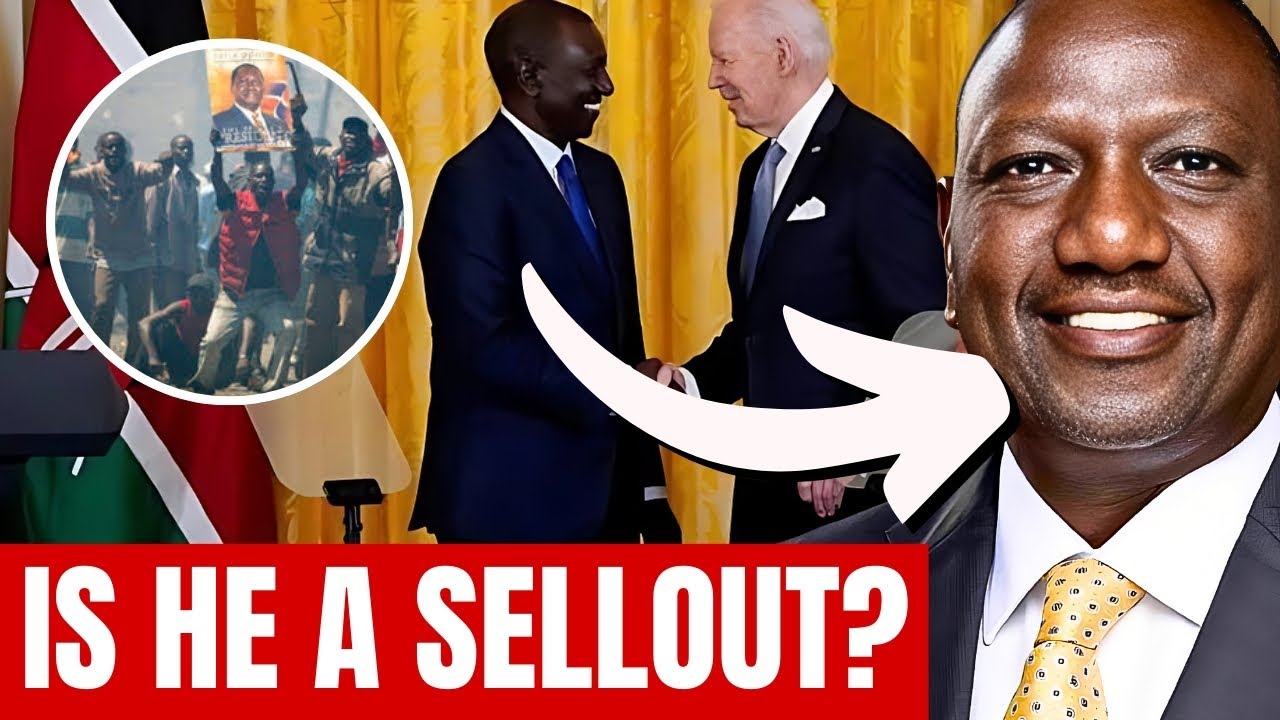
In this livestream, the host examines the recent civil unrest in Kenya, which erupted after the government introduced a new finance bill that sharply increased taxes under pressure from the International Monetary Fund (IMF). He contextualises the protests by tracing Kenya’s historical foreign‑policy swing between East (China‑led) and West (U.S./EU/NATO) alignments, noting that former presidents favoured Chinese infrastructure loans while the current president William Ruto has intensified diplomatic overtures to the United States, the United Kingdom, France and NATO. The host highlights Kenya’s strategic location, its role as a logistics hub for the Indian Ocean, and the recent designation of Kenya as a U.S. non‑NATO ally, which grants access to U.S. military equipment and training. He argues that the IMF‑backed tax hike is intended to service a $1 billion IMF loan, worsening Kenya’s fiscal burden and sparking popular anger reminiscent of historic revolutions. The analysis is split into three lenses—geopolitical, military, and economic—each used to argue that Kenya is being pulled between Western strategic interests (counter‑Sahel instability, securing supply routes) and Chinese economic investments (standard‑gauge railway, ports). The host also shares personal anecdotes, community interaction, and future plans for interviews, while repeatedly urging viewers to read between the lines and recognize what he perceives as Western manipulation of African policy.
Chapters
All right, hello everybody and welcome to Geopolitical Trends, where truth matters. Excited to be with you as always, and because today's topic is very, very crucial for you to know. I mean, I saw what was going on last week and a half. You start reading a few things. I usually read ahead of time, and that's when I make a decision as to which topic to address for you. And by the way, guys, I don't do random. There is a reason to why there's certain topics. Like for example, remember the video I did for you about Tunisia? Guess what just happened now? The European Union is concerned about Tunisia's relationship with, uh, China, Russia, and Iran. So, so there's a reason to why I do certain topics. So, so today I'm gonna be talking to you about what's going on, uh, in Kenya. And really, what's behind the scenes? Media is saying, oh, this has to do with the government imposing taxes. And at least you give the Kenyans credit for taking stand. Now, some of us might disagree about how they went about it to express that anger, but you can only understand when people are taxed to the max, we don't know what's going to happen. At least for, in my opinion, and my opinion only, that they took stand, and it means a lot. I wish my fellow citizens here in the United States will understand and wake up, but it's too late for that. Anyway, let's say hi to everybody before I'll dive in, because we got a lot to cover, uh, today. So I, I'm gonna just zoom through quickly here. Truth Seeker, good to see you. You too, Super. Uh, you said next time if you have John Giant Bahandari, uh, come to channel, please question him about Hindu imperialism. I will, I will do that. Uh, Samuel Williams, good to see you. Hang NG, good to see you. Marian, my apology if I mispronounce it. Uh, YT John Black, Francis Tango, Ahmed Sidi, uh, Nolo Lee 619, Willie Holman as always, Amanda Jane, And who else, who else is here? Sin, uh, good to see you. Wong Casey, uh, Alistair O'Keen, good to see you. And Masian Dorsey, all right guys, good. Abdul Falwan and Tennis, good to see you as always. Uh, Khadijah, good to see you and hello to you as well. So Timeline Dunkley from New York City, good to see you as always. And G Guest, good to see you. Uh, Dr. O, please interview Professor Richard Wolff. No, I won't, because I extended an invitation 3 times. I'm done. To me, it's like an insult. We're all busy, you know how it is, and your time is no better than mine. And to me, that was— so I made decision I would not. So, uh, sorry to disappoint you, but you know, I, I don't sugarcoat, you know, maybe you know where I stand. So Taiwan Steel, good to see you. Ping Yu, as always. Muhammad Ali, good to see you. And Jonathan— oh my gosh, my gosh, Jonathan Ascension here! Ascension Jonathan, guys, I'm gonna put it here on the screen without going into more detail. Jonathan is my friend, he's my dentist, and Jonathan and I, we go way back to 1990. He was I'll tell you this, no, no secret, guy. I won't hide it from you, you know, you know. Jonathan was the one who helped me with my teeth. I, I— he always advised me, make sure you floss, make sure you brush. Jonathan is a dentist and he's a good, a good dear friend to me. He was just in my house a few months ago and originally from Philippines. Wonderful human being. Good to see you, Jonathan, as always. So, all right guys, let's get it. Pardon me. Let's get into our topic because we got a lot to cover into this one here. But I'm going to start with the questions, uh, as always. And questions usually gives us an idea of, you know, where things are. So here are the questions, guys. How significant is this development, the one that— the chaos that is taking place in, uh, Kenya right now? Second thing is the timing of it. And here is what you need to understand. The timing of it was also had to do with two announcements, major ones. One by NATO, okay, which is through the US, and second one has to do with the IMF. Nothing happens in a vacuum, I tell you guys this, you know. The third question is, does US now embrace Kenya? Because we all know when they invited William Ruto, the president of Kenya, to the White House. That wasn't just to have dinner with Biden, that was for a reason. And this is why the question we need to ask is, does this embrace mean that Kenya's pro-China Look East policy days are over? Because remember, the three previous presidents, which I will get into, they pivoted East. And the fourth question is, where do we go from here? What you are noticing and what you are seeing right now— and I'm going to provide you details that mainstream media is not disclosing— what you are seeing is the idea that, uh, those, those demonstrations and so forth, the riots and, and all this is a reaction to a particular policy. And, and I have articles, I'm going to share them with you, but they are not detailing much in all this one here. So, so let's get in briefly here on— I'll give you an intro as to what the topic is. Of course, what happened is with the— as Kenya descends into chaos, civil unrest, because that's what it is. A lot of people died, uh, because that's to me a chaos, uh, uh, uh 100%. So as protesters burned the Parliament building, and of course, why? Because the anger after a new finance bill that forced the locals now to pay taxes. This is what I'm saying, you admire them for taking stand. Now, some will agree, uh, and some will disagree about the way how they want to express that. I'll let you decide, I can't speak for you. So, so, and this is where we're gonna have to think in terms— what, what the— what do IMF, EU, NATO, the US have to do with all this? And that's exactly what we're gonna getting into. But briefly, I'm gonna do geography, a little bit of history, and we'll dive into the topic. Because for this one, I am gonna be providing you, in addition to the articles which I react to, I'm I have my own analysis that I worked on last night on three levels: geopolitical, economic, and military. And this is what you are in today for a treat as far as having an analysis about this particular topic. So let's start with geography first, uh, just, uh, some people would know where, where Kenya is. I mean, you ask average Joe, average Jane here, they're not going to know. All right, let's share a screen here. And by the way, guys, down the road I will need someone among the well-respected community to moderate, uh, this, uh, uh, live stream, if that's okay with you. Whomever is interested, please communicate with me privately and, and, and, and we'll go from there. So, because I need help, I can't do it alone. You all know how it is. I'm not a Superman, and, uh, there is no shame on— for asking for help. So I do need help with this moderation, if you could, whoever is volunt— wants to volunteer for that. Anyway, Kenya. Where is Kenya? Kenya is a country in Eastern Africa. It is located in the Eastern Hemisphere. The equator— the equator— the equator The Ecuador— equator passes through the country. You have 5 countries that borders— South Sudan, Uganda, or Uganda, Tanzania, and Somalia to the north. And all this, uh, as a matter of fact, to the north, northwest, to the west, to the south, and east respectively. In other words, Ethiopia, uh, bordered Kenya to the north, uh, South Sudan to the northwest, uh, Uganda to south, Tanzania, uh, and the east, uh, and Somalia, uh, to the east respectively. Kenya has a coastline on the Indian Ocean to the southeast. This is why it's very, very important to understand the geography of Kenya And you see why all of a sudden the EU, NATO, the US are all interested. So now here is what I want you, you to know about Kenya. Archaeologists found that about the fossils found in Kenya, in East Africa in general, not just Kenya, no, whole East Africa, it suggests that proto-humans roamed the area more than 20 million years ago. Yeah, I was, I was floored when I read this. And by the way, I'll provide you the article was written by Alistair Buddy Evans, which was published in 2020. Usually, you guys know, I don't depend on Wikipedia. So recent finds near Kenya's Lake Turkana— to those who are familiar with Kenya, you know what I'm talking about here. Indicates that, uh, hominids lived in the area some about 2.6 million years ago. And this is how far back ago it goes. And I'm not gonna go into the, uh, sometimes Kenya, because Kenya begins around 2000 BC. And here is the important thing. Why? Because Arab traders began frequenting the Kenyan coast around the 1st century AD. Kenya proximity to the Arabian Peninsula invited colonialism. Yeah, and the Arab and the Persian settlements sprouted along the coast by the 8th century. Why the 8th? Because you all know what happened in the 7th century with the spread of Islam and all that. So during the first millennium AD, Neolithic and Bantu people moved into the region, and the latter now comprises three-quarters of Kenya's population. So then you fast forward into the European arrival, and you're all familiar with the language called Swahili. Yeah, the Swahili, which is a mixture of Bantu and Arabic, developed as lingua franca for trade between different people. Arab dominance on the coast was eclipsed by the arrival in 1498 of— can you guys guess who were there? The first Europeans were there, 1498. Can anybody guess? Because I, I don't want to move forward till I, uh, see if you guys, uh, happen to know. Remember, 1498. The first European. Just think about who were the strongest European back then, and that will give you an idea. Let's see if you guys can get it. Oh, oh, Taiwan Steel, you got it! They were the Portuguese. Gigas, you got it! Ahmed City, you got it! Uh, Hong Wong, not Spanish, no, not the Portuguese. Uh, Gita, you guys got it! They were the Portuguese, arrived in 1498. Okay, so why, why is this important? Because it was the Portuguese who gave away in turn to Islamic control under the Imam of Oman at that time in 1600s. Then after that, guess who came after them? The United Kingdom, which established its influence in the 19th century. This is why it's important. So the colonial history of Kenya dates from the Berlin, Berlin Conference. Yeah, it was a Berlin Conference in 1885. This is when the European powers first partitioned East Africa into spheres of influence. And in 1895, the UK government established the East African Protectorate and soon after opened the fertile Highland to the white settlers. The settlers were allowed to— were allowed a voice in government even before it was officially made a UK colony in 1920. Why is this important for you guys to know? To highlight to you, this is how you set a government. It depends how you want it to be. You influence it from within and you end up influencing. This is exactly what the current president of Kenya, William Ruto, is doing, not realizing how much he's gonna impact his country in the long term. And that's exactly what the British did back in, in 1920. So, but Africans were prohibited from direct political participation until 1944. Then came the very good, important era which is called the Mau Mau resistance. Mau, it's spelled M-A-U, it's not— what happened here? This one started in 1952 to December 1959. Kenya was under a state of emergency arising from the Mau Mau rebellion against British colonial rule, and during this period African participation in the political process increased rapidly. That's what happened. So then Kenya achieved its independence. Anybody know why your Kenya became independent? Let me check again on the chat box. If you can just put in, uh, uh, that is correct, uh, Wuko. The Mau Mau movement was by Kenyatta. That is correct, that is correct. What year did, uh, Kenya became independent? Ah, I see your point, Ale, Ale Stolen. Kenya never independent. I see your point, but we're talking about just on the official documents. Uh, some of you put 1962. No, Tennis, you got it, 1963. That's when it became officially independent. Now I see your point, Alex Turkin. Yeah, they are not— it's the same to Philippines, it's same to Germany, same to Japan, same to South Korea, same to Australia. You know, we— you guys know, know the trend how it is. So then the next year after that, Kenya joined the Commonwealth. I always laugh at that word common. Whose wealth is that? This is why we're still seeing Australia falls under a British colony. You see the, the islands in Central America, right here in, uh, Caribbean and all that, still under the Commonwealth. But whose, whose wealth is that? You know, that's just, that's just baloney. I don't buy that argument. So then we, we're gonna move quickly here, guys, because I got a lot to cover. I'm gonna just move directly to October 2002 when a coalition of opposition parties joined forces with a faction that broke away from Kanu to form the National Rainbow Coalition. And in December 2002, the NRRC, the National Rainbow Coalition candidate, Maui Kibaki, I'm sorry, was elected the country's third president. President Kibaki received 62% of vote, and NRRC, which is the National Rainbow Coalition, also won, won 59% of the parliamentary seats. This is what's important about understanding the history of Kenya. So, and I'm going to provide you two links, guys, and those are academic, uh, uh, references here. Like, again, like I say, I don't depend too much on, uh, Wikipedia and all that. So I will provide you all this one. Now I'm gonna put the— just, well, I don't need to. I was gonna put the map just for you guys to see, but now you know where Kenya is located geographically, and it will make more, uh, more sense to you as to why it's very, very important. Now here is the thing, putting my geopolitical analyst hat, I have to look at this from so many angles, you know, and I'll start with the foreign policy aspects of it. Why? Because now we're going to be asking the question, what kind of foreign policy, uh, uh, Kenya is going to embark on? Or even I'll go as far as saying, what kind of foreign policy is characterized within the political and economic moderation that Kenya is trying to go? Because remember, only a few years ago, Kenya shifted towards China. China's presence in Kenya is massive from an economic aspect, and I'm going to tackle that one as well. So, but now you start to think about, uh, Kenya's foreign policy is characterized now by political and economic, uh, moderation and continued reliance on Western world. This is what you need to understand. France, UK, the US, NATO, and now the EU. All of them are getting involved. If you recall, guys, there's one of my videos that I did about a year and a half ago, somewhere around that time, and I mentioned when the Secretary of Treasury Janet Yellen went to Africa, and I said, mark my word, you're gonna be noticing a lot of movements of Western leaders going to Africa because back then they'll start to see— and I even talked about it 4 years prior to that, I said, mark my word, and I'm not bragging here, I am just highlighting the fact. I said, mark my word, that Africa is going to become the next geopolitical ring where major powers going to compete, fighting with each other, politically speaking. And now we're seeing this, and this is where people are pissed inside the Kenyans. This is more than just about taxes. This is about wanting to be free from colonialism. Why? Because Kenyans are seeing what's taking place in Mali, Niger, Burkina Faso, the whole Sahel region after they kicked France out. And Kenyans are saying, because Kenya is also rich, it's rich in natural resources as well. Yeah, it's not the like of the Saudis for oil, or, or even Nigeria for that But they do have some stuff. They do have some stuff that Western colonialism thinking in terms access. This is the whole reason for why the, what's his name, let me, let me get his picture. He was invited to the White House. That's only why. It wasn't about— we care less for Kenya. We never cared about Africa. As a matter of fact, we never had a cohesive policy towards Africa to begin with. I almost used to say Africa is the forgotten continent, and of course I was laughed at when I said that. And I said, Mike, my word, once you start seeing other powers moving in, you're gonna see the US catching up. It's too late. It is too late. That's just how The way I see it, it is too late. So, and this is why you are noticing now, uh, where Africa is going to be moving towards. So let me share, by the way, some pictures here with you because I need you to see, uh, I want even as far back as 2017. Believe it or not, this picture you're looking at, this is from 2017. This is the, uh, uh, at the time one of the supporters for Rehla Odinga. So this is where the protesters burned the barricade at that time. Then this one here, this one is just happened 2 days ago. This one was— I'm sorry, 6 days ago. It was on June 20th, uh, 2024 of this year. And I'll give credit to Andrew Kasuku. That's, that's the picture I'm using. What you're seeing here is a demonstrator throws back a tear gas canister. As a matter of fact, I did find some report suggesting that the police used— the rioters used live ammo. You know, here is one example. This is with tear gas. Shame on those law enforcement. I understand, I understand you have to do your job and all that. I understand. But come on, man, come on. You know, the government putting taxes on everybody, including this law enforcement. How much can they take? And that's why people saying, we've had it. And as a matter of fact, this is why they are pushing— the, the people are pushing against, uh, this bill that is now passed, the legislation approving, uh, sort of the, uh, uh, imposed taxes. But a lot of media didn't disclose exactly how this happened, and this is what I'm going to be telling for you today because you need to know the ins and outs of all this. So William Ruto, the president— let me, let me show his picture here. Here's this guy. I mean, I can ju— I'm not judging the guy, and we shouldn't, guys, please, we shouldn't judge. It just, to me, was like, what the heck are you doing? That, that's, that's the first thing that came to mind, and I read up about his background and so forth. So, so now it becomes like the question, as I mentioned earlier, what is going to do to Kenya's policy towards the East? So, because here is the thing, uh, William Ruto, President William Ruto, has intensified his visits to the United States. So that's, uh, it just, just unbelievable. And what does it mean when you see these massive trips to the White House? That means the shift is the same thing. You all remember the Prime Minister of Netherlands, uh, uh, Mike Rutte, who became now Secretary of NATO. I told you back then, guys, Mike, my word, he's gonna get something back for, uh, uh, pressuring ASML not to sell chip equipment to China. That was the— that was the, the, the, uh, his prize for that, to become a NATO secretary. So like one of you guys put a comment, just passing the baton from one idiot to another, one incompetent to another. That's all. I just wonder now what Ursula von der Leyen— she must be— the liar von der Leyen, she must be pissed because she was after the position as well. So the point is, you're gonna have to understand the history of Kenya relations with the East and the history of Kenya's relations with the West, you know. Of course, for Nairobi, which is the capital of, uh, of Kenya. We had a lot of dealings with— I was familiar with it when I used to travel to Africa. I went to Ivory Coast, Djibouti, and all that stuff. Part of the military back in my days, we were familiar with what we were training. Heck, we were training the Kenyans, you know. And all this fall— fell under counter-terrorism at that time. It wasn't about that. It was taking a hold of the government. We dictate the terms. But back then it was different setting geopolitically speaking. China wasn't in the picture back then. There were some conversations with the Chinese. So however, and, and for me, I go as far back as the last 3 presidents that include Daniel Arap Moi, that include Moi Kibaki, and that include Uhuru Kenyatta or Uhuru Kenyatta. So And this is why now if you go to Nairobi, what you're going to see? Evidence of China's presence, infrastructure, because it was China that gave the loan. They didn't do it for free. They gave the loan to Kenya and Kenya defaulted on it, and China works out a deal with Kenya. So the Kenyans paid part of that They still owe some, but the IMF came in later last year and said, hey, we'll give you a billion dollar, sink them in. That's exactly why people are pissed, because it was the IMF that forced the government to increase taxes. I mean, don't tell me you're not gonna react if you were living, let's say, on a limited income, and all of a sudden the government come and say, hey, you're gonna pay more taxes. It's same happening for us here in the US. When you have small businesses, for example, governments will come and say, hey, you're gonna need to pay more taxes. Like, heck no! Let alone taxes wasn't even illegal to begin with. There is nothing in our Constitution that says we have to pay taxes to begin with. Most Americans have no clue. You know, I'll challenge whomever. I challenge whomever, show me in the Constitution where it says we have to pay taxes. There's nothing there. So, but at the same time, as I said, if you go to, to Nairobi, you're going to see those, all this infrastructure. And this marks the bilateral, sort of the, the, uh, reflection of the bilateral ties, economic one that is, between China and Kenya. Because China wasn't imposing its system on Kenya. Kenya wasn't after political whatever. They were after infrastructure. And that's what happens. And this is where those three previous presidents embarked and embraced this kind of new policy towards East, because they saw— they are Africans, they were born there— they saw the colonialism, what it did, imperialism, what it did to Africa. This is why now the Sahel is moving forward. Africans are waking up. But you got the like of William Uh, uh, uh, Ruto, ah, another weak link inside Africa. So, and this is why those three previous presidents attracted the Chinese investment. And once again, this didn't happen last year. We have to go back to almost about 2002. That's how far back it goes. So, because China invested a lot of money, by the way. Uh, it was in 2013 that I was familiar with the Chinese when they got $5 billion to Kenya for infrastructure. And as a matter of fact, and I found the link, I'm going to share it with you, uh, what China did, uh, they helped to secure the $5 billion for the Mombasa-Nairobi Standard Gauge Railway project. Let me put the map back for you guys to see because it will make more sense to you to understand Uh, they don't have it here because I wanted to show you the site. Yeah, it's not here. They don't have it here on this map. I just looked here. Uh, Mombasa-Nairobi Standard Gauge Railway project, it was China that built it. Like we always said, when, when some of our, uh, government or representatives, which they are incompetent anyway, go to, to Africa and criticize Africa for being with China, They don't realize that the road they are driving on, it was built by the Chinese. The airport they landed on was built by the Chinese. The speed train, if they ever get on it, it was made by the Chinese. So, but they won't mention that. But this is what happened. That railway, that project, which was, by the way, the costliest— yeah, if you want a good infrastructure, it's going to cost, uh, infrastructure project. Undertaken by Kenya since its independence. That's how far back it goes. So, and here is what's interesting now, is that this new president William Ruto, which won elections last time— which, by the way, prior to his election, I'm going to show you one picture. Please just caption this picture. I'm not going to say a word about it. Check it out. Yeah, I'll let you comment on this. Please put your comment in the chat box, and, and, and I would greatly appreciate it. We all remember, guys, we have to be respectful for the language here. And remember, I don't have somebody who can moderate this stuff for me, so I, I can't see everything. I just trust you, that's all I can say. But nonetheless, to put things in perspective, when we see the picture that was prior, prior to his election, by the way, so it shows you right there the idea of where things are. And, and, and so this is why it's interesting that William Ruto now sort of intensifying the relation, the, uh, interaction with the United States. That's why he was right here. He was right here in the White House. He was in the White House. What the heck are you coming to White House for when you got other issues to deal with? But it was also another thing happened during this time here. And I'm gonna share it with you, of course, as we move forward. So, so here, just listen carefully, guys. The President Ruto's administration met with US officials on several occasions. Not once, not twice, several. Yeah. And at the same time, the president has not met any Chinese official. Except for China's ambassador to Kenya, uh, and, uh, uh, Beijing's, uh, special representative for Africa. His name is Liu, uh, Yu Shi. Yu Shi, I hope I pronounce it correctly here. African Affairs, who was in Kenya in September, last September. That's when he met with him. So, uh, Ruto William, the president of Kenya, made two trips to the United States. And here is the key, listen carefully, guys. 2 trips to the United States, okay? Confirmed with the British Prime Minister, the incompetent Sunak, the French President Emmanuel Macron, and numerous other Western leaders. I let you— I will let you draw your own conclusion. You come to the US twice, you meet with the British incompetent Prime Minister, you meet with incompetent French President Emmanuel Macron. And other Western leaders. It's clear to me, it's very clear. So, and even Kenya has welcomed high-ranking American leaders, including Trade Representative Katherine Tay, United Nations Ambassador Linda Thomas-Greenfield. You remember her, the, the African-American lady who voted against ceasefire in Gaza. You all remember that, right? And of course, even the First Lady, Jill Biden— why the heck Jill Biden is going to, uh, to Kenya for? We paying for that trip. Why? She's not a politician. What is she going for? So even Kenya went as far as with this guy William Ruto one as far as renegotiate— negotiating, I'm sorry, not renegotiating, negotiating a trade agreement with the United States. You know why? It's because China renegotiated this contract with the Kenyans as far as the debt. So, and what we said we're gonna give them, we're gonna give them $2 million, which is a peanut anyway. What they gonna do with $2 million? Probably someone's gonna push it to some private account. That's, uh, so, and this is why, uh, William Ruto— I'm sorry, I didn't— I meant to say 2022, not 2023, because during his elections in August 2022, William Ruto introduced some sort of uncertainty now to Kenya's foreign policy because Africa's going this direction, Kenya's going this direction, you know. It just doesn't make any sense. Why you come to the US twice? Why do you meet with the prime— yeah, you're free, you're sovereign, you're sovereign nation, you meet, you do whatever you want, but not at the expense of Kenyans. This is where the problem is, you know. I don't, I don't see any problem for him doing whatever he wants. It's his country. So now let me provide you my own analysis, and I divided into 3 categories. One is geopolitical, second one is military, and the third one is economic. So let's start with the, with the geopolitical aspect. And just, guys, make sure you prepare a question or two because I will answer them at the end. So, so as an analyst, I'm gonna ask myself You know, is this President Ruto's recent diplomatic overture to the West, meaning to the US, UK, France, Germany, whatever? They're gonna follow what their master is going to tell them, simple as that. But as an analyst, I'm gonna have to ask, is this suggesting that the end of Kenya's policy towards the East is coming to an end? And my answer is no, it's not, because people have woken up. This is why you see in those demonstrations. And before you know it, soon they might even ask him to resign because they don't want to be associated with the West anymore. These same day, people in, uh, in, in Kenya are seeing how Niger was able to kick France out, Mali was able to kick France out, uh, Burkina Faso, all of them. They didn't need the West, they didn't need whatever. So that's the way I see it, and I ask question myself that way. So, so it becomes also Kenya's geopolitical position in East Africa adds some sort of another layer Yeah, it adds— let me see if there is a picture here. Yeah, that's the one here. That's William Ruto. It adds another layer of complexity because that's why I'm saying what kind of foreign policy now Kenya is going to embark on. Because here is what you need to know about Kenya. Geographically is well situated. Kenya serves as a regional trade hub. Okay, that's one. There are a lot of international organizations inside Kenya because that's how we funnel our whatever we want to do. You guys can read between the lines, okay? And plays— this is what the West is saying— and plays a major role in peacekeeping efforts. Yeah, nonsense. There is no peacekeeping. We create intentions when we want to. And this is why, guys, by the way, I, I just recorded a video for you. It's an analysis about what NATO is going— NATO and EU, they are going to be doing in Asia. I am seeing trouble over the horizon there. I hope the Philippines, you know, that government, someone with the right mind, some cool-headed in, in, in Philippines will tell Marcos Jr., man, you You're gonna have to back down slowly here because you, you are pushing us over the cliff. The same with South Korea, the same with Japan, Australia, and New Zealand to a degree. So, so when you hear about this peacekeeping, no, it's nonsense, you know. And here is the thing, historically my country has always supported Kenya. I was aware of certain ops we used to do in Africa that goes through Kenya. Nairobi. That, that's, you know, it's nothing classified about it. I'm just sharing with you in general terms. So we provided military assistance to, uh, to, uh, uh, Kenya. We provided training, and even we went as far to a degree sharing some intelligence, whatever we want them to know. We use them basically. So, but however, now for from a geopolitical, uh, standpoint of view, the landscape is changing in Africa. You know, this is what you are seeing. The competition between the United States and China and Russia in Africa is intensifying. This is what I argued 4 years ago. I actually— I'm gonna look for an article and post, uh, post it for you in the description later on. And I argued Africa is gonna turn into a political, a geopolitical ring where major powers gonna compete over dominance. This is what this is all about. We wanted to, to compete with the Chinese for influence in Africa, but Africans know, they know we don't have any credibility whatsoever. Now I don't give a damn Yeah, pardon my language to those who say I'm criticizing my country, whatever. No, because we don't have any credibility left, so I'm not going to sugarcoat it. I can't, I can't. It's the truth. We never had a policy towards Africa. We have no credibility left, and we, we are— we conduct ourselves in a double standard manner. Tell me if we ever built a project for Africans. Tell me if we ever paid Africans for their resources at a market value. Look what the French were doing, taking uranium for— cost them about what, 18 cents or whatever, and selling it for $200 a pound. This joke— same thing applies here. However, the geopolitical landscape in Africa is changing, and even this president will have to be careful. Because other African leaders are watching and seeing, is this going to be where the, the weak link is going to be? Is Kenya going to be the weak link? And if it is, they're gonna push it. Oh no, I'm not mad. I am not. Somebody said, there, Dr. O, you get mad. No, I'm not mad. I just, I got emotional as far as you do things with love, you know. You have to have passion in what you do, otherwise, you know, don't do it. If you don't do it 110%, if you don't put 110% effort in it, don't do it. Don't do it. So, and this is now where, uh, sort of Kenya is trying— well, I'm gonna have to balance out now between my security needs with the US and my economic, uh, needs with, with China. Nothing wrong with that. I'm not saying a country should look after its own interest. It's just as long as they know that they are not being used. And mark my word, Kenya will be used. This is no different than Ukraine. This is no different than Japan, Philippines, South Korea, and, uh, and, uh, Australia, New Zealand. You got the idea. Europe, for that matter. So, so, and this is why when William Ruto took office He's kind of embarked on this economic and diplomatic relations with the United States, United Kingdom, and other Western nations. He wanted to be— look, he's one of— and again, I am not judging the guy. I have no right whatsoever to judge him. All I am providing here is my analysis and my assessments as to how I see this kind of leader wanted to have the approval of the Western world per se. For why, I don't know. That's all I can see, because he is going in the opposite direction of his predecessors. And, and remember what China did to Kenya, that infrastructure there, it's because of China, not the United States. So, and that's just, uh, the way I see it. And remember when, uh, when it was the summit, so-called, on democracy? It's laughable. Uh, the US-Africa Leaders Summit, you know, I don't know if you guys remember that or not. Well, he was there, and to him it was the idea of talking about, well, we can amend the the damage that was done by Donald Trump tenure. Because remember what Donald Trump said about Africa? Yeah, the terminology I'm not going to use here, which is not right. He has no right to describe a continent like that. You know, that's to me was embarrassing and shows me has no, no— what's the word, uh, uh, uh, no qualifications in understanding what geopolitics and diplomacy is all about. Now, because here is the thing, this overture geopolitically, the overture from Kenya towards America, it starts in a sort of stands at a stark contrast with that of the previous leaders, but it's their country, they can decide whatever they want. So let's move to the military aspect. Why is this important? Because I'm going to show you a picture here, guys. Uh, this picture, I think it was during this meeting, but I also have a link, except that I can't put that link. Anytime I put that link for you guys, I get an email from YouTube. They said we removed the link for some other reason. They don't want that. And I tried a couple times and they removed it. I have no control over that. But anyway, it was during this meeting, okay, it was during this meeting when Biden declared Kenya as a non-NATO ally, which means what? Kenya basically will have sort of privileges and access to sophisticated military equipment training and loans to increase or augment its defense spending. You all see what's coming, right? So you all see what's coming. Now, the designation allows Kenya to benefit from various military privileges, including priority delivery of surplus defense items You know, we all know what it means, but this is not about that, you know. This is about the Sahel region. You all remember— I wish I kept the map here. Let me see. Oh, uh, let me see if this is the right map. No, that's Malacca Strait. I don't have the map. Malacca Strait. Oh, I do, I do, I kept it. This is the Sahel region. It's because from a military perspective, this region now, it's off limits to Western militaries. Who do you have there? You have the Russians. Even the Chinese military are not there. The Chinese focusing on the, on the economic aspects of it. So for Kenya being, uh, uh, uh, granted that access, it wasn't Kenya's proposal, it was the US proposal. Because this way we keep the back door into— this is why what I see over the horizon for Kenya is going to turn to become like Philippines or South Korea or Japan. That's what I see coming. So, and this is why this designation is aimed at that. The same thing has been done with Mauritania. If you look at the map, uh, you see where Mauritania is. Mauritania also will be given a status of training with NATO and so forth. All this is not aimed at helping whatever. No, it's because the Sahel region is changing, and with it, the geopolitical landscape in that part of the world. That is what is happening for that. So, so now Kenya joined the list of non-NATO allies that includes Japan, that includes South Korea, Australia, Israel, Egypt, Jordan, Argentina, New Zealand, Thailand, and Pakistan, among others. Let me repeat this because again, Western media is not disclosing in detail all this stuff. Kenya now joined the list of other non-NATO allies that includes Japan, South Korea, Israel, Australia, Egypt, Jordan, Argentina, New Zealand, Thailand and Pakistan. So that's what I found very, very interesting. And I even got a— I got a tweet from, uh, SL Kantan. By the way, he's a journalist, and I am going to have him on the channel next week. I'll post the link for you later on once I set it up. Uh, don't miss this conversation. He's someone who's been around, and I know him I've— he and I would talk, uh, via tweet. I've been on his platform on Twitter, on X, live for that. But so I saw this from him and I'm going to share it with you guys because you need to see this one. All right, share the screen. Very interesting, and that falls exactly with what I'm talking about. And, uh I'm just sharing it and you guys reach your own conclusion for that. Oh, it's not clear. Bummer. Anyway, what it says there: US, NATO, and IMF are destroying Kenya. This is what SL Kanton, uh, posted, and I saw it there. Massive protest in Nairobi, the capital, after the government imposes billions of dollars in new taxes. This must be a reform imposed by IMF. Also, President Ruto visited the White House last month when Biden designated Kenya as a non-ally, uh, uh, member. So, so you all see what's coming, right? So then comes the third element in my analysis here, which has to do with economics. Very important to understand. Now, this is To put this in perspective for you, this kind of demonstrations, which by the way, uh, I only had few pictures, I didn't want to put much there, uh, this kind of demonstrations, by the way, uh, it was what Kenyans, uh, did, the people on, uh, on Monday, which was on the 17th, you know, they took to social media platform X, and here is what they did, spamming the official accounts of the International Monetary Fund and its managing director Kristalina Georgieva. I have her, her picture here, right here. She's right here with William Ruto. Okay, now this— she is the IMF. She's the one who agreed to push for the loans and all that stuff. Okay, and the user who used this on X claimed the fund received from the IMF, the $1 billion, this is what's led into these punitive taxes and pressuring the, the Kenyan people. That's why they won't have it. You know, use history as your guide, guys. Use history. Go back to the French Revolution. What happened? Why the French Revolution happened? The gap got so widened, the rich got richer and the poor got poorer by but also because the government was heavily taxing the masses there through the farmlands and so forth. The same thing even for our independence, because the British were taxing the colonies to, to fund their wars and so forth. And, and you can't pressure society forever. At some point, it'll, it'll, it'll retaliate. And that's exactly what happened. So what happened economically is that Kenya which is very interesting. Uh, Kenya didn't disclose this way back. They waited. So Kenya, under pressure from the IMF to increase taxes, with the suggestion floated that the value-added tax known as VAA, uh, on all petroleum products might be doubled to reduce its budget deficit. Now No, no, no. You, IMF, you wanted to sink the Kenyan economy to the bottom so they would never come out of it. Look what happened to Argentina, you know. Look what happened to Sri Lanka. So yeah, when they talk about this taxes and all that, no, it's nonsense. It's nonsense. They wanted to sink in the economy. Of, uh, uh, the same thing happened to Pakistan, you know. Uh, I was aware of last year when I traveled to Morocco, was in the negotiations with the IMF, which I was shaking my head. Egypt took the IMF loan, you know. You all know what it means. And this is why Kenyans— people, not the government— Kenyan people are fighting for is their livelihood. How much can you tax people? I mean, you, you know, you give them credit for taking a stand. You know, look at us here in America. Are we taking any stand? No, no. People are so distracted with the idiot box, watching nonsense stuff. It's by design. The government wants the masses to stay away from focusing on the issues. Yeah, don't look over here while the government is doing something here. So this is where, where the whole idea of, uh, uh, yeah, it's just what happened. Even now you have, uh, protesters inside Kenya waving the Russian flag. Yeah, inside Kenya. You know, and just for you to see, I'm gonna share a screen with you. So, because you need to see with your own eyes, once again, you reach your own conclusion, not mine. Uh, let me open this one here, the link, so you can see. Uh, not this screen here. Present share screen. All right, there, guys, inside Kenya, Nairobi. Yeah, there are reports that pro-US president of the country has just been evacuated from his residence using NATO helicopter. I can't confirm this yet because if this just happened, I'm gonna have to check. This is what it says, but I'm gonna, I'm gonna check on it, and, uh, if I found out, I'll put a, a comment on it in the community, uh, tab so you can check it out. So my point in all this, it's, it's Kenyans are fed up, and rightly so. It's also because they are seeing what other countries like in the Sahel are moving forward. South Africa moving forward. So they don't want to be— and Kenya is not a small country in Africa. We're not talking about land mass, we're talking about its role inside Africa. But if it goes that direction, it's not going to be good. So, and, and what the IMF is saying, oh, this tax is going to help Kenya sort of, uh, uh, uh, develop, it's, uh, to meet its needs and pay for all that. No, they won't be able to pay the debt. It's same way Argentina got involved in that when they took the first loan. I was aware of it back in 1986, somewhere around that time. They never paid it off. Now they are stuck with $42 billion bill. You know, there is no way once IMF give you the loan, it's because also it's tied to the dollar. And anytime interest goes up, the interest on that loan goes up as well. They would never pay it off. And this is where you're seeing that shift on the global financial system as to where BRICS is headed. And the whole Global South wants to get out of the dollar and go ahead with some other means by which to transact. To me, it's common sense, it's no-brainer. Yeah, that's just common sense. And this is why when you see an IMF dictating the term, well, it becomes a problem. Uh, problem not for the IMF, problem for the country. Because if you put yourself under the, the, uh, uh, the rule of IMF, they're gonna dictate the terms to you. And do you think they're gonna dictate the term to your favor? No. China, at least— and I am not defending whatever. China at least renegotiated the debt with some African countries. I don't know if Kenya was involved or not. I know for a fact, and I have the documentation for it, that Russia forgave about $20 billion in debt for, uh, uh, uh, to Africa. It becomes clear. And this whole thing that happened, as I said, ironically Now call it coincidence, call it whatever, with the declaration of NATO become, uh, Kenya becoming non-NATO ally, with the visit to the White House, with the IMF loan, all came in once. Now to me it's beyond that just coincidence. No, it's because we were concerned, we in the West, US, whatever, we're concerned that if Kenya goes the same route as the Sahel countries— Niger, Burkina Faso, Mali, and the rest of them and all that— it's over. Because Kenya serves for one of our logistic places in addition to Djibouti. And I've been there with my— I saw with my own eyes. I was at the port there. So, ah, guys, this is what I have to— by the way, I got a picture here I need to share it with you because I forgot. And this just happened from the Chinese, uh, uh, that just landed back with samples from the other side of the moon. First ever. Very interesting. Uh, this one here, uh, I think is, uh, uh, uh, if I am to recall, this is the return of the capsule, uh, Chang— Chang 6. I hope I pronounce it correctly. Uh, and, and it, uh, by the way, the picture by Digital Trend, I give them credit for that. And this landed back in the north of China, Inner Mongolia, uh, uh, which is the autonomous region there. So very, very interesting. I'm gonna read up a little bit on it. I don't do much of space stuff, but if you ever want me to do this, I'd be happy to do that one day. All right guys, I'm gonna take some questions here. And, uh, remember, next week I'm gonna have SL Katan. I'm gonna set it up for you, and I'm gonna reach out to two other individuals for, uh, to have them here. Carlza, I know it's the end of the month, usually we do our conference. I sent him Twitter, I didn't really— he didn't respond. I think he's traveling or something. Uh, I will reach out one more time. If not we'll let it go this time and we'll do it next month. But remember to join me on Saturday for the community conversation. We don't talk geopolitics, you know, we talk— it's just time to wind down, you know. I spend the week, every week, you know, just reading and getting information for you guys, you know. It's kind of— it's nice once at the end of the month to just— I'll make my coffee and come sit down here and have a conversation with you. It's my opportunity also to learn about you and get to know— it's— that's what the community is all about. That's what I'm thinking of doing. All right, uh, for those who've been supporting the channel, I will not stop saying thank you because it's the right thing to do, uh, either on PayPal, either for those who bought my books. By the way, to those who bought my books, first of all, thank you. And second, if you ever have a question Just post it on Buy Me a Coffee. Don't buy me coffee for that, for the question. Just send an email through Buy Me a Coffee. I will— usually I get notification, uh, through Buy Me a Coffee if you have question of something you read in the book, it didn't make sense to you, whatever. There is some other stuff that are redacted. I can't disclose what that is. However, I know you are smart. You will read between the line. And you will figure it out. It's just down by order of the US government because it's my obligation. Remember, I'm still bound by the law for about 70 years, not to talk classified stuff. I'll be gone by then. So, uh, here is the link to Buy Me a Coffee here to those who wants to, uh, support the channel. And I am very grateful to you all for your continued support. And the last link I will, uh, actually maybe I should— no, it's all right, I'll put it in this description. This is the link to my books. I'm gonna be working next week on uploading the third book, uh, once I confirm that I own the royalties. It's royalty-free now. And the, the fourth book, which is the Russian book, uh, the one I'm gonna upload is this one here. Very, very interesting to read on that. That includes a lot of history. I devote a whole chapter to the history and geography. But this one, again, I have to wait on that till I get the— find out with the HR, uh, as far as the royalty, because I can't break the contract. It's the law. So, all right, let me see a question or two, guys, uh, before I'll go get ready for an interview in Washington, DC. And I do it with, uh, Leon, uh, uh, uh, Wilmer. You all remember him, right? Oh, thank you for sharing this. Uh, see, Jenny Up, Dr. O'Connell just welcomed his second child few days ago. Yeah, then that's it. There is no conversation with Carl because he needs to— his family comes first. I'm, I'm a big fan. Family comes first, and we understand. Now guys, here's what we're gonna do for us, our community, okay? We all— I'm gonna put something and we all send him, uh, uh, uh, uh, I don't know, a happy birth or whatever from the community. So I'll figure out a way how how we do it, and I can post it, uh, uh, from on his Twitter account. So, so thank you so much for sharing this. Now I know, and I'm not gonna bother him till next— till next— the end of next month. So, so, uh, Ashkar— uh, oh, Ashara— Ashara Konam, uh, great show. Thank you so much. Thank you very much. Truly appreciate you, man. Uh, Rampless Doc, what happened with the, uh, live with Mike Lupa, uh, Mike Krupa, Dr. Krupa? He got busy because his friend won the elections. So now his friend is an MP, and I'm sure he's helping him out because Mike does have an understanding of politics. So I haven't heard back from him, and, and I usually communicate with him whenever he has time, he'll get back to me. That's why I pushed that interview till some other time. It doesn't matter when, but that's the reason why. So, and, uh, because he told me, he sent me a note saying his friend won. That's why. All right, let's take question from Francis Tango. And you are in Netherlands now. They, they got the PM becoming NATO, just another bonehead. Yeah, he's, he's not qualified for that position. To begin with. All right, let me see here a question from Francis Tango. What do you think about, uh, Roderick Ratz and NATO? Is he right? No, he's not. He is not qualified. The reason he got the position, you know, the reason he got the position, because when he was summoned— and I use the term summoned, look Go back some 9 months ago, one of the videos I did about that. He was summoned to the White House. He was to get the deal. Hey, you want that position? Because remember, who decides on the position of Secretary of NATO? Is the United States. No Britain, no France, no. Is the US that decides. And we told him, if you want that position, we want you to do this and that. And that was to force ASML not to sell any advanced, uh, chip equipments to China for the 3-nano, uh, uh, chips and all that stuff. China now is moving forward and is building its own. No, he's not qualified. No Western leader nowadays— Western leaders have a deficiency. There is a leadership deficiency in the West. So I don't see any, uh, plus NATO shouldn't exist to begin with. Now they go into Asia. Just be on a lookout for the, uh, for that analysis I, I recorded for you guys, and I will let you know. Uh, okay, let me see another question. Uh, oh yes, yes, yes, Army with Harmony, and thank you for your continued support as always. Question: is there a relationship between troops arriving in Haiti and tax increase? Seems similar to the US weapons in Ukraine and cost go up for the average Joe. That is correct, that is correct. We, we forced Kenyan government, this guy, to send his own people, his own, uh, police to, uh, Haiti, you know. I mean, do you see the Germans going, or the French, or even the Americans? No, no, is the, the Kenyans. We just using those countries. The same would apply to Japan, the same would apply to Philippines, the same would apply to South Korea, Australia, New Zealand, and others. So that's the straightforward, uh, that's what it is. And, uh, uh, it's almost like now they becoming clear, especially after the resignation of, uh an analyst inside the DIA, Defense Intelligence Agency, right here in the US. And he disclosed that the US is providing support in Gaza— humans, meaning in a simple term, there are US military in Gaza, not in uniform and all that. So, so that's, that's usually what we do. Okay guys, I'll do one more question. I'm looking at here. Okay, uh, okay, I'm not following here, Francis Tango. You said, is he qualified for NATO or not? So I said no, he is not qualified. Yeah, why in the Netherlands almost all political parties are very enthusiastic about Rudder and NATO? It's because NATO— and now the baton has moved from the left to the right. So look at the political landscape in Europe, who's coming up. So, and he's one of them, same, uh, uh, Virger. His name is Virger, right? The far-right guy in, in Netherlands. That's the reason. No, I'm talking about the competency in understanding what NATO needs to do or understand how to move geopolitically. He's not qualified for that. That is where my reference is to. So, and I hope I didn't misinterpret your question. Uh, uh, Kosi Seti, good to see you here. Dr. O, there is a military conference scheduled, uh, for US and Africa countries in Botswana. What do you think about Botswana's position geopolitically? We are concerned, we are concerned that Africa is giving way to the East, pivoting East completely. We're not gonna— we're gonna win over some really, uh, and I'm gonna say it because I don't sugarcoat it, some sort of— what's the word I am looking for? Uh, because irrelevant is not the right word. Every country is relevant. It just depends on the importance. Botswana— what is the importance of Botswana? Uh, the only importance for us is going to be in the UN if there is any vote, because you want to— you don't want to get countries like that to vote in our support. I mean, look at when the sanctions were imposed on Russia. Look at the UN vote and look at the countries in Africa. Did any of them voted for— no, the same thing. Uh, so what I think, Botswana, Botswana also has to look as— look at the geopolitical landscape inside Africa where things are headed, and they're gonna have to do a very, very specific calculations, geopolitically speaking, as to which direction they want to go. I'm not saying they should cut off ties with the US. That's not what I'm saying. No country should do that if they don't want to. But if they want to, then that's a different conversation. However, they need to see where Africa is going, and the Sahel region is moving forward. I mean, they kicked France out, and I bet you this conversation about NATO giving this status to Kenya was also in coordination with France. Because France does play a role inside NATO behind the scenes. So, all right guys, I hope you find this very informative, and I look forward to seeing you— let me see, what's today? Today, 26th. And I look forward to seeing you tomorrow, by the way, on the big channel, the other channel. And I will see you here on Saturday, uh, for our community conversation Just prepare your coffee, sit down, and we all are going to have a great conversation. And of course, I will answer some of your questions, of course not geopolitical ones. All right guys, as always, remember, geopolitics impact your daily life in more ways than one. Till next time, guys, bye-bye.
More from David


Beyond the Single Actor: Why the Gulf Isn't Choosing Between the US and China


Iran, Iraq's Militias, and the Houthis Are Coordinating! This Changes Everything




Who Controls the Next Decade's Resources? Latin America and Africa's Geopolitical Crossroads

The Chokepoint Trap: How Washington's Stupidity Triggered a Cascade That Now Controls the World

Trump Spooked as IRGC Unveiled dual-use SLV, Deployed Ghadir Mini-Subs & Hinted at Tactical Nukes!
